 Скачать презентацию Text Talk Isabel Beck and Margaret Mc Keown
2d182e41608ebee40ce5fd1691f99292.ppt
- Количество слайдов: 14



Text Talk Isabel Beck and Margaret Mc. Keown Jeanne M Maggiacomo EDC 424 Spring 2014
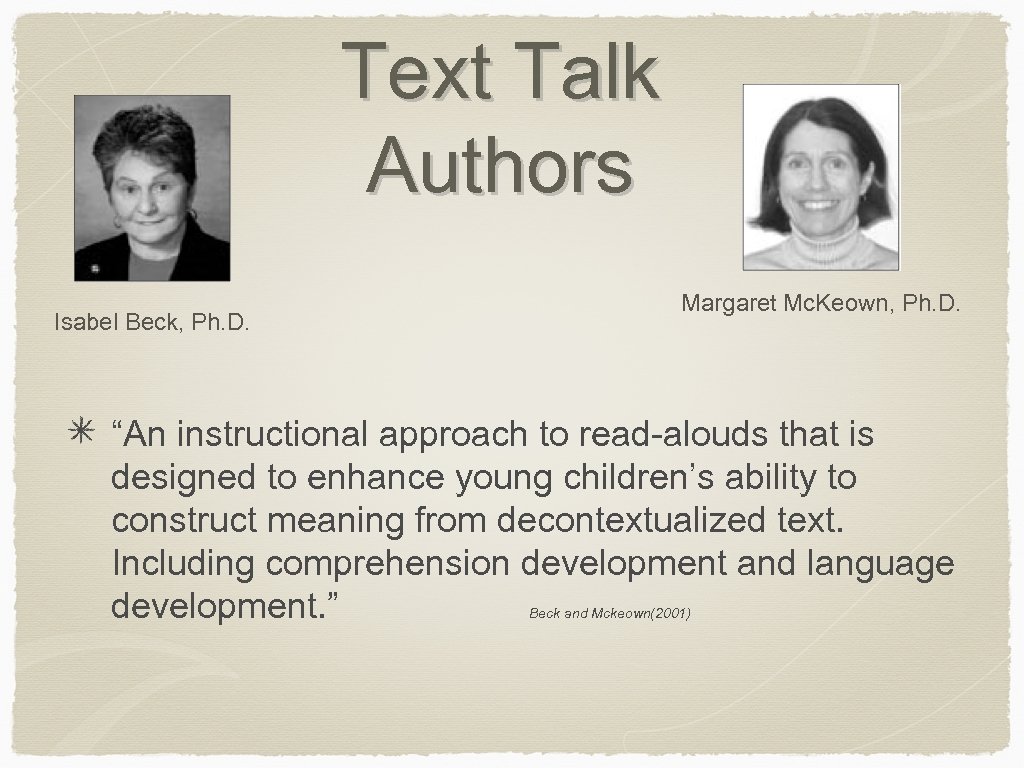
Text Talk Authors Isabel Beck, Ph. D. Margaret Mc. Keown, Ph. D. “An instructional approach to read-alouds that is designed to enhance young children’s ability to construct meaning from decontextualized text. Including comprehension development and language development. ” Beck and Mckeown(2001)
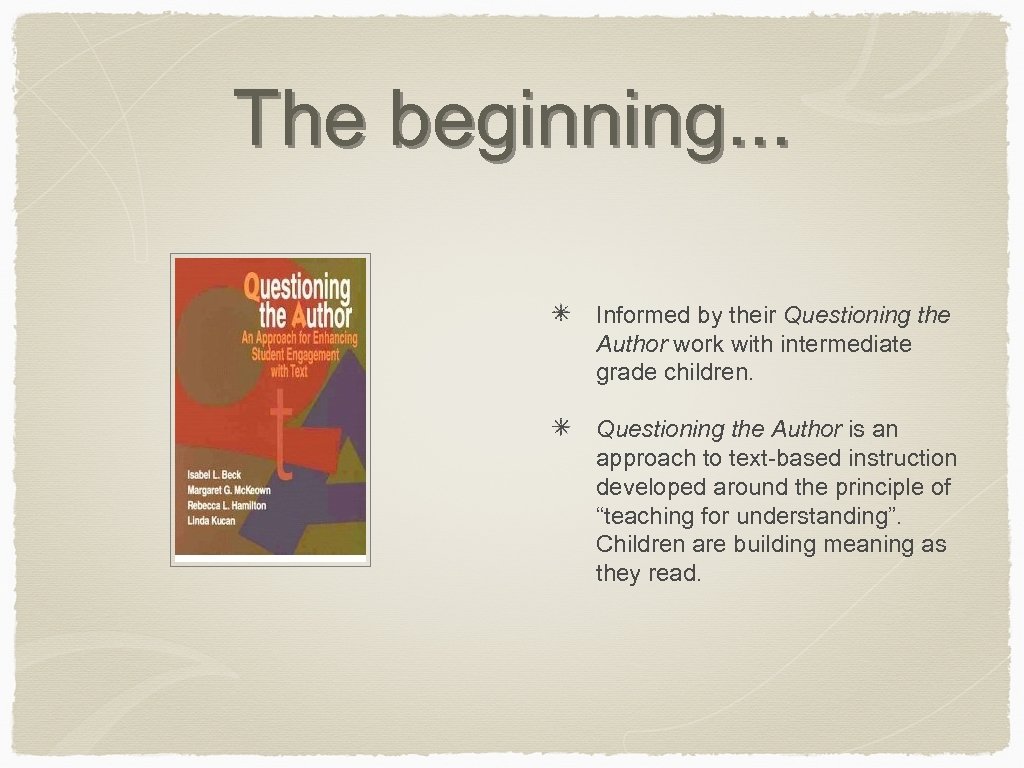
The beginning. . . Informed by their Questioning the Author work with intermediate grade children. Questioning the Author is an approach to text-based instruction developed around the principle of “teaching for understanding”. Children are building meaning as they read.
Text Talk
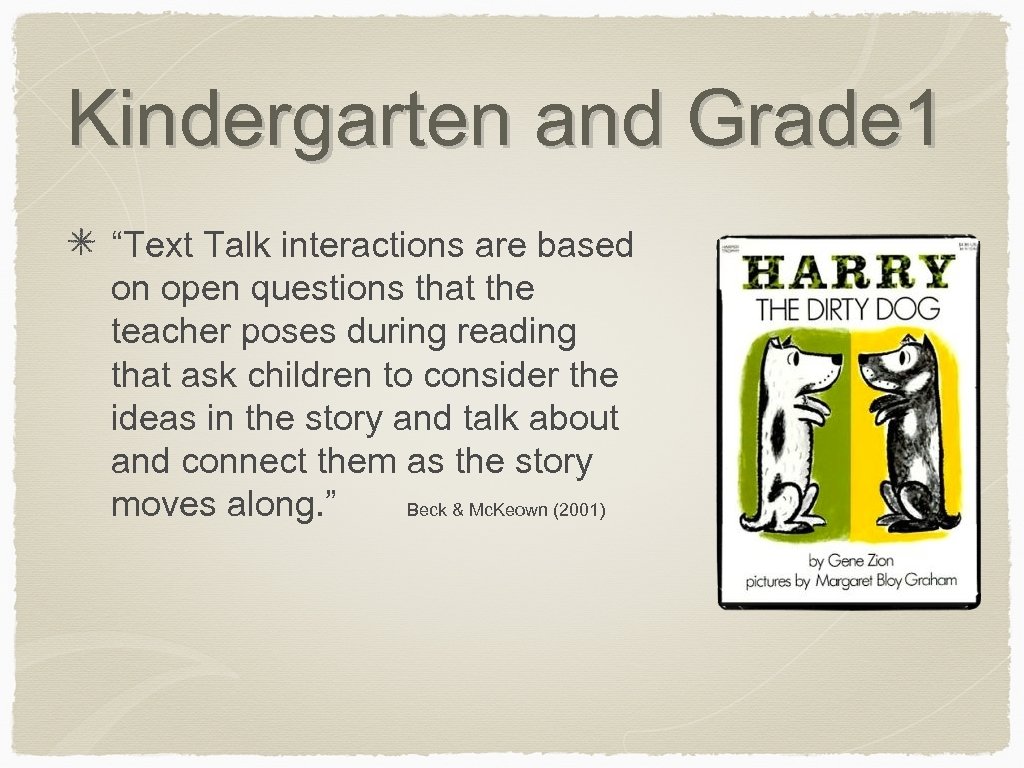
Kindergarten and Grade 1 “Text Talk interactions are based on open questions that the teacher poses during reading that ask children to consider the ideas in the story and talk about and connect them as the story moves along. ” Beck & Mc. Keown (2001)
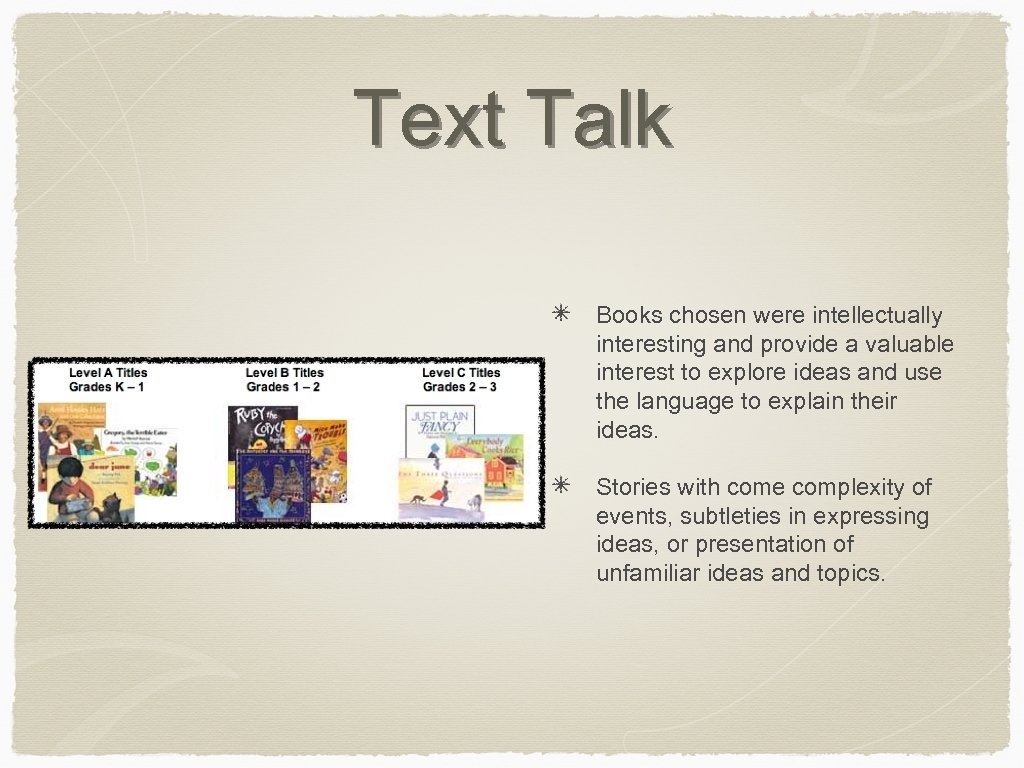
Text Talk Books chosen were intellectually interesting and provide a valuable interest to explore ideas and use the language to explain their ideas. Stories with come complexity of events, subtleties in expressing ideas, or presentation of unfamiliar ideas and topics.
Components of a Text Talk Initial Questions Follow-up Questions Vocabulary
Open Ended Questions Developed questions that initiate discussions at important points in story. “How does what Harry did fit in with what we already These questions will know about him? ” require children to describe and explain text ideas instead of recall and “What’s Harry up to now? ” retrieve words from text.

Follow-up Questions The goal is to help children construct meaning. We might have to take cues from their initial response in order to develop elaborated constructed responses. Requires effort in creating thoughtful follow-up questions to support students’ construction of meaning.
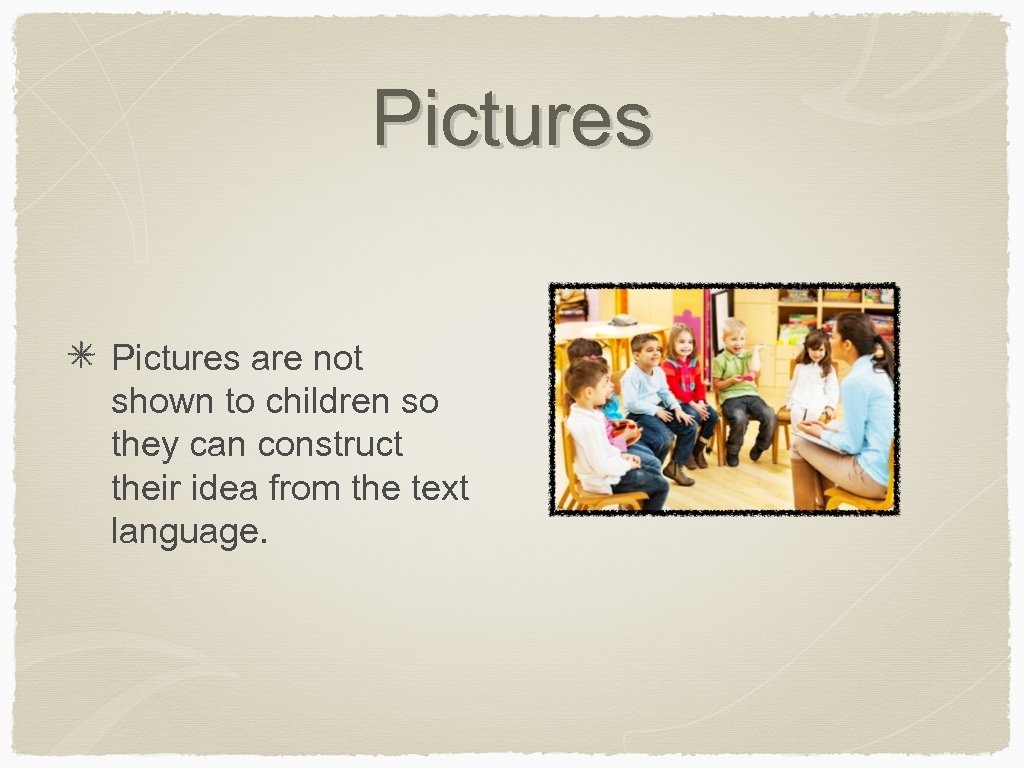
Pictures are not shown to children so they can construct their idea from the text language.
Background Knowledge I remember when I got dirty in the mud! Teachers need to be able to help children sort out the difference between responding from background knowledge to story information.
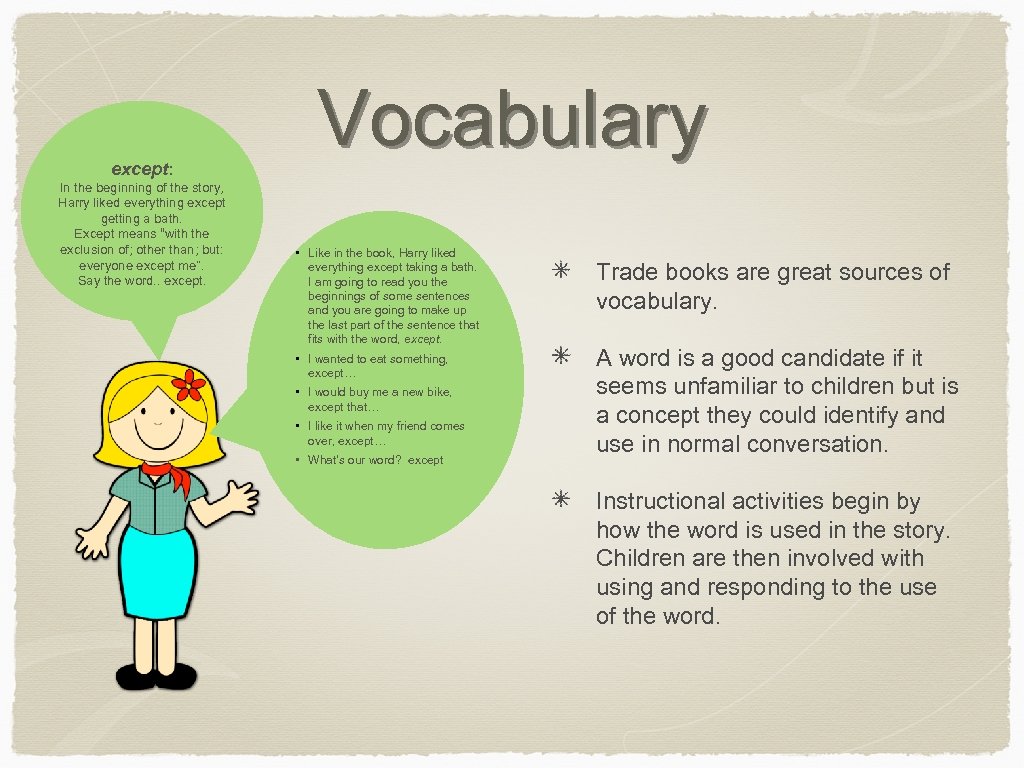
except: In the beginning of the story, Harry liked everything except getting a bath. Except means “with the exclusion of; other than; but: everyone except me”. Say the word. . except. Vocabulary • Like in the book, Harry liked everything except taking a bath. I am going to read you the beginnings of some sentences and you are going to make up the last part of the sentence that fits with the word, except. • I wanted to eat something, except… • I would buy me a new bike, except that… • I like it when my friend comes over, except… • What’s our word? except Trade books are great sources of vocabulary. A word is a good candidate if it seems unfamiliar to children but is a concept they could identify and use in normal conversation. Instructional activities begin by how the word is used in the story. Children are then involved with using and responding to the use of the word.
Text Talk Routines Sessions 1 & 2, you use the Text Talk notes as you read aloud. Trade book is read, discussed and wrapped up before working on explicit vocabulary. Guiding children to comprehend the book through conversation. Sessions 3 & 4, you explicitly introduce, develop understanding, and encourage use of vocabulary words from and about the story. Session 5, you and the children return to the book by integrating vocabulary and comprehension work.

Text Talk Scholastic bought the Text Talks designed by Beck & Mc. Keown. Can purchase the books with the lessons. http: //teacher. scholastic. com/products/texttalk/pdfs/B rochure. pdf
Скачать презентацию Text Talk Isabel Beck and Margaret Mc Keown
2d182e41608ebee40ce5fd1691f99292.ppt