


 Скачать презентацию Text Analytics and Taxonomies Tom Reamy Chief Knowledge
c4b91879bedc5797e33101326bcb3ee4.ppt
- Количество слайдов: 43
 Text Analytics and Taxonomies Tom Reamy Chief Knowledge Architect KAPS Group http: //www. kapsgroup. com
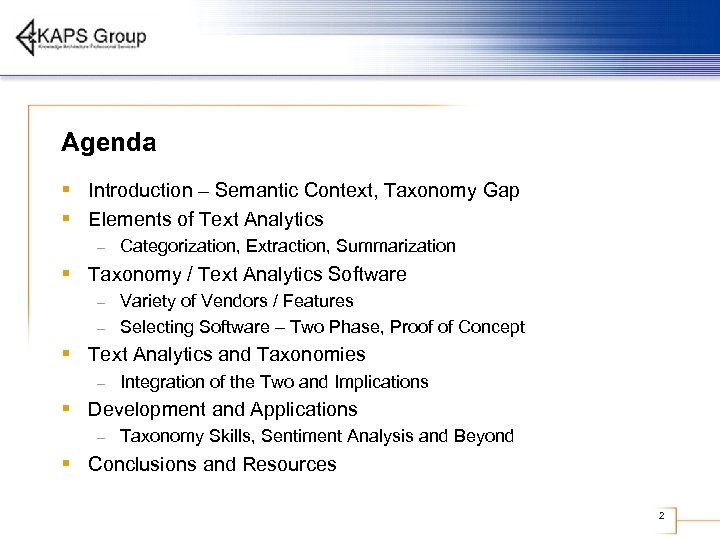 Agenda § Introduction – Semantic Context, Taxonomy Gap § Elements of Text Analytics – Categorization, Extraction, Summarization § Taxonomy / Text Analytics Software Variety of Vendors / Features – Selecting Software – Two Phase, Proof of Concept – § Text Analytics and Taxonomies – Integration of the Two and Implications § Development and Applications – Taxonomy Skills, Sentiment Analysis and Beyond § Conclusions and Resources 2
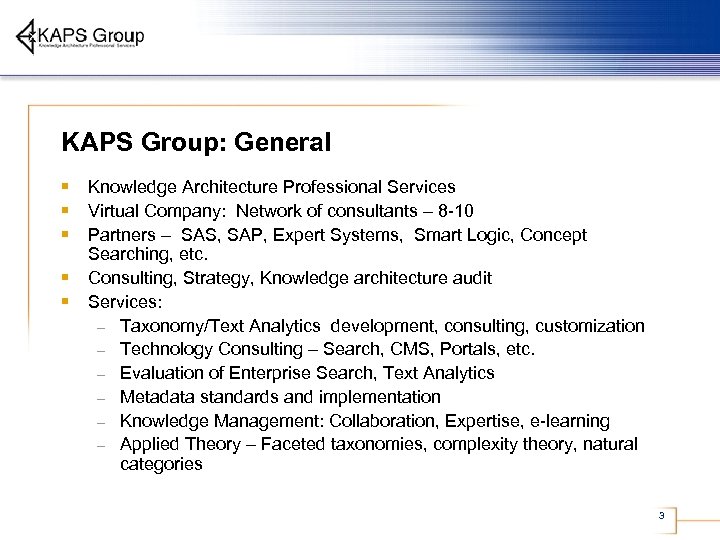 KAPS Group: General § Knowledge Architecture Professional Services § Virtual Company: Network of consultants – 8 -10 § Partners – SAS, SAP, Expert Systems, Smart Logic, Concept § § Searching, etc. Consulting, Strategy, Knowledge architecture audit Services: – Taxonomy/Text Analytics development, consulting, customization – Technology Consulting – Search, CMS, Portals, etc. – Evaluation of Enterprise Search, Text Analytics – Metadata standards and implementation – Knowledge Management: Collaboration, Expertise, e-learning – Applied Theory – Faceted taxonomies, complexity theory, natural categories 3
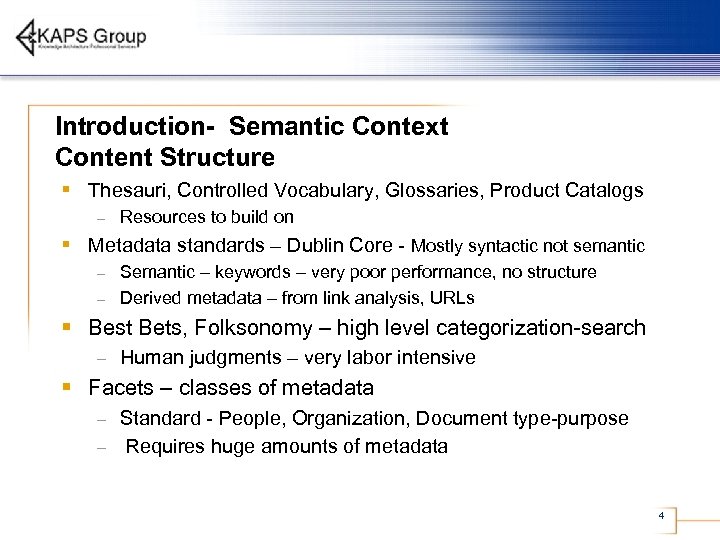 Introduction- Semantic Context Content Structure § Thesauri, Controlled Vocabulary, Glossaries, Product Catalogs – Resources to build on § Metadata standards – Dublin Core - Mostly syntactic not semantic Semantic – keywords – very poor performance, no structure – Derived metadata – from link analysis, URLs – § Best Bets, Folksonomy – high level categorization-search – Human judgments – very labor intensive § Facets – classes of metadata Standard - People, Organization, Document type-purpose – Requires huge amounts of metadata – 4
 Introduction – Taxonomy Gap § Multiple Types of Taxonomy Browse – classification scheme – Formal – Is-Child-Of, Is-Part-Of – Large formal taxonomies - Me. SH – indexing all topics – Small informal business taxonomies – § Structure for Subject Metadata An answer to information overload, search, findability, etc. – Consistent nomenclature, common language – Application platform – adding meaning – § Mind the Gap – How do I get there from here? 5
 Introduction – Taxonomy Gap § Taxonomies – not an end in themselves – (They just sit there) § Gap – between documents and taxonomy § How do you apply the taxonomy to documents? Tagging documents with taxonomy nodes is tough – Library staff – too limited and expensive (Not really), experts in categorization not subject matter – Authors – Experts in the subject matter, terrible at categorization – Automated – only if exact match to term – § Text Analytics is the answer(s)! 6
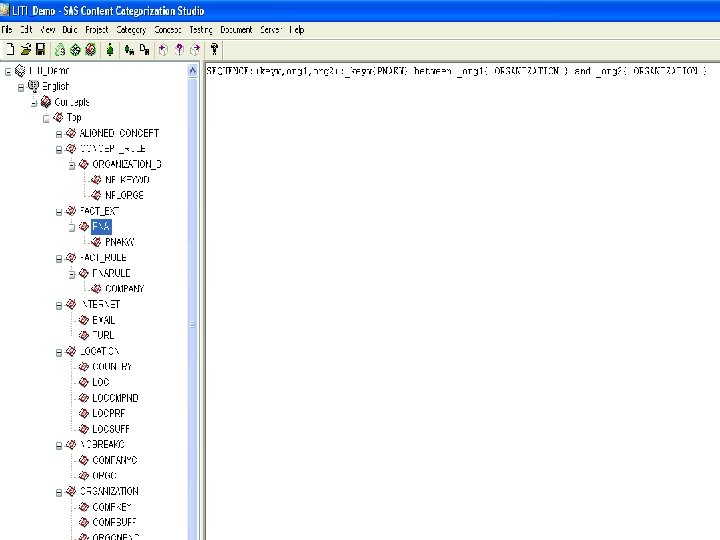
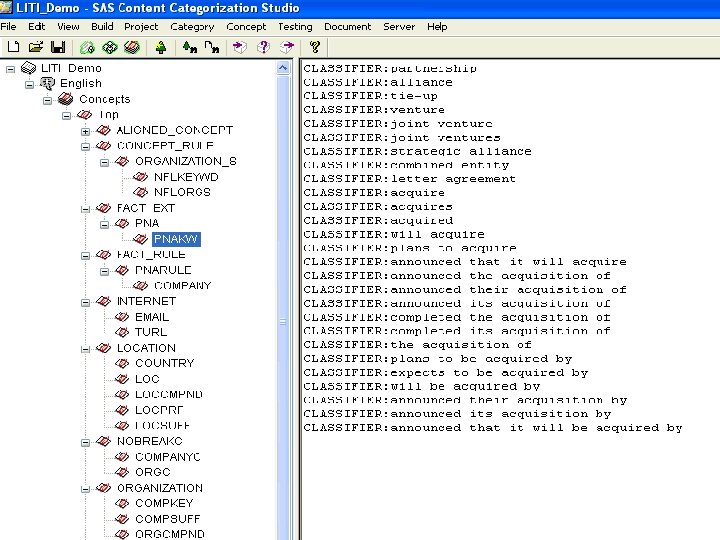
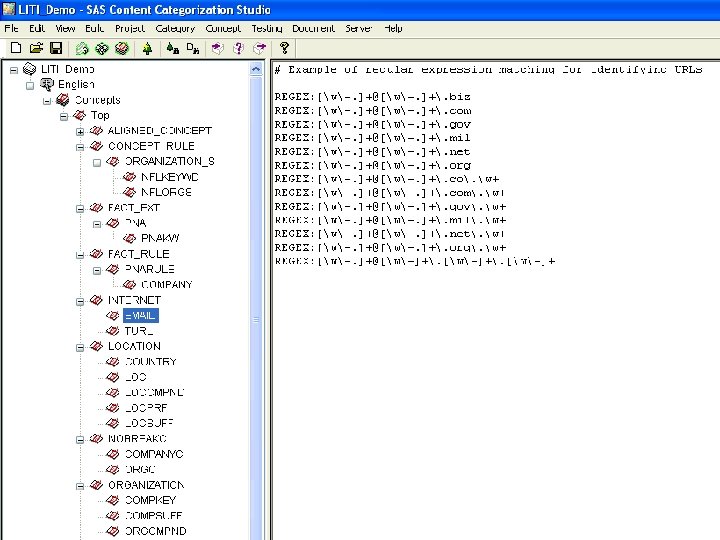
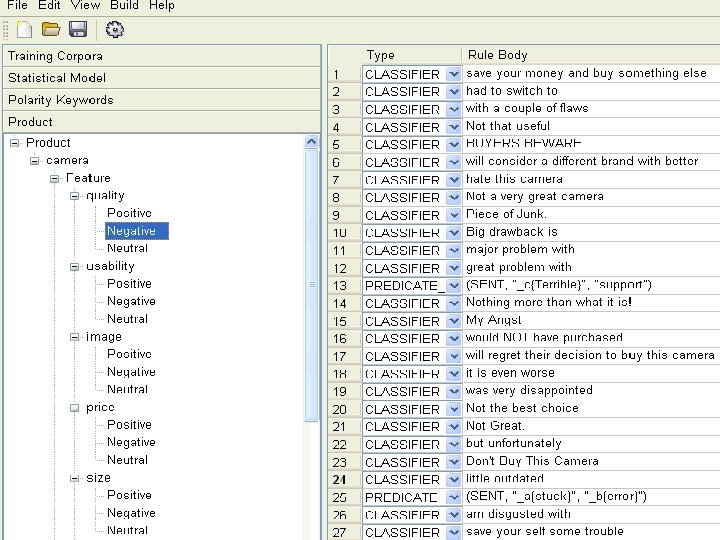
 Introduction to Text Analytics Features § Noun Phrase Extraction Catalogs with variants, rule based dynamic – Multiple types, custom classes – entities, concepts, events – Feeds facets – § Summarization – Customizable rules, map to different content § Fact Extraction Relationships of entities – people-organizations-activities – Ontologies – triples, RDF, etc. – § Sentiment Analysis – Rules –Products and their features and phrases 7
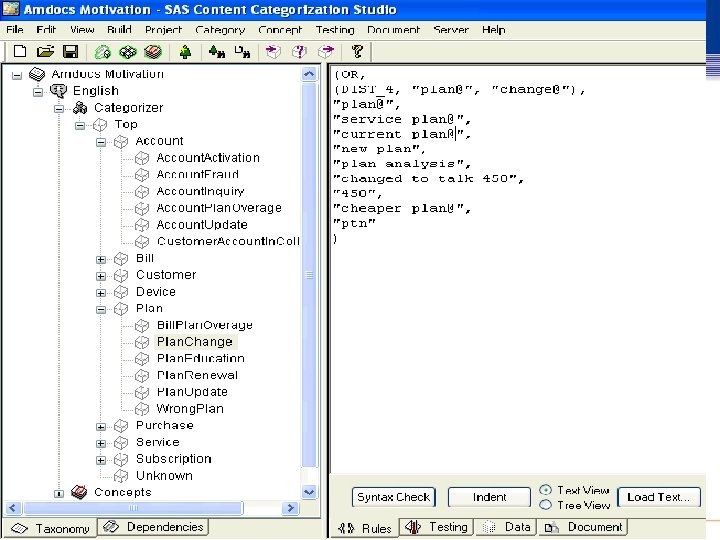
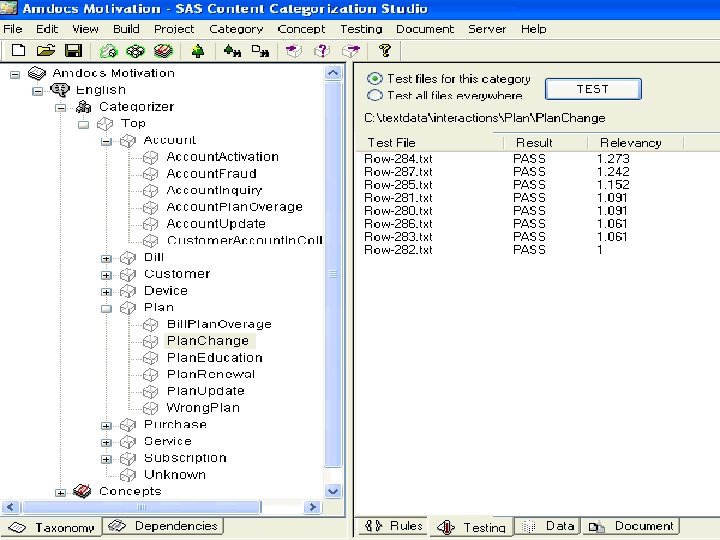
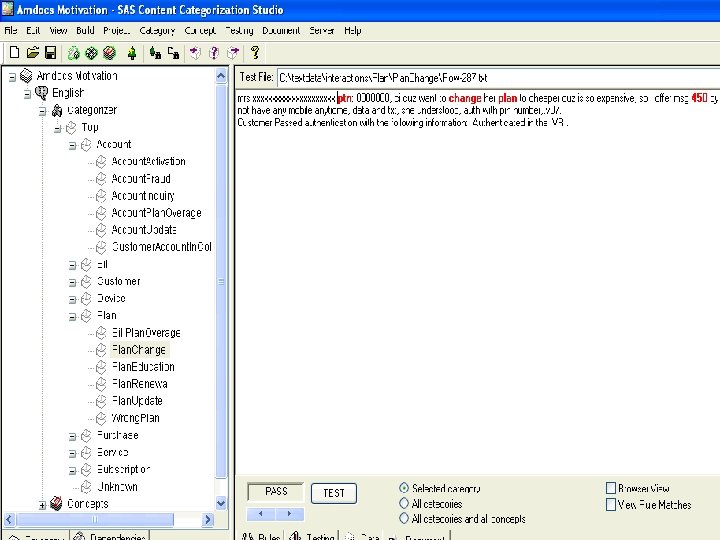
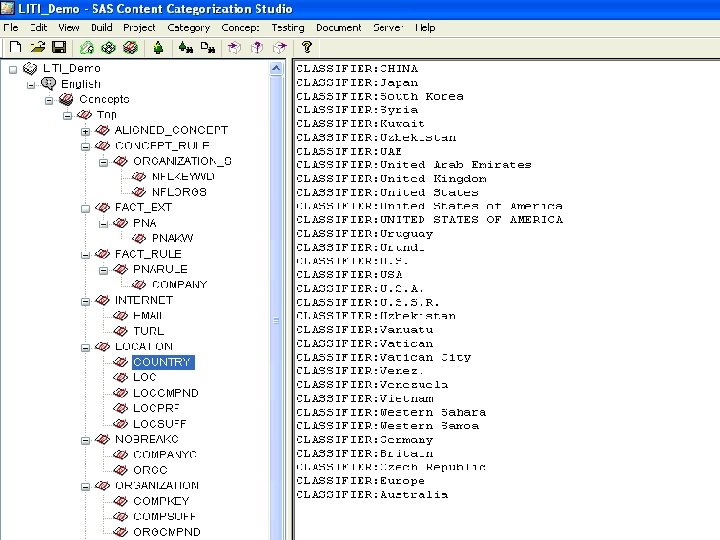
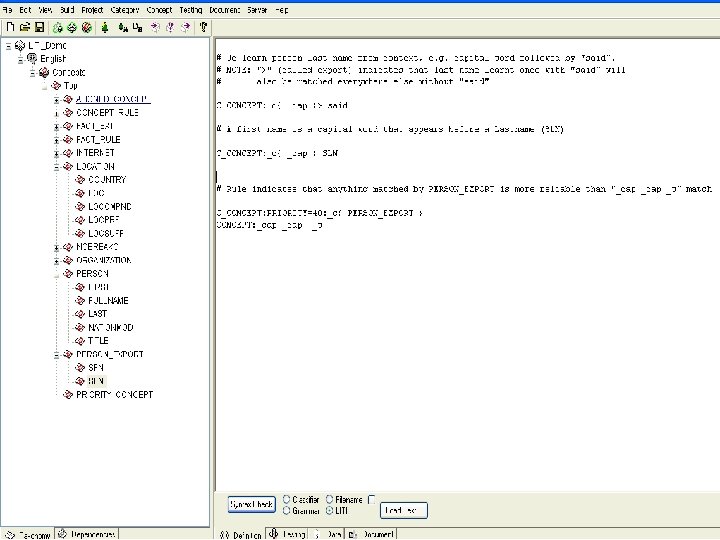
 Introduction to Text Analytics Features § Auto-categorization Training sets – Bayesian, Vector space – Terms – literal strings, stemming, dictionary of related terms – Rules – simple – position in text (Title, body, url) – Semantic Network – Predefined relationships, sets of rules – Boolean– Full search syntax – AND, OR, NOT – Advanced – DIST (#), SENTENCE, NOTIN, MINOC This is the most difficult to develop, fundamental Combine with Extraction – If any of list of entities and other words – Build dynamic rules with categorization capabilities - disambiguation – § § 8
 9
9
 10
10
 11
11
 12
12
 13
13
 14
14
 15
15
 16
16
 17
17
 From Taxonomy to Text Analytics Software § Software is more important in Text Analytics – No Spreadsheets for semantics § Taxonomy editing not as important – Multiple contributors and/or languages an exception § No standards for Text Analytics – Everything is custom job § What does not work – Automatic taxonomies – clustering is exploratory tool § What sometimes works – Automatic categorization – when no humans available 18
 Varieties of Taxonomy/ Text Analytics Software § Vocabulary and Taxonomy Management – Synaptica, Mondeca, Multi-Tes, Word. Map, Schema. Logic § Taxonomy and Text Analytics Platform Clear Forest, Data Harmony, Concept Searching, Expert System – SAS-Teragram, IBM, SAP-Inxight, Smart Logic, GATE-Open Source – § Content Management – Nstein, Documentum, Sharepoint, etc. § Embedded – Search – FAST, Autonomy, Endeca, Exalead, etc. § Specialty – Sentiment Analysis – Lexalytics, Attensity, Clarabridge 19
 Evaluating Text Analytics Software – Process § Start with Self Knowledge – Why and What of software, not social media bandwagon § Eliminate the unfit – Filter One- Ask Experts - reputation, research – Gartner, etc. • Market strength of vendor, platforms, etc. • Feature scorecard – minimum, must have, filter to top 3 Filter Two – Technology Filter – match to your overall scope and capabilities – Filter not a focus – Filter Three – In-Depth Demo – 3 -6 vendors – § Deep POC (2) – advanced, integration, semantics § Focus on working relationship with vendor. § Interdisciplinary Team – IT, Business, Library 20
 Text Analytics and Taxonomy Complimentary Information Platform § Taxonomy provides the basic structure for categorization – And candidates terms § Taxonomy provides a content agnostic structure – Text Analytics is content (and context) sensitive § Taxonomy provides a consistent and common vocabulary § Text Analytics provides a consistent tagging – Human indexing is subject to inter and intra individual variation § Text Analytics jumps the Gap – semi-automated application to apply the taxonomy 21
 Text Analytics and Taxonomy and. Text Analytics § Standard Taxonomies = starter categorization rules – Example – Mesh – bottom 5 layers are terms § Categorization taxonomy structure Tradeoff of depth and complexity of rules – Easier to maintain taxonomy, but need to refine rules – Multiple avenues – facets, terms, rules, etc. – § Smaller modular taxonomies More flexible relationships – not just Is-A-Kind/Child-Of – Can integrate with ontologies better – flexible, real world relationships – § Different kinds of taxonomies – Sentiment – products and features • Taxonomy of Sentiment, Emotion - Expertise – process 22
 Taxonomy in Text Analytics Development § Starter Taxonomy – If no taxonomy, develop initial high level § Analysis of taxonomy – suitable for categorization Structure – not too flat, not too large – Orthogonal categories – Software analysis of Content - Clusters – § Content Selection Map of all anticipated content – Selection of training sets – if possible – Automated selection of training sets – taxonomy nodes as first categorization rules – apply and get content – 23
 Text Analytics in Taxonomy Development Case Study – Computer Science Taxonomy § § § § § Problem – 250, 000 new uncategorized documents Old taxonomy –need one that reflects change in corpus Text mining, entity extraction, categorization Content – 250, 000 large documents, search logs, etc. Bottom Up- terms in documents – frequency, date, source, etc. Clustering – suggested categories, chunking for editors Entity Extraction – people, organizations, Programming languages Time savings – only feasible way to scan documents Quality – important terms, co-occurring terms 24
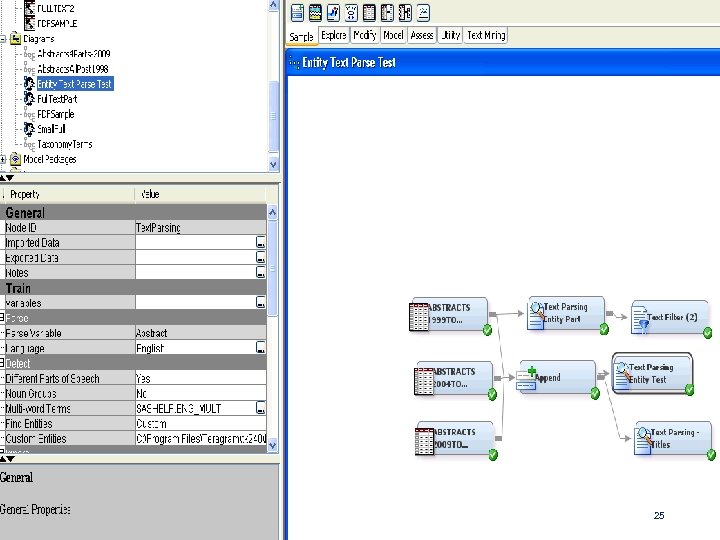 Case Study – Taxonomy Development 25
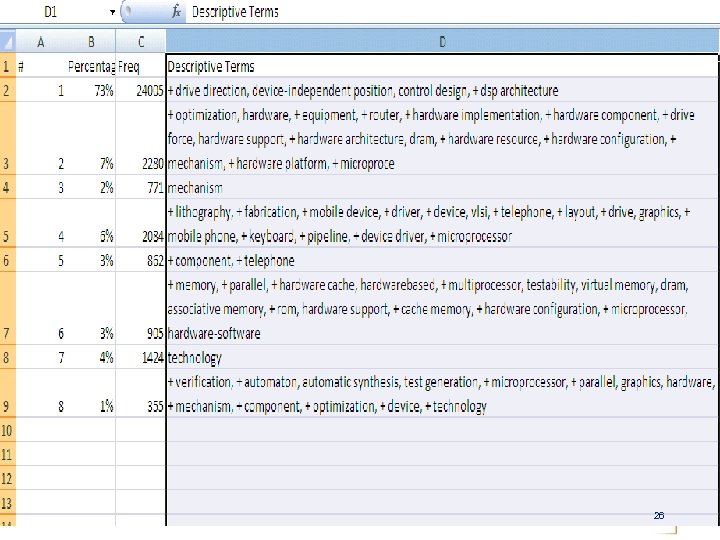 Case Study – Taxonomy Development 26
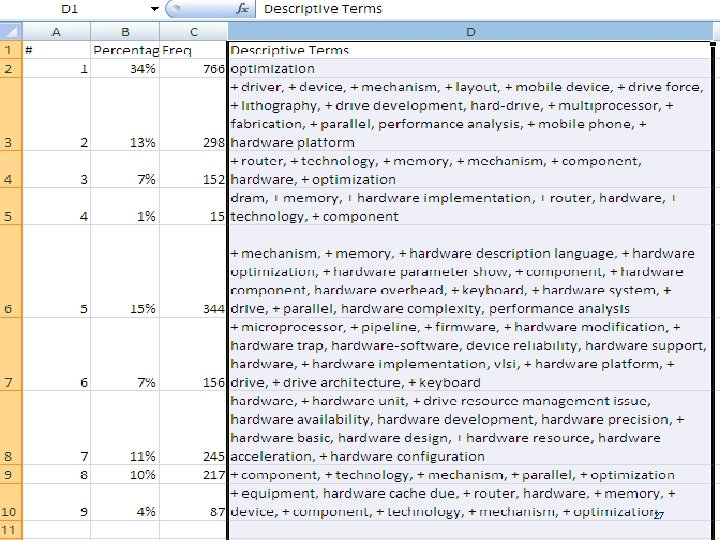 Case Study – Taxonomy Development 27
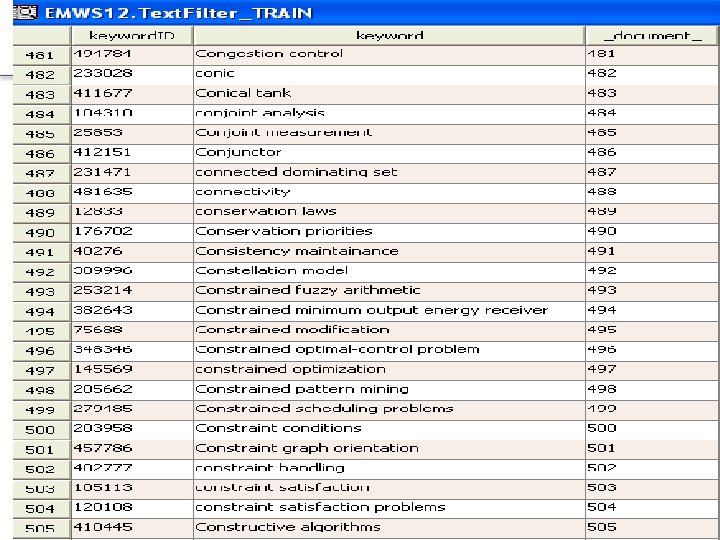 Text Analytics Development 28
 Text Analytics and Taxonomy: Applications Content Management § CM – strong on management, weak on content – black box § Authors and Metadata tags – the weak link § Hybrid Model Publish Document -> Text Analytics analysis -> suggestions for categorization, entities, metadata - > present to author – Cognitive task is simple -> react to a suggestion instead of select from head or a complex taxonomy – Feedback – if author overrides -> suggestion for new category – Facets – Requires a lot of Metadata - Entity Extraction feeds facets – 29
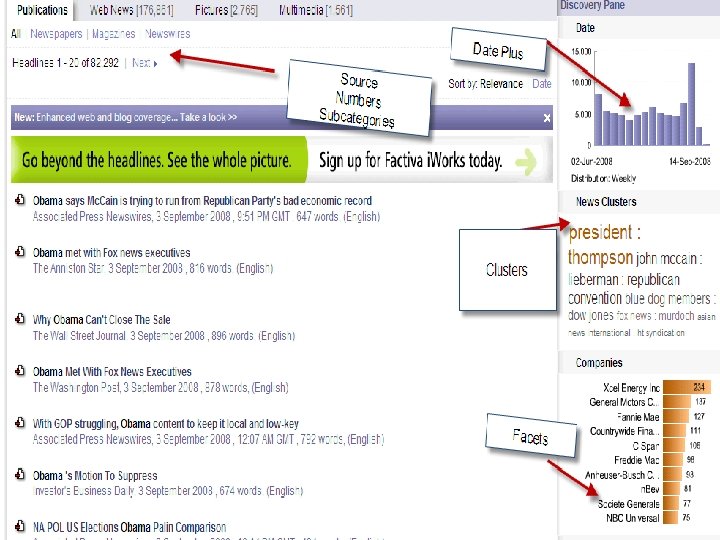
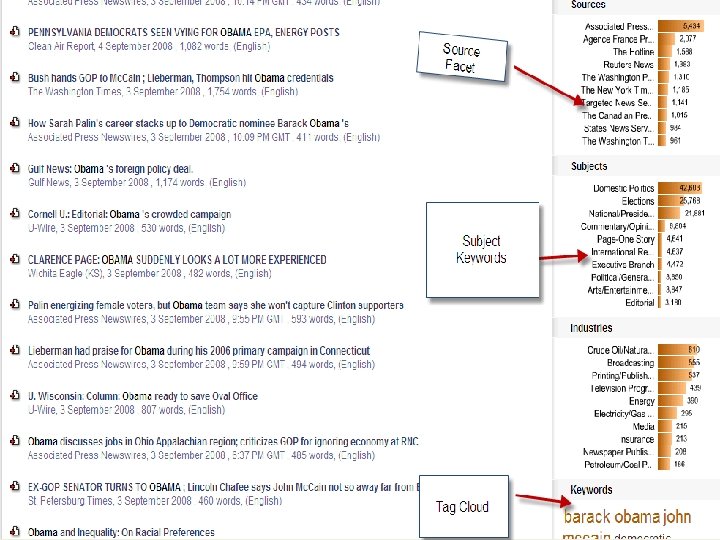
 Text Analytics and Taxonomy: Applications Integrated Search § § Facets, Taxonomies, Text Analytics, People Entity extraction – feeds facets, signatures, ontologies Taxonomy & Auto-categorization – aboutness, subject People – tagging, evaluating tags, fine tune rules and taxonomy § The future is the combination of simple facets with rich taxonomies with complex semantics / ontologies 30
 31
31
 32
32
 Taxonomy and Text Analytics Multiple Search Based Applications § Platform for Information Applications Content Aggregation – Duplicate Documents – save millions! – Text Mining – BI, CI – sentiment analysis – Combine with Data Mining – disease symptoms, new – • Predictive Analytics Social – Hybrid folksonomy / taxonomy / auto-metadata – Social – expertise, categorize tweets and blogs, reputation – Ontology – travel assistant – SIRI – § Use your Imagination! 33
 Taxonomy and Text Analytics New Advanced Applications - Expertise Analysis § Sentiment Analysis to Expertise Analysis(Know. How) – Know How, skills, “tacit” knowledge § Experts write and think differently § Basic level is lower, more specific – Levels: Superordinate – Basic – Subordinate • Mammal – Dog – Golden Retriever – Furniture – chair – kitchen chair § Experts organize information around processes, not subjects § Build expertise categorization rules 34
 Taxonomy and Text Analytics New Advanced Applications - Expertise Analysis § Taxonomy / Ontology development /design – audience focus Card sorting – non-experts use superficial similarities Business & Customer intelligence – add expertise to sentiment – § Deeper research into communities, customers Text Mining - Expertise characterization of writer, corpus e. Commerce – Organization/Presentation of information – expert, novice Expertise location- Generate automatic expertise characterization based on documents Experiments - Pronoun Analysis – personality types – Essay Evaluation Software - Apply to expertise characterization • Model levels of chunking, procedure words over content – § § 35
 Taxonomy and Text Analytics New Advanced Applications - Behavior Prediction § Case Study – Telecom Customer Service § Problem – distinguish customers likely to cancel from mere threats § Analyze customer support notes § General issues – creative spelling, second hand reports § Develop categorization rules – First – distinguish cancellation calls – not simple – Second - distinguish cancel what – one line or all – Third – distinguish real threats 36
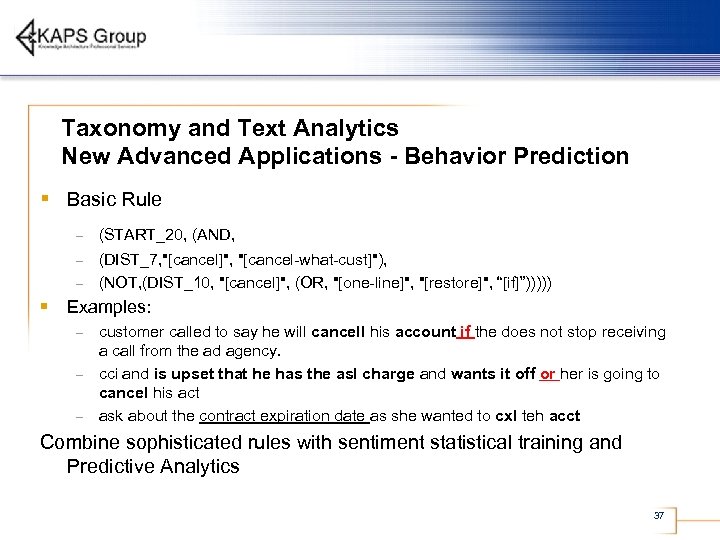 Taxonomy and Text Analytics New Advanced Applications - Behavior Prediction § Basic Rule – (START_20, (AND, (DIST_7, "[cancel]", "[cancel-what-cust]"), – (NOT, (DIST_10, "[cancel]", (OR, "[one-line]", "[restore]", “[if]”))))) – § Examples: customer called to say he will cancell his account if the does not stop receiving a call from the ad agency. – cci and is upset that he has the asl charge and wants it off or her is going to cancel his act – ask about the contract expiration date as she wanted to cxl teh acct – Combine sophisticated rules with sentiment statistical training and Predictive Analytics 37
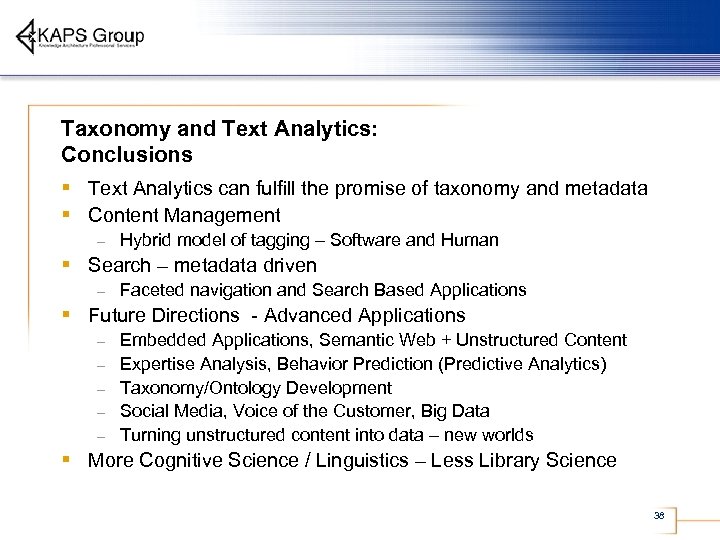 Taxonomy and Text Analytics: Conclusions § Text Analytics can fulfill the promise of taxonomy and metadata § Content Management – Hybrid model of tagging – Software and Human § Search – metadata driven – Faceted navigation and Search Based Applications § Future Directions - Advanced Applications – – – Embedded Applications, Semantic Web + Unstructured Content Expertise Analysis, Behavior Prediction (Predictive Analytics) Taxonomy/Ontology Development Social Media, Voice of the Customer, Big Data Turning unstructured content into data – new worlds § More Cognitive Science / Linguistics – Less Library Science 38
 Questions? Tom Reamy tomr@kapsgroup. com KAPS Group Knowledge Architecture Professional Services http: //www. kapsgroup. com
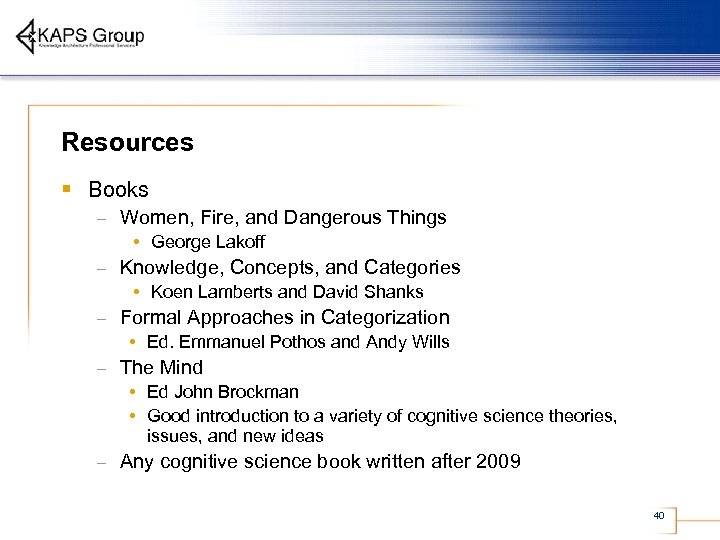 Resources § Books – Women, Fire, and Dangerous Things • George Lakoff – Knowledge, Concepts, and Categories • Koen Lamberts and David Shanks – Formal Approaches in Categorization • Ed. Emmanuel Pothos and Andy Wills – The Mind • Ed John Brockman • Good introduction to a variety of cognitive science theories, issues, and new ideas – Any cognitive science book written after 2009 40
 Resources § Conferences – Web Sites Text Analytics World – http: //textanalyticsworld. com/ – Text Analytics Summit – http: //www. textanalyticsnews. com – Semtech – http: //www. semanticweb. com – 41
 Resources § Blogs – SAS- http: //blogs. sas. com/text-mining/ § Web Sites – – – Taxonomy Community of Practice: http: //finance. groups. yahoo. com/group/Taxo. Co. P/ Linded. In – Text Analytics Summit Group http: //www. Linked. In. com Whitepaper – CM and Text Analytics - http: //www. textanalyticsnews. com/usa/contentmanagementm eetstextanalytics. pdf Whitepaper – Enterprise Content Categorization strategy and development – http: //www. kapsgroup. com 42
 Resources § Articles Malt, B. C. 1995. Category coherence in cross-cultural perspective. Cognitive Psychology 29, 85 -148 – Rifkin, A. 1985. Evidence for a basic level in event taxonomies. Memory & Cognition 13, 538 -56 – Shaver, P. , J. Schwarz, D. Kirson, D. O’Conner 1987. Emotion Knowledge: further explorations of prototype approach. Journal of Personality and Social Psychology 52, 1061 -1086 – Tanaka, J. W. & M. E. Taylor 1991. Object categories and expertise: is the basic level in the eye of the beholder? Cognitive Psychology 23, 457 -82 – 43