


 Скачать презентацию Texas A M University CVEN 342 Saturday March 17
0cc4ed3f3191163cffa7ca2451410552.ppt
- Количество слайдов: 59
 Texas A&M University, CVEN 342 Saturday, March 17, 2018 Hot Mix Asphalt Production and Placement Gary L. Fitts, P. E. Sr. Field Engineer Asphalt Institute
 ASPHALT INSTITUTE • International association of petroleum asphalt producers, manufacturers, and affiliated businesses, established in 1919 • Promotes the use, benefits and quality performance of petroleum asphalt through engineering, research and educational activities. • HQ office-Lexington, KY www. asphaltinstitute. org

 References ASPHALT INSTITUTE • Asphalt Institute – www. asphaltinstitute. org – 859 -288 -4960 • Texas Asphalt Pavement Association – www. txhotmix. org – 512 -312 -2099 • National Asphalt Pavement Association – www. hotmix. org – 888 -468 -6499 • Asphalt Pavement Alliance – www. Asphalt. Alliance. com www. asphaltinstitute. org
 HMA Plant Functions ASPHALT INSTITUTE • • • Aggregate and asphalt storage Aggregate drying Dust collection, air pollution control Aggregate and asphalt proportioning Mixture discharge/storage www. asphaltinstitute. org
 Topics ASPHALT INSTITUTE • Basic information on: – HMA Production – HMA Placement – HMA Compaction • Considerations for developing HMA specifications www. asphaltinstitute. org
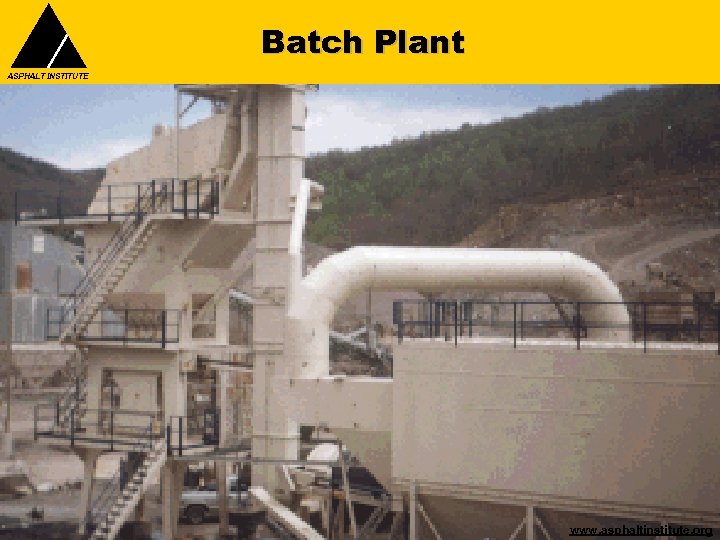 Batch Plant ASPHALT INSTITUTE www. asphaltinstitute. org
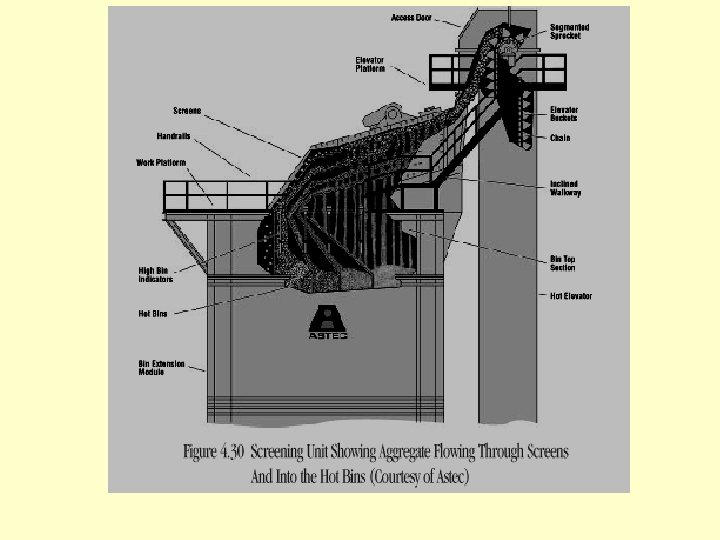
 Batch Plants-Features ASPHALT INSTITUTE • Aggregates dried, separated by size • Aggregates recombined by weight in weigh hopper • Aggregates introduced into pugmill, briefly mixed • Asphalt introduced by weight, mixed with aggregates • Completed HMA discharged or stored www. asphaltinstitute. org
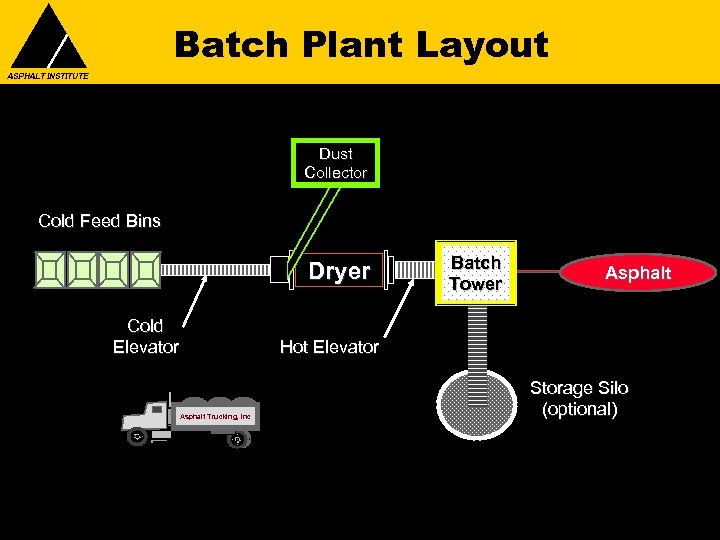 Batch Plant Layout ASPHALT INSTITUTE Dust Collector Cold Feed Bins Dryer Cold Elevator Batch Tower Asphalt Hot Elevator Asphalt Trucking, Inc Storage Silo (optional) www. asphaltinstitute. org
 Drum Plants ASPHALT INSTITUTE • Aggregates are dried, mixed with asphalt in a continuous operation • Quality control entirely dependent on: – stockpile management – plant calibration • Mixture must be stored in surge bin or silo www. asphaltinstitute. org
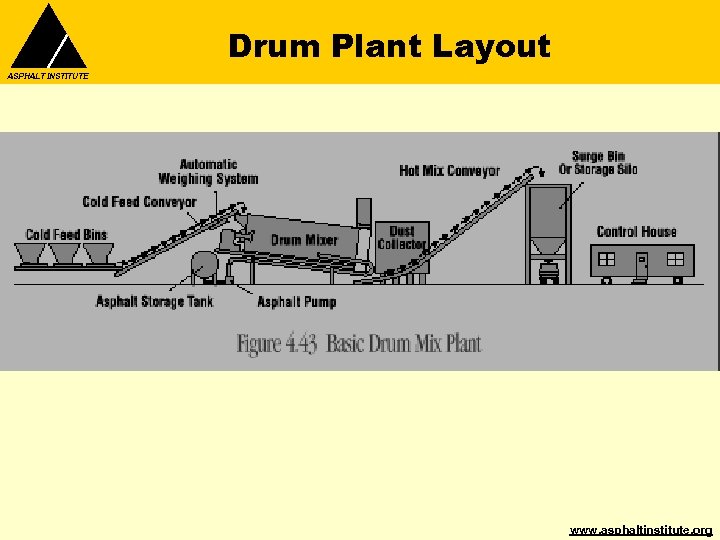 Drum Plant Layout ASPHALT INSTITUTE www. asphaltinstitute. org
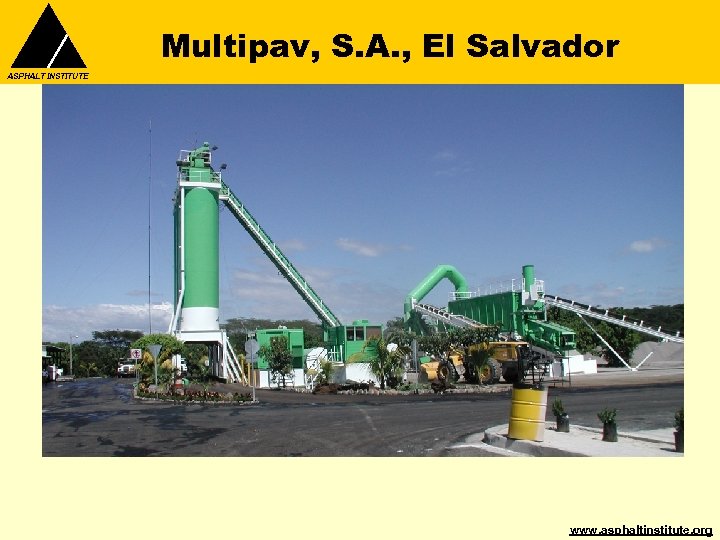 Multipav, S. A. , El Salvador ASPHALT INSTITUTE www. asphaltinstitute. org
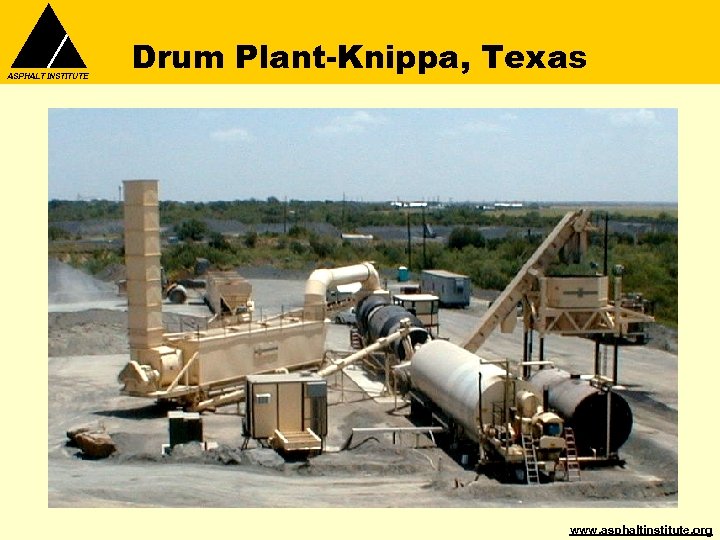 ASPHALT INSTITUTE Drum Plant-Knippa, Texas www. asphaltinstitute. org
 Drum Plant Configurations ASPHALT INSTITUTE • • Parallel flow Counter flow “Coater” (continuous dryer/pugmill) Drum in a drum – double – triple www. asphaltinstitute. org
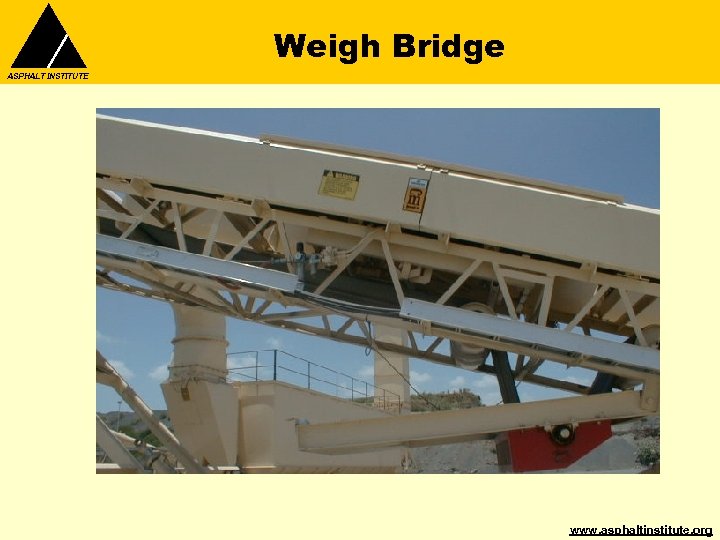 Weigh Bridge ASPHALT INSTITUTE www. asphaltinstitute. org
 HMA Production ASPHALT INSTITUTE • Objective is to produce a mixture meeting the specified design requirements – Volumetric – Mechanical • Samples are normally obtained from trucks at the plant, taken to the laboratory, and tested to confirm these qualities www. asphaltinstitute. org
 Surface Preparation ASPHALT INSTITUTE Prime Coats • Applied to unbound surface • Moderate, uniform application (0. 15 -0. 35 gal/sy) of low viscosity liquid asphalt • Example materials – MC-30 – MC-70 – AEP www. asphaltinstitute. org
 Surface Preparation ASPHALT INSTITUTE Tack Coats • Applied to bound surface • Light, uniform application of liquid asphalt (0. 03 -0. 05 gal/sy residual) • Example materials – Asphalt emulsions • SS-1 h, CSS-1 h, MS-2 • “Special Tack Emulsions” – Paving grade asphalt • PG 64 -22 www. asphaltinstitute. org
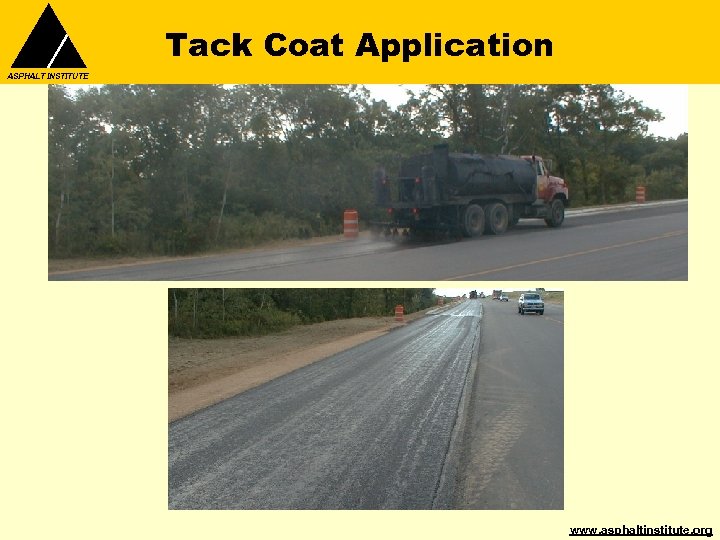 Tack Coat Application ASPHALT INSTITUTE www. asphaltinstitute. org
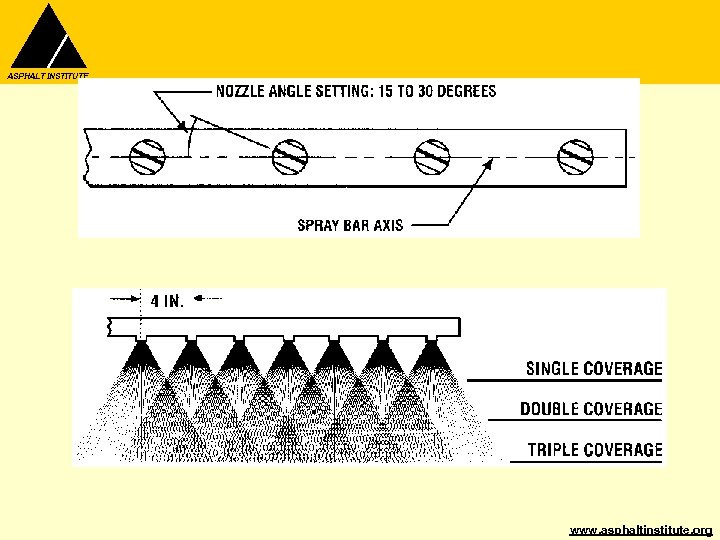 ASPHALT INSTITUTE www. asphaltinstitute. org
 Paving Equipment ASPHALT INSTITUTE Paving Machine Components • Tractor unit • Screed • Electronic grade controls www. asphaltinstitute. org
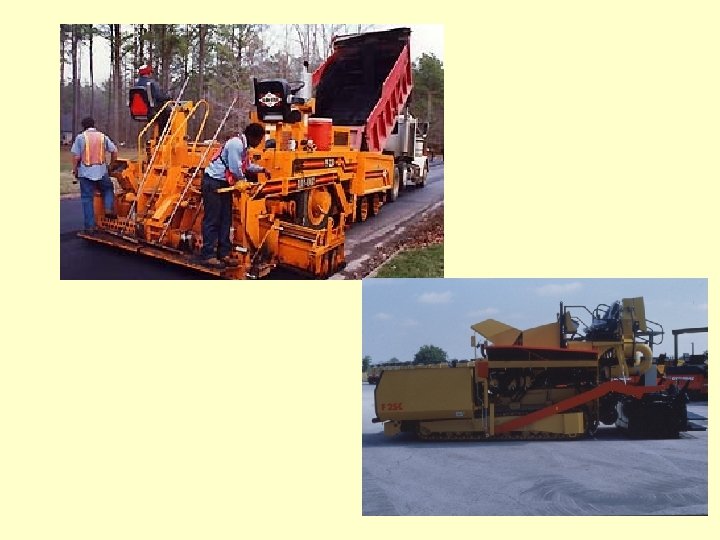
 HMA Delivery ASPHALT INSTITUTE • Paver pulls up to meet the truck – DON’T BUMP THE PAVER! • Break the load before opening tailgate • Charge the hopper before it’s empty www. asphaltinstitute. org
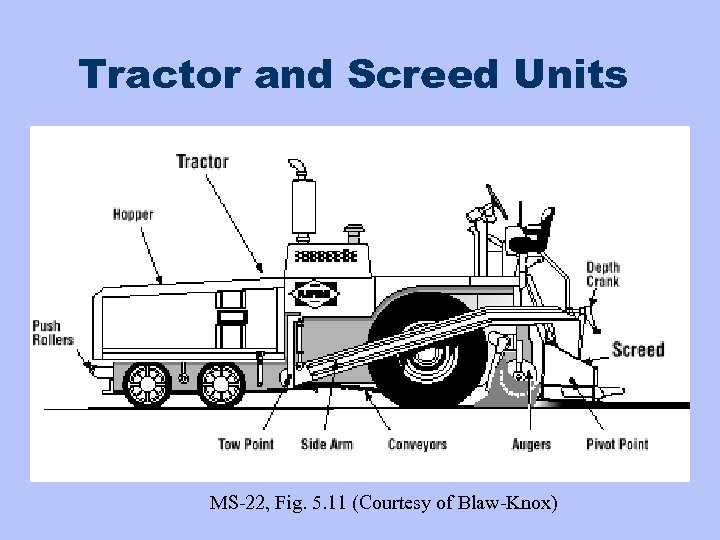 Tractor and Screed Units MS-22, Fig. 5. 11 (Courtesy of Blaw-Knox)
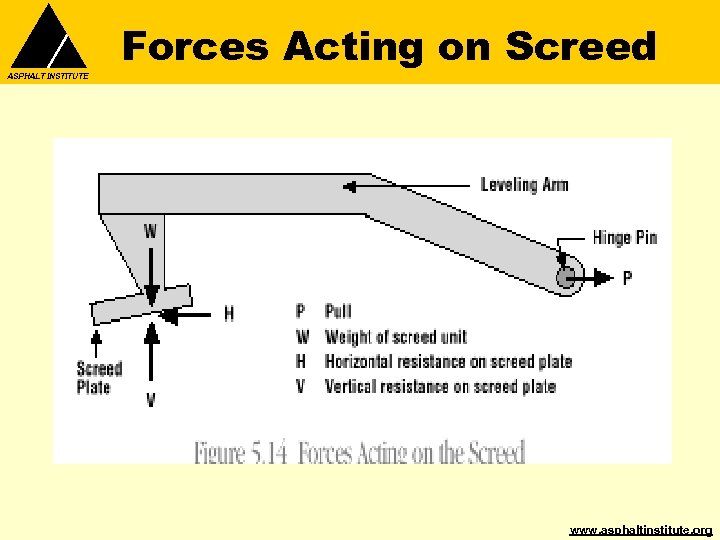 ASPHALT INSTITUTE Forces Acting on Screed www. asphaltinstitute. org
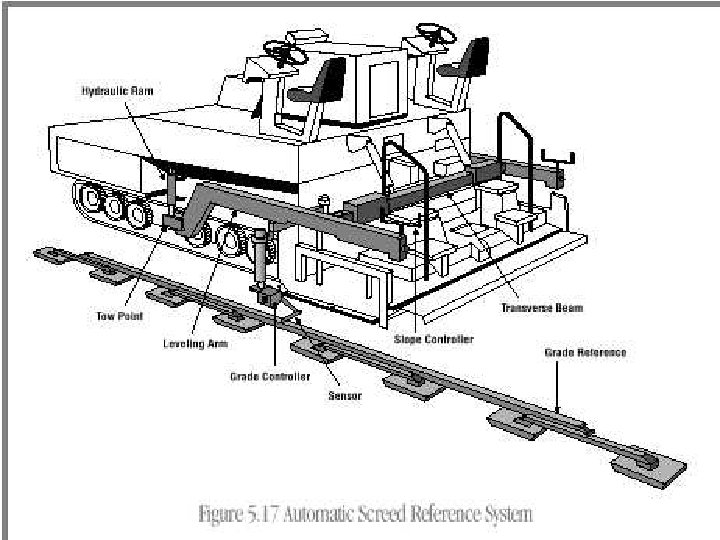
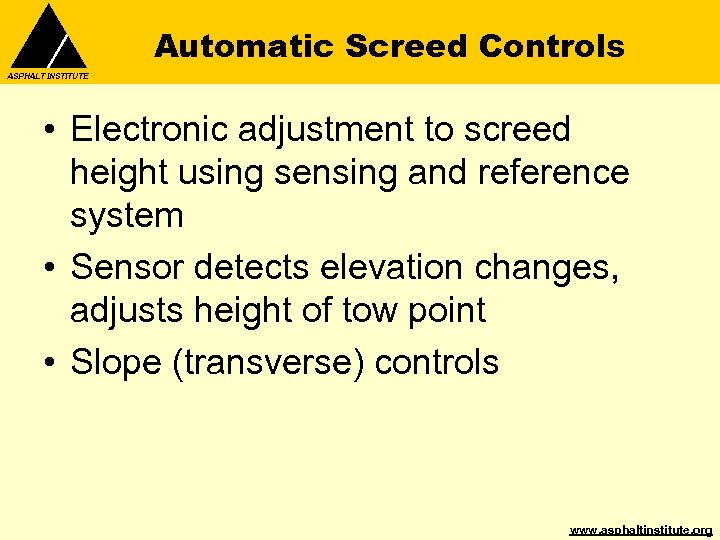 Automatic Screed Controls ASPHALT INSTITUTE • Electronic adjustment to screed height using sensing and reference system • Sensor detects elevation changes, adjusts height of tow point • Slope (transverse) controls www. asphaltinstitute. org
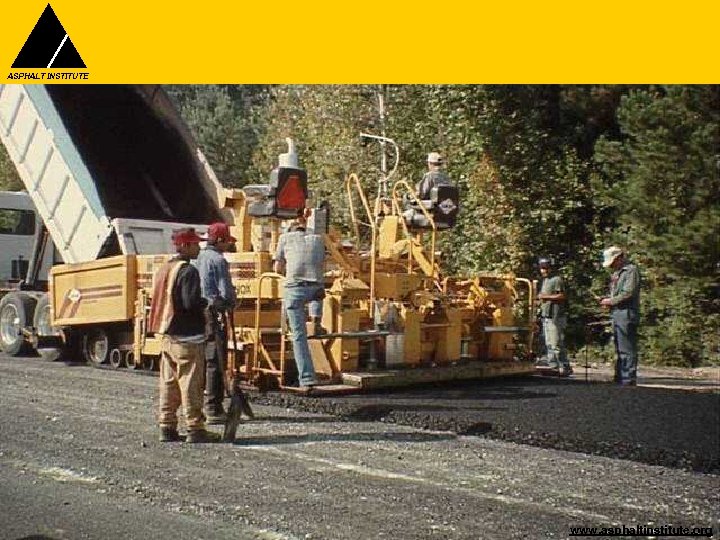
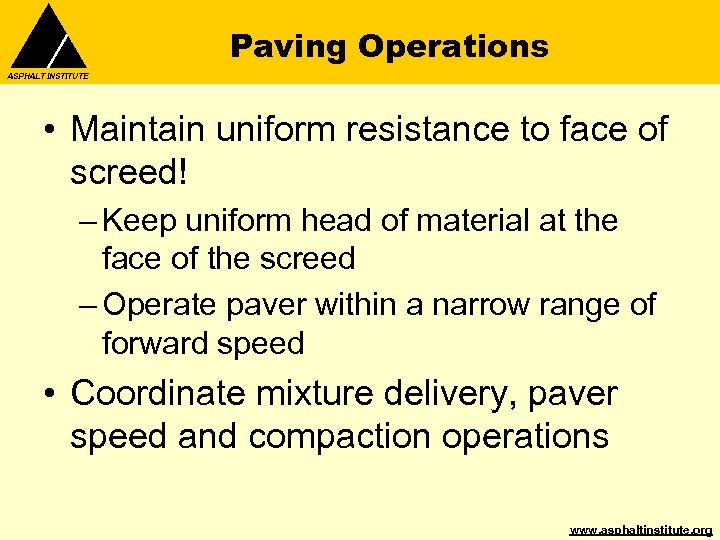 Paving Operations ASPHALT INSTITUTE • Maintain uniform resistance to face of screed! – Keep uniform head of material at the face of the screed – Operate paver within a narrow range of forward speed • Coordinate mixture delivery, paver speed and compaction operations www. asphaltinstitute. org
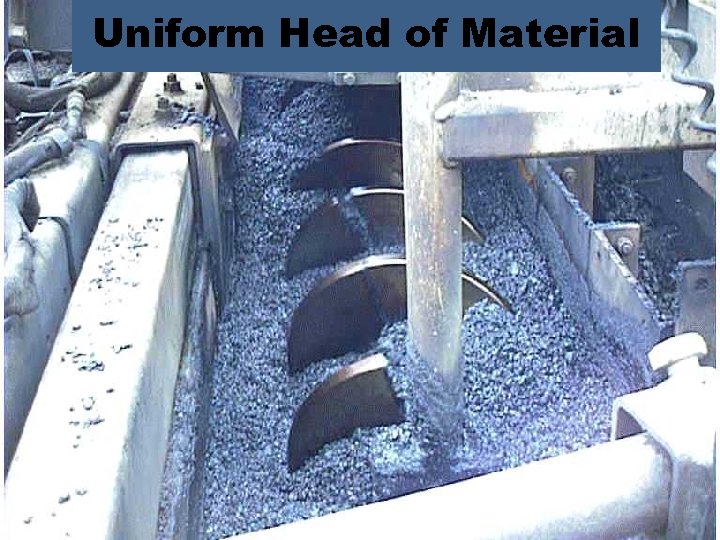 Uniform Head of Material
 ASPHALT INSTITUTE www. asphaltinstitute. org
 ASPHALT INSTITUTE Compaction The process of compressing a material into a smaller volume while maintaining the same mass. www. asphaltinstitute. org
 Compaction ASPHALT INSTITUTE • Essential to good performance! • Need to compact to desirable air voids level – Fine graded mixtures: 4 -8% – Coarse or gap-graded mixtures: 3 -6% • Compaction can only achieved if: – Mixture is confined – Mixture is hot (workable) www. asphaltinstitute. org
 Factors Affecting Compaction ASPHALT INSTITUTE • • Mixture properties Base/subgrade support (confinement) Ambient conditions Lift thickness www. asphaltinstitute. org
 ASPHALT INSTITUTE Compaction-Lift/Layer Thickness • Coarse-graded mixtures, mixtures using modified asphalts – Minimum 4 X nominal maximum size – ½ in NMS – minimum 2” lift thickness • Fine-graded mixtures – Minimum 3 X nominal maximum size • Thicker lifts also conserve heat, providing more time to complete compaction www. asphaltinstitute. org
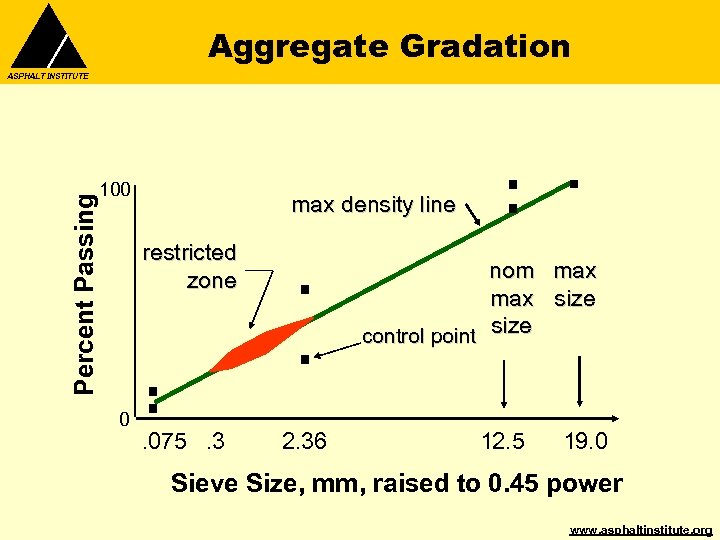 Aggregate Gradation Percent Passing ASPHALT INSTITUTE 100 max density line restricted zone 0 . 075. 3 nom max size control point size 2. 36 12. 5 19. 0 Sieve Size, mm, raised to 0. 45 power www. asphaltinstitute. org
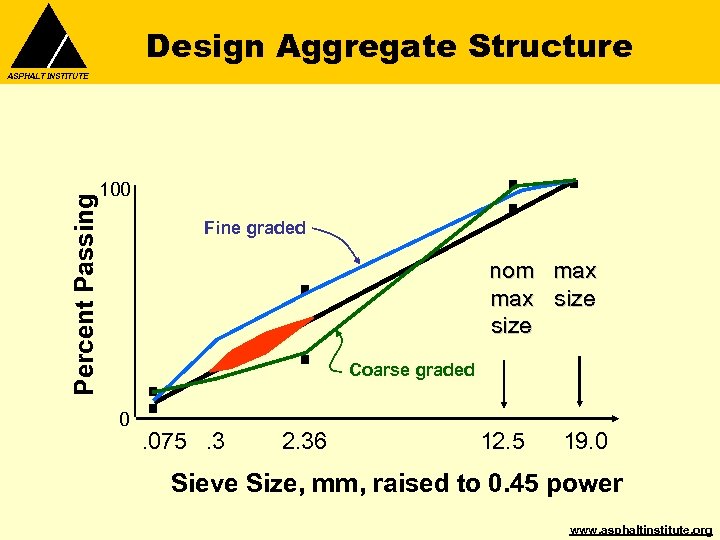 Design Aggregate Structure Percent Passing ASPHALT INSTITUTE 100 Fine graded nom max size Coarse graded 0 . 075. 3 2. 36 12. 5 19. 0 Sieve Size, mm, raised to 0. 45 power www. asphaltinstitute. org
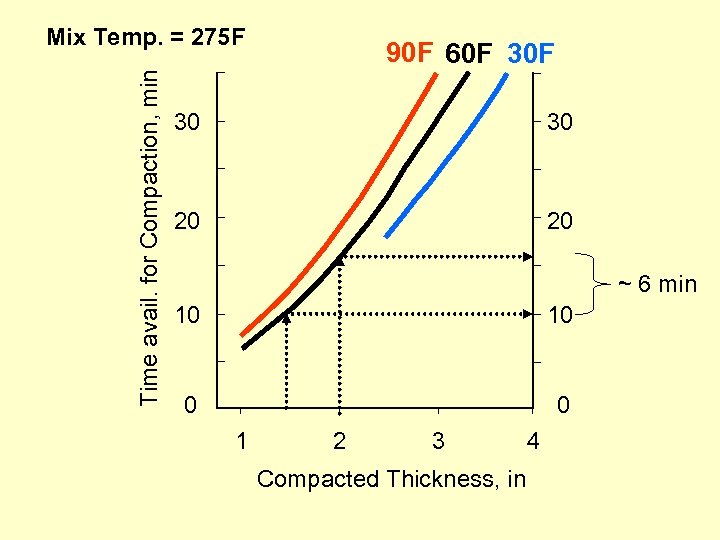 Time avail. for Compaction, min Mix Temp. = 275 F 90 F 60 F 30 30 20 20 ~ 6 min 10 10 0 0 1 2 3 Compacted Thickness, in 4
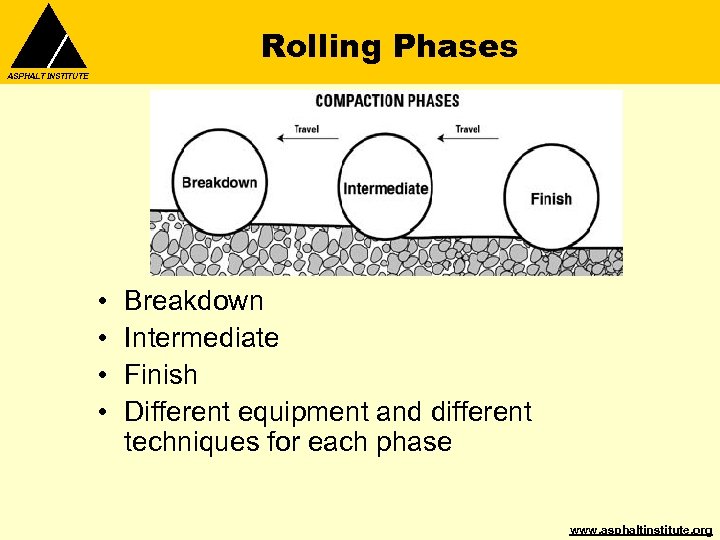 Rolling Phases ASPHALT INSTITUTE • • Breakdown Intermediate Finish Different equipment and different techniques for each phase www. asphaltinstitute. org
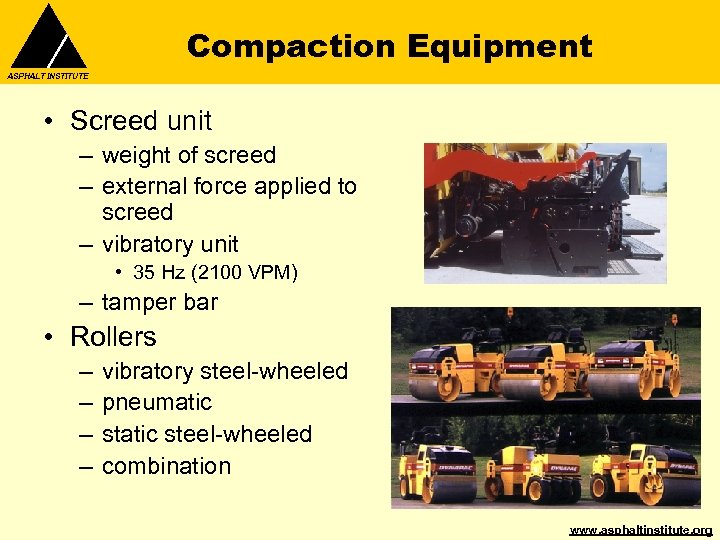 Compaction Equipment ASPHALT INSTITUTE • Screed unit – weight of screed – external force applied to screed – vibratory unit • 35 Hz (2100 VPM) – tamper bar • Rollers – – vibratory steel-wheeled pneumatic steel-wheeled combination www. asphaltinstitute. org
 Vibratory Rollers ASPHALT INSTITUTE • Commonly used for initial (breakdown) rolling • 8 -18. 5 tons, 57 -84 in wide (“heavy” rollers) – 50 -200 lbs/linear inch (PLI) • Frequency: 2700 -4200 impacts/min. • Amplitude: 0. 016 -0. 032 in. – For thin overlays (≤ 2 in. ) use low amplitude or static mode • Operate to attain at least 10 impacts/ft – 2 -4 mph www. asphaltinstitute. org
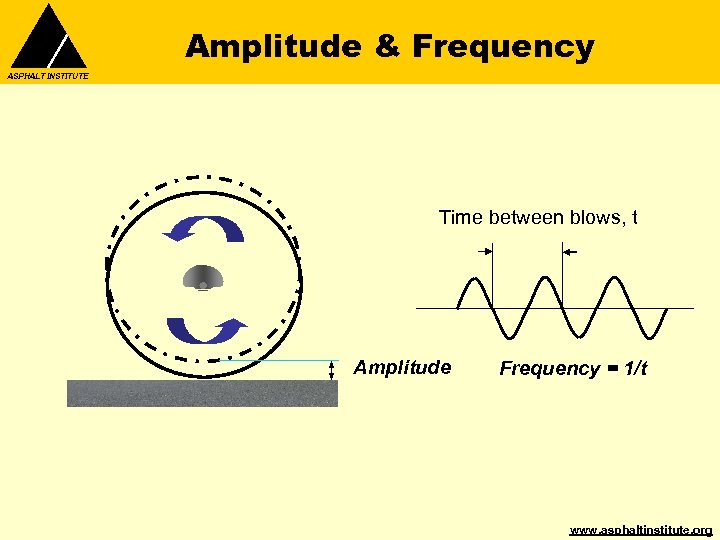 Amplitude & Frequency ASPHALT INSTITUTE Time between blows, t Amplitude Frequency = 1/t www. asphaltinstitute. org
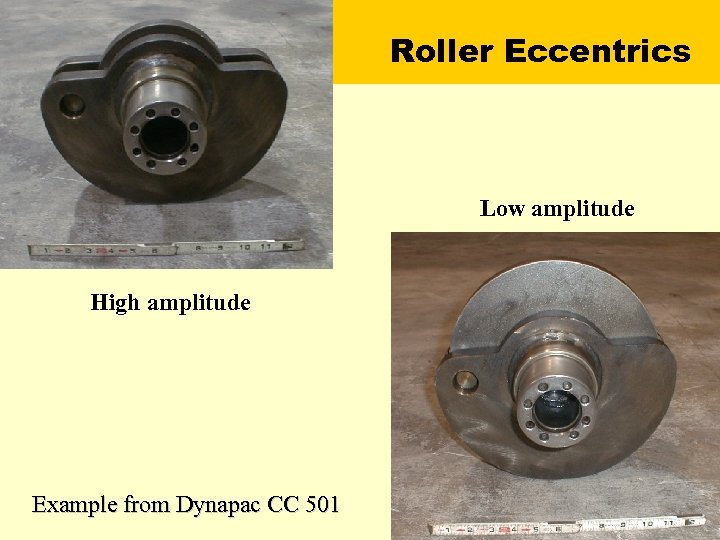 Roller Eccentrics ASPHALT INSTITUTE Low amplitude High amplitude Example from Dynapac CC 501 www. asphaltinstitute. org
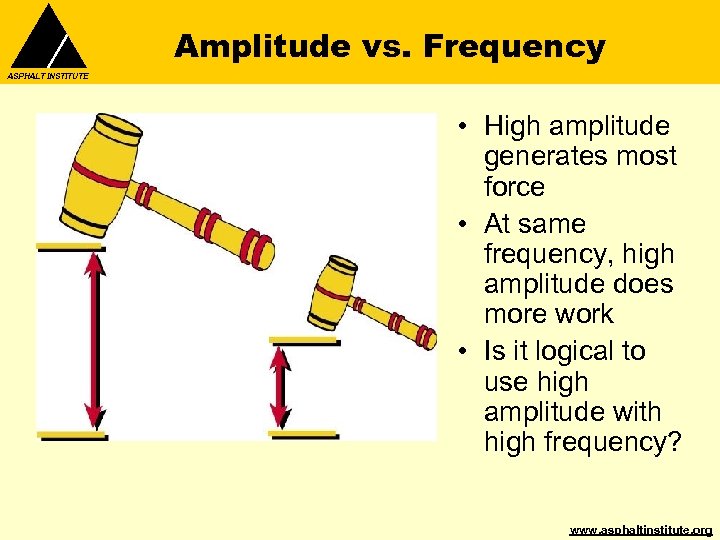 Amplitude vs. Frequency ASPHALT INSTITUTE • High amplitude generates most force • At same frequency, high amplitude does more work • Is it logical to use high amplitude with high frequency? www. asphaltinstitute. org
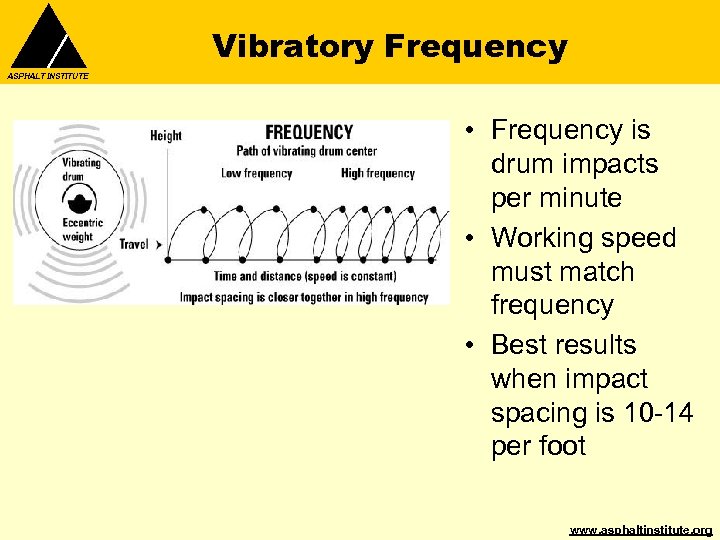 Vibratory Frequency ASPHALT INSTITUTE • Frequency is drum impacts per minute • Working speed must match frequency • Best results when impact spacing is 10 -14 per foot www. asphaltinstitute. org
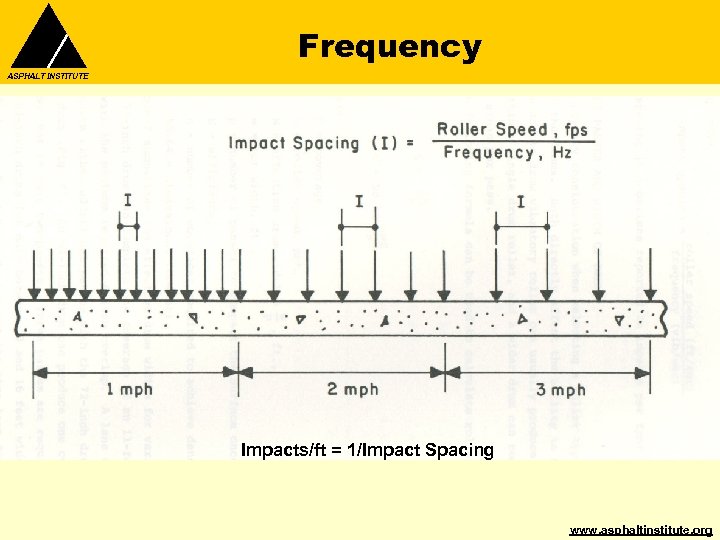 Frequency ASPHALT INSTITUTE Impacts/ft = 1/Impact Spacing www. asphaltinstitute. org
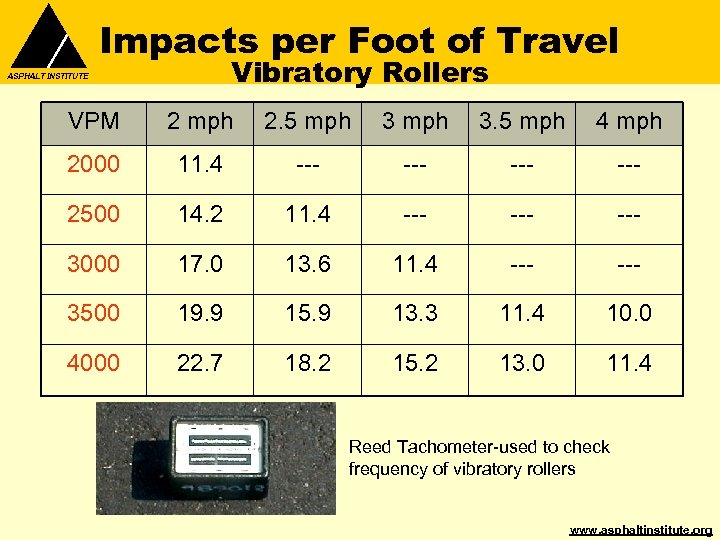 Impacts per Foot of Travel Vibratory Rollers ASPHALT INSTITUTE VPM 2 mph 2. 5 mph 3. 5 mph 4 mph 2000 11. 4 --- --- 2500 14. 2 11. 4 --- --- 3000 17. 0 13. 6 11. 4 --- 3500 19. 9 15. 9 13. 3 11. 4 10. 0 4000 22. 7 18. 2 15. 2 13. 0 11. 4 Reed Tachometer-used to check frequency of vibratory rollers www. asphaltinstitute. org
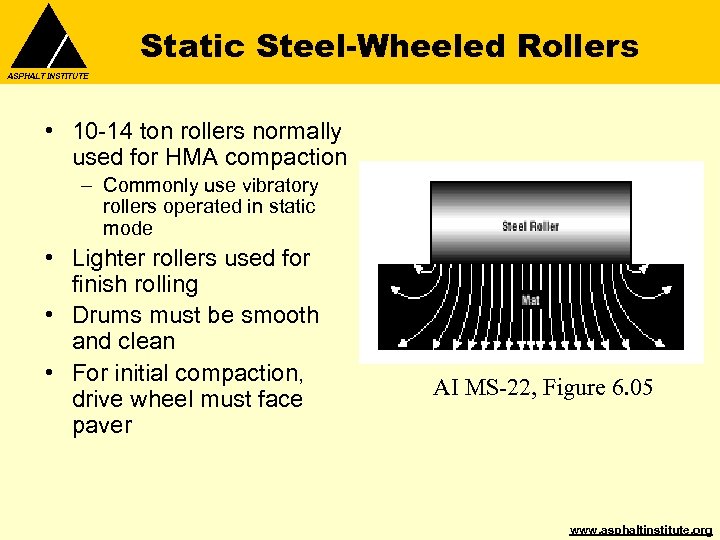 Static Steel-Wheeled Rollers ASPHALT INSTITUTE • 10 -14 ton rollers normally used for HMA compaction – Commonly use vibratory rollers operated in static mode • Lighter rollers used for finish rolling • Drums must be smooth and clean • For initial compaction, drive wheel must face paver AI MS-22, Figure 6. 05 www. asphaltinstitute. org
 Static Steel-Wheeled Rollers ASPHALT INSTITUTE www. asphaltinstitute. org
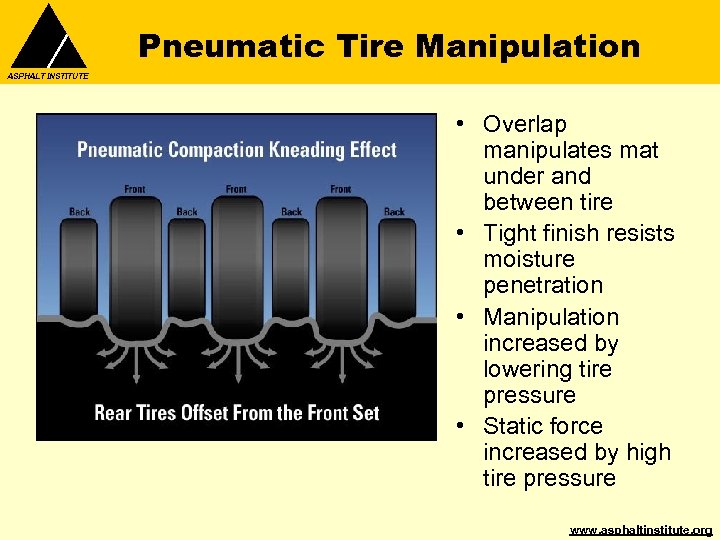 Pneumatic Tire Manipulation ASPHALT INSTITUTE • Overlap manipulates mat under and between tire • Tight finish resists moisture penetration • Manipulation increased by lowering tire pressure • Static force increased by high tire pressure www. asphaltinstitute. org
 Rolling Pattern ASPHALT INSTITUTE • Speed & lap pattern for each roller • No. of passes for each roller • Min. temperature by which each roller must complete pattern IMPORTANT: Paver speed must not exceed that of the compaction operation!!! www. asphaltinstitute. org
 Typical Pattern, 2 inch Overlay ASPHALT INSTITUTE • 2 -4 passes, tandem vibratory roller – – Mix temperature above 250 F Lowest amplitude setting, highest frequency Vibration on one or both drums Travel speed to obtain 10 impacts/ft (~3 mph) • 2 -4 passes, pneumatic roller – Mix temperature 180 -230 F – Roller speed ~ 3 mph • 2 -4 passes, static rolling – Mix temperature 140 -180 F – As necessary to remove blemishes www. asphaltinstitute. org
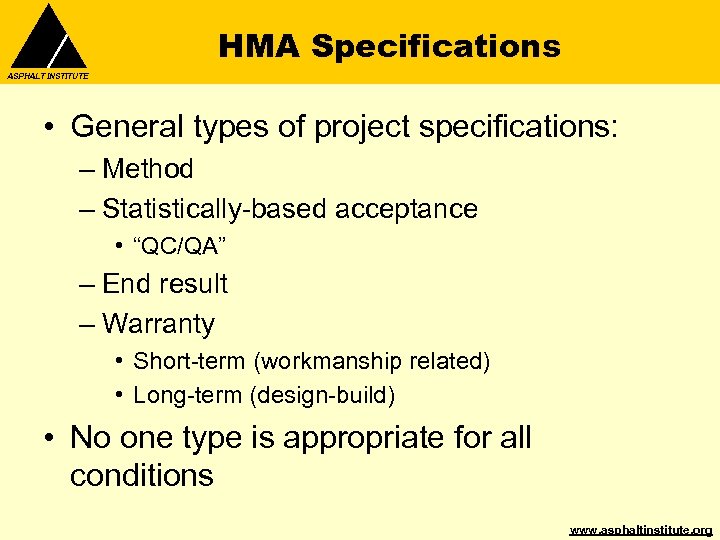 HMA Specifications ASPHALT INSTITUTE • General types of project specifications: – Method – Statistically-based acceptance • “QC/QA” – End result – Warranty • Short-term (workmanship related) • Long-term (design-build) • No one type is appropriate for all conditions www. asphaltinstitute. org
 Method Specifications ASPHALT INSTITUTE • Contractor is required to follow specific instructions during all phases of construction – Owner provides mixture design – Mixture is accepted on the basis of owner’s (or contractor’s) quality monitoring tests – Delivery, placement, and compaction accepted based on inspection by owner/owner’s agent • Examples of method spec: – Tx. DOT, Item 340 (all Standards Spec’s through 1982) – 2004 Standard Specifications to include method-type Item 340 www. asphaltinstitute. org
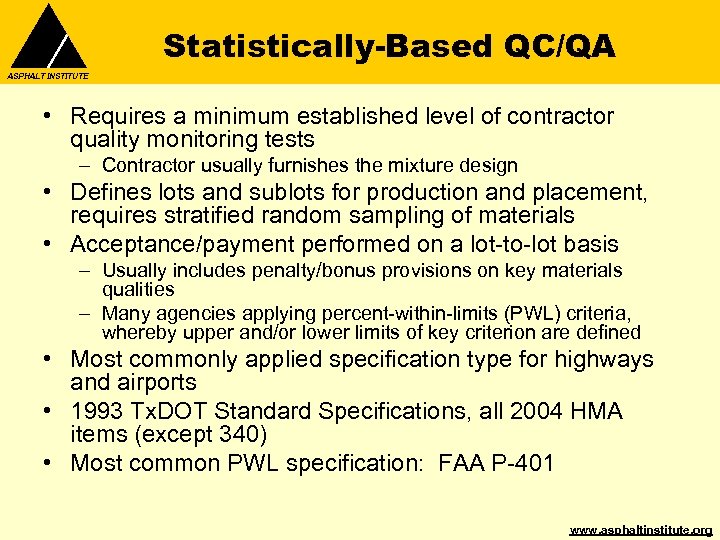 Statistically-Based QC/QA ASPHALT INSTITUTE • Requires a minimum established level of contractor quality monitoring tests – Contractor usually furnishes the mixture design • Defines lots and sublots for production and placement, requires stratified random sampling of materials • Acceptance/payment performed on a lot-to-lot basis – Usually includes penalty/bonus provisions on key materials qualities – Many agencies applying percent-within-limits (PWL) criteria, whereby upper and/or lower limits of key criterion are defined • Most commonly applied specification type for highways and airports • 1993 Tx. DOT Standard Specifications, all 2004 HMA items (except 340) • Most common PWL specification: FAA P-401 www. asphaltinstitute. org
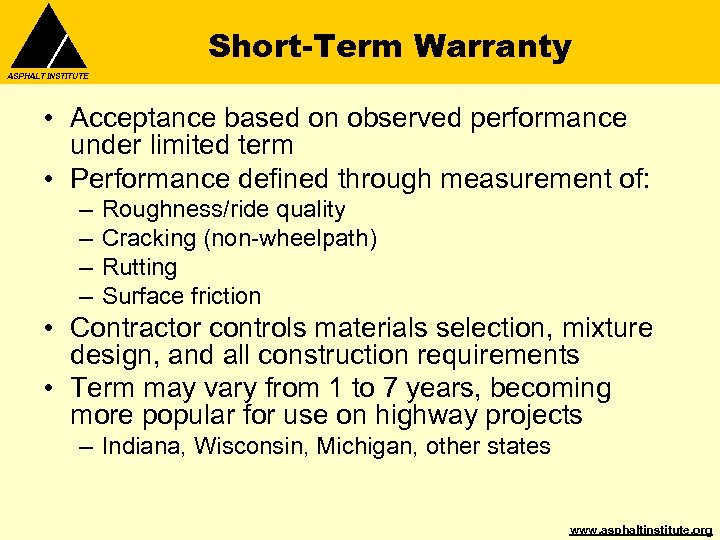 Short-Term Warranty ASPHALT INSTITUTE • Acceptance based on observed performance under limited term • Performance defined through measurement of: – – Roughness/ride quality Cracking (non-wheelpath) Rutting Surface friction • Contractor controls materials selection, mixture design, and all construction requirements • Term may vary from 1 to 7 years, becoming more popular for use on highway projects – Indiana, Wisconsin, Michigan, other states www. asphaltinstitute. org
 Long-Term Warranties ASPHALT INSTITUTE • Contractor is required to deliver a pavement with performance characteristics at defined levels at the end of an extended period (15 -30 years) • Contractor responsible for pavement structural design and construction • Most often used outside USA (design/build/operate/concessions projects in Central and South America, Europe) • Best US example, NM 44 project www. asphaltinstitute. org
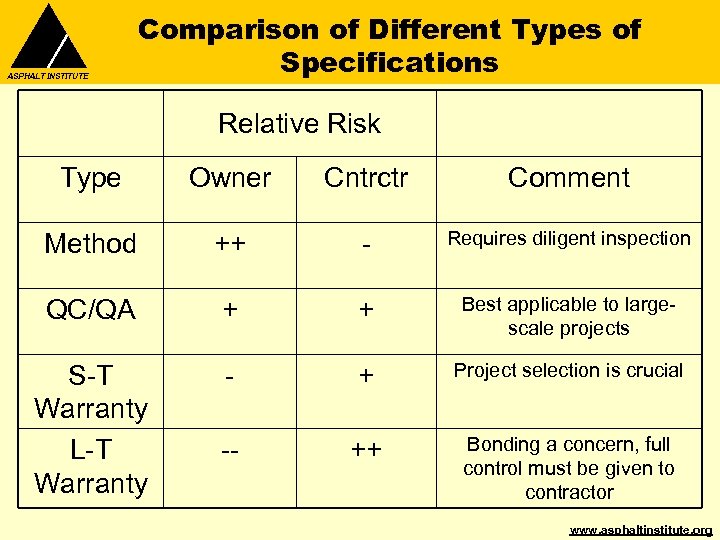 ASPHALT INSTITUTE Comparison of Different Types of Specifications Relative Risk Type Owner Cntrctr Comment Method ++ - Requires diligent inspection QC/QA + + Best applicable to largescale projects S-T Warranty L-T Warranty - + Project selection is crucial -- ++ Bonding a concern, full control must be given to contractor www. asphaltinstitute. org
 Thanks for your attention!