 Скачать презентацию Testing Object-Oriented Software A Presentation at a DFW
2ec4e5765e1da34787701f388129e793.ppt
- Количество слайдов: 50




Testing Object-Oriented Software A Presentation at a DFW ASEE Meeting Dr. David C. Kung The University of Texas at Arlington and Advanced Software International Corporation Arlington, Texas 76019 -0015 817 -272 -3785 kung@cse. uta. edu 1
Overview of Presentation • • Why Object-Oriented Software Testing The State-of-the-Research OO Software Testing Research at UTA OOTWorks Software Demonstration 2
Why Object-Oriented Software Testing • transition to OO development is not easy – OO conceptualization, design and programming significantly impact the quality – many developers’ mindset is still in procedural design and programming – anti-design patterns are commonly found in OO design and OO code 3
Case Study 1: Analysis of a Fedex Ship Manager Software • This software was designed and implemented by a team of students taking an OO software engineering class • It has nothing to do with Fedex • The software was supposed to compute and display the shipment charges for all Fedex services from a given origin zip to a given destination zip • This program is working but it has some design problems • We show OOTWorks can be used to detect these design problems 4
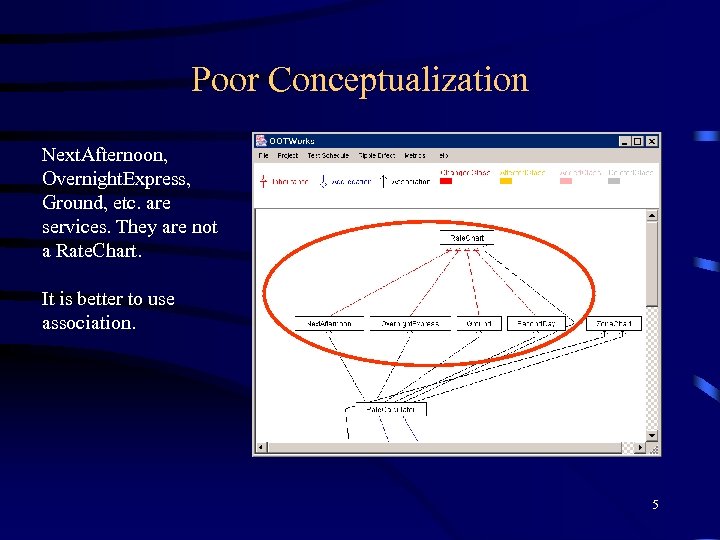
Poor Conceptualization Next. Afternoon, Overnight. Express, Ground, etc. are services. They are not a Rate. Chart. It is better to use association. 5
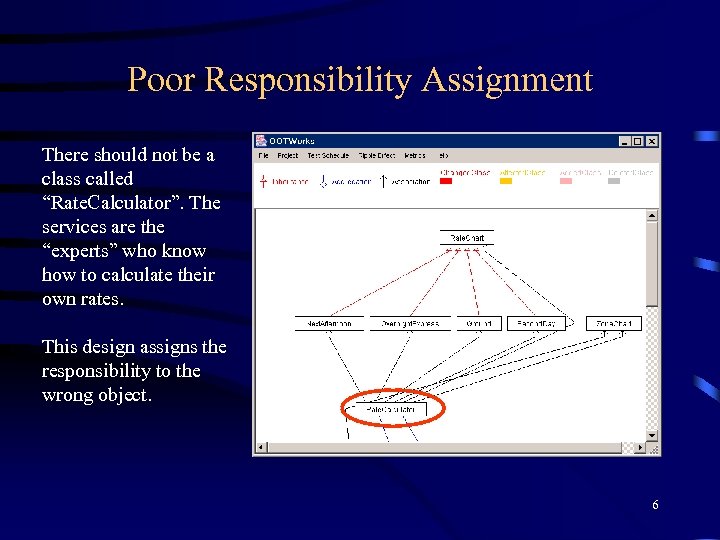
Poor Responsibility Assignment There should not be a class called “Rate. Calculator”. The services are the “experts” who know how to calculate their own rates. This design assigns the responsibility to the wrong object. 6
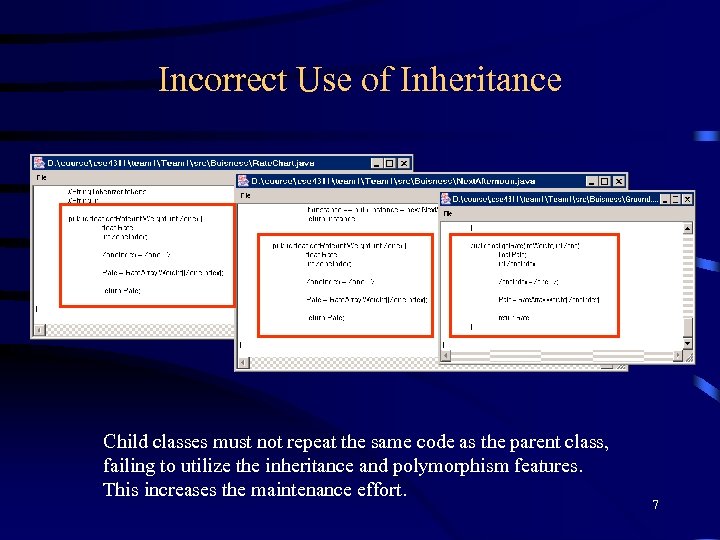
Incorrect Use of Inheritance Child classes must not repeat the same code as the parent class, failing to utilize the inheritance and polymorphism features. This increases the maintenance effort. 7
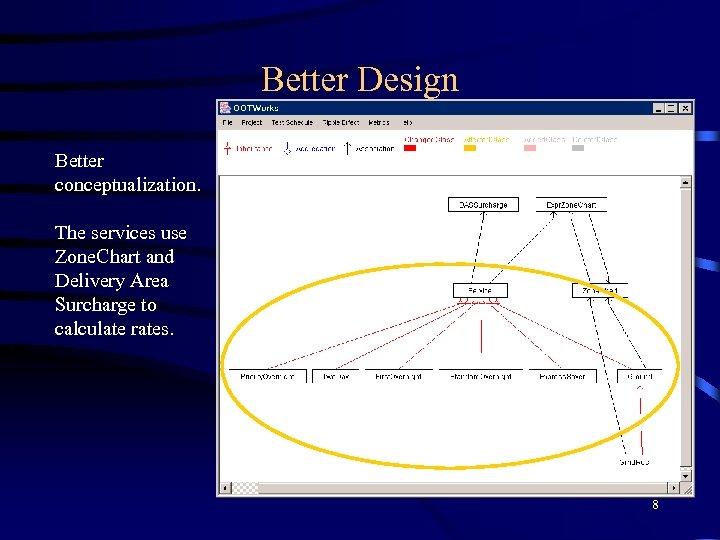
Better Design Better conceptualization. The services use Zone. Chart and Delivery Area Surcharge to calculate rates. 8
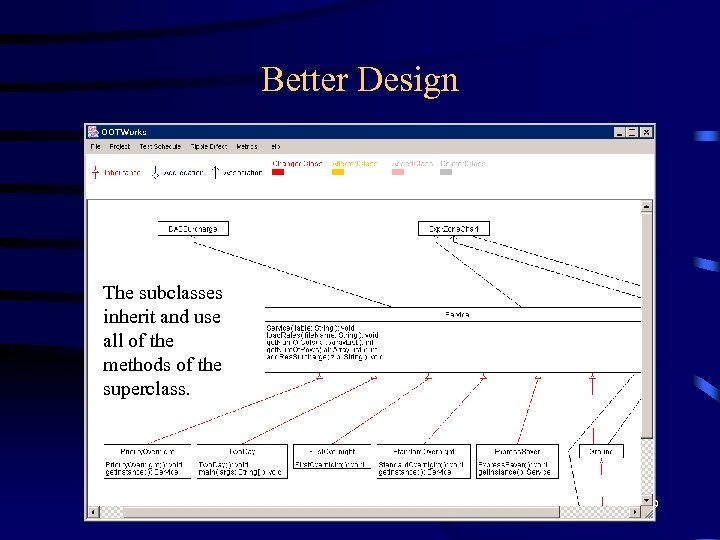
Better Design The subclasses inherit and use all of the methods of the superclass. 9
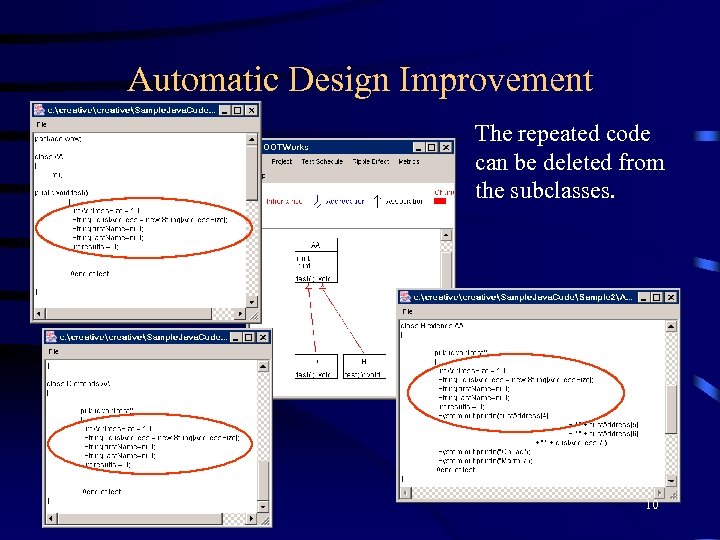
Automatic Design Improvement The repeated code can be deleted from the subclasses. 10
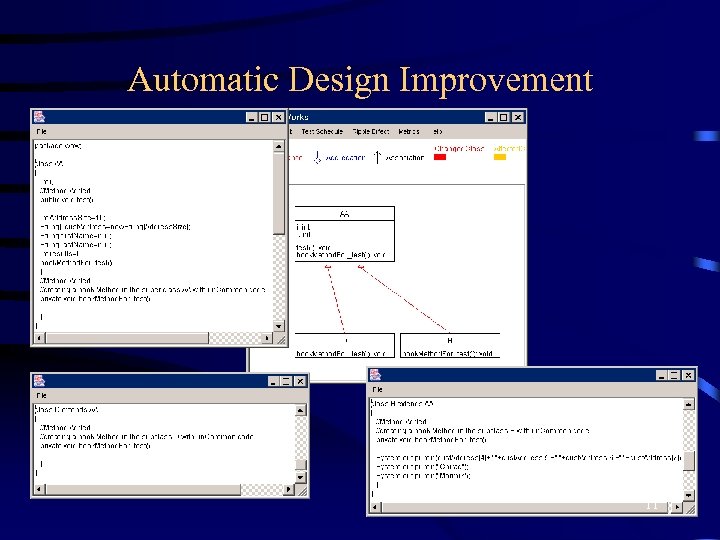
Automatic Design Improvement 11
Why Object-Oriented Software Testing • OO features introduce new testing problems – encapsulation leading to long method invocation chains, more difficulty to understand the (overall) functionality – inheritance and polymorphism: which method to execute is determined at run time – multiple and/or repeated inheritance may cause incorrect interaction in child classes – you cannot test a class, you can only test instances of a class 12
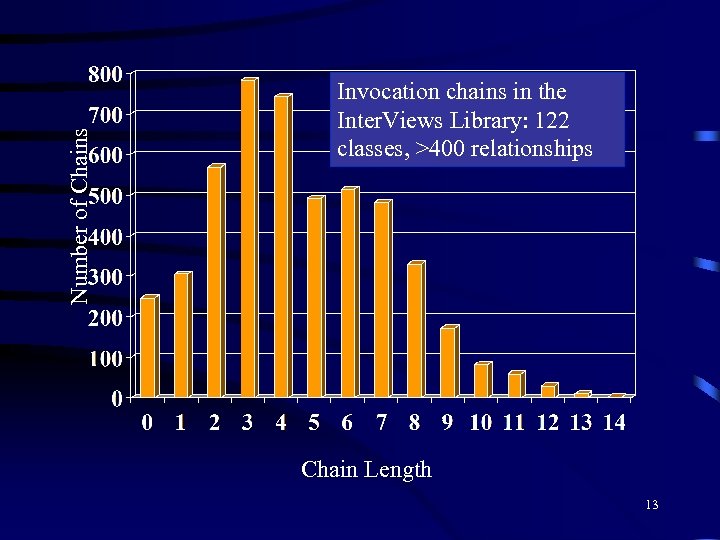
Number of Chains Invocation chains in the Inter. Views Library: 122 classes, >400 relationships Chain Length 13
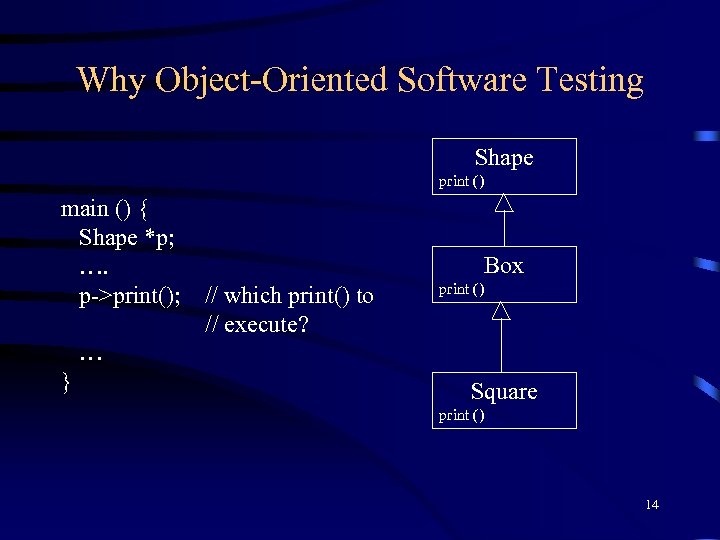
Why Object-Oriented Software Testing Shape print () main () { Shape *p; …. p->print(); Box // which print() to // execute? print () … } Square print () 14
Why Object-Oriented Software Testing • objects engage in complex interdependent relationships – testing one object may require test stubs to simulate other objects – test stubs construction is costly and time consuming – mutual or cyclic dependencies introduce additional complexity and costs in unit and integration testing – need a test order for unit testing and integration testing 15
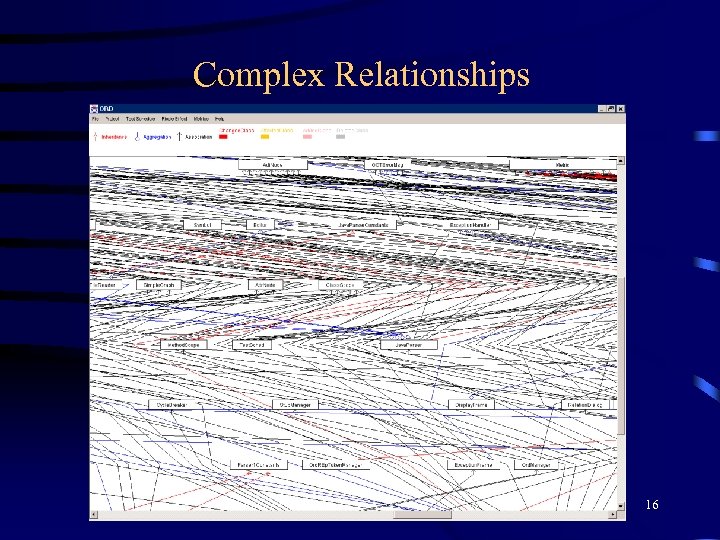
Complex Relationships 16
Why Object-Oriented Software Testing • objects exhibit strong state dependent behaviors – – how to identify states and transitions? how to identify state dependent interactions? how to generate test cases to test state behaviors? how to reduce the complexity of state behavior testing? 17
The State-of-the-Research • OO software testing began in the 1990 s • A number of test methods and techniques have been proposed • There are various tools, some are free some are not • The tester still has to do a lot of work 18
The State-of-the-Research • OO Test Methods and Techniques – – – – incremental testing of class hierarchy test order object state testing class testing, cluster testing data flow analysis testing polymorphic relationships data flow analysis for exception handling mechanism OO regression testing 19
OO Software Testing Research at UTA • A reverse engineering technology • Plus a set of utilities to facilitate • • program understanding design documentation design analysis design improvement metrics calculation test scheduling change impact analysis version comparison • • test case generation test data generation design improvement code review & analysis code improvement test execution result analysis and more. . . • The result is the OOTWorks toolkit 20
Why OOTWorks • It improves productivity and quality in – – Documentation Design and code reviews Testing, regression testing and maintenance Test planning and scheduling • It reduces the time and effort required to prepare for CMM/ audit each year 21
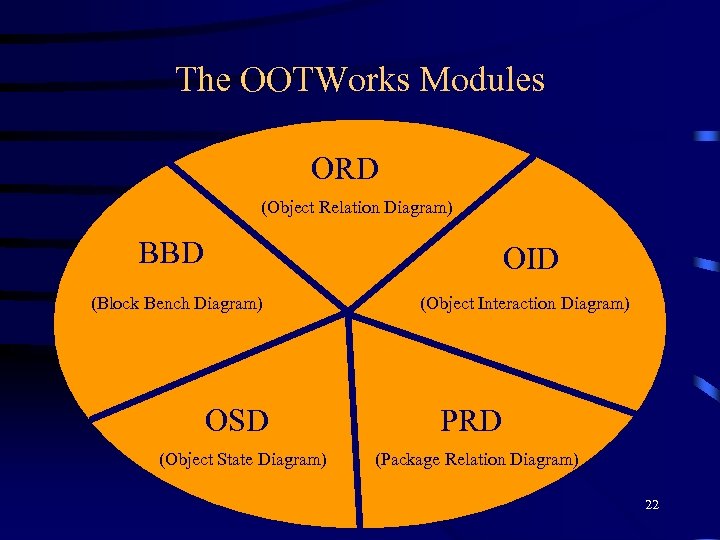
The OOTWorks Modules ORD (Object Relation Diagram) BBD OID (Block Bench Diagram) OSD (Object State Diagram) (Object Interaction Diagram) PRD (Package Relation Diagram) 22
Object Relation Diagram (ORD) • Visualization of – Classes, relationships, data members, function members, and source code, selectable by the user – Test order for unit and integration testing – Change impact and version comparison • Computation of various OO metrics • Useful for – – program comprehension and assessment documentation design and code review test scheduling and effort estimation 23
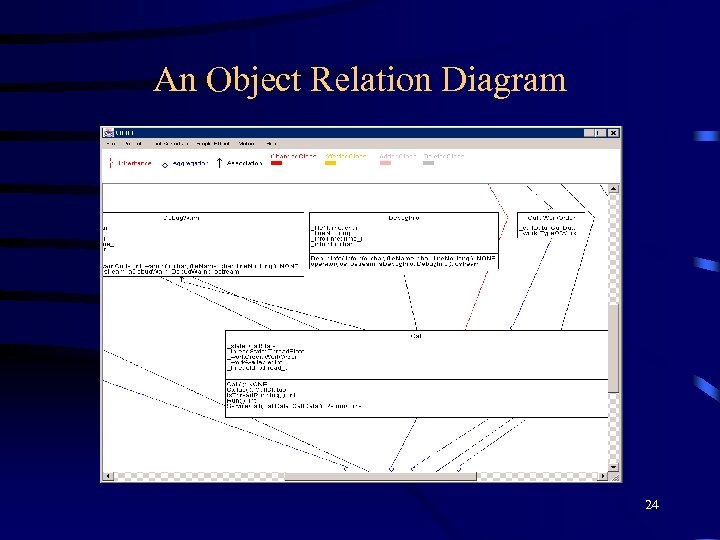
An Object Relation Diagram 24
Object Relation Diagram (ORD) • Generation of a cost-effective schedule – – – for implementing the classes (required code skeleton) for changing the classes for code review of the classes for testing the classes it effectively reduces time, effort and costs to accomplish above tasks 25
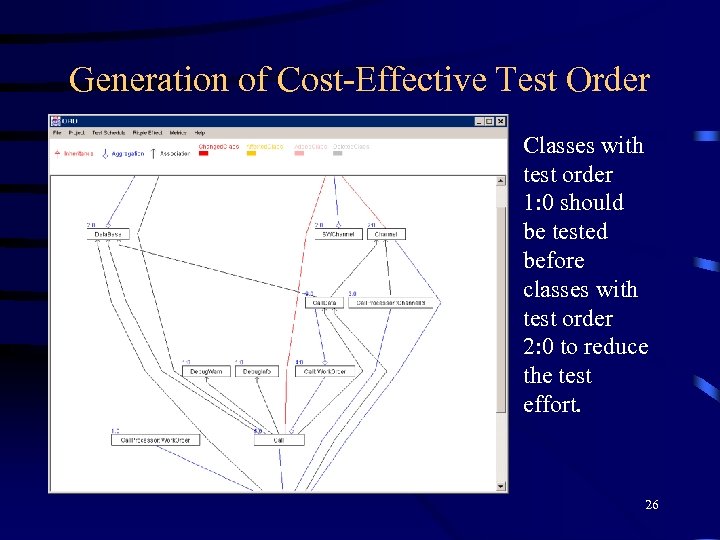
Generation of Cost-Effective Test Order Classes with test order 1: 0 should be tested before classes with test order 2: 0 to reduce the test effort. 26
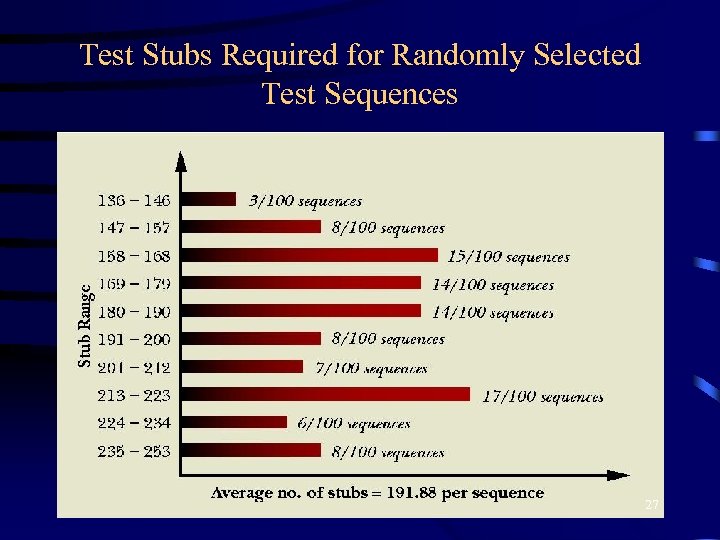
Test Stubs Required for Randomly Selected Test Sequences 27
Saving from Test Order • Average one person-hour is required to construct a test stub. • For the Inter. Views library, 191. 88 person-hours, or close to 5 person-weeks are required. • Using test order, only one test stub is needed, the saving in effort and costs are tremendous even for this small program. 28
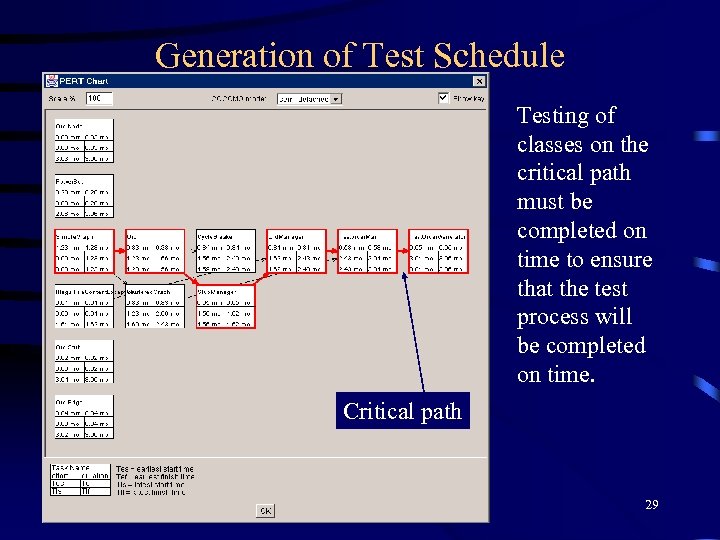
Generation of Test Schedule Testing of classes on the critical path must be completed on time to ensure that the test process will be completed on time. Critical path 29
Object Relation Diagram (ORD) • Computation of various OO metrics – – – Fan-in and fan out Depth of inheritance tree Number of lines of code Length of invocation chain Cyclomatic complexity Number of children, etc. • Useful for assessing program quality and spot potential problem areas 30
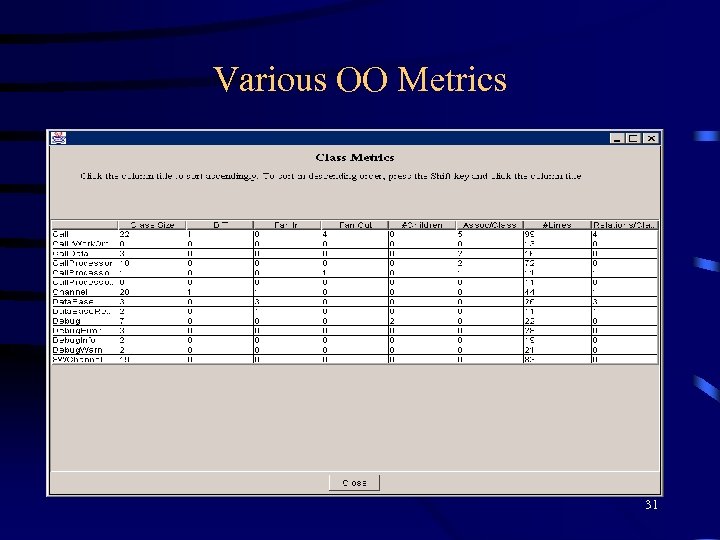
Various OO Metrics 31
Object Relation Diagram (ORD) • Change impact analysis and visualization – Compare change alternatives • Version comparison and visualization – Compare two versions/releases to identify changes and their impact – Visualizing the two versions/releases to facilitate code review and inspection to ensure that changes are made properly – Useful for maintenance, release review and regression testing to reduce time, effort and costs 32
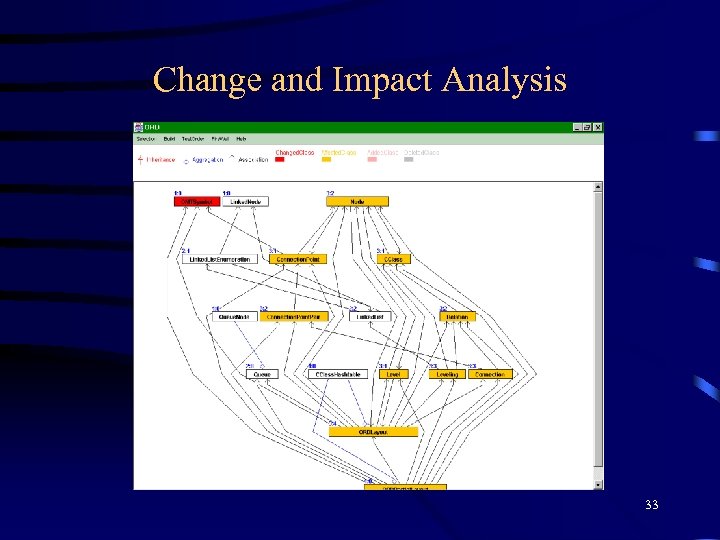
Change and Impact Analysis 33
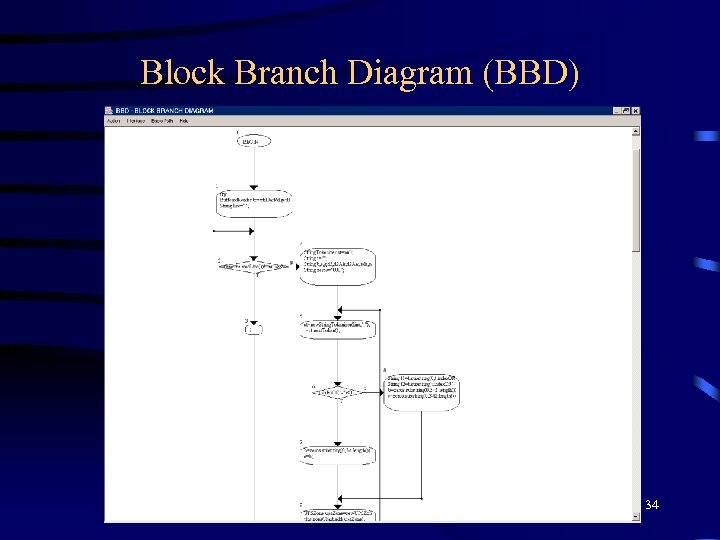
Block Branch Diagram (BBD) 34
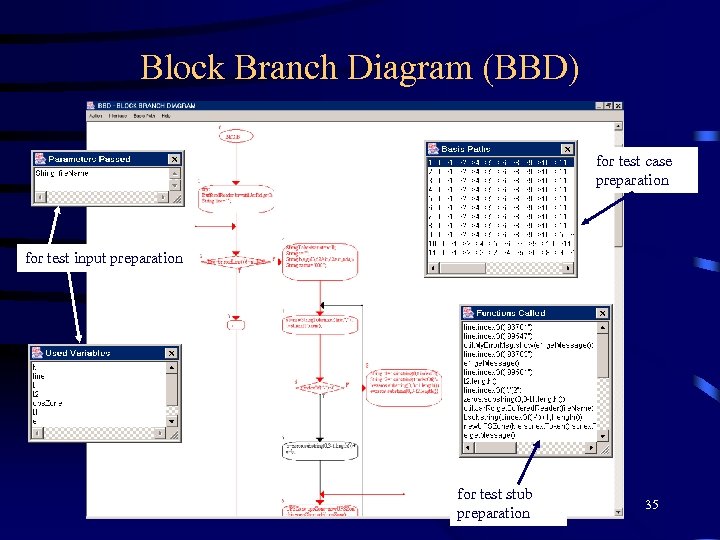
Block Branch Diagram (BBD) for test case preparation for test input preparation for test stub preparation 35
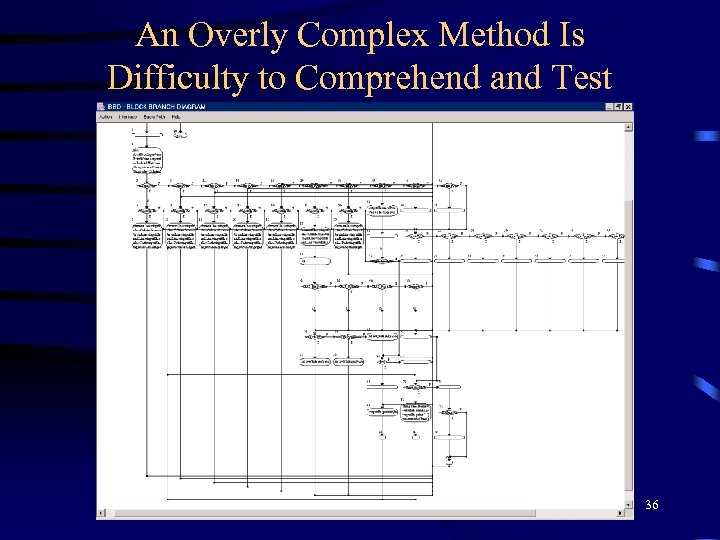
An Overly Complex Method Is Difficulty to Comprehend and Test 36
Block Branch Diagram • Useful for white-box testing (basis path, data flow) • Useful for state transition construction • Useful for black-box testing – Boundary value analysis – Functional testing • Initialize parameters • Initialize input values • Identify and construct test stubs • Analysis of test results (changed variables) • Used for sequence diagram reverse engineering 37
Object State Diagram • Hierarchical, concurrent, communicating state machines • Generated from C++/Java source code using a reverse engineering approach • Represents the dynamic state dependent behavior of objects 38
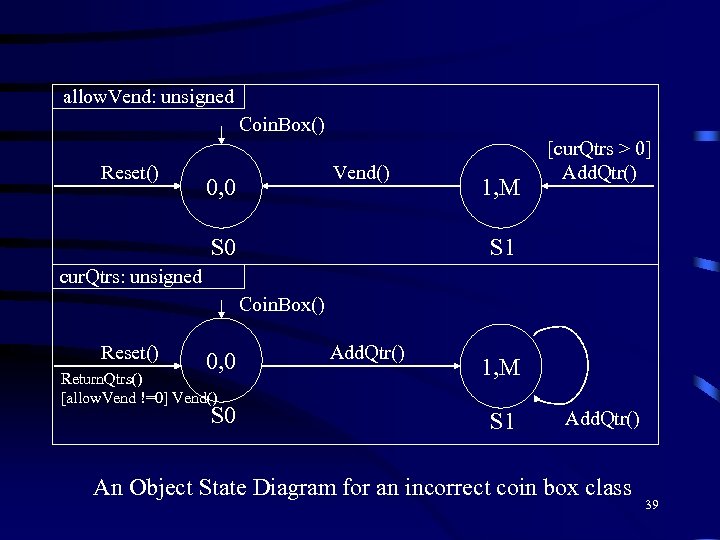
allow. Vend: unsigned Coin. Box() Reset() Vend() 0, 0 S 0 1, M [cur. Qtrs > 0] Add. Qtr() S 1 cur. Qtrs: unsigned Coin. Box() Reset() 0, 0 Return. Qtrs() [allow. Vend !=0] Vend() S 0 Add. Qtr() 1, M S 1 Add. Qtr() An Object State Diagram for an incorrect coin box class 39
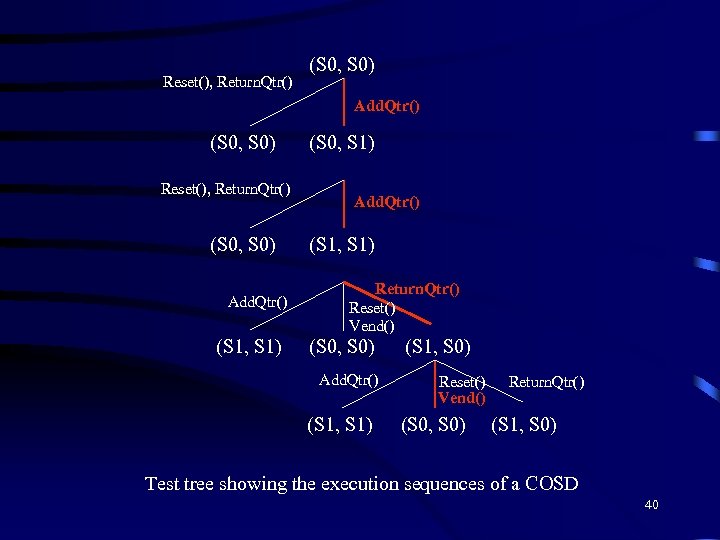
Reset(), Return. Qtr() (S 0, S 0) Add. Qtr() (S 0, S 0) Reset(), Return. Qtr() (S 0, S 0) Add. Qtr() (S 1, S 1) (S 0, S 1) Add. Qtr() (S 1, S 1) Return. Qtr() Reset() Vend() (S 0, S 0) Add. Qtr() (S 1, S 1) (S 1, S 0) Reset() Vend() (S 0, S 0) Return. Qtr() (S 1, S 0) Test tree showing the execution sequences of a COSD 40
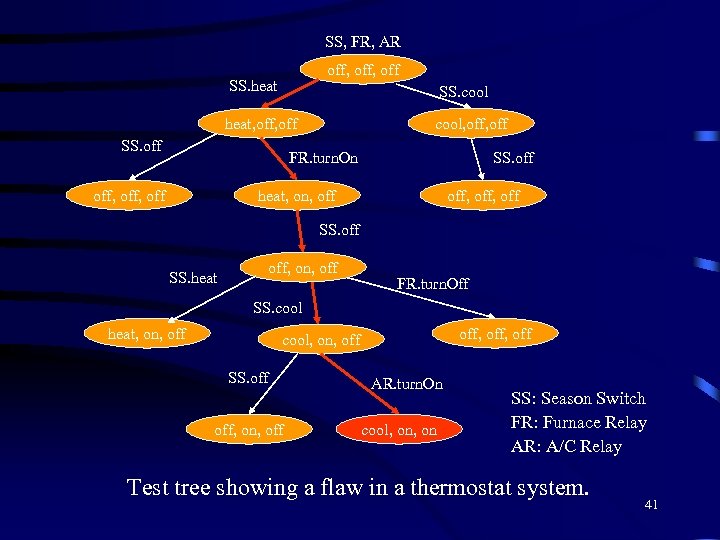
SS, FR, AR off, off SS. heat SS. cool heat, off SS. off cool, off FR. turn. On off, off SS. off heat, on, off, off SS. heat off, on, off FR. turn. Off SS. cool heat, on, off, off cool, on, off SS. off, on, off AR. turn. On cool, on SS: Season Switch FR: Furnace Relay AR: A/C Relay Test tree showing a flaw in a thermostat system. 41
Sequence Diagram • A sequence diagram describes the object interaction through time ordered message passing. • Elements and their Notations – Objects • Placed at top of the diagram across the horizontal axis – Lifelines • Dotted lines extending down the vertical axis – Messages and Stimulus • Horizontal solid labeled arrow. – Focus of Control • Tall thin rectangle along the vertical axis. 42
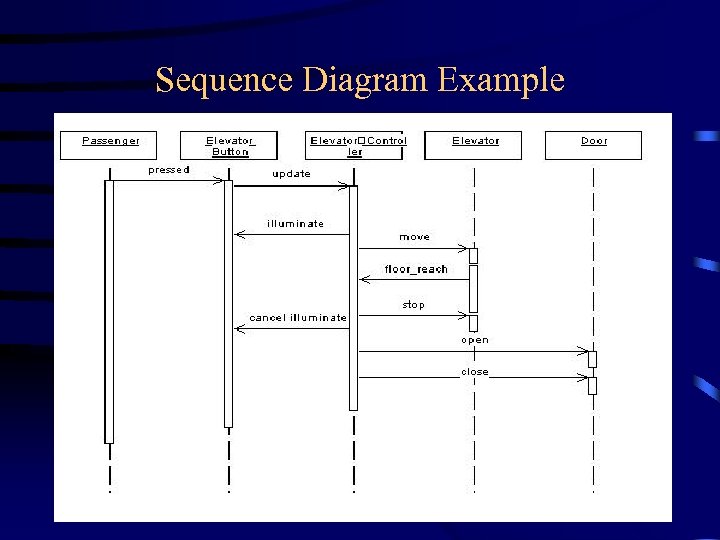
Sequence Diagram Example 43
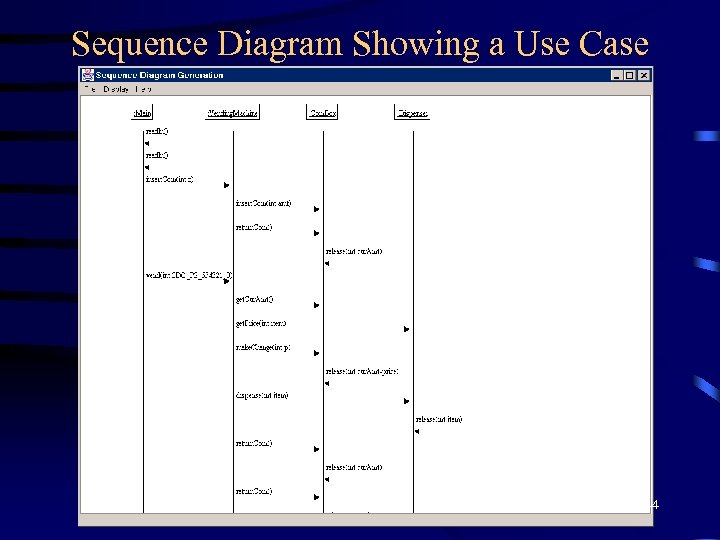
Sequence Diagram Showing a Use Case 44
Usefulness of Sequence Diagram • Understanding how use cases are implemented • Automatic generation of test cases and test data to test the implementation • Facilitating design and code review • Check if some behavioral design patterns are propertly implemented 45
Some Application Data • OOTWorks can process millions of lines of source code and thousands of classes • Parsing of a 50, 000 line C++ files finishes in 20 seconds • Platform independent (Windows, Linux, Unix, Soloaris, Mac, etc. ) • Display and print very large ORD diagrams • Has been applied to real world applications with satisfactory results 46
Some Example Applications – Identification of isolated classes – Identification of possibly poorly designed OO software • no use of inheritance and/or aggregation • only one parent class, all the other classes are direct children of the parent class • classes with several thousand lines of code • classes with very high fan-in and/or fan-out metrics • high cyclomatic complexity • classes having excessive number of methods may indicate poor cohesion (or too much responsibilities) • etc. 47
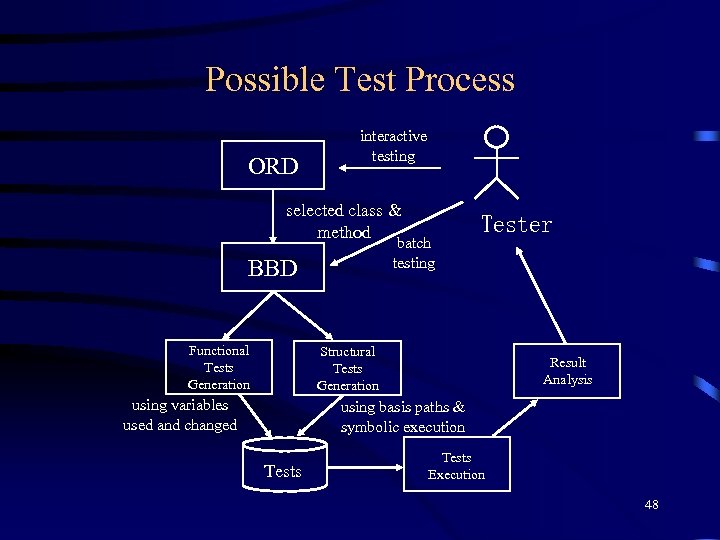
Possible Test Process ORD interactive testing selected class & method batch testing BBD Functional Tests Generation Tester Structural Tests Generation using variables used and changed Result Analysis using basis paths & symbolic execution Tests Execution 48
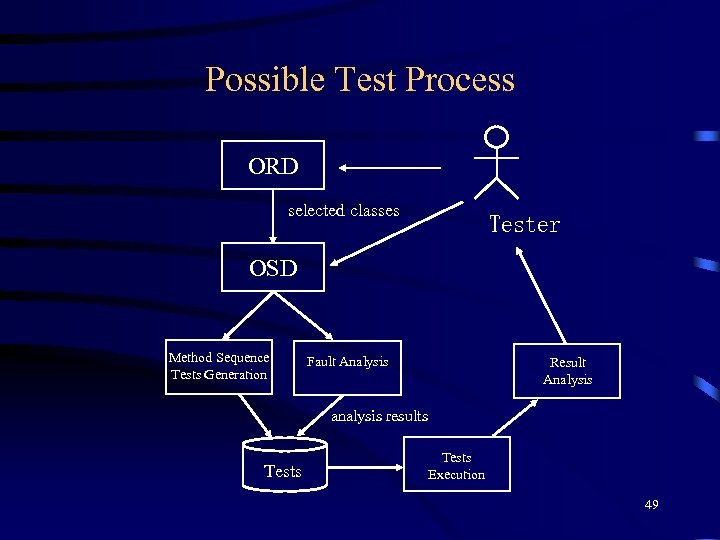
Possible Test Process ORD selected classes Tester OSD Method Sequence Tests Generation Fault Analysis Result Analysis analysis results Tests Execution 49
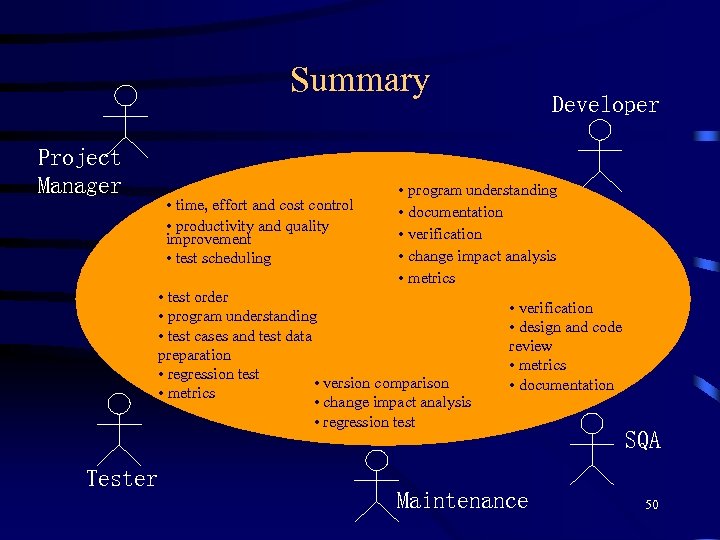
Summary Project Manager • time, effort and cost control • productivity and quality improvement • test scheduling • program understanding • documentation • verification • change impact analysis • metrics • test order • program understanding • test cases and test data preparation • regression test • version comparison • metrics • change impact analysis • regression test Tester Developer • verification • design and code review • metrics • documentation Maintenance SQA 50
Скачать презентацию Testing Object-Oriented Software A Presentation at a DFW
2ec4e5765e1da34787701f388129e793.ppt