


 Скачать презентацию Terrorism in the 21 st Century An Introduction
e2b26f0a5504c1493aa31577eca55b55.ppt
- Количество слайдов: 62
 Terrorism in the 21 st Century: An Introduction COMBATING TERRORISM CENTER at West Point James JF Forest, Ph. D. Director of Terrorism Studies
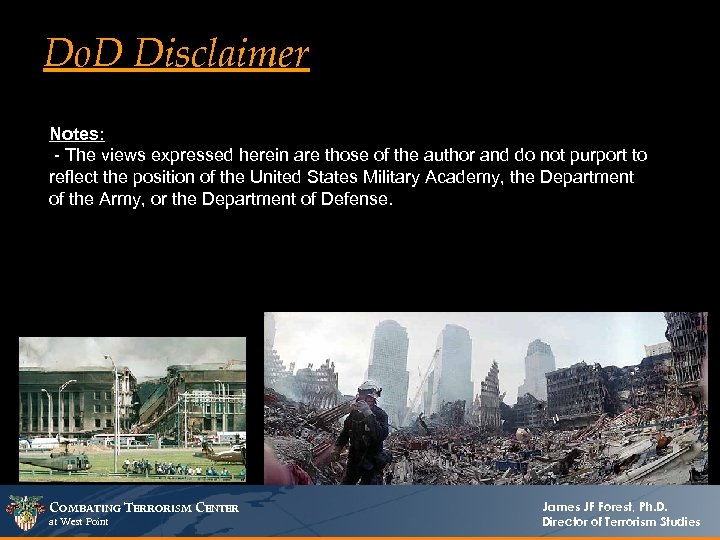 Do. D Disclaimer Notes: - The views expressed herein are those of the author and do not purport to reflect the position of the United States Military Academy, the Department of the Army, or the Department of Defense. COMBATING TERRORISM CENTER at West Point James JF Forest, Ph. D. Director of Terrorism Studies
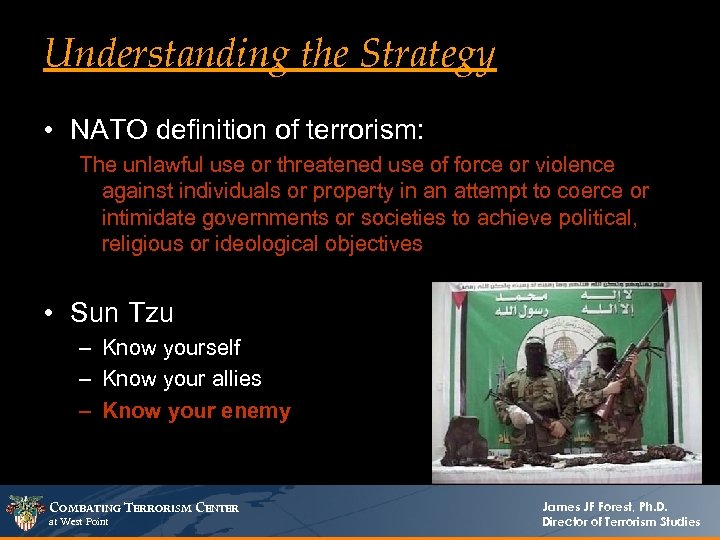 Understanding the Strategy • NATO definition of terrorism: The unlawful use or threatened use of force or violence against individuals or property in an attempt to coerce or intimidate governments or societies to achieve political, religious or ideological objectives • Sun Tzu – Know yourself – Know your allies – Know your enemy COMBATING TERRORISM CENTER at West Point James JF Forest, Ph. D. Director of Terrorism Studies
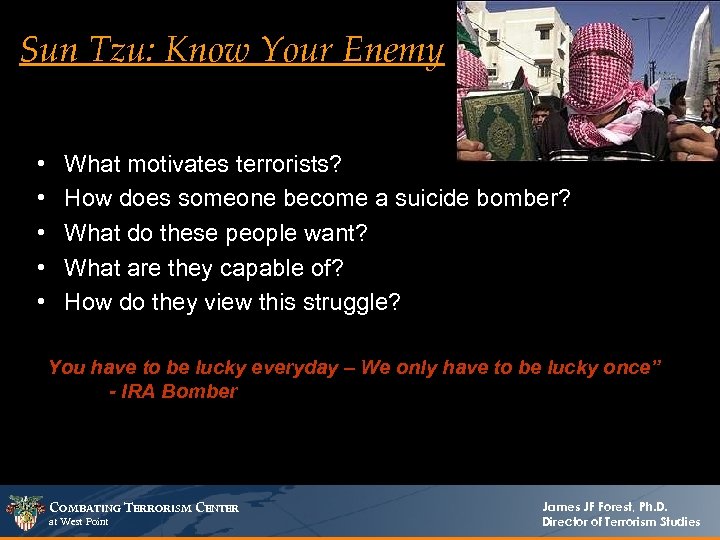 Sun Tzu: Know Your Enemy • • • What motivates terrorists? How does someone become a suicide bomber? What do these people want? What are they capable of? How do they view this struggle? “You have to be lucky everyday – We only have to be lucky once” - IRA Bomber COMBATING TERRORISM CENTER at West Point James JF Forest, Ph. D. Director of Terrorism Studies
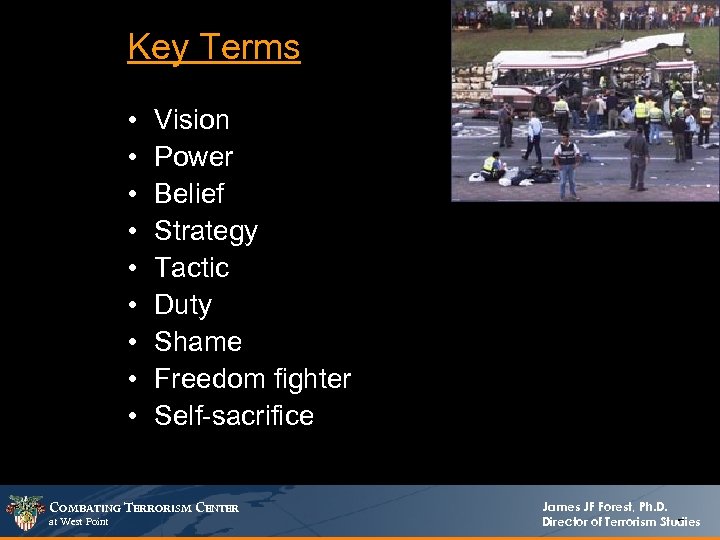 Key Terms • • • Vision Power Belief Strategy Tactic Duty Shame Freedom fighter Self-sacrifice COMBATING TERRORISM CENTER at West Point James JF Forest, Ph. D. Director of Terrorism Studies AB 95 -5. PPT // ##
 Key Terms • • • Vision – “Shape the future” Power to achieve the vision Belief in a higher cause Strategy – to compel, coerce, etc. Tactic – bombing, assassination, etc. Duty to the cause, to family, to God Shame upon you for not doing seeking justice Freedom fighter – must kill to secure freedom (? ) Self-sacrifice – to be killed in the service of a higher cause is “heroic” COMBATING TERRORISM CENTER at West Point James JF Forest, Ph. D. Director of Terrorism Studies AB 95 -5. PPT // ##
 Defining Terrorism Primary Types • • • Left-wing Right-wing Ethno-nationalist (separatist) Religious State-Sponsored COMBATING TERRORISM CENTER at West Point James JF Forest, Ph. D. Director of Terrorism Studies AB 95 -5. PPT // ##
 Left-wing Terrorists • Driven by liberal or idealist political concepts • Prefer revolutionary anti-authoritarian antimaterialist agendas • Typically target elites that symbolize authority • Examples: – Anarchists, Earth First, Animal Liberation Front COMBATING TERRORISM CENTER at West Point James JF Forest, Ph. D. Director of Terrorism Studies
 Right-wing Terrorists • Often target race and ethnicity • Examples: – Aryan Brotherhood, the Order, White Aryan Nation COMBATING TERRORISM CENTER at West Point James JF Forest, Ph. D. Director of Terrorism Studies
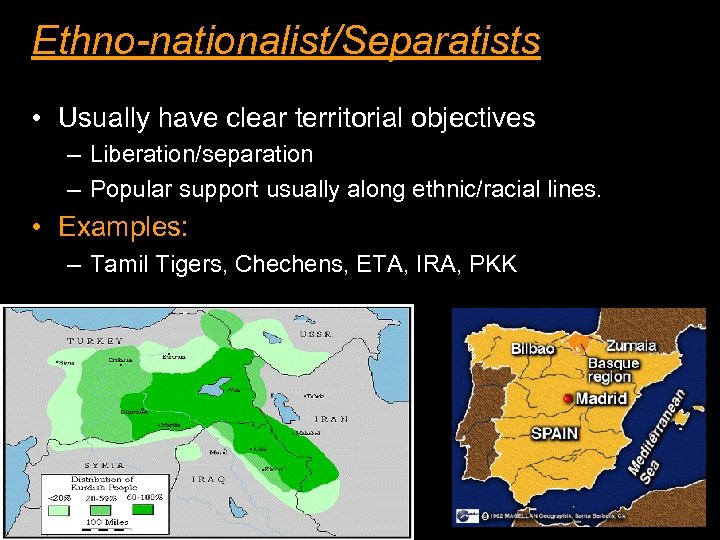 Ethno-nationalist/Separatists • Usually have clear territorial objectives – Liberation/separation – Popular support usually along ethnic/racial lines. • Examples: – Tamil Tigers, Chechens, ETA, IRA, PKK
 Religious terrorists • Belief in a struggle of good vs evil – Acting along desires of a diety – target is thus not necessarily human – Feel unconstrained by law – higher calling – Complete alienation from existing socio/political order – Support may be diffuse • Examples: – al Qaeda, Hizballah, Hamas, Jemaah Islamiyah, Christian Militia, Aum Shinrikyo, Al Aqsa Martyrs Brigade, Amal, Lehi, Irgun COMBATING TERRORISM CENTER at West Point James JF Forest, Ph. D. Director of Terrorism Studies
 State Terrorism • Governments can engage in acts of terrorism • Examples: – Iraq, Saddam Hussein deployed chemical weapons in Kurdish villages, killing thousands – Intent was to frighten other villages into stopping their political revolt – It worked COMBATING TERRORISM CENTER at West Point James JF Forest, Ph. D. Director of Terrorism Studies
 State-Sponsored Terrorism • Governments can also support terrorist groups that do their bidding • Examples: – Iran, which supports Hizballah – Before 9/11, Hizballah had killed more Americans than any other terror group – Embassy bombings, kidnappings, targeted assassinations, suicide attack on Marine barracks at Beirut airport COMBATING TERRORISM CENTER at West Point James JF Forest, Ph. D. Director of Terrorism Studies
 Marine Barracks Beirut, Lebanon 23 October 1983 • 241 Dead • 105 Injured COMBATING TERRORISM CENTER at West Point James JF Forest, Ph. D. Director of Terrorism Studies
 A Brief History of Modern Terrorism • Roughly 130 -year history • 4 Waves, each roughly 40 -45 years – – Anarchist Wave Anti-Colonial/Decolonization Wave New Left Wave/Leftist anti-Western sentiment Religious Inspiration Wave • Issue to consider for each wave: – Doctrines of terror – Technology (especially for communication/propoganda) – Avenues of funding and support COMBATING TERRORISM CENTER at West Point James JF Forest, Ph. D. Director of Terrorism Studies
 Terrorism as Strategy • Terrorism as means to achieve goals and objectives • Strategic goals include: – – Political change (e. g. , overthrow govt. , drive out occupiers, etc. ) Social change (e. g. , France headscarf ban) Economic change (e. g. , stop resource export) Religious change (e. g. , fundamentalism) • Overall goal: create a “better” world COMBATING TERRORISM CENTER at West Point James JF Forest, Ph. D. Director of Terrorism Studies
 Some Strategic Objectives of Terrorism • Recognition: Gaining national or international recognition for their cause; recruiting new personnel; raising funds; demonstrating their strength • Coercion: Force a desired behavior of an individual or government • Intimidation: Prevent individuals, groups, or governments from acting • Provocation: Provoking overreaction by a government to the attack on symbolic targets or personnel, thereby gaining sympathy for their cause. • Insurgency support: Forcing the government to overextend itself in dealing with the threat, thereby allowing the insurgency to gain support and commit further attacks against the government. COMBATING TERRORISM CENTER at West Point James JF Forest, Ph. D. Director of Terrorism Studies
 New York, World Trade Center February 26, 1993 6 Dead, 1, 042 Injured Oklahoma City Murrah Federal Building, 19 April 1995 168 Dead, 490 Injured COMBATING TERRORISM CENTER at West Point James JF Forest, Ph. D. Director of Terrorism Studies
 Aum Shinrikyo and the Sarin Gas Attacks Japan, 1994 & 1995 Matsumoto, Japan March, 1994 7 Dead, 34 Injured Tokyo, Japan Teito Rapid Transit Authority (Subway System) March 20, 1995 12 Dead, 5, 000 Injured Sarin gas kills by paralyzing muscles so that a person cannot breathe. Sarin enters the body by inhalation, ingestion, and through the eyes and skin. Symptoms begin with watery eyes, drooling, and excessive sweating, and then rapidly progress to difficulty in breathing, dimness of vision, nausea, vomiting, twitching, and headache. Ultimately the victim will become comatose and suffocate as a consequence of convulsive spasms. COMBATING TERRORISM CENTER at West Point James JF Forest, Ph. D. Director of Terrorism Studies
 Khobar Towers - Dhahran, Saudi Arabia 25 June 1996 • 19 Dead • 240 Injured COMBATING TERRORISM CENTER at West Point James JF Forest, Ph. D. Director of Terrorism Studies
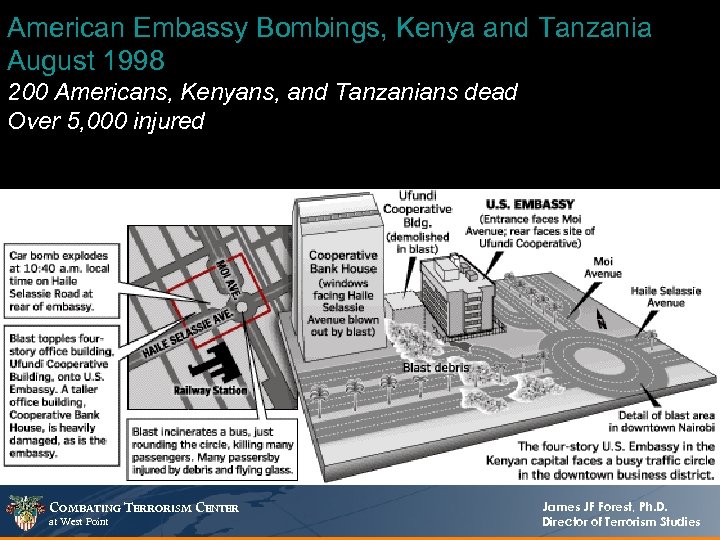 American Embassy Bombings, Kenya and Tanzania August 1998 200 Americans, Kenyans, and Tanzanians dead Over 5, 000 injured COMBATING TERRORISM CENTER at West Point James JF Forest, Ph. D. Director of Terrorism Studies
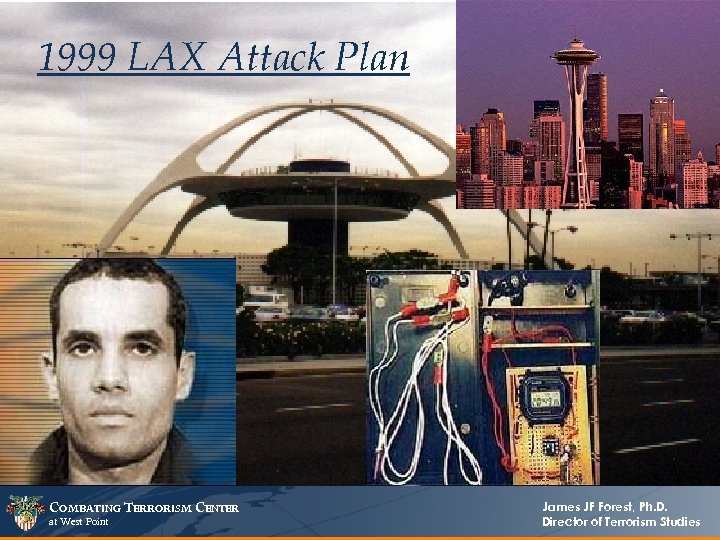 1999 LAX Attack Plan COMBATING TERRORISM CENTER at West Point James JF Forest, Ph. D. Director of Terrorism Studies
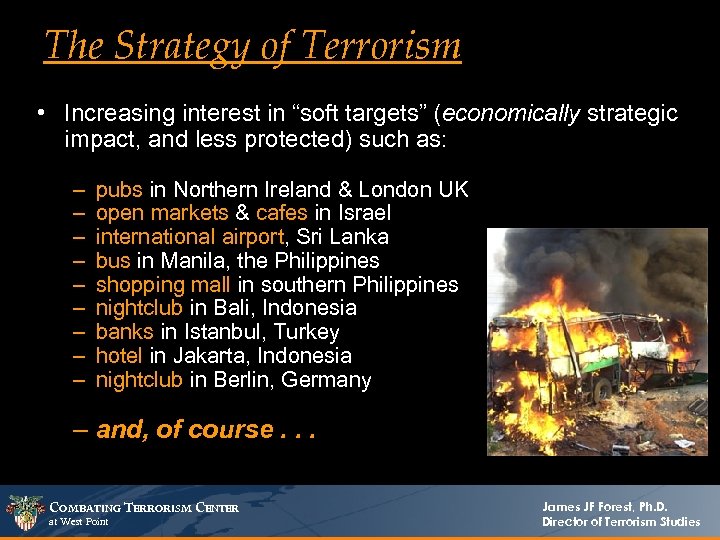 The Strategy of Terrorism • Increasing interest in “soft targets” (economically strategic impact, and less protected) such as: – – – – – pubs in Northern Ireland & London UK open markets & cafes in Israel international airport, Sri Lanka bus in Manila, the Philippines shopping mall in southern Philippines nightclub in Bali, Indonesia banks in Istanbul, Turkey hotel in Jakarta, Indonesia nightclub in Berlin, Germany – and, of course. . . COMBATING TERRORISM CENTER at West Point James JF Forest, Ph. D. Director of Terrorism Studies
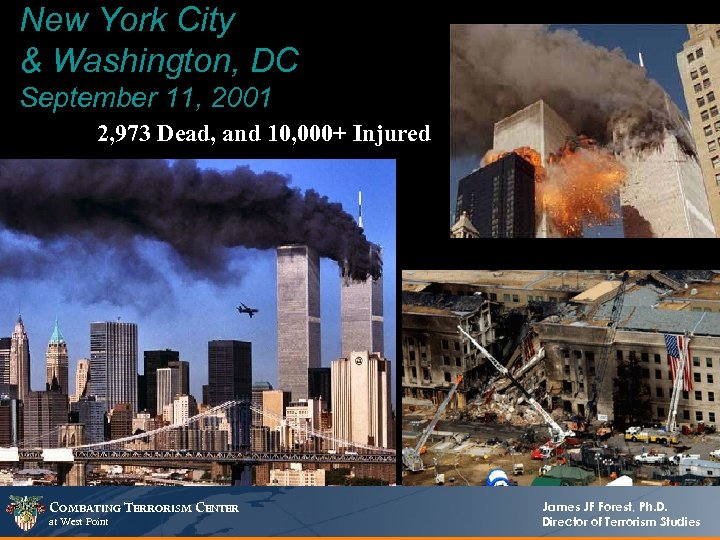 New York City & Washington, DC September 11, 2001 2, 973 Dead, and 10, 000+ Injured COMBATING TERRORISM CENTER at West Point James JF Forest, Ph. D. Director of Terrorism Studies
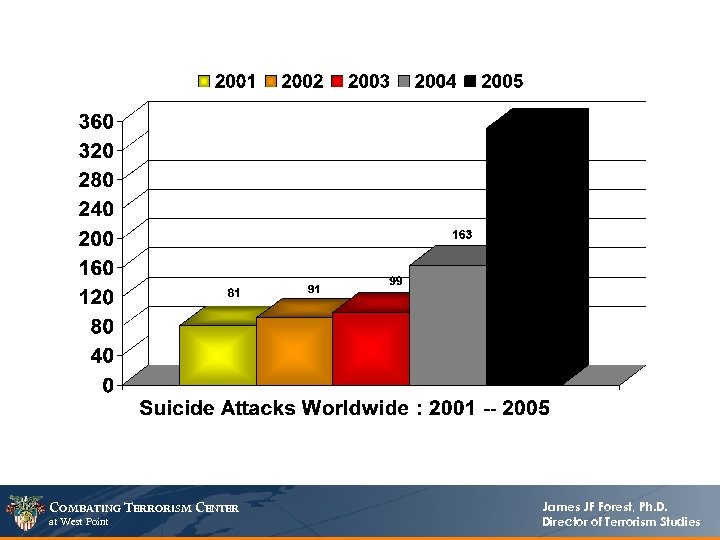
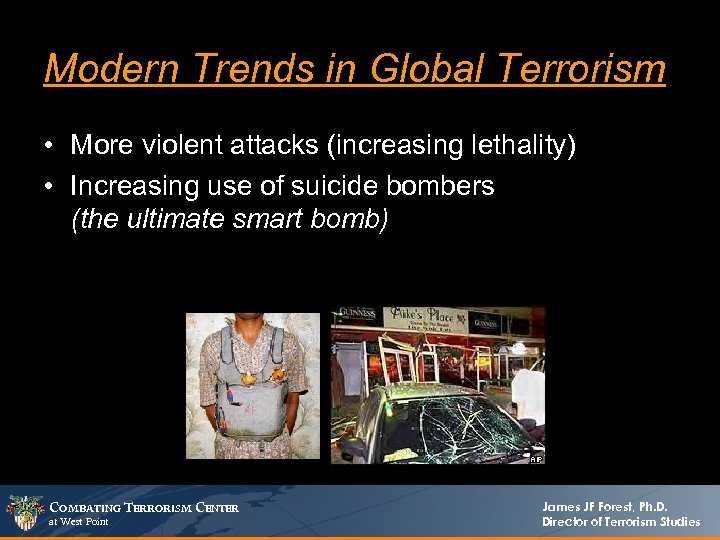 Modern Trends in Global Terrorism • More violent attacks (increasing lethality) • Increasing use of suicide bombers (the ultimate smart bomb) COMBATING TERRORISM CENTER at West Point James JF Forest, Ph. D. Director of Terrorism Studies
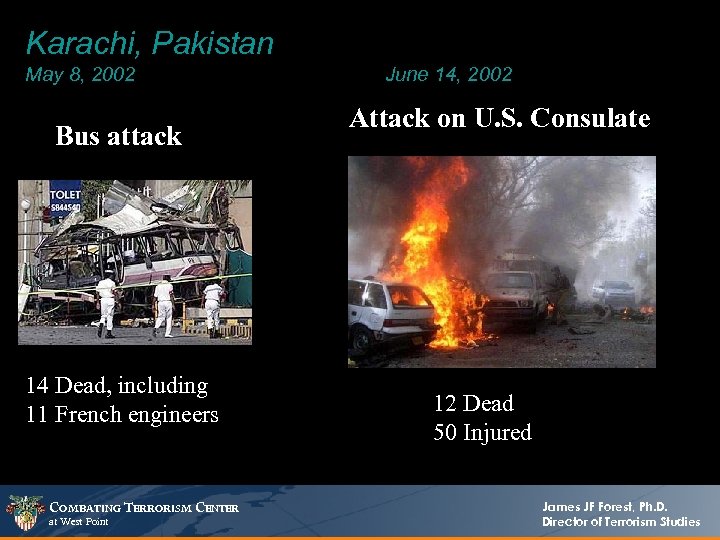 Karachi, Pakistan May 8, 2002 Bus attack 14 Dead, including 11 French engineers COMBATING TERRORISM CENTER at West Point June 14, 2002 Attack on U. S. Consulate 12 Dead 50 Injured James JF Forest, Ph. D. Director of Terrorism Studies
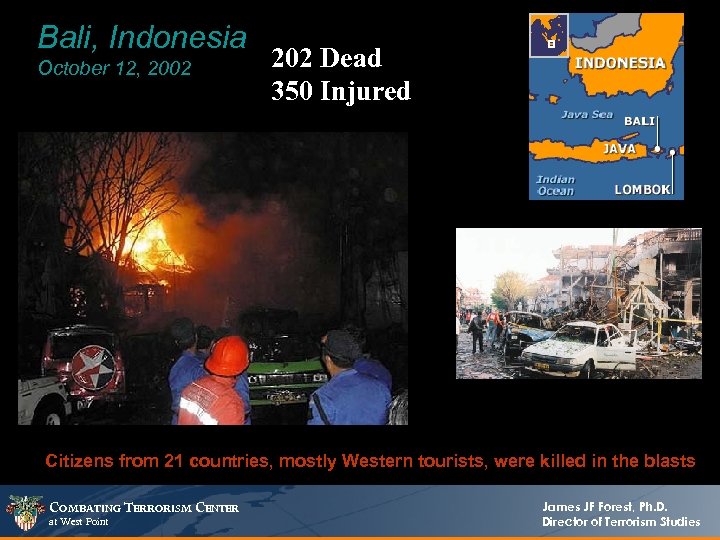 Bali, Indonesia October 12, 2002 202 Dead 350 Injured Citizens from 21 countries, mostly Western tourists, were killed in the blasts COMBATING TERRORISM CENTER at West Point James JF Forest, Ph. D. Director of Terrorism Studies
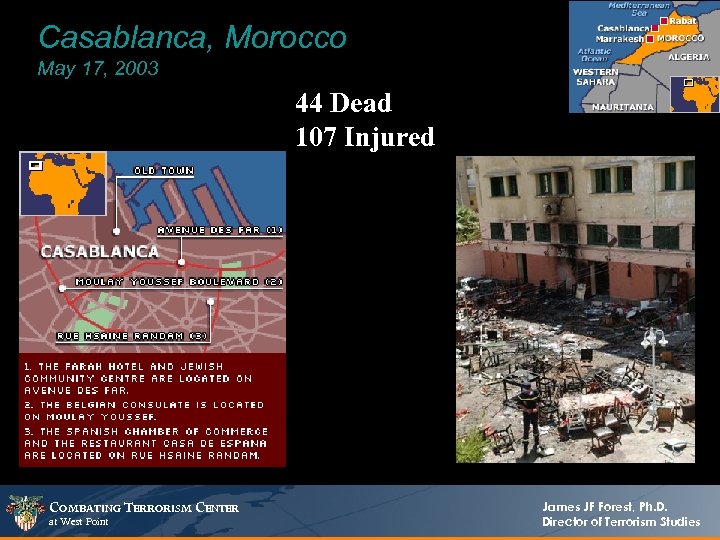 Casablanca, Morocco May 17, 2003 44 Dead 107 Injured COMBATING TERRORISM CENTER at West Point James JF Forest, Ph. D. Director of Terrorism Studies
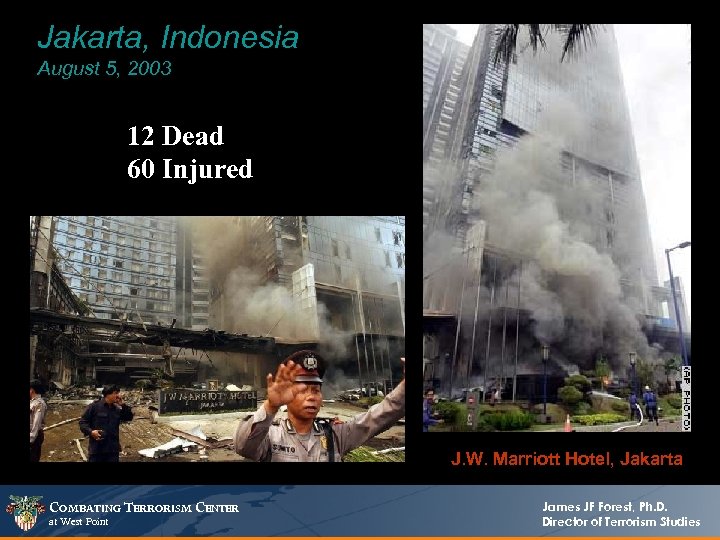 Jakarta, Indonesia August 5, 2003 12 Dead 60 Injured J. W. Marriott Hotel, Jakarta COMBATING TERRORISM CENTER at West Point James JF Forest, Ph. D. Director of Terrorism Studies
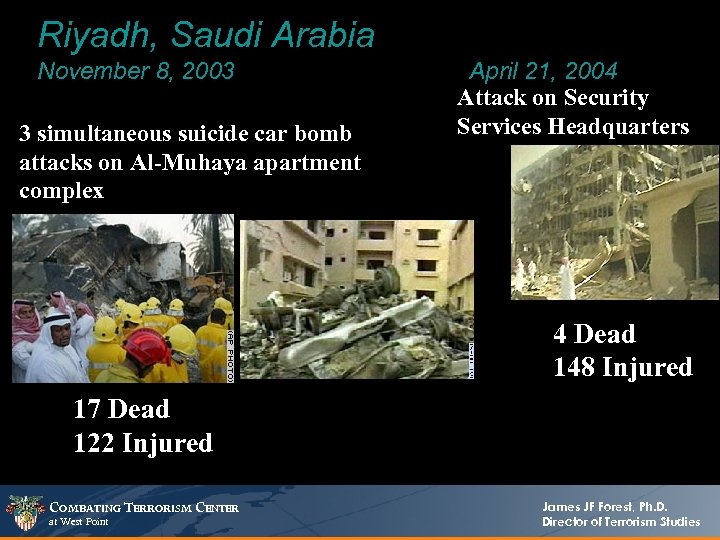 Riyadh, Saudi Arabia November 8, 2003 3 simultaneous suicide car bomb attacks on Al-Muhaya apartment complex April 21, 2004 Attack on Security Services Headquarters 4 Dead 148 Injured 17 Dead 122 Injured COMBATING TERRORISM CENTER at West Point James JF Forest, Ph. D. Director of Terrorism Studies
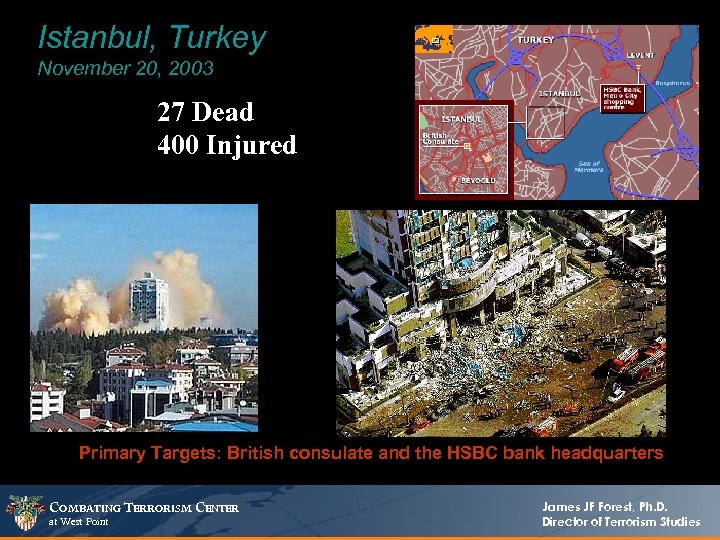 Istanbul, Turkey November 20, 2003 27 Dead 400 Injured Primary Targets: British consulate and the HSBC bank headquarters COMBATING TERRORISM CENTER at West Point James JF Forest, Ph. D. Director of Terrorism Studies
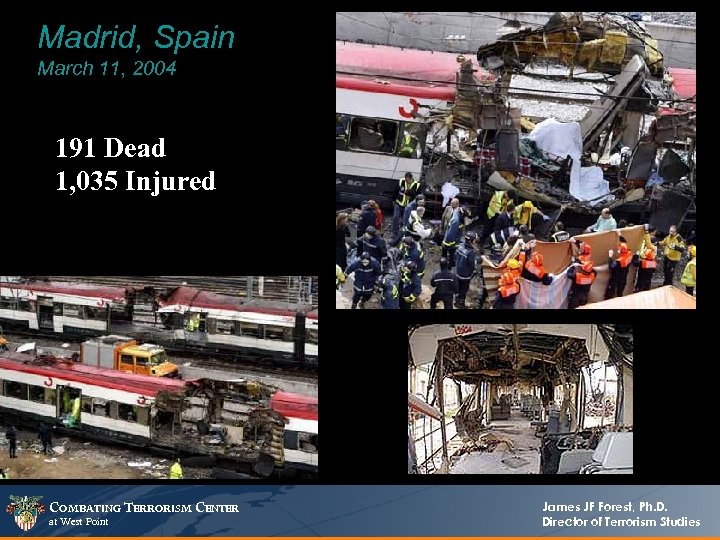 Madrid, Spain March 11, 2004 191 Dead 1, 035 Injured COMBATING TERRORISM CENTER at West Point James JF Forest, Ph. D. Director of Terrorism Studies
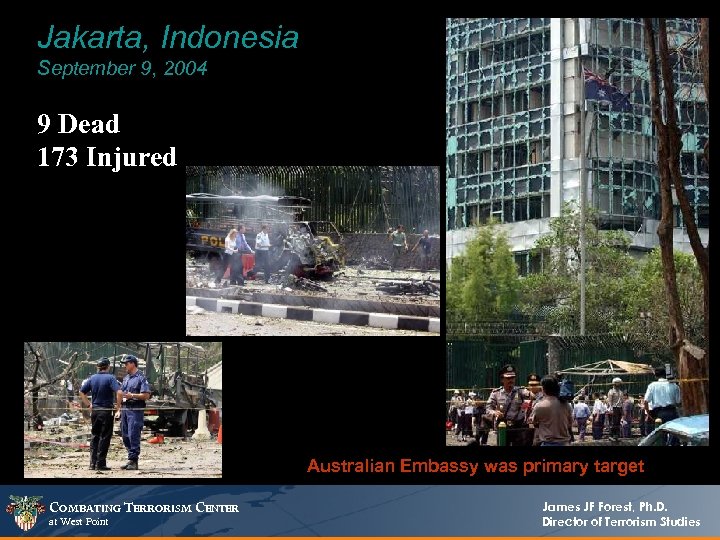 Jakarta, Indonesia September 9, 2004 9 Dead 173 Injured Australian Embassy was primary target COMBATING TERRORISM CENTER at West Point James JF Forest, Ph. D. Director of Terrorism Studies
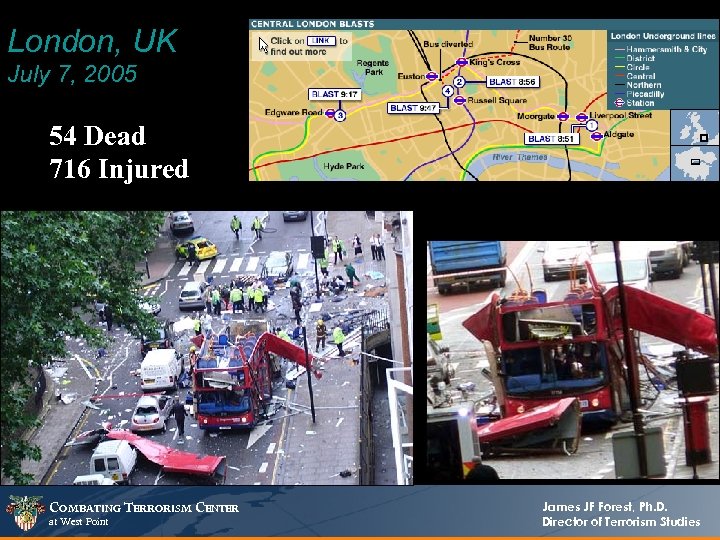 London, UK July 7, 2005 54 Dead 716 Injured COMBATING TERRORISM CENTER at West Point James JF Forest, Ph. D. Director of Terrorism Studies
 Strategy and Recruitment • Terrorism is an individual’s strategic choice most often driven by a combination of: – Intense grievances – Sense of crisis – Address a power imbalance - empower the disenfranchised • The ties that bind: training camps, extended family, social networks; trusted networks = key • Combination of ideology and psychology • No constraints re: geography, organizational affiliation, etc. COMBATING TERRORISM CENTER at West Point James JF Forest, Ph. D. Director of Terrorism Studies
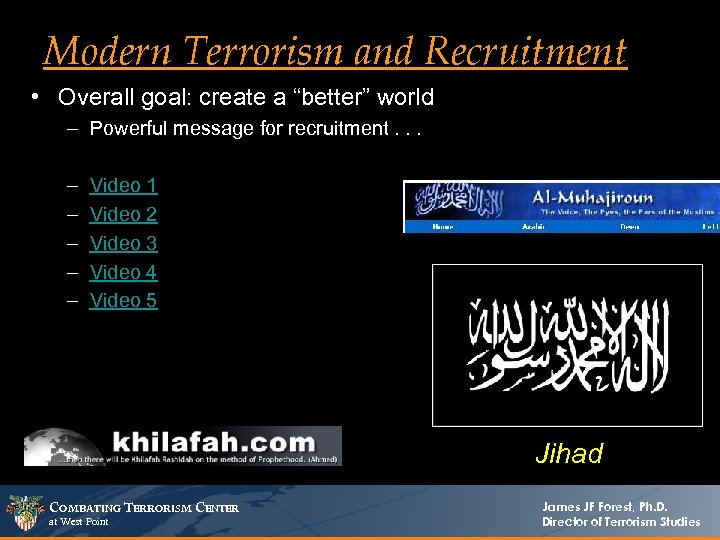 Modern Terrorism and Recruitment • Overall goal: create a “better” world – Powerful message for recruitment. . . – – – Video 1 Video 2 Video 3 Video 4 Video 5 Jihad COMBATING TERRORISM CENTER at West Point James JF Forest, Ph. D. Director of Terrorism Studies
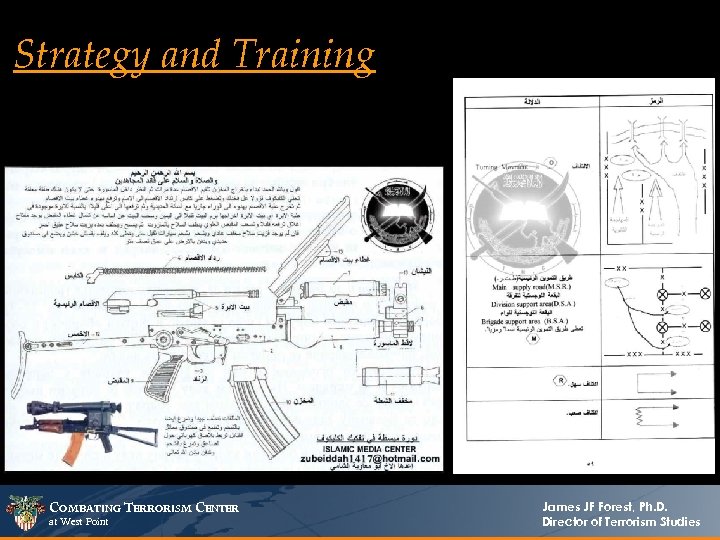 Strategy and Training COMBATING TERRORISM CENTER at West Point James JF Forest, Ph. D. Director of Terrorism Studies
 Strategy and Training Establish training camps – developing the will to kill and the skill to kill • Operational space: Geographic isolation • Teachers: Experts in relevant knowledge, e. g. , military combat experience • Committed learners • Time, money, and basic necessities • • • Afghanistan Algeria Bosnia Chechnya Colombia Egypt Indonesia Japan Kashmir Lebanon Libya COMBATING TERRORISM CENTER at West Point • • • Northern Ireland Peru The Philippines Somalia Spain Sri Lanka Sudan Syria Turkey United States Uzbekistan James JF Forest, Ph. D. Director of Terrorism Studies
 Strategy and Training • Psychological dimensions • Moral disengagement – – Displacement of responsibility Disregard for/distortion of consequences Dehumanization Moral justification • Group power over behavior, personal decisions • Preparation for martyrdom COMBATING TERRORISM CENTER at West Point James JF Forest, Ph. D. Director of Terrorism Studies
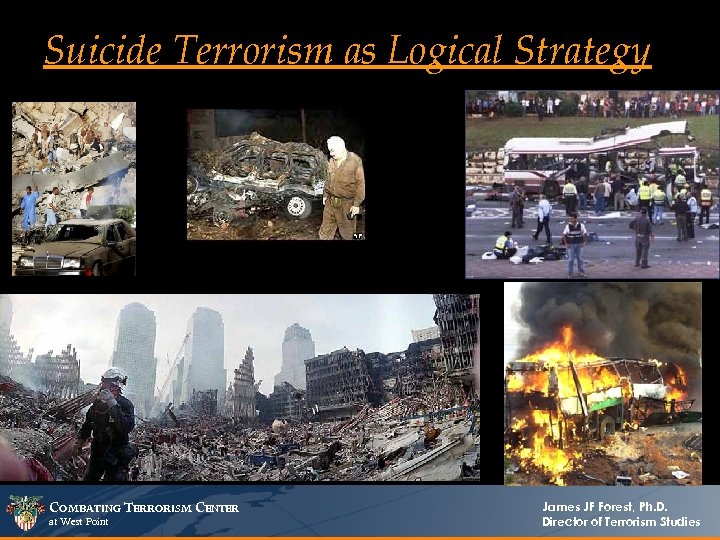 Suicide Terrorism as Logical Strategy COMBATING TERRORISM CENTER at West Point James JF Forest, Ph. D. Director of Terrorism Studies
 Definition of Suicide Terrorism Intentionally killing oneself for the purpose of killing others, in the service of a political or ideological goal To be distinguished from: • High-risk missions w/out suicide as main intent • Fooled couriers • Suicide – without homicide – for a political cause COMBATING TERRORISM CENTER at West Point James JF Forest, Ph. D. Director of Terrorism Studies
 Suicide Terrorism: Who? Perception: Reality • Generalized profile of suicide terrorists, including: • The “profile” is wrong • Suicide terrorists are: – – – Young Single Male Uneducated Religious fanatics COMBATING TERRORISM CENTER at West Point – – – Preteen - mid-sixties Both single and married with families Both male and female Both educated and uneducated Not motivated by religious fanaticism World’s leader in suicide terror are Hindu; Tamil Tigers who are conducting insurgency against Sri Lanka James JF Forest, Ph. D. Director of Terrorism Studies
 Trends: Most deadly form of terrorism (so far) • Israel: 0. 5% of attacks, 56% of fatalities. • U. S. : 9/11 – 10 times more deadly than any previous terrorist attack in history. – Hizballah, Lebanon • 1981 attack on the Iraqi Embassy in Beirut • 1983 – attack on the U. S. Embassy in Beirut • 1983 – attack on the Marines sleeping in barracks at the Beirut airport (241 killed) • Also, suicide attacks typically get more media coverage; more “strategic communications” effect COMBATING TERRORISM CENTER at West Point James JF Forest, Ph. D. Director of Terrorism Studies
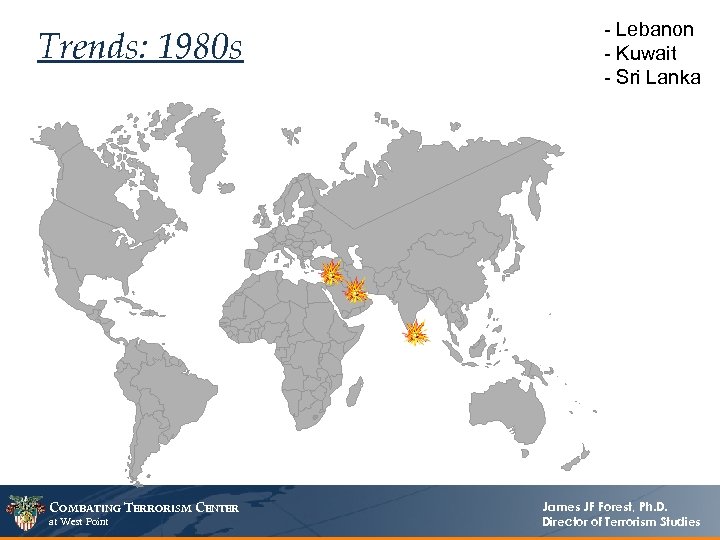 Trends: 1980 s COMBATING TERRORISM CENTER at West Point - Lebanon - Kuwait - Sri Lanka James JF Forest, Ph. D. Director of Terrorism Studies
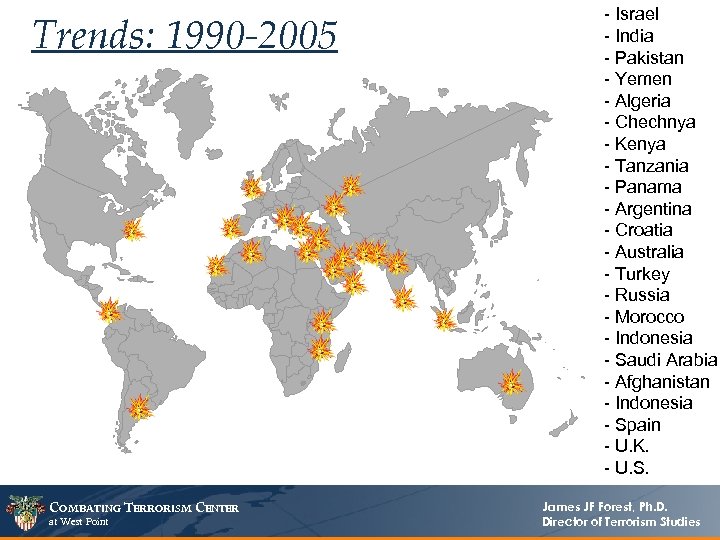 Trends: 1990 -2005 COMBATING TERRORISM CENTER at West Point - Israel - India - Pakistan - Yemen - Algeria - Chechnya - Kenya - Tanzania - Panama - Argentina - Croatia - Australia - Turkey - Russia - Morocco - Indonesia - Saudi Arabia - Afghanistan - Indonesia - Spain - U. K. - U. S. James JF Forest, Ph. D. Director of Terrorism Studies
 COMBATING TERRORISM CENTER at West Point James JF Forest, Ph. D. Director of Terrorism Studies
 Suicide Terrorism: Why? Because it works. . . COMBATING TERRORISM CENTER at West Point James JF Forest, Ph. D. Director of Terrorism Studies
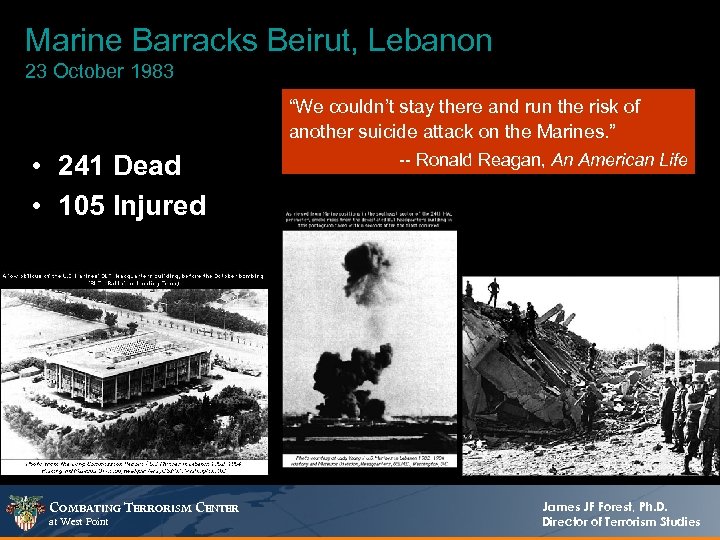 Marine Barracks Beirut, Lebanon 23 October 1983 “We couldn’t stay there and run the risk of another suicide attack on the Marines. ” • 241 Dead • 105 Injured COMBATING TERRORISM CENTER at West Point -- Ronald Reagan, An American Life James JF Forest, Ph. D. Director of Terrorism Studies
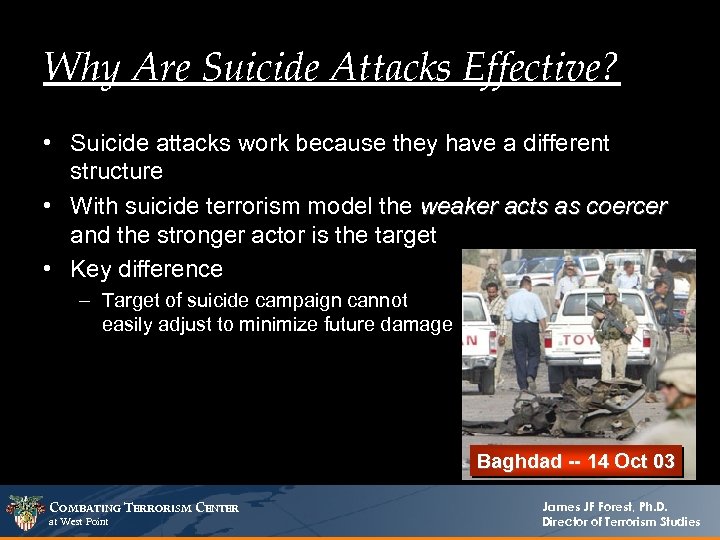 Why Are Suicide Attacks Effective? • Suicide attacks work because they have a different structure • With suicide terrorism model the weaker acts as coercer and the stronger actor is the target • Key difference – Target of suicide campaign cannot easily adjust to minimize future damage Baghdad -- 14 Oct 03 COMBATING TERRORISM CENTER at West Point James JF Forest, Ph. D. Director of Terrorism Studies
 Questions? COMBATING TERRORISM CENTER at West Point James JF Forest, Ph. D. Director of Terrorism Studies
 COMBATING TERRORISM CENTER at West Point James JF Forest, Ph. D. Director of Terrorism Studies
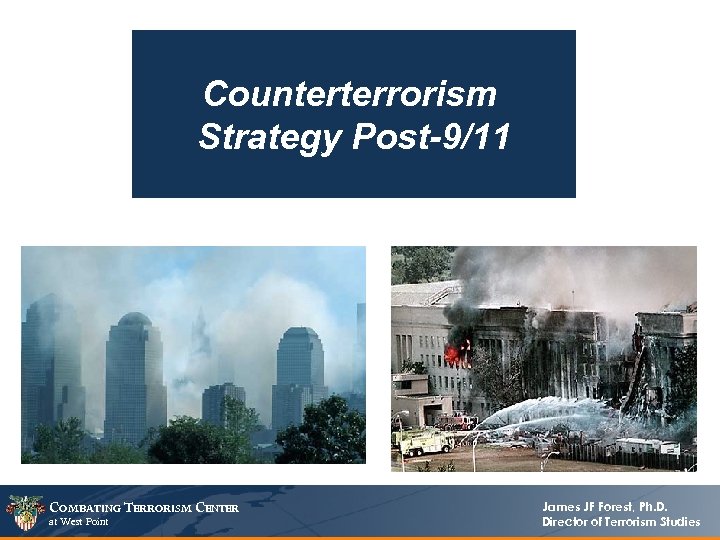 Counterterrorism Strategy Post-9/11 COMBATING TERRORISM CENTER at West Point James JF Forest, Ph. D. Director of Terrorism Studies
 2. MIDLIFE (formerly DIME) CT Approach Question: Once we understand the threat, how do we address it? Answer: We employ all the instruments of national power available to us. • • Military Intelligence Diplomacy Legal Information Financial Economic COMBATING TERRORISM CENTER at West Point • Case studies of groups and events help us learn about each of these dimensions James JF Forest, Ph. D. Director of Terrorism Studies
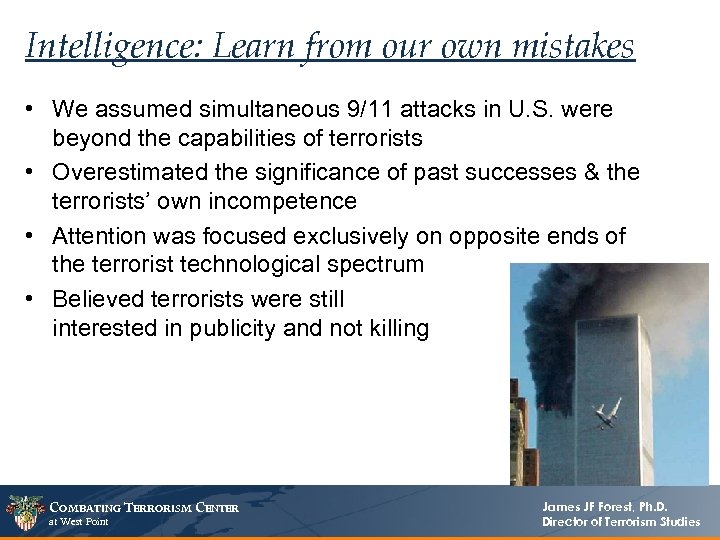 Intelligence: Learn from our own mistakes • We assumed simultaneous 9/11 attacks in U. S. were beyond the capabilities of terrorists • Overestimated the significance of past successes & the terrorists’ own incompetence • Attention was focused exclusively on opposite ends of the terrorist technological spectrum • Believed terrorists were still interested in publicity and not killing COMBATING TERRORISM CENTER at West Point James JF Forest, Ph. D. Director of Terrorism Studies
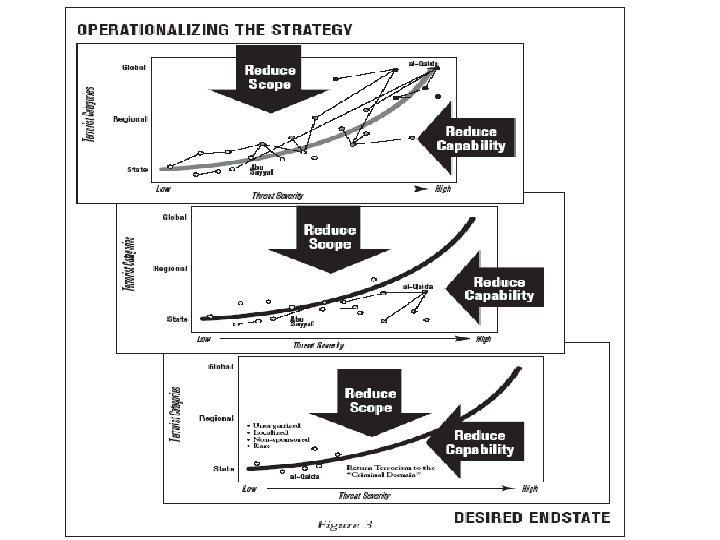
 Elements of the National CT Strategy 4 D’s: • Defeat terrorist organizations of a global reach • Deny terrorists the sponsorship, support, and sanctuary they need to survive • Diminish the underlying conditions that promote the despair and destructive visions of political change that lead people to embrace terrorism • Defend against terrorist attacks on the U. S. , our citizens and our interests around the world COMBATING TERRORISM CENTER at West Point James JF Forest, Ph. D. Director of Terrorism Studies
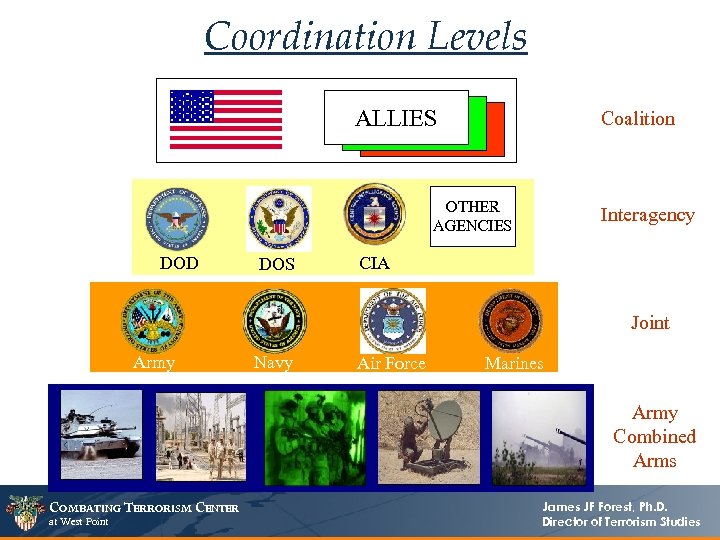 Coordination Levels ALLIES Coalition OTHER AGENCIES DOD DOS Interagency CIA Joint Army Navy Air Force Marines Army Combined Arms COMBATING TERRORISM CENTER at West Point James JF Forest, Ph. D. Director of Terrorism Studies
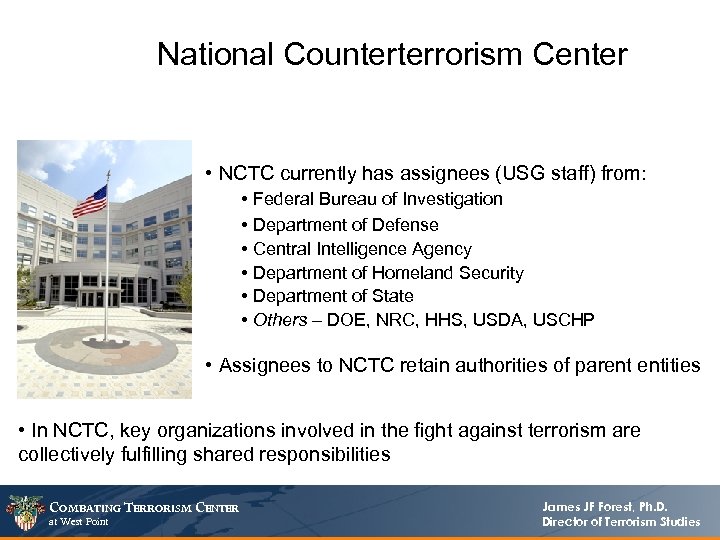 National Counterterrorism Center • NCTC currently has assignees (USG staff) from: • Federal Bureau of Investigation • Department of Defense • Central Intelligence Agency • Department of Homeland Security • Department of State • Others – DOE, NRC, HHS, USDA, USCHP • Assignees to NCTC retain authorities of parent entities • In NCTC, key organizations involved in the fight against terrorism are collectively fulfilling shared responsibilities COMBATING TERRORISM CENTER at West Point James JF Forest, Ph. D. Director of Terrorism Studies
 Terrorism Information Access and Integration In NCTC, key organizations involved in the fight against terrorism are collectively fulfilling shared responsibilities COMBATING TERRORISM CENTER at West Point James JF Forest, Ph. D. Director of Terrorism Studies
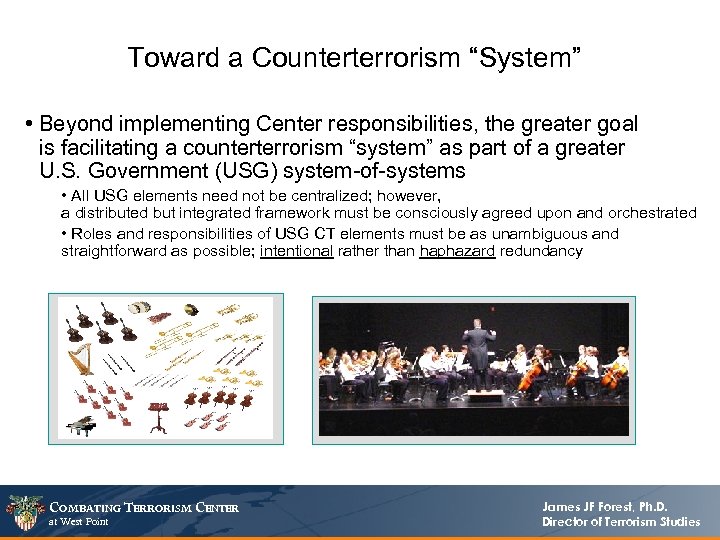 Toward a Counterterrorism “System” • Beyond implementing Center responsibilities, the greater goal is facilitating a counterterrorism “system” as part of a greater U. S. Government (USG) system-of-systems • All USG elements need not be centralized; however, a distributed but integrated framework must be consciously agreed upon and orchestrated • Roles and responsibilities of USG CT elements must be as unambiguous and straightforward as possible; intentional rather than haphazard redundancy COMBATING TERRORISM CENTER at West Point James JF Forest, Ph. D. Director of Terrorism Studies
 Questions? COMBATING TERRORISM CENTER at West Point James JF Forest, Ph. D. Director of Terrorism Studies