 Скачать презентацию Terena Networking Conference Lisbon 22 -25 May 2000
4fdfc11569c7756ce80a13934f3f7d4f.ppt
- Количество слайдов: 27



Terena Networking Conference Lisbon, 22 -25 May 2000 VIDOS - a system for editing and customizing videos over the Web David M. Shotton and Thomas Boudier Cell and Developmental Biology Research Group Department of Zoology, University of Oxford, UK (david. shotton@zoo. ox. ac. uk)
Outline of my presentation l What are the problems when using videos over the Web? l The Bio. Image Database project: an introduction l An example of a scientific video: the killing of virally-infected cells by cytotoxic T lymphocytes l Specific intrinsic metadata and Query by Content l The design and functionality of VIDOS l The applications of VIDOS l Conclusion: The future of image informatics
Videos on the Web: why so special? Problems (for the user) l Unusually large files ( >100 Mb) l Time-critical visualisation l Limited Internet transmission bandwidth l No standard format (AVI, Quick. Time, MPEG-2, Real, etc. ) l Multiplicity of compression algorithms Solutions (for the video provider) l Correct choice of server format(s) for download or streaming l Creation of highly compressed preview movies l Provision of on-line editing and customization tools to enable the videos file to be adapted to the user’s specifications
The Bio. Image Database is a recently developed searchable on-line database for multi-dimensional images of biological specimens, derived from all forms of microscopy: l Light, electron, acoustic and scanning probe microscopies l 2 D (x, y), 3 D (x, y, z), video (x, y, time), 4 D confocal (x, y, z, t) l Particular attention paid to image descriptors (metadata) l Work included development of novel tools for image visualization, format conversion, and video editing
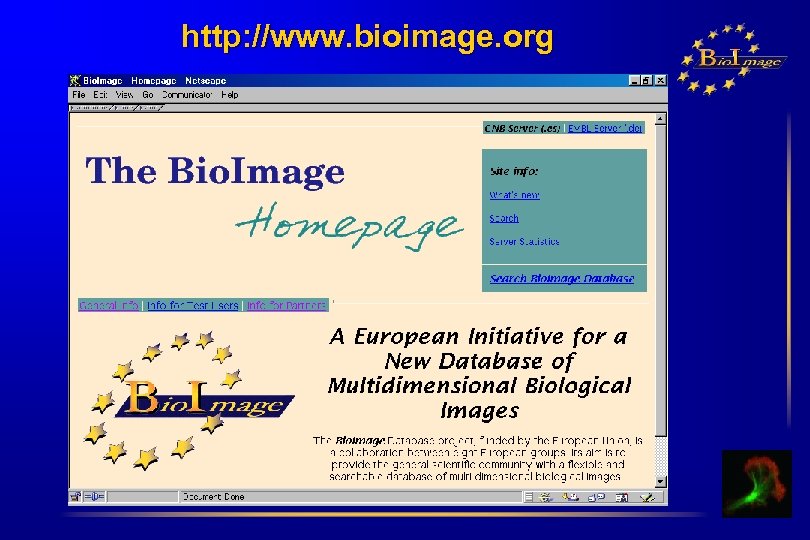
http: //www. bioimage. org
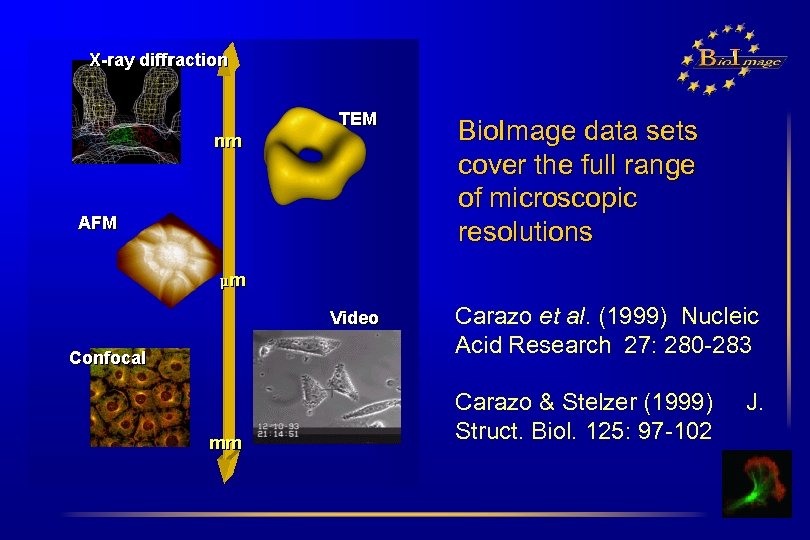
Bio. Image data sets cover the full range of microscopic resolutions Carazo et al. (1999) Nucleic Acid Research 27: 280 -283 Carazo & Stelzer (1999) Struct. Biol. 125: 97 -102 J.
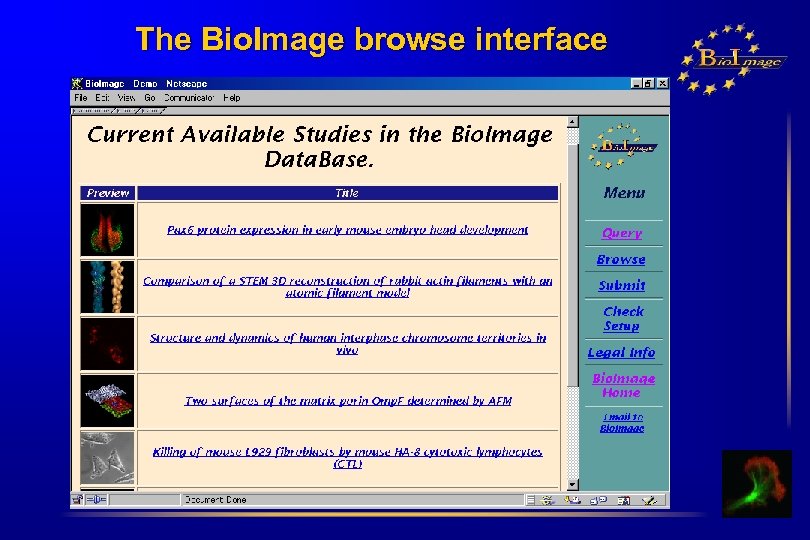
The Bio. Image browse interface
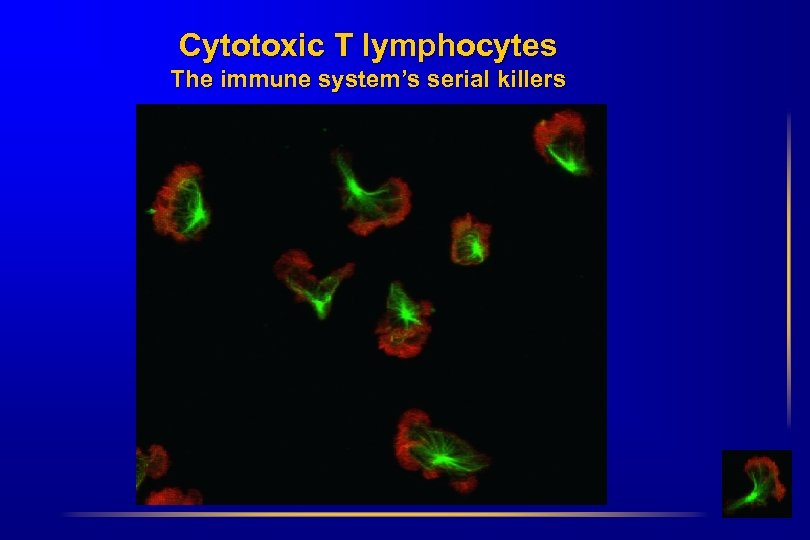
Cytotoxic T lymphocytes The immune system’s serial killers

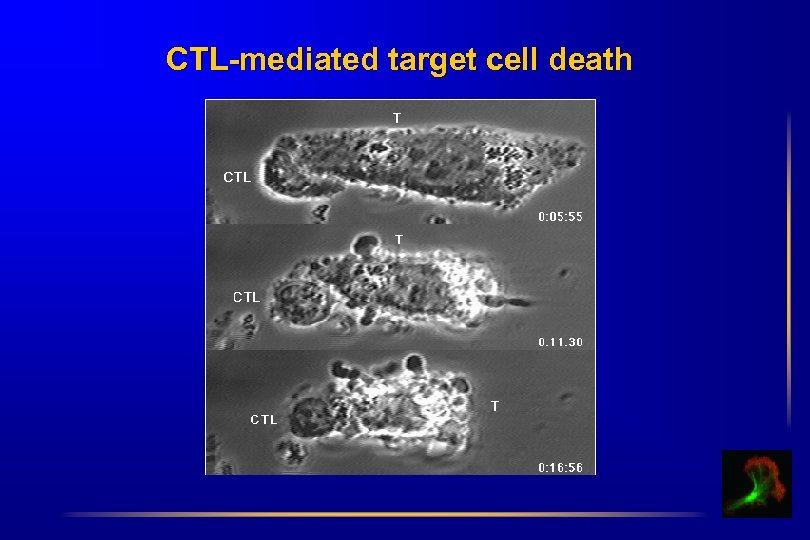
CTL-mediated target cell death
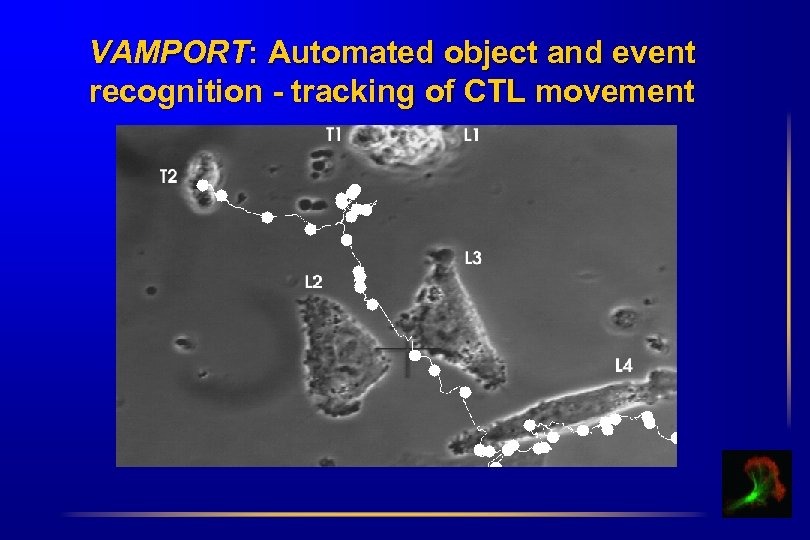
VAMPORT: Automated object and event recognition - tracking of CTL movement
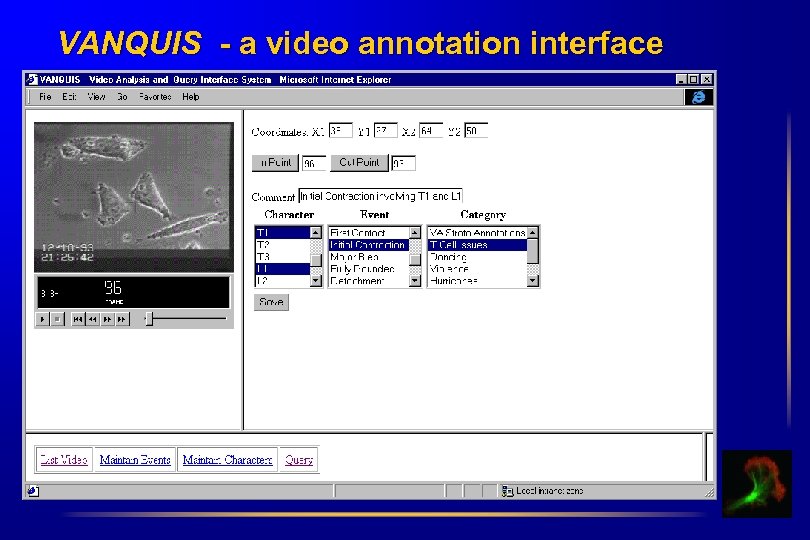
VANQUIS - a video annotation interface
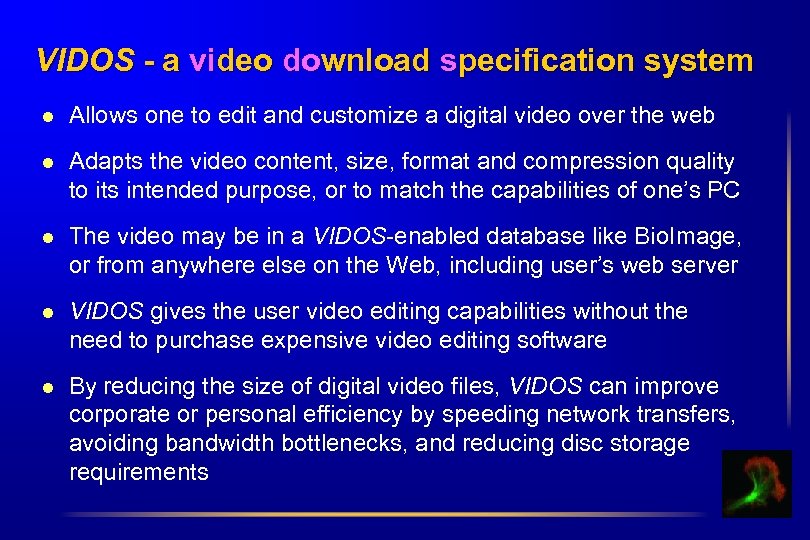
VIDOS - a video download specification system l Allows one to edit and customize a digital video over the web l Adapts the video content, size, format and compression quality to its intended purpose, or to match the capabilities of one’s PC l The video may be in a VIDOS-enabled database like Bio. Image, or from anywhere else on the Web, including user’s web server l VIDOS gives the user video editing capabilities without the need to purchase expensive video editing software l By reducing the size of digital video files, VIDOS can improve corporate or personal efficiency by speeding network transfers, avoiding bandwidth bottlenecks, and reducing disc storage requirements
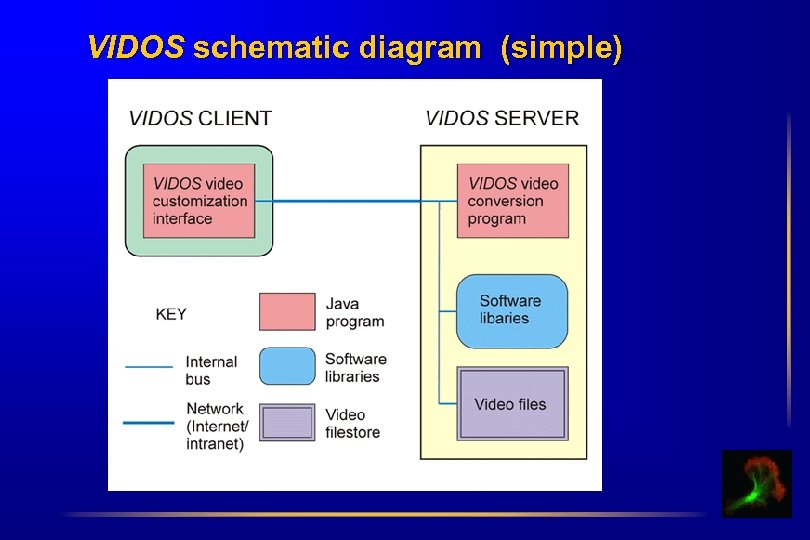
VIDOS schematic diagram (simple)
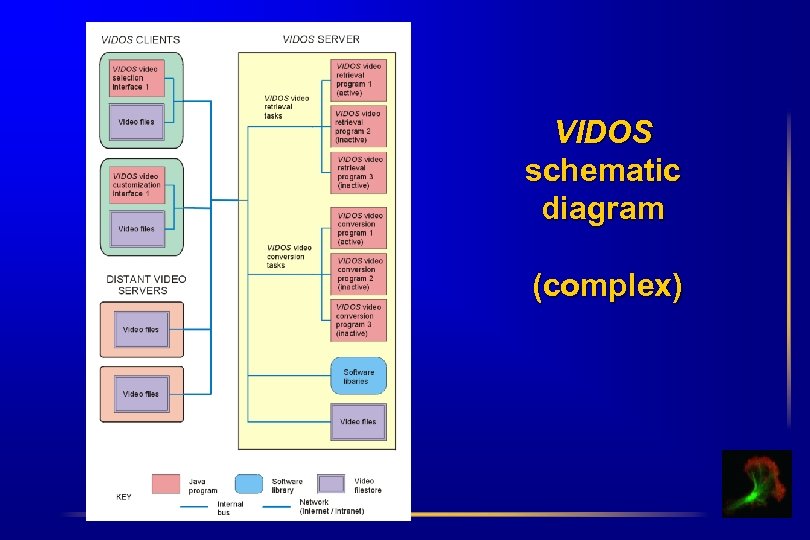
VIDOS schematic diagram (complex)
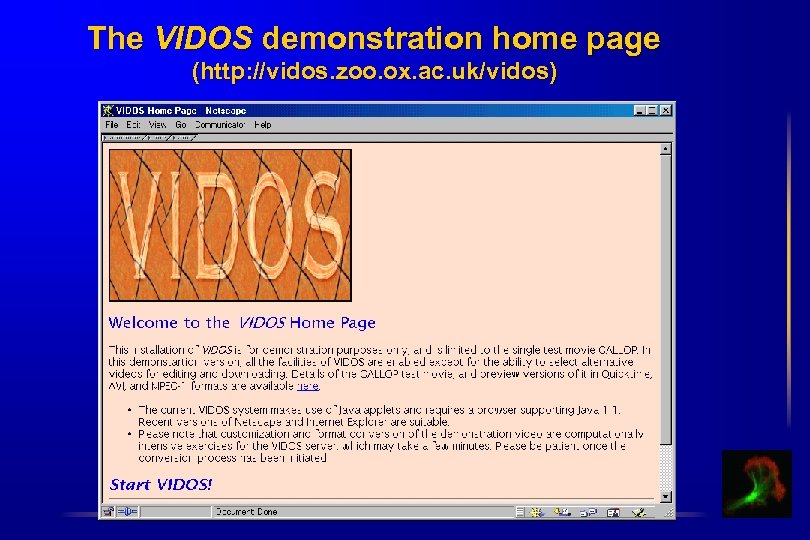
The VIDOS demonstration home page (http: //vidos. zoo. ox. ac. uk/vidos)
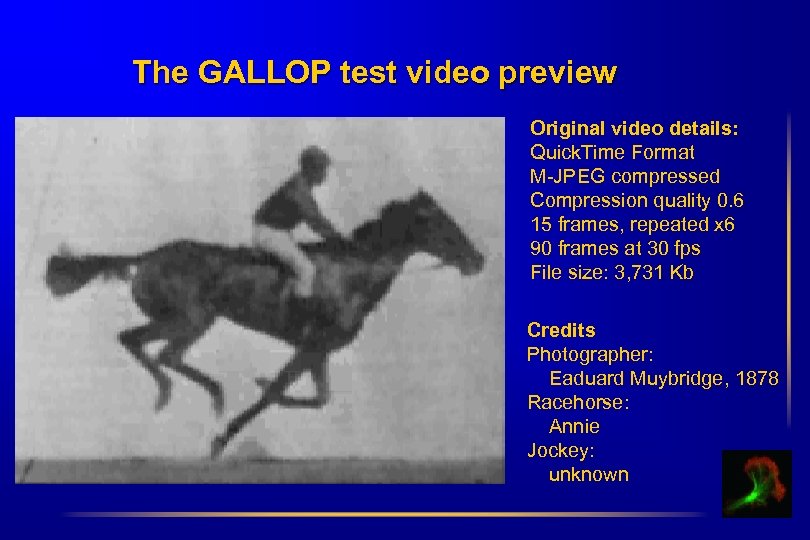
The GALLOP test video preview Original video details: Quick. Time Format M-JPEG compressed Compression quality 0. 6 15 frames, repeated x 6 90 frames at 30 fps File size: 3, 731 Kb Credits Photographer: Eaduard Muybridge, 1878 Racehorse: Annie Jockey: unknown
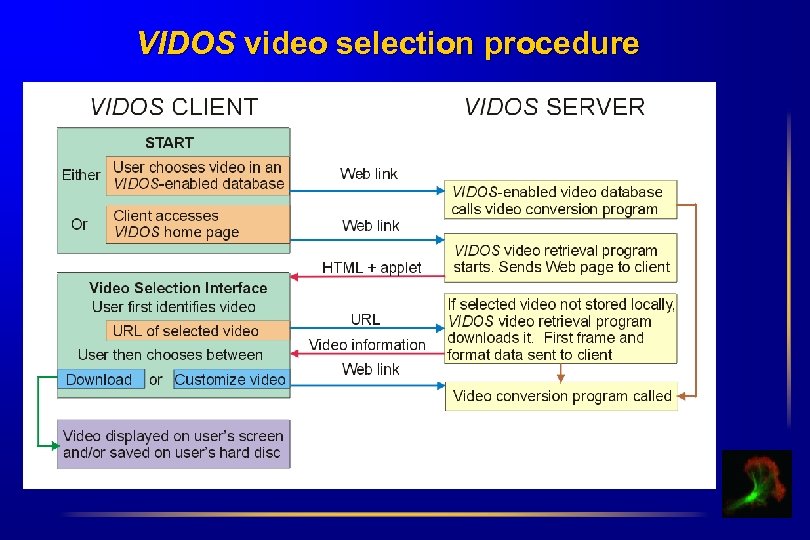
VIDOS video selection procedure
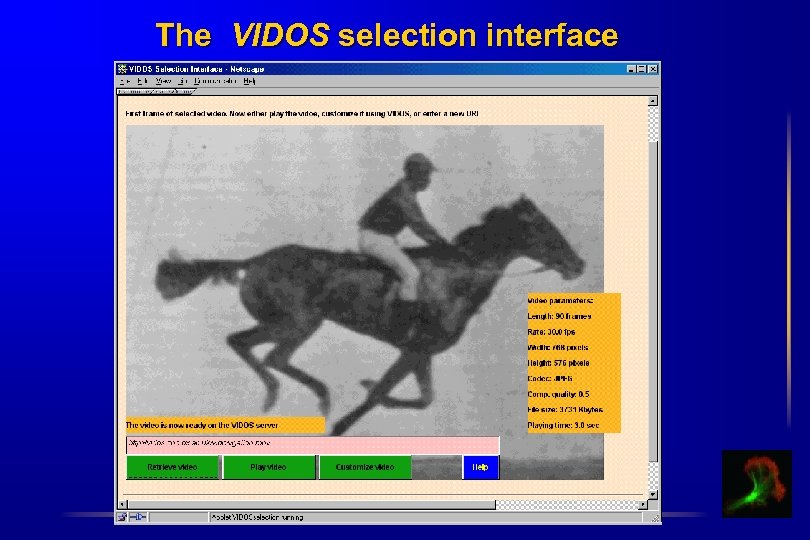
The VIDOS selection interface
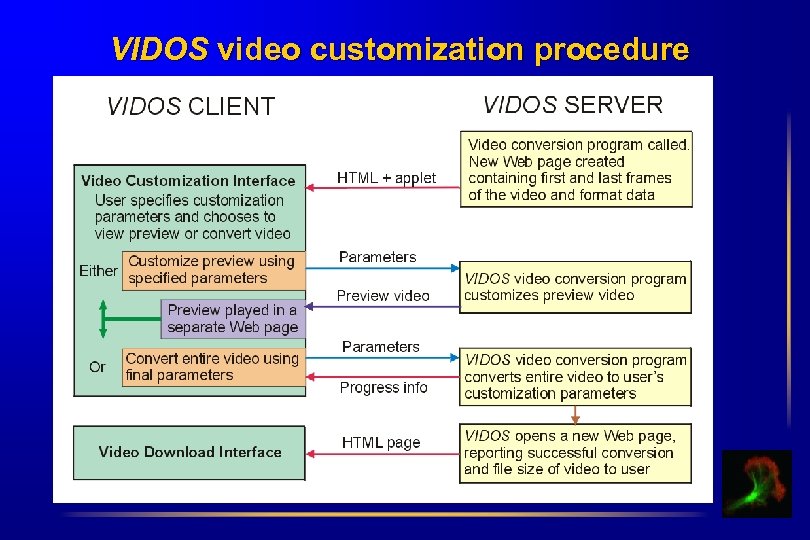
VIDOS video customization procedure
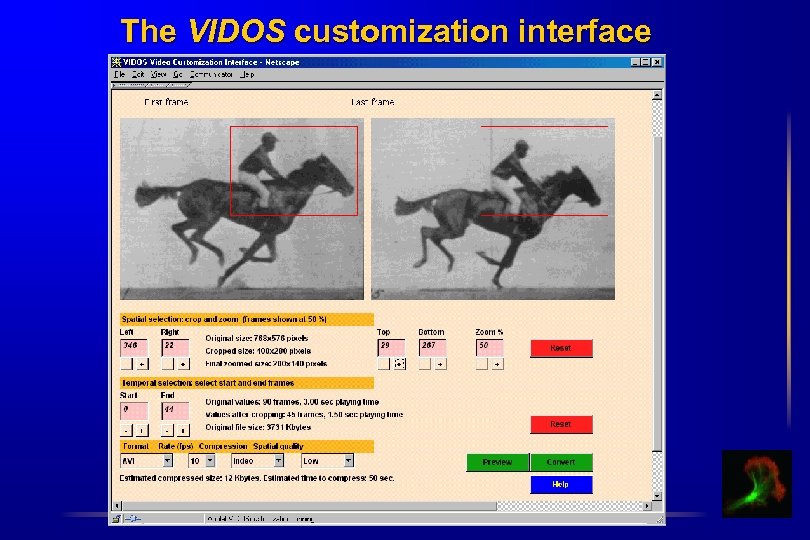
The VIDOS customization interface
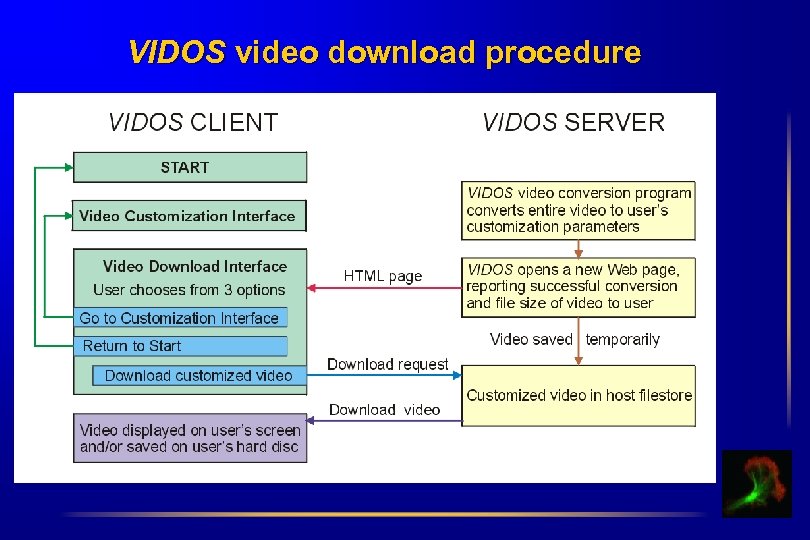
VIDOS video download procedure
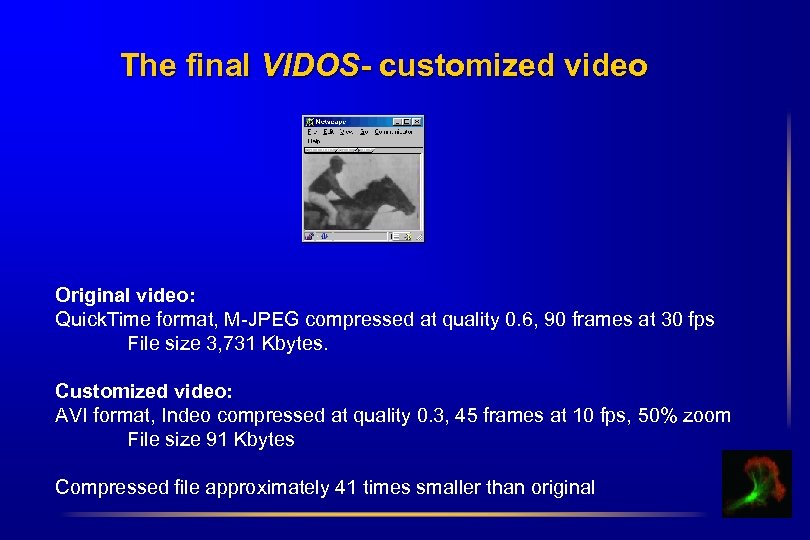
The final VIDOS- customized video Original video: Quick. Time format, M-JPEG compressed at quality 0. 6, 90 frames at 30 fps File size 3, 731 Kbytes. Customized video: AVI format, Indeo compressed at quality 0. 3, 45 frames at 10 fps, 50% zoom File size 91 Kbytes Compressed file approximately 41 times smaller than original
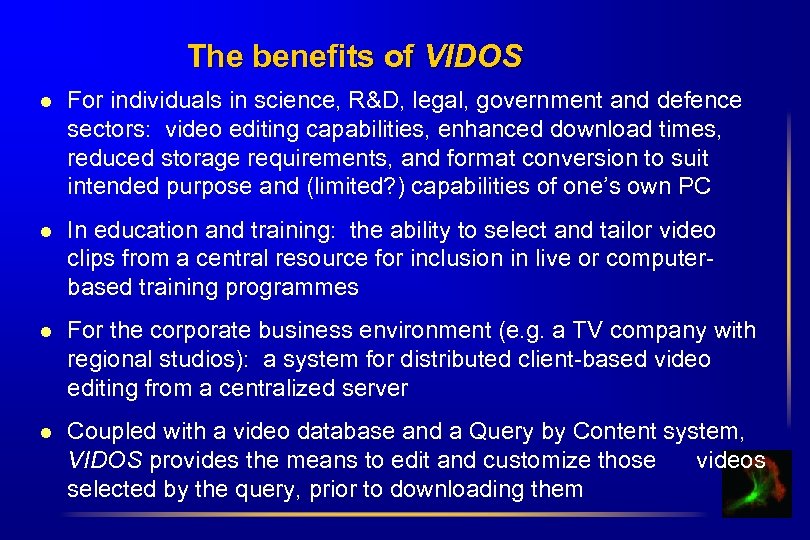
The benefits of VIDOS l For individuals in science, R&D, legal, government and defence sectors: video editing capabilities, enhanced download times, reduced storage requirements, and format conversion to suit intended purpose and (limited? ) capabilities of one’s own PC l In education and training: the ability to select and tailor video clips from a central resource for inclusion in live or computerbased training programmes l For the corporate business environment (e. g. a TV company with regional studios): a system for distributed client-based video editing from a centralized server l Coupled with a video database and a Query by Content system, VIDOS provides the means to edit and customize those videos selected by the query, prior to downloading them
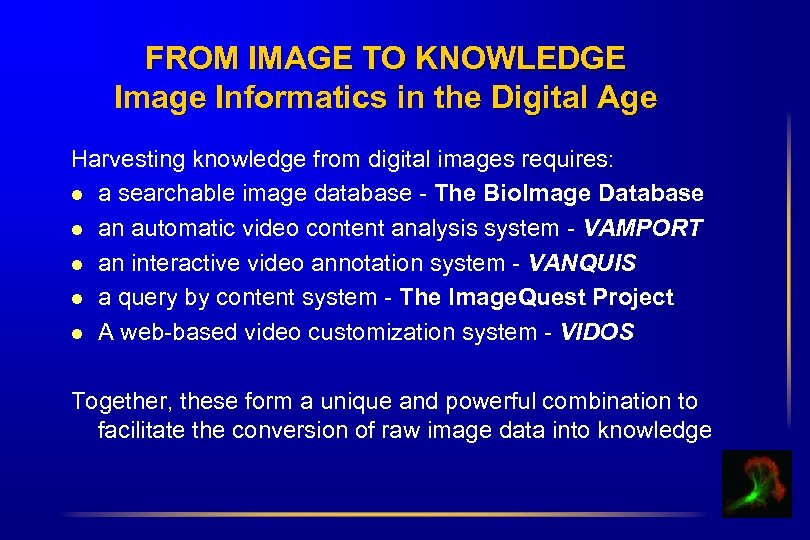
FROM IMAGE TO KNOWLEDGE Image Informatics in the Digital Age Harvesting knowledge from digital images requires: l a searchable image database - The Bio. Image Database l an automatic video content analysis system - VAMPORT l an interactive video annotation system - VANQUIS l a query by content system - The Image. Quest Project l A web-based video customization system - VIDOS Together, these form a unique and powerful combination to facilitate the conversion of raw image data into knowledge
The future l We now have an excellent working prototype of VIDOS (v 2. 1) l This is the subject of an international patent application l We have clear ideas for further enhancement of functionality l We have recently rewritten the VIDOS server program as multithreaded JAVA, to enhance concurrent client support l We are forming a spinout company to develop, promote and market Bio. Image, VIDOS and the various Query by Content tools l We are adopting DOIs and the <indecs> rights metadata model l Ingenta Ltd will host the Bio. Image Database, integrate it with their BIDS bibliographic databases, and expand it to server other fields l We seek partners and licencees to apply the VIDOS Web-based video editing and customization technology in other areas
Acknowledgements l My Bio. Image Partners (database design and implementation) Academic: Jose Maria Carazo, Ernst Stelzer, Andreas Engel and Ignacio Fita Corporate: European Bioinformatics Institute, Silicon Graphics, and Informix Software Ltd, particularly Jon Machtynger who wrote the VANQUIS code l My research assistants at Oxford Thomas Boudier (1997 -1998; quantitation of video compression artefacts, video object tracking, and VIDOS coding) John Pybus (1999 -2000; VIDOS re-coding)
Скачать презентацию Terena Networking Conference Lisbon 22 -25 May 2000
4fdfc11569c7756ce80a13934f3f7d4f.ppt