


 Скачать презентацию Tenses Времена английского глагола Трудности Существует мнение
Tenses.ppt
- Количество слайдов: 13
 Tenses Времена английского глагола
 Трудности… Существует мнение, что одна из трудностей усвоения английского языка заключается в наличии в нем большого количества видовременных форм. Однако эти формы легко усваиваются, если хорошо понять ч е т ы р е видовых характеристики действия,
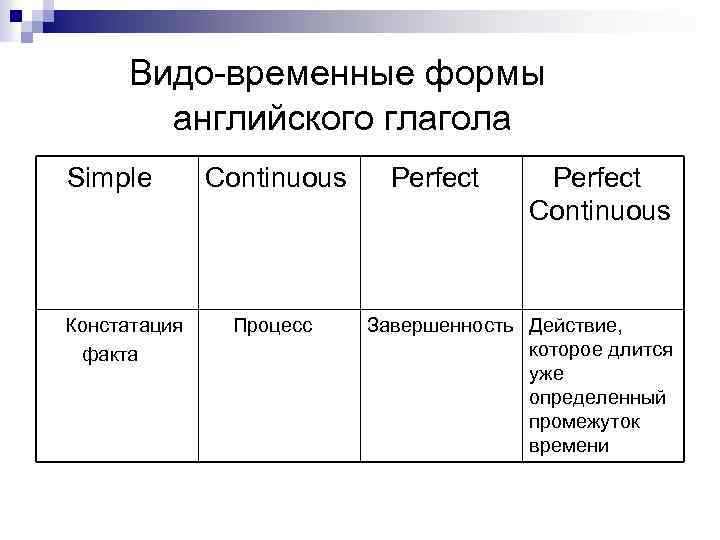 Видо-временные формы английского глагола Simple Констатация факта Continuous Процесс Perfect Continuous Завершенность Действие, которое длится уже определенный промежуток времени
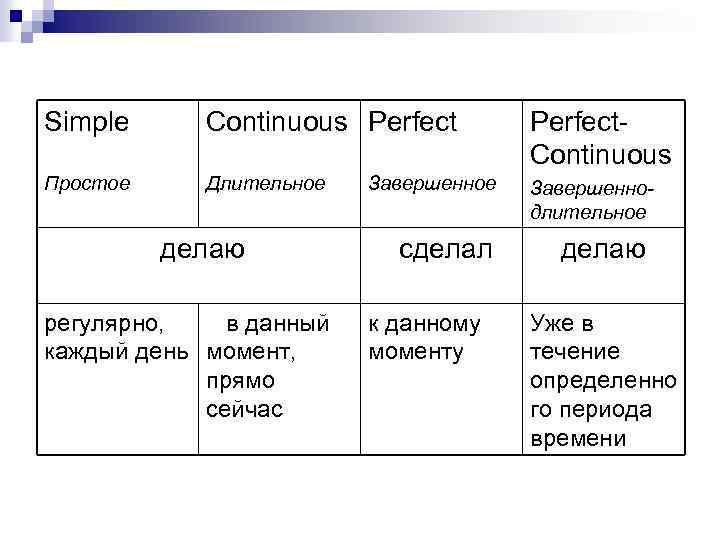 Simple Continuous Perfect. Continuous Простое Длительное Завершеннодлительное делаю регулярно, в данный каждый день момент, прямо сейчас Завершенное сделал к данному моменту делаю Уже в течение определенно го периода времени
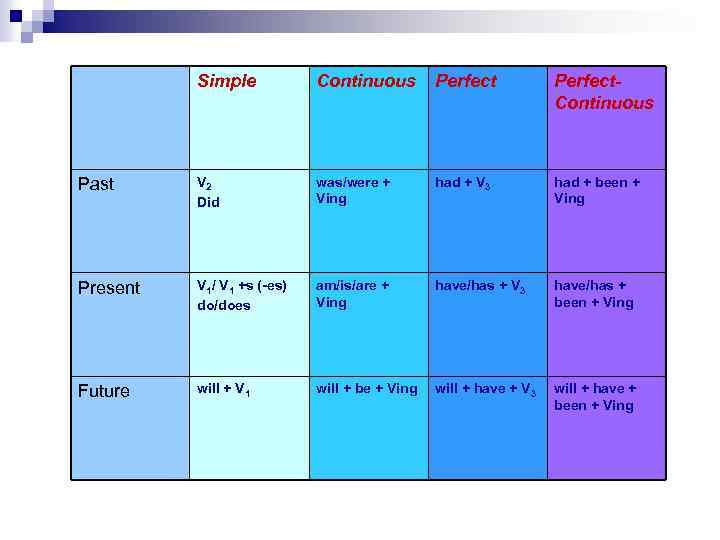 Simple Continuous Perfect. Continuous Past V 2 Did was/were + Ving had + V 3 had + been + Ving Present V 1/ V 1 +s (-es) do/does am/is/are + Ving have/has + V 3 have/has + been + Ving Future will + V 1 will + be + Ving will + have + V 3 will + have + been + Ving
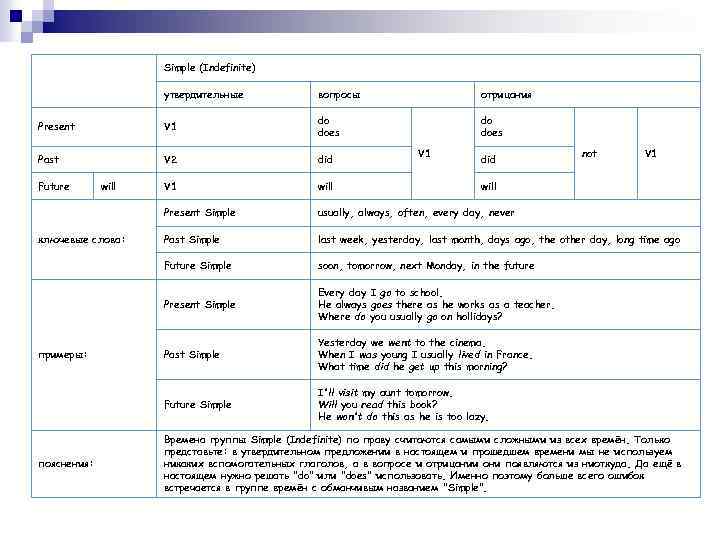 Simple (Indefinite) утвердительные вопросы отрицания Present V 1 do does Past V 2 did V 1 will Present Simple usually, always, often, every day, never Past Simple last week, yesterday, last month, days ago, the other day, long time ago Future Simple soon, tomorrow, next Monday, in the future Present Simple Every day I go to school. He always goes there as he works as a teacher. Where do you usually go on hollidays? Past Simple Yesterday we went to the cinema. When I was young I usually lived in France. What time did he get up this morning? Future Simple I'll visit my aunt tomorrow. Will you read this book? He won't do this as he is too lazy. Future will ключевые слова: примеры: пояснения: V 1 did not V 1 will Времена группы Simple (Indefinite) по праву считаются самыми сложными из всех времён. Только представьте: в утвердительном предложении в настоящем и прошедшем времени мы не используем никаких вспомогательных глаголов, а в вопросе и отрицании они появляются из ниоткуда. Да ещё в настоящем нужно решать "do" или "does" использовать. Именно поэтому больше всего ошибок встречается в группе времён с обманчивым названием "Simple".
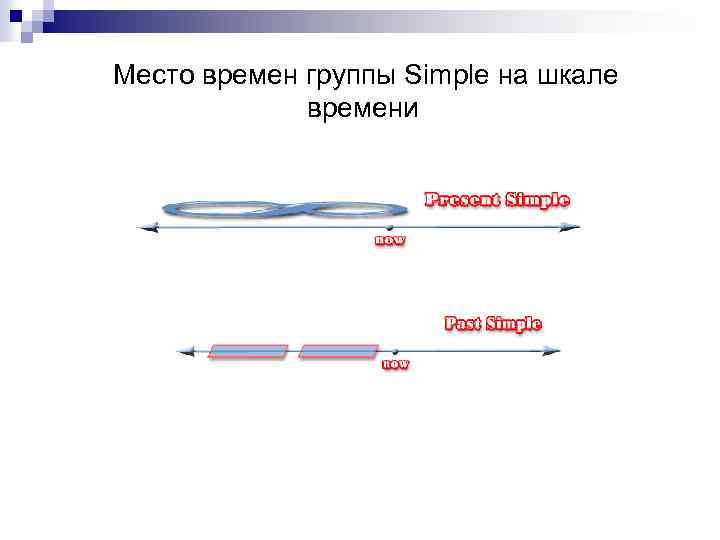 Место времен группы Simple на шкале времени
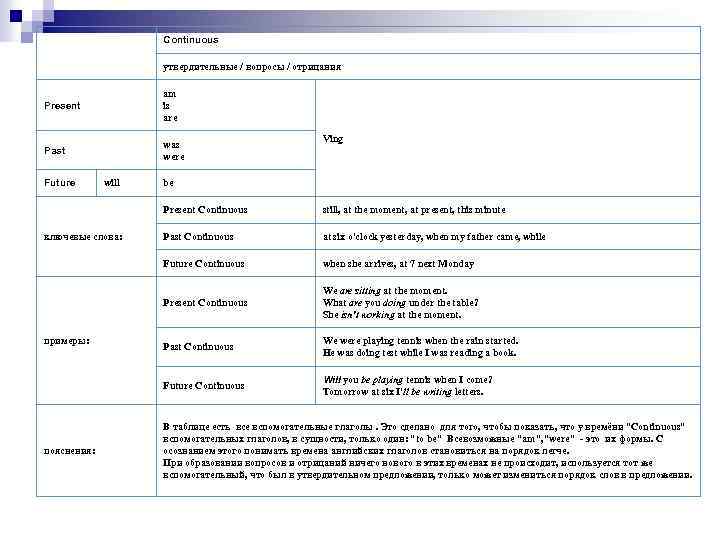 Continuous утвердительные / вопросы / отрицания Present am is are Past was were Future will Ving be Present Continuous when she arrives, at 7 next Monday We are sitting at the moment. What are you doing under the table? She isn't working at the moment. Past Continuous We were playing tennis when the rain started. He was doing test while I was reading a book. Future Continuous пояснения: at six o'clock yesterday, when my father came, while Present Continuous примеры: Past Continuous Future Continuous ключевые слова: still, at the moment, at present, this minute Will you be playing tennis when I come? Tomorrow at six I'll be writing letters. В таблице есть все вспомогательные глаголы. Это сделано для того, чтобы показать, что у времёни "Continuous" вспомогательных глаголов, в сущности, только один: "to be" Всевозможные "am", "were" - это их формы. С осознанием этого понимать времена английских глаголов становиться на порядок легче. При образовании вопросов и отрицаний ничего нового в этих временах не происходит, используется тот же вспомогательный, что был в утвердительном предложении, только может измениться порядок слов в предложении.
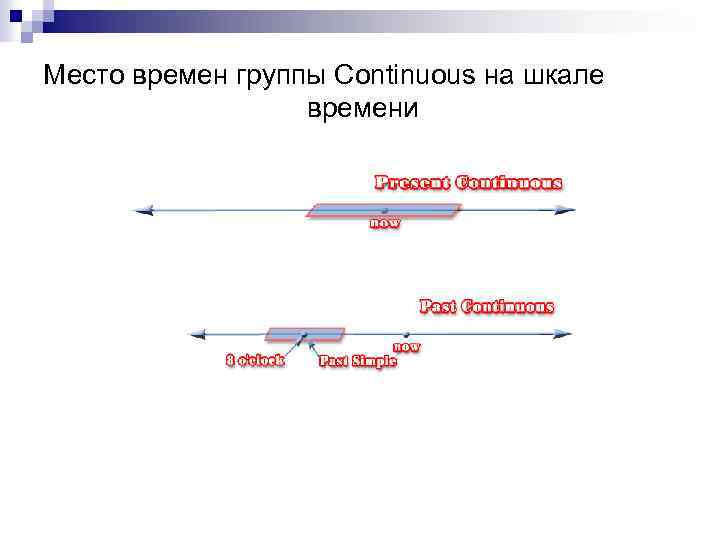 Место времен группы Continuous на шкале времени
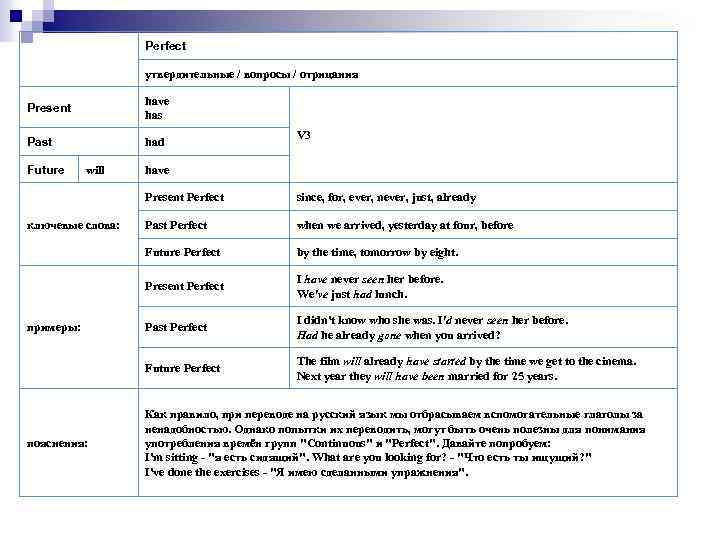 Perfect утвердительные / вопросы / отрицания Present have has Past had Future will V 3 have Present Perfect by the time, tomorrow by eight. I have never seen her before. We've just had lunch. Past Perfect I didn't know who she was. I'd never seen her before. Had he already gone when you arrived? Future Perfect пояснения: when we arrived, yesterday at four, before Present Perfect примеры: Past Perfect Future Perfect ключевые слова: since, for, ever, never, just, already The film will already have started by the time we get to the cinema. Next year they will have been married for 25 years. Как правило, при переводе на русский язык мы отбрасываем вспомогательные глаголы за ненадобностью. Однако попытки их переводить, могут быть очень полезны для понимания употребления времён групп "Continuous" и "Perfect". Давайте попробуем: I'm sitting - "я есть сидящий". What are you looking for? - "Что есть ты ищущий? " I've done the exercises - "Я имею сделанными упражнения".
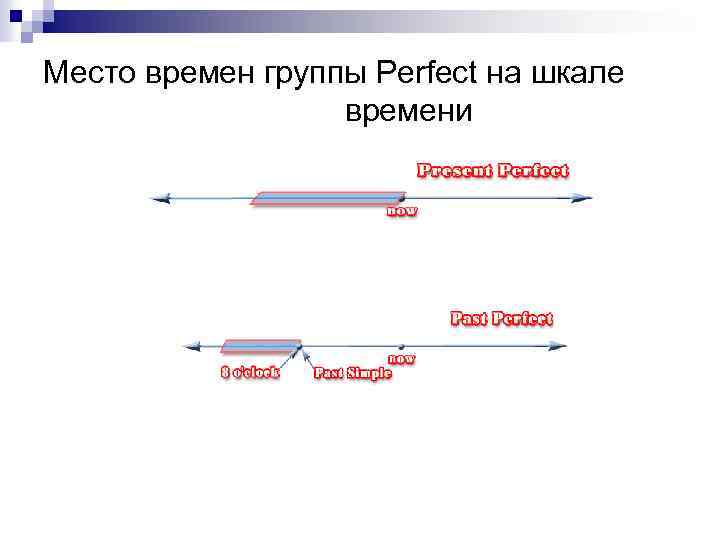 Место времен группы Perfect на шкале времени
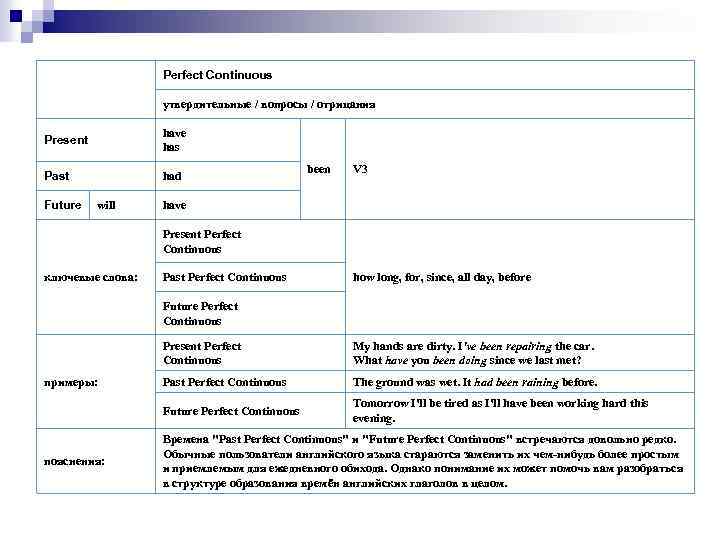 Perfect Continuous утвердительные / вопросы / отрицания Present have has Past had Future will been V 3 have Present Perfect Continuous ключевые слова: Past Perfect Continuous how long, for, since, all day, before Future Perfect Continuous Present Perfect Continuous пояснения: Past Perfect Continuous The ground was wet. It had been raining before. Future Perfect Continuous примеры: My hands are dirty. I've been repairing the car. What have you been doing since we last met? Tomorrow I'll be tired as I'll have been working hard this evening. Времена "Past Perfect Continuous" и "Future Perfect Continuous" встречаются довольно редко. Обычные пользователи английского языка стараются заменить их чем-нибудь более простым и приемлемым для ежедневного обихода. Однако понимание их может помочь вам разобраться в структуре образования времён английских глаголов в целом.
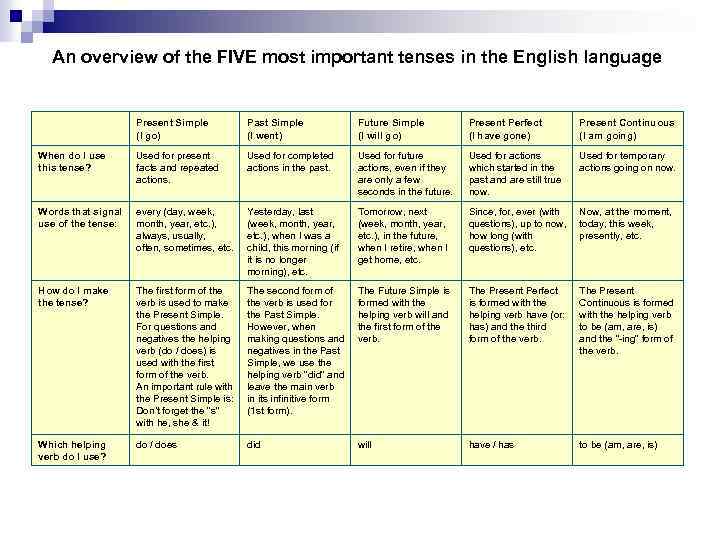 An overview of the FIVE most important tenses in the English language Present Simple (I go) Past Simple (I went) Future Simple (I will go) Present Perfect (I have gone) Present Continuous (I am going) When do I use this tense? Used for present facts and repeated actions. Used for completed actions in the past. Used for future actions, even if they are only a few seconds in the future. Used for actions which started in the past and are still true now. Used for temporary actions going on now. Words that signal use of the tense: every (day, week, month, year, etc. ), always, usually, often, sometimes, etc. Yesterday, last (week, month, year, etc. ), when I was a child, this morning (if it is no longer morning), etc. Tomorrow, next (week, month, year, etc. ), in the future, when I retire, when I get home, etc. Since, for, ever (with questions), up to now, how long (with questions), etc. Now, at the moment, today, this week, presently, etc. How do I make the tense? The first form of the verb is used to make the Present Simple. For questions and negatives the helping verb (do / does) is used with the first form of the verb. An important rule with the Present Simple is: Don’t forget the "s" with he, she & it! The second form of the verb is used for the Past Simple. However, when making questions and negatives in the Past Simple, we use the helping verb "did" and leave the main verb in its infinitive form (1 st form). The Future Simple is formed with the helping verb will and the first form of the verb. The Present Perfect is formed with the helping verb have (or: has) and the third form of the verb. The Present Continuous is formed with the helping verb to be (am, are, is) and the "-ing" form of the verb. Which helping verb do I use? do / does did will have / has to be (am, are, is)