 Скачать презентацию Teleuse BOP Implications for Civil Society Lorraine Carlos Salazar
9552235060a02a3d9841601b6b3c6fbc.ppt
- Количество слайдов: 74



Teleuse@BOP: Implications for Civil Society Lorraine Carlos Salazar Visiting Research Fellow Institute of Southeast Asian Studies (ISEAS) & Senior Researcher Lirneasia Lorraine@iseas. edu. sg, salazar@lirne. net www. lirneasia. net Capacity Building and Democracy
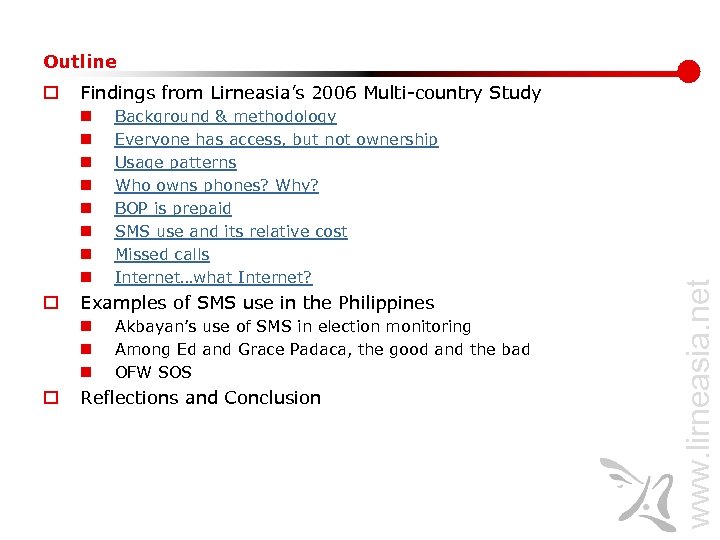
Outline Findings from Lirneasia’s 2006 Multi-country Study n n n n o Examples of SMS use in the Philippines n n n o Background & methodology Everyone has access, but not ownership Usage patterns Who owns phones? Why? BOP is prepaid SMS use and its relative cost Missed calls Internet…what Internet? Akbayan’s use of SMS in election monitoring Among Ed and Grace Padaca, the good and the bad OFW SOS Reflections and Conclusion www. lirneasia. net o
Bottom of the pyramid www. lirneasia. net Background & methodology
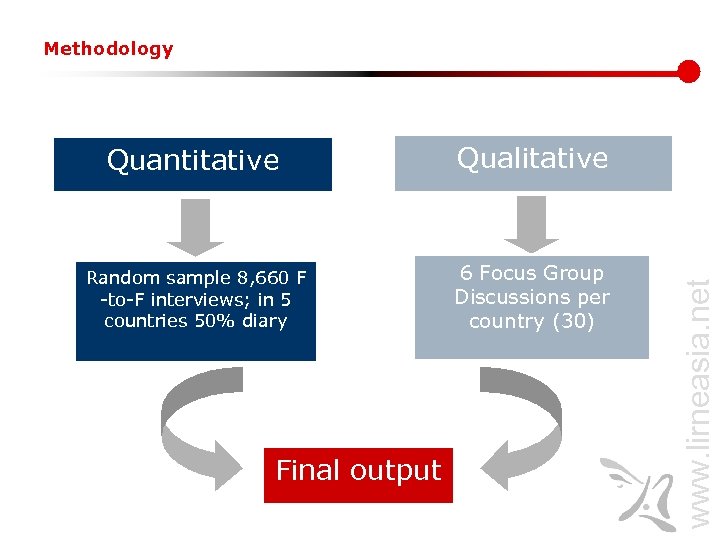
Methodology Qualitative Random sample 8, 660 F -to-F interviews; in 5 countries 50% diary 6 Focus Group Discussions per country (30) Final output www. lirneasia. net Quantitative
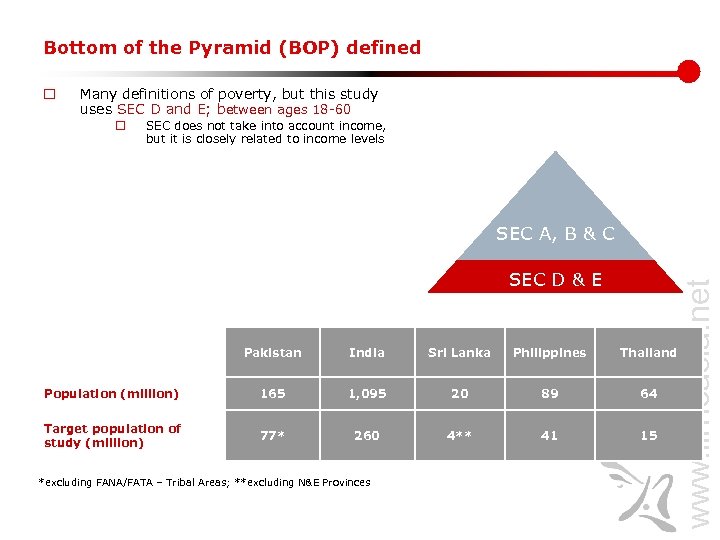
Bottom of the Pyramid (BOP) defined o Many definitions of poverty, but this study uses SEC D and E; between ages 18 -60 o SEC does not take into account income, but it is closely related to income levels SEC D & E Pakistan India Sri Lanka Philippines Thailand Population (million) 165 1, 095 20 89 64 Target population of study (million) 77* 260 4** 41 15 *excluding FANA/FATA – Tribal Areas; **excluding N&E Provinces www. lirneasia. net SEC A, B & C
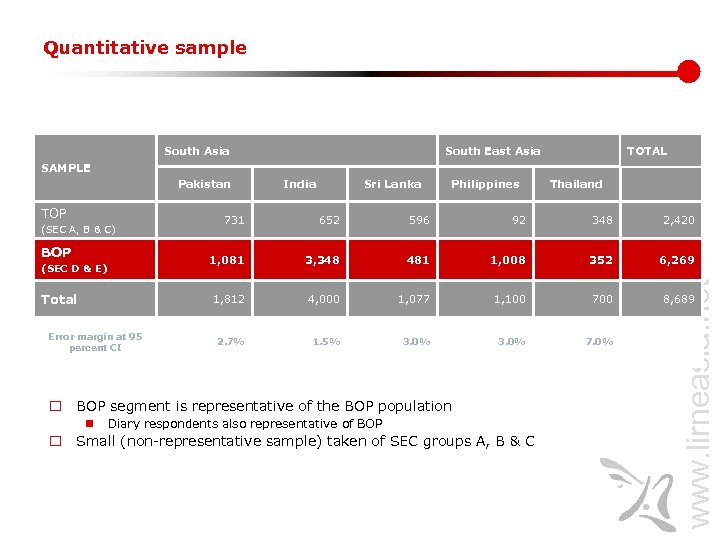
Quantitative sample South Asia South East Asia TOTAL SAMPLE Pakistan TOP India Sri Lanka Philippines Thailand Total Error margin at 95 percent CI 596 92 348 2, 420 3, 348 481 1, 008 352 6, 269 4, 000 1, 077 1, 100 700 8, 689 2. 7% 1. 5% 3. 0% 7. 0% o BOP segment is representative of the BOP population n Diary respondents also representative of BOP o Small (non-representative sample) taken of SEC groups A, B & C www. lirneasia. net (SEC D & E) 652 1, 812 BOP 731 1, 081 (SEC A, B & C)
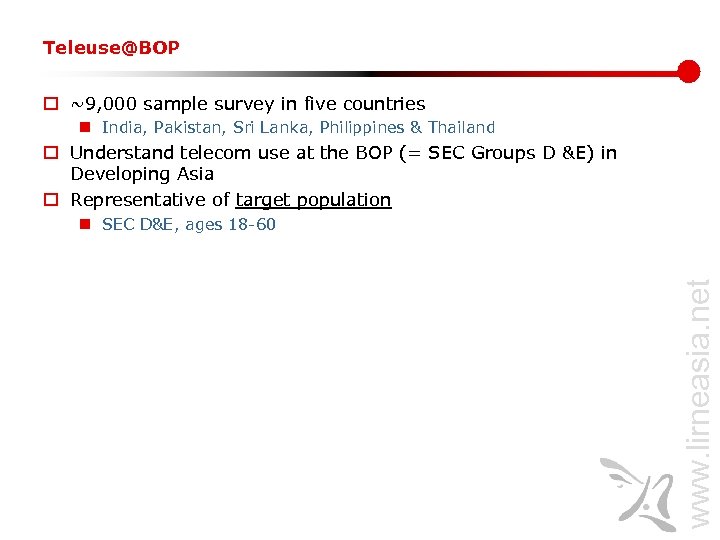
Teleuse@BOP o ~9, 000 sample survey in five countries n India, Pakistan, Sri Lanka, Philippines & Thailand o Understand telecom use at the BOP (= SEC Groups D &E) in Developing Asia o Representative of target population www. lirneasia. net n SEC D&E, ages 18 -60
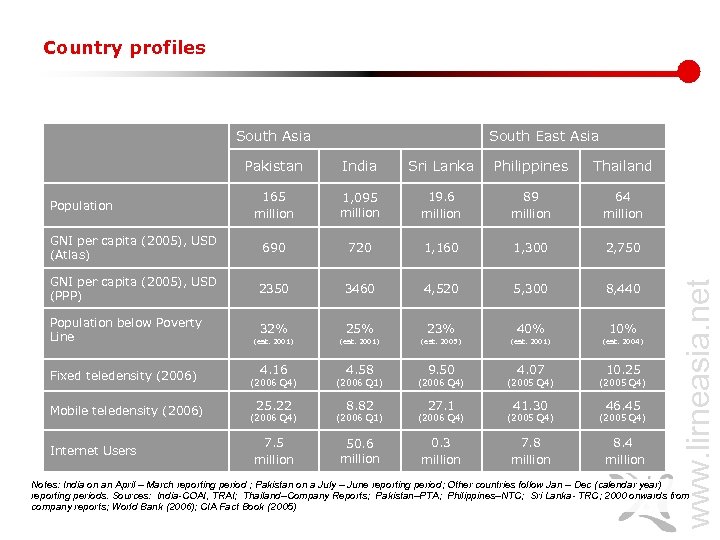
Country profiles South Asia Population Pakistan 165 million South East Asia India Sri Lanka Philippines Thailand 1, 095 million 19. 6 million 89 million 64 million 690 720 1, 160 1, 300 2, 750 GNI per capita (2005), USD (PPP) 2350 3460 4, 520 5, 300 8, 440 Population below Poverty Line Fixed teledensity (2006) Mobile teledensity (2006) Internet Users 32% 25% 23% 40% 10% (est. 2001) (est. 2005) (est. 2001) (est. 2004) 4. 16 (2006 Q 4) 25. 22 4. 58 (2006 Q 1) 8. 82 9. 50 (2006 Q 4) 27. 1 4. 07 (2005 Q 4) 41. 30 10. 25 (2005 Q 4) 46. 45 (2006 Q 4) (2006 Q 1) (2006 Q 4) (2005 Q 4) 7. 5 million 50. 6 million 0. 3 million 7. 8 million 8. 4 million www. lirneasia. net GNI per capita (2005), USD (Atlas) Notes: India on an April – March reporting period ; Pakistan on a July – June reporting period; Other countries follow Jan – Dec (calendar year) reporting periods. Sources: India-COAI, TRAI; Thailand–Company Reports; Pakistan–PTA; Philippines–NTC; Sri Lanka- TRC; 2000 onwards from company reports; World Bank (2006); CIA Fact Book (2005)
Bottom of the Pyramid www. lirneasia. net Everyone has access, but not ownership
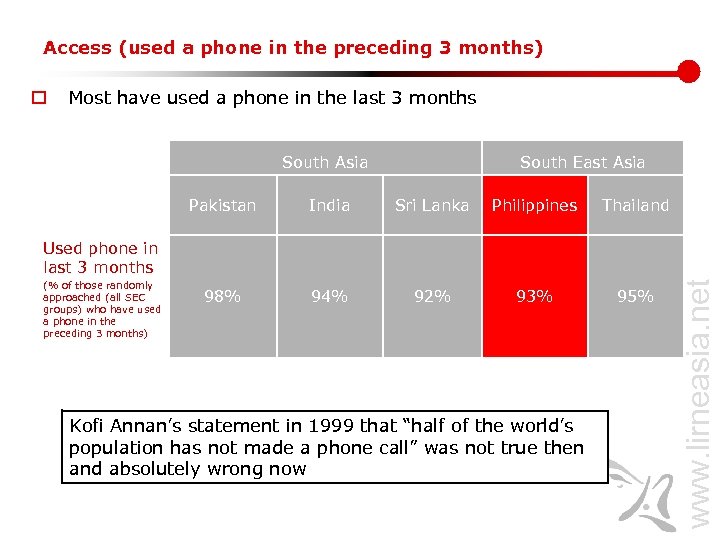
Access (used a phone in the preceding 3 months) o Most have used a phone in the last 3 months South Asia South East Asia Pakistan India Sri Lanka Philippines Thailand 98% 94% 92% 93% 95% (% of those randomly approached (all SEC groups) who have used a phone in the preceding 3 months) Kofi Annan’s statement in 1999 that “half of the world’s population has not made a phone call” was not true then and absolutely wrong now www. lirneasia. net Used phone in last 3 months
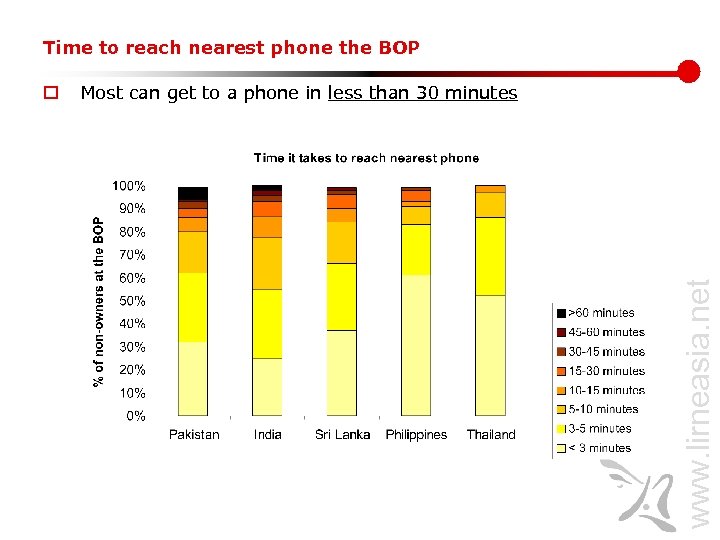
Time to reach nearest phone the BOP Most can get to a phone in less than 30 minutes www. lirneasia. net o
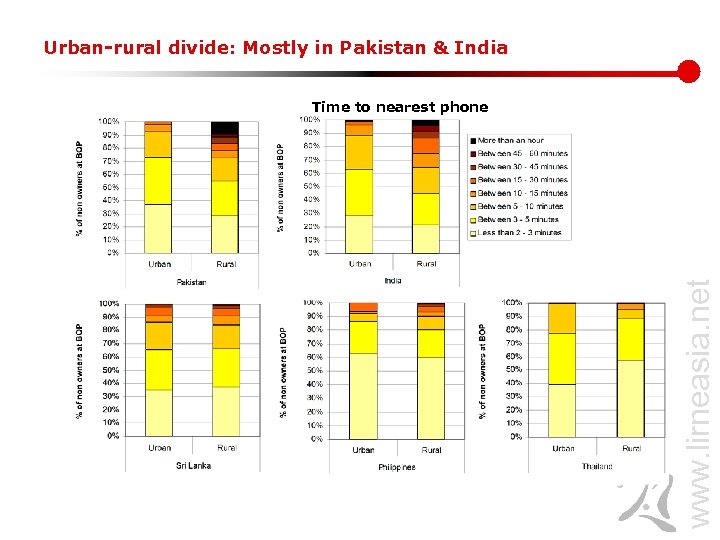
Urban-rural divide: Mostly in Pakistan & India www. lirneasia. net Time to nearest phone
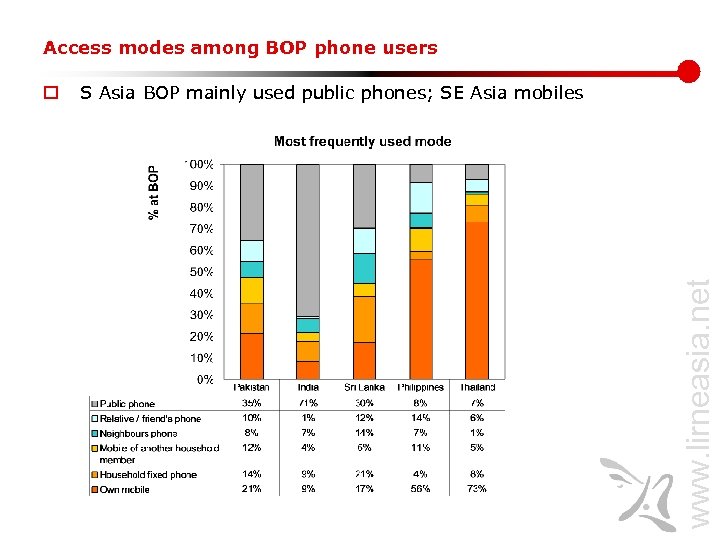
Access modes among BOP phone users S Asia BOP mainly used public phones; SE Asia mobiles www. lirneasia. net o
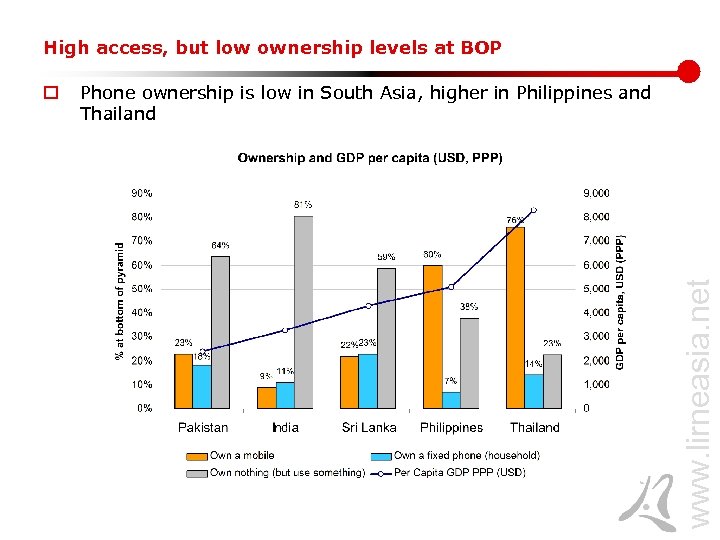
High access, but low ownership levels at BOP Phone ownership is low in South Asia, higher in Philippines and Thailand www. lirneasia. net o
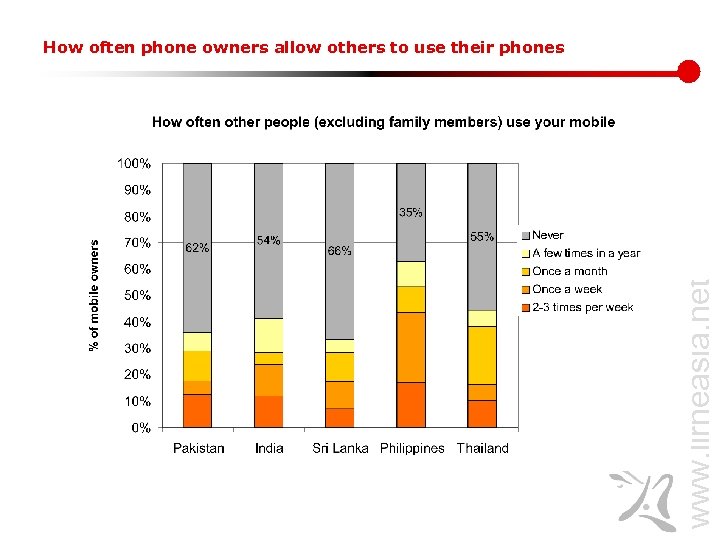
www. lirneasia. net How often phone owners allow others to use their phones
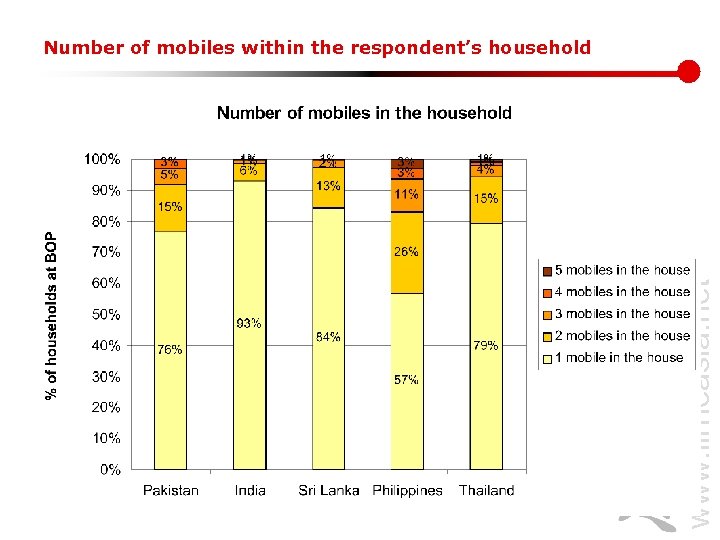
www. lirneasia. net Number of mobiles within the respondent’s household
Bottom of the pyramid www. lirneasia. net Usage patterns
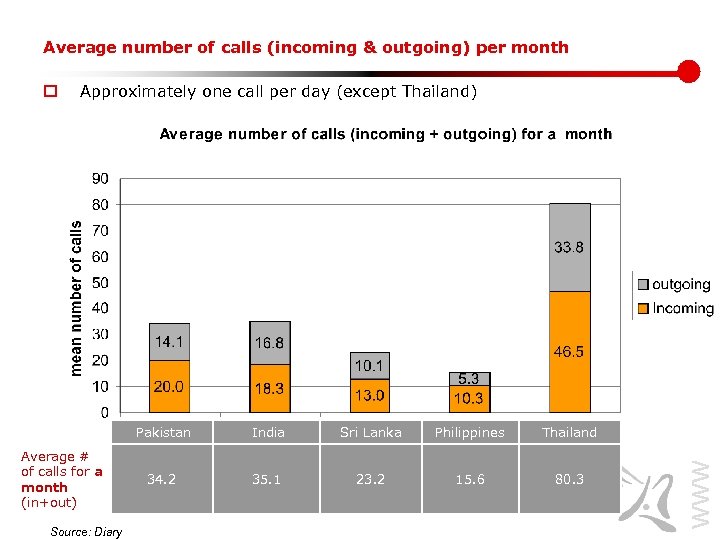
Average number of calls (incoming & outgoing) per month Approximately one call per day (except Thailand) Pakistan Average # of calls for a month (in+out) Source: Diary India Sri Lanka Philippines Thailand 34. 2 35. 1 23. 2 15. 6 80. 3 www. lirneasia. net o
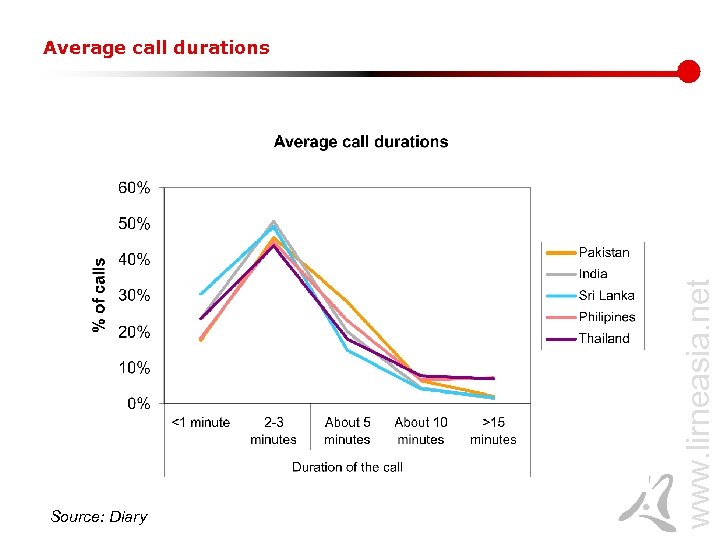
Source: Diary www. lirneasia. net Average call durations
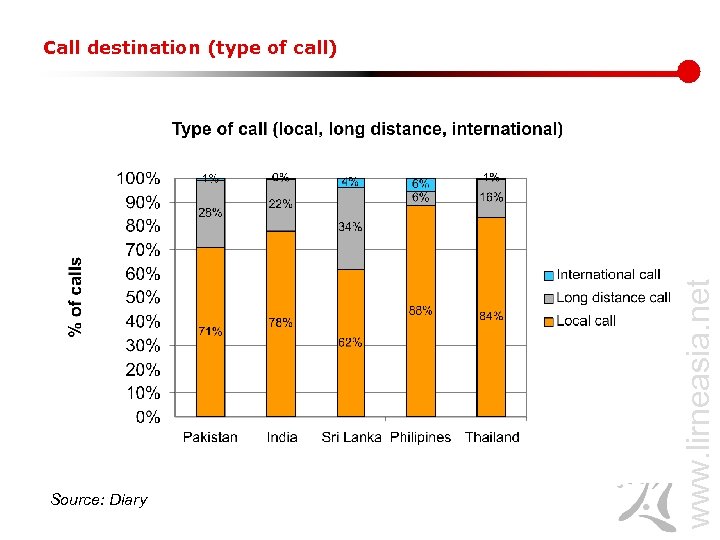
Source: Diary www. lirneasia. net Call destination (type of call)
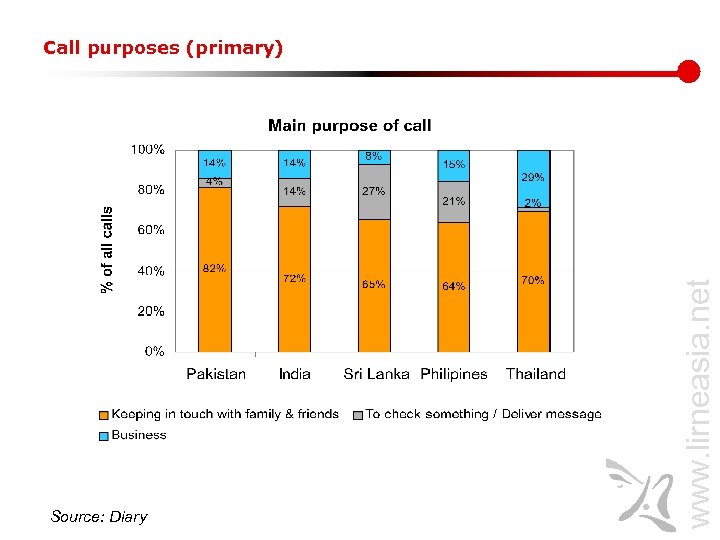
Source: Diary www. lirneasia. net Call purposes (primary)
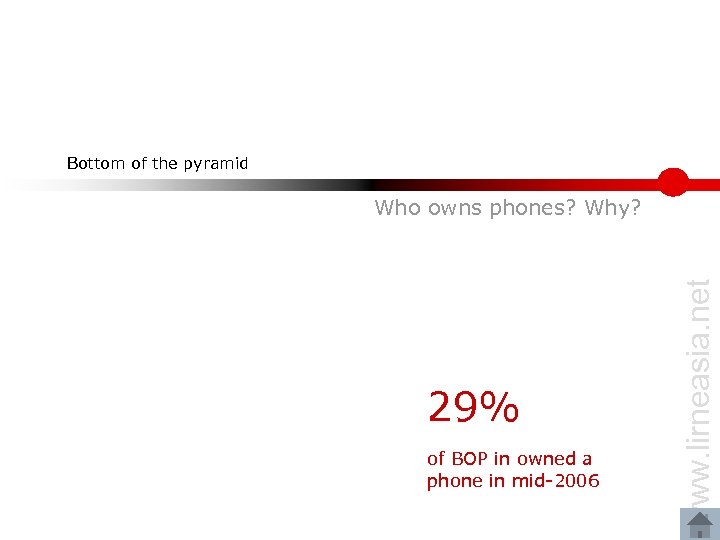
Bottom of the pyramid 29% of BOP in owned a phone in mid-2006 www. lirneasia. net Who owns phones? Why?
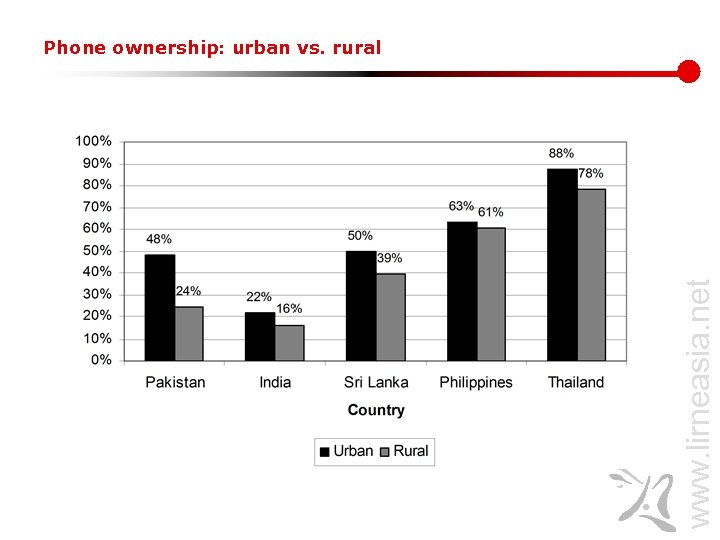
www. lirneasia. net Phone ownership: urban vs. rural
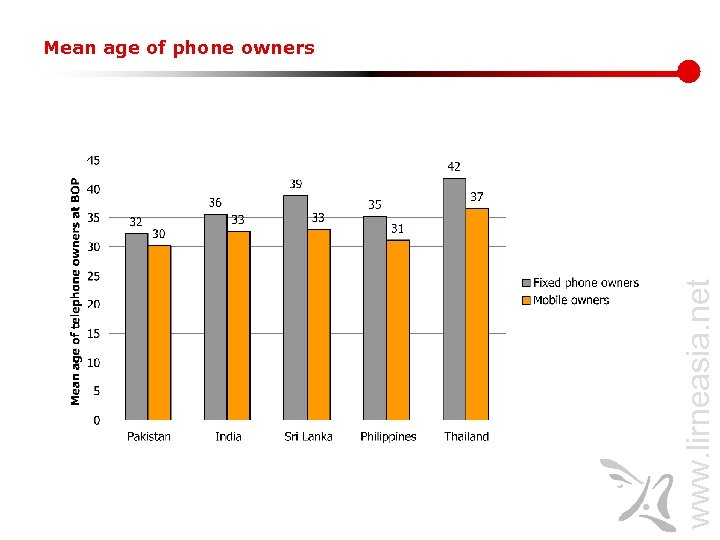
www. lirneasia. net Mean age of phone owners
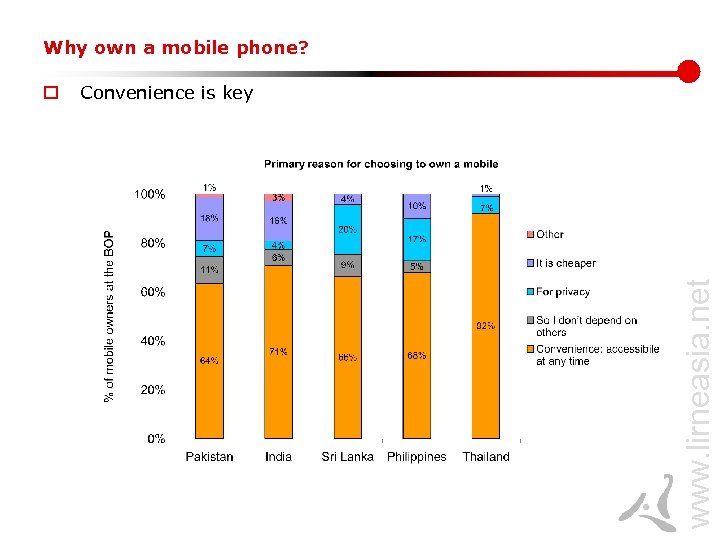
Why own a mobile phone? Convenience is key www. lirneasia. net o
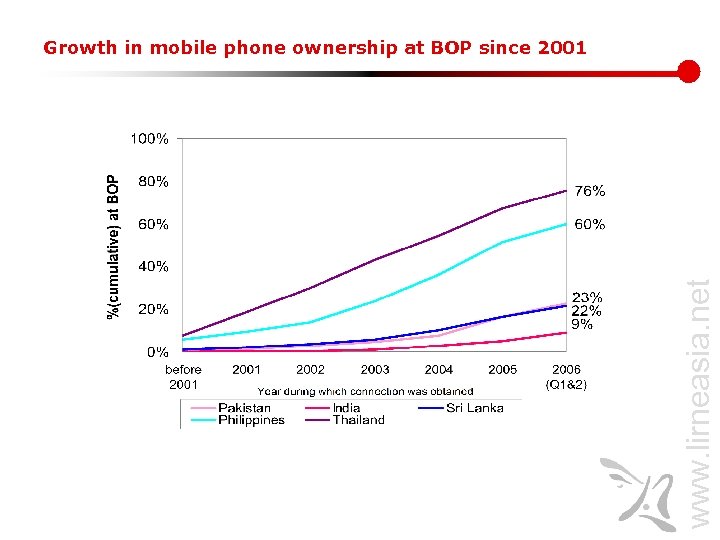
www. lirneasia. net Growth in mobile phone ownership at BOP since 2001
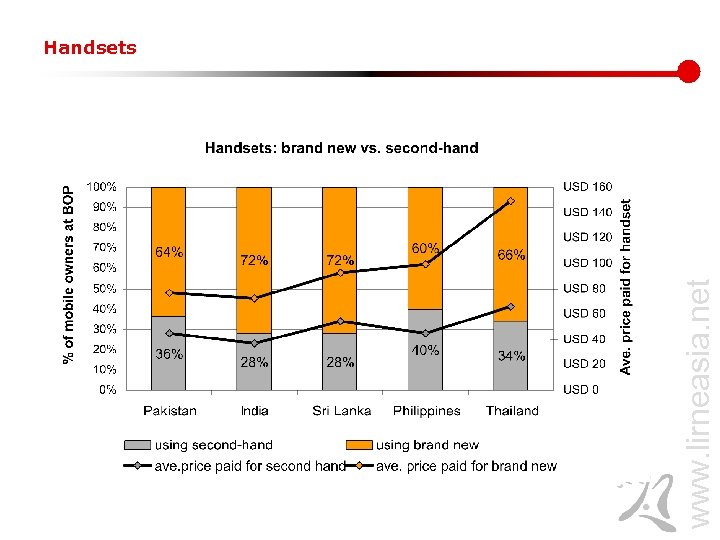
www. lirneasia. net Handsets
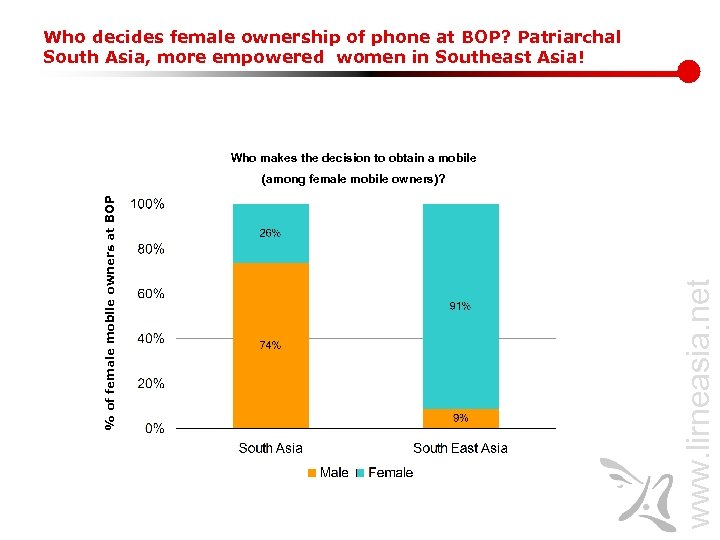
Who decides female ownership of phone at BOP? Patriarchal South Asia, more empowered women in Southeast Asia! Who makes the decision to obtain a mobile www. lirneasia. net % of female mobile owners at BOP (among female mobile owners)?
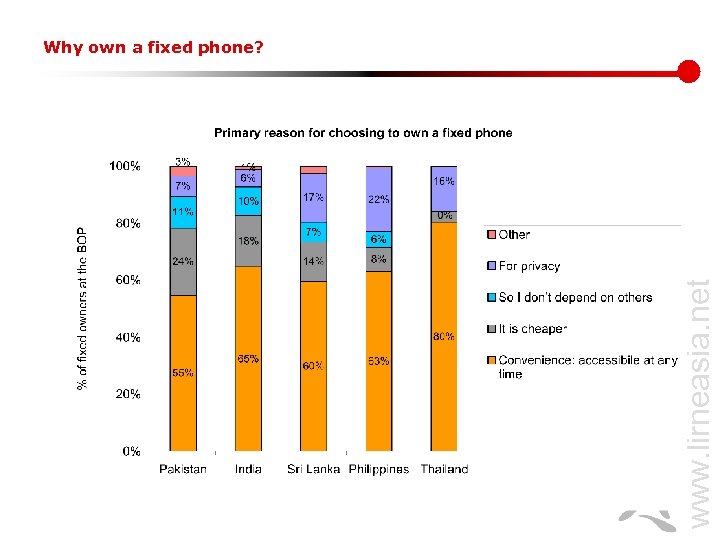
www. lirneasia. net Why own a fixed phone?
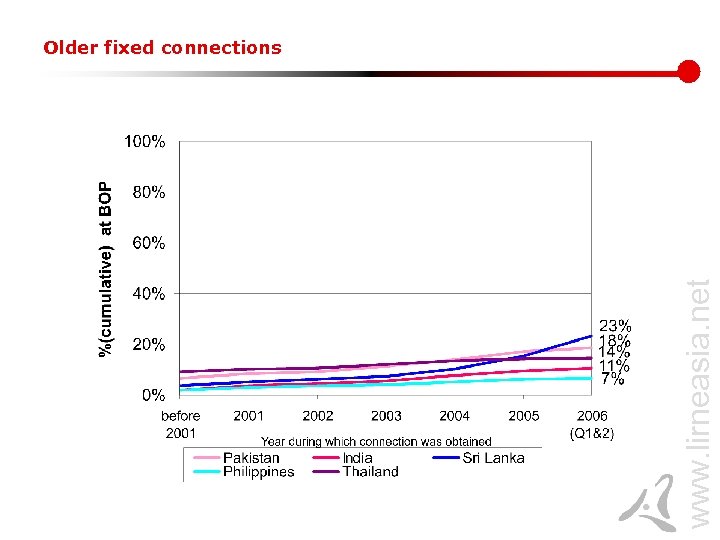
www. lirneasia. net Older fixed connections
Bottom of the Pyramid www. lirneasia. net BOP is prepaid
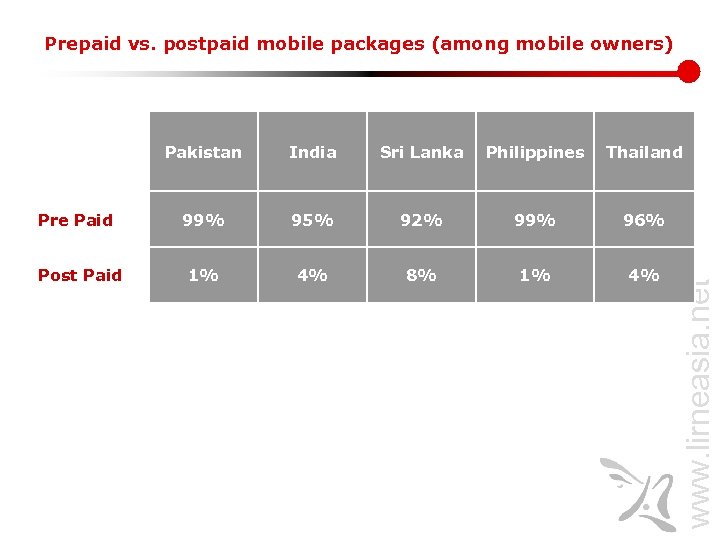
Prepaid vs. postpaid mobile packages (among mobile owners) Pakistan India Sri Lanka Philippines Thailand Pre Paid 99% 95% 92% 99% 96% Post Paid 1% 4% 8% 1% 4% www. lirneasia. net
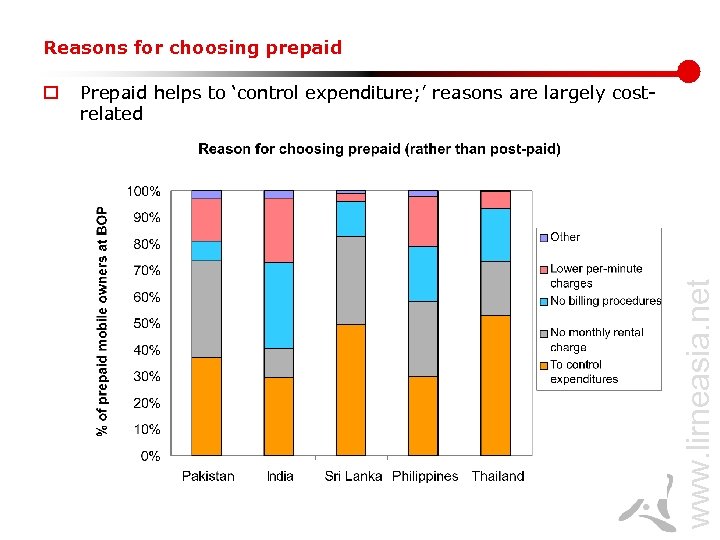
Reasons for choosing prepaid Prepaid helps to ‘control expenditure; ’ reasons are largely costrelated www. lirneasia. net o
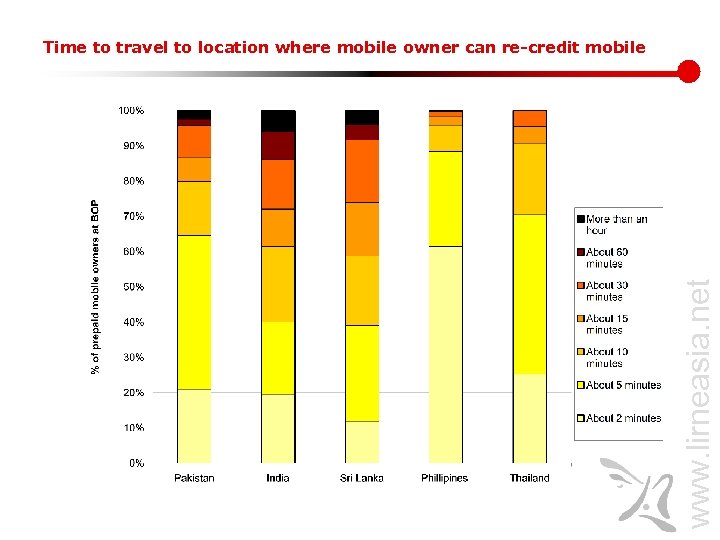
www. lirneasia. net Time to travel to location where mobile owner can re-credit mobile
Bottom of the pyramid www. lirneasia. net SMS use and its relative cost
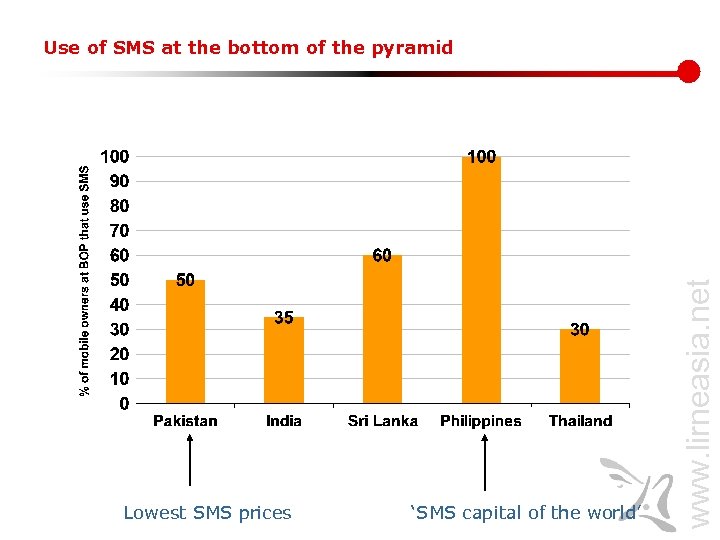
Lowest SMS prices ‘SMS capital of the world’ www. lirneasia. net Use of SMS at the bottom of the pyramid
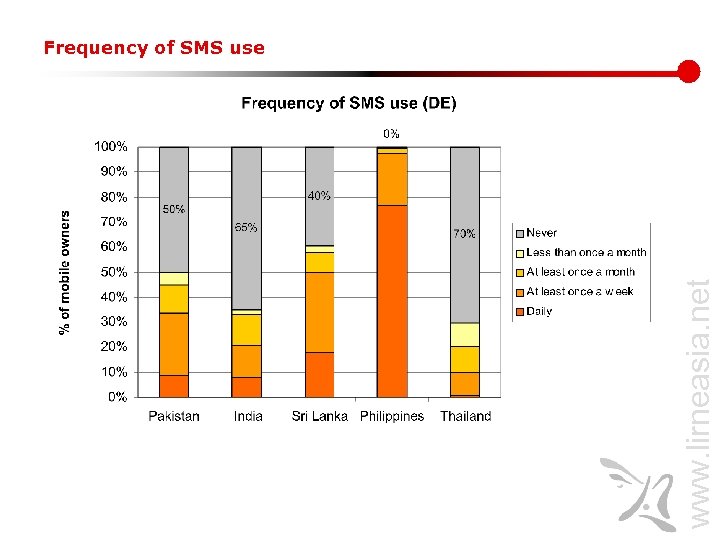
www. lirneasia. net Frequency of SMS use
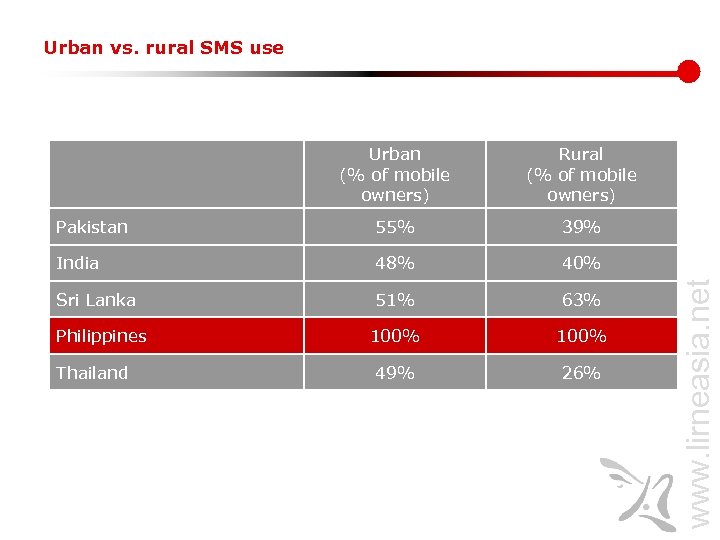
Urban vs. rural SMS use Rural (% of mobile owners) Pakistan 55% 39% India 48% 40% Sri Lanka 51% 63% 100% 49% 26% Philippines Thailand www. lirneasia. net Urban (% of mobile owners)
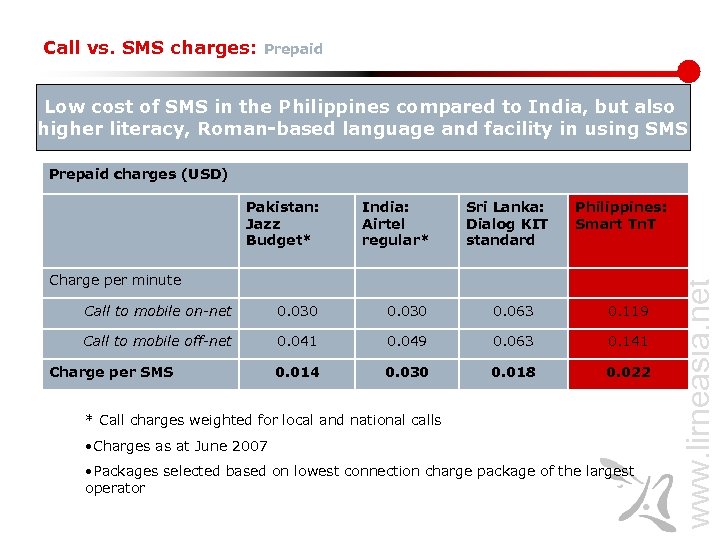
Call vs. SMS charges: Prepaid Low cost of SMS in the Philippines compared to India, but also higher literacy, Roman-based language and facility in using SMS Prepaid charges (USD) India: Airtel regular* Sri Lanka: Dialog KIT standard Philippines: Smart Tn. T Charge per minute Call to mobile on-net 0. 030 0. 063 0. 119 Call to mobile off-net 0. 041 0. 049 0. 063 0. 141 0. 014 0. 030 0. 018 0. 022 Charge per SMS * Call charges weighted for local and national calls • Charges as at June 2007 • Packages selected based on lowest connection charge package of the largest operator www. lirneasia. net Pakistan: Jazz Budget*
Bottom of the pyramid www. lirneasia. net Missed calls
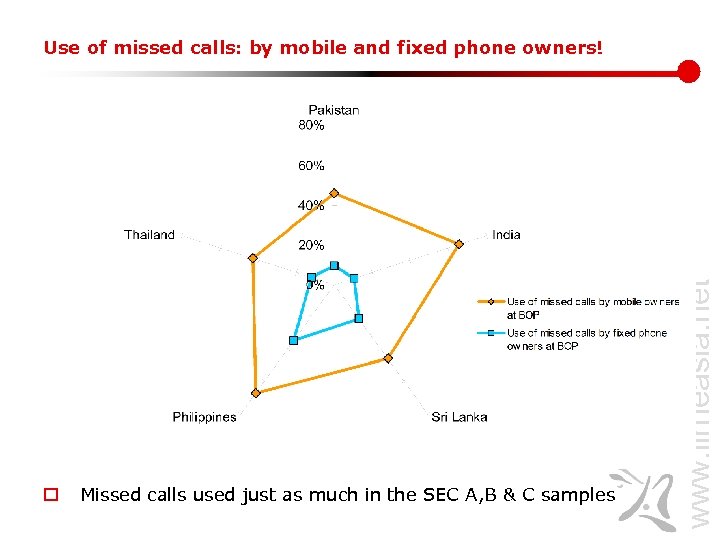
o Missed calls used just as much in the SEC A, B & C samples www. lirneasia. net Use of missed calls: by mobile and fixed phone owners!
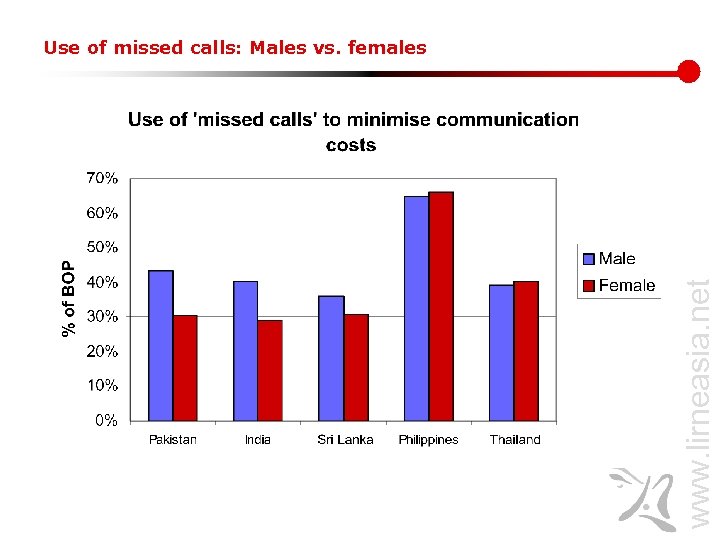
www. lirneasia. net Use of missed calls: Males vs. females
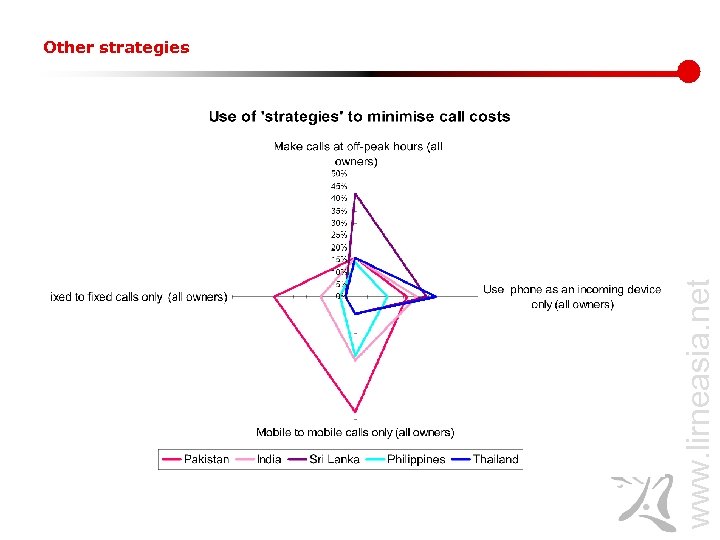
www. lirneasia. net Other strategies
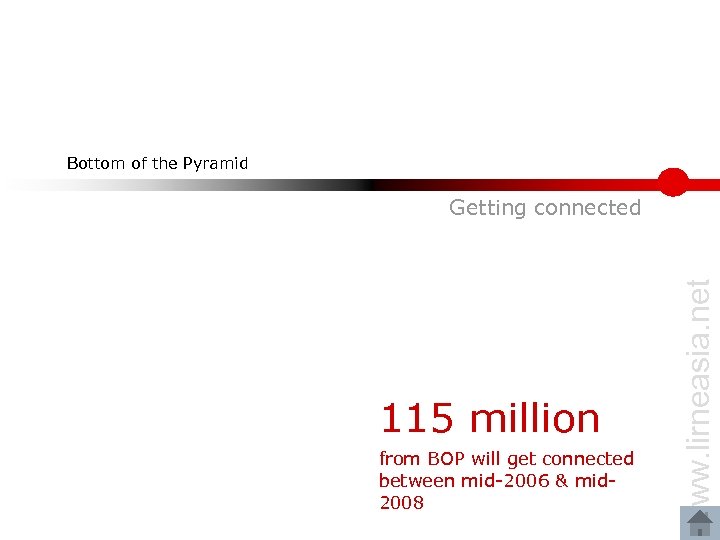
Bottom of the Pyramid 115 million from BOP will get connected between mid-2006 & mid 2008 www. lirneasia. net Getting connected
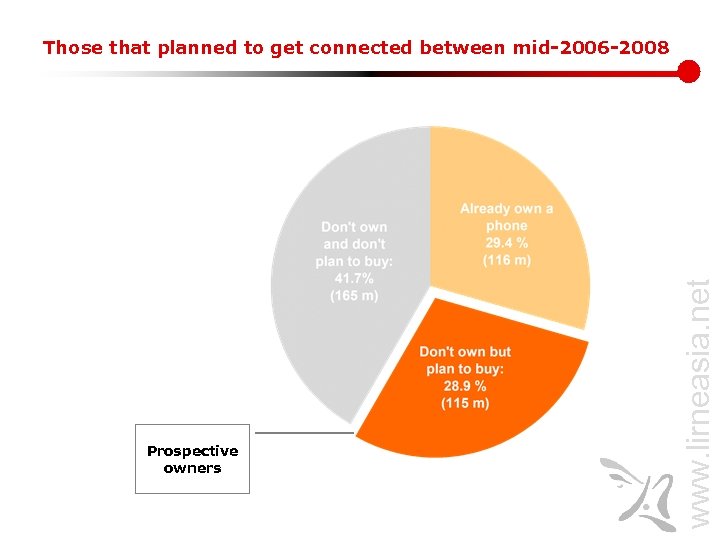
Prospective owners www. lirneasia. net Those that planned to get connected between mid-2006 -2008
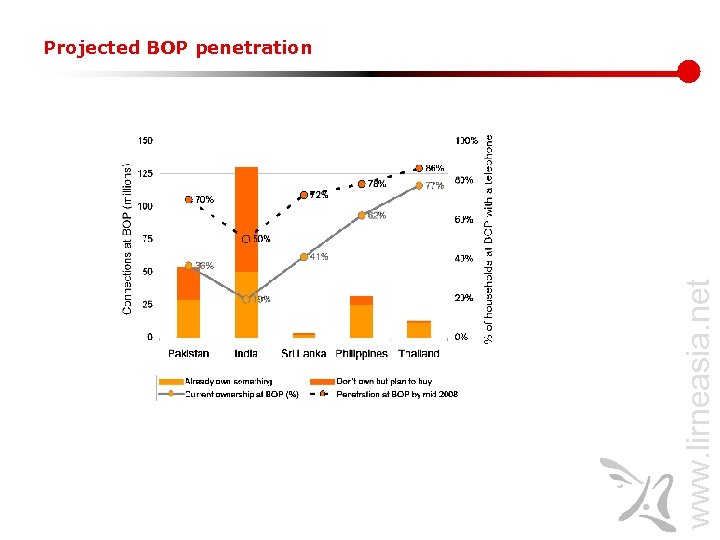
www. lirneasia. net Projected BOP penetration
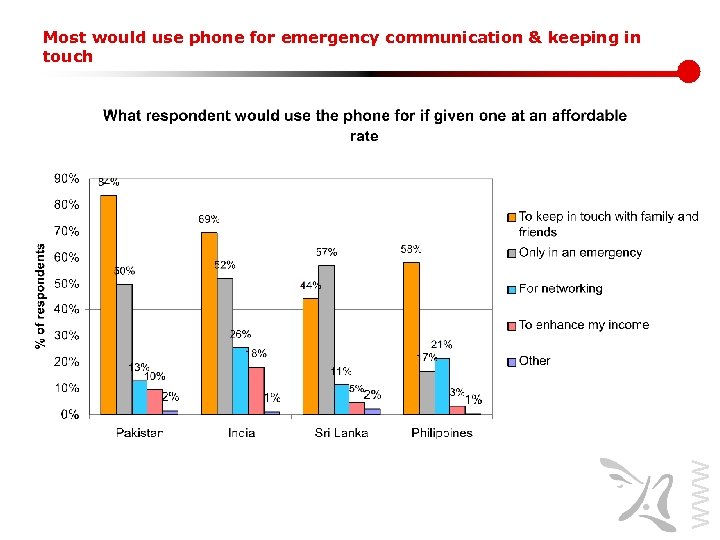
www. lirneasia. net Most would use phone for emergency communication & keeping in touch
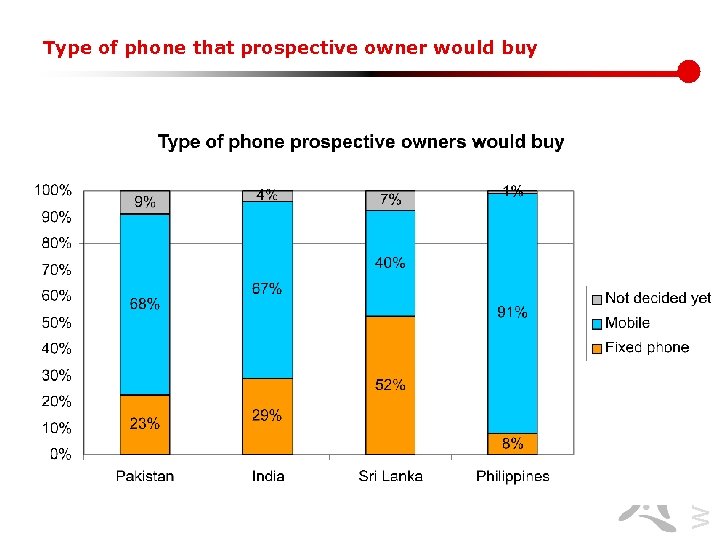
www. lirneasia. net Type of phone that prospective owner would buy
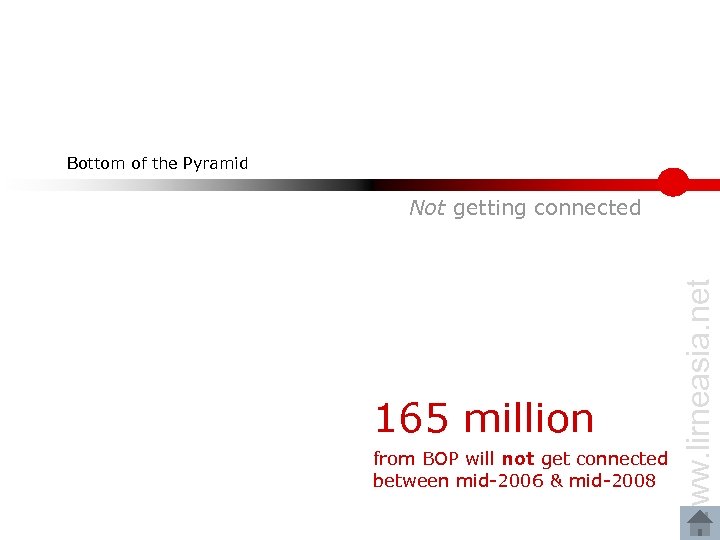
Bottom of the Pyramid 165 million from BOP will not get connected between mid-2006 & mid-2008 www. lirneasia. net Not getting connected
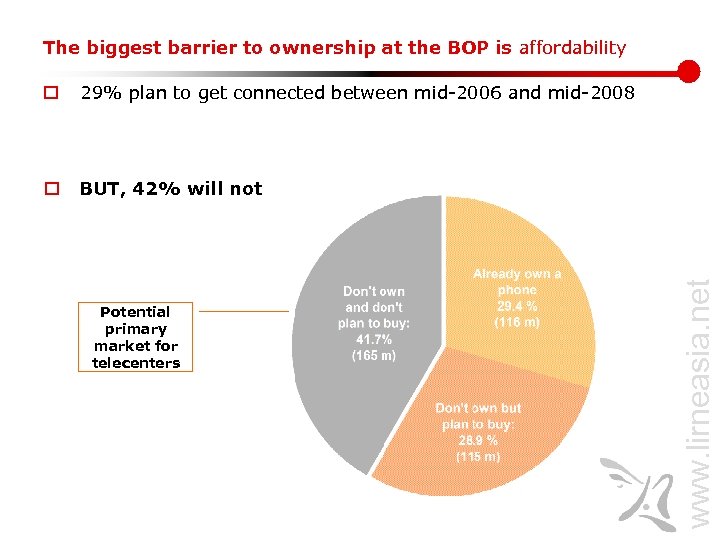
The biggest barrier to ownership at the BOP is affordability o 29% plan to get connected between mid-2006 and mid-2008 Potential primary market for telecenters www. lirneasia. net o BUT, 42% will not
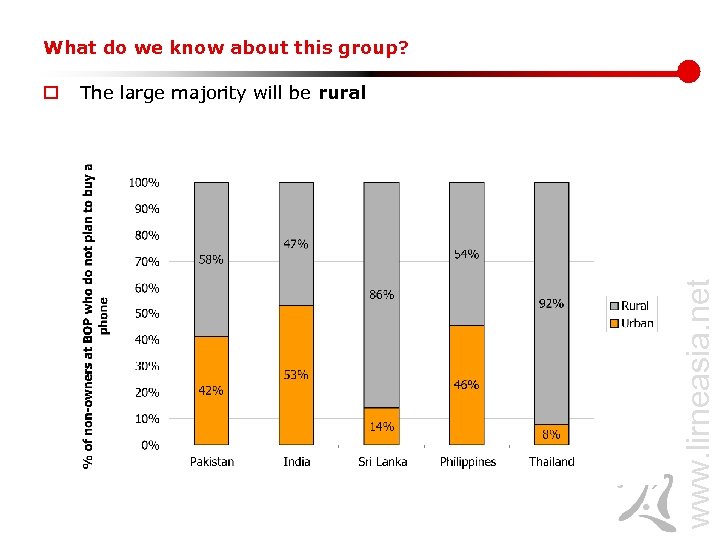
What do we know about this group? The large majority will be rural www. lirneasia. net o
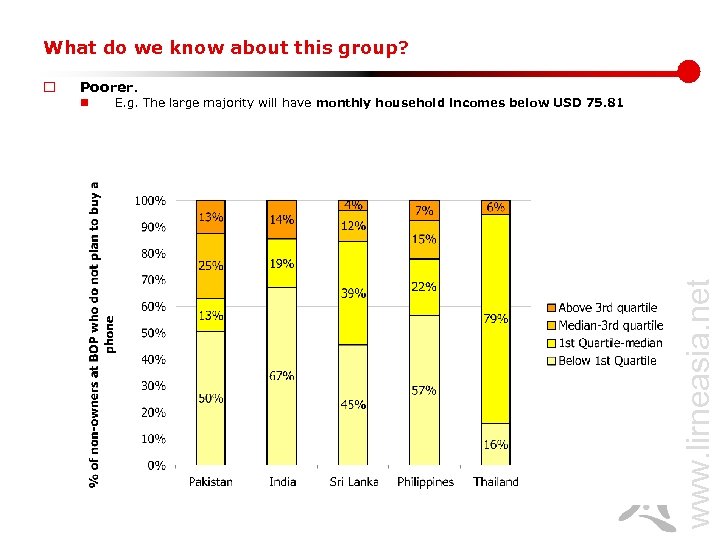
What do we know about this group? Poorer. n E. g. The large majority will have monthly household incomes below USD 75. 81 www. lirneasia. net o
Bottom of the pyramid www. lirneasia. net Benefits of access to telecom?
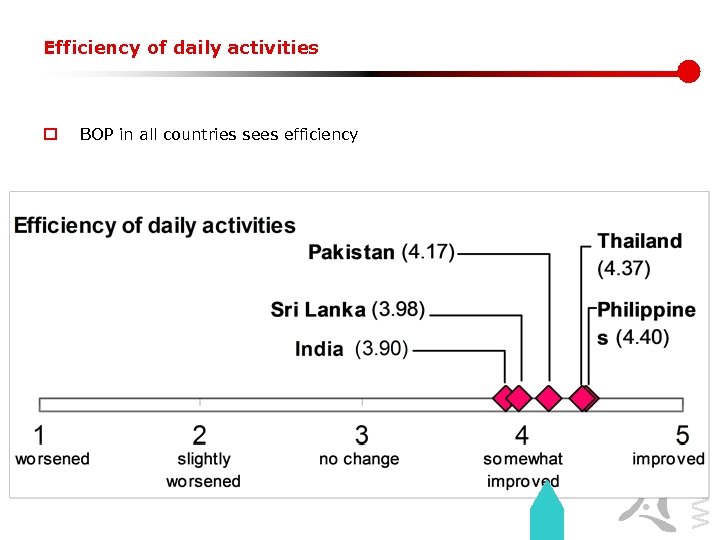
Efficiency of daily activities BOP in all countries sees efficiency www. lirneasia. net o
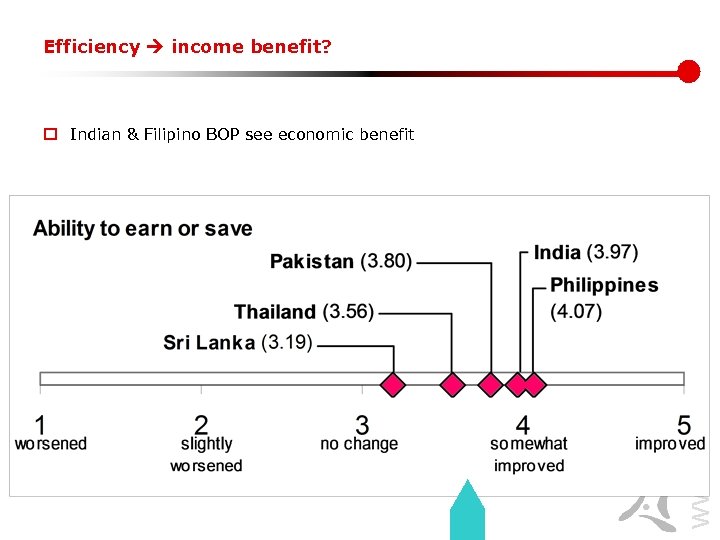
Efficiency income benefit? www. lirneasia. net o Indian & Filipino BOP see economic benefit
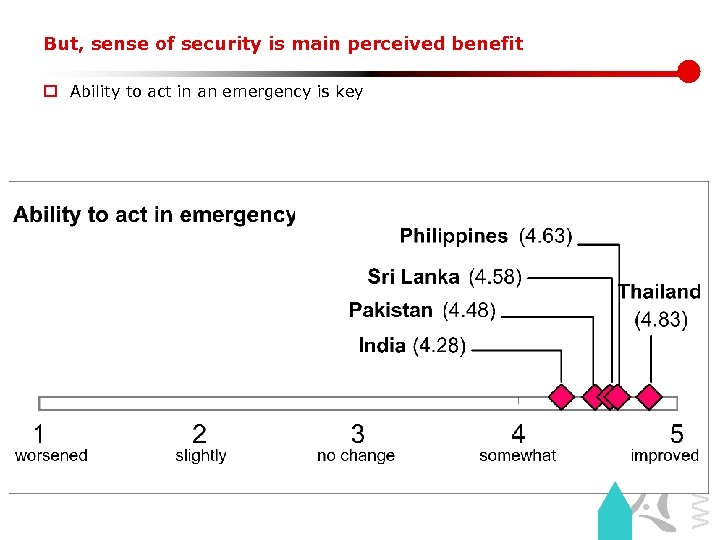
But, sense of security is main perceived benefit www. lirneasia. net o Ability to act in an emergency is key
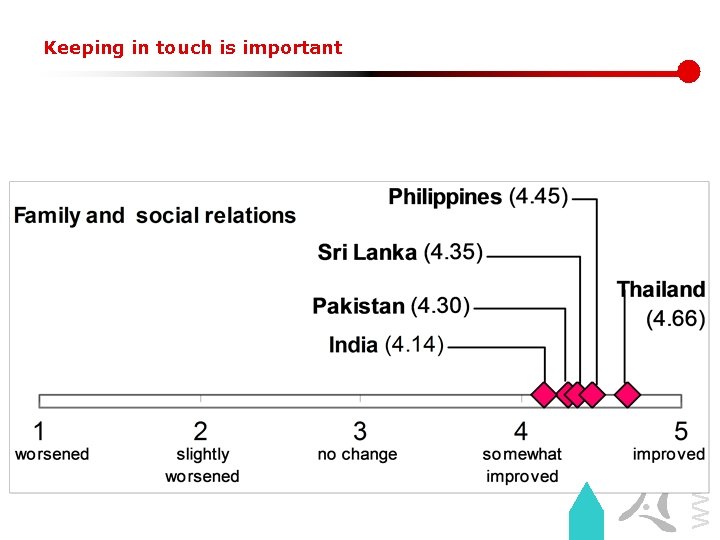
www. lirneasia. net Keeping in touch is important
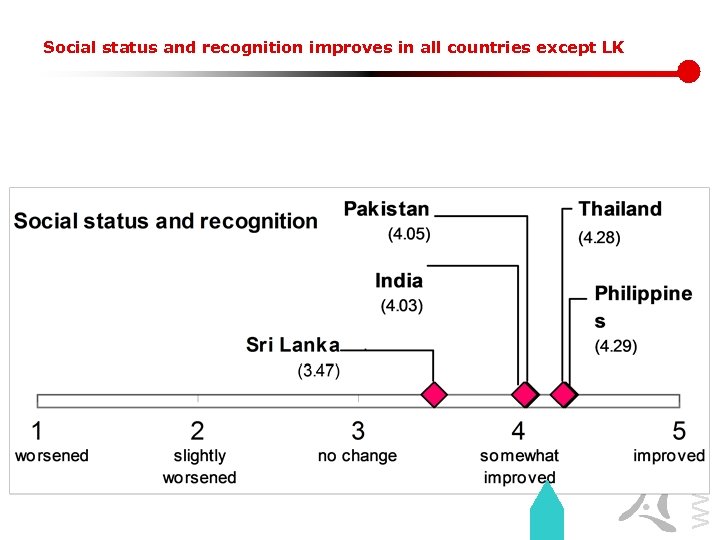
www. lirneasia. net Social status and recognition improves in all countries except LK
Bottom of the pyramid www. lirneasia. net Internet…what Internet?
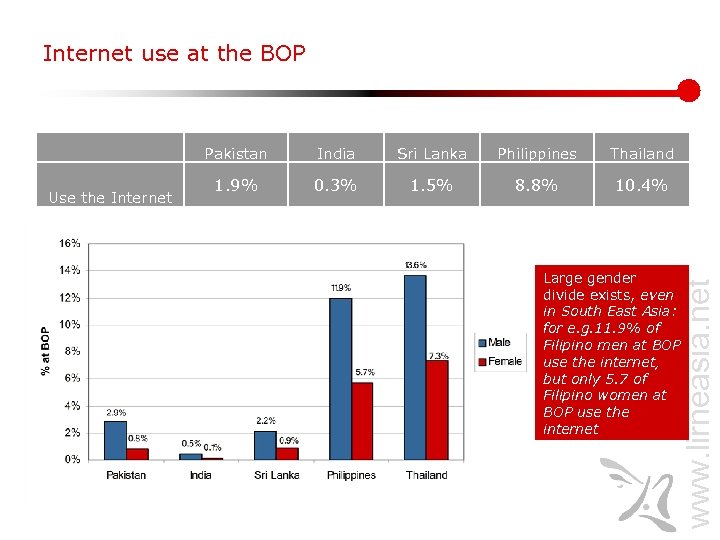
Internet use at the BOP Pakistan Sri Lanka Philippines Thailand 1. 9% 0. 3% 1. 5% 8. 8% 10. 4% Large gender divide exists, even in South East Asia: for e. g. 11. 9% of Filipino men at BOP use the internet, but only 5. 7 of Filipino women at BOP use the internet www. lirneasia. net Use the Internet India
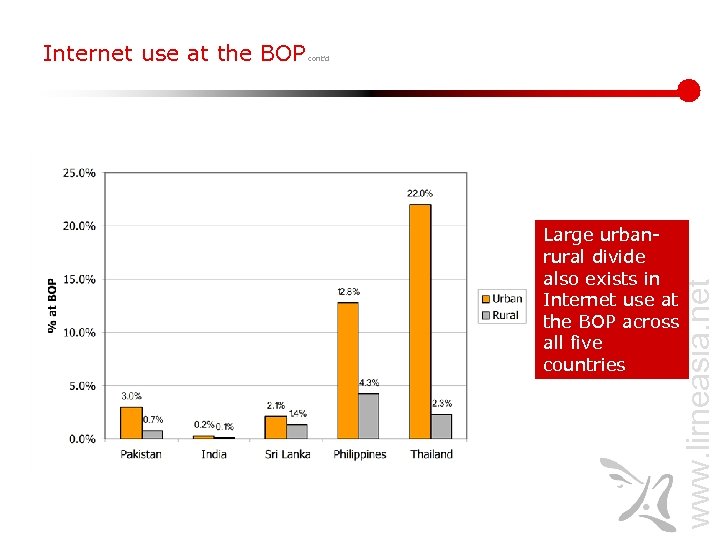
cont’d Large urbanrural divide also exists in Internet use at the BOP across all five countries www. lirneasia. net Internet use at the BOP
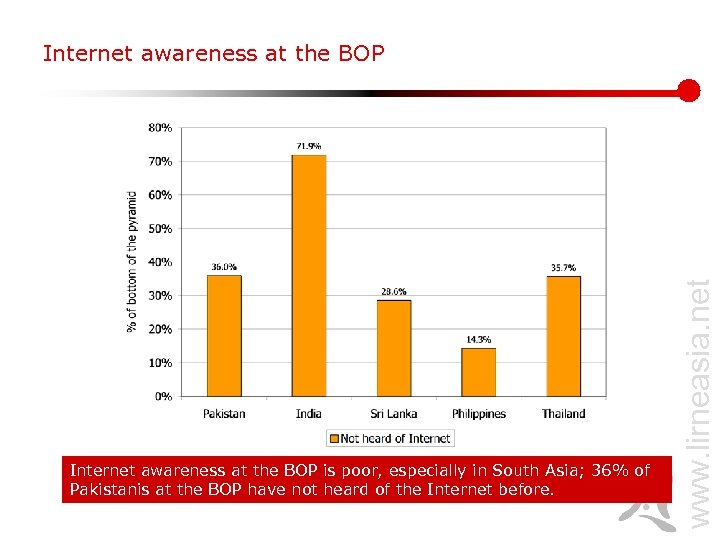
Internet awareness at the BOP is poor, especially in South Asia; 36% of Pakistanis at the BOP have not heard of the Internet before. www. lirneasia. net Internet awareness at the BOP
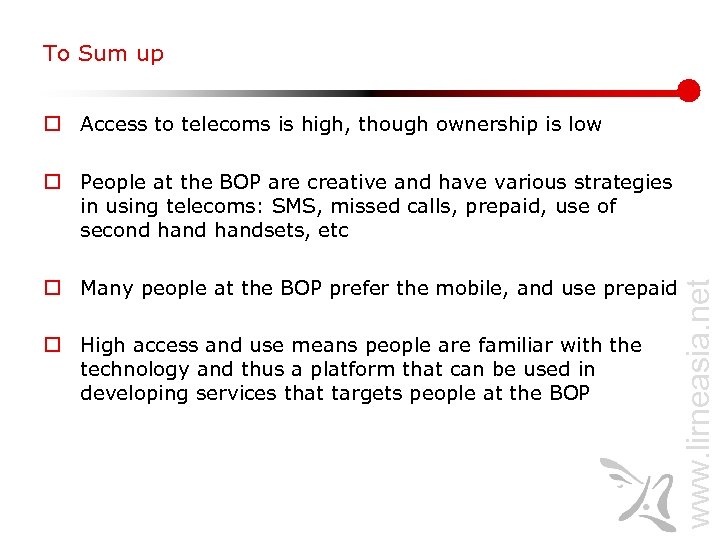
To Sum up o Access to telecoms is high, though ownership is low o Many people at the BOP prefer the mobile, and use prepaid o High access and use means people are familiar with the technology and thus a platform that can be used in developing services that targets people at the BOP www. lirneasia. net o People at the BOP are creative and have various strategies in using telecoms: SMS, missed calls, prepaid, use of second handsets, etc
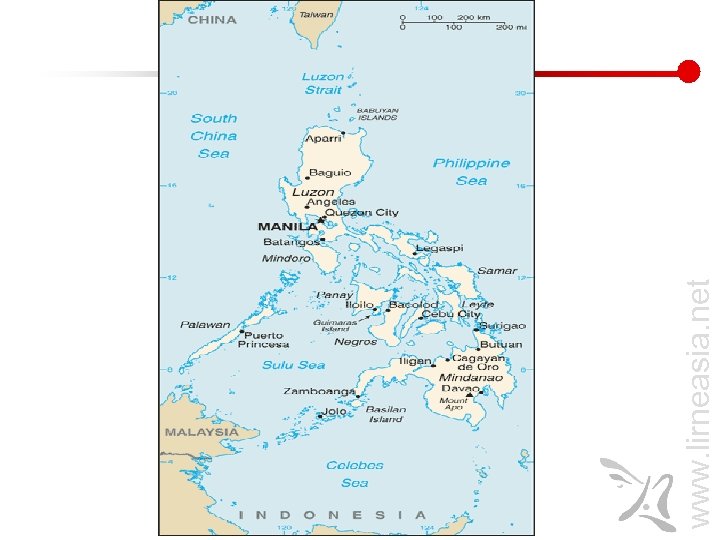
Examples of SMS use from the Philippines
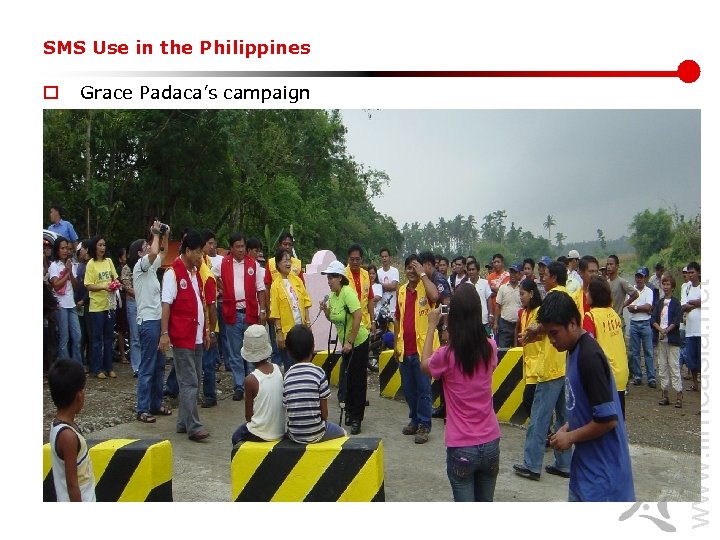
Examples of SMS Use in the Philippines o o Governance Education Social services Commerce o. Institute of Popular Democracy’s use of SMS in election monitoring o. Among Ed and Grace Padaca, the good and the bad o. Overseas Filipino Workers SOS Project www. lirneasia. net o DOST’s ICT 4 D cases on
www. lirneasia. net SMS use in the Philippines
SMS use in the Philippines Institute for Popular Democracy’s SMS-based system for anti-poll fraud and election monitoring (May 2007 elections) n n n In the context of rampant vote-buying and cheating, make citizens guard their votes and return credibility to the system Applied. Technologies and Information Solutions (ATIS) at www. atis. com. ph Citizens registered before the elections and send SMS to a designated number, which are complied in a data base On election day, about almost a hundred messages from local partners in different provinces were registered in the system. Half of these were verified to contain reliable information on vote-buying, ballot snatching, and election-related threats and violence. Reports complied in a database and forwarded to the Commission of Elections (COMELEC) and other concerned agencies for action www. lirneasia. net o
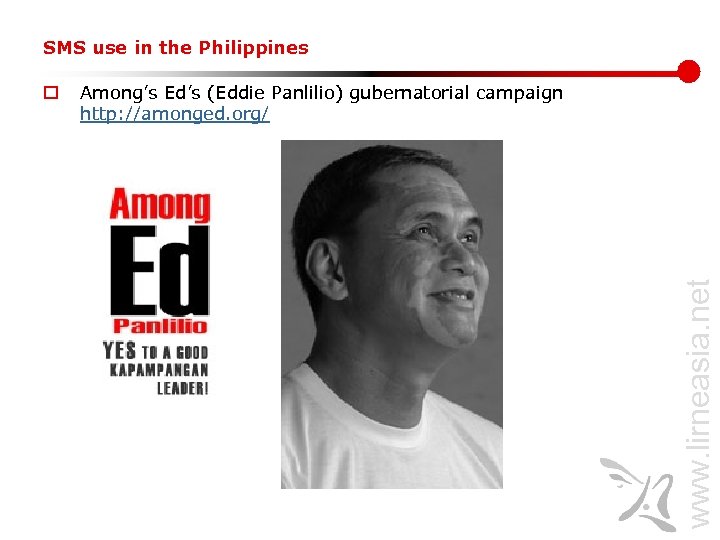
SMS use in the Philippines Among’s Ed’s (Eddie Panlilio) gubernatorial campaign http: //amonged. org/ www. lirneasia. net o
www. lirneasia. net
SMS Use in the Philippines Grace Padaca’s campaign www. lirneasia. net o
SMS use in the Philippines OFW SOS-SMS project n Launched in February 2006, spearheaded by Center for Migrant Advocacy (CMA) and testing, set-up and database managed by Institute for Popular Democracy n Based on system developed by Filipino workers in the Gulf area during Gulf war n 6 months after launch, over 800 messages received , which are automatically transmitted to the Department of Foreign Affairs, Overseas Workers Welfare Administration and Center for Migrant Advocacy n as of April 2007, system helped facilitate the return of 215 Filipinos working overseas who were abused or maltreated by employers n IPD enhanced the system, built the database and distribution mechanism to respective government agencies www. lirneasia. net o
In sum… o People at the BOP uses telecoms, frugally, intelligently and creatively o Philippines – SMS use in mobilisation, empowering people, connecting people n But same tools can also be used for rumor mongering and to sow misinformation www. lirneasia. net o Many are using mobile phones and are planning to get connected
o Thus, activists, NGOs, governments should creatively think of how to incorporate the use of mobiles and appropriate ICTs in their work, projects, and campaigns o Bearing in mind of course that social and cultural contexts frame how people adopt and utilise technologies www. lirneasia. net Conclusions
Comments and questions? www. lirneasia. net Thank you very much for your attention!
Скачать презентацию Teleuse BOP Implications for Civil Society Lorraine Carlos Salazar
9552235060a02a3d9841601b6b3c6fbc.ppt