


 Скачать презентацию Telepharmacy an e-Solution for Rural Hospitals Jac Davies
90bfb23c13694891628e8af3c29ca2ac.ppt
- Количество слайдов: 20
 Telepharmacy: an e-Solution for Rural Hospitals Jac Davies November 17, 2005 Inland Northwest Health Services
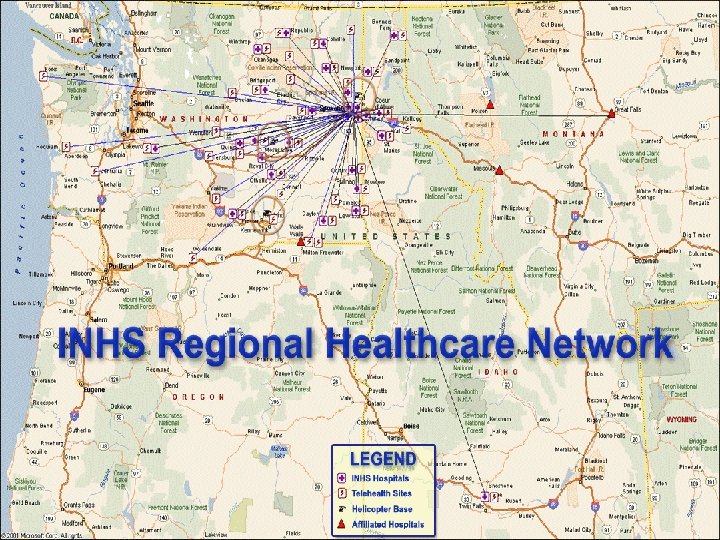
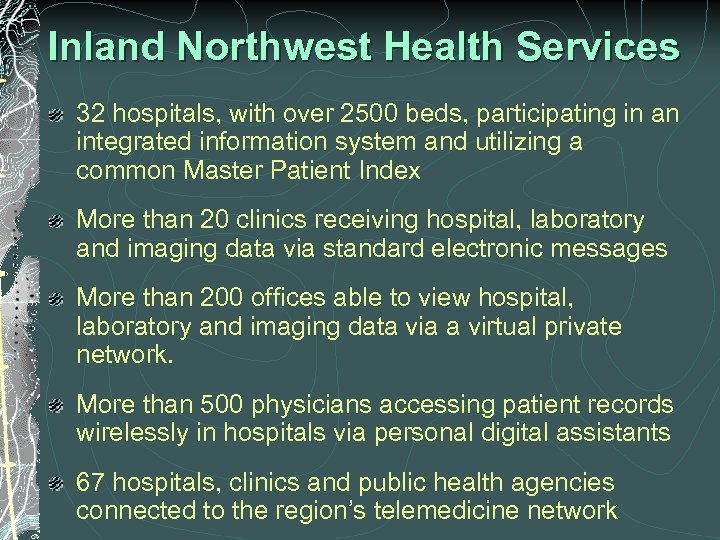 Inland Northwest Health Services 32 hospitals, with over 2500 beds, participating in an integrated information system and utilizing a common Master Patient Index More than 20 clinics receiving hospital, laboratory and imaging data via standard electronic messages More than 200 offices able to view hospital, laboratory and imaging data via a virtual private network. More than 500 physicians accessing patient records wirelessly in hospitals via personal digital assistants 67 hospitals, clinics and public health agencies connected to the region’s telemedicine network
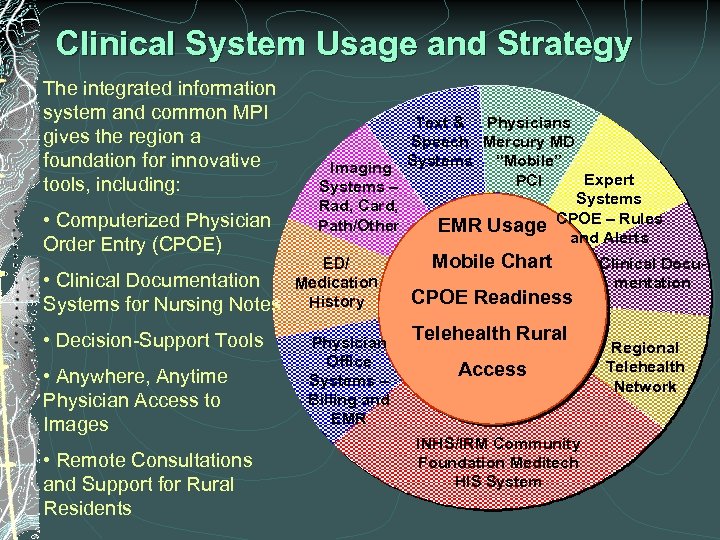 Clinical System Usage and Strategy The integrated information system and common MPI gives the region a foundation for innovative tools, including: • Computerized Physician Order Entry (CPOE) • Clinical Documentation Systems for Nursing Notes • Decision-Support Tools • Anywhere, Anytime Physician Access to Images • Remote Consultations and Support for Rural Residents Text & Physicians Speech Mercury MD Imaging Systems “Mobile” Expert PCI Systems – Systems Rad, Card, Path/Other EMR Usage CPOE – Rules and Alerts ED/ Medication History Physician Office Systems – Billing and EMR Mobile Chart CPOE Readiness Telehealth Rural Access INHS/IRM Community Foundation Meditech HIS System Clinical Documentation Regional Telehealth Network
 INHS Telehealth System Nursing education with universities and community colleges addressing Nursing Shortages Rural hospital Tele. Pharmacy program providing remote Pharmacist services Tele. ER program remotely assisting rural trauma doctors with ER cases Physicians provide remote Clinical Consults in Neurology, Pathology and many other areas Prison Health Services receive specialist care Statewide Diabetes Education Program Including Native American Tribes
 Tele. Pharmacy The provision of pharmaceutical care through the use of Telemedicine technology, automated dispensing technology, scanning technology and integrated computer systems
 Goals of Telepharmacy Program Enhance Patient Safety Compliance with State Board of Pharmacy regulations Efficient use of Pharmacist resources Alleviate Health Care Personnel shortage Improve Patient Outcomes Improve Financial Outcomes
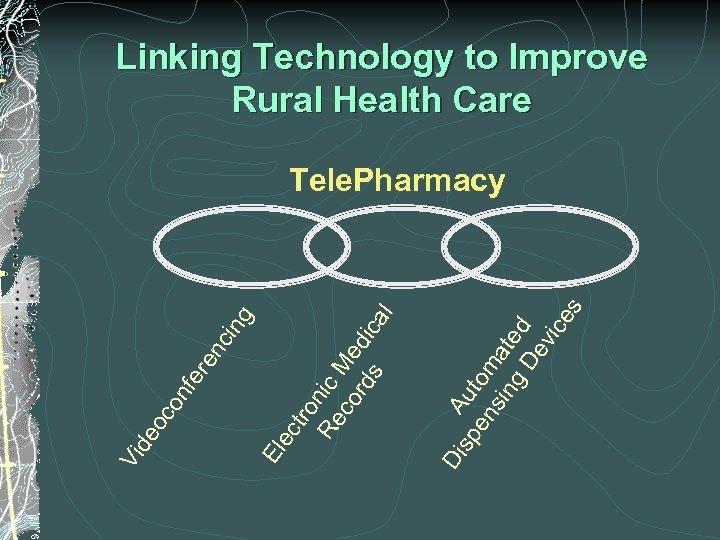 l g sp Aut en om sin at g ed De vic es Di cin re n fe on tro Re nic co Me rd dic s a ec El oc Vi de Linking Technology to Improve Rural Health Care Tele. Pharmacy
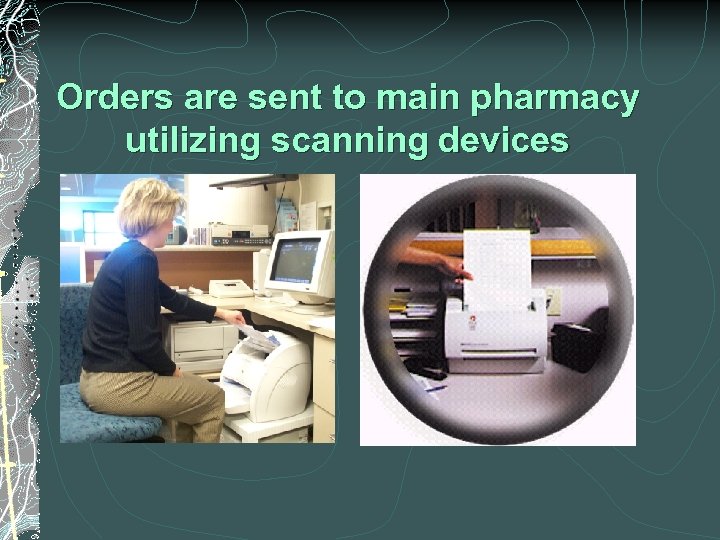 Orders are sent to main pharmacy utilizing scanning devices
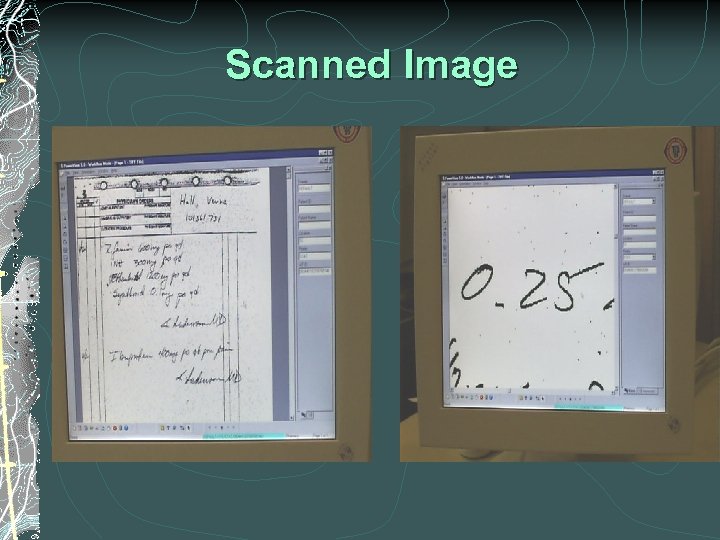 Scanned Image
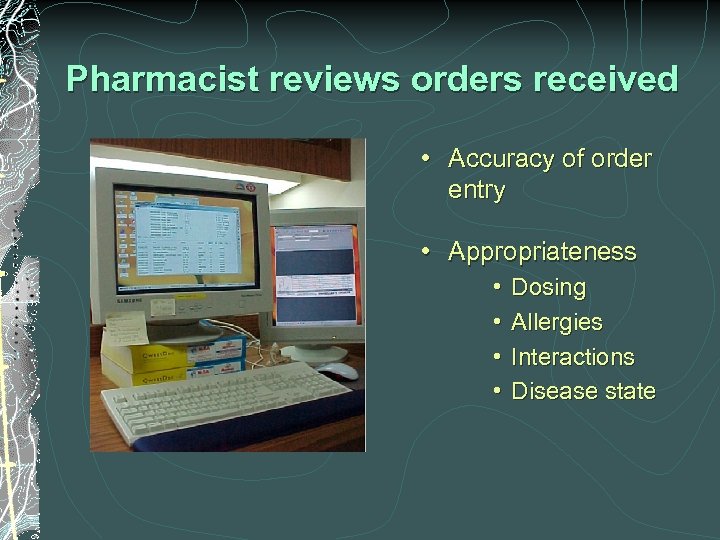 Pharmacist reviews orders received • Accuracy of order entry • Appropriateness • • Dosing Allergies Interactions Disease state
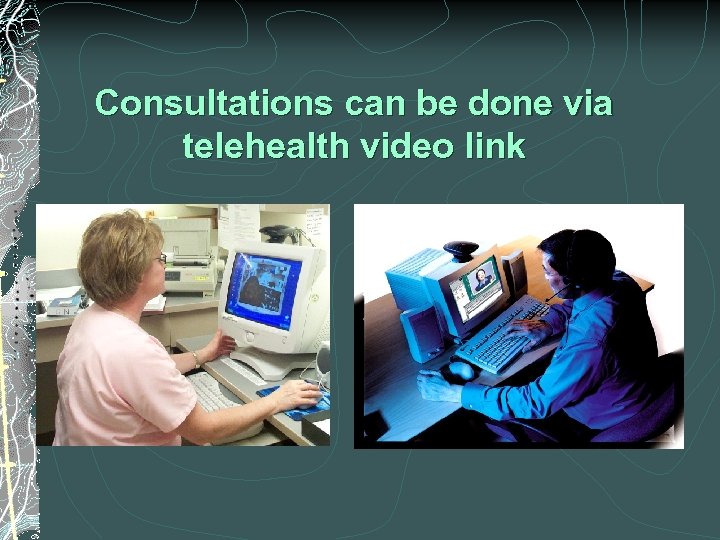 Consultations can be done via telehealth video link
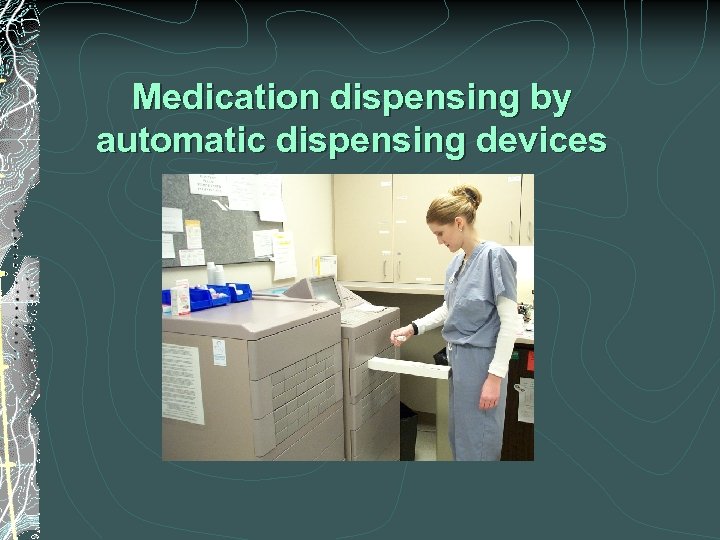 Medication dispensing by automatic dispensing devices
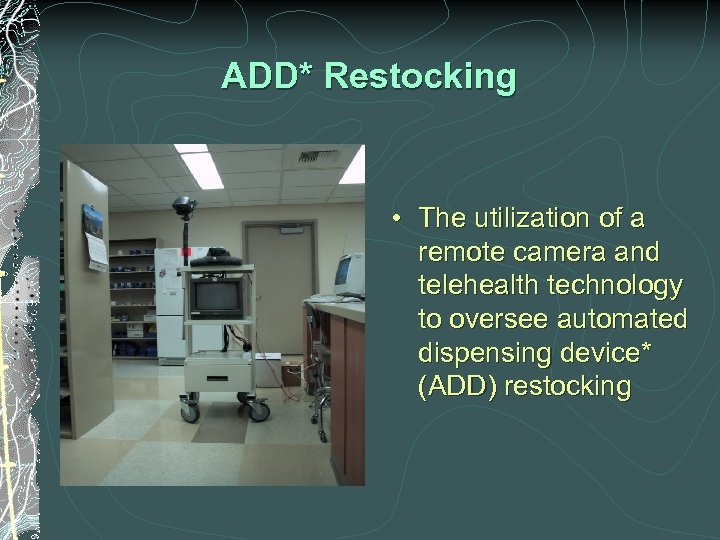 ADD* Restocking • The utilization of a remote camera and telehealth technology to oversee automated dispensing device* (ADD) restocking
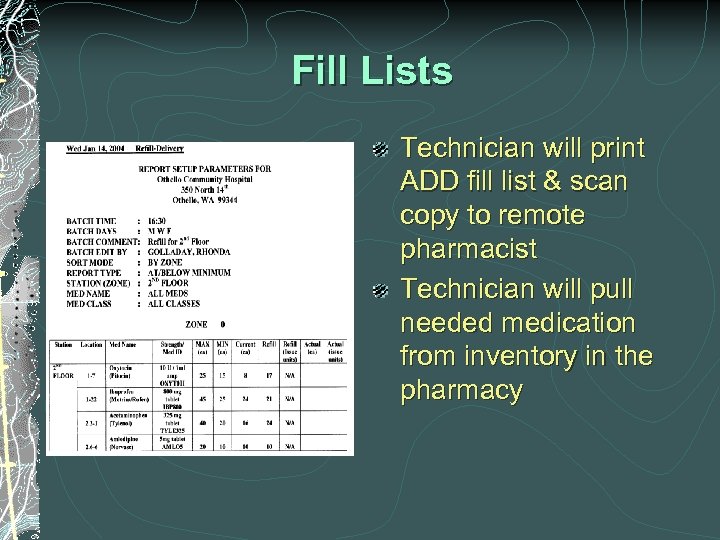 Fill Lists Technician will print ADD fill list & scan copy to remote pharmacist Technician will pull needed medication from inventory in the pharmacy
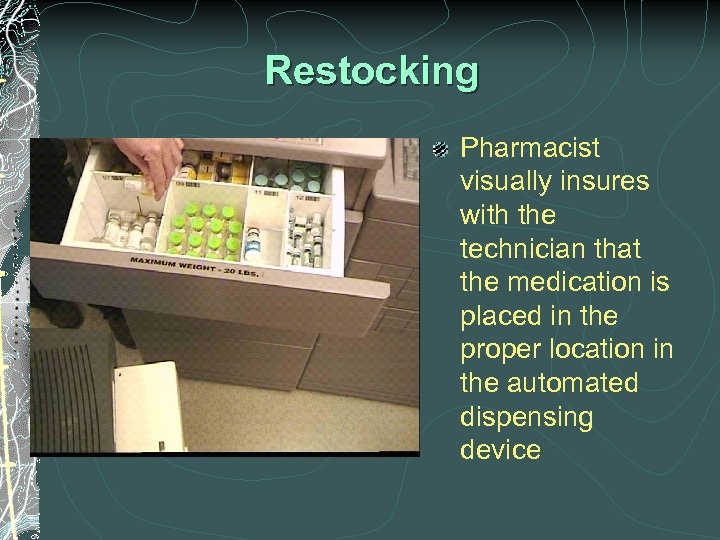 Restocking Pharmacist visually insures with the technician that the medication is placed in the proper location in the automated dispensing device
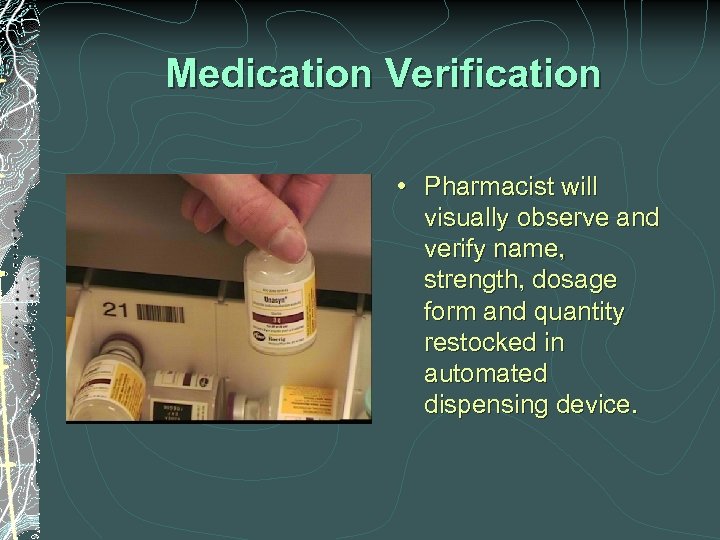 Medication Verification • Pharmacist will visually observe and verify name, strength, dosage form and quantity restocked in automated dispensing device.
 Accomplishments Five rural hospitals now have experienced hospital pharmacists providing 24/7 coverage. Two more hospitals are joining the program in the next three months. Telepharmacists have intervened in 3% of each rural hospital’s 60, 000 to 100, 000 annual medication orders to avoid errors. Participating hospitals have seen improved charge capture of $50, 000 -100, 000 / yr / facility. All facilities are now in full compliance with Pharmacy Board regulations.
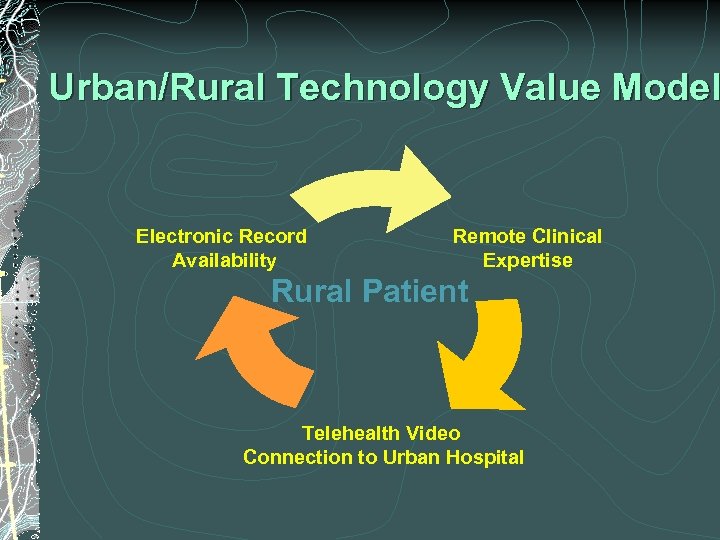 Urban/Rural Technology Value Model Electronic Record Availability Remote Clinical Expertise Rural Patient Telehealth Video Connection to Urban Hospital
 Thank You! Daviesjc@inhs. org www. inhs. org