


 Скачать презентацию TEKS 8 C Calculate percent composition and empirical
523ea35b1439e8292b9a6d741e7f14e4.ppt
- Количество слайдов: 179
 TEKS 8 C: Calculate percent composition and empirical and molecular formulas. Video: Why should we Study History
 TEKS 8 C: Calculate percent composition and empirical and molecular formulas. Standard USHC-1: The student will demonstrate an understanding of the conflicts between regional and national interest in the development of democracy in the United States. USHC-1. 1: Summarize the distinct characteristics of each colonial region in the settlement and development of British North America, including religious, social, political, and economic differences. Focus: Characteristics of the different colonial regions Key Terms: Define each… 1. Jamestown 2. Joint-Stock Company 3. Puritan v. Pilgrim 4. Mercantilism: 5. Indentured Servant 6. Charter (From the King) 7. Quakers 8. William Penn
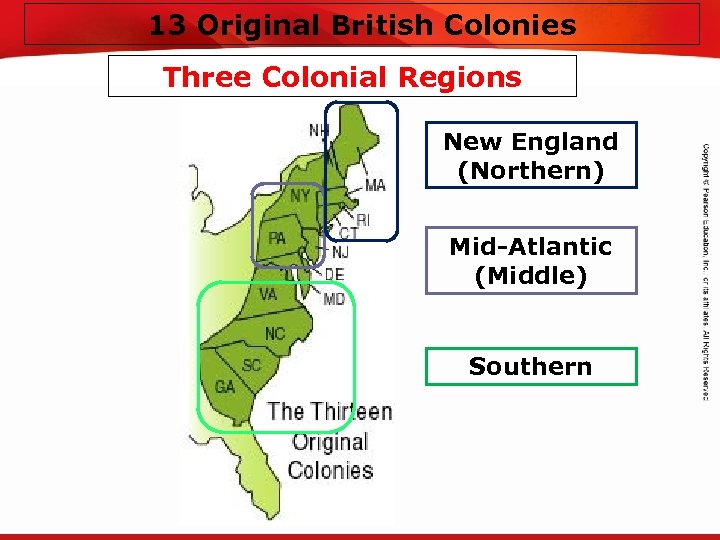 13 Original British Colonies TEKS 8 C: Calculate percent composition and empirical and molecular formulas. Three Colonial Regions New England (Northern) Mid-Atlantic (Middle) Southern
 TEKS 8 C: Calculate percent composition and empirical and molecular formulas. Map Sheet (Group Work) • Identify the borders of each colonial region • Label each colony
 English Colonies in North America TEKS 8 C: Calculate percent composition and empirical and molecular formulas. Religion: • Most settlers did not come for religious reasons Ø Came for: Land, Gold, or Religious freedom • Protestant Reformation caused persecution: Ø Plymouth and Massachusetts Bay colonies (New England) were founded for religious freedom • The impact of religion depended on which group of Englishmen settled the region Ø New England (Puritans) = Big Impact Ø Mid-Atlantic (Quakers): diversity and tolerance Ø Southern = Little impact: founded for money o Religion did not play a large role in the South until The Great Awakening
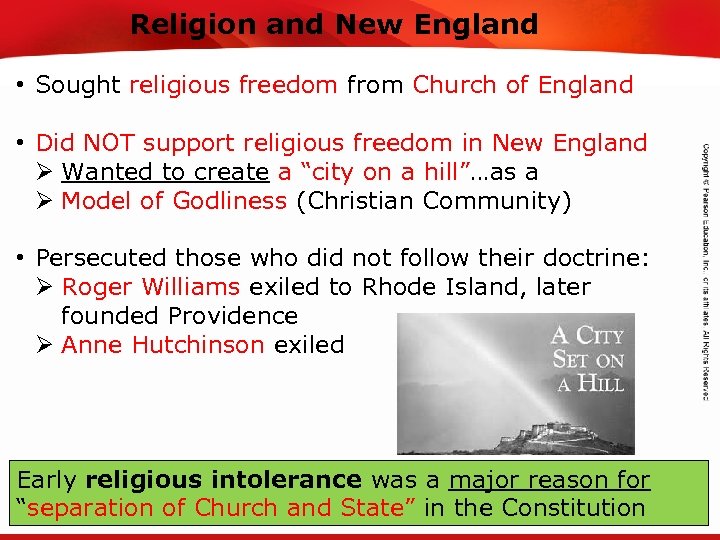 Religion and New England TEKS 8 C: Calculate percent composition and empirical and molecular formulas. • Sought religious freedom from Church of England • Did NOT support religious freedom in New England Ø Wanted to create a “city on a hill”…as a Ø Model of Godliness (Christian Community) • Persecuted those who did not follow their doctrine: Ø Roger Williams exiled to Rhode Island, later founded Providence Ø Anne Hutchinson exiled Early religious intolerance was a major reason for “separation of Church and State” in the Constitution
 TEKS 8 C: Calculate percent composition and empirical and molecular formulas. Religion in the Middle Colonies • Pennsylvania settled by Quakers (William Penn) • Much more religious tolerance and diversity Ø Quakers believed everyone had an inner light Ø Persecution still existed
 TEKS 8 C: Calculate percent composition and empirical and Religion in the Southern molecular formulas. Colonies • Religion NOT a major factor in Southern colonies • Church of England (Anglican) was established as main church but not forced upon colonists • Economics were much more important than Religion
 PRACTICE EOC QUESTION TEKS 8 C: Calculate percent composition and empirical and molecular formulas. Which of the following was NOT a reason why Europeans began migrating. QUESTION PRACTICE EOC to the Americas in the 1600’s? A. B. C. D. Opportunities to make money A devastating famine in Europe Chance to own their own land Freedom to worship as they wanted
 Colonial Society TEKS 8 C: Calculate percent composition and empirical and molecular formulas. • New England Mid-Atlantic colonies had a society based on religious equality (Egalitarian) Ø This led to democratic institutions • The South developed Hierarchical structures based on Plantations (Indentured Servants, and Slaves) Ø Southern slave system was transported to the Carolinas from Barbados Ø Large plantations made it difficult for towns and schools to develop Ø Georgia originally outlawed slavery to promote equality but soon became a plantation colony
 Politics: British traditions TEKS 8 C: Calculate percent composition and empirical and molecular formulas. v Magna Carta: Similar to our Constitution v Parliament: Similar to our Congress • Colonial experiences and Distance from England led to democratic institutions, starting with… Ø Virginia’s House of Burgesses: o First meeting of elected officials o LIMITED royal governor’s power Ø New England Town Meetings: Members of town discuss and vote on matters • Slavery and Plantations created less democratic political systems in the Southern colonies • English Civil War and Salutary Neglect undermined the King and strengthened Colonial Assemblies
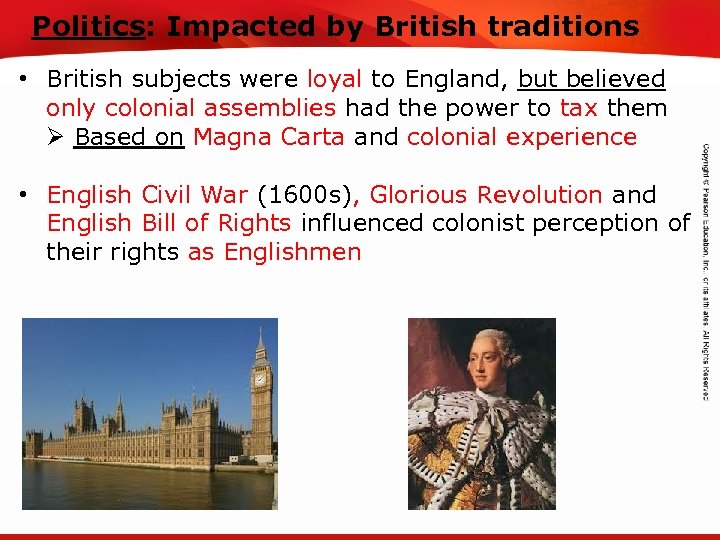 Politics: Impacted by British traditions TEKS 8 C: Calculate percent composition and empirical and molecular formulas. • British subjects were loyal to England, but believed only colonial assemblies had the power to tax them Ø Based on Magna Carta and colonial experience • English Civil War (1600 s), Glorious Revolution and English Bill of Rights influenced colonist perception of their rights as Englishmen
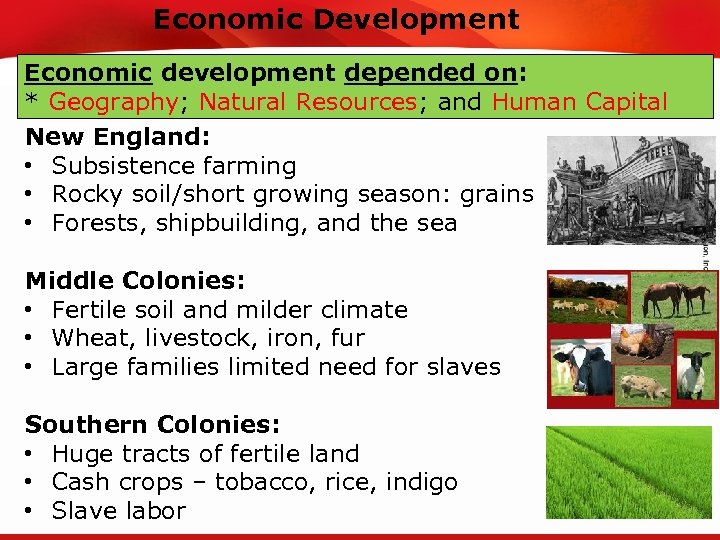 Economic Development TEKS 8 C: Calculate percent composition and empirical and molecular formulas. Economic development depended on: * Geography; Natural Resources; and Human Capital New England: • Subsistence farming • Rocky soil/short growing season: grains • Forests, shipbuilding, and the sea Middle Colonies: • Fertile soil and milder climate • Wheat, livestock, iron, fur • Large families limited need for slaves Southern Colonies: • Huge tracts of fertile land • Cash crops – tobacco, rice, indigo • Slave labor
 EOC Practice Question TEKS 8 C: Calculate percent composition and empirical and molecular formulas. Which of the following BEST describes the differences between the economies of the Southern Colonies and the Middle Colonies? A. Southern colonies focused on shipping and Middle colonies on cash crops. B. Southern colonies sold lumber and fish while the Middle colonies sold livestock. C. Southern colonies grew cash crops to sell while the middle grew wheat and livestock D. Southern colonies did not have enough land to rely on agriculture while the middle colonies used slavery to promote agriculture
 Review Questions TEKS 8 C: Calculate percent composition and empirical and molecular formulas. 1. Name three Colonial Regions? A. Southern, New England (Northern), and Mid-Atlantic (Middle) 2. Why did most settlers come to North America? A. Land Gold (Religious Freedom…New England) 3. Which Colonial Region was the most diverse and tolerant? A. Mid-Atlantic (Middle) 4. What group created towns and schools? A. Puritans 5. Where did the southern slave system originate? A. Barbados 6. What two British political systems influenced colonist? A. Magna Carta and Parliament 7. What were the first two democratic Institutions in the colonies? A. House of Burgesses and New England Town Meetings 8. What three things occurring in England influenced colonists perception of their rights as Englishmen? A. English Civil War, Glorious Revolution, English Bill of Rights 9. Which region used slaves and which focused on the sea A. Slaves = Southern ; New England = Shipbuilding/Fishing
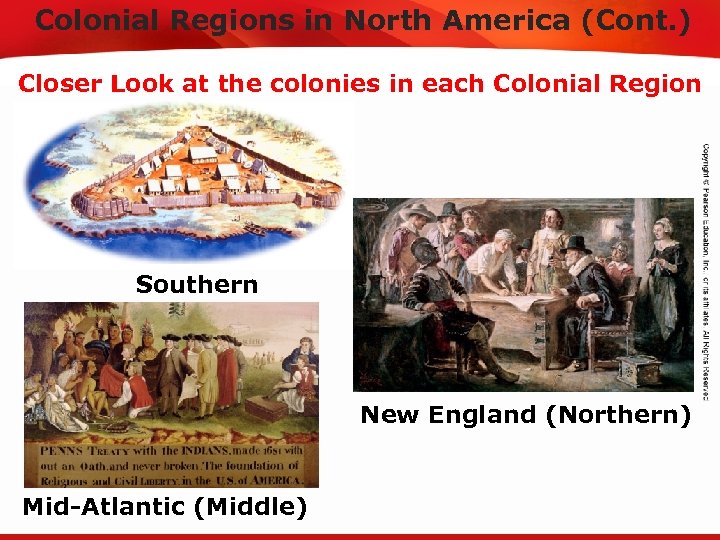 TEKS 8 C: Calculate percent composition and empirical Colonial Regions in Northand molecular formulas. (Cont. ) America Closer Look at the colonies in each Colonial Region Southern New England (Northern) Mid-Atlantic (Middle)
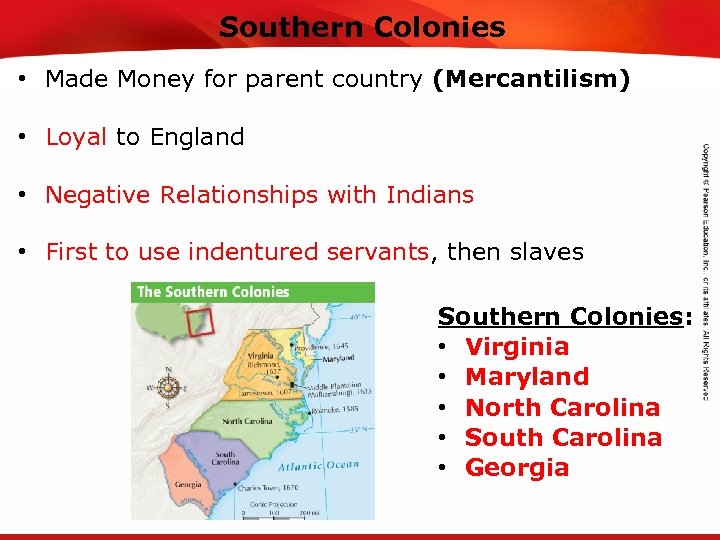 Southern Colonies TEKS 8 C: Calculate percent composition and empirical and molecular formulas. • Made Money for parent country (Mercantilism) • Loyal to England • Negative Relationships with Indians • First to use indentured servants, then slaves Southern Colonies: • Virginia • Maryland • North Carolina • South Carolina • Georgia
 Settling Jamestown, Virginia (1607) TEKS 8 C: Calculate percent composition and empirical and molecular formulas. • Jamestown (1607): First successful colony Ø Founded in Virginia in the 17 th Century Ø First colonies founded by investors to make a profit • After a charter, (King’s permission), formed Joint. Stock companies (allowed them to share profit/risk) • Early colonists suffered from disease and hunger. Many refused to farm; searched for gold and silver • Instructed to find gold and water route to Asia • Many were gentlemen and lacked the skills and knowledge to settle new land
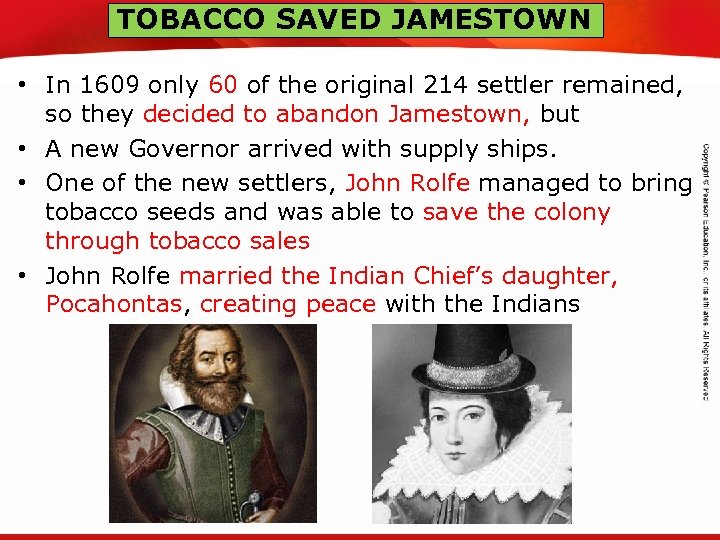 TOBACCO SAVED JAMESTOWN TEKS 8 C: Calculate percent composition and empirical and molecular formulas. • In 1609 only 60 of the original 214 settler remained, so they decided to abandon Jamestown, but • A new Governor arrived with supply ships. • One of the new settlers, John Rolfe managed to bring tobacco seeds and was able to save the colony through tobacco sales • John Rolfe married the Indian Chief’s daughter, Pocahontas, creating peace with the Indians
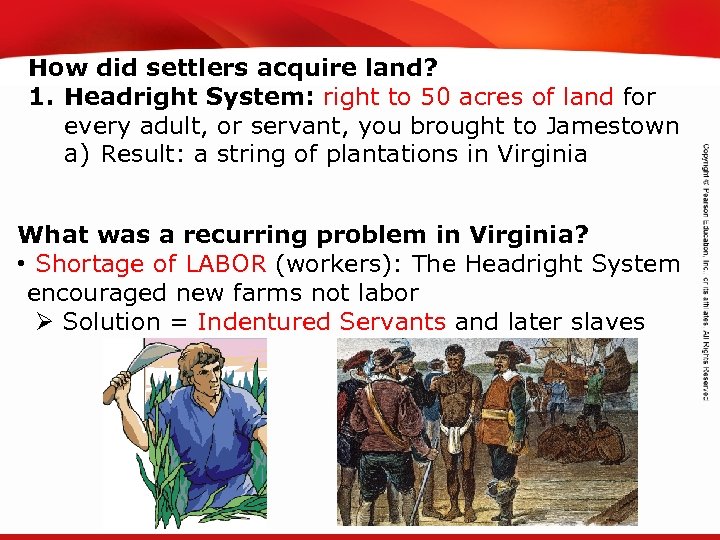 TEKS 8 C: Calculate percent composition and empirical and molecular formulas. How did settlers acquire land? 1. Headright System: right to 50 acres of land for every adult, or servant, you brought to Jamestown a) Result: a string of plantations in Virginia What was a recurring problem in Virginia? • Shortage of LABOR (workers): The Headright System encouraged new farms not labor Ø Solution = Indentured Servants and later slaves
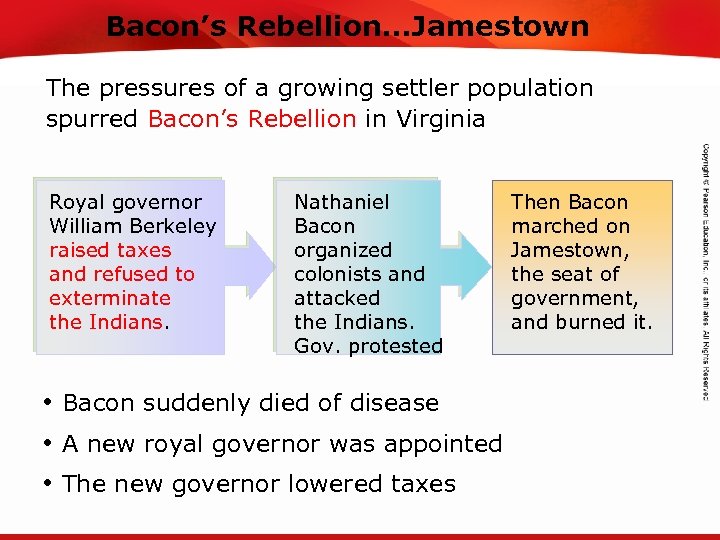 Bacon’s Rebellion…Jamestown TEKS 8 C: Calculate percent composition and empirical and molecular formulas. The pressures of a growing settler population spurred Bacon’s Rebellion in Virginia Royal governor William Berkeley raised taxes and refused to exterminate the Indians. Nathaniel Bacon organized colonists and attacked the Indians. Gov. protested • Bacon suddenly died of disease • A new royal governor was appointed • The new governor lowered taxes Then Bacon marched on Jamestown, the seat of government, and burned it.
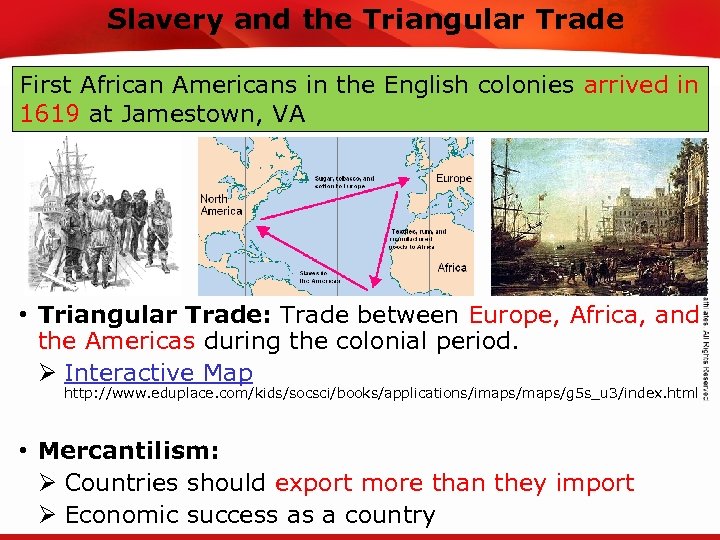 TEKS 8 C: Calculate Slavery percent composition and empirical and molecular formulas. and the Triangular Trade First African Americans in the English colonies arrived in 1619 at Jamestown, VA • Triangular Trade: Trade between Europe, Africa, and the Americas during the colonial period. Ø Interactive Map http: //www. eduplace. com/kids/socsci/books/applications/imaps/g 5 s_u 3/index. html • Mercantilism: Ø Countries should export more than they import Ø Economic success as a country
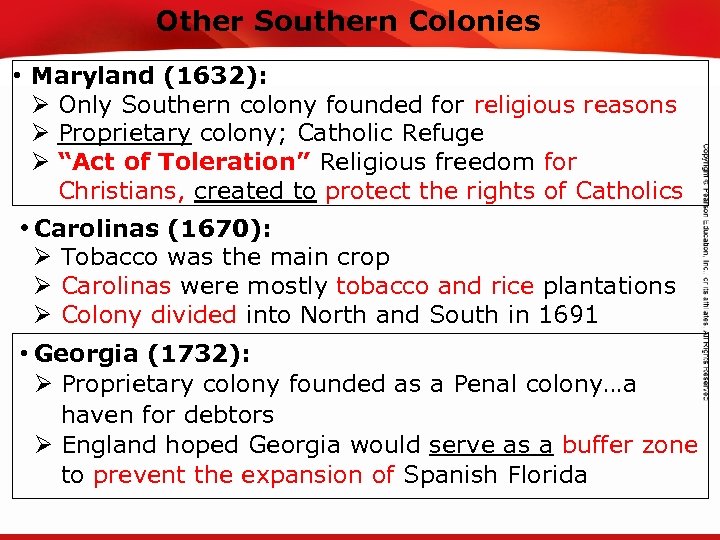 Other Southern Colonies TEKS 8 C: Calculate percent composition and empirical and molecular formulas. • Maryland (1632): Ø Only Southern colony founded for religious reasons Ø Proprietary colony; Catholic Refuge Ø “Act of Toleration” Religious freedom for Christians, created to protect the rights of Catholics • Carolinas (1670): Ø Tobacco was the main crop Ø Carolinas were mostly tobacco and rice plantations Ø Colony divided into North and South in 1691 • Georgia (1732): Ø Proprietary colony founded as a Penal colony…a haven for debtors Ø England hoped Georgia would serve as a buffer zone to prevent the expansion of Spanish Florida
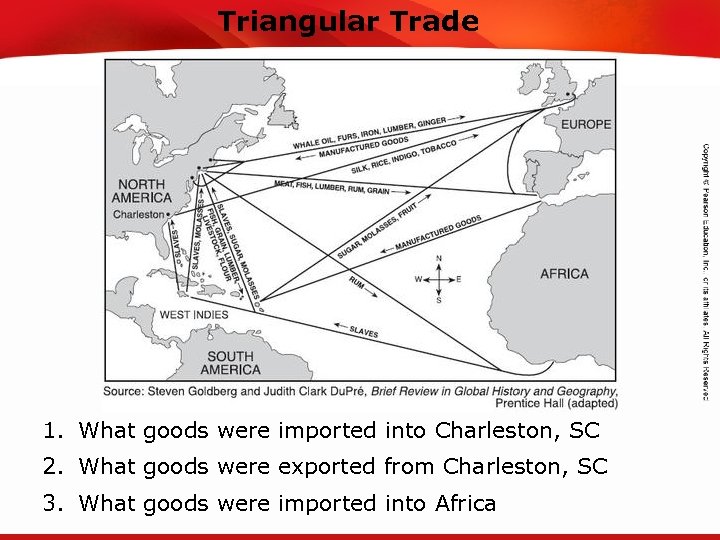 Triangular Trade TEKS 8 C: Calculate percent composition and empirical and molecular formulas. 1. What goods were imported into Charleston, SC 2. What goods were exported from Charleston, SC 3. What goods were imported into Africa
 TEKS Quick 8 C: Calculate percent composition and empirical. Colonies (Pt 1) Check—Southern and molecular formulas. 1. Which church was the established Church? A. Church of England (Anglican Church) 2. Prime factor in creating “Separation of Church and State”? A. Religious Intolerance 3. What is Mercantilism? A. Colonies make money for the mother country 4. Name the 5 Southern Colonies? A. Virginia, North/South Carolina, Maryland Georgia 5. What is credited with saving the Jamestown settlement? A. Tobacco 6. What type of group founded the first English American colonies? A. Investors…Joint Stock Company (Virginia Company) 7. What did early colonists suffer from and why? A. Disease and hunger…many refused to work 8. What was the Headright System? A. Settlers received 50 acres for every new settler the brought 9. Explain Bacon’s Rebellion A. Formed army to protect from Indians and Governor’s inaction
 TEKS Calculate percent composition and empirical Quick 8 C: Check—Southernand molecular formulas. (Pt 2) Colonies 1. When did the first Africans arrive in the English colonies? A. Jamestown, Virginia in 1619 as Slaves (or Indentures) 2. Describe the Triangular Trade? A. Goods to Europe, Rum to Africa, Slaves to West Indies 3. How did Maryland differ from other Southern colonies? A. Only southern colony founded for religious reasons 4. What is a Proprietary Colony? A. Colony owned by Investors 5. What law protected Catholics in Maryland? A. Act of Toleration 6. Name the two staple crops of the Carolinas? A. Tobacco and Rice 7. What did England hope Georgia would provide? A. A buffer between Spanish Florida and the English colonies
 TEKS 8 C: Calculate percent composition and empirical and molecular formulas. Note Taking Study Guide Page 14
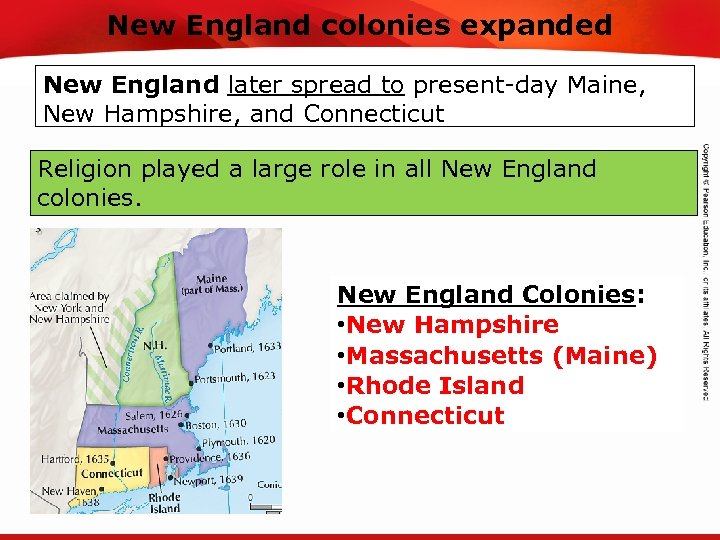 New England colonies expanded TEKS 8 C: Calculate percent composition and empirical and molecular formulas. New England later spread to present-day Maine, New Hampshire, and Connecticut Religion played a large role in all New England colonies. New England Colonies: • New Hampshire • Massachusetts (Maine) • Rhode Island • Connecticut
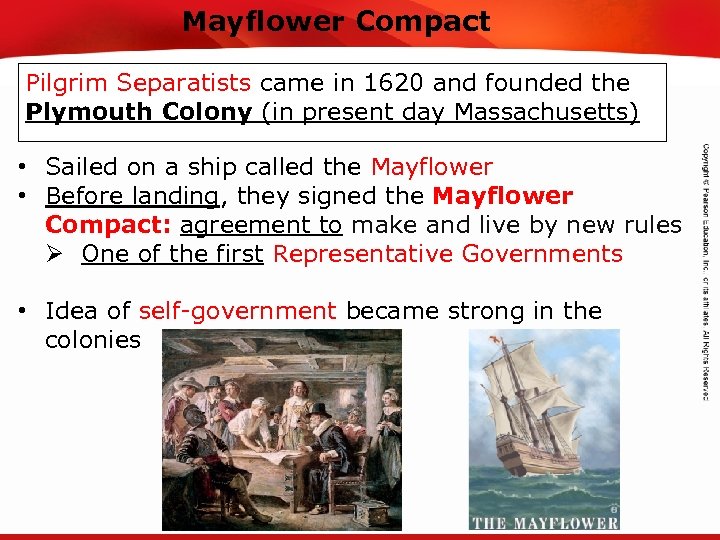 Mayflower Compact TEKS 8 C: Calculate percent composition and empirical and molecular formulas. Pilgrim Separatists came in 1620 and founded the Plymouth Colony (in present day Massachusetts) • Sailed on a ship called the Mayflower • Before landing, they signed the Mayflower Compact: agreement to make and live by new rules Ø One of the first Representative Governments • Idea of self-government became strong in the colonies
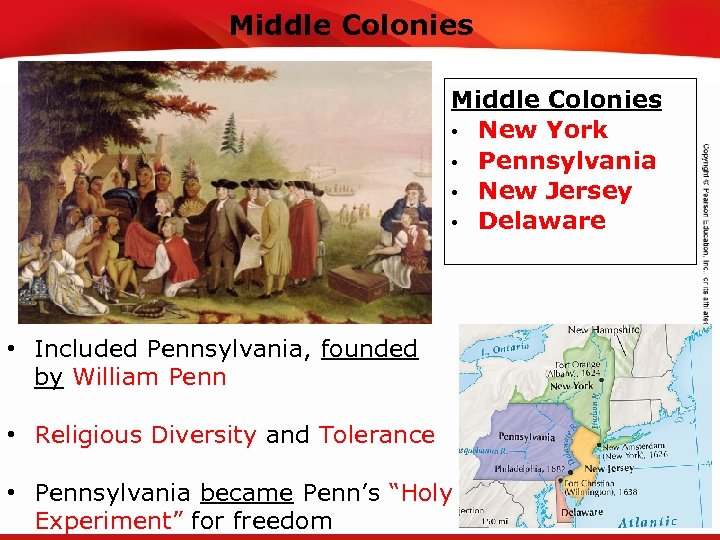 Middle Colonies TEKS 8 C: Calculate percent composition and empirical and molecular formulas. Middle Colonies • New York • Pennsylvania • New Jersey • Delaware • Included Pennsylvania, founded by William Penn • Religious Diversity and Tolerance • Pennsylvania became Penn’s “Holy Experiment” for freedom
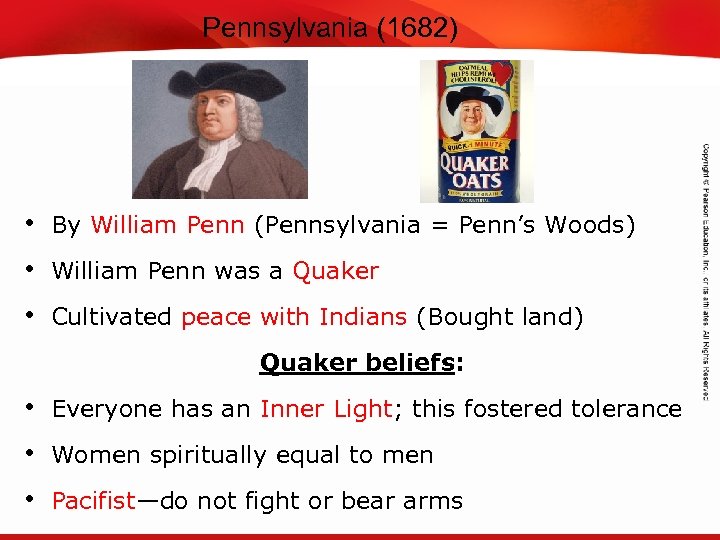 TEKS 8 C: Calculate percent composition and empirical and molecular formulas. Pennsylvania (1682) • By William Penn (Pennsylvania = Penn’s Woods) • William Penn was a Quaker • Cultivated peace with Indians (Bought land) Quaker beliefs: • Everyone has an Inner Light; this fostered tolerance • Women spiritually equal to men • Pacifist—do not fight or bear arms
 TEKS 8 C: Calculate percent composition Compare Colonial and empirical and molecular formulas. Up) Regions (Pair
 TEKS 8 C: Calculate percent composition and empirical and molecular formulas. Note Taking Study Guide Page 16
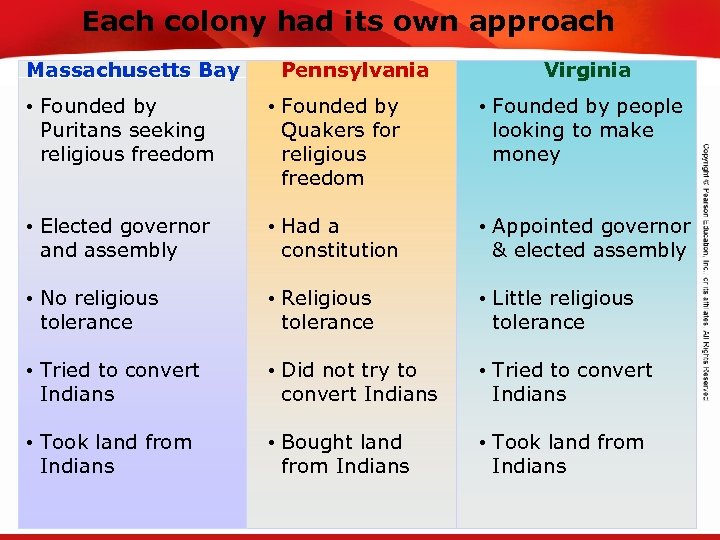 TEKS Calculate percent Each 8 C: colony compositionits ownmolecular formulas. had and empirical and approach Massachusetts Bay Pennsylvania Virginia • Founded by Puritans seeking religious freedom • Founded by Quakers for religious freedom • Founded by people looking to make money • Elected governor and assembly • Had a constitution • Appointed governor & elected assembly • No religious tolerance • Religious tolerance • Little religious tolerance • Tried to convert Indians • Did not try to convert Indians • Tried to convert Indians • Took land from Indians • Bought land from Indians • Took land from Indians
 TEKS 8 C: Calculate percent composition and empirical and molecular formulas. Note Taking Study Guide Page 18 & USA Testprep USHC 1. 1
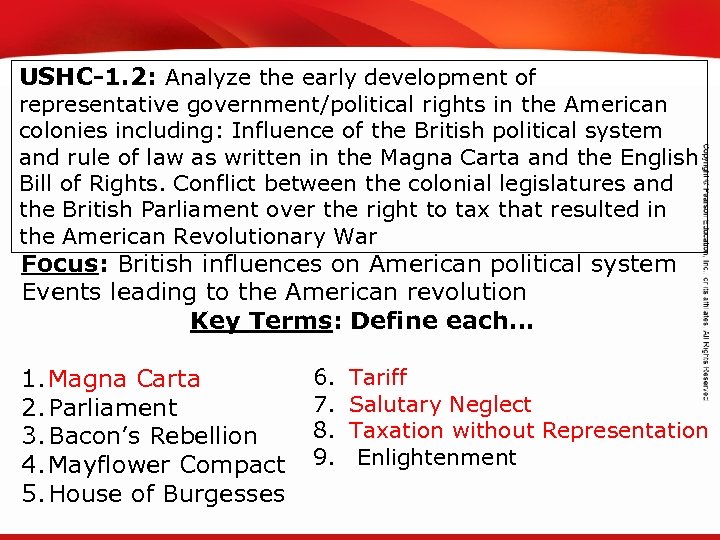 TEKS 8 C: Calculate percent composition and empirical and molecular formulas. USHC-1. 2: Analyze the early development of representative government/political rights in the American colonies including: Influence of the British political system and rule of law as written in the Magna Carta and the English Bill of Rights. Conflict between the colonial legislatures and the British Parliament over the right to tax that resulted in the American Revolutionary War Focus: British influences on American political system Events leading to the American revolution Key Terms: Define each… 1. Magna Carta 2. Parliament 3. Bacon’s Rebellion 4. Mayflower Compact 5. House of Burgesses 6. 7. 8. 9. Tariff Salutary Neglect Taxation without Representation Enlightenment
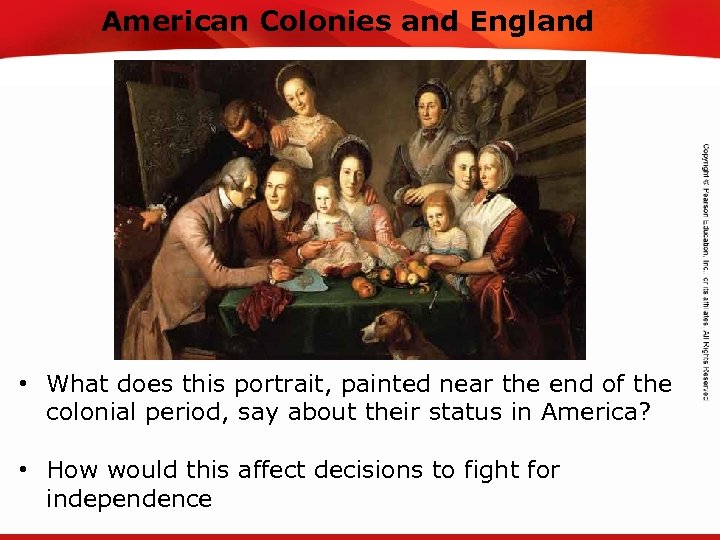 TEKS 8 C: Calculate percent composition and empirical and American Colonies andmolecular formulas. England • What does this portrait, painted near the end of the colonial period, say about their status in America? • How would this affect decisions to fight for independence
 The Rights of an Englishmen TEKS 8 C: Calculate percent composition and empirical and molecular formulas. • Representative government came from: Transfer of ideas from England Circumstances of New World • Most Englishmen (Americans) were aware of their “rights” through two documents: 1. Magna Carta: • People must approve taxes (Consultation) • Trial by Jury: citizens determine outcome of cases • Rule of Law: Even the King must obey the law 2. English Bill of Rights: • Power of the King should be limited by Parliament • Right to Religious Freedom
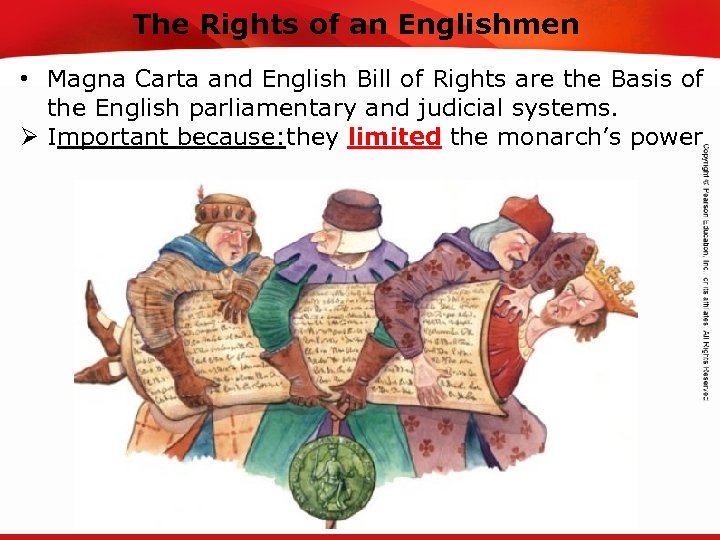 The Rights of an Englishmen TEKS 8 C: Calculate percent composition and empirical and molecular formulas. • Magna Carta and English Bill of Rights are the Basis of the English parliamentary and judicial systems. Ø Important because: they limited the monarch’s power
 Early Representative Governments TEKS 8 C: Calculate percent composition and empirical and molecular formulas. • House of Burgesses: Allowed by Virginia Company to maintain order and attract new colonist Ø Only Property owners had the right to vote Ø Controlled by elite planters • Mayflower Compact: Example of the principle: “Government derives its authority from the people” • New England Town Meetings: Ø At first only Puritans could vote, later all male property owners could vote Colonial Assemblies: All 13 colonies had assemblies a. Colonists elected men to represent them b. Under Salutary Neglect: I. Assemblies are seen as their government II. Assembly had Power to tax
 TEKS 8 C: Calculate percent composition and Issues in England empirical and molecular formulas. affect America • English Civil War: Ø Overthrew King James I…began Limited Monarchy • Glorious Revolution: King James II overthrown and replaced with William and Mary who agreed to abide by the English Bill of Rights Ø Monarchs forced to recognize supremacy of Parliament and its right to make tax laws • British control was limited by Distance and Desire Ø Glorious Revolution led to Salutary Neglect: o After the 1720 s, England allowed “self-rule” Ø Colonial assemblies had the right to tax the citizens o Controlled Royal Governors by controlling their pay
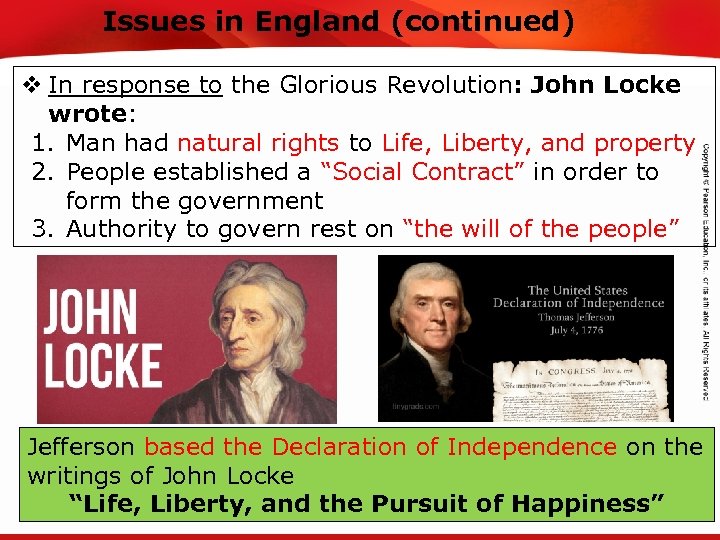 TEKS 8 C: Calculate percent composition and Issues in Englandempirical and molecular formulas. (continued) v In response to the Glorious Revolution: John Locke wrote: 1. Man had natural rights to Life, Liberty, and property 2. People established a “Social Contract” in order to form the government 3. Authority to govern rest on “the will of the people” Jefferson based the Declaration of Independence on the writings of John Locke “Life, Liberty, and the Pursuit of Happiness”
 Quick Check TEKS 8 C: Calculate percent composition and empirical and molecular formulas. 1. Give three examples of early Representative Government in the colonies? A. House of Burgesses; Mayflower Compact; New England Town Meetings 2. Why were the Magna Carta and English Bill of Rights so important? A. They both placed limits on the monarchs power 3. What term is used to say that England “left colonist to run the colonies”? A. Salutary Neglect 4. Who said “Man has natural rights to “Life, Liberty, and property? ” A. John Locke 5. What document is based on John Locke’s words? A. John Locke
 TEKS 8 C: Calculate percent composition and empirical and molecular formulas. End of Salutary Neglect 1. French and Indian War: During the war, Parliament abandoned Salutary Neglect: Ø Cracked down on Smugglers of Molasses: Ø Established Admiralty Courts, which violated the right to “Trial by Jury” Ø American response: Protest & Increased Smuggling 2. War Debt: Ø King George wants colonies to pay for the debt caused in defense of America Ø Hires George Grenville to create a taxation plan 3. Proclamation of 1763: (Proclamation Line) Ø King forbids any Americans from settling across the Appalachian Mountains Ø Motivated to keep another war from happening, by keeping Americans away from French and Indians
 EOC Practice Question TEKS 8 C: Calculate percent composition and empirical and molecular formulas. The use of Admiralty Courts by King George III violated which important democratic principle according to American colonists? A. Freedom of religion B. Trial by jury C. Freedom of speech D. Rule of law
 EOC Practice Question TEKS 8 C: Calculate percent composition and empirical and molecular formulas. Which statement best analyzes King George III’s motivation for passing the Proclamation of 1763? A. The king wanted the colonies to pay taxes to make up for the debt incurred by the French and Indian War. B. The king wanted to prevent future conflicts with the French and Indians by limiting the settlement of Americans. C. The king wanted to establish that he and Parliament had ultimate authority to pass any laws necessary over the colonies. D. The king officially declared the end of salutary neglect and declared martial law in the American colonies.
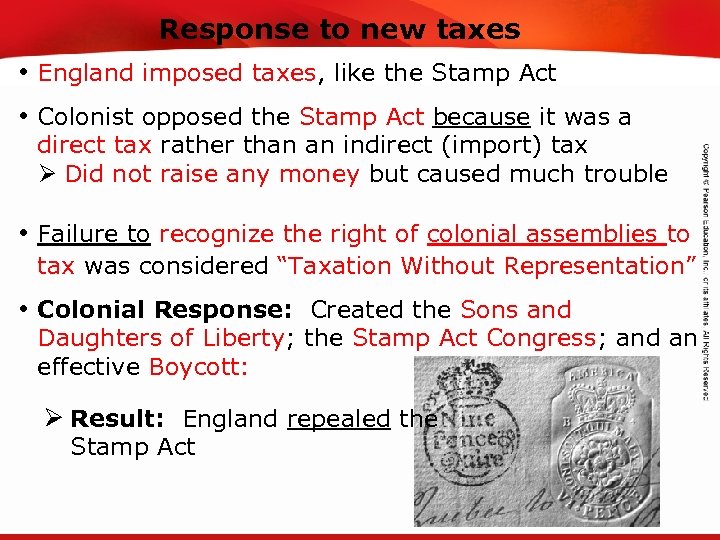 TEKS 8 C: Calculate percent composition and empirical and molecular formulas. Response to new taxes • England imposed taxes, like the Stamp Act • Colonist opposed the Stamp Act because it was a direct tax rather than an indirect (import) tax Ø Did not raise any money but caused much trouble • Failure to recognize the right of colonial assemblies to tax was considered “Taxation Without Representation” • Colonial Response: Created the Sons and Daughters of Liberty; the Stamp Act Congress; and an effective Boycott: Ø Result: England repealed the Stamp Act
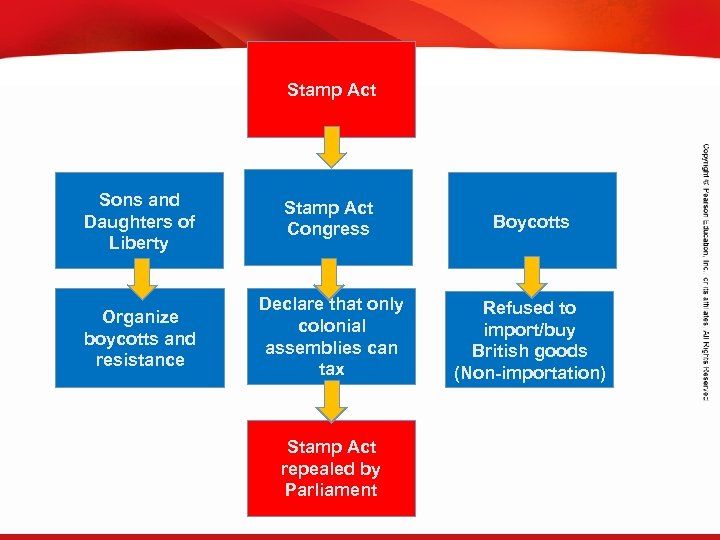 TEKS 8 C: Calculate percent composition and empirical and molecular formulas. Stamp Act Sons and Daughters of Liberty Stamp Act Congress Boycotts Organize boycotts and resistance Declare that only colonial assemblies can tax Refused to import/buy British goods (Non-importation) Stamp Act repealed by Parliament
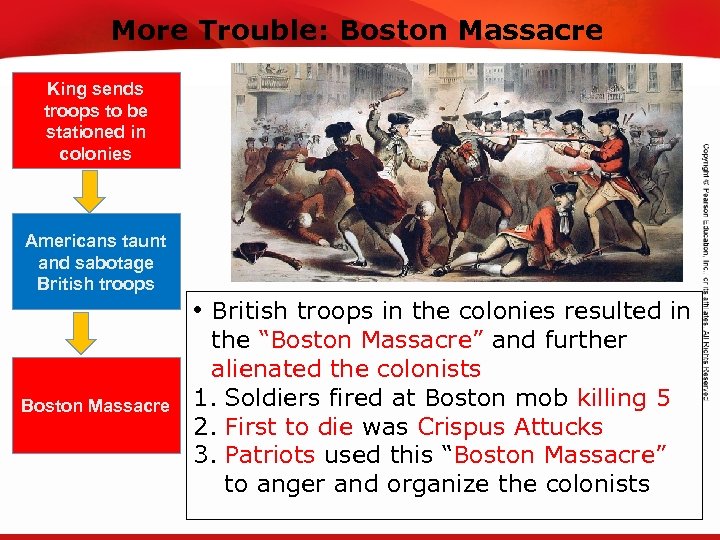 TEKS 8 C: Calculate percent composition and empirical and molecular formulas. More Trouble: Boston Massacre King sends troops to be stationed in colonies Americans taunt and sabotage British troops • British troops in the colonies resulted in Boston Massacre the “Boston Massacre” and further alienated the colonists 1. Soldiers fired at Boston mob killing 5 2. First to die was Crispus Attucks 3. Patriots used this “Boston Massacre” to anger and organize the colonists
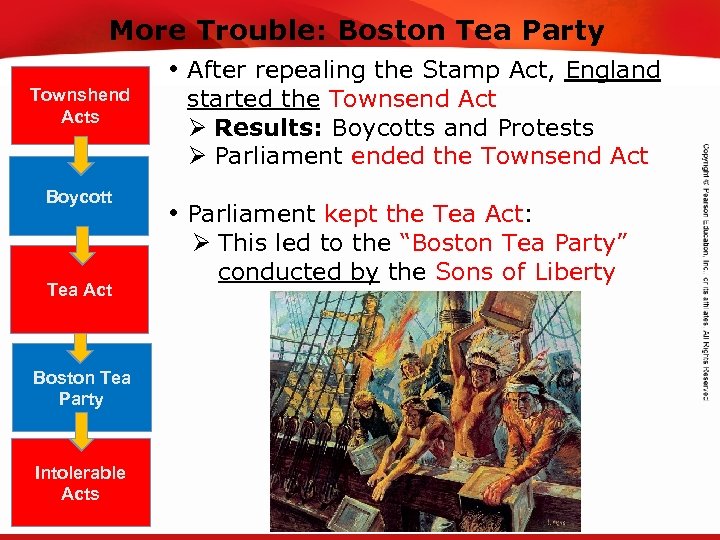 TEKS 8 C: Calculate percent composition and empirical and molecular formulas. More Trouble: Boston Tea Party • After repealing the Stamp Act, England Townshend Acts Boycott Tea Act Boston Tea Party Intolerable Acts started the Townsend Act Ø Results: Boycotts and Protests Ø Parliament ended the Townsend Act • Parliament kept the Tea Act: Ø This led to the “Boston Tea Party” conducted by the Sons of Liberty
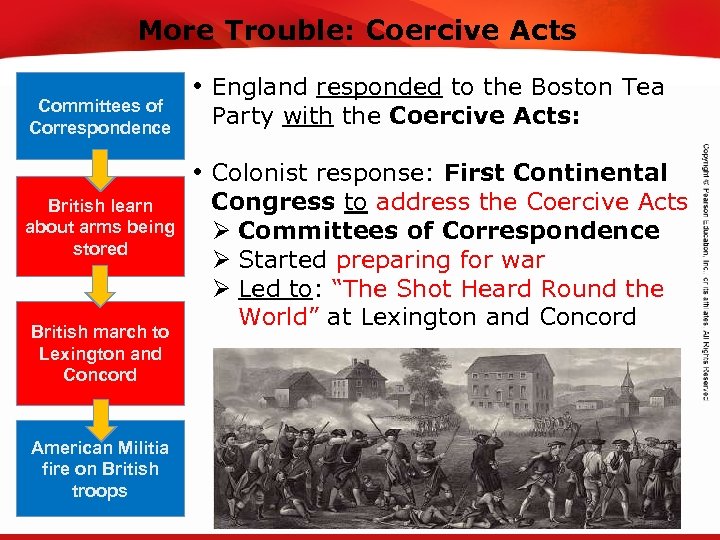 TEKS 8 C: Calculate percent composition and empirical and molecular formulas. More Trouble: Coercive Acts Committees of Correspondence • England responded to the Boston Tea Party with the Coercive Acts: • Colonist response: First Continental British learn about arms being stored British march to Lexington and Concord American Militia fire on British troops Congress to address the Coercive Acts Ø Committees of Correspondence Ø Started preparing for war Ø Led to: “The Shot Heard Round the World” at Lexington and Concord
 TEKS 8 C: Calculate percent composition and empirical and molecular formulas. Reasons for the Revolt NOTE: All the protests were about: The loss of the ‘rights of Englishmen’ and ‘Taxation without Representation’ What the Colonist wanted: 1. The government that they had developed during the time of Salutary Neglect (“Self-Rule”) 2. British recognition that only colonial legislatures had the right to impose taxes on the colonial citizens 3. Colonists did NOT want representation in Parliament because they would have been outvoted anyway
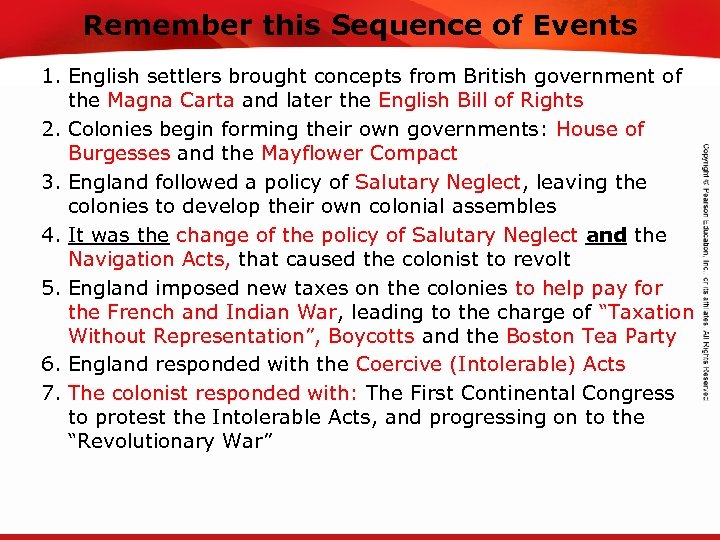 TEKS 8 C: Calculate percent composition and empirical and molecular formulas. Remember this Sequence of Events 1. English settlers brought concepts from British government of the Magna Carta and later the English Bill of Rights 2. Colonies begin forming their own governments: House of Burgesses and the Mayflower Compact 3. England followed a policy of Salutary Neglect, leaving the colonies to develop their own colonial assembles 4. It was the change of the policy of Salutary Neglect and the Navigation Acts, that caused the colonist to revolt 5. England imposed new taxes on the colonies to help pay for the French and Indian War, leading to the charge of “Taxation Without Representation”, Boycotts and the Boston Tea Party 6. England responded with the Coercive (Intolerable) Acts 7. The colonist responded with: The First Continental Congress to protest the Intolerable Acts, and progressing on to the “Revolutionary War”
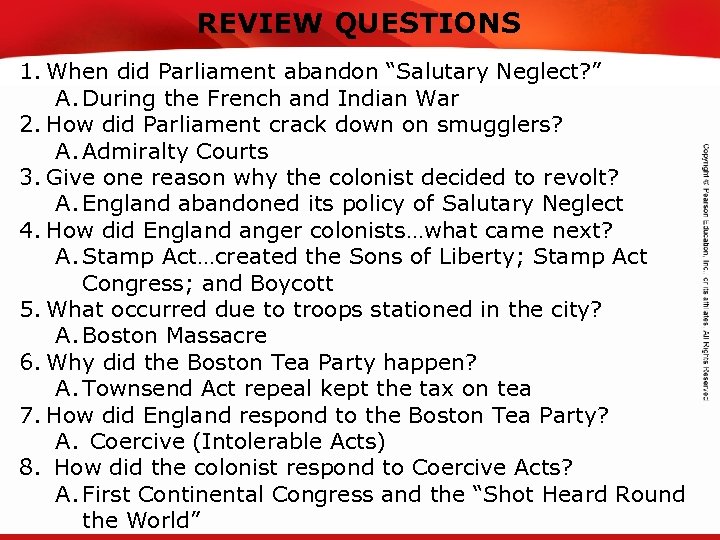 REVIEW QUESTIONS TEKS 8 C: Calculate percent composition and empirical and molecular formulas. 1. When did Parliament abandon “Salutary Neglect? ” A. During the French and Indian War 2. How did Parliament crack down on smugglers? A. Admiralty Courts 3. Give one reason why the colonist decided to revolt? A. England abandoned its policy of Salutary Neglect 4. How did England anger colonists…what came next? A. Stamp Act…created the Sons of Liberty; Stamp Act Congress; and Boycott 5. What occurred due to troops stationed in the city? A. Boston Massacre 6. Why did the Boston Tea Party happen? A. Townsend Act repeal kept the tax on tea 7. How did England respond to the Boston Tea Party? A. Coercive (Intolerable Acts) 8. How did the colonist respond to Coercive Acts? A. First Continental Congress and the “Shot Heard Round the World”
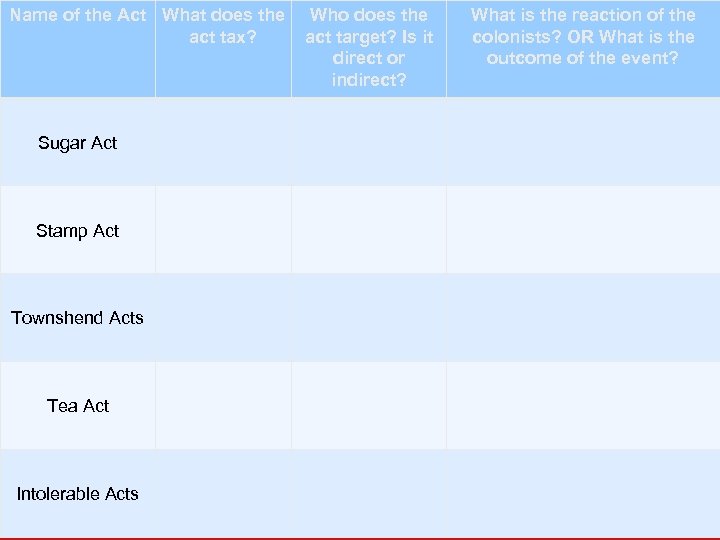 Name of the TEKS 8 C: Calculate percent composition and empirical and molecular formulas. reaction of the Act What does the Who does the What is the act tax? act target? Is it colonists? OR What is the direct or outcome of the event? indirect? Sugar Act Stamp Act Townshend Acts Tea Act Intolerable Acts
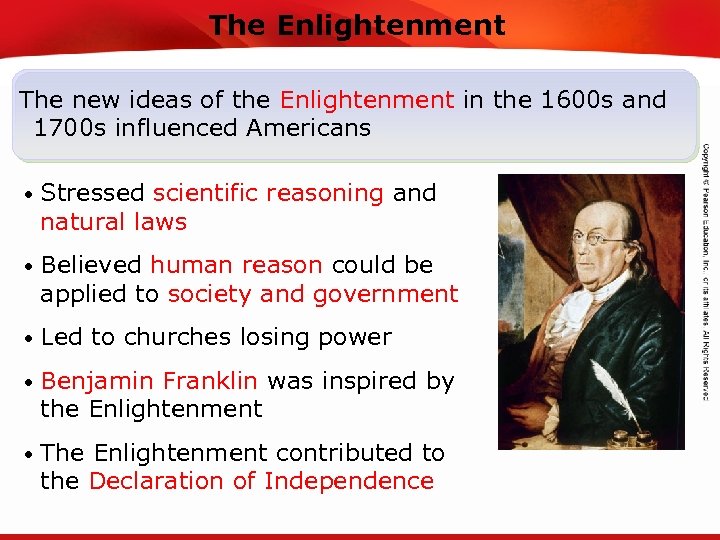 The Enlightenment TEKS 8 C: Calculate percent composition and empirical and molecular formulas. The new ideas of the Enlightenment in the 1600 s and 1700 s influenced Americans • Stressed scientific reasoning and natural laws • Believed human reason could be applied to society and government • Led to churches losing power • Benjamin Franklin was inspired by the Enlightenment • The Enlightenment contributed to the Declaration of Independence
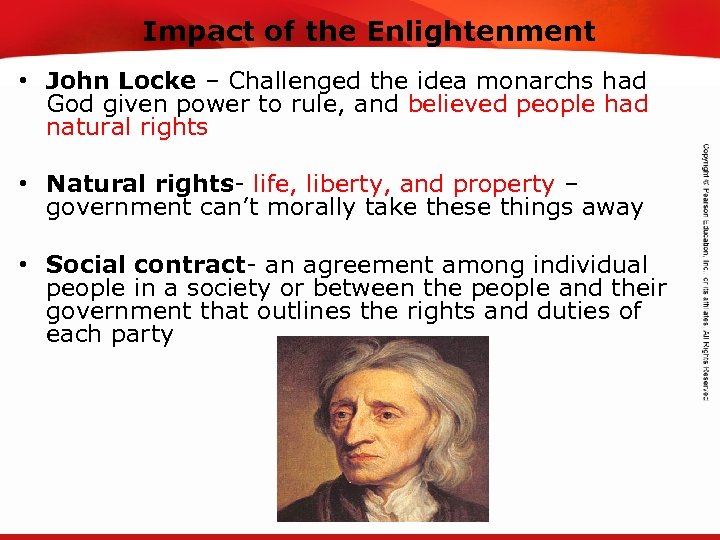 TEKS 8 C: Calculate percent composition and empirical and molecular formulas. Impact of the Enlightenment • John Locke – Challenged the idea monarchs had God given power to rule, and believed people had natural rights • Natural rights- life, liberty, and property – government can’t morally take these things away • Social contract- an agreement among individual people in a society or between the people and their government that outlines the rights and duties of each party
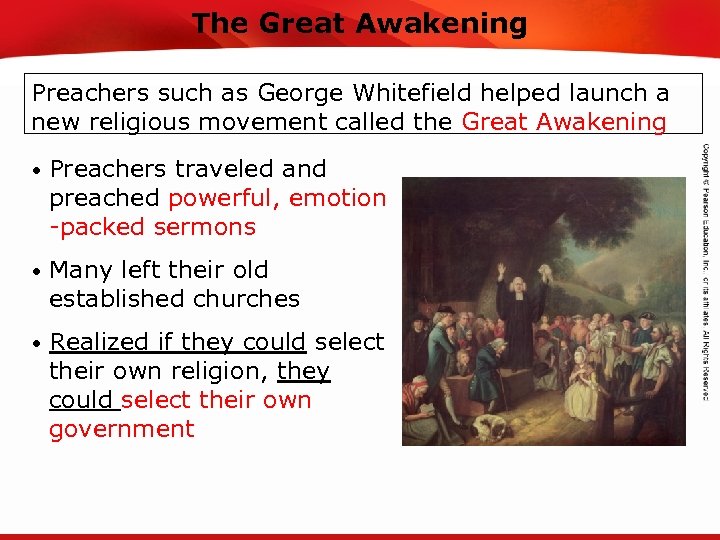 The Great Awakening TEKS 8 C: Calculate percent composition and empirical and molecular formulas. Preachers such as George Whitefield helped launch a new religious movement called the Great Awakening • Preachers traveled and preached powerful, emotion -packed sermons • Many left their old established churches • Realized if they could select their own religion, they could select their own government
 REVIEW QUESTIONS TEKS 8 C: Calculate percent composition and empirical and molecular formulas. 1. What move stressed scientific reasoning and natural laws? A. The Enlightenment 2. The Great Awakening led people to think about what? A. If I can change religion, I can change my government 3. What required colonists to provide housing for soldiers? A. Quartering Act 4. What Taxed printed materials, but never raised money? A. Stamp Act 5. Who argued government is a social contract with citizens? A. John Locke 6. Those who opposed British taxes called themselves? A. Patriots 7. What event did Patriots use to incite colonists? A. Boston Massacre 8. Where did the “Shot Heard Round the World” occur? 1. Lexington, MA. 9. What was the purpose for the First Continental Congress? A. Address the grievances from the Intolerable Acts
 TEKS 8 C: Calculate percent composition and empirical and molecular formulas. REVIEW QUESTIONS: Rebellion Try to list the sevents that took us from Colonist to Rebels: 1. Ideals from England: Magna Carta and Parliament 2. Colonies formed governments: House of Burgesses 3. England followed a policy of Salutary Neglect a) The end of Salutary Neglect and restrictions on colonial trade caused the colonist to revolt 4. England taxes to help pay for the French and Indian War, leading to Boycotts and the Boston Tea Party 5. England responded with the “Intolerable Acts” 6. The colonist responded with: The First Continental Congress to protest the Intolerable Acts 7. “Shot Heard Round the World: Lexington and Concord
 TEKS 8 C: Calculate percent composition and empirical and molecular formulas. Note Taking Study Guide Page 22 and 28
 Stamp Act Group Activity TEKS 8 C: Calculate percent composition and empirical and molecular formulas. Central Historical Question: Why were the colonists upset about the Stamp Act? Materials: • Copies of Stamp Act Documents A, B, C • Copies of Stamp Act Guiding Questions for Document C
 Partner work TEKS 8 C: Calculate percent composition and empirical and molecular formulas. • In pairs I will give you an event that led to the revolutionary war • You will need to summarize the event and explain how it lead to revolution • You have 15 min You should answer the following question about each event you see: ü What is the name of the event ü When did it happen ü How did it lead to revolution
 TEKS 8 C: Calculate percent composition and empirical and molecular formulas. EOC Quiz Passing the EOC Chapter 1
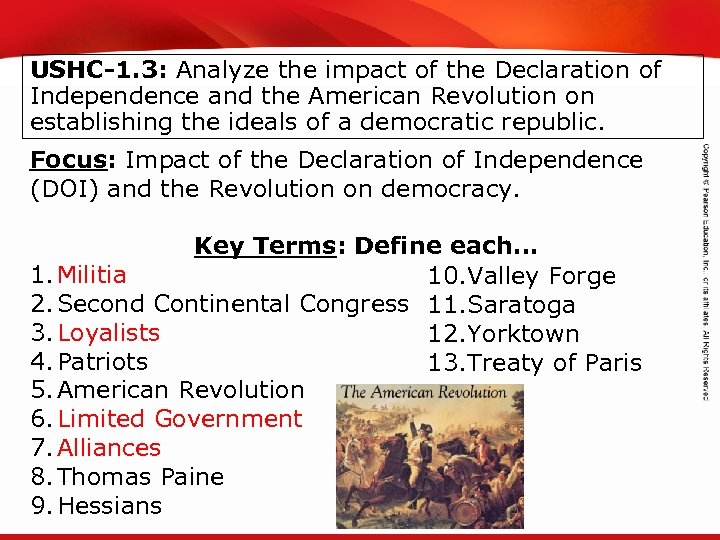 TEKS 8 C: Calculate percent composition and empirical and molecular formulas. USHC-1. 3: Analyze the impact of the Declaration of Independence and the American Revolution on establishing the ideals of a democratic republic. Focus: Impact of the Declaration of Independence (DOI) and the Revolution on democracy. Key Terms: Define each… 1. Militia 10. Valley Forge 2. Second Continental Congress 11. Saratoga 3. Loyalists 12. Yorktown 4. Patriots 13. Treaty of Paris 5. American Revolution 6. Limited Government 7. Alliances 8. Thomas Paine 9. Hessians
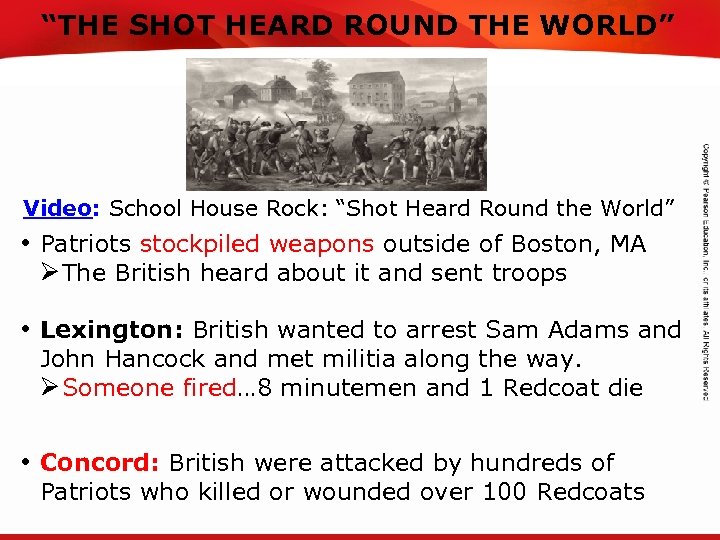 “THE SHOT HEARD ROUND THE WORLD” TEKS 8 C: Calculate percent composition and empirical and molecular formulas. Video: School House Rock: “Shot Heard Round the World” • Patriots stockpiled weapons outside of Boston, MA Ø The British heard about it and sent troops • Lexington: British wanted to arrest Sam Adams and John Hancock and met militia along the way. Ø Someone fired… 8 minutemen and 1 Redcoat die • Concord: British were attacked by hundreds of Patriots who killed or wounded over 100 Redcoats
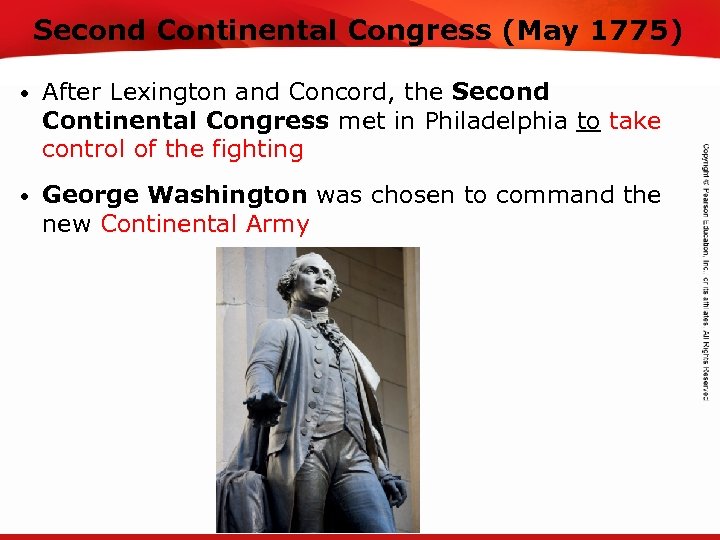 TEKS 8 C: Calculate percent composition and empirical and molecular formulas. Second Continental Congress (May 1775) • After Lexington and Concord, the Second Continental Congress met in Philadelphia to take control of the fighting • George Washington was chosen to command the new Continental Army
 Declaration of Independence (1776) TEKS 8 C: Calculate percent composition and empirical and molecular formulas. • Drafted mainly by Thomas Jefferson • Congress approved it on July 4, 1776 • Written to further the cause of the colonist fight already in the second year of fighting • Mainly addressed to loyalist and those uncommitted • The Declaration of Independence was designed to: Ø Break the bonds between King and loyal colonist Ø To unify the new nation against a common enemy
 Declaration of Independence (1776) TEKS 8 C: Calculate percent composition and empirical and molecular formulas. • Explains the concepts of Limited Government • Stated the ideas of Democracy: Which are… Ø “Life, Liberty and the pursuit of happiness” Ø Government should protect those rights Ø Power of government is with the people Ø Right of people to abolish the government when Natural Rights are not protected
 Declaration of Independence TEKS 8 C: Calculate percent composition and empirical and molecular formulas. • Based on ideas of the Enlightenment and John Locke Ø Social Contract Ø Natural rights – life, liberty, property • It made the case that the King, not Parliament had violate the colonist’s rights v List of grievances with the king: 1. Parliament passed unjust laws 2. Colonists had no representation in Parliament 3. Limits on colonial trade 4. Unjust use of tariffs 5. Attempt to make colonists pay for French and Indian war debt Declaration allowed colonist to enter alliances with foreign countries
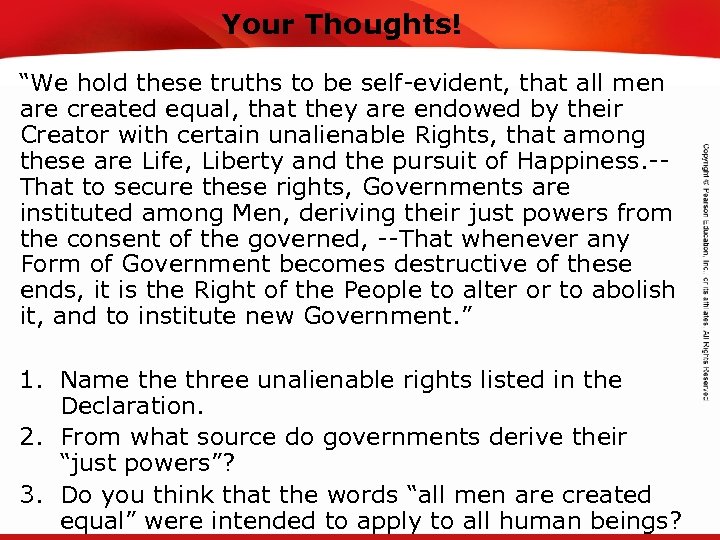 Your Thoughts! TEKS 8 C: Calculate percent composition and empirical and molecular formulas. “We hold these truths to be self-evident, that all men are created equal, that they are endowed by their Creator with certain unalienable Rights, that among these are Life, Liberty and the pursuit of Happiness. -That to secure these rights, Governments are instituted among Men, deriving their just powers from the consent of the governed, --That whenever any Form of Government becomes destructive of these ends, it is the Right of the People to alter or to abolish it, and to institute new Government. ” 1. Name three unalienable rights listed in the Declaration. 2. From what source do governments derive their “just powers”? 3. Do you think that the words “all men are created equal” were intended to apply to all human beings?
 Review Questions TEKS 8 C: Calculate percent composition and empirical and molecular formulas. 1. How did the “Patriots” respond to the Coercive Acts? A. Stockpiled weapons, Minutemen, First Continental Congress 2. Difference between what happened in Lexington vs. Concord? A. Lexington the Minutemen were defeated. Concord they won 3. Purpose of the Second Continental Congress? A. To take control of the fighting 4. What decision was made by the Second Continental Congress? A. George Washington to command the Continental Army 5. Who was the declaration mainly addressed to? A. Loyalists and Uncommitted 6. What was the declaration based on? A. The ideas of John Locke 7. The declaration explained the concept of, what? A. Limited Government 8. Who did the declaration say violated citizen’s rights? A. The King, not Parliament 9. Declaration allowed colonist to enter ____ with countries? A. Alliances
 TEKS 8 C: Calculate percent composition and empirical and molecular formulas. Note Taking Study Guide Pages 30
 Declaration of Independence Activity TEKS 8 C: Calculate percent composition and empirical and molecular formulas. Central Historical Question: Why did the Founders write the Declaration of Independence? Materials: • Two Historians’ Interpretations • Declaration Preamble worksheet • Declaration of Independence Grievances Worksheet
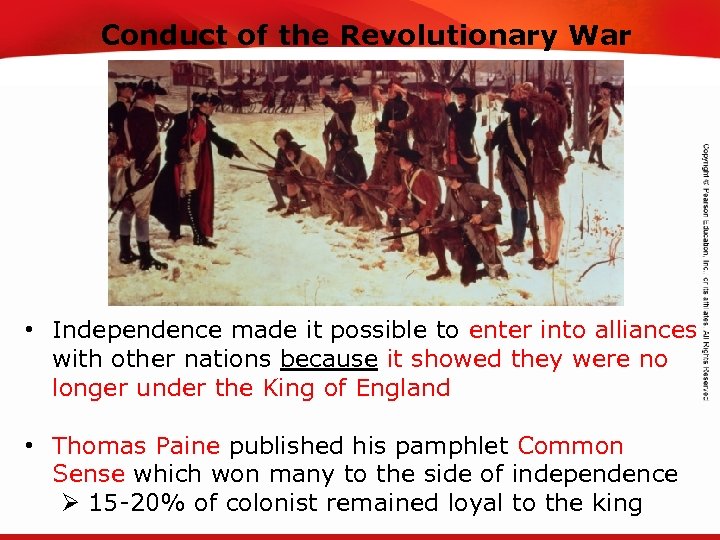 TEKS 8 C: Calculate percent composition and empirical and molecular formulas. Conduct of the Revolutionary War • Independence made it possible to enter into alliances with other nations because it showed they were no longer under the King of England • Thomas Paine published his pamphlet Common Sense which won many to the side of independence Ø 15 -20% of colonist remained loyal to the king
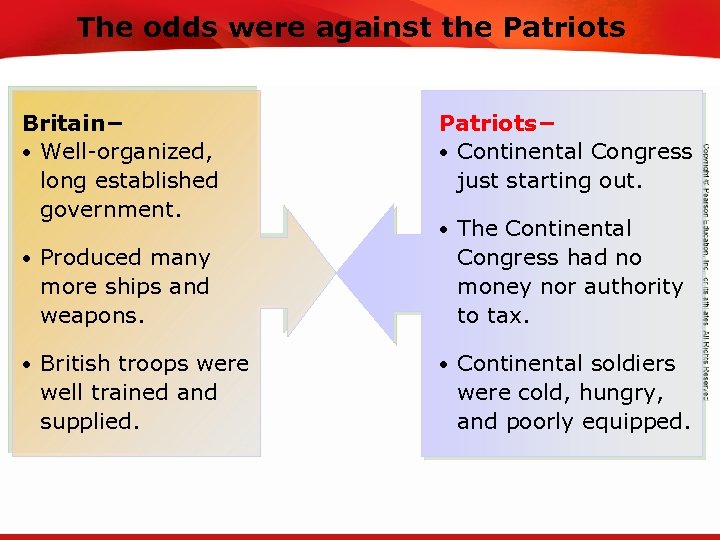 The odds were against the Patriots TEKS 8 C: Calculate percent composition and empirical and molecular formulas. Britain− • Well-organized, long established government. • British troops were well trained and supplied. • The Continental Congress had no money nor authority to tax. • Continental soldiers were cold, hungry, and poorly equipped. Produced many more ships and weapons. • Patriots− • Continental Congress just starting out.
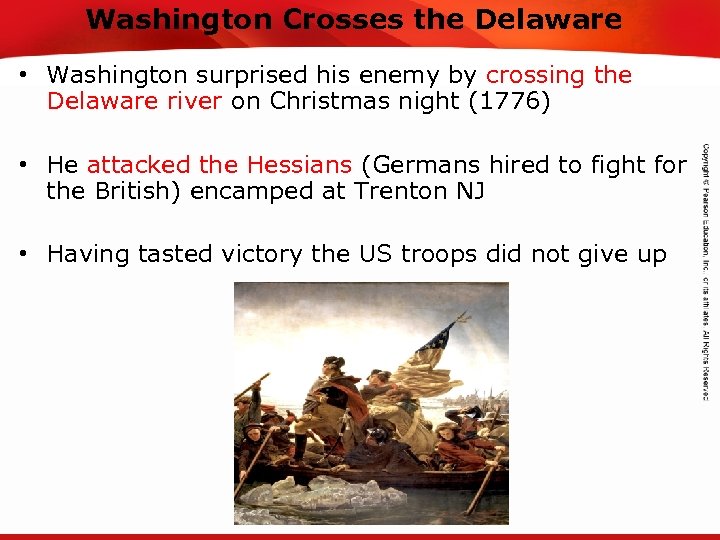 TEKS 8 C: Calculate percent Washington composition and empirical and molecular formulas. Crosses the Delaware • Washington surprised his enemy by crossing the Delaware river on Christmas night (1776) • He attacked the Hessians (Germans hired to fight for the British) encamped at Trenton NJ • Having tasted victory the US troops did not give up
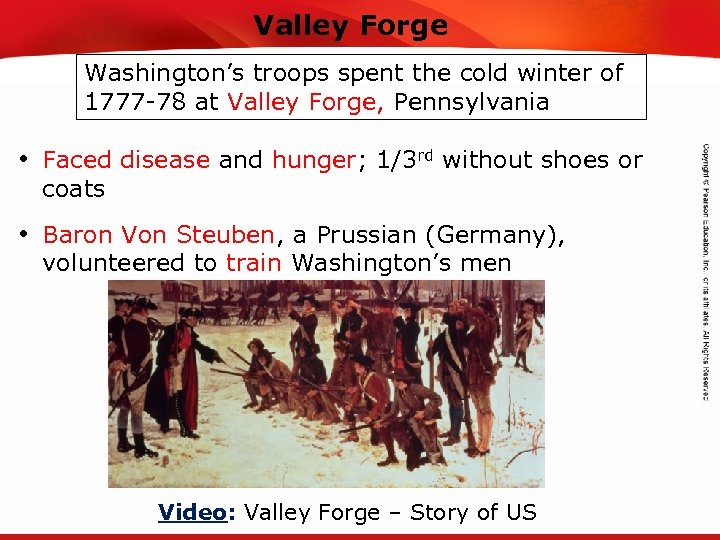 Valley Forge TEKS 8 C: Calculate percent composition and empirical and molecular formulas. Washington’s troops spent the cold winter of 1777 -78 at Valley Forge, Pennsylvania • Faced disease and hunger; 1/3 rd without shoes or coats • Baron Von Steuben, a Prussian (Germany), volunteered to train Washington’s men Video: Valley Forge – Story of US
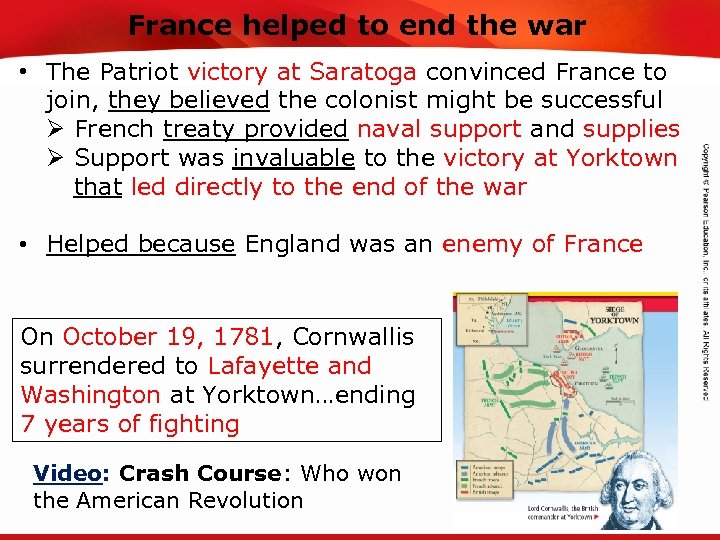 France helped to end the war TEKS 8 C: Calculate percent composition and empirical and molecular formulas. • The Patriot victory at Saratoga convinced France to join, they believed the colonist might be successful Ø French treaty provided naval support and supplies Ø Support was invaluable to the victory at Yorktown that led directly to the end of the war • Helped because England was an enemy of France On October 19, 1781, Cornwallis surrendered to Lafayette and Washington at Yorktown…ending 7 years of fighting Video: Crash Course: Who won the American Revolution
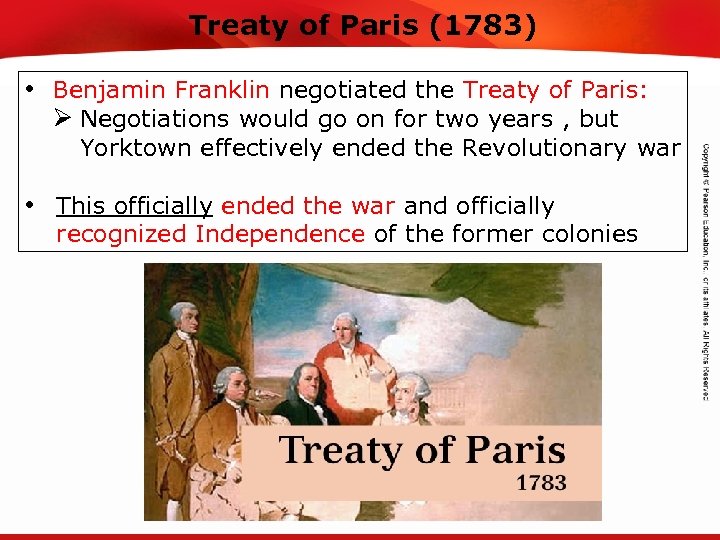 Treaty of Paris (1783) TEKS 8 C: Calculate percent composition and empirical and molecular formulas. • Benjamin Franklin negotiated the Treaty of Paris: Ø Negotiations would go on for two years , but Yorktown effectively ended the Revolutionary war • This officially ended the war and officially recognized Independence of the former colonies
 TEKS 8 C: Calculate percent composition and empirical and molecular formulas. After Independence (The Good) Declaration of Independence had an impact on new state governments and the Articles of Confederation government that the Second Continental Congress established as its own replacement • These governments relied on the legislature and limited executive power • Congress created very weak to avoid having a “king” Ø State (not Federal) assemblies gained most power Ø The North gradually emancipated slaves Ø States allowed freedom of religion Ø Right to vote restricted to property owners, but many American men owned property & could vote
 TEKS 8 C: Calculate percent composition and empirical and molecular formulas. After Independence (The Bad) The principles and promises in the Declaration of Independence remained unfulfilled for certain groups • Women gained few rights • About 90, 000 Loyalists became refugees • Many African Americans were re-enslaved, although Ø Thousands had fought for the colonies Ø Thousands more for England The idea that: “all men are created equal; that they are endowed by their Creator with certain inalienable rights … [to] life, liberty and the pursuit of happiness” • Has been a rallying cry for those denied their rights, both in the United States and throughout the world
 REVIEW QUESTIONS TEKS 8 C: Calculate percent composition and empirical and molecular formulas. 1. What led France to help Colonists fight Britain? A. Victory at Saratoga 2. Why was the new Congress intentionally made weak? A. To avoid having a “king” 3. What battle led to the end of the Revolutionary War? A. Yorktown 4. How long was the war and in what year did it end? A. 7 years, October 19, 1781 5. What document ended the war, and who negotiated it? A. Treaty of Paris…Benjamin Franklin 6. After the war, what impact did the Declaration of Independence have on the new government? (Click) A. New state governments Li_____ Ex_____ Po____ B. Northern States gradually Em_____ Sl_____ C. States provided Fr_______ o_ Re______ D. Who could vote? Wh__ Ma__ Pr_______ Ow___ E. The Preamble became a R______ Cr___
 TEKS 8 C: Calculate percent composition and empirical and molecular formulas. Note Taking Study Guide Page 33 and 35
 TEKS 8 C: Calculate percent composition and empirical and molecular formulas. USHC-1. 4: Analyze how dissatisfactions with the government under the Articles of Confederation were addressed with the writing of the Constitution of 1787, including the debates and compromises reached at the Philadelphia Convention and the ratification of the Constitution. Focus: Weaknesses of the Articles of Confederation and Constitutional corrections. Key Terms: Define each… 1. Articles of Confederation 2. Sovereignty (Dictionary) 3. Congress 4. Ratification 5. Land Ordinance 6. Northwest Ordinance 7. Constitution, U. S. 8. Shay’s Rebellion 10. Interstate Commerce 11. Three-Fifth Compromise 12. Electoral College 13. Federalist 14. Antifederalist 15. The Federalist
 TEKS 8 C: Calculate percent composition and empirical and molecular formulas. Four Corners Questions 1. A strong central government poses a serious threat to personal liberties. 2. A strong central government offers the best protection for personal liberties. 3. A strong central government is only possible if personal liberties are sacrificed. 4. A strong central government is not needed to protect personal liberties.
 TEKS 8 C: Calculate percent composition and empirical and molecular formulas. Four Corners Questions A strong central government poses a serious threat to personal liberties
 TEKS 8 C: Calculate percent composition and empirical and molecular formulas. Four Corners Questions A strong central government offers the best protection for personal liberties
 TEKS 8 C: Calculate percent composition and empirical and molecular formulas. Four Corners Questions A strong central government is only possible if personal liberties are sacrificed
 TEKS 8 C: Calculate percent composition and empirical and molecular formulas. Four Corners Questions A strong central government is not needed to protect personal liberties
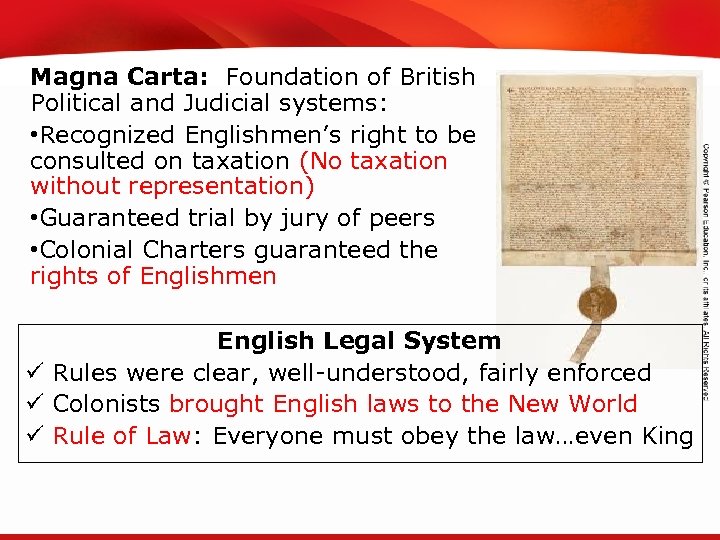 TEKS 8 C: Calculate percent composition and empirical and molecular formulas. Magna Carta: Foundation of British Political and Judicial systems: • Recognized Englishmen’s right to be consulted on taxation (No taxation without representation) • Guaranteed trial by jury of peers • Colonial Charters guaranteed the rights of Englishmen English Legal System ü Rules were clear, well-understood, fairly enforced ü Colonists brought English laws to the New World ü Rule of Law: Everyone must obey the law…even King
 English Bill of Rights TEKS 8 C: Calculate percent composition and empirical and molecular formulas. • Guaranteed Englishmen certain “inalienable” rights. • Influential in the creation of colonial governments and the U. S. Constitution Guaranteed Rights: ü No taxation without proper representation ü Power of the King is limited by Parliament ü Religious freedom
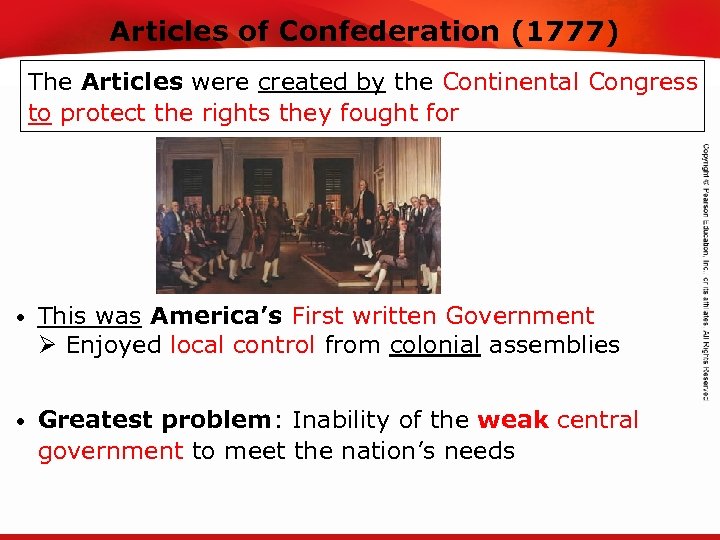 TEKS 8 C: Calculate percent composition and empirical and molecular formulas. Articles of Confederation (1777) The Articles were created by the Continental Congress to protect the rights they fought for • This was America’s First written Government Ø Enjoyed local control from colonial assemblies • Greatest problem: Inability of the weak central government to meet the nation’s needs
 Forming a New Government TEKS 8 C: Calculate percent composition and empirical and molecular formulas. • Lack of a strong central government was to prevent the problems experienced under the King of England Ø Because the war was to preserve the rights of their colonial assemblies, they believed sovereignty (authority) rested in state governments Ø Created a loose confederation, or league of states • Congress provided the model (example) for the Articles of Confederation government Ø Authority rested in the states, not in the central government
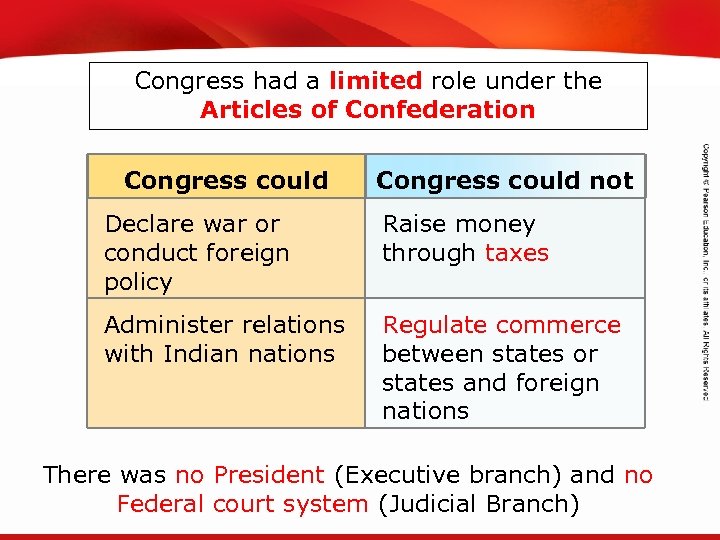 TEKS 8 C: Calculate percent composition and empirical and molecular formulas. Congress had a limited role under the Articles of Confederation Congress could not Declare war or conduct foreign policy Raise money through taxes Administer relations with Indian nations Regulate commerce between states or states and foreign nations There was no President (Executive branch) and no Federal court system (Judicial Branch)
 TEKS 8 C: Calculate percent composition and empirical and molecular formulas. Problems with Confederation Government • Effectiveness was questioned when ratification was delayed by competing state differences Ø Large and Small states argued over land claims in the west Ø Existing states in the east gave up their claims to lands west of Ohio River. Ø Created the National Domain (government management of land) o Congress now had to manage the land o Land Ordinance and Northwest Ordinance
 TEKS 8 C: Calculate percent composition and empirical and molecular formulas. • Congress managed the new land by passing the Land Ordinance and Northwest Ordinance Ø This was one of the first acts under the new Constitution of 1787 Ø But, it is recognized as an achievement of the Confederation Government Ø The system created new states on an equal footing with the original 13 states • Land Ordinance (1785): Established method to distribute public land (owned by the government)
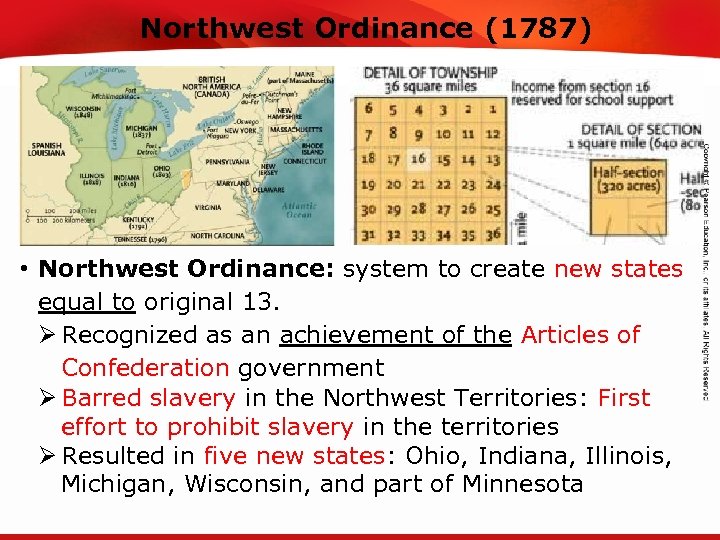 Northwest Ordinance (1787) TEKS 8 C: Calculate percent composition and empirical and molecular formulas. • Northwest Ordinance: system to create new states equal to original 13. Ø Recognized as an achievement of the Articles of Confederation government Ø Barred slavery in the Northwest Territories: First effort to prohibit slavery in the territories Ø Resulted in five new states: Ohio, Indiana, Illinois, Michigan, Wisconsin, and part of Minnesota
 Quick Check TEKS 8 C: Calculate percent composition and empirical and molecular formulas. 1. What two things led to a change away from the A. O. C. ? A. State Differences and Civil Unrest 2. The greatest problem of the A. O. C. government was the? A. Inability of weak central government to meet needs 3. The passing of the _______ and ________ were among the first acts under the new Constitution? A. Land Ordinance and Northwest Ordinance 4. The Articles of Confederation suffered from all of the following weaknesses EXCEPT A. Individual states could choose to ignore the federal government B. There was no ability to create a standing military force for the country C. No organized way to settle western lands was created D. Congress was given very little power to control currency or trade
 TEKS 8 C: Calculate percent composition and empirical and molecular formulas. Growing problems led to calls for a revision of the Articles of Confederation • It was satisfactory at the state level as states wrote new constitutions and laws that met their needs • It was effective in negotiating the Treaty of Paris • After the fighting ended in 1781 and their common cause ended, Americans found the Confederation government too weak for the needs of the nation • Weakness showed in: Economics (Money) and Diplomacy (Negotiating with other countries)
 Domestic/Internal Problems TEKS 8 C: Calculate percent composition and empirical and molecular formulas. Interruption of trade with Great Britain led to a depression and challenges to the Government • Rebellion (Shay’s) demonstrated the weakness of the national government: Ø Massachusetts raised taxes to pay war debts Ø Farmers marched to close courts to prevent foreclosures Ø The unrest frightened the elite and prompted support for a stronger national government that could preserve the peace • Without taxes to pay an army, the elite feared the government was not able to respond to the rebellion Ø Supported a call for a meeting in Philadelphia to revise (not replace) the Articles of Confederation
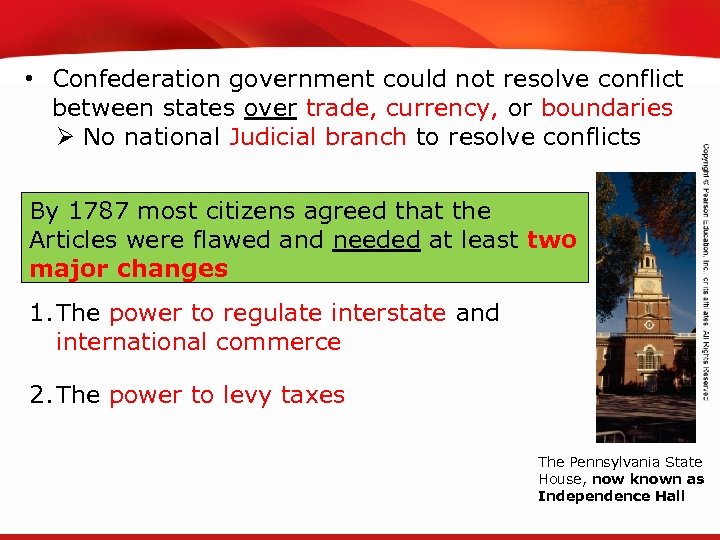 TEKS 8 C: Calculate percent composition and empirical and molecular formulas. • Confederation government could not resolve conflict between states over trade, currency, or boundaries Ø No national Judicial branch to resolve conflicts By 1787 most citizens agreed that the Articles were flawed and needed at least two major changes 1. The power to regulate interstate and international commerce 2. The power to levy taxes The Pennsylvania State House, now known as Independence Hall
 Economic Problems TEKS 8 C: Calculate percent composition and empirical and molecular formulas. Problems with international trade • Other countries found it difficult to negotiate with 13 different states • Trade laws and tariffs varied No power to tax or control currency • Could only request taxes from states • States created own currencies • “Interstate” commerce hindered Disputes between states: Congress had no power to solve disputes between the states
 Fix for Economic Problems TEKS 8 C: Calculate percent composition and empirical and molecular formulas. • A new Constitution was designed to address the flaws in the Articles of Confederation, which included: Ø Greatest problem was the inability of the weak central government to meet the nation’s needs Ø Sovereignty of state governments over federal Under the new Constitution: 1. National government given power to levy taxes to maintain an army to “maintain domestic tranquility” 2. National government given the exclusive power to control Interstate Commerce and Currency 3. Judicial branch was established with the right to resolve disputes between the states
 Diplomatic Problems TEKS 8 C: Calculate percent composition and empirical and molecular formulas. • Unable to force Britain to obey the Treaty of Paris and remove British troops stationed at frontier forts • Could not persuade the British to re-establish trade • Could not persuade the Spanish to allow access through New Orleans to the sea • States negotiated with foreign powers (countries) • Could not levy taxes…states did not provide support Ø Therefore; could not support an army for diplomatic clout (respect through fear of our military power)
 Fix for Diplomatic Problems TEKS 8 C: Calculate percent composition and empirical and molecular formulas. Under the Constitution: the government was given: 1. Exclusive right to make treaties with foreign powers; enhanced ability to protect US interest diplomatically 2. Power to levy taxes, enabled them to pay for an army 3. Southern states feared power to control trade might lead the new government to control the slave trade 1. Led to a compromise: Federal government would not limit international slave trade for 20 years
 REVIEW QUESTIONS TEKS 8 C: Calculate percent composition and empirical and molecular formulas. 1. What led to a depression in America? A. Interruption of trade with Great Britain 2. What showed the weakness of the national government? A. Rebellion (Shay’s) 3. Where was the new Constitution written? A. Philadelphia 4. Name three powers gained by the Constitution? (Prompt) A. L _______T _____ B. Control In_______ Co______ and Control Cu______ C. Established Ju______ Br___ to Re______ Dis______ 5. What Constitutional action was the first effort to prohibit slavery? A. Northwest Ordinance 6. How did the Constitution help America diplomatically? A. Exclusive rights to make treaties with foreign powers
 TEKS 8 C: Calculate percent composition and empirical and molecular formulas. Note Taking Study Guide Page 38
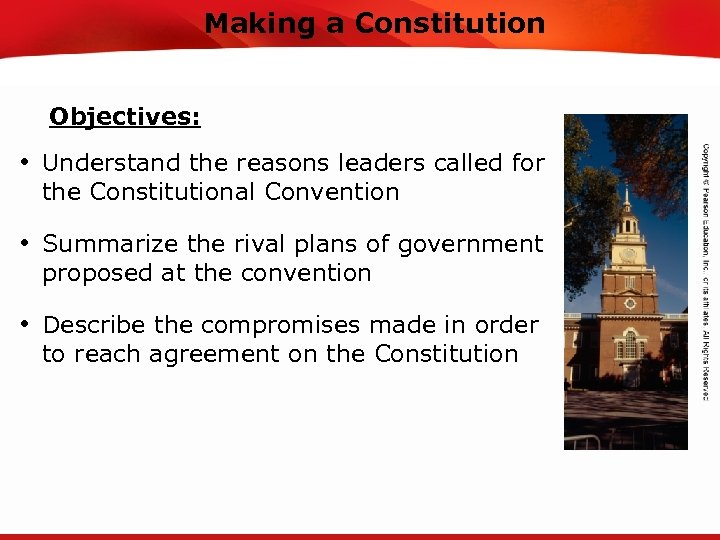 Making a Constitution TEKS 8 C: Calculate percent composition and empirical and molecular formulas. Objectives: • Understand the reasons leaders called for the Constitutional Convention • Summarize the rival plans of government proposed at the convention • Describe the compromises made in order to reach agreement on the Constitution
 TEKS 8 C: Calculate percent Problems with composition and empirical and molecular formulas. Government Organization • Main problem was the lack of power to solve national problems: states ignored federal power Ø Constitution: Power shared with states (federalism) • Amending the Articles required all states to agree Ø Constitution: amendment by only ¾th of the states • No Executive branch to carry out the will of Congress, and no Judiciary to resolve disputes between states: Ø Constitution: The Framers established three branches of government, each with its own powers: Legislative, Executive, and Judicial
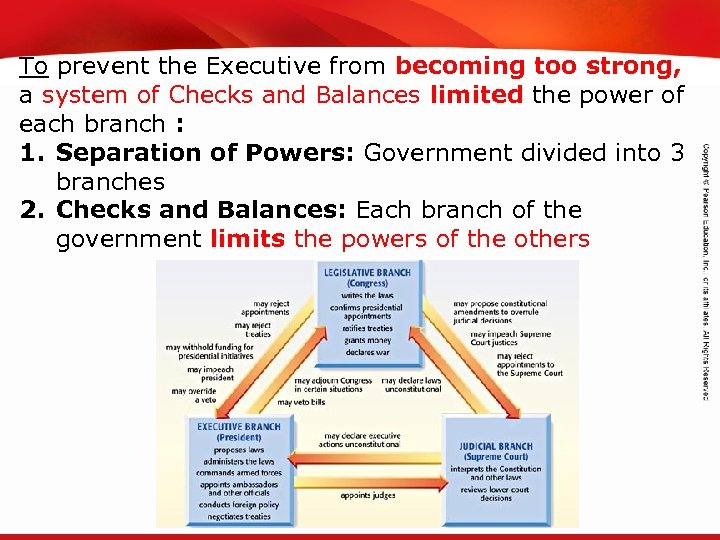 TEKS 8 C: Calculate percent composition and empirical and molecular formulas. To prevent the Executive from becoming too strong, a system of Checks and Balances limited the power of each branch : 1. Separation of Powers: Government divided into 3 branches 2. Checks and Balances: Each branch of the government limits the powers of the others
 TEKS 8 C: Calculate percent composition and empirical and molecular formulas. EOC Practice Question To avoid creating a central government that could be too strong, the writers of the Constitution divided authority into separate branches. This process is known as which of the following? A. Checks and balances B. Separation of powers C. Federalism D. Democracy
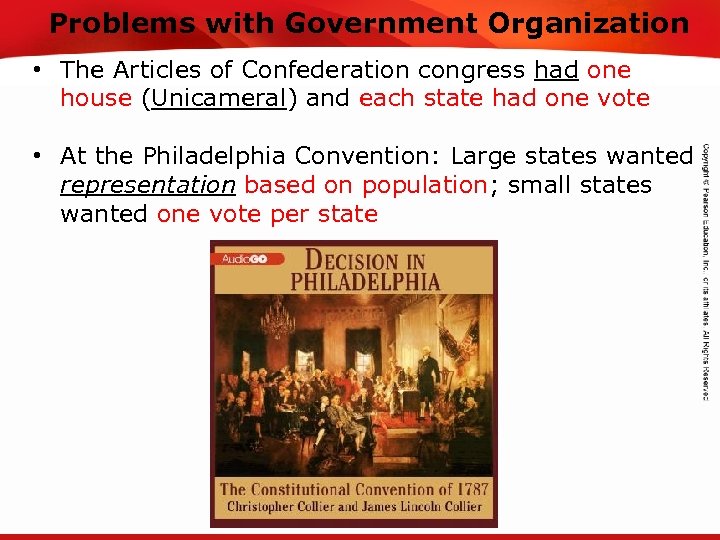 TEKS 8 C: Calculate percent Problems with composition and empirical and molecular formulas. Government Organization • The Articles of Confederation congress had one house (Unicameral) and each state had one vote • At the Philadelphia Convention: Large states wanted representation based on population; small states wanted one vote per state
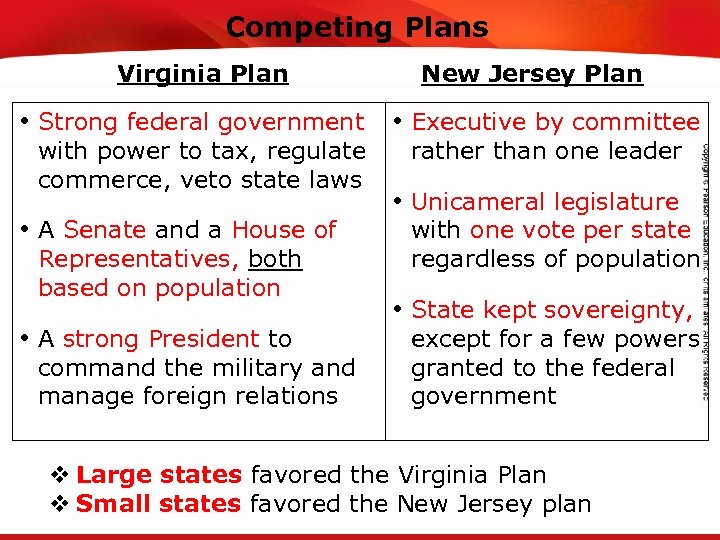 Competing Plans TEKS 8 C: Calculate percent composition and empirical and molecular formulas. Virginia Plan New Jersey Plan • Strong federal government • Executive by committee with power to tax, regulate commerce, veto state laws • A Senate and a House of Representatives, both based on population • A strong President to command the military and manage foreign relations rather than one leader • Unicameral legislature with one vote per state regardless of population • State kept sovereignty, except for a few powers granted to the federal government v Large states favored the Virginia Plan v Small states favored the New Jersey plan
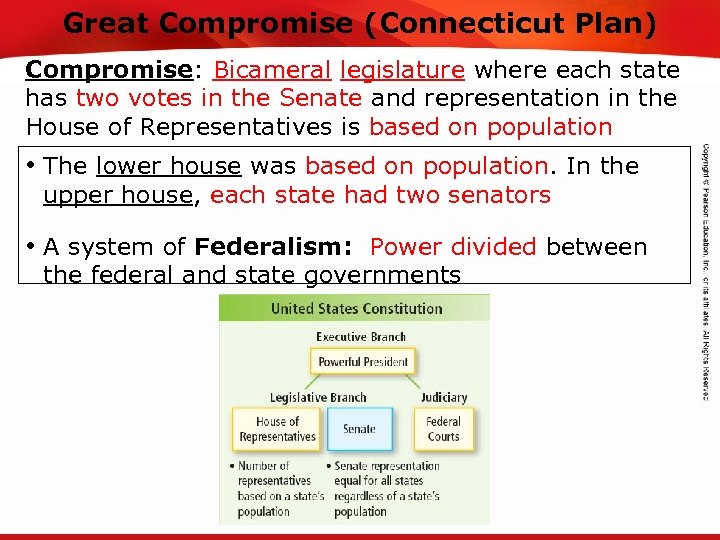 TEKS Great 8 C: Calculate percent composition and empirical and molecular formulas. Plan) Compromise (Connecticut Compromise: Bicameral legislature where each state has two votes in the Senate and representation in the House of Representatives is based on population • The lower house was based on population. In the upper house, each state had two senators • A system of Federalism: Power divided between the federal and state governments
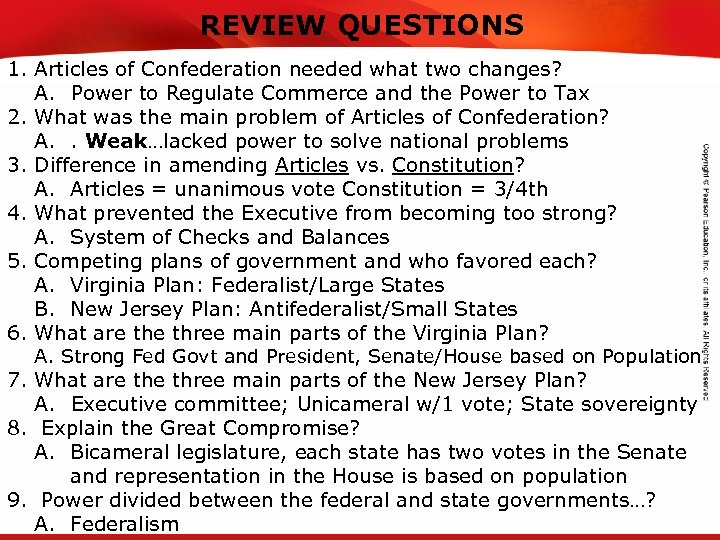 REVIEW QUESTIONS TEKS 8 C: Calculate percent composition and empirical and molecular formulas. 1. Articles of Confederation needed what two changes? A. Power to Regulate Commerce and the Power to Tax 2. What was the main problem of Articles of Confederation? A. . Weak…lacked power to solve national problems 3. Difference in amending Articles vs. Constitution? A. Articles = unanimous vote Constitution = 3/4 th 4. What prevented the Executive from becoming too strong? A. System of Checks and Balances 5. Competing plans of government and who favored each? A. Virginia Plan: Federalist/Large States B. New Jersey Plan: Antifederalist/Small States 6. What are three main parts of the Virginia Plan? A. Strong Fed Govt and President, Senate/House based on Population 7. What are three main parts of the New Jersey Plan? A. Executive committee; Unicameral w/1 vote; State sovereignty 8. Explain the Great Compromise? A. Bicameral legislature, each state has two votes in the Senate and representation in the House is based on population 9. Power divided between the federal and state governments…? A. Federalism
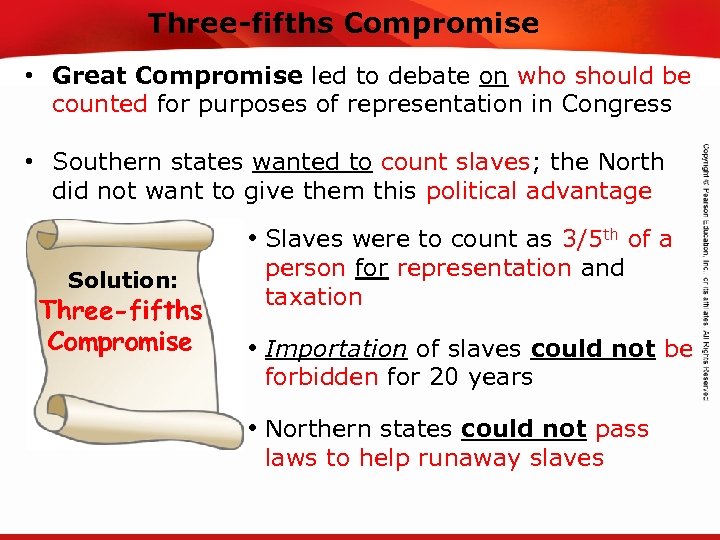 Three-fifths Compromise TEKS 8 C: Calculate percent composition and empirical and molecular formulas. • Great Compromise led to debate on who should be counted for purposes of representation in Congress • Southern states wanted to count slaves; the North did not want to give them this political advantage • Slaves were to count as 3/5 th of a Solution: Three-fifths Compromise person for representation and taxation • Importation of slaves could not be forbidden for 20 years • Northern states could not pass laws to help runaway slaves
 Constitution’s Changes to Voting TEKS 8 C: Calculate percent composition and empirical and molecular formulas. • Under the Articles authority came from states, so delegates to Congress were selected by the states Ø Constitution: authority comes from “We, the people” • To ensure “no taxation without representation” the Constitution gave the House of Representatives the right to initiate taxes and… Ø Representatives elected by voters of their states • Because they feared uncontrolled will of the people: Ø Electoral College: buffer for election of the president Ø Devised system for Indirect election of Senators Ø Supreme Court nominated by President, but confirmed by Senate
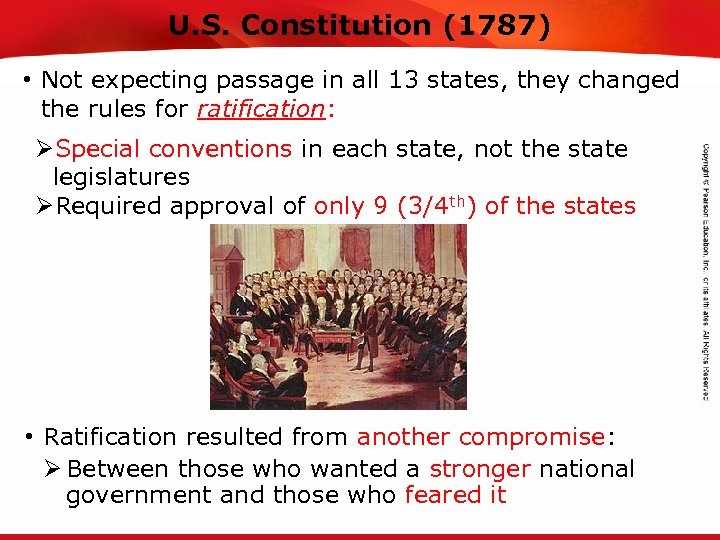 U. S. Constitution (1787) TEKS 8 C: Calculate percent composition and empirical and molecular formulas. • Not expecting passage in all 13 states, they changed the rules for ratification: ØSpecial conventions in each state, not the state legislatures ØRequired approval of only 9 (3/4 th) of the states • Ratification resulted from another compromise: Ø Between those who wanted a stronger national government and those who feared it
 Federalists TEKS 8 C: Calculate percent composition and empirical and molecular formulas. Supporters of a strong national government; and represented the elites of coastal areas • • Argued that only the proposed Constitution could remedy these weaknesses • Federalists favored the Constitution Stressed the weaknesses of the Articles of Confederation Published essays collectively known as: The Federalist Papers Famous Federalist: Alexander Hamilton and John Jay
 Anti-federalists TEKS 8 C: Calculate percent composition and empirical and molecular formulas. Opponents of the Constitution…backcountry farmers who feared the power elites would have in a strong government far away from influence of the people • Believed state government would be more responsive to peoples’ needs Anti-federalists were opponents • Controversy centered on lack of a of ratification Bill of Rights to protect against abusive government Compromise reached when states ratified only on the condition that a Bill of Rights would be added
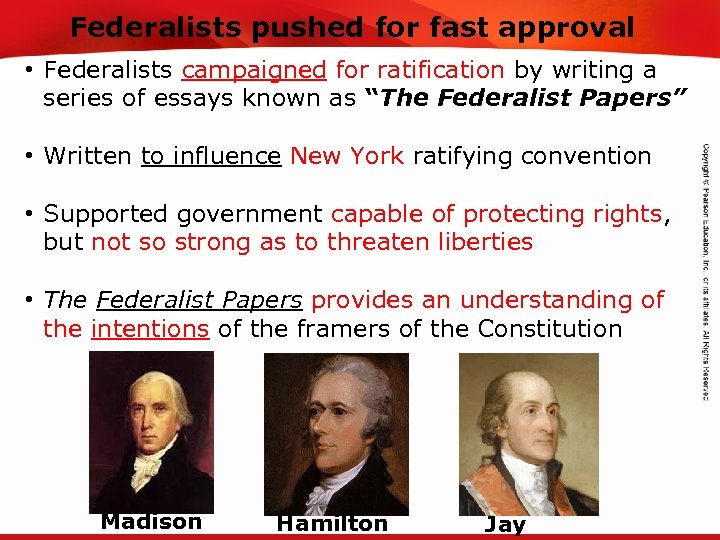 Federalists pushed for fast approval TEKS 8 C: Calculate percent composition and empirical and molecular formulas. • Federalists campaigned for ratification by writing a series of essays known as “The Federalist Papers” • Written to influence New York ratifying convention • Supported government capable of protecting rights, but not so strong as to threaten liberties • The Federalist Papers provides an understanding of the intentions of the framers of the Constitution Madison Hamilton Jay
 REVIEW QUESTIONS TEKS 8 C: Calculate percent composition and empirical and molecular formulas. 1. What are three main parts of the new Compromise? A. 3/5 th Compromise; Importation of slaves cannot be stopped for 20 years; northern states cannot help runaway slaves 2. How are Supreme Court Justices selected? A. Appointed by the President and confirmed by the Senate 3. What procedure change helped ratify the Constitution and why? A. State conventions, only required approval of 9 states 4. Supporters of a strong national government were called ____ and represented the _______? A. Federalist…elites 5. Opponents were known as ______ and represented_____ A. Anti-Federalist…backcountry farmers 6. What essays were sent to persuade the New York committee? A. Federalist Papers 7. Why the Anti-Federalists distrusted the Constitution? A. No Bill of Rights and feared concentration of power with elite
 TEKS 8 C: Calculate percent composition and empirical and molecular formulas. Note Taking Study Guide Page 40
 TEKS 8 C: Calculate percent composition and empirical and molecular formulas. USHC-1. 5: Explain how the fundamental principle of limited government is protected by the Constitution and the Bill of Rights, including democracy, republicanism, federalism, the separation of powers, the system of checks and balances, and individual rights. Focus: Principles of limited government included in the Constitution. Key Terms: Define each… 1. Bill of Rights 7. Veto Power 2. Democracy (Dictionary) 8. Impeachment 3. Republicanism 9. Ratification 4. Federalism 5. Separation of Powers 6. Checks and Balances
 TEKS 8 C: Calculate percent composition and empirical and molecular formulas. Limited Government and Democracy • Limited Government: the idea government must be controlled so it can’t infringe upon the rights of people • Under the Constitution, government power is limited • Fundamental Principle of Democracy: government derives its power from the “consent of the governed” • Democracy: Government power is from the people Ø “We the People”…do ordain…this Constitution Ø Voters are the ultimate governing authority
 TEKS 8 C: Calculate percent composition and empirical and molecular formulas. Limited Government and Democracy • The US was not a democracy at its inception because not everyone had the right to vote • The Framers based the government on the principle of Republicanism: Represented by elected legislators • Voters only elect the House of Representatives • Framers feared “uncontrolled will of the people”: Ø Indirect election of Senators, and… Ø Electoral College to choose President Ø National Judiciary (federal judges) appointed by President and confirmed by the Senate
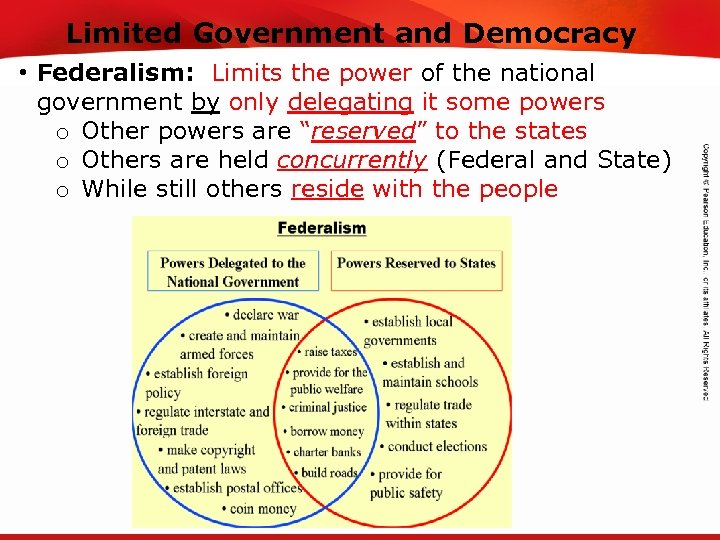 TEKS 8 C: Calculate percent composition and empirical and molecular formulas. Limited Government and Democracy • Federalism: Limits the power of the national government by only delegating it some powers o Other powers are “reserved” to the states o Others are held concurrently (Federal and State) o While still others reside with the people
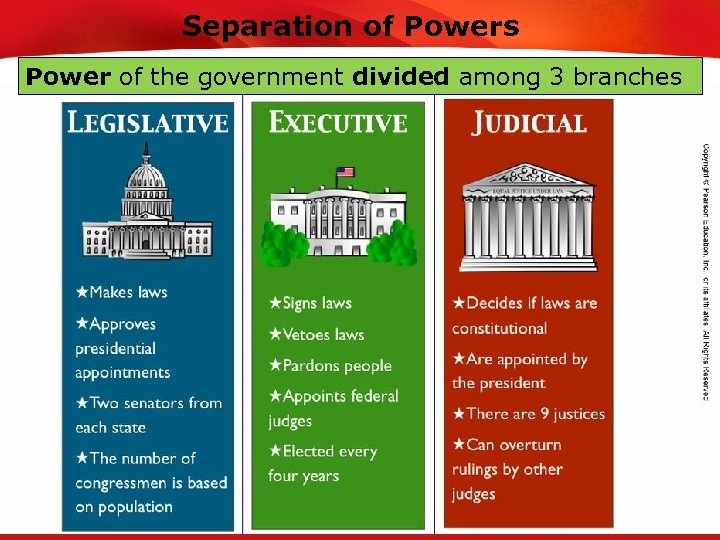 Separation of Powers TEKS 8 C: Calculate percent composition and empirical and molecular formulas. Power of the government divided among 3 branches
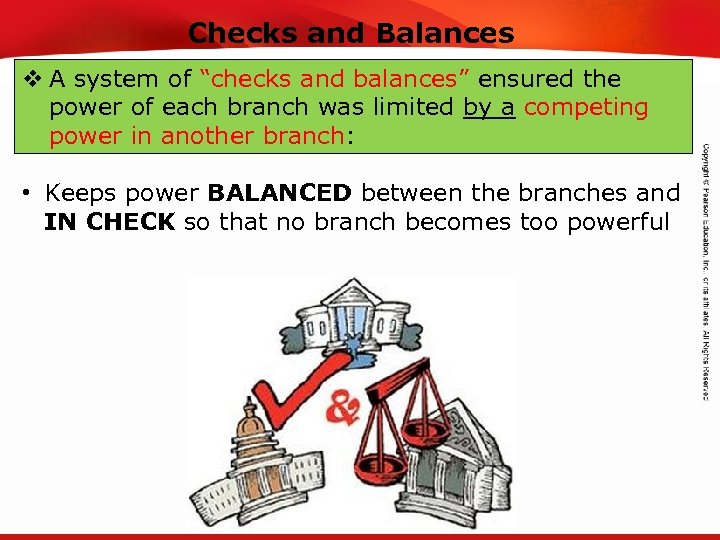 TEKS 8 C: Calculate percent composition and empirical and molecular formulas. Checks and Balances v A system of “checks and balances” ensured the power of each branch was limited by a competing power in another branch: • Keeps power BALANCED between the branches and IN CHECK so that no branch becomes too powerful
 TEKS 8 C: Calculate percent composition and empirical and molecular formulas. Checks and Balances: Executive Branch • Executive Branch: President and Vice-President Ø Can Veto legislation passed in the Congress Ø Has the power to make treaties with governments, but only the Senate can ratify these treaties • Example of Competing Powers: Ø Legislature can override a veto with a supermajority vote (two-thirds) Ø Legislature can impeach the President and Judiciary
 TEKS 8 C: Calculate percent composition and empirical and molecular formulas. Checks and Balances: Judicial Branch • Judicial Branch: US Supreme Court and the Federal Courts Ø The Supreme Court has the power of Judicial Review…authority to rule acts of Congress unconstitutional o Took this power in the case of Marbury v. Madison • Example of Competing Power: Ø Legislature can impeach the President and Judiciary
 TEKS Checks 8 C: Calculate. Balances: empirical and molecular formulas. and percent composition and Legislative Branch • Legislature: (Congress): divided into two houses: House of Representatives (The House) and the Senate Ø House was given exclusive right to initiate tax bills Ø Has the exclusive power to pass laws o Example of Competing Power: The chief executive (President) can veto those laws § But the legislature can then override a veto with a supermajority vote (two-thirds) Ø Competitive Power: Members of the Judiciary and Chief Executive can be removed by impeachment procedures carried out by the legislature Video: How a Bill becomes a Law
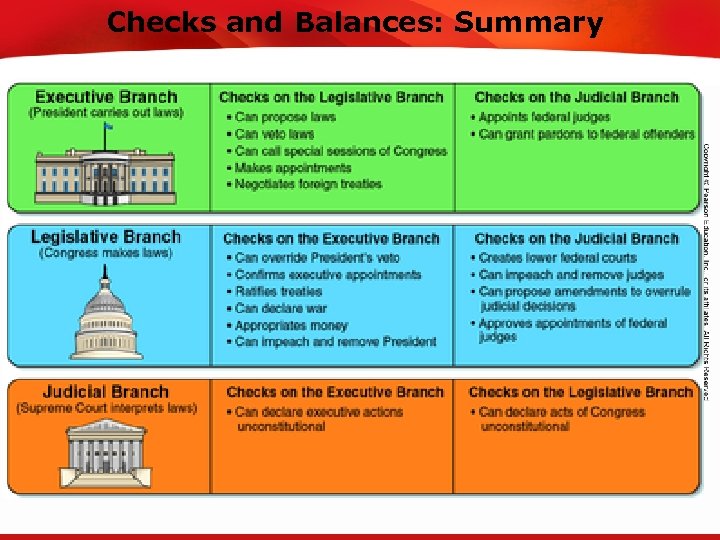 TEKS 8 C: Calculate percent composition and empirical and molecular formulas. Checks and Balances: Summary
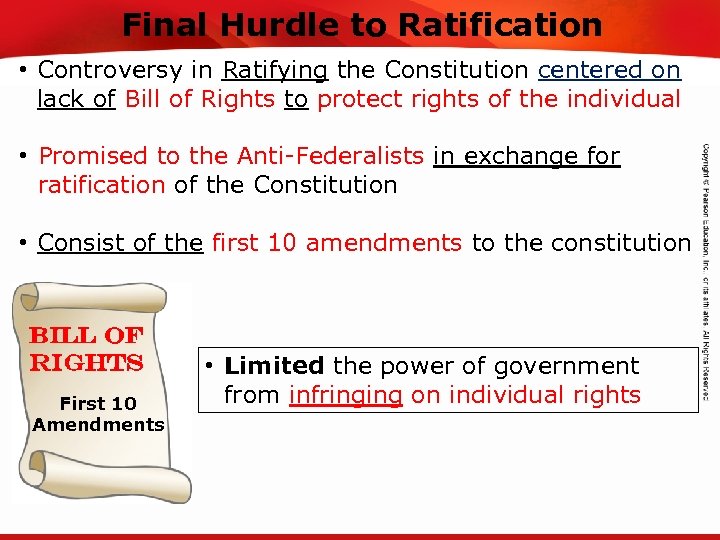 Final Hurdle to Ratification TEKS 8 C: Calculate percent composition and empirical and molecular formulas. • Controversy in Ratifying the Constitution centered on lack of Bill of Rights to protect rights of the individual • Promised to the Anti-Federalists in exchange for ratification of the Constitution • Consist of the first 10 amendments to the constitution BILL OF RIGHTS First 10 Amendments • Limited the power of government from infringing on individual rights
 REVIEW QUESTIONS TEKS 8 C: Calculate percent composition and empirical and molecular formulas. 1. What did they do to ensure the Executive was not too strong? A. System of Checks and Balances 2. What was the issue between large and small state plans? A. Representation 3. What settled the Slavery issue? A. Three-Fifths Compromise 4. Name the opposing sides for and against the Constitution? A. Federalist v. Anti-Federalist 5. Electoral College was created to control? U___ W_ of the P____ A. Uncontrolled Will of the People 6. What was the main controversy slowing Ratification? A. Absence of a Bill of Rights 7. What were the essays called written in favor of ratification? A. Federalist Papers 8. What is the Fundamental Principle of Democracy? A. Government derives powers from the consent of the governed 9. Framers based the government on the Principle of R___? A. Republicanism 10. How does Federalism limit the power of the government? A. By only delegating it some powers
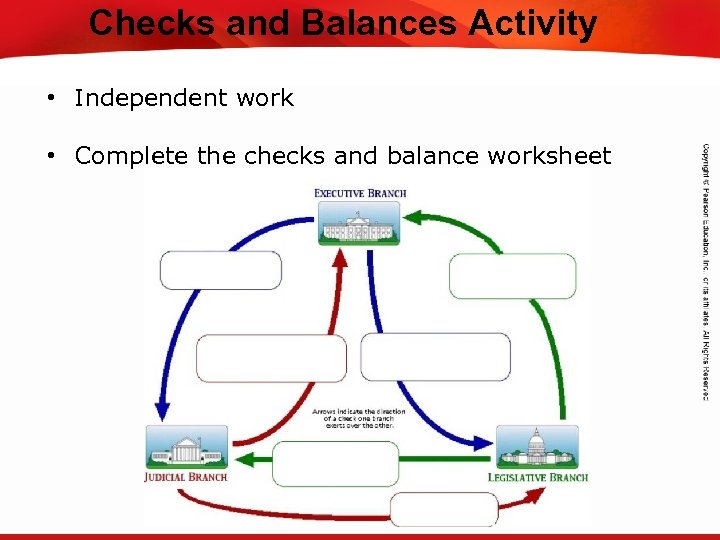 Checks and Balances Activity TEKS 8 C: Calculate percent composition and empirical and molecular formulas. • Independent work • Complete the checks and balance worksheet
 TEKS 8 C: Calculate percent composition and empirical and molecular formulas. Note Taking Study Guide Page 42
 TEKS 8 C: Calculate percent composition and empirical and molecular formulas. USHC-1. 6: Analyze the development of the two-party system during the presidency of George Washington, including controversies over domestic and foreign policies and the regional interests of the Democratic. Republicans and the Federalists. Focus: Development of the two-party system. Key Terms: Define each… 1. Democratic Republican 2. Federalists 3. Strict Construction 4. Tariff 5. Industry (Dictionary) 6. Sedition Act 7. Nullification 8. Virginia & Kentucky Resolutions 9. Bond
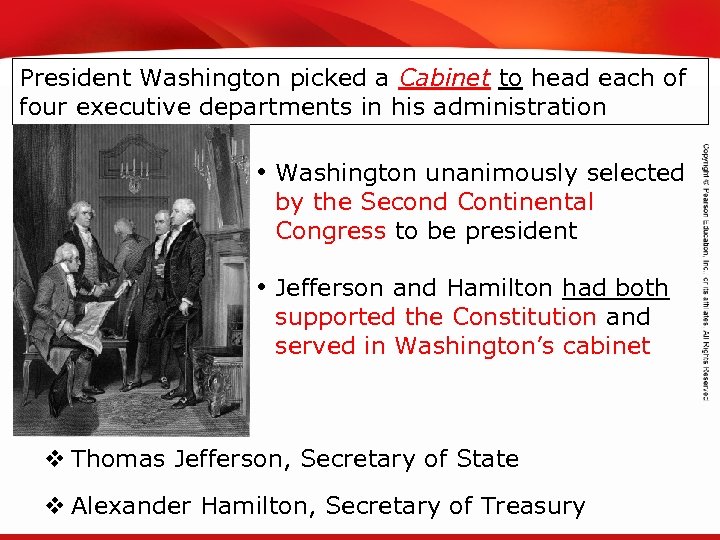 TEKS 8 C: Calculate percent composition and empirical and molecular formulas. President Washington picked a Cabinet to head each of four executive departments in his administration • Washington unanimously selected by the Second Continental Congress to be president • Jefferson and Hamilton had both supported the Constitution and served in Washington’s cabinet v Thomas Jefferson, Secretary of State v Alexander Hamilton, Secretary of Treasury
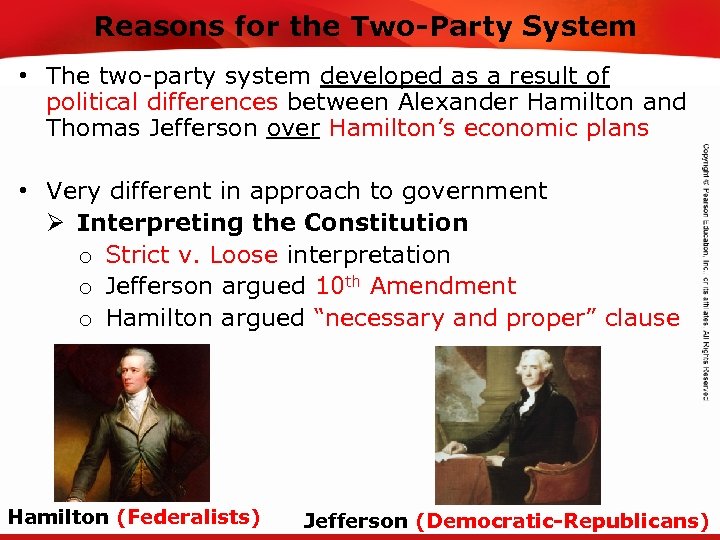 Reasons for the Two-Party System TEKS 8 C: Calculate percent composition and empirical and molecular formulas. • The two-party system developed as a result of political differences between Alexander Hamilton and Thomas Jefferson over Hamilton’s economic plans • Very different in approach to government Ø Interpreting the Constitution o Strict v. Loose interpretation o Jefferson argued 10 th Amendment o Hamilton argued “necessary and proper” clause Hamilton (Federalists) Jefferson (Democratic-Republicans)
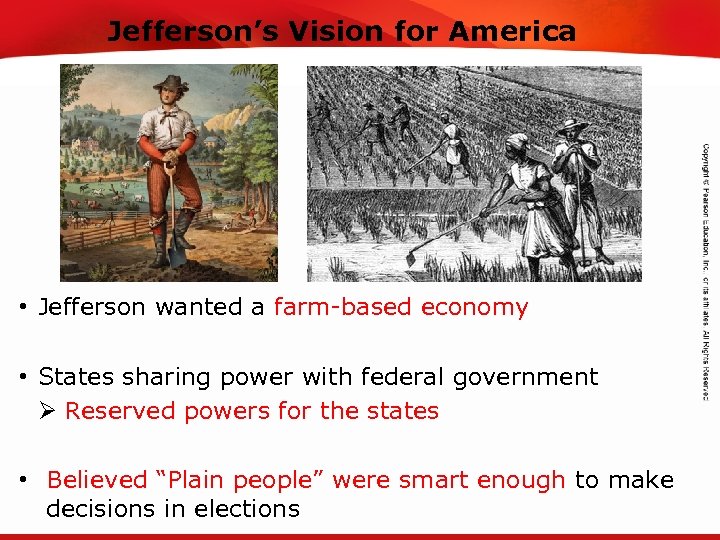 TEKS 8 C: Calculate percent composition and empirical and molecular formulas. Jefferson’s Vision for America • Jefferson wanted a farm-based economy • States sharing power with federal government Ø Reserved powers for the states • Believed “Plain people” were smart enough to make decisions in elections
 Hamilton’s Economic Plan TEKS 8 C: Calculate percent composition and empirical and molecular formulas. Debate between Democratic Republicans (D-R) and Federalists center around Hamilton’s economic plan 1. Repayment of War Debt: Bonds would serve to improve the already wealthy. Wanted the wealthy to have a stake in government 2. Assumption of State Debt: Northern states still owed, Southern states opposed (already paid) COMPROMISE: capital to be moved further South 3. Establishment of a National Bank: Deposit revenue and provide loans a. Jefferson and Madison oppose – not in Constitution - “strict construction” b. Hamilton argues that bank is “necessary and proper” – elastic clause c. George Washington sides with Hamilton and bank passes
 TEKS 8 C: Calculate percent composition and empirical and molecular formulas. Hamilton’s Economic Plan (cont) 4. Use of Protective Tariff: Artificially inflates prices of goods coming into US. Encourages people to buy American goods. a. Hamilton wants to protect American industry b. Jefferson wants farmers, not industry, to be backbone of US economy 5. Excise tax: tax on goods within a country. Wanted to tax whiskey to make $$ for new government a. Jefferson against tax since it targets farmers b. Whiskey Rebellion: Pennsylvania farmers attacked and beat up federal marshalls i. Washington and Hamilton organize 15, 000 militia to squash rebellion…Demonstrated power of government. There were no deaths
 TEKS 8 C: Calculate percent composition and empirical and molecular formulas. Federalists vs. Democratic-Republicans • Federalists: Ø Supported: Strong central government Ø Included: Wealthy merchants, northern industrialists and a few southern plantation owners Ø Loose Interpretation of the Constitution o Used “elastic” clause and “necessary and proper” • Democratic-Republicans: (Jeffersonian Republicans) Ø Supported: Limited central government and strong state government Ø Included: “the common man”, Farmers, and backcountry folk Ø Strict construction of the Constitution Ø 10 th Amendment reserved powers
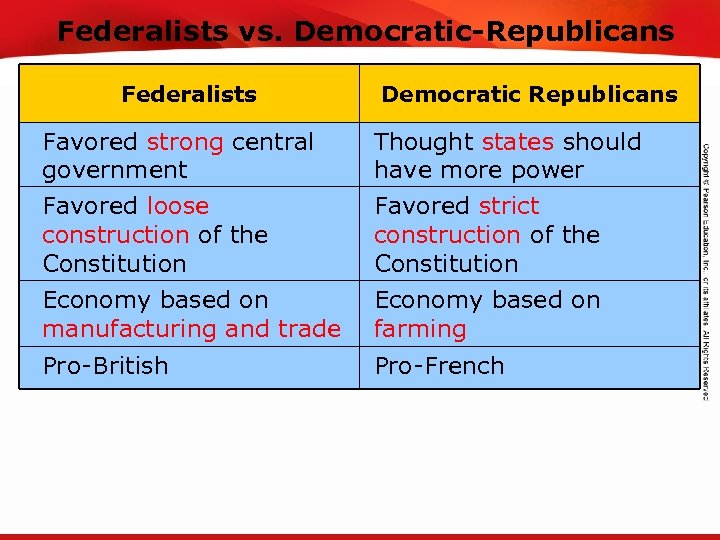 TEKS 8 C: Calculate percent composition and empirical and molecular formulas. Federalists vs. Democratic-Republicans Federalists Democratic Republicans Favored strong central government Favored loose construction of the Constitution Thought states should have more power Favored strict construction of the Constitution Economy based on manufacturing and trade Economy based on farming Pro-British Pro-French
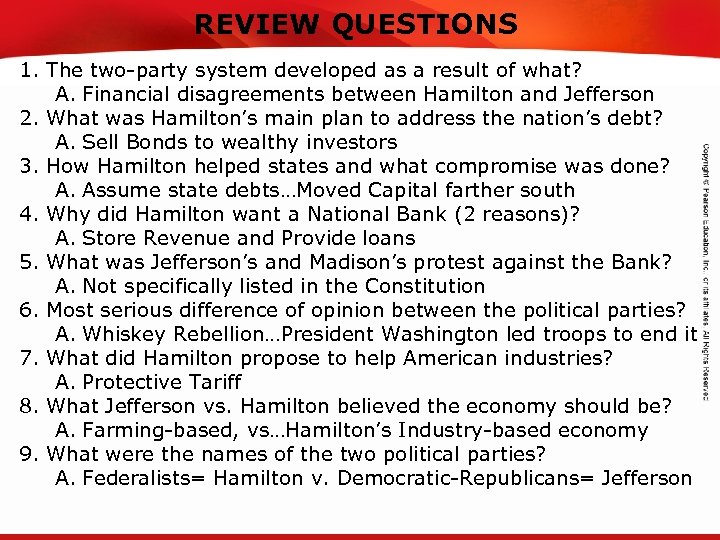 REVIEW QUESTIONS TEKS 8 C: Calculate percent composition and empirical and molecular formulas. 1. The two-party system developed as a result of what? A. Financial disagreements between Hamilton and Jefferson 2. What was Hamilton’s main plan to address the nation’s debt? A. Sell Bonds to wealthy investors 3. How Hamilton helped states and what compromise was done? A. Assume state debts…Moved Capital farther south 4. Why did Hamilton want a National Bank (2 reasons)? A. Store Revenue and Provide loans 5. What was Jefferson’s and Madison’s protest against the Bank? A. Not specifically listed in the Constitution 6. Most serious difference of opinion between the political parties? A. Whiskey Rebellion…President Washington led troops to end it 7. What did Hamilton propose to help American industries? A. Protective Tariff 8. What Jefferson vs. Hamilton believed the economy should be? A. Farming-based, vs…Hamilton’s Industry-based economy 9. What were the names of the two political parties? A. Federalists= Hamilton v. Democratic-Republicans= Jefferson
 TEKS 8 C: Calculate percent composition and empirical and molecular formulas. Note Taking Study Guide Page 44
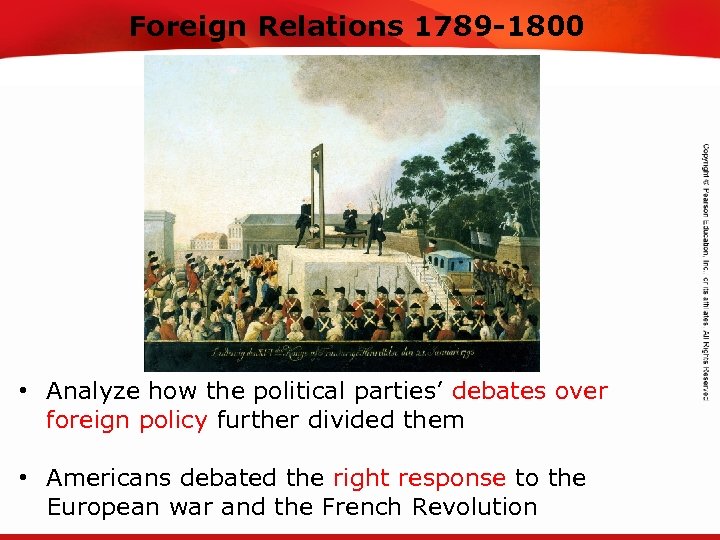 Foreign Relations 1789 -1800 TEKS 8 C: Calculate percent composition and empirical and molecular formulas. • Analyze how the political parties’ debates over foreign policy further divided them • Americans debated the right response to the European war and the French Revolution
 Responses to French Revolution TEKS 8 C: Calculate percent composition and empirical and molecular formulas. • Jefferson and Madison supported France, Because: Ø French “Declaration” was similar to ours Ø French alliance during the American Revolution • Hamilton supported the British because of: Ø Long tradition Ø Trade relations with the former mother country This basic disagreement was heightened by such events as: 1. 2. 3. 4. 5. Citizen Genet incident Jay’s Treaty XYZ Affair led to Alien and Sedition Acts Virginia and Kentucky Resolutions
 Alien and Sedition Acts (1798) TEKS 8 C: Calculate percent composition and empirical and molecular formulas. Alien and Sedition Acts: Two parts: 1. Alien Act (Naturalization Act): a) Changed Residency (waiting) period b) US can remove or jail foreigners deemed untrustworthy 2. Sedition Act: Crime to criticize the government • Limited Free Speech: Designed to silence the opposition of Democratic-Republicans to Adams • Federalists claimed: necessary to stop unhealthy criticism • Democratic-Republicans charged: the acts were unconstitutional and aimed to silence opposition
 Response to the Alien and Sedition Acts TEKS 8 C: Calculate percent composition and empirical and molecular formulas. • Jefferson and Madison objected to the Sedition Act as unconstitutional in Virginia and Kentucky Resolutions • Said state could “nullify”, or declare an act of Congress unconstitutional Ø Became known as the Doctrine of nullification • Contributed to Jefferson’s election in 1800 as the third President of the United States The traditional two party system became an important part of the American political system
 REVIEW QUESTIONS TEKS 8 C: Calculate percent composition and empirical and molecular formulas. 1. Which side in Europe did the Federalist side with and why? A. British…because of long trade relations 2. Which side did the Democratic-Republicans side with and why? A. The French…French declaration was similar to America’s and the French helped America during the Revolutionary War 3. Disagreement with French Revolution was heightened by what? A. Citizen Genet incident, Jay’s Treaty, and the XYZ Affair 4. What was the purpose of the Alien and Sedition Act? A. Made it a crime to criticize the government. Designed to silence opposition to the Adams administration 5. What State legislation passed due to the Alien and Sedition Act? A. Virginia and Kentucky resolutions
 TEKS 8 C: Calculate percent composition and empirical and molecular formulas. Note Taking Study Guide Page 46
 TEKS 8 C: Calculate percent composition and empirical and molecular formulas. USHC-1. 7: Summarize the expansion of the power of the national government as a result of Supreme Court decisions under Chief Justice John Marshall, such as the establishment of judicial review in Marbury v. Madison and the impact of political party affiliation on the Court. Focus: Impact of the Supreme Court on early American government. Key Terms: Define each… 1. Judicial Review 2. John Marshall 3. Marbury v. Madison 4. Mc. Culloch v. Maryland 5. Gibbons v. Ogden 6. Rulings (Dictionary)
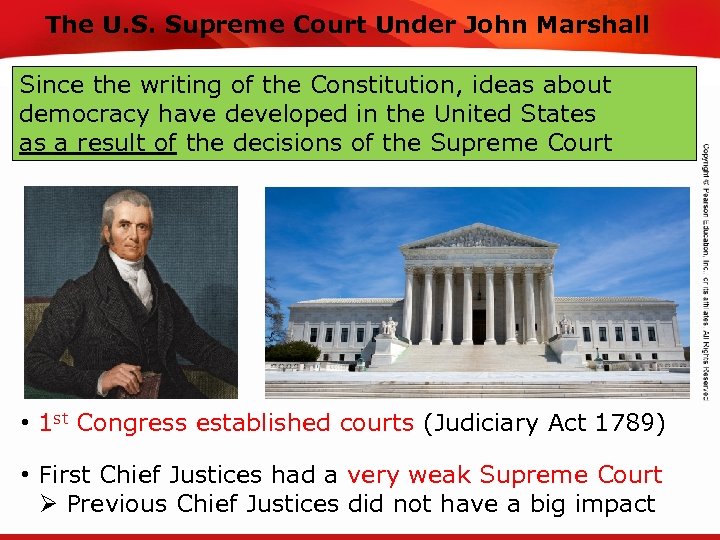 TEKS 8 C: Calculate percent composition and empirical and The U. S. Supreme Court Undermolecular formulas. John Marshall Since the writing of the Constitution, ideas about democracy have developed in the United States as a result of the decisions of the Supreme Court • 1 st Congress established courts (Judiciary Act 1789) • First Chief Justices had a very weak Supreme Court Ø Previous Chief Justices did not have a big impact
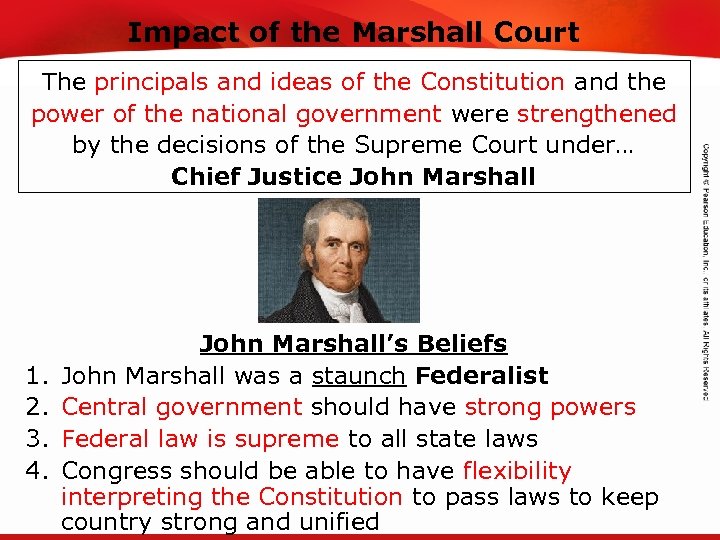 TEKS 8 C: Calculate percent composition and empirical and molecular formulas. Impact of the Marshall Court The principals and ideas of the Constitution and the power of the national government were strengthened by the decisions of the Supreme Court under… Chief Justice John Marshall 1. 2. 3. 4. John Marshall’s Beliefs John Marshall was a staunch Federalist Central government should have strong powers Federal law is supreme to all state laws Congress should be able to have flexibility interpreting the Constitution to pass laws to keep country strong and unified
 TEKS 8 C: Calculate percent composition and empirical and molecular formulas. Impact of the Marshall Court • Federalist John Marshall was appointed by Federalist President John Adams: Ø Marshall Court is an example that presidential power is felt long after the administration is gone • Justices serve for “Good Behavior” (life if no crime) • Served over 30 years • The rulings of the Marshall court reflected his support for a strong national government
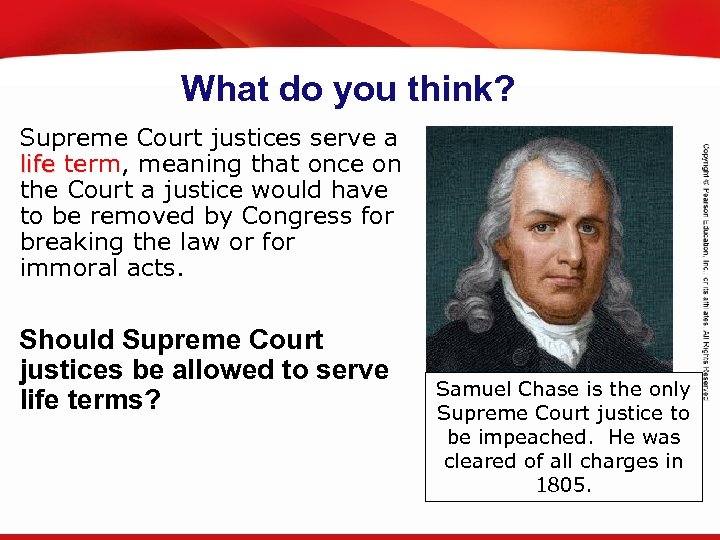 TEKS 8 C: Calculate percent composition and empirical and molecular formulas. What do you think? Supreme Court justices serve a life term, meaning that once on the Court a justice would have to be removed by Congress for breaking the law or for immoral acts. Should Supreme Court justices be allowed to serve life terms? Samuel Chase is the only Supreme Court justice to be impeached. He was cleared of all charges in 1805.
 TEKS 8 C: Calculate percent composition and empirical and molecular formulas. Marbury v. Madison (1803) • The Marshall Court ruling in Marbury v. Madison began the precedent of Judicial Review as a vital part of the checks and balances system • This was a landmark decision: First time the court claimed for itself the right of Judicial Review: to (determine the constitutionality of an act of Congress) • Marbury v. Madison cements that Supreme Court will have ultimate authority on Constitutional issues • Virginia and Kentucky Resolutions: Jefferson and Madison had claimed the right to decide constitutionality for states, this countered that claim
 TEKS 8 C: Calculate percent composition and empirical and molecular formulas. Legacy of Chief Justice John Marshall • The Court under John Marshall asserted its role as a vital third branch of government that supported the principles of the Federalist Party • Ruling gave the court more power…a Federalist goal • Reinforced the Idea the constitution is the supreme law of the land
 TEKS Supreme 8 C: Calculate percent composition and empirical and molecular formulas. Marshall Court under Chief Justice John Other Marshall decisions that strengthened the role of the Federal government: • Gibbons v. Ogden: Only the Federal government could control interstate commerce • Dartmouth v. Woodward: Contracts are binding • Mc. Culloch v. Maryland: Supremacy of federal power over state power • Worcester v. Georgia: Rights of individuals cannot be taken by a state
 REVIEW QUESTIONS TEKS 8 C: Calculate percent composition and empirical and molecular formulas. 1. Which Chief Justice redefined the role of the Supreme Court? A. Chief Justice John Marshall 2. What Supreme Court case was a Landmark case, and why? A. Marbury v. Madison…gave court the right of Judicial Review 3. Explain the term Judicial Review. A. Right to decide if acts of Congress are Constitutional 4. How did Judicial Review impact Jefferson and Madison? A. Nullified their claim of Judicial Review under their resolutions 5. Decisions of _____ court supported a ______ government? A. Supreme…strong…national 6. The Supreme Court under ______asserted its role as a vital _______ of the federal government? A. Marshall…third branch 7. What term describes how long Supreme Court Justices serve? A. Good Behavior 8. Who appointed John Marshall to the Supreme Court? A. Federalist John Adams 9. Impact of presidents appointing Supreme Court justices? A. Presidential power felt long after the administration is gone
 TEKS 8 C: Calculate percent composition and empirical and molecular formulas. EOC Quiz Formative Assessment: Passing the EOC Chapter 2
 TEKS 8 C: Calculate percent composition and empirical and molecular formulas. USA TESTPREP Formative Assessment: USHC 1 Review
 TEKS 8 C: Terms and. Calculate percent composition and empirical and molecular formulas. People • precedent – an act or statement that becomes a tradition to be followed • tariff – a tax on imported goods • loose construction – a broad interpretation of the Constitution relying on the implied powers of Congress • strict construction – a narrow interpretation of the Constitution that limits Congress’s actions only to powers specifically granted by the Constitution • Whiskey Rebellion – a 1794 protest by farmers in western Pennsylvania against an excise tax on whiskey
 TEKS 8 C: Terms and. Calculate percent composition and empirical and molecular formulas. People (continued) • Democratic Republicans – a political party that emerged in opposition Hamilton’s economic policies • XYZ Affair – French officials demanded bribes to stop French seizures of American shipping • Alien and Sedition Acts – 1798 Federalist laws to restrict public criticism and deport immigrants, most of whom supported Democratic Republicans • Virginia and Kentucky resolutions – resolutions that suggested that states had the power to nullify federal laws like the Alien and Sedition Acts
 Terms and People TEKS 8 C: Calculate percent composition and empirical and molecular formulas. • militia – a civilian group that trains as soldiers to serve in emergencies • Loyalists – colonists who remained loyal to Britain during the Revolution • Second Continental Congress – colonial delegates who met in Philadelphia in May 1775 to organize a bigger fight against the British • Continental Army – volunteers who supported the Patriot siege of Boston and were put under control of Congress • George Washington – Virginian chosen to command the Continental Army, and first President of the U. S. • Thomas Paine – author of the pamphlet Common Sense that proposed independence
 TEKS 8 C: Calculate percent composition and empirical and molecular formulas. Terms and People (continued) • Declaration of Independence – 1776 document that explained the reasons for American independence from Great Britain • Thomas Jefferson – Virginia patriot and main author of the Declaration of Independence • natural rights – Enlightenment idea embodied by the Declaration of Independence that all men have rights which governments cannot take away • Battle of Trenton – surprise victory by General Washington in December 1776 • Saratoga –American victory in New York (1777) that led to alliance with France • Marquis de Lafayette – French nobleman who assisted Washington
 TEKS 8 C: Calculate percent composition and empirical and molecular formulas. Terms and People (continued) • Benjamin Franklin – ambassador to France who persuaded the French to aid the Americans • Valley Forge – Pennsylvania camp where Washington’s army spent the harsh winter of 1777 -1778 • Yorktown – final major battle of the Revolution, a large British army was forced to surrender in October 1781 • Treaty of Paris – 1783 peace treaty that officially ended the American Revolution and recognized American independence • republic – a government in which the people elect their representatives • unicameral legislature – a lawmaking body with a single house whose representatives are elected by the people
 TEKS 8 C: Calculate percent composition and empirical and molecular formulas. Terms and People • bicameral legislature – a lawmaking body with two houses, a Senate and a House of Representatives • Articles of Confederation – the original federal constitution drafted by the Continental Congress • federal – national • Northwest Territory – vast territory north of Ohio and west of Pennsylvania to the Mississippi River, which was key to expanding the republic • Land Ordinance of 1785 – plan to dispense and distribute public land in the Northwest Territory • Northwest Ordinance of 1787 – plan for governing and creating new states out of the Northwest Territory
 TEKS 8 C: Calculate percent composition and empirical Terms and People (continued) and molecular formulas. • federalism – a system that divides power between state governments and the federal government • Three-Fifths Compromise – in return for Southern support of the Constitution, northerners agreed to count each slave as three-fifths of a person for determining electoral votes and seats in Congress • ratification – official approval • Federalist – a person who favored ratification of the new Constitution of 1787 • Antifederalist – a person who opposed ratification of the new Constitution • The Federalist – a series of essays, supporting ratification (The Federalist Papers)
 TEKS 8 C: Calculate percent composition and empirical and molecular formulas. Terms and People (continued) • Bill of Rights – the first ten amendments to the Constitution guaranteeing individual rights • popular sovereignty – the principle that all government power comes from the people • limited government – where the powers of the government are specifically described, and officials may not act above the law • separation of powers – political power divided between 3 branches of government • checks and balances – a system in which each branch of government has the power to monitor and limit the actions of the other two
 TEKS and People Terms 8 C: Calculate percent composition and empirical and molecular formulas. • Shays’ Rebellion – an uprising of armed farmers who marched on a federal arsenal in Springfield, Massachusetts, in protest against higher taxes • Great Compromise – Roger Sherman’s proposal, which included a House representing the population and a Senate with two votes per state • electoral college – a group of persons chosen from each state who then indirectly elect the president
 Terms and People TEKS 8 C: Calculate percent composition and empirical and molecular formulas. • charter – a certificate of permission from the king to colonize an area in the Americas • joint-stock company – a group of investors in the colonizing effort who shared in profits and losses of a colony • John Smith – leader in Jamestown colony • House of Burgesses – first representative body in colonial America • Bacon’s Rebellion – a revolt in September 1676, where Nathaniel Bacon marched his armed followers to Jamestown, drove out the governor, and burned the town
 Terms. TEKS 8 C: Calculate percent composition and empirical and molecular formulas. and People • Puritan – people who wanted to purify the Anglican church, the official and legal church of England • Pilgrims – the first Puritan emigrants to New England in 1620 • Mayflower Compact – agreement in which pilgrims agreed to form a government and obey its laws • Roger Williams − religious dissenter who criticized Puritans’ Indian policy and was banned from Massachusetts Bay Colony • William Penn – wealthy Quaker Englishman who founded Pennsylvania • Quaker – unlike Puritans, sought inner understanding of Bible, considered women equal, and were pacifists
 Terms. TEKS 8 C: Calculate percent composition and empirical and molecular formulas. and People • Magna Carta – 1215 document that limited the king’s ability to tax English nobles and that guaranteed due process and a right to trial • Parliament – English lawmaking body • English Bill of Rights – 1689 document guaranteeing a number of freedoms • salutary neglect – a policy in which England allowed its colonies self-rule • mercantilism – economic policy under which a nation accumulates wealth by exporting more goods than it imports • Navigation Acts – a series of trade laws enacted by Parliament in the mid-1600 s • Enlightenment – European intellectual movement during the 1600 s and 1700 s
 TEKS 8 C: Calculate percent Terms and People composition and empirical and molecular formulas. (continued) • Benjamin Franklin – American colonist inspired by the Enlightenment, he was a printer, author, scientist, and inventor • Great Awakening – a religious movement that occurred in the colonies in the mid-1700 s • Stamp Act – 1765 act by Parliament that placed a tax on all printed materials • Patrick Henry – Virginia colonist who demanded, “Give me liberty, or give me death. ” • Sons of Liberty – associations of Patriots that protested against British taxes
 TEKS 8 C: Terms and. Calculate percent(continued)empirical and molecular formulas. People composition and • nonimportation agreements – colonial boycotts of British goods following the Stamp Act • Boston Massacre – the 1770 shooting of five Boston citizens by British soldiers • committee of correspondence – provided leadership and cooperation between colonies • Boston Tea Party – 1773 Patriot protest against British tax on tea; Patriots dumped British tea into Boston Harbor • Intolerable Acts – colonial label for the Coercive Acts punishing Boston after the Boston Tea Party • First Continental Congress – 1774 meeting of colonial delegates to protest the Intolerable Acts