


 Скачать презентацию Technology and Teaching 2010 Holly A Schroth
01649ee6b686721d85b97742e330162f.ppt
- Количество слайдов: 27
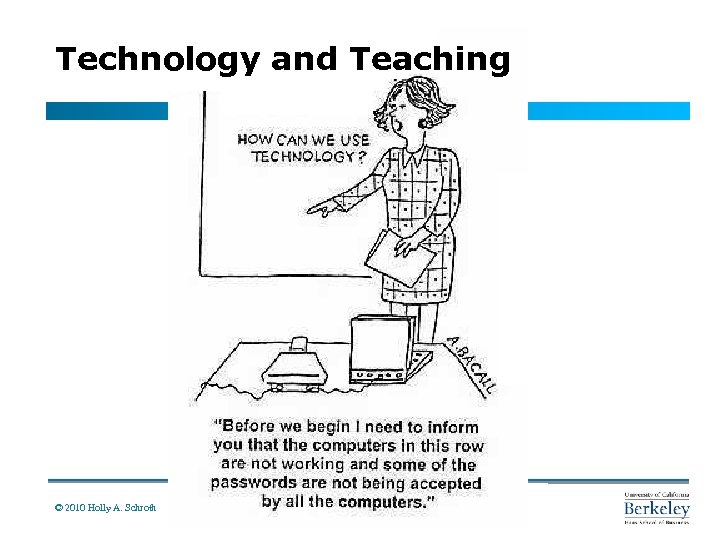 Technology and Teaching © 2010 Holly A. Schroth
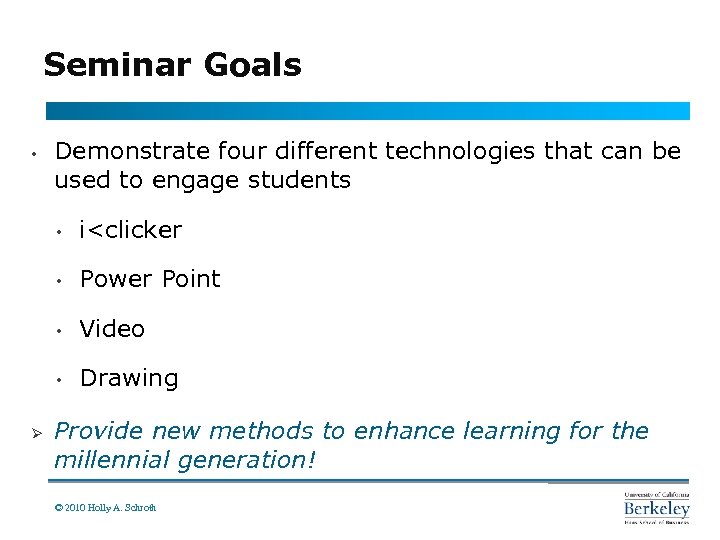 Seminar Goals • Demonstrate four different technologies that can be used to engage students • • Power Point • Video • Ø i
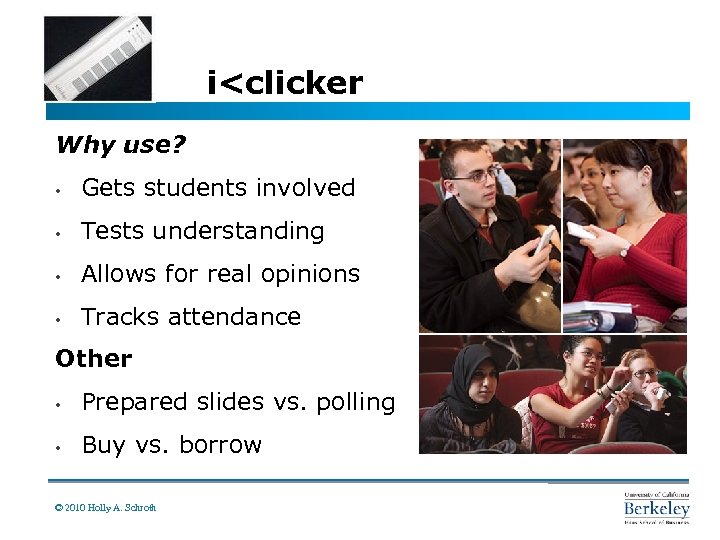 i
i
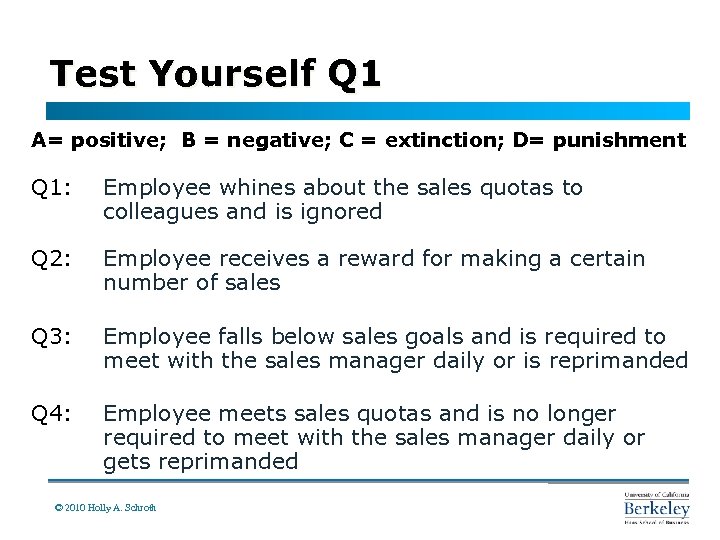 Test Yourself Q 1 A= positive; B = negative; C = extinction; D= punishment Q 1: Employee whines about the sales quotas to colleagues and is ignored Q 2: Employee receives a reward for making a certain number of sales Q 3: Employee falls below sales goals and is required to meet with the sales manager daily or is reprimanded Q 4: Employee meets sales quotas and is no longer required to meet with the sales manager daily or gets reprimanded © 2010 Holly A. Schroth
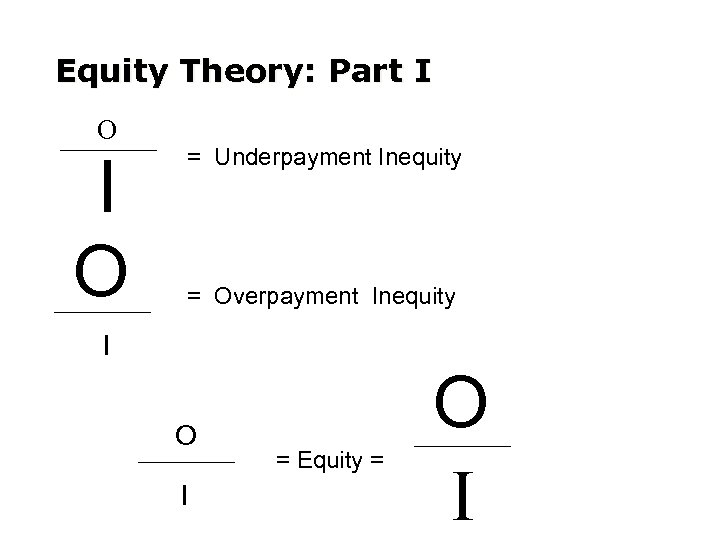 Equity Theory: Part I O = Underpayment Inequity = Overpayment Inequity I O I = Equity = O I
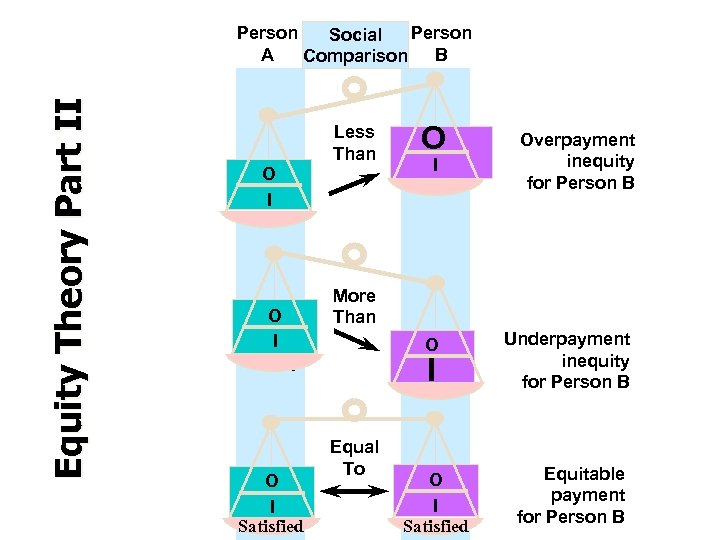 Equity Theory Part II Person Social A B Comparison Less Than O I Angry O I Satisfied O I Overpayment inequity for Person B More Than O Underpayment inequity for Person B O I Satisfied Equitable payment for Person B I Equal To
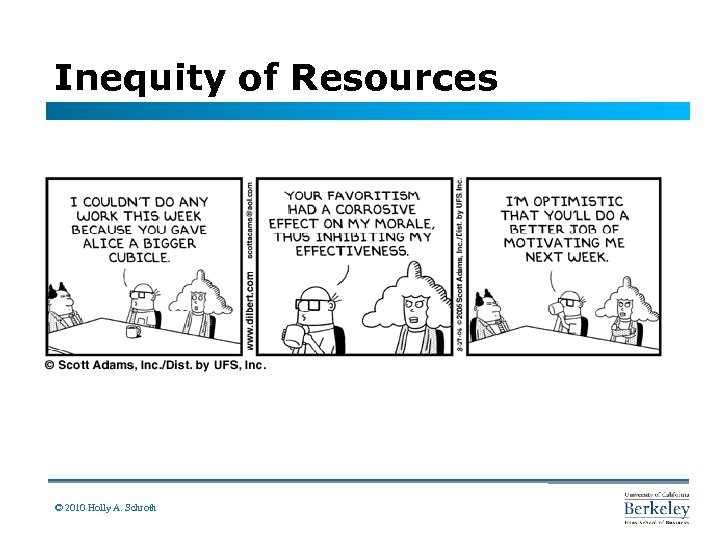 The effect of Inequity on Motivation Inequity of Resources © 2010 Holly A. Schroth
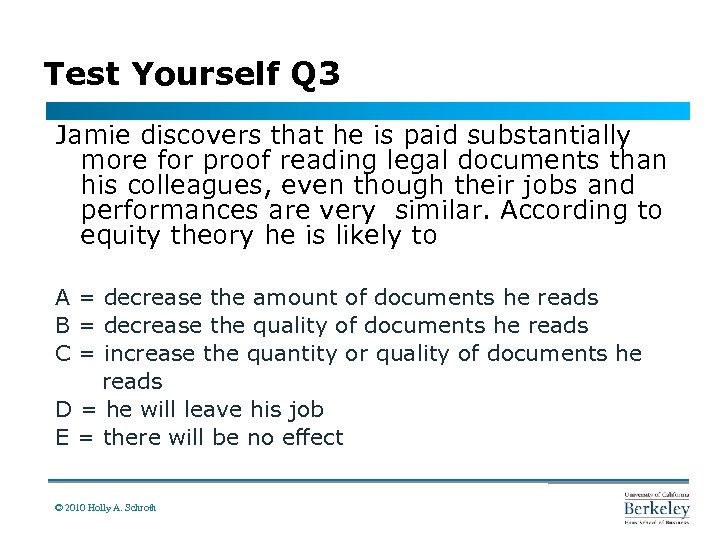 Test Yourself Q 3 Jamie discovers that he is paid substantially more for proof reading legal documents than his colleagues, even though their jobs and performances are very similar. According to equity theory he is likely to A = decrease the amount of documents he reads B = decrease the quality of documents he reads C = increase the quantity or quality of documents he reads D = he will leave his job E = there will be no effect © 2010 Holly A. Schroth
 Example of Testing for Comprehension –Sequence © 2010 Holly A. Schroth
 Problem 1 a Mark is finishing his MBA at a prestigious university. He is very interested in the arts and at one time considered a career as a musician. Is he more likely end up with a job in? A = a management consulting firm? B = the management of the arts? © 2010 Holly A. Schroth
 Representative Heuristic Making a judgment based on the resemblance to a typical case while ignoring information about averages or prior probabilities © 2010 Holly A. Schroth
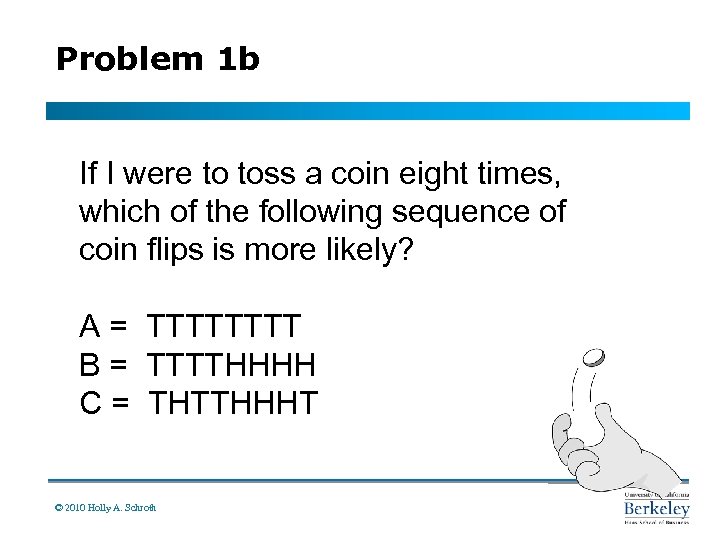 Problem 1 b If I were to toss a coin eight times, which of the following sequence of coin flips is more likely? A = TTTT B = TTTTHHHH C = THTTHHHT © 2010 Holly A. Schroth
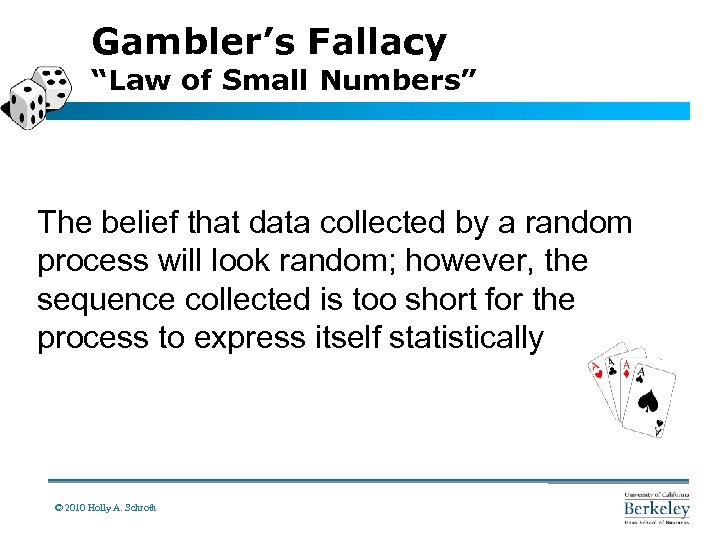 Gambler’s Fallacy “Law of Small Numbers” The belief that data collected by a random process will look random; however, the sequence collected is too short for the process to express itself statistically © 2010 Holly A. Schroth
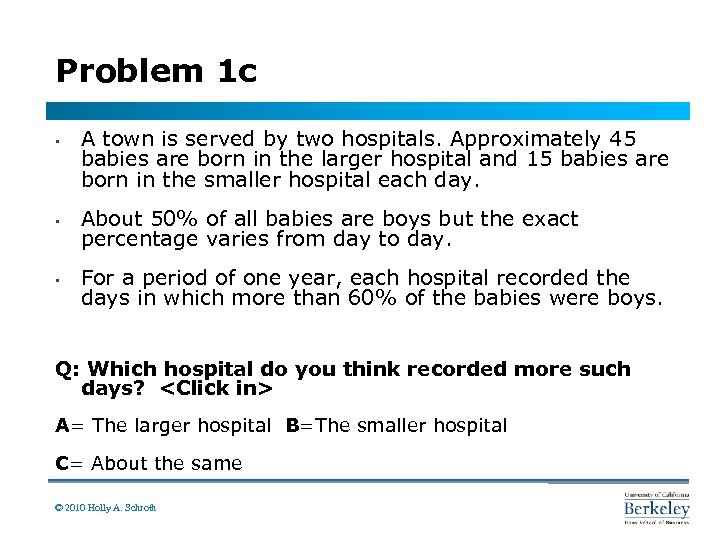 Problem 1 c • A town is served by two hospitals. Approximately 45 babies are born in the larger hospital and 15 babies are born in the smaller hospital each day. • About 50% of all babies are boys but the exact percentage varies from day to day. • For a period of one year, each hospital recorded the days in which more than 60% of the babies were boys. Q: Which hospital do you think recorded more such days?
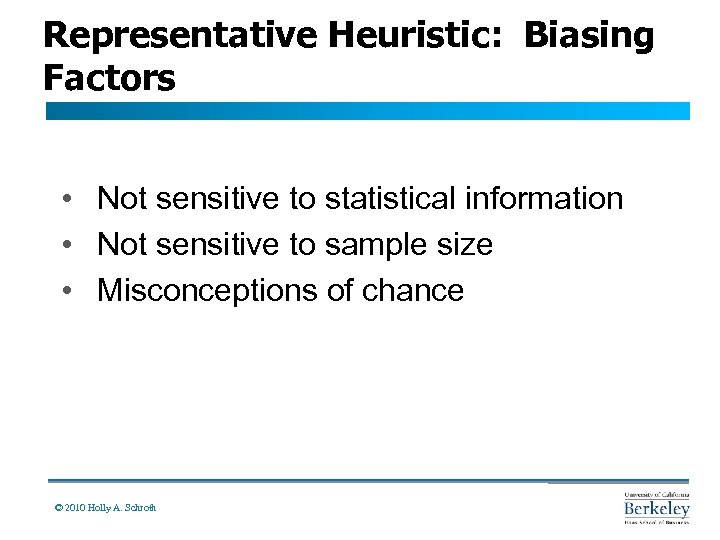 Representative Heuristic: Biasing Factors • Not sensitive to statistical information • Not sensitive to sample size • Misconceptions of chance © 2010 Holly A. Schroth
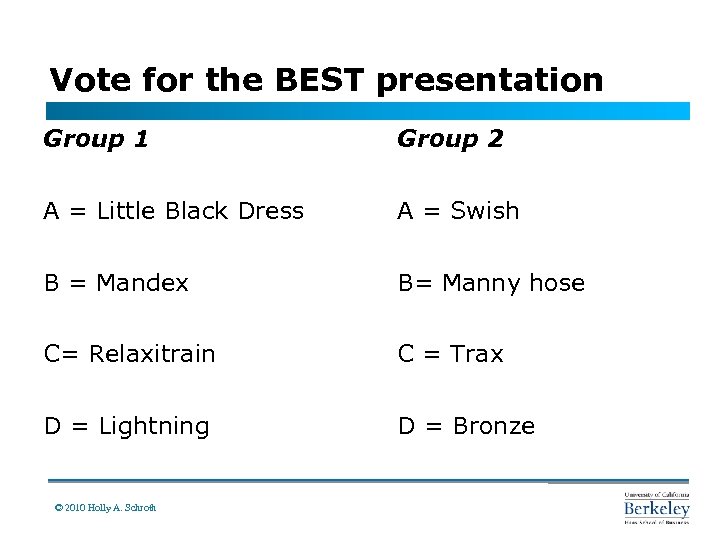 Vote for the BEST presentation Group 1 Group 2 A = Little Black Dress A = Swish B = Mandex B= Manny hose C= Relaxitrain C = Trax D = Lightning D = Bronze © 2010 Holly A. Schroth
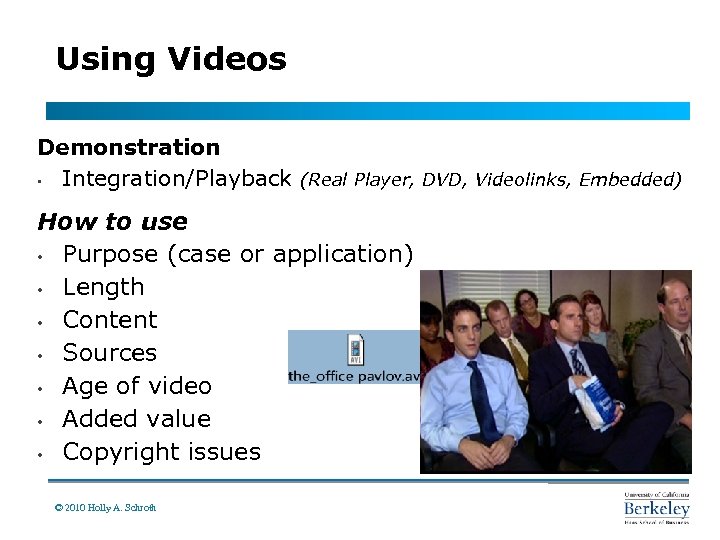 Using Videos Demonstration • Integration/Playback (Real Player, DVD, Videolinks, Embedded) How to use • Purpose (case or application) • Length • Content • Sources • Age of video • Added value • Copyright issues © 2010 Holly A. Schroth
 Videocase: Zappos and The Millennials • • Adapt your management style for different generations Coaching is a useful motivational tool (vs. giving directives) Recognize and reward where you can Having a fun workplace can help attract/retain employees Show You Value Your Employees © 2010 Holly A. Schroth
 Using Powerpoint • How to use—key points on slides o Avoid clutter o Don’t use as lecture notes o Consider using “take-away” handout for details • Careful material not too redundant with book • Use of a remote/use B-Key Q: Should I post before or after lecture? © 2010 Holly A. Schroth
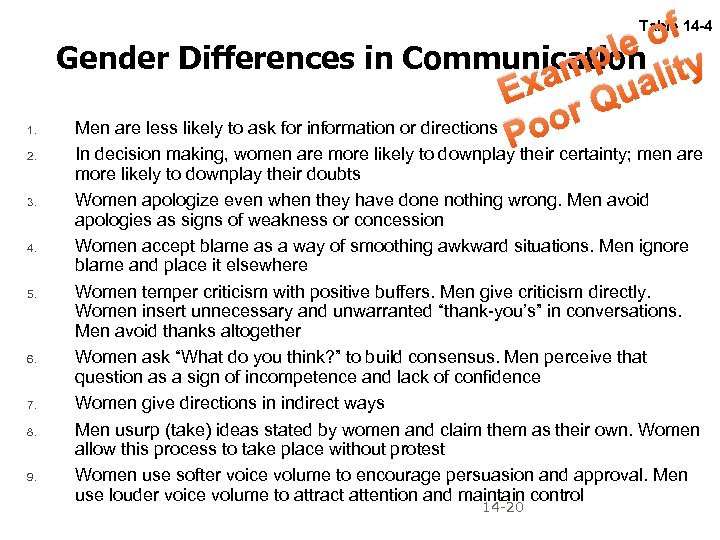 of ple Gender Differences in Communication ity am ual Ex Q or Men are less likely to ask for information or directions Po certainty; men are In decision making, women are more likely to downplay their Table 14 -4 1. 2. 3. 4. 5. 6. 7. 8. 9. more likely to downplay their doubts Women apologize even when they have done nothing wrong. Men avoid apologies as signs of weakness or concession Women accept blame as a way of smoothing awkward situations. Men ignore blame and place it elsewhere Women temper criticism with positive buffers. Men give criticism directly. Women insert unnecessary and unwarranted “thank-you’s” in conversations. Men avoid thanks altogether Women ask “What do you think? ” to build consensus. Men perceive that question as a sign of incompetence and lack of confidence Women give directions in indirect ways Men usurp (take) ideas stated by women and claim them as their own. Women allow this process to take place without protest Women use softer voice volume to encourage persuasion and approval. Men use louder voice volume to attract attention and maintain control 14 -20
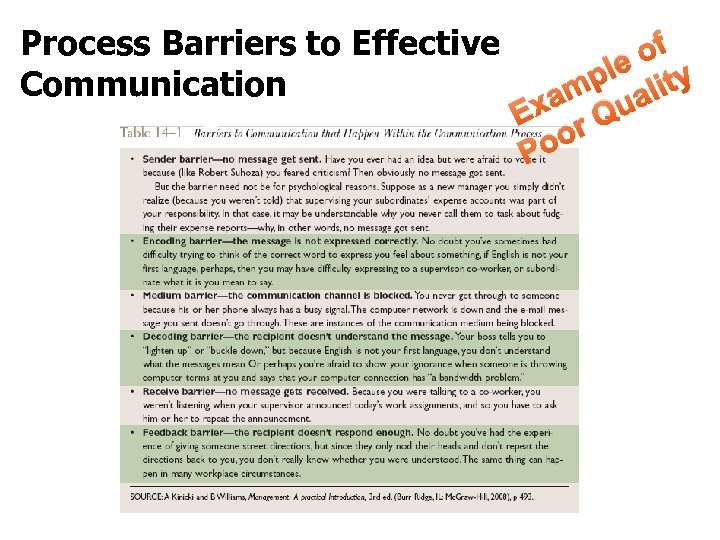 Process Barriers to Effective Communication of ple lity am ua Ex r Q oo P 14 -21
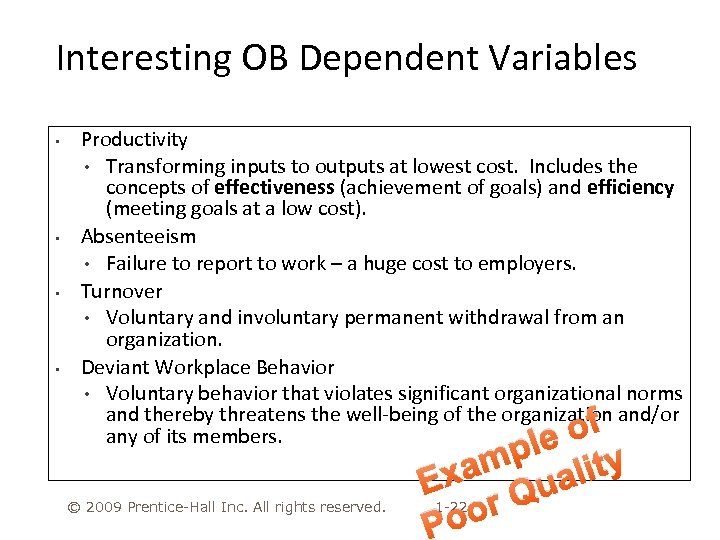 Interesting OB Dependent Variables • • Productivity • Transforming inputs to outputs at lowest cost. Includes the concepts of effectiveness (achievement of goals) and efficiency (meeting goals at a low cost). Absenteeism • Failure to report to work – a huge cost to employers. Turnover • Voluntary and involuntary permanent withdrawal from an organization. Deviant Workplace Behavior • Voluntary behavior that violates significant organizational norms and thereby threatens the well-being of the organization and/or any of its members. © 2009 Prentice-Hall Inc. All rights reserved. of ple ty xam uali E r. Q oo P 1 -22
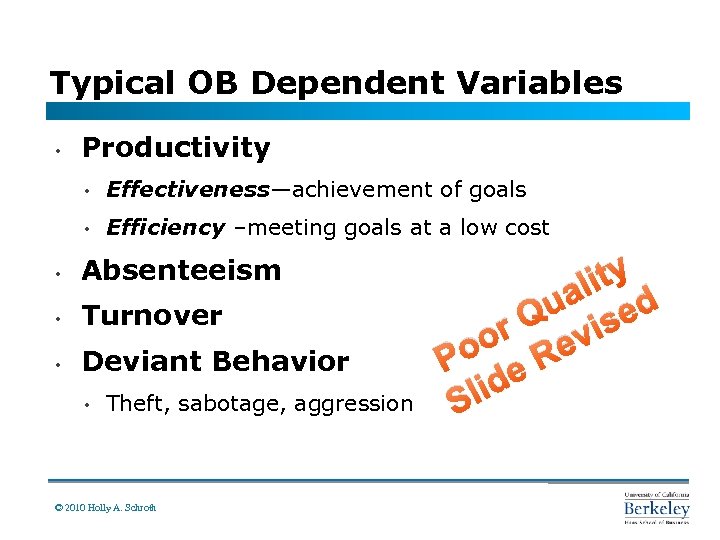 Typical OB Dependent Variables • Productivity • Effectiveness—achievement of goals • Efficiency –meeting goals at a low cost • Absenteeism • Turnover • Deviant Behavior • Theft, sabotage, aggression © 2010 Holly A. Schroth lity ua ed r Q evis oo R P e lid S
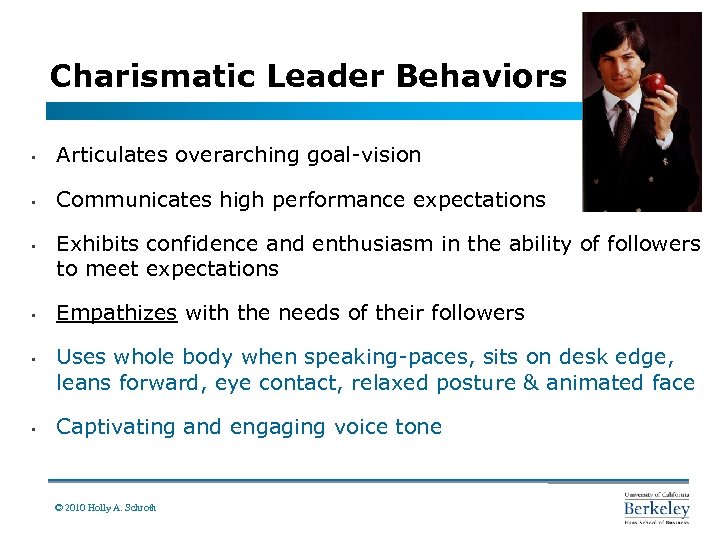 Charismatic Leader Behaviors • Articulates overarching goal-vision • Communicates high performance expectations • • Exhibits confidence and enthusiasm in the ability of followers to meet expectations Empathizes with the needs of their followers Uses whole body when speaking-paces, sits on desk edge, leans forward, eye contact, relaxed posture & animated face Captivating and engaging voice tone © 2010 Holly A. Schroth
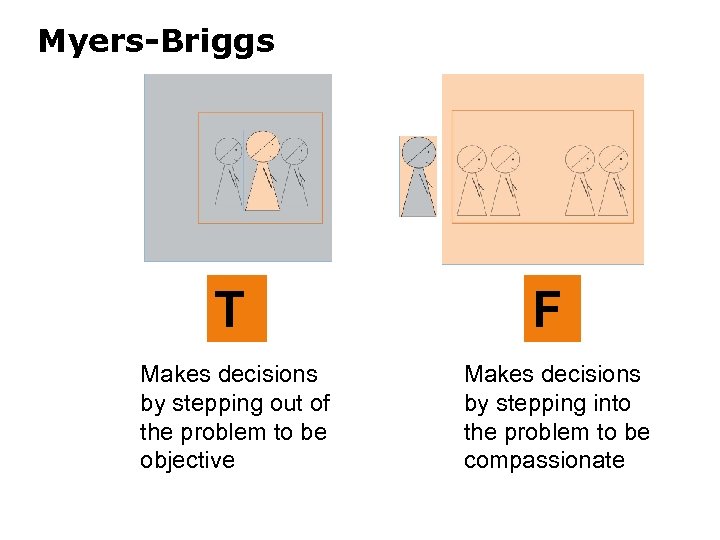 Myers-Briggs T Makes decisions by stepping out of the problem to be objective F Makes decisions by stepping into the problem to be compassionate
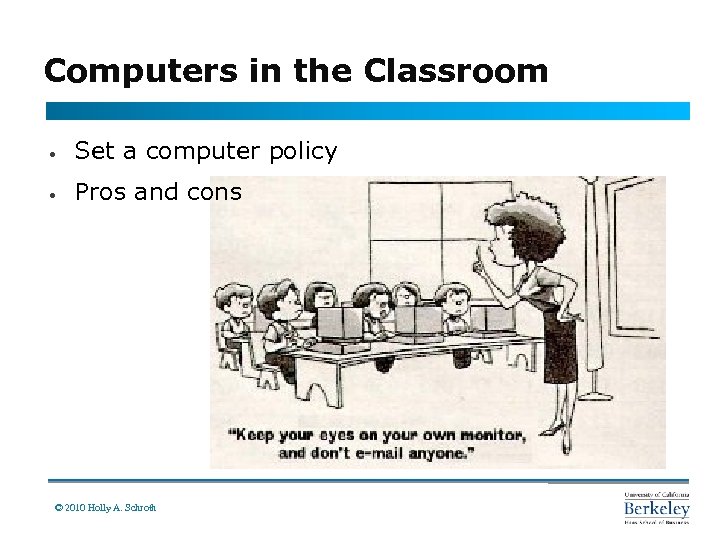 Computers in the Classroom • Set a computer policy • Pros and cons © 2010 Holly A. Schroth
 Thank You schroth@haas. berkeley. edu © 2010 Holly A. Schroth