 Скачать презентацию Technology and Knowledge Management in and by the
144bec25c2174a02684e68775d408e76.ppt
- Количество слайдов: 16



Technology and Knowledge Management in and by the Department of Atomic Energy, India R B Grover Mumbai, India
Attributes of Nuclear Technology • Nuclear intensive. technology is knowledge • Needs well trained human resource and strong industrial infrastructure for its exploitation. • Needs synergistic pursuit of basic research and technology development.
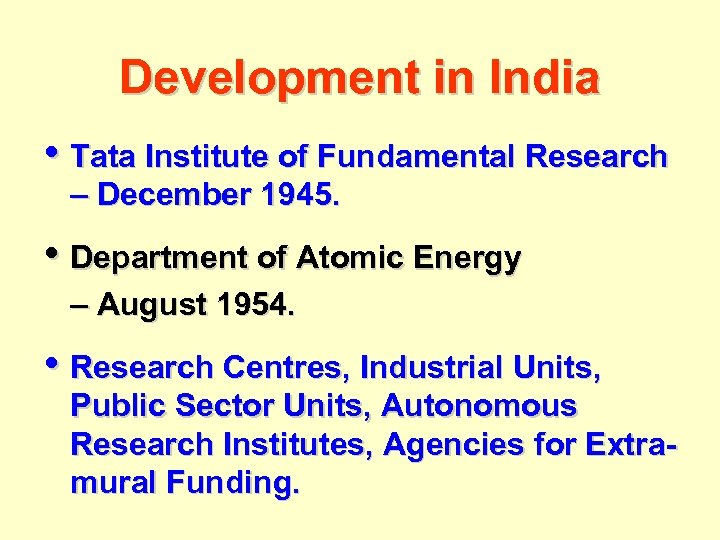
Development in India • Tata Institute of Fundamental Research – December 1945. • Department of Atomic Energy – August 1954. • Research Centres, Industrial Units, Public Sector Units, Autonomous Research Institutes, Agencies for Extramural Funding.
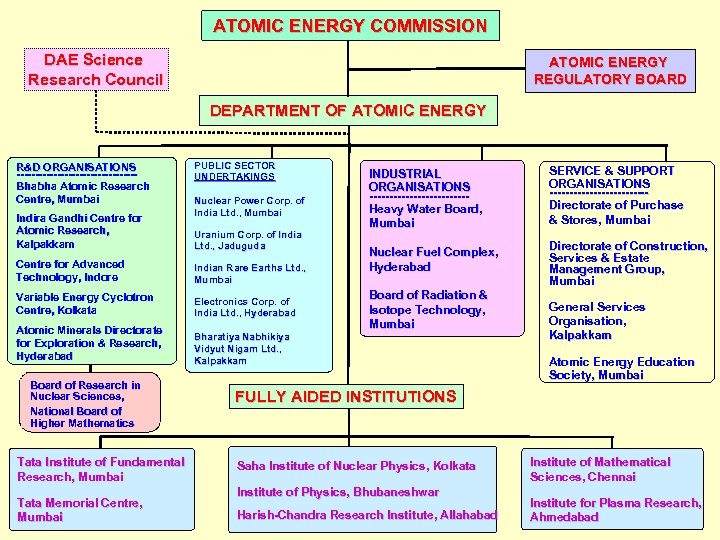
ATOMIC ENERGY COMMISSION DAE Science Research Council ATOMIC ENERGY REGULATORY BOARD DEPARTMENT OF ATOMIC ENERGY R&D ORGANISATIONS ----------------Bhabha Atomic Research Centre, Mumbai Indira Gandhi Centre for Atomic Research, Kalpakkam PUBLIC SECTOR UNDERTAKINGS Nuclear Power Corp. of India Ltd. , Mumbai Uranium Corp. of India Ltd. , Jaduguda Centre for Advanced Technology, Indore Indian Rare Earths Ltd. , Mumbai Variable Energy Cyclotron Centre, Kolkata Electronics Corp. of India Ltd. , Hyderabad Atomic Minerals Directorate for Exploration & Research, Hyderabad INDUSTRIAL ORGANISATIONS ------------Heavy Water Board, Mumbai SERVICE & SUPPORT ORGANISATIONS ------------Directorate of Purchase & Stores, Mumbai Nuclear Fuel Complex, Hyderabad Directorate of Construction, Services & Estate Management Group, Mumbai Bharatiya Nabhikiya Vidyut Nigam Ltd. , Kalpakkam Board of Research in Nuclear Sciences, National Board of Higher Mathematics Tata Institute of Fundamental Research, Mumbai Tata Memorial Centre, Mumbai Board of Radiation & Isotope Technology, Mumbai General Services Organisation, Kalpakkam Atomic Energy Education Society, Mumbai FULLY AIDED INSTITUTIONS Saha Institute of Nuclear Physics, Kolkata Institute of Physics, Bhubaneshwar Harish-Chandra Research Institute, Allahabad Harish-Chandra Institute of Mathematical Sciences, Chennai Institute for Plasma Research, Ahmedabad
Recipe for Success • Organic linkage between industrial units and research centres. • Innovative technology management & transfer approach. • Integrated human resource development programme. • Composite nature of the institutions
Human resource development • Training School – 1957 • Link between the user training programme content and numbers. and the - course • Hire and train approach. • Practising professionals as adjunct faculty - tacit & explicit knowledge • Over 6000 have graduated so far.
Disciplines • Chemical, computer, electrical, electronics, metallurgy and mechanical engineering. • Physics, chemistry and biology. • Radiation protection and environment sciences.
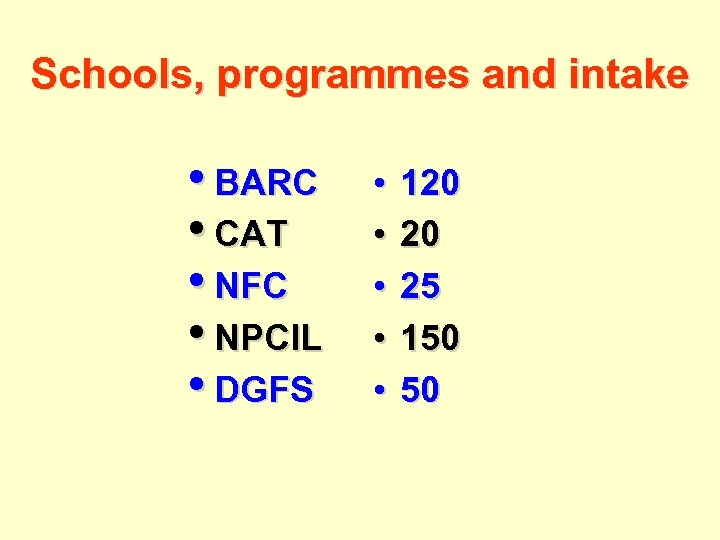
Schools, programmes and intake • BARC • CAT • NFC • NPCIL • DGFS • • • 120 20 25 150 50
DGFS - objectives • Human resource development • Projects under the guidance of two advisers, one from DAE and one from IIT • Resource persons for carrying out research in areas of interest to atomic energy
Some details • Apex committee for policy formulation. • Common admission procedure – GATE or our own written test. • 450 lecture hours, lab work, assignments, visits to facilities. • Written test and viva voce. • Frequent revision of syllabus.
Doctoral programmes • At autonomous research institutions. • At research centres – two models, - Off-campus programmes, - Research centres as institutes recognized for research leading to degrees by universities and scientists recognized as teachers. • Special programmes – Mumbai, Pune, Indore, research scholars funded by other agencies.
Extra-mural Funding • Board of Research in Nuclear Sciences. • National Board for Higher Mathematics.
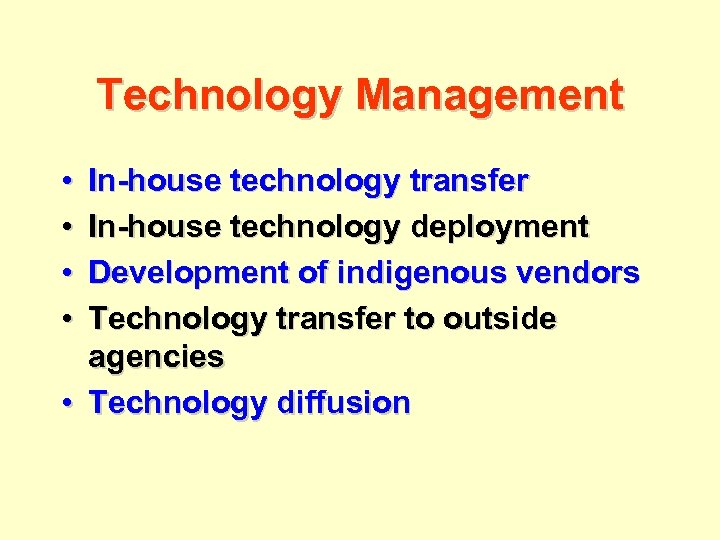
Technology Management • • In-house technology transfer In-house technology deployment Development of indigenous vendors Technology transfer to outside agencies • Technology diffusion
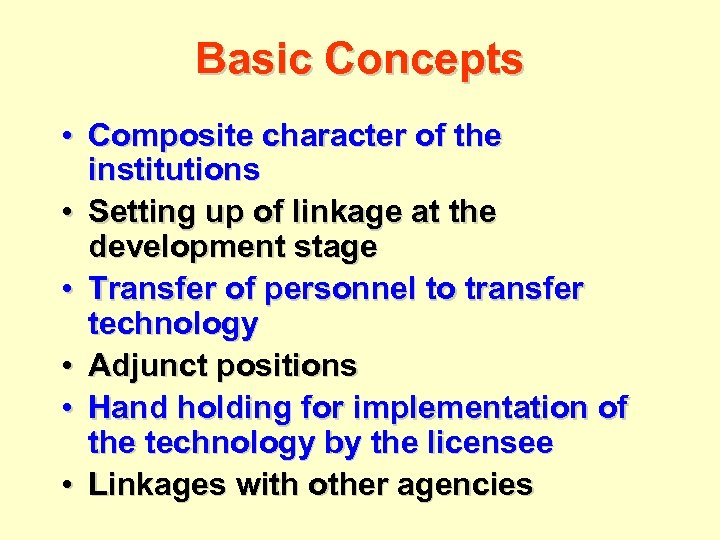
Basic Concepts • Composite character of the institutions • Setting up of linkage at the development stage • Transfer of personnel to transfer technology • Adjunct positions • Hand holding for implementation of the technology by the licensee • Linkages with other agencies
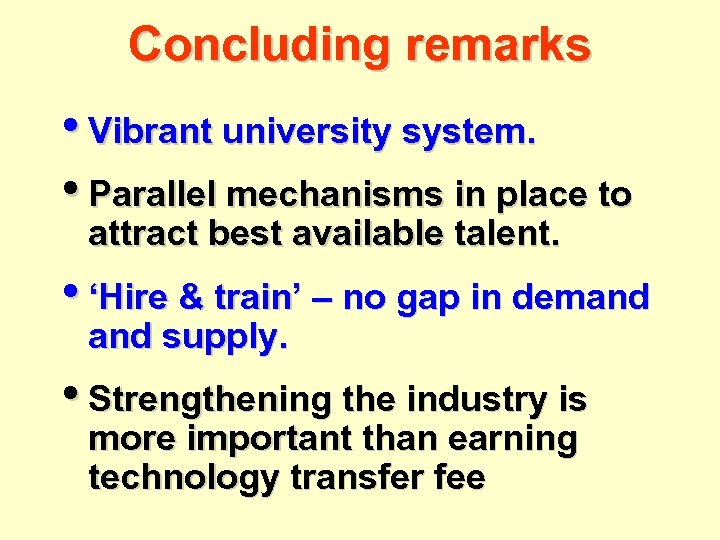
Concluding remarks • Vibrant university system. • Parallel mechanisms in place to attract best available talent. • ‘Hire & train’ – no gap in demand supply. • Strengthening the industry is more important than earning technology transfer fee

Thank You
Скачать презентацию Technology and Knowledge Management in and by the
144bec25c2174a02684e68775d408e76.ppt