 Скачать презентацию Technologies for microsatellites Roberto Battiston Università and INFN
ead1331e23f463175883395d48ad8d09.ppt
- Количество слайдов: 47



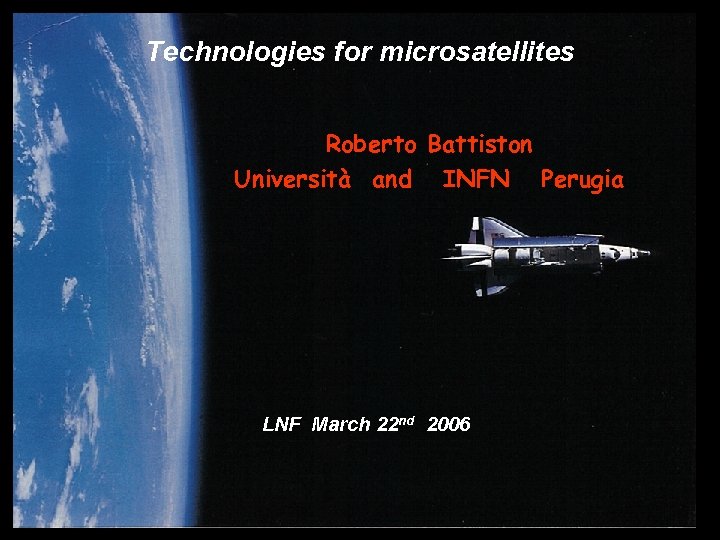
Technologies for microsatellites Roberto Battiston Università and INFN Perugia LNF March 22 nd 2006
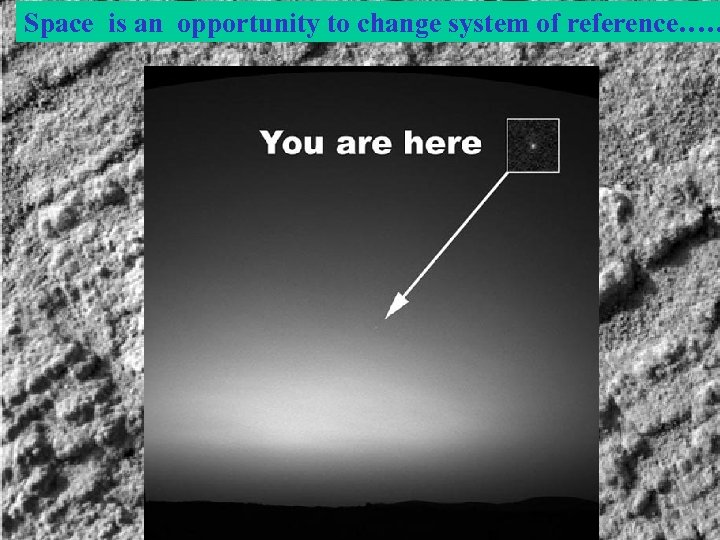
Space is an opportunity to change system of reference……
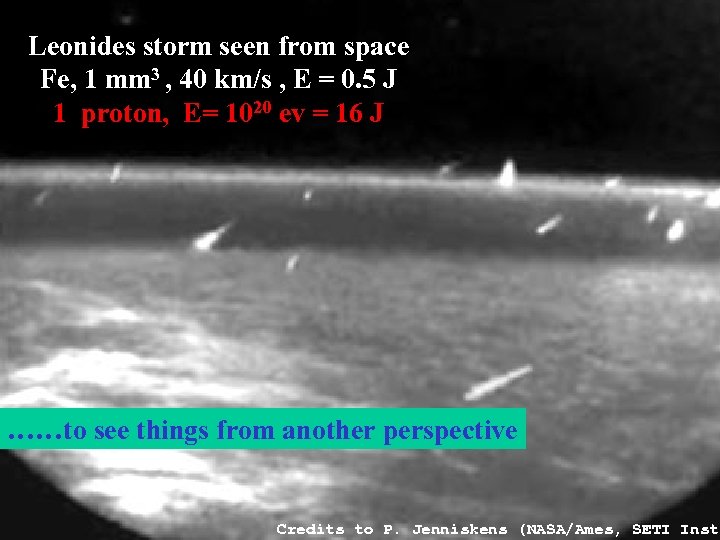
Leonides storm seen from space Fe, 1 mm 3 , 40 km/s , E = 0. 5 J 1 proton, E= 1020 ev = 16 J ……to see things from another perspective Credits to P. Jenniskens (NASA/Ames, SETI Inst.
Half a century after the Sputnik and the discovery of Van Allen Belts, space is fully maintain its unique potential for discovery and surprises
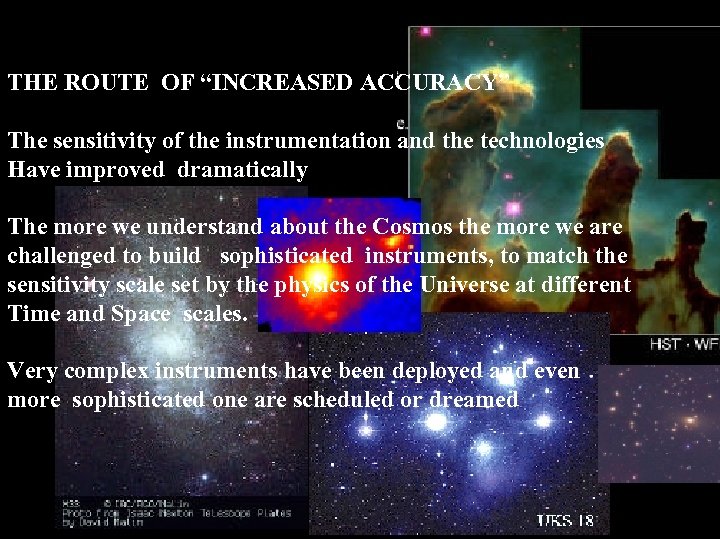
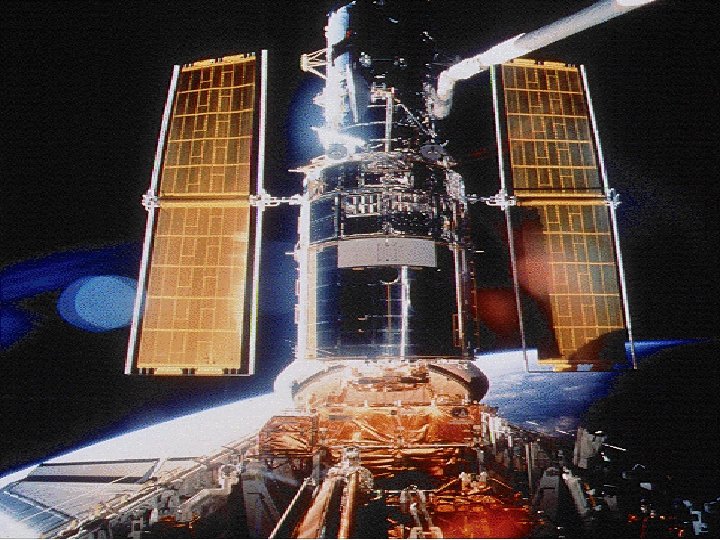
THE ROUTE OF “INCREASED ACCURACY” The sensitivity of the instrumentation and the technologies Have improved dramatically The more we understand about the Cosmos the more we are challenged to build sophisticated instruments, to match the sensitivity scale set by the physics of the Universe at different Time and Space scales. Very complex instruments have been deployed and even more sophisticated one are scheduled or dreamed
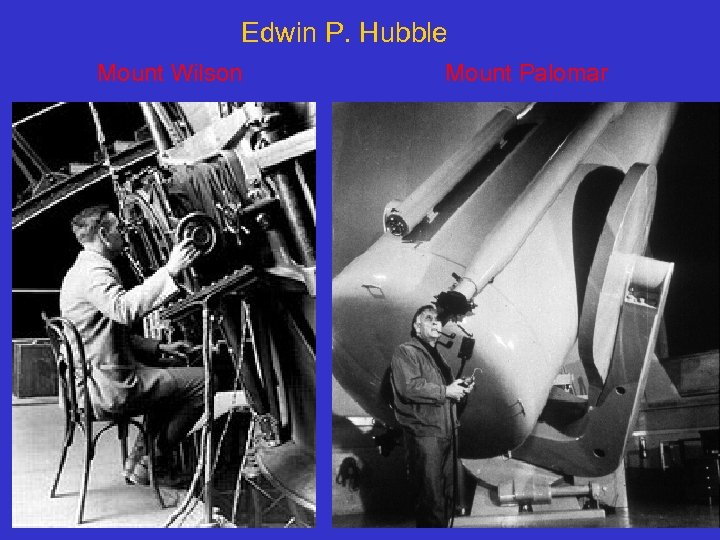
Edwin P. Hubble Mount Wilson Mount Palomar
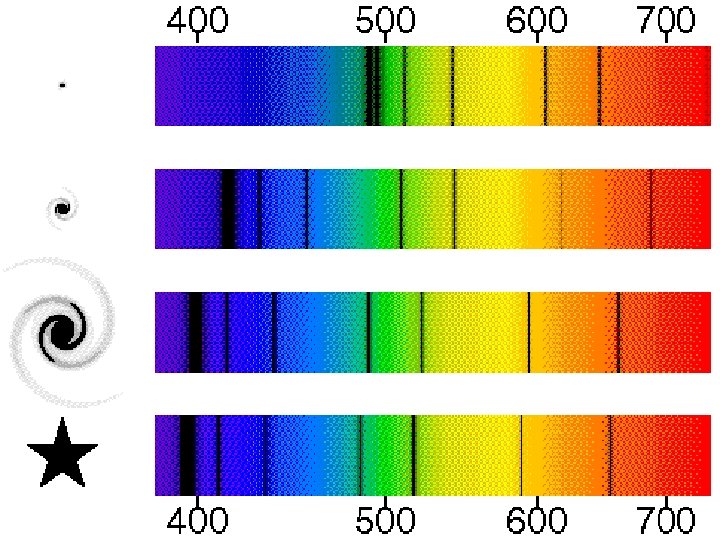
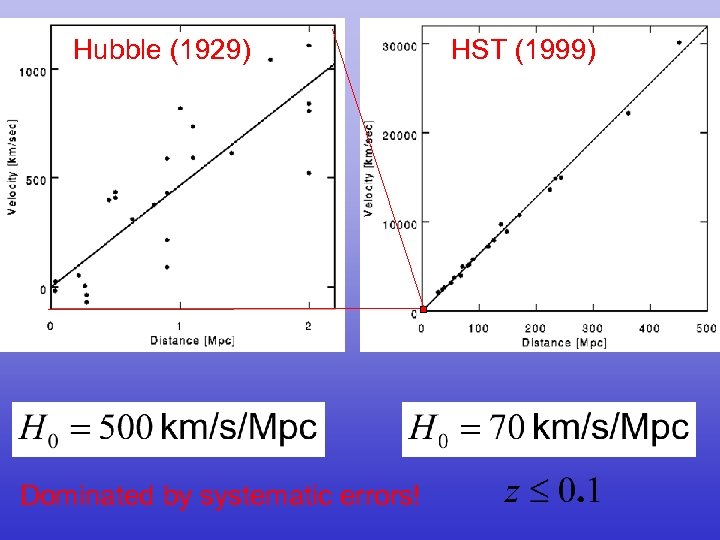
Hubble (1929) Dominated by systematic errors! HST (1999)
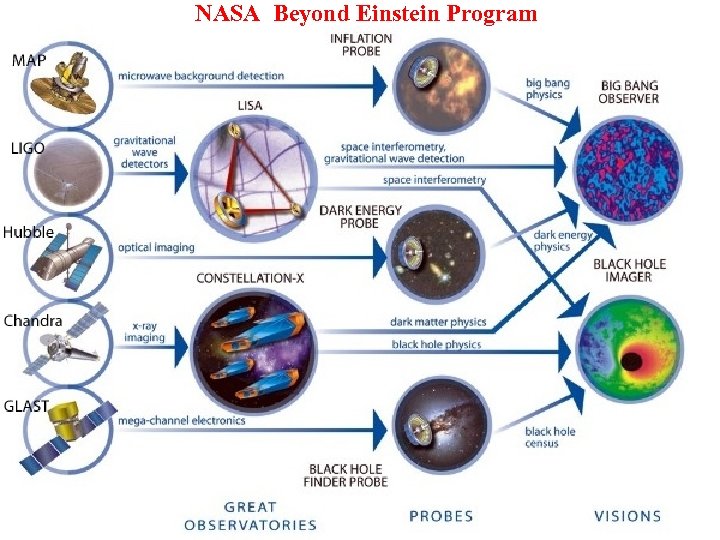
NASA Beyond Einstein Program
THE ROUTE OF “GETTING THERE FIRST” Not only large facilities, however, have a discovery potential, like in today HEP at accelerators Clever, small experiments, using new or “first time used in space” technologies continues to give rise to fantastic surprises like at the time of Van Allen
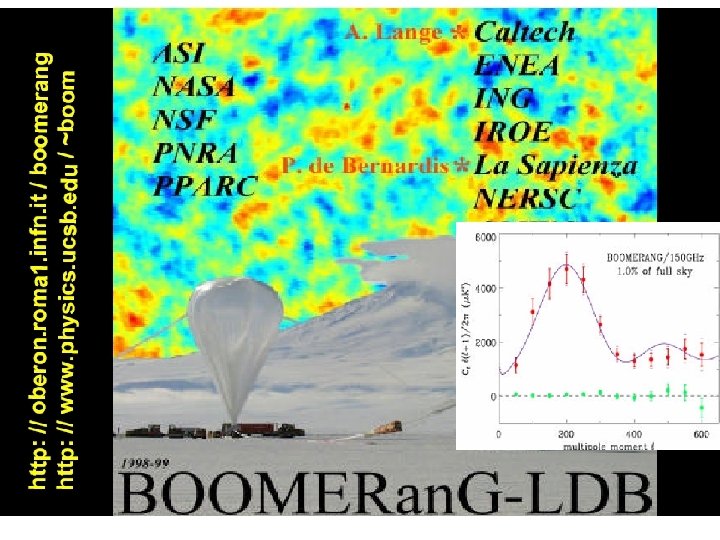
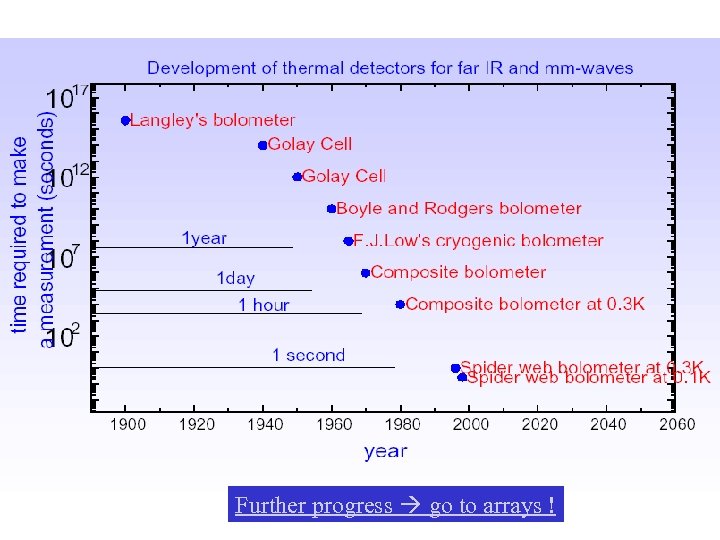
Further progress go to arrays !
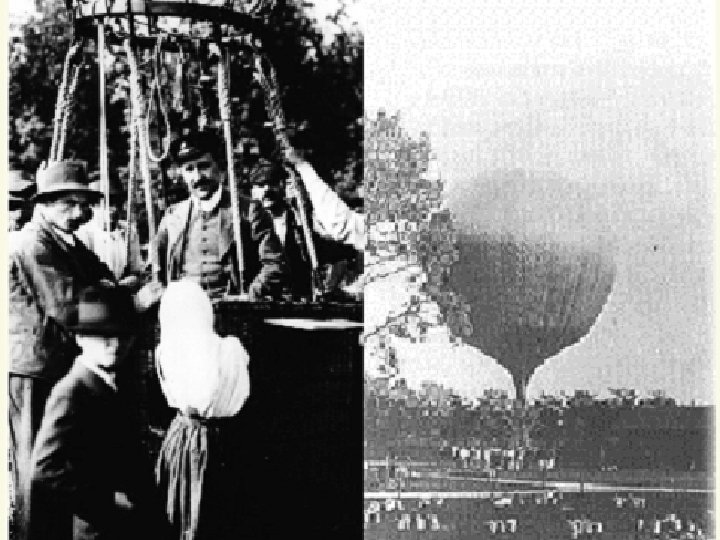
COSMIC RAYS
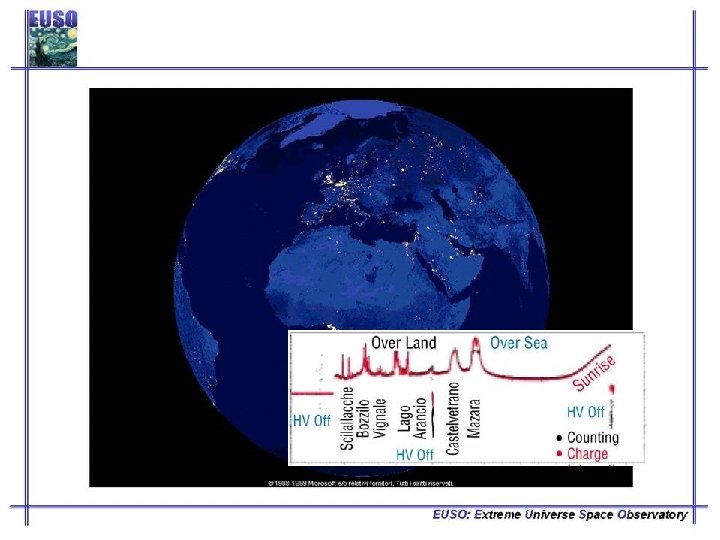
Baby EUSO
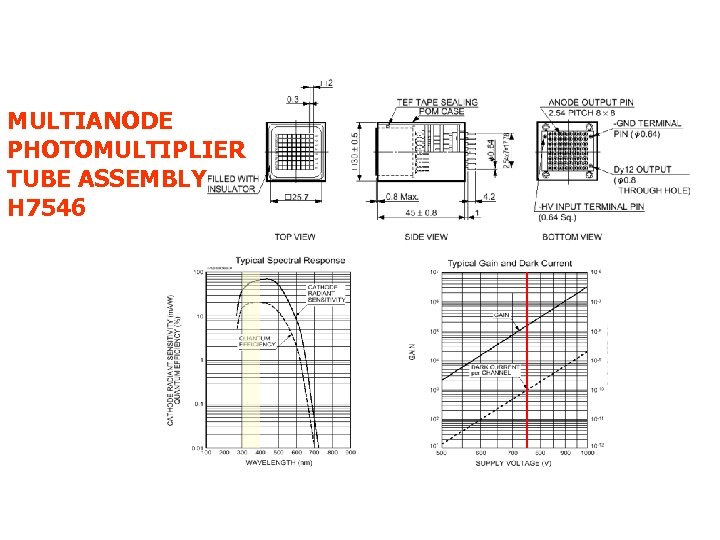
MULTIANODE PHOTOMULTIPLIER TUBE ASSEMBLY H 7546

MEGSAT 1 e 2
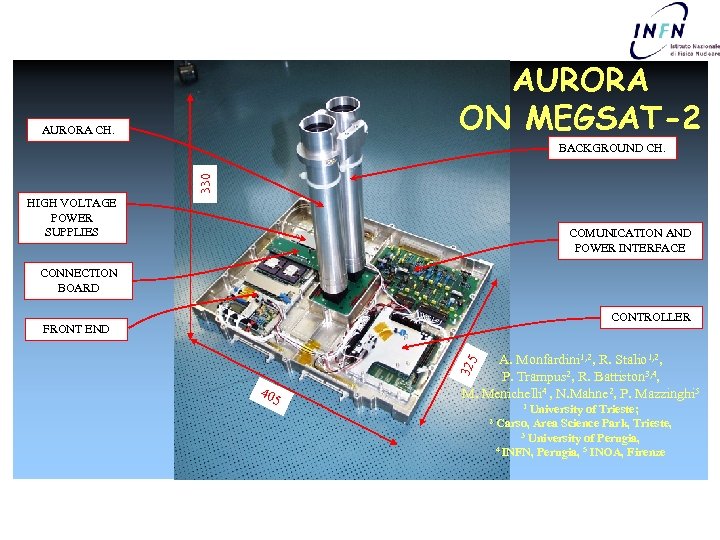
AURORA ON MEGSAT-2 AURORA CH. 330 BACKGROUND CH. HIGH VOLTAGE POWER SUPPLIES COMUNICATION AND POWER INTERFACE CONNECTION BOARD CONTROLLER FRONT END 325 A. Monfardini 1, 2, R. Stalio 1, 2, P. Trampus 2, R. Battiston 3, 4, M. Menichelli 4 , N. Mahne 2, P. Mazzinghi 5 405 University of Trieste; Carso, Area Science Park, Trieste, 3 University of Perugia, 4 INFN, Perugia, 5 INOA, Firenze 1 2
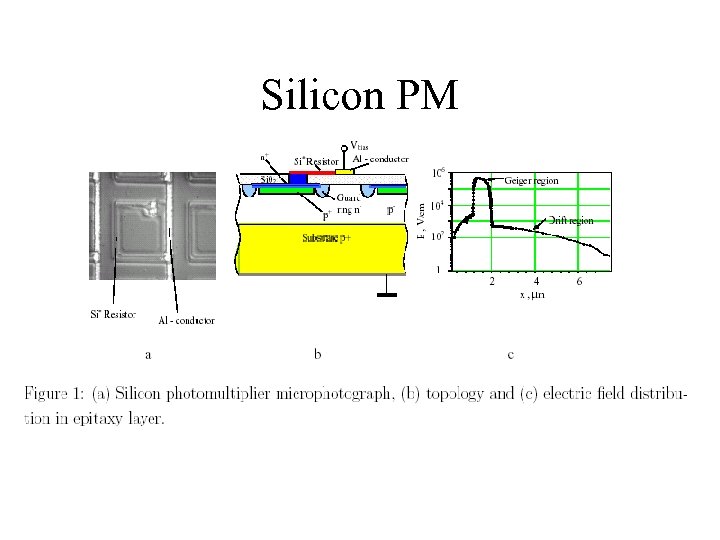
Silicon PM
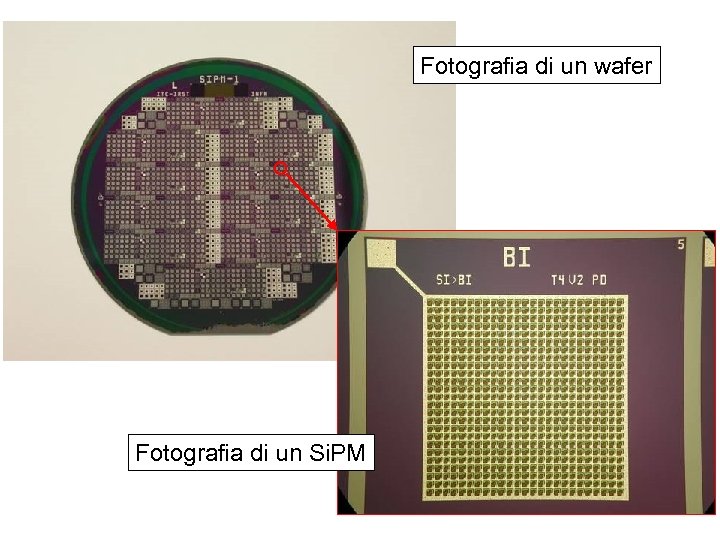
Fotografia di un wafer Fotografia di un Si. PM
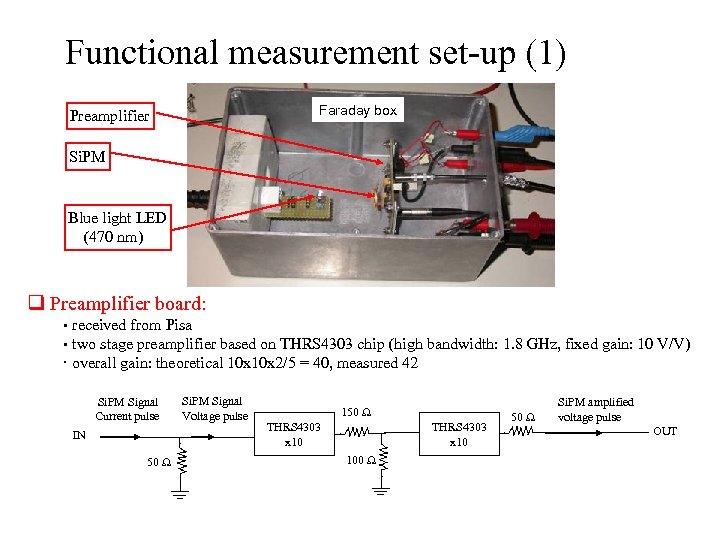
Functional measurement set-up (1) Faraday box Preamplifier Si. PM Blue light LED (470 nm) q Preamplifier board: received from Pisa § two stage preamplifier based on THRS 4303 chip (high bandwidth: 1. 8 GHz, fixed gain: 10 V/V) § overall gain: theoretical 10 x 2/5 = 40, measured 42 § Si. PM Signal Current pulse IN 50 Si. PM Signal Voltage pulse 150 THRS 4303 x 10 100 50 Si. PM amplified voltage pulse OUT
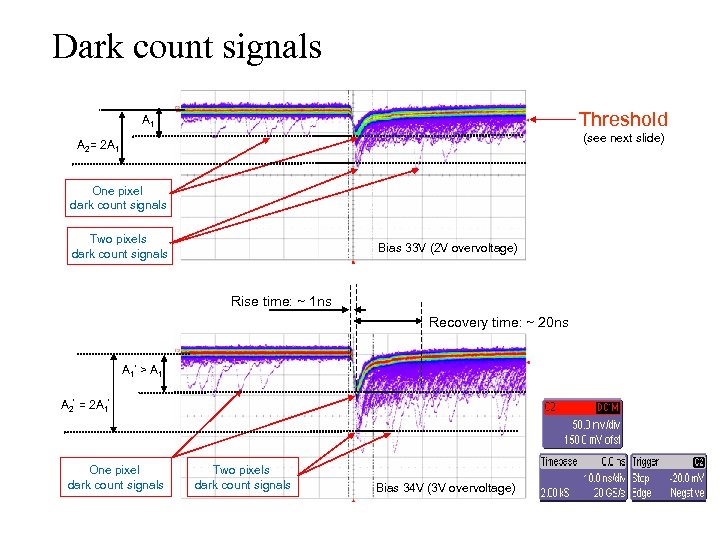
Dark count signals Threshold A 1 (see next slide) A 2= 2 A 1 One pixel dark count signals Two pixels dark count signals Bias 33 V (2 V overvoltage) Rise time: ~ 1 ns Recovery time: ~ 20 ns A 1’ > A 1 A 2’ = 2 A 1’ One pixel dark count signals Two pixels dark count signals Bias 34 V (3 V overvoltage)
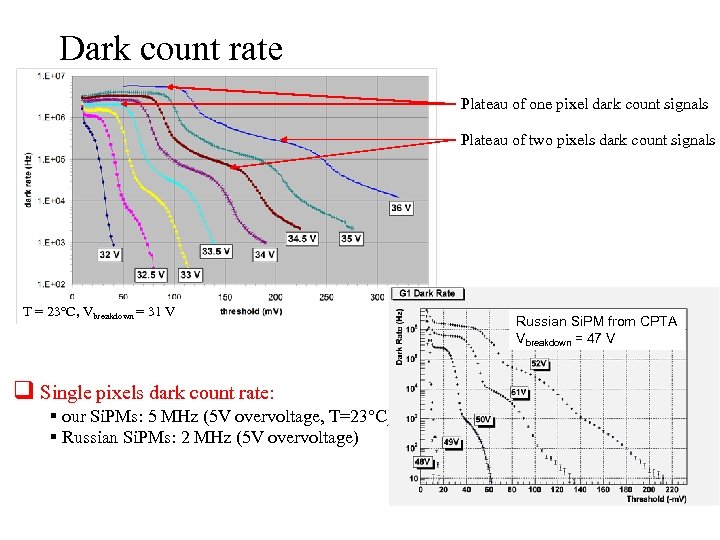
Dark count rate Plateau of one pixel dark count signals Plateau of two pixels dark count signals T = 23°C, Vbreakdown = 31 V q Single pixels dark count rate: § our Si. PMs: 5 MHz (5 V overvoltage, T=23°C) § Russian Si. PMs: 2 MHz (5 V overvoltage) Russian Si. PM from CPTA Vbreakdown = 47 V
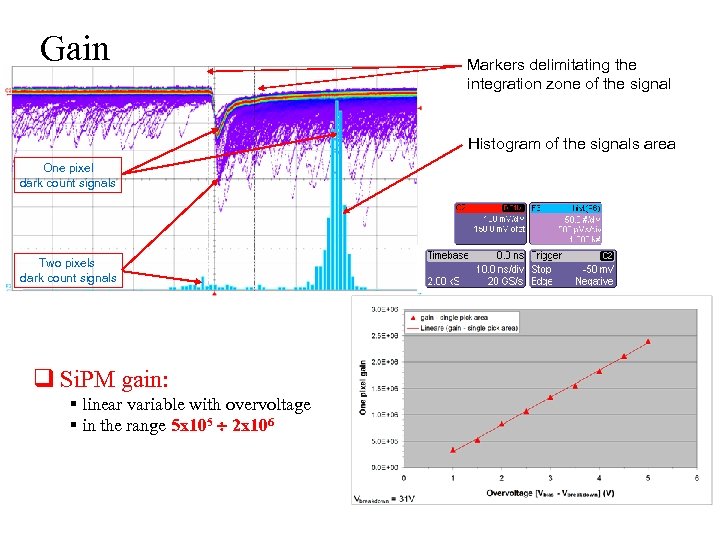
Gain Markers delimitating the integration zone of the signal Histogram of the signals area One pixel dark count signals Two pixels dark count signals q Si. PM gain: § linear variable with overvoltage § in the range 5 x 10⁵ 2 x 10⁶
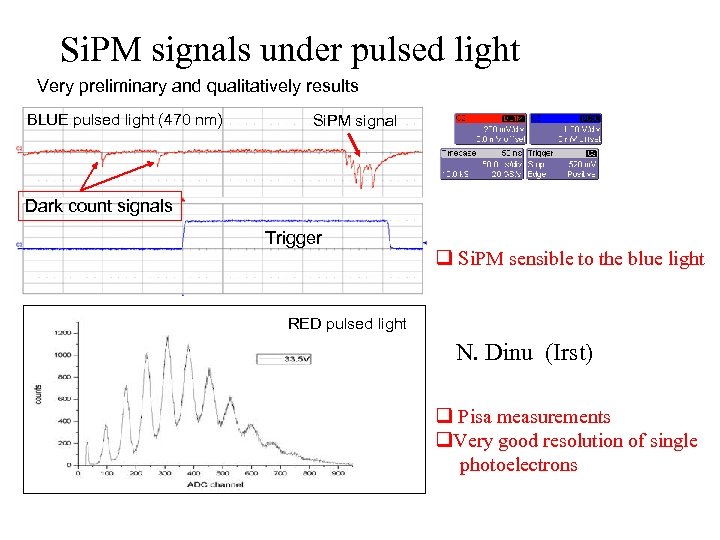
Si. PM signals under pulsed light Very preliminary and qualitatively results BLUE pulsed light (470 nm) Si. PM signal Dark count signals Trigger q Si. PM sensible to the blue light RED pulsed light N. Dinu (Irst) q Pisa measurements q. Very good resolution of single photoelectrons
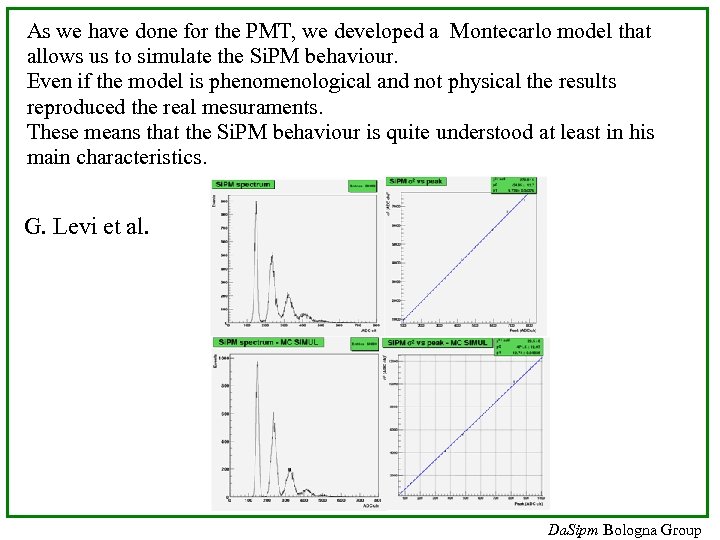
As we have done for the PMT, we developed a Montecarlo model that allows us to simulate the Si. PM behaviour. Even if the model is phenomenological and not physical the results reproduced the real mesuraments. These means that the Si. PM behaviour is quite understood at least in his main characteristics. G. Levi et al. Da. Sipm Bologna Group
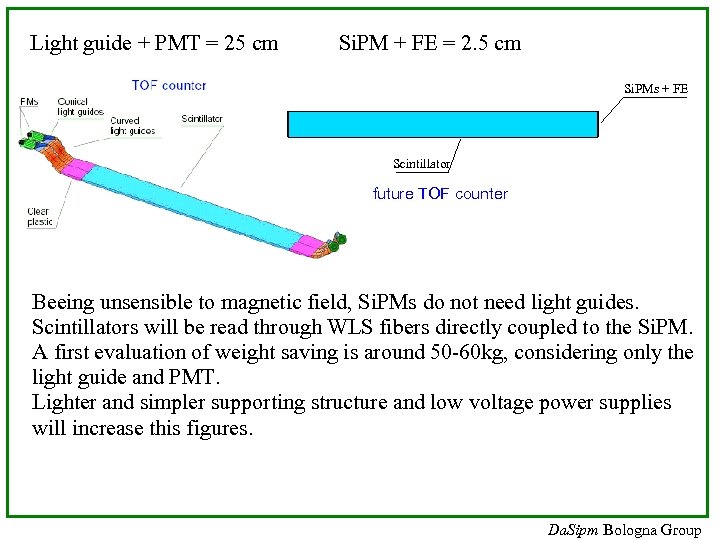
Light guide + PMT = 25 cm Si. PM + FE = 2. 5 cm Si. PMs + FE Scintillator future TOF counter Beeing unsensible to magnetic field, Si. PMs do not need light guides. Scintillators will be read through WLS fibers directly coupled to the Si. PM. A first evaluation of weight saving is around 50 -60 kg, considering only the light guide and PMT. Lighter and simpler supporting structure and low voltage power supplies will increase this figures. Da. Sipm Bologna Group
MEMS Space Telescope for UHECR Study (MEMSTEL) IL H. PARK (Ewha W. University, Seoul) Research Center for MEMS Space Telescope funded by Ministry of Science and Technology in Mar. 2006
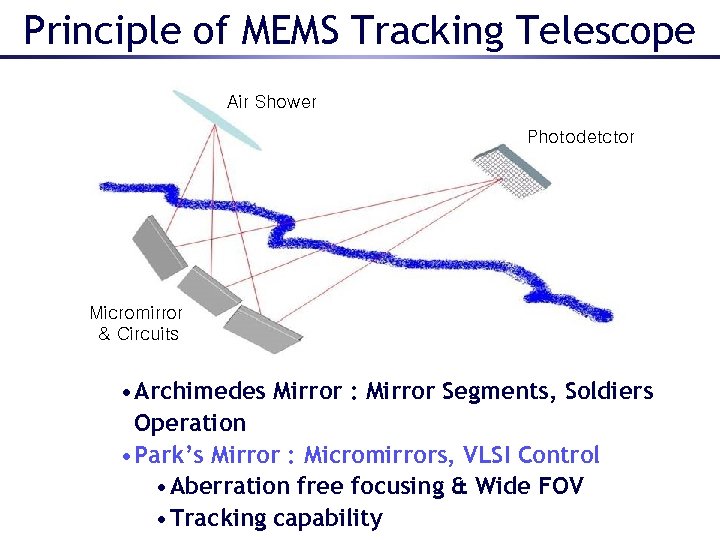
Principle of MEMS Tracking Telescope Air Shower Object Photodetector Photodetctor Micromirror VLSI & Circuits Micromirror • Archimedes Mirror : Mirror Segments, Soldiers Operation • Park’s Mirror : Micromirrors, VLSI Control • Aberration free focusing & Wide FOV • Tracking capability
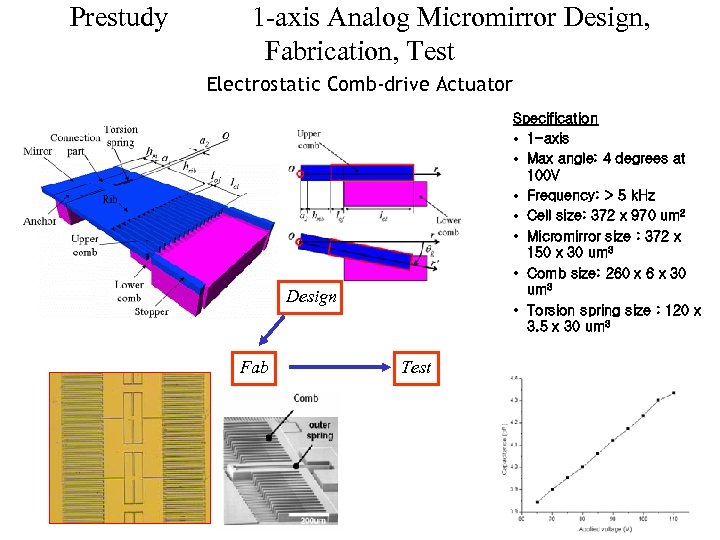
Prestudy 1 -axis Analog Micromirror Design, Fabrication, Test Electrostatic Comb-drive Actuator Specification • 1 -axis • Max angle: 4 degrees at 100 V • Frequency: > 5 k. Hz • Cell size: 372 x 970 um 2 • Micromirror size : 372 x 150 x 30 um 3 • Comb size: 260 x 6 x 30 um 3 • Torsion spring size : 120 x 3. 5 x 30 um 3 Design Fab Test
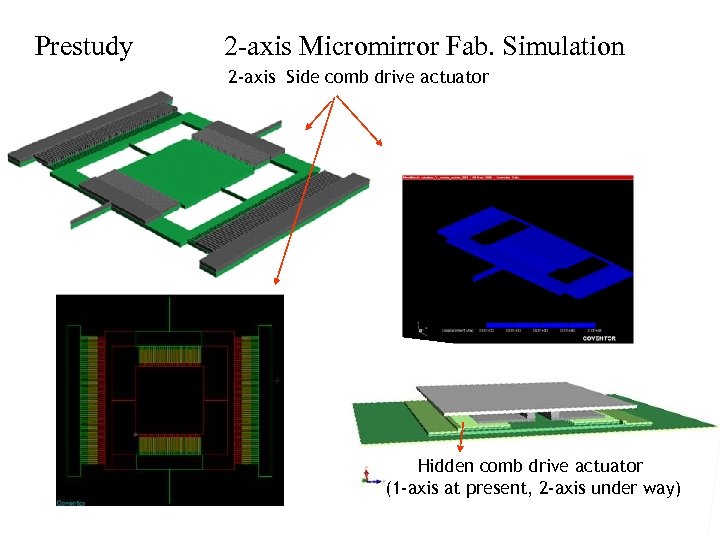
Prestudy 2 -axis Micromirror Fab. Simulation 2 -axis Side comb drive actuator Hidden comb drive actuator (1 -axis at present, 2 -axis under way)
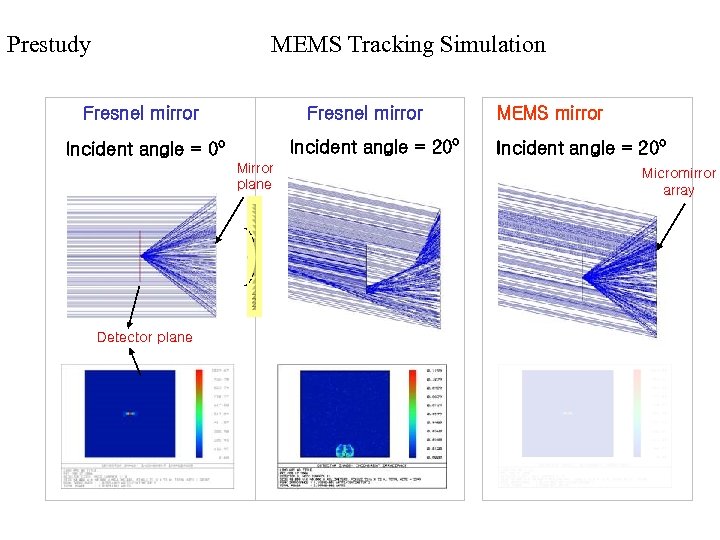
Prestudy MEMS Tracking Simulation Fresnel mirror Incident angle = 20 o Incident angle = 0 o Mirror plane Detector plane MEMS mirror Incident angle = 20 o Micromirror array
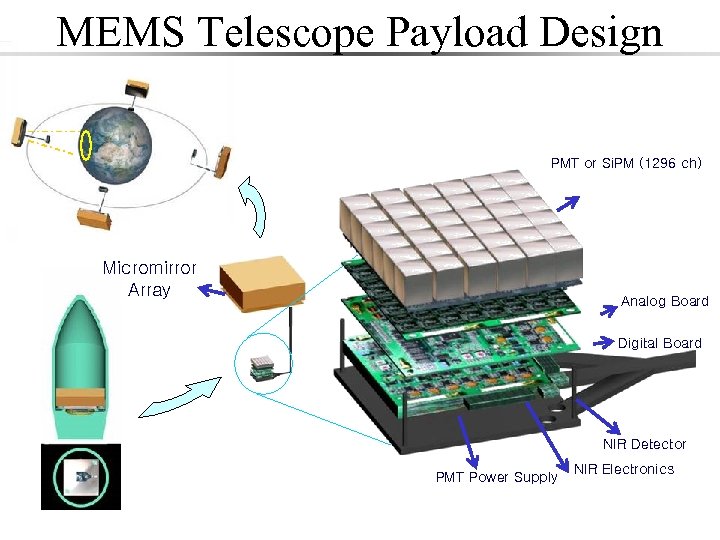
MEMS Telescope Payload Design PMT or Si. PM (1296 ch) Micromirror Array Analog Board Digital Board NIR Detector PMT Power Supply NIR Electronics
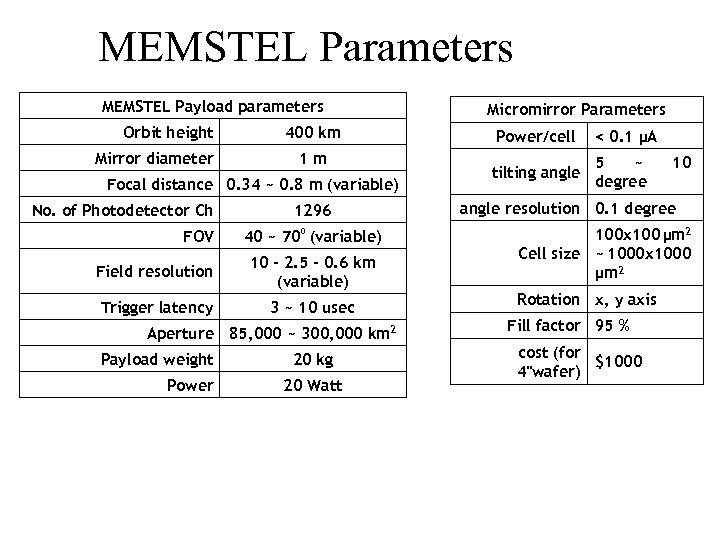
MEMSTEL Parameters MEMSTEL Payload parameters Orbit height Mirror diameter 400 km 1 m Focal distance 0. 34 ~ 0. 8 m (variable) No. of Photodetector Ch FOV 1296 40 ~ 70 o (variable) Field resolution 10 - 2. 5 - 0. 6 km (variable) Trigger latency 3 ~ 10 usec Aperture 85, 000 ~ 300, 000 km 2 Payload weight Power 20 kg 20 Watt Micromirror Parameters Power/cell < 0. 1 μA tilting angle 5 ~ degree 10 angle resolution 0. 1 degree 100 x 100 μm 2 Cell size ~ 1000 x 1000 μm 2 Rotation x, y axis Fill factor 95 % cost (for $1000 4"wafer)
High Energy Quantum Optics: Compton Gamma Detectors
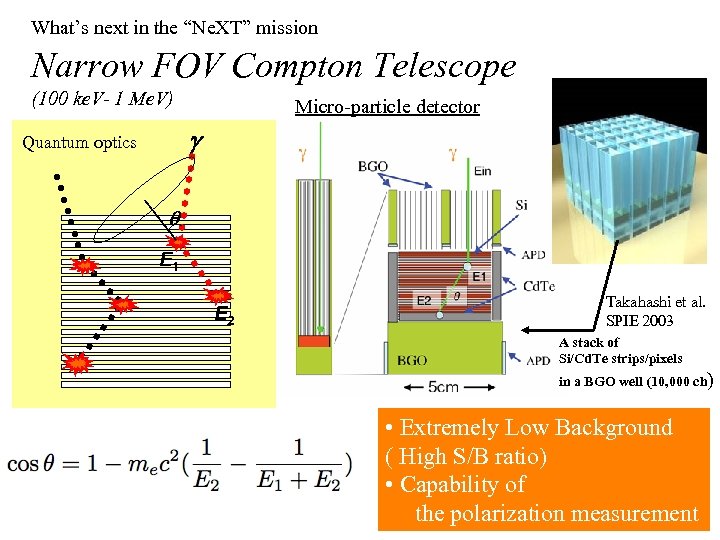
What’s next in the “Ne. XT” mission Narrow FOV Compton Telescope (100 ke. V- 1 Me. V) Micro-particle detector g Quantum optics q E 1 E 2 Takahashi et al. SPIE 2003 A stack of Si/Cd. Te strips/pixels in a BGO well (10, 000 ch) • Extremely Low Background ( High S/B ratio) • Capability of the polarization measurement
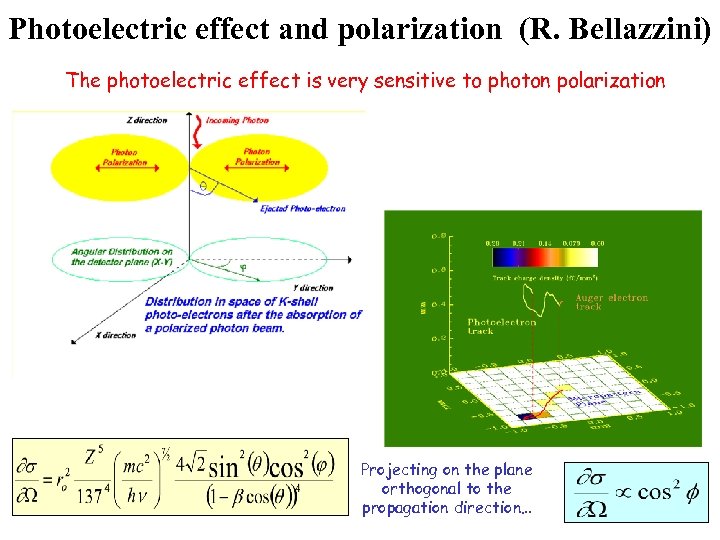
Photoelectric effect and polarization (R. Bellazzini) The photoelectric effect is very sensitive to photon polarization Projecting on the plane orthogonal to the propagation direction…
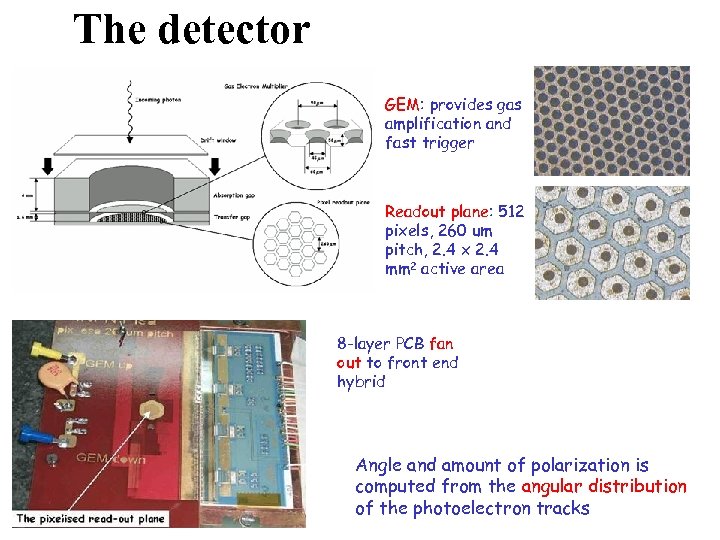
The detector GEM: provides gas amplification and fast trigger Readout plane: 512 pixels, 260 um pitch, 2. 4 x 2. 4 mm 2 active area 8 -layer PCB fan out to front end hybrid Angle and amount of polarization is computed from the angular distribution of the photoelectron tracks
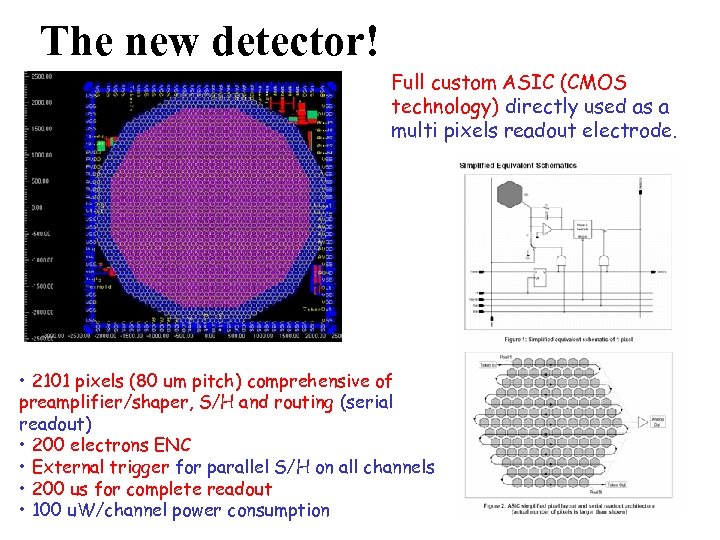
The new detector! Full custom ASIC (CMOS technology) directly used as a multi pixels readout electrode. • 2101 pixels (80 um pitch) comprehensive of preamplifier/shaper, S/H and routing (serial readout) • 200 electrons ENC • External trigger for parallel S/H on all channels • 200 us for complete readout • 100 u. W/channel power consumption
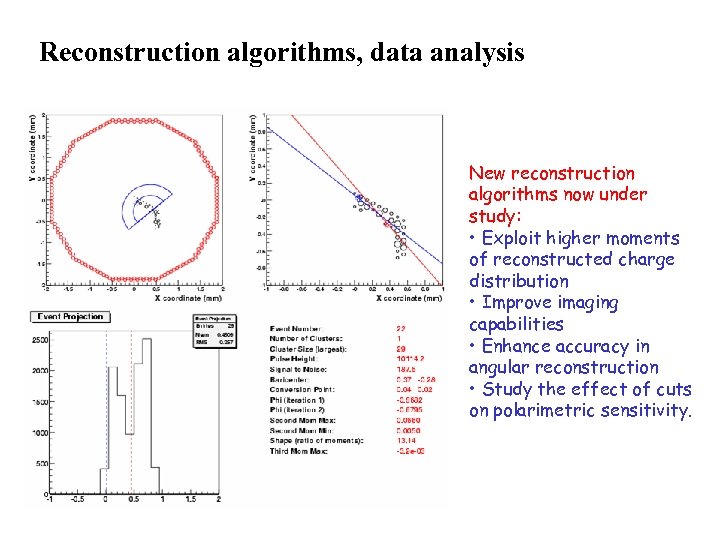
Reconstruction algorithms, data analysis New reconstruction algorithms now under study: • Exploit higher moments of reconstructed charge distribution • Improve imaging capabilities • Enhance accuracy in angular reconstruction • Study the effect of cuts on polarimetric sensitivity.
GRAVITATION
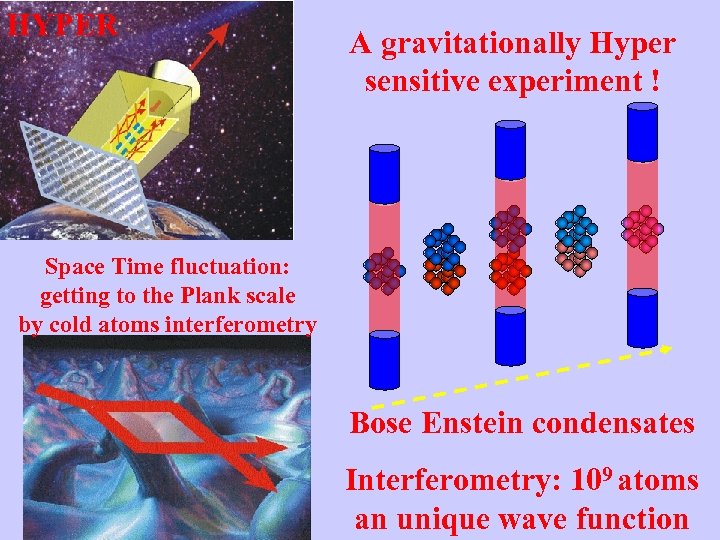
HYPER A gravitationally Hyper sensitive experiment ! Space Time fluctuation: getting to the Plank scale by cold atoms interferometry Bose Enstein condensates Interferometry: 109 atoms an unique wave function
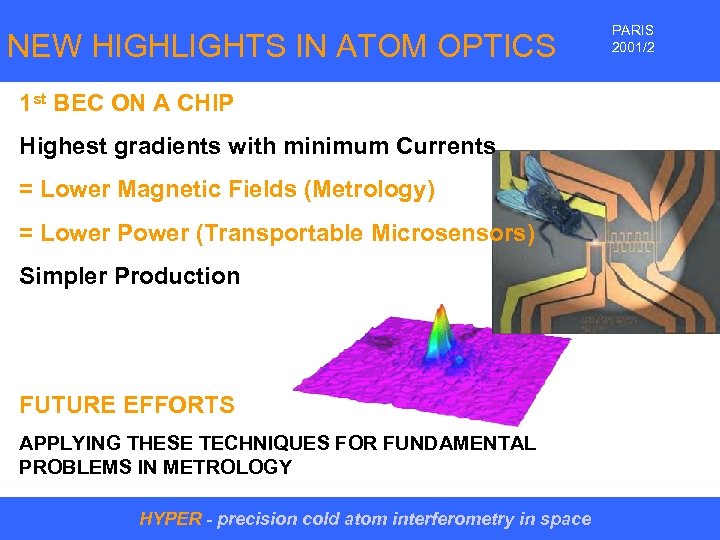
NEW HIGHLIGHTS IN ATOM OPTICS 1 st BEC ON A CHIP Highest gradients with minimum Currents = Lower Magnetic Fields (Metrology) = Lower Power (Transportable Microsensors) Simpler Production FUTURE EFFORTS APPLYING THESE TECHNIQUES FOR FUNDAMENTAL PROBLEMS IN METROLOGY HYPER - precision cold atom interferometry in space PARIS 2001/2
Who can build a cheap micro/nano satellite ? Universtities + Research Centers +Small Hightech industries Best example: University of Surrey (UK) Most impressive example : China Dh. F CAST
• • • PHD TOPICS WITHIN SSC SMALL SATELLITE SAR CHIPSAT FORMATION FLYING. COST-EFFECTIVE NAVIGATION AND RANGING FOR LUNAR AND INNER PLANETS MISSIONS IR SENSORS HYPERSPECTRAL IMAGERY SATELLITE AUTONOMY MULTI_USER ACCESS TO SATELLITES DEBRIS MITIGATION RENDEZVOUS/DOCKING LUNAR LANDER & MARTIAN HELICOPTERS
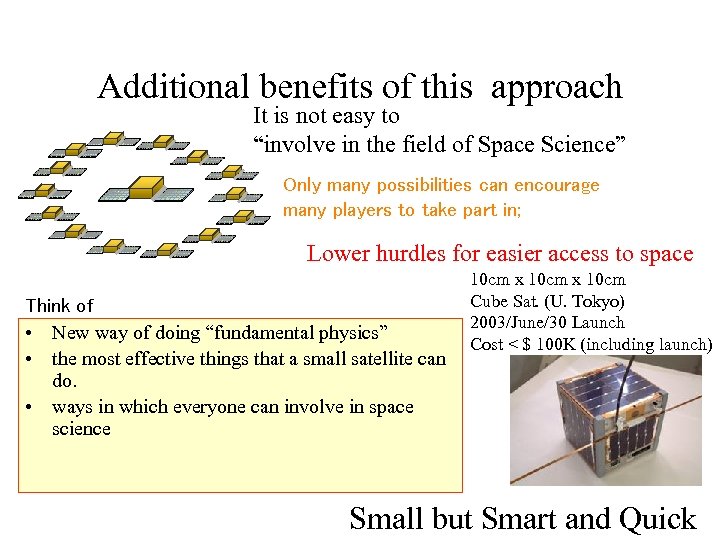
Additional benefits of this approach It is not easy to “involve in the field of Space Science” Only many possibilities can encourage many players to take part in; Lower hurdles for easier access to space Think of • New way of doing “fundamental physics” • the most effective things that a small satellite can do. • ways in which everyone can involve in space science 10 cm x 10 cm Cube Sat. (U. Tokyo) 2003/June/30 Launch Cost < $ 100 K (including launch) Small but Smart and Quick
Conclusion • The universe is the current frontier for new exciting physics • Space is a privileged reference frame to study the universe • Very large, powerful facilities will bring us to new frontiers in knowledge • Small satellites, as intermediate steps to reach the most ambitious goal set by major satellites, both testing new technologies and educating a new generation of laboratory oriented astroparticle physicsts ……and hopefully bringing us some big surprises
Скачать презентацию Technologies for microsatellites Roberto Battiston Università and INFN
ead1331e23f463175883395d48ad8d09.ppt