 Скачать презентацию Technion Israel Institute of Technology Computer Networks Laboratory
b27a6f72b8a8932f28f47bb276b6d555.ppt
- Количество слайдов: 20



Technion –Israel Institute of Technology Computer Networks Laboratory & Digital laboratory Real Time Ethernet Semester Winter 2001 Students: Shay Auster & Hagit Chen Supervisor: Vitali Suchin
• Basic Ethernet Simulation • Analytic Analysis • Basic Ethernet Simulation Results • Real-Time Ethernet Simulation • Analytic Analysis • Real-Time Ethernet Simulation Results • What Next ?
Purposes of Simulation • Compare and evaluate new system (protocol) • Actual experimentation with the system is infeasible or cost ineffective
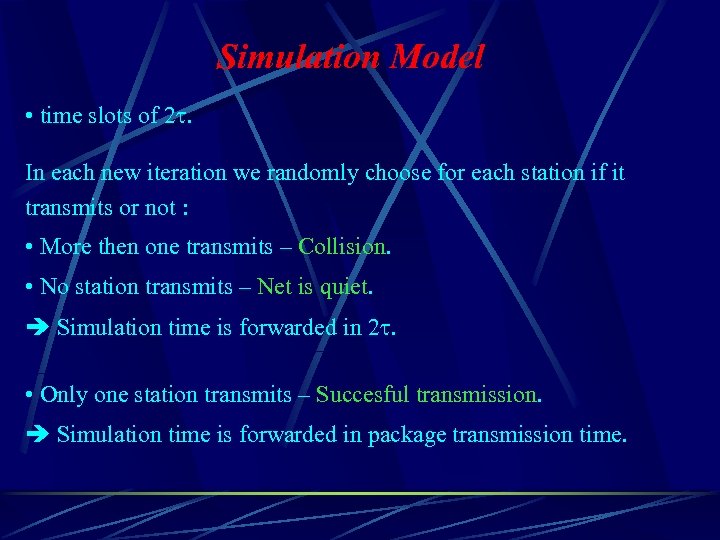
Simulation Model • time slots of 2. In each new iteration we randomly choose for each station if it transmits or not : • More then one transmits – Collision. • No station transmits – Net is quiet. Simulation time is forwarded in 2. • Only one station transmits – Succesful transmission. Simulation time is forwarded in package transmission time.
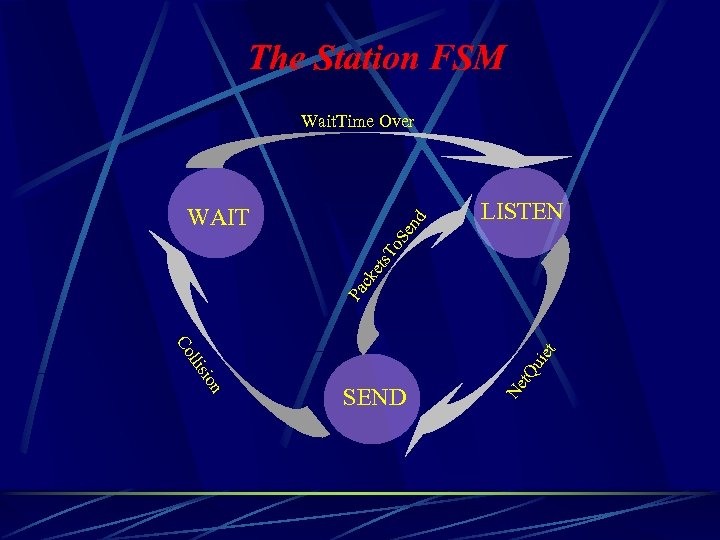
The Station FSM Wait. Time Over LISTEN Pa c ke ts. T o. S en d WAIT ion Ne t. Q llis uie t Co SEND
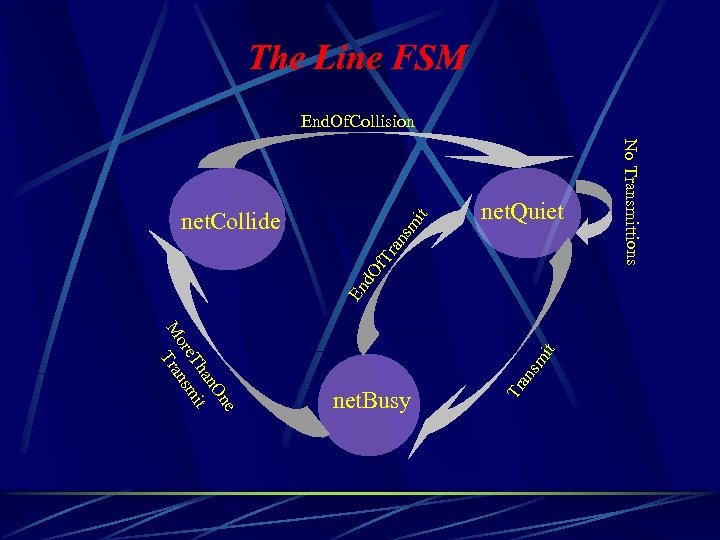
The Line FSM End. Of. Collision it sm sm i an net. Busy Tr e On an Th mit ore ns M Tra t En d. O f. T ran net. Quiet No Transmittions net. Collide
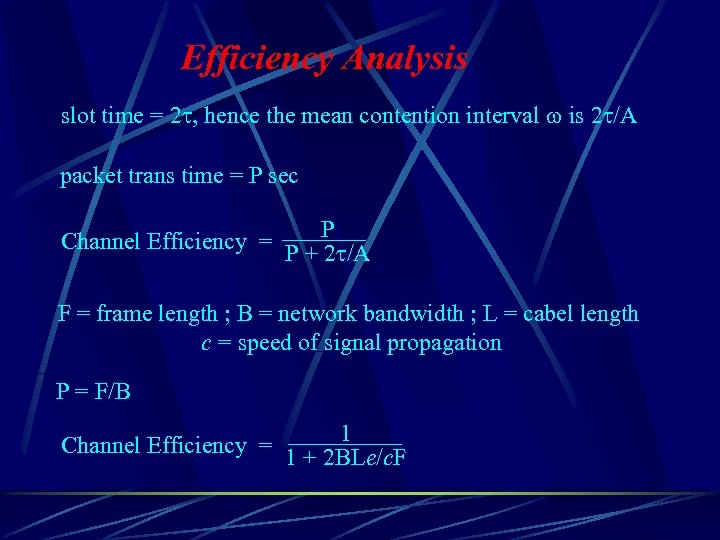
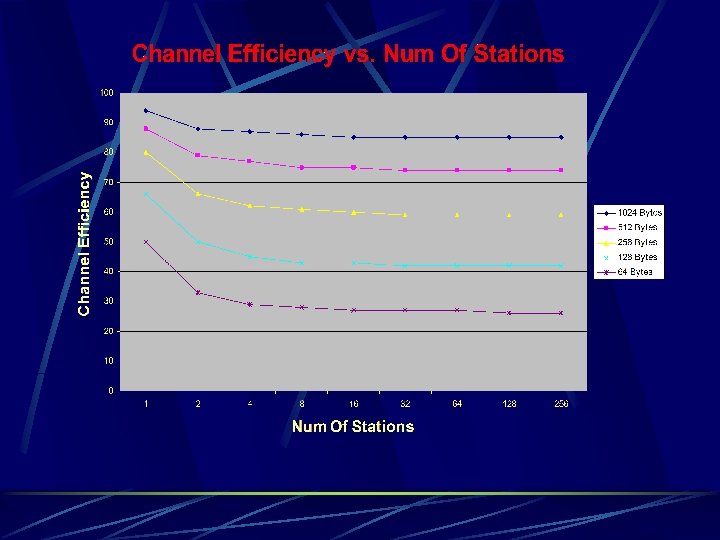
Efficiency Analysis slot time = 2 , hence the mean contention interval is 2 /A packet trans time = P sec P Channel Efficiency = P + 2 /A F = frame length ; B = network bandwidth ; L = cabel length c = speed of signal propagation P = F/B Channel Efficiency = 1 1 + 2 BLe/c. F
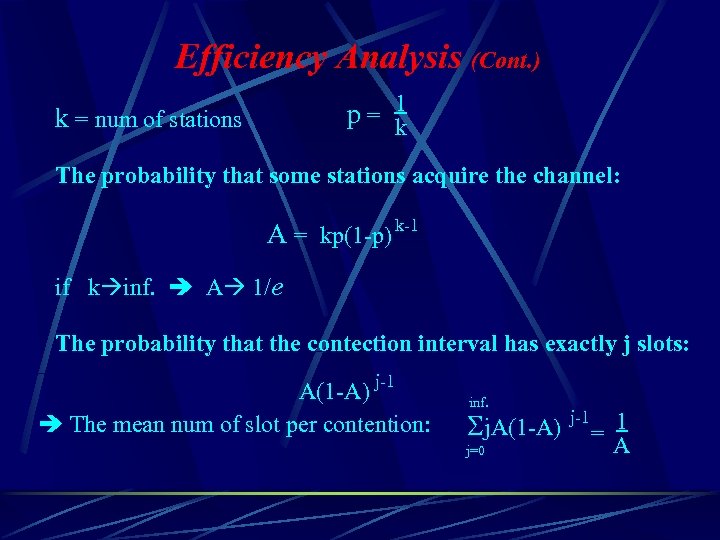
Efficiency Analysis (Cont. ) p = 1 k k = num of stations The probability that some stations acquire the channel: A = kp(1 -p) k-1 if k inf. A 1/e The probability that the contection interval has exactly j slots: A(1 -A) j-1 The mean num of slot per contention: inf. j. A(1 -A) j-1 = 1 j=0 A
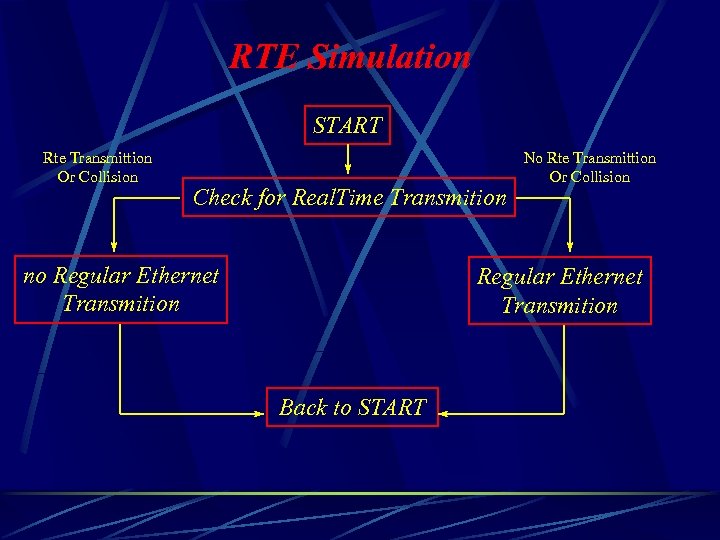
RTE Simulation START Rte Transmittion Or Collision Check for Real. Time Transmition no Regular Ethernet Transmition No Rte Transmittion Or Collision Regular Ethernet Transmition Back to START
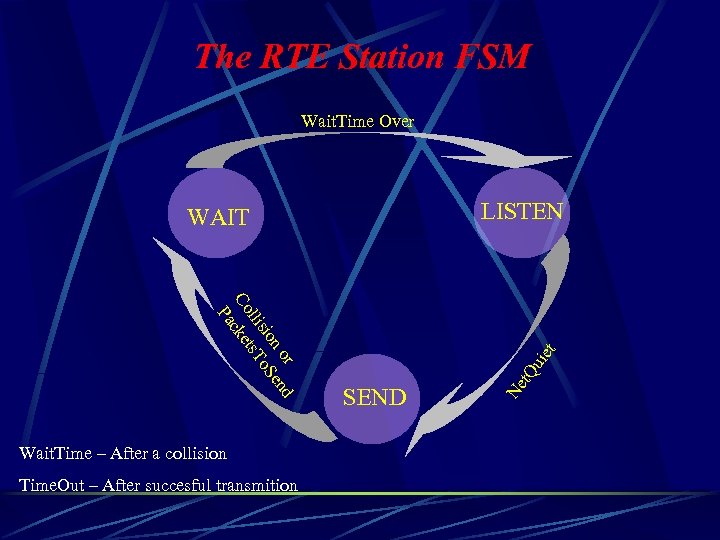
The RTE Station FSM Wait. Time Over LISTEN Time. Out – After succesful transmition uie SEND Ne t. Q r d n o en sio o. S lli ts. T Co cke Pa Wait. Time – After a collision t WAIT
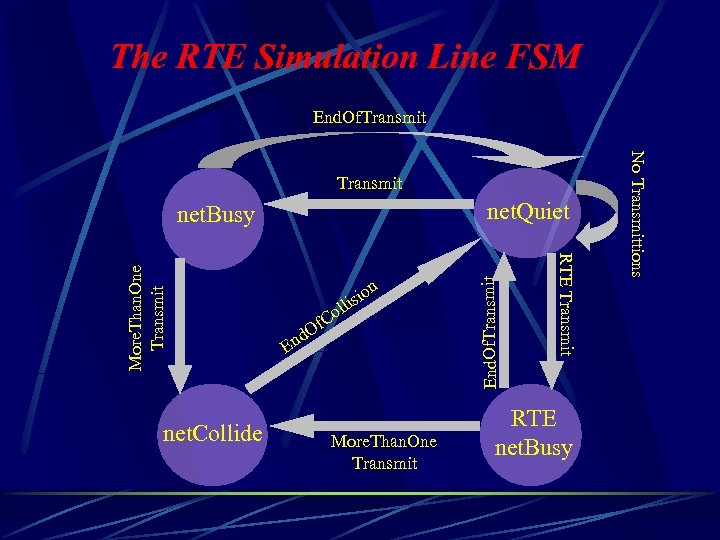
The RTE Simulation Line FSM End. Of. Transmit More. Than. One Transmit f O nd E More. Than. One Transmit RTE Transmit net. Collide n io lis l Co End. Of. Transmit net. Quiet net. Busy RTE net. Busy No Transmittions Transmit
Analytic Analysis Assumptions • All RTE Stations are used for the same application • RTE max packet size is 1500 Bytes • Time. Out of RTE station varies according to the application
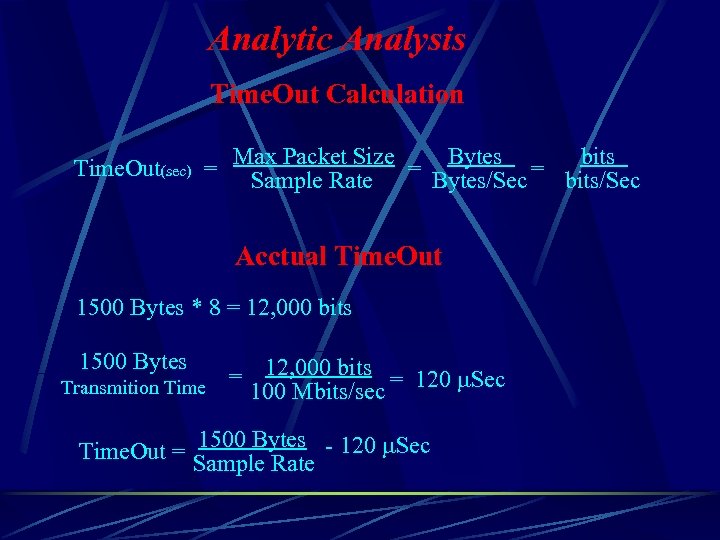
Analytic Analysis Time. Out Calculation Time. Out(sec) = Max Packet Size = Bytes = bits Sample Rate Bytes/Sec bits/Sec Acctual Time. Out 1500 Bytes * 8 = 12, 000 bits 1500 Bytes = 12, 000 bits = 120 Sec Transmition Time 100 Mbits/sec Time. Out = 1500 Bytes - 120 Sec Sample Rate
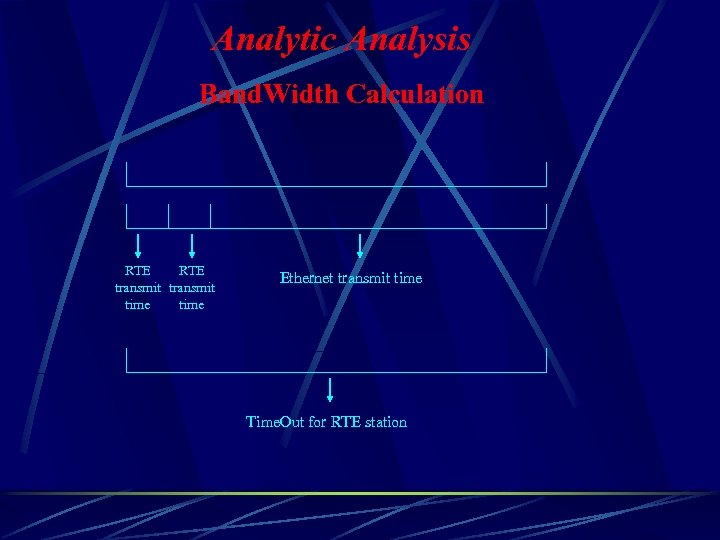
Analytic Analysis Band. Width Calculation RTE transmit time Ethernet transmit time Time. Out for RTE station
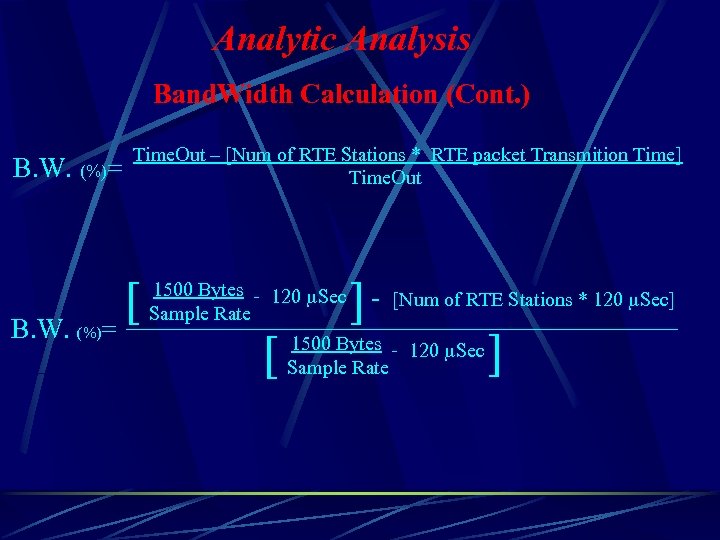
Analytic Analysis Band. Width Calculation (Cont. ) Time. Out – [Num of RTE Stations * RTE packet Transmition Time] B. W. (%)= Time. Out B. W. (%) [ = ] - [Num of RTE Stations * 120 Sec] 1500 Bytes - 120 Sec ] [ Sample Rate 1500 Bytes - 120 Sec Sample Rate
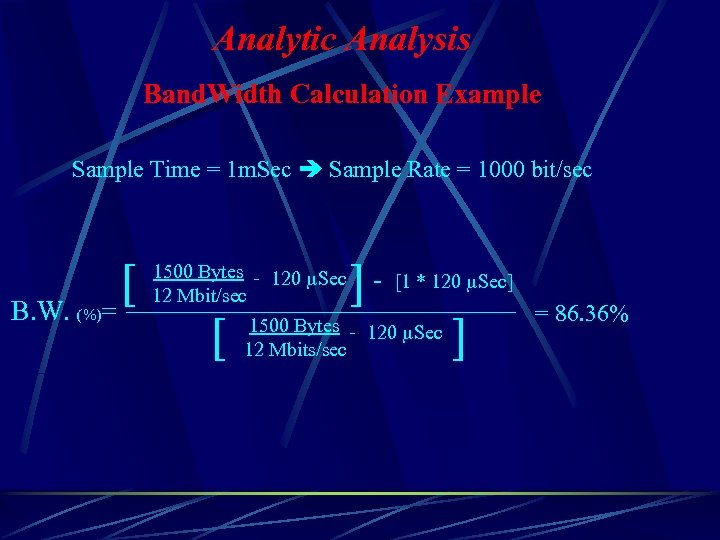
Analytic Analysis Band. Width Calculation Example Sample Time = 1 m. Sec Sample Rate = 1000 bit/sec B. W. (%) [ = ] - [1 * 120 Sec] 1500 Bytes - 120 Sec [ 12 Mbits/sec ] 1500 Bytes - 120 Sec 12 Mbit/sec = 86. 36%
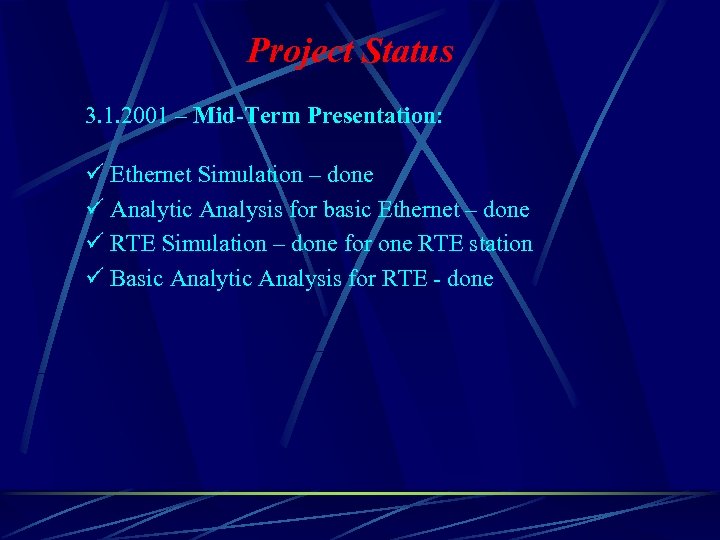
Project Status 3. 1. 2001 – Mid-Term Presentation: ü Ethernet Simulation – done ü Analytic Analysis for basic Ethernet – done ü RTE Simulation – done for one RTE station ü Basic Analytic Analysis for RTE - done
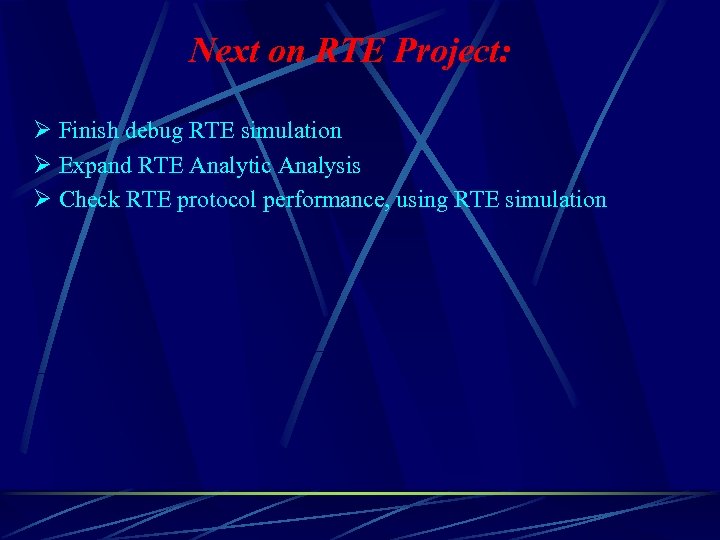
Next on RTE Project: Ø Finish debug RTE simulation Ø Expand RTE Analytic Analysis Ø Check RTE protocol performance, using RTE simulation
Скачать презентацию Technion Israel Institute of Technology Computer Networks Laboratory
b27a6f72b8a8932f28f47bb276b6d555.ppt