


 Скачать презентацию Technical Session 4 Tech Transfer RED and CDM
394837567f6f021e74b8ea01b02329b4.ppt
- Количество слайдов: 33
 Technical Session 4 Tech Transfer; RED and CDM David Lesolle 1
 History of the TT 2
![TT is very old! [TT] 13/CP 1 R [Dev. & TT] NAI report (by](https://present5.com/presentation/394837567f6f021e74b8ea01b02329b4/image-3.jpg "TT is very old! [TT] 13/CP 1 R [Dev. & TT] NAI report (by") TT is very old! [TT] 13/CP 1 R [Dev. & TT] NAI report (by 31/12/96) on Initial Tech. Needs 7/CP 2 R SBI funding for Tech. Info. Centers & support national/regional centers 9/CP 3 A/E Strengthen capacities, AI to provide financial resources needed by NAI for EE, Adaptation 4/CP 4 Status of consultative process 9/CP 5 D EGTT established, GEF nominated operational entity 4/CP 7 D Cross blend TT and Capacity Building 10/CP 8 N [in GEF report] “Reducing the long term costs of low GHG emitting techs 3/CP 9 D/E Joint research and development programme/projects between AII & NAI; TT Clear to carryout “Cost implications of strengthening of Tech Centers 6/CP 10 Future role of the EGTT 6/CP 11 3
TT is very old! [TT] 13/CP 1 R [Dev. & TT] NAI report (by 31/12/96) on Initial Tech. Needs 7/CP 2 R SBI funding for Tech. Info. Centers & support national/regional centers 9/CP 3 A/E Strengthen capacities, AI to provide financial resources needed by NAI for EE, Adaptation 4/CP 4 Status of consultative process 9/CP 5 D EGTT established, GEF nominated operational entity 4/CP 7 D Cross blend TT and Capacity Building 10/CP 8 N [in GEF report] “Reducing the long term costs of low GHG emitting techs 3/CP 9 D/E Joint research and development programme/projects between AII & NAI; TT Clear to carryout “Cost implications of strengthening of Tech Centers 6/CP 10 Future role of the EGTT 6/CP 11 3
 Important tech. assessment considerations under UNFCCC Why Technology Transfer? • • Opportunities for Sustainable Development GHG Emission Reduction Environmental Benefit Socio-economic benefits 4
 Elements of Technological Change Linear and Realistic Model of Technological “Skills” Transfer • Invention - discovery; creation of knowledge; new prototypes • Innovation - creation of a commercial product or process • Adoption - deployment and use of the new technology • Diffusion - increasing adoption and use of the technology 5
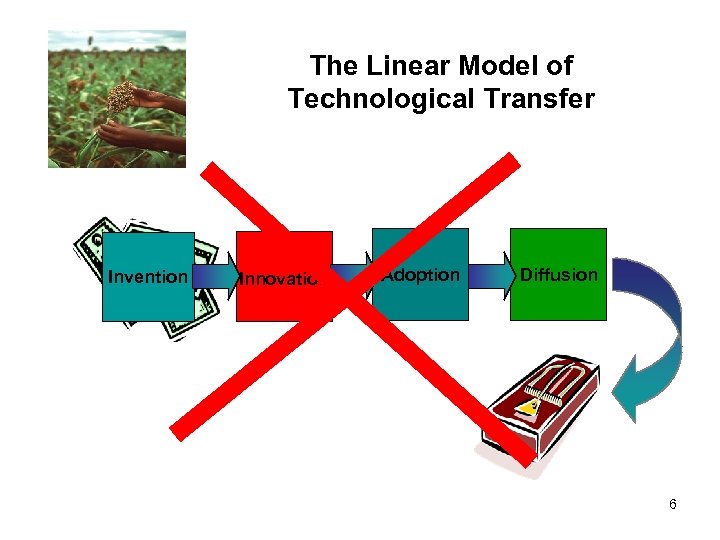 The Linear Model of Technological Transfer Invention Innovation Adoption Diffusion 6
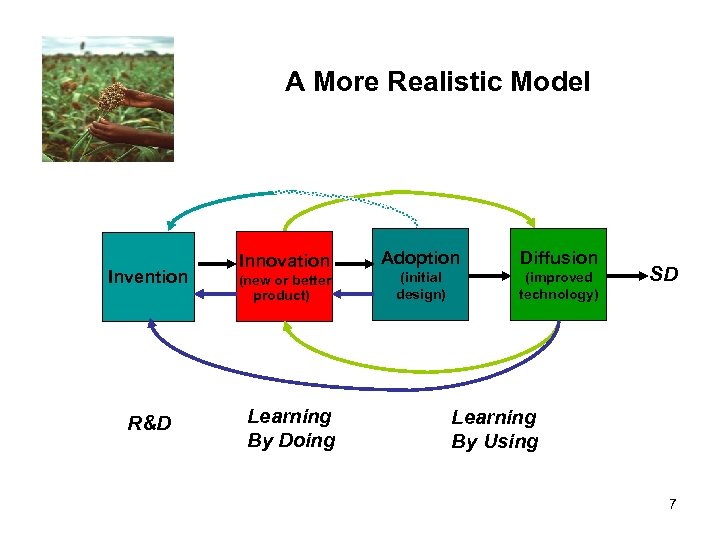 A More Realistic Model Invention R&D Innovation (new or better product) Learning By Doing Adoption Diffusion (initial design) (improved technology) SD Learning By Using 7
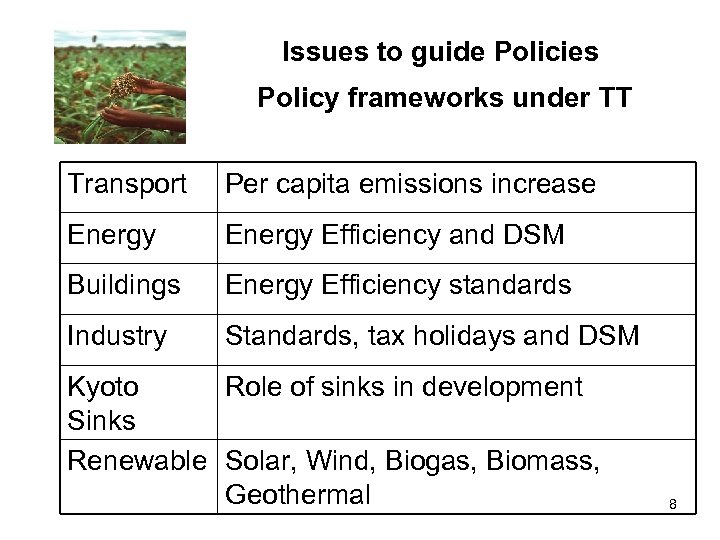 Issues to guide Policies Policy frameworks under TT Transport Per capita emissions increase Energy Efficiency and DSM Buildings Energy Efficiency standards Industry Standards, tax holidays and DSM Kyoto Role of sinks in development Sinks Renewable Solar, Wind, Biogas, Biomass, Geothermal 8
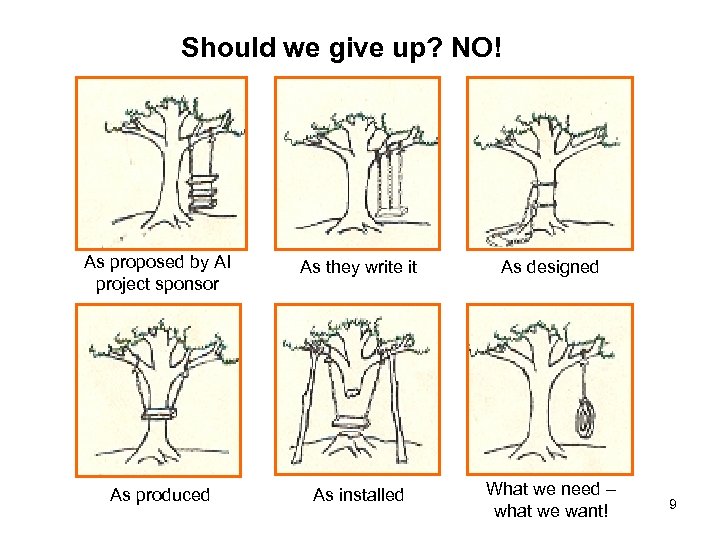 Should we give up? NO! As proposed by AI project sponsor As they write it As designed As produced As installed What we need – what we want! 9
 The way forward 10
 WORK ON HAND: SBSTA Agenda 5. Development and transfer of technologies aka Technology Transfer • SBSTA requested by decision 5/CP. 12, to recommend a draft decision for adoption by the COP at its thirteenth session. • SBSTA, in collaboration with the Expert Group on Technology Transfer (EGTT), organized a workshop (Bangkok, Thailand, from 27 to 29 June 2007) to share best practices with Parties not included in Annex I to the Convention working on technology needs assessments (TNAs) and to prepare a paper on good practices in conducting TNAs. • The EGTT will convene its twelfth meeting from 29 to 30 November 2007 in Bali, Indonesia. The report on the implementation of the programme of work of the EGTT for 2007 is contained in document FCCC/SBSTA/2007/13. 11
 STRATEGY: SBSTA Agenda 5. Development and transfer of technologies aka Technology Transfer • Elevate EGTT to “Tech Dev & Transfer Board” – Makeup; Term of Reference; Funding • Funding for the ‘new’ Programme and activities – Look at Bali-Pozna-Copenhagen…Post 2012! – How do we ensure funds are available • Go for legally binding instruments on TT and include Adaptation Technology (China is on your side!)… – Parameters, principles (fairness, objectivity, inclusiveness… – Key elements (Tech & Adaptation, financing, response measures (PAMs may be Deal Brokers!) – The process (forum, timeframes, merge the two tracks (KP/UNFCCC) 12
 Thank you Questions ? ? 13
 History of the RED 14
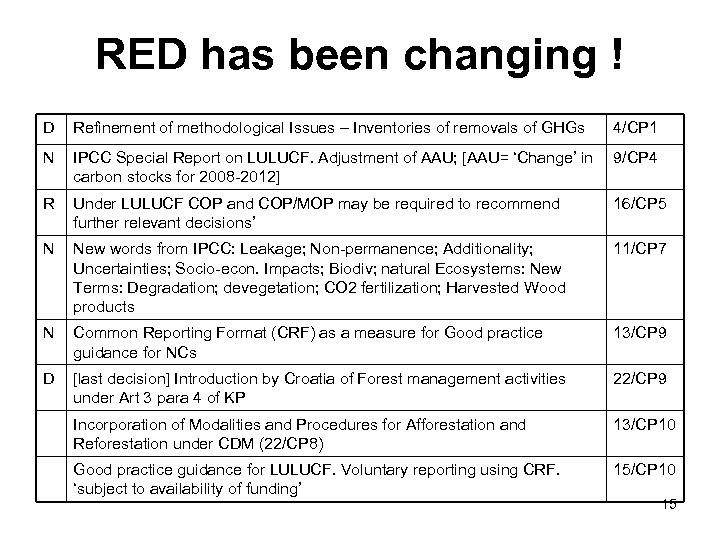 RED has been changing ! D Refinement of methodological Issues – Inventories of removals of GHGs 4/CP 1 N IPCC Special Report on LULUCF. Adjustment of AAU; [AAU= ‘Change’ in carbon stocks for 2008 -2012] 9/CP 4 R Under LULUCF COP and COP/MOP may be required to recommend further relevant decisions’ 16/CP 5 N New words from IPCC: Leakage; Non-permanence; Additionality; Uncertainties; Socio-econ. Impacts; Biodiv; natural Ecosystems: New Terms: Degradation; devegetation; CO 2 fertilization; Harvested Wood products 11/CP 7 N Common Reporting Format (CRF) as a measure for Good practice guidance for NCs 13/CP 9 D [last decision] Introduction by Croatia of Forest management activities under Art 3 para 4 of KP 22/CP 9 Incorporation of Modalities and Procedures for Afforestation and Reforestation under CDM (22/CP 8) 13/CP 10 Good practice guidance for LULUCF. Voluntary reporting using CRF. ‘subject to availability of funding’ 15/CP 10 15
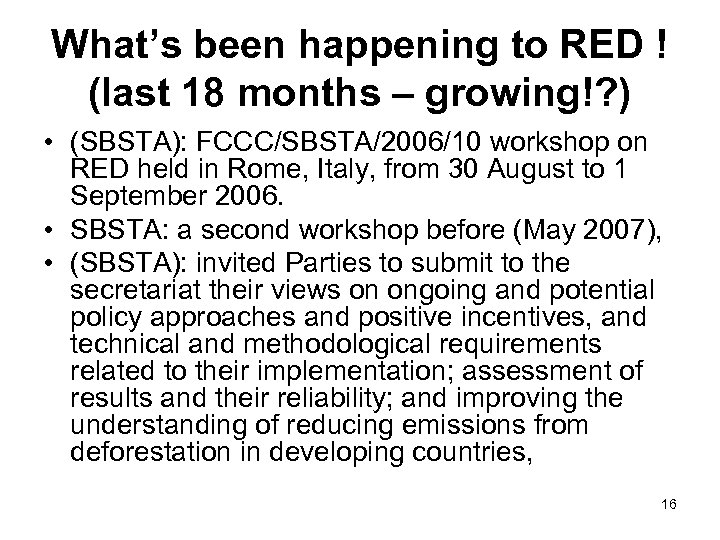 What’s been happening to RED ! (last 18 months – growing!? ) • (SBSTA): FCCC/SBSTA/2006/10 workshop on RED held in Rome, Italy, from 30 August to 1 September 2006. • SBSTA: a second workshop before (May 2007), • (SBSTA): invited Parties to submit to the secretariat their views on ongoing and potential policy approaches and positive incentives, and technical and methodological requirements related to their implementation; assessment of results and their reliability; and improving the understanding of reducing emissions from deforestation in developing countries, 16
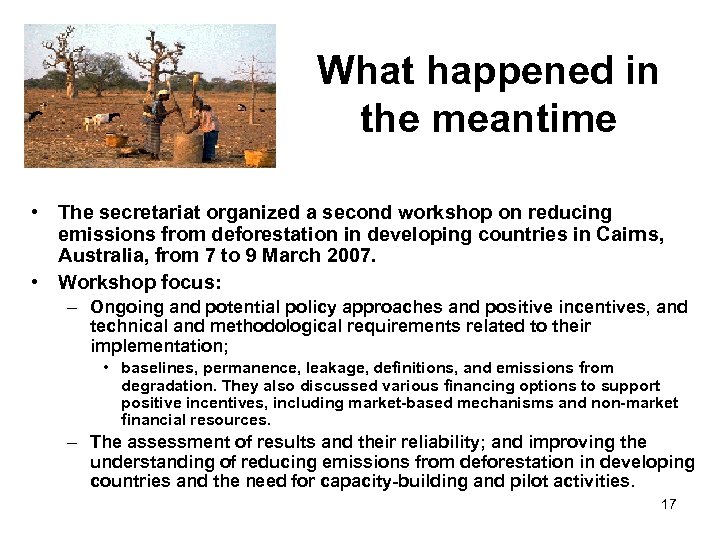 What happened in the meantime • The secretariat organized a second workshop on reducing emissions from deforestation in developing countries in Cairns, Australia, from 7 to 9 March 2007. • Workshop focus: – Ongoing and potential policy approaches and positive incentives, and technical and methodological requirements related to their implementation; • baselines, permanence, leakage, definitions, and emissions from degradation. They also discussed various financing options to support positive incentives, including market-based mechanisms and non-market financial resources. – The assessment of results and their reliability; and improving the understanding of reducing emissions from deforestation in developing countries and the need for capacity-building and pilot activities. 17
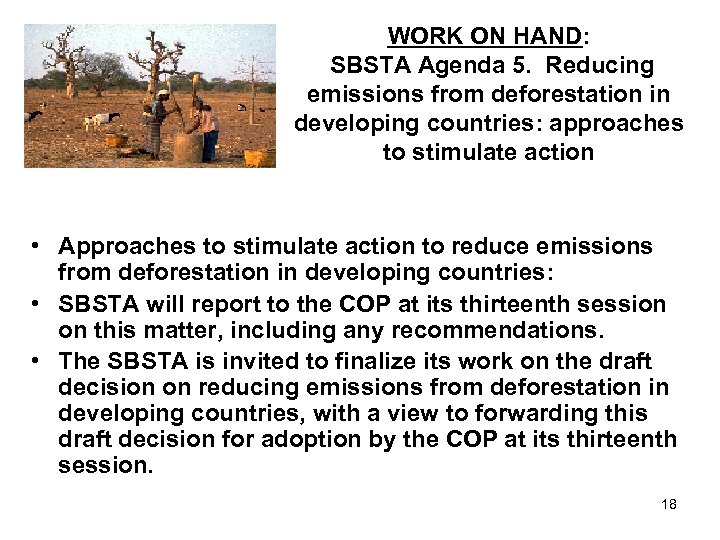 WORK ON HAND: SBSTA Agenda 5. Reducing emissions from deforestation in developing countries: approaches to stimulate action • Approaches to stimulate action to reduce emissions from deforestation in developing countries: • SBSTA will report to the COP at its thirteenth session on this matter, including any recommendations. • The SBSTA is invited to finalize its work on the draft decision on reducing emissions from deforestation in developing countries, with a view to forwarding this draft decision for adoption by the COP at its thirteenth session. 18
 LULUCF is Essential to Climate Action • LULUCF accounts for 20%+ of total global carbon emissions (IPCC) • In low-income countries, land use & land use change account for most carbon emissions: • CDM one of many instruments needed to reverse these trends 19
 Task: LULUCF to achieve the MDGs • • Cash income for consumption or investment Resources for community social investment Improve agricultural & forestry technologies Conserve wild plants/animals critical for local consumption or farm inputs Rehabilitate critical ecosystem services Mechanism to create partnerships 20
![Draft text for a decision on RED [-/CP. 13] • • [Option 1: Recognizing](https://present5.com/presentation/394837567f6f021e74b8ea01b02329b4/image-21.jpg "Draft text for a decision on RED [-/CP. 13] • • [Option 1: Recognizing") Draft text for a decision on RED [-/CP. 13] • • [Option 1: Recognizing the need for specific policy approaches to address different national circumstances and multiple drivers of deforestation in order to increase effectiveness of efforts to reduce emissions from deforestation in developing countries, • • Option 2: 1. Invites Parties to further strengthen and support ongoing efforts to reduce emissions from deforestation on a voluntary basis; 4. Invites Parties in particular Parties included in AII to the Convention to mobilize resources to support Capacity Building and efforts to RED 6. Requests the secretariat to organize, subject to availability of supplementary funding, a workshop on potential solutions to outstanding methodological issues and experiences 7. [Invites relevant organizations and stakeholders, without prejudice to any future decision of the COP on RED in developing countries, to participate in and/or support, the implementation of activities 8. [Decides to address, at a future session, as soon as possible, the range of policy approaches and positive incentives as proposed by Parties 3 on issues relating to reducing emissions from deforestation in developing countries and to also include consideration of this matter in the context of any discussions on future international cooperation on climate change, taking into account any other relevant work under the Convention. ] 21 • •
Draft text for a decision on RED [-/CP. 13] • • [Option 1: Recognizing the need for specific policy approaches to address different national circumstances and multiple drivers of deforestation in order to increase effectiveness of efforts to reduce emissions from deforestation in developing countries, • • Option 2: 1. Invites Parties to further strengthen and support ongoing efforts to reduce emissions from deforestation on a voluntary basis; 4. Invites Parties in particular Parties included in AII to the Convention to mobilize resources to support Capacity Building and efforts to RED 6. Requests the secretariat to organize, subject to availability of supplementary funding, a workshop on potential solutions to outstanding methodological issues and experiences 7. [Invites relevant organizations and stakeholders, without prejudice to any future decision of the COP on RED in developing countries, to participate in and/or support, the implementation of activities 8. [Decides to address, at a future session, as soon as possible, the range of policy approaches and positive incentives as proposed by Parties 3 on issues relating to reducing emissions from deforestation in developing countries and to also include consideration of this matter in the context of any discussions on future international cooperation on climate change, taking into account any other relevant work under the Convention. ] 21 • •
 What is the latest gossip on RED • Policy – Deepen Annex B Targets – Credit for early action – Ensure sustainable financial resources • Incentives – Note: CDM is only for AR – Introduce RED Mechanism; Stabilization fund; Enabling fund… – Forest Retention Certificates (TV) – Forest Retention fund (TV) • Programme of work; Ecosystems approach; 22 National Forest Programmes… (CBD, FAO…)
 Making LULUCF work for RED – the future • Expand the scale of LULUCF in the CDM, for global climate impact – Provide for opportunities to explore synergies between the MEAs and the MDGs – Identify global climate impact • Expand the scope of activities allowed under the CDM – Support a CDM expanded agenda – Use the new ideas on bundling, programmatic CDM • Make LULUCF carbon strategies an integral part of national development plans – Engage the rural development community when structuring internal trading schemes. – Provide legal safeguards for communities and the environment; land tenure … 23
 Thank you Questions ? ? 24
 Possible Post 2012 CDM Key Challenges 25
 CDM – a good buy in • Experience now exists • Opportunities are attractive • Methods are in place and continue to be developed • Lessons: – SD issues under CDM provide opportunities to level the playing field – Provide an opportunity to move forward and improve the CDM post 2012. 26
 Main Issues • How to improve CDM • How to address the lack of a fair Geographical Distribution of CDM • How to bring in the Most Vulnerable – no-CDM areas • Lessons: How to use the post 2012 CDM to address these issues: 27
 Beyond Project based CDM • Different types of options: – Programmatic (growing number of projects over time) – Bundling (a number of projects – one time) – Policy (Using Policy approaches to addressing/implementing CDM) – Benchmarking (additionality, 28
 about CDM • Separate the Objectives – SD and ERCDM • Establish a common approach • Consider a future CDM as part of a post 2012 regime/way of doing business • As AI Governments go for NAI bilateral programme – incorporate CDM and also SD at same time – SD must drive. 29
 about CDM • Strong/Weak SD indicators do not mean disinvestment • Consider SD lessons and SD Criteria to be considered INTRA G 77 – CSD as basis • Additionality: Financial and Environmental – are they working/useful. Impacts on baseline, efficiency of Mechanism … 30
 Other Issues • Do we only stabilise or reduce – CDM is not helping us achieve reduction maybe Tech Transfer • CDM only +ve impact on environment when CERs are cheaper • CDM MUST help achieve SD • Art 12 – emphasises on SD under CDM – this is not practised – we have drifted away 31
 Other Issues (II) • Develop a 2 nd (new Stream) of projects through POLICY CDM • Important to emphasise on SD and not Equitable Distribution of CDM… SD to enhance CDM project activity… POLICY CDM, Aggregate CDM … • CDM must be transparent – public comment, NGO comment, balance BGO (S&N) 32
 Thank you Questions ? ? 33