 Скачать презентацию Teaching PBIS Expectations at the High School Level
15d8af7030e1115b80a143f2b2e28998.ppt
- Количество слайдов: 45



Teaching PBIS Expectations at the High School Level Villa Grove High School Villa Grove, IL
Just as we teach academics, we must also teach behaviors…
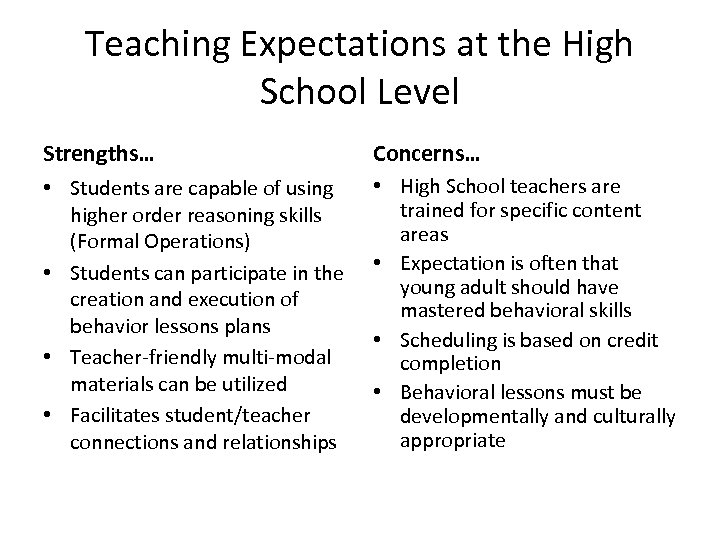
Teaching Expectations at the High School Level Strengths… Concerns… • Students are capable of using higher order reasoning skills (Formal Operations) • Students can participate in the creation and execution of behavior lessons plans • Teacher-friendly multi-modal materials can be utilized • Facilitates student/teacher connections and relationships • High School teachers are trained for specific content areas • Expectation is often that young adult should have mastered behavioral skills • Scheduling is based on credit completion • Behavioral lessons must be developmentally and culturally appropriate
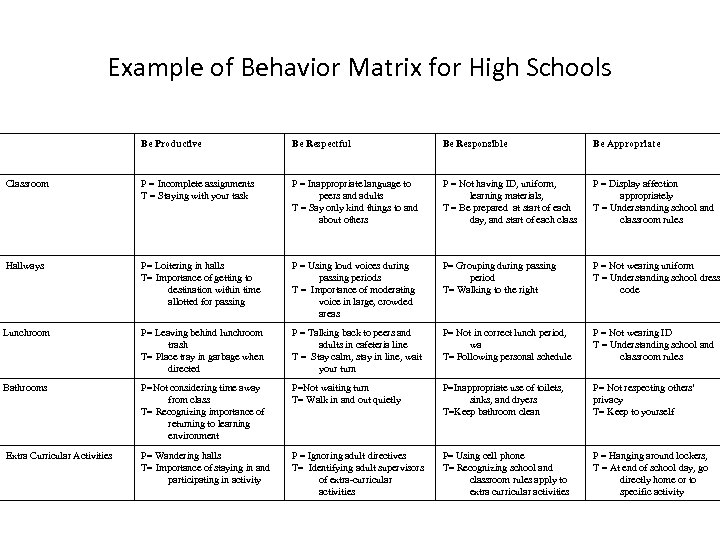
Example of Behavior Matrix for High Schools Be Productive Be Respectful Be Responsible Be Appropriate Classroom P = Incomplete assignments T = Staying with your task P = Inappropriate language to peers and adults T = Say only kind things to and about others P = Not having ID, uniform, learning materials, T = Be prepared at start of each day, and start of each class P = Display affection appropriately T = Understanding school and classroom rules Hallways P= Loitering in halls T= Importance of getting to destination within time allotted for passing P = Using loud voices during passing periods T = Importance of moderating voice in large, crowded areas P= Grouping during passing period T= Walking to the right P = Not wearing uniform T = Understanding school dress code Lunchroom P= Leaving behind lunchroom trash T= Place tray in garbage when directed P = Talking back to peers and adults in cafeteria line T = Stay calm, stay in line, wait your turn P= Not in correct lunch period, wa T= Following personal schedule P = Not wearing ID T = Understanding school and classroom rules Bathrooms P=Not considering time away from class T= Recognizing importance of returning to learning environment P=Not waiting turn T= Walk in and out quietly P=Inappropriate use of toilets, sinks, and dryers T=Keep bathroom clean P= Not respecting others’ privacy T= Keep to yourself Extra Curricular Activities P= Wandering halls T= Importance of staying in and participating in activity P = Ignoring adult directives T= Identifying adult supervisors of extra-curricular activities P= Using cell phone T= Recognizing school and classroom rules apply to extra curricular activities P = Hanging around lockers, T = At end of school day, go directly home or to specific activity
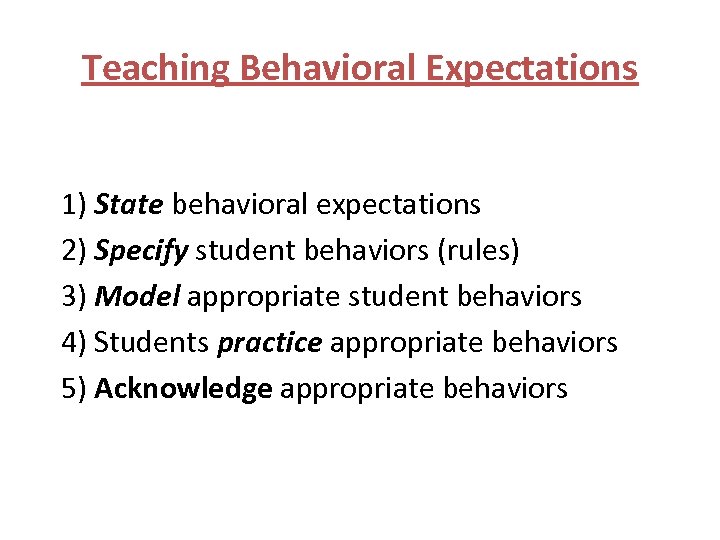
Teaching Behavioral Expectations 1) State behavioral expectations 2) Specify student behaviors (rules) 3) Model appropriate student behaviors 4) Students practice appropriate behaviors 5) Acknowledge appropriate behaviors
Teaching Expectations: Kick-Off • Content – Introducing school-wide expectations – Announcing initiatives – Generating enthusiasm and support • Assembly – Staff and student led examples and nonexamples of behaviors – School-produced video
Teaching Expectations: On-Going Schedule • School-wide behavior • Teaching the lesson plans are plans presented monthly or bi – Homeroom -monthly – Extended Advisory – In response to concerns on “Big 5” Data • In addition, information regarding Educational Environment and Disproportionality can be reviewed – Rotational schedule
Extending Behavior Lesson Plan Activities When teams develop lessons, after looking at ODR data, student driven activities can be completed following the teaching of a plan. Activities could include: • • Posters related to behavior expectations Classroom discussions with product Independent student analysis of scenarios Scenarios suggested by students for future Behavior Lesson Plans

And…now let’s see how it is done at Villa Grove High School in reality… not just theory…
Lindsey Trout, MSW, LSW District Social Worker Villa Grove CUSD #302
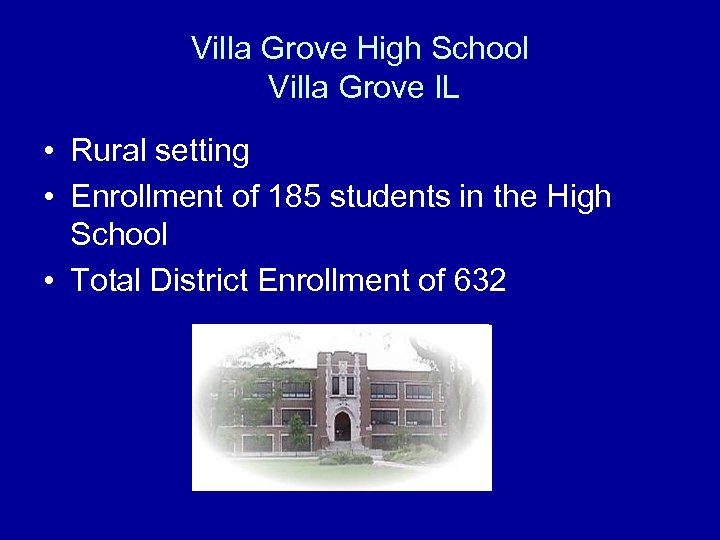
Villa Grove High School Villa Grove IL • Rural setting • Enrollment of 185 students in the High School • Total District Enrollment of 632
Behavioral Data before PBIS • General Office Discipline Referral form if removed from class • Consistency problems with classroom managed and office managed discipline. • Data was kept, but not reviewed regularly • Consistency problems with how rules were interpreted.
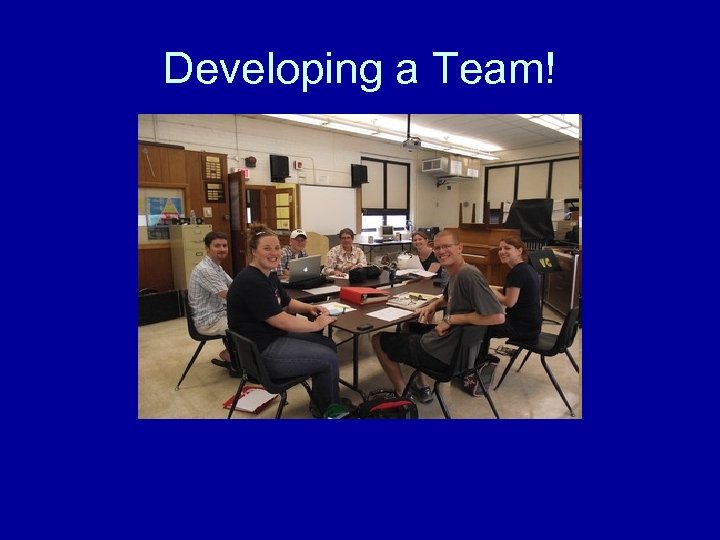
Developing a Team!
Developing Expectations • Administered a survey to all faculty and staff of the high school. • Included cafeteria staff, janitors, etc. • Identify their top 3 behavior problems • Analyzed the results and reported back to the staff.
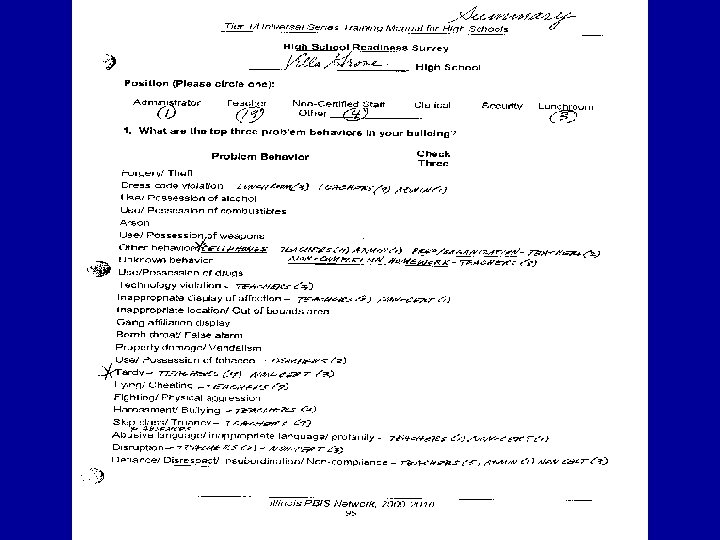
Survey Results • Some of our top problems: – – – Tardies Turning in homework Bringing all materials to class Disrespect / Disruptions Cell phones
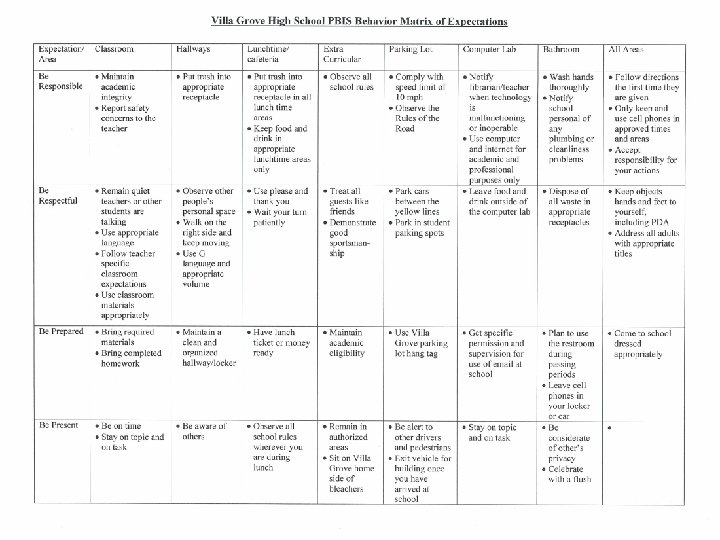
Establishing Behavioral Expectations • Using our data to prioritize our expectations • Established expectations that apply not only to students, but to faculty and staff
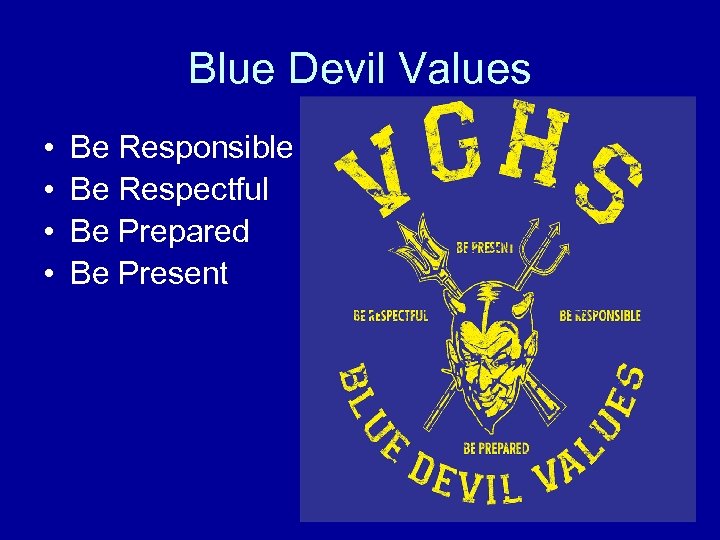
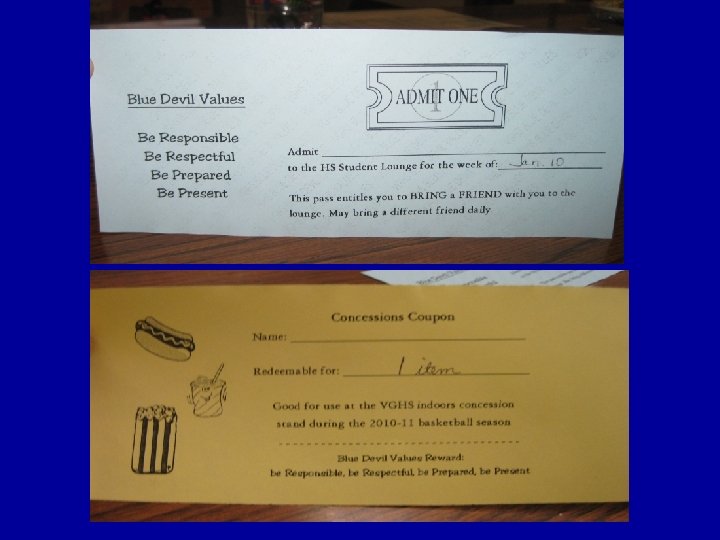
Blue Devil Values • • Be Responsible Be Respectful Be Prepared Be Present
School-Wide Behavior Matrix • PBIS team defined the expected behaviors in all areas of school. • Discussions between the staff and team to establish consistency.
Teaching Expected Behavior • State behavioral expectations in a positive manner • Be specific about behaviors
How do we teach these expectations? • Since behavioral skills are learned, it is necessary to teach expected behaviors to fluency as we would academic skills. • Consistency is KEY! • Teach teachers and staff about the expectations and behaviors (Staff Kick-off) • Teach the students the expectations (Student Kick-off)
Tips for Teaching Behavior • Show and explain examples and nonexamples • Use high frequency acknowledgements for appropriate behaviors • Pre-correct with students before an activity • Have a plan for behavioral acting out
PBIS Video • PBIS team decided to use videos to teach behavioral expectations identified by teachers and staff from survey. • Had a student help the team by taping and editing (also helps with student buy-in) • Great team building activity!
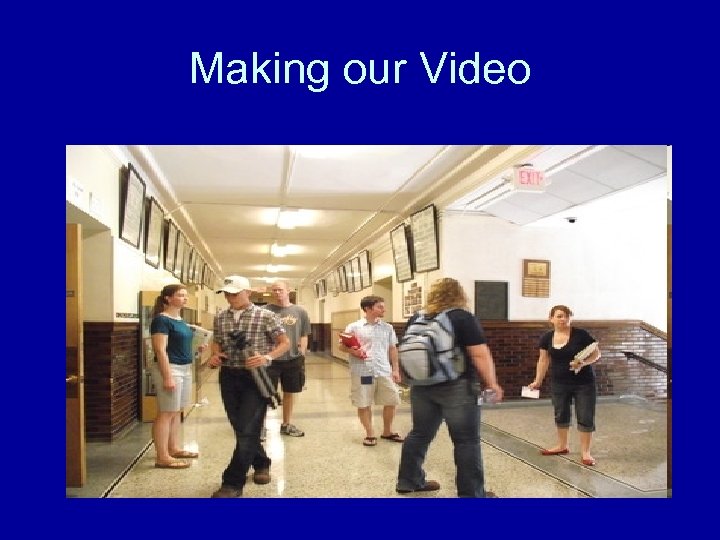
Making our Video
And now for the show!
Staff Kick Off • Kept staff updated throughout the planning process • Had official staff kick off a week before school started – 2 hours
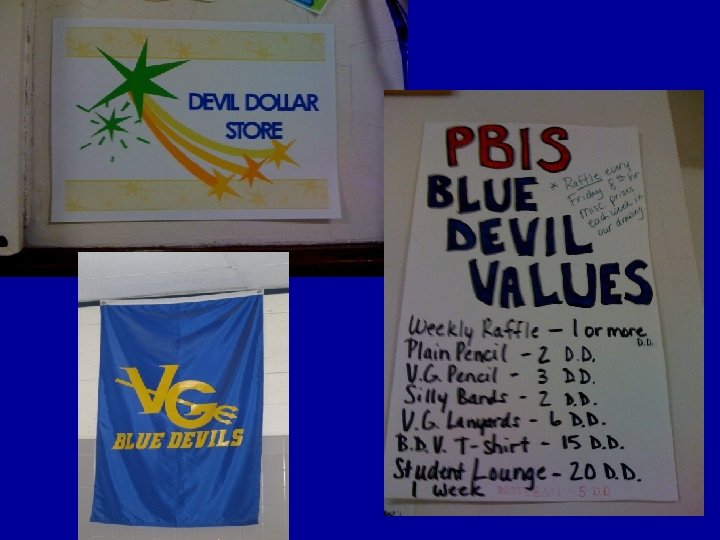
Staff Kick Off Content • • Presented in a Who What When Where Why format Reviewed Behavior Matrix Discussed new Office Discipline Referral Gave out Devil Dollars (acknowledgments) Explained frequency of acknowledgments Introduced Devil Dollar Store, other rewards Watched PBIS video Provided staff with additional documents that briefly explain the procedures • Answered all questions
The importance of staff buy-in! • Almost all teachers on board • Explained to teacher and staff how PBIS will benefit them • Reassurance that we don’t want to change anything that is already working for our school! • The balance of information – keep it simple, yet leave no questions unanswered.
Student Kick Off • Introducing school wide expectations and behavior matrix • Devil Dollars • Announced different rewards, celebrations, and incentives • Watched the video • Explained new office discipline referrals
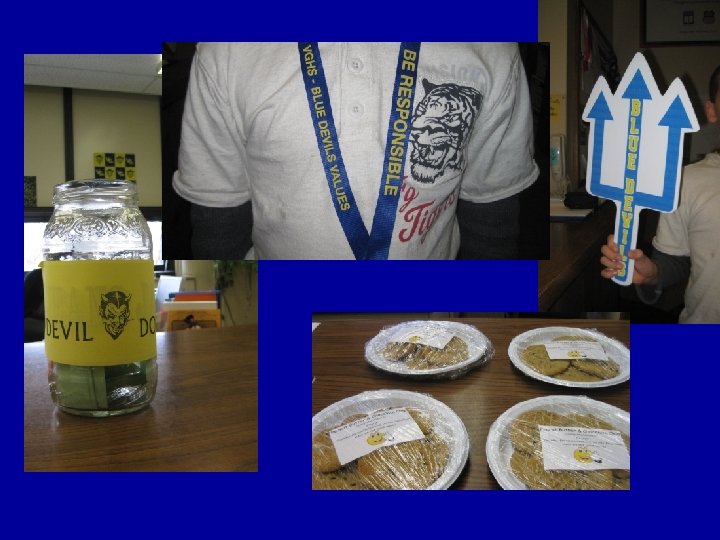
Devil Dollar Store • Small cart set up through out the week in the main hallway • Items include: – Pencils & Pens – T- Shirts – Lanyards – Blue Devil Dog Tags
Friday Drawings • Donated items from staff – anything from cookies, a can of soda, to gas cards and best buy cards • Free popcorn & soda tickets for games • Free passes into games • Free pass into student lounge • Many low to no cost prizes! • Very successful for our school
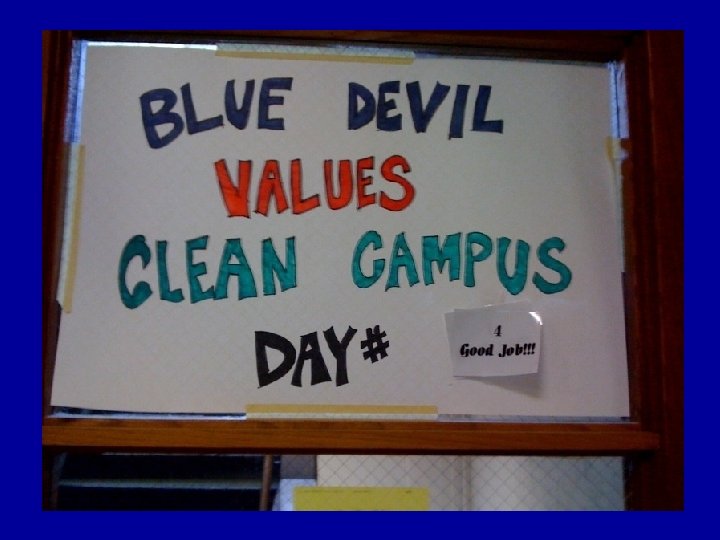
Quarterly/Semester Rewards • Clean Campus Initiative – 20 Consecutive days of no trash in all areas = movie and popcorn – Students met the goal last quarter, enjoyed a movie on an early dismissal day.
Character Posters • Photographs with students modeling behaviors • Taken the same day as picture day • Use our own phrases from behavior matrix
Ongoing Teaching of Expectations • School Wide Behavior Lesson Plans – 1 st one in January – after looking at data, saw where we needed to re-teach “Be Prepared” – First 10 minutes, 1 st hour, 1 st day back. – Continue to look at data, possibly have lesson plans once a month.
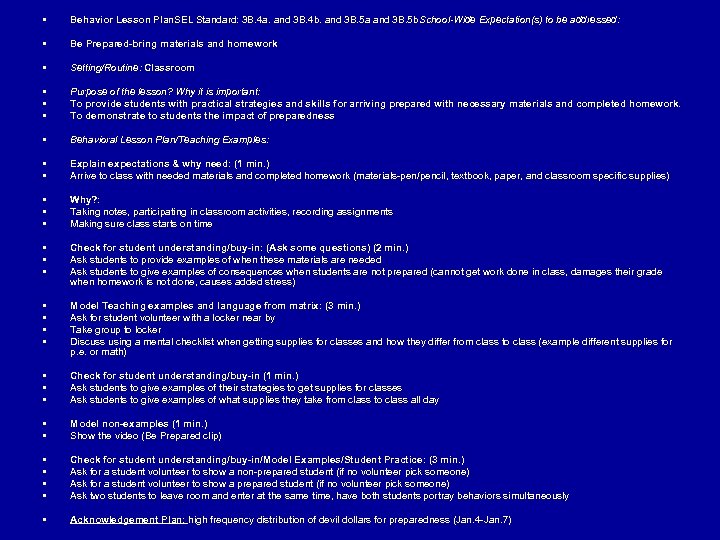
• Behavior Lesson Plan. SEL Standard: 3 B. 4 a. and 3 B. 4 b. and 3 B. 5 a and 3 B. 5 b. chool-Wide Expectation(s) to be addressed: S • Be Prepared-bring materials and homework • Setting/Routine: Classroom • • • Purpose of the lesson? Why it is important: To provide students with practical strategies and skills for arriving prepared with necessary materials and completed homework. To demonstrate to students the impact of preparedness • Behavioral Lesson Plan/Teaching Examples: • • Explain expectations & why need: (1 min. ) Arrive to class with needed materials and completed homework (materials-pen/pencil, textbook, paper, and classroom specific supplies) • • • Why? : Taking notes, participating in classroom activities, recording assignments Making sure class starts on time • • • Check for student understanding/buy-in: (Ask some questions) (2 min. ) Ask students to provide examples of when these materials are needed Ask students to give examples of consequences when students are not prepared (cannot get work done in class, damages their grade when homework is not done, causes added stress) • • Model Teaching examples and language from matrix: (3 min. ) Ask for student volunteer with a locker near by Take group to locker Discuss using a mental checklist when getting supplies for classes and how they differ from class to class (example different supplies for p. e. or math) • • • Check for student understanding/buy-in (1 min. ) Ask students to give examples of their strategies to get supplies for classes Ask students to give examples of what supplies they take from class to class all day • • Model non-examples (1 min. ) Show the video (Be Prepared clip) • • Check for student understanding/buy-in/Model Examples/Student Practice: (3 min. ) Ask for a student volunteer to show a non-prepared student (if no volunteer pick someone) Ask for a student volunteer to show a prepared student (if no volunteer pick someone) Ask two students to leave room and enter at the same time, have both students portray behaviors simultaneously • Acknowledgement Plan: high frequency distribution of devil dollars for preparedness (Jan. 4 -Jan. 7)
Introducing to Families • Ran the video on a loop at Open House, had a PBIS team member there to answer questions. • Put brief information on my website.
What works for VGHS • Friday Drawings • Meeting twice a month to look at data • Communicating progress at each faculty meeting
What we will continue to improve at VGHS • Continuing to find new ways to celebrate and reward students, especially low to no cost! • Continuing to find ways to teach expectations • Including family and community in PBIS
Thank You! Please let me know if you have questions! Lindsey Trout, MSW, LSW ltrout@vg 302. org
Before you leave the session. . . • Pull out the blue sheet titled, “Evaluation Worksheet Notes” • Take a moment to respond to the breakout session questions • These notes will assist you in completing the online evaluation after the conference • Your comments are valued and assist in developing future conference sessions
Скачать презентацию Teaching PBIS Expectations at the High School Level
15d8af7030e1115b80a143f2b2e28998.ppt