


 Скачать презентацию Teaching and learning in a community of thinking
fd5534c2aa6fac6d56146168e8568957.ppt
- Количество слайдов: 32
 Teaching and learning in a community of thinking – challenges and dilemmas Yoram Harpaz and Adam Lefstein August 2004
 overview Theory: pictures of teaching, learning, knowledge and educational aims (Yoram) Practice: exemplification of the community of thinking framework (Adam)
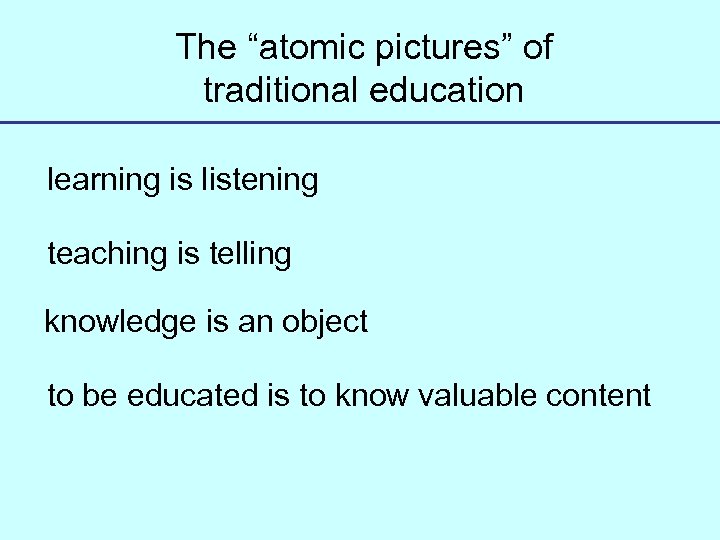 The “atomic pictures” of traditional education learning is listening teaching is telling knowledge is an object to be educated is to know valuable content
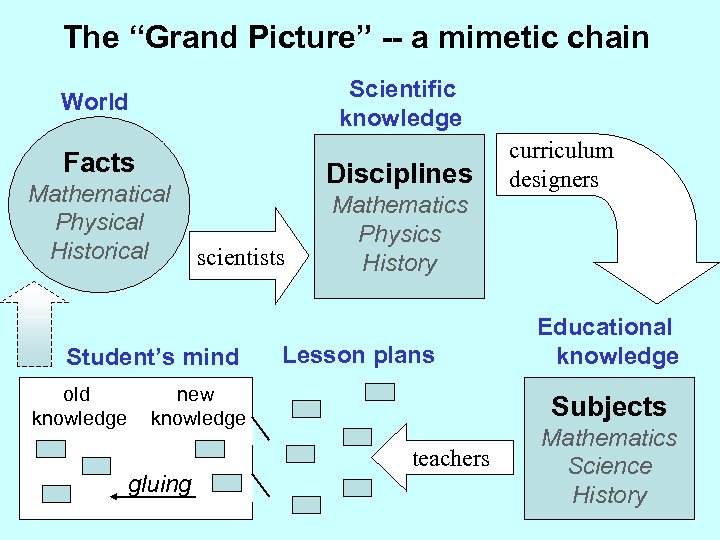 The “Grand Picture” -- a mimetic chain Scientific knowledge World Facts Mathematical Physical Historical Disciplines scientists Student’s mind old knowledge Mathematics Physics History Lesson plans new knowledge gluing curriculum designers Educational knowledge Subjects teachers Mathematics Science History
 Effective learning Involvement + Understanding Involvement: task involvement vs. ego involvement Understanding: to locate (in context); to perform (thinking operations with knowledge)
 basic conditions for effective learning • intrinsic motivation • authentic problems • undermining • contents and process match student profiles and styles • appropriate challenge
 basic conditions for effective learning • dialogic environment • informative ongoing feedback • supportive climate • constructive attribution: ability and will vs. other people or luck • incremental learners vs. entity learners
 alternative “atomic pictures” learning is being involved and understanding teaching is providing the conditions for effective learning knowledge is a structure or a “story” that works being educated is knowing how to relate to knowledge
 questions and problems
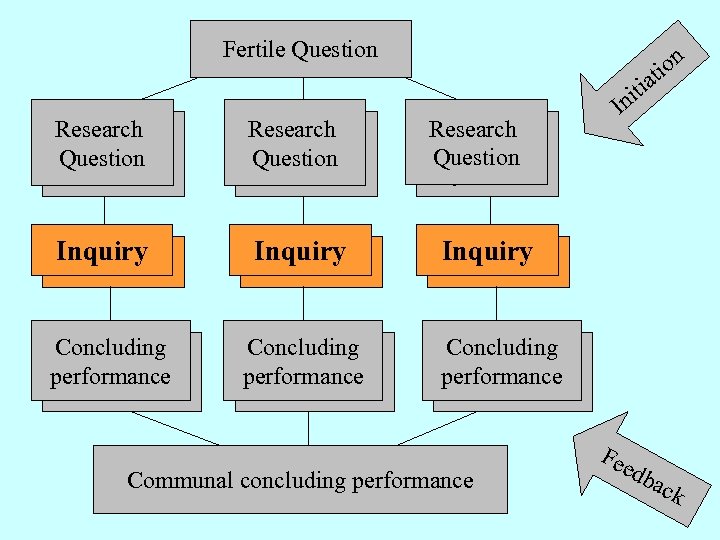
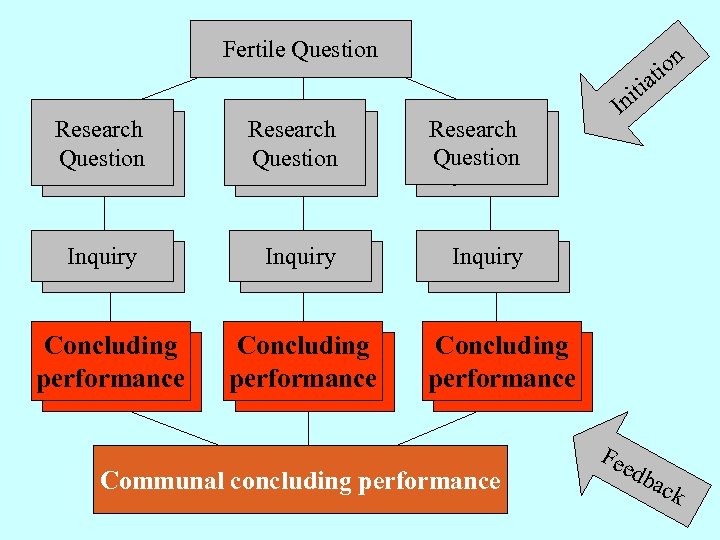
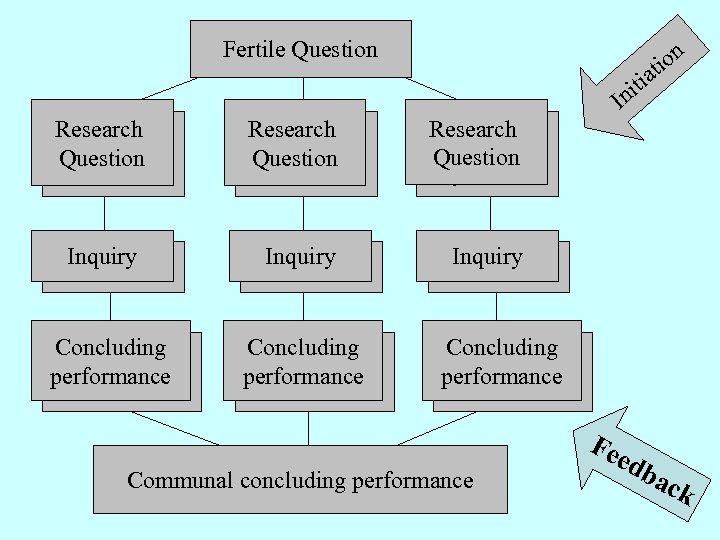
 Community of Thinking An educational practice based on the alternative “atomic pictures” Its primary components include Fertile question Inquiry / research Concluding performance
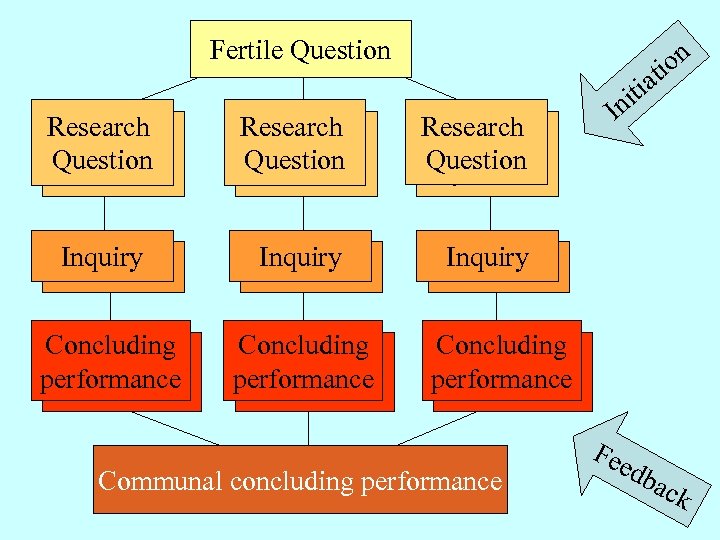 Fertile Question on ti Research Question Research Question Inquiry Concluding performance In Inquiry Concluding performance tia i Concluding performance Communal concluding performance Fee dba ck
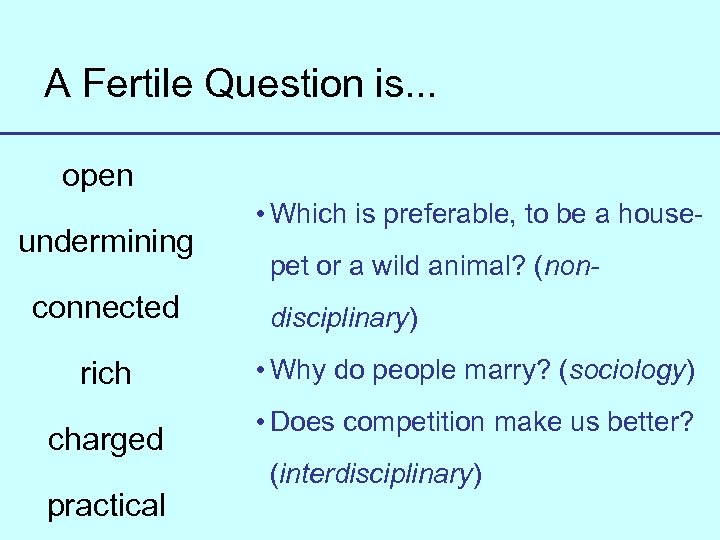 A Fertile Question is. . . open undermining connected rich charged practical • Which is preferable, to be a housepet or a wild animal? (nondisciplinary) • Why do people marry? (sociology) • Does competition make us better? (interdisciplinary)
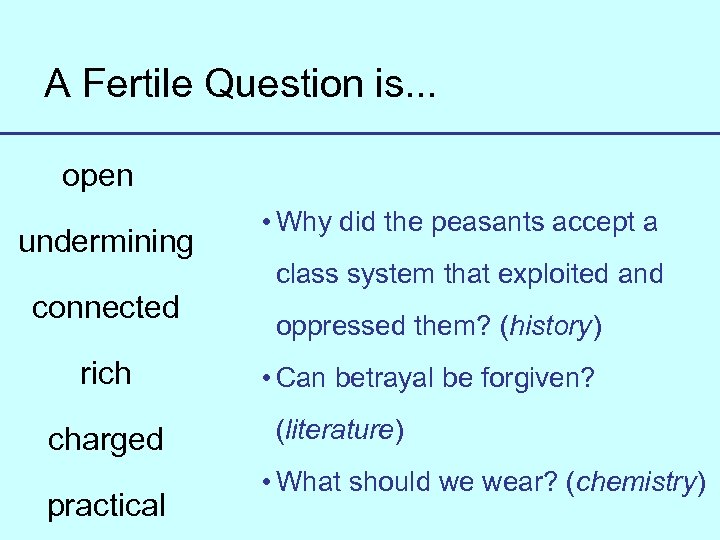 A Fertile Question is. . . open undermining connected rich charged practical • Why did the peasants accept a class system that exploited and oppressed them? (history) • Can betrayal be forgiven? (literature) • What should we wear? (chemistry)
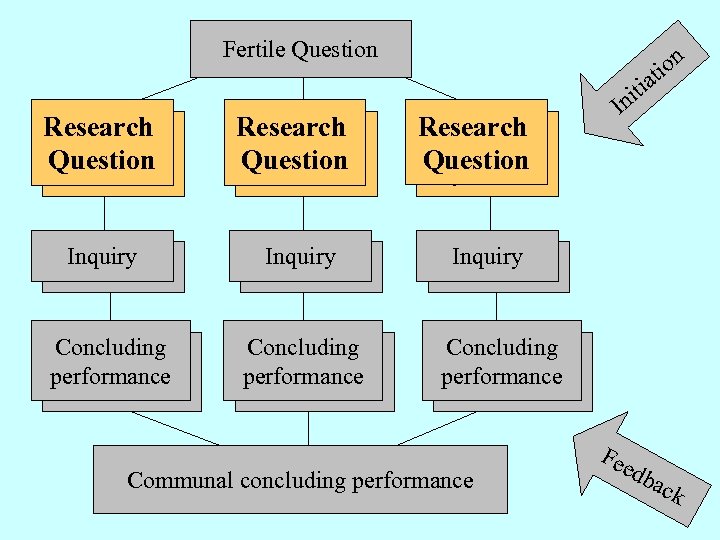 Fertile Question Research Question Inquiry Concluding performance n Research Question tio a iti n I Inquiry Concluding performance Communal concluding performance Fee dba ck
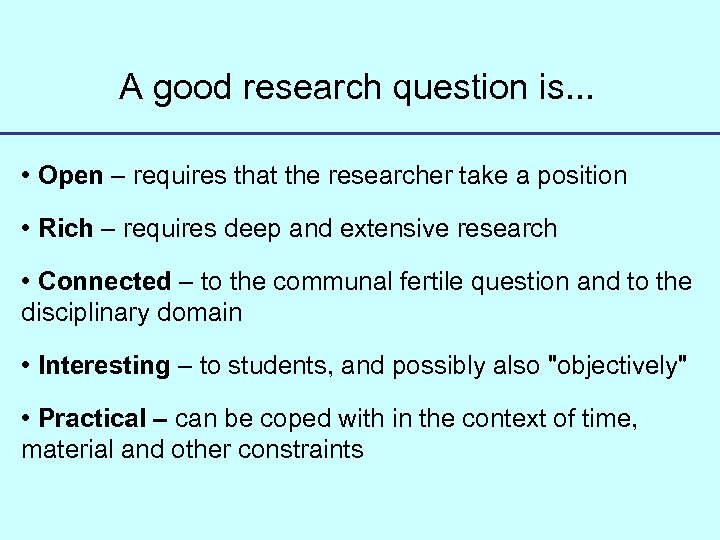 A good research question is. . . • Open – requires that the researcher take a position • Rich – requires deep and extensive research • Connected – to the communal fertile question and to the disciplinary domain • Interesting – to students, and possibly also "objectively" • Practical – can be coped with in the context of time, material and other constraints
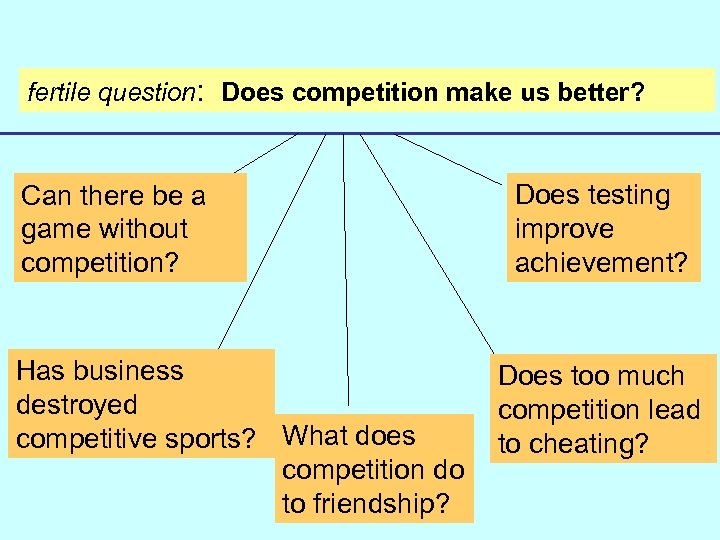 fertile question: Does competition make us better? Does testing improve achievement? Can there be a game without competition? ? ? Has business destroyed competitive sports? What does competition do to friendship? ? ? Does too much competition lead to cheating? ?
 Fertile Question n tio a iti n Research Question Research Question Inquiry I Inquiry Question Concluding performance Communal concluding performance Fee dba ck
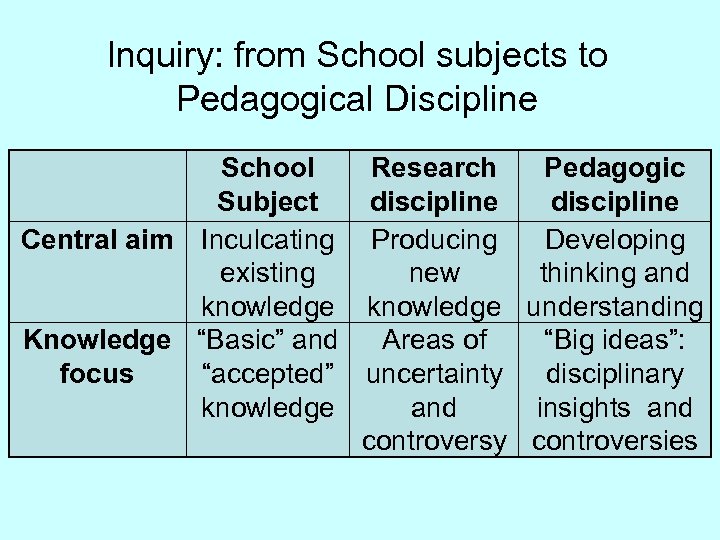 Inquiry: from School subjects to Pedagogical Discipline School Research Pedagogic Subject discipline Central aim Inculcating Producing Developing existing new thinking and knowledge understanding Knowledge “Basic” and Areas of “Big ideas”: focus “accepted” uncertainty disciplinary knowledge and insights and controversy controversies
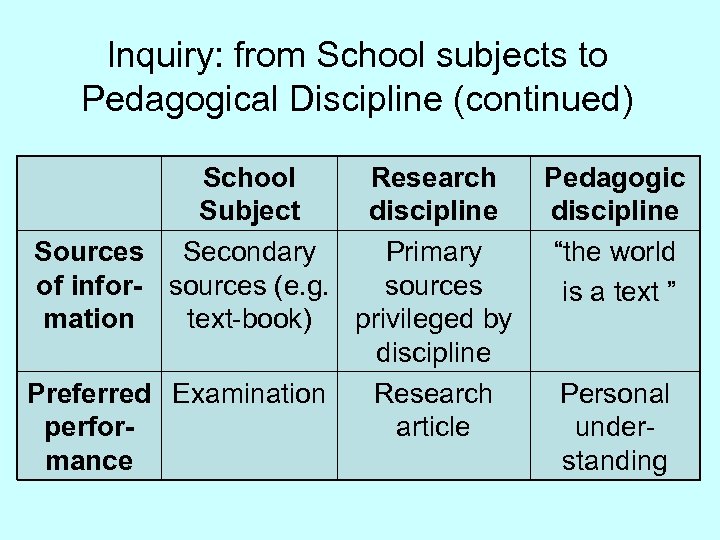 Inquiry: from School subjects to Pedagogical Discipline (continued) School Research Subject discipline Sources Secondary Primary of infor- sources (e. g. sources mation text-book) privileged by discipline Preferred Examination Research perforarticle mance Pedagogic discipline “the world is a text ” Personal understanding
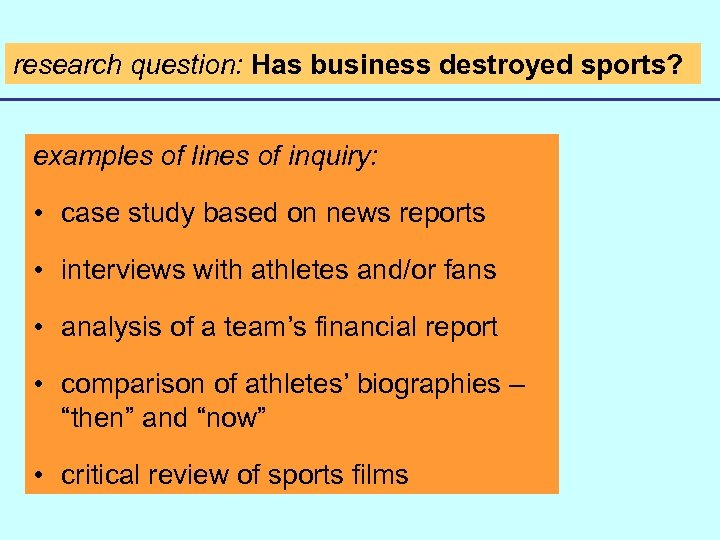 research question: Has business destroyed sports? examples of lines of inquiry: How would you recommend conducting inquiry? • case study based on news reports • interviews with athletes and/or fans • analysis of a team’s financial report • comparison of athletes’ biographies – “then” and “now” • critical review of sports films
 Fertile Question n tio a iti n Research Question Research Question Inquiry I Inquiry Question Concluding performance Communal concluding performance Fee dba ck
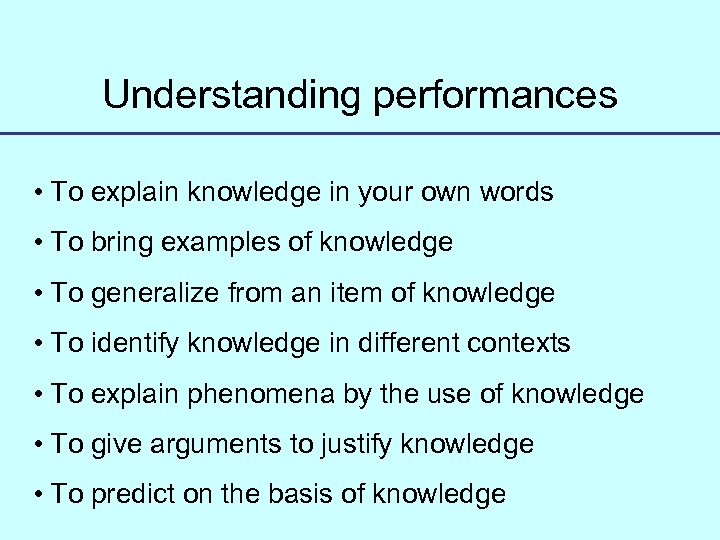 Understanding performances • To explain knowledge in your own words • To bring examples of knowledge • To generalize from an item of knowledge • To identify knowledge in different contexts • To explain phenomena by the use of knowledge • To give arguments to justify knowledge • To predict on the basis of knowledge
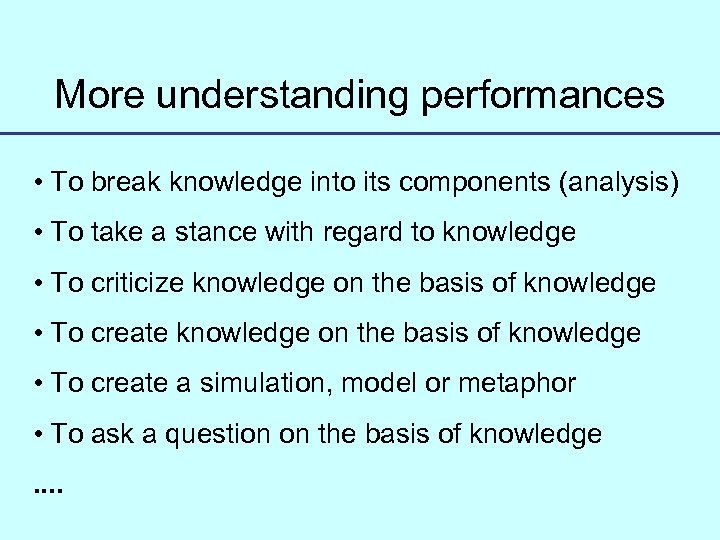 More understanding performances • To break knowledge into its components (analysis) • To take a stance with regard to knowledge • To criticize knowledge on the basis of knowledge • To create a simulation, model or metaphor • To ask a question on the basis of knowledge. .
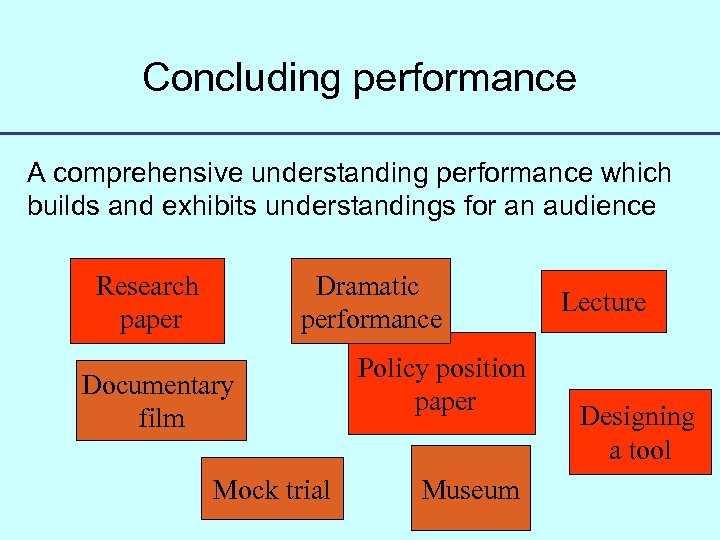 Concluding performance A comprehensive understanding performance which builds and exhibits understandings for an audience Research paper Dramatic performance Documentary film Mock trial Policy position paper Museum Lecture Designing a tool
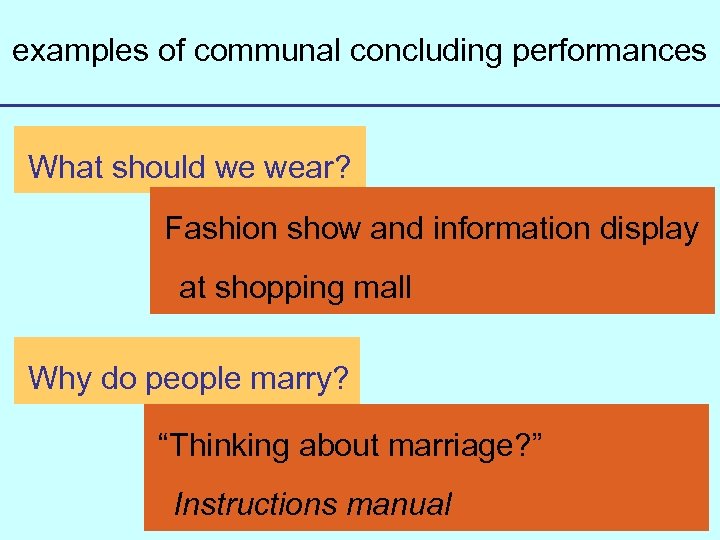 examples of communal concluding performances What should we wear? Fashion show and information display at shopping mall Why do people marry? “Thinking about marriage? ” Instructions manual
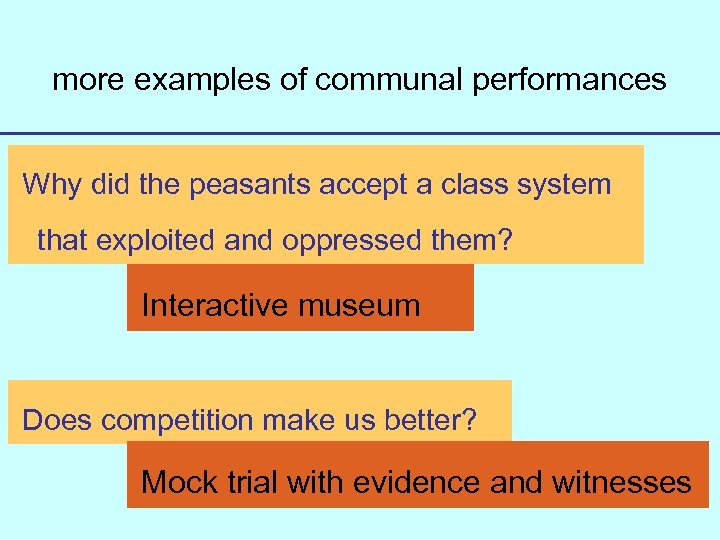 more examples of communal performances Why did the peasants accept a class system that exploited and oppressed them? Interactive museum Does competition make us better? Mock trial with evidence and witnesses
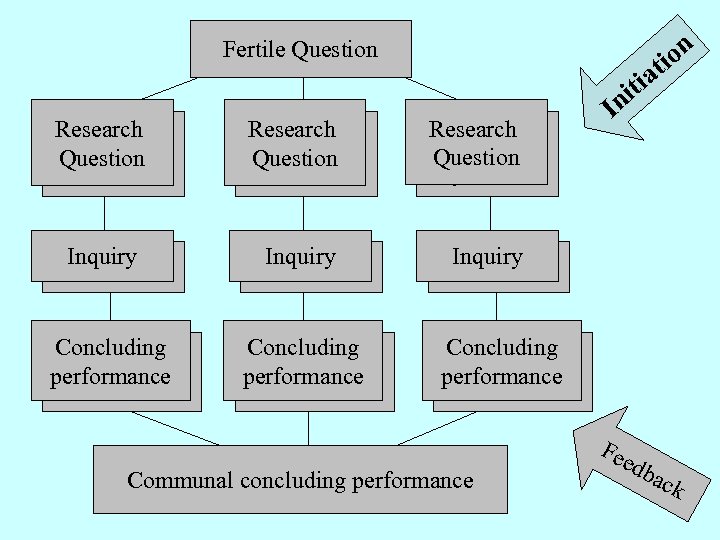 Fertile Question Research Question Research Question Inquiry tia ni I on ti Inquiry Question Concluding performance Communal concluding performance Fee dba ck
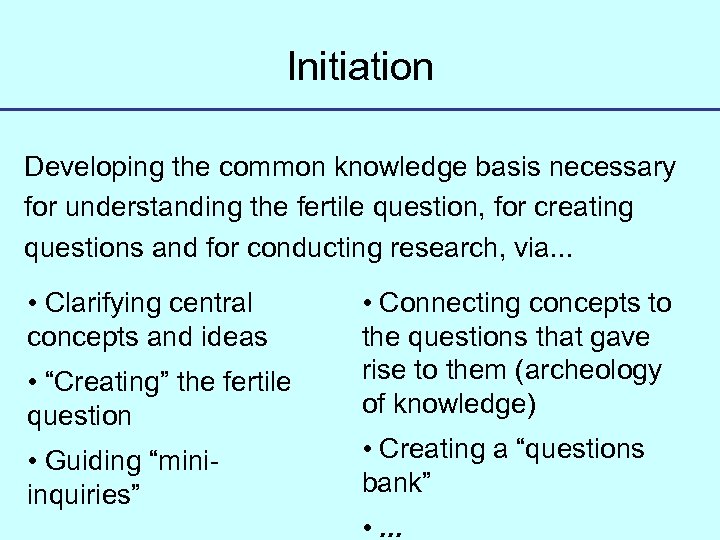 Initiation Developing the common knowledge basis necessary for understanding the fertile question, for creating questions and for conducting research, via. . . • Clarifying central concepts and ideas • “Creating” the fertile question • Connecting concepts to the questions that gave rise to them (archeology of knowledge) • Guiding “miniinquiries” • Creating a “questions bank” • . . .
 Fertile Question on ti tia i In Research Question Research Question Inquiry Question Concluding performance Fe Communal concluding performance edb ack
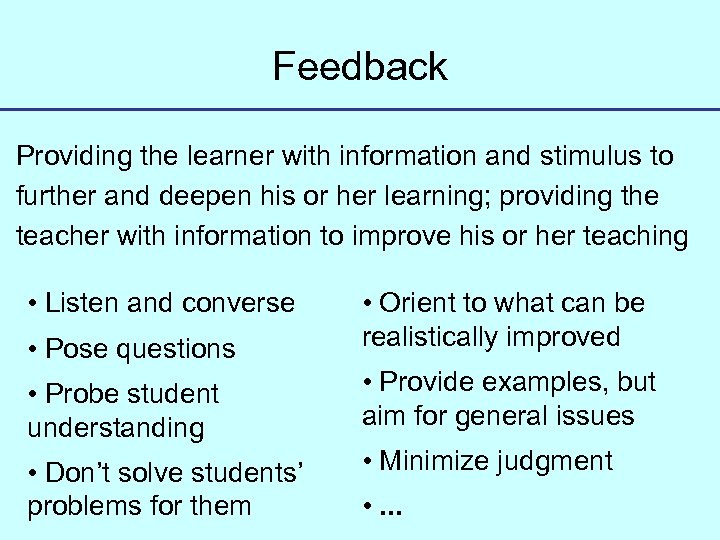 Feedback Providing the learner with information and stimulus to further and deepen his or her learning; providing the teacher with information to improve his or her teaching • Listen and converse • Pose questions • Orient to what can be realistically improved • Probe student understanding • Provide examples, but aim for general issues • Don’t solve students’ problems for them • Minimize judgment • . . .
 questions and problems
 for more information Yoram Harpaz: yoramha@mandelinstitute. org. il Adam Lefstein: adaml@netvision. net. il