


 Скачать презентацию Te Papa-travel-stories Philipp Schorch Ph D Candidate VUW
ca3a264fee97e64e0d95f0a4d1e69df3.ppt
- Количество слайдов: 15
 Te Papa-travel-stories Philipp Schorch Ph. D Candidate VUW Research Associate Te Papa Tongarewa
 ‘Traveling cultures’ in a ‘cosmopolitanised’ world • Clifford (1997), Beck (2006) • Interrelation and interdependence of travel, cultural praxis, migration, tourism, museums
 Museums as ‘contact zones’ • Places of contentious and collaborative relations and interactions (Clifford, 1997) • Sites where a complex web of demands and articulations is expressed, negotiated and contested • Here travel context; thesis explores cultural politics and the public sphere
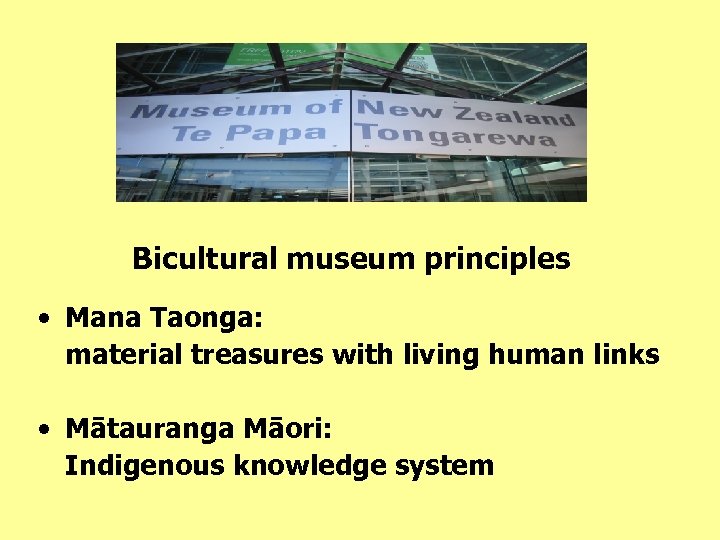 Bicultural museum principles • Mana Taonga: material treasures with living human links • Mātauranga Māori: Indigenous knowledge system
 • Hermeneutics: ‘return to the Lebenswelt…construed as designating the reservoir of meaning, the surplus of sense in living experience, which renders the objectifying and explanatory attitude possible’ Ricoeur (1981) • Biographical narrative approach: exploring meanings, articulations and demands as units of analysis • Narrative interviews and follow-ups: Te Papa visitors from Australia, Canada, USA
 Cross-cultural journeys I loved the Māori side of it and it’s wonderful to see that strength there. I mean I look at the Aborigines in Australia and it’s a totally different culture, you can’t compare that, but I think the Māori are in a lot better position as a race in New Zealand than the Aborigines are over there. And I think, yeah Australia has got a lot of work to do really in that regard… And I loved the modern side of it as well, like the meeting house down there with all the pretty colors in it and made not out of traditional wood, that was just beautiful. Because to me that shows more integration, it’s showing New Zealand as being an integrated country, like we are not talking Māori and Pakeha, we are talking about Kiwis or New Zealanders, which is really good too…It was good to see that side of it, but that didn’t dominate. It’s a small part of this museum and this is giving it a more, I don’t know, inclusive feel. (Julia, New Zealand born Australian)
 Cultural feeling When we were sort of booking out our tour around New Zealand, one of the things they did ask us was whether we wanted to do a lot of Māori culture things. Originally our reaction was sort of like no because I think it’s based on our experience with native culture in the United States. That sort of indigenous culture stuff you get in the United States is very contrived and kind of hokey. And there is a little bit of feel of imperialism to it that you sort of…you are looking at this culture not as being immersed in it or really trying to understand it, but you are looking at it as being the outsider and ’look isn’t that cute’. You are not; it makes you feel bad about it is the easy way of saying it. (Bruce, USA)
 From bicultural meanings to cross-cultural dialogue One of the cool things was that according to the tour guide it was basically presented by the Māori not by, you know, a bunch of white guys saying what we present of the Māori, which made a lot more tellable and believable and didn’t have this sort of stench of imperialism on it. So it made it a lot easier to sort of, because if somebody is telling about themselves rather than somebody telling about somebody else, we call that hear-say in the law. (Bruce, USA) From ‘contact zone’ (Clifford, 1997) to ‘Third Space’ (Bhabha, 1994) through self-representation
 Cross-cultural hermeneutics: the shifting Self The story of Andrew, a Canadian farmer and business man
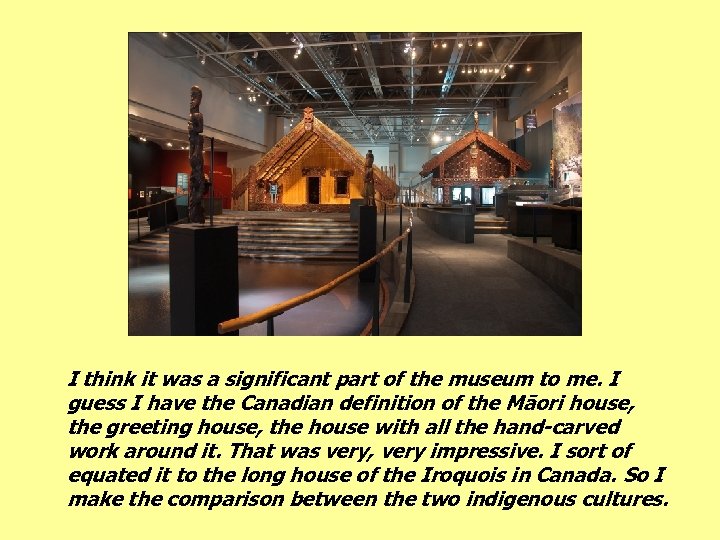 I think it was a significant part of the museum to me. I guess I have the Canadian definition of the Māori house, the greeting house, the house with all the hand-carved work around it. That was very, very impressive. I sort of equated it to the long house of the Iroquois in Canada. So I make the comparison between the two indigenous cultures.
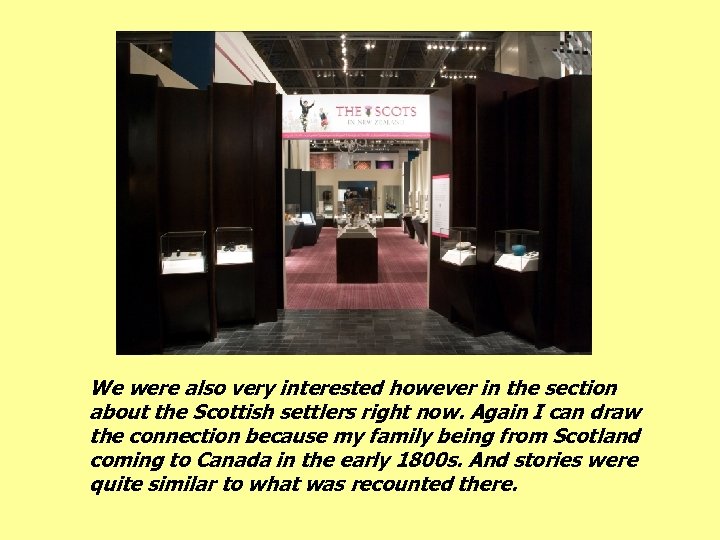 We were also very interested however in the section about the Scottish settlers right now. Again I can draw the connection because my family being from Scotland coming to Canada in the early 1800 s. And stories were quite similar to what was recounted there.
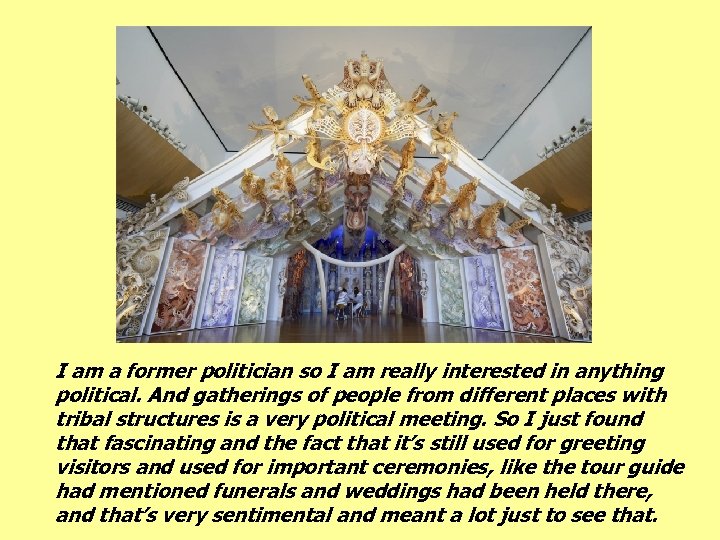 I am a former politician so I am really interested in anything political. And gatherings of people from different places with tribal structures is a very political meeting. So I just found that fascinating and the fact that it’s still used for greeting visitors and used for important ceremonies, like the tour guide had mentioned funerals and weddings had been held there, and that’s very sentimental and meant a lot just to see that.
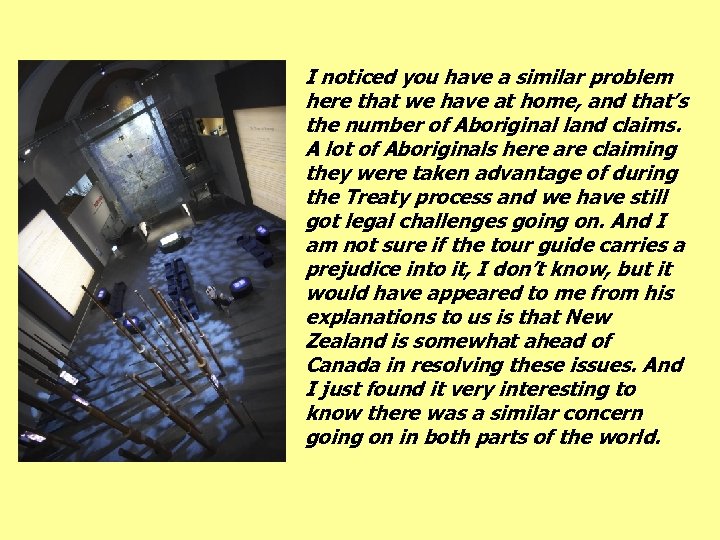 I noticed you have a similar problem here that we have at home, and that’s the number of Aboriginal land claims. A lot of Aboriginals here are claiming they were taken advantage of during the Treaty process and we have still got legal challenges going on. And I am not sure if the tour guide carries a prejudice into it, I don’t know, but it would have appeared to me from his explanations to us is that New Zealand is somewhat ahead of Canada in resolving these issues. And I just found it very interesting to know there was a similar concern going on in both parts of the world.
 The relativity of otherness and the historical Self as the ‘generational figure of the Other’ (Ricoeur, 1992) It is interesting seeing it and being here through Australian eyes I think now instead of Kiwi eyes. I am staying with mom and dad, so I am staying with a, you know, people in their seventies, and seeing people of the similar age group sort of thing. So you’ve still got the, their views and opinions and things which are, that came from my childhood, you know where my childhood views came from sort of thing. So I don’t know if that’s the same as what young people feel now? ! I haven’t had a chance to see people, you know, under forty, I don’t know if they feel, or maybe under thirty, a more inclusive or more acceptance of each other? !
 Conclusion • Cross-cultural encounter and dialogue as shifting sense of Self through the Other • Museums as potential ‘third spaces’ inviting visitors to ‘cross the boundaries of belonging’ and treating them as ‘creators rather than consumers of identity’ (Bodo, 2007) • Cultural feelings: being means feeling, interpreting, understanding and contesting • Humanisation of abstract categories such as the history, the people and the culture