 Taxonomy Strategies LLC Data Governance Maturity: When the business depends on clear description of fuzzy objects Presented to San Francisco DAMA Sept. 10, 2008 Ron Daniel, Jr. Sept. 10, 2008 Copyright 2008 Taxonomy Strategies LLC. All rights reserved.
 Bio: Ron Daniel, Jr. § Over 15 years in the business of metadata & automatic classification § Principal, Taxonomy Strategies § Standards Architect, Interwoven § Senior Information Scientist, Metacode Technologies (acquired by Interwoven, November 2000) § Technical Staff Member, Los Alamos National Laboratory § Metadata and taxonomies community leadership. § Chair, PRISM (Publishers Requirements for Industry Standard Metadata) working group § Acting chair, XML Linking working group § Member, RDF working groups § Co-editor, PRISM, XPointer, 3 IETF RFCs, and Dublin Core 1 & 2 reports. Taxonomy Strategies LLC The business of organized information 2
 Recent & current projects: http: //www. taxonomystrategies. com/html/clients. htm Government Commercial Not-for-Profit Taxonomy Strategies LLC The business of organized information 3
 Goals for this talk Ø Provide you with background on maturity models. Ø Provide the results of our surveys of Search, Metadata, & Taxonomy practices and discuss interesting findings. Ø Review the practices in use at stock photo houses, and compare them to methods that may be used in typical information management projects. Ø Give you the tools to do a simple self-assessment of your organization’s metadata maturity Taxonomy Strategies LLC The business of organized information 4
 Agenda 9: 15 Metadata Definitions 9: 30 Maturity Models 9: 45 Metadata Maturity Model (ca. 2006) 10: 15 Break 10: 30 Stock Photo Business 10: 40 Data Governance Practices in Stock Photo Agencies 11: 40 Summary 11: 45 Questions 12: 00 Adjourn Taxonomy Strategies LLC The business of organized information 5
 Metadata Definitions TAXONOMY STRATEGIES The business of organized information 6
 Taxonomy and metadata definitions Metadata § “Data about data”. § Different communities have very different assumptions about they types of data being described. § I’m from the Information Science community, not the database, statistics, or massive storage communities. Taxonomy 1. The classification of organisms in an ordered system that indicates natural relationships. 2. The science, laws, or principles of classification; systematics. 3. Division into ordered groups, categories, or hierarchies. Taxonomy Strategies LLC The business of organized information 7
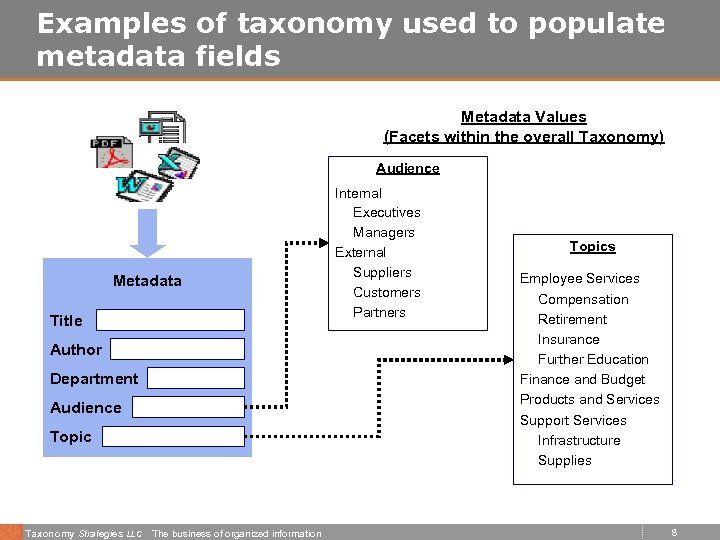 Examples of taxonomy used to populate metadata fields Metadata Values (Facets within the overall Taxonomy) Audience Metadata Title Author Department Audience Topic Taxonomy Strategies LLC The business of organized information Internal Executives Managers External Suppliers Customers Partners Topics Employee Services Compensation Retirement Insurance Further Education Finance and Budget Products and Services Support Services Infrastructure Supplies 8
 Example faceted taxonomy ABC Computers. com Content Type Competency Industry Service Award Case Study Contract & Warranty Demo Magazine News & Event Product Information Services Solution Specification Technical Note Tool Training White Paper Other Content Type Business & Finance Interpersonal Development IT Professionals Technical Training IT Professionals Training & Certification PC Productivity Personal Computing Proficiency Banking & Finance Communications E-Business Education Government Healthcare Hospitality Manufacturing Petrochemocals Retail / Wholesale Technology Transportation Other Industries Assessment, Design & Implementatio n Deployment Enterprise Support Client Support Managed Lifecycle Asset Recovery & Recycling Training Taxonomy Strategies LLC The business of organized information Product Family Desktops MP 3 Players Monitors Networking Notebooks Printers Projectors Servers Services Storage Televisions Non-ABC Brands Audience Line of Business Region. Country All Business ABC Employee Education Gaming Enthusiast Home Investor Job Seeker Media Partner Shopper First Time Experienced Advanced Supplier All Home & Home Office Gaming Government, Education & Healthcare Medium & Large Business Small Business All Asia-Pacific Canada ABC EMEA Japan Latin America & Caribbean United States 9
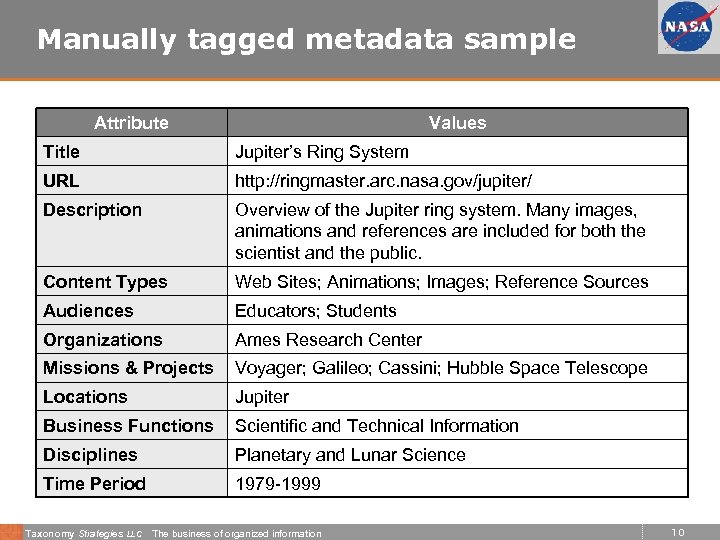 Manually tagged metadata sample Attribute Values Title Jupiter’s Ring System URL http: //ringmaster. arc. nasa. gov/jupiter/ Description Overview of the Jupiter ring system. Many images, animations and references are included for both the scientist and the public. Content Types Web Sites; Animations; Images; Reference Sources Audiences Educators; Students Organizations Ames Research Center Missions & Projects Voyager; Galileo; Cassini; Hubble Space Telescope Locations Jupiter Business Functions Scientific and Technical Information Disciplines Planetary and Lunar Science Time Period 1979 -1999 Taxonomy Strategies LLC The business of organized information 10
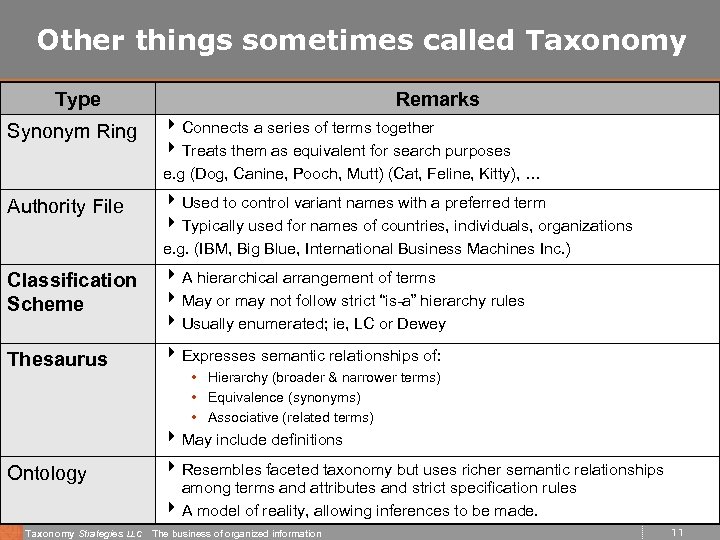 Other things sometimes called Taxonomy Type Remarks Synonym Ring 4 Connects a series of terms together 4 Treats them as equivalent for search purposes e. g (Dog, Canine, Pooch, Mutt) (Cat, Feline, Kitty), … Authority File 4 Used to control variant names with a preferred term 4 Typically used for names of countries, individuals, organizations e. g. (IBM, Big Blue, International Business Machines Inc. ) Classification Scheme 4 A hierarchical arrangement of terms 4 May or may not follow strict “is-a” hierarchy rules 4 Usually enumerated; ie, LC or Dewey Thesaurus 4 Expresses semantic relationships of: • Hierarchy (broader & narrower terms) • Equivalence (synonyms) • Associative (related terms) 4 May include definitions 4 Resembles faceted taxonomy but uses richer semantic relationships among terms and attributes and strict specification rules 4 A model of reality, allowing inferences to be made. Ontology Taxonomy Strategies LLC The business of organized information 11
 Pop Quiz On a blank piece of paper: • What question(s) did you want to have answered by coming to today’s talks? Flag one question to be discussed later. You do NOT have to provide your name. Please DO provide your job title, division, and either company name or company type. Taxonomy Strategies LLC The business of organized information 12
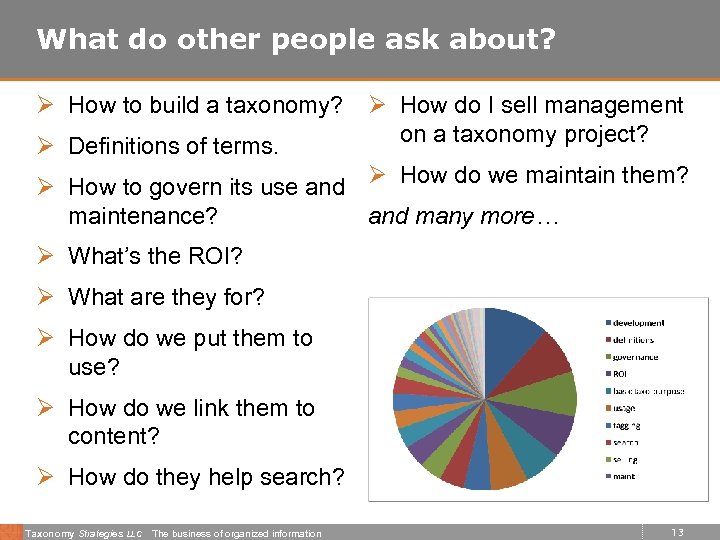 What do other people ask about? Ø How to build a taxonomy? Ø How do I sell management on a taxonomy project? Ø Definitions of terms. Ø How to govern its use and Ø How do we maintain them? maintenance? and many more… Ø What’s the ROI? Ø What are they for? Ø How do we put them to use? Ø How do we link them to content? Ø How do they help search? Taxonomy Strategies LLC The business of organized information 13
 Agenda 9: 15 Metadata Definitions 9: 30 Maturity Models 9: 45 Metadata Maturity Model (ca. 2006) 10: 15 Break 10: 30 Stock Photo Business 10: 40 Data Governance Practices in Stock Photo Agencies 11: 40 Summary 11: 45 Questions 12: 00 Adjourn Taxonomy Strategies LLC The business of organized information 14
 Motivation behind the Metadata Maturity Model TAXONOMY STRATEGIES The business of organized information 15
 Organizational benchmarking Ø A common goal of organizations is to ‘benchmark’ themselves against other organizations. Ø Different organizations have: § Different levels of sophistication in their planning, execution, and follow-up for CMS, Search, Portal, Metadata, and Taxonomy projects. § Different reasons for pursuing Search, Metadata, and Taxonomy efforts § Different cultures Ø Benchmarks should be to similar organizations. Taxonomy Strategies LLC The business of organized information 16
 Is unnecessary capability harmful? Ø Tool Vendors continue to provide ever-more capable tools with ever-more sophisticated features. § But we live in a world where a significant fraction of public, commercial, web pages don’t have a
tag. § Organizations that can’t manage <title> tags stand a very poor chance of putting an entity extractor to use, which requires some ongoing management of the lists of entities to be extracted. § Organizations that can’t create and maintain clean metadata can’t put a faceted search UI to good use. Ø Unused capability is poor value-for-money. § Organizations over-spend on tools and under-spend on staff & processes. Taxonomy Strategies LLC The business of organized information 17 </p>
</div>
<div style="width: auto;" class="description columns twelve"><p><img class="imgdescription" title="Towards better benchmarking… Ø Wanted a method to: § Generally identify good and bad" src="https://present5.com/presentation/268f9b3644892d49f321b44d9cafc412/image-18.jpg" alt="Towards better benchmarking… Ø Wanted a method to: § Generally identify good and bad" />
Towards better benchmarking… Ø Wanted a method to: § Generally identify good and bad practices. § Help clients identify the things they can do, and the things that stand an excellent chance of failing. § Predict likely sources of problems in engagements. Ø We have started to develop a Metadata Maturity Model, inspired by Maturity Models from the software industry. Ø To keep the model tied to reality, we are conducting surveys to determine the actual state of practice around search, metadata, taxonomy, and supporting business functions such as staffing and project management. Taxonomy Strategies LLC The business of organized information 18 </p>
</div>
<div style="width: auto;" class="description columns twelve"><p><img class="imgdescription" title="A Tale of Two Software Maturity Models CMMI (Capability Maturity Model Integration) vs. The" src="https://present5.com/presentation/268f9b3644892d49f321b44d9cafc412/image-19.jpg" alt="A Tale of Two Software Maturity Models CMMI (Capability Maturity Model Integration) vs. The" />
A Tale of Two Software Maturity Models CMMI (Capability Maturity Model Integration) vs. The Joel Test TAXONOMY STRATEGIES The business of organized information 19 </p>
</div>
<div style="width: auto;" class="description columns twelve"><p><img class="imgdescription" title="CMMI structure Maturity Models are collections of Practices. Main differences in Maturity Models concern:" src="https://present5.com/presentation/268f9b3644892d49f321b44d9cafc412/image-20.jpg" alt="CMMI structure Maturity Models are collections of Practices. Main differences in Maturity Models concern:" />
CMMI structure Maturity Models are collections of Practices. Main differences in Maturity Models concern: • Descriptivist or Prescriptivist Purpose • Degree of Categorization of Practices • Number of Practices (~400 in CMMI) Taxonomy Strategies LLC The business of organized information Source: http: //chrguibert. free. fr/cmmi 20 </p>
</div>
<div style="width: auto;" class="description columns twelve"><p><img class="imgdescription" title="22 Process Areas, keyed to 5 Maturity Levels… Ø Process Areas contain Specific and" src="https://present5.com/presentation/268f9b3644892d49f321b44d9cafc412/image-21.jpg" alt="22 Process Areas, keyed to 5 Maturity Levels… Ø Process Areas contain Specific and" />
22 Process Areas, keyed to 5 Maturity Levels… Ø Process Areas contain Specific and Generic Practices, organized by Goals and Features, and arranged into Levels Ø Process Areas cover a broad range of practices beyond simple software development Ø CMMI Axioms: §Individual processes at higher levels are AT RISK from supporting processes at lower levels. §A Maturity Level is not achieved until ALL the Practices in that level are in operation. Taxonomy Strategies LLC The business of organized information 21 </p>
</div>
<div style="width: auto;" class="description columns twelve"><p><img class="imgdescription" title="CMMI Positives Ø Independent audits of an organization’s level of maturity are a common" src="https://present5.com/presentation/268f9b3644892d49f321b44d9cafc412/image-22.jpg" alt="CMMI Positives Ø Independent audits of an organization’s level of maturity are a common" />
CMMI Positives Ø Independent audits of an organization’s level of maturity are a common service § Level 3 certification frequently required in bids Ø “…compared with an average Level 2 program, Level 3 programs have 3. 6 times fewer latent defects, Level 4 programs have 14. 5 times fewer latent defects, and Level 5 programs have 16. 8 times fewer latent defects”. Ø Michael Diaz and Jeff King – “How CMM Impacts Quality, Productivity, Rework, and the Bottom Line” Ø ‘If you find yourself involved in product liability litigation you're going to hear terms like "prevailing standard of care" and "what a reasonable member of your profession would have done". Considering the fact that well over a thousand companies world-wide have achieved level 3 or above, and the body of knowledge about the CMM is readily available, you might have some explaining to do if you claim ignorance’. Linda Zarate in a review of A Guide to the Cmm: Understanding the Capability Maturity Model for Software by Kenneth M. Dymond Taxonomy Strategies LLC The business of organized information 22 </p>
</div>
<div style="width: auto;" class="description columns twelve"><p><img class="imgdescription" title="CMMI Negatives Ø Complexity and Expense § Reading and understanding the materials § Putting" src="https://present5.com/presentation/268f9b3644892d49f321b44d9cafc412/image-23.jpg" alt="CMMI Negatives Ø Complexity and Expense § Reading and understanding the materials § Putting" />
CMMI Negatives Ø Complexity and Expense § Reading and understanding the materials § Putting it into action – identifying processes, mapping processes to model, gathering required data, … § Audits are expensive Ø CMMI does not scale down well to small shops § Has been accused of restraint of trade Taxonomy Strategies LLC The business of organized information 23 </p>
</div>
<div style="width: auto;" class="description columns twelve"><p><img class="imgdescription" title="At the other extreme, The Joel Test Ø Developed by Joel Spolsky as reaction" src="https://present5.com/presentation/268f9b3644892d49f321b44d9cafc412/image-24.jpg" alt="At the other extreme, The Joel Test Ø Developed by Joel Spolsky as reaction" />
At the other extreme, The Joel Test Ø Developed by Joel Spolsky as reaction to CMMI complexity Ø Positives - Quick, easy, and inexpensive to use. Ø Negatives - Doesn’t scale up well: §Not a good way to assure the quality of nuclear reactor software. §Not suitable for scaring away liability lawyers. §Not a longer-term improvement plan. Ø The Joel Test 1. Do you use source control? 2. Can you make a build in one step? 3. Do you make daily builds? 4. Do you have a bug database? 5. Do you fix bugs before writing new code? 6. Do you have an up-to-date schedule? 7. Do you have a spec? 8. Do programmers have quiet working conditions? 9. Do you use the best tools money can buy? 10. Do you have testers? 11. Do new candidates write code during their interview? 12. Do you do hallway usability testing? Scoring: 1 point for each ‘yes’. Scores below 10 indicate serious trouble. Taxonomy Strategies LLC The business of organized information 24 </p>
</div>
<div style="width: auto;" class="description columns twelve"><p><img class="imgdescription" title="What does software development “Maturity” really mean? Ø A low score on a maturity" src="https://present5.com/presentation/268f9b3644892d49f321b44d9cafc412/image-25.jpg" alt="What does software development “Maturity” really mean? Ø A low score on a maturity" />
What does software development “Maturity” really mean? Ø A low score on a maturity audit DOES NOT mean that an organization can’t develop good software Ø It DOES mean that whether the organization will do a good job depends on the specific mix of people assigned to the project Ø In other words, it sets a floor for how bad an organization is likely to do, not a ceiling on how good they can do § Probability of failure is a good thing to know before spending a lot of time and money Taxonomy Strategies LLC The business of organized information 25 </p>
</div>
<div style="width: auto;" class="description columns twelve"><p><img class="imgdescription" title="Towards a Metadata Maturity Model Caveats: § Maturity is not a goal, it is" src="https://present5.com/presentation/268f9b3644892d49f321b44d9cafc412/image-26.jpg" alt="Towards a Metadata Maturity Model Caveats: § Maturity is not a goal, it is" />
Towards a Metadata Maturity Model Caveats: § Maturity is not a goal, it is a characterization of an organization’s methods for achieving its core goals. § Mature processes impose expenses which must be justified by consequent cost savings, revenue gains, or service improvements. Nevertheless, Maturity Models are useful as collections of best practices and stages in which to try to adopt them. TAXONOMY STRATEGIES The business of organized information 26 </p>
</div>
<div style="width: auto;" class="description columns twelve"><p><img class="imgdescription" title="Basis for initial maturity model Ø CEN study on commercial adoption of Dublin Core" src="https://present5.com/presentation/268f9b3644892d49f321b44d9cafc412/image-27.jpg" alt="Basis for initial maturity model Ø CEN study on commercial adoption of Dublin Core" />
Basis for initial maturity model Ø CEN study on commercial adoption of Dublin Core Ø Small-scale phone survey § Organizations which have world-class search and metadata externally § Not necessarily the most mature overall processes or the best internal search and metadata Ø Literature review Ø Client experiences Ø Structure from software maturity models Taxonomy Strategies LLC The business of organized information 27 </p>
</div>
<div style="width: auto;" class="description columns twelve"><p><img class="imgdescription" title="Initial Metadata Maturity Model (ca. May, 2005) 37 Practices, Categorized by Area, Level, and" src="https://present5.com/presentation/268f9b3644892d49f321b44d9cafc412/image-28.jpg" alt="Initial Metadata Maturity Model (ca. May, 2005) 37 Practices, Categorized by Area, Level, and" />
Initial Metadata Maturity Model (ca. May, 2005) 37 Practices, Categorized by Area, Level, and Importance Practice Area Maturity Level Basic Intermediate Advanced Bleeding. Edge Search Capabilities Uniform Search Box Query Log Exam. Index Multiple Repos. Best Bets Simple Grouping Intranet Facet Navigation Improved Ranking Metadata and taxonomy standards System MD Stds. Organization MD Std. Reuse ERP Multipe Repos Comply Taxonomy Roadmap Tools and tool selection Requirements, then Tools Bakeoff Datasets Budget for Bakeoffs Staff training and hiring Search Analyst Role Librarian Expertise Pre-hire Testing SME Catalogers Data creation and QA CM Introduced ROT-Eliminatiion Hybrid Creation Model Adaptive Qualification Quality Measures Project management Project Plan Std. Proj. Methodol. X-Functional Teams Communication Plan Multi-Year Plan Early Termination Executive support and ROI External Search ROI Intranet ROI Model CEO knows Search ROI Limiting Taxonomy Strategies LLC The business of organized information Highly Abstract Subject Taxos. Unneeded Capabils. Tools, then Reqs. Use it or Lose It Budgets 28 </p>
</div>
<div style="width: auto;" class="description columns twelve"><p><img class="imgdescription" title="Shortcomings of the initial model Ø No idea of how it corresponds to actual" src="https://present5.com/presentation/268f9b3644892d49f321b44d9cafc412/image-29.jpg" alt="Shortcomings of the initial model Ø No idea of how it corresponds to actual" />
Shortcomings of the initial model Ø No idea of how it corresponds to actual practice across multiple organizations § Some indications that it over-emphasized the sophisticated practices and under-emphasized beginning practices. Ø The initial metadata maturity model can be regarded as a hypothesis about how an organization progresses through various practices as it matures § How to test it? Let’s ask! § Two surveys to date § Surveys are being run in stages because of large number of practices. § Ask about future, current, and former practices to gather information on progression Taxonomy Strategies LLC The business of organized information 29 </p>
</div>
<div style="width: auto;" class="description columns twelve"><p><img class="imgdescription" title="Agenda 9: 15 Metadata Definitions 9: 30 Maturity Models 9: 45 Metadata Maturity Model" src="https://present5.com/presentation/268f9b3644892d49f321b44d9cafc412/image-30.jpg" alt="Agenda 9: 15 Metadata Definitions 9: 30 Maturity Models 9: 45 Metadata Maturity Model" />
Agenda 9: 15 Metadata Definitions 9: 30 Maturity Models 9: 45 Metadata Maturity Model (ca. 2006) 10: 15 Break 10: 30 Stock Photo Business 10: 40 Data Governance Practices in Stock Photo Agencies 11: 40 Summary 11: 45 Questions 12: 00 Adjourn Taxonomy Strategies LLC The business of organized information 30 </p>
</div>
<div style="width: auto;" class="description columns twelve"><p><img class="imgdescription" title="Survey 1: Search, Metadata, & Taxonomy Practices The data in this section comes from" src="https://present5.com/presentation/268f9b3644892d49f321b44d9cafc412/image-31.jpg" alt="Survey 1: Search, Metadata, & Taxonomy Practices The data in this section comes from" />
Survey 1: Search, Metadata, & Taxonomy Practices The data in this section comes from a survey conducted in the autumn of 2005. TAXONOMY STRATEGIES The business of organized information 31 </p>
</div>
<div style="width: auto;" class="description columns twelve"><p><img class="imgdescription" title="Participants by Organization Size Taxonomy Strategies LLC The business of organized information 32 " src="https://present5.com/presentation/268f9b3644892d49f321b44d9cafc412/image-32.jpg" alt="Participants by Organization Size Taxonomy Strategies LLC The business of organized information 32 " />
Participants by Organization Size Taxonomy Strategies LLC The business of organized information 32 </p>
</div>
<div style="width: auto;" class="description columns twelve"><p><img class="imgdescription" title="Participants by Job Role Taxonomy Strategies LLC The business of organized information 33 " src="https://present5.com/presentation/268f9b3644892d49f321b44d9cafc412/image-33.jpg" alt="Participants by Job Role Taxonomy Strategies LLC The business of organized information 33 " />
Participants by Job Role Taxonomy Strategies LLC The business of organized information 33 </p>
</div>
<div style="width: auto;" class="description columns twelve"><p><img class="imgdescription" title="Participants by Industry Taxonomy Strategies LLC The business of organized information 34 " src="https://present5.com/presentation/268f9b3644892d49f321b44d9cafc412/image-34.jpg" alt="Participants by Industry Taxonomy Strategies LLC The business of organized information 34 " />
Participants by Industry Taxonomy Strategies LLC The business of organized information 34 </p>
</div>
<div style="width: auto;" class="description columns twelve"><p><img class="imgdescription" title="Search Practices Not current practice Being developed In practice Former practice NA or Unknown" src="https://present5.com/presentation/268f9b3644892d49f321b44d9cafc412/image-35.jpg" alt="Search Practices Not current practice Being developed In practice Former practice NA or Unknown" />
Search Practices Not current practice Being developed In practice Former practice NA or Unknown Search Box in standard place on all web pages. 20% (12) 11% (7) 62% (38) 2% (1) 5% (3) Search engine indexes multiple repositories in addition to web sites. 25% (15) 21% (13) 44% (27) 2% (1) 8% (5) Spell Checking. 31% (19) 18% (11) 38% (23) 0% (0) 13% (8) Synonym Searching. 41% (25) 23% (14) 30% (18) 0% (0) 7% (4) Search results grouped by date, location, or other factors in addition to simple relevance score. 37% (22) 20% (12) 37% (22) 0% (0) 7% (4) Queries are logged and the logs are regularly examined 31% (19) 25% (15) 31% (19) 5% (3) 8% (5) Common queries identified, 'best' pages for those queries are found, and search engine configured to return them at the top. 46% (28) 25% (15) 21% (13) 0% (0) 8% (5) Advanced computation of relevance based on data in addition to the text of the document. 43% (26) 16% (10) 25% (15) 0% (0) 16% (10) A faceted search tool, such as Endeca, has been implemented for the organization's external site or product catalog search. 68% (41) 7% (4) 10% (6) 0% (0) 15% (9) A faceted search tool, such as Endeca, has been implemented for the organization's internal website(s) or portal. 57% (34) 15% (9) 17% (10) 0% (0) 12% (7) Taxonomy Strategies LLC The business of organized information 35 </p>
</div>
<div style="width: auto;" class="description columns twelve"><p><img class="imgdescription" title="Metadata Practices. These two questions were the only ones with much correlation to organization" src="https://present5.com/presentation/268f9b3644892d49f321b44d9cafc412/image-36.jpg" alt="Metadata Practices. These two questions were the only ones with much correlation to organization" />
Metadata Practices. These two questions were the only ones with much correlation to organization size Not current practice Being developed In practice Former practice NA or Unknown Metadata standards are developed for the needs of each system with no overall attempt to unify them. 22% (13) 12% (7) 37% (22) 20% (12) 10% (6) An Organization-wide metadata standard exists and new systems consider it during development. 37% (22) 20% (12) 0% (0) 7% (4) The Organization-wide metadata standard is based on the Dublin Core. 52% (30) 16% (9) 21% (12) 0% (0) 12% (7) Multiple repositories comply with metadata standard. 52% (31) 20% (12) 17% (10) 0% (0) 12% (7) A Cataloging Policy document exists to teach people how to tag data in compliance with organizational metadata standard. 48% (29) 20% (12) 0% (0) 12% (7) The Cataloging Policy document is revised periodically. 48% (29) 15% (9) 17% (10) 0% (0) 20% (12) A centralized metadata repository exists to aggregate and unify metadata from disparate sources. 57% (34) 17% (10) 0% (0) 10% (6) 15% (9) 12% (7) 61% (36) 3% (2) 8% (5) Metadata is generated automatically by software. 38% (23) 18% (11) 27% (16) 2% (1) 15% (9) Metadata is generated automatically, then reviewed manually for correction. 48% (29) 18% (11) 17% (10) 2% (1) 15% (9) Metadata is manually entered into web forms. Taxonomy Strategies LLC The business of organized information 36 </p>
</div>
<div style="width: auto;" class="description columns twelve"><p><img class="imgdescription" title="Taxonomy Practices Not current practice Being developed In practice Former practice NA or Unknown" src="https://present5.com/presentation/268f9b3644892d49f321b44d9cafc412/image-37.jpg" alt="Taxonomy Practices Not current practice Being developed In practice Former practice NA or Unknown" />
Taxonomy Practices Not current practice Being developed In practice Former practice NA or Unknown Org Chart' Taxonomy - One based primarily on the structure of the organization. 36% (21) 10% (6) 34% (20) 5% (3) 15% (9) 'Products' Taxonomy - One based primarily on the products and/or services offered by the organization. 37% (22) 10% (6) 32% (19) 5% (3) 15% (9) 'Content Types' Taxonomy - One based primarily on the different types of documents. 28% (16) 21% (12) 40% (23) 5% (3) 7% (4) 'Topical' Taxonomy - One based primarily on topics of interest to the site users. 20% (12) 36% (21) 34% (20) 3% (2) 7% (4) 'Faceted' Taxonomy - One which uses several of the approaches above. 32% (19) 29% (17) 34% (20) 0% (0) 5% (3) The Taxonomy, or a portion of it, was licensed from an outside taxonomy vendor. 75% (44) 3% (2) 14% (8) 0% (0) 8% (5) The Taxonomy follows a written 'style guide' to ensure its consistency over time. 47% (28) 22% (13) 20% (12) 0% (0) 10% (6) The Taxonomy is maintained using a taxonomy editing tool other than MS Excel. 35% (21) 17% (10) 40% (24) 2% (1) 7% (4) The Taxonomy was validated on a representative sample of content during its development. 28% (17) 22% (13) 33% (20) 3% (2) 13% (8) A Roadmap for the future evolution of the Taxonomy has been developed. 38% (23) 40% (24) 13% (8) 0% (0) 8% (5) Taxonomy Strategies LLC The business of organized information 37 </p>
</div>
<div style="width: auto;" class="description columns twelve"><p><img class="imgdescription" title="Survey 2: Business Drivers, Processes, and Staffing The data in this section comes from" src="https://present5.com/presentation/268f9b3644892d49f321b44d9cafc412/image-38.jpg" alt="Survey 2: Business Drivers, Processes, and Staffing The data in this section comes from" />
Survey 2: Business Drivers, Processes, and Staffing The data in this section comes from a survey conducted in the spring of 2006. TAXONOMY STRATEGIES The business of organized information 38 </p>
</div>
<div style="width: auto;" class="description columns twelve"><p><img class="imgdescription" title="Participants by Job Role Taxonomy Strategies LLC The business of organized information 39 " src="https://present5.com/presentation/268f9b3644892d49f321b44d9cafc412/image-39.jpg" alt="Participants by Job Role Taxonomy Strategies LLC The business of organized information 39 " />
Participants by Job Role Taxonomy Strategies LLC The business of organized information 39 </p>
</div>
<div style="width: auto;" class="description columns twelve"><p><img class="imgdescription" title="Participants by Tenure Taxonomy Strategies LLC The business of organized information 40 " src="https://present5.com/presentation/268f9b3644892d49f321b44d9cafc412/image-40.jpg" alt="Participants by Tenure Taxonomy Strategies LLC The business of organized information 40 " />
Participants by Tenure Taxonomy Strategies LLC The business of organized information 40 </p>
</div>
<div style="width: auto;" class="description columns twelve"><p><img class="imgdescription" title="Participants by Industry Taxonomy Strategies LLC The business of organized information 41 " src="https://present5.com/presentation/268f9b3644892d49f321b44d9cafc412/image-41.jpg" alt="Participants by Industry Taxonomy Strategies LLC The business of organized information 41 " />
Participants by Industry Taxonomy Strategies LLC The business of organized information 41 </p>
</div>
<div style="width: auto;" class="description columns twelve"><p><img class="imgdescription" title="Participants by Organization Size Taxonomy Strategies LLC The business of organized information 42 " src="https://present5.com/presentation/268f9b3644892d49f321b44d9cafc412/image-42.jpg" alt="Participants by Organization Size Taxonomy Strategies LLC The business of organized information 42 " />
Participants by Organization Size Taxonomy Strategies LLC The business of organized information 42 </p>
</div>
<div style="width: auto;" class="description columns twelve"><p><img class="imgdescription" title="Business Drivers: Search, Metadata, and Taxonomy (SMT) Applications Taxonomy Strategies LLC The business of" src="https://present5.com/presentation/268f9b3644892d49f321b44d9cafc412/image-43.jpg" alt="Business Drivers: Search, Metadata, and Taxonomy (SMT) Applications Taxonomy Strategies LLC The business of" />
Business Drivers: Search, Metadata, and Taxonomy (SMT) Applications Taxonomy Strategies LLC The business of organized information 43 </p>
</div>
<div style="width: auto;" class="description columns twelve"><p><img class="imgdescription" title="Business Drivers: Desired Benefits Other desired benefits: Taxonomy Strategies LLC 1 2 3 4" src="https://present5.com/presentation/268f9b3644892d49f321b44d9cafc412/image-44.jpg" alt="Business Drivers: Desired Benefits Other desired benefits: Taxonomy Strategies LLC 1 2 3 4" />
Business Drivers: Desired Benefits Other desired benefits: Taxonomy Strategies LLC 1 2 3 4 5 6 7 8 9 10 11 Innovation Core to our business product Clients do all the above [From a consultant] Better navigation to diverse State web sites Increased knowledge sharing across the corporation Interoperability Dynamic web applications Improved user search experience Improve R&D Higher value to members [From a non-profit membership org. ] For organization to have better understanding of their content The business of organized information 44 </p>
</div>
<div style="width: auto;" class="description columns twelve"><p><img class="imgdescription" title="ROI: Cost Estimation Taxonomy Strategies LLC The business of organized information 45 " src="https://present5.com/presentation/268f9b3644892d49f321b44d9cafc412/image-45.jpg" alt="ROI: Cost Estimation Taxonomy Strategies LLC The business of organized information 45 " />
ROI: Cost Estimation Taxonomy Strategies LLC The business of organized information 45 </p>
</div>
<div style="width: auto;" class="description columns twelve"><p><img class="imgdescription" title="Processes Use of search logs is improving Surprisingly sophisticated Basic data quality and communications" src="https://present5.com/presentation/268f9b3644892d49f321b44d9cafc412/image-46.jpg" alt="Processes Use of search logs is improving Surprisingly sophisticated Basic data quality and communications" />
Processes Use of search logs is improving Surprisingly sophisticated Basic data quality and communications need improvement Many solo operators Taxonomy Strategies LLC The business of organized information 46 </p>
</div>
<div style="width: auto;" class="description columns twelve"><p><img class="imgdescription" title="Team Structures & Staffing Taxonomy Strategies LLC The business of organized information 47 " src="https://present5.com/presentation/268f9b3644892d49f321b44d9cafc412/image-47.jpg" alt="Team Structures & Staffing Taxonomy Strategies LLC The business of organized information 47 " />
Team Structures & Staffing Taxonomy Strategies LLC The business of organized information 47 </p>
</div>
<div style="width: auto;" class="description columns twelve"><p><img class="imgdescription" title="Salary Survey Experience 0. 6 Nice to see it really counts. Geography 0. 5" src="https://present5.com/presentation/268f9b3644892d49f321b44d9cafc412/image-48.jpg" alt="Salary Survey Experience 0. 6 Nice to see it really counts. Geography 0. 5" />
Salary Survey Experience 0. 6 Nice to see it really counts. Geography 0. 5 California and the Northeast have highest salaries. Co. Size 0. 5 Not very reliable, big changes from one datapoint Education 0. 4 Many taxonomists have MLS or above. Industry 0. 4 Surprisingly, retail has high salaries for taxonomists. Role 0. 04 Taxonomists paid about like Information Architects Time at current job Taxonomy Strategies LLC -0. 07 The business of organized information 48 </p>
</div>
<div style="width: auto;" class="description columns twelve"><p><img class="imgdescription" title="Notes from Participants Ø There is the constant struggle with individual [magazine] titles to" src="https://present5.com/presentation/268f9b3644892d49f321b44d9cafc412/image-49.jpg" alt="Notes from Participants Ø There is the constant struggle with individual [magazine] titles to" />
Notes from Participants Ø There is the constant struggle with individual [magazine] titles to hire trained librarians or data specialists instead of trying to save money by hiring an editor who can build articles AND create and assign metadata. This is a governance issue we have been struggling with since we have no monetary stake in the individual publications. We make recommendations, but have no higher level authority to require titles to hire trained staff for metadata. Ø Reporting metrics have become a new area of confusion as we move to portalized pages consisting of objects in portlets, each with their own metadata. Ø Key organizational issue is that the "problems" that stem from lack of systematic metadata/taxonomy creation are not "owned" by anyone, and consequently have no budget for their solution. Taxonomy Strategies LLC The business of organized information 49 </p>
</div>
<div style="width: auto;" class="description columns twelve"><p><img class="imgdescription" title="Interim Conclusions TAXONOMY STRATEGIES The business of organized information 50 " src="https://present5.com/presentation/268f9b3644892d49f321b44d9cafc412/image-50.jpg" alt="Interim Conclusions TAXONOMY STRATEGIES The business of organized information 50 " />
Interim Conclusions TAXONOMY STRATEGIES The business of organized information 50 </p>
</div>
<div style="width: auto;" class="description columns twelve"><p><img class="imgdescription" title="Observations (1) Ø Practices which a single person or a small group can carry" src="https://present5.com/presentation/268f9b3644892d49f321b44d9cafc412/image-51.jpg" alt="Observations (1) Ø Practices which a single person or a small group can carry" />
Observations (1) Ø Practices which a single person or a small group can carry out are more commonly used § Not surprising § Very different than ERP/BPR, indicates that information management is not being sold to the “C-level” staff. § People need to question how inclusive their “Organizational Metadata Standards” and “Taxonomy Roadmaps” actually are. § We have found Taxonomy Roadmaps to be an advanced practice, due to a dependence on knowing upcoming IT development schedule Taxonomy Strategies LLC The business of organized information 51 </p>
</div>
<div style="width: auto;" class="description columns twelve"><p><img class="imgdescription" title="Observations (2) Ø Many of the basics are being skipped § More organizations doing" src="https://present5.com/presentation/268f9b3644892d49f321b44d9cafc412/image-52.jpg" alt="Observations (2) Ø Many of the basics are being skipped § More organizations doing" />
Observations (2) Ø Many of the basics are being skipped § More organizations doing “Spell Checking” than “Query Log Analysis”. § 69% have a taxonomy change plan, but only 41% have a plan for revisiting data if the taxonomy changes. § 64% have a communications plan, but only 56% have a website. § This seems to be linked to the previous observation – things that are easy for an individual get done before things that need an organizational effort, despite their level of ‘sophistication’. Taxonomy Strategies LLC The business of organized information 52 </p>
</div>
<div style="width: auto;" class="description columns twelve"><p><img class="imgdescription" title="Interim Metadata Maturity Model (ca. May, 2006) Basic Practice Area Intermediate Advanced Search Capabilities" src="https://present5.com/presentation/268f9b3644892d49f321b44d9cafc412/image-53.jpg" alt="Interim Metadata Maturity Model (ca. May, 2006) Basic Practice Area Intermediate Advanced Search Capabilities" />
Interim Metadata Maturity Model (ca. May, 2006) Basic Practice Area Intermediate Advanced Search Capabilities ØUniform Search Box ØQuery Log Exam. ØIndex Multiple Repos. ØBest Bets ØFacet Navigation UI Metadata and taxonomy standards ØSystem MD Stds. ØOrganization MD Std. ØMultipe Repos Comply w/ MD Std. ØReuse ERP Taxos ØTaxo Maint. Doc ØTaxonomy Roadmap ØHighly Abstract Subject Taxos (e. g. “Moods”) ØMetadata Maint. Doc Tools and tool selection ØRequirements, then Tools ØBakeoff Datasets ØBudget for Bakeoffs Staff training and hiring ØLibrarian or IA Expertise ØSearch Analyst Role ØCross-Functional Taxonomy Creation ØCross-functional taxonomy maint. ØSME Catalogers ØPre-hire Testing Data creation and QA ØCM Introduced ØROT-Eliminatiion ØSemi-auto tagging ØQuality Measures Project management ØProject Plan ØX-Functional Teams ØStd. Proj. Methodol. ØMulti-Year Plan ØCommunication Plan ØSMT Business Manager, instead of IT Manager ØEarly Termination Executive support and ROI ØExternal Search ROI ØSMT in separate silos ØIntranet ROI Model ØCEO knows Search ROI Limiting Taxonomy Strategies LLC The business of organized information ØTools, then Reqs. ØUse it or Lose It Budgets 53 </p>
</div>
<div style="width: auto;" class="description columns twelve"><p><img class="imgdescription" title="Search and Metadata Maturity Quick Quiz Basic 1) Is there a process in place" src="https://present5.com/presentation/268f9b3644892d49f321b44d9cafc412/image-54.jpg" alt="Search and Metadata Maturity Quick Quiz Basic 1) Is there a process in place" />
Search and Metadata Maturity Quick Quiz Basic 1) Is there a process in place to examine query logs? 2) Is there a process for adding directories and content to the repository, or do people just do what they want? 3) Is there an organization-wide metadata standard, such as an extension of the Dublin Core, for use by search tools, multiple repositories, etc. ? Intermediate 4) Does the search engine index more than 4 repositories around the organization? 5) Does the search engine integrate with the taxonomy to improve searches and organize results? 6) Are there hiring and training practices especially for metadata and taxonomy positions? 7) Is there an ongoing data cleansing procedure to look for ROT (Redundant, Obsolete, Trivial content)? 8) Are tools only acquired after requirements have been analyzed, or are major purchases sometimes made to use up year-end money? Advanced 9) Are there established qualitative and quantitative measures of metadata quality? 10) Can the CEO explain the ROI for search and metadata? Taxonomy Strategies LLC The business of organized information 54 </p>
</div>
<div style="width: auto;" class="description columns twelve"><p><img class="imgdescription" title="Agenda 9: 15 Metadata Definitions 9: 30 Maturity Models 9: 45 Metadata Maturity Model" src="https://present5.com/presentation/268f9b3644892d49f321b44d9cafc412/image-55.jpg" alt="Agenda 9: 15 Metadata Definitions 9: 30 Maturity Models 9: 45 Metadata Maturity Model" />
Agenda 9: 15 Metadata Definitions 9: 30 Maturity Models 9: 45 Metadata Maturity Model (ca. 2006) 10: 15 Break 10: 30 Stock Photo Business 10: 40 Data Governance Practices in Stock Photo Agencies 11: 40 Summary 11: 45 Questions 12: 00 Adjourn Taxonomy Strategies LLC The business of organized information 55 </p>
</div>
<div style="width: auto;" class="description columns twelve"><p><img class="imgdescription" title="Agenda 9: 15 Metadata Definitions 9: 30 Maturity Models 9: 45 Metadata Maturity Model" src="https://present5.com/presentation/268f9b3644892d49f321b44d9cafc412/image-56.jpg" alt="Agenda 9: 15 Metadata Definitions 9: 30 Maturity Models 9: 45 Metadata Maturity Model" />
Agenda 9: 15 Metadata Definitions 9: 30 Maturity Models 9: 45 Metadata Maturity Model (ca. 2006) 10: 15 Break 10: 30 Stock Photo Business 10: 40 Data Governance Practices in Stock Photo Agencies 11: 40 Summary 11: 45 Questions 12: 00 Adjourn Taxonomy Strategies LLC The business of organized information 56 </p>
</div>
<div style="width: auto;" class="description columns twelve"><p><img class="imgdescription" title="Stock Photo Business Ø Advertising, Editorial Content, Corporate Communications, and many other types of" src="https://present5.com/presentation/268f9b3644892d49f321b44d9cafc412/image-57.jpg" alt="Stock Photo Business Ø Advertising, Editorial Content, Corporate Communications, and many other types of" />
Stock Photo Business Ø Advertising, Editorial Content, Corporate Communications, and many other types of content rely on images to convey information and moods. Ø When time and/or budget does not allow a commissioned shoot, stock photo houses can supply images. Ø Fundamental problem for users: How to search for an image that conveys what you want? Ø Fundamental problem for houses: How to describe images so that users can find them? Taxonomy Strategies LLC The business of organized information 57 </p>
</div>
<div style="width: auto;" class="description columns twelve"><p><img class="imgdescription" title="How would you search for this image? Taxonomy Strategies LLC The business of organized" src="https://present5.com/presentation/268f9b3644892d49f321b44d9cafc412/image-58.jpg" alt="How would you search for this image? Taxonomy Strategies LLC The business of organized" />
How would you search for this image? Taxonomy Strategies LLC The business of organized information 58 </p>
</div>
<div style="width: auto;" class="description columns twelve"><p><img class="imgdescription" title="Tagging by emotions Taxonomy Strategies LLC The business of organized information 59 " src="https://present5.com/presentation/268f9b3644892d49f321b44d9cafc412/image-59.jpg" alt="Tagging by emotions Taxonomy Strategies LLC The business of organized information 59 " />
Tagging by emotions Taxonomy Strategies LLC The business of organized information 59 </p>
</div>
<div style="width: auto;" class="description columns twelve"><p><img class="imgdescription" title="“silence” Image Rights Criteria Objective criteria Conceptual refinement Taxonomy Strategies LLC The business of" src="https://present5.com/presentation/268f9b3644892d49f321b44d9cafc412/image-60.jpg" alt="“silence” Image Rights Criteria Objective criteria Conceptual refinement Taxonomy Strategies LLC The business of" />
“silence” Image Rights Criteria Objective criteria Conceptual refinement Taxonomy Strategies LLC The business of organized information 60 </p>
</div>
<div style="width: auto;" class="description columns twelve"><p><img class="imgdescription" title="Clarification: Finger on Lips Taxonomy Strategies LLC The business of organized information 61 " src="https://present5.com/presentation/268f9b3644892d49f321b44d9cafc412/image-61.jpg" alt="Clarification: Finger on Lips Taxonomy Strategies LLC The business of organized information 61 " />
Clarification: Finger on Lips Taxonomy Strategies LLC The business of organized information 61 </p>
</div>
<div style="width: auto;" class="description columns twelve"><p><img class="imgdescription" title="Scrolling through results… This is more of the mood I’m looking for… Taxonomy Strategies" src="https://present5.com/presentation/268f9b3644892d49f321b44d9cafc412/image-62.jpg" alt="Scrolling through results… This is more of the mood I’m looking for… Taxonomy Strategies" />
Scrolling through results… This is more of the mood I’m looking for… Taxonomy Strategies LLC The business of organized information 62 </p>
</div>
<div style="width: auto;" class="description columns twelve"><p><img class="imgdescription" title="More like this Taxonomy Strategies LLC The business of organized information 63 " src="https://present5.com/presentation/268f9b3644892d49f321b44d9cafc412/image-63.jpg" alt="More like this Taxonomy Strategies LLC The business of organized information 63 " />
More like this Taxonomy Strategies LLC The business of organized information 63 </p>
</div>
<div style="width: auto;" class="description columns twelve"><p><img class="imgdescription" title="Facets at gettyimages. com Taxonomy Strategies LLC The business of organized information 64 " src="https://present5.com/presentation/268f9b3644892d49f321b44d9cafc412/image-64.jpg" alt="Facets at gettyimages. com Taxonomy Strategies LLC The business of organized information 64 " />
Facets at gettyimages. com Taxonomy Strategies LLC The business of organized information 64 </p>
</div>
<div style="width: auto;" class="description columns twelve"><p><img class="imgdescription" title="Key Questions Ø Getty Images (and Corbis) have put a lot of effort into" src="https://present5.com/presentation/268f9b3644892d49f321b44d9cafc412/image-65.jpg" alt="Key Questions Ø Getty Images (and Corbis) have put a lot of effort into" />
Key Questions Ø Getty Images (and Corbis) have put a lot of effort into their websites for image purchase*. Ø Internal staff at such organizations tell me that their intranets are nowhere near as easy to use. § ROI is the reason why. § Recall that retail had high salaries for taxonomists, because the ROI for a better shopping site is so clear. Ø The front-ends are dependent on data. How is that data governed? How does that differ from how their intranets are governed? *Licensing, not purchasing, to be pedantic. Taxonomy Strategies LLC The business of organized information 65 </p>
</div>
<div style="width: auto;" class="description columns twelve"><p><img class="imgdescription" title="Agenda 9: 15 Metadata Definitions 9: 30 Maturity Models 9: 45 Metadata Maturity Model" src="https://present5.com/presentation/268f9b3644892d49f321b44d9cafc412/image-66.jpg" alt="Agenda 9: 15 Metadata Definitions 9: 30 Maturity Models 9: 45 Metadata Maturity Model" />
Agenda 9: 15 Metadata Definitions 9: 30 Maturity Models 9: 45 Metadata Maturity Model (ca. 2006) 10: 15 Break 10: 30 Stock Photo Business 10: 40 Data Governance Practices in Stock Photo Agencies 11: 40 Summary 11: 45 Questions 12: 00 Adjourn Taxonomy Strategies LLC The business of organized information 66 </p>
</div>
<div style="width: auto;" class="description columns twelve"><p><img class="imgdescription" title="Pop Quiz Ø What is the #1 underused source of quantitative information on how" src="https://present5.com/presentation/268f9b3644892d49f321b44d9cafc412/image-67.jpg" alt="Pop Quiz Ø What is the #1 underused source of quantitative information on how" />
Pop Quiz Ø What is the #1 underused source of quantitative information on how to improve your metadata and taxonomy? Query Logs & Click Trails Taxonomy Strategies LLC The business of organized information 67 </p>
</div>
<div style="width: auto;" class="description columns twelve"><p><img class="imgdescription" title="Who are the users & what are they looking for? § Only 30 -40%" src="https://present5.com/presentation/268f9b3644892d49f321b44d9cafc412/image-68.jpg" alt="Who are the users & what are they looking for? § Only 30 -40%" />
Who are the users & what are they looking for? § Only 30 -40% of organizations regularly examine their logs. § Sophisticated software available, but don’t wait. § 80% of value comes from basic reports Taxonomy Strategies LLC The business of organized information 68 </p>
</div>
<div style="width: auto;" class="description columns twelve"><p><img class="imgdescription" title="Query log & click trail examination— Click trail packages § § § i. Web." src="https://present5.com/presentation/268f9b3644892d49f321b44d9cafc412/image-69.jpg" alt="Query log & click trail examination— Click trail packages § § § i. Web." />
Query log & click trail examination— Click trail packages § § § i. Web. Track Net. Tracker Optimal. IQ Site. Catalyst Visitorville Web. Trends Taxonomy Strategies LLC The business of organized information 69 </p>
</div>
<div style="width: auto;" class="description columns twelve"><p><img class="imgdescription" title="Query log & click trail examination– Query log Ø Ultra. Seek Reporting § §" src="https://present5.com/presentation/268f9b3644892d49f321b44d9cafc412/image-70.jpg" alt="Query log & click trail examination– Query log Ø Ultra. Seek Reporting § §" />
Query log & click trail examination– Query log Ø Ultra. Seek Reporting § § § Taxonomy Strategies LLC The business of organized information Top queries Queries with no results Queries with no click-through Most requested documents Query trend analysis Complete server usage summary 70 </p>
</div>
<div style="width: auto;" class="description columns twelve"><p><img class="imgdescription" title="Examining the Stock Photo Agencies in Light of the Metadata Maturity Model TAXONOMY STRATEGIES" src="https://present5.com/presentation/268f9b3644892d49f321b44d9cafc412/image-71.jpg" alt="Examining the Stock Photo Agencies in Light of the Metadata Maturity Model TAXONOMY STRATEGIES" />
Examining the Stock Photo Agencies in Light of the Metadata Maturity Model TAXONOMY STRATEGIES The business of organized information 71 </p>
</div>
<div style="width: auto;" class="description columns twelve"><p><img class="imgdescription" title="Maturity Model Recap Basic Practice Area Intermediate Advanced Search Capabilities ØUniform Search Box ØQuery" src="https://present5.com/presentation/268f9b3644892d49f321b44d9cafc412/image-72.jpg" alt="Maturity Model Recap Basic Practice Area Intermediate Advanced Search Capabilities ØUniform Search Box ØQuery" />
Maturity Model Recap Basic Practice Area Intermediate Advanced Search Capabilities ØUniform Search Box ØQuery Log Exam. ØIndex Multiple Repos. ØBest Bets ØFacet Navigation UI Metadata and taxonomy standards ØSystem MD Stds. ØOrganization MD Std. ØMultiple Repos itories Comply w/ MD Std. ØReuse ERP Taxos ØTaxo Maint. Doc ØTaxonomy Roadmap ØHighly Abstract Subject Taxos (e. g. “Moods”) ØMetadata Maint. Doc Tools and tool selection ØRequirements, then Tools ØBakeoff Datasets ØBudget for Bakeoffs Staff training and hiring ØLibrarian or IA Expertise ØSearch Analyst Role ØCross-Functional Taxonomy Creation ØCross-functional taxonomy maint. ØSME Catalogers ØPre-hire Testing Data creation and QA ØCM Introduced ØROT-Eliminatiion ØSemi-auto tagging ØQuality Measures Project management ØProject Plan ØX-Functional Teams ØStd. Proj. Methodol. ØMulti-Year Plan ØCommunication Plan ØSMT Business Manager, instead of IT Manager ØEarly Termination Executive support and ROI ØExternal Search ROI ØSMT in separate silos ØIntranet ROI Model ØCEO knows Search ROI Limiting Taxonomy Strategies LLC The business of organized information ØTools, then Reqs. ØUse it or Lose It Budgets 72 </p>
</div>
<div style="width: auto;" class="description columns twelve"><p><img class="imgdescription" title="Search capabilities Basic Practice Area Search Capabilities ØUniform Search Box ØQuery Log Exam. Intermediate" src="https://present5.com/presentation/268f9b3644892d49f321b44d9cafc412/image-73.jpg" alt="Search capabilities Basic Practice Area Search Capabilities ØUniform Search Box ØQuery Log Exam. Intermediate" />
Search capabilities Basic Practice Area Search Capabilities ØUniform Search Box ØQuery Log Exam. Intermediate ØIndex Multiple Repos. ØBest Bets Advanced Limiting ØFacet Navigation UI • Uniform Search box: Both provide this. • Query Log Exam: Both gathered logs but had only semi-formal review processes at time of interviews. • Index multiple repositories: Both license picture ‘collections’ from disparate sources but bring them together for search and purchase. • Best Bets: N/A in creative space. • Facet Navigation UI: Used on gettyimages. com, but not on corbis. com. Taxonomy Strategies LLC The business of organized information 73 </p>
</div>
<div style="width: auto;" class="description columns twelve"><p><img class="imgdescription" title="Data standards Basic Practice Area Metadata and taxonomy standards • • ØSystem MD Stds." src="https://present5.com/presentation/268f9b3644892d49f321b44d9cafc412/image-74.jpg" alt="Data standards Basic Practice Area Metadata and taxonomy standards • • ØSystem MD Stds." />
Data standards Basic Practice Area Metadata and taxonomy standards • • ØSystem MD Stds. ØOrganization MD Std. Intermediate ØMultiple Repos. Comply w/ MD Std. ØReuse ERP Taxos ØTaxo Maint. Doc Advanced Limiting ØTaxonomy Roadmap ØHighly Abstract Subject Taxos (e. g. “Moods”) ØMetadata Maint. Doc System MD Stds: Both have moved beyond that level. Organization MD Standard: Both define core metadata standards with extensions for specific collections. Multiple repositories comply w/ MD standard: Collections are tagged to a common core at both vendors, plus extension elements in different collections. Reuse ERP taxonomies: N/A Taxonomy Maint. Doc: Taxonomy Roadmap: Corbis had plan for facets to be added, but not keyed to other systems. Highly abstract vocabularies: Getty shows emotion tagging in action with their moodstream offering. Metadata maint. doc: TBD Taxonomy Strategies LLC The business of organized information 74 </p>
</div>
<div style="width: auto;" class="description columns twelve"><p><img class="imgdescription" title="Image Collections Taxonomy Strategies LLC The business of organized information 75 " src="https://present5.com/presentation/268f9b3644892d49f321b44d9cafc412/image-75.jpg" alt="Image Collections Taxonomy Strategies LLC The business of organized information 75 " />
Image Collections Taxonomy Strategies LLC The business of organized information 75 </p>
</div>
<div style="width: auto;" class="description columns twelve"><p><img class="imgdescription" title="Editorial rules standard § § § § Abbreviations Ampersands Capitalization General…, More…, Other… Languages" src="https://present5.com/presentation/268f9b3644892d49f321b44d9cafc412/image-76.jpg" alt="Editorial rules standard § § § § Abbreviations Ampersands Capitalization General…, More…, Other… Languages" />
Editorial rules standard § § § § Abbreviations Ampersands Capitalization General…, More…, Other… Languages & character sets Length limits Multiple parents Plural vs. singular form Scope notes Serial comma Sources of terms Spaces Synonyms & acronyms Term order (Alphabetic or …) Term label order (Direct vs. inverted) Rule Name Editorial Rule Abbreviations, other than colloquial terms and acronyms, shall not be used in term labels. Example: Public Information NOT: Public Info. Ampersands The ampersand [&] character shall be used instead of the word ‘and’. Example: Licensing & Compliance NOT: Licensing and Compliance Capitalization Title case capitalization shall be used. Example: Customer Service NOT: CUSTOMER SERVICE NOT: Customer service NOT: customer service General…, More…, Other… The term labels “General…”, “More…”, and “Other…” shall be used for categories which contain content items that are not further classifiable. Example: “Other Property” “Other Services” “General Information” “General Audience” … … … Taxonomy Strategies LLC The business of organized information 76 </p>
</div>
<div style="width: auto;" class="description columns twelve"><p><img class="imgdescription" title="Tools and Tool Selection Basic Practice Area ØRequirements, then Tools and tool selection •" src="https://present5.com/presentation/268f9b3644892d49f321b44d9cafc412/image-77.jpg" alt="Tools and Tool Selection Basic Practice Area ØRequirements, then Tools and tool selection •" />
Tools and Tool Selection Basic Practice Area ØRequirements, then Tools and tool selection • • Intermediate ØBakeoff Datasets Advanced ØBudget for Bakeoffs Limiting ØTools, then Reqs. Requirements, then Tools: Both are well into iterative additions of functionality based on feature requests. Bakeoff Datasets: Periodically they look at cataloging tools from outside vendors but none really automate image tagging to a notable degree. Budget for Bakeoffs: N/A. Tools, then Requirements: Neither susceptible given the amount of custom code. Taxonomy Strategies LLC The business of organized information 77 </p>
</div>
<div style="width: auto;" class="description columns twelve"><p><img class="imgdescription" title="Advanced Midrange Basic Normal taxonomy editor functionality requirements Standard and Custom Fields Standard and" src="https://present5.com/presentation/268f9b3644892d49f321b44d9cafc412/image-78.jpg" alt="Advanced Midrange Basic Normal taxonomy editor functionality requirements Standard and Custom Fields Standard and" />
Advanced Midrange Basic Normal taxonomy editor functionality requirements Standard and Custom Fields Standard and Custom Relations Data Typing and Restrictions Consistency Enforcement Flexible Reporting Flexible Importing? Term Editing UNICODE Multiple Vocabulary Support Inter-Vocabulary Relations Unique IDs ISO Codes not sufficient Workflow Voting Change Request Mgmt. Stylistic rules enforcement Programmability Taxonomy Strategies LLC The business of organized information Hierarchy Browser 78 </p>
</div>
<div style="width: auto;" class="description columns twelve"><p><img class="imgdescription" title="Staff hiring and training Basic Practice Area Staff training and hiring • • •" src="https://present5.com/presentation/268f9b3644892d49f321b44d9cafc412/image-79.jpg" alt="Staff hiring and training Basic Practice Area Staff training and hiring • • •" />
Staff hiring and training Basic Practice Area Staff training and hiring • • • ØLibrarian or IA Expertise ØSearch Analyst Role Intermediate ØCross-Functional Taxonomy Creation Advanced Limiting ØCross-functional taxonomy maint. ØSME Catalogers ØPre-hire Testing Librarian or IA expertise: Both seek this in their cataloging and taxonomy hires, but seek additional things as well. Search Analyst: Was goal for Getty at time of interview. Interviewee thought that would take Getty from a “ 7” to an ” 8” in terms of search sophistication. Cross-functional taxonomy creation: Not at time of interviews. Cross-Functional taxonomy maint: Not at time of interviews. SME Catalogers: Yes, esp. Getty Images. Corbis had an art history emphasis, Getty looked for people with variety of backgrounds, esp. science, and photographers. Pre-hire testing: Getty did some of this with interns. Taxonomy Strategies LLC The business of organized information 79 </p>
</div>
<div style="width: auto;" class="description columns twelve"><p><img class="imgdescription" title="Data creation and QA Basic Practice Area Data creation and QA • • •" src="https://present5.com/presentation/268f9b3644892d49f321b44d9cafc412/image-80.jpg" alt="Data creation and QA Basic Practice Area Data creation and QA • • •" />
Data creation and QA Basic Practice Area Data creation and QA • • • ØCM Introduced Intermediate ØROT-Eliminatiion ØSemi-auto tagging Advanced Limiting ØQuality Measures CM Introduced: Both use strong database systems for cataloging. ROT-Elimination: Image collections rarely removed unless licensing problems occur. Both have error detection and error correction processes. Semi-auto tagging: Both evaluate this technology periodically but neither has found it usable on images. Cross-Functional taxonomy maint: Not at time of interviews. Quality measures: Both have quality control processes but neither mentioned analytic models. . Taxonomy Strategies LLC The business of organized information 80 </p>
</div>
<div style="width: auto;" class="description columns twelve"><p><img class="imgdescription" title="Taxonomy testing methods Method Process Who Requires Validation Walk-thru Show & explain 4 Taxonomist" src="https://present5.com/presentation/268f9b3644892d49f321b44d9cafc412/image-81.jpg" alt="Taxonomy testing methods Method Process Who Requires Validation Walk-thru Show & explain 4 Taxonomist" />
Taxonomy testing methods Method Process Who Requires Validation Walk-thru Show & explain 4 Taxonomist 4 SME 4 Team 4 Rough taxonomy Walk-thru Check conformance to editorial rules 4 Taxonomist 4 Draft 4 Consistent look and feel taxonomy 4 Editorial Rules Usability Testing Contextual analysis (card sorting, scenario testing, etc. ) 4 Users 4 Rough taxonomy 4 Tasks & Answers 4 Tasks are completed successfully 4 Time to complete task is reduced User Satisfaction Survey 4 Users 4 Rough Taxonomy 4 UI Mockup 4 Search prototype 4 Reaction to taxonomy 4 Reaction to new interface 4 Reaction to search results Tagging Samples Tag sample content with taxonomy 4 Taxonomist 4 Team 4 Indexers 4 Sample content 4 Rough taxonomy (or better) 4 Content ‘fit’ 4 Fills out content inventory 4 Training materials for people & algorithms 4 Basis for quantitative methods Taxonomy Strategies LLC The business of organized information 4 Approach 4 Appropriateness to task 81 </p>
</div>
<div style="width: auto;" class="description columns twelve"><p><img class="imgdescription" title="Simple method: Closed Card Sort § Tests how people think about content, good for" src="https://present5.com/presentation/268f9b3644892d49f321b44d9cafc412/image-82.jpg" alt="Simple method: Closed Card Sort § Tests how people think about content, good for" />
Simple method: Closed Card Sort § Tests how people think about content, good for exposing ambiguity. § Example from alpha test of a grocery site: § 15 Testers put each of 71 best-selling product types into one of 10 pre-defined categories § Categories where fewer than 14 of 15 testers put product into same category were flagged % of Testers Cumulative % of Products With Poly. Hierarchy 15/15 54% 69% 14/15 70% 83% 13/15 77% 93% 12/15 83% 100% 11/15 85% 100% <11/15 100% “Cocoa Drinks – Powder” is best categorized in both “Beverages” and “Grocery”. Taxonomy Strategies LLC The business of of organized information Taxonomy Strategies LLC The business organized information How to improve? Allow products in multiple categories. (Results are for minimum size = 4 votes) 82 </p>
</div>
<div style="width: auto;" class="description columns twelve"><p><img class="imgdescription" title="User interface survey— Which search UI is ‘better’? § Criteria § User satisfaction §" src="https://present5.com/presentation/268f9b3644892d49f321b44d9cafc412/image-83.jpg" alt="User interface survey— Which search UI is ‘better’? § Criteria § User satisfaction §" />
User interface survey— Which search UI is ‘better’? § Criteria § User satisfaction § Success completing tasks § Confidence in results § Fewer dead ends § Methodology § Design tasks from specific to § § general Time performance Calculate success rates Survey subjective criteria Pay attention to survey hygiene: Participant selection Counterbalancing T-scores § § § Source: Yee, Swearingen, Li, & Hearst Taxonomy Strategies LLC The business of organized information 83 </p>
</div>
<div style="width: auto;" class="description columns twelve"><p><img class="imgdescription" title="User interface survey — Results (1) Which Interface would you rather use for these" src="https://present5.com/presentation/268f9b3644892d49f321b44d9cafc412/image-84.jpg" alt="User interface survey — Results (1) Which Interface would you rather use for these" />
User interface survey — Results (1) Which Interface would you rather use for these tasks? Find images of roses Google-like Baseline Faceted Category 15 16 Find all works from a certain period 2 30 Find pictures by 2 artists in the same media 1 29 … Overall assessment: Google-like Baseline Faceted Category More useful for your usual tasks 4 28 Easiest to use 8 23 Most flexible 6 24 28 3 Helped you learn more 1 31 Overall preference 2 29 More likely to result in dead-ends … Source: Yee, Swearingen, Li, & Hearst Taxonomy Strategies LLC The business of organized information 84 </p>
</div>
<div style="width: auto;" class="description columns twelve"><p><img class="imgdescription" title="User interface survey — Results (2) Google-like Baseline Faceted Category Taxonomy Strategies LLC The" src="https://present5.com/presentation/268f9b3644892d49f321b44d9cafc412/image-85.jpg" alt="User interface survey — Results (2) Google-like Baseline Faceted Category Taxonomy Strategies LLC The" />
User interface survey — Results (2) Google-like Baseline Faceted Category Taxonomy Strategies LLC The business of organized information Source: Yee, Swearingen, Li, & Hearst 85 </p>
</div>
<div style="width: auto;" class="description columns twelve"><p><img class="imgdescription" title="Document distribution— How evenly does it divide the content? § Documents do not distribute" src="https://present5.com/presentation/268f9b3644892d49f321b44d9cafc412/image-86.jpg" alt="Document distribution— How evenly does it divide the content? § Documents do not distribute" />
Document distribution— How evenly does it divide the content? § Documents do not distribute uniformly across categories § Zipf (1/x) distribution is expected behavior § 80/20 rule in action (actually 70/20 rule) Leading candidate for splitting Leading candidates for merging Taxonomy Strategies LLC The business of organized information 86 </p>
</div>
<div style="width: auto;" class="description columns twelve"><p><img class="imgdescription" title="Document distribution— How evenly does it divide the content? § Methodology: 115 randomly selected" src="https://present5.com/presentation/268f9b3644892d49f321b44d9cafc412/image-87.jpg" alt="Document distribution— How evenly does it divide the content? § Methodology: 115 randomly selected" />
Document distribution— How evenly does it divide the content? § Methodology: 115 randomly selected URLs from corporate intranet search index were manually categorized. Inaccessible files and ‘junk’ were removed. § Results: Slightly more uniform than Zipf distribution. Above the curve is better than expected. Taxonomy Strategies LLC The business of organized information 87 </p>
</div>
<div style="width: auto;" class="description columns twelve"><p><img class="imgdescription" title="Document distribution— How does taxonomy “shape” match that of content? Ø Background: § Hierarchical" src="https://present5.com/presentation/268f9b3644892d49f321b44d9cafc412/image-88.jpg" alt="Document distribution— How does taxonomy “shape” match that of content? Ø Background: § Hierarchical" />
Document distribution— How does taxonomy “shape” match that of content? Ø Background: § Hierarchical taxonomies allow comparison of “fit” between content and taxonomy areas Term Group % Terms % Docs § § 25, 380 resources tagged with taxonomy of 179 terms. (Avg. of 2 terms per resource) Counts of terms and documents summed within taxonomy hierarchy Ø Results: § § Roughly Zipf distributed (top 20 terms: 79%; top 30 terms: 87%) Mismatches between term% and document% flagged 7. 8 15. 8 Community Groups 2. 8 1. 8 Counselors 3. 4 1. 4 Federal Funds Recipients and Applicants 9. 5 34. 4 Librarians 2. 8 1. 1 News Media 0. 6 3. 1 Other 7. 3 2. 0 Parents and Families 2. 8 6. 0 Policymakers 4. 5 11. 5 Researchers 2. 2 3. 6 School Support Staff 2. 2 0. 2 Student Financial Aid Providers 1. 7 0. 7 Students 27. 4 7. 0 Teachers Ø Methodology: Administrators 25. 1 11. 4 Source: Courtesy Keith Stubbs, US. Dept. of Ed. Taxonomy Strategies LLC The business of organized information 88 </p>
</div>
<div style="width: auto;" class="description columns twelve"><p><img class="imgdescription" title="Project Management Basic Practice Area Project management • • ØProject Plan ØX-Functional Teams Intermediate" src="https://present5.com/presentation/268f9b3644892d49f321b44d9cafc412/image-89.jpg" alt="Project Management Basic Practice Area Project management • • ØProject Plan ØX-Functional Teams Intermediate" />
Project Management Basic Practice Area Project management • • ØProject Plan ØX-Functional Teams Intermediate ØStd. Proj. Methodol. ØMulti-Year Plan ØCommunication Plan ØSMT Business Manager, instead of IT Manager Advanced Limiting ØEarly Termination Project Plan: Both companies are in a mode where maintaining the cataloging, terminology, and search tools is ongoing enhancement. Neither company discussed project management. X-Functional Teams: Very little corss-functional involvement was discussed. Some input from sales and cataloging for taxonomy revisions. Std. Project Methodology: Not at time of interviews. Multi-year plan: Not at time of interviews. Communication Plan: Not discussed. SMT Business Manager: Not discussed. Early Termination: Not discussed. Taxonomy Strategies LLC The business of organized information 89 </p>
</div>
<div style="width: auto;" class="description columns twelve"><p><img class="imgdescription" title="Key Governance Aspects § Roles and Responsibilities – § Managers § Reviewers § Policies" src="https://present5.com/presentation/268f9b3644892d49f321b44d9cafc412/image-90.jpg" alt="Key Governance Aspects § Roles and Responsibilities – § Managers § Reviewers § Policies" />
Key Governance Aspects § Roles and Responsibilities – § Managers § Reviewers § Policies – § For naming § Required Fields § Procedures – § For reviewing and approving metadata placement § For acting on poor metadata application Taxonomy Strategies LLC The business of organized information 90 </p>
</div>
<div style="width: auto;" class="description columns twelve"><p><img class="imgdescription" title="Recommended Measure and Improve Mindset Ø Measure - Determine current situation and what is" src="https://present5.com/presentation/268f9b3644892d49f321b44d9cafc412/image-91.jpg" alt="Recommended Measure and Improve Mindset Ø Measure - Determine current situation and what is" />
Recommended Measure and Improve Mindset Ø Measure - Determine current situation and what is wrong. • Too many documents in a category? Too many categories? People complaining about not finding material that is on the site? People asking for materials not on the site? Common searches without results? Ø Decide – Decide how to change things to fix the problem. • Change navigation list? Add new categories? Add synonyms to search? Create new content? Ø Confirm – Before rolling out changes, test them to make sure they will improve the problem. • Usability tests, Card sorts, Internal functionality tests, … Ø Implement – Roll out the changes. Ø Repeat – Monitor people’s behavior on the site as well as responding to reported problems. • Query log examination, Clicktrail examination, Google search result position, Stakeholder feedback, User surveys, Site analytics, etc. Taxonomy Strategies LLC The business of organized information 91 </p>
</div>
<div style="width: auto;" class="description columns twelve"><p><img class="imgdescription" title="Taxonomy team: Generic roles § Keeps team on track with larger business objectives. Stakeholder" src="https://present5.com/presentation/268f9b3644892d49f321b44d9cafc412/image-92.jpg" alt="Taxonomy team: Generic roles § Keeps team on track with larger business objectives. Stakeholder" />
Taxonomy team: Generic roles § Keeps team on track with larger business objectives. Stakeholder Committee § Reality check on process change suggestions. § Balances cost/benefit issues to decide appropriate levels of effort. § Obtains needed resources if those on committee can’t accomplish a particular task. Content Owners Business Lead Technical Specialist § Estimates costs of proposed changes in terms of amount of data to be retagged, additional storage and processing burden, software changes, etc. § Helps obtain data from various systems. § Committee’s liaison to content creators. Content Specialist Taxonomy Strategies § Estimates costs of proposed changes in terms of editorial § Suggests potential taxonomy changes based on analysis of LLC process changes, additional or reduced workload, etc. query logs, indexer feedback. § Makes edits to taxonomy, installs into system with aid of IT specialist. The business of organized information 92 </p>
</div>
<div style="width: auto;" class="description columns twelve"><p><img class="imgdescription" title="Taxonomy governance environment Change Requests & Responses 1: External vocabularies change on their own" src="https://present5.com/presentation/268f9b3644892d49f321b44d9cafc412/image-93.jpg" alt="Taxonomy governance environment Change Requests & Responses 1: External vocabularies change on their own" />
Taxonomy governance environment Change Requests & Responses 1: External vocabularies change on their own schedule, with some advance notice. ISO 3166 -1 Other External 2: Team decides when to update facets within Taxonomy Vocabulary Management System ERMS ’ Notifications Custodians Other Internal LLC Archives Intranet Search ERP Taxonomy Strategies Consuming Applications Web CMS CVs CV (Controlled Vocabulary) – The list of values for one facet in the Taxonomy. Published Facets 3: Team adds value via mappings, translations, synonyms, training materials, etc. Other Controlled Items Intranet Nav. DAM … … ’ 4: Updated versions of facets published to consuming Taxonomy Governance applications Environment The business of organized information 93 </p>
</div>
<div style="width: auto;" class="description columns twelve"><p><img class="imgdescription" title="Taxonomy maintenance processes • Different organizations will have different change processes. • Organization 1:" src="https://present5.com/presentation/268f9b3644892d49f321b44d9cafc412/image-94.jpg" alt="Taxonomy maintenance processes • Different organizations will have different change processes. • Organization 1:" />
Taxonomy maintenance processes • Different organizations will have different change processes. • Organization 1: A custodian is responsible for the content, but checks facts with department heads before making changes. • Organization 2: Marketing reps ask for a change, taxonomy editor makes demo, web representative approves it. • Organization 3: Analysts suggest changes, editors approve, copyeditors verify consistency. Taxonomy Strategies LLC The business of organized information 94 </p>
</div>
<div style="width: auto;" class="description columns twelve"><p><img class="imgdescription" title="Sample taxonomy maintenance workflow Taxonomy Tool Yes Suggest new name/categor y Review name Problem?" src="https://present5.com/presentation/268f9b3644892d49f321b44d9cafc412/image-95.jpg" alt="Sample taxonomy maintenance workflow Taxonomy Tool Yes Suggest new name/categor y Review name Problem?" />
Sample taxonomy maintenance workflow Taxonomy Tool Yes Suggest new name/categor y Review name Problem? Copy edit new name No Add to enterprise Taxonomy Taxonom y No Yes Analyst Taxonomy Strategies LLC Editor The business of organized information Copywriter Sys Admin 95 </p>
</div>
<div style="width: auto;" class="description columns twelve"><p><img class="imgdescription" title="Where taxonomy change suggestions come from Firewall Application UI Tagging UI Content Application Logic" src="https://present5.com/presentation/268f9b3644892d49f321b44d9cafc412/image-96.jpg" alt="Where taxonomy change suggestions come from Firewall Application UI Tagging UI Content Application Logic" />
Where taxonomy change suggestions come from Firewall Application UI Tagging UI Content Application Logic Taxonomy Query log analysis End User Recommendations by Editor 1. Small taxonomy changes (labels, synonyms) 2. Large taxonomy changes (retagging, application changes) 3. New “best bets” content. Taxonomy Strategies LLC Tagging Logic Staff notes ‘missing’ concepts Tagging Staff Taxonomy Editor Taxonomy Team The business of organized information Team Considerations 1. Business goals. experience 2. Changes in user experience. 3. Retagging cost. Requests from other Requests. NASAother parts of from parts of the organization 96 </p>
</div>
<div style="width: auto;" class="description columns twelve"><p><img class="imgdescription" title="Executive Support Basic Practice Area Executive support and ROI • • • ØExternal Search" src="https://present5.com/presentation/268f9b3644892d49f321b44d9cafc412/image-97.jpg" alt="Executive Support Basic Practice Area Executive support and ROI • • • ØExternal Search" />
Executive Support Basic Practice Area Executive support and ROI • • • ØExternal Search ROI ØSMT in separate silos Intermediate ØIntranet ROI Model Advanced ØCEO knows Search ROI Limiting ØUse it or Lose It Budgets External Search ROI: Both Corbis and Getty Images have very clear and compelling ROI stories for external search. SMT in separate silos: Both Corbis and Getty images havemoved beyond this practice. Intranet ROI model: Not at time of interviews. CEO knows search ROI: Yes, both Corbis and Getty Images have CEOs who know the ROI story for external search, but there was not ROI analysis for the intranet at the time of the interviews. Use it or lose it budgets: Neither Corbis or Getty Images discussed budget details. Taxonomy Strategies LLC The business of organized information 97 </p>
</div>
<div style="width: auto;" class="description columns twelve"><p><img class="imgdescription" title="Agenda 9: 15 Metadata Definitions 9: 30 Maturity Models 9: 45 Metadata Maturity Model" src="https://present5.com/presentation/268f9b3644892d49f321b44d9cafc412/image-98.jpg" alt="Agenda 9: 15 Metadata Definitions 9: 30 Maturity Models 9: 45 Metadata Maturity Model" />
Agenda 9: 15 Metadata Definitions 9: 30 Maturity Models 9: 45 Metadata Maturity Model (ca. 2006) 10: 15 Break 10: 30 Stock Photo Business 10: 40 Data Governance Practices in Stock Photo Agencies 11: 40 Summary 11: 45 Questions 12: 00 Adjourn Taxonomy Strategies LLC The business of organized information 98 </p>
</div>
<div style="width: auto;" class="description columns twelve"><p><img class="imgdescription" title="Recommended Reading Ø CMMI: http: //chrguibert. free. fr/cmmi (Official site is http: //www. sei." src="https://present5.com/presentation/268f9b3644892d49f321b44d9cafc412/image-99.jpg" alt="Recommended Reading Ø CMMI: http: //chrguibert. free. fr/cmmi (Official site is http: //www. sei." />
Recommended Reading Ø CMMI: http: //chrguibert. free. fr/cmmi (Official site is http: //www. sei. cmu. edu/cmmi/, but that is not the most comprehensible. ) Ø Joel Test http: //www. joelonsoftware. com/articles/fog 000043. html Ø EIA Roadmap http: //www. louisrosenfeld. com/presentations/031013 -KMintranets. ppt Ø Enterprise Search Report http: //www. cmswatch. com/Ent. Search/ Taxonomy Strategies LLC The business of organized information 99 </p>
</div>
<div style="width: auto;" class="description columns twelve"><p><img class="imgdescription" title="Fun Questions The animals are divided into: (a) belonging to the emperor, (b) embalmed," src="https://present5.com/presentation/268f9b3644892d49f321b44d9cafc412/image-100.jpg" alt="Fun Questions The animals are divided into: (a) belonging to the emperor, (b) embalmed," />
Fun Questions The animals are divided into: (a) belonging to the emperor, (b) embalmed, (c) tame, (d) sucking pigs, (e) sirens, (f) fabulous, (g) stray dogs, (h) included in the present classification, (i) frenzied, (j) innumerable, (k) drawn with a very fine camelhair brush, (l) et cetera, (m) having just broken the water pitcher, (n) that from along way off look like flies. This was created to be as bad a classification as possible. What makes it so bad? Jorge Luis Borges, " THE ANALYTICAL LANGUAGE OF JOHN WILKINS" Works in 3 volumes (in Russian). St. Petersburg, "Polaris", 1994. V. 2: 87. Taxonomy Strategies LLC The business of organized information 100 </p>
</div>
<div style="width: auto;" class="description columns twelve"><p><img class="imgdescription" title="Taxonomy Strategies LLC Contact Info Ron Daniel, Jr. 925 -368 -8371 rdaniel@taxonomystrategies. com Sept." src="https://present5.com/presentation/268f9b3644892d49f321b44d9cafc412/image-101.jpg" alt="Taxonomy Strategies LLC Contact Info Ron Daniel, Jr. 925 -368 -8371 rdaniel@taxonomystrategies. com Sept." />
Taxonomy Strategies LLC Contact Info Ron Daniel, Jr. 925 -368 -8371 rdaniel@taxonomystrategies. com Sept. 10, 2008 Copyright 2008 Taxonomy Strategies LLC. All rights reserved. </p>
</div>
<div style="width: auto;" class="description columns twelve"><p><img class="imgdescription" title="" src="" alt="" />
</p>
</div>
</div>
<div id="inputform">
<script>$("#inputform").load("https://present5.com/wp-content/plugins/report-content/inc/report-form-aj.php");
</script>
</div>
</p>
<!--end entry-content-->
</div>
</article><!-- .post -->
</section><!-- #content -->
<div class="three columns">
<div class="widget-entry">
</div>
</div>
</div>
</div>
<!-- #content-wrapper -->
<footer id="footer" style="padding: 5px 0 5px;">
<div class="container">
<div class="columns twelve">
<!--noindex-->
<!--LiveInternet counter--><script type="text/javascript"><!--
document.write("<img src='//counter.yadro.ru/hit?t26.10;r"+
escape(document.referrer)+((typeof(screen)=="undefined")?"":
";s"+screen.width+"*"+screen.height+"*"+(screen.colorDepth?
screen.colorDepth:screen.pixelDepth))+";u"+escape(document.URL)+
";"+Math.random()+
"' alt='' title='"+" ' "+
"border='0' width='1' height='1'><\/a>")
//--></script><!--/LiveInternet-->
<a href="https://slidetodoc.com/" alt="Наш международный проект SlideToDoc.com!" target="_blank"><img src="https://present5.com/SlideToDoc.png"></a> <script>
$(window).load(function() {
var owl = document.getElementsByClassName('owl-carousel owl-theme owl-loaded owl-drag')[0];
document.getElementById("owlheader").insertBefore(owl, null);
$('#owlheader').css('display', 'inline-block');
});
</script>
<script type="text/javascript">
var yaParams = {'typepage': '1000_top_300k',
'author': '1000_top_300k'
};
</script>
<!-- Yandex.Metrika counter --> <script type="text/javascript" > (function(m,e,t,r,i,k,a){m[i]=m[i]||function(){(m[i].a=m[i].a||[]).push(arguments)}; m[i].l=1*new Date(); for (var j = 0; j < document.scripts.length; j++) {if (document.scripts[j].src === r) { return; }} k=e.createElement(t),a=e.getElementsByTagName(t)[0],k.async=1,k.src=r,a.parentNode.insertBefore(k,a)}) (window, document, "script", "https://mc.yandex.ru/metrika/tag.js", "ym"); ym(32395810, "init", { clickmap:true, trackLinks:true, accurateTrackBounce:true, webvisor:true }); </script> <noscript><div><img src="https://mc.yandex.ru/watch/32395810" style="position:absolute; left:-9999px;" alt="" /></div></noscript> <!-- /Yandex.Metrika counter -->
<!--/noindex-->
<nav id="top-nav">
<ul id="menu-top" class="top-menu clearfix">
</ul> </nav>
</div>
</div><!--.container-->
</footer>
<script type='text/javascript'>
/* <![CDATA[ */
var wpcf7 = {"apiSettings":{"root":"https:\/\/present5.com\/wp-json\/contact-form-7\/v1","namespace":"contact-form-7\/v1"}};
/* ]]> */
</script>
<script type='text/javascript' src='https://present5.com/wp-content/plugins/contact-form-7/includes/js/scripts.js?ver=5.1.4'></script>
<script type='text/javascript' src='https://present5.com/wp-content/themes/sampression-lite/lib/js/jquery.shuffle.js?ver=4.9.26'></script>
<script type='text/javascript' src='https://present5.com/wp-content/themes/sampression-lite/lib/js/scripts.js?ver=1.13'></script>
<script type='text/javascript' src='https://present5.com/wp-content/themes/sampression-lite/lib/js/shuffle.js?ver=4.9.26'></script>
<!--[if lt IE 9]>
<script type='text/javascript' src='https://present5.com/wp-content/themes/sampression-lite/lib/js/selectivizr.js?ver=1.0.2'></script>
<![endif]-->
<script type='text/javascript' src='https://present5.com/wp-content/themes/sampression-lite/lib/js/notify.js?ver=1773992281'></script>
<script type='text/javascript'>
/* <![CDATA[ */
var my_ajax_object = {"ajax_url":"https:\/\/present5.com\/wp-admin\/admin-ajax.php","nonce":"378f917e5c"};
/* ]]> */
</script>
<script type='text/javascript' src='https://present5.com/wp-content/themes/sampression-lite/lib/js/filer.js?ver=1773992281'></script>
</body>
</html> 



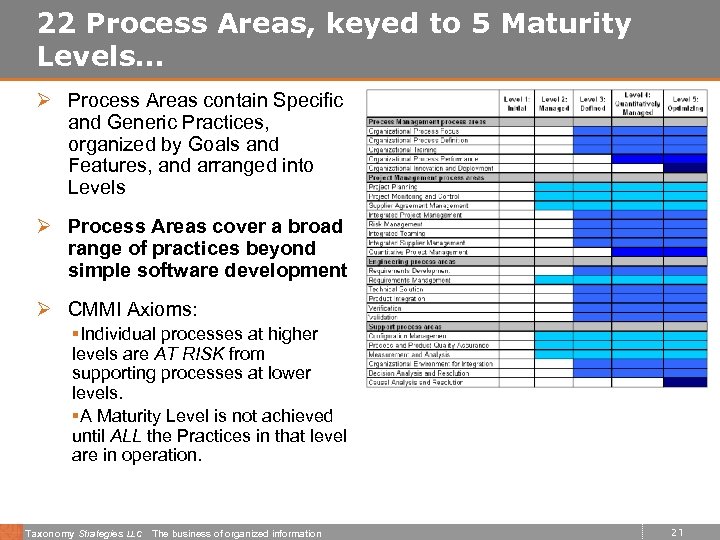




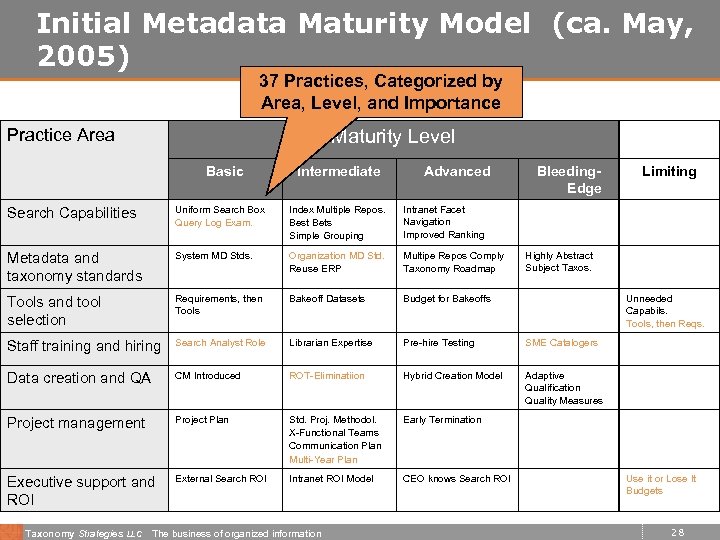
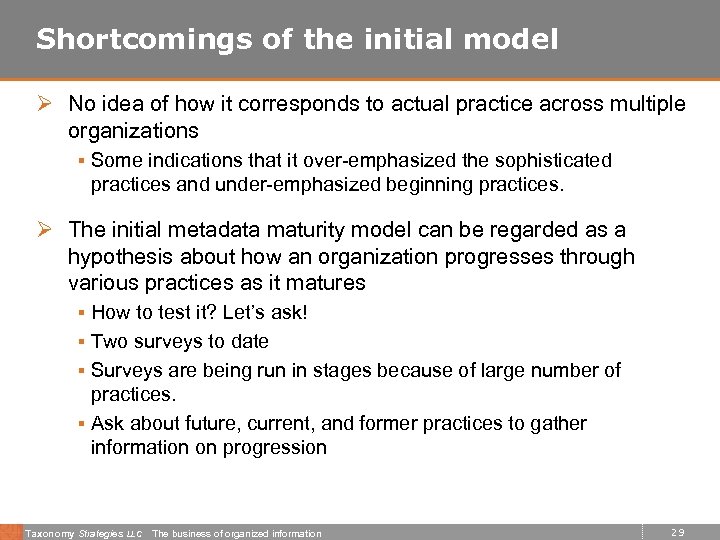


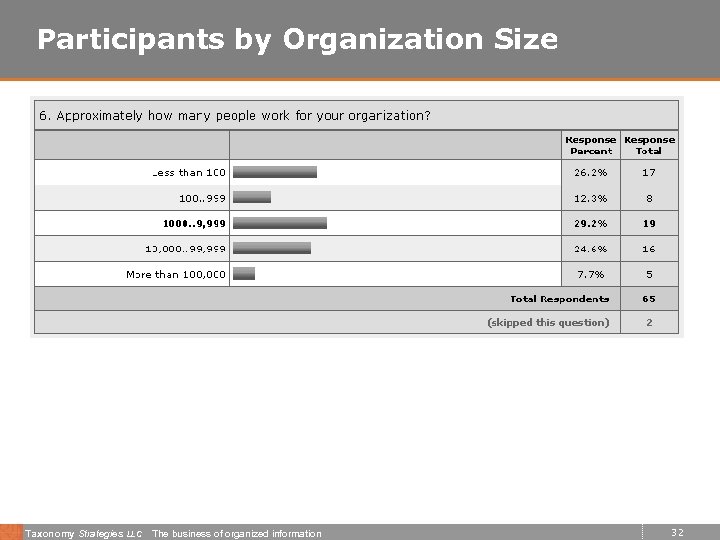
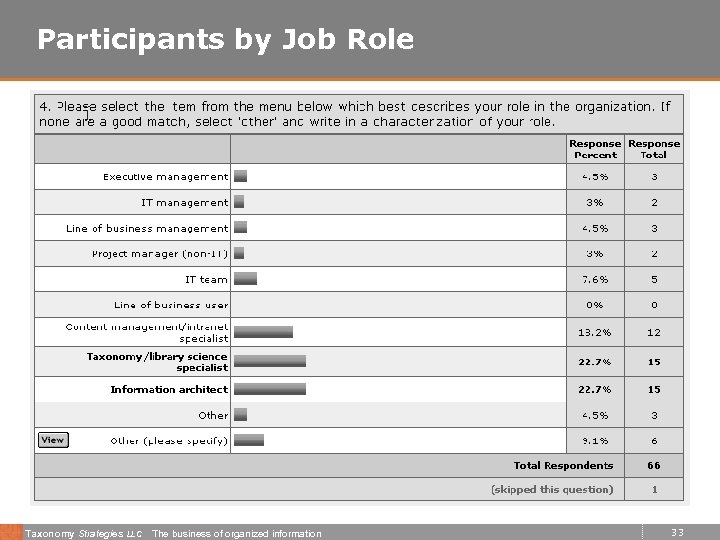
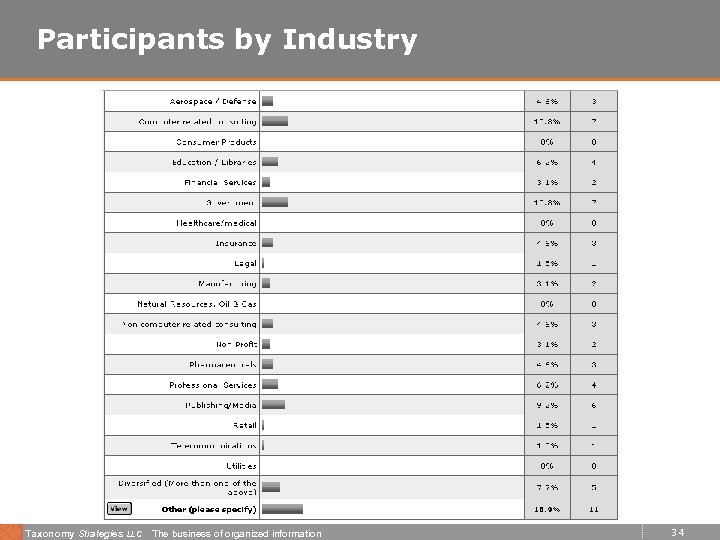

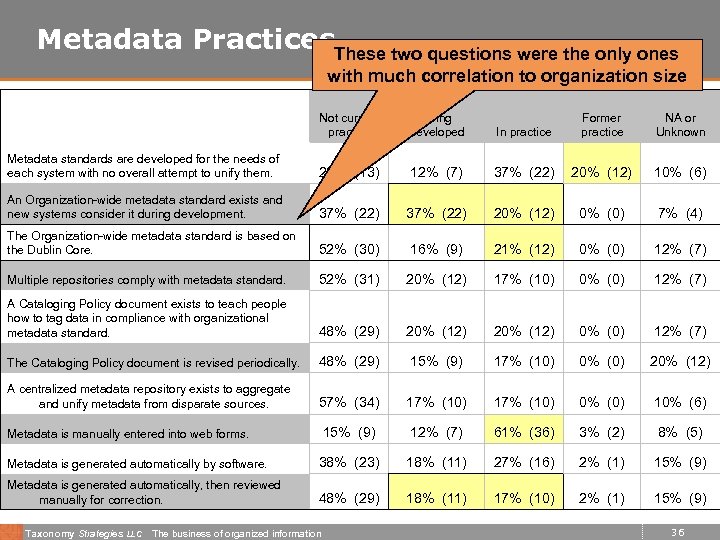
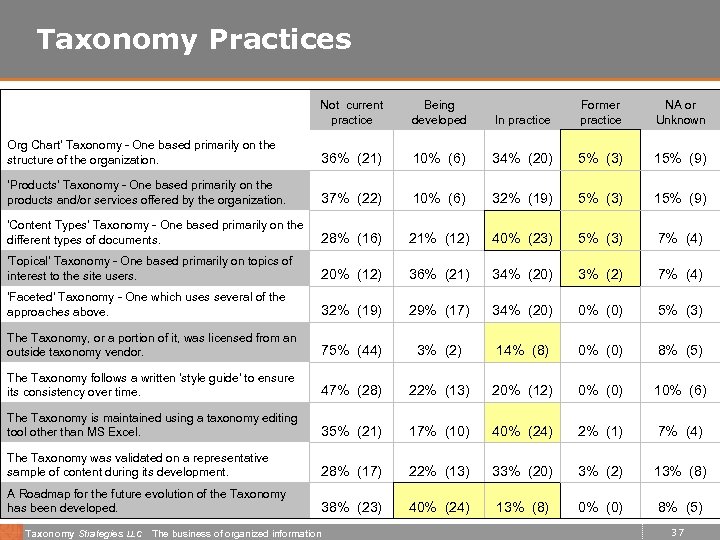

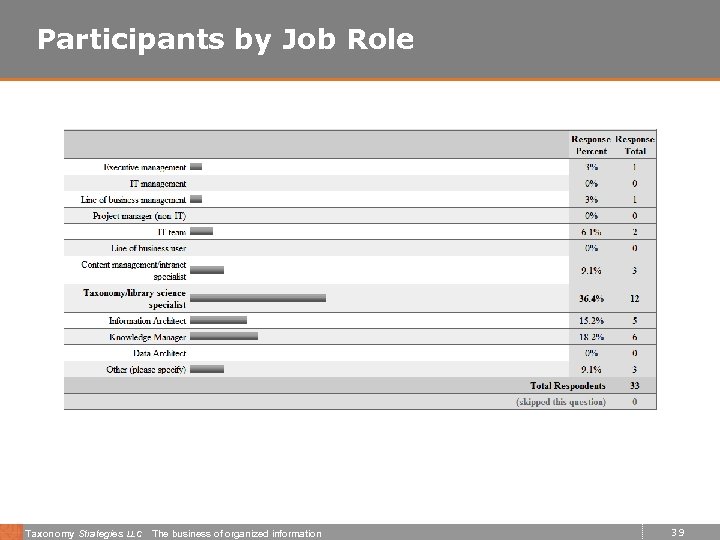


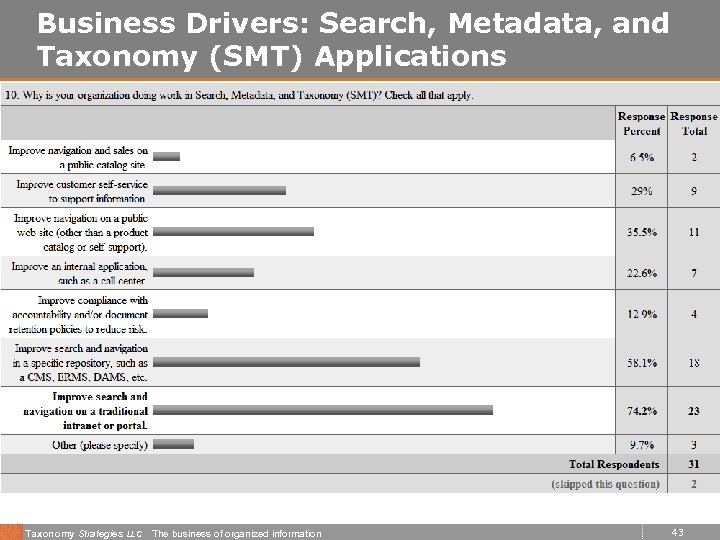
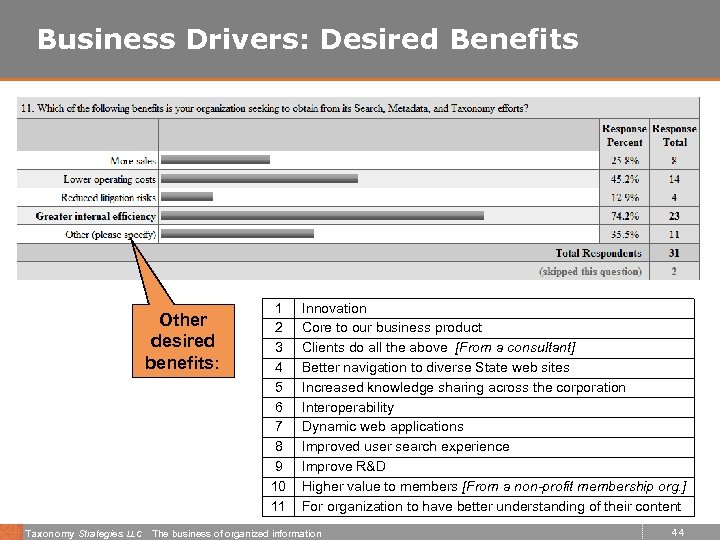
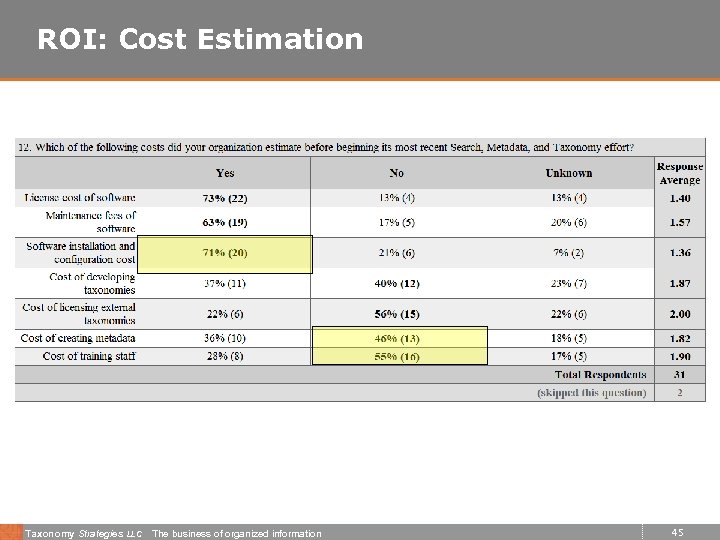
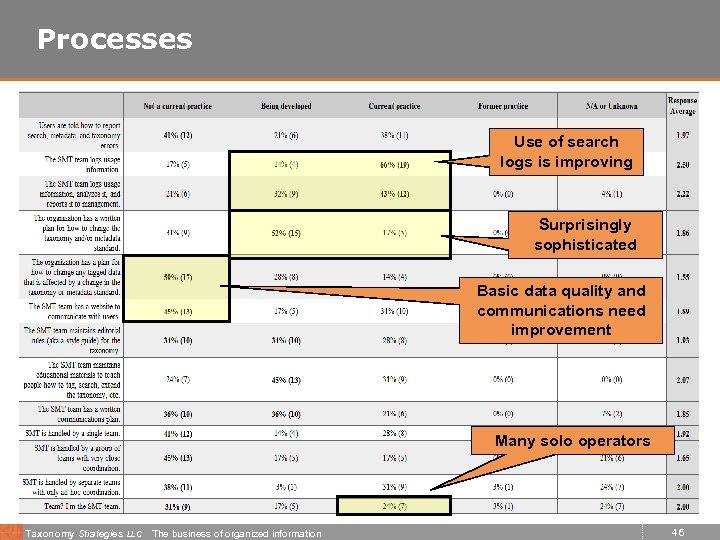
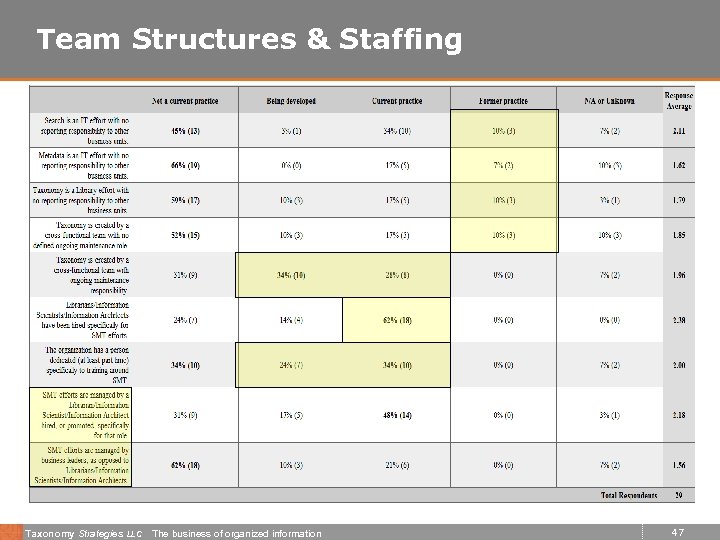
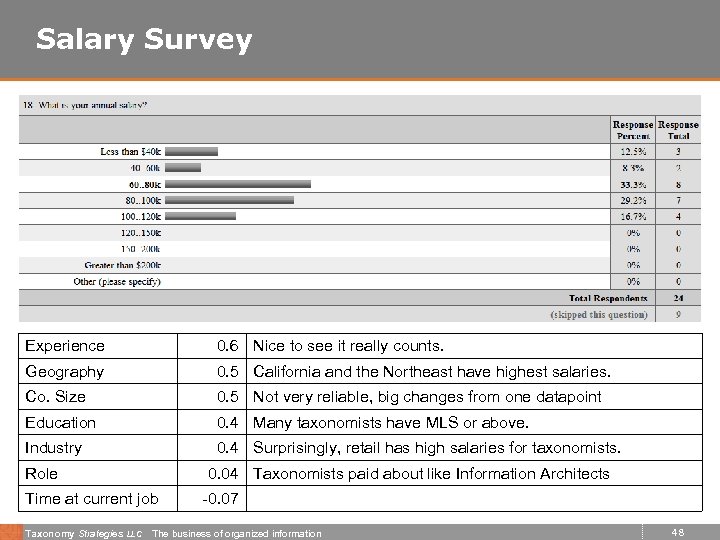
![Notes from Participants Ø There is the constant struggle with individual [magazine] titles to](https://present5.com/presentation/268f9b3644892d49f321b44d9cafc412/image-49.jpg "Notes from Participants Ø There is the constant struggle with individual [magazine] titles to")


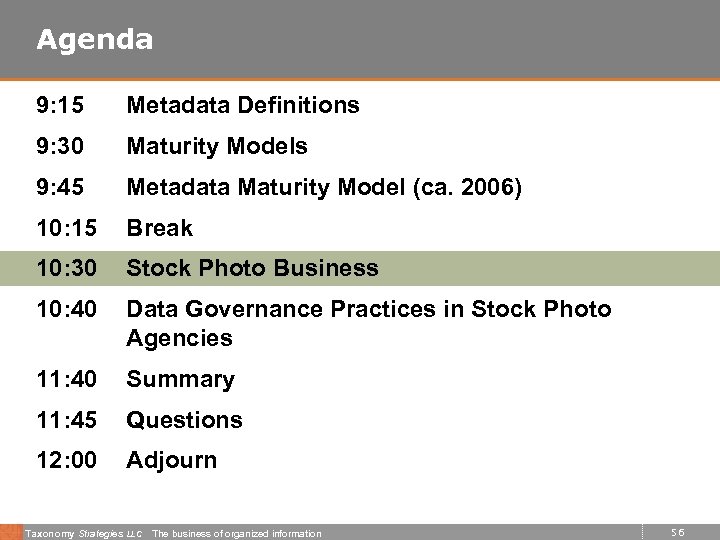
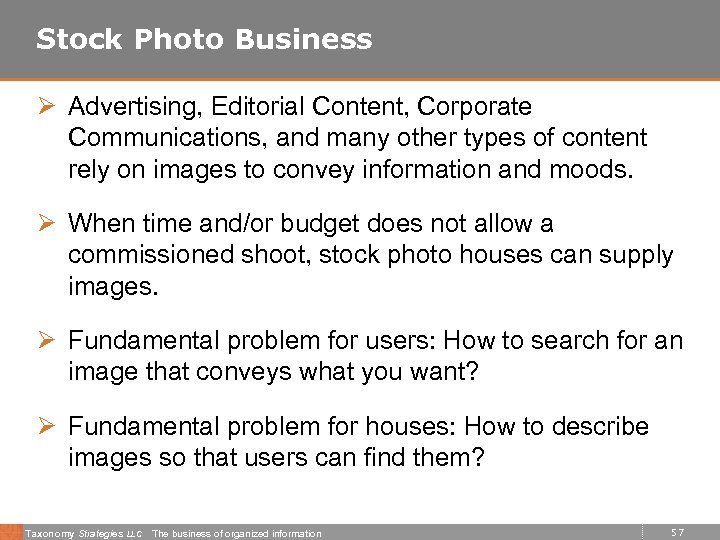
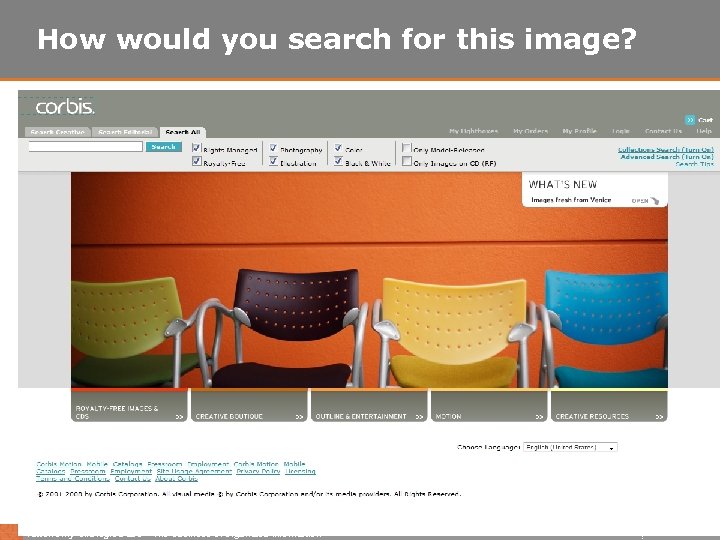

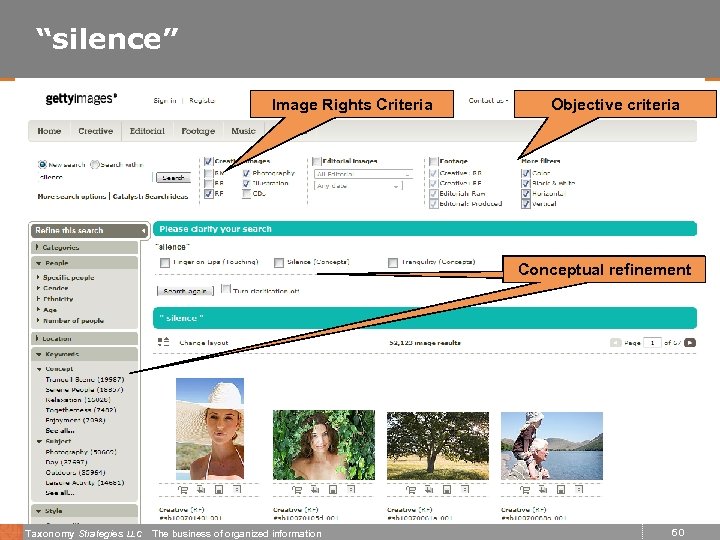

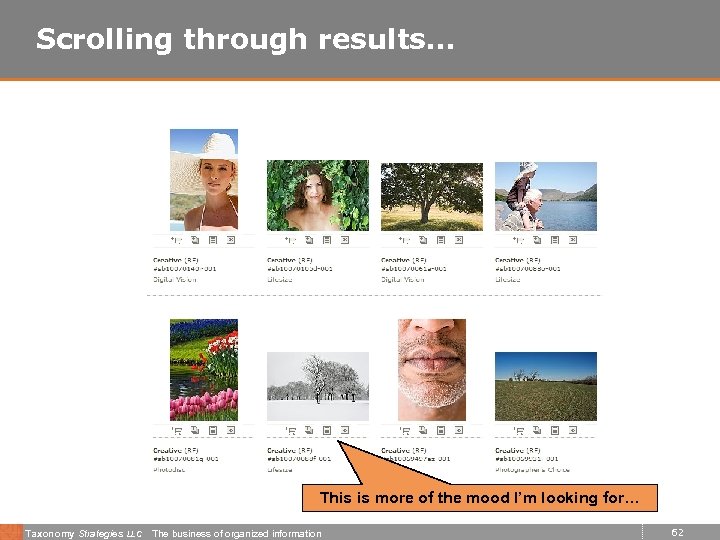
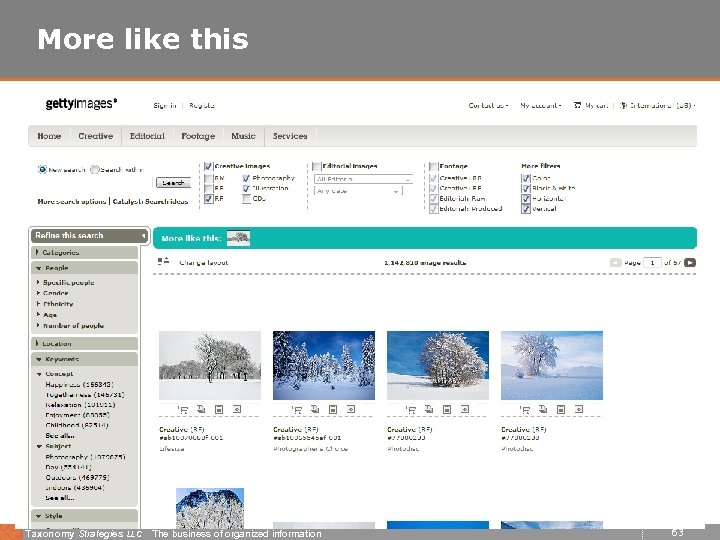
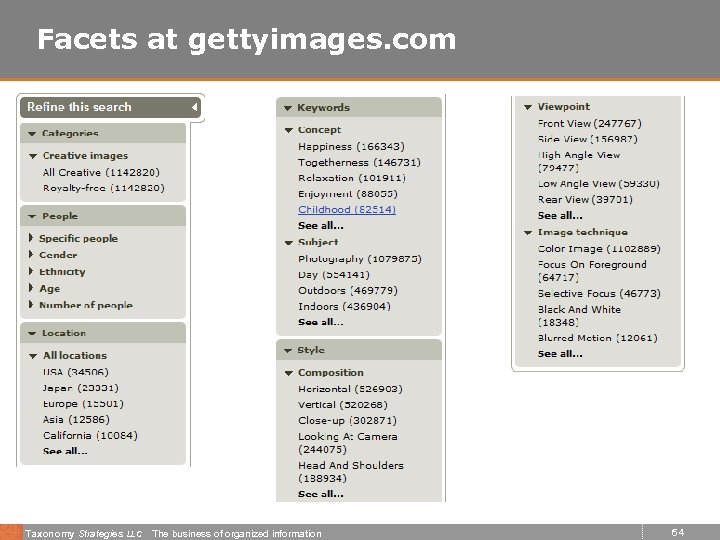


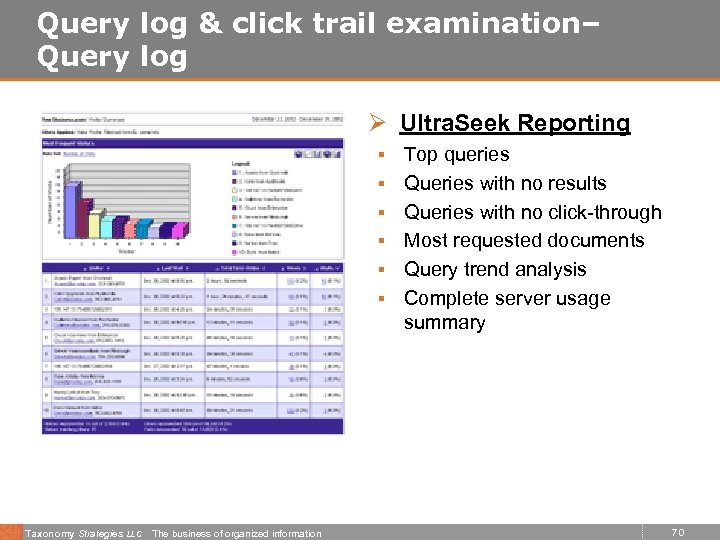

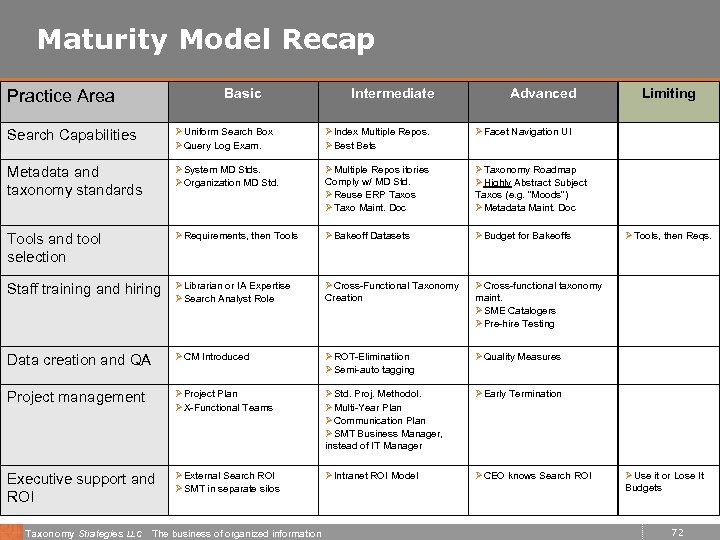

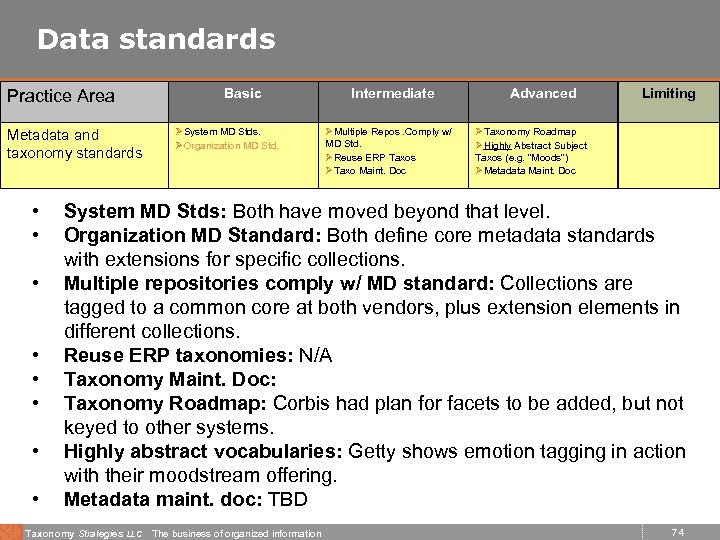
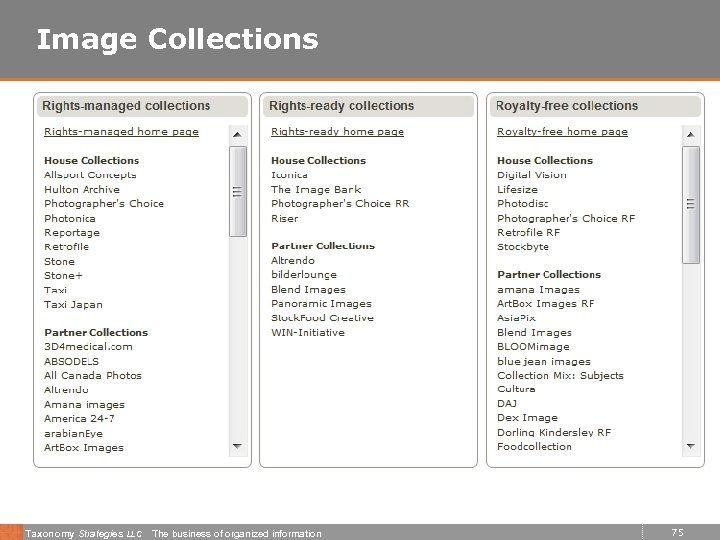
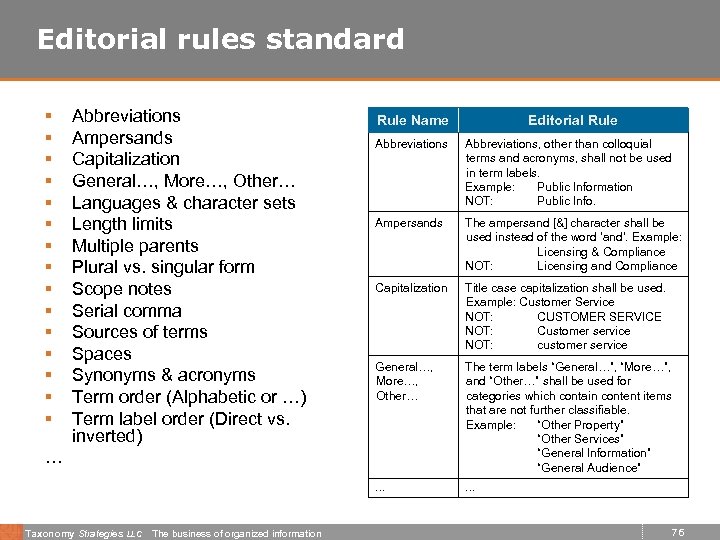
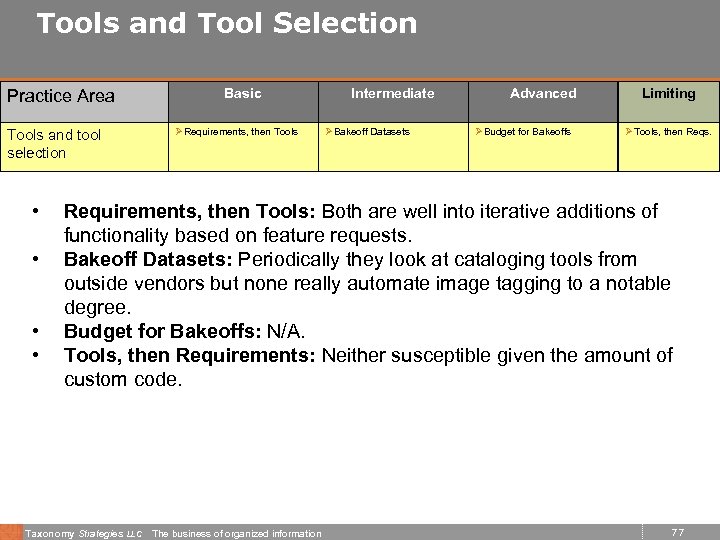
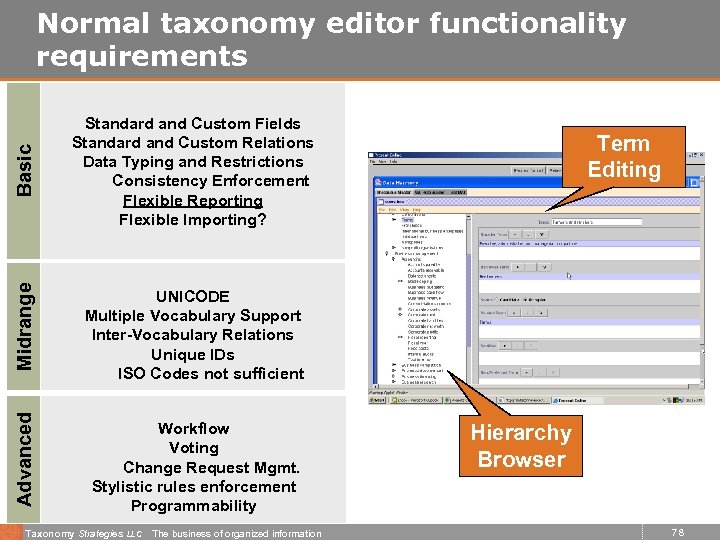
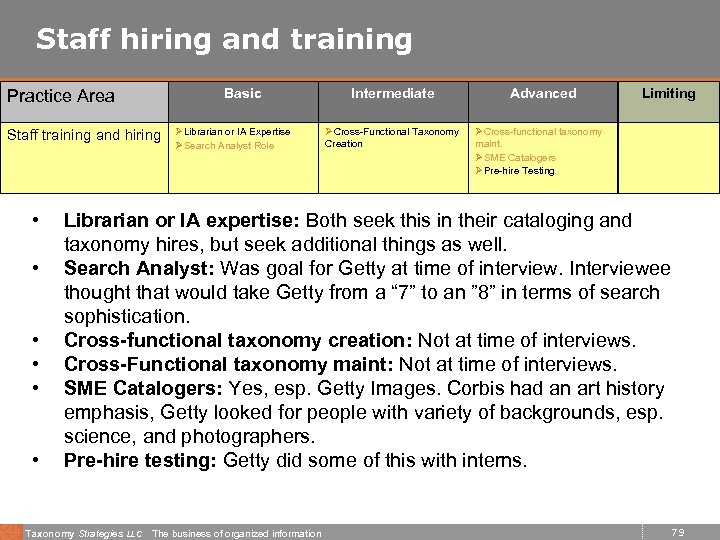

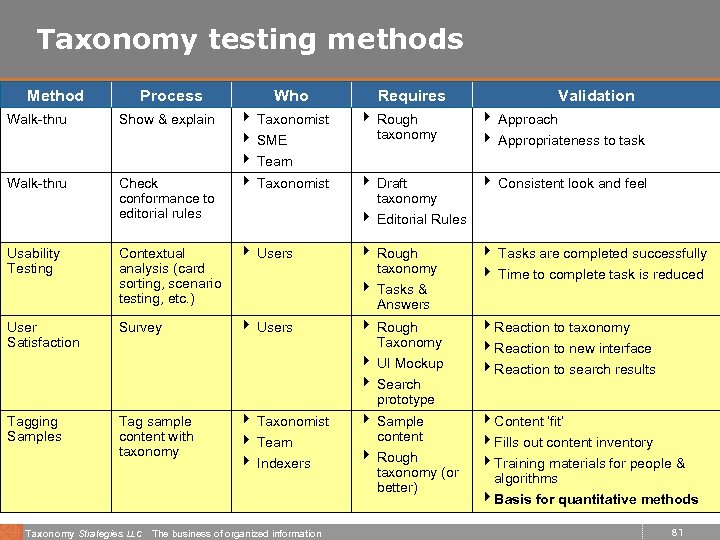


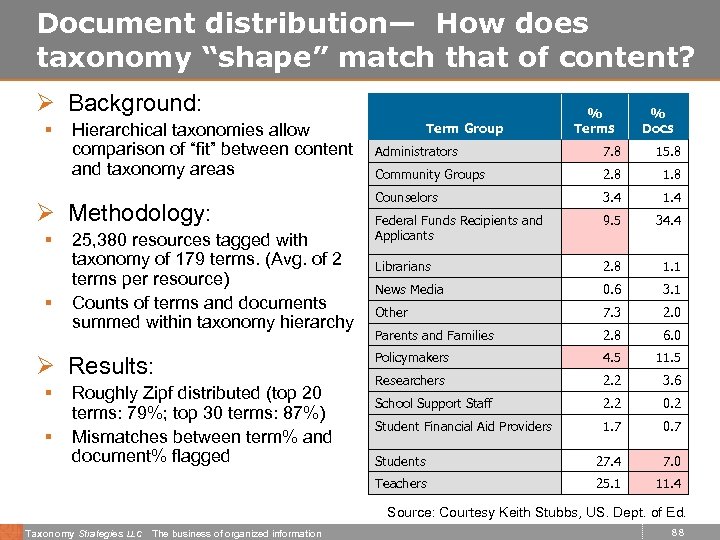
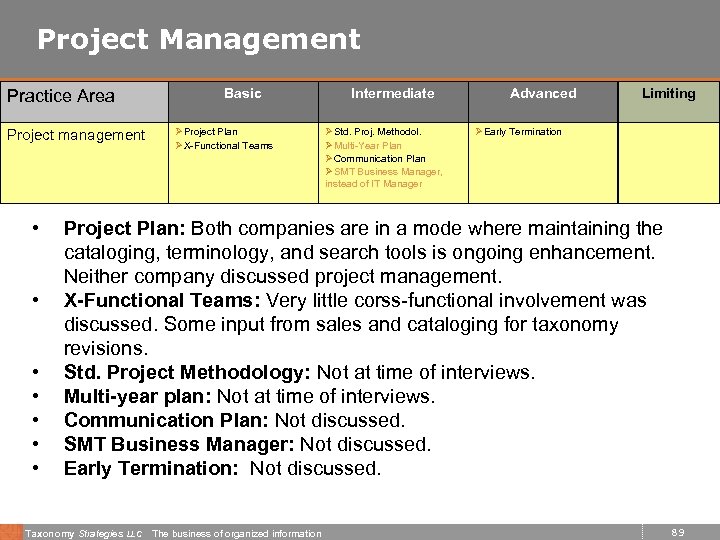


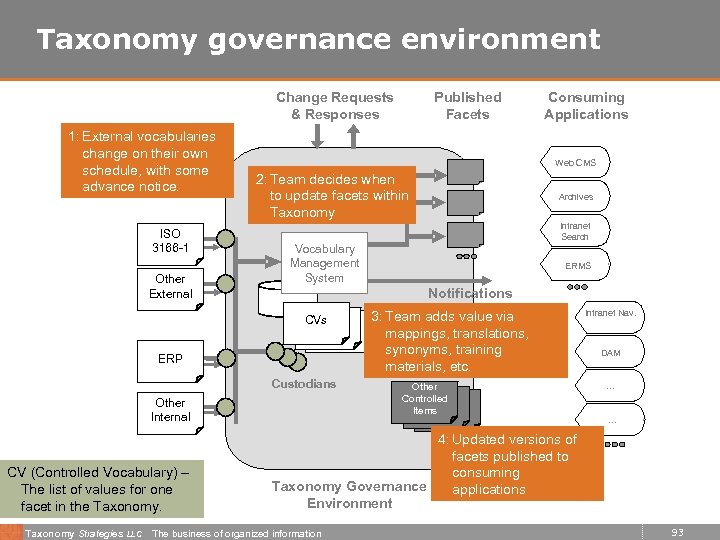

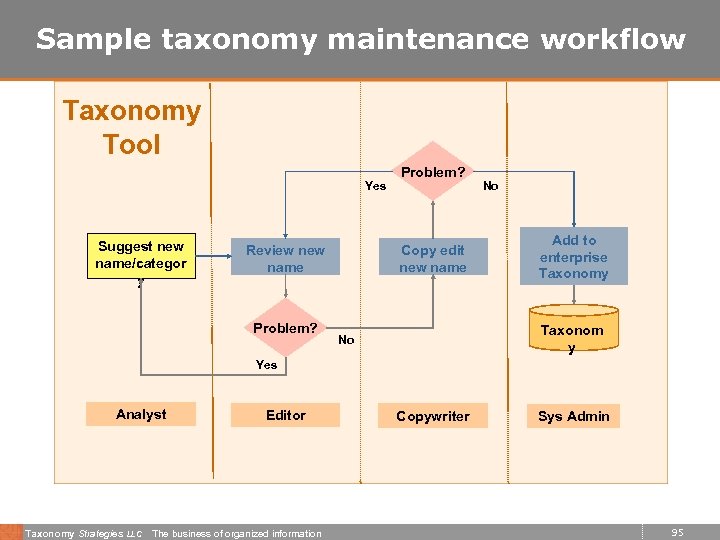
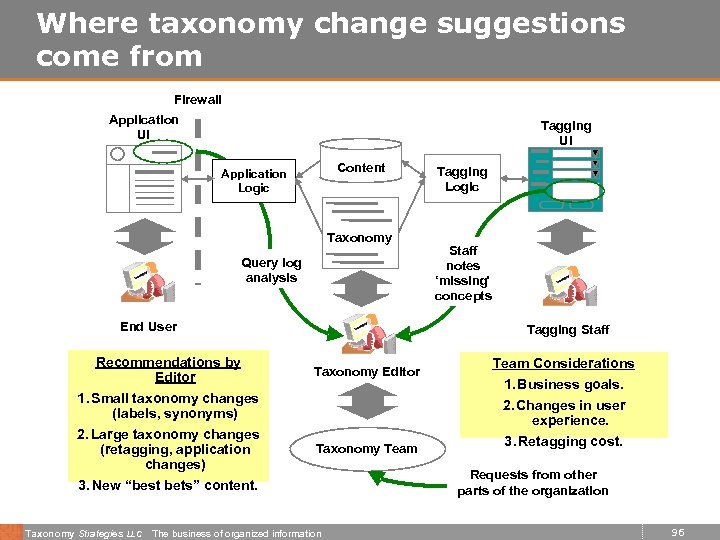

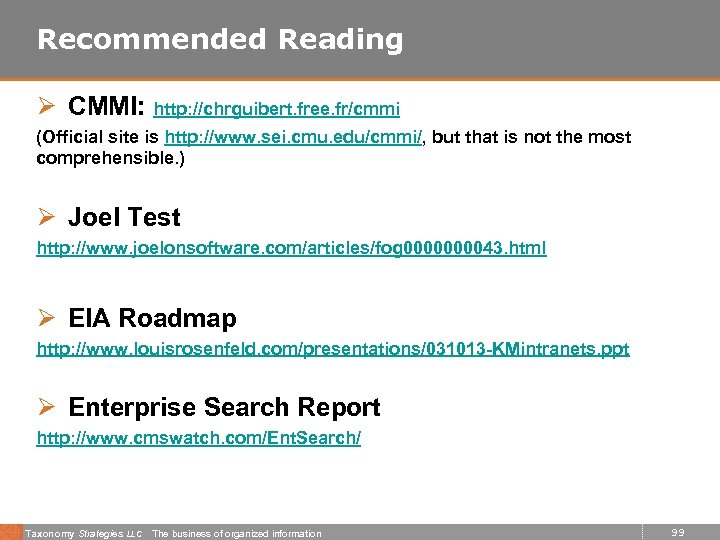
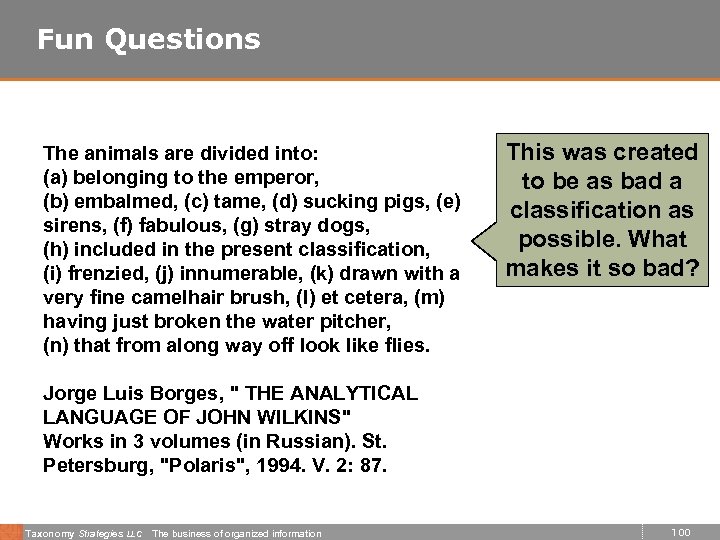
 Скачать презентацию Taxonomy Strategies LLC Data Governance Maturity When the