


 Скачать презентацию Taste and smell are involved with specific receptor
cebaedc6323e1e928e11a2aec6320a96.ppt
- Количество слайдов: 62
 Taste and smell are involved with specific receptor cells called chemoreceptors respond to chemicals in an aqueous solution like mucus food dissolved in saliva airborne chemicals dissolved in mucous membrane
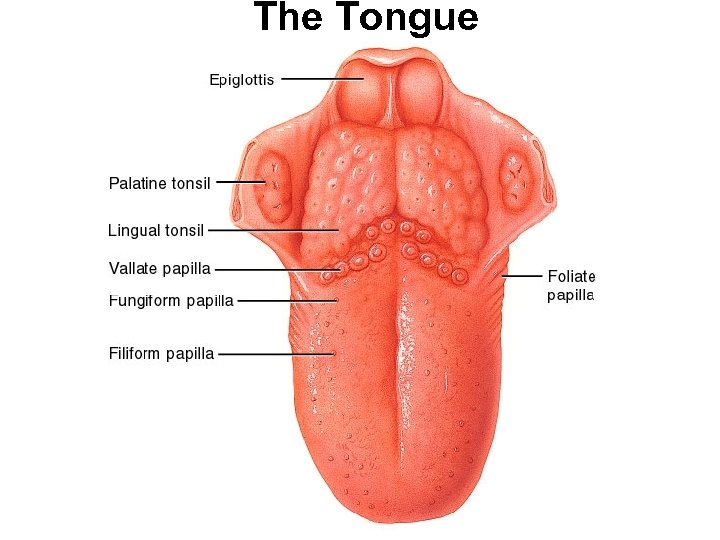 The Tongue
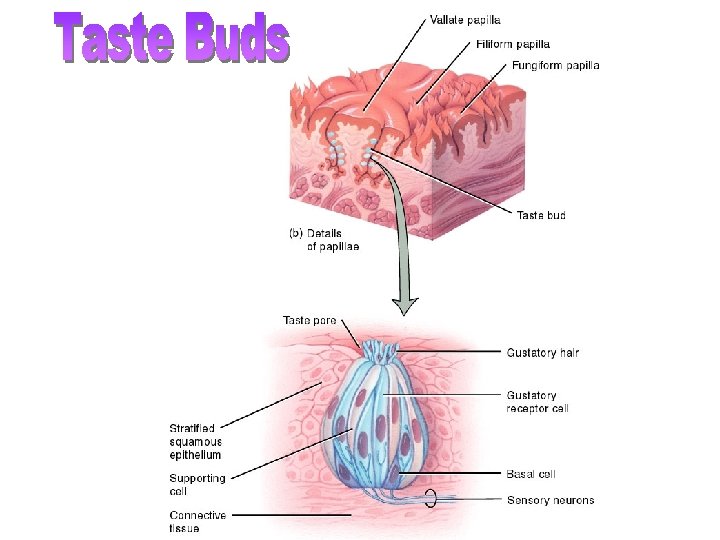
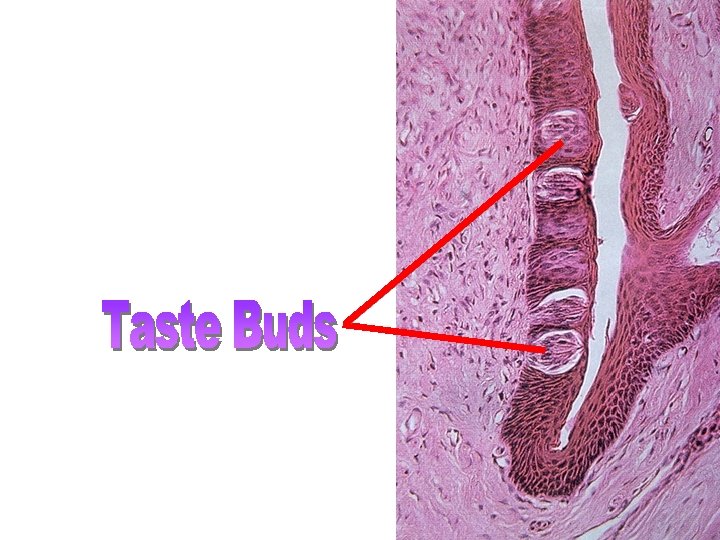
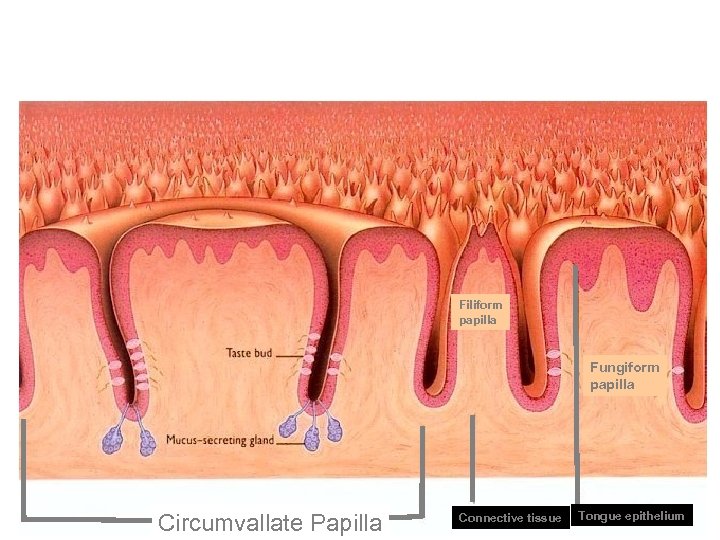 Taste Buds Filiform papilla Fungiform papilla Circumvallate Papilla Connective tissue Tongue epithelium
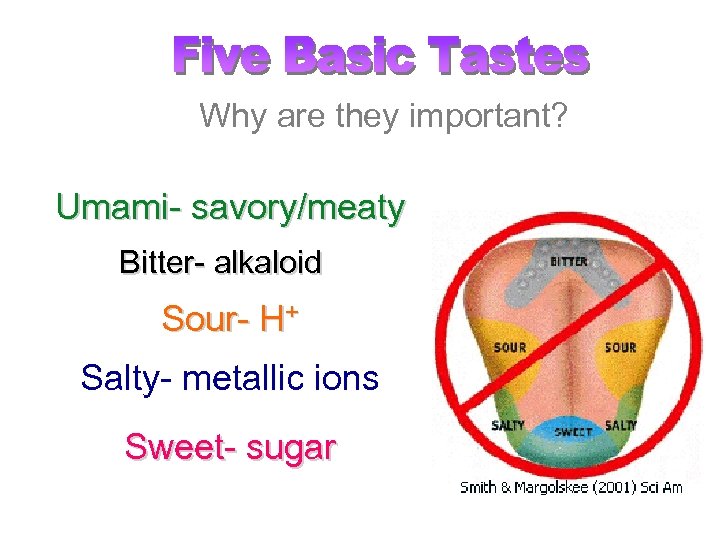 Why are they important? Umami- savory/meaty Bitter- alkaloid Sour- H+ Salty- metallic ions Sweet- sugar
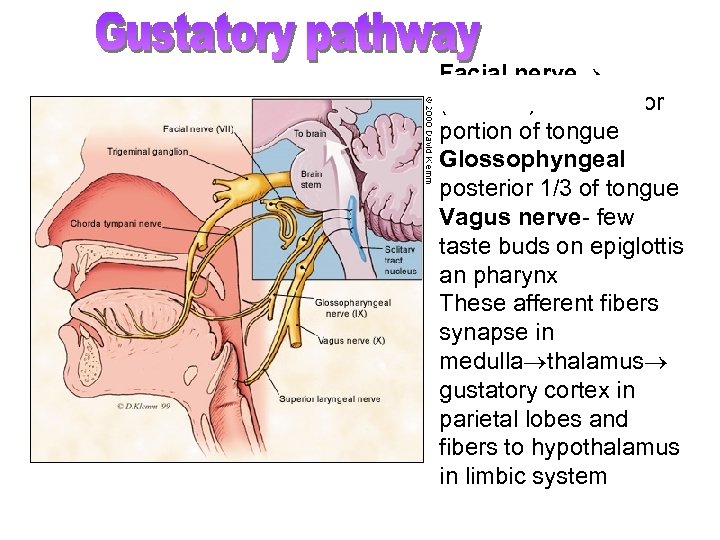 Facial nerve (afferent) 2/3 anterior portion of tongue Glossophyngeal posterior 1/3 of tongue Vagus nerve- few taste buds on epiglottis an pharynx These afferent fibers synapse in medulla thalamus gustatory cortex in parietal lobes and fibers to hypothalamus in limbic system
 Taste triggers reflex involved in digestion; causes an increase of saliva in mouth (amylase) and gastric juice in stomach acids cause strong salivary reflex bad tasting food causes gagging or reflexive vomiting taste can change over time taste is 80% smell Mouth also contains: Thermoreceptors Mechanoreceptors Nociceptors- sensitive nerve fibers that are aware of painful stimuli
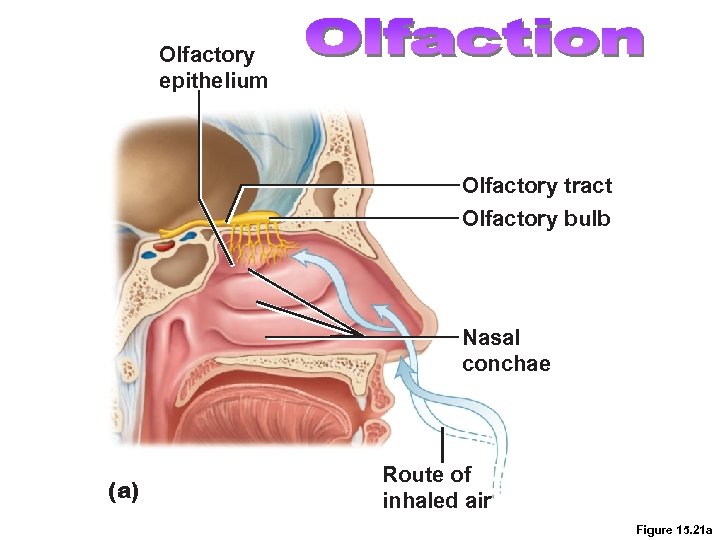 Olfactory epithelium Olfactory tract Olfactory bulb Nasal conchae (a) Route of inhaled air Figure 15. 21 a
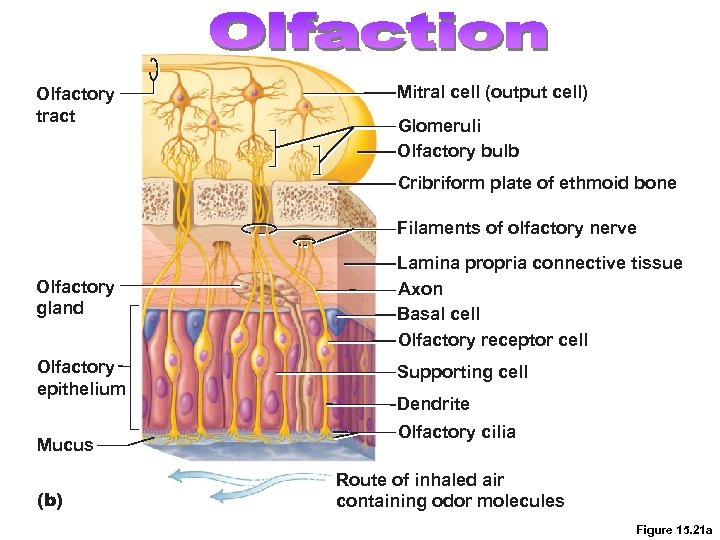 Olfactory tract Mitral cell (output cell) Glomeruli Olfactory bulb Cribriform plate of ethmoid bone Filaments of olfactory nerve Olfactory gland Lamina propria connective tissue Axon Basal cell Olfactory receptor cell Olfactory epithelium Supporting cell Mucus (b) Dendrite Olfactory cilia Route of inhaled air containing odor molecules Figure 15. 21 a
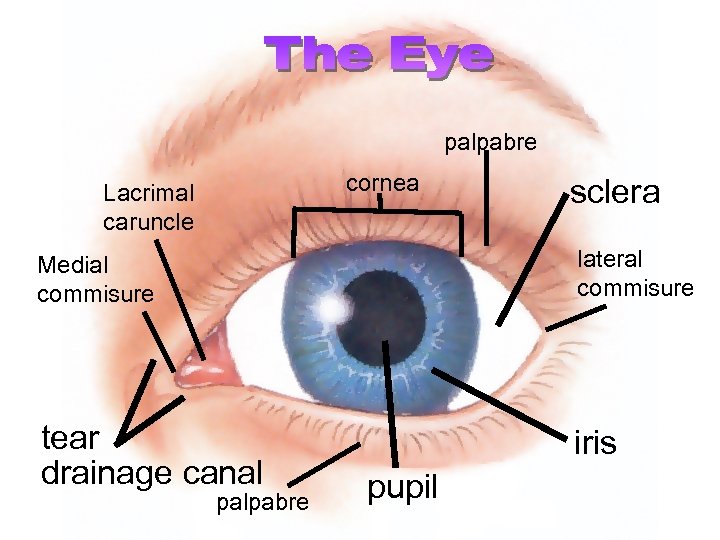 palpabre cornea Lacrimal caruncle sclera Medial commisure lateral commisure tear drainage canal iris palpabre pupil
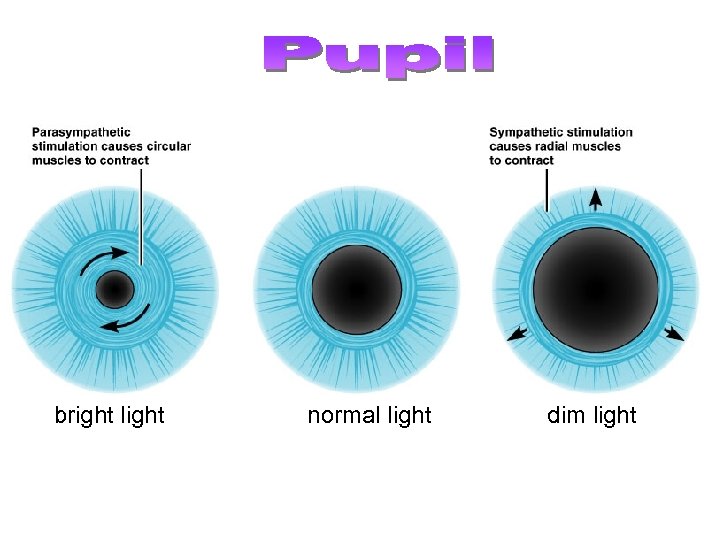 bright light normal light dim light
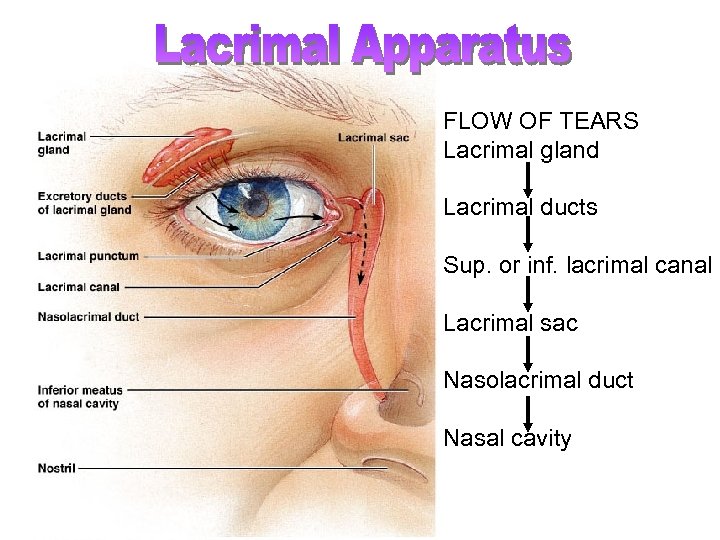 FLOW OF TEARS Lacrimal gland Lacrimal ducts Sup. or inf. lacrimal canal Lacrimal sac Nasolacrimal duct Nasal cavity
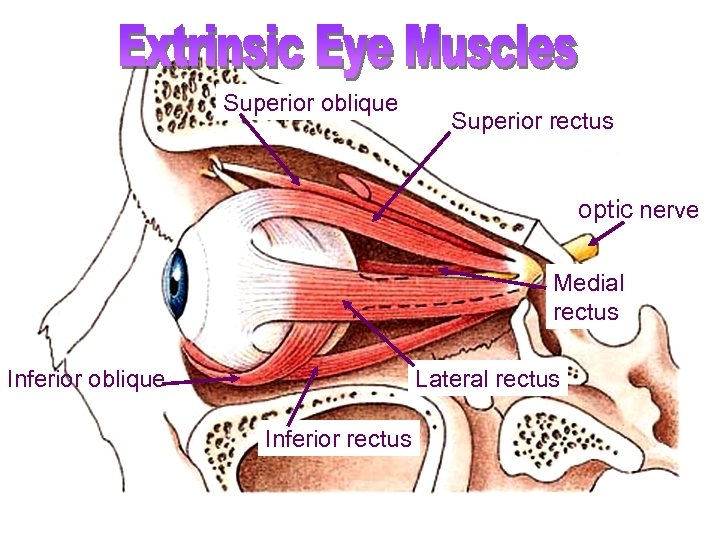 Superior oblique Superior rectus optic nerve Medial rectus Inferior oblique Lateral rectus Inferior rectus
 Fibrous tunic- sclera and cornea (outer most layer) Composed of dense avascular connective tissue
 Vascular tunic- uvea: choroid, cilliary body, iris, pupil (middle layer) Choroid- rich vascular nutritive layer; contains a dark pigment that prevents light scattering within the eye Cilliary body- lens is attached; contains muscles that change the lenses shape Iris- pigmented ring of muscular tissue composed of circular and radial muscles • reflex contraction of circular muscle in bright light (small dia of pupil) • reflex contraction of radial muscle in dim light (large dia of pupil) Pupil- central hole in iris
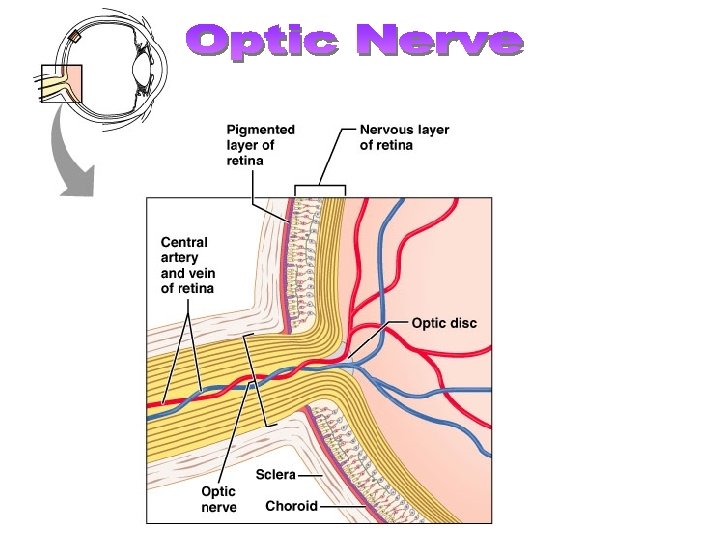
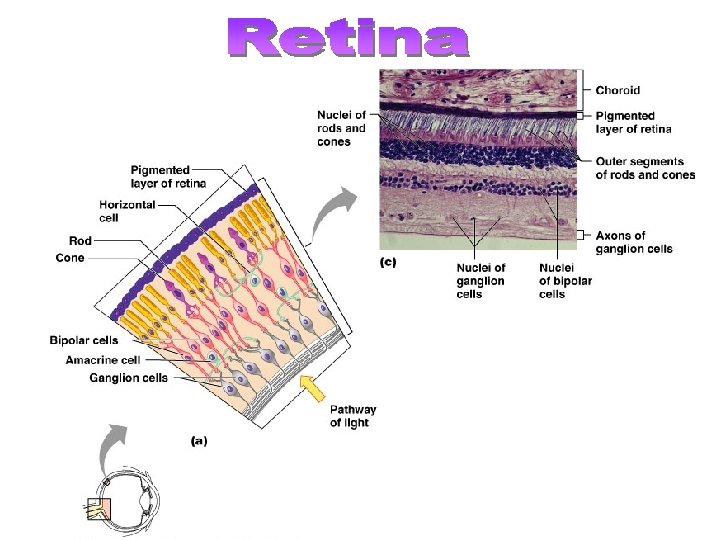
 Sensory tunic- retina (inner most layer) Photoreceptors: • rods (dim light, contains pigment rhodopsin) and • Cones (color vision, not evenly distributed, concentrated in fovea) Optic disc- blind spot because its where optic nerve leaves the eyeball (no rods or cones) Macula lutea- yellow spot, area of high cone Fovea centralis- in center of macula lutea, contains only cones, area of greatest visual acuity
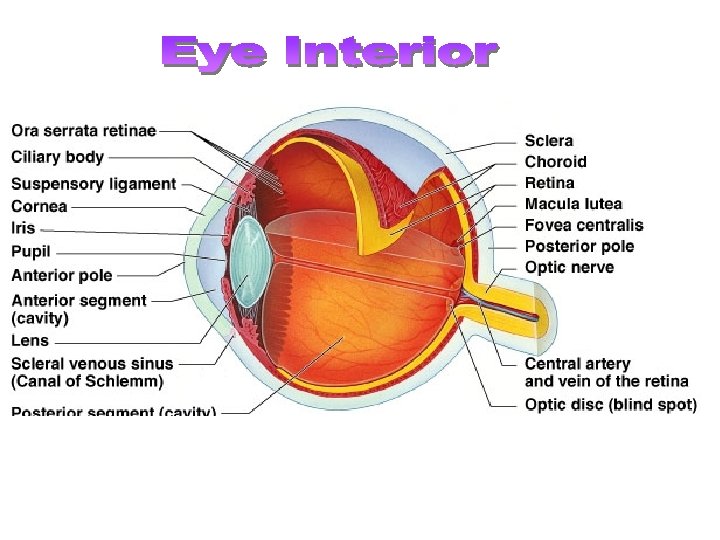
 Vitreous humor- behind lens, gel-like substance with fine collagenic fibrils imbedded in as viscous ground substance- binds with water • transmits light • supports the posterior surface of the lens and holds the neural retina firmly against pigmented layer • contributes to intraoccular pressure, helping to counter act the pulling force of the extrinsic eye muscles
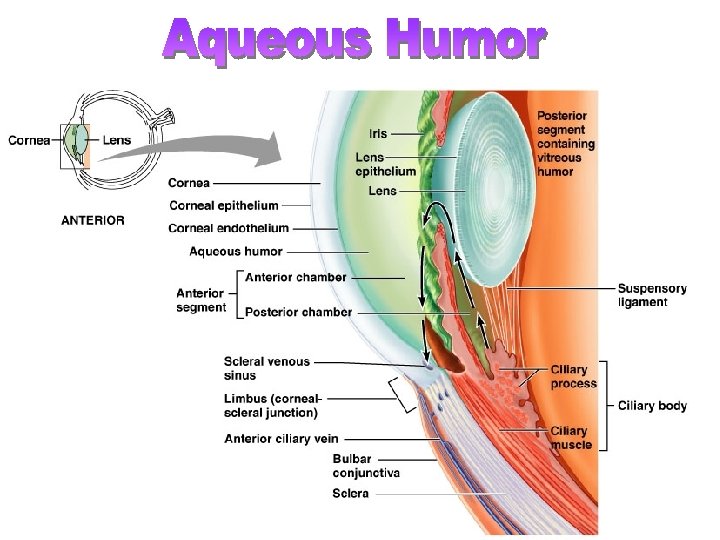
 Aqueous humor- in front of lens, anterior segment, watery fluid • Supplies cornea and lens with nutrients • Helps to maintain the shape of the eye • Produced and renewed every 4 hrs by the cilliary body
 Lens- transparent biconvex structure, flexible • Attached by suspensory ligaments to ciliary body • focuses image onto retina • changes lens thickness to allow light to be properly focused onto retina
 Coarse Fixed Focusing • Cornea Shape Accommodation- adjust configuration of • Lens Shape • Pupil Size
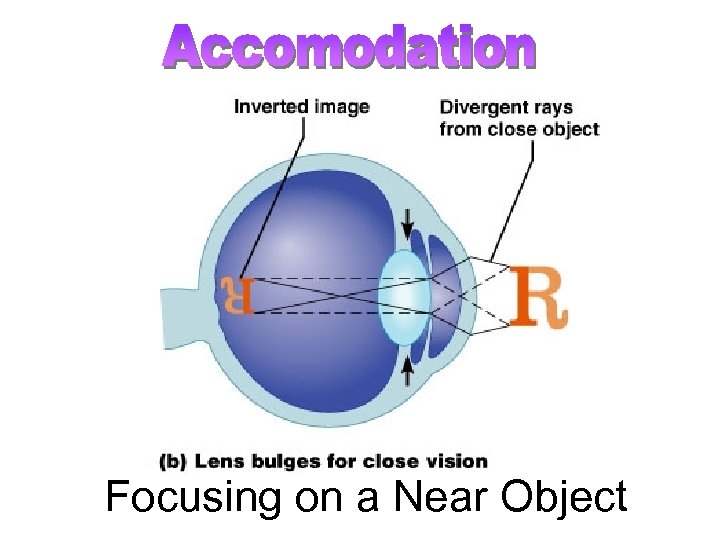 Focusing on a Near Object
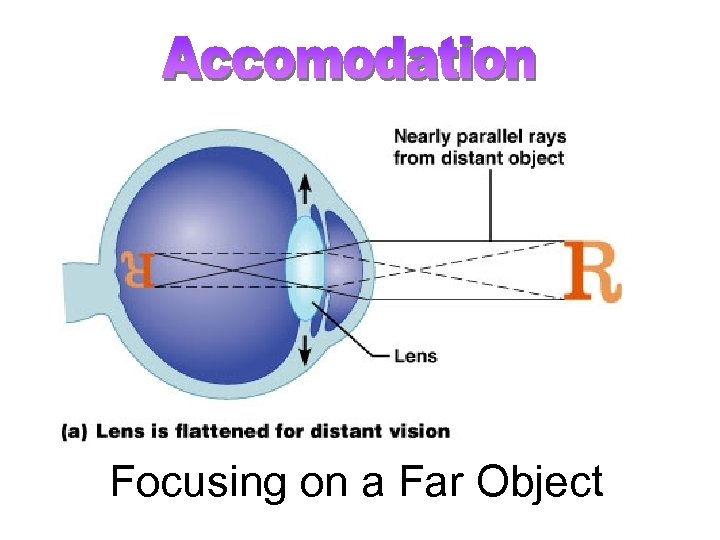 Focusing on a Far Object
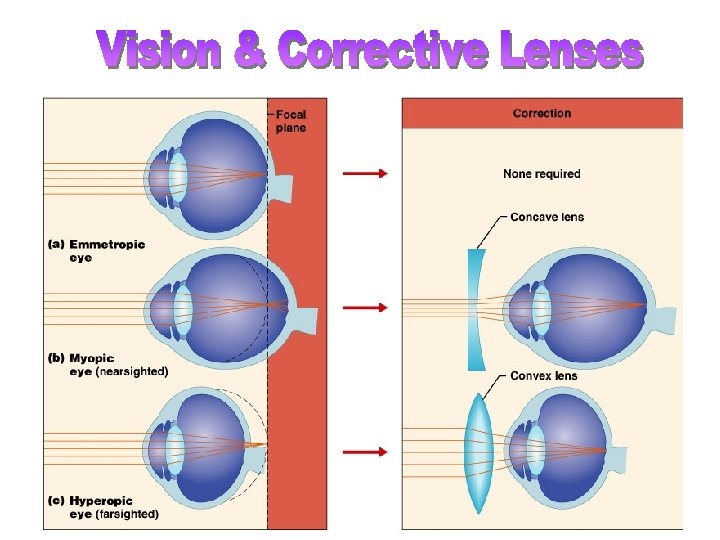
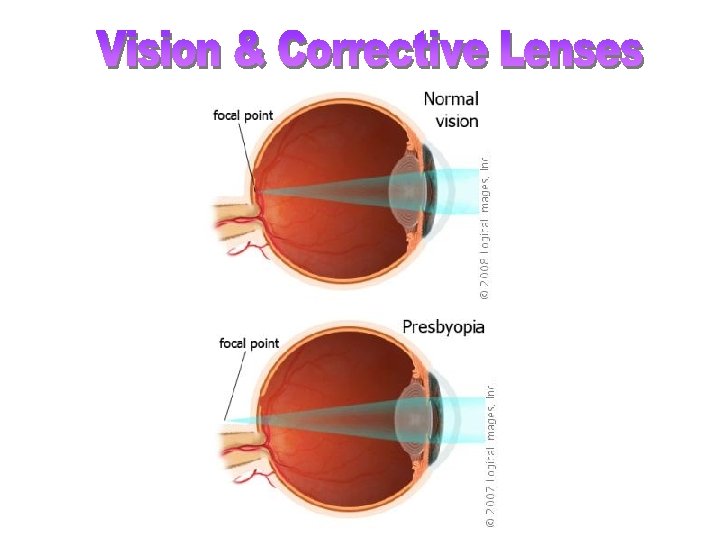
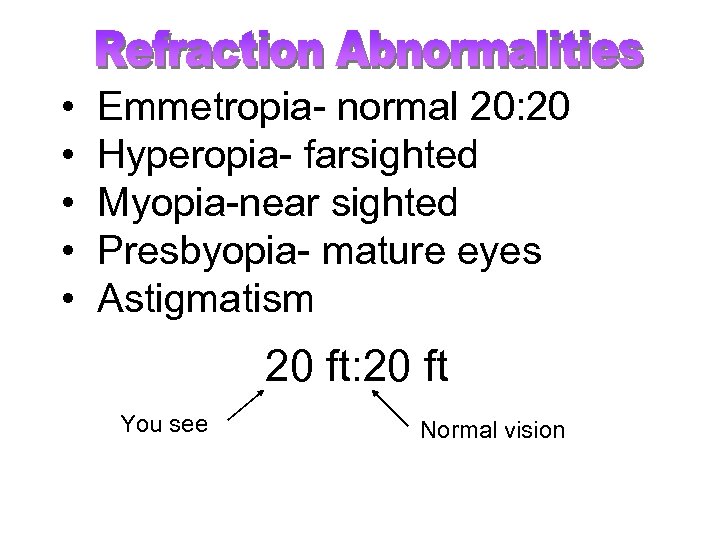 • • • Emmetropia- normal 20: 20 Hyperopia- farsighted Myopia-near sighted Presbyopia- mature eyes Astigmatism 20 ft: 20 ft You see Normal vision
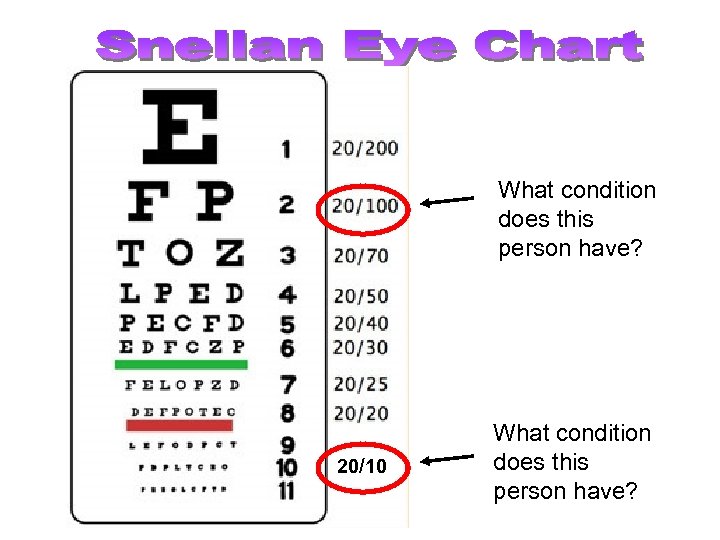 What condition does this person have? 20/10 What condition does this person have?
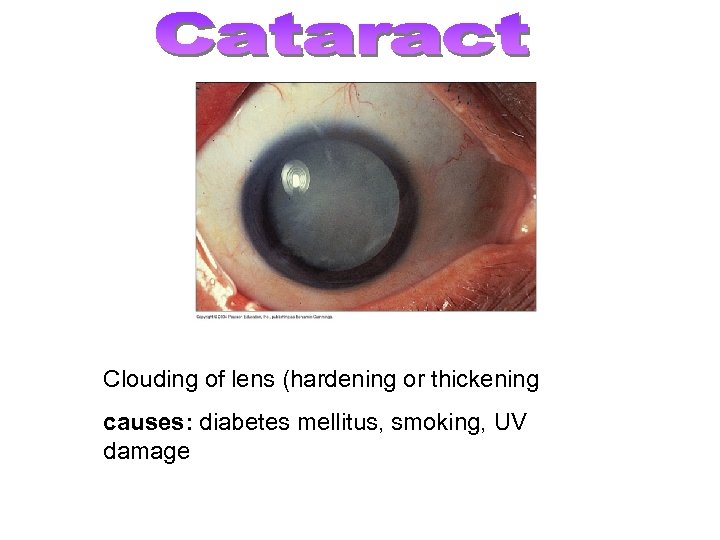 Clouding of lens (hardening or thickening causes: diabetes mellitus, smoking, UV damage
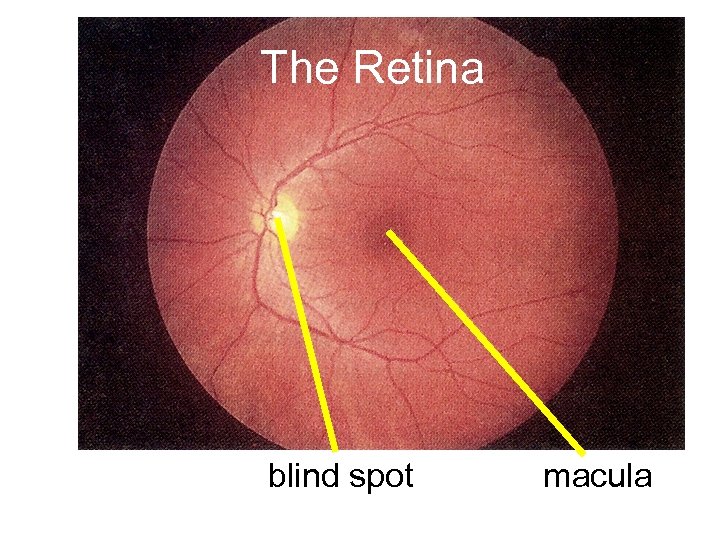 The Retina blind spot macula
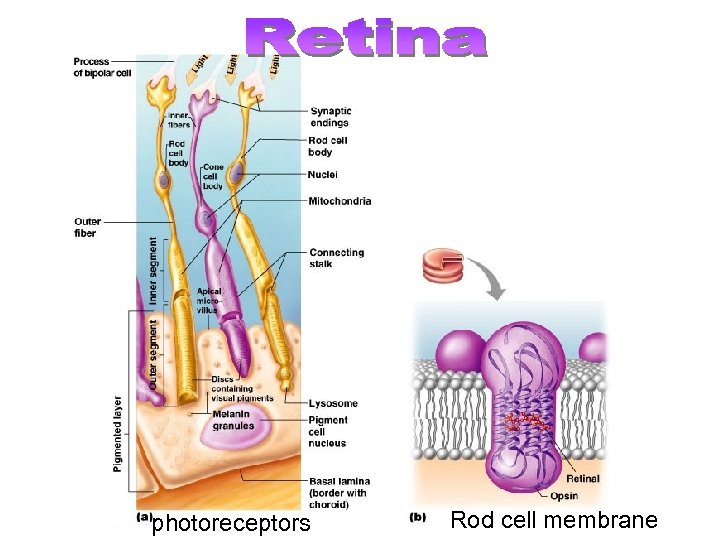 photoreceptors Rod cell membrane
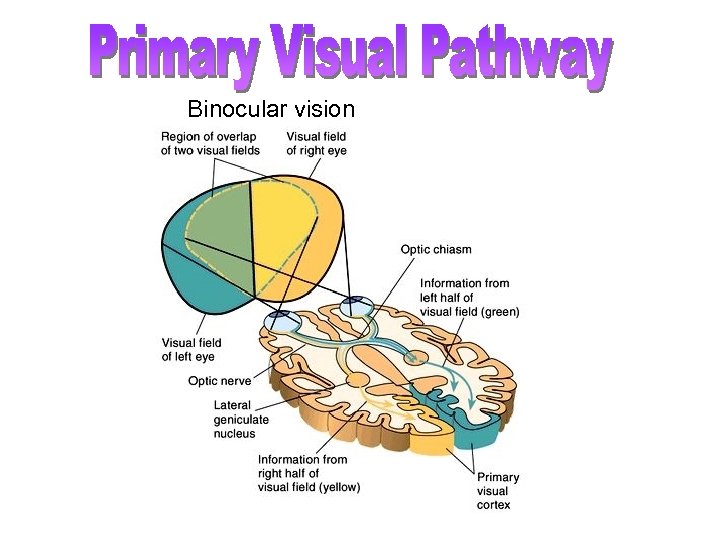 Binocular vision
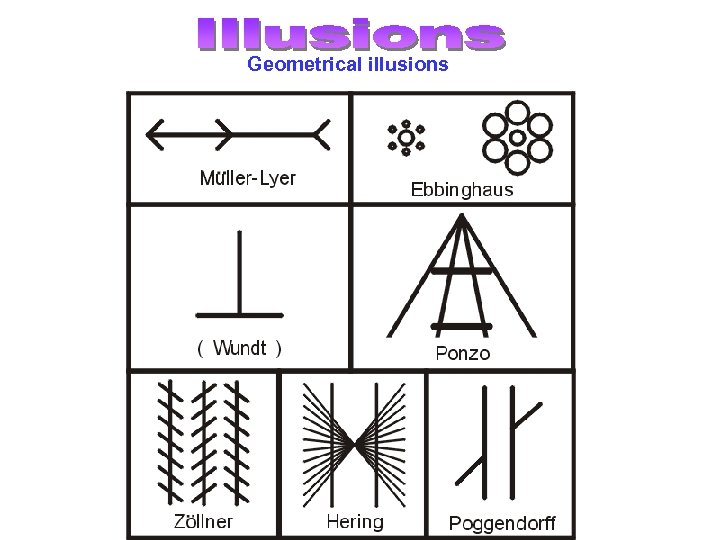 Geometrical illusions
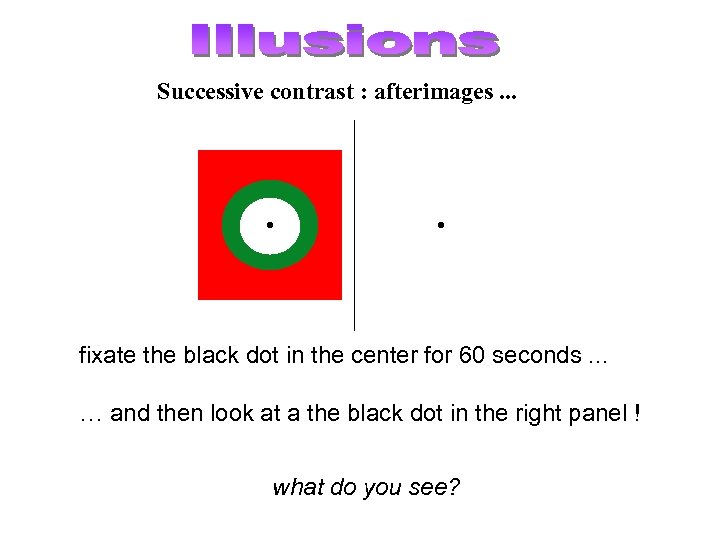 Successive contrast : afterimages. . . fixate the black dot in the center for 60 seconds. . . … and then look at a the black dot in the right panel ! what do you see?
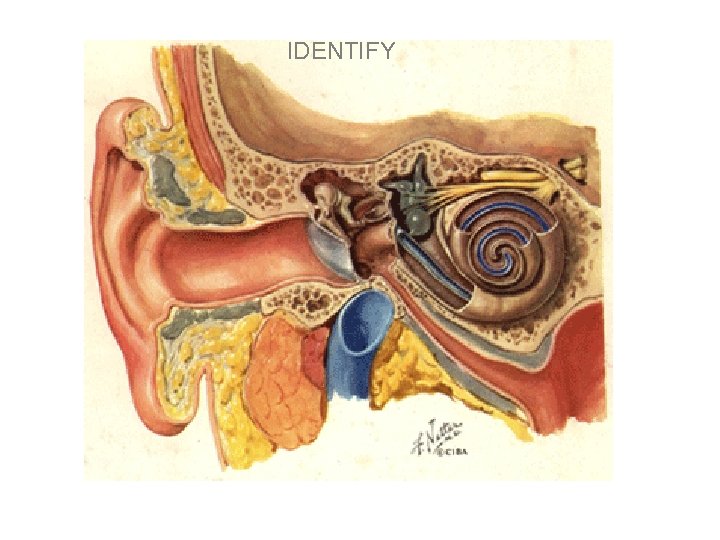
 Outer ear- pinna (auricle), lobule, external auditory canal; elastic cartilage External auditory canal has: ceruminous glands- wax secreting glands- protects delicate lining of meatus and helps prevent microorganisms from entering the ear Tympanic membrane- membrane that vibrates in response to sound waves
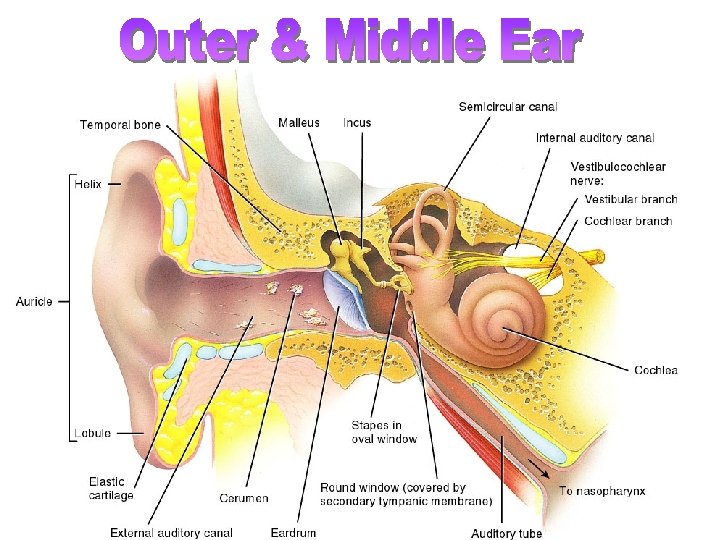
 Middle ear- Includes 3 small bones (ossicles)- hammer (mallus), anvil (incus), stirup (stapes) Pharyngeotympanic auditory tube (Eustachian tube)- equalizes pressure; connects middle ear to pharynx. Oval window- found on cochlea; stirrup presses against cochlea Round window- pressure window on cochlea Otis media- inflammation of the middle ear; due to bacteria or allergies, common in children whose auditory tubes are short and horizontal
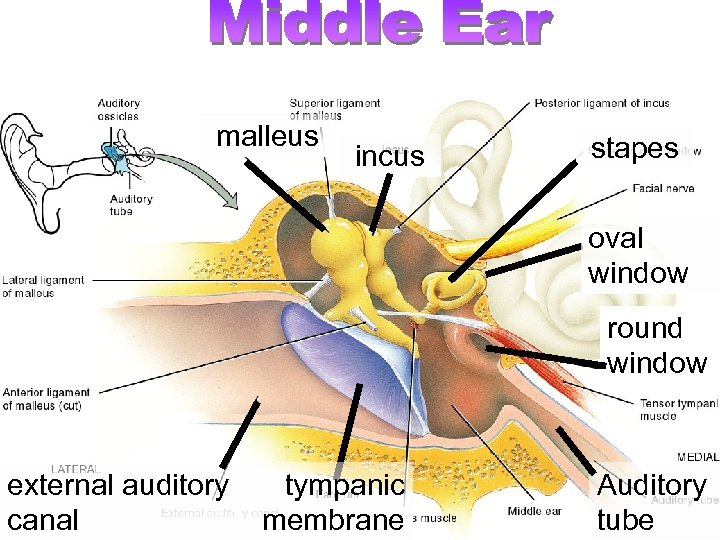 malleus incus stapes oval window round window external auditory tympanic canal membrane Auditory tube
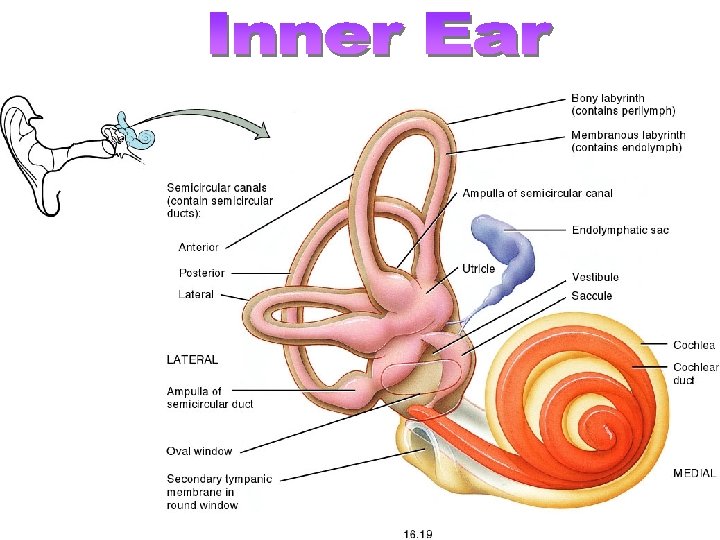
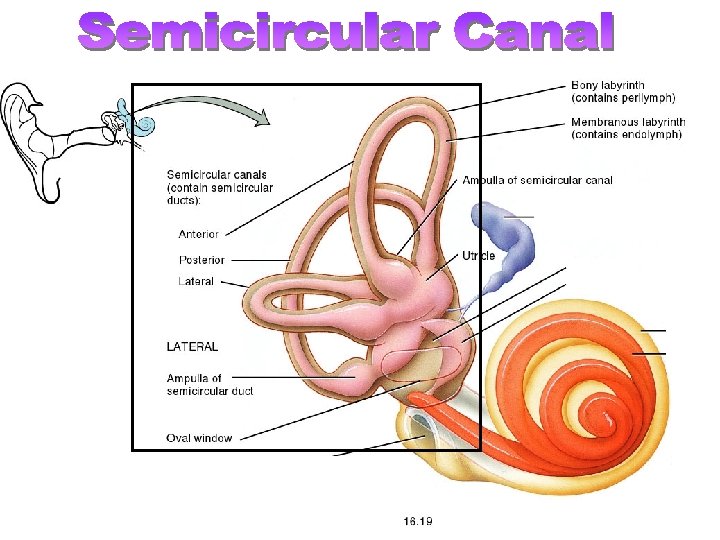
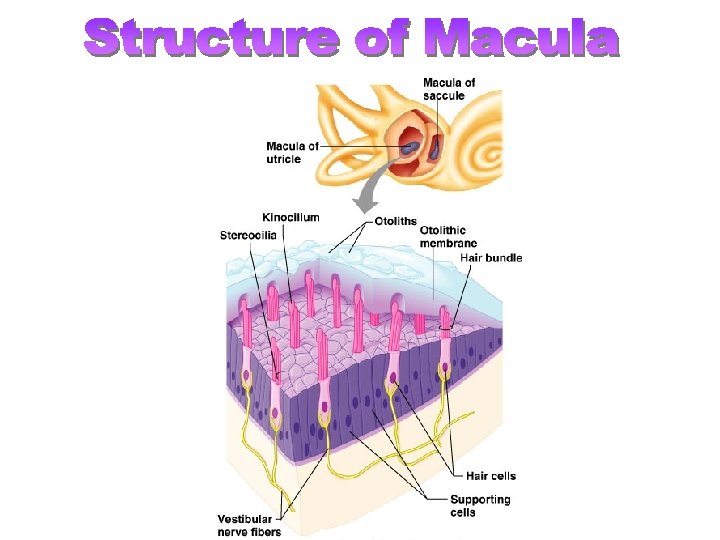
 Inner ear- bony labyrinth filled with perilymph fluid (similar to CFS) and membranous labyrinth filled with endolymph fluid (similar to K+ rich intracellular fluid); these fluids conduct sound vibrations Bony labyrinth (includes vestibule, semicircular canal, and cochlea) Vestibule- posterior to cochlea and anterior to the semicircular canals Perilymph fluid suspends 2 membranous sacs: utricle and sacule-- they house equilibrium receptors called maculae that respond to the pull of gravity
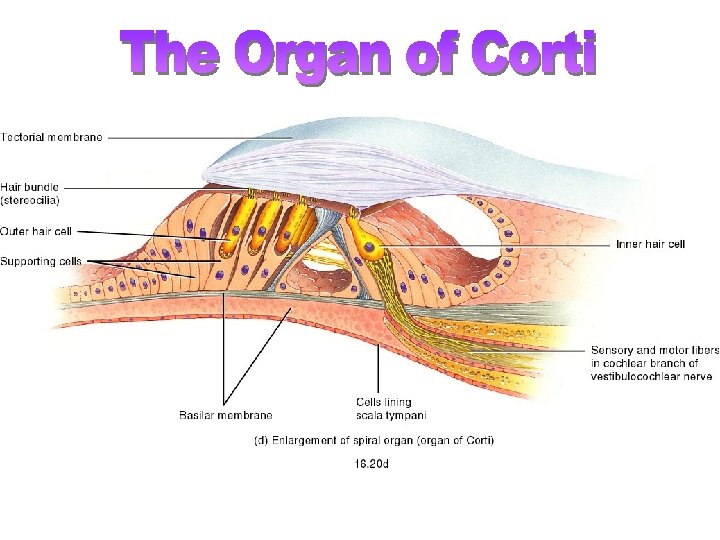
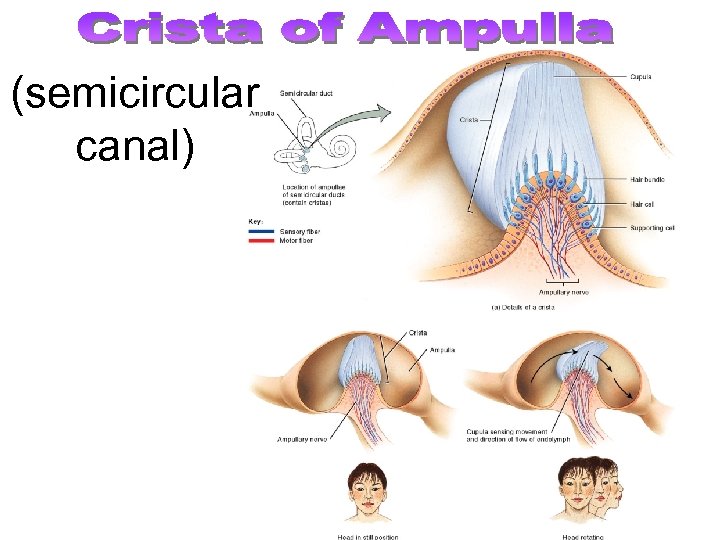
 Semicircular canal- contains endolymph fluid; anterior, posterior, and lateral canal; contains equilibrium receptors (ampulla) Cochlea- filled with perilymph fluid Organ of Corti- rests a top basilar membrane; has long row of hair cells
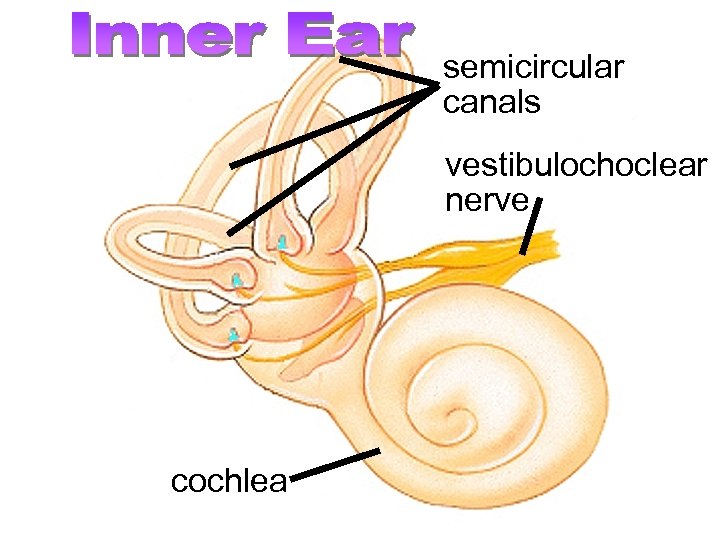 Biology 100 Human Biology semicircular canals vestibulochoclear nerve cochlea
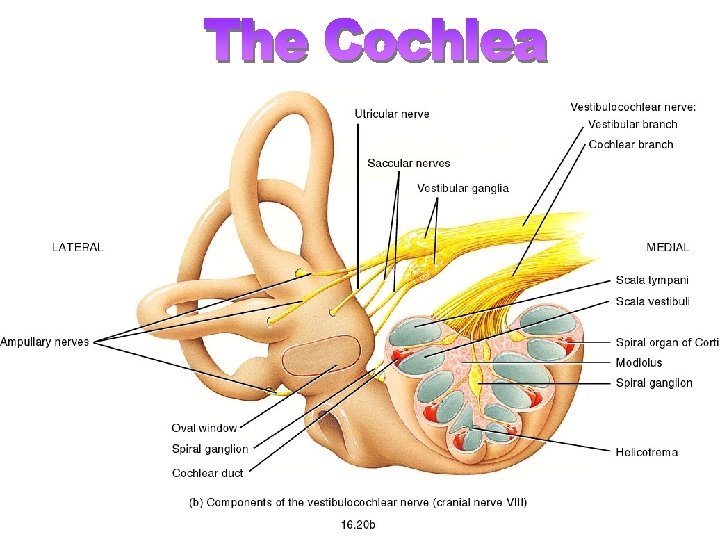
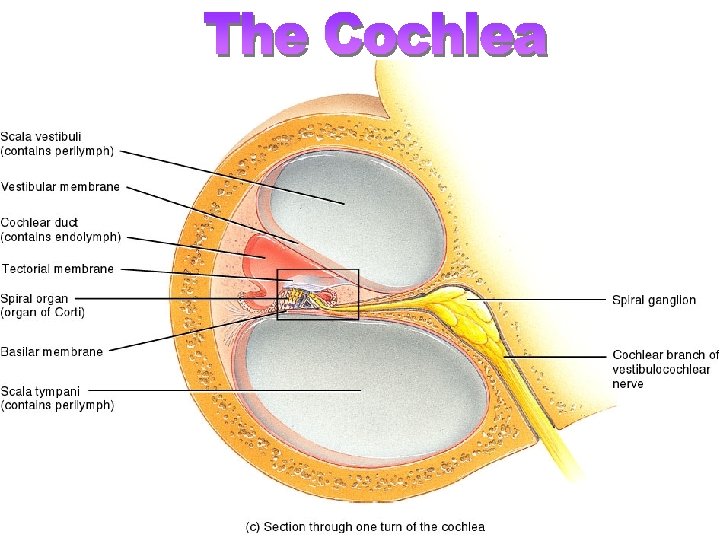
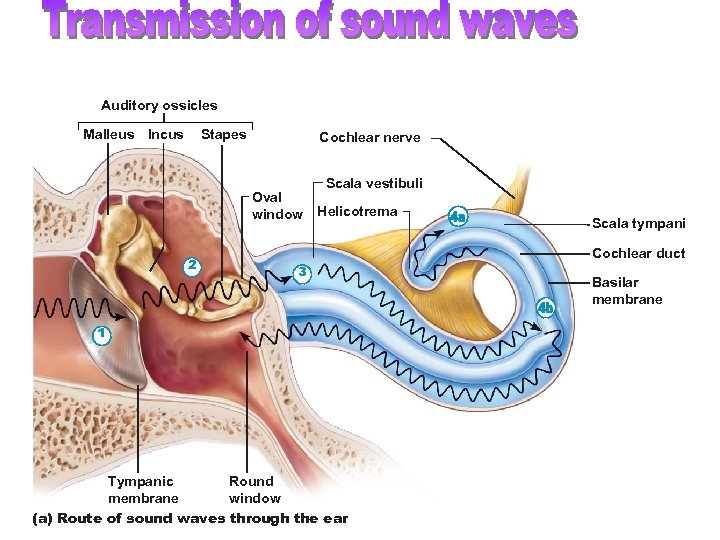 Auditory ossicles Malleus Incus Stapes Cochlear nerve Oval window 2 Scala vestibuli Helicotrema Scala tympani Cochlear duct 3 1 Tympanic Round membrane window (a) Route of sound waves through the ear Basilar membrane
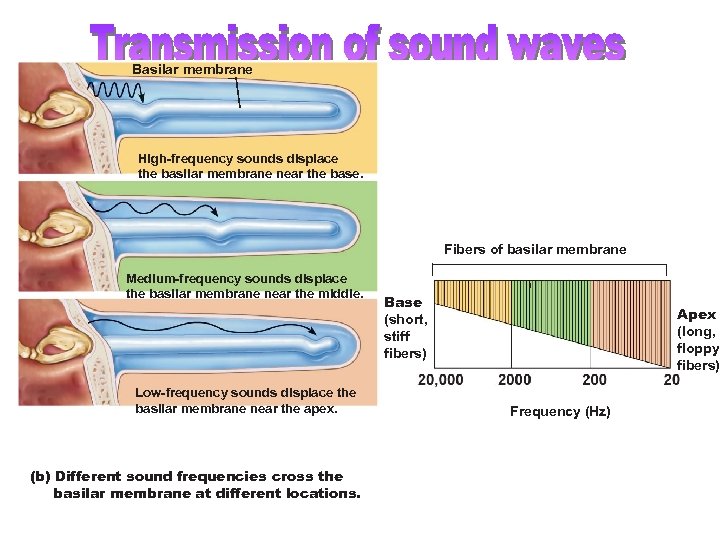 Basilar membrane High-frequency sounds displace the basilar membrane near the base. Fibers of basilar membrane Medium-frequency sounds displace the basilar membrane near the middle. Low-frequency sounds displace the basilar membrane near the apex. (b) Different sound frequencies cross the basilar membrane at different locations. Base (short, stiff fibers) Apex (long, floppy fibers) Frequency (Hz)
 Static Balance – utricle and sacule Dynamic Balance- semicircular canals
 (semicircular canal)
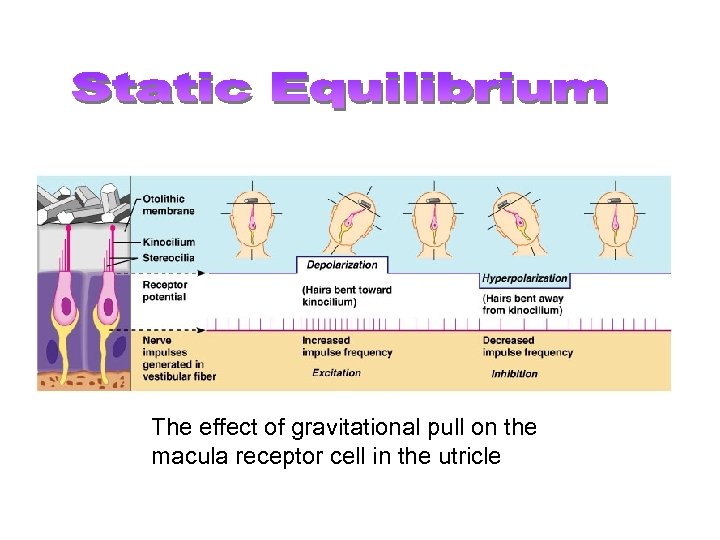 The effect of gravitational pull on the macula receptor cell in the utricle
 Hearing loss- due to disease (ex. meningitus), damage, or age related Conduction deafness- prevention or blocking sounds from entering inner ear. Ex. ear wax, ruptured ear drum, middle ear inflammation (otis media), and otosclerosis (hardening of the ossicles of the ear) Sensoneural deafness- damage to the neural structures from any point from the cochlear hair cells to and including the auditory cortical cells • Partial or complete deafness, or gradual loss over time
 IDENTIFY