


 Скачать презентацию Targeting Technology for Autistic Spectrum Disorder Patrice L
c7999678cf4e8ddd58ffcd17df3009eb.ppt
- Количество слайдов: 31
 Targeting Technology for Autistic Spectrum Disorder Patrice L. (Tamar) Weiss, Ph. D, OT Dept. of Occupational Therapy Faculty of Social Welfare & Health Sciences University of Haifa tamar@research. haifa. ac. il
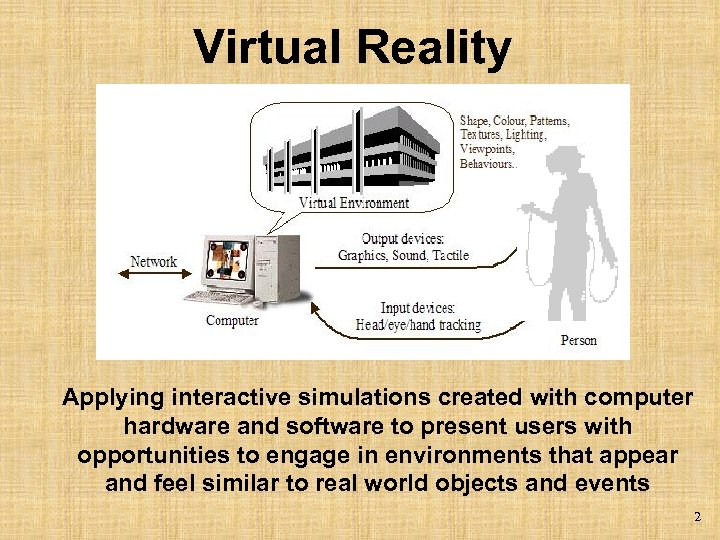 Virtual Reality Applying interactive simulations created with computer hardware and software to present users with opportunities to engage in environments that appear and feel similar to real world objects and events 2
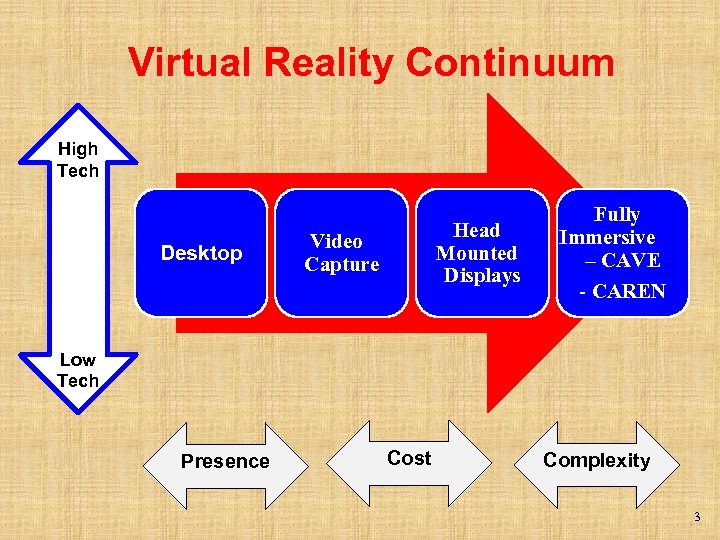 Virtual Reality Continuum High Tech Desktop Head Mounted Displays Video Capture Fully Immersive – CAVE - CAREN Low Tech Presence Cost Complexity 3
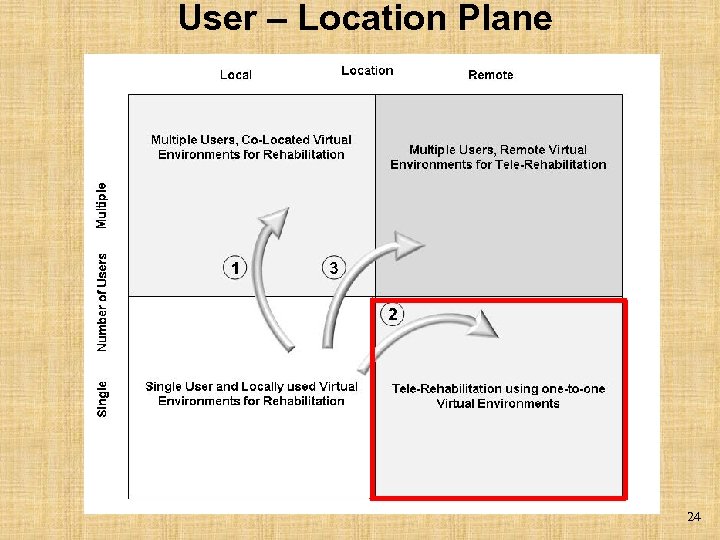
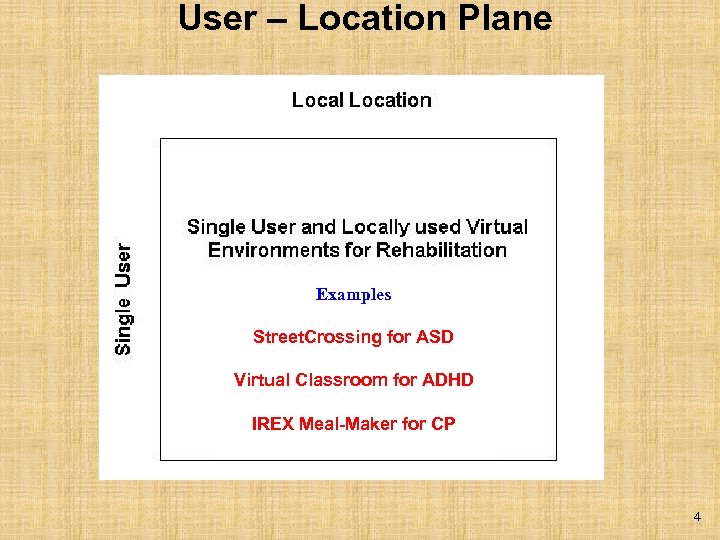 User – Location Plane Examples Street. Crossing for ASD Virtual Classroom for ADHD IREX Meal-Maker for CP 4
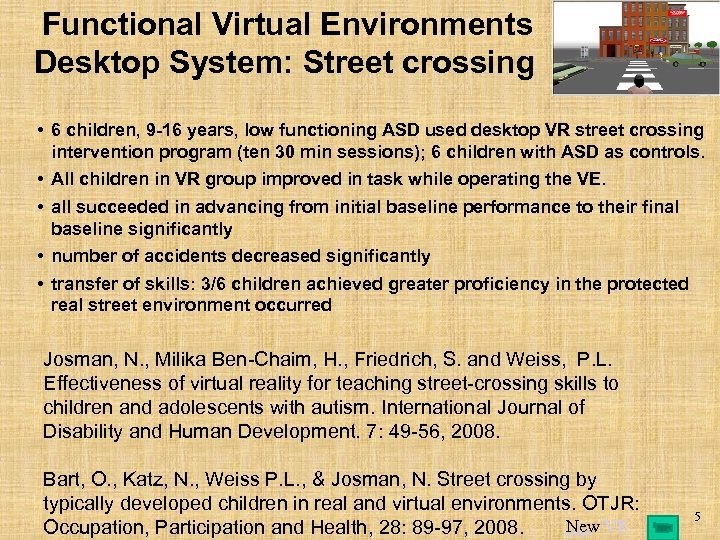 Functional Virtual Environments Desktop System: Street crossing • 6 children, 9 -16 years, low functioning ASD used desktop VR street crossing intervention program (ten 30 min sessions); 6 children with ASD as controls. • All children in VR group improved in task while operating the VE. • all succeeded in advancing from initial baseline performance to their final baseline significantly • number of accidents decreased significantly • transfer of skills: 3/6 children achieved greater proficiency in the protected real street environment occurred Josman, N. , Milika Ben-Chaim, H. , Friedrich, S. and Weiss, P. L. Effectiveness of virtual reality for teaching street-crossing skills to children and adolescents with autism. International Journal of Disability and Human Development. 7: 49 -56, 2008. Bart, O. , Katz, N. , Weiss P. L. , & Josman, N. Street crossing by typically developed children in real and virtual environments. OTJR: New VE Occupation, Participation and Health, 28: 89 -97, 2008. 5
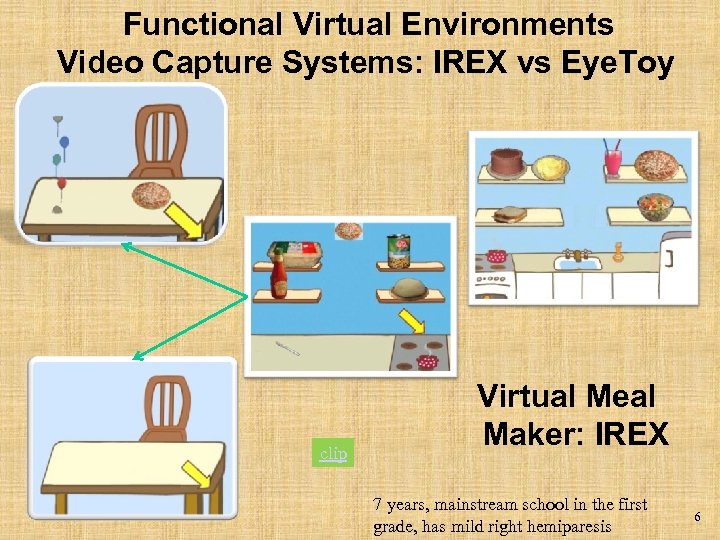 Functional Virtual Environments Video Capture Systems: IREX vs Eye. Toy clip Virtual Meal Maker: IREX 7 years, mainstream school in the first grade, has mild right hemiparesis 6
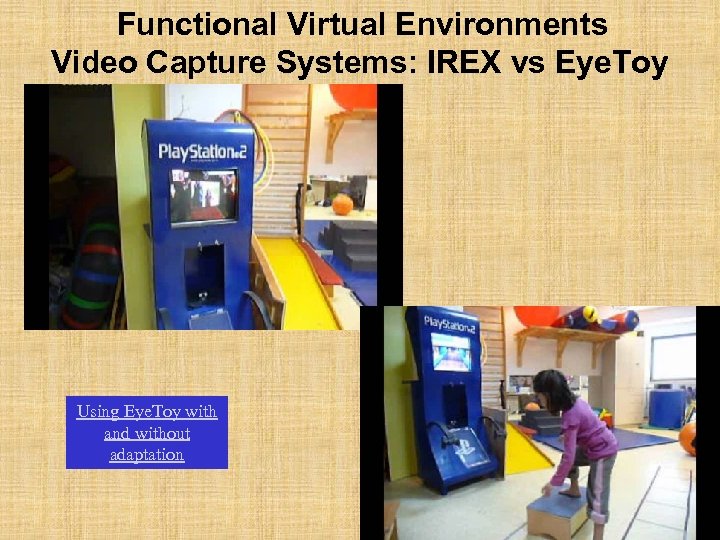 Functional Virtual Environments Video Capture Systems: IREX vs Eye. Toy Using Eye. Toy with and without adaptation 7
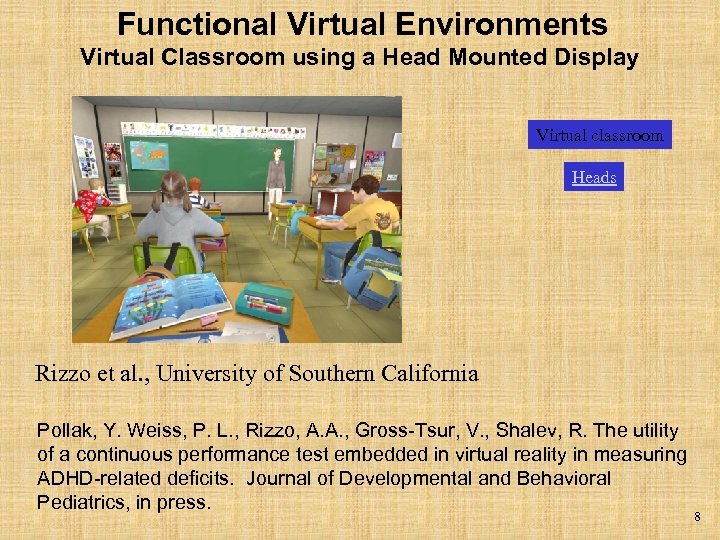 Functional Virtual Environments Virtual Classroom using a Head Mounted Display Virtual classroom Heads Rizzo et al. , University of Southern California Pollak, Y. Weiss, P. L. , Rizzo, A. A. , Gross-Tsur, V. , Shalev, R. The utility of a continuous performance test embedded in virtual reality in measuring ADHD-related deficits. Journal of Developmental and Behavioral Pediatrics, in press. 8
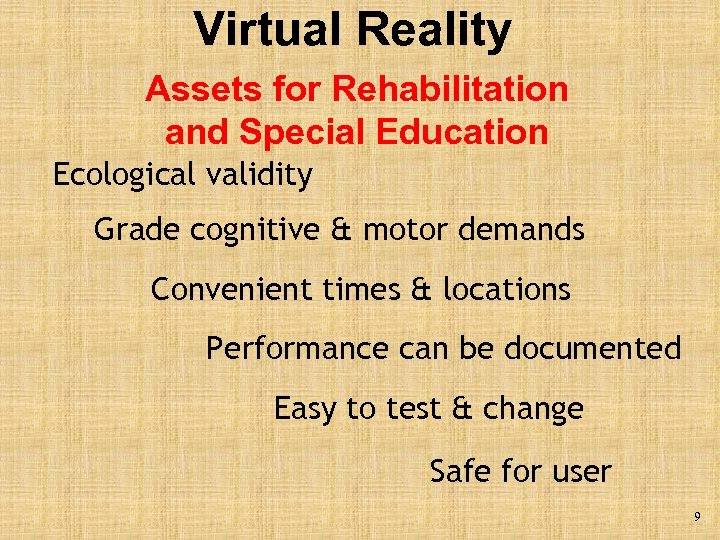 Virtual Reality Assets for Rehabilitation and Special Education Ecological validity Grade cognitive & motor demands Convenient times & locations Performance can be documented Easy to test & change Safe for user 9
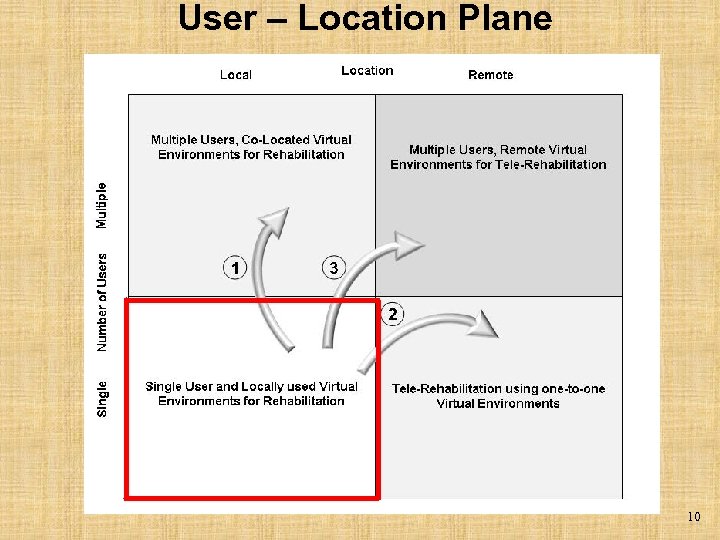 User – Location Plane 10
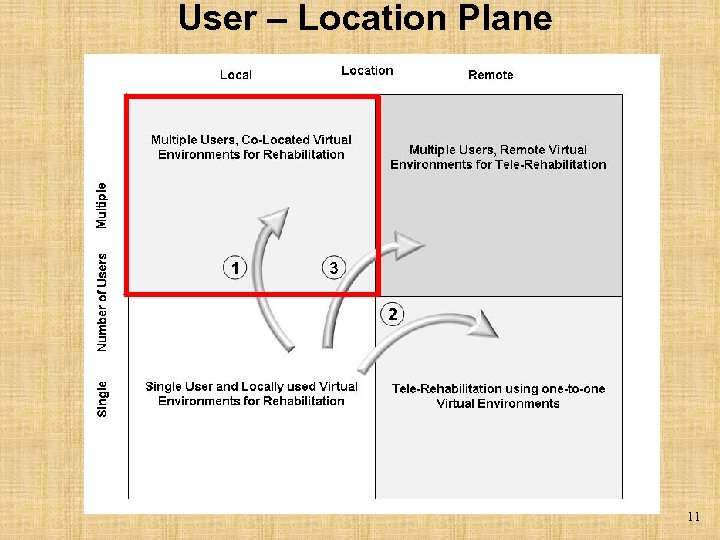 User – Location Plane 11
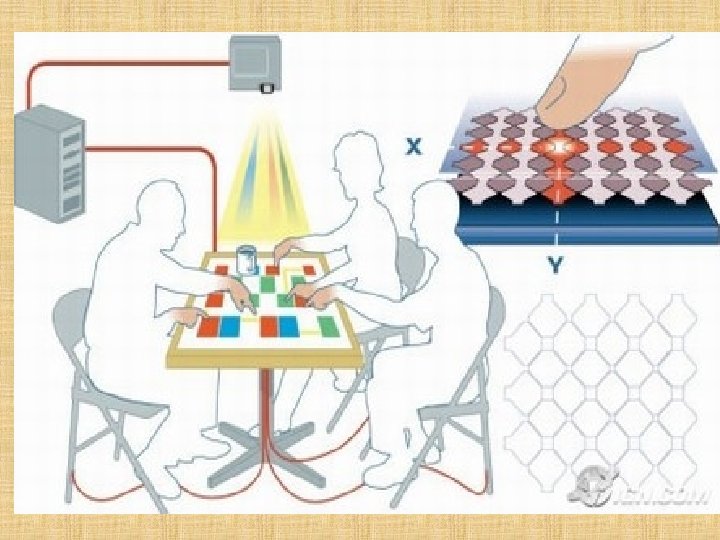
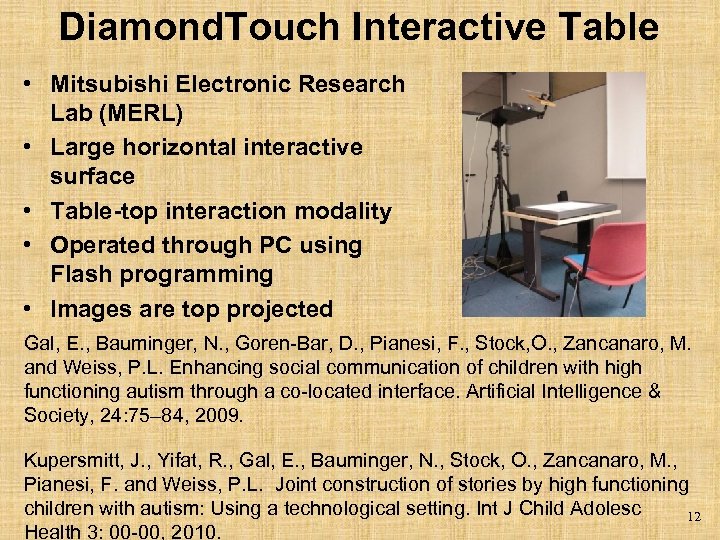 Diamond. Touch Interactive Table • Mitsubishi Electronic Research Lab (MERL) • Large horizontal interactive surface • Table-top interaction modality • Operated through PC using Flash programming • Images are top projected Gal, E. , Bauminger, N. , Goren-Bar, D. , Pianesi, F. , Stock, O. , Zancanaro, M. and Weiss, P. L. Enhancing social communication of children with high functioning autism through a co-located interface. Artificial Intelligence & Society, 24: 75– 84, 2009. Kupersmitt, J. , Yifat, R. , Gal, E. , Bauminger, N. , Stock, O. , Zancanaro, M. , Pianesi, F. and Weiss, P. L. Joint construction of stories by high functioning children with autism: Using a technological setting. Int J Child Adolesc 12 Health 3: 00 -00, 2010.
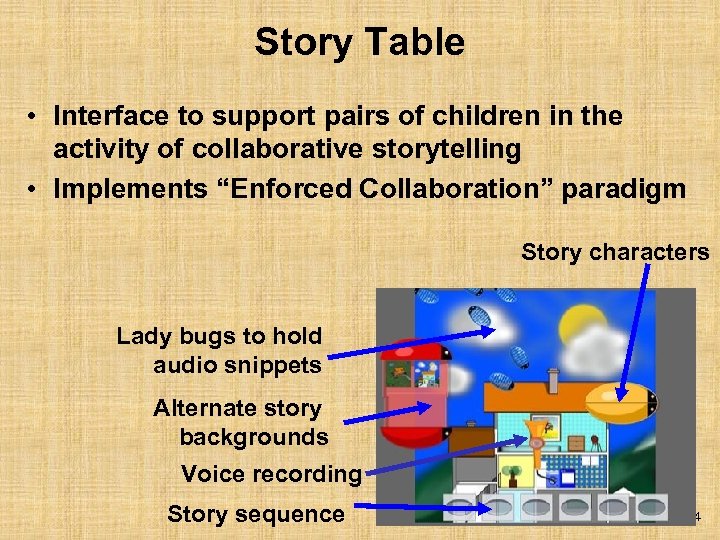 Story Table • Interface to support pairs of children in the activity of collaborative storytelling • Implements “Enforced Collaboration” paradigm Story characters Lady bugs to hold audio snippets Alternate story backgrounds Voice recording Story sequence 14
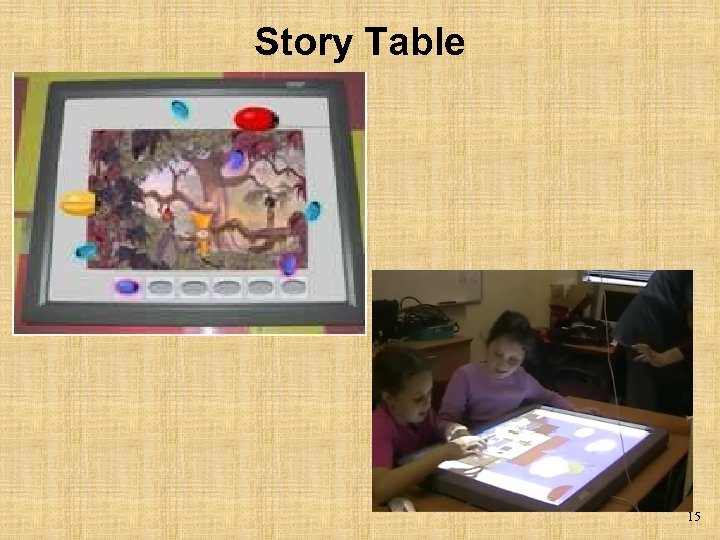 Story Table 15
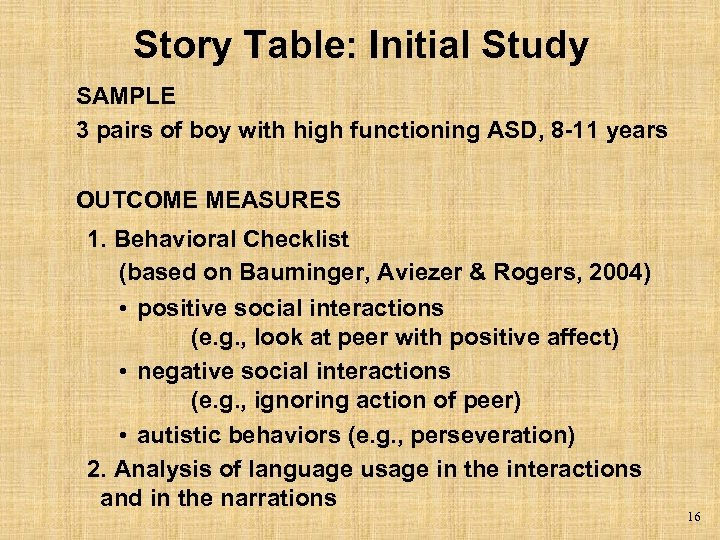 Story Table: Initial Study SAMPLE 3 pairs of boy with high functioning ASD, 8 -11 years OUTCOME MEASURES 1. Behavioral Checklist (based on Bauminger, Aviezer & Rogers, 2004) • positive social interactions (e. g. , look at peer with positive affect) • negative social interactions (e. g. , ignoring action of peer) • autistic behaviors (e. g. , perseveration) 2. Analysis of language usage in the interactions and in the narrations 16
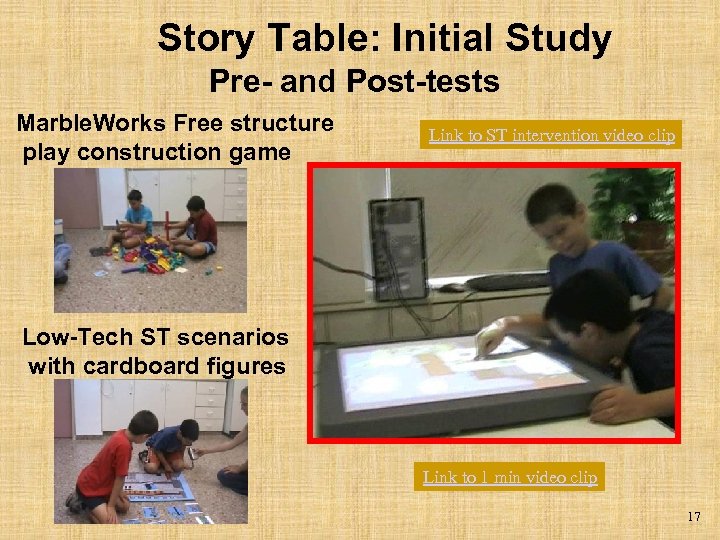 Story Table: Initial Study Pre- and Post-tests Marble. Works Free structure play construction game Link to ST intervention video clip Low-Tech ST scenarios with cardboard figures Link to 1 min video clip 17
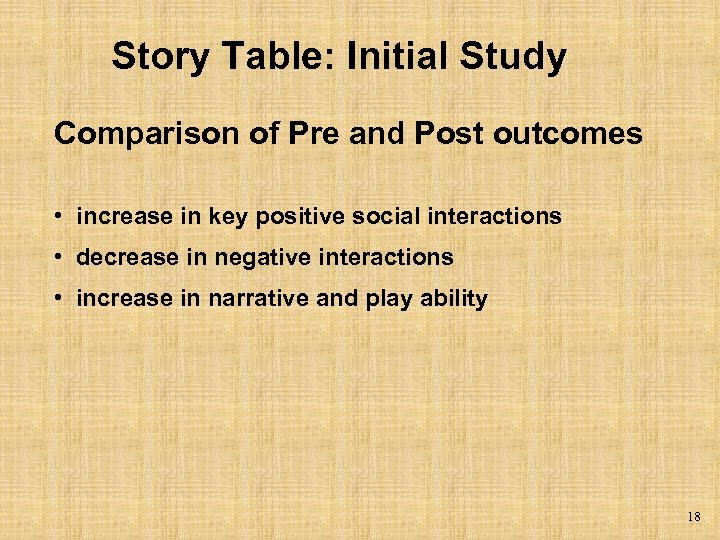 Story Table: Initial Study Comparison of Pre and Post outcomes • increase in key positive social interactions • decrease in negative interactions • increase in narrative and play ability 18
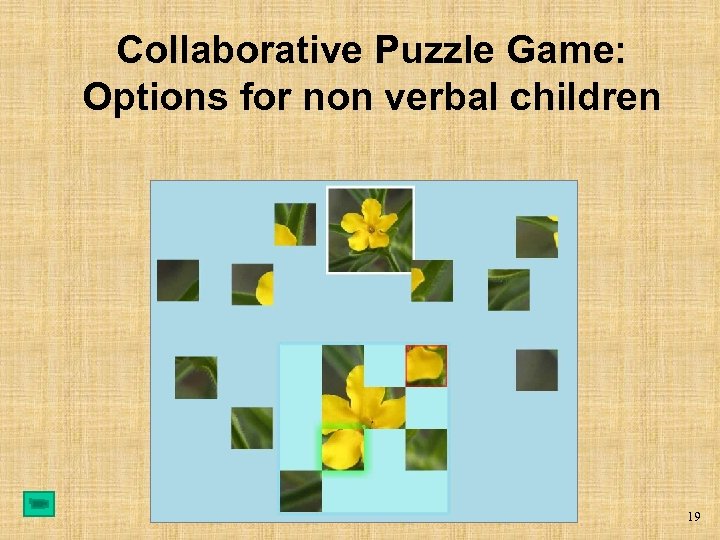 Collaborative Puzzle Game: Options for non verbal children 19
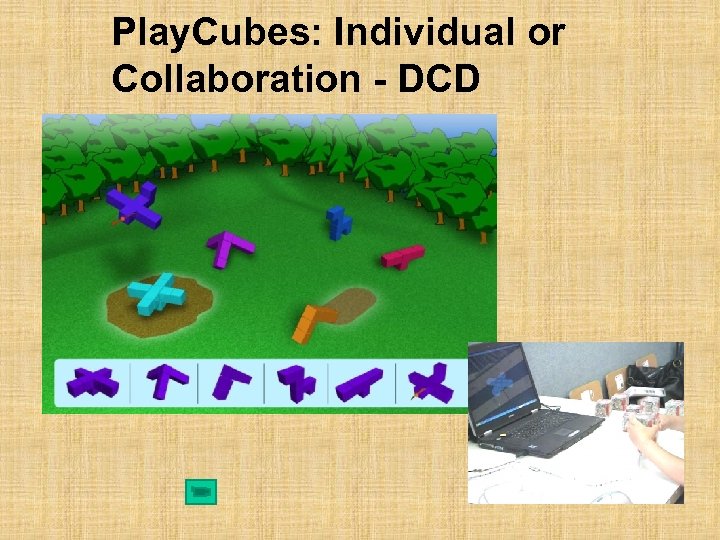
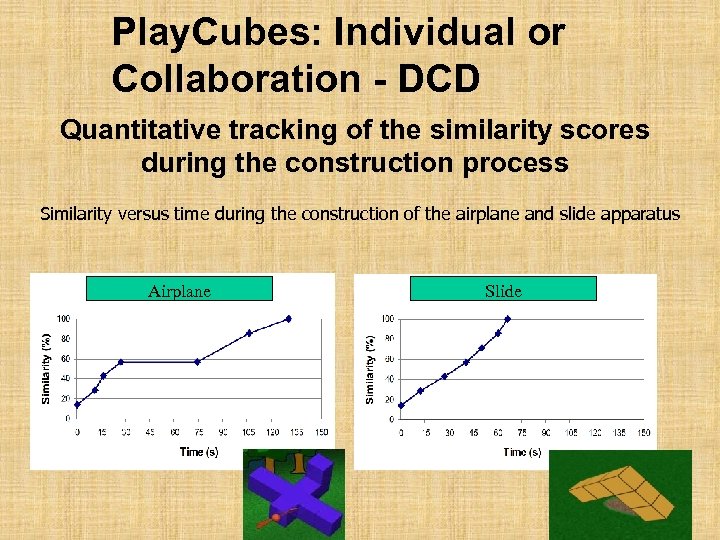
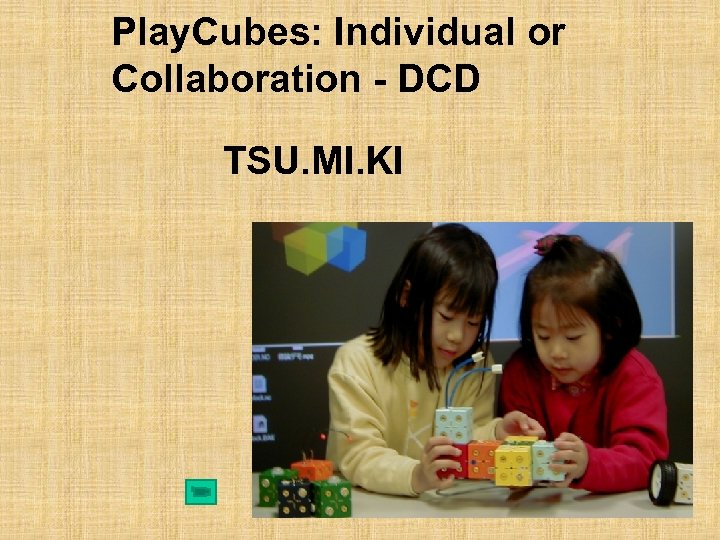
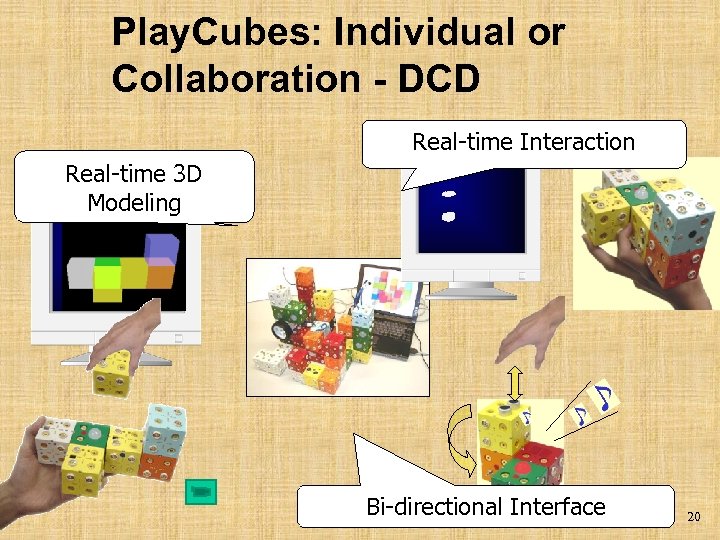 Play. Cubes: Individual or Collaboration - DCD Real-time Interaction Real-time 3 D Modeling Bi-directional Interface 20
 Play. Cubes: Individual or Collaboration - DCD
 Play. Cubes: Individual or Collaboration - DCD Quantitative tracking of the similarity scores during the construction process Similarity versus time during the construction of the airplane and slide apparatus Airplane Slide
 Play. Cubes: Individual or Collaboration - DCD TSU. MI. KI
 User – Location Plane 24
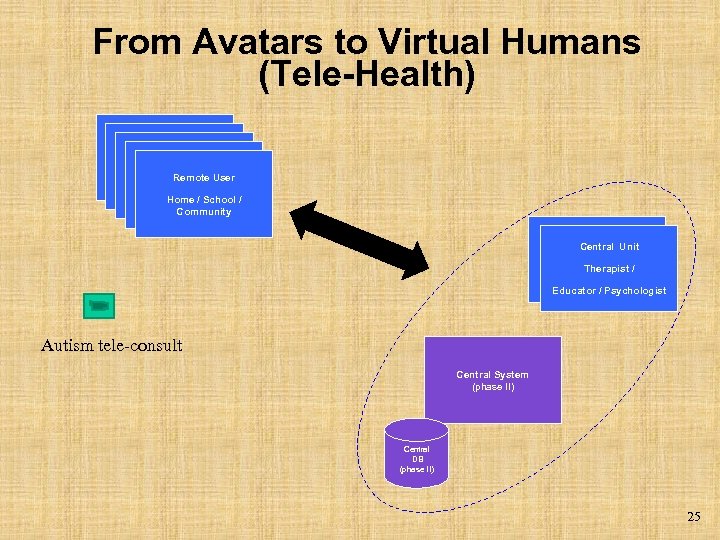 From Avatars to Virtual Humans (Tele-Health) Remote User Home / School / Community Central Unit Therapist / Educator / Psychologist Autism tele-consult Central System (phase II) Central DB (phase II) 25
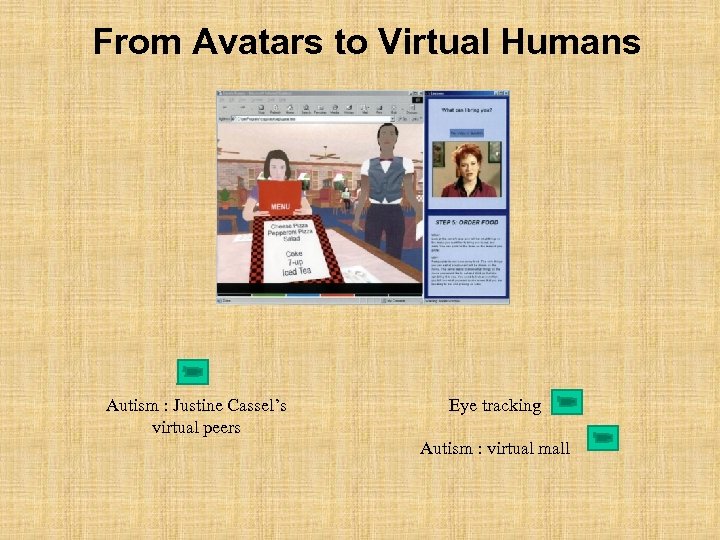 From Avatars to Virtual Humans Autism : Justine Cassel’s virtual peers Eye tracking Autism : virtual mall
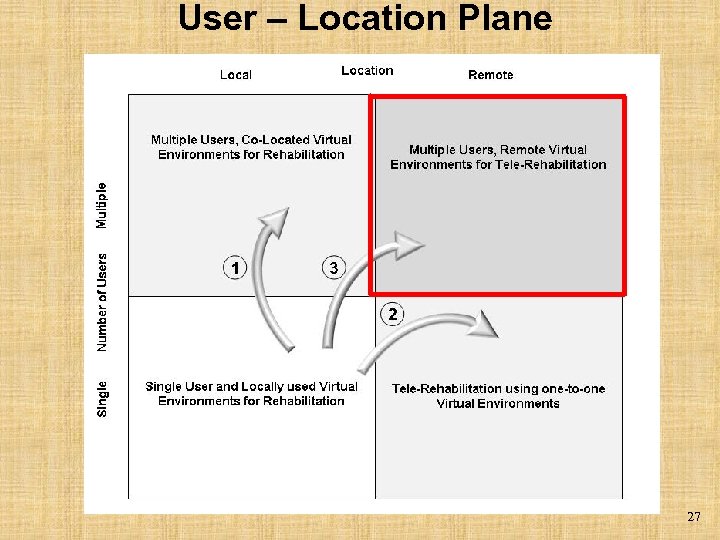 User – Location Plane 27
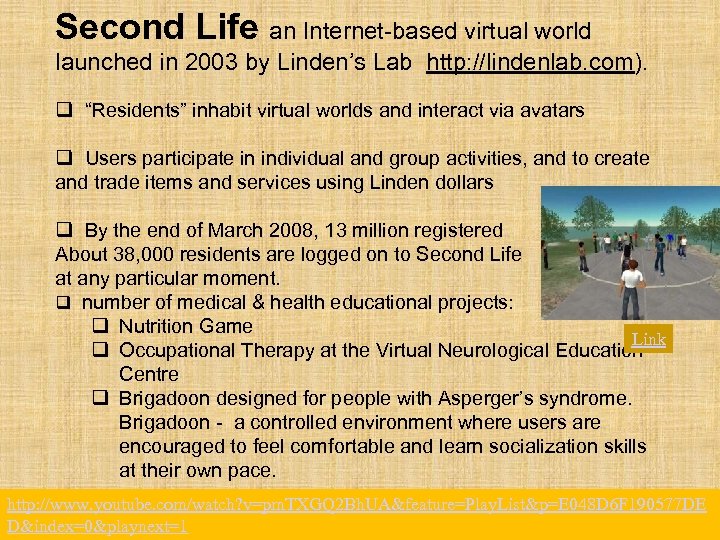 Second Life an Internet-based virtual world launched in 2003 by Linden’s Lab http: //lindenlab. com). q “Residents” inhabit virtual worlds and interact via avatars q Users participate in individual and group activities, and to create and trade items and services using Linden dollars q By the end of March 2008, 13 million registered accounts. About 38, 000 residents are logged on to Second Life at any particular moment. q number of medical & health educational projects: q Nutrition Game Link q Occupational Therapy at the Virtual Neurological Education Centre q Brigadoon designed for people with Asperger’s syndrome. Brigadoon - a controlled environment where users are encouraged to feel comfortable and learn socialization skills at their own pace. http: //www. youtube. com/watch? v=pm. TXGQ 2 Bh. UA&feature=Play. List&p=E 048 D 6 F 190577 DE 28 D&index=0&playnext=1
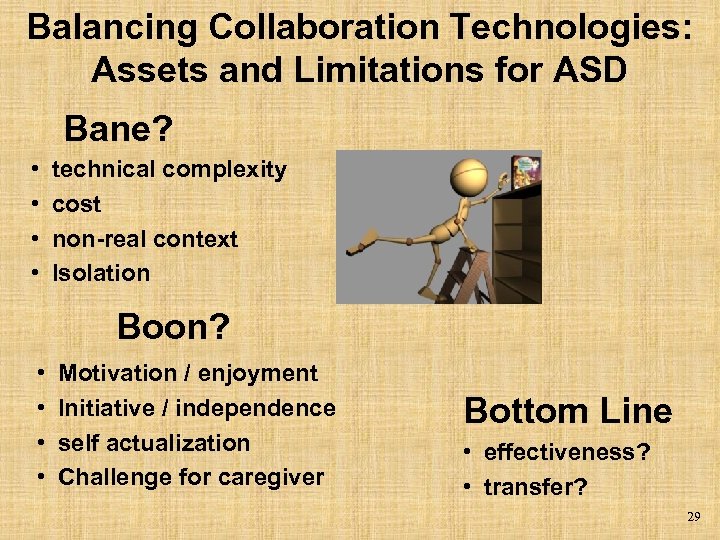 Balancing Collaboration Technologies: Assets and Limitations for ASD Bane? • • technical complexity cost non-real context Isolation Boon? • • Motivation / enjoyment Initiative / independence self actualization Challenge for caregiver Bottom Line • effectiveness? • transfer? 29
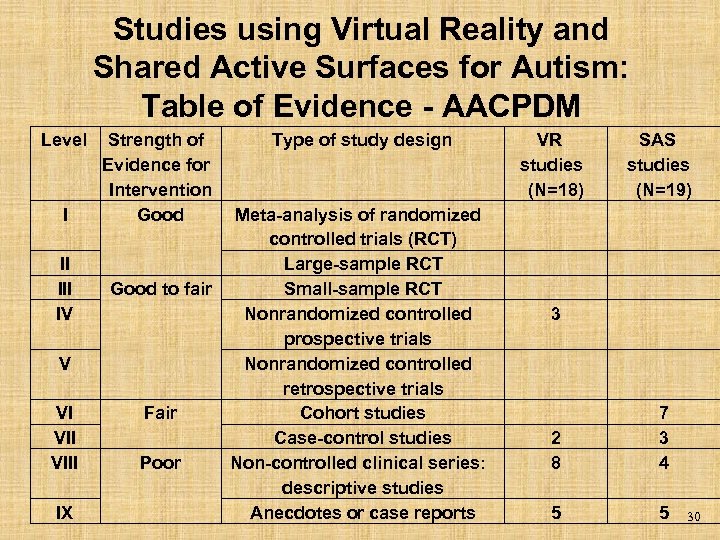 Studies using Virtual Reality and Shared Active Surfaces for Autism: Table of Evidence - AACPDM Level I II IV V VI VIII IX Strength of Evidence for Intervention Good Type of study design Meta-analysis of randomized controlled trials (RCT) Large-sample RCT Good to fair Small-sample RCT Nonrandomized controlled prospective trials Nonrandomized controlled retrospective trials Fair Cohort studies Case-control studies Poor Non-controlled clinical series: descriptive studies Anecdotes or case reports VR studies (N=18) SAS studies (N=19) 3 2 8 7 3 4 5 5 30
 Acknowledgements Laboratory for Innovations in Rehabilitation Technology University of Haifa, Israel Caesarea-Rothschild Institute Fondation Ida et Avrohom Baruch Israeli Ministry of Health Israeli Ministry of Defense Yad Hanadiv-Keren Rothschild Israeli Foundation for Spinal Cord Injured due to Gunshot Israel Science Foundation Keren Shalem Koniver Foundation Rayne Foundation Autism Speaks European Union FP 7 ICT 31