 Скачать презентацию Tangible Interactions and Augmented Reality Nirav Mehta Anne
9f3c472ea032994b3fa632f4287a581f.ppt
- Количество слайдов: 11



Tangible Interactions and Augmented Reality Nirav Mehta Anne Marie Piper
“Tangible Bits” • Foreground vs. background bits – How do we make use of the way people perceive objects, motion, and changes? • For purpose of presenting info • Enhancing understanding – Foreground: grasp and manipulate physical objects – Background: ambient media in augmented space
“Knowledge Based AR” • Knowledge based – takes feedback from physical world • Intent based – user controls what they want to see • AR – overlays virtual on physical • Powerful means of providing information – Laser printer maintenance
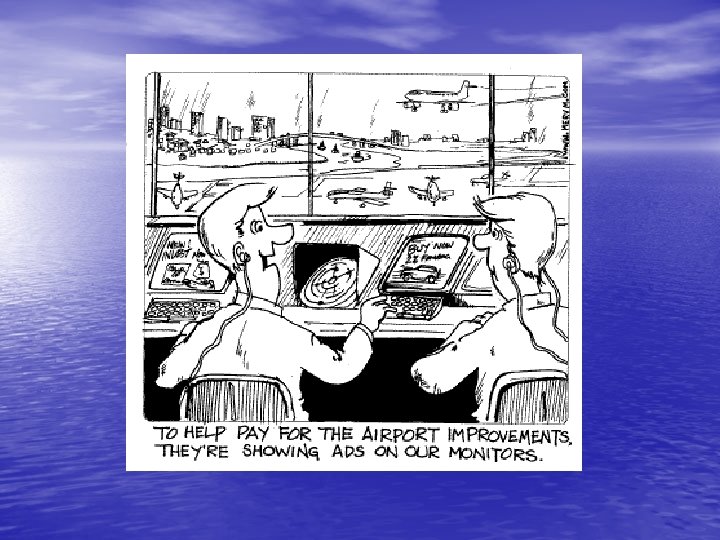
“Reinventing the Familiar” • Air Traffic Control is a high risk context • Don’t want to disturb the current system – Make incremental changes – Additional technology needs to be seamless • AR can combine original tactile cues with additional virtual information
Rationales for Tangibles and AR • Learning • Efficiency • Informational • “Feel good” factor
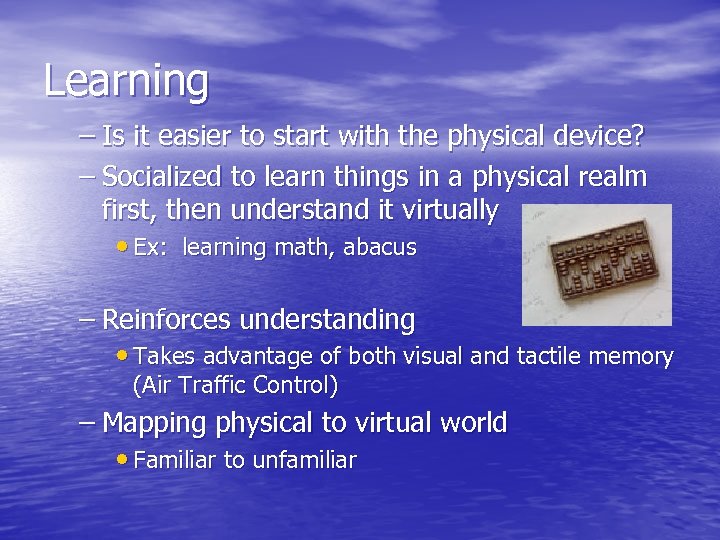
Learning – Is it easier to start with the physical device? – Socialized to learn things in a physical realm first, then understand it virtually • Ex: learning math, abacus – Reinforces understanding • Takes advantage of both visual and tactile memory (Air Traffic Control) – Mapping physical to virtual world • Familiar to unfamiliar
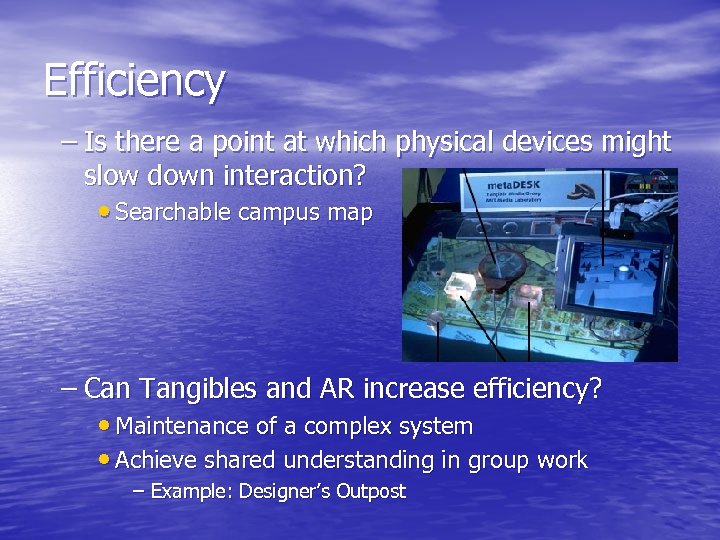
Efficiency – Is there a point at which physical devices might slow down interaction? • Searchable campus map – Can Tangibles and AR increase efficiency? • Maintenance of a complex system • Achieve shared understanding in group work – Example: Designer’s Outpost
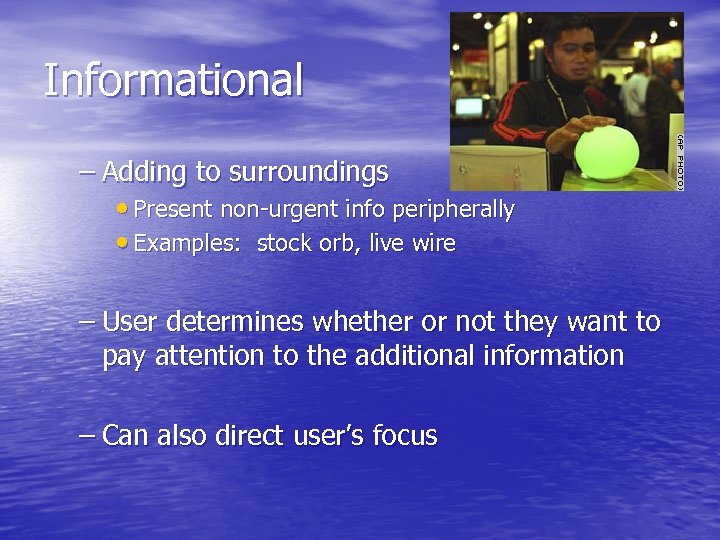
Informational – Adding to surroundings • Present non-urgent info peripherally • Examples: stock orb, live wire – User determines whether or not they want to pay attention to the additional information – Can also direct user’s focus
“Feel Good” Factor • Why bring back rich physical devices? – More natural means of input? – Ease understanding of virtual information? • Physical objects provide distinct feedback – Interactions with computers may become routine and feedback may become unnoticed after time – Tendency to give more attention to human feedback than machine feedback
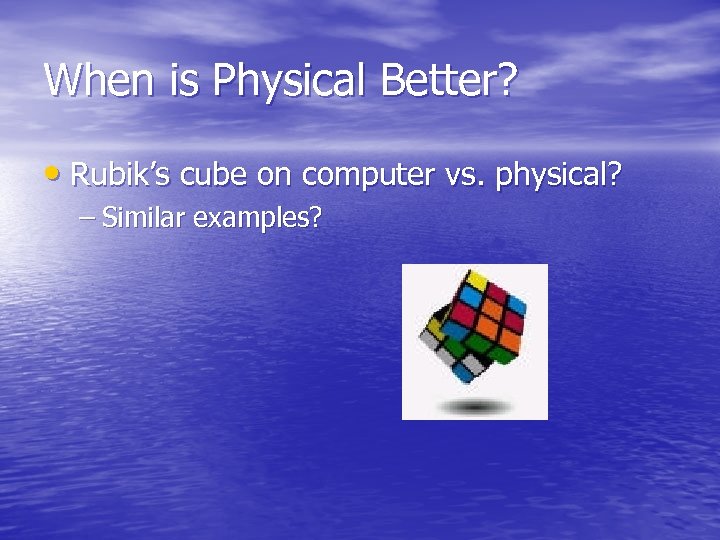
When is Physical Better? • Rubik’s cube on computer vs. physical? – Similar examples?
Скачать презентацию Tangible Interactions and Augmented Reality Nirav Mehta Anne
9f3c472ea032994b3fa632f4287a581f.ppt