 Скачать презентацию TAKAYASU S ARTERITIS PREPARED BY NURMAGAMBETOV SH 462 GM
TAKAYASU_ARTERITIS.pptx
- Количество слайдов: 44




TAKAYASU’S ARTERITIS PREPARED BY: NURMAGAMBETOV SH. 462 GM
EPIDEMIOLOGY More case reports from Japan , India, South-east Asia, Mexico No geographic restriction No race – immune Incidence-2. 6/million/year-N. America/Europe The incidence in Asia is 1 case/1000 -5000 women.
Age Mc-2 nd & 3 rd decade May range from infancy to middle age Indian studies-age 3 - 50 yrs Gender diff Japan-F: M=8 -9: 1 India-F: M ratio varies from -1: 1 - 3: 1 ( Padmavati S, Aurora AP, Kasliwal RR Aortoarteritis in India. J Assoc Physicians India 1987) India=F: M- 6. 4: 1 (Panja et al, 1997 JACC)
Genetics Japan - HLA-B 52 and B 39 Mexican and Colombian patients - HLADRB 1*1301 and HLA-DRB 1*1602 India- HLA- B 5, -B 21
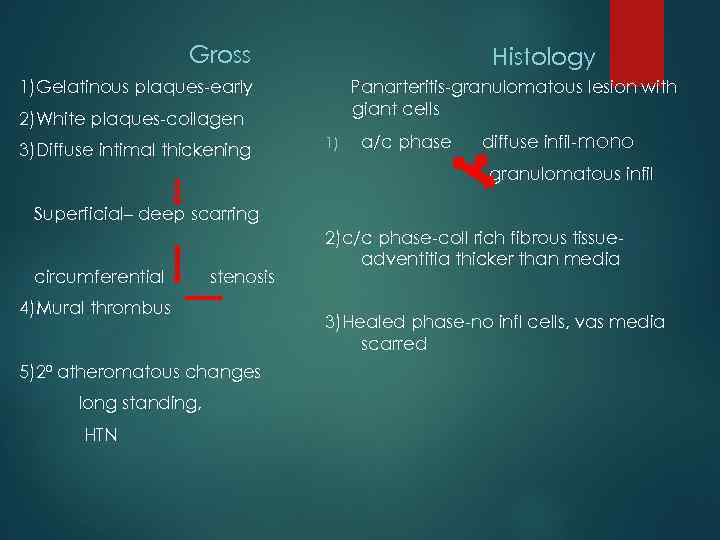
Histopathology Idiopathic c/c infla arteritis of elastic arteries resulting in occlusive &/ ectatic changes Large vessels, esp, Aorta & its main branches (brachiocephalic, carotid, SCL, vertebral, RA) +Coronary & PA Ao valve –usually not beyond IMA Multiple segs with dis & skipped nl areas or diffuse involvement
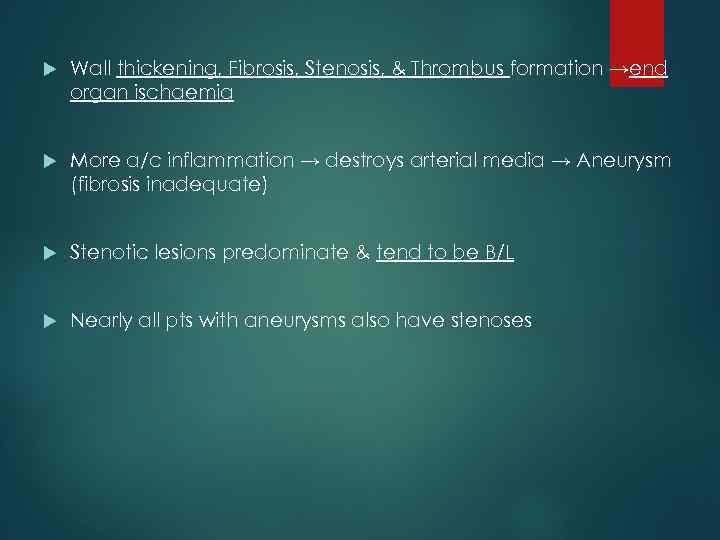
Gross Histology 1)Gelatinous plaques-early Panarteritis-granulomatous lesion with giant cells 2)White plaques-collagen 3)Diffuse intimal thickening 1) a/c phase diffuse infil-mono granulomatous infil Superficial– deep scarring circumferential stenosis 4)Mural thrombus 5)2⁰ atheromatous changes long standing, HTN 2)c/c phase-coll rich fibrous tissueadventitia thicker than media 3)Healed phase-no infl cells, vas media scarred
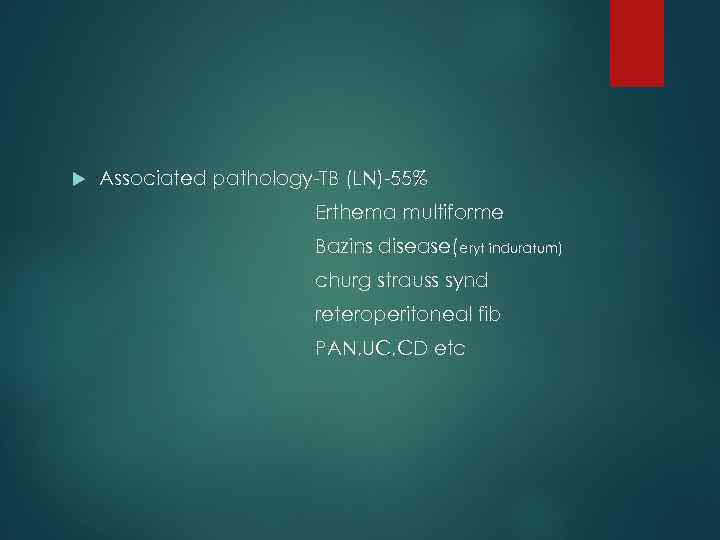
Wall thickening, Fibrosis, Stenosis, & Thrombus formation →end organ ischaemia More a/c inflammation → destroys arterial media → Aneurysm (fibrosis inadequate) Stenotic lesions predominate & tend to be B/L Nearly all pts with aneurysms also have stenoses
Associated pathology-TB (LN)-55% Erthema multiforme Bazins disease( eryt induratum) churg strauss synd reteroperitoneal fib PAN, UC, CD etc
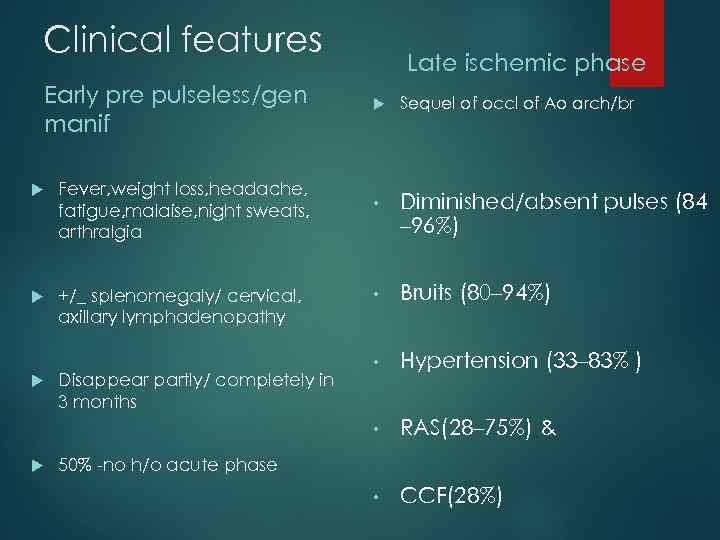
Clinical features Early pre pulseless/gen manif Late ischemic phase Fever, weight loss, headache, fatigue, malaise, night sweats, arthralgia +/_ splenomegaly/ cervical, axillary lymphadenopathy Disappear partly/ completely in 3 months Sequel of occl of Ao arch/br • Diminished/absent pulses (84 – 96%) • Bruits (80– 94%) • Hypertension (33– 83% ) • RAS(28– 75%) & • CCF(28%) 50% -no h/o acute phase
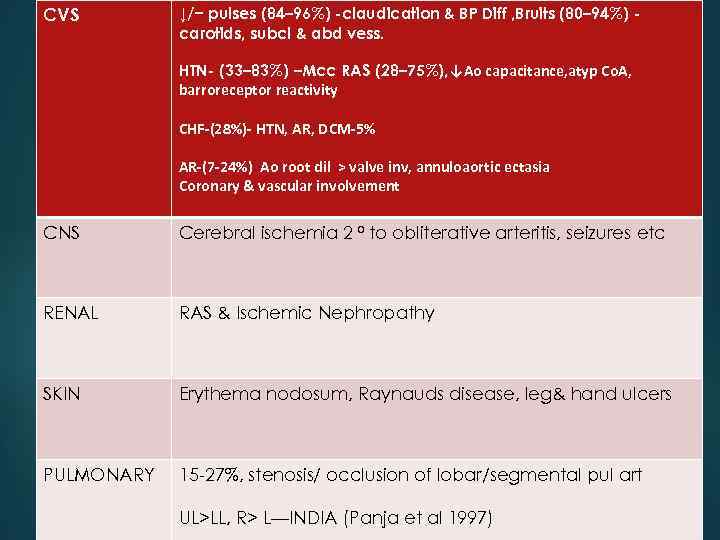
CVS ↓/− pulses (84– 96%) -claudication & BP Diff , Bruits (80– 94%) carotids, subcl & abd vess. HTN- (33– 83%) –Mcc RAS (28– 75%), ↓Ao capacitance, atyp Co. A, barroreceptor reactivity CHF-(28%)- HTN, AR, DCM-5% AR-(7 -24%) Ao root dil > valve inv, annuloaortic ectasia Coronary & vascular involvement CNS Cerebral ischemia 2 ⁰ to obliterative arteritis, seizures etc RENAL RAS & Ischemic Nephropathy SKIN Erythema nodosum, Raynauds disease, leg& hand ulcers PULMONARY 15 -27%, stenosis/ occlusion of lobar/segmental pul art UL>LL, R> L—INDIA (Panja et al 1997)
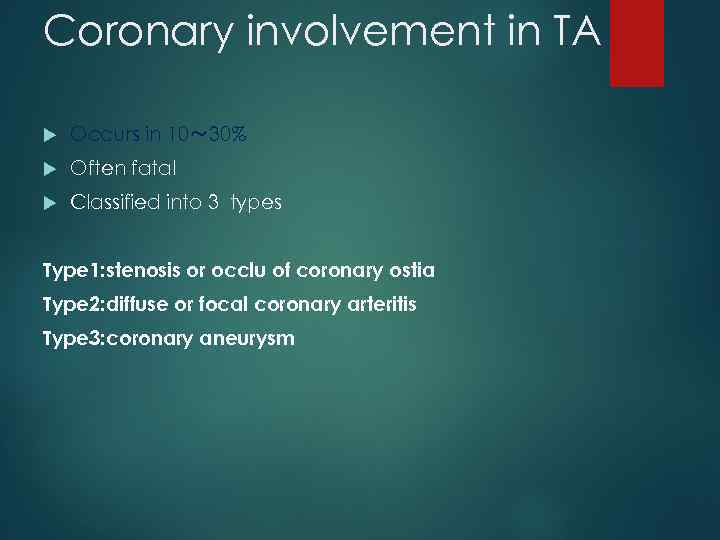
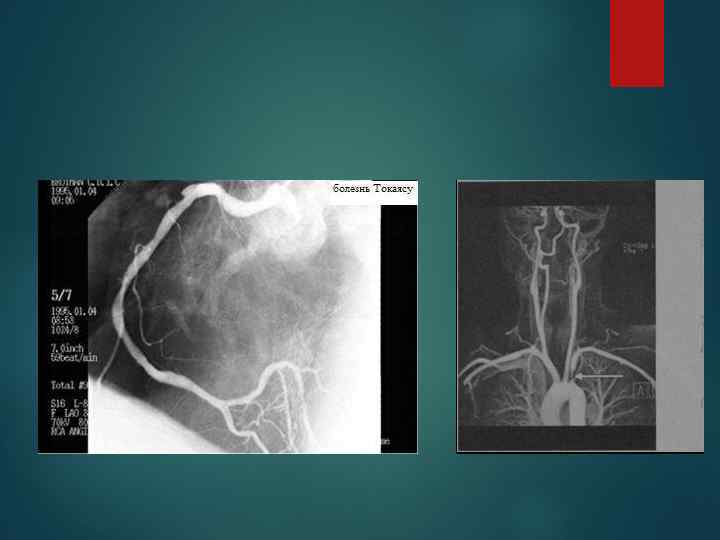
Coronary involvement in TA Occurs in 10~ 30% Often fatal Classified into 3 types Type 1: stenosis or occlu of coronary ostia Type 2: diffuse or focal coronary arteritis Type 3: coronary aneurysm
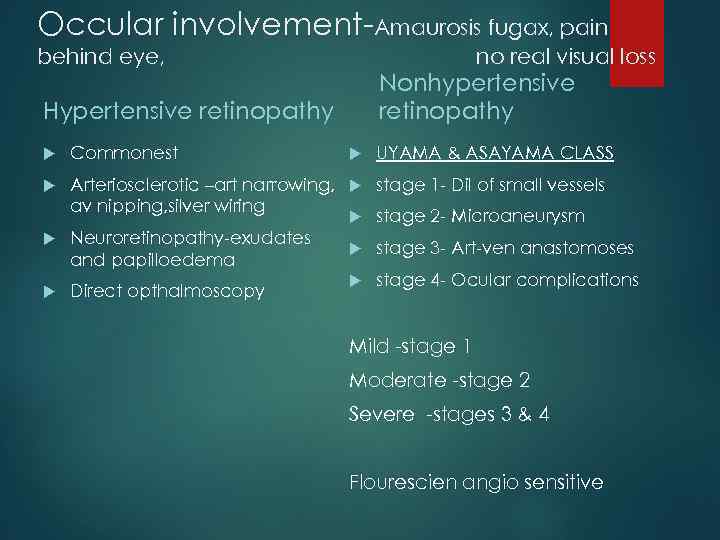
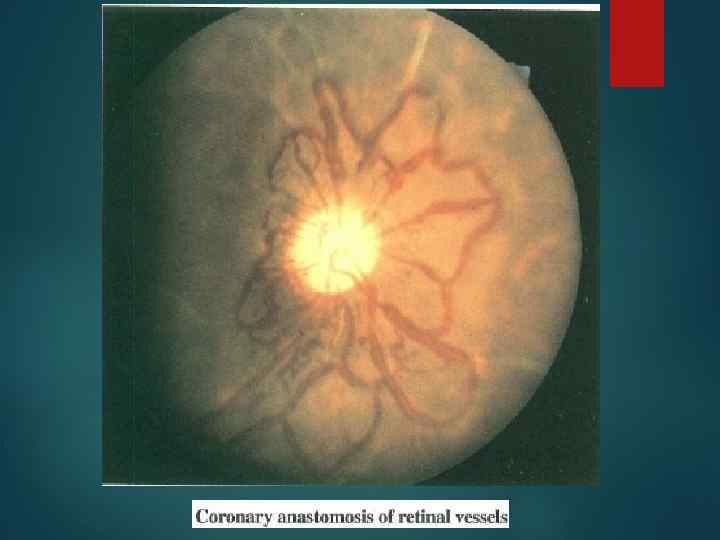
Occular involvement-Amaurosis fugax, pain behind eye, no real visual loss Nonhypertensive retinopathy Hypertensive retinopathy Commonest UYAMA & ASAYAMA CLASS Arteriosclerotic –art narrowing, stage 1 - Dil of small vessels av nipping, silver wiring stage 2 - Microaneurysm Neuroretinopathy-exudates stage 3 - Art-ven anastomoses and papilloedema stage 4 - Ocular complications Direct opthalmoscopy Mild -stage 1 Moderate -stage 2 Severe -stages 3 & 4 Flourescien angio sensitive
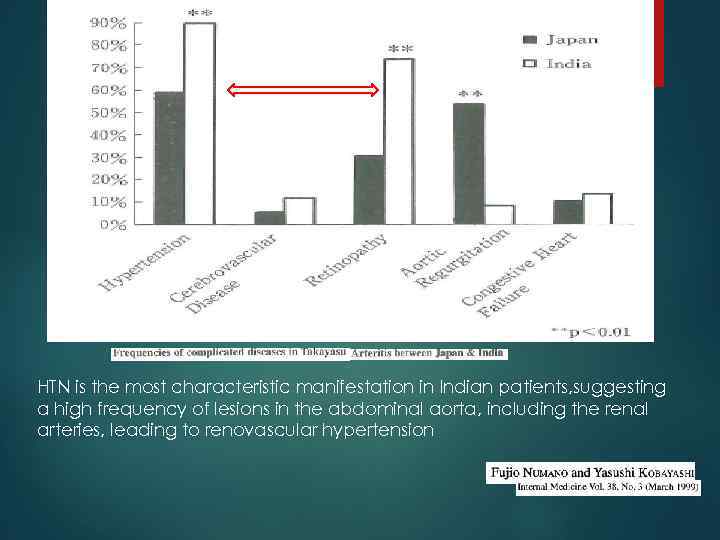
HTN is the most characteristic manifestation in Indian patients, suggesting a high frequency of lesions in the abdominal aorta, including the renal arteries, leading to renovascular hypertension
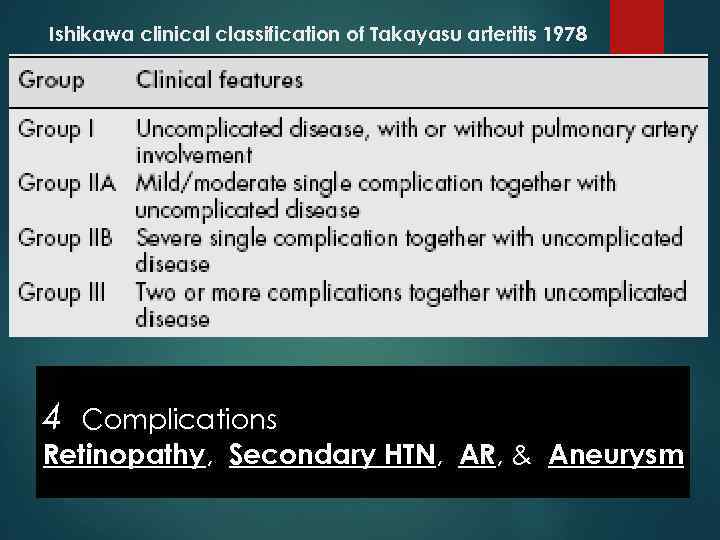
Ishikawa clinical classification of Takayasu arteritis 1978 4 Complications Retinopathy, Secondary HTN, AR, & Aneurysm
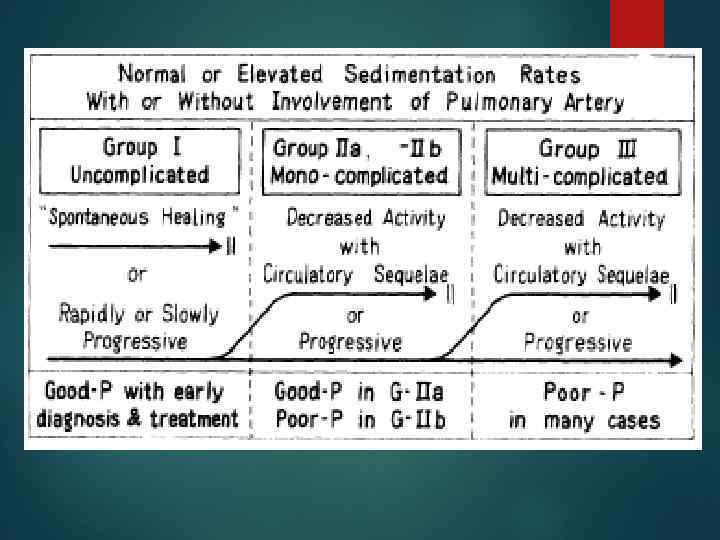
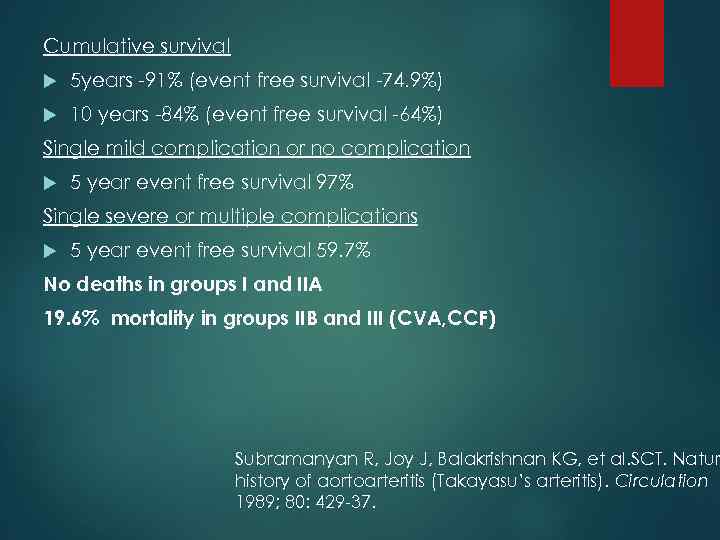
Cumulative survival 5 years -91% (event free survival -74. 9%) 10 years -84% (event free survival -64%) Single mild complication or no complication 5 year event free survival 97% Single severe or multiple complications 5 year event free survival 59. 7% No deaths in groups I and IIA 19. 6% mortality in groups IIB and III (CVA, CCF) Subramanyan R, Joy J, Balakrishnan KG, et al. SCT. Natur history of aortoarteritis (Takayasu’s arteritis). Circulation 1989; 80: 429 -37.
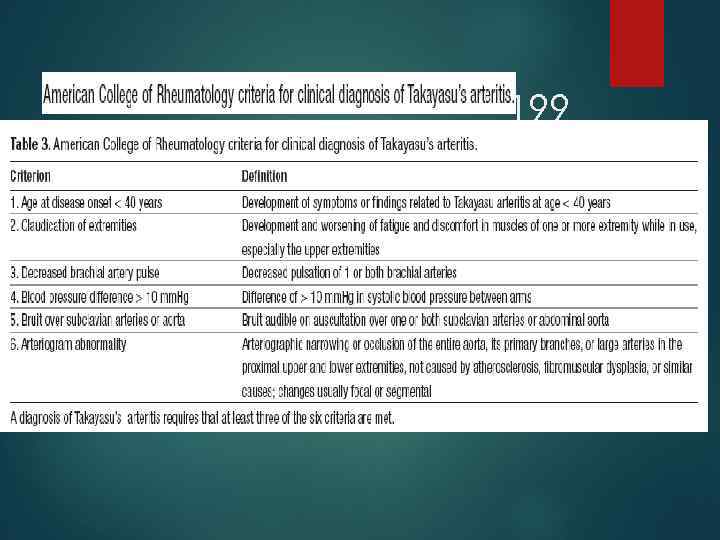
199 0
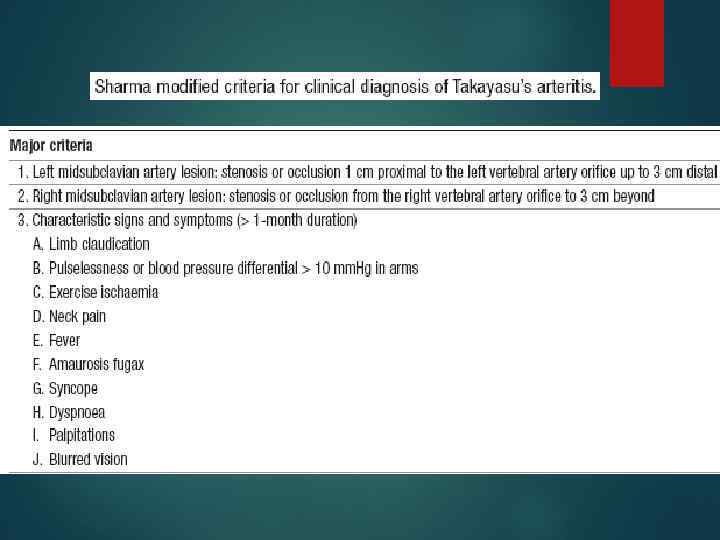
1995
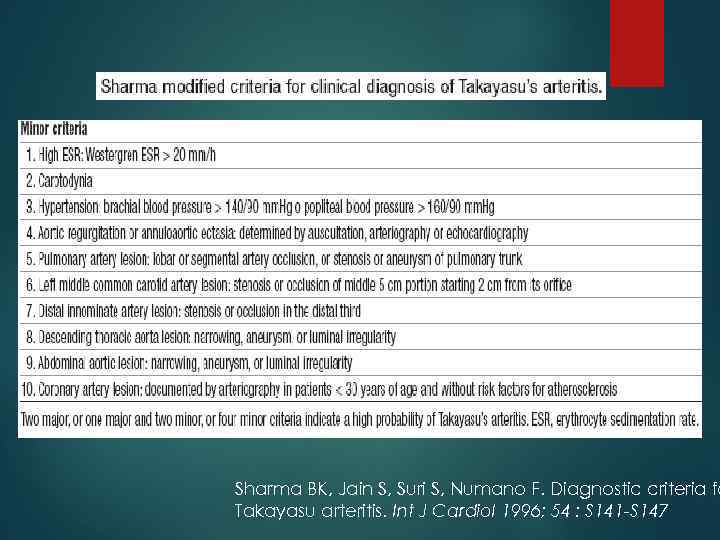
Sharma BK, Jain S, Suri S, Numano F. Diagnostic criteria fo Takayasu arteritis. Int J Cardiol 1996; 54 : S 141 -S 147
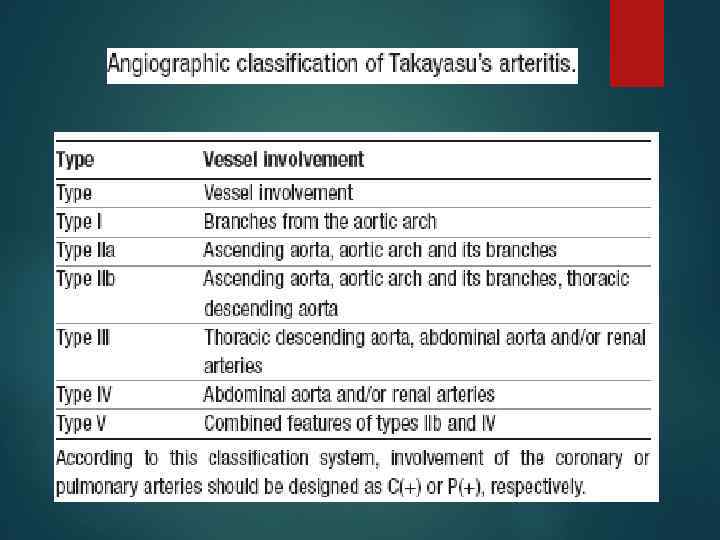
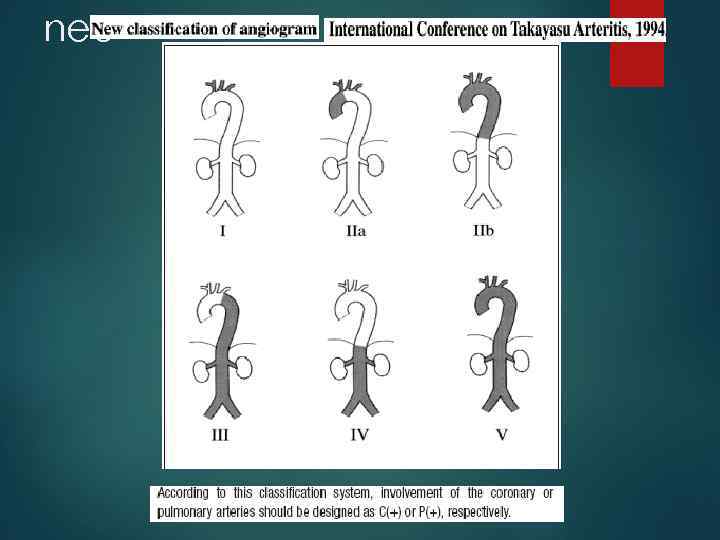
nee
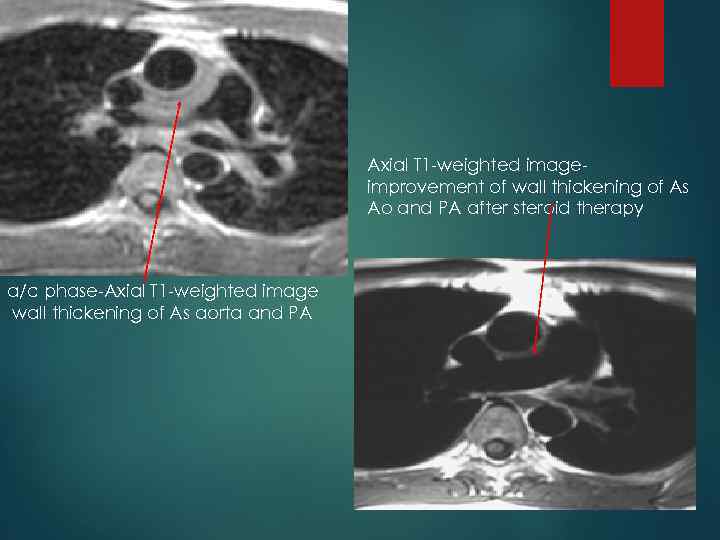
Axial T 1 -weighted imageimprovement of wall thickening of As Ao and PA after steroid therapy a/c phase-Axial T 1 -weighted image wall thickening of As aorta and PA
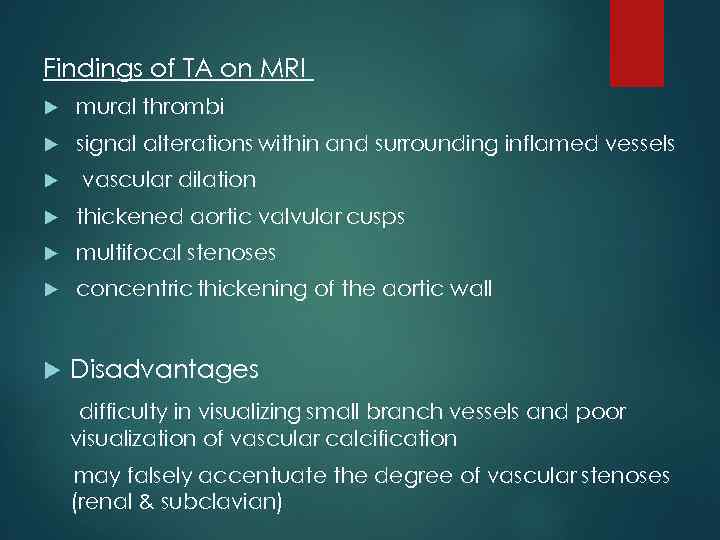
Findings of TA on MRI mural thrombi signal alterations within and surrounding inflamed vessels vascular dilation thickened aortic valvular cusps multifocal stenoses concentric thickening of the aortic wall Disadvantages difficulty in visualizing small branch vessels and poor visualization of vascular calcification may falsely accentuate the degree of vascular stenoses (renal & subclavian)
![[18 F]fluorodeoxyglucose PET for diagnosing Takayasu’s arteritis common [18 F]FDG uptake pattern TA early](https://present5.com/presentation/69810396_445632429/image-26.jpg "[18 F]fluorodeoxyglucose PET for diagnosing Takayasu’s arteritis common [18 F]FDG uptake pattern TA early")
[18 F]fluorodeoxyglucose PET for diagnosing Takayasu’s arteritis common [18 F]FDG uptake pattern TA early phase - linear and continuous late phase-patchy rather than continuous , linear shown to identify more affected vascular regions than morphologic imaging with MRI does not provide any information about changes in the wall structure or luminal blood flow sensitivities of 83% and specificity 100% ( Meller Jet al. Value of F-18 FDG hybrid camera PET and MRI in early. Takayasu aortitis. Eur Radiol 2003) Sensitivity of 92%, specificity of 100% and a diagnostic accuracy of 94% ( Webb M et al. The role of 18 F-FDG PET in characterising disease activity in Takayasu arteritis. Eur J Nucl Med Imaging 2004
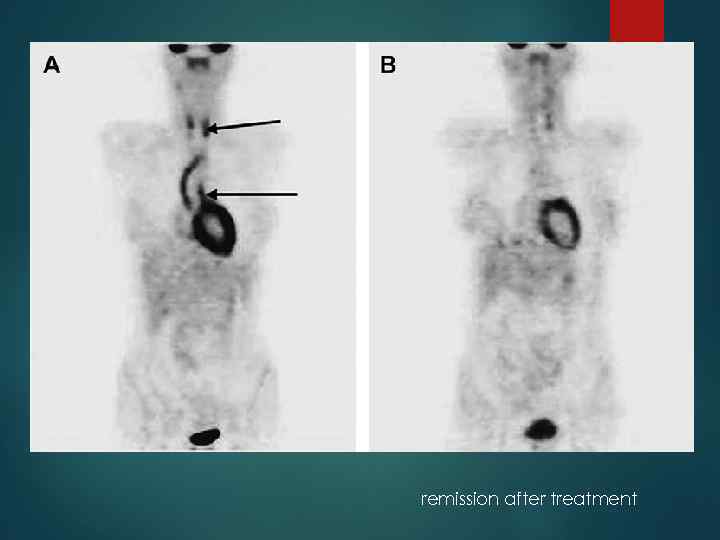
remission after treatment
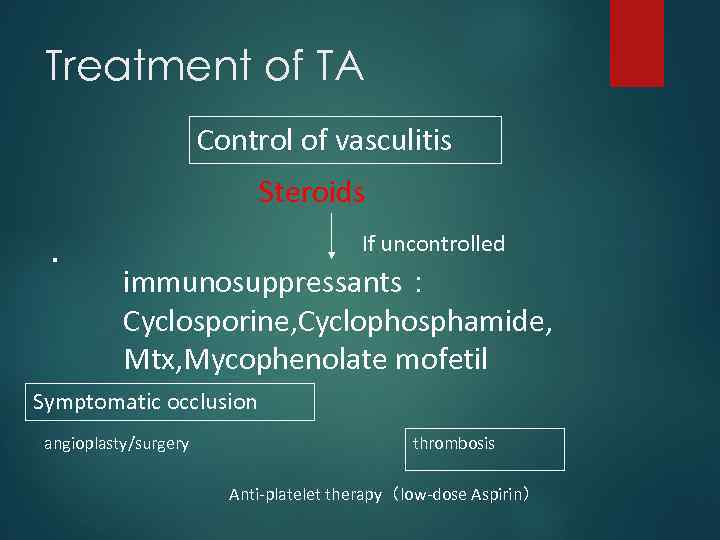
Treatment of TA Control of vasculitis Steroids ・ If uncontrolled immunosuppressants: Cyclosporine, Cyclophosphamide, Mtx, Mycophenolate mofetil Symptomatic occlusion angioplasty/surgery thrombosis Anti-platelet therapy(low-dose Aspirin)
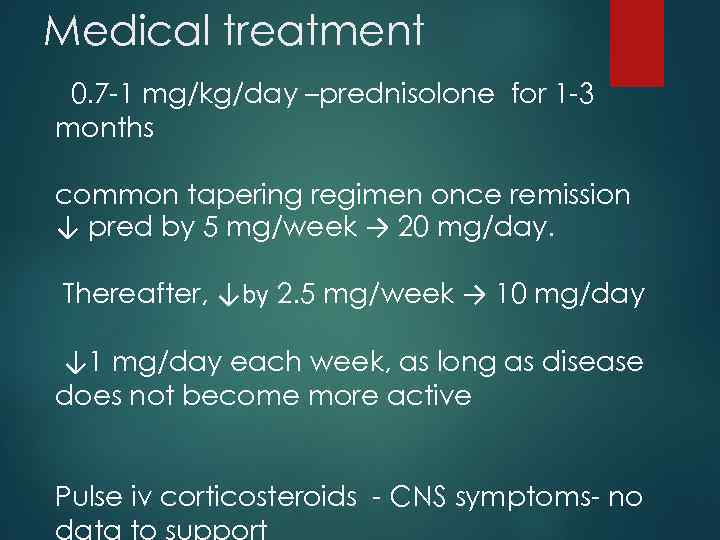
Medical treatment 0. 7 -1 mg/kg/day –prednisolone for 1 -3 months common tapering regimen once remission ↓ pred by 5 mg/week → 20 mg/day. Thereafter, ↓by 2. 5 mg/week → 10 mg/day ↓ 1 mg/day each week, as long as disease does not become more active Pulse iv corticosteroids - CNS symptoms- no data to support
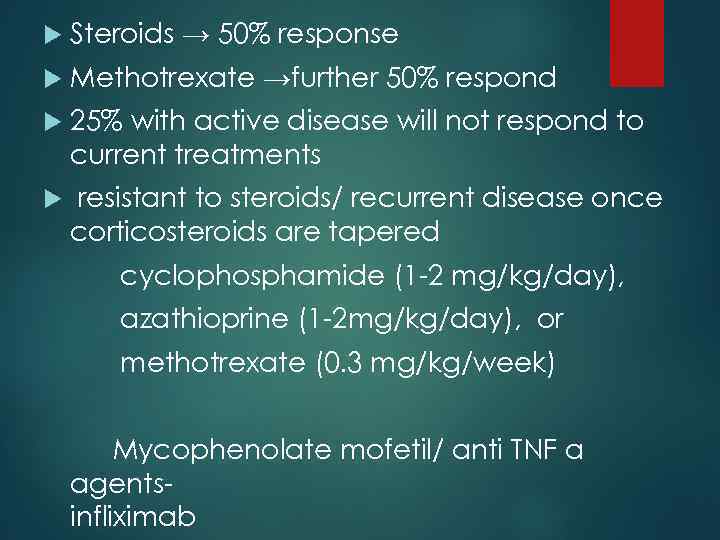
Steroids → 50% response Methotrexate →further 50% respond 25% with active disease will not respond to current treatments resistant to steroids/ recurrent disease once corticosteroids are tapered cyclophosphamide (1 -2 mg/kg/day), azathioprine (1 -2 mg/kg/day), or methotrexate (0. 3 mg/kg/week) Mycophenolate mofetil/ anti TNF α agentsinfliximab
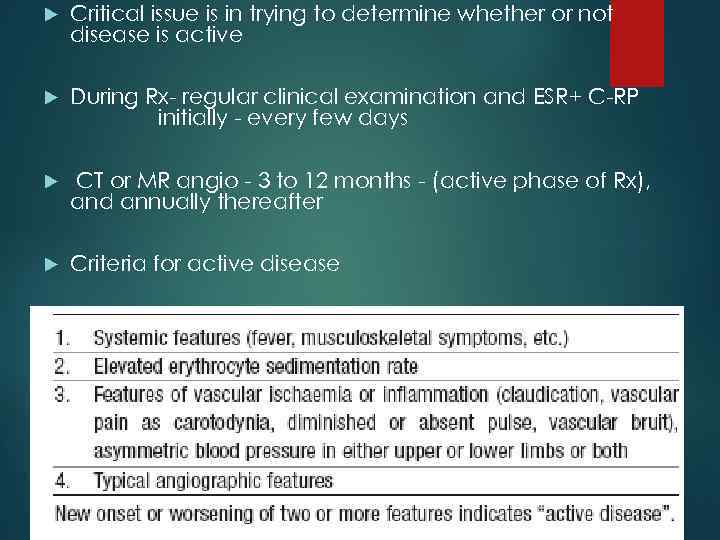
Critical issue is in trying to determine whether or not disease is active During Rx- regular clinical examination and ESR+ C-RP initially - every few days CT or MR angio - 3 to 12 months - (active phase of Rx), and annually thereafter Criteria for active disease
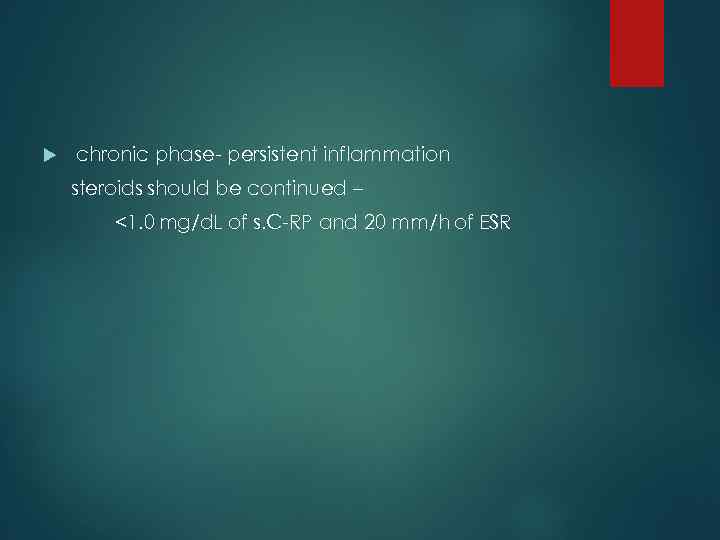
chronic phase- persistent inflammation steroids should be continued – <1. 0 mg/d. L of s. C-RP and 20 mm/h of ESR
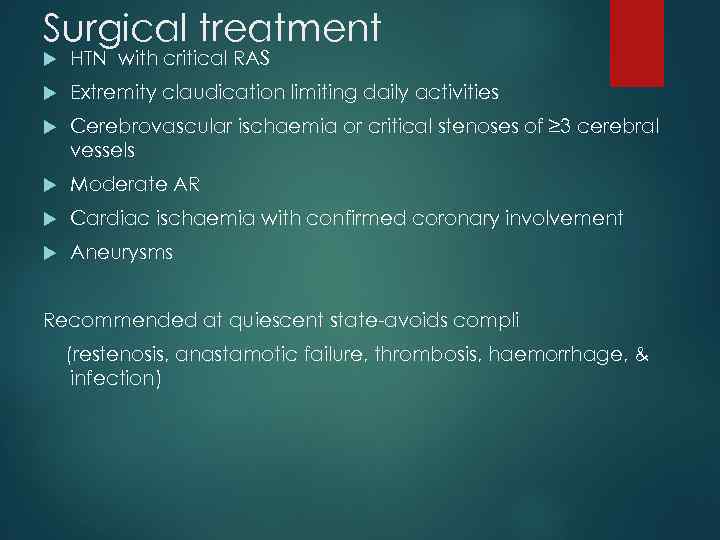
Surgical treatment HTN with critical RAS Extremity claudication limiting daily activities Cerebrovascular ischaemia or critical stenoses of ≥ 3 cerebral vessels Moderate AR Cardiac ischaemia with confirmed coronary involvement Aneurysms Recommended at quiescent state-avoids compli (restenosis, anastamotic failure, thrombosis, haemorrhage, & infection)
Surgical techniques Carry high morbidity & mortality Steno /aneurysm -anastomotic points Progressive nature of TA Diffuse nature of TA
Renal artery involvement Best treated by PTA Stent placement following PTA Ostial lesions Long segment lesions Incomplete relief of stenoses Dissection
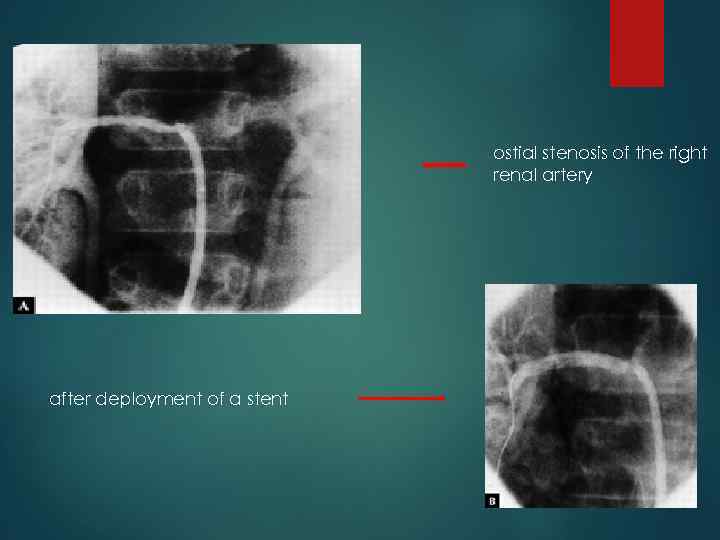
ostial stenosis of the right renal artery after deployment of a stent
Renal PTA - 33 stenoses (20 pts) Indi-sev HTN, angio 70% stenosis with pr grad 20 mm, nl-ESR Tech success -28 lesions (85%) clin success-14(82%) Failures - Coexistent abd Ao disease & tight, prox RAS Tech diffi - tough, noncompliant stenoses, difficult to cross & resisted repeated, prolonged balloon inflations - backache & ↓SBP during balloon inflation Follow-up –mean (8/12) -restenosis in 6 (21%) Renal PTA in TA -tech difficulties; Short-term results good, Complication rate-acceptable Sharma s et al, AIIMS Am J Roentgenol. 1992 Feb; 158(2): 41722
Aortoarteritic lesions Balloon dilation safe & reasonably effective Can be performed repeatedly without any added risks Balloon dilation diff from atherosclerotic lesions Minimal intimal involvement –permits easy wiring and balloon crossing Resistance to dilation – high fibrotic element in the stenotic lesion restenosis> frequent in TA - diffuse and long stenotic lesions
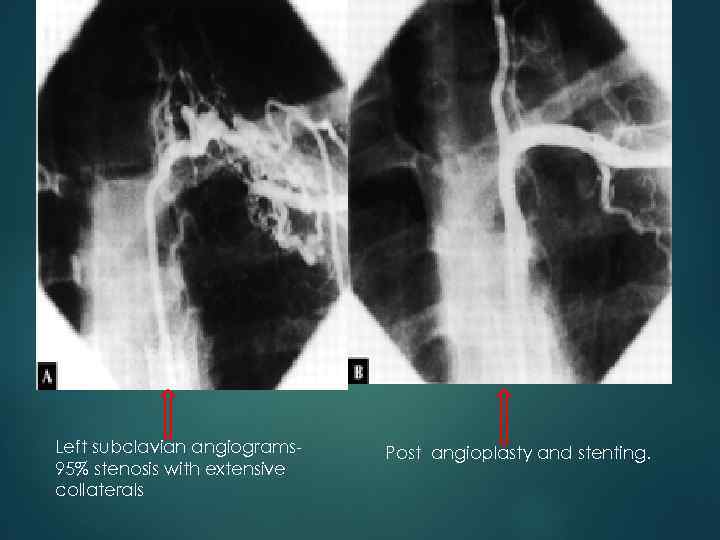
Left subclavian angiograms 95% stenosis with extensive collaterals Post angioplasty and stenting.
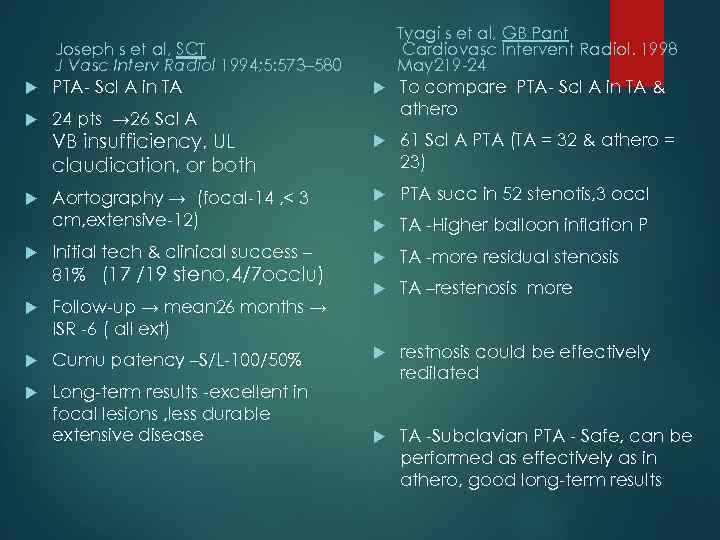
Tyagi s et al, GB Pant Cardiovasc Intervent Radiol. 1998 May 219 -24 Joseph s et al, SCT J Vasc Interv Radiol 1994; 5: 573– 580 PTA- Scl A in TA 24 pts → 26 Scl A To compare PTA- Scl A in TA & athero VB insufficiency, UL claudication, or both 61 Scl A PTA (TA = 32 & athero = 23) Aortography → (focal-14 , < 3 cm, extensive-12) PTA succ in 52 stenotis, 3 occl TA -Higher balloon inflation P TA -more residual stenosis TA –restenosis more restnosis could be effectively redilated TA -Subclavian PTA - Safe, can be performed as effectively as in athero, good long-term results Initial tech & clinical success – 81% (17 /19 steno, 4/7 occlu) Follow-up → mean 26 months → ISR -6 ( all ext) Cumu patency –S/L-100/50% Long-term results -excellent in focal lesions , less durable extensive disease
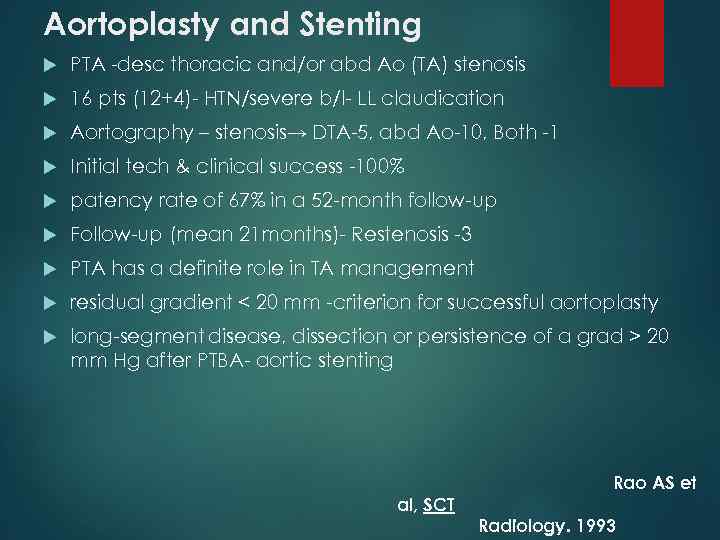
Aortoplasty and Stenting PTA -desc thoracic and/or abd Ao (TA) stenosis 16 pts (12+4)- HTN/severe b/l- LL claudication Aortography – stenosis→ DTA-5, abd Ao-10, Both -1 Initial tech & clinical success -100% patency rate of 67% in a 52 -month follow-up Follow-up (mean 21 months)- Restenosis -3 PTA has a definite role in TA management residual gradient < 20 mm -criterion for successful aortoplasty long-segment disease, dissection or persistence of a grad > 20 mm Hg after PTBA- aortic stenting al, SCT Rao AS et Radiology. 1993
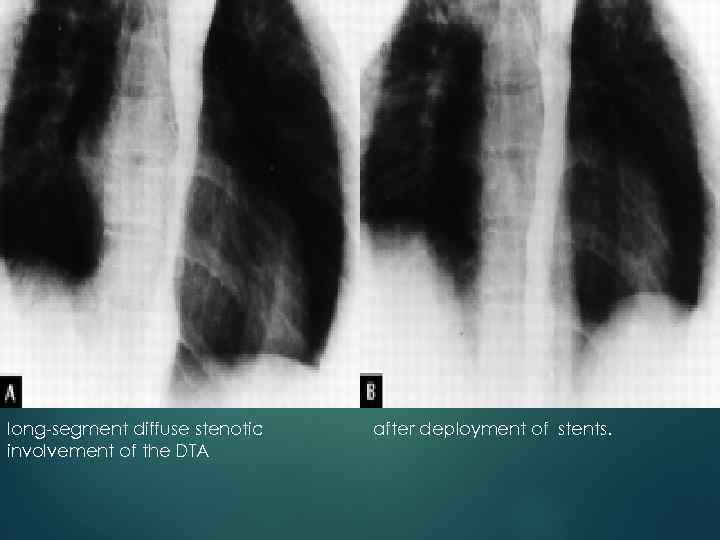
long-segment diffuse stenotic involvement of the DTA after deployment of stents.
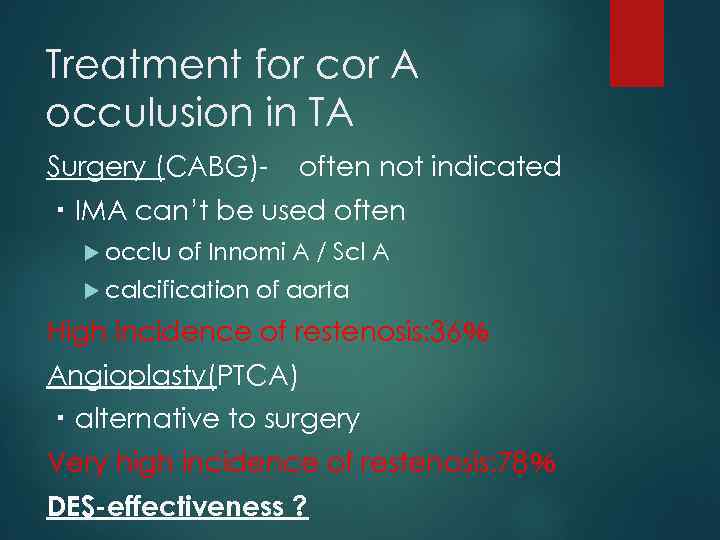
Treatment for cor A occulusion in TA Surgery (CABG)- often not indicated ・IMA can’t be used often occlu of Innomi A / Scl A calcification of aorta High incidence of restenosis: 36% Angioplasty(PTCA) ・alternative to surgery Very high incidence of restenosis: 78% DES-effectiveness ?
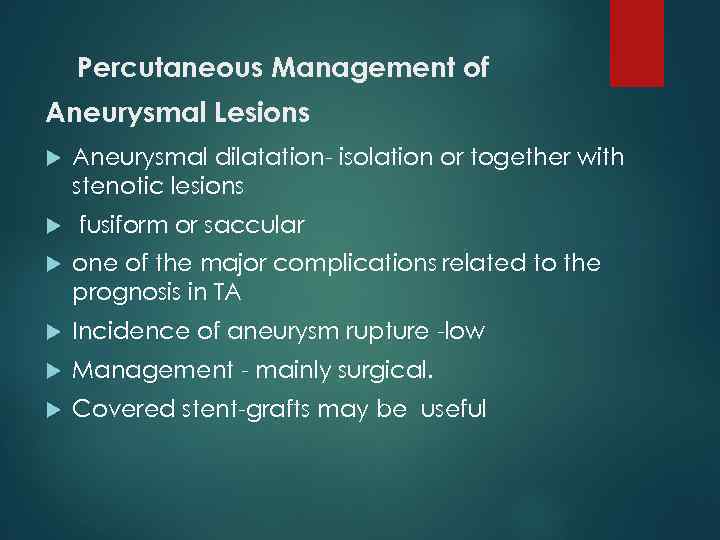
Percutaneous Management of Aneurysmal Lesions Aneurysmal dilatation- isolation or together with stenotic lesions fusiform or saccular one of the major complications related to the prognosis in TA Incidence of aneurysm rupture -low Management - mainly surgical. Covered stent-grafts may be useful
Скачать презентацию TAKAYASU S ARTERITIS PREPARED BY NURMAGAMBETOV SH 462 GM
TAKAYASU_ARTERITIS.pptx