 Скачать презентацию Tablet technology use by professional nurses through distance
b53554d5429ce080345d4cad397d3968.ppt
- Количество слайдов: 19



Tablet technology use by professional nurses through distance learning: A pilot study presented by Petra Bester (Ph. D) Unit for Open Distance Learning, North-West University (Potchefstroom Campus) 2 October 2014 Presented at the Provincial Research Conference Mahikeng
Introduction to Tablet Project Plan 1 May 2014 20 September 2014
Project Team Unit for Open Distance Learning Potchefstroom Campus of the North-West University
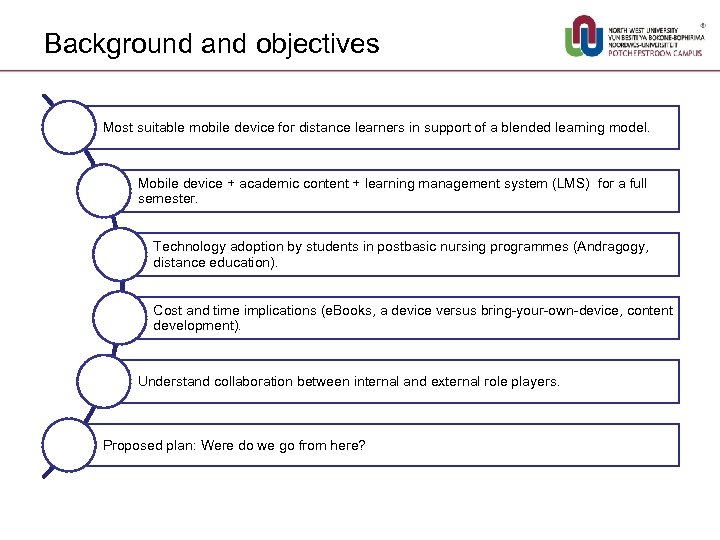
Background and objectives Most suitable mobile device for distance learners in support of a blended learning model. Mobile device + academic content + learning management system (LMS) for a full semester. Technology adoption by students in postbasic nursing programmes (Andragogy, distance education). Cost and time implications (e. Books, a device versus bring-your-own-device, content development). Understand collaboration between internal and external role players. Proposed plan: Were do we go from here?
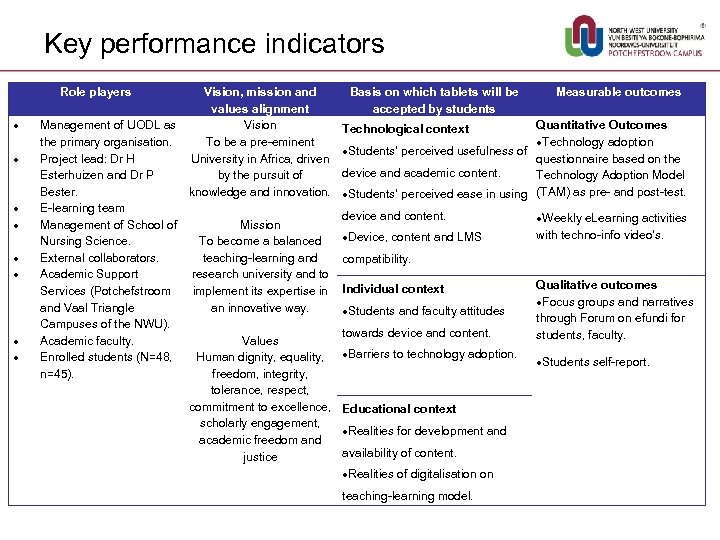
Key performance indicators Role players Vision, mission and values alignment Management of UODL as Vision the primary organisation. To be a pre-eminent Project lead: Dr H University in Africa, driven Esterhuizen and Dr P by the pursuit of Bester. knowledge and innovation. E-learning team Management of School of Mission Nursing Science. To become a balanced External collaborators. teaching-learning and Academic Support research university and to Services (Potchefstroom implement its expertise in and Vaal Triangle an innovative way. Campuses of the NWU). Academic faculty. Values Enrolled students (N=48, Human dignity, equality, n=45). freedom, integrity, tolerance, respect, commitment to excellence, scholarly engagement, academic freedom and justice Basis on which tablets will be accepted by students Measurable outcomes Quantitative Outcomes Technology adoption Students’ perceived usefulness of questionnaire based on the device and academic content. Technology Adoption Model Students’ perceived ease in using (TAM) as pre- and post-test. Technological context device and content. Device, content and LMS Weekly e. Learning activities with techno-info video's. compatibility. Individual context Students and faculty attitudes towards device and content. Barriers to technology adoption. Educational context Realities for development and availability of content. Realities of digitalisation on teaching-learning model. Qualitative outcomes Focus groups and narratives through Forum on efundi for students, faculty. Students self-report.
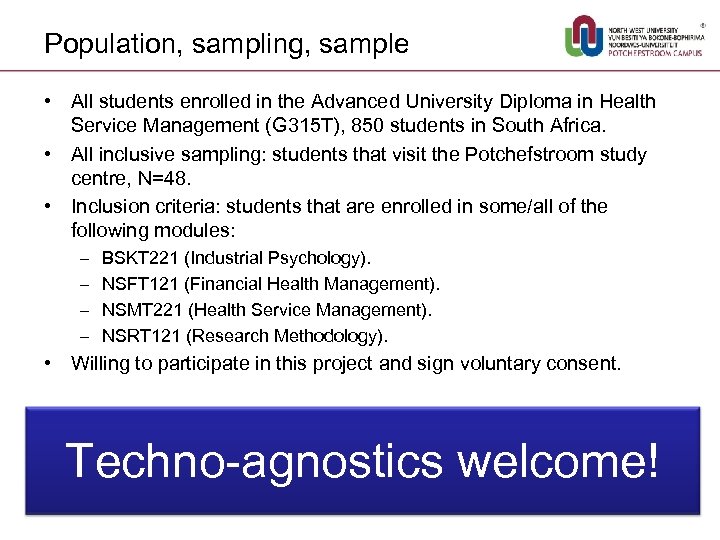
Population, sampling, sample • All students enrolled in the Advanced University Diploma in Health Service Management (G 315 T), 850 students in South Africa. • All inclusive sampling: students that visit the Potchefstroom study centre, N=48. • Inclusion criteria: students that are enrolled in some/all of the following modules: – – BSKT 221 (Industrial Psychology). NSFT 121 (Financial Health Management). NSMT 221 (Health Service Management). NSRT 121 (Research Methodology). • Willing to participate in this project and sign voluntary consent. Techno-agnostics welcome!
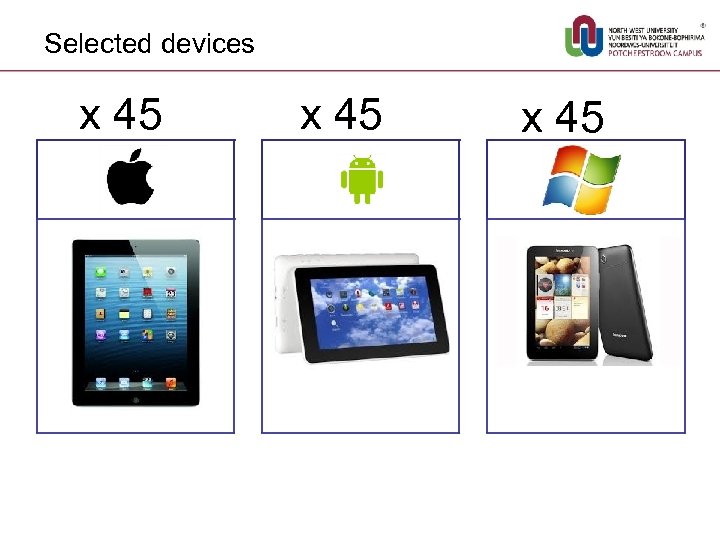
Selected devices x 45
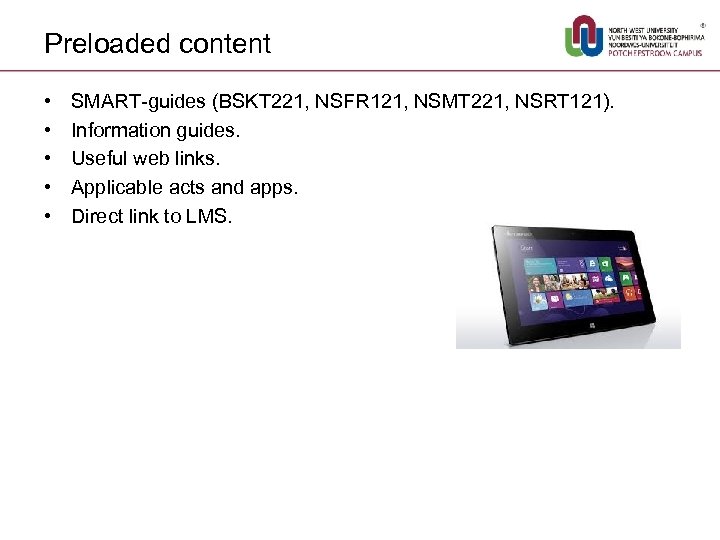
Preloaded content • • • SMART-guides (BSKT 221, NSFR 121, NSMT 221, NSRT 121). Information guides. Useful web links. Applicable acts and apps. Direct link to LMS.
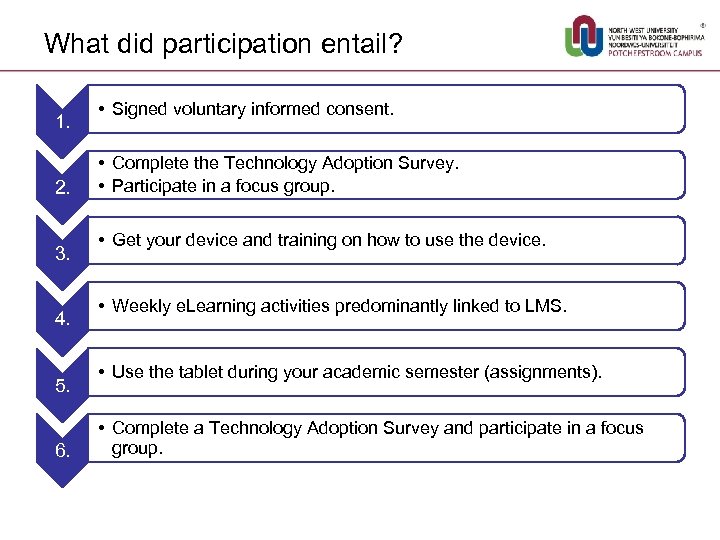
What did participation entail? 1. 2. 3. 4. 5. 6. • Signed voluntary informed consent. • Complete the Technology Adoption Survey. • Participate in a focus group. • Get your device and training on how to use the device. • Weekly e. Learning activities predominantly linked to LMS. • Use the tablet during your academic semester (assignments). • Complete a Technology Adoption Survey and participate in a focus group.
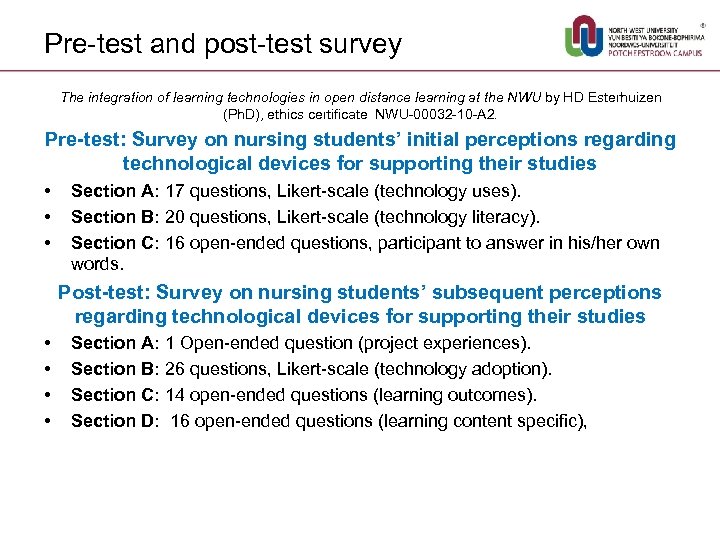
Pre-test and post-test survey The integration of learning technologies in open distance learning at the NWU by HD Esterhuizen (Ph. D), ethics certificate NWU-00032 -10 -A 2. Pre-test: Survey on nursing students’ initial perceptions regarding technological devices for supporting their studies • • • Section A: 17 questions, Likert-scale (technology uses). Section B: 20 questions, Likert-scale (technology literacy). Section C: 16 open-ended questions, participant to answer in his/her own words. Post-test: Survey on nursing students’ subsequent perceptions regarding technological devices for supporting their studies • • Section A: 1 Open-ended question (project experiences). Section B: 26 questions, Likert-scale (technology adoption). Section C: 14 open-ended questions (learning outcomes). Section D: 16 open-ended questions (learning content specific),
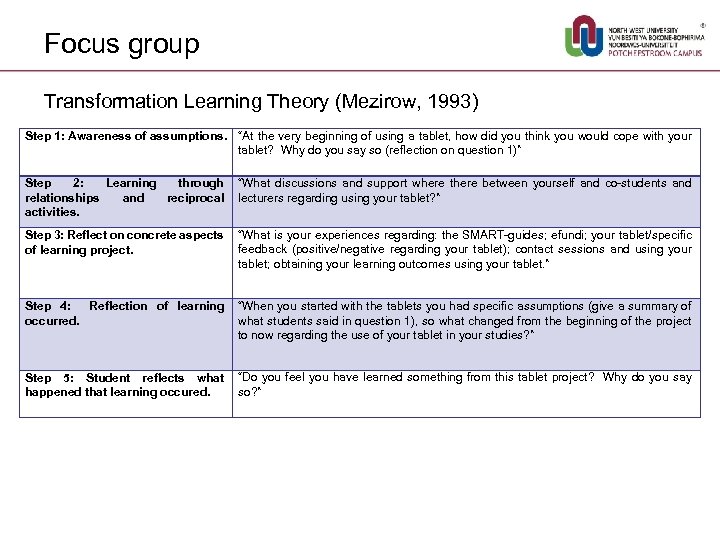
Focus group Transformation Learning Theory (Mezirow, 1993) Step 1: Awareness of assumptions. “At the very beginning of using a tablet, how did you think you would cope with your tablet? Why do you say so (reflection on question 1)” Step 2: Learning through relationships and reciprocal activities. “What discussions and support where there between yourself and co-students and lecturers regarding using your tablet? ” Step 3: Reflect on concrete aspects of learning project. “What is your experiences regarding: the SMART-guides; efundi; your tablet/specific feedback (positive/negative regarding your tablet); contact sessions and using your tablet; obtaining your learning outcomes using your tablet. ” Step 4: Reflection of learning occurred. “When you started with the tablets you had specific assumptions (give a summary of what students said in question 1), so what changed from the beginning of the project to now regarding the use of your tablet in your studies? ” Step 5: Student reflects what happened that learning occured. “Do you feel you have learned something from this tablet project? Why do you say so? ”
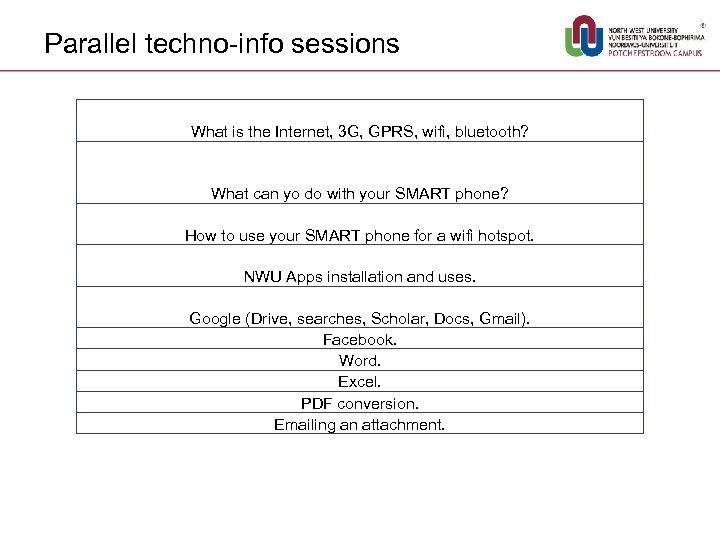
Parallel techno-info sessions What is the Internet, 3 G, GPRS, wifi, bluetooth? What can yo do with your SMART phone? How to use your SMART phone for a wifi hotspot. NWU Apps installation and uses. Google (Drive, searches, Scholar, Docs, Gmail). Facebook. Word. Excel. PDF conversion. Emailing an attachment.
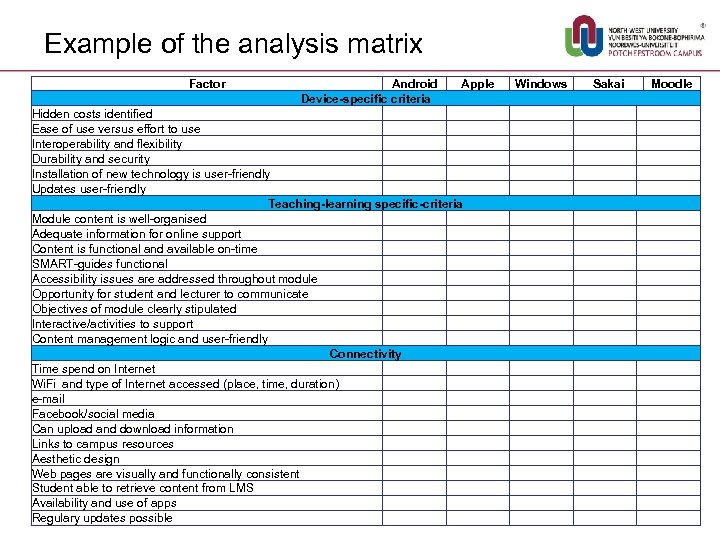
Example of the analysis matrix Factor Android Apple Device-specific criteria Hidden costs identified Ease of use versus effort to use Interoperability and flexibility Durability and security Installation of new technology is user-friendly Updates user-friendly Teaching-learning specific-criteria Module content is well-organised Adequate information for online support Content is functional and available on-time SMART-guides functional Accessibility issues are addressed throughout module Opportunity for student and lecturer to communicate Objectives of module clearly stipulated Interactive/activities to support Content management logic and user-friendly Connectivity Time spend on Internet Wi. Fi and type of Internet accessed (place, time, duration) e-mail Facebook/social media Can upload and download information Links to campus resources Aesthetic design Web pages are visually and functionally consistent Student able to retrieve content from LMS Availability and use of apps Regulary updates possible Windows Sakai Moodle
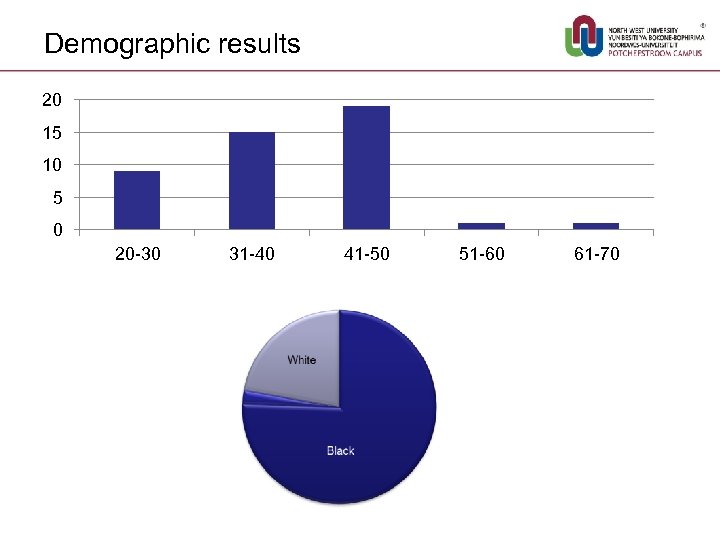
Demographic results 20 15 10 5 0 20 -30 31 -40 41 -50 51 -60 61 -70
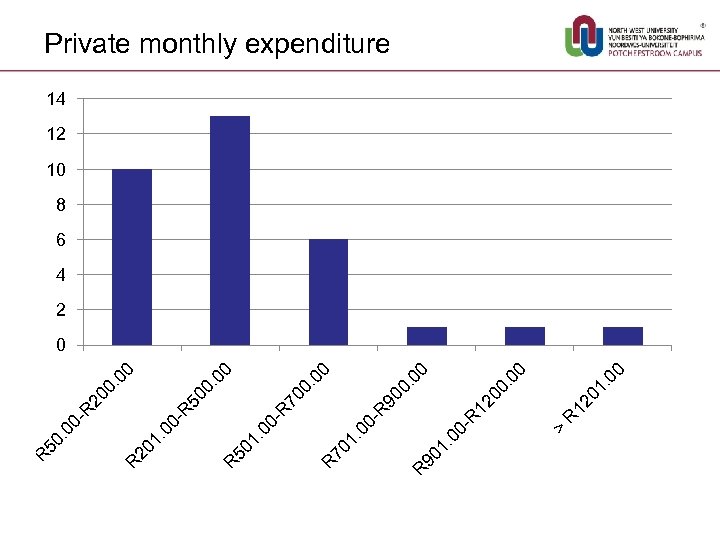
> 00 01. R 12 0 00 0. 0 R 12 0 . 0 0 - 90 1 R 00 R 90 0. 00 - 70 1. R 0 00 R 70 0. 00 - 50 1. R R 50 0. 00 - 20 1. R 20 0. 0 0 R R 50. 0 Private monthly expenditure 14 12 10 8 6 4 2 0
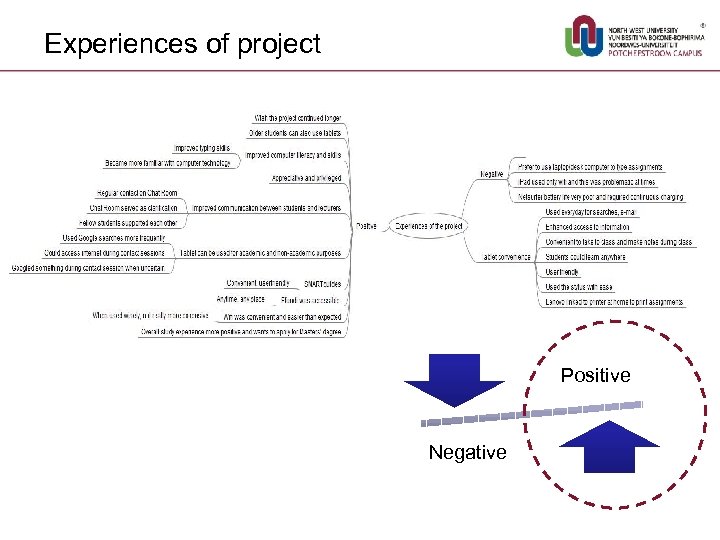
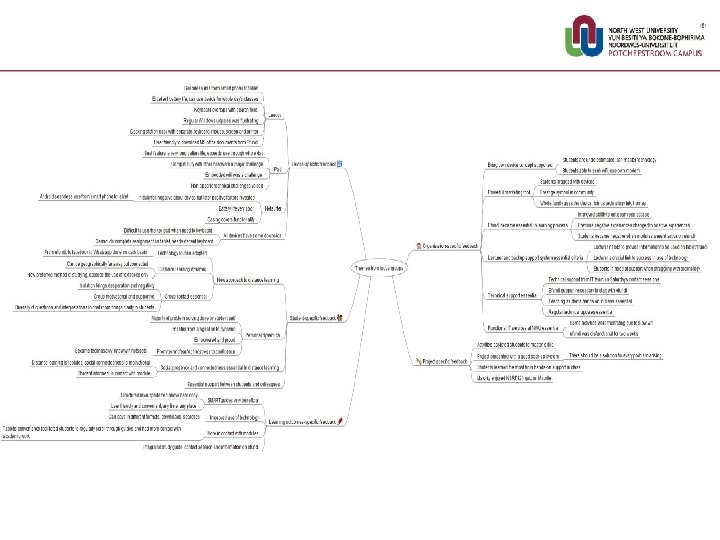
Experiences of project Positive Negative
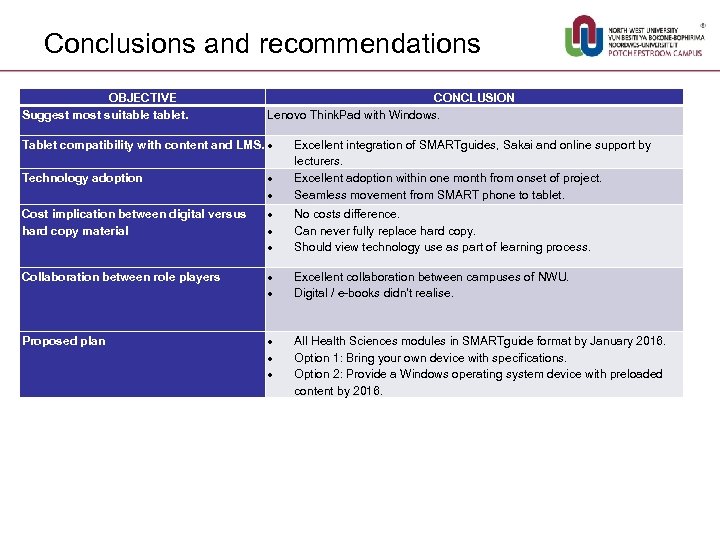
Conclusions and recommendations OBJECTIVE Suggest most suitablet. CONCLUSION Lenovo Think. Pad with Windows. Tablet compatibility with content and LMS. Technology adoption Excellent integration of SMARTguides, Sakai and online support by lecturers. Excellent adoption within one month from onset of project. Seamless movement from SMART phone to tablet. Cost implication between digital versus hard copy material No costs difference. Can never fully replace hard copy. Should view technology use as part of learning process. Collaboration between role players Excellent collaboration between campuses of NWU. Digital / e-books didn't realise. Proposed plan All Health Sciences modules in SMARTguide format by January 2016. Option 1: Bring your own device with specifications. Option 2: Provide a Windows operating system device with preloaded content by 2016.
Thank you Petra Bester petra. bester@nwu. ac. za 018 -285 2030
Скачать презентацию Tablet technology use by professional nurses through distance
b53554d5429ce080345d4cad397d3968.ppt