


 Скачать презентацию Systems Investigation and Analysis How Do We Do
6c35e4aa6f3b16e73fa9b37d87e0a90d.ppt
- Количество слайдов: 41
 Systems Investigation and Analysis How Do We Do Systems Development?
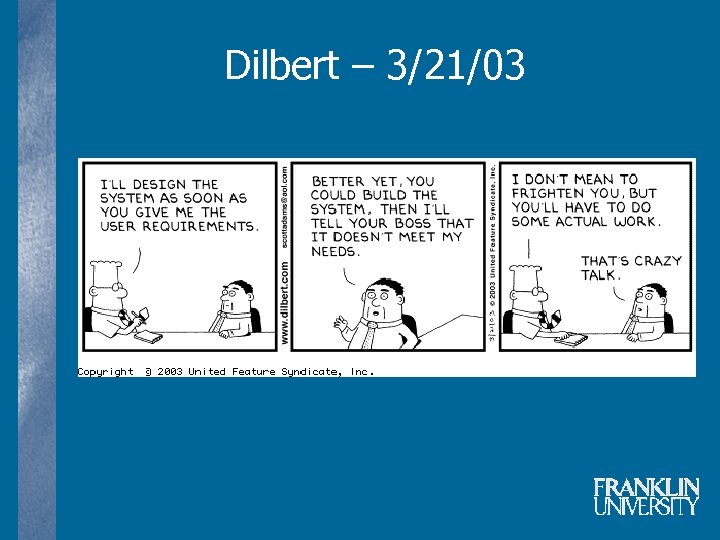 Dilbert – 3/21/03
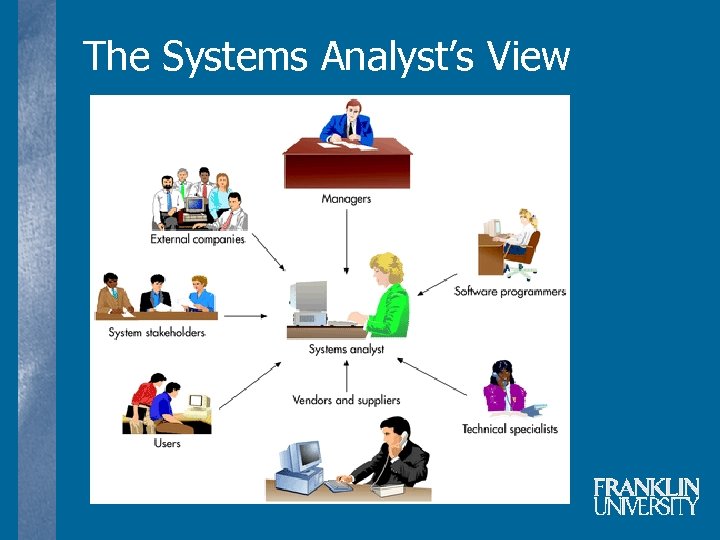 The Systems Analyst’s View
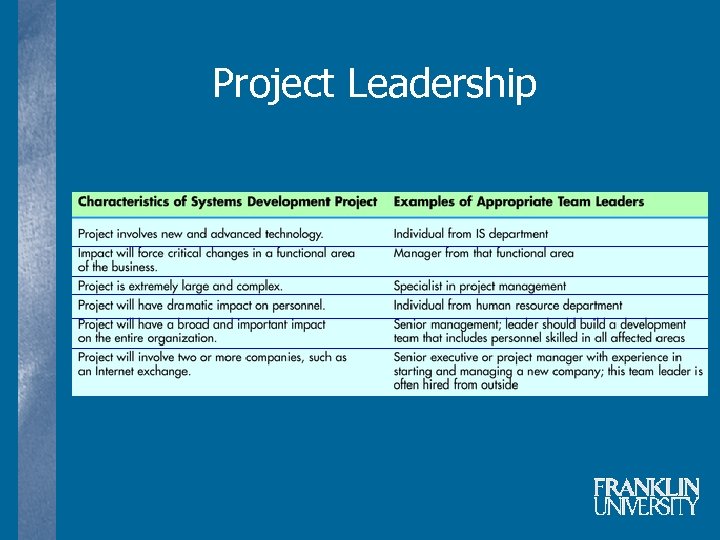 Project Leadership
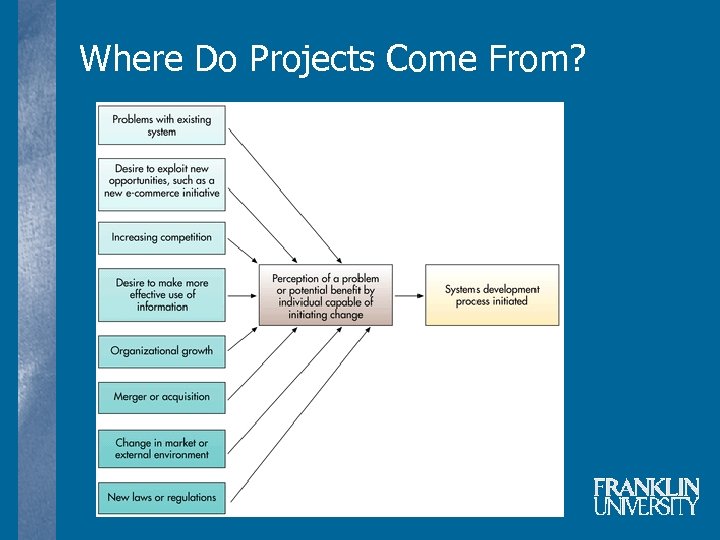 Where Do Projects Come From?
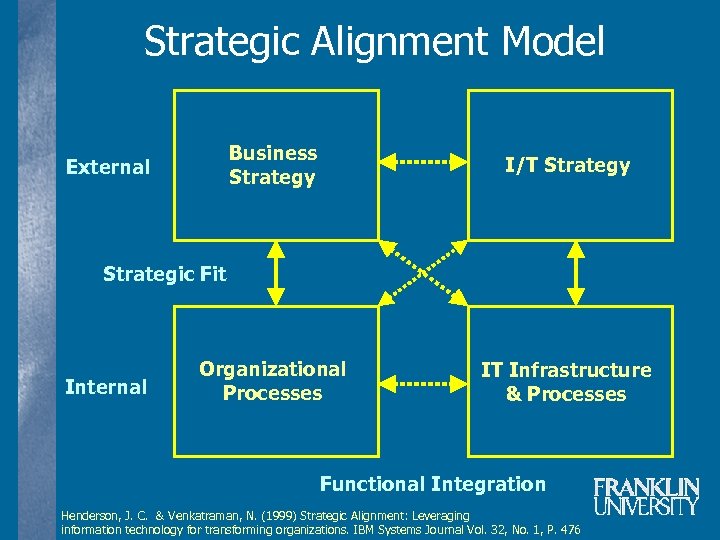 Strategic Alignment Model Business Strategy I/T Strategy Organizational Processes IT Infrastructure & Processes External Strategic Fit Internal Functional Integration Henderson, J. C. & Venkatraman, N. (1999) Strategic Alignment: Leveraging information technology for transforming organizations. IBM Systems Journal Vol. 32, No. 1, P. 476
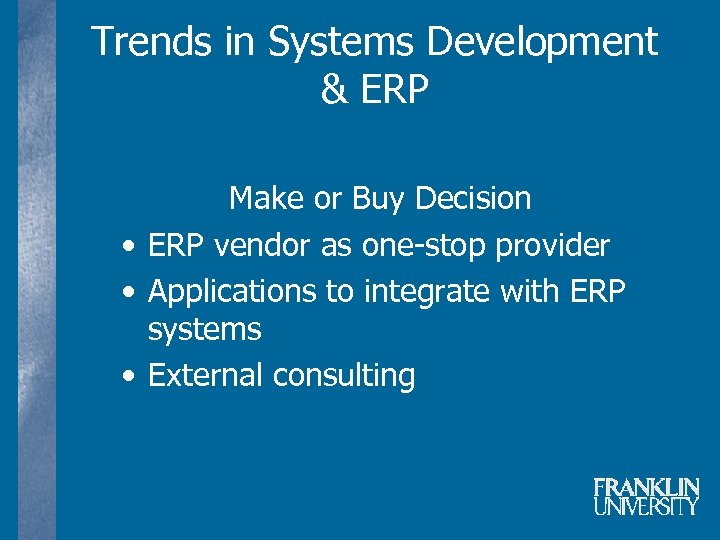 Trends in Systems Development & ERP Make or Buy Decision • ERP vendor as one-stop provider • Applications to integrate with ERP systems • External consulting
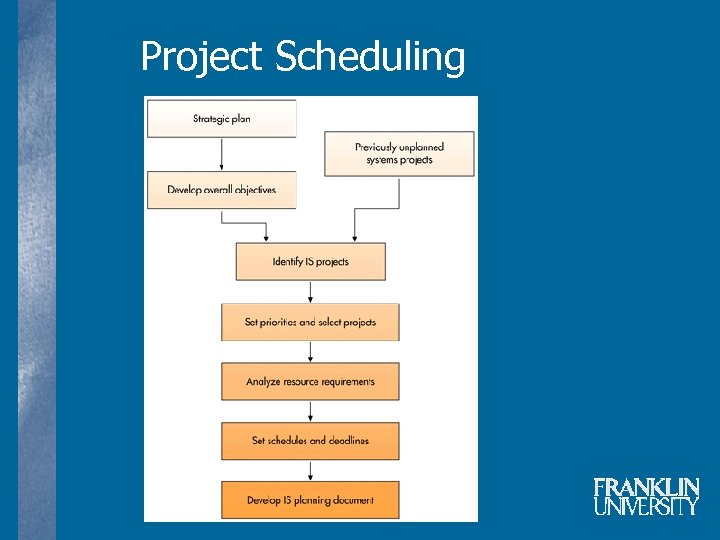 Project Scheduling
 Systems Development Life Cycles
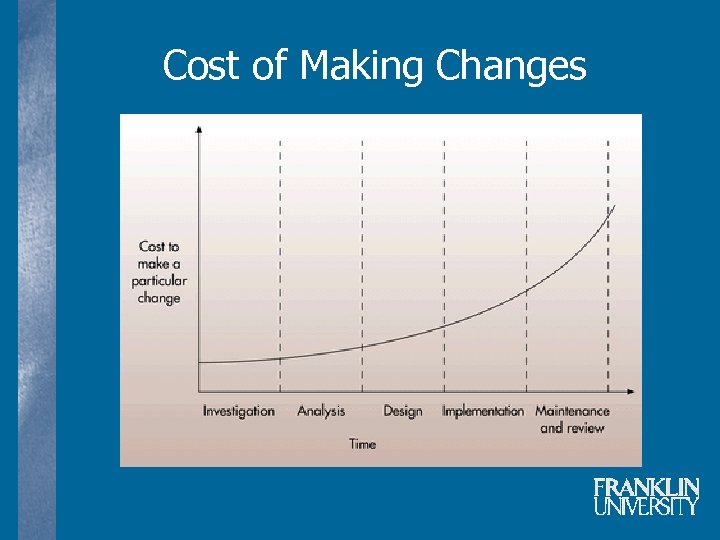 Cost of Making Changes
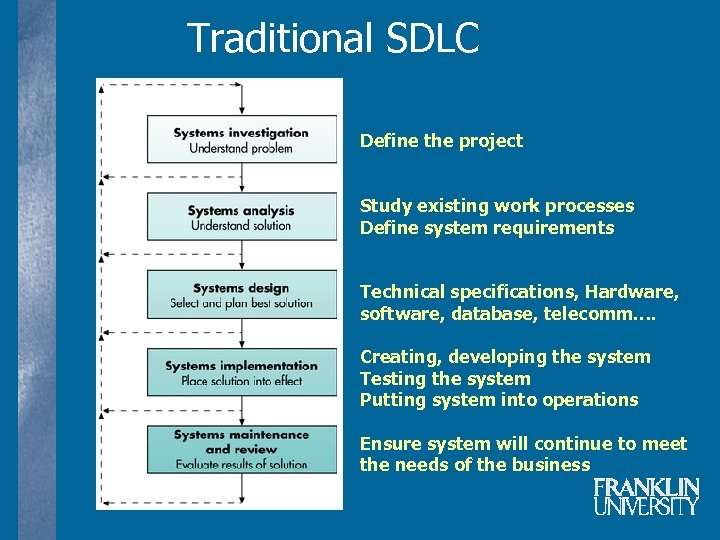 Traditional SDLC Define the project Study existing work processes Define system requirements Technical specifications, Hardware, software, database, telecomm…. Creating, developing the system Testing the system Putting system into operations Ensure system will continue to meet the needs of the business
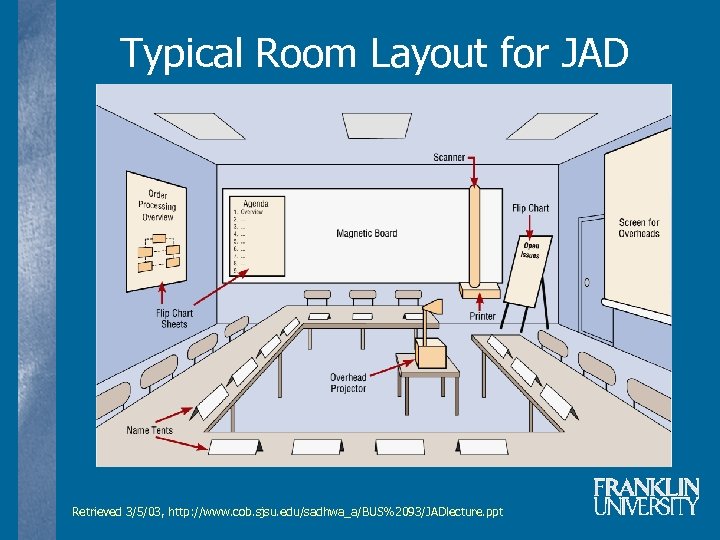 Typical Room Layout for JAD Retrieved 3/5/03, http: //www. cob. sjsu. edu/sadhwa_a/BUS%2093/JADlecture. ppt
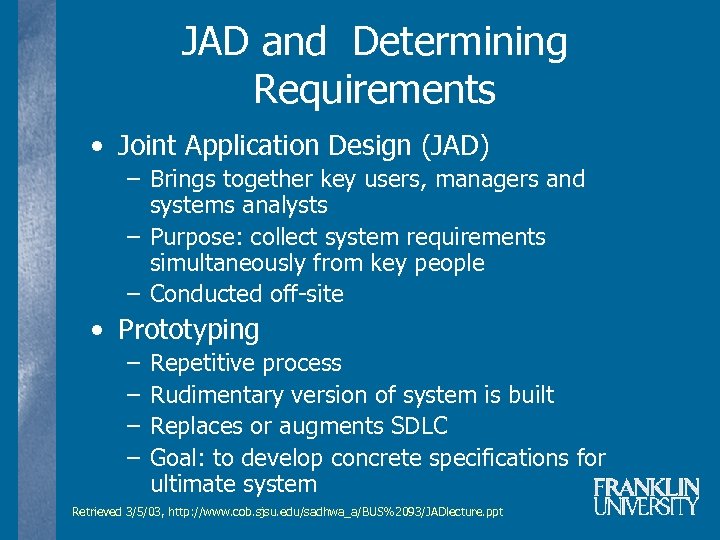 JAD and Determining Requirements • Joint Application Design (JAD) – Brings together key users, managers and systems analysts – Purpose: collect system requirements simultaneously from key people – Conducted off-site • Prototyping – – Repetitive process Rudimentary version of system is built Replaces or augments SDLC Goal: to develop concrete specifications for ultimate system Retrieved 3/5/03, http: //www. cob. sjsu. edu/sadhwa_a/BUS%2093/JADlecture. ppt
 Factors Affecting Systems Development Success
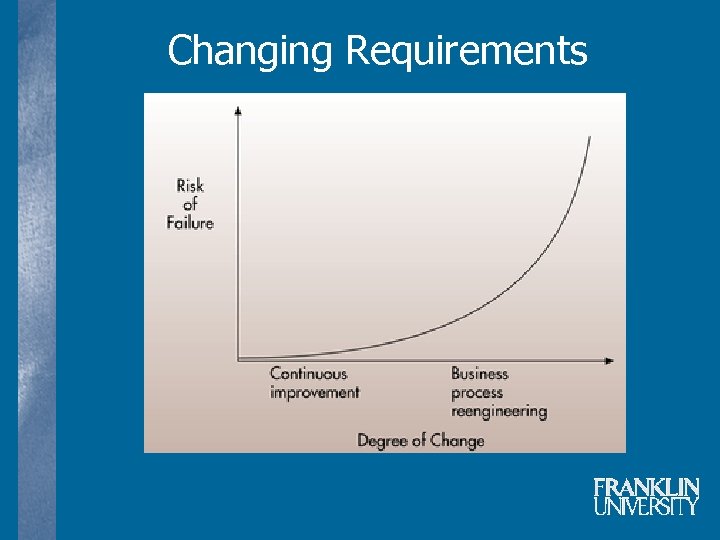 Changing Requirements
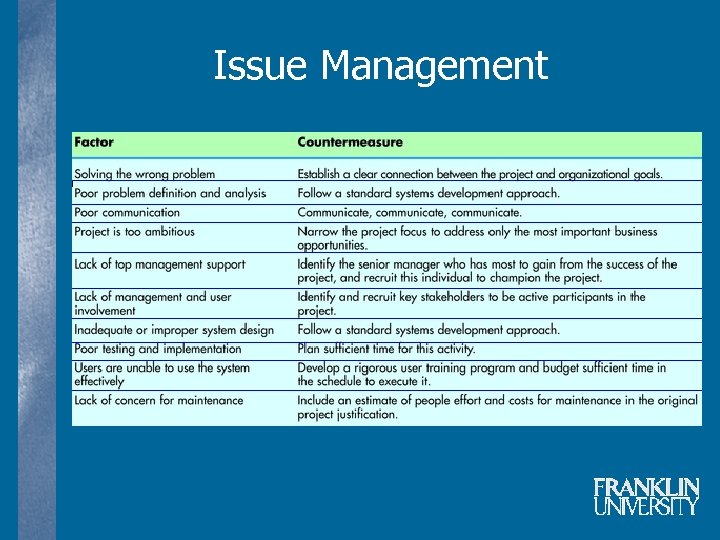 Issue Management
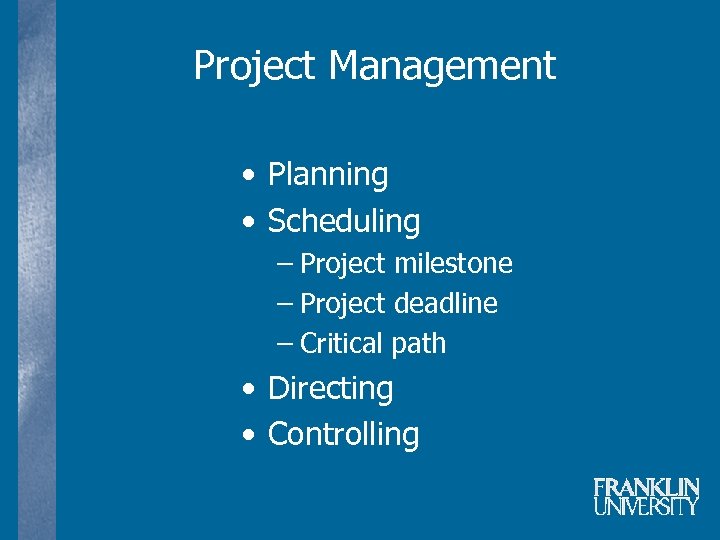 Project Management • Planning • Scheduling – Project milestone – Project deadline – Critical path • Directing • Controlling
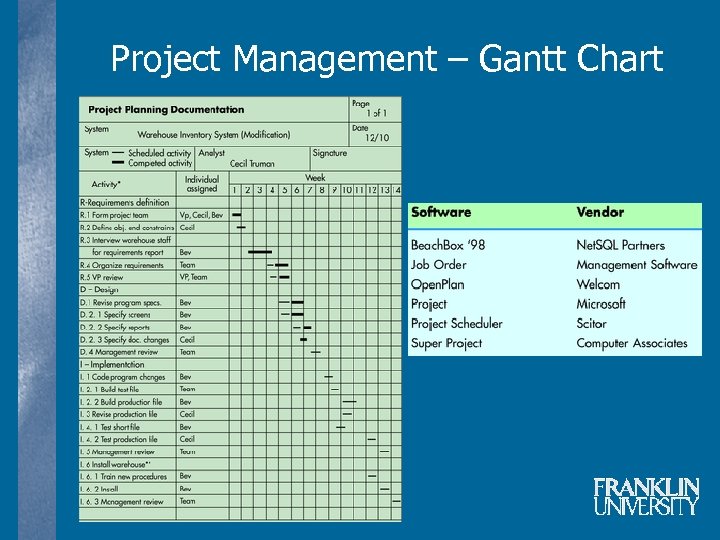 Project Management – Gantt Chart
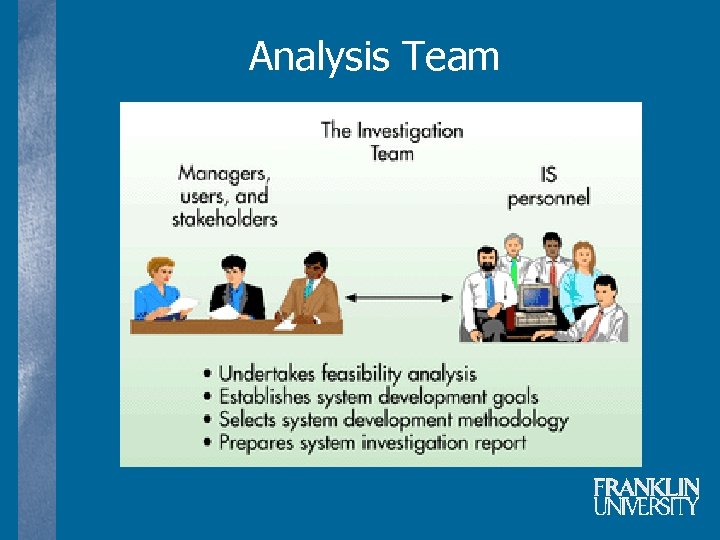 Analysis Team
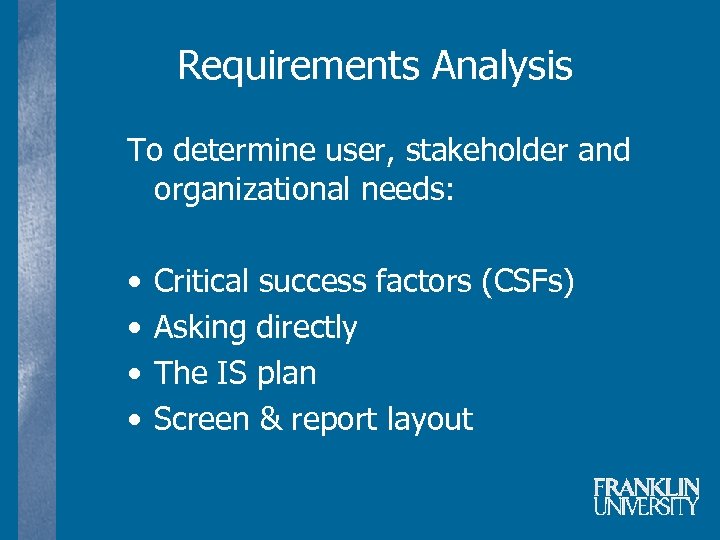 Requirements Analysis To determine user, stakeholder and organizational needs: • • Critical success factors (CSFs) Asking directly The IS plan Screen & report layout
 Feasibility Analysis Can this project be done here & now? • Technical feasibility • Operational feasibility • Schedule feasibility • Economic feasibility • Legal feasibility • Cost – Net Present Value • Benefits – ROI Are any of these show stoppers?
 Systems Analysis
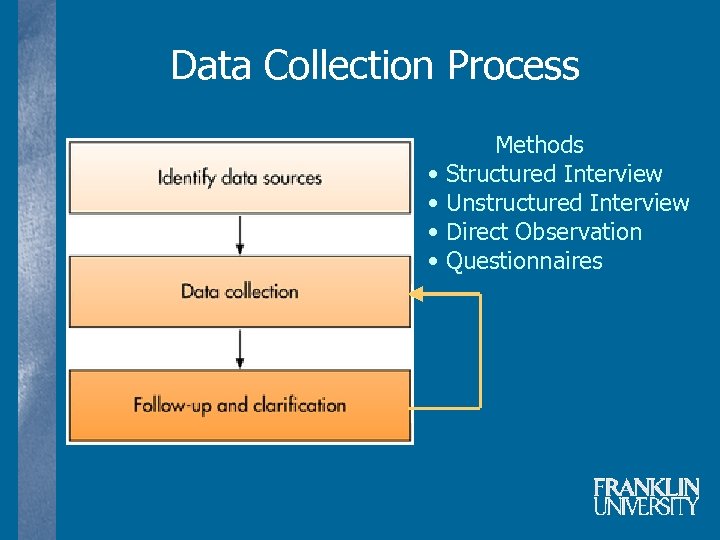 Data Collection Process • • Methods Structured Interview Unstructured Interview Direct Observation Questionnaires
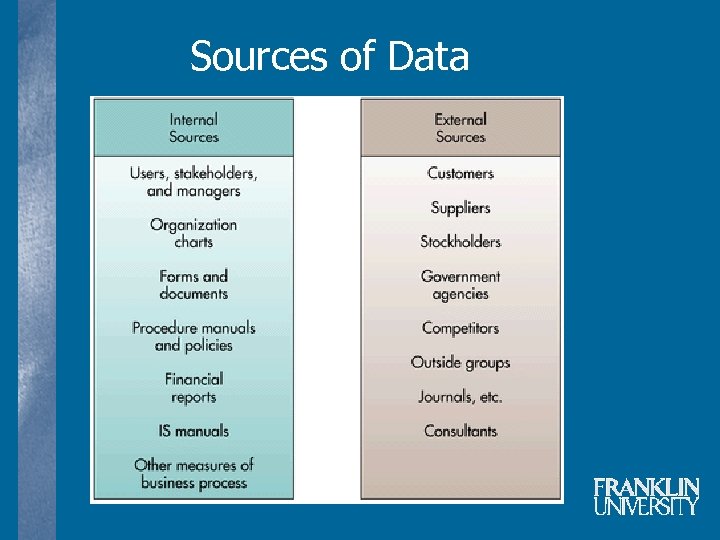 Sources of Data
 Data Analysis • • • Data modeling Activity modeling Application flowcharts Grid charts CASE tools
 Systems Design How the information system will function to meet its requirements • • • System outputs Interfaces Hardware Software Databases Telecommunication Personnel Policies & procedures
 System Design Considerations • Interactive dialog – Clarity – Response Time – Consistency – Format – Avoid Jargon – Respect
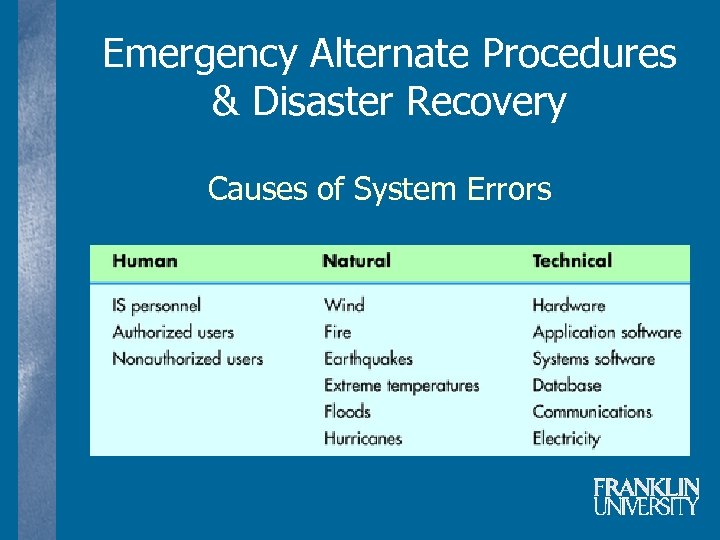 Emergency Alternate Procedures & Disaster Recovery Causes of System Errors
 Emergency Alternate Procedures & Disaster Recovery • • Hardware backup Software & database backup Telecommunications backup Personnel backup You need ALL of these!
 System Controls • • Deterrence controls Input controls Processing controls Output controls Database controls Telecommunications controls Personnel controls
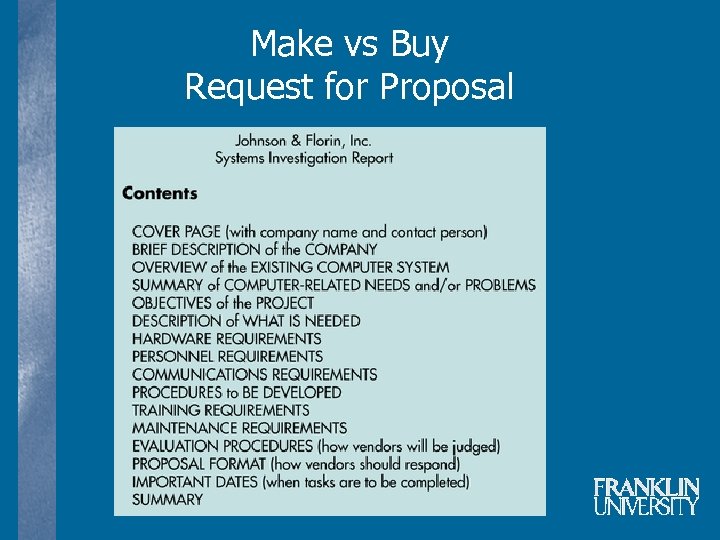 Make vs Buy Request for Proposal
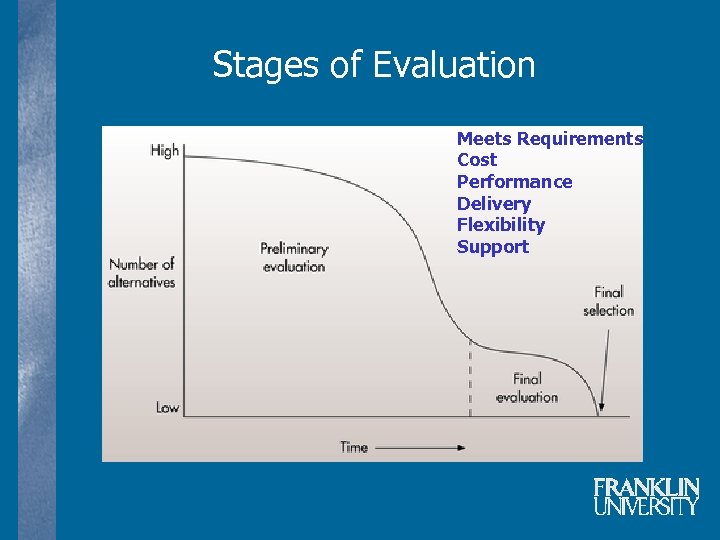 Stages of Evaluation Meets Requirements Cost Performance Delivery Flexibility Support
 Systems Implementation
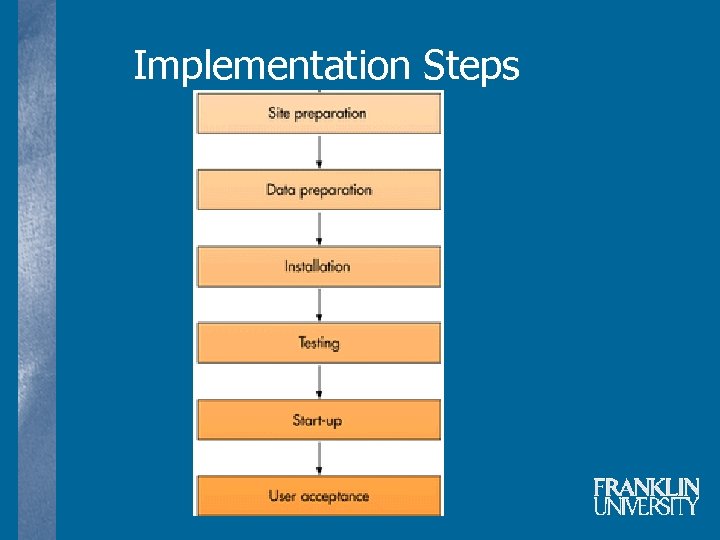 Implementation Steps
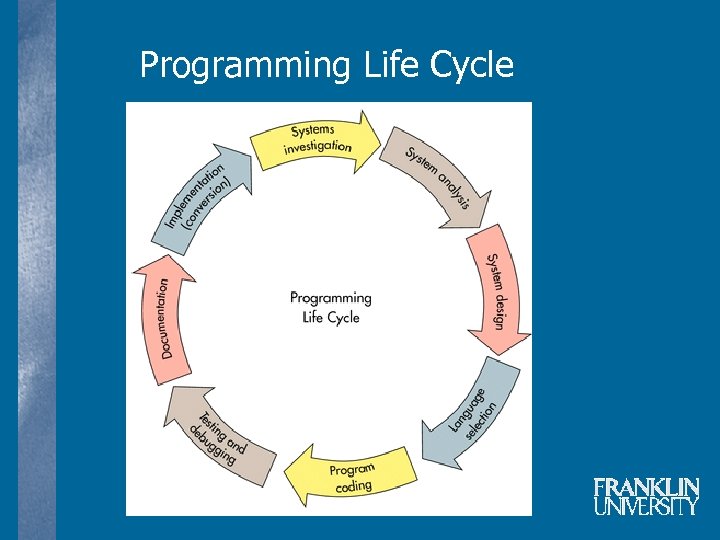 Programming Life Cycle
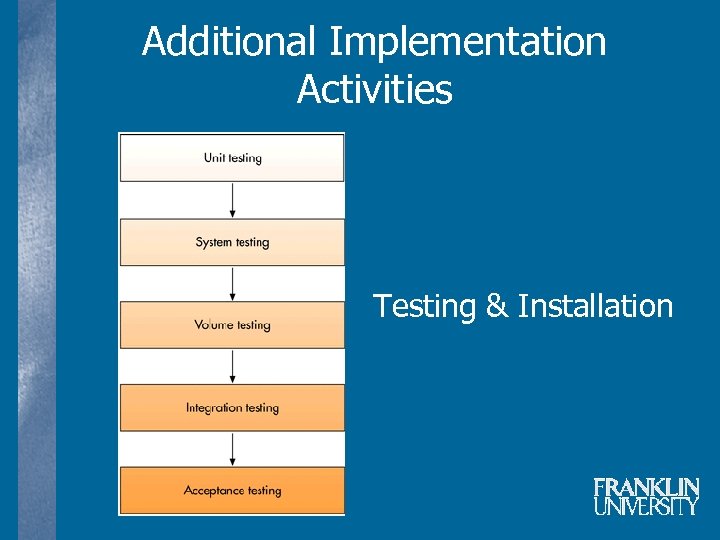 Additional Implementation Activities Testing & Installation
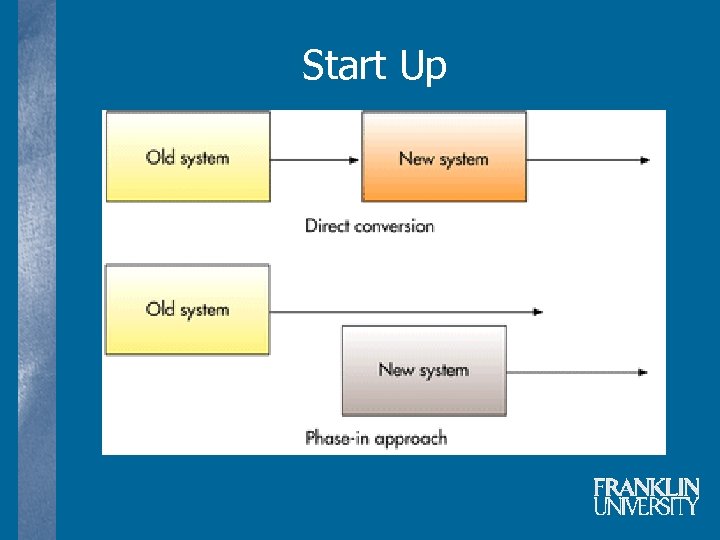 Start Up
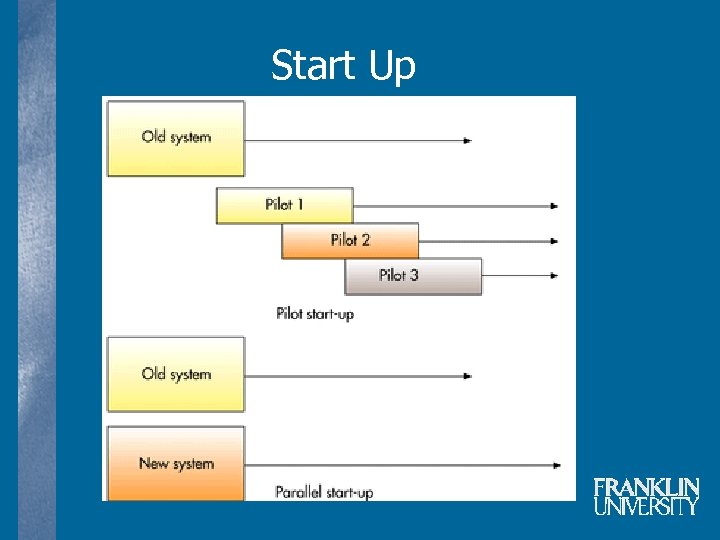 Start Up
 Systems Maintenance
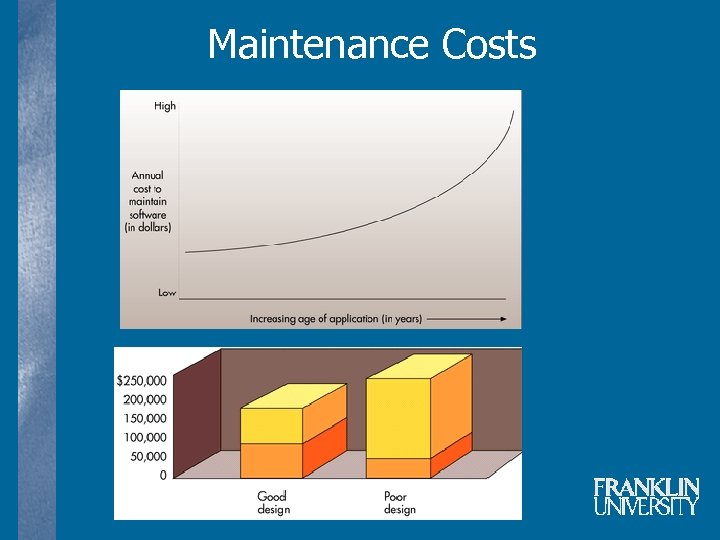 Maintenance Costs
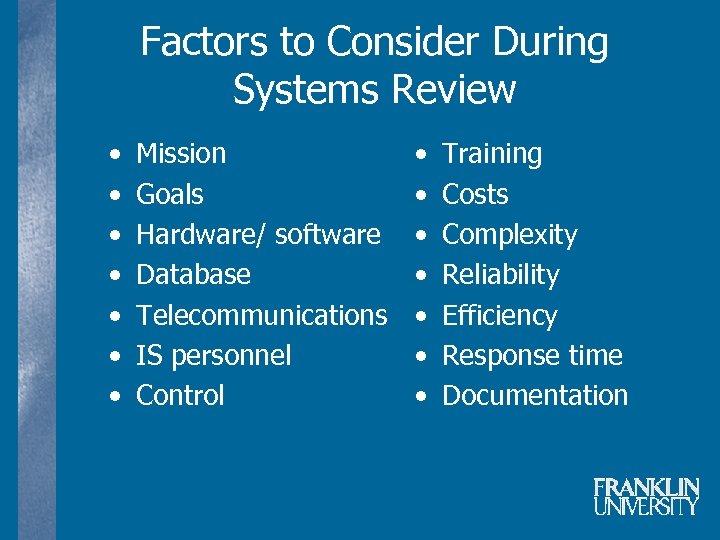 Factors to Consider During Systems Review • • Mission Goals Hardware/ software Database Telecommunications IS personnel Control • • Training Costs Complexity Reliability Efficiency Response time Documentation