


 Скачать презентацию Systems Change Using Quality Improvement From a Good
13abfd9ba4d2becad1c86c6bd796cf1f.ppt
- Количество слайдов: 22
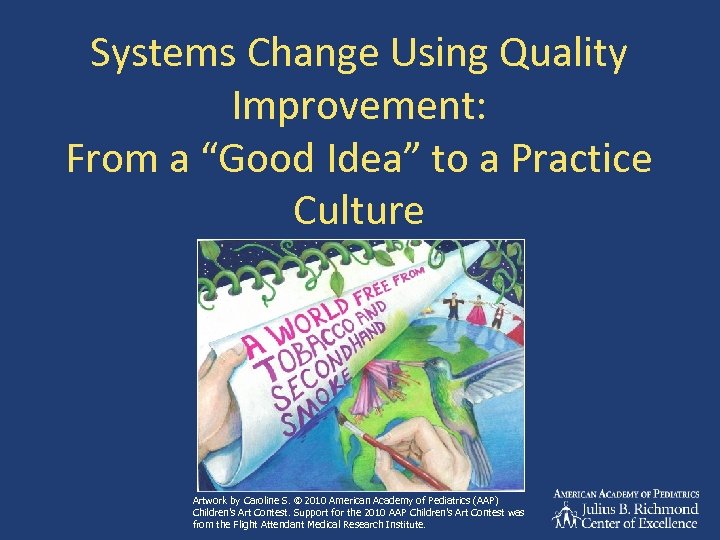 Systems Change Using Quality Improvement: From a “Good Idea” to a Practice Culture Artwork by Caroline S. © 2010 American Academy of Pediatrics (AAP) Children's Art Contest. Support for the 2010 AAP Children's Art Contest was from the Flight Attendant Medical Research Institute.
 Objectives • To understand the importance of creating a system to address tobacco use and secondhand smoke exposure in clinical practice • To understand how to implement quality improvement changes in your clinical system using the Plan-Do-Study-Act Cycle
 What is Quality Medical Care? • The Institute of Medicine (IOM) defines healthcare quality as care that is: • • • Safe Effective Patient Centered Efficient Timely Equitable
 Barriers to Change • The system is designed • For patients with acute issues • To provide preventive care and acute illness management • To support a single service encounter • Lack of time • Reimbursement issues
 What Can We Do? • We have the tools and the knowledge • Evidence-based treatments exist • Unique opportunities to use treatments exist • How do we incorporate this into the day-to-day operations of our practices? • Implementation strategies exist
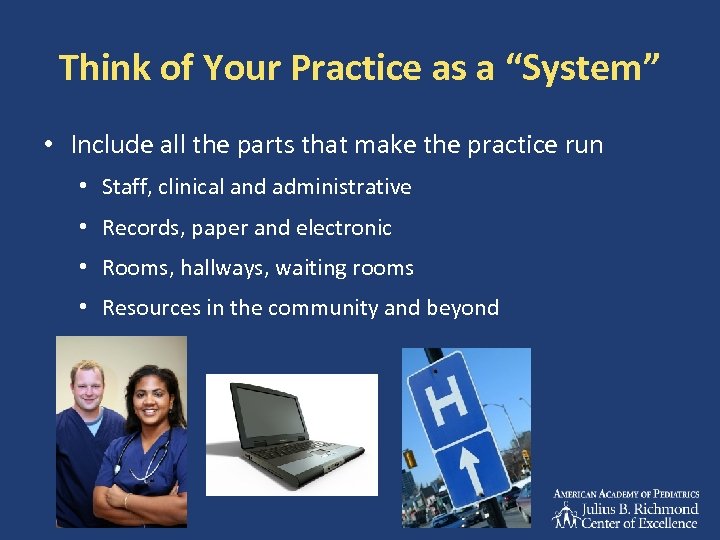 Think of Your Practice as a “System” • Include all the parts that make the practice run • Staff, clinical and administrative • Records, paper and electronic • Rooms, hallways, waiting rooms • Resources in the community and beyond
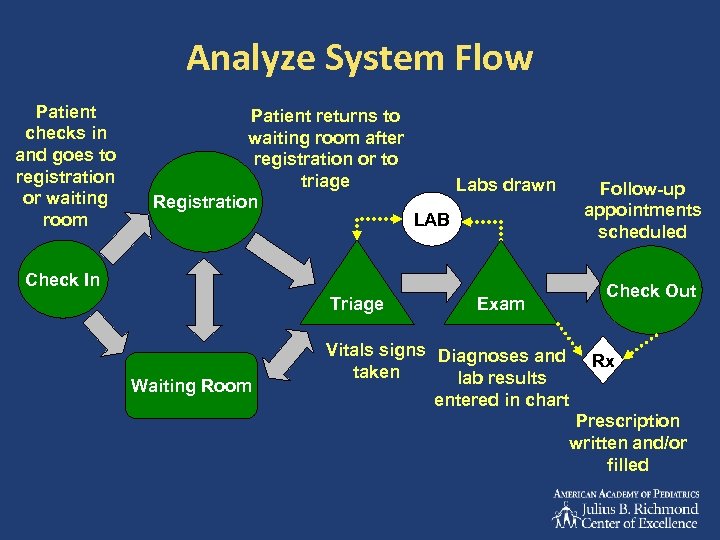 Analyze System Flow Patient checks in and goes to registration or waiting room Patient returns to waiting room after registration or to triage Registration Labs drawn Follow-up appointments scheduled LAB Check In Triage Waiting Room Check Out Exam Vitals signs Diagnoses and taken lab results entered in chart Rx Prescription written and/or filled
 Be Thoughtful In Your Implementation • Understand the current system • Research the areas most in need of change in your practice • Start with the end in mind…how do you want your system to function?
 Decision Support* is CRUCIAL • You need support from the top AND the bottom • Who’s in charge of Implementation? Supplies? Tracking outcomes? • New tasks shouldn’t be added to anyone’s (already too long) list – make time and space for them *AKA “buy in”
 Team Involvement Is CRITICAL • Involve your staff early! • First meet with key staff, then invite participation by staff at all levels • Be sure to include: • Front desk • Nursing and clinical staff • Administration
 Get Input • Brainstorm about implementation and barriers • Invite ideas on logistics of asking and advising • Develop implementation plans, using Plan-Do-Study. Act cycles
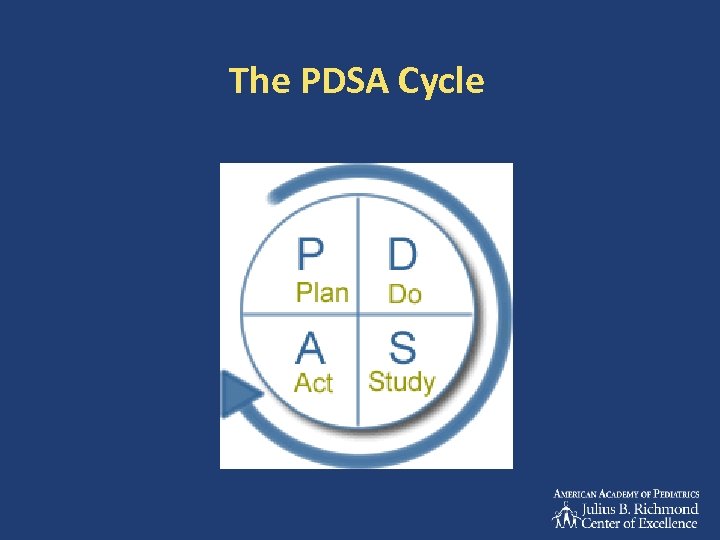 The PDSA Cycle
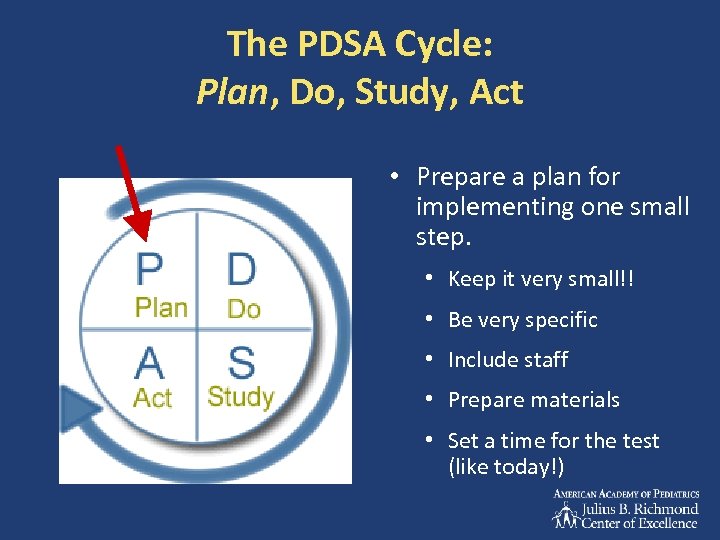 The PDSA Cycle: Plan, Do, Study, Act • Prepare a plan for implementing one small step. • Keep it very small!! • Be very specific • Include staff • Prepare materials • Set a time for the test (like today!)
 Plans Have Components • How will success be measured? • What are we doing? • Who will be the subject(s)? • How will we start? Finish? • Where will it be done? • When will it be done?
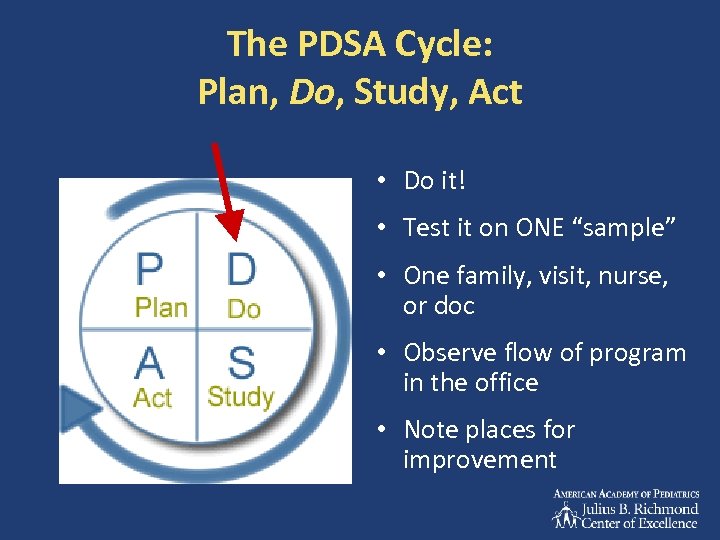 The PDSA Cycle: Plan, Do, Study, Act • Do it! • Test it on ONE “sample” • One family, visit, nurse, or doc • Observe flow of program in the office • Note places for improvement
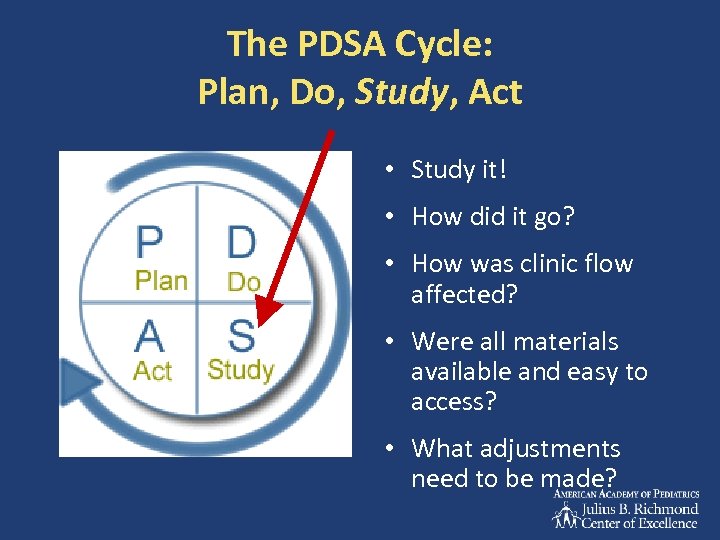 The PDSA Cycle: Plan, Do, Study, Act • Study it! • How did it go? • How was clinic flow affected? • Were all materials available and easy to access? • What adjustments need to be made?
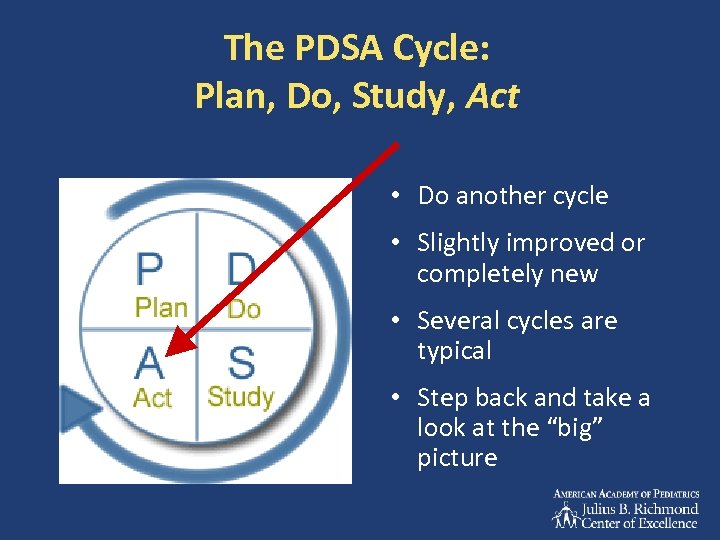 The PDSA Cycle: Plan, Do, Study, Act • Do another cycle • Slightly improved or completely new • Several cycles are typical • Step back and take a look at the “big” picture
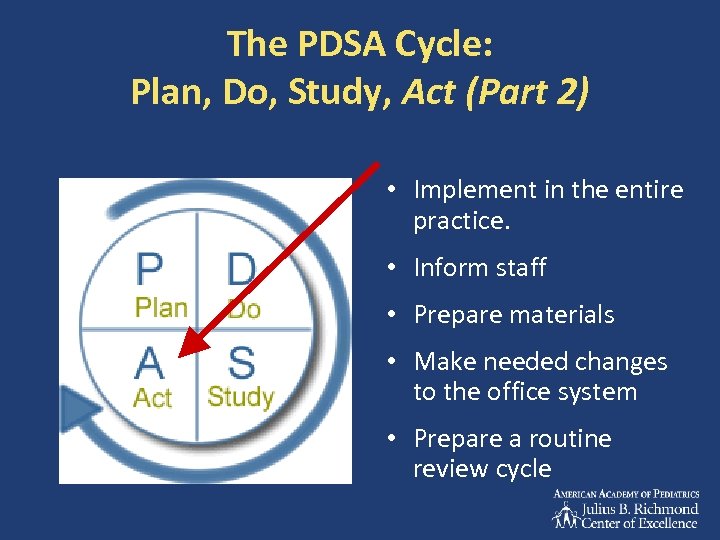 The PDSA Cycle: Plan, Do, Study, Act (Part 2) • Implement in the entire practice. • Inform staff • Prepare materials • Make needed changes to the office system • Prepare a routine review cycle
 Monitor and Feedback • Are procedures working as intended? • Are staff completing assigned tasks? • Is documentation evident? • Are patient materials kept up to date? • Does the team receive timely feedback and support for a job well done?
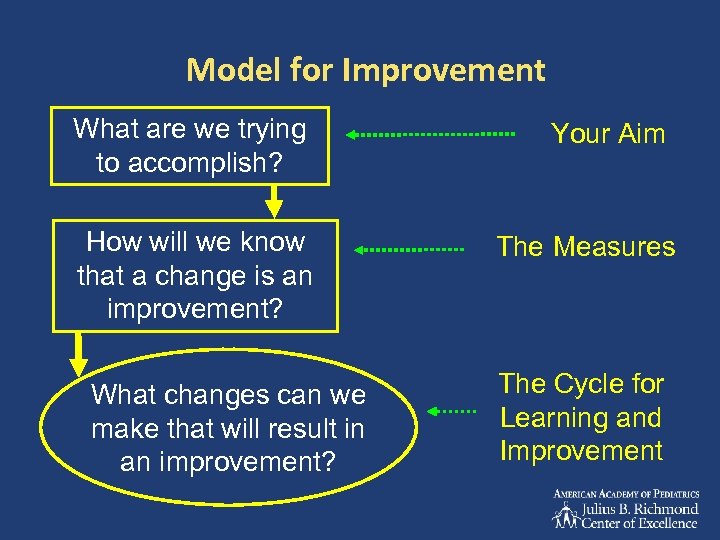 Model for Improvement What are we trying to accomplish? How will we know that a change is an improvement? What changes can we make that will result in an improvement? Your Aim The Measures The Cycle for Learning and Improvement
 Now What? • Mobilize your team! • Start with an Aim statement…what do you want to accomplish? • Then develop small but measurable activities • Create a PDSA (Plan, Do, Study, Act) cycle
 Need more information? American Academy of Pediatrics Julius B. Richmond Center of Excellence www. aap. org/richmondcenter American Lung Association www. aap. org/richmondcenter Audience-Specific Resources State-Specific Resources Cessation Information Coding & Payment Information Tobacco Control E-mail Lists Clinical Practice Change Resources