

SYSTEM of DETECTION, INTERVENTION, CARE and REHABILITATION of


SYSTEM of DETECTION, INTERVENTION, CARE and REHABILITATION of CHILDREN U3 with special needs to prevent their abandonment and institutionalization. In polyclinic Yermentay Sedep Faculty: general medicine Course: I Group: 007-01 Checked by:
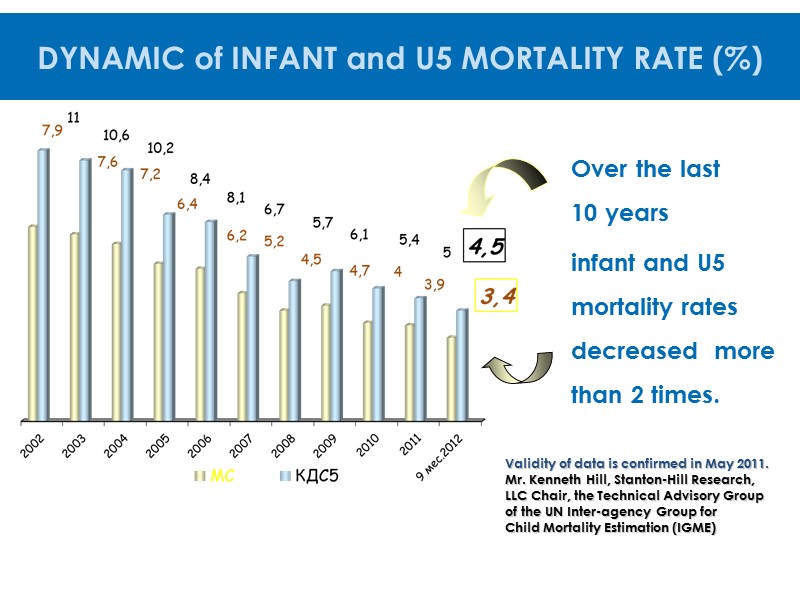
Over the last 10 years infant and U5 mortality rates decreased more than 2 times. Validity of data is confirmed in May 2011. Мr. Kenneth Hill, Stanton-Hill Research, LLC Chair, the Technical Advisory Group of the UN Inter-agency Group for Child Mortality Estimation (IGME) DYNAMIC of INFANT and U5 MORTALITY RATE (%)

At pre-school age child’s disability is mainly diagnosed 2011: CHILD’S DISABILITY by AGE GROUPS (per 1000 of child population of the respective age)

up to 20 visits to obstetrician-gynecologist during the pregnancy; prenatal US-screening for inherited malformation during 1, 2, 3 trimester of pregnancy; STI tests, HIV test, TORCH, US, cardiotocography; if needed: biochemical screening, medical-genetic counseling, hospitalization SYSTEM of EARLY DETECTION, CARE and REHABILITATION Regular medical examination of pregnant women:

95,8% of women are registered during the first 12 weeks of pregnancy; Only 0,53% of woman in childbirth did not have regular medical examination; Only 0,2% of deliveries take place out of maternity hospitals. AVAILABILITY is CONFIRMED
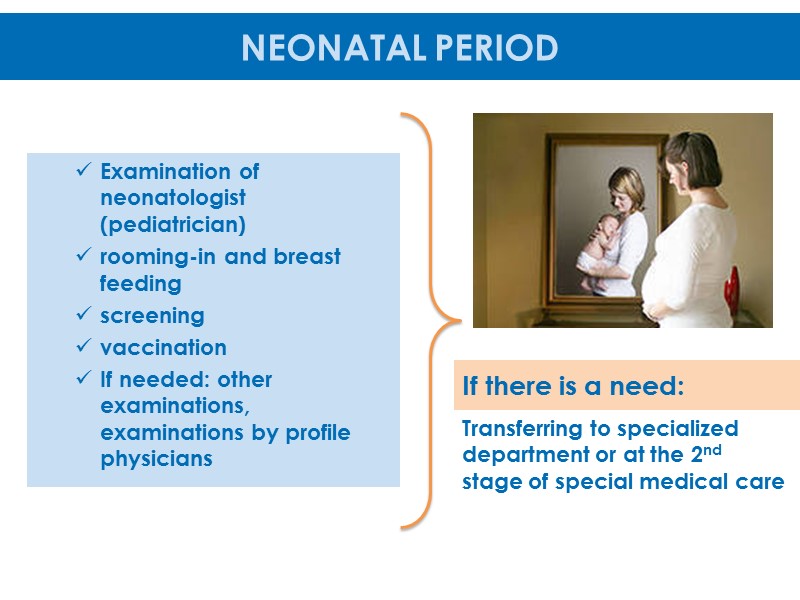
Examination of neonatologist (pediatrician) rooming-in and breast feeding screening vaccination If needed: other examinations, examinations by profile physicians Transferring to specialized department or at the 2nd stage of special medical care NEONATAL PERIOD If there is a need:

Epicrisis defining group of health and risk groups Notification of the polyclinic about child’s discharge from the hospital First three days after discharge: home visit by pediatrician and nurse OUTPATIENT/POLYCLINIC MEDICAL CARE

Plan of child’s regular medical examination A child is healthy A child is at risk of pathology development A child is sick Difference: Number of visits of pediatrician and nurse Timeframe for special medical examinations Timeframe for additional examinations OUTPATIENT/POLYCLINIC MEDICAL CARE
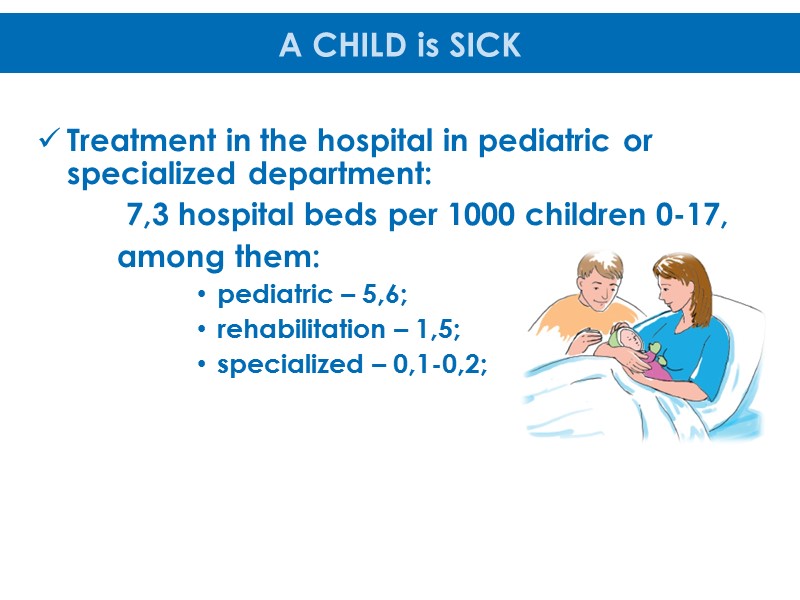
Treatment in the hospital in pediatric or specialized department: 7,3 hospital beds per 1000 children 0-17, among them: pediatric – 5,6; rehabilitation – 1,5; specialized – 0,1-0,2; A CHILD is SICK

Early identification of disorders and developmental delays + Early rehabilitation + Mixed health and education approaches = Improvement of quality of life of children with special needs; Prevention of institutionalization CRITERIA of EFFECTIVENESS
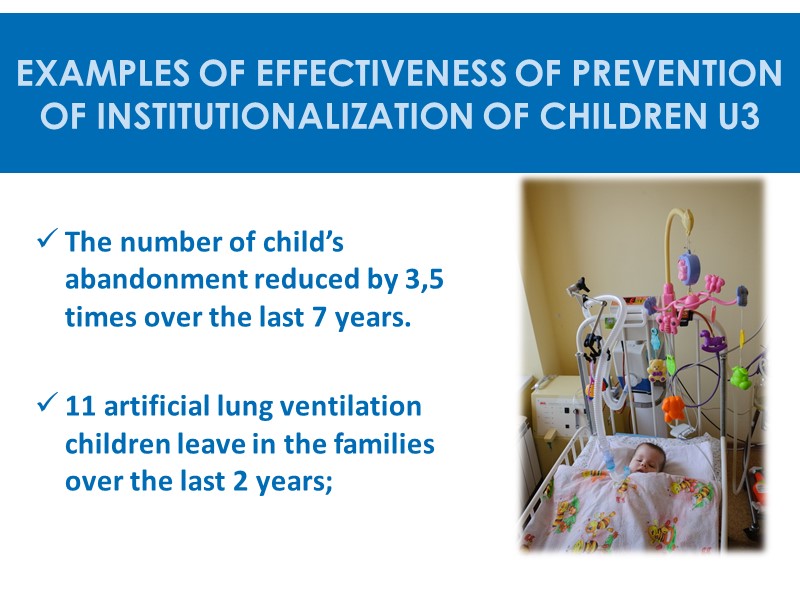
The number of child’s abandonment reduced by 3,5 times over the last 7 years. 11 artificial lung ventilation children leave in the families over the last 2 years; EXAMPLES OF EFFECTIVENESS OF PREVENTION OF INSTITUTIONALIZATION OF CHILDREN U3

Piloting respite care service in infant homes for families with children with disabilities from 0 to 3; Strengthening capacity of psychologist and medical staff on supporting parents with new-borns at risk or with developmental delays; Creation of the mother and child support centres to place mothers with young children who find themselves in a crisis situation PERSPECTIVES (1)

Special training and provision of financial incentives for foster families raising children under 3 and children with disabilities Raising public awareness on children with disabilities and their families to change attitude towards them Formation of social norms supportive of family placement for children U3 deprived of parental care including those with disabilities and special needs Re-profiling of infant homes into health care institutions providing palliative care, medical and social follow-up for families rearing children with disabilities PERSPECTIVES (2)

THANK YOU
 Скачать презентацию SYSTEM of DETECTION, INTERVENTION, CARE and REHABILITATION of
26322-07-5_elena_bogdan_belarus_sofia_21.11.2012_en.ppt
- Количество слайдов: 14