 Скачать презентацию System Dynamics Modeling and Applications in Public Health
658ad172d134e47a978deb62c818efa6.ppt
- Количество слайдов: 62



System Dynamics Modeling and Applications in Public Health and Healthcare Dr. Jack Homer and Dr. Bobby Milstein Public Lecture at the College of Medicine, Ministry of Health, Singapore 13 April 2009
Agenda v System Dynamics Background v The Modeling Process—Example: SARS v Hospital Surge Capacity Model v Cardiovascular Disease Prevention Model v National Health Policy Model and Game
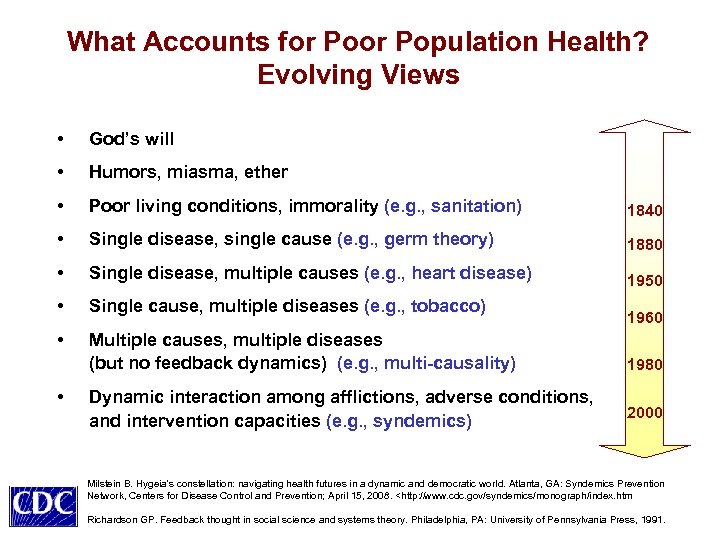
What Accounts for Population Health? Evolving Views • God’s will • Humors, miasma, ether • Poor living conditions, immorality (e. g. , sanitation) 1840 • Single disease, single cause (e. g. , germ theory) 1880 • Single disease, multiple causes (e. g. , heart disease) 1950 • Single cause, multiple diseases (e. g. , tobacco) • Multiple causes, multiple diseases (but no feedback dynamics) (e. g. , multi-causality) • Dynamic interaction among afflictions, adverse conditions, and intervention capacities (e. g. , syndemics) 1960 1980 2000 Milstein B. Hygeia's constellation: navigating health futures in a dynamic and democratic world. Atlanta, GA: Syndemics Prevention Network, Centers for Disease Control and Prevention; April 15, 2008. <http: //www. cdc. gov/syndemics/monograph/index. htm Richardson GP. Feedback thought in social science and systems theory. Philadelphia, PA: University of Pennsylvania Press, 1991.
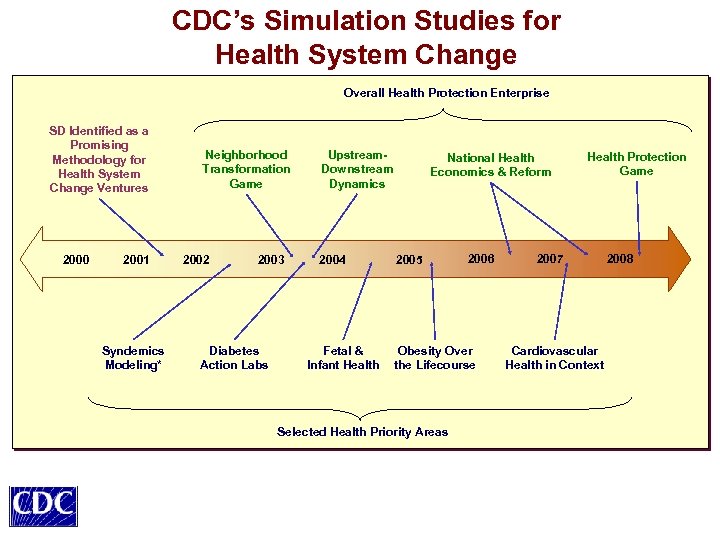
CDC’s Simulation Studies for Health System Change Overall Health Protection Enterprise SD Identified as a Promising Methodology for Health System Change Ventures 2000 2001 Syndemics Modeling* Neighborhood Transformation Game 2002 2003 Diabetes Action Labs Upstream. Downstream Dynamics 2004 Fetal & Infant Health National Health Economics & Reform 2005 2006 Obesity Over the Lifecourse Selected Health Priority Areas Health Protection Game 2007 Cardiovascular Health in Context 2008
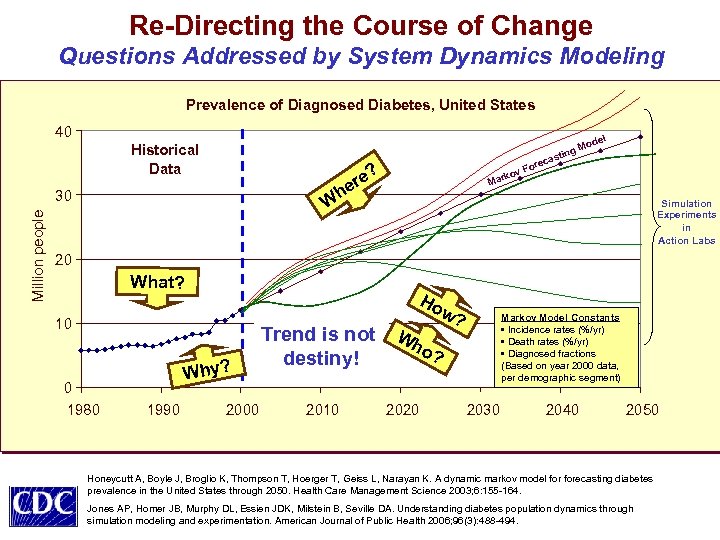
Re-Directing the Course of Change Questions Addressed by System Dynamics Modeling Prevalence of Diagnosed Diabetes, United States 40 ode Historical Data ? e er h Million people 30 ore F kov Mar M ting l cas W Simulation Experiments in Action Labs 20 What? Ho 10 0 1980 Why? 1990 2000 Trend is not destiny! 2010 Wh w? Markov Model Constants • Incidence rates (%/yr) • Death rates (%/yr) • Diagnosed fractions (Based on year 2000 data, per demographic segment) o? 2020 2030 2040 2050 Honeycutt A, Boyle J, Broglio K, Thompson T, Hoerger T, Geiss L, Narayan K. A dynamic markov model forecasting diabetes prevalence in the United States through 2050. Health Care Management Science 2003; 6: 155 -164. Jones AP, Homer JB, Murphy DL, Essien JDK, Milstein B, Seville DA. Understanding diabetes population dynamics through simulation modeling and experimentation. American Journal of Public Health 2006; 96(3): 488 -494.
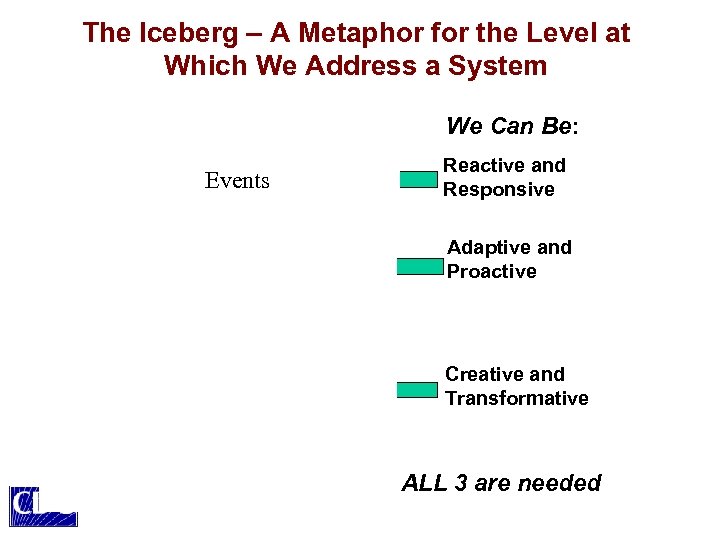
The Iceberg – A Metaphor for the Level at Which We Address a System We Can Be: More Leverage Events Reactive and Responsive Patterns of Behavior Adaptive and Proactive Systemic Structure Creative and Transformative ALL 3 are needed
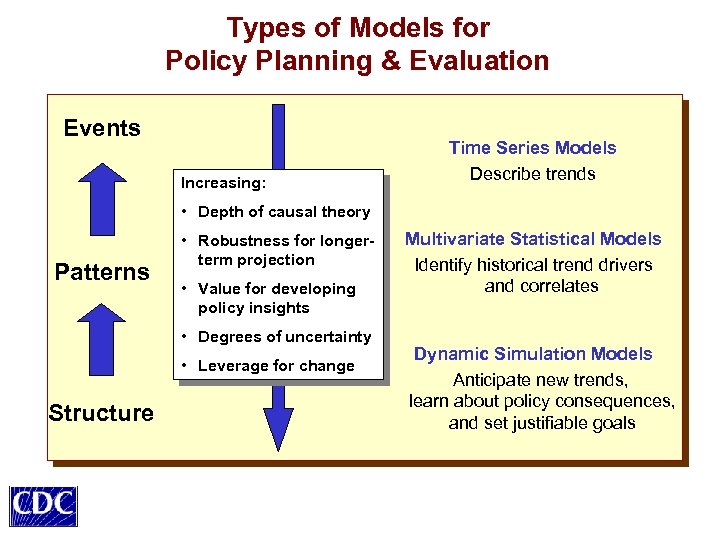
Types of Models for Policy Planning & Evaluation Events Increasing: Time Series Models Describe trends • Depth of causal theory Patterns • Robustness for longerterm projection • Value for developing policy insights • Degrees of uncertainty • Leverage for change Structure Multivariate Statistical Models Identify historical trend drivers and correlates Dynamic Simulation Models Anticipate new trends, learn about policy consequences, and set justifiable goals
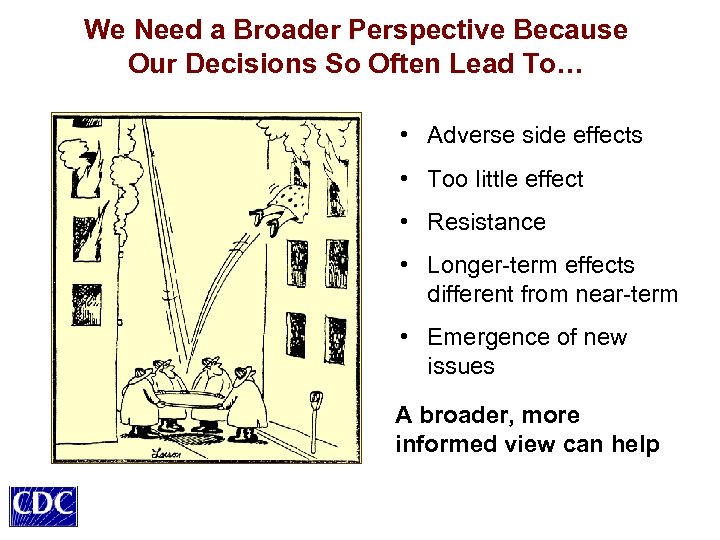
We Need a Broader Perspective Because Our Decisions So Often Lead To… • Adverse side effects • Too little effect • Resistance • Longer-term effects different from near-term • Emergence of new issues A broader, more informed view can help
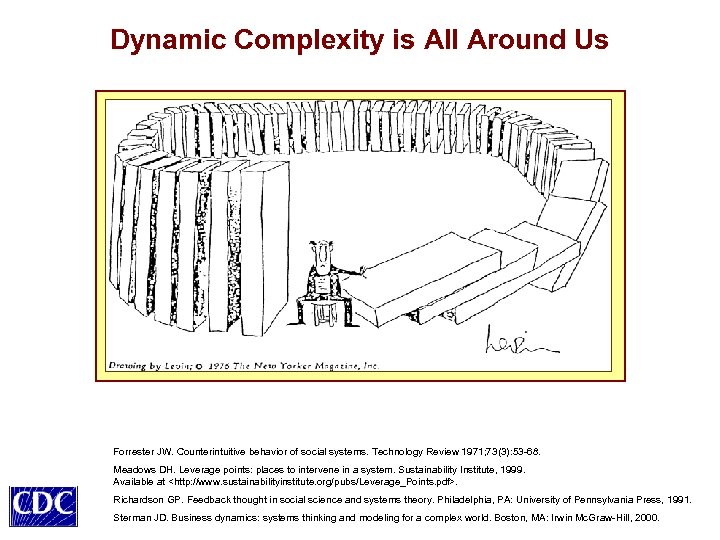
Dynamic Complexity is All Around Us Forrester JW. Counterintuitive behavior of social systems. Technology Review 1971; 73(3): 53 -68. Meadows DH. Leverage points: places to intervene in a system. Sustainability Institute, 1999. Available at <http: //www. sustainabilityinstitute. org/pubs/Leverage_Points. pdf>. Richardson GP. Feedback thought in social science and systems theory. Philadelphia, PA: University of Pennsylvania Press, 1991. Sterman JD. Business dynamics: systems thinking and modeling for a complex world. Boston, MA: Irwin Mc. Graw-Hill, 2000.
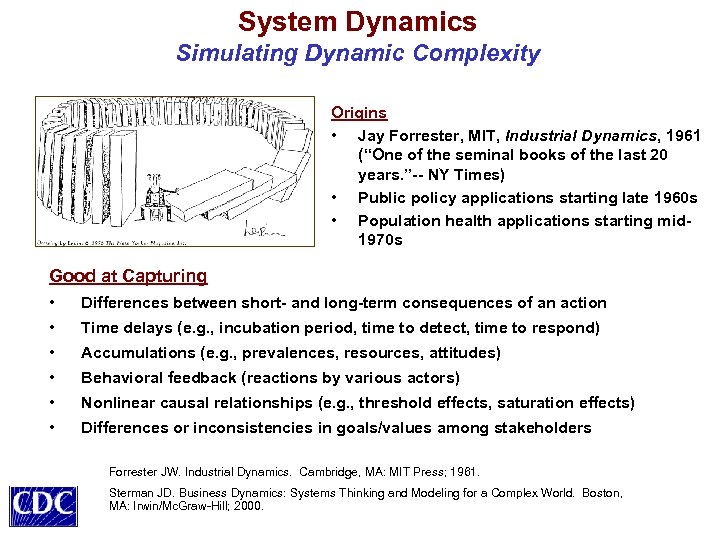
System Dynamics Simulating Dynamic Complexity Origins • Jay Forrester, MIT, Industrial Dynamics, 1961 (“One of the seminal books of the last 20 years. ”-- NY Times) • Public policy applications starting late 1960 s • Population health applications starting mid 1970 s Good at Capturing • Differences between short- and long-term consequences of an action • Time delays (e. g. , incubation period, time to detect, time to respond) • Accumulations (e. g. , prevalences, resources, attitudes) • Behavioral feedback (reactions by various actors) • Nonlinear causal relationships (e. g. , threshold effects, saturation effects) • Differences or inconsistencies in goals/values among stakeholders Forrester JW. Industrial Dynamics. Cambridge, MA: MIT Press; 1961. Sterman JD. Business Dynamics: Systems Thinking and Modeling for a Complex World. Boston, MA: Irwin/Mc. Graw-Hill; 2000.
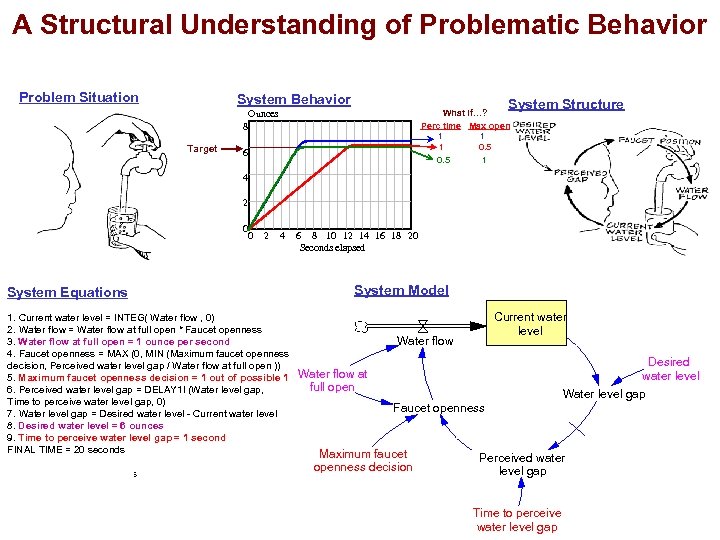
A Structural Understanding of Problematic Behavior Problem Situation System Behavior System Structure What if…? Perc time Max open 1 1 1 0. 5 1 Ounces 8 Target 6 4 2 0 0 2 4 System Equations 1. Current water level = INTEG( Water flow , 0) 2. Water flow = Water flow at full open * Faucet openness 3. Water flow at full open = 1 ounce per second 4. Faucet openness = MAX (0, MIN (Maximum faucet openness decision, Perceived water level gap / Water flow at full open )) 5. Maximum faucet openness decision = 1 out of possible 1 6. Perceived water level gap = DELAY 1 I (Water level gap, Time to perceive water level gap, 0) 7. Water level gap = Desired water level - Current water level 8. Desired water level = 6 ounces 9. Time to perceive water level gap = 1 second FINAL TIME = 20 seconds INITIAL TIME = 0 TIME STEP = 0. 125 seconds 6 8 10 12 14 16 18 20 Seconds elapsed System Model Current water level Water flow Desired water level Water level gap Water flow at full open Faucet openness Maximum faucet openness decision Perceived water level gap Time to perceive water level gap
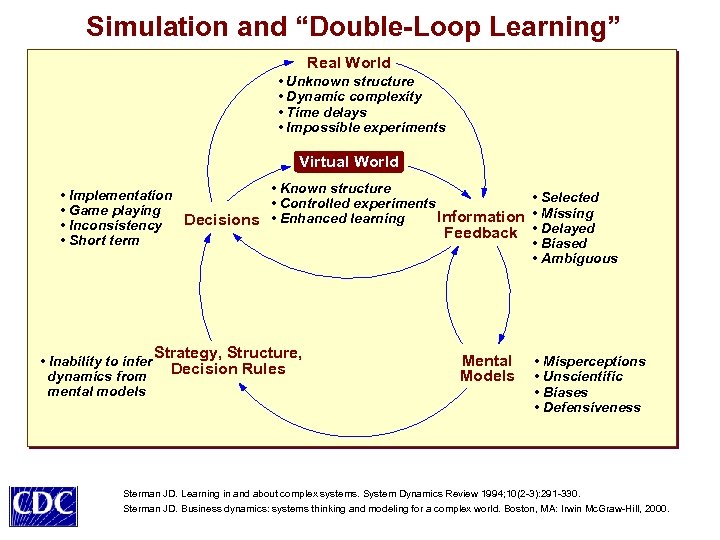
Simulation and “Double-Loop Learning” Real World • Unknown structure • Dynamic complexity • Time delays • Impossible experiments Virtual World • Known structure • Implementation • Controlled experiments • Game playing Information Decisions • Enhanced learning • Inconsistency Feedback • Short term • Inability to infer Strategy, Structure, Decision Rules dynamics from mental models Mental Models • Selected • Missing • Delayed • Biased • Ambiguous • Misperceptions • Unscientific • Biases • Defensiveness Sterman JD. Learning in and about complex systems. System Dynamics Review 1994; 10(2 -3): 291 -330. Sterman JD. Business dynamics: systems thinking and modeling for a complex world. Boston, MA: Irwin Mc. Graw-Hill, 2000.
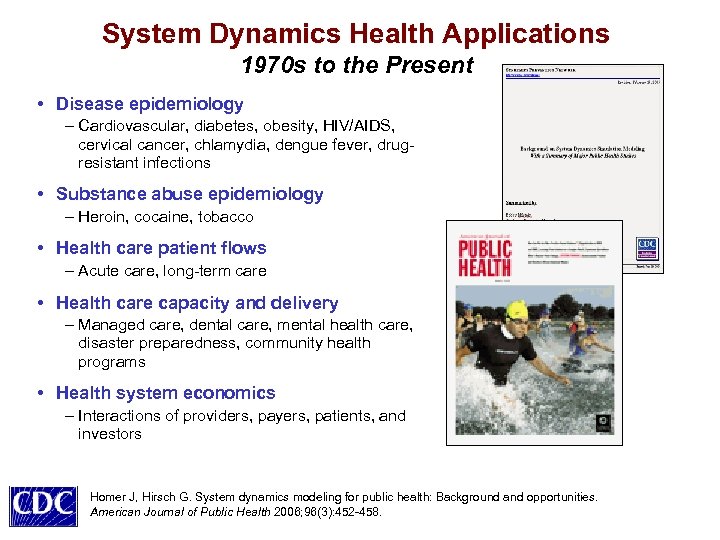
System Dynamics Health Applications 1970 s to the Present • Disease epidemiology – Cardiovascular, diabetes, obesity, HIV/AIDS, cervical cancer, chlamydia, dengue fever, drugresistant infections • Substance abuse epidemiology – Heroin, cocaine, tobacco • Health care patient flows – Acute care, long-term care • Health care capacity and delivery – Managed care, dental care, mental health care, disaster preparedness, community health programs • Health system economics – Interactions of providers, payers, patients, and investors Homer J, Hirsch G. System dynamics modeling for public health: Background and opportunities. American Journal of Public Health 2006; 96(3): 452 -458.
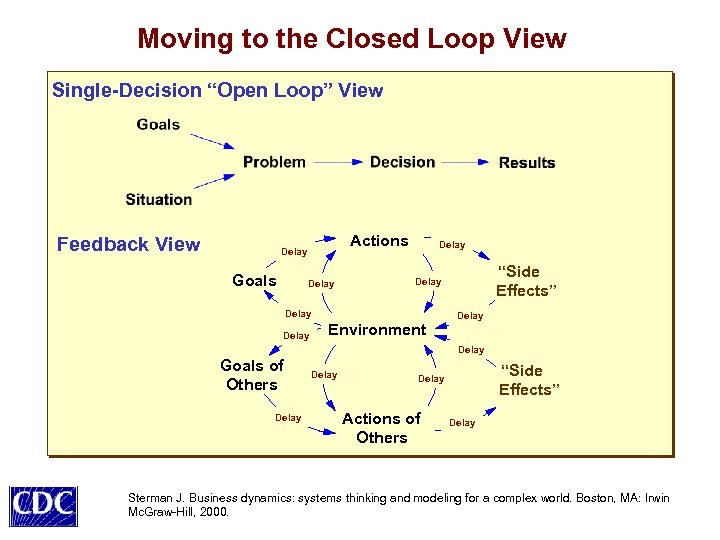
Moving to the Closed Loop View Single-Decision “Open Loop” View Feedback View Actions Delay Goals Delay “Side Effects” Delay Environment Delay Goals of Others Delay “Side Effects” Delay Actions of Others Delay Sterman J. Business dynamics: systems thinking and modeling for a complex world. Boston, MA: Irwin Mc. Graw-Hill, 2000.
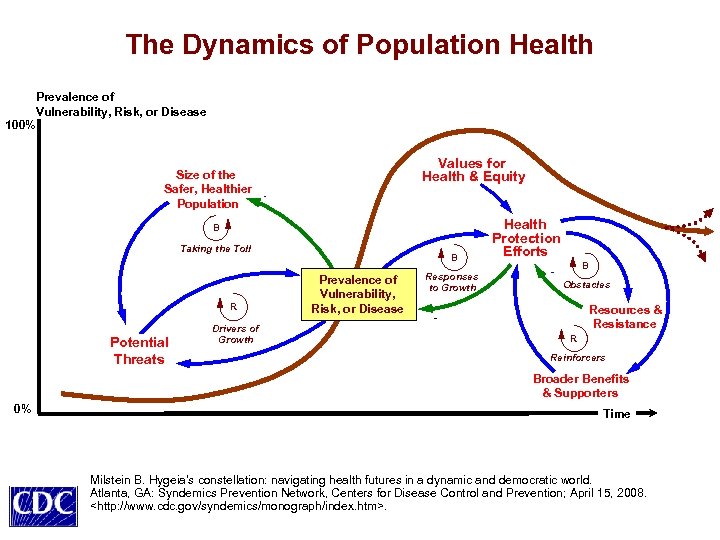
The Dynamics of Population Health Prevalence of Vulnerability, Risk, or Disease 100% Values for Health & Equity Size of the Safer, Healthier Population B Taking the Toll R Potential Threats Drivers of Growth B Prevalence of Vulnerability, Risk, or Disease Responses to Growth Health Protection Efforts B - Obstacles Resources & Resistance R Reinforcers Broader Benefits & Supporters 0% Time Milstein B. Hygeia's constellation: navigating health futures in a dynamic and democratic world. Atlanta, GA: Syndemics Prevention Network, Centers for Disease Control and Prevention; April 15, 2008. <http: //www. cdc. gov/syndemics/monograph/index. htm>.
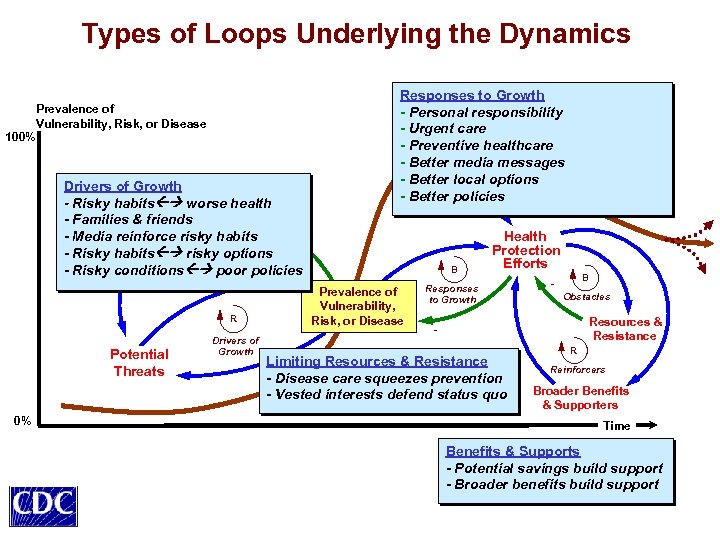
Types of Loops Underlying the Dynamics Prevalence of Vulnerability, Risk, or Disease 100% Drivers of Growth Size of the Safer, Healthier - Risky habits worse health Population - Families & friends - Media reinforce risky. B habits - Risky habits Taking the Toll risky options - Risky conditions poor policies R Potential Threats 0% Drivers of Growth Responses to Growth - Personal responsibility - Urgent care - Preventive healthcare - Better media messages Values options - Better local for Health & Equity - Better policies B Prevalence of Vulnerability, Risk, or Disease Health Protection Efforts Responses to Growth B - Obstacles Resources & Resistance - Limiting Resources & Resistance - Disease care squeezes prevention - Vested interests defend status quo R Reinforcers Broader Benefits & Supporters Time Benefits & Supports - Potential savings build support - Broader benefits build support
The Closed-Loop View Leads Us To Question… • How can we weaken the engines of growth loops (i. e. social and economic reinforcements)? • What incentives can reward parents, school administrators, employers, and other decision-makers for expanding healthier options? • Are there resources for health protection that do not compete with disease care? • How can industries be motivated to change the status quo rather than defend it? • How can benefits beyond weight reduction be used to stimulate investments in expanding healthier options?
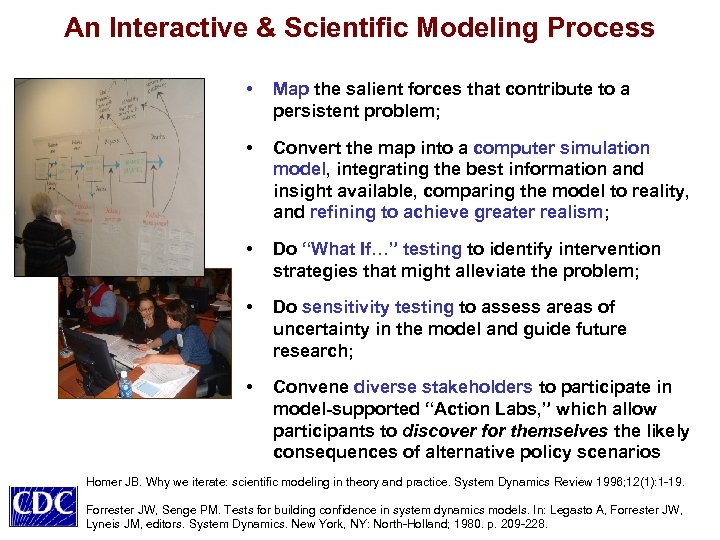
An Interactive & Scientific Modeling Process • Map the salient forces that contribute to a persistent problem; • Convert the map into a computer simulation model, integrating the best information and insight available, comparing the model to reality, and refining to achieve greater realism; • Do “What If…” testing to identify intervention strategies that might alleviate the problem; • Do sensitivity testing to assess areas of uncertainty in the model and guide future research; • Convene diverse stakeholders to participate in model-supported “Action Labs, ” which allow participants to discover for themselves the likely consequences of alternative policy scenarios Homer JB. Why we iterate: scientific modeling in theory and practice. System Dynamics Review 1996; 12(1): 1 -19. Forrester JW, Senge PM. Tests for building confidence in system dynamics models. In: Legasto A, Forrester JW, Lyneis JM, editors. System Dynamics. New York, NY: North-Holland; 1980. p. 209 -228.
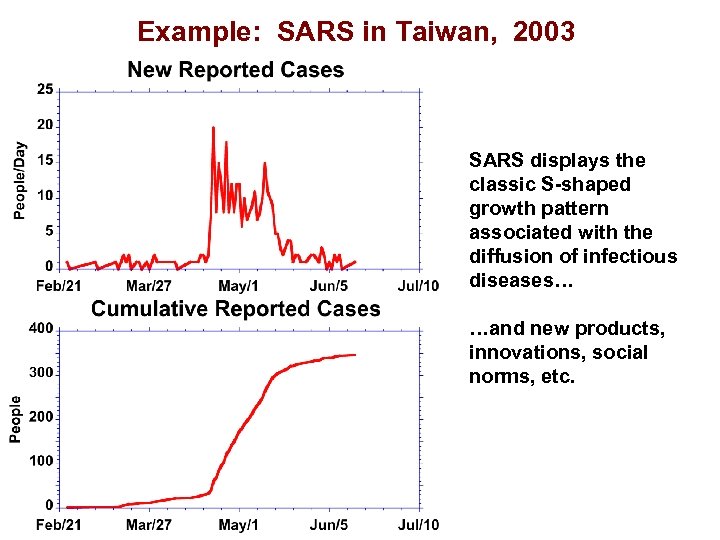
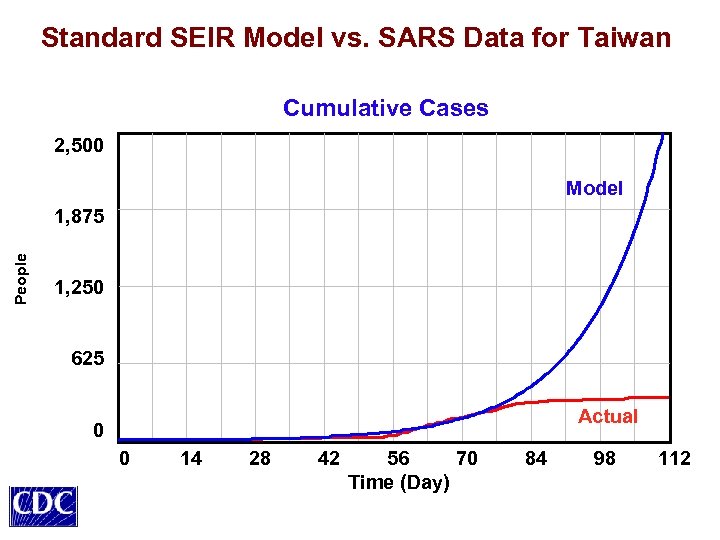
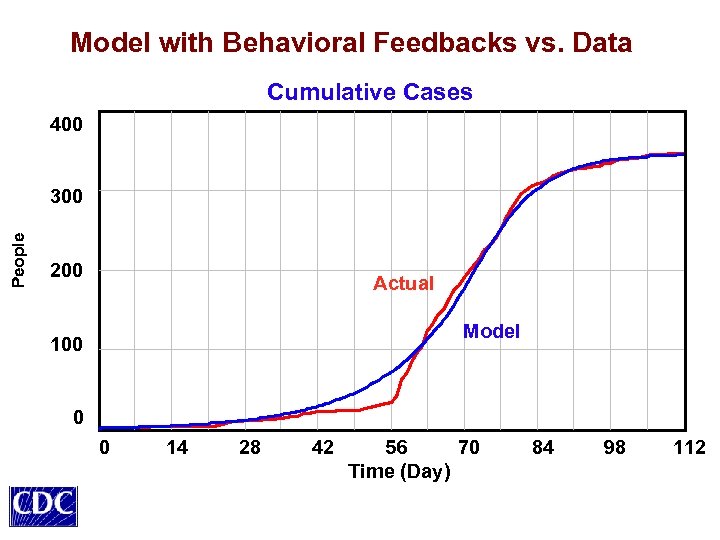
Example: SARS in Taiwan, 2003 SARS displays the classic S-shaped growth pattern associated with the diffusion of infectious diseases… …and new products, innovations, social norms, etc.
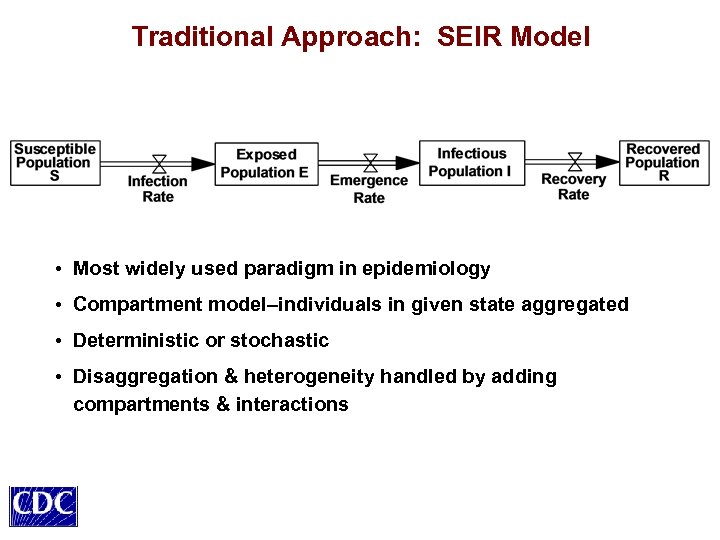
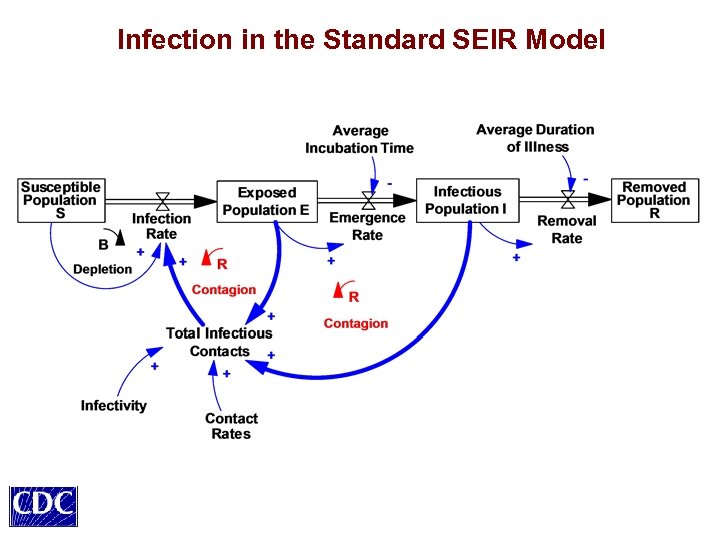
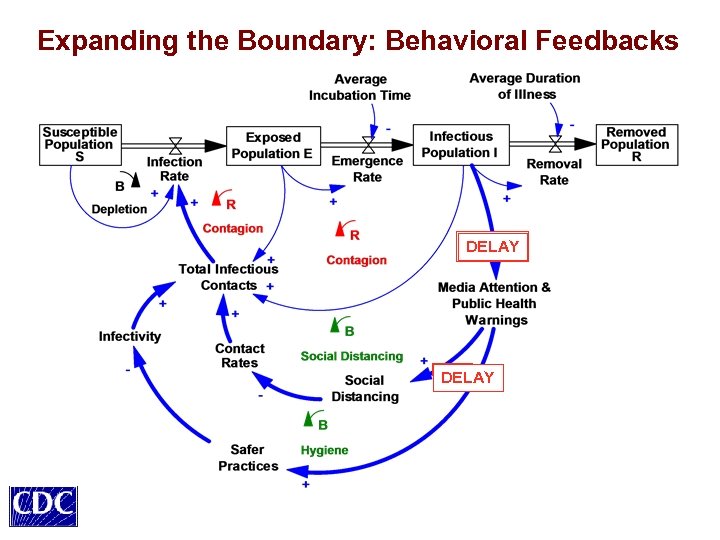
Traditional Approach: SEIR Model • Most widely used paradigm in epidemiology • Compartment model–individuals in given state aggregated • Deterministic or stochastic • Disaggregation & heterogeneity handled by adding compartments & interactions
Infection in the Standard SEIR Model
Standard SEIR Model vs. SARS Data for Taiwan Cumulative Cases 2, 500 Model People 1, 875 1, 250 625 Actual 0 0 14 28 42 56 70 Time (Day) 84 98 112
Expanding the Boundary: Behavioral Feedbacks DELAY
Model with Behavioral Feedbacks vs. Data Cumulative Cases 400 People 300 200 Actual Model 100 0 0 14 28 42 56 70 Time (Day) 84 98 112
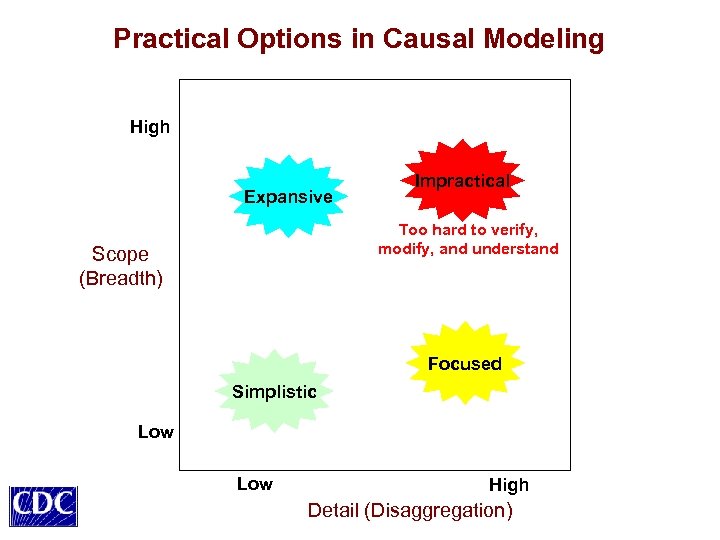
Practical Options in Causal Modeling High Expansive Impractical Too hard to verify, modify, and understand Scope (Breadth) Focused Simplistic Low High Detail (Disaggregation)
Model Structure and Level of Detail Depends on the Intended Uses and Audiences • Set Better Goals (Planners & Evaluators) – Identify what is likely and what is possible – Estimate intervention impact time profiles – Evaluate resource needs for meeting goals • Support Better Action (Policymakers) – Explore ways of combining policies for better results – Evaluate cost-effectiveness over extended time periods – Increase policymakers’ motivation to act differently • Develop Better Theory and Estimates (Researchers) – – Integrate and reconcile diverse data sources Identify causal mechanisms driving system behavior Improve estimates of hard-to-measure or “hidden” variables Identify key uncertainties to address in intervention studies Forrester JW. Industrial Dynamics (Chapter 11: Aggregation of Variables). Cambridge, MA: MIT Press, 1961.
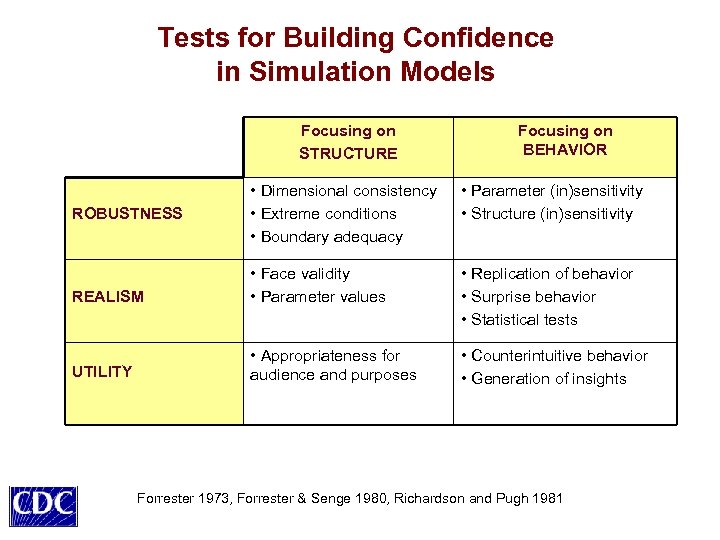
Tests for Building Confidence in Simulation Models Focusing on STRUCTURE Focusing on BEHAVIOR • Dimensional consistency • Extreme conditions • Boundary adequacy • Parameter (in)sensitivity • Structure (in)sensitivity REALISM • Face validity • Parameter values • Replication of behavior • Surprise behavior • Statistical tests UTILITY • Appropriateness for audience and purposes • Counterintuitive behavior • Generation of insights ROBUSTNESS Forrester 1973, Forrester & Senge 1980, Richardson and Pugh 1981
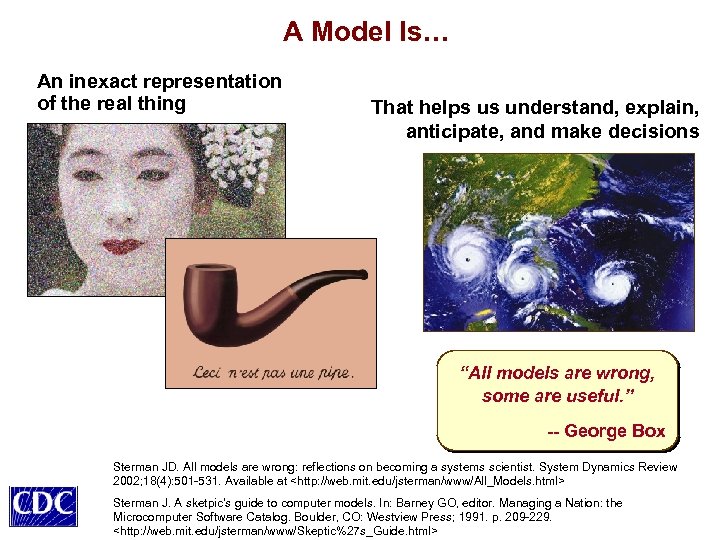
A Model Is… An inexact representation of the real thing That helps us understand, explain, anticipate, and make decisions “All models are wrong, some are useful. ” -- George Box Sterman JD. All models are wrong: reflections on becoming a systems scientist. System Dynamics Review 2002; 18(4): 501 -531. Available at <http: //web. mit. edu/jsterman/www/All_Models. html> Sterman J. A sketpic's guide to computer models. In: Barney GO, editor. Managing a Nation: the Microcomputer Software Catalog. Boulder, CO: Westview Press; 1991. p. 209 -229. <http: //web. mit. edu/jsterman/www/Skeptic%27 s_Guide. html>
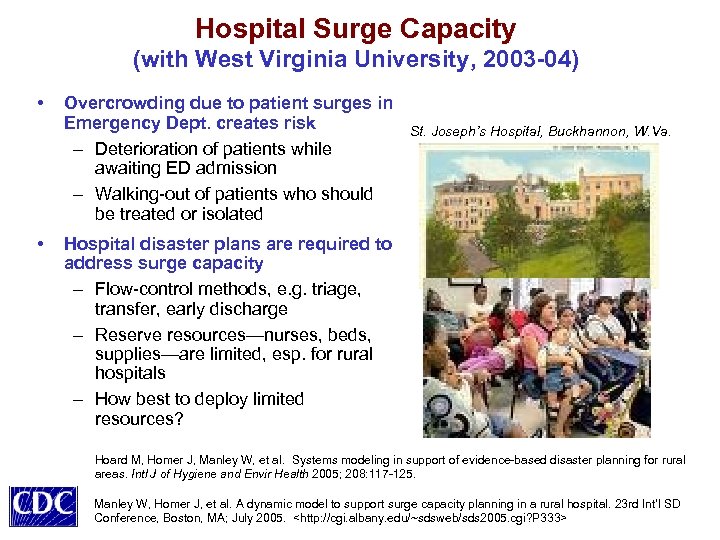
Hospital Surge Capacity (with West Virginia University, 2003 -04) • • Overcrowding due to patient surges in Emergency Dept. creates risk – Deterioration of patients while awaiting ED admission – Walking-out of patients who should be treated or isolated St. Joseph’s Hospital, Buckhannon, W. Va. Hospital disaster plans are required to address surge capacity – Flow-control methods, e. g. triage, transfer, early discharge – Reserve resources—nurses, beds, supplies—are limited, esp. for rural hospitals – How best to deploy limited resources? Hoard M, Homer J, Manley W, et al. Systems modeling in support of evidence-based disaster planning for rural areas. Intl J of Hygiene and Envir Health 2005; 208: 117 -125. Manley W, Homer J, et al. A dynamic model to support surge capacity planning in a rural hospital. 23 rd Int’l SD Conference, Boston, MA; July 2005. <http: //cgi. albany. edu/~sdsweb/sds 2005. cgi? P 333>
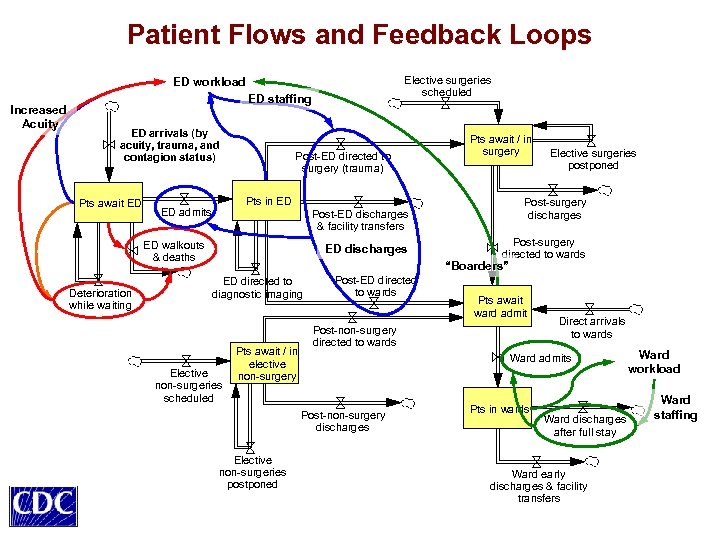
Patient Flows and Feedback Loops Elective surgeries scheduled ED workload Increased Acuity ED staffing ED arrivals (by acuity, trauma, and contagion status) Pts await ED Post-ED directed to surgery (trauma) Pts in ED ED admits ED discharges Elective surgeries postponed Post-surgery discharges Post-ED discharges & facility transfers ED walkouts & deaths Deterioration while waiting Pts await / in surgery Post-surgery directed to wards “Boarders” ED directed to diagnostic imaging Elective non-surgeries scheduled Pts await / in elective non-surgery Post-ED directed to wards Post-non-surgery directed to wards Direct arrivals to wards Ward admits Post-non-surgery discharges Elective non-surgeries postponed Pts await ward admit Pts in wards Ward discharges after full stay Ward early discharges & facility transfers Ward workload Ward staffing
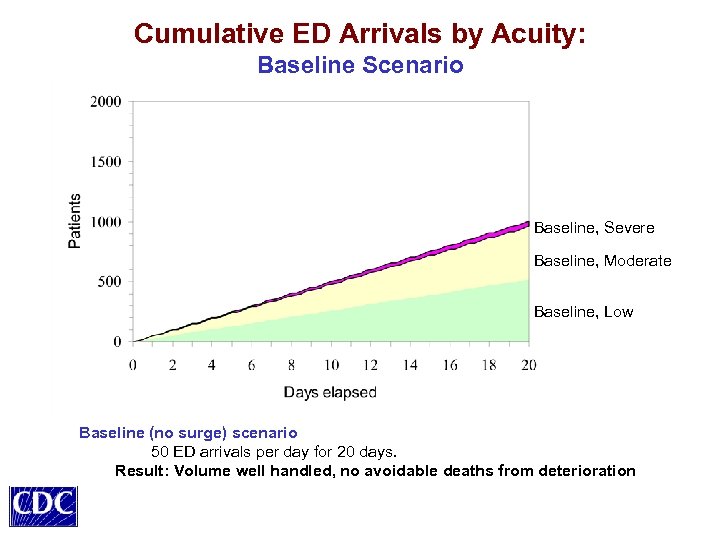
Cumulative ED Arrivals by Acuity: Baseline Scenario Baseline, Severe Baseline, Moderate Baseline, Low Baseline (no surge) scenario 50 ED arrivals per day for 20 days. Result: Volume well handled, no avoidable deaths from deterioration
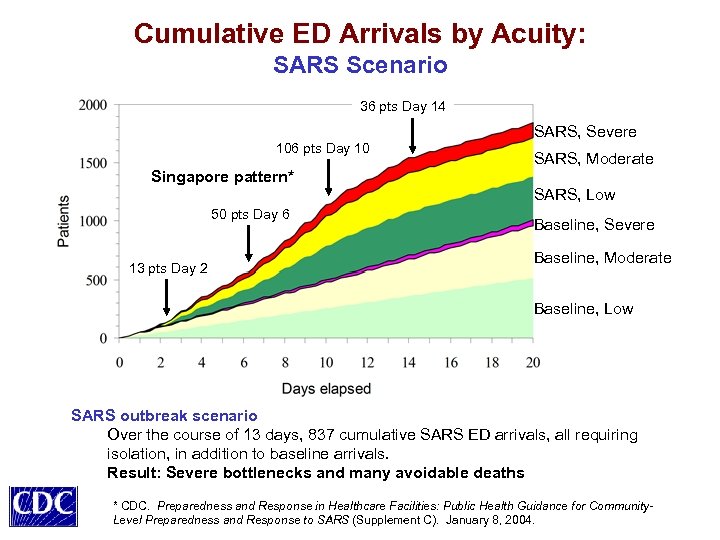
Cumulative ED Arrivals by Acuity: SARS Scenario 36 pts Day 14 SARS, Severe 106 pts Day 10 SARS, Moderate Singapore pattern* SARS, Low 50 pts Day 6 13 pts Day 2 Baseline, Severe Baseline, Moderate Baseline, Low SARS outbreak scenario Over the course of 13 days, 837 cumulative SARS ED arrivals, all requiring isolation, in addition to baseline arrivals. Result: Severe bottlenecks and many avoidable deaths * CDC. Preparedness and Response in Healthcare Facilities: Public Health Guidance for Community. Level Preparedness and Response to SARS (Supplement C). January 8, 2004.
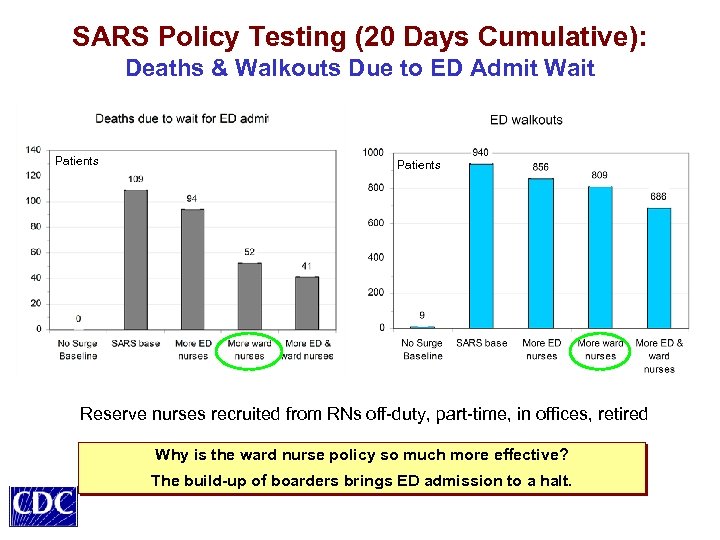
SARS Policy Testing (20 Days Cumulative): Deaths & Walkouts Due to ED Admit Wait Patients Reserve nurses recruited from RNs off-duty, part-time, in offices, retired Why is the ward nurse policy so much more effective? The build-up of boarders brings ED admission to a halt.
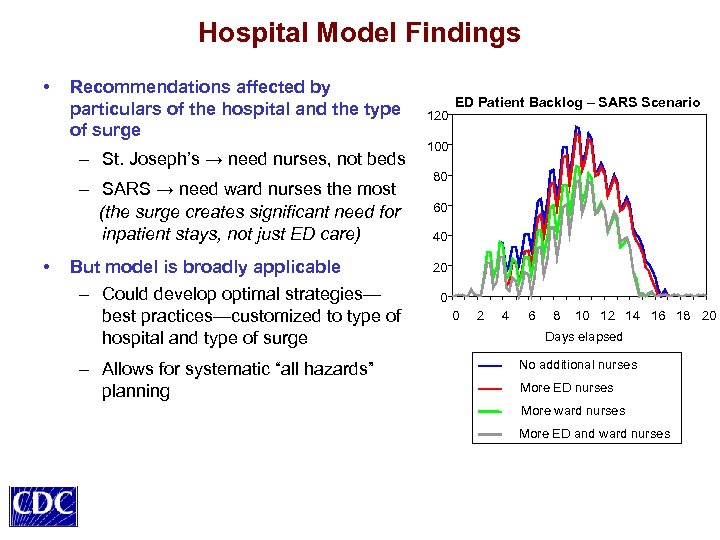
Hospital Model Findings • Recommendations affected by particulars of the hospital and the type of surge – St. Joseph’s → need nurses, not beds – SARS → need ward nurses the most (the surge creates significant need for inpatient stays, not just ED care) • But model is broadly applicable – Could develop optimal strategies— best practices—customized to type of hospital and type of surge – Allows for systematic “all hazards” planning 120 ED Patient Backlog – SARS Scenario 100 80 60 40 20 0 0 2 4 6 8 10 12 14 16 18 20 Days elapsed No additional nurses More ED nurses More ward nurses More ED and ward nurses
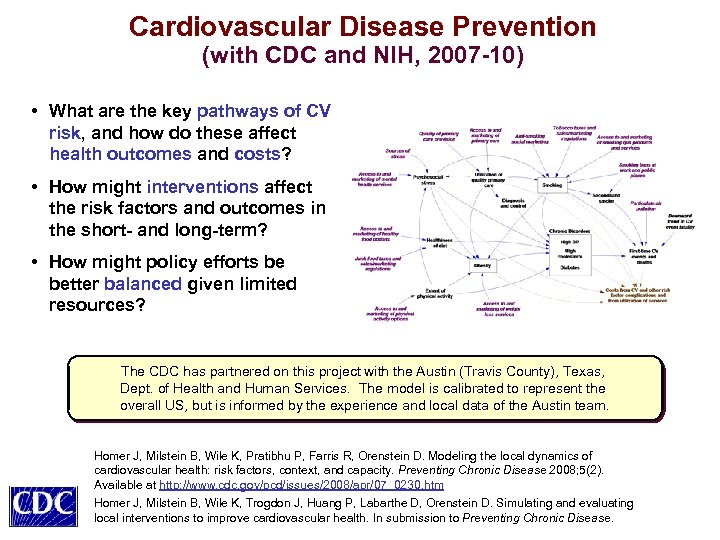
Cardiovascular Disease Prevention (with CDC and NIH, 2007 -10) • What are the key pathways of CV risk, and how do these affect health outcomes and costs? • How might interventions affect the risk factors and outcomes in the short- and long-term? • How might policy efforts be better balanced given limited resources? The CDC has partnered on this project with the Austin (Travis County), Texas, Dept. of Health and Human Services. The model is calibrated to represent the overall US, but is informed by the experience and local data of the Austin team. Homer J, Milstein B, Wile K, Pratibhu P, Farris R, Orenstein D. Modeling the local dynamics of cardiovascular health: risk factors, context, and capacity. Preventing Chronic Disease 2008; 5(2). Available at http: //www. cdc. gov/pcd/issues/2008/apr/07_0230. htm Homer J, Milstein B, Wile K, Trogdon J, Huang P, Labarthe D, Orenstein D. Simulating and evaluating local interventions to improve cardiovascular health. In submission to Preventing Chronic Disease.
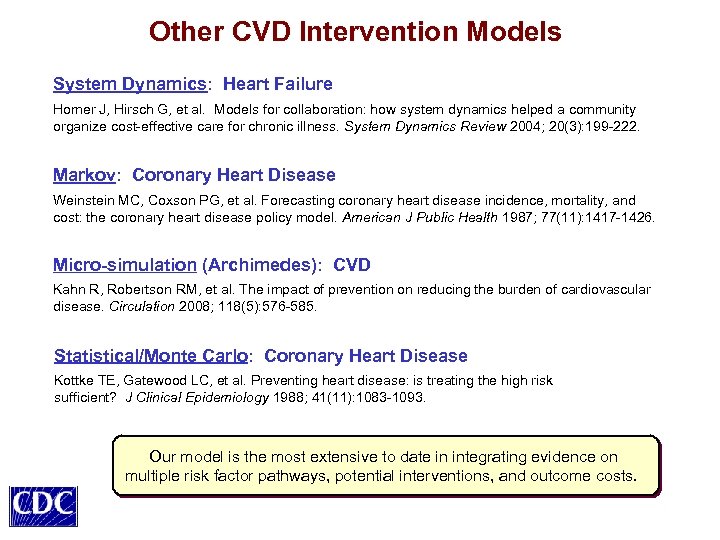
Other CVD Intervention Models System Dynamics: Heart Failure Homer J, Hirsch G, et al. Models for collaboration: how system dynamics helped a community organize cost-effective care for chronic illness. System Dynamics Review 2004; 20(3): 199 -222. Markov: Coronary Heart Disease Weinstein MC, Coxson PG, et al. Forecasting coronary heart disease incidence, mortality, and cost: the coronary heart disease policy model. American J Public Health 1987; 77(11): 1417 -1426. Micro-simulation (Archimedes): CVD Kahn R, Robertson RM, et al. The impact of prevention on reducing the burden of cardiovascular disease. Circulation 2008; 118(5): 576 -585. Statistical/Monte Carlo: Coronary Heart Disease Kottke TE, Gatewood LC, et al. Preventing heart disease: is treating the high risk sufficient? J Clinical Epidemiology 1988; 41(11): 1083 -1093. Our model is the most extensive to date in integrating evidence on multiple risk factor pathways, potential interventions, and outcome costs.
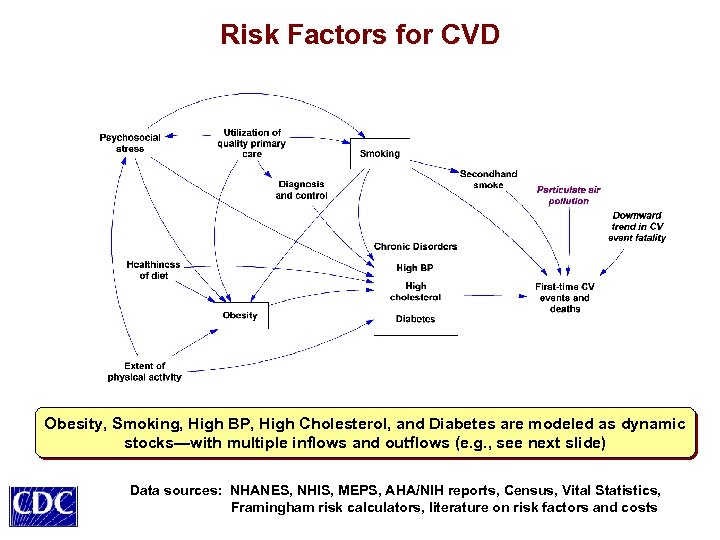
Risk Factors for CVD Obesity, Smoking, High BP, High Cholesterol, and Diabetes are modeled as dynamic stocks—with multiple inflows and outflows (e. g. , see next slide) Data sources: NHANES, NHIS, MEPS, AHA/NIH reports, Census, Vital Statistics, Framingham risk calculators, literature on risk factors and costs
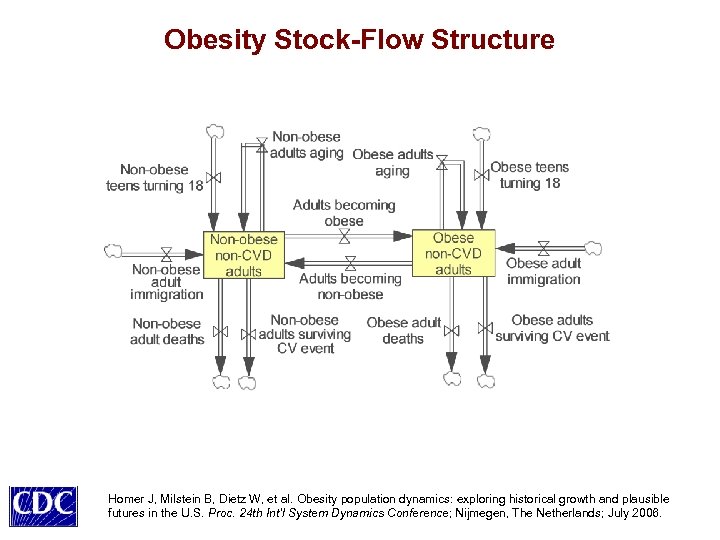
Obesity Stock-Flow Structure Homer J, Milstein B, Dietz W, et al. Obesity population dynamics: exploring historical growth and plausible futures in the U. S. Proc. 24 th Int’l System Dynamics Conference; Nijmegen, The Netherlands; July 2006.
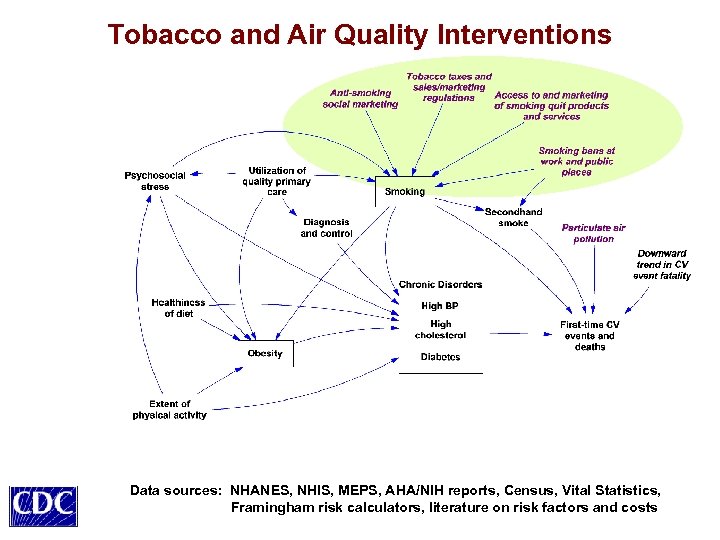
Tobacco and Air Quality Interventions Data sources: NHANES, NHIS, MEPS, AHA/NIH reports, Census, Vital Statistics, Framingham risk calculators, literature on risk factors and costs
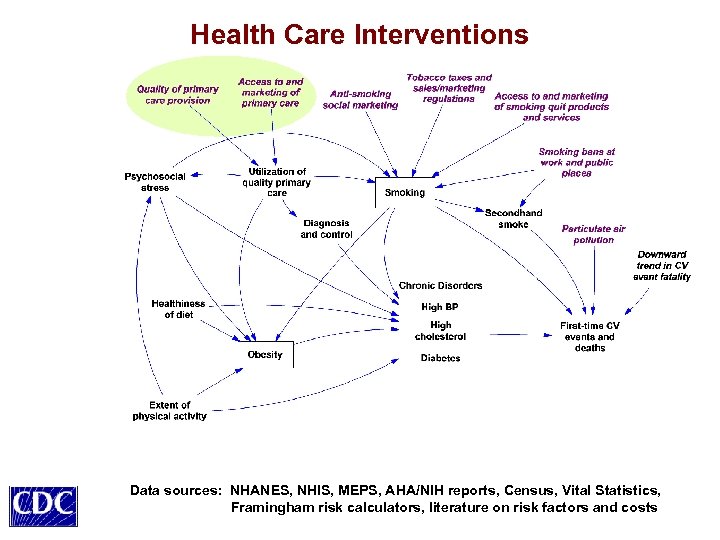
Health Care Interventions Data sources: NHANES, NHIS, MEPS, AHA/NIH reports, Census, Vital Statistics, Framingham risk calculators, literature on risk factors and costs
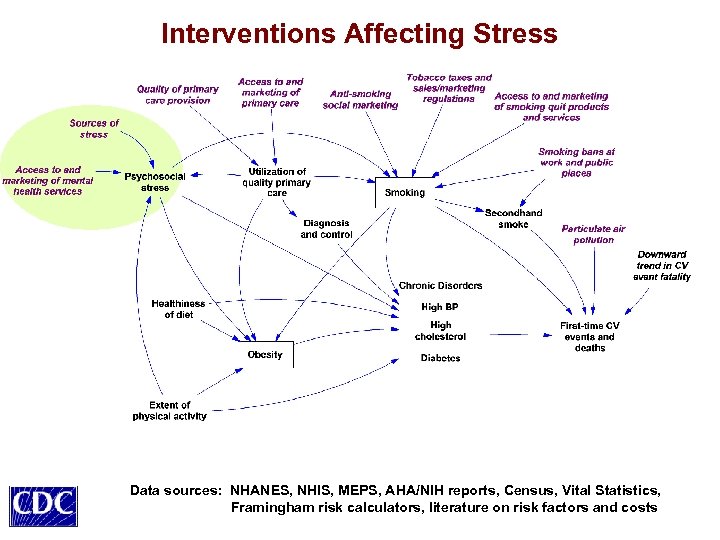
Interventions Affecting Stress Data sources: NHANES, NHIS, MEPS, AHA/NIH reports, Census, Vital Statistics, Framingham risk calculators, literature on risk factors and costs
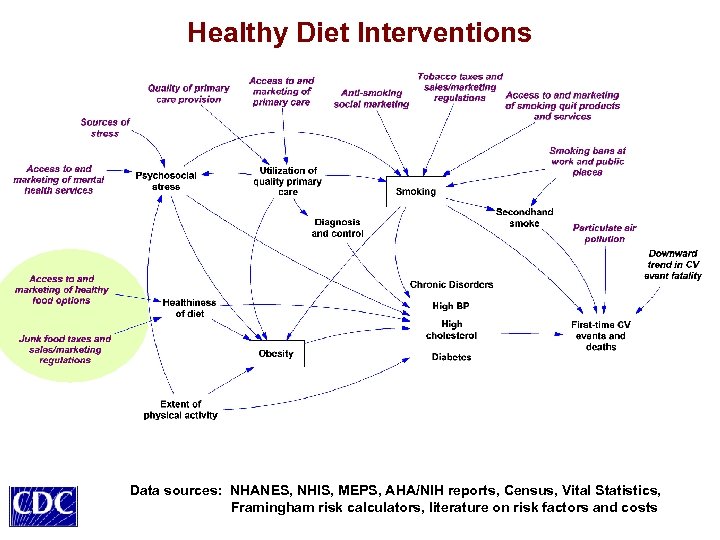
Healthy Diet Interventions Data sources: NHANES, NHIS, MEPS, AHA/NIH reports, Census, Vital Statistics, Framingham risk calculators, literature on risk factors and costs
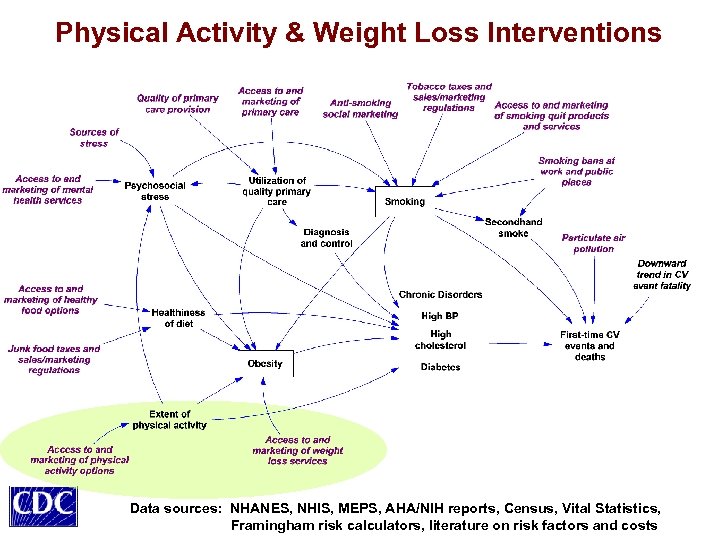
Physical Activity & Weight Loss Interventions Data sources: NHANES, NHIS, MEPS, AHA/NIH reports, Census, Vital Statistics, Framingham risk calculators, literature on risk factors and costs
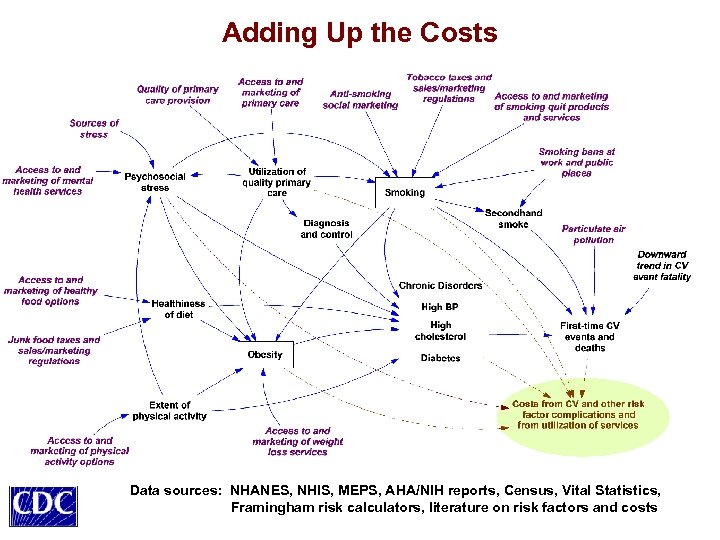
Adding Up the Costs Data sources: NHANES, NHIS, MEPS, AHA/NIH reports, Census, Vital Statistics, Framingham risk calculators, literature on risk factors and costs
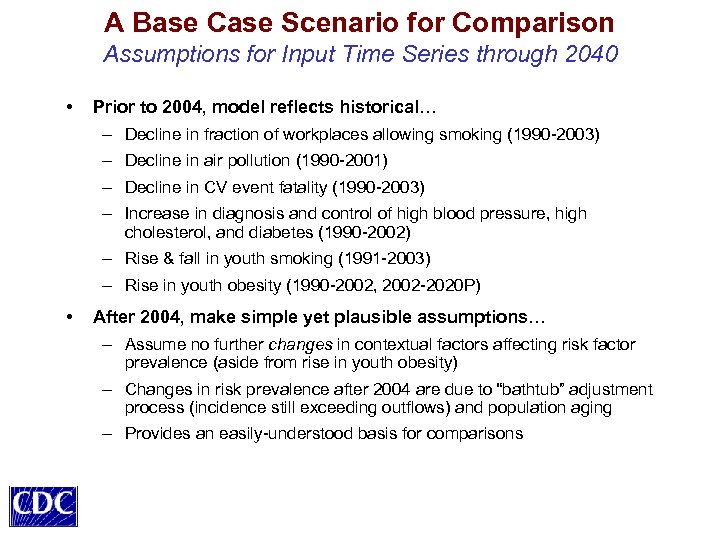
A Base Case Scenario for Comparison Assumptions for Input Time Series through 2040 • Prior to 2004, model reflects historical… – Decline in fraction of workplaces allowing smoking (1990 -2003) – Decline in air pollution (1990 -2001) – Decline in CV event fatality (1990 -2003) – Increase in diagnosis and control of high blood pressure, high cholesterol, and diabetes (1990 -2002) – Rise & fall in youth smoking (1991 -2003) – Rise in youth obesity (1990 -2002, 2002 -2020 P) • After 2004, make simple yet plausible assumptions… – Assume no further changes in contextual factors affecting risk factor prevalence (aside from rise in youth obesity) – Changes in risk prevalence after 2004 are due to “bathtub” adjustment process (incidence still exceeding outflows) and population aging – Provides an easily-understood basis for comparisons
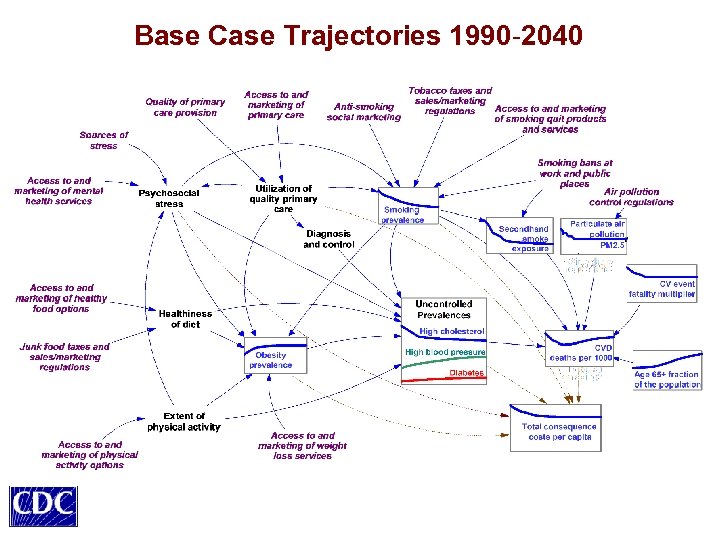
Base Case Trajectories 1990 -2040
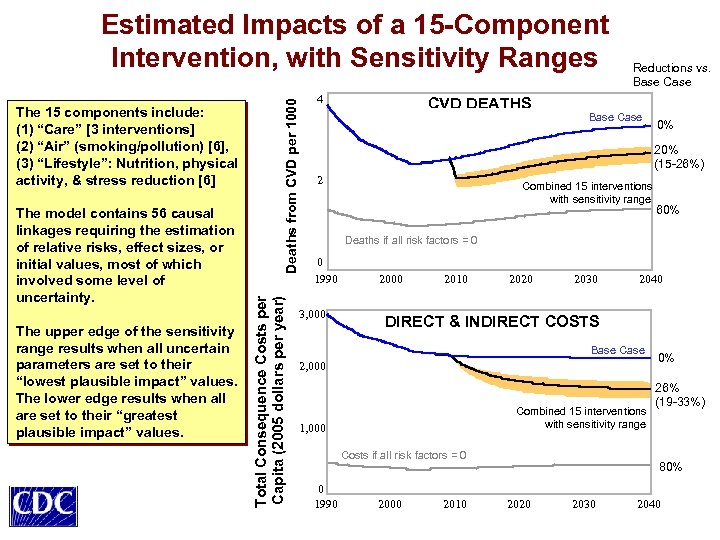
The model contains 56 causal linkages requiring the estimation of relative risks, effect sizes, or initial values, most of which involved some level of uncertainty. The upper edge of the sensitivity range results when all uncertain parameters are set to their “lowest plausible impact” values. The lower edge results when all are set to their “greatest plausible impact” values. Total Consequence Costs per Capita (2005 dollars per year) The 15 components include: (1) “Care” [3 interventions] (2) “Air” (smoking/pollution) [6], (3) “Lifestyle”: Nutrition, physical activity, & stress reduction [6] Deaths from CVD per 1000 Estimated Impacts of a 15 -Component Intervention, with Sensitivity Ranges 4 CVD DEATHS Reductions vs. Base Case 0% 20% (15 -26%) 2 Combined 15 interventions with sensitivity range 60% Deaths if all risk factors = 0 0 1990 3, 000 2010 2020 2030 2040 DIRECT & INDIRECT COSTS Base Case 2, 000 Combined 15 interventions with sensitivity range 1, 000 Costs if all risk factors = 0 0 1990 2000 2010 0% 26% (19 -33%) 80% 2020 2030 2040
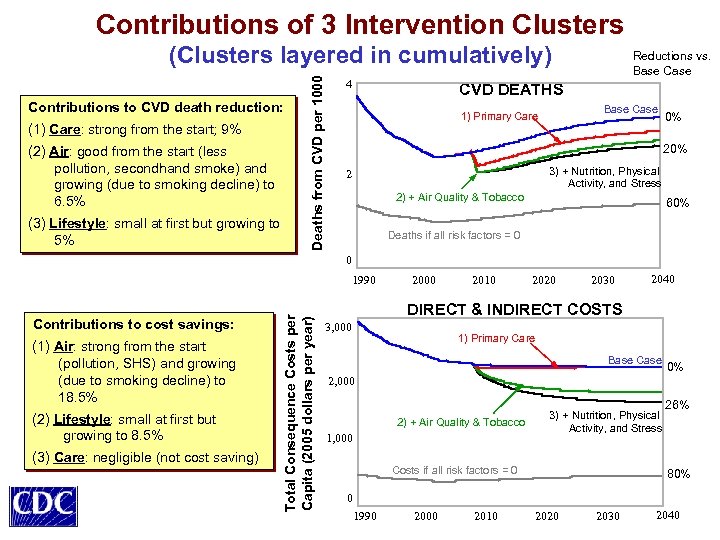
Contributions of 3 Intervention Clusters Contributions to CVD death reduction: (1) Care: strong from the start; 9% (2) Air: good from the start (less pollution, secondhand smoke) and growing (due to smoking decline) to 6. 5% (3) Lifestyle: small at first but growing to 5% Deaths from CVD per 1000 (Clusters layered in cumulatively) 4 Reductions vs. Base CVD DEATHS Base Case 1) Primary Care 0% 20% 3) + Nutrition, Physical Activity, and Stress 2 2) + Air Quality & Tobacco 60% Deaths if all risk factors = 0 0 Contributions to cost savings: (1) Air: strong from the start (pollution, SHS) and growing (due to smoking decline) to 18. 5% (2) Lifestyle: small at first but growing to 8. 5% (3) Care: negligible (not cost saving) Total Consequence Costs per Capita (2005 dollars per year) 1990 2000 2010 2020 2030 2040 DIRECT & INDIRECT COSTS 3, 000 1) Primary Care Base Case 0% 2, 000 2) + Air Quality & Tobacco 1, 000 3) + Nutrition, Physical Activity, and Stress Costs if all risk factors = 0 26% 80% 0 1990 2000 2010 2020 2030 2040
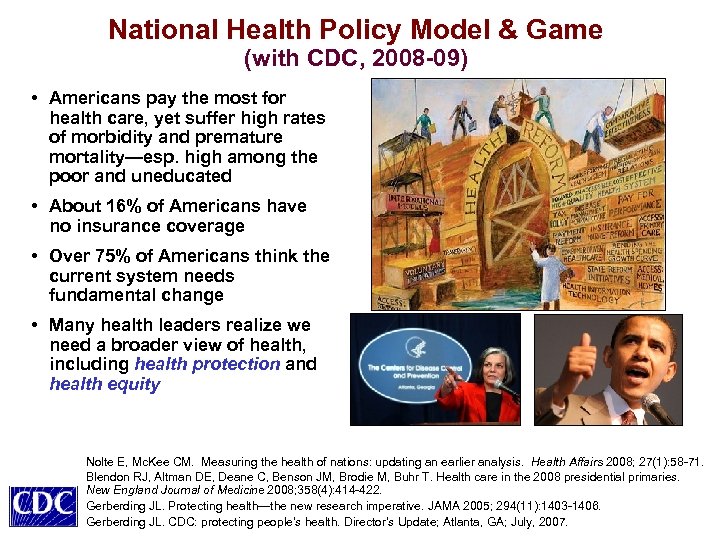
National Health Policy Model & Game (with CDC, 2008 -09) • Americans pay the most for health care, yet suffer high rates of morbidity and premature mortality—esp. high among the poor and uneducated • About 16% of Americans have no insurance coverage • Over 75% of Americans think the current system needs fundamental change • Many health leaders realize we need a broader view of health, including health protection and health equity Nolte E, Mc. Kee CM. Measuring the health of nations: updating an earlier analysis. Health Affairs 2008; 27(1): 58 -71. Blendon RJ, Altman DE, Deane C, Benson JM, Brodie M, Buhr T. Health care in the 2008 presidential primaries. New England Journal of Medicine 2008; 358(4): 414 -422. Gerberding JL. Protecting health—the new research imperative. JAMA 2005; 294(11): 1403 -1406. Gerberding JL. CDC: protecting people's health. Director's Update; Atlanta, GA; July, 2007.
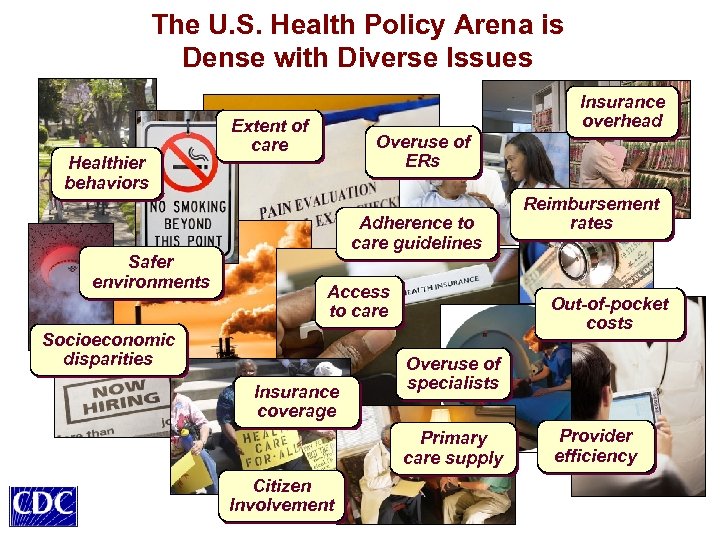
The U. S. Health Policy Arena is Dense with Diverse Issues Healthier behaviors Safer environments Insurance overhead Extent of care Overuse of ERs Adherence to care guidelines Access to care Socioeconomic disparities Insurance coverage Out-of-pocket costs Overuse of specialists Primary care supply Citizen Involvement Reimbursement rates Provider efficiency
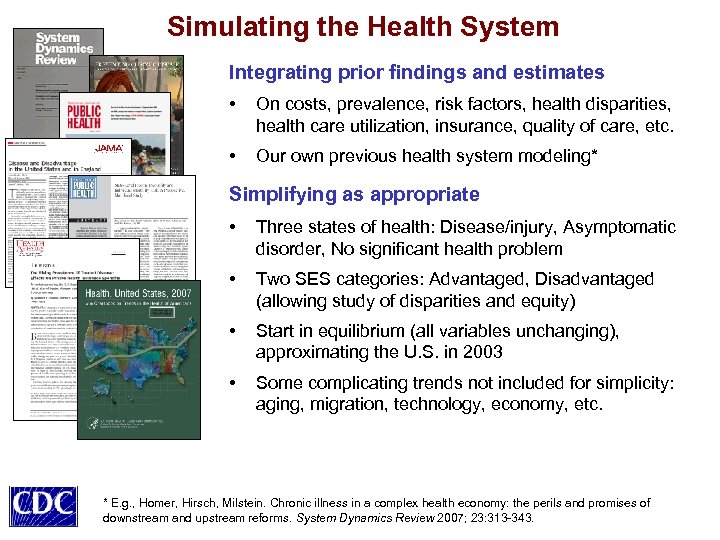
Simulating the Health System Integrating prior findings and estimates • On costs, prevalence, risk factors, health disparities, health care utilization, insurance, quality of care, etc. • Our own previous health system modeling* Simplifying as appropriate • Three states of health: Disease/injury, Asymptomatic disorder, No significant health problem • Two SES categories: Advantaged, Disadvantaged (allowing study of disparities and equity) • Start in equilibrium (all variables unchanging), approximating the U. S. in 2003 • Some complicating trends not included for simplicity: aging, migration, technology, economy, etc. * E. g. , Homer, Hirsch, Milstein. Chronic illness in a complex health economy: the perils and promises of downstream and upstream reforms. System Dynamics Review 2007; 23: 313 -343.
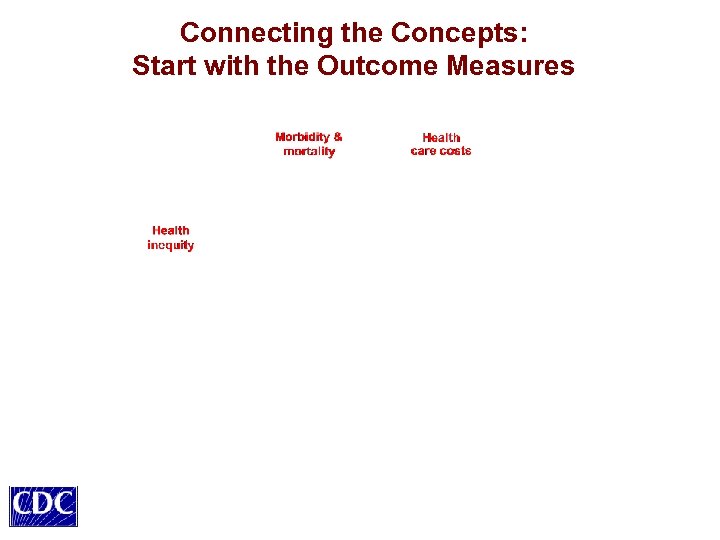
Connecting the Concepts: Start with the Outcome Measures
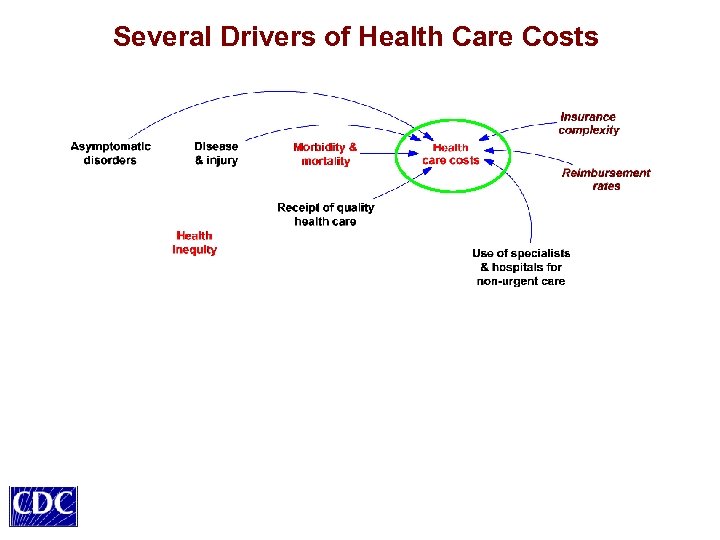
Several Drivers of Health Care Costs
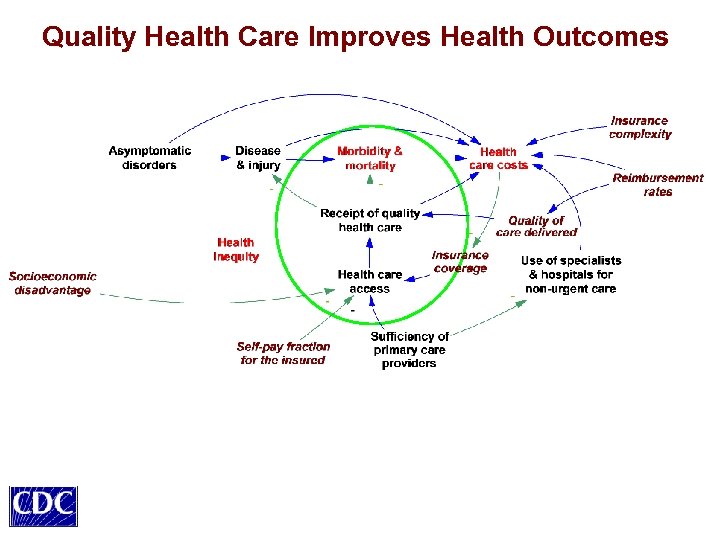
Quality Health Care Improves Health Outcomes
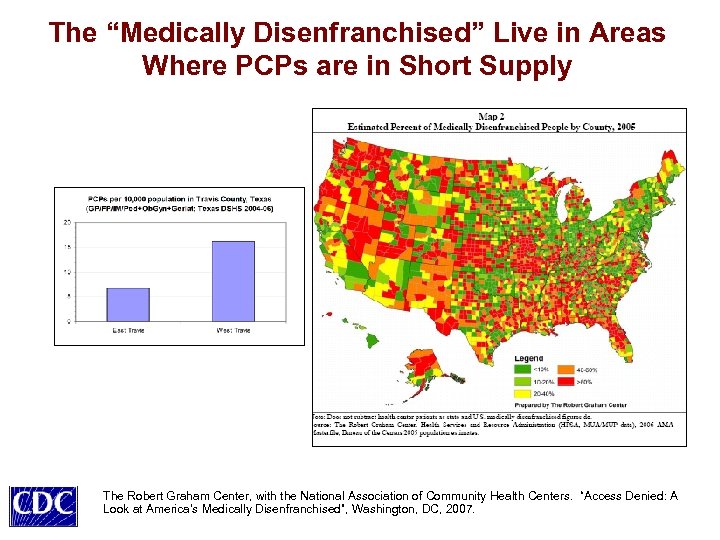
The “Medically Disenfranchised” Live in Areas Where PCPs are in Short Supply The Robert Graham Center, with the National Association of Community Health Centers. “Access Denied: A Look at America’s Medically Disenfranchised”, Washington, DC, 2007.
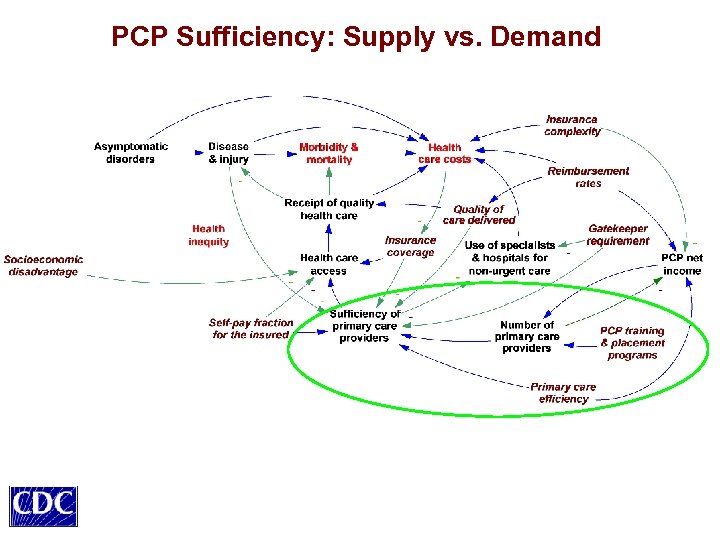
PCP Sufficiency: Supply vs. Demand
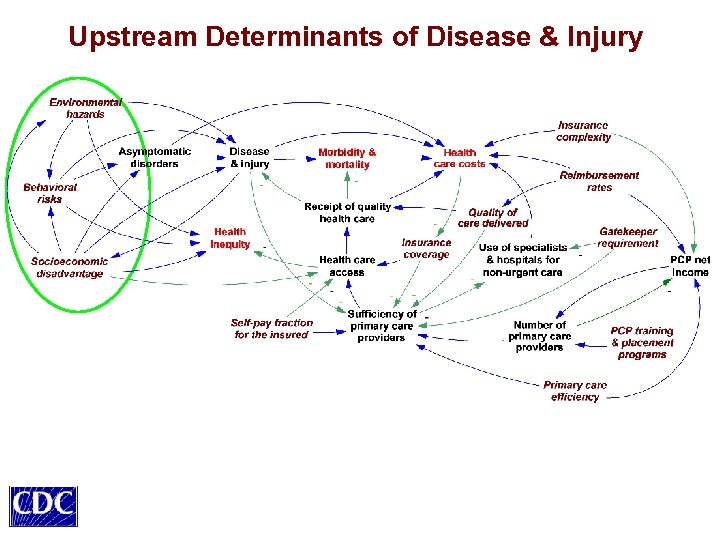
Upstream Determinants of Disease & Injury
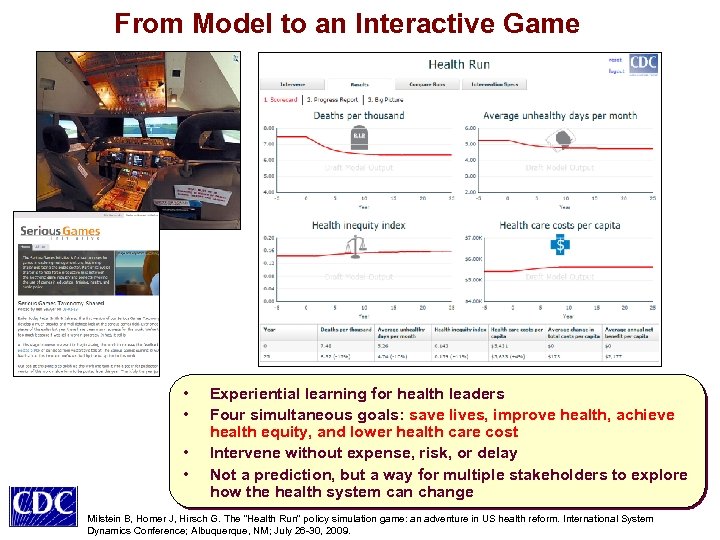
From Model to an Interactive Game • • Experiential learning for health leaders Four simultaneous goals: save lives, improve health, achieve health equity, and lower health care cost Intervene without expense, risk, or delay Not a prediction, but a way for multiple stakeholders to explore how the health system can change Milstein B, Homer J, Hirsch G. The "Health Run" policy simulation game: an adventure in US health reform. International System Dynamics Conference; Albuquerque, NM; July 26 -30, 2009.
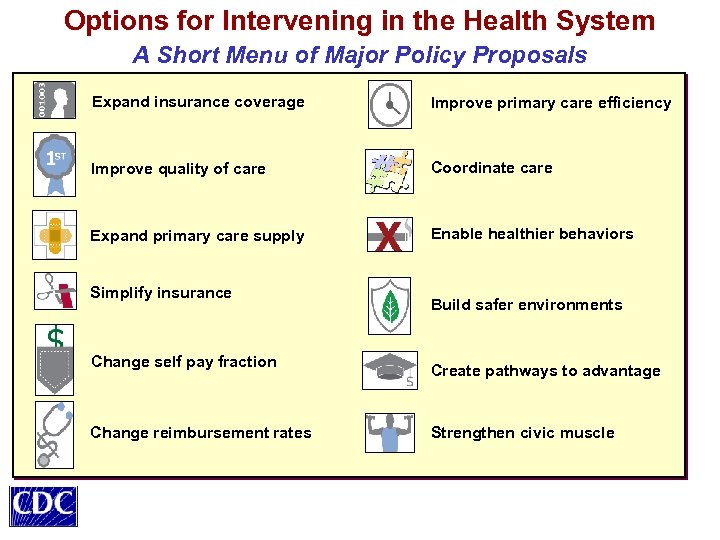
Options for Intervening in the Health System A Short Menu of Major Policy Proposals Expand insurance coverage Improve primary care efficiency Improve quality of care Coordinate care Expand primary care supply Enable healthier behaviors Simplify insurance Change self pay fraction Change reimbursement rates Build safer environments Create pathways to advantage Strengthen civic muscle
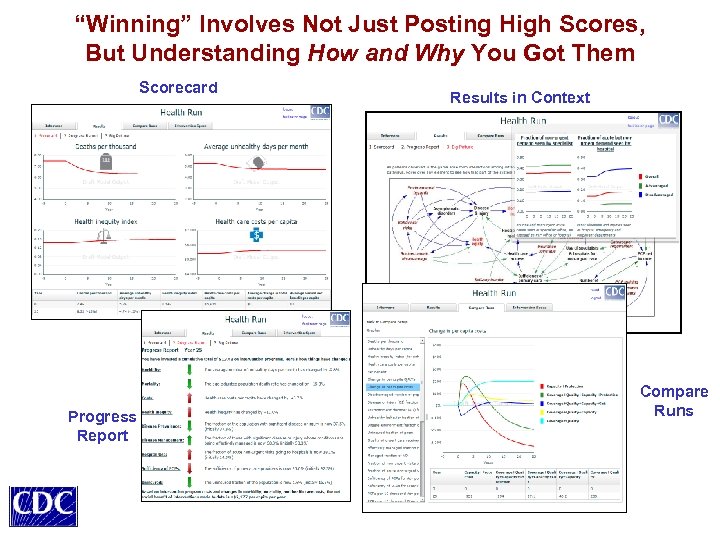
“Winning” Involves Not Just Posting High Scores, But Understanding How and Why You Got Them Scorecard Progress Report Results in Context Compare Runs
Some Policy Conclusions • Expanded coverage and improved quality would improve health but, if done alone, would raise costs and worsen equity • Expanding primary care capacity to eliminate shortages (esp. for the poor) would reduce costs and improve equity • Cutting reimbursement rates would reduce costs but worsen health outcomes • Upstream protection (behavioral and environmental remedies) would— increasingly over time—reduce costs, improve health, and improve equity Milstein B, Homer J, Hirsch G. Are coverage and quality enough? A dynamic systems approach to health policy. Draft paper currently in CDC clearance.
System Dynamics: Looking Further for the Key The world is complex, and many important things are not well-measured. (The key is not always under the light. ) SD allows for broader causal structures and types of data. Such models often lead to novel conclusions—and firm ones despite the uncertainties. This is why SD is a powerful approach to support planning and policymaking.
Скачать презентацию System Dynamics Modeling and Applications in Public Health
658ad172d134e47a978deb62c818efa6.ppt