 Скачать презентацию System Control Review for the CITRB National Polar-orbiting
32ed75c892a656aab8f7856ddd462fb6.ppt
- Количество слайдов: 32



System Control Review for the CITRB National Polar-orbiting Operational Environmental Satellite System (NPOESS) Ground System Jim Valenti Ground Systems Division Chief October 31, 2007
Agenda • • Introduction Basis for Investment Project Management Lessons Learned Risk Management IT Security Architectural Compliance Administrative/Departmental Goals and Initiatives 1
Introduction • This presentation addresses the Ground System component of the National Polar-orbiting Operational Environmental Satellite System (NPOESS) • The NPOESS Ground System – provides satellite command control for the NPOESS Preparatory Project (NPP) and the first two NPOESS satellites – provides for the acquisition and reception of environmental data from NPP and NPOESS satellite instruments – processes and displays NPP and NPOESS satellite health and safety information – processes information from NPP and NPOESS satellite instruments – generates environmental products and distributes them to central processing centers (e. g. NPOESS Data Exploitation (NDE)/Environmental Satellite Processing Center (ESPC), Air Force Weather Agency (AFWA)) – is NOT the cause of NPOESS cost growth and schedule delays 2
Introduction • Polar-orbiting Satellites – Provide observations supporting NOAA’s mission to understand predict the environment – Primarily benefit Weather & Water but support all 4 NOAA Goals – Support NOAA’s Annual Guidance Memorandum (AGM) priorities through interaction with other agencies, data stewardship, and providing data vital to an Integrated Earth Observation System • Polar Operational Environmental Satellite (POES) has been NOAA’s polar-orbiting satellite system for past 40 years – Defense Meteorological Satellite Program (DMSP) has been the USAF’s • NPOESS is the replacement system for POES/DMSP 3
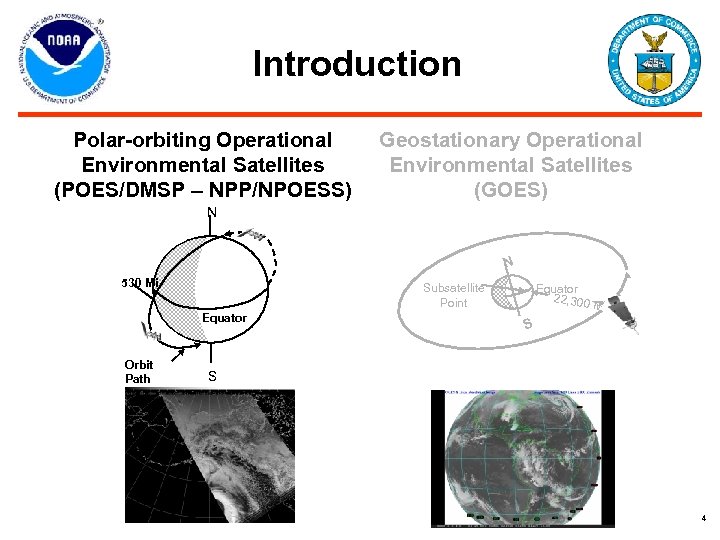
Introduction Polar-orbiting Operational Environmental Satellites (POES/DMSP – NPP/NPOESS) Geostationary Operational Environmental Satellites (GOES) N N 530 Mi Subsatellite Point Equator Orbit Path Equator 22, 300 Mi S S 4
Introduction • In May 1994, Presidential Decision Directive NSTC-2 converged the existing polar systems from the Department of Commerce (DOC) and Department of Defense (Do. D) to create NPOESS • NPOESS is a polar satellite system used to monitor global environmental conditions and collect and disseminate data related to: weather, atmosphere, oceans, land near-space environment • The NPOESS program is managed by the tri-agency Integrated Program Office (IPO), employing personnel from DOC, Do. D and NASA • NPOESS uses a single Do. D contract for a turn-key system comprised of space systems, ground systems, and operations • NPOESS Ground System maintains health and safety of NPOESS Preparatory Project (NPP) and NPOESS satellites and generates environmental products 5
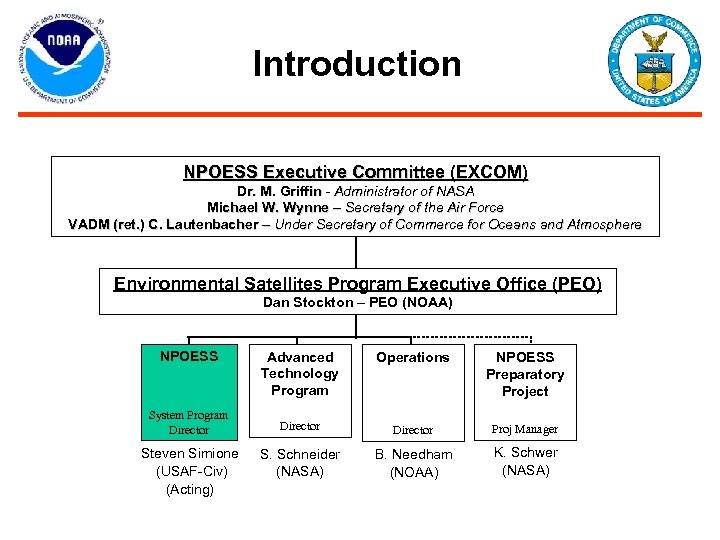
Introduction NPOESS Executive Committee (EXCOM) Dr. M. Griffin - Administrator of NASA Michael W. Wynne – Secretary of the Air Force VADM (ret. ) C. Lautenbacher – Under Secretary of Commerce for Oceans and Atmosphere Environmental Satellites Program Executive Office (PEO) Dan Stockton – PEO (NOAA) NPOESS System Program Director Steven Simione (USAF-Civ) (Acting) Advanced Technology Program Operations NPOESS Preparatory Project Director Proj Manager S. Schneider (NASA) B. Needham (NOAA) K. Schwer (NASA)
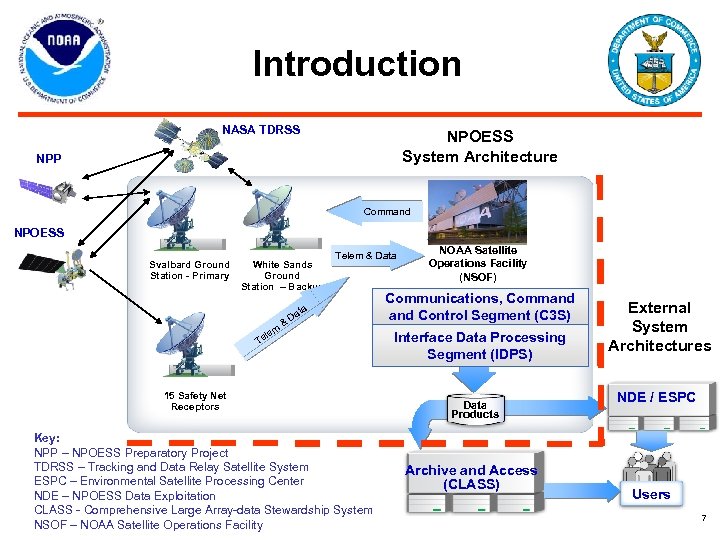
Introduction NASA TDRSS NPOESS System Architecture NPP Command NPOESS Svalbard Ground Station - Primary White Sands Ground Station – Backup lem & Telem & Data D Te 15 Safety Net Receptors Key: NPP – NPOESS Preparatory Project TDRSS – Tracking and Data Relay Satellite System ESPC – Environmental Satellite Processing Center NDE – NPOESS Data Exploitation CLASS - Comprehensive Large Array-data Stewardship System NSOF – NOAA Satellite Operations Facility (NSOF) Communications, Command Control Segment (C 3 S) Interface Data Processing Segment (IDPS) Data Products Archive and Access (CLASS) External System Architectures NDE / ESPC Users 7
Introduction • Ground System IT Elements – Antennas/Radio Frequency Systems • Send/receive satellite data signals for satellite command control • Receive satellite data signals for sensor data collection – Telemetry and Command/Instrument Support • Command control satellite and monitor health and safety – Product Generation • Ingest and process raw sensor data into common set of “value-added“ environmental data records (EDRs) for DOC and Do. D – Communications • Transmit and receive data securely over satellite and fiber-optics networks • Distribute EDRs to agency-specific environmental product generation and dissemination systems 8
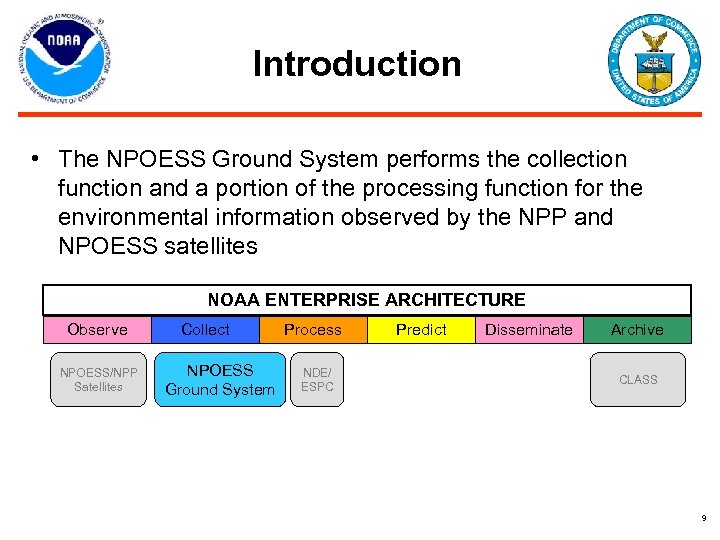
Introduction • The NPOESS Ground System performs the collection function and a portion of the processing function for the environmental information observed by the NPP and NPOESS satellites NOAA ENTERPRISE ARCHITECTURE Observe NPOESS/NPP Satellites Collect NPOESS Ground System Process NDE/ ESPC Predict Disseminate Archive CLASS 9
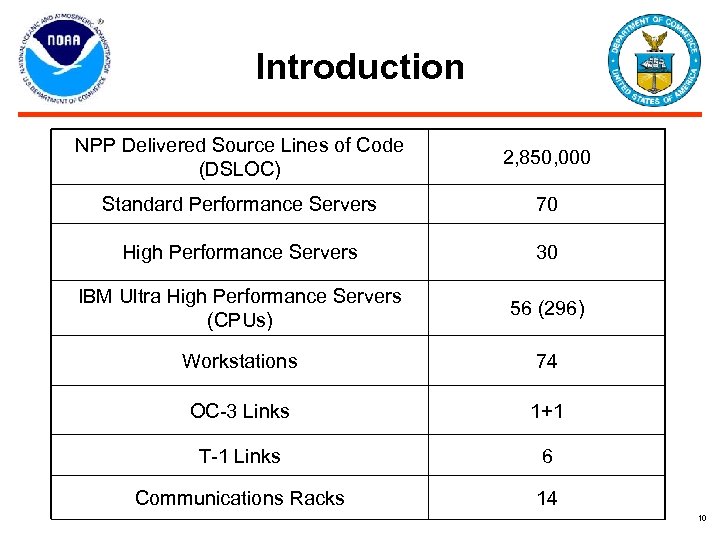
Introduction NPP Delivered Source Lines of Code (DSLOC) 2, 850, 000 Standard Performance Servers 70 High Performance Servers 30 IBM Ultra High Performance Servers (CPUs) 56 (296) Workstations 74 OC-3 Links 1+1 T-1 Links 6 Communications Racks 14 10
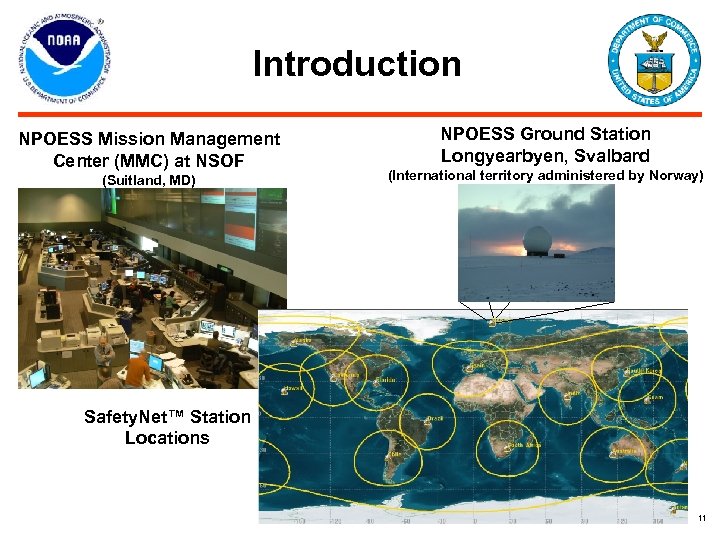
Introduction NPOESS Mission Management Center (MMC) at NSOF (Suitland, MD) NPOESS Ground Station Longyearbyen, Svalbard (International territory administered by Norway) Safety. Net™ Station Locations 11
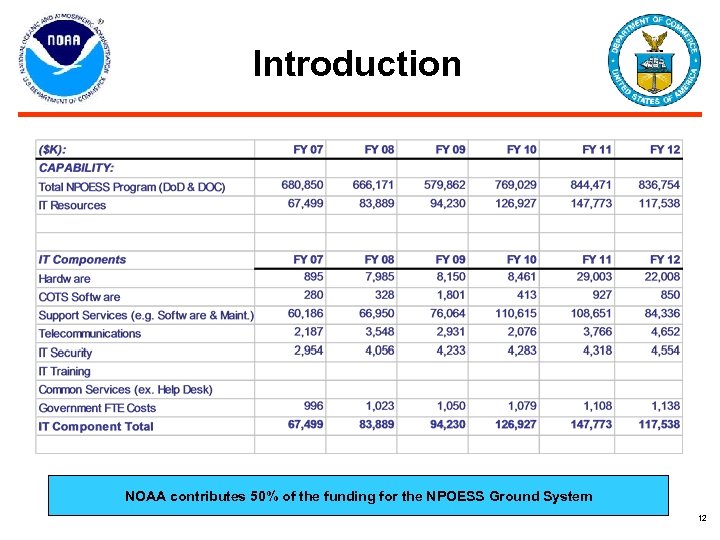
Introduction NOAA contributes 50% of the funding for the NPOESS Ground System 12
Basis for Investment • • • The NPOESS Ground System provides the infrastructure necessary to support 24 x 7 command control of the NPP and NPOESS satellites; the collection of the environmental data observed by NPP and NPOESS; and distribution of environmental data records to NOAA and the US military. NPOESS, when operational, will collect environmental data at rate over 30 times that of current systems and it will distribute it in 1/6 the time of current systems Current NOAA and USAF ground systems are incapable of supporting NPOESS data volumes and latency 13
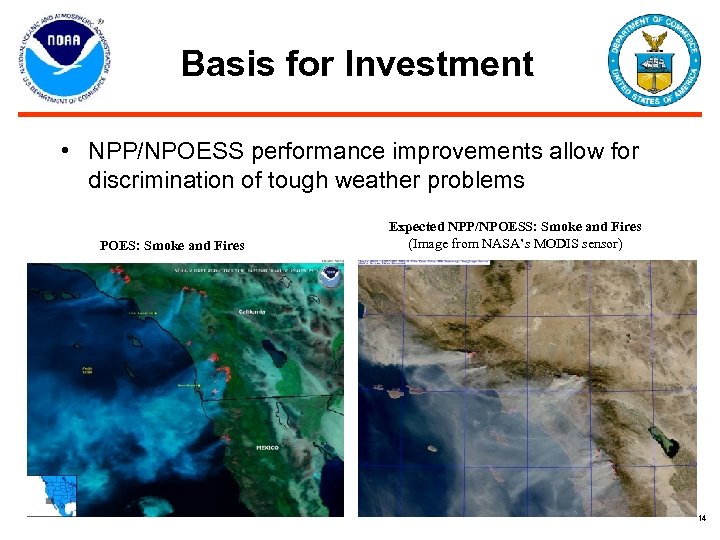
Basis for Investment • NPP/NPOESS performance improvements allow for discrimination of tough weather problems POES: Smoke and Fires Expected NPP/NPOESS: Smoke and Fires (Image from NASA’s MODIS sensor) 14
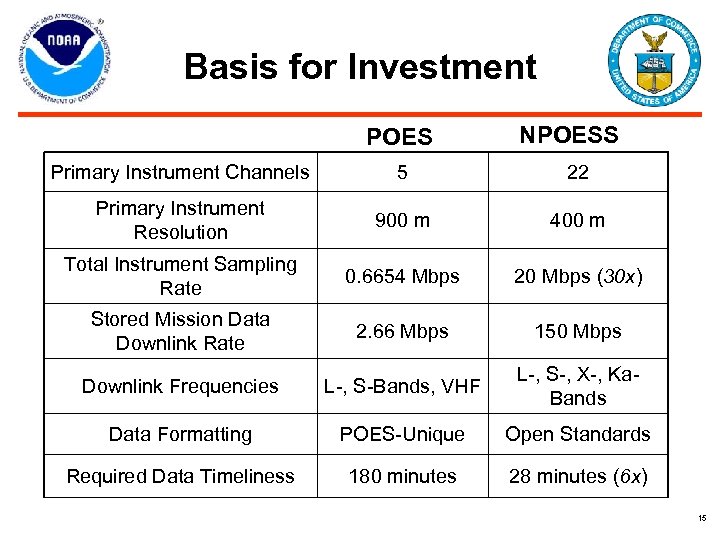
Basis for Investment POES NPOESS Primary Instrument Channels 5 22 Primary Instrument Resolution 900 m 400 m Total Instrument Sampling Rate 0. 6654 Mbps 20 Mbps (30 x) Stored Mission Data Downlink Rate 2. 66 Mbps 150 Mbps Downlink Frequencies L-, S-Bands, VHF L-, S-, X-, Ka. Bands Data Formatting POES-Unique Open Standards Required Data Timeliness 180 minutes 28 minutes (6 x) 15
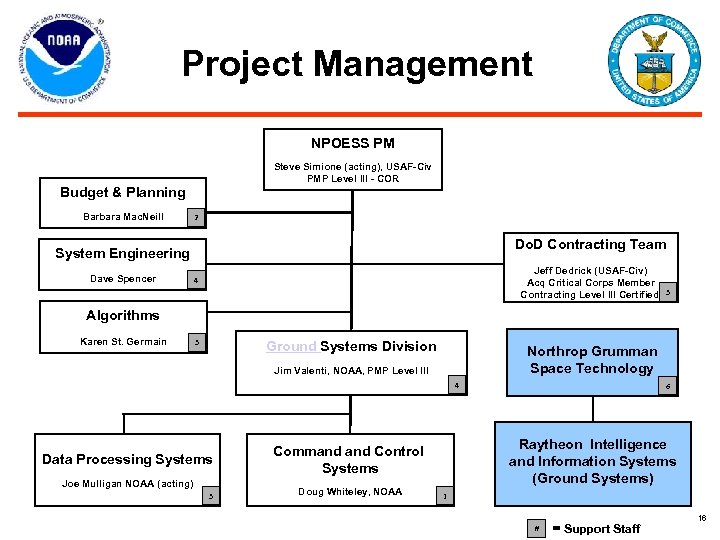
Project Management NPOESS PM Steve Simione (acting), USAF-Civ PMP Level III - COR Budget & Planning Barbara Mac. Neill 2 Do. D Contracting Team System Engineering Dave Spencer Jeff Dedrick (USAF-Civ) Acq Critical Corps Member Contracting Level III Certified 4 3 Algorithms Karen St. Germain 3 Ground Systems Division Northrop Grumman Space Technology Jim Valenti, NOAA, PMP Level III 4 Data Processing Systems Joe Mulligan NOAA (acting) 3 Raytheon Intelligence and Information Systems (Ground Systems) Command Control Systems Doug Whiteley, NOAA 6 1 # = Support Staff 16
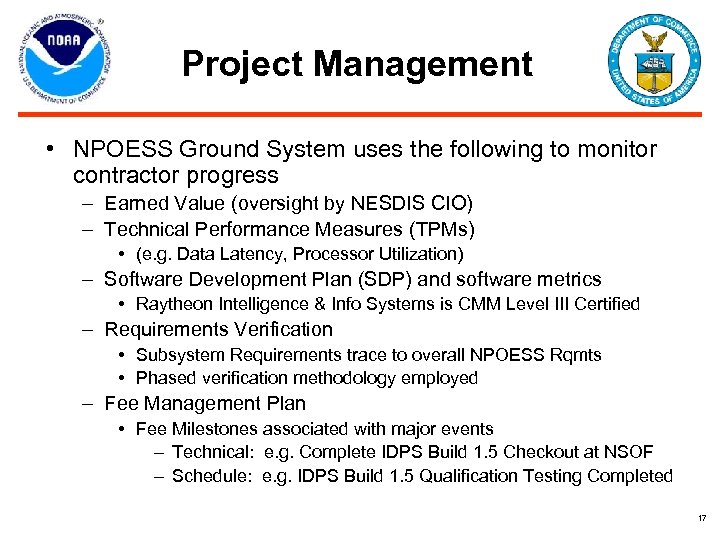
Project Management • NPOESS Ground System uses the following to monitor contractor progress – Earned Value (oversight by NESDIS CIO) – Technical Performance Measures (TPMs) • (e. g. Data Latency, Processor Utilization) – Software Development Plan (SDP) and software metrics • Raytheon Intelligence & Info Systems is CMM Level III Certified – Requirements Verification • Subsystem Requirements trace to overall NPOESS Rqmts • Phased verification methodology employed – Fee Management Plan • Fee Milestones associated with major events – Technical: e. g. Complete IDPS Build 1. 5 Checkout at NSOF – Schedule: e. g. IDPS Build 1. 5 Qualification Testing Completed 17
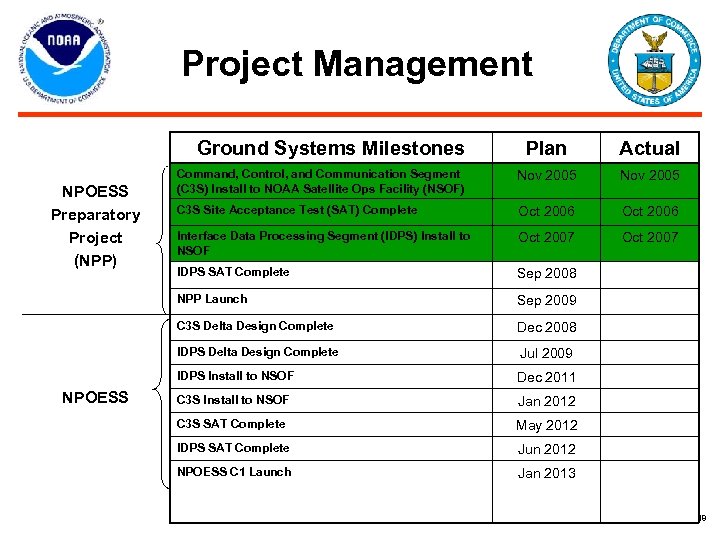
Project Management Ground Systems Milestones Command, Control, and Communication Segment (C 3 S) Install to NOAA Satellite Ops Facility (NSOF) Nov 2005 C 3 S Site Acceptance Test (SAT) Complete Oct 2006 Interface Data Processing Segment (IDPS) Install to NSOF Oct 2007 IDPS SAT Complete Sep 2008 Sep 2009 C 3 S Delta Design Complete Dec 2008 IDPS Delta Design Complete Jul 2009 IDPS Install to NSOF NPOESS Actual NPP Launch NPOESS Preparatory Project (NPP) Plan Dec 2011 C 3 S Install to NSOF Jan 2012 C 3 S SAT Complete May 2012 IDPS SAT Complete Jun 2012 NPOESS C 1 Launch Jan 2013 18
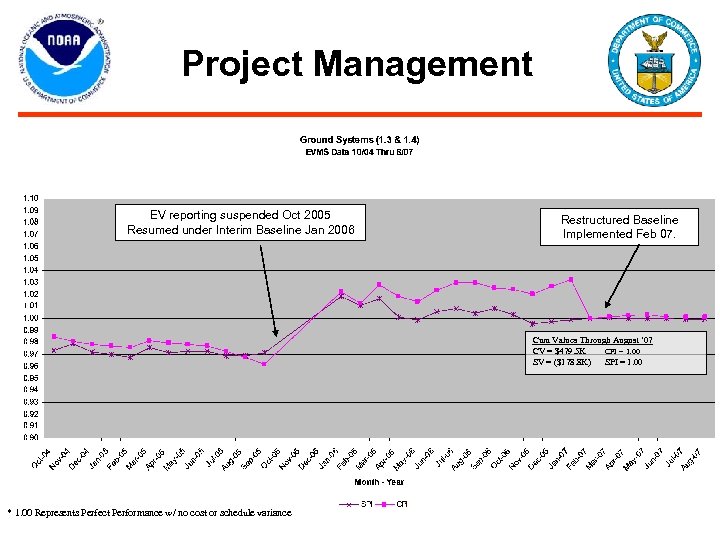
Project Management EV reporting suspended Oct 2005 Resumed under Interim Baseline Jan 2006 Restructured Baseline Implemented Feb 07. Cum Values Through August ‘ 07 CV = $479. 5 K CPI = 1. 00 SV = ($178. 8 K) SPI = 1. 00 * 1. 00 Represents Perfect Performance w/ no cost or schedule variance
Lessons Learned • Understand ramifications of contractor teaming arrangements as established by the acquisition strategy – Industry leaders may be locked out • Employ a rigorous test program to drive down risk – Feed results into future work (e. g. IDPS integration) – Seek out risk-reduction activities (e. g. Coriolis operations) • Understand the transition from source-selection to contract execution – NPOESS Ground Systems had adequate and appropriate program office staffing in place for this 20
Risk Management • Risk management plans are used to manage the development of the NPOESS Ground System • Plans detail processes for risk identification, analysis, monitoring, and mitigation – Risk lists and matrices are maintained for both Command & Control and Data Processing Systems – Risks reviewed monthly by the NPOESS Risk Management Board • Risks are current as of the September 2007 Program Management Review 21
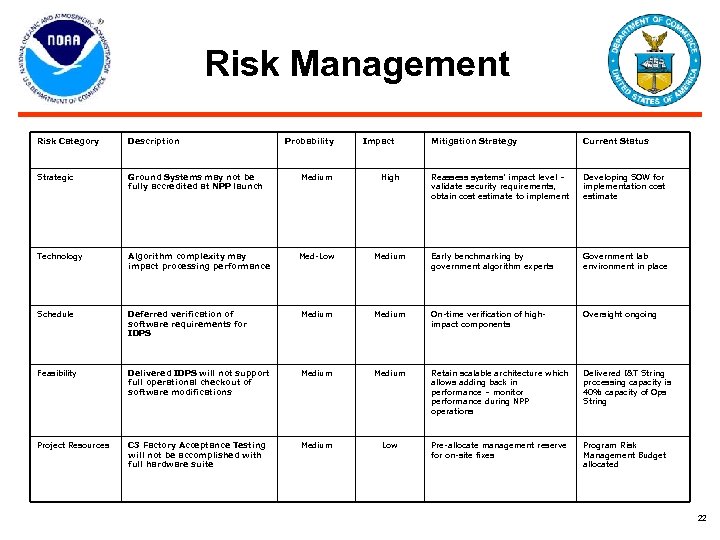
Risk Management Risk Category Description Probability Impact Mitigation Strategy Current Status Strategic Ground Systems may not be fully accredited at NPP launch Medium High Reassess systems’ impact level – validate security requirements, obtain cost estimate to implement Developing SOW for implementation cost estimate Technology Algorithm complexity may impact processing performance Med-Low Medium Early benchmarking by government algorithm experts Government lab environment in place Schedule Deferred verification of software requirements for IDPS Medium On-time verification of highimpact components Oversight ongoing Feasibility Delivered IDPS will not support full operational checkout of software modifications Medium Retain scalable architecture which allows adding back in performance – monitor performance during NPP operations Delivered I&T String processing capacity is 40% capacity of Ops String Project Resources C 3 Factory Acceptance Testing will not be accomplished with full hardware suite Medium Low Pre-allocate management reserve for on-site fixes Program Risk Management Budget allocated 22
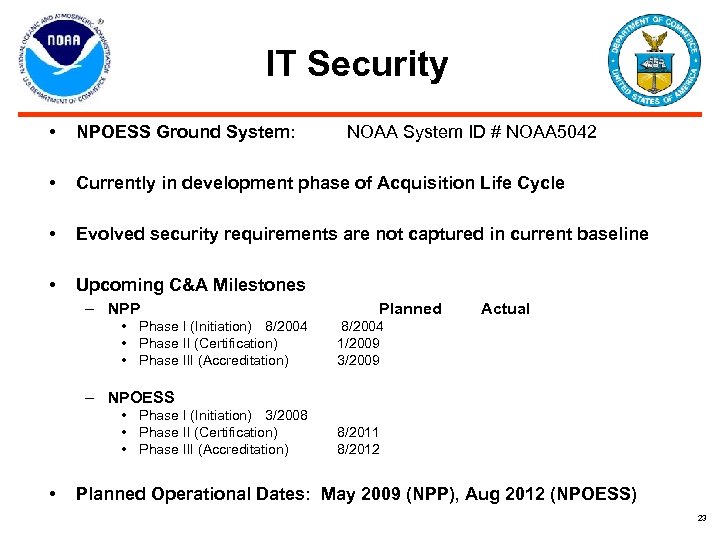
IT Security • NPOESS Ground System: • Currently in development phase of Acquisition Life Cycle • Evolved security requirements are not captured in current baseline • Upcoming C&A Milestones – NPP • Phase I (Initiation) 8/2004 • Phase II (Certification) • Phase III (Accreditation) NOAA System ID # NOAA 5042 Planned Actual 8/2004 1/2009 3/2009 – NPOESS • Phase I (Initiation) 3/2008 • Phase II (Certification) • Phase III (Accreditation) • 8/2011 8/2012 Planned Operational Dates: May 2009 (NPP), Aug 2012 (NPOESS) 23
Architectural Compliance • The NPOESS Ground System is integrated with the NOAA Enterprise Architecture • Collaboration on Achieving Enterprise Solutions – Working with NDE/ESPC and CLASS to establish common interfaces and communications protocols – Sharing design features and lessons learned with GOES-R Program • Reuse of existing assets – Mission Management Center (MMC) and Interface Data Processing Segment (IDPS) use in-situ communications infrastructure at NSOF – 85% of MMC software is reused code • Usage of Standards – Hierarchical Data Format Version 5 (HDF 5) – Consultative Committee For Space Data Systems (CCSDS) 701. 0 -B-2 – American Institute of Aeronautics and Astronautics (AIAA) R-023 A-1995 24
Administration/Department Goals and Initiatives • President’s Management Agenda – E-Gov Federal Enterprise Architecture • Combining civilian and Do. D systems • Capabilities supporting other agencies (Do. D, NASA, DOC) • DOC Strategic Goals – Goal Two: Foster Science and Technological Leadership • Working with leading institutions to advance environmental science – Goal Three: Observe, protect, and manage the Earth's resources to promote environmental stewardship • Improve warning and forecasting of weather, water, and climate • NOAA Strategic Goals: – Understand Climate variability and change to enhance society’s ability to plan and respond – Serve Society's Need for Weather and Water Information 25
NOAA Information Technology Review Board National Polar-orbiting Operational Environmental Satellite System – Ground System Segment System Control Review DPA REVIEW FUNDING § GOAL: Satellite § PROGRAM: Polar Satellite Acquisition § EXHIBIT 300: NOAA/NESDIS/ NPOESS Ground System § TITLE OF ACQUISITION: National Polar-orbiting Operational Environmental Satellite System (NPOESS) § TYPE OF ACQUISITION: Competitive § PROGRAM MANAGER: Steve Simione (USAF-Civ) § CONTRACTING OFFICER: Jeff Dedrick (USAF-Civ) § COR: Steve Simione (USAF-Civ) CONTRACTING LANGUAGE IT SECURITY § USAF Security Standards – Do. DI 5200. 40 DITSCAP § NPP § Do. DD 5200. 28, “Security Requirements for Automated Information Systems” § NPOESS § Do. DD 8500. 1, “Information Assurance (IA)” § Do. DI 8500. 2, “Information Assurance (IA) implementation” EVMS § CPI = 1. 00 § SPI = 1. 00 PERFORMANCE BASED CONTRACTING § This is a performance based contract. IT SECURITY, MILESTONES & RISKS IT SECURITY • C&A Name, ID Number, and Year of Approval : NOAA 5042 – N/A (still in acquisition phase) • New system C&A – DAA is TBD • C&A Sensitivity Level : TBD MILESTONES § August 22, 2002 – Phase “C” Key Decision Point Approval § June 5, 2006 – NPOESS Acquisition Decision Memorandum signed § March 1, 2007 – New program baseline established § July 25, 2007 – Contract restructure completed RISKS § IT Governance process re-evaluation 26
BACK-UP SLIDES 27
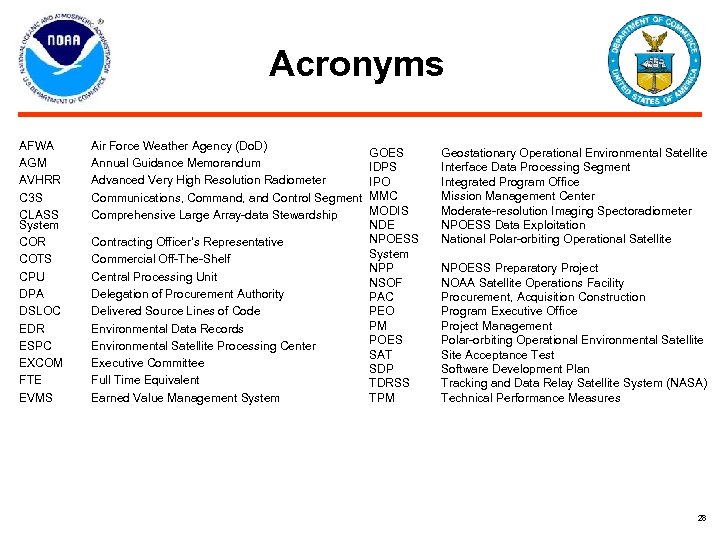
Acronyms AFWA AGM AVHRR C 3 S CLASS System COR COTS CPU DPA DSLOC EDR ESPC EXCOM FTE EVMS Air Force Weather Agency (Do. D) Annual Guidance Memorandum Advanced Very High Resolution Radiometer Communications, Command, and Control Segment Comprehensive Large Array-data Stewardship Contracting Officer’s Representative Commercial Off-The-Shelf Central Processing Unit Delegation of Procurement Authority Delivered Source Lines of Code Environmental Data Records Environmental Satellite Processing Center Executive Committee Full Time Equivalent Earned Value Management System GOES IDPS IPO MMC MODIS NDE NPOESS System NPP NSOF PAC PEO PM POES SAT SDP TDRSS TPM Geostationary Operational Environmental Satellite Interface Data Processing Segment Integrated Program Office Mission Management Center Moderate-resolution Imaging Spectoradiometer NPOESS Data Exploitation National Polar-orbiting Operational Satellite NPOESS Preparatory Project NOAA Satellite Operations Facility Procurement, Acquisition Construction Program Executive Office Project Management Polar-orbiting Operational Environmental Satellite Site Acceptance Test Software Development Plan Tracking and Data Relay Satellite System (NASA) Technical Performance Measures 28
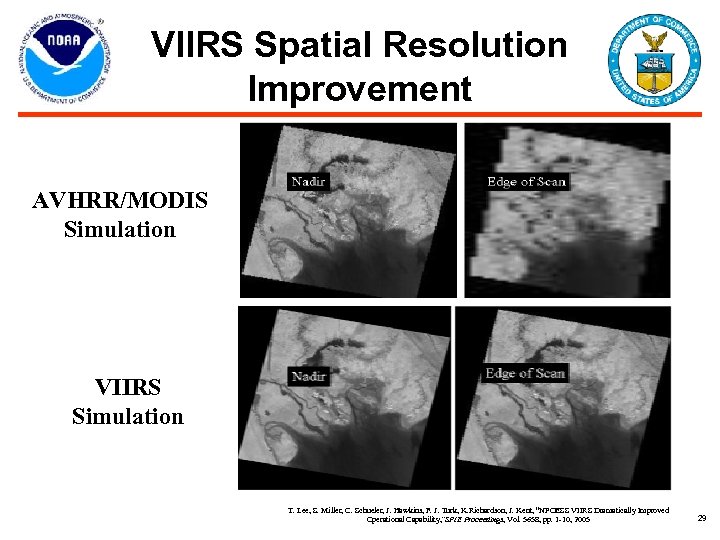
VIIRS Spatial Resolution Improvement AVHRR/MODIS Simulation VIIRS Simulation T. Lee, S. Miller, C. Schueler, J. Hawkins, F. J. Turk, K. Richardson, J. Kent, “NPOESS VIIRS Dramatically Improved Operational Capability, ”SPIE Proceedings, Vol. 5658, pp. 1 -10, 2005 29
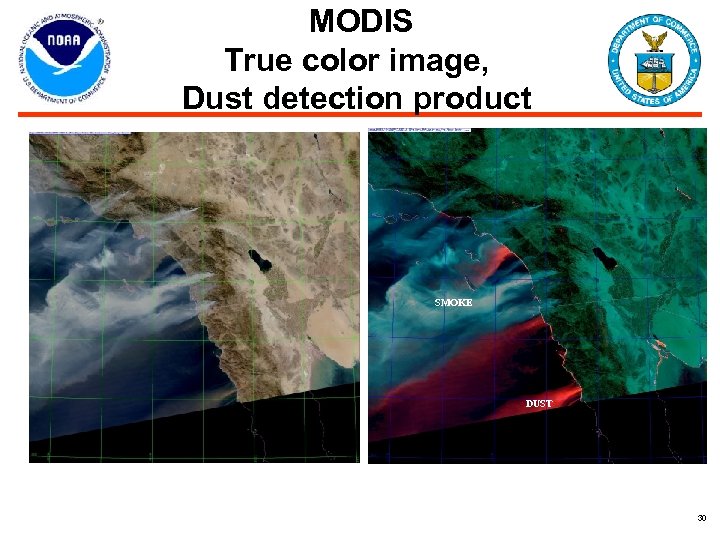
MODIS True color image, Dust detection product SMOKE DUST 30
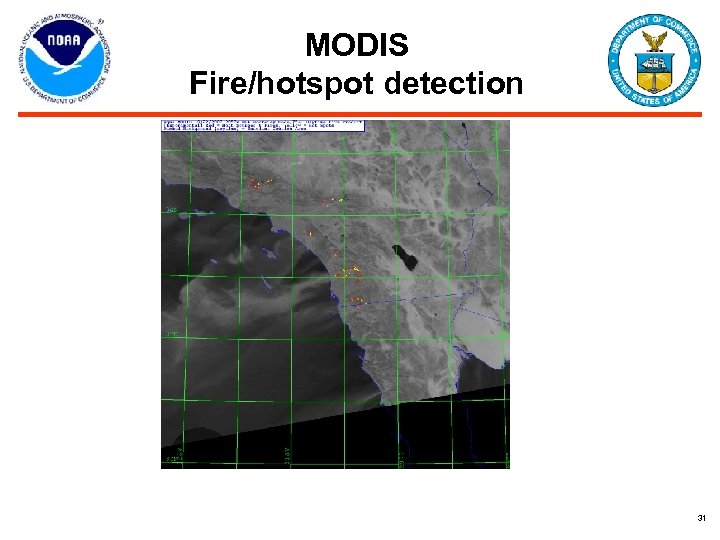
MODIS Fire/hotspot detection 31
Скачать презентацию System Control Review for the CITRB National Polar-orbiting
32ed75c892a656aab8f7856ddd462fb6.ppt