 Скачать презентацию Synthetic killer circuits in bacteria Lingchong You Duke
92c8b4e869eb11dc824c350cd805889b.ppt
- Количество слайдов: 26




Synthetic killer circuits in bacteria Lingchong You Duke University www. duke. edu/~you DAC 44@ San Diego 2007. 06. 07
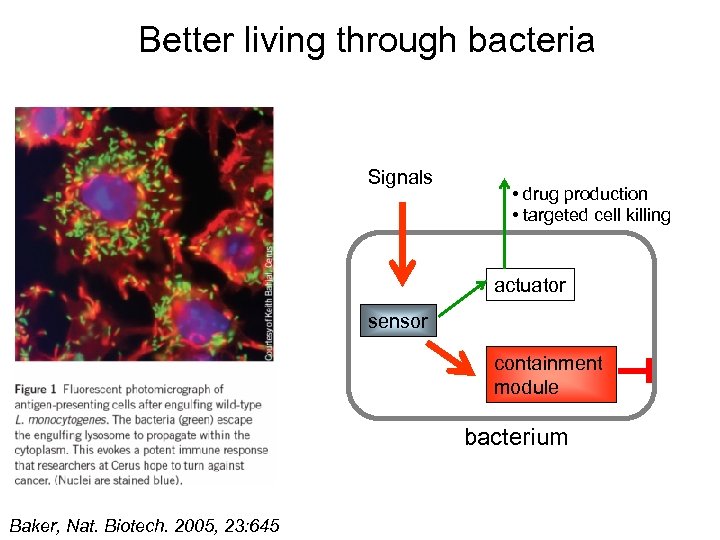
Better living through bacteria Signals • drug production • targeted cell killing actuator sensor containment module bacterium Baker, Nat. Biotech. 2005, 23: 645
Design strategy: Coordinating cell killing by communication Prototypes • Population controller • Predator-prey system Goal: Precise control of bacterial dynamics – growth, death, and aggregation
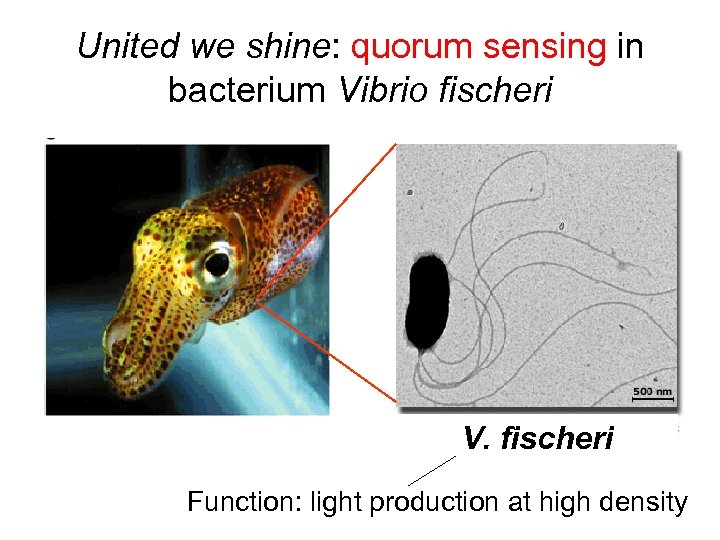
United we shine: quorum sensing in bacterium Vibrio fischeri V. fischeri Function: light production at high density
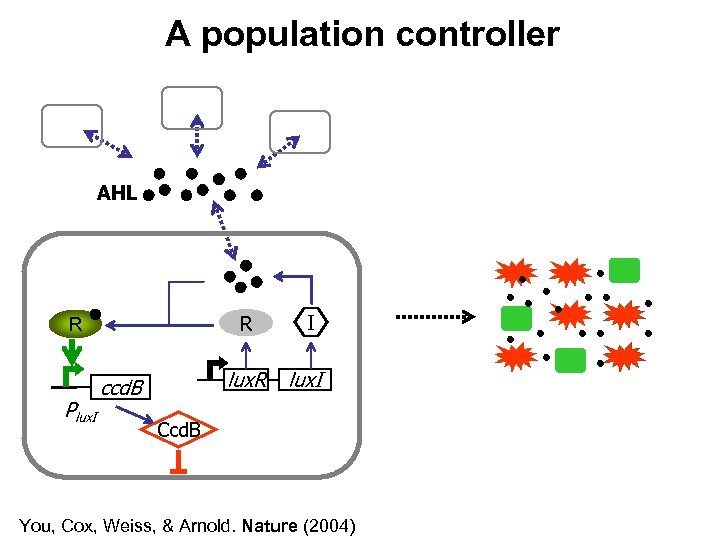
A population controller AHL R R Plux. I lux. R ccd. B I lux. I Ccd. B You, Cox, Weiss, & Arnold. Nature (2004)
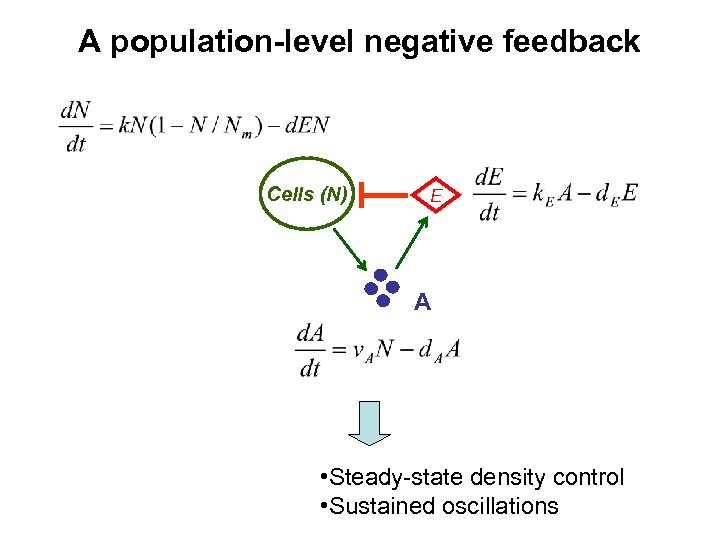
A population-level negative feedback Cells (N) E A • Steady-state density control • Sustained oscillations
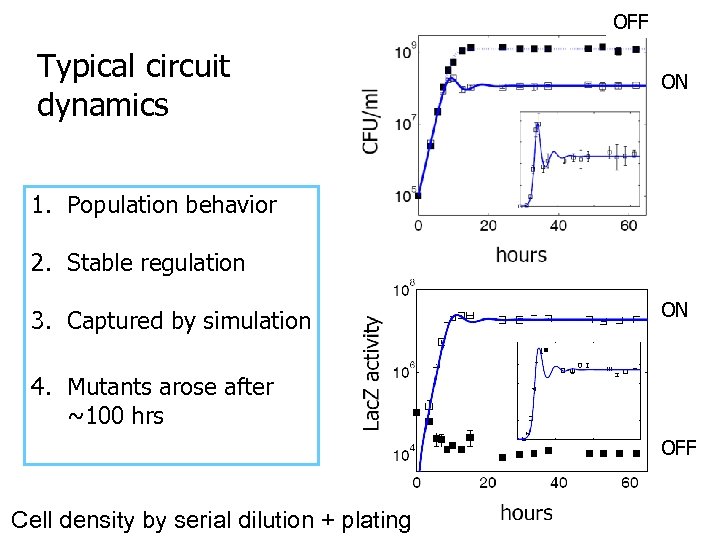
OFF Typical circuit dynamics ON 1. Population behavior 2. Stable regulation 3. Captured by simulation ON 4. Mutants arose after ~100 hrs OFF Cell density by serial dilution + plating
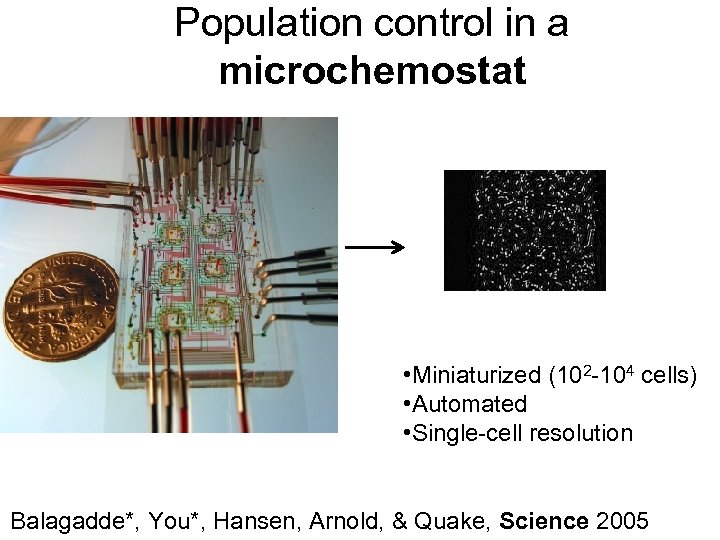
Population control in a microchemostat • Miniaturized (102 -104 cells) • Automated • Single-cell resolution Balagadde*, You*, Hansen, Arnold, & Quake, Science 2005
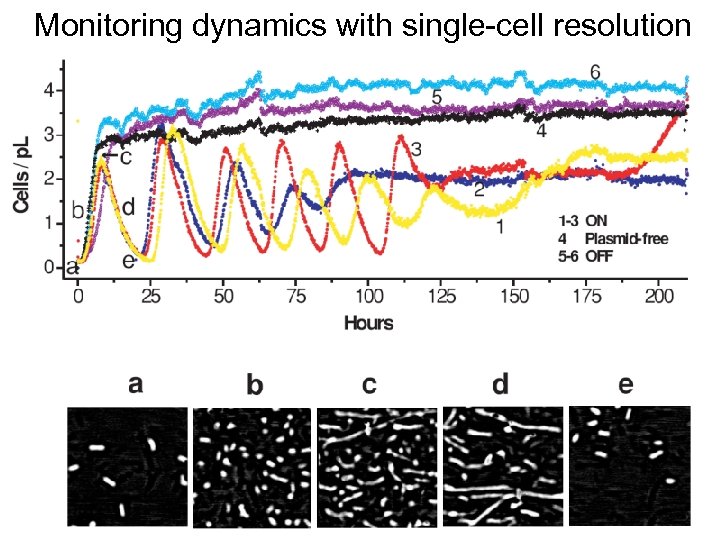
Monitoring dynamics with single-cell resolution
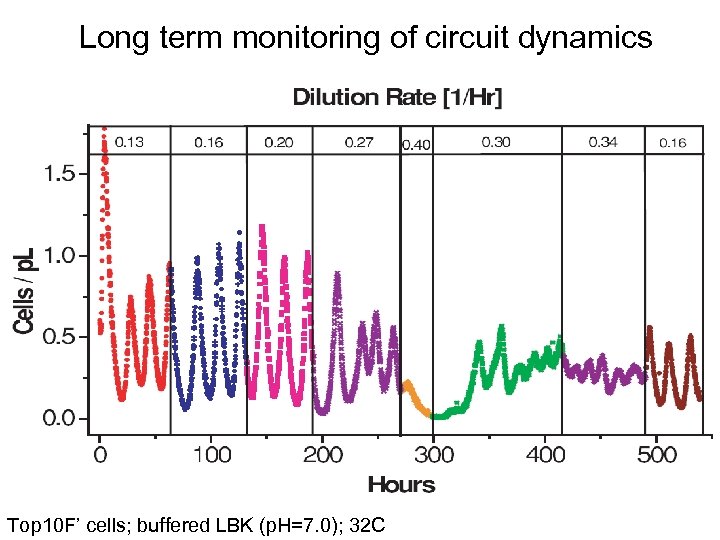
Long term monitoring of circuit dynamics Top 10 F’ cells; buffered LBK (p. H=7. 0); 32 C
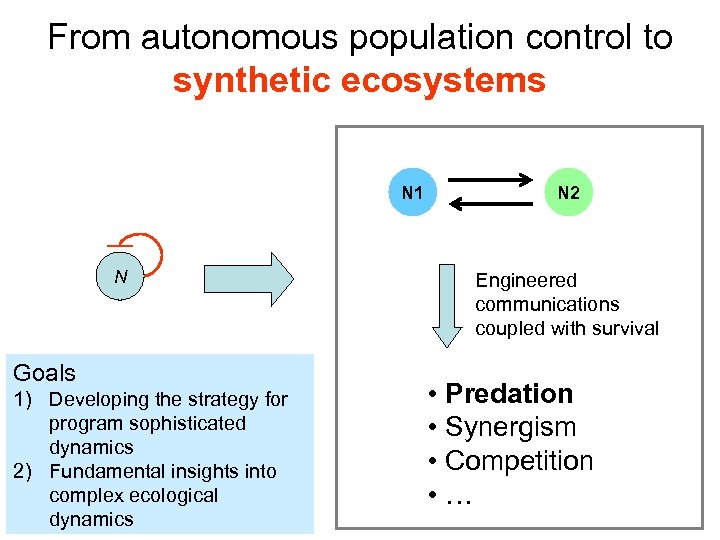
From autonomous population control to synthetic ecosystems N 1 N Goals 1) Developing the strategy for program sophisticated dynamics 2) Fundamental insights into complex ecological dynamics N 2 Engineered communications coupled with survival • Predation • Synergism • Competition • …
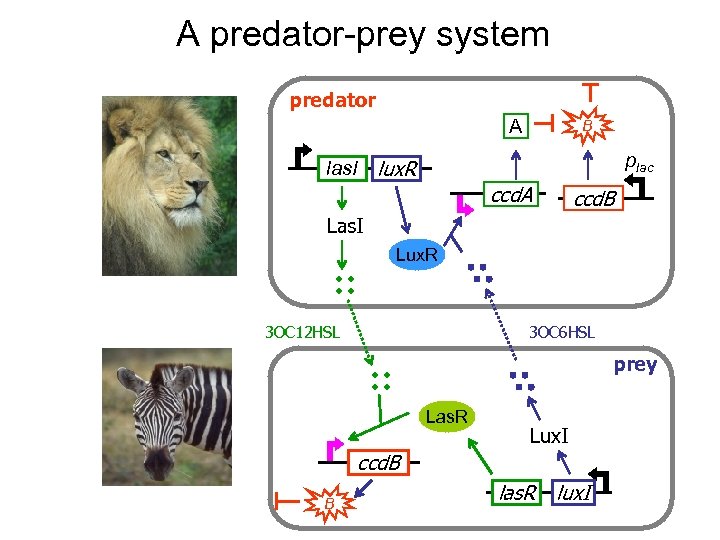
A predator-prey system predator A B plac las. I lux. R ccd. A ccd. B Las. I Lux. R 3 OC 12 HSL 3 OC 6 HSL prey Las. R Lux. I ccd. B B las. R lux. I
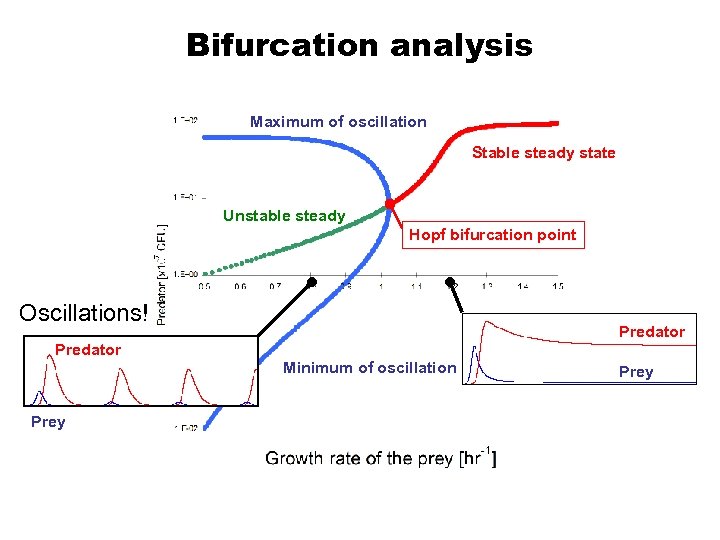
Bifurcation analysis Maximum of oscillation Stable steady state Unstable steady Hopf bifurcation point Oscillations! Predator Minimum of oscillation Prey
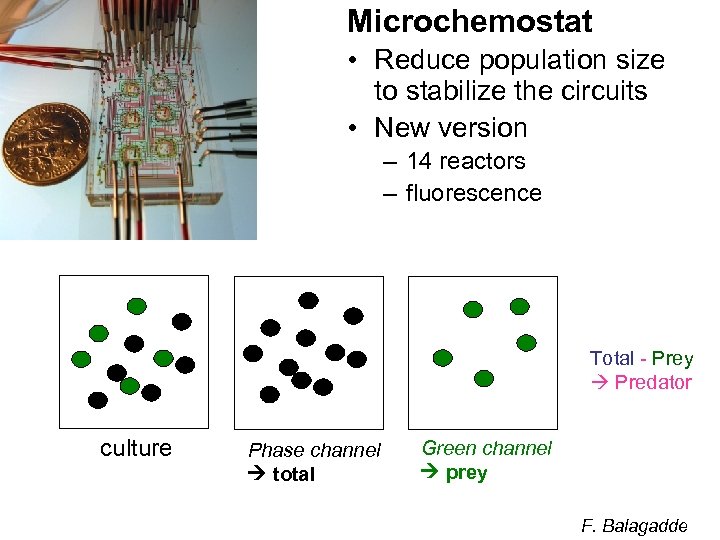
Microchemostat • Reduce population size to stabilize the circuits • New version – 14 reactors – fluorescence Total - Prey Predator culture Phase channel total Green channel prey F. Balagadde
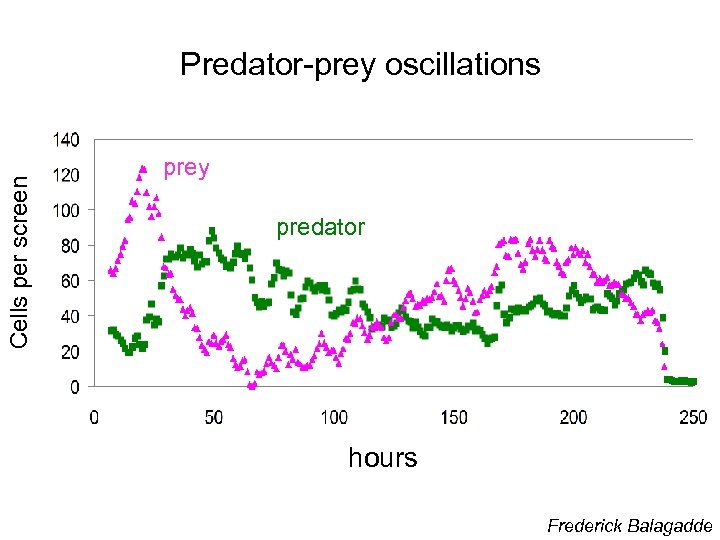
Cells per screen Predator-prey oscillations prey predator hours Frederick Balagadde
Summary I Communication coupled with cell killing enables robust control of bacterial population dynamics
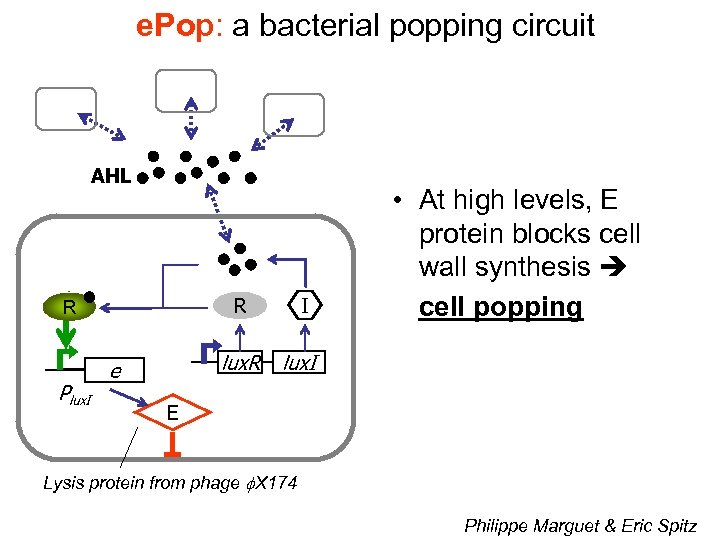
e. Pop: a bacterial popping circuit AHL Plux. I I R R lux. R e • At high levels, E protein blocks cell wall synthesis cell popping lux. I E Lysis protein from phage X 174 Philippe Marguet & Eric Spitz
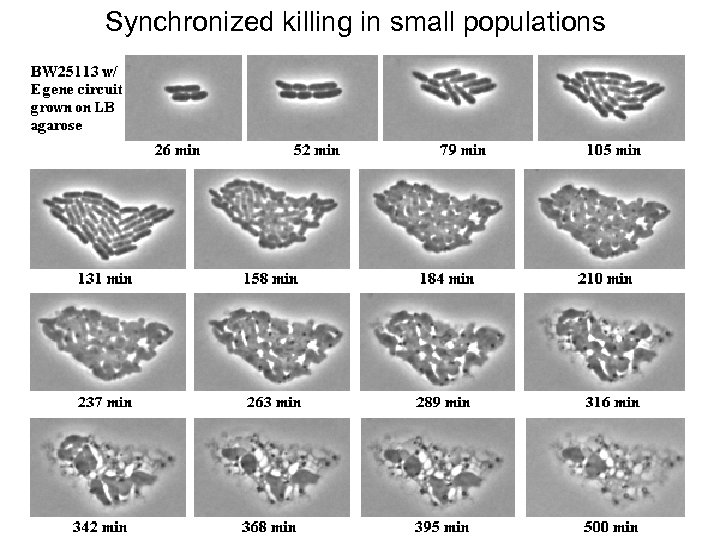
Synchronized killing in small populations
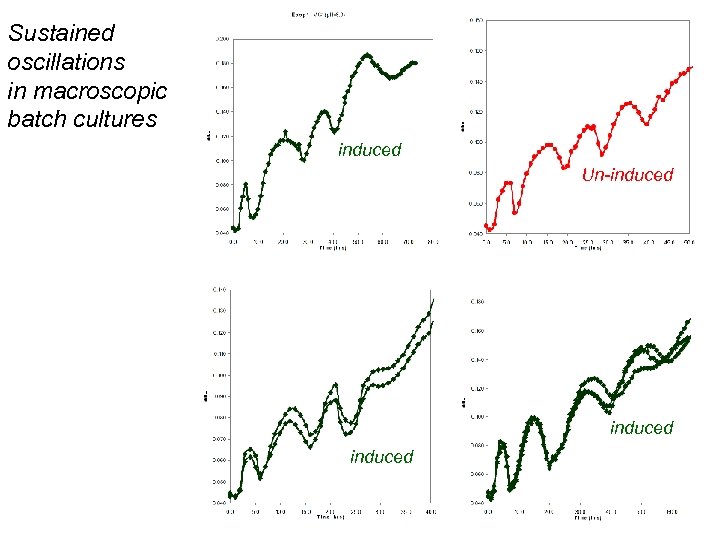
Sustained oscillations in macroscopic batch cultures induced Un-induced
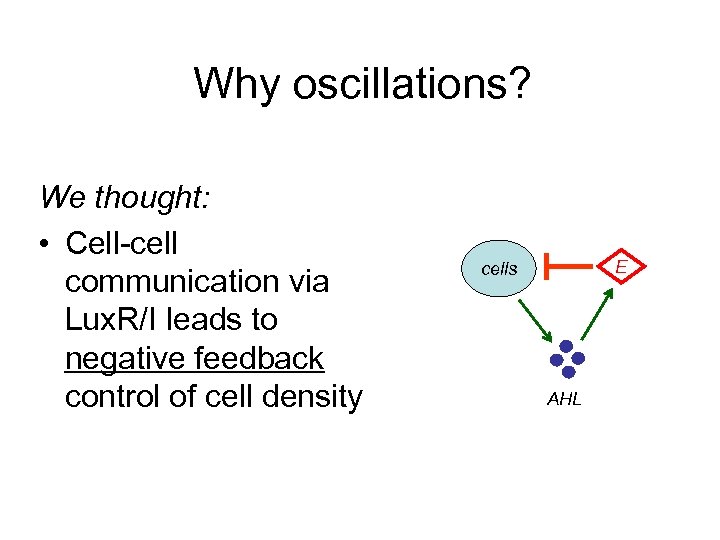
Why oscillations? We thought: • Cell-cell communication via Lux. R/I leads to negative feedback control of cell density E cells AHL
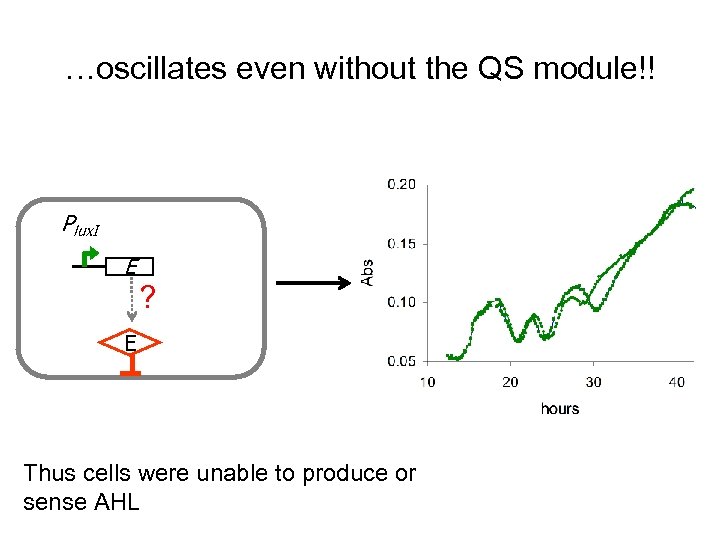
…oscillates even without the QS module!! Plux. I E ? E Thus cells were unable to produce or sense AHL
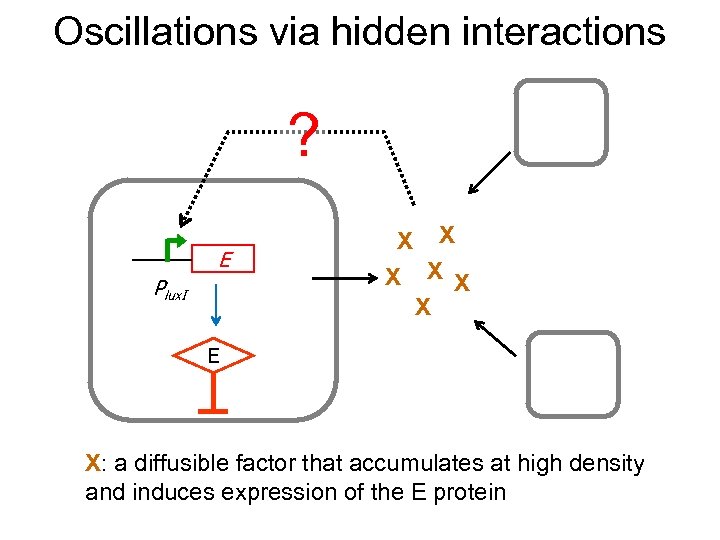
Oscillations via hidden interactions ? E Plux. I X X X E X: a diffusible factor that accumulates at high density and induces expression of the E protein
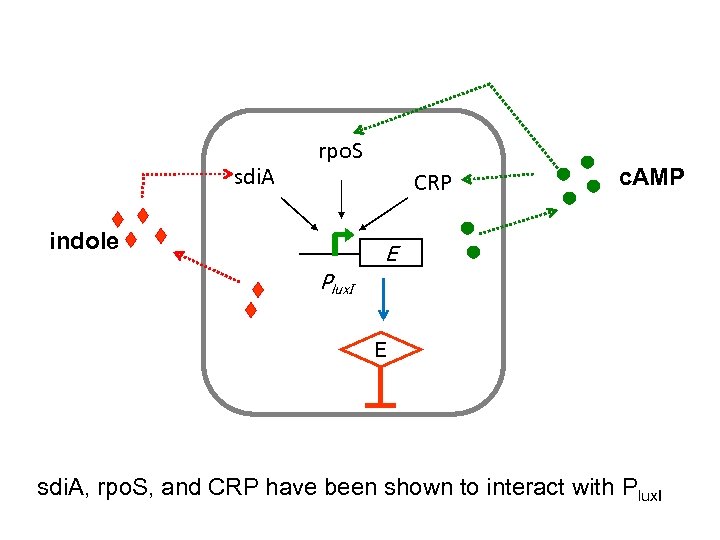
sdi. A rpo. S CRP indole c. AMP E Plux. I E sdi. A, rpo. S, and CRP have been shown to interact with Plux. I
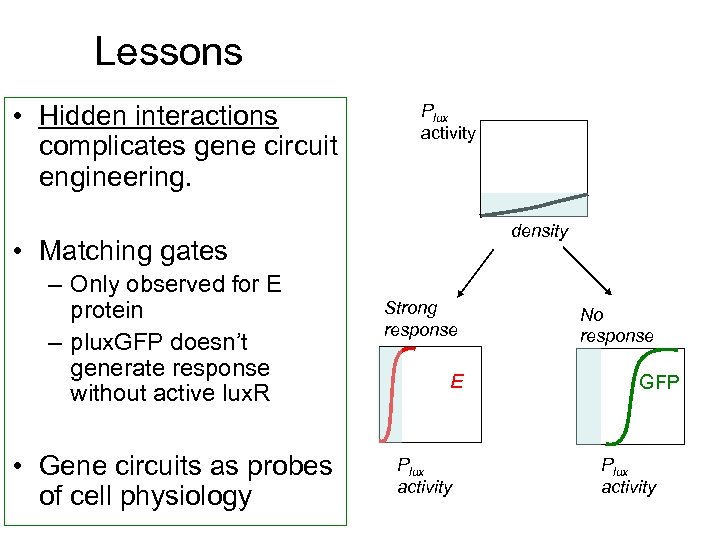
Lessons • Hidden interactions complicates gene circuit engineering. Plux activity density • Matching gates – Only observed for E protein – plux. GFP doesn’t generate response without active lux. R • Gene circuits as probes of cell physiology Strong response E Plux activity No response GFP Plux activity

You Lab Postdoc Hao Song Thanks! Graduate students Tae Jun Lee Philippe Marguet Anand Pai Chee Meng Tan Yu Tanouchi Elsewhere Frances Arnold (Caltech) Mat Barnet Cynthia Collins Sidney Cox Frederick Blattner (Scarab/UW) Stephen Quake (Stanford) Frederick Balagadde Ron Weiss (Princeton) Undergraduate students Meagan Gray Maher Salahi Cameron Smith Eric Spitz David Wang Former members Dennis Tu Faisal Reza Peter Blais Jun Ozaki Collaborators Duke Kam Leong Joseph Nevins Guang Yao George Truskey Mike West Jarad Niemi Fan Yuan Funding KECK Futures Initiative NIH NSF Packard Foundation
Скачать презентацию Synthetic killer circuits in bacteria Lingchong You Duke
92c8b4e869eb11dc824c350cd805889b.ppt