 Скачать презентацию Sustaining Terrestrial Biodiversity The Ecosystem Approach Chapter 10
9b9d86247d3ddbd0b966d03b8ce71fde.ppt
- Количество слайдов: 83



Sustaining Terrestrial Biodiversity: The Ecosystem Approach Chapter 10
Core Case Study: Reintroducing Gray Wolves to Yellowstone § Around 1800 § 1850– 1900: decline due to human activity § U. S. Endangered Species Act: 1973 § 1995– 1996: relocation of gray wolves to Yellowstone Park § 2008: Gray wolf no longer protected
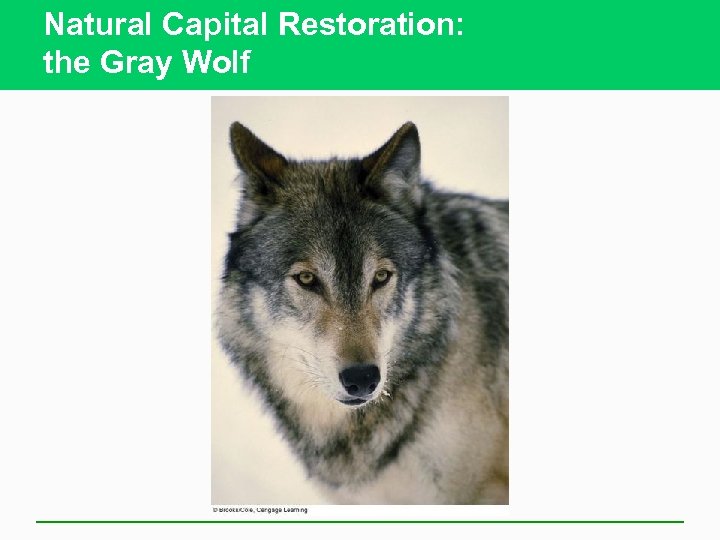
Natural Capital Restoration: the Gray Wolf
10 -1 What Are the Major Threats to Forest Ecosystems? (1) § Concept 10 -1 A Forest ecosystems provide ecological services far greater in value than the value of raw materials obtained from forests. § Concept 10 -1 B Unsustainable cutting and burning of forests, along with diseases and insects, are the chief threats to forest ecosystems.
10 -1 What Are the Major Threats to Forest Ecosystems? (2) § Concept 10 -1 C Tropical deforestation is a potentially catastrophic problem because of the vital ecological services at risk, the high rate of tropical deforestation, and its growing contribution to global warming.
Forests Vary in Their Make-Up, Age, and Origins § Old-growth or primary forest • 36% of world’s forests § Second-growth forest • 60% of world’s forests § Tree plantation, tree farm or commercial forest • 4% of world’s forests • May supply most of the industrial wood in the future
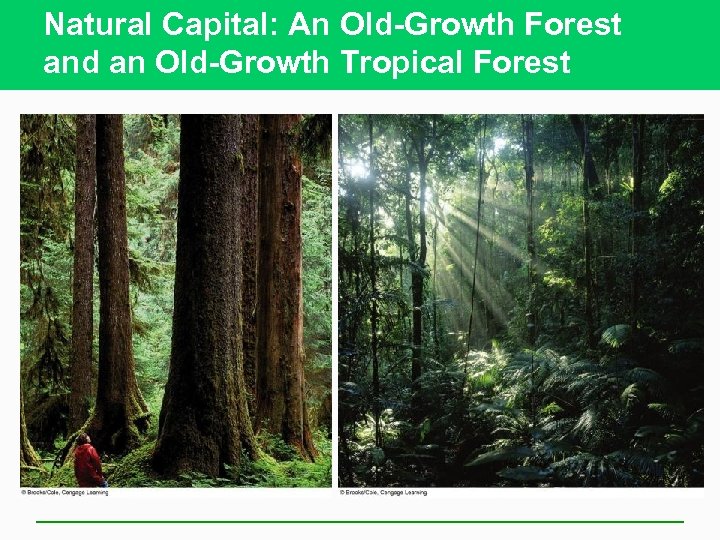
Natural Capital: An Old-Growth Forest and an Old-Growth Tropical Forest
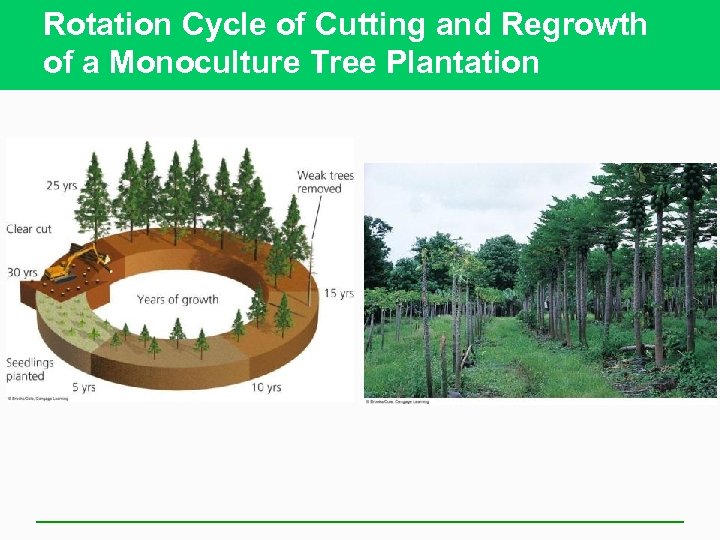
Rotation Cycle of Cutting and Regrowth of a Monoculture Tree Plantation
Forests Provide Important Economic and Ecological Services (1) § Support energy flow and chemical cycling § Reduce soil erosion § Absorb and release water § Purify water and air § Influence local and regional climate § Store atmospheric carbon § Habitats
Forests Provide Important Economic and Ecological Services (2) § Wood for fuel § Lumber § Pulp to make paper § Mining § Livestock grazing § Recreation § Employment
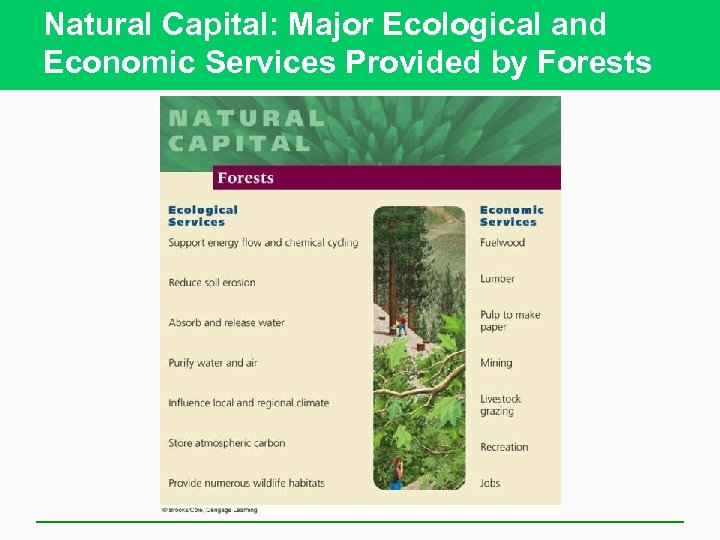
Natural Capital: Major Ecological and Economic Services Provided by Forests
Science Focus: Putting a Price Tag on Nature’s Ecological Services § Forests valued for ecological services • • • Nutrient cycling Climate regulation Erosion control Waste treatment Recreation Raw materials § $4. 7 Trillion per year
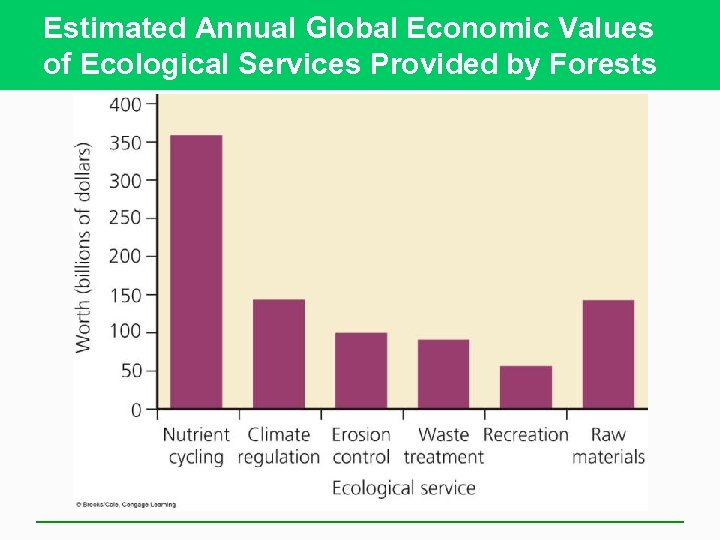
Estimated Annual Global Economic Values of Ecological Services Provided by Forests
Unsustainable Logging is a Major Threat to Forest Ecosystems (1) § Increased erosion § Sediment runoff into waterways § Habitat fragmentation § Loss of biodiversity
Unsustainable Logging is a Major Threat to Forest Ecosystems (2) § Invasion by • Nonnative pests • Disease • Wildlife species § Major tree harvesting methods: • Selective cutting • Clear-cutting • Strip cutting
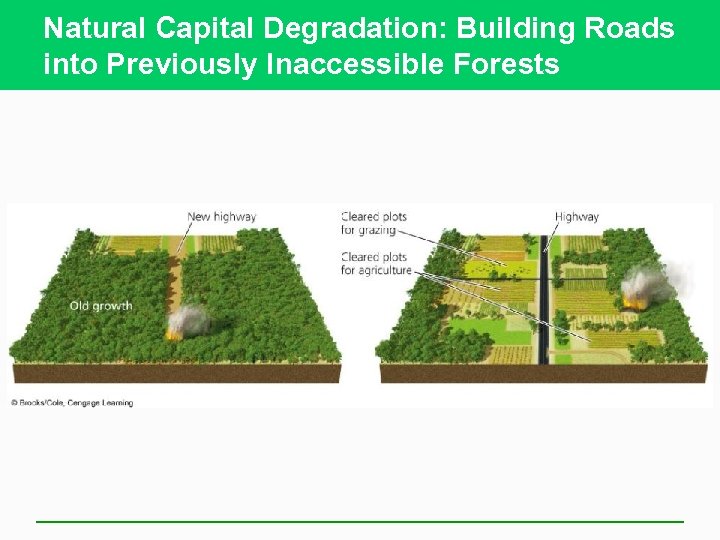
Natural Capital Degradation: Building Roads into Previously Inaccessible Forests
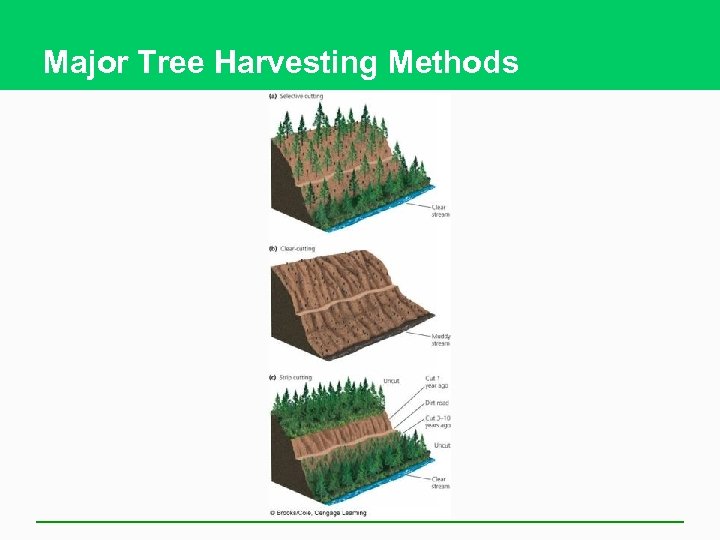
Major Tree Harvesting Methods
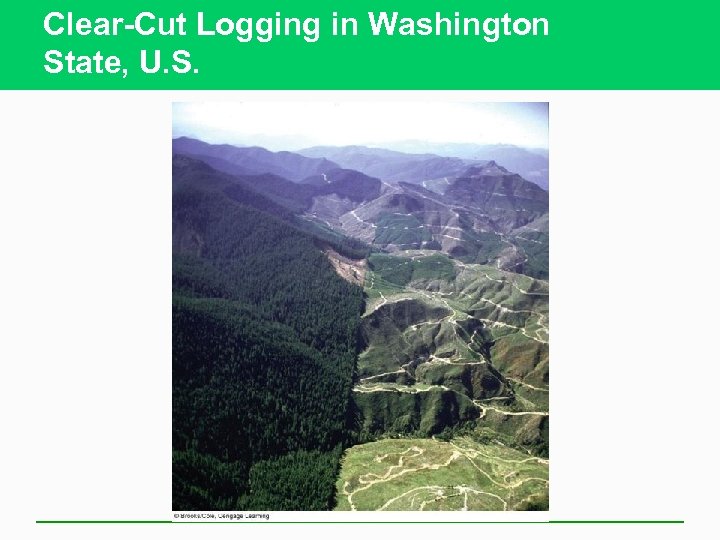
Clear-Cut Logging in Washington State, U. S.
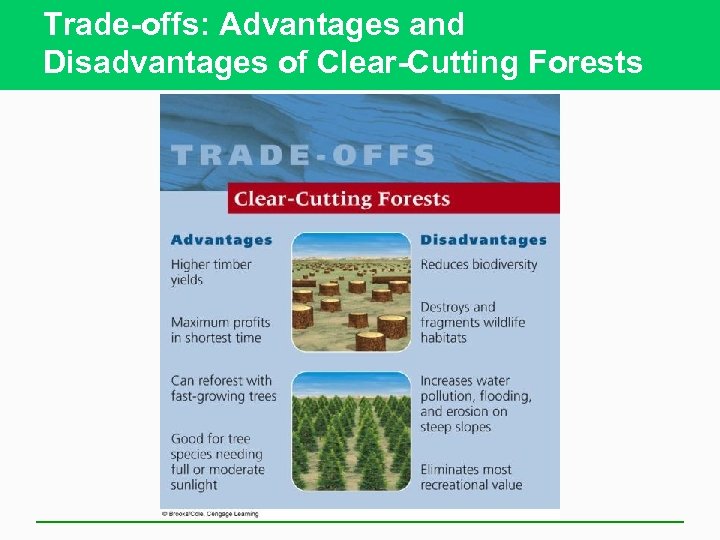
Trade-offs: Advantages and Disadvantages of Clear-Cutting Forests
Fire, Insects, and Climate Change Can Threaten Forest Ecosystems (1) § Surface fires • Usually burn leaf litter and undergrowth • May provide food in the form of vegetation that sprouts after fire § Crown fires • Extremely hot: burns whole trees • Kill wildlife • Increase soil erosion
Fire, Insects, and Climate Change Can Threaten Forest Ecosystems (2) § Introduction of foreign diseases and insects • Accidental • Deliberate § Global warming • • Rising temperatures Trees more susceptible to diseases and pests Drier forests: more fires More greenhouse gases
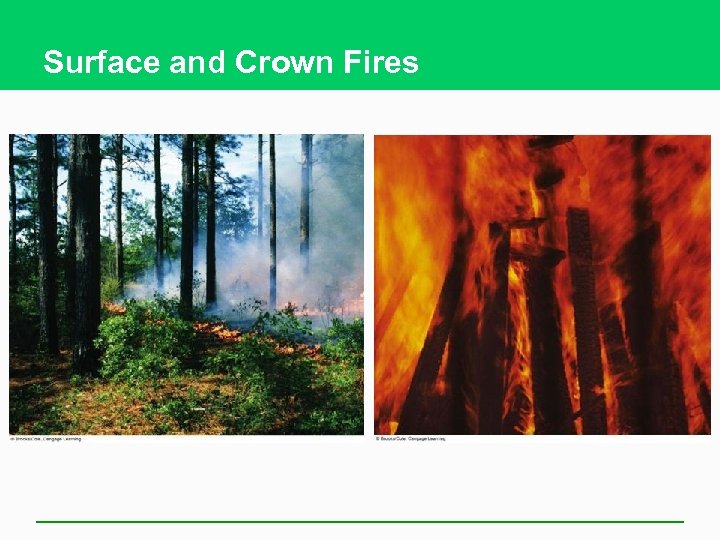
Surface and Crown Fires
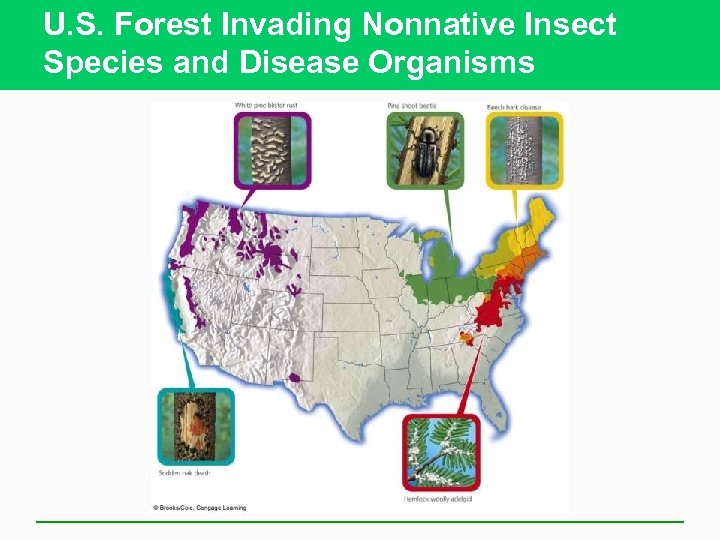
U. S. Forest Invading Nonnative Insect Species and Disease Organisms
We Have Cut Down Almost Half of the World’s Forests § Deforestation • Tropical forests • Especially in Latin America, Indonesia, and Africa • Boreal forests • Especially in Alaska, Canada, Scandinavia, and Russia
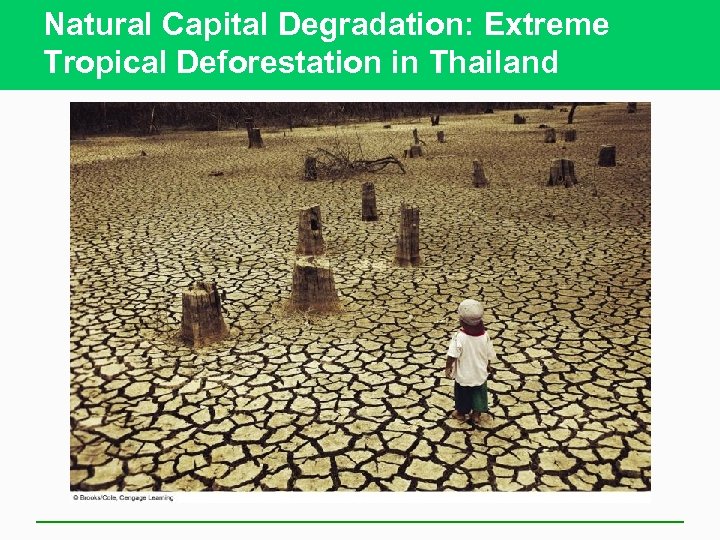
Natural Capital Degradation: Extreme Tropical Deforestation in Thailand
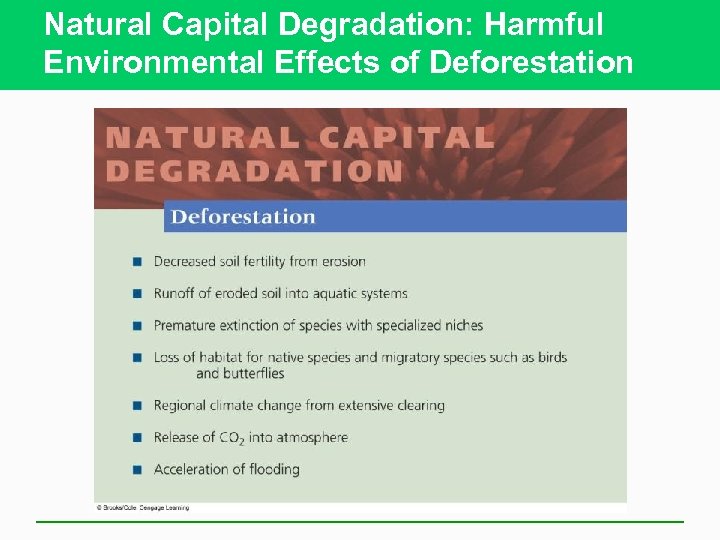
Natural Capital Degradation: Harmful Environmental Effects of Deforestation
Case Study: Many Cleared Forests in the United States Have Grown Back § Forests of the eastern United States decimated between 1620 and 1920 § Grown back naturally through secondary ecological succession § Biologically simplified tree plantations reduce biodiversity
Tropical Forests are Disappearing Rapidly § Majority of loss since 1950 § Brazil and Indonesia tropical forest loss § Role of deforestation in species’ extinction
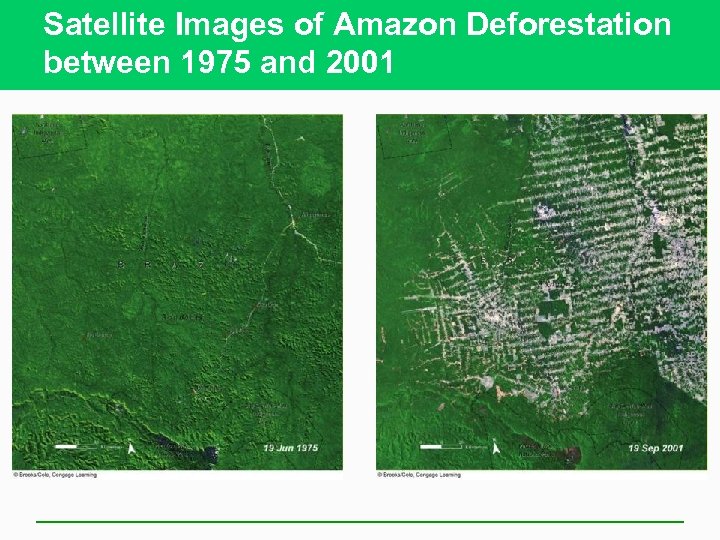
Satellite Images of Amazon Deforestation between 1975 and 2001
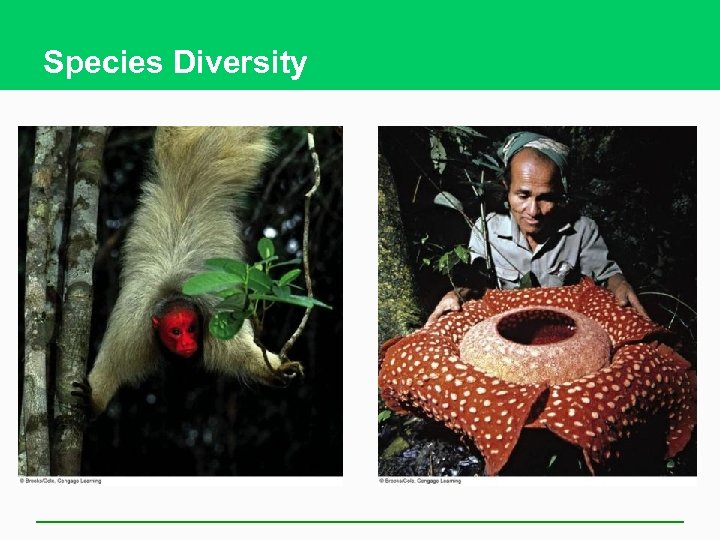
Species Diversity
Causes of Tropical Deforestation Are Varied and Complex § Primary § Secondary
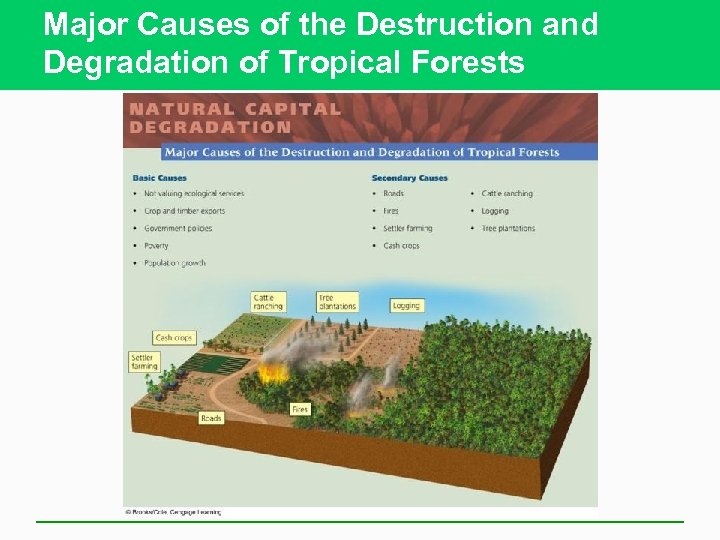
Major Causes of the Destruction and Degradation of Tropical Forests
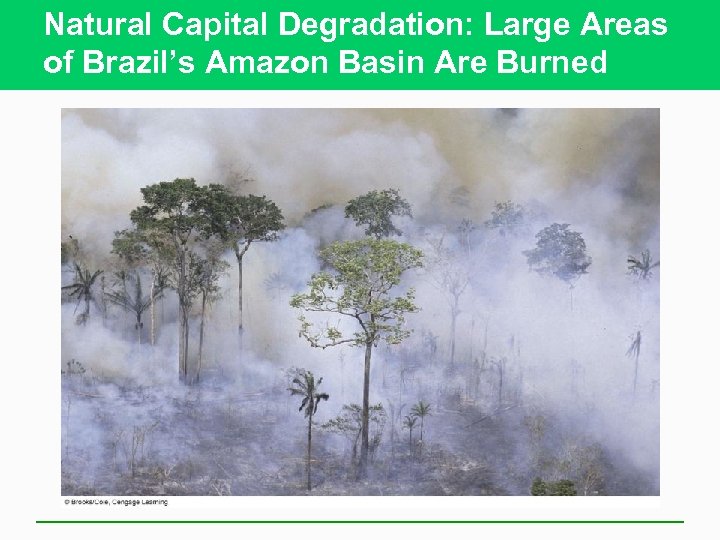
Natural Capital Degradation: Large Areas of Brazil’s Amazon Basin Are Burned

Animation: Hubbard Brook experiment
10 -2 How Should We Manage and Sustain Forests? § Concept 10 -2 We can sustain forests by emphasizing the economic value of their ecological services, protecting old-growth forests, harvesting trees no faster than they are replenished, and using sustainable substitute resources.
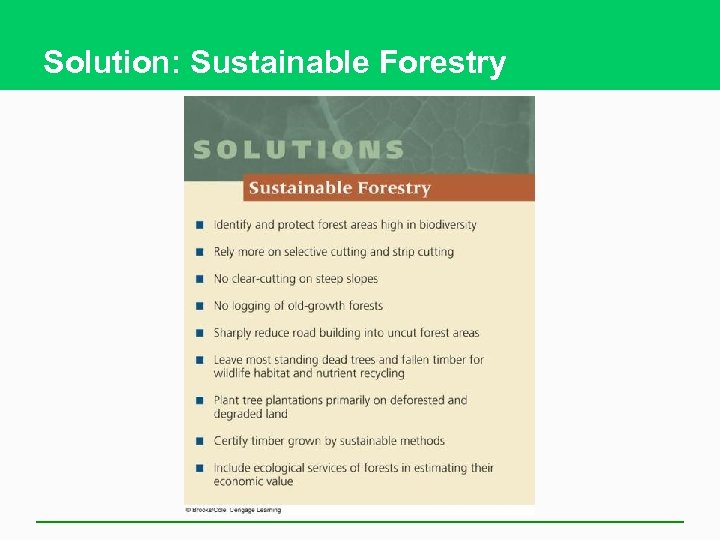
Solution: Sustainable Forestry
We Can Improve the Management of Forest Fires (1) § The Smokey Bear educational campaign § Prescribed fires § Allow fires on public lands to burn § Protect structures in fire-prone areas § Thin forests in fire-prone areas
We Can Improve the Management of Forest Fires (2) § 2003 Healthy Forests Restoration Act • Pros • Cons
Science Focus: Certifying Sustainably Grown Timber § Collins Pine • Owns and manages protective timberland § Forest Stewardship Council • Nonprofit • Developed list of environmentally sound practices • Certifies timber and products
We Can Reduce the Demand for Harvested Trees § Improve the efficiency of wood use § Make tree-free paper • Kenaf • Hemp
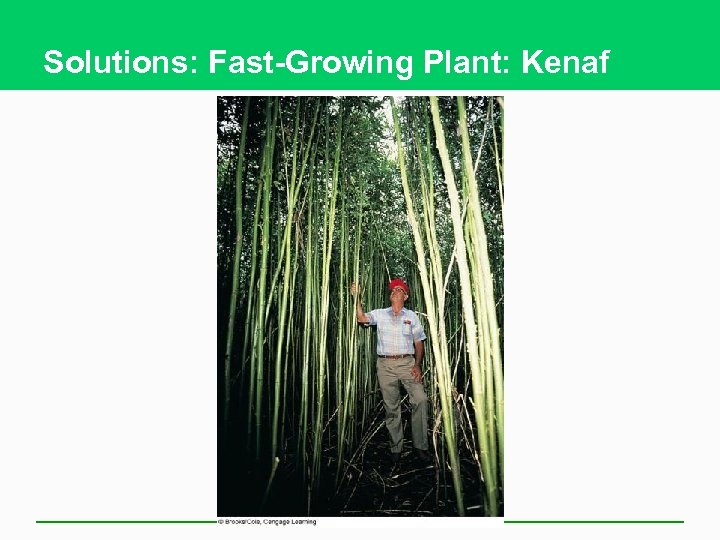
Solutions: Fast-Growing Plant: Kenaf
Case Study: Deforestation and the Fuelwood Crisis § Possible solutions • Establish small plantations of fast-growing fuelwood trees and shrubs • Burn wood more efficiently • Solar or wind-generated electricity § Haiti: ecological disaster § South Korea: model for successful reforestation
Governments and Individuals Can Act to Reduce Tropical Deforestation § Reduce fuelwood demand § Practice small-scale sustainable agriculture and forestry in tropical forest § Debt-for-nature swaps § Conservation concessions § Use gentler logging methods § Buy certified lumber and wood products
Individuals Matter: Wangari Maathari and Kenya’s Green Belt Movement § Green Belt Movement: 1977 • Self-help group of women in Kenya • Success of tree planting § Nobel Peace Prize: 2004
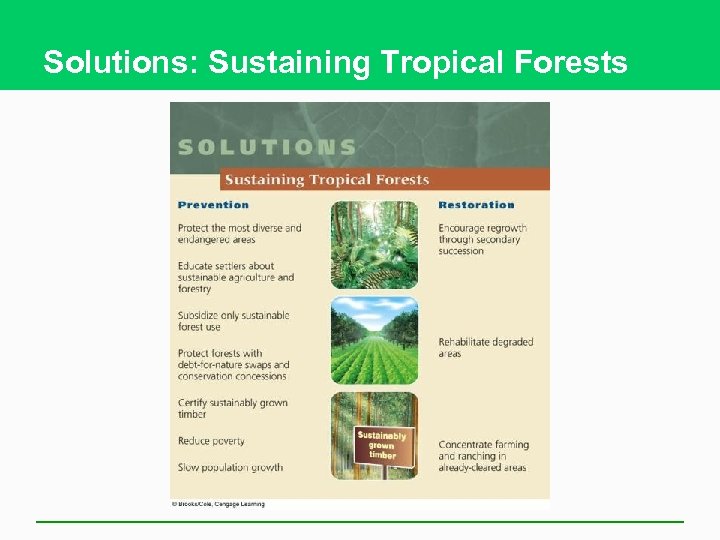
Solutions: Sustaining Tropical Forests
10 -3 How Should We Manage and Sustain Grasslands? § Concept 10 -3 We can sustain the productivity of grasslands by controlling the number and distribution of grazing livestock and restoring degraded grasslands.
Some Rangelands Are Overgrazed (1) § Important ecological services of grasslands • • • Soil formation Erosion control Nutrient cycling Storage of atmospheric carbon dioxide in biomass Maintenance of diversity
Some Rangelands are Overgrazed (2) § Overgrazing of rangelands • • Reduces grass cover Leads to erosion of soil by water and wind Soil becomes compacted Enhances invasion of plant species that cattle won’t eat § Malapi Borderlands • Management success story
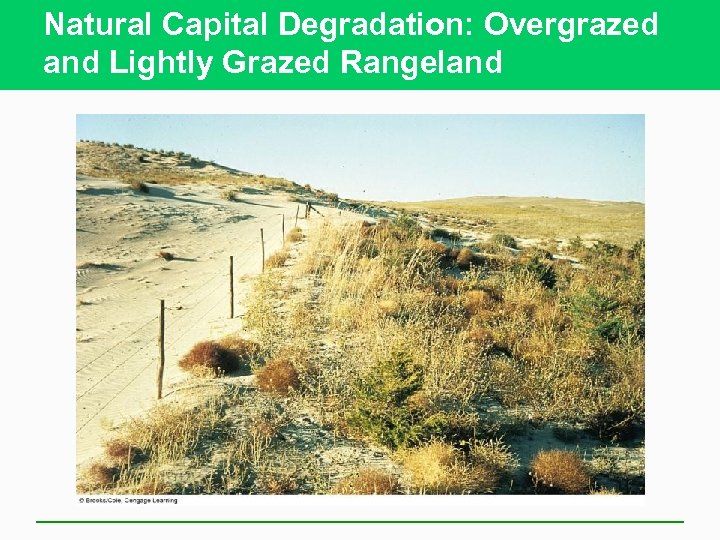
Natural Capital Degradation: Overgrazed and Lightly Grazed Rangeland
We Can Manage Rangelands More Sustainably (1) § Rotational grazing § Suppress growth of invasive species • • Herbicides Mechanical removal Controlled burning Controlled short-term trampling
We Can Manage Rangelands More Sustainably (2) § Replant barren areas § Apply fertilizer § Reduce soil erosion
Case Study: Grazing and Urban Development the American West § American southwest: population surge since 1980 § Land trust groups: limit land development § Reduce the harmful environmental impact of herds • Rotate cattle away from riparian areas • Use less fertilizers and pesticides • Operate ranch more economically
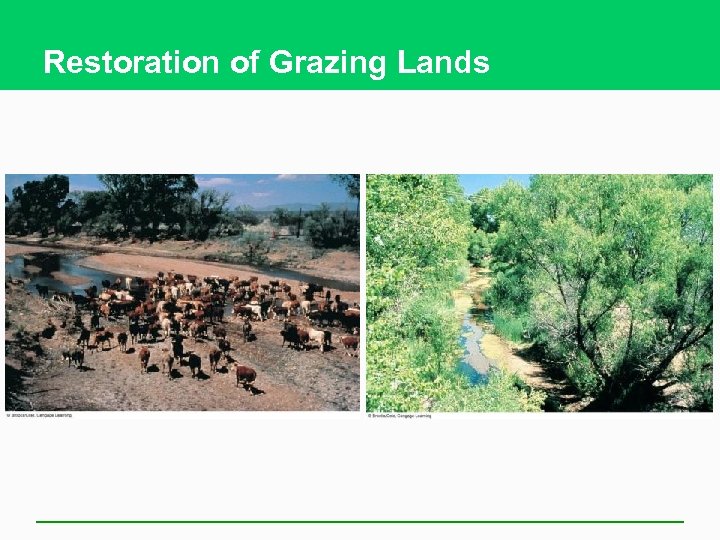
Restoration of Grazing Lands
10 -4 How Should We Manage and Sustain Parks and Natural Reserves? § Concept 10 -4 Sustaining biodiversity will require protecting much more of the earth’s remaining undisturbed land area as parks and nature reserves.
National Parks Face Many Environmental Threats § Worldwide: 1100 major national parks § Parks in developing countries • Greatest biodiversity • 1% protected against • Illegal animal poaching • Illegal logging and mining
Case Study: Stresses on U. S. Public Parks § 58 Major national parks in the U. S. § Biggest problem may be popularity • • Noise Congestion Pollution Damage or destruction to vegetation and wildlife § Repairs needed to trails and buildings
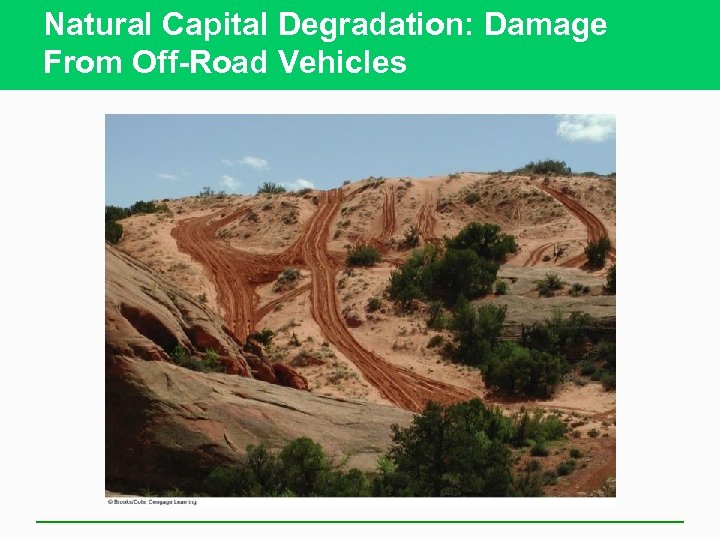
Natural Capital Degradation: Damage From Off-Road Vehicles
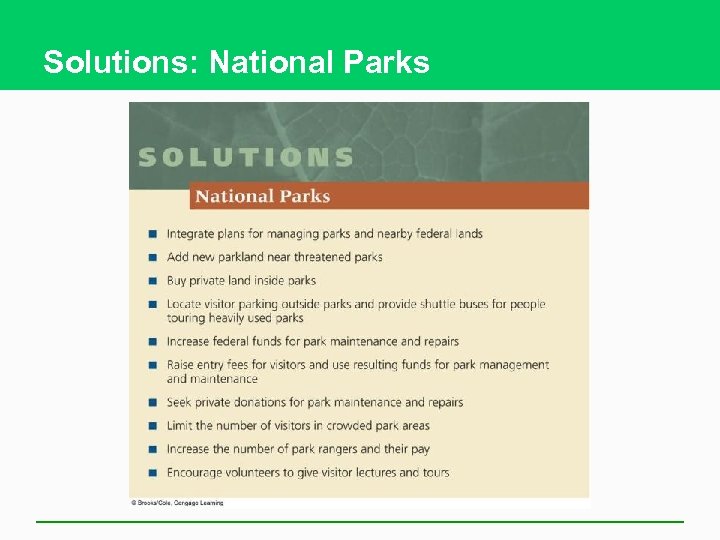
Solutions: National Parks
Science Focus: Effects of Reintroducing the Gray Wolf to Yellowstone National Park § Gray wolves prey on elk and push them to a higher elevation • Regrowth of aspen, cottonwoods, and willows • Increased population of riparian songbirds § Reduced the number of coyotes • Fewer attacks on cattle § Wolf pups susceptible to parvovirus carried by dogs
Nature Reserves Occupy Only a Small Part of the Earth’s Land § Conservationists’ goal: protect 20% of the earth’s land § Cooperation between government and private groups § Nature Conservancy § Eco-philanthropists § Developers and resource extractors opposition
Designing and Connecting Nature Reserves § Large versus small reserves § The buffer zone concept • United Nations: 529 biosphere reserves in 105 countries § Habitat corridors between isolated reserves • Advantages • Disadvantages
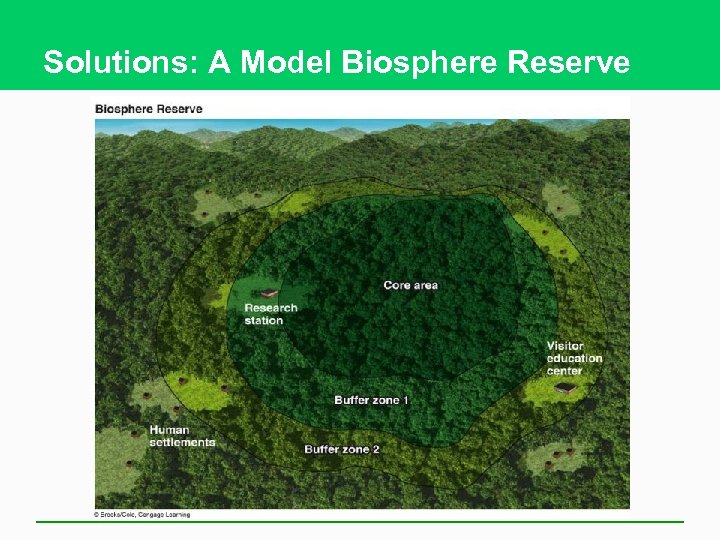
Solutions: A Model Biosphere Reserve
Case Study: Costa Rica—A Global Conservation Leader § 1963– 1983: cleared much of the forest § 1986– 2006: forests grew from 26% to 51% • Goal: to reduce net carbon dioxide emissions to zero by 2021 § Eight zoned megareserves • Designed to sustain around 80% of Costa Rica’s biodiversity
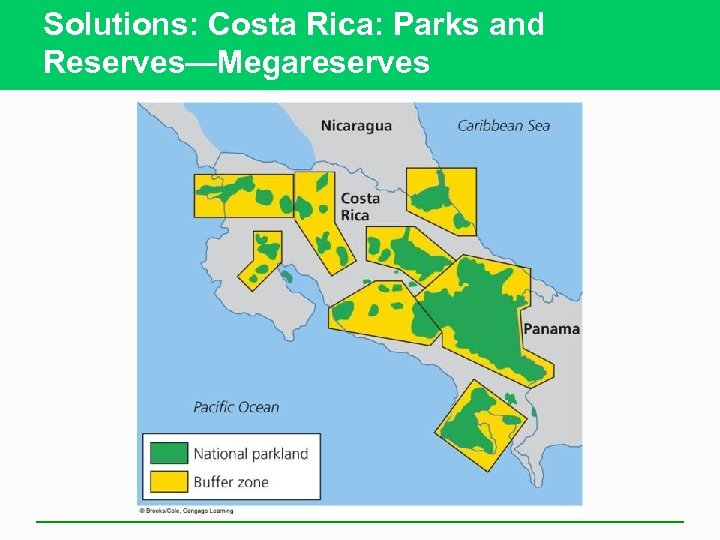
Solutions: Costa Rica: Parks and Reserves—Megareserves
Protecting Wilderness Is an Important Way to Preserve Biodiversity § Pros § Cons
Case Study: Controversy over Wilderness Protection in the United States § Wilderness Act of 1964 § How much of the United States is protected land? § Roadless Rule § 2005: end of roadless areas within the national forest system
10 -5 What is the Ecosystem Approach to Sustaining Biodiversity? (1) § Concept 10 -5 A We can help sustain biodiversity by identifying severely threatened areas and protecting those with high plant diversity and those where ecosystem services are being impaired. § Concept 10 -5 B Sustaining biodiversity will require a global effort to rehabilitate and restore damaged ecosystems.
10 -5 What is the Ecosystem Approach to Sustaining Biodiversity? (2) § Concept 10 -5 C Humans dominate most of the earth’s land, and preserving biodiversity will require sharing as much of it as possible with other species.
We Can Use a Four-Point Strategy to Protect Ecosystems § Map global ecosystems; identify species § Locate and protect most endangered species § Restore degraded ecosystems § Development must be biodiversity-friendly § Are new laws needed?
Protecting Global Biodiversity Hot Spots Is an Urgent Priority § 1988: Norman Myers • Identify biodiversity hot spots rich in plant species § Not sufficient public support and funding § Drawbacks of this approach • May not be rich in animal diversity • People may be displaced and/or lose access to important resources
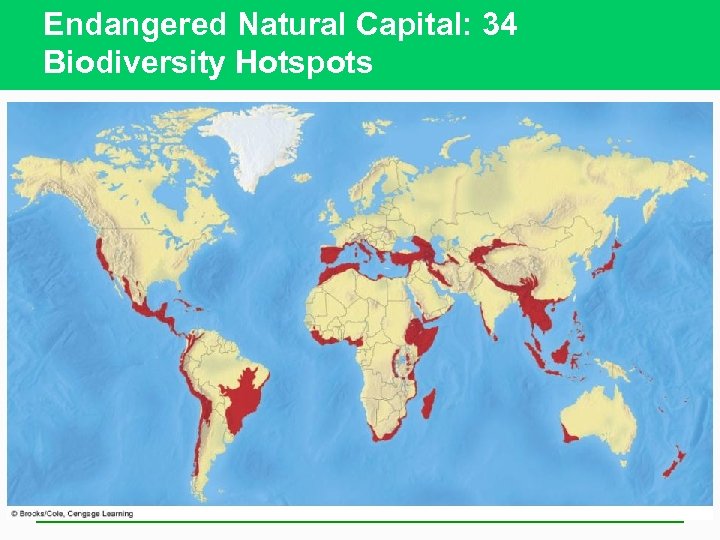
Endangered Natural Capital: 34 Biodiversity Hotspots
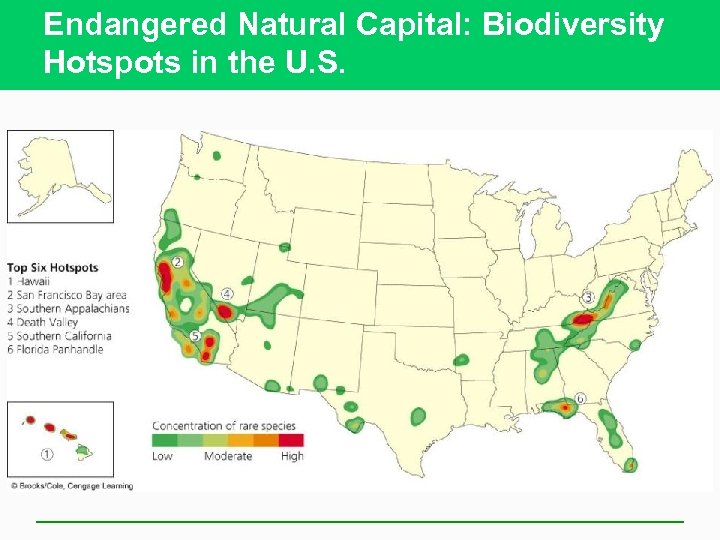
Endangered Natural Capital: Biodiversity Hotspots in the U. S.
Case Study: A Biodiversity Hot Spot in East Africa § Eastern Arc Mountains of Tanzania, Africa • Highest concentration of endangered species on earth § Threatened due to • Killing of forests by farmers and loggers • Hunting • Fires
Protecting Ecosystem Services Is Also an Urgent Priority § U. N. Millennium Ecosystem Assessment: 2005 • Identify key ecosystem services • Human activities degrade or overuse 62% of the earth’s natural services § Identify highly stressed life raft ecosystems
We Can Rehabilitate and Restore Ecosystems That We Have Damaged (1) § Study how natural ecosystems recover • • Restoration Rehabilitation Replacement Creating artificial ecosystems
We Can Rehabilitate and Restore Ecosystems That We Have Damaged (2) § How to carry out most forms of ecological restoration and rehabilitation • • Identify what caused the degradation Stop the abuse Reintroduce species, if possible Protect from further degradation
Science Focus: Ecological Restoration of a Tropical Dry Forest in Costa Rica § Guanacaste National Park restoration project • Relinked to adjacent rain forest • Bring in cattle and horses – aid in seed dispersal • Local residents – actively involved
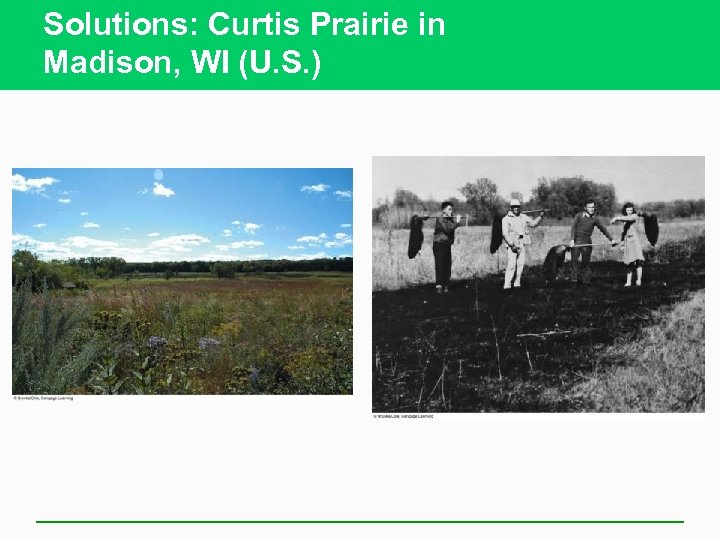
Solutions: Curtis Prairie in Madison, WI (U. S. )
Will Restoration Encourage Further Destruction? § Preventing ecosystem damage is cheaper than restoration § About 5% of the earth’s land is preserved from the effects of human activities
We Can Share Areas We Dominate With Other Species § Win-Win Ecology: How Earth’s Species Can Survive in the Midst of Human Enterprise, by Michael L. Rozenweig, 2003 • Reconciliation or applied ecology • Community-based conservation • • • Belize and the black howler monkeys Protect vital insect pollinators Bluebird protection with special housing boxes Berlin, Germany: rooftop gardens San Francisco: Golden Gate Park
Case Study: The Blackfoot Challenge— Reconciliation Ecology in Action § 1970 s: Blackfoot River Valley in Montana threatened by • Poor mining, logging, and grazing practices • Water and air pollution • Unsustainable commercial and residential development § Community meetings led to • Weed-pulling parties • Nesting structures for waterfowl • Developed sustainable grazing systems
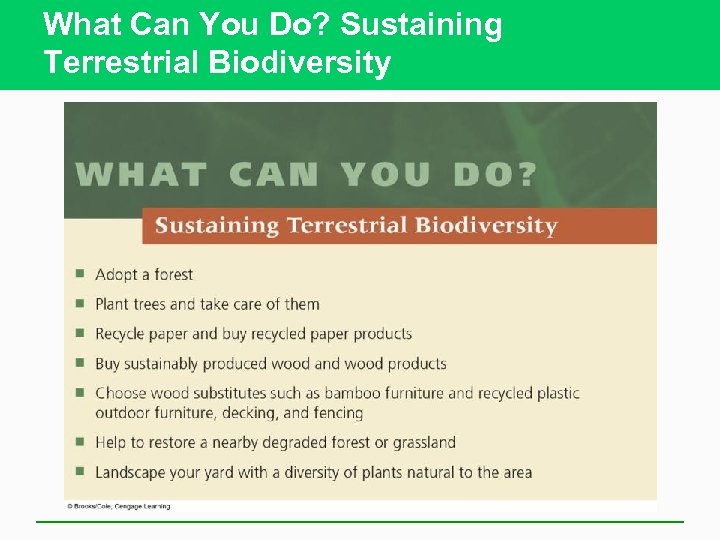
What Can You Do? Sustaining Terrestrial Biodiversity
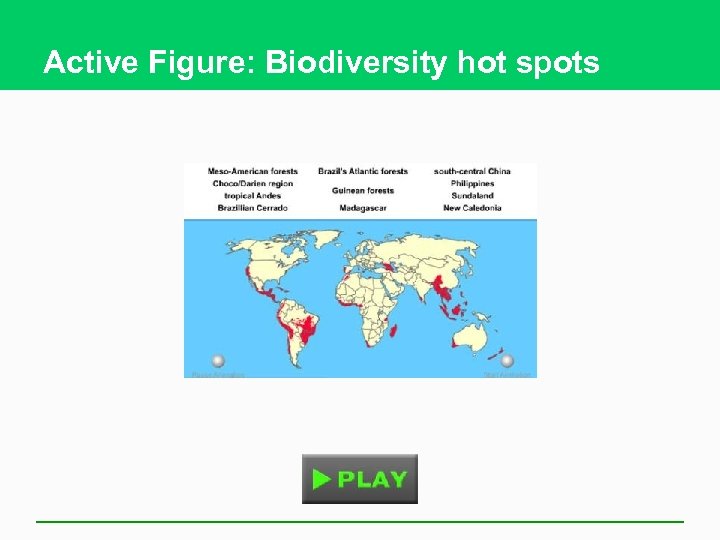
Active Figure: Biodiversity hot spots
Скачать презентацию Sustaining Terrestrial Biodiversity The Ecosystem Approach Chapter 10
9b9d86247d3ddbd0b966d03b8ce71fde.ppt