 Скачать презентацию Sustaining Customer Excellence Reinforcement Sessions On-Premise Brian
21c9079bf1f58b582f371a6778ca7950.ppt
- Количество слайдов: 58



Sustaining Customer Excellence: Reinforcement Sessions (On-Premise)
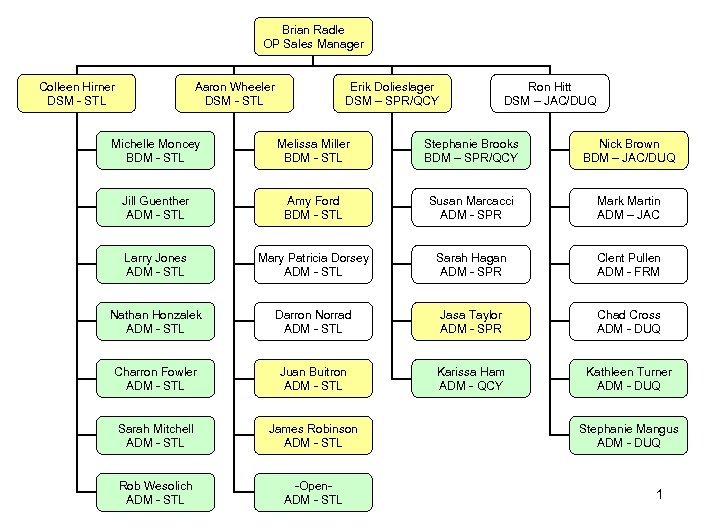
Brian Radle OP Sales Manager Colleen Hirner DSM - STL Aaron Wheeler DSM - STL Erik Dolieslager DSM – SPR/QCY Ron Hitt DSM – JAC/DUQ Michelle Moncey BDM - STL Melissa Miller BDM - STL Stephanie Brooks BDM – SPR/QCY Nick Brown BDM – JAC/DUQ Jill Guenther ADM - STL Amy Ford BDM - STL Susan Marcacci ADM - SPR Mark Martin ADM – JAC Larry Jones ADM - STL Mary Patricia Dorsey ADM - STL Sarah Hagan ADM - SPR Clent Pullen ADM - FRM Nathan Honzalek ADM - STL Darron Norrad ADM - STL Jasa Taylor ADM - SPR Chad Cross ADM - DUQ Charron Fowler ADM - STL Juan Buitron ADM - STL Karissa Ham ADM - QCY Kathleen Turner ADM - DUQ Sarah Mitchell ADM - STL James Robinson ADM - STL Rob Wesolich ADM - STL -Open. ADM - STL Stephanie Mangus ADM - DUQ 1
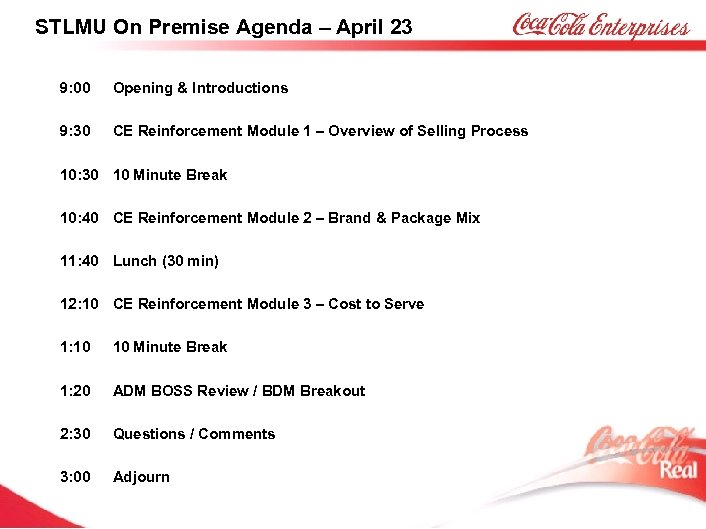
STLMU On Premise Agenda – April 23 9: 00 Opening & Introductions 9: 30 CE Reinforcement Module 1 – Overview of Selling Process 10: 30 10 Minute Break 10: 40 CE Reinforcement Module 2 – Brand & Package Mix 11: 40 Lunch (30 min) 12: 10 CE Reinforcement Module 3 – Cost to Serve 1: 10 10 Minute Break 1: 20 ADM BOSS Review / BDM Breakout 2: 30 Questions / Comments 3: 00 Adjourn
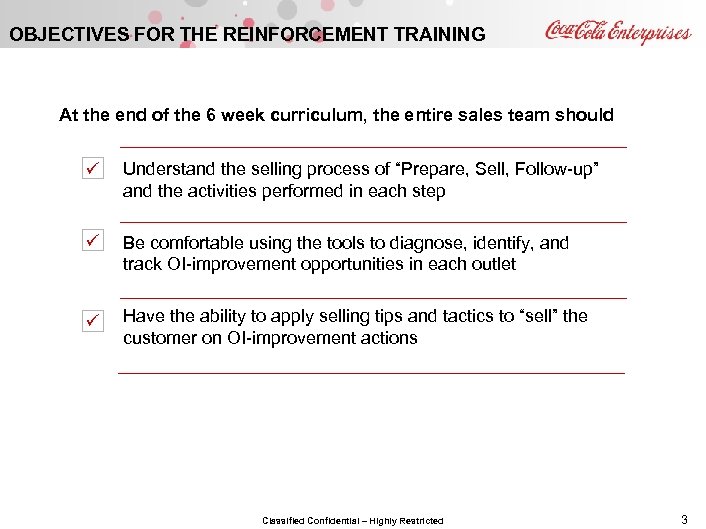
OBJECTIVES FOR THE REINFORCEMENT TRAINING At the end of the 6 week curriculum, the entire sales team should ü Understand the selling process of “Prepare, Sell, Follow-up” and the activities performed in each step ü Be comfortable using the tools to diagnose, identify, and track OI-improvement opportunities in each outlet ü Have the ability to apply selling tips and tactics to “sell” the customer on OI-improvement actions Classified Confidential – Highly Restricted 3
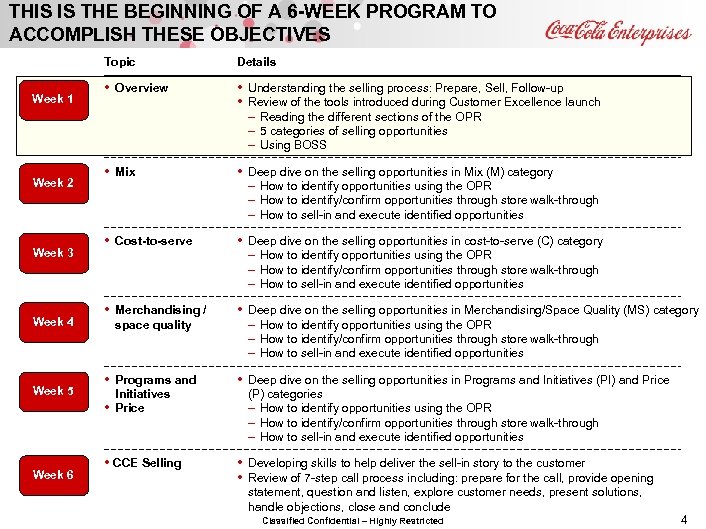
THIS IS THE BEGINNING OF A 6 -WEEK PROGRAM TO ACCOMPLISH THESE OBJECTIVES Topic Week 1 Details • Overview • Understanding the selling process: Prepare, Sell, Follow-up • Review of the tools introduced during Customer Excellence launch – Reading the different sections of the OPR – 5 categories of selling opportunities – Using BOSS Week 2 Week 3 Week 4 Week 5 • Mix • Deep dive on the selling opportunities in Mix (M) category • Cost-to-serve • Deep dive on the selling opportunities in cost-to-serve (C) category • Merchandising / • Deep dive on the selling opportunities in Merchandising/Space Quality (MS) category space quality • Programs and • Week 6 Initiatives Price • CCE Selling – How to identify opportunities using the OPR – How to identify/confirm opportunities through store walk-through – How to sell-in and execute identified opportunities • Deep dive on the selling opportunities in Programs and Initiatives (PI) and Price (P) categories – How to identify opportunities using the OPR – How to identify/confirm opportunities through store walk-through – How to sell-in and execute identified opportunities • Developing skills to help deliver the sell-in story to the customer • Review of 7 -step call process including: prepare for the call, provide opening statement, question and listen, explore customer needs, present solutions, handle objections, close and conclude Classified Confidential – Highly Restricted 4
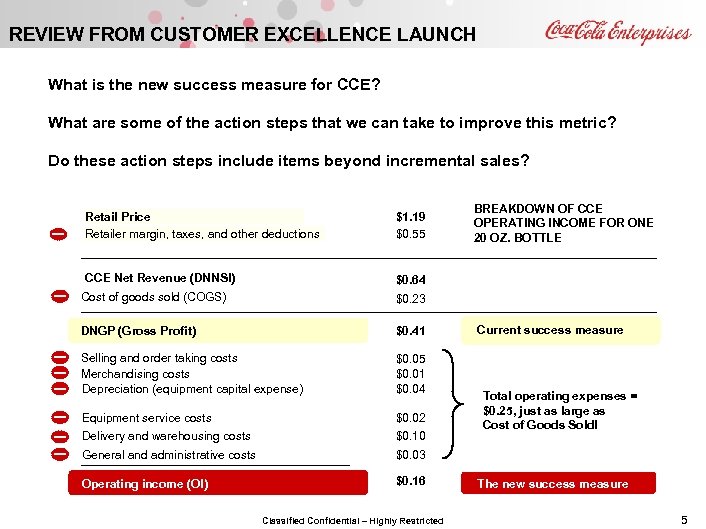
REVIEW FROM CUSTOMER EXCELLENCE LAUNCH What is the new success measure for CCE? What are some of the action steps that we can take to improve this metric? Do these action steps include items beyond incremental sales? Retail Price Retailer margin, taxes, and other deductions $1. 19 $0. 55 CCE Net Revenue (DNNSI) BREAKDOWN OF CCE OPERATING INCOME FOR ONE 20 OZ. BOTTLE $0. 64 Cost of goods sold (COGS) $0. 23 DNGP (Gross Profit) $0. 41 Selling and order taking costs Merchandising costs Depreciation (equipment capital expense) $0. 05 $0. 01 $0. 04 Equipment service costs $0. 02 Delivery and warehousing costs $0. 10 General and administrative costs $0. 03 Operating income (OI) $0. 16 Classified Confidential – Highly Restricted Current success measure Total operating expenses = $0. 25, just as large as Cost of Goods Sold! The new success measure 5
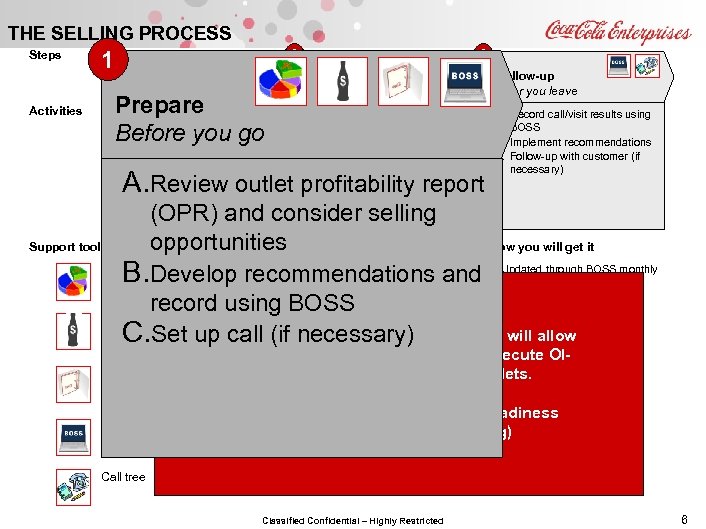
THE SELLING PROCESS Steps 1 1 2 Prepare Before you go Activities Prepare report (OPR) and consider Before you go selling opportunities A. Review outlet profitability B. Develop recommendations and record using BOSS 3 Sell In the outlet A. Confirm opportunities through B. C. D. E. F. G. outlet walk-around Provide opening statement Question and listen Explore customer needs Present solutions Handle objections Close and conclude A. Review outlet profitability report C. Set up call (if necessary) Follow-up After you leave A. Record call/visit results using B. C. BOSS Implement recommendations Follow-up with customer (if necessary) (OPR) and consider selling opportunities Description Support tools How you will get it • Report by outlet showing profitability Outlet Profitability Report B. Develop recommendations and • Updated through BOSS monthly indicators and brand / package mix record using BOSS • Categorized list of ideas to help • Accessible through BOSS Selling Opportunities improve OI in each outlet (includes selling C. Set up. This standard, simpleeach opportunity) call (if necessary) process will allow sell-in story for Channel Guides BOSS Call tree us to diagnose, identify, track, and execute OI • Profile for each channel including key • Accessible improvement opportunities in the outlets. through BOSS messages for the customer and package/brand recommendations (This page available on your Day 1 readiness • Online card distributedsystem to access selling tools • N/A at the launch meeting) • List of key contact points for getting things done Classified Confidential – Highly Restricted • Distributed by your DSM 6
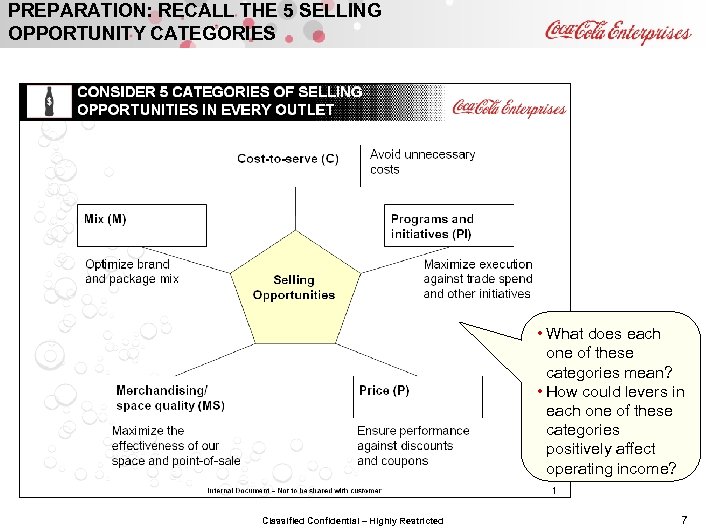
PREPARATION: RECALL THE 5 SELLING OPPORTUNITY CATEGORIES • What does each one of these categories mean? • How could levers in each one of these categories positively affect operating income? Classified Confidential – Highly Restricted 7
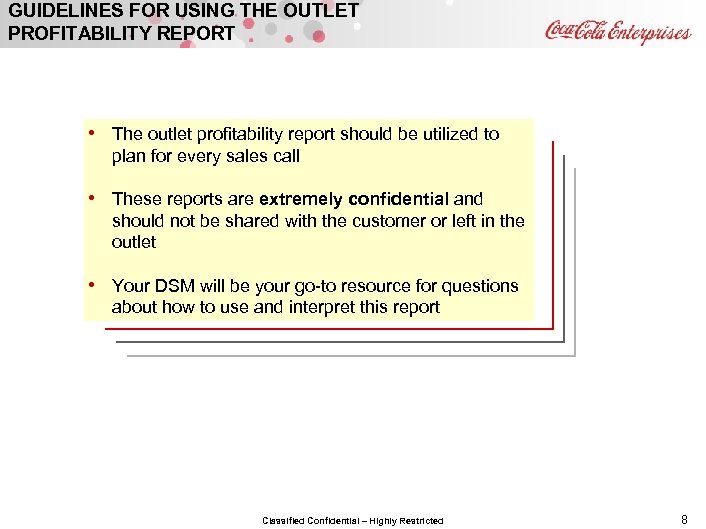
GUIDELINES FOR USING THE OUTLET PROFITABILITY REPORT • The outlet profitability report should be utilized to plan for every sales call • These reports are extremely confidential and should not be shared with the customer or left in the outlet • Your DSM will be your go-to resource for questions about how to use and interpret this report Classified Confidential – Highly Restricted 8
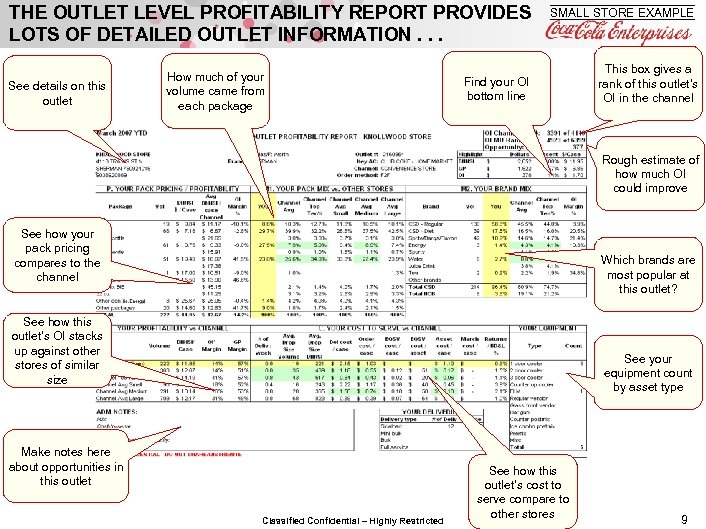
THE OUTLET LEVEL PROFITABILITY REPORT PROVIDES LOTS OF DETAILED OUTLET INFORMATION. . . See details on this outlet How much of your volume came from each package SMALL STORE EXAMPLE Find your OI bottom line This box gives a rank of this outlet’s OI in the channel Rough estimate of how much OI could improve See how your pack pricing compares to the channel Which brands are most popular at this outlet? See how this outlet’s OI stacks up against other stores of similar size See your equipment count by asset type Make notes here about opportunities in this outlet Classified Confidential – Highly Restricted See how this outlet’s cost to serve compare to other stores 9
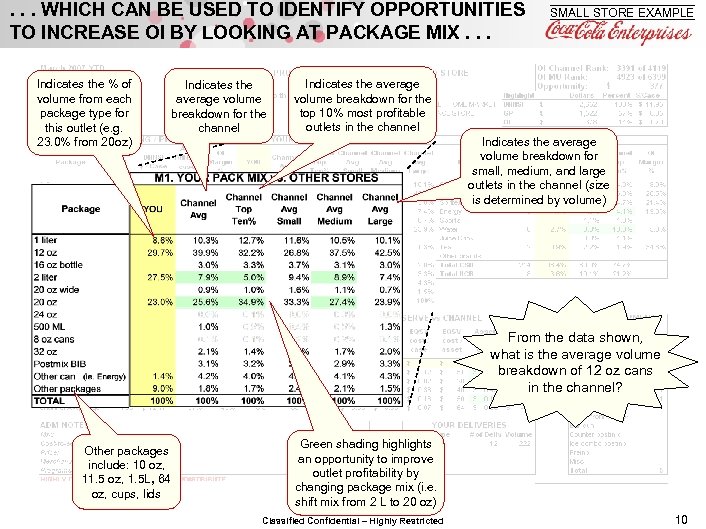
. . . WHICH CAN BE USED TO IDENTIFY OPPORTUNITIES TO INCREASE OI BY LOOKING AT PACKAGE MIX. . . Indicates the % of volume from each package type for this outlet (e. g. 23. 0% from 20 oz) 91. 6% from BIB) Indicates the average volume breakdown for the channel SMALL STORE EXAMPLE Indicates the average volume breakdown for the top 10% most profitable outlets in the channel Indicates the average volume breakdown for small, medium, and large outlets in the channel (size is determined by volume) From the data shown, what is the average volume breakdown of 12 oz cans in the channel? Other packages include: 10 oz, 11. 5 oz, 1. 5 L, 64 32 oz, and 64 oz oz, cups, lids Green shading highlights an opportunity to improve outlet profitability by changing package mix (i. e. shift mix from 2 L to 20 oz) Classified Confidential – Highly Restricted 10
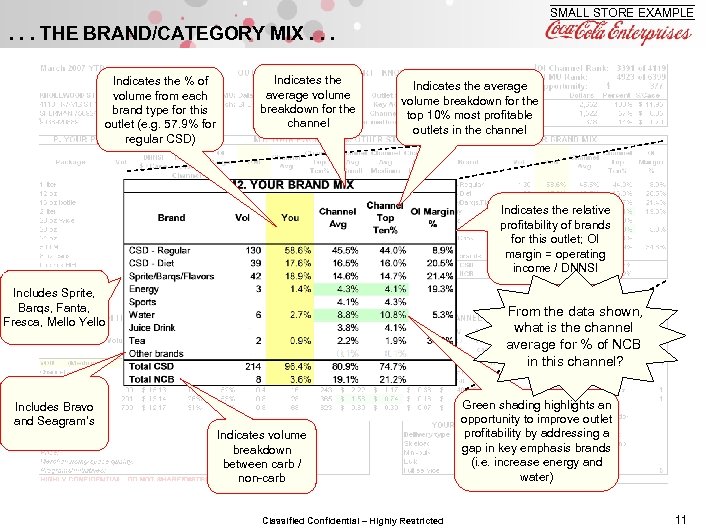
SMALL STORE EXAMPLE . . . THE BRAND/CATEGORY MIX. . . Indicates the % of volume from each brand type for this outlet (e. g. 37. 1% for 57. 9% 34. 2% regular CSD) Indicates the average volume breakdown for the channel Indicates the average volume breakdown for the top 10% most profitable outlets in the channel Indicates the relative profitability of brands for this outlet; OI margin = operating income / DNNSI Includes Sprite, Barqs, Fanta, Fresca, Mello Yello From the data shown, what is the channel average for % of NCB in this channel? Includes Bravo and Seagram’s Indicates volume breakdown between carb / non-carb Classified Confidential – Highly Restricted Green shading highlights an opportunity to improve outlet profitability by addressing a gap in key emphasis brands (i. e. increase energy and (e. g. water or energy) water) 11
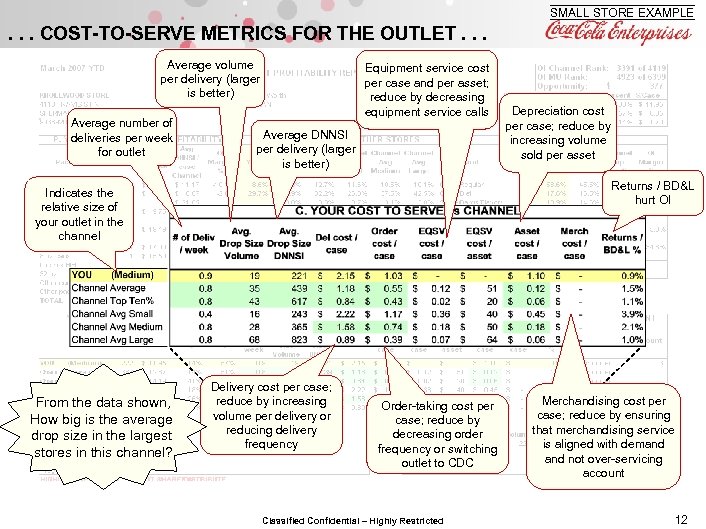
SMALL STORE EXAMPLE . . . COST-TO-SERVE METRICS FOR THE OUTLET. . . Average volume per delivery (larger is better) Average number of deliveries per week for outlet Equipment service cost per case and per asset; reduce by decreasing equipment service calls Average DNNSI per delivery (larger is better) Returns / BD&L hurt OI Indicates the relative size of your outlet in the channel From the data shown, How big is the average drop size in the largest stores in this channel? Depreciation cost per case; reduce by increasing volume sold per asset Delivery cost per case; reduce by increasing volume per delivery or reducing delivery frequency Order-taking cost per case; reduce by decreasing order frequency or switching outlet to CDC Classified Confidential – Highly Restricted Merchandising cost per case; reduce by ensuring that merchandising service is aligned with demand not over-servicing account 12
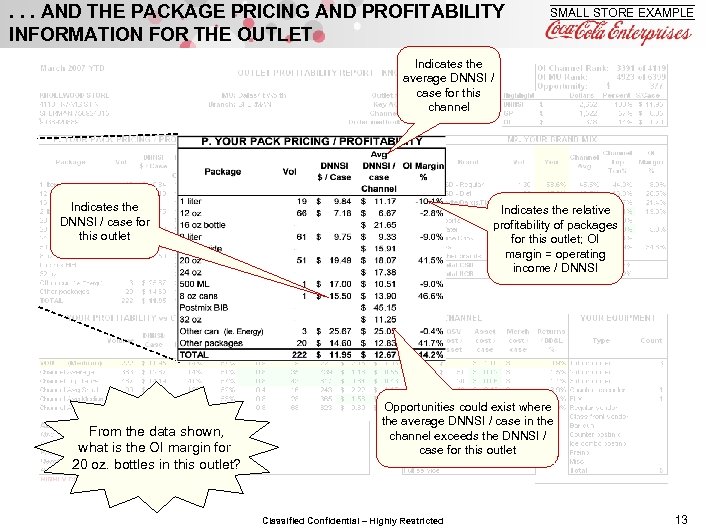
. . . AND THE PACKAGE PRICING AND PROFITABILITY INFORMATION FOR THE OUTLET SMALL STORE EXAMPLE Indicates the average DNNSI / case for this channel Indicates the DNNSI / case for this outlet From the data shown, what is the OI margin for 20 oz. bottles in this outlet? Indicates the relative profitability of packages for this outlet; OI margin = operating income / DNNSI Opportunities could exist where the average DNNSI / case in the channel exceeds the DNNSI / case for this outlet Classified Confidential – Highly Restricted 13
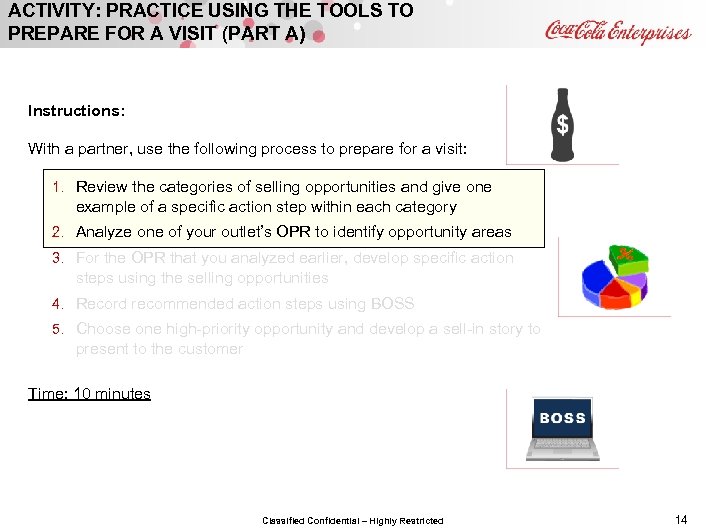
ACTIVITY: PRACTICE USING THE TOOLS TO PREPARE FOR A VISIT (PART A) Instructions: With a partner, use the following process to prepare for a visit: 1. Review the categories of selling opportunities and give one example of a specific action step within each category 2. Analyze one of your outlet’s OPR to identify opportunity areas 3. For the OPR that you analyzed earlier, develop specific action steps using the selling opportunities 4. Record recommended action steps using BOSS 5. Choose one high-priority opportunity and develop a sell-in story to present to the customer Time: 10 minutes Classified Confidential – Highly Restricted 14
SO NOW WHAT? Let’s develop action steps to address these OI-improvement areas that you have identified using the OPR. . . To do this, let’s dig deeper into the selling opportunities. . . Classified Confidential – Highly Restricted 15
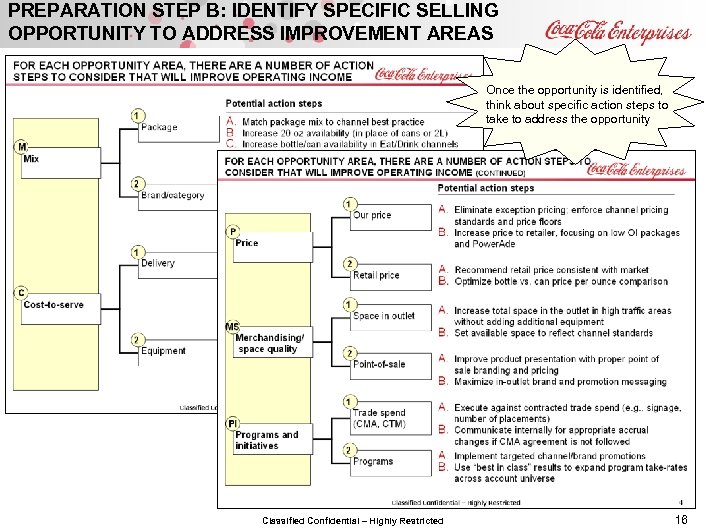
PREPARATION STEP B: IDENTIFY SPECIFIC SELLING OPPORTUNITY TO ADDRESS IMPROVEMENT AREAS Once the opportunity is identified, think about specific action steps to take to address the opportunity Classified Confidential – Highly Restricted 16
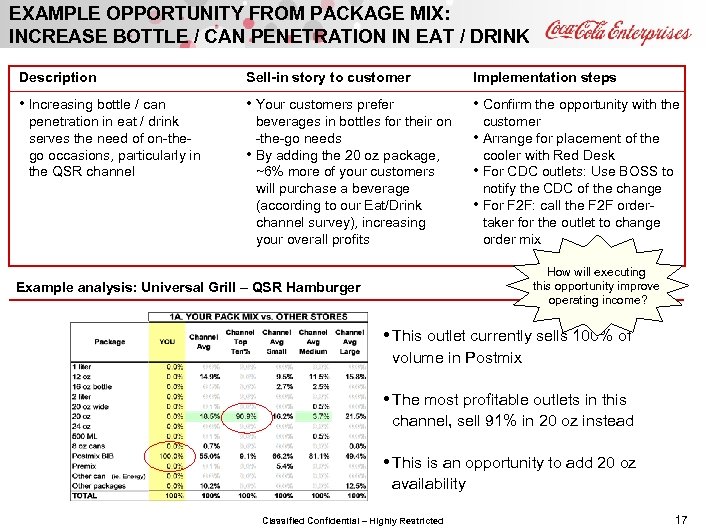
EXAMPLE OPPORTUNITY FROM PACKAGE MIX: INCREASE BOTTLE / CAN PENETRATION IN EAT / DRINK Description Sell-in story to customer Implementation steps • Increasing bottle / can • Your customers prefer • Confirm the opportunity with the beverages in bottles for their on -the-go needs • By adding the 20 oz package, ~6% more of your customers will purchase a beverage (according to our Eat/Drink channel survey), increasing your overall profits customer • Arrange for placement of the cooler with Red Desk • For CDC outlets: Use BOSS to notify the CDC of the change • For F 2 F: call the F 2 F ordertaker for the outlet to change order mix penetration in eat / drink serves the need of on-thego occasions, particularly in the QSR channel How will executing this opportunity improve operating income? Example analysis: Universal Grill – QSR Hamburger • This outlet currently sells 100% of volume in Postmix • The most profitable outlets in this channel, sell 91% in 20 oz instead • This is an opportunity to add 20 oz availability Classified Confidential – Highly Restricted 17
PREPARATION STEP B: DOCUMENT YOUR RECOMMENDATIONS USING BOSS • In your BOSS training, you have learned how to track the opportunities that you have identified • As part of your preparation process, you should take time to use this feature to help stay organized and focuses, as well as let the CDC know which opportunities you are currently looking to address in each outlet Classified Confidential – Highly Restricted 18
ACTIVITY: PRACTICE USING THE TOOLS TO PREPARE FOR A VISIT (PART B) Instructions: With a partner, use the following process to prepare for a visit: 1. Review the categories of selling opportunities and give one example of a specific action step within each category 2. Analyze one of your outlet’s OPR to identify opportunity areas 3. For the OPR that you analyzed earlier, develop specific action steps using the selling opportunities 4. Record recommended action steps using BOSS 5. Choose one high-priority opportunity and develop a sell-in story to present to the customer Time: 10 minutes Classified Confidential – Highly Restricted 19
ACTIVITY DEBRIEF Questions: 1. What specific opportunities were you able to identify? Which ones do you think are the highest priority? 2. What specific element of OI will be impacted with these action steps? 3. How will you make time to prepare for these visits by reviewing your OPRs and using BOSS to track your actions? Classified Confidential – Highly Restricted 20
KEY TAKEAWAYS ON PREPARING 1. Drive improved operating income in your outlets through this standardized selling process 2. Apply the opportunity framework every time you plan for an outlet visit • Mix • Cost-to-serve • Programs / initiatives • Merchandising / space quality • Price 3. Learn and utilize the selling tools available to you • Outlet profitability report • Selling opportunities • BOSS Classified Confidential – Highly Restricted 21
PUT THIS LEARNING INTO PRACTICE! Next steps: 1. Take time this week to analyze the OPR, develop specific action steps, and use BOSS to plan for at least 10 of your accounts. 2. With your identified opportunities and sell-in stories, start to talk to your customers about executing. Classified Confidential – Highly Restricted 22
10 Minute Break
Sustaining Customer Excellence: Reinforcement Session Two (On-Premise)
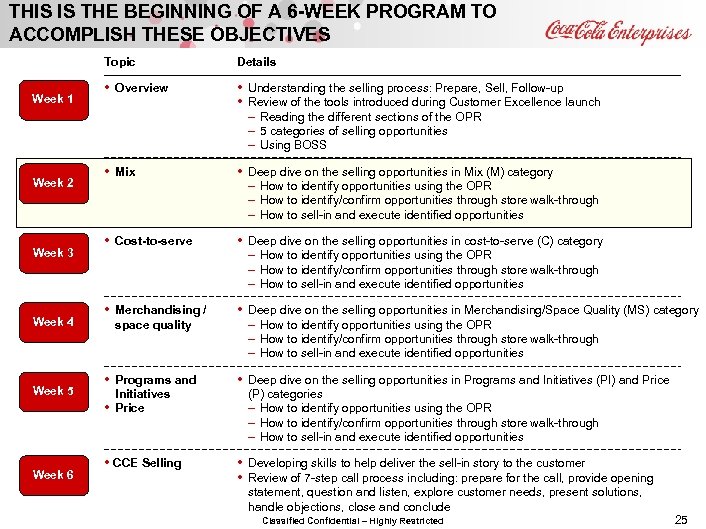
THIS IS THE BEGINNING OF A 6 -WEEK PROGRAM TO ACCOMPLISH THESE OBJECTIVES Topic Week 1 Details • Overview • Understanding the selling process: Prepare, Sell, Follow-up • Review of the tools introduced during Customer Excellence launch – Reading the different sections of the OPR – 5 categories of selling opportunities – Using BOSS Week 2 Week 3 Week 4 Week 5 • Mix • Deep dive on the selling opportunities in Mix (M) category • Cost-to-serve • Deep dive on the selling opportunities in cost-to-serve (C) category • Merchandising / • Deep dive on the selling opportunities in Merchandising/Space Quality (MS) category space quality • Programs and • Week 6 Initiatives Price • CCE Selling – How to identify opportunities using the OPR – How to identify/confirm opportunities through store walk-through – How to sell-in and execute identified opportunities • Deep dive on the selling opportunities in Programs and Initiatives (PI) and Price (P) categories – How to identify opportunities using the OPR – How to identify/confirm opportunities through store walk-through – How to sell-in and execute identified opportunities • Developing skills to help deliver the sell-in story to the customer • Review of 7 -step call process including: prepare for the call, provide opening statement, question and listen, explore customer needs, present solutions, handle objections, close and conclude Classified Confidential – Highly Restricted 25
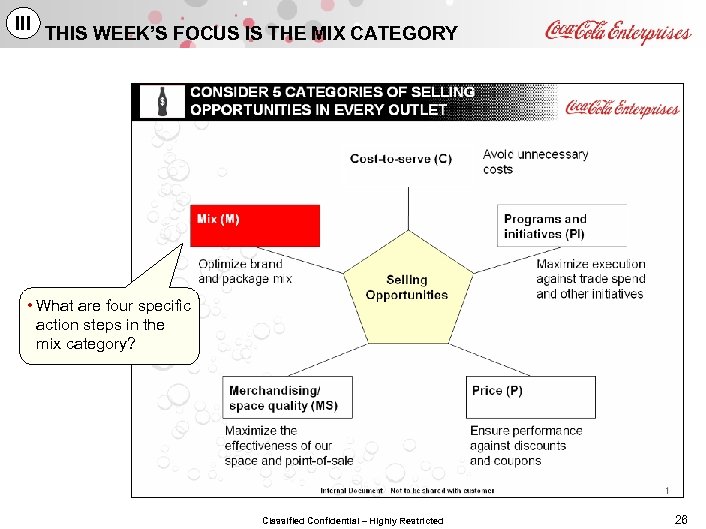
III THIS WEEK’S FOCUS IS THE MIX CATEGORY • What are four specific action steps in the mix category? Classified Confidential – Highly Restricted 26
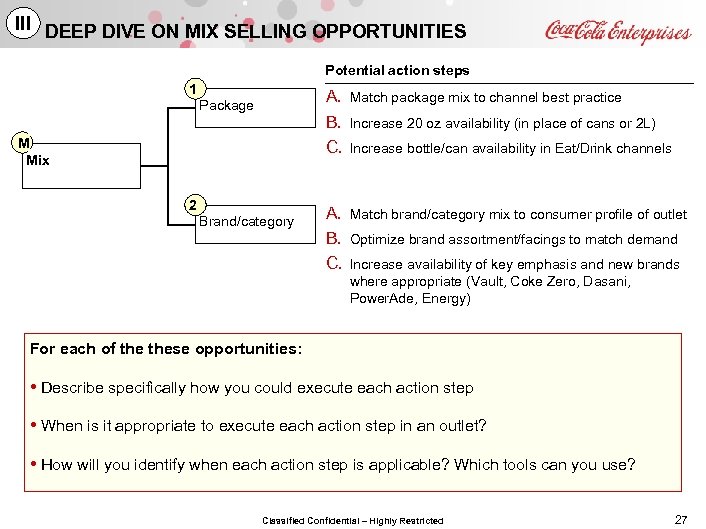
III DEEP DIVE ON MIX SELLING OPPORTUNITIES Potential action steps 1 A. Match package mix to channel best practice B. Increase 20 oz availability (in place of cans or 2 L) C. Increase bottle/can availability in Eat/Drink channels Package M Mix 2 Brand/category A. Match brand/category mix to consumer profile of outlet B. Optimize brand assortment/facings to match demand C. Increase availability of key emphasis and new brands where appropriate (Vault, Coke Zero, Dasani, Power. Ade, Energy) For each of these opportunities: • Describe specifically how you could execute each action step • When is it appropriate to execute each action step in an outlet? • How will you identify when each action step is applicable? Which tools can you use? Classified Confidential – Highly Restricted 27
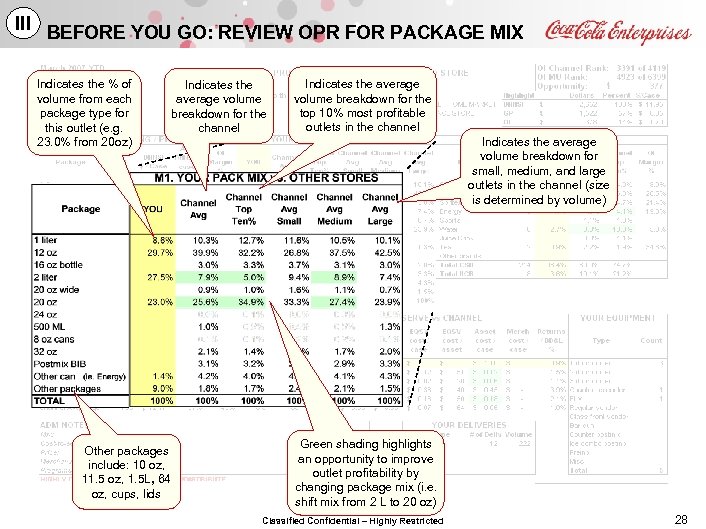
III BEFORE YOU GO: REVIEW OPR FOR PACKAGE MIX Indicates the % of volume from each package type for this outlet (e. g. 23. 0% from 20 oz) 91. 6% from BIB) Indicates the average volume breakdown for the channel Other packages include: 10 oz, 11. 5 oz, 1. 5 L, 64 32 oz, and 64 oz oz, cups, lids Indicates the average volume breakdown for the top 10% most profitable outlets in the channel Indicates the average volume breakdown for small, medium, and large outlets in the channel (size is determined by volume) Green shading highlights an opportunity to improve outlet profitability by changing package mix (i. e. shift mix from 2 L to 20 oz) Classified Confidential – Highly Restricted 28
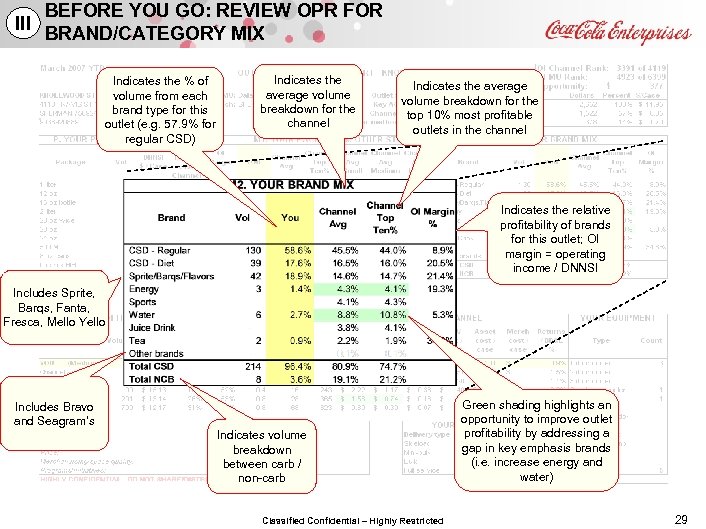
BEFORE YOU GO: REVIEW OPR FOR III BRAND/CATEGORY MIX Indicates the % of volume from each brand type for this outlet (e. g. 37. 1% for 57. 9% 34. 2% regular CSD) Indicates the average volume breakdown for the channel Indicates the average volume breakdown for the top 10% most profitable outlets in the channel Indicates the relative profitability of brands for this outlet; OI margin = operating income / DNNSI Includes Sprite, Barqs, Fanta, Fresca, Mello Yello Includes Bravo and Seagram’s Indicates volume breakdown between carb / non-carb Classified Confidential – Highly Restricted Green shading highlights an opportunity to improve outlet profitability by addressing a gap in key emphasis brands (i. e. increase energy and (e. g. water or energy) water) 29
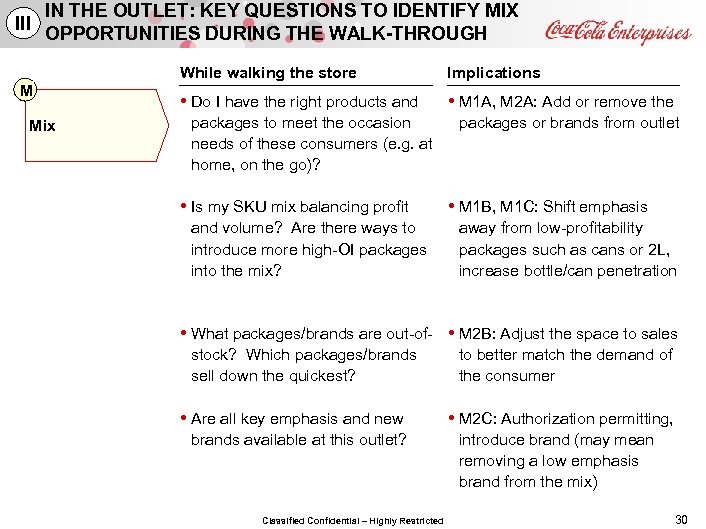
IN THE OUTLET: KEY QUESTIONS TO IDENTIFY MIX III OPPORTUNITIES DURING THE WALK-THROUGH M Mix While walking the store Implications • Do I have the right products and • M 1 A, M 2 A: Add or remove the packages to meet the occasion needs of these consumers (e. g. at home, on the go)? • Is my SKU mix balancing profit and volume? Are there ways to introduce more high-OI packages into the mix? packages or brands from outlet • M 1 B, M 1 C: Shift emphasis away from low-profitability packages such as cans or 2 L, increase bottle/can penetration • What packages/brands are out-of- • M 2 B: Adjust the space to sales stock? Which packages/brands sell down the quickest? • Are all key emphasis and new brands available at this outlet? Classified Confidential – Highly Restricted to better match the demand of the consumer • M 2 C: Authorization permitting, introduce brand (may mean removing a low emphasis brand from the mix) 30
ACTIVITY A: IDENTIFYING MIX OPPORTUNITIES IN IV YOUR OUTLETS Instructions: With a partner, discuss two of your outlets and identify mix action steps. Be sure to address the following questions for each outlet: 1. What is the area of opportunity (brand package)? 2. How did you identify this opportunity? 3. What specific action step will you use to address this area? (If possible, choose outlets so that all multiple specific action steps are discussed in each group) Time: 10 minutes Classified Confidential – Highly Restricted 31
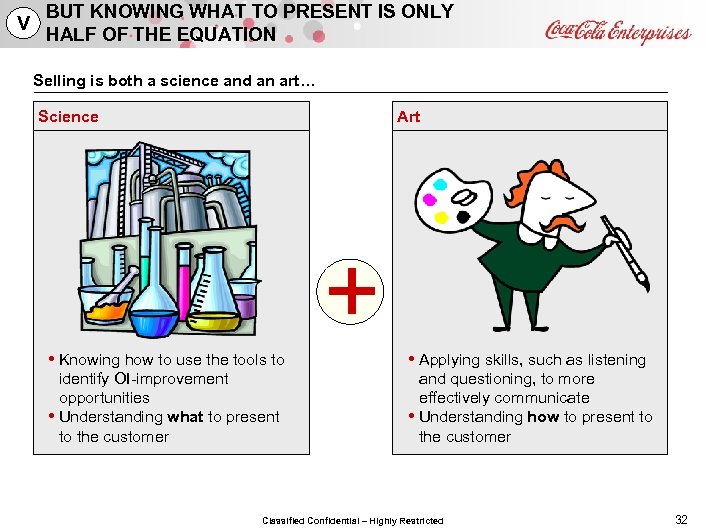
V BUT KNOWING WHAT TO PRESENT IS ONLY HALF OF THE EQUATION Selling is both a science and an art… Science Art + • Knowing how to use the tools to • Applying skills, such as listening identify OI-improvement opportunities • Understanding what to present to the customer and questioning, to more effectively communicate • Understanding how to present to the customer Classified Confidential – Highly Restricted 32
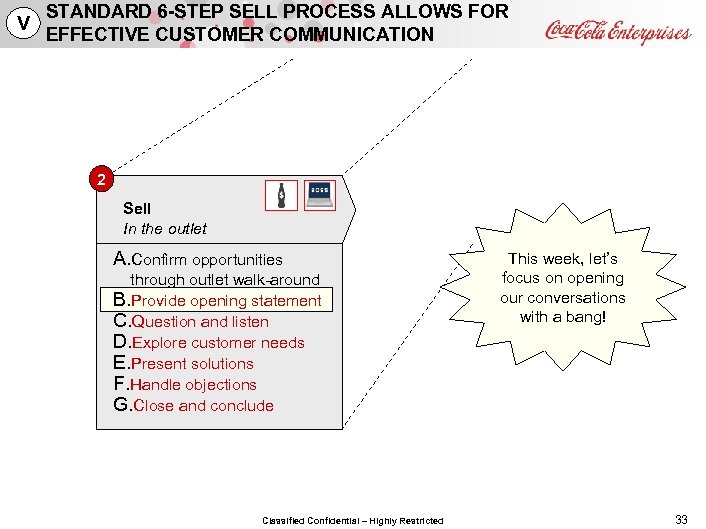
V STANDARD 6 -STEP SELL PROCESS ALLOWS FOR EFFECTIVE CUSTOMER COMMUNICATION 2 Sell In the outlet A. Confirm opportunities through outlet walk-around B. Provide opening statement C. Question and listen D. Explore customer needs E. Present solutions F. Handle objections G. Close and conclude Classified Confidential – Highly Restricted This week, let’s focus on opening our conversations with a bang! 33
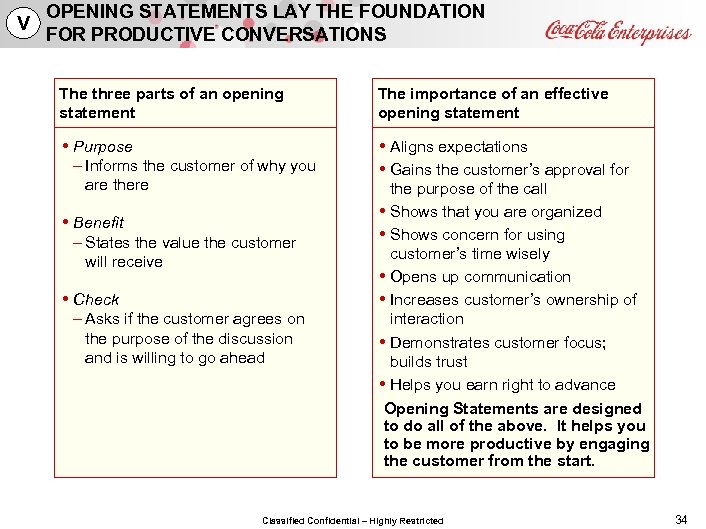
V OPENING STATEMENTS LAY THE FOUNDATION FOR PRODUCTIVE CONVERSATIONS The three parts of an opening statement The importance of an effective opening statement • Purpose • Aligns expectations • Gains the customer’s approval for – Informs the customer of why you are there • Benefit – States the value the customer will receive • Check – Asks if the customer agrees on the purpose of the discussion and is willing to go ahead the purpose of the call • Shows that you are organized • Shows concern for using customer’s time wisely • Opens up communication • Increases customer’s ownership of interaction • Demonstrates customer focus; builds trust • Helps you earn right to advance Opening Statements are designed to do all of the above. It helps you to be more productive by engaging the customer from the start. Classified Confidential – Highly Restricted 34
ACTIVITY B: PRESENTING POWERFUL SELL-IN VI STORIES TO YOUR CUSTOMERS Instructions: • For one of the opportunities you identified in Activity A, prepare a sell-in story – Ensure that you and your partner have not chosen the same opportunity • Take time to develop a powerful opening statement • With a partner, role-play your customer interaction to sell-in the action step – Each partner will be the customer once - 2 role plays in total – As a customer, be sure to test the ADM (some potential objections are listed on the next slide) Time: 15 minutes Classified Confidential – Highly Restricted 35
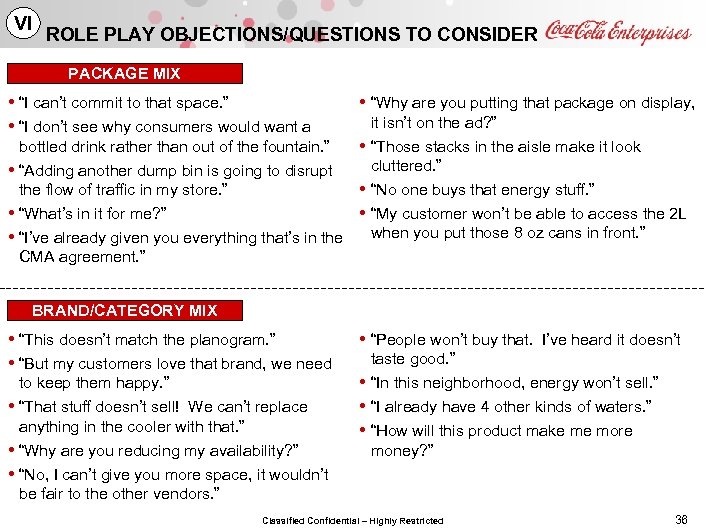
VI ROLE PLAY OBJECTIONS/QUESTIONS TO CONSIDER PACKAGE MIX • “I can’t commit to that space. ” • “I don’t see why consumers would want a bottled drink rather than out of the fountain. ” • “Adding another dump bin is going to disrupt the flow of traffic in my store. ” • “What’s in it for me? ” • “I’ve already given you everything that’s in the • “Why are you putting that package on display, it isn’t on the ad? ” • “Those stacks in the aisle make it look cluttered. ” • “No one buys that energy stuff. ” • “My customer won’t be able to access the 2 L when you put those 8 oz cans in front. ” CMA agreement. ” BRAND/CATEGORY MIX • “This doesn’t match the planogram. ” • “But my customers love that brand, we need to keep them happy. ” • “That stuff doesn’t sell! We can’t replace anything in the cooler with that. ” • “Why are you reducing my availability? ” • “No, I can’t give you more space, it wouldn’t • “People won’t buy that. I’ve heard it doesn’t taste good. ” • “In this neighborhood, energy won’t sell. ” • “I already have 4 other kinds of waters. ” • “How will this product make me more money? ” be fair to the other vendors. ” Classified Confidential – Highly Restricted 36
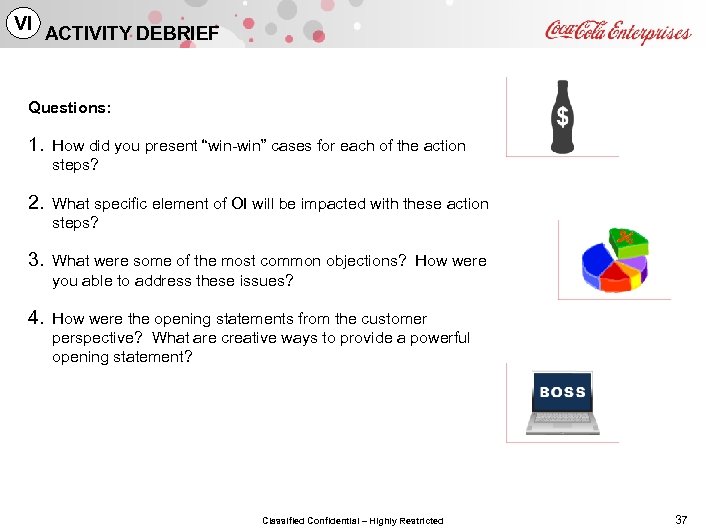
VI ACTIVITY DEBRIEF Questions: 1. How did you present “win-win” cases for each of the action steps? 2. What specific element of OI will be impacted with these action steps? 3. What were some of the most common objections? How were you able to address these issues? 4. How were the opening statements from the customer perspective? What are creative ways to provide a powerful opening statement? Classified Confidential – Highly Restricted 37
KEY TAKEAWAYS ON MIX 1. Apply the selling opportunities every time you plan for an outlet visit and make a visit • In Mix specifically, ask if you have the right package and brand/category mix in each outlet 2. Store walk-throughs needed to confirm opportunity areas identified during preparation • While the outlet profitability report reveals where opportunity areas exists, familiarity with the store is necessary to plan specific, tangible action steps 3. Selling is both science and art • Understanding how to talk to customers is just as important as knowing what to say to customers Classified Confidential – Highly Restricted 38
PUT THIS LEARNING INTO PRACTICE! Next steps: 1. Focus on the selling opportunities in the mix category this week. While preparing for your visits and walking the stores, identify action steps that will positively impact operating income. 2. With your identified opportunities, develop sell-in stories and share them with your customers, paying close attention to practice your opening statements. Classified Confidential – Highly Restricted 39
30 Minute Lunch
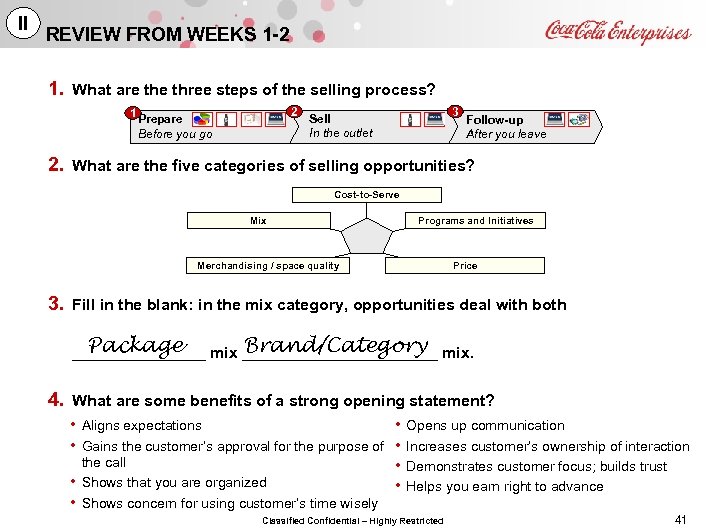
II REVIEW FROM WEEKS 1 -2 1. What are three steps of the selling process? 2 1 Prepare Before you go 3 Sell In the outlet Follow-up After you leave 2. What are the five categories of selling opportunities? Cost-to-Serve Mix Programs and Initiatives Merchandising / space quality Price 3. Fill in the blank: in the mix category, opportunities deal with both Package Brand/Category ________ mix ___________ mix. 4. What are some benefits of a strong opening statement? • Aligns expectations • Opens up communication • Gains the customer’s approval for the purpose of • Increases customer’s ownership of interaction the call • Demonstrates customer focus; builds trust • Shows that you are organized • Helps you earn right to advance • Shows concern for using customer’s time wisely Classified Confidential – Highly Restricted 41
Sustaining Customer Excellence: Reinforcement Session Three (On-Premise)
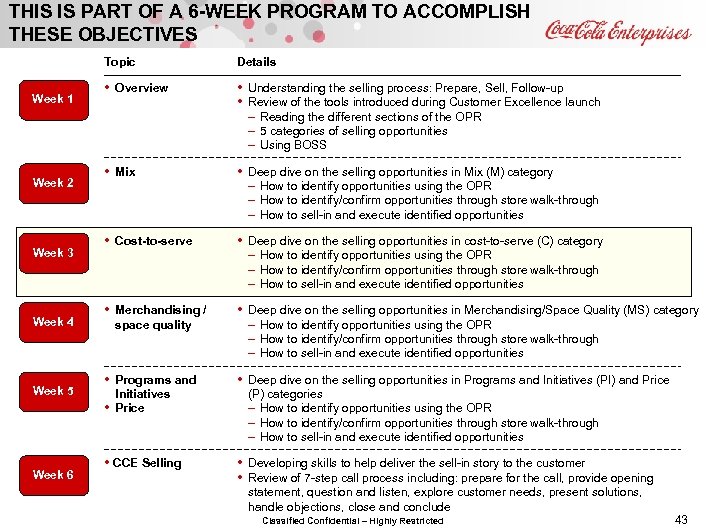
THIS IS PART OF A 6 -WEEK PROGRAM TO ACCOMPLISH THESE OBJECTIVES Topic Week 1 Details • Overview • Understanding the selling process: Prepare, Sell, Follow-up • Review of the tools introduced during Customer Excellence launch – Reading the different sections of the OPR – 5 categories of selling opportunities – Using BOSS Week 2 Week 3 Week 4 Week 5 • Mix • Deep dive on the selling opportunities in Mix (M) category • Cost-to-serve • Deep dive on the selling opportunities in cost-to-serve (C) category • Merchandising / • Deep dive on the selling opportunities in Merchandising/Space Quality (MS) category space quality • Programs and • Week 6 Initiatives Price • CCE Selling – How to identify opportunities using the OPR – How to identify/confirm opportunities through store walk-through – How to sell-in and execute identified opportunities • Deep dive on the selling opportunities in Programs and Initiatives (PI) and Price (P) categories – How to identify opportunities using the OPR – How to identify/confirm opportunities through store walk-through – How to sell-in and execute identified opportunities • Developing skills to help deliver the sell-in story to the customer • Review of 7 -step call process including: prepare for the call, provide opening statement, question and listen, explore customer needs, present solutions, handle objections, close and conclude Classified Confidential – Highly Restricted 43
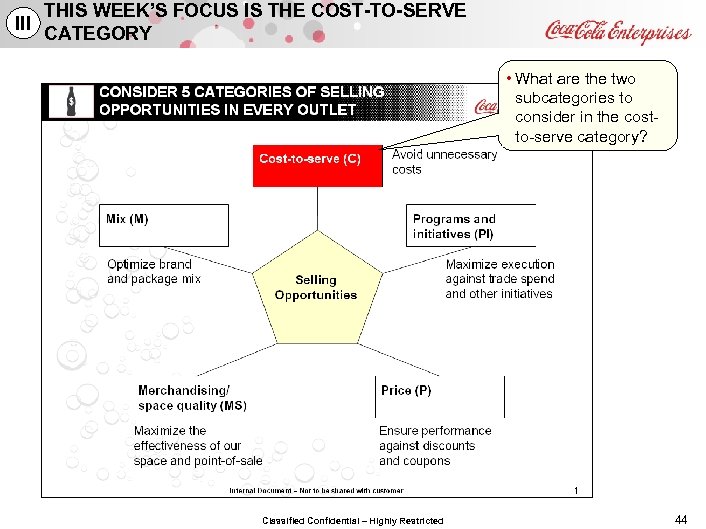
THIS WEEK’S FOCUS IS THE COST-TO-SERVE III CATEGORY • What are the two subcategories to consider in the costto-serve category? Classified Confidential – Highly Restricted 44
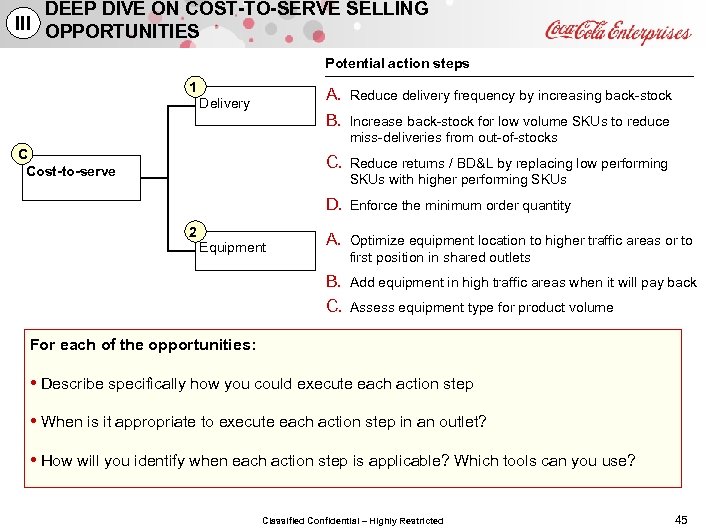
DEEP DIVE ON COST-TO-SERVE SELLING III OPPORTUNITIES Potential action steps 1 A. Reduce delivery frequency by increasing back-stock B. Increase back-stock for low volume SKUs to reduce Delivery miss-deliveries from out-of-stocks C Cost-to-serve C. Reduce returns / BD&L by replacing low performing SKUs with higher performing SKUs D. Enforce the minimum order quantity 2 Equipment A. Optimize equipment location to higher traffic areas or to first position in shared outlets B. Add equipment in high traffic areas when it will pay back C. Assess equipment type for product volume For each of the opportunities: • Describe specifically how you could execute each action step • When is it appropriate to execute each action step in an outlet? • How will you identify when each action step is applicable? Which tools can you use? Classified Confidential – Highly Restricted 45
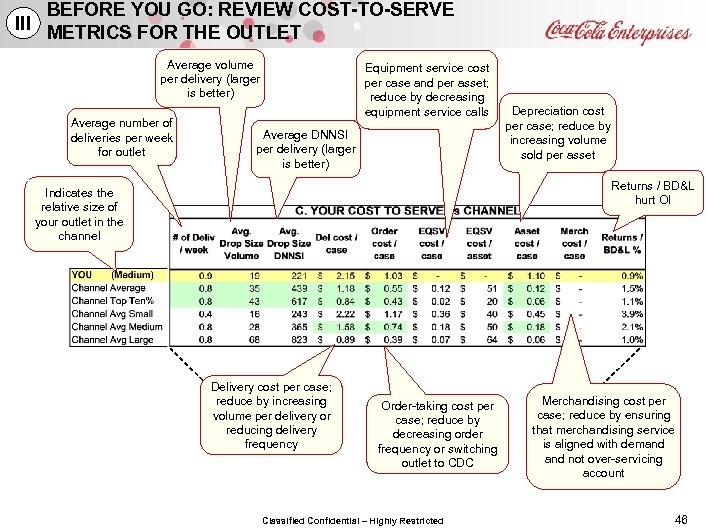
BEFORE YOU GO: REVIEW COST-TO-SERVE III METRICS FOR THE OUTLET Average volume per delivery (larger is better) Average number of deliveries per week for outlet Equipment service cost per case and per asset; reduce by decreasing equipment service calls Average DNNSI per delivery (larger is better) Depreciation cost per case; reduce by increasing volume sold per asset Returns / BD&L hurt OI Indicates the relative size of your outlet in the channel Delivery cost per case; reduce by increasing volume per delivery or reducing delivery frequency Order-taking cost per case; reduce by decreasing order frequency or switching outlet to CDC Classified Confidential – Highly Restricted Merchandising cost per case; reduce by ensuring that merchandising service is aligned with demand not over-servicing account 46
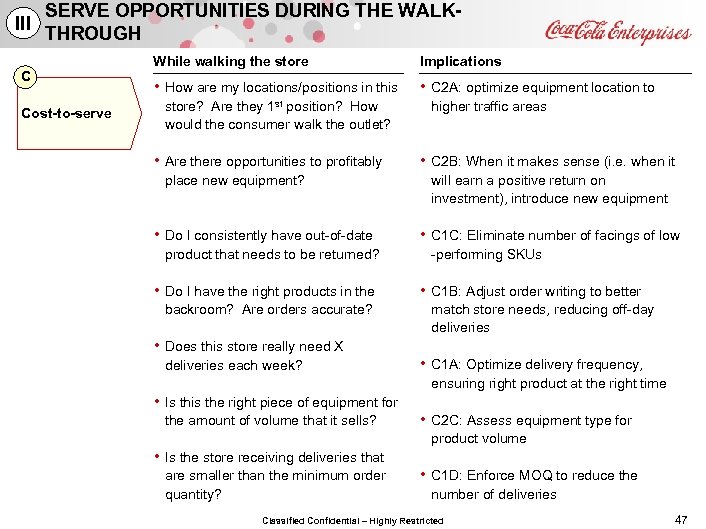
SERVE OPPORTUNITIES DURING THE WALK- III THROUGH C Cost-to-serve While walking the store Implications • How are my locations/positions in this • C 2 A: optimize equipment location to 1 st store? Are they position? How would the consumer walk the outlet? • Are there opportunities to profitably place new equipment? • Do I consistently have out-of-date product that needs to be returned? • Do I have the right products in the backroom? Are orders accurate? • Does this store really need X deliveries each week? • Is this the right piece of equipment for the amount of volume that it sells? • Is the store receiving deliveries that are smaller than the minimum order quantity? higher traffic areas • C 2 B: When it makes sense (i. e. when it will earn a positive return on investment), introduce new equipment • C 1 C: Eliminate number of facings of low -performing SKUs • C 1 B: Adjust order writing to better match store needs, reducing off-day deliveries • C 1 A: Optimize delivery frequency, ensuring right product at the right time • C 2 C: Assess equipment type for product volume • C 1 D: Enforce MOQ to reduce the number of deliveries Classified Confidential – Highly Restricted 47
ACTIVITY A: IDENTIFYING COST-TO-SERVE IV OPPORTUNITIES IN YOUR OUTLETS Instructions: With a partner, discuss two of your outlets and identify cost action steps. Be sure to address the following questions for each outlet: 1. What is the area of opportunity (delivery, equipment, returns)? 2. How did you identify this opportunity? 3. What specific action step will you use to address this area? (If possible, choose outlets so that specific action steps are discussed only once in each group) Time: 10 minutes Classified Confidential – Highly Restricted 48
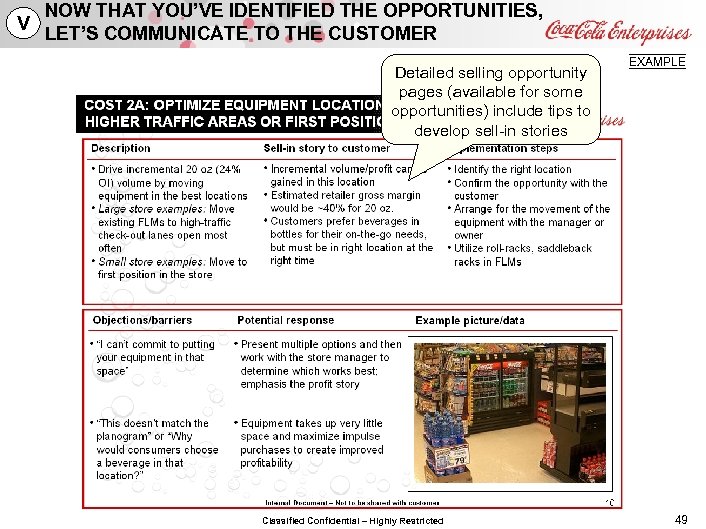
NOW THAT YOU’VE IDENTIFIED THE OPPORTUNITIES, V LET’S COMMUNICATE TO THE CUSTOMER Detailed selling opportunity pages (available for some opportunities) include tips to develop sell-in stories Classified Confidential – Highly Restricted EXAMPLE 49
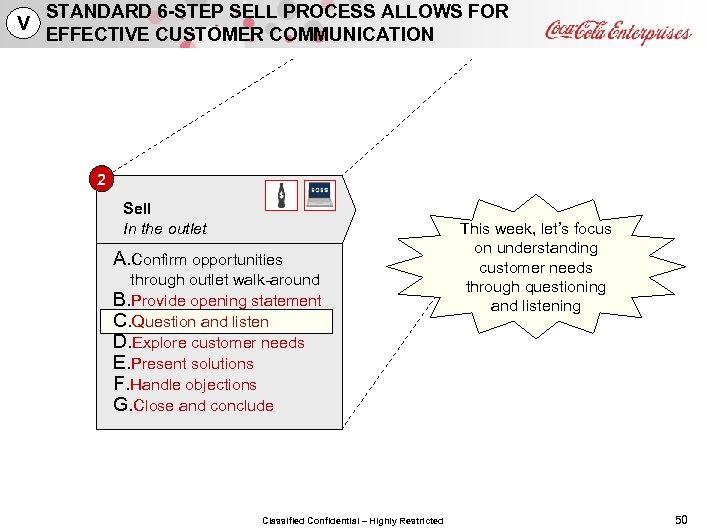
V STANDARD 6 -STEP SELL PROCESS ALLOWS FOR EFFECTIVE CUSTOMER COMMUNICATION 2 Sell In the outlet A. Confirm opportunities through outlet walk-around B. Provide opening statement C. Question and listen D. Explore customer needs E. Present solutions F. Handle objections G. Close and conclude Classified Confidential – Highly Restricted This week, let’s focus on understanding customer needs through questioning and listening 50
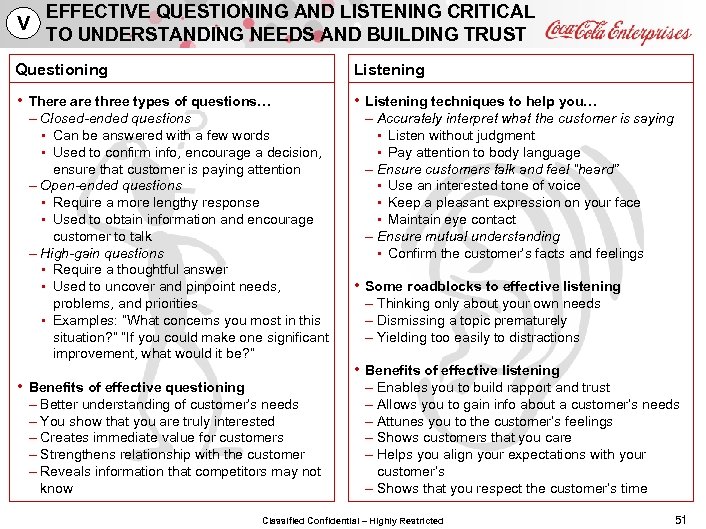
V EFFECTIVE QUESTIONING AND LISTENING CRITICAL TO UNDERSTANDING NEEDS AND BUILDING TRUST Questioning Listening • There are three types of questions… • Listening techniques to help you… – Closed-ended questions • Can be answered with a few words • Used to confirm info, encourage a decision, ensure that customer is paying attention – Open-ended questions • Require a more lengthy response • Used to obtain information and encourage customer to talk – High-gain questions • Require a thoughtful answer • Used to uncover and pinpoint needs, problems, and priorities • Examples: “What concerns you most in this situation? ” “If you could make one significant improvement, what would it be? ” • Benefits of effective questioning – Better understanding of customer’s needs – You show that you are truly interested – Creates immediate value for customers – Strengthens relationship with the customer – Reveals information that competitors may not know – Accurately interpret what the customer is saying • Listen without judgment • Pay attention to body language – Ensure customers talk and feel “heard” • Use an interested tone of voice • Keep a pleasant expression on your face • Maintain eye contact – Ensure mutual understanding • Confirm the customer’s facts and feelings • Some roadblocks to effective listening – Thinking only about your own needs – Dismissing a topic prematurely – Yielding too easily to distractions • Benefits of effective listening – Enables you to build rapport and trust – Allows you to gain info about a customer’s needs – Attunes you to the customer’s feelings – Shows customers that you care – Helps you align your expectations with your customer’s – Shows that you respect the customer’s time Classified Confidential – Highly Restricted 51
ACTIVITY B: PRESENTING POWERFUL SELL-IN VI STORIES TO YOUR CUSTOMERS Instructions: • For one of the opportunities you identified in Activity A, prepare a sell-in story – Ensure that you and your partner have not chosen the same opportunity • Take time to develop an opening statement • Think about 3 -4 questions you can ask to help uncover the customer’s needs and practice listening effectively • With a partner, role-play your customer interaction to sell-in the action step – Each partner will be the customer once - 2 role plays in total – As a customer, be sure to test the ADM (some potential objections are listed on the next slide) Time: 15 minutes Classified Confidential – Highly Restricted 52
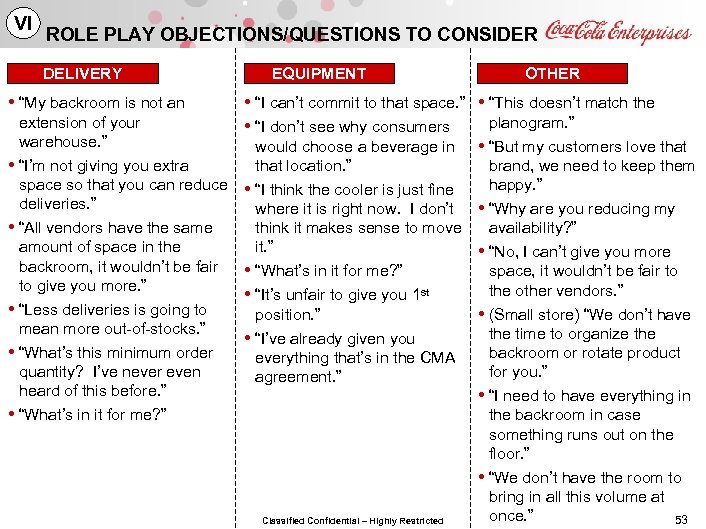
VI ROLE PLAY OBJECTIONS/QUESTIONS TO CONSIDER DELIVERY • “My backroom is not an extension of your warehouse. ” • “I’m not giving you extra space so that you can reduce deliveries. ” • “All vendors have the same amount of space in the backroom, it wouldn’t be fair to give you more. ” • “Less deliveries is going to mean more out-of-stocks. ” • “What’s this minimum order quantity? I’ve never even heard of this before. ” • “What’s in it for me? ” EQUIPMENT OTHER • “I can’t commit to that space. ” • “This doesn’t match the planogram. ” • “I don’t see why consumers would choose a beverage in • “But my customers love that location. ” • “I think the cooler is just fine where it is right now. I don’t think it makes sense to move it. ” • “What’s in it for me? ” • “It’s unfair to give you 1 st position. ” • “I’ve already given you everything that’s in the CMA agreement. ” Classified Confidential – Highly Restricted brand, we need to keep them happy. ” • “Why are you reducing my availability? ” • “No, I can’t give you more space, it wouldn’t be fair to the other vendors. ” • (Small store) “We don’t have the time to organize the backroom or rotate product for you. ” • “I need to have everything in the backroom in case something runs out on the floor. ” • “We don’t have the room to bring in all this volume at once. ” 53
VI ACTIVITY DEBRIEF Questions: 1. How did you present “win-win” cases for each of the action steps? 2. What specific element of OI will be impacted by implementing the recommended action steps? 3. What were some of the most common objections? How were you able to address these issues? 4. What information did you obtain from effectively questioning and listening? 5. What questions were most effective in helping you understand the customer’s needs? Classified Confidential – Highly Restricted 54
KEY TAKEAWAYS ON COST-TO-SERVE 1. Apply the selling opportunities every time you plan for an outlet visit and make a visit • Ask if you have opportunities to improve cost-toserve by considering the number of deliveries and equipment in the outlet 2. Store walk-throughs needed to confirm opportunity areas identified during preparation • While the outlet profitability report reveals where opportunity areas exists, familiarity with the store is necessary to plan specific, tangible action steps 3. Effective questioning and listening goes a long way • Knowing how to engage the customer is critical to understanding customer needs and building trust Classified Confidential – Highly Restricted 55
PUT THIS LEARNING INTO PRACTICE! Next steps: 1. Focus on the selling opportunities in the cost-to-serve category this week. While preparing for your visits and walking the stores, identify action steps that will positively impact operating income. 2. With your identified opportunities, develop sell-in stories and share them with your customers, paying close attention to practice asking high-gain questions and listening effectively. Classified Confidential – Highly Restricted 56
10 Minute Break
Скачать презентацию Sustaining Customer Excellence Reinforcement Sessions On-Premise Brian
21c9079bf1f58b582f371a6778ca7950.ppt