


 Скачать презентацию Sustaining Change How to make lasting changes in
a3f79eebf0634eb5d3bb14a4a1628ee7.ppt
- Количество слайдов: 34
 Sustaining Change How to make lasting changes in your primary care practice Sue Butts-Dion Improvement Advisor Institute for Healthcare Improvement This project was supported by grant number R 18 HS 019508 from the Agency for Healthcare Research and Quality (AHRQ). The content is solely the responsibility of the authors and does not necessarily represent the official view of the AHRQ.
 Learning Objectives By the end of this module you will be able to: l l Identify characteristics that make it easier to sustain change and improvement Utilize a checklist of considerations when working to sustain change Describe gaps in your practice as it relates to sustaining change List something that you could test immediately in your organization 2
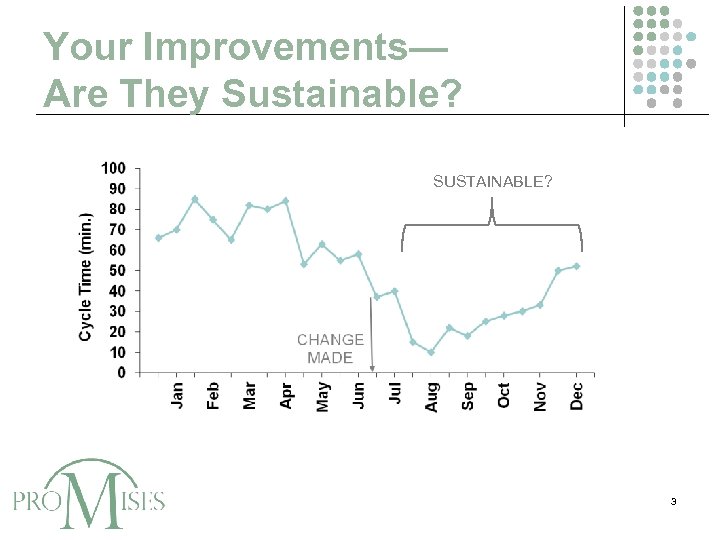 Your Improvements— Are They Sustainable? SUSTAINABLE? 3
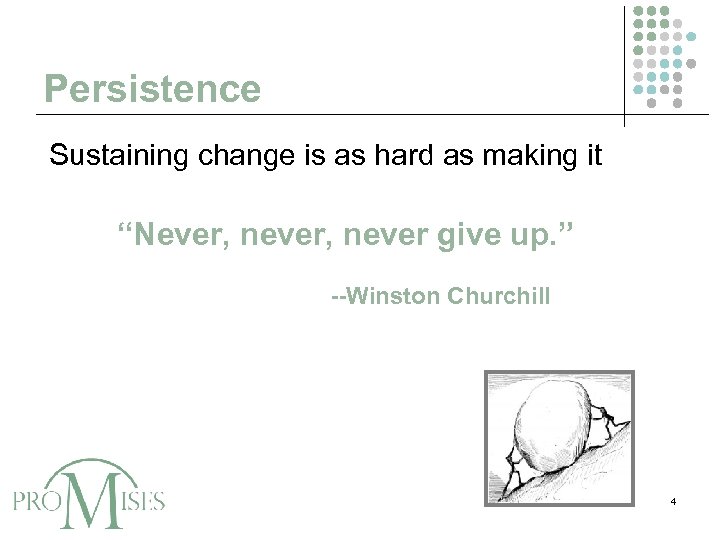 Persistence Sustaining change is as hard as making it “Never, never give up. ” --Winston Churchill 4
 Practice Exercise Think of a change that was sustained l What characteristics were present? l List them Then l Think of a change that was not sustained l What characteristics were absent? l List them l 5
 Were these items on your list? 6
 Were these items on your list? l New way was better than old way 7
 Were these items on your list? l l New way was better than old way Desire to want to change (urgency) 8
 Were these items on your list? l l l New way was better than old way Desire to want to change (urgency) Had a clear vision—we knew why we were doing it 9
 Were these items on your list? l l New way was better than old way Desire to want to change (urgency) Had a clear vision—we knew why we were doing it Had a way to measure that we were holding our gains 10
 Were these items on your list? l l l New way was better than old way Desire to want to change (urgency) Had a clear vision—we knew why we were doing it Had a way to measure that we were holding our gains Someone took ownership 11
 Were these items on your list? l l l New way was better than old way Desire to want to change (urgency) Had a clear vision—we knew why we were doing it Had a way to measure that we were holding our gains Someone took ownership Had a coach 12
 Were these items on your list? l l l l New way was better than old way Desire to want to change (urgency) Had a clear vision—we knew why we were doing it Had a way to measure that we were holding our gains Someone took ownership Had a coach Support for the change (people, resources, etc. ) 13
 Were these items on your list? l l l l New way was better than old way Desire to want to change (urgency) Had a clear vision—we knew why we were doing it Had a way to measure that we were holding our gains Someone took ownership Had a coach Support for the change (people, resources, etc. ) Recognized and understood competing commitments 14
 Characteristics Present in Organizations Able to Sustain Change l l l Support from management Robust, transparent feedback systems Shared sense of the systems to be improved Culture of improvement; deeply engaged staff Formal capacity-building programs Built-in structures to “foolproof” change 15
 Helpful 7 -Question Checklist Do we have process owners (a “home”) and leadership support? Do we have a consensus understanding of what’s being improved? Do we have built-in structures to “foolproof” the change? Do we have a way to measure that the change is still working? Do we have transparent communication/feedback systems in place? Do we celebrate (even the small things)? Do we engage/involve patients, families, clients, and customers? 16
 Example: Damian Folch, MD Problem: 45, 000 open orders in EMR Solution: Staff closed all open lab orders! How can Dr. Folch now sustain and continuously improve this change? Hear Dr. Folch describe his improvement journey 17
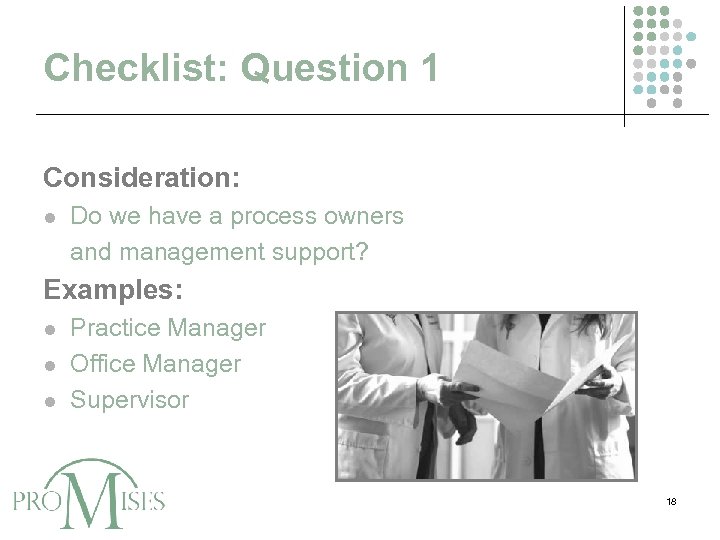 Checklist: Question 1 Consideration: l Do we have a process owners and management support? Examples: l l l Practice Manager Office Manager Supervisor 18
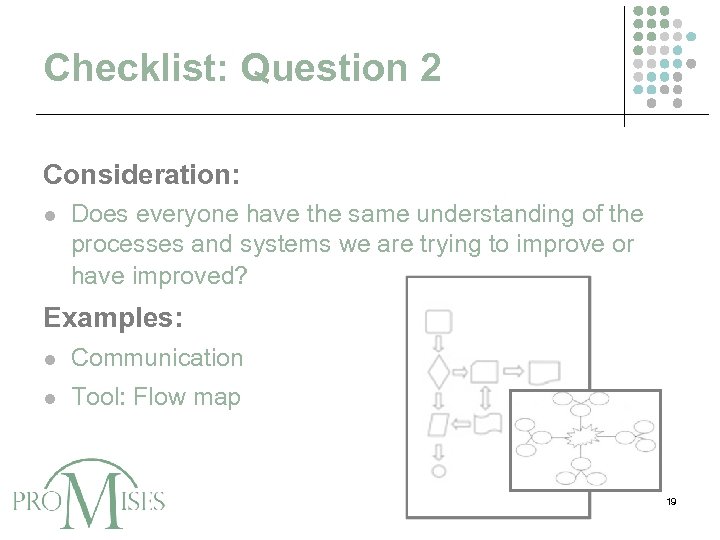 Checklist: Question 2 Consideration: l Does everyone have the same understanding of the processes and systems we are trying to improve or have improved? Examples: l Communication l Tool: Flow map 19
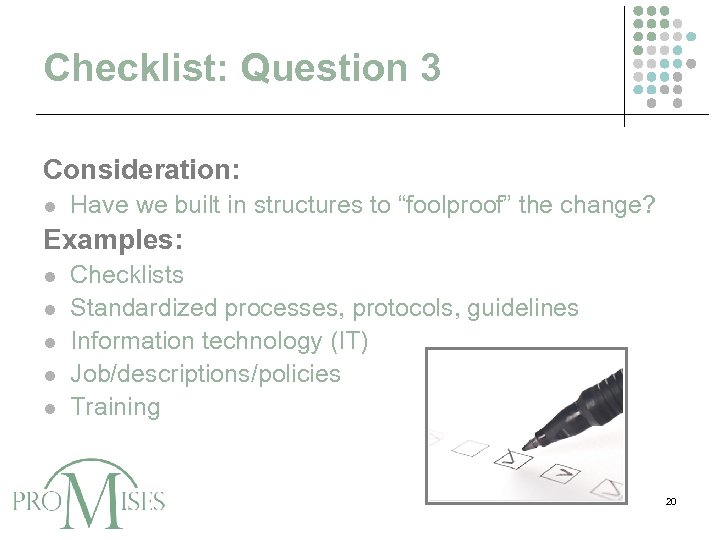 Checklist: Question 3 Consideration: l Have we built in structures to “foolproof” the change? Examples: l l l Checklists Standardized processes, protocols, guidelines Information technology (IT) Job/descriptions/policies Training 20
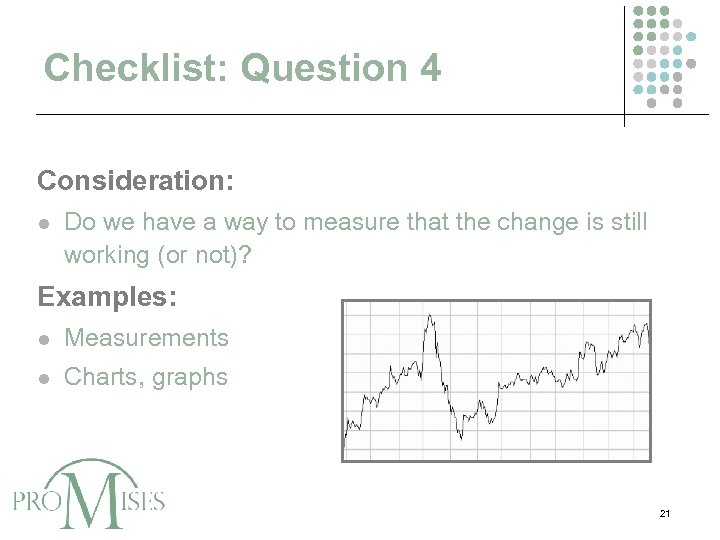 Checklist: Question 4 Consideration: l Do we have a way to measure that the change is still working (or not)? Examples: l Measurements l Charts, graphs 21
 Checklist: Question 5 Consideration: l Do we have transparent communication and feedback systems in place? Examples: l l l Communication plan “Six times, six different ways” Huddles (only 10 -15 min. ) 22
 Checklist: Question 6 Consideration: l Do we celebrate—even the seemingly small wins? Examples: l l l Lunch time party Celebration Acknowledgements 23
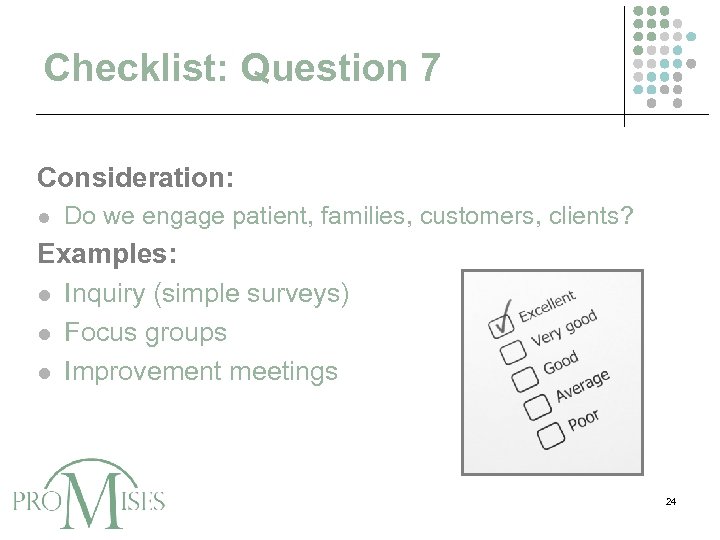 Checklist: Question 7 Consideration: l Do we engage patient, families, customers, clients? Examples: l Inquiry (simple surveys) l Focus groups l Improvement meetings 24
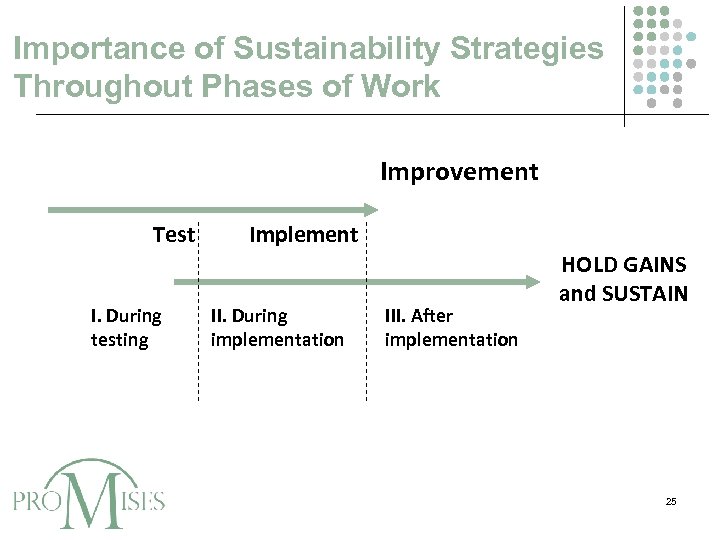 Importance of Sustainability Strategies Throughout Phases of Work Improvement Test I. During testing Implement II. During implementation III. After implementation HOLD GAINS and SUSTAIN 25
 In Summary… As they say: 26
 In Summary… As they say: Improvement work is never completed and takes planning and time. § 27
 In Summary… As they say: Improvement work is never completed and takes planning and time. § Systems degrade, situations change. § 28
 In Summary… As they say: Improvement work is never completed and takes planning and time. § Systems degrade, situations change. § You must create a system of improvement to be on top of the situation. 29
 What Could You Do Today? A place to start—In the past year: l Note one improvement in your practice l Decide if the improvement was sustained l Determine why it was, or was not l Check if a step in the checklist was missed 30
 Thank You! Thank you for your time and attention today 31
 Want to learn more? l Refer to the NSPG Beverly video 32
 References l Improvement leaders’ guide to sustainability and spread. NHS Modernisation Agency. Ipswich, England: Ancient House Printing Group; 2002. Available: www. modern. nhs. uk/improvementguides/sustainability/fw. html l Spread and sustainability of service improvement: Factors identified by staff leading modernisation programmes. London, England: NHS Modernisation Agency; February 2003. Research into Practice, Report No. 4: Overview of early research findings. l Teamworking for improvement: Planning for spread and sustainability. London, England: NHS Modernisation Agency; August 2003. Research into Practice, Report No. 5. l Øvretveit J, Bate P, Cleary P, et al. Quality Collaboratives: Lessons from research. Qual Saf Health Care. Dec 2002; 11: 345 -351. l Juran J, Godfrey B. Juran’s Quality Handbook (5 th Edition). New York: Mc. Graw-Hill, 1998. (Chapter 4) 33
 References The NHS Institute for Innovation and Improvement offers spread and sustainability resources, including a model to assess likelihood of holding gains. See their website for more information: http: //www. institute. nhs. uk/sustainability_model/general/welcome_to_sustainability. ht ml http: //www. institute. nhs. uk/sustainability_model/introduction/find_out_more_about_the _model. html 34