 Скачать презентацию Sustainable Timber Action in Europe Training for Public
b0b4516b7483dba77d72f9519ad4ea8d.ppt
- Количество слайдов: 38



Sustainable Timber Action in Europe Training for Public Authorities Module 2 : Sustainable timber STA – EU Trainings: Raising awareness for Public Authorities (Place & Date)
Overview 1. Ecological, social and economic impacts from illegal logging and non-sustainable forest management 2. Legal timber products 3. Sustainable timber products and chain of costudy certification 4. Fair trade in the timber sector
Introduction: Group exercise • Do you know the origin of your timber products? • Do you think that nationally sold timber products could from tropical countries?
-1 Ecological, social and economic impacts from illegal logging and non -sustainable forest management
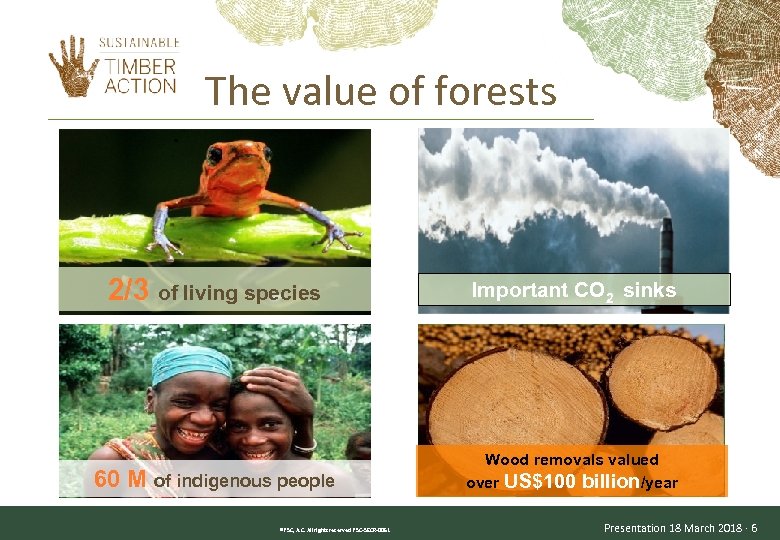
The value of forests 2/3 of living species Important CO 2 sinks 60 M of indigenous people Wood removals valued over US$100 billion/year ® FSC, A. C. All rights reserved FSC-SECR-0051 Presentation 18 March 2018 · 6
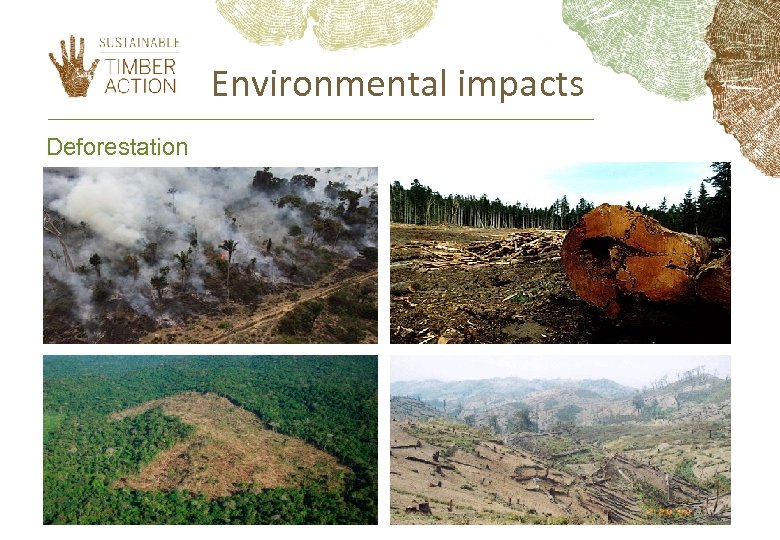
Environmental impacts Deforestation
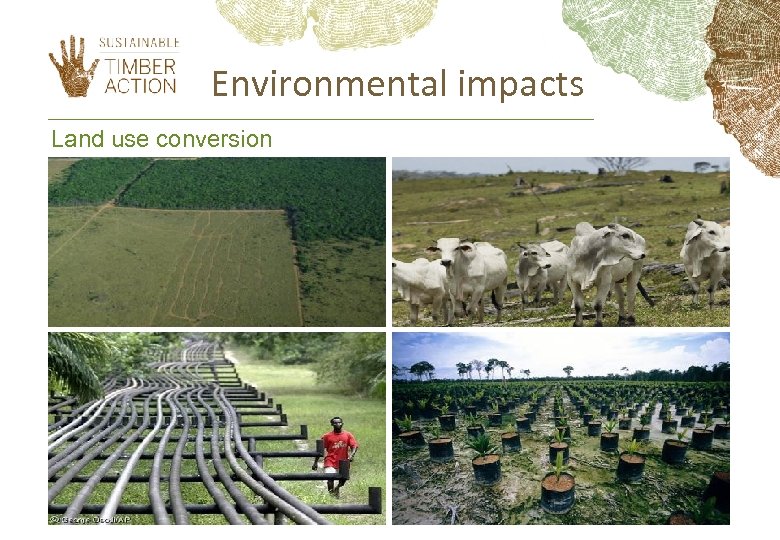
Environmental impacts Land use conversion
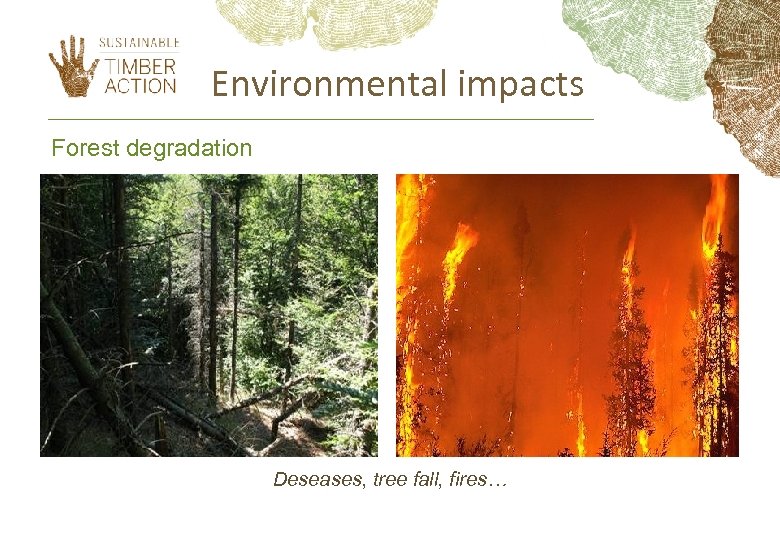
Environmental impacts Forest degradation Deseases, tree fall, fires…
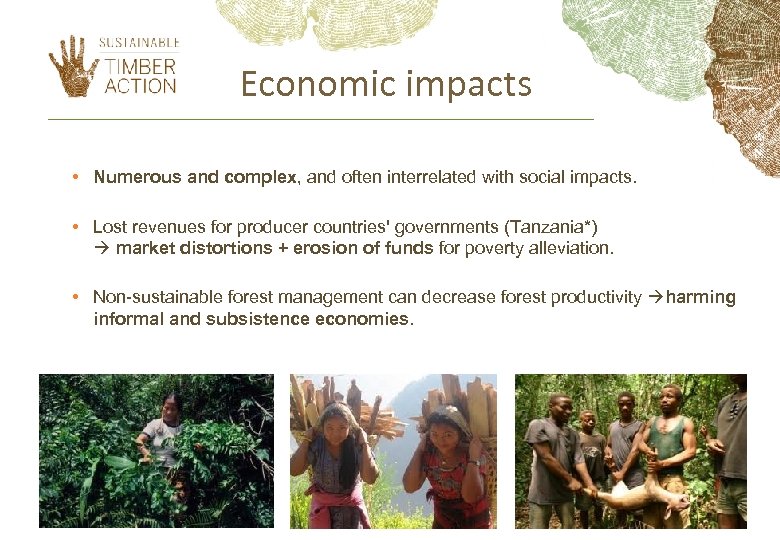
Economic impacts • Numerous and complex, and often interrelated with social impacts. • Lost revenues for producer countries' governments (Tanzania*) market distortions + erosion of funds for poverty alleviation. • Non-sustainable forest management can decrease forest productivity harming informal and subsistence economies.
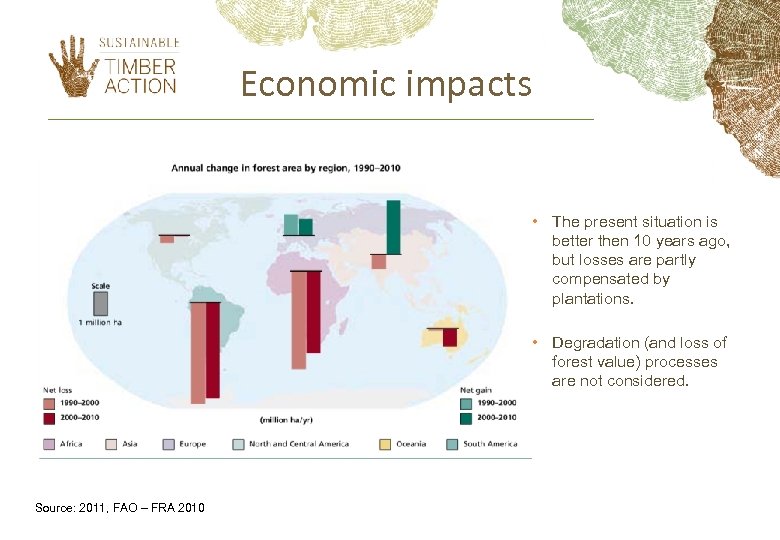
Economic impacts • The present situation is better then 10 years ago, but losses are partly compensated by plantations. • Degradation (and loss of forest value) processes are not considered. Source: 2011, FAO – FRA 2010
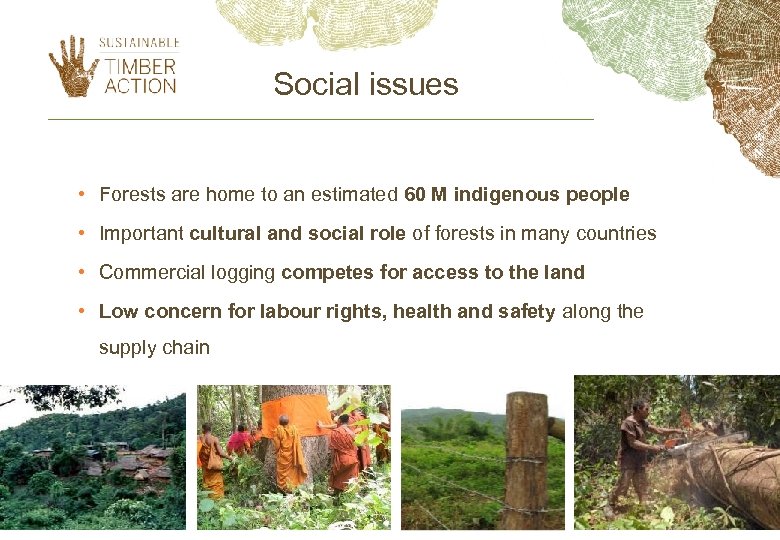
Social issues • Forests are home to an estimated 60 M indigenous people • Important cultural and social role of forests in many countries • Commercial logging competes for access to the land • Low concern for labour rights, health and safety along the supply chain
-2 Legal timber products
The illegal timber A general definition: ‘Illegal logging takes place when timber is harvested, transported, bought or sold in violation of national laws’ Examples of illegality in the forest sector: • Logging without license (wood theft) • Violation of forest regulations (species, quota) • Corruption in obtaining licenses
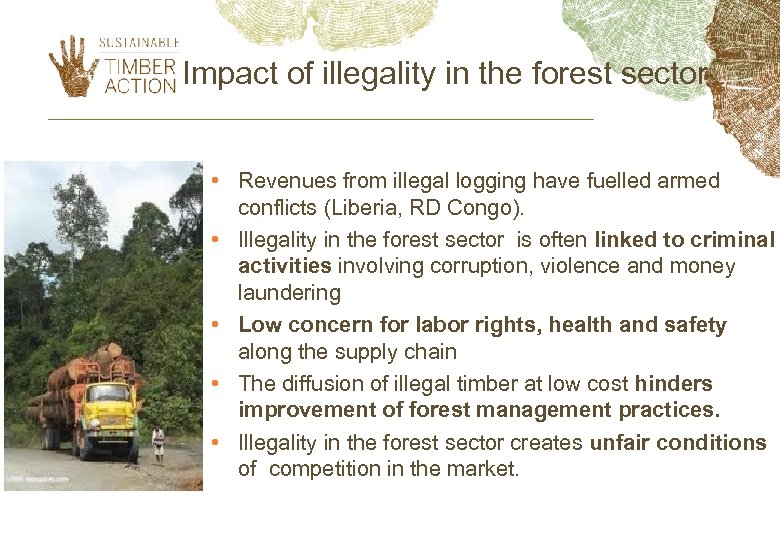
Impact of illegality in the forest sector • Revenues from illegal logging have fuelled armed conflicts (Liberia, RD Congo). • Illegality in the forest sector is often linked to criminal activities involving corruption, violence and money laundering • Low concern for labor rights, health and safety along the supply chain • The diffusion of illegal timber at low cost hinders improvement of forest management practices. • Illegality in the forest sector creates unfair conditions of competition in the market.
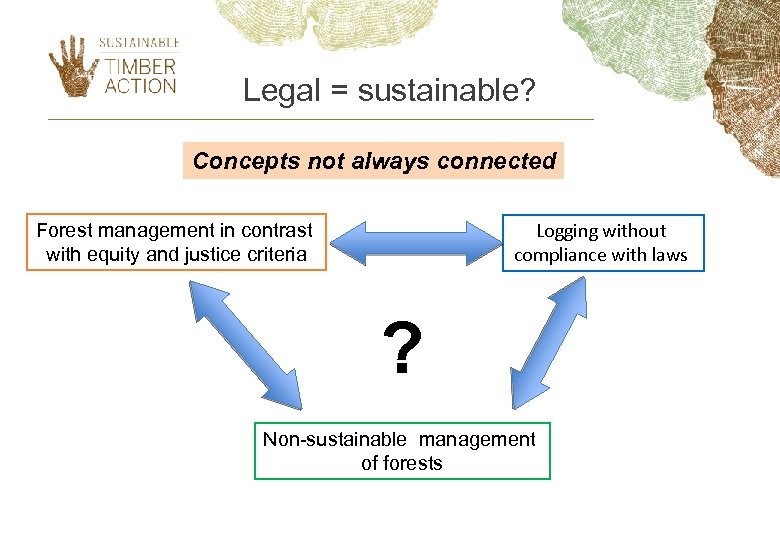
Legal = sustainable? Concepts not always connected Logging without compliance with laws Forest management in contrast with equity and justice criteria ? Non-sustainable management of forests
Illegalität in der Holzbranche BAD NEWS: • Every 2 seconds, across the world, an area of forest the size of a football field is clear-cut by illegal loggers -> degradation and destruction o 5 Mio ha forests/y • The illegal logs still being cut each year, laid end to end, would stretch ten times around the Earth. GOOD NEWS: • While illegal logging remains a major problem, the impact of the response has been considerable. Illegal logging is estimated to have fallen during the last decade by: • • 50 % in Cameroon by between 50 and 75 % in the Brazilian Amazon by 75 % in Indonesia, Imports to major consumer and processing countries dropped by 30 % from their peak (Source: Chatham House 2010)
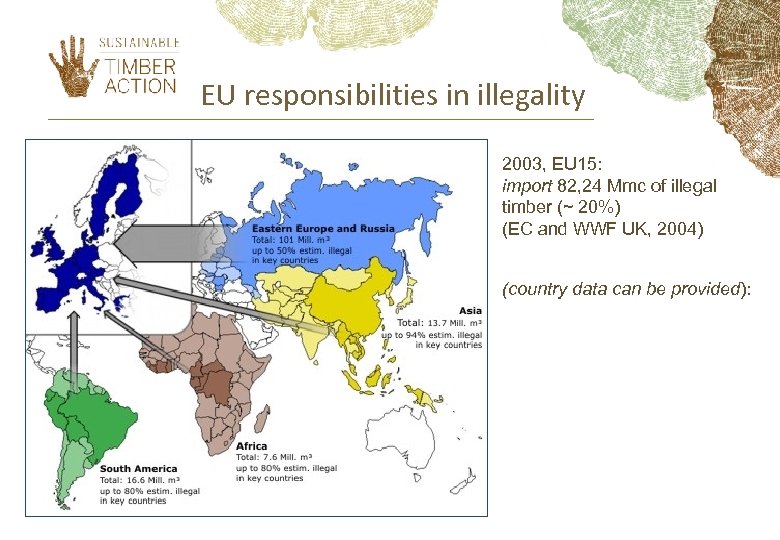
EU responsibilities in illegality 2003, EU 15: import 82, 24 Mmc of illegal timber (~ 20%) (EC and WWF UK, 2004) (country data can be provided):
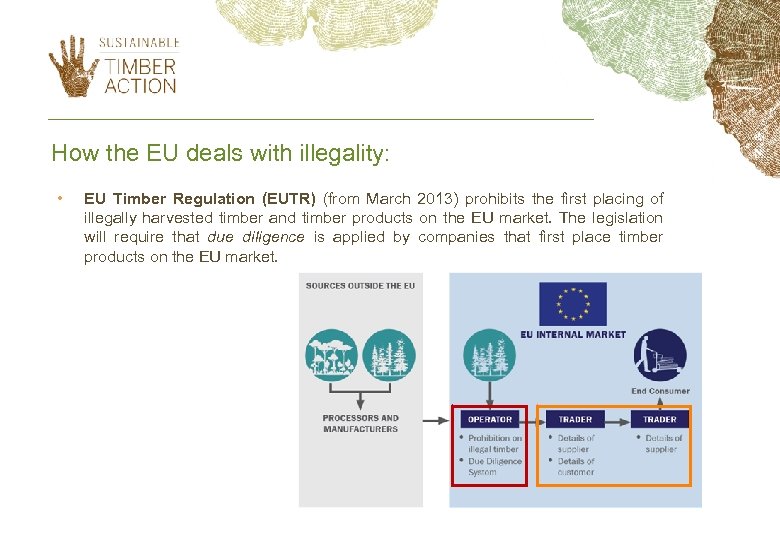
How the EU deals with illegality: • EU Timber Regulation (EUTR) (from March 2013) prohibits the first placing of illegally harvested timber and timber products on the EU market. The legislation will require that due diligence is applied by companies that first place timber products on the EU market.
-3 Sustainable timber products and their certification
What is sustainable timber? “Sustainable forest management, as a dynamic and evolving concept, aims to maintain and enhance the economic, social and environmental value of all types of forests, for the benefit of present and future generations” (UN, 2007)
Sustainable management of forest implies three main issues: • Legality – that the forest owner/manager holds the legal right to harvest, and timber is harvested, processed and traded in compliance with relevant international, national and regional laws. • Environmental sustainability – that the forest is managed in a way which preserves the health of the forest for future generations. • Social sustainability – that timber is harvested, processed and traded with respect to the rights and working conditions of those directly affected.
Ensuring sustainability The Forest Europe criteria for sustainable forest management (MCPFE) ASPECTS CRITERIA Ecological aspects 1. Maintenance and appropriate enhancement of forest resources and their contribution to global carbon cycles; 2. Maintenance of forest ecosystem health and vitality; 3. Maintenance, conservation and appropriate enhancement of biological diversity in forest ecosystems; 4. Maintenance and appropriate enhancement of protective functions in forest management (notably soil and water); Economic aspects 5. Maintenance and encouragement of productive functions of forests (wood and non wood); 6. Maintenance of other socio-economic functions and condition. Social aspects
SFM certification How is sustainability ensured “from tree to product”? A sustainable forest management certification scheme: • requires compliance with the principles of legality, environmental and social sustainability. • is able to provide independent, third party verification that timber is sourced from sustainably managed forests. • includes mechanisms for tracing products from the forest of origin through the supply chain, to the end consumers called Chain of Custody (Co. C).
SFM certification Internationally, 2 main forest certification schemes exist: • The Forest Stewardship Council (FSC) – www. fsc. org • The Programme for the Endorsement of Forest Certification (PEFC) – www. pefc. org Most sustainable timber procurement policies accept either label as one way of demonstrating compliance with the sustainability requirements
What is Co. C certification? • Chain of Custody (Co. C) Systems monitor sources, quantity balances and material flows for a given chain of costudy • Co. C requires a chain of information as well as a process of material separation from a clearly identified source up to a defined point in the value added chain • It establishes a connection between the origin forest and the statement of sustainability for the final product
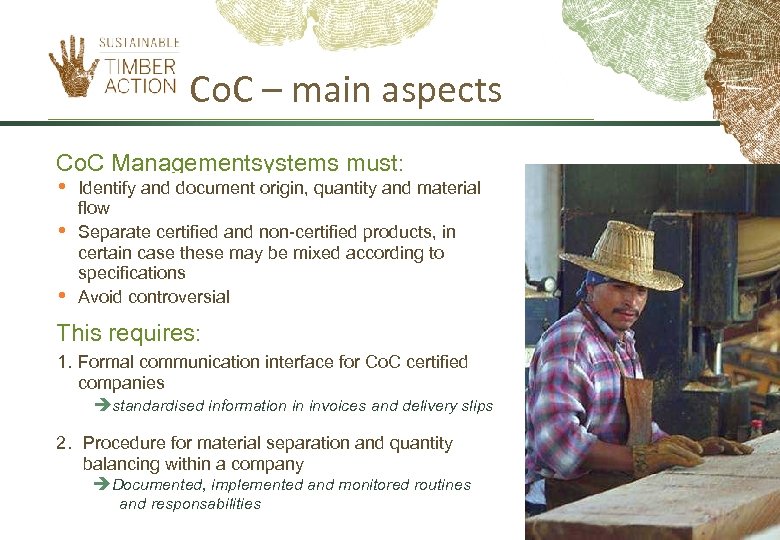
Co. C – main aspects Co. C Managementsystems must: • • • Identify and document origin, quantity and material flow Separate certified and non-certified products, in certain case these may be mixed according to specifications Avoid controversial This requires: 1. Formal communication interface for Co. C certified companies standardised information in invoices and delivery slips 2. Procedure for material separation and quantity balancing within a company Documented, implemented and monitored routines and responsabilities
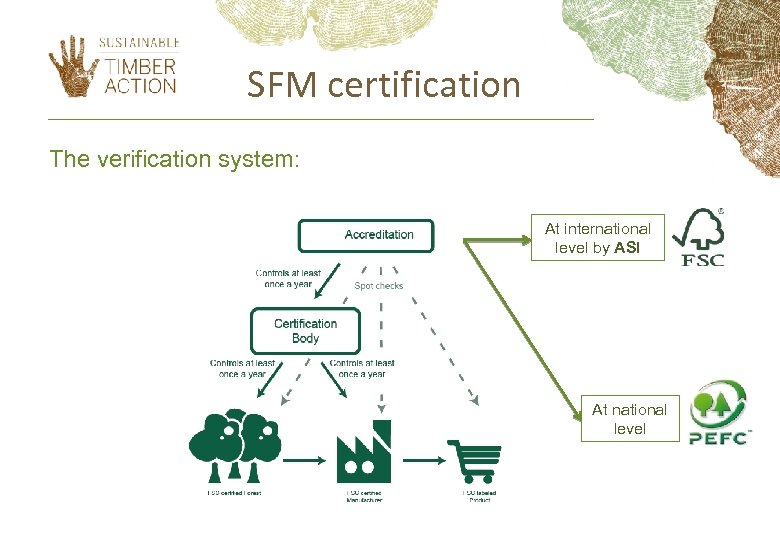
SFM certification The verification system: At international level by ASI At national level
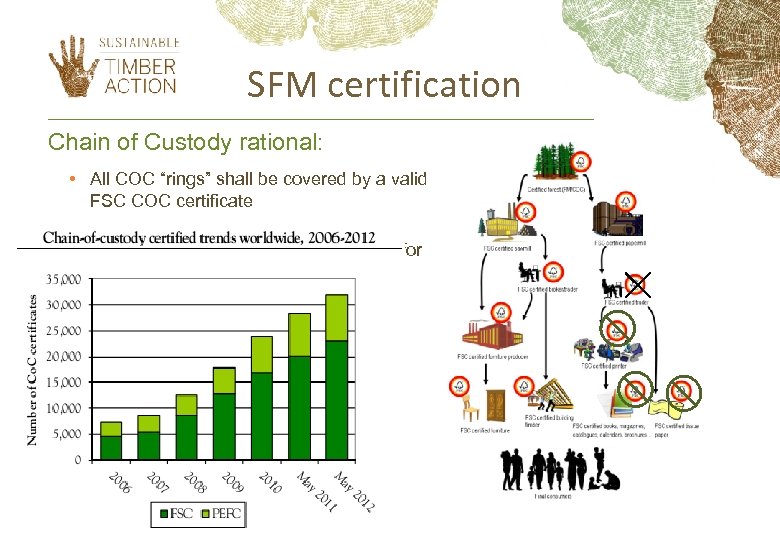
SFM certification Chain of Custody rational: • All COC “rings” shall be covered by a valid FSC COC certificate • The principle works for FSC as well as for PEFC • It is mainly a market driven process
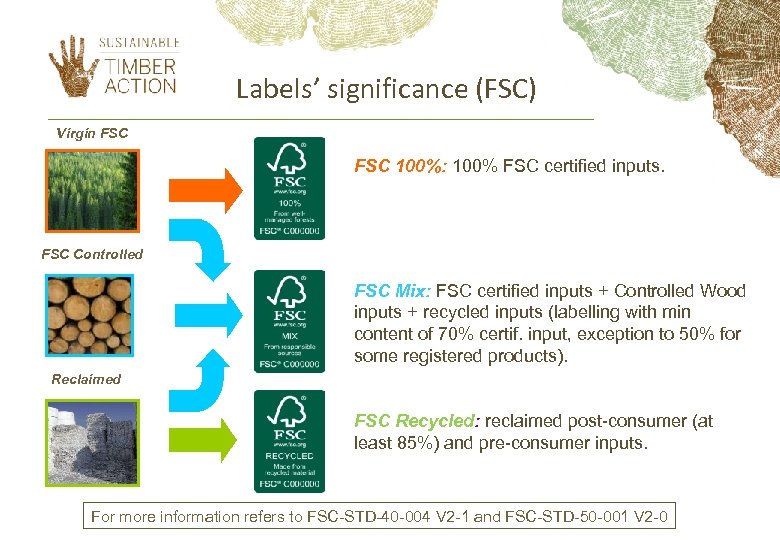
Labels’ significance (FSC) Virgin FSC 100%: 100% FSC certified inputs. FSC Controlled FSC Mix: FSC certified inputs + Controlled Wood inputs + recycled inputs (labelling with min content of 70% certif. input, exception to 50% for some registered products). Reclaimed FSC Recycled: reclaimed post-consumer (at least 85%) and pre-consumer inputs. For more information refers to FSC-STD-40 -004 V 2 -1 and FSC-STD-50 -001 V 2 -0
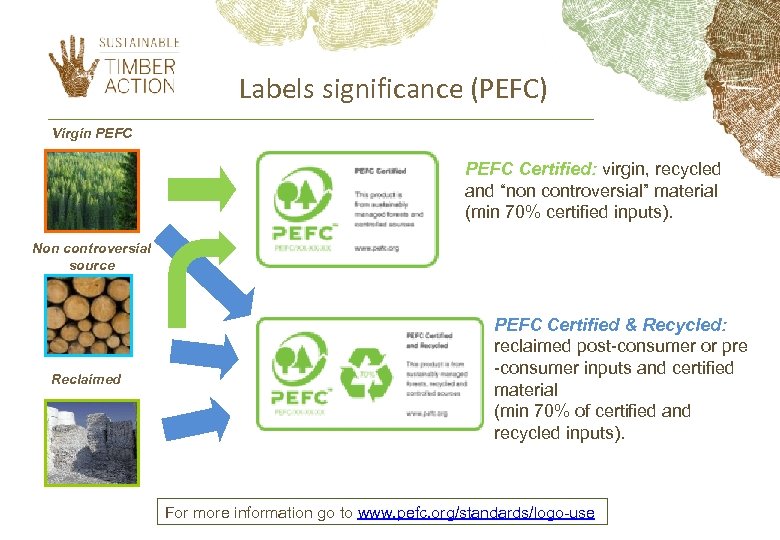
Labels significance (PEFC) Virgin PEFC Certified: virgin, recycled and “non controversial” material (min 70% certified inputs). Non controversial source Reclaimed PEFC Certified & Recycled: reclaimed post-consumer or pre -consumer inputs and certified material (min 70% of certified and recycled inputs). For more information go to www. pefc. org/standards/logo-use
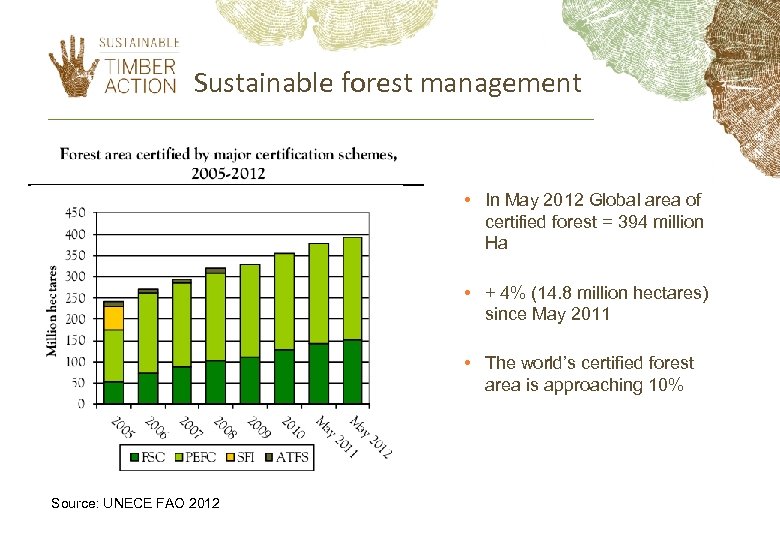
Sustainable forest management • In May 2012 Global area of certified forest = 394 million Ha • + 4% (14. 8 million hectares) since May 2011 • The world’s certified forest area is approaching 10% Source: UNECE FAO 2012
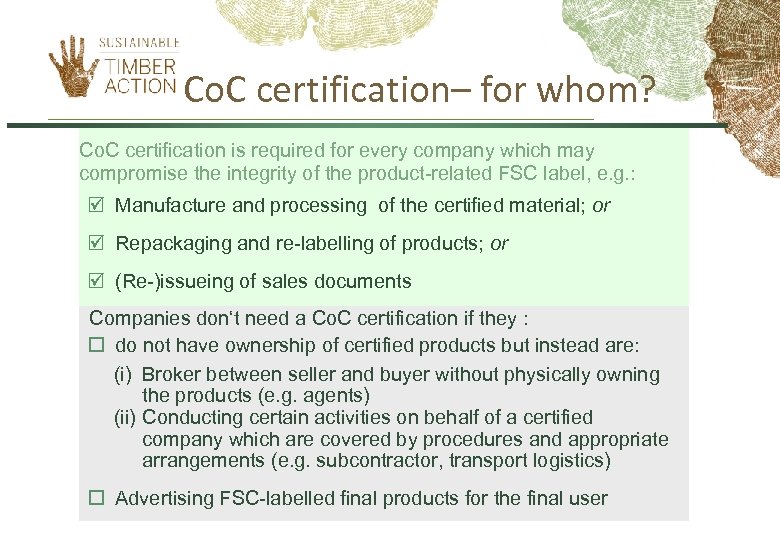
Co. C certification– for whom? Co. C certification is required for every company which may compromise the integrity of the product-related FSC label, e. g. : þ Manufacture and processing of the certified material; or þ Repackaging and re-labelling of products; or þ (Re-)issueing of sales documents Companies don‘t need a Co. C certification if they : o do not have ownership of certified products but instead are: (i) Broker between seller and buyer without physically owning the products (e. g. agents) (ii) Conducting certain activities on behalf of a certified company which are covered by procedures and appropriate arrangements (e. g. subcontractor, transport logistics) o Advertising FSC-labelled final products for the final user
-4 Fair trade with sustainable timber
Fair Trade Fair trade in the timber sector Question to all: FLO logo, what is this? 1 2
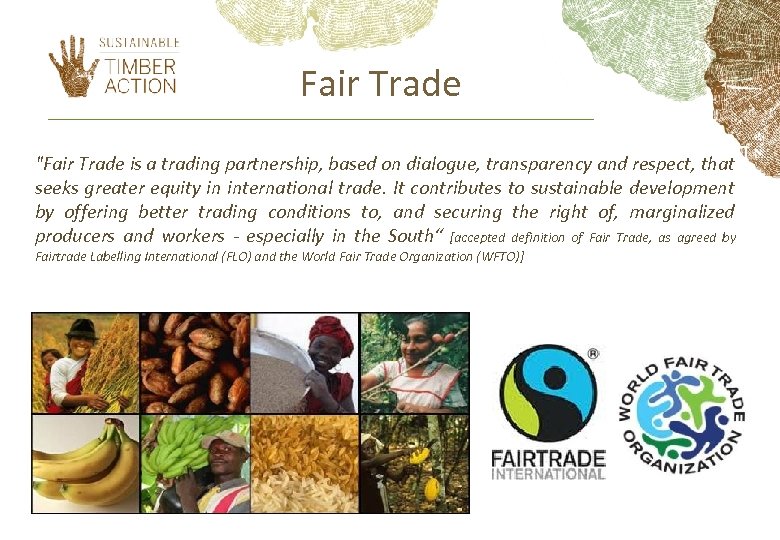
Fair Trade "Fair Trade is a trading partnership, based on dialogue, transparency and respect, that seeks greater equity in international trade. It contributes to sustainable development by offering better trading conditions to, and securing the right of, marginalized producers and workers - especially in the South“ [accepted definition of Fair Trade, as agreed by Fairtrade Labelling International (FLO) and the World Fair Trade Organization (WFTO)]
Fair Trade Core Fair Trade Principles 1 Creating Opportunities for Economically Disadvantaged Producers (poverty reduction) 2 Transparency and Accountability (participation of producers in decision making) 3 Fair Trading Practices (pre payment, long term contract and relationships) 4 Payment of a Fair Price 5 Ensuring no Child Labour and Forced Labour (UN Convention on the Rights of the Child) 6 Commitment to Non-Discrimination, Gender Equity and Freedom of Association 7 Ensuring Good Working Conditions (ILO conventions) 8 Providing Capacity Building to workers and producers organisations 9 Promoting Fair Trade (raise awareness) 10 Respect for the Environment
Fair Trade and the timber sector: • Around 10 million people are employed in forest management (FAO, 2010). • Many more are directly dependent on forests for their livelihoods. • Forestry employment is outside the formal sector forest work is very important for rural livelihoods (FAO, 2010). • In some regions (Latin America, Africa) forest related employment increased somewhat probably because roundwood production has increased faster than gains in labour productivity. • But working and social conditions did not improve in this time, with direct implications for community livelihood.
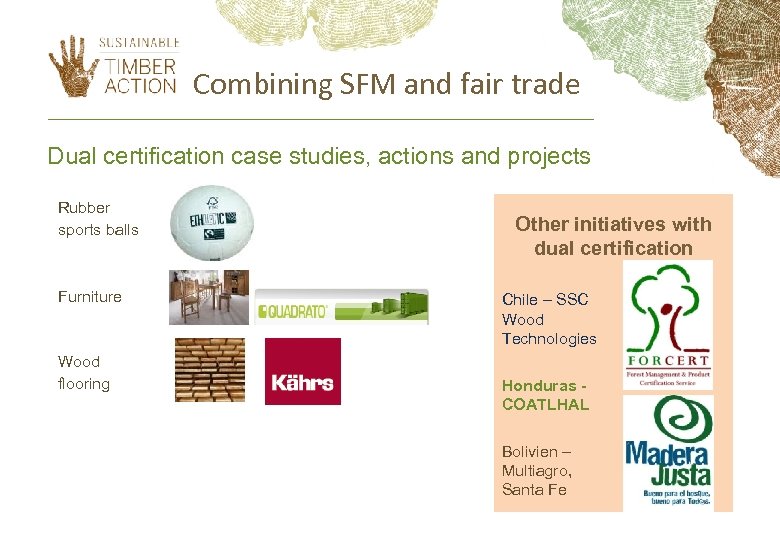
Combining SFM and fair trade Dual certification case studies, actions and projects Rubber sports balls Furniture Wood flooring Other initiatives with dual certification Chile – SSC Wood Technologies Honduras COATLHAL Bolivien – Multiagro, Santa Fe
Скачать презентацию Sustainable Timber Action in Europe Training for Public
b0b4516b7483dba77d72f9519ad4ea8d.ppt