 Скачать презентацию Sustainable Print Media IP — Erasmus Media Pro
e8181531c77bf912c54d4f5f58d0fc15.ppt
- Количество слайдов: 37



Sustainable Print Media IP - Erasmus Media. Pro – Athens 8 June 2010 Version 1. 0 -5 per 2010 -06 -08 Professor Johan Stenberg, KTH Media, Sweden
Project work 1) You are in charge of planning a new production facility for newspaper printing. Describe how a new plant and its production process should be designed in order to obtain a sustainable production and distribution process. Consider both the building design and the design of the production and distribution process! How will you communicate your environmental impact when the new facility is running? 2) You are in charge of planning a refurbishment of an old production facility for newspaper printing. The original plant and its equipment was design 20 years ago and no special environmental care was taken at that time. Describe how you can change the existing plant and its production process in order to obtain a more sustainable production process. Consider both the building and the design of the production process! How will you communicate your environmental impact when the refurbished plant is running? 4) You are in charge of planning and running a sustainability management system at the above mentioned digital printing plant. How would you make sure that the operation of the plant is as sustainable as possible? Consider the purchase of materials, the use of resources (energy, water), waste output, sorting and recycling, emissions to air and water, the recyclability of products etc. Think also about training of staff and information to customers! Version 1. 0 -5 per 2010 -06 -08 3) You are in charge of planning an equipment upgrade project at a medium-sized digital printing company. The idea is to make sustainability one of the key selection criteria (among costs, quality, productivity and service) when choosing digital printing equipment (colour and monochrome electrophotographic presses and wideformat inkjet printers) and related finishing equipment. Which issues of sustainability would you like to include in the selection criteria, which evidence would you require from the vendors/manufacturers, and how would you quantify the different criteria and compare the alternatives?
Agenda § My background § The Media Sector – the Swedish situation § Newspaper printing from a process perspective § Sustainable Print Media Version 1. 0 -5 per 2010 -06 -08 § Summary
My background § Master of Science in Media Technology 1991 KTH Media Technology § Doctor of Technology - Media Technology 1997 KTH Media Technology § Project Manager 1997 -1998 Östgöta Correspondenten – A Swedish Regional Newspaper Group § Managing Director/Consultant Manager 1999 -2007 MWM Media Workflow Management AB § Technical Director 2007 Bold Printing Group AB KTH Media Technology § Hobbies: My family, kayaking, skiing, music, film and art Married to Cecilia and the father of three children 16 -20 years old Version 1. 0 -5 per 2010 -06 -08 § Visiting Professor 2009 -
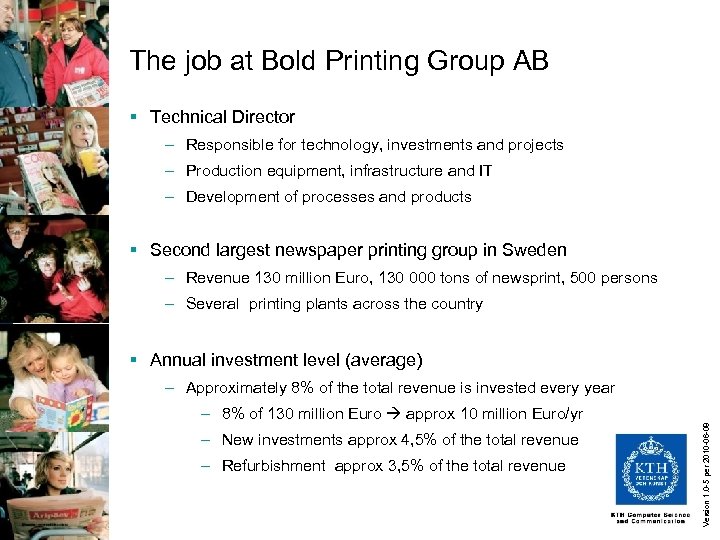
The job at Bold Printing Group AB § Technical Director – Responsible for technology, investments and projects – Production equipment, infrastructure and IT – Development of processes and products § Second largest newspaper printing group in Sweden – Revenue 130 million Euro, 130 000 tons of newsprint, 500 persons – Several printing plants across the country § Annual investment level (average) – 8% of 130 million Euro approx 10 million Euro/yr – New investments approx 4, 5% of the total revenue – Refurbishment approx 3, 5% of the total revenue Version 1. 0 -5 per 2010 -06 -08 – Approximately 8% of the total revenue is invested every year
The job at KTH Media Technology § Visiting professor 40% § Project Manager Media & Sustainability § Responsible for the masters programme in Media Technology § Supervision and examination of Diploma work etc Version 1. 0 -5 per 2010 -06 -08 § Lectures and seminars
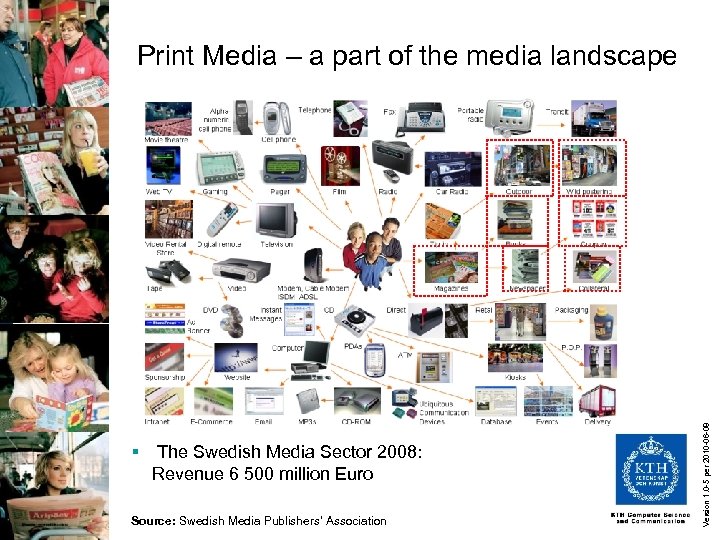
§ The Swedish Media Sector 2008: Revenue 6 500 million Euro Source: Swedish Media Publishers’ Association Version 1. 0 -5 per 2010 -06 -08 Print Media – a part of the media landscape
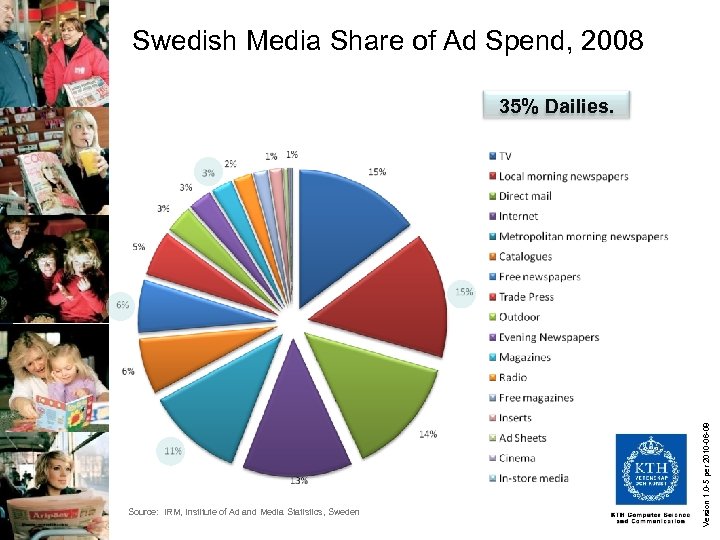
Swedish Media Share of Ad Spend, 2008 Source: IRM, Institute of Ad and Media Statistics, Sweden Version 1. 0 -5 per 2010 -06 -08 35% Dailies.
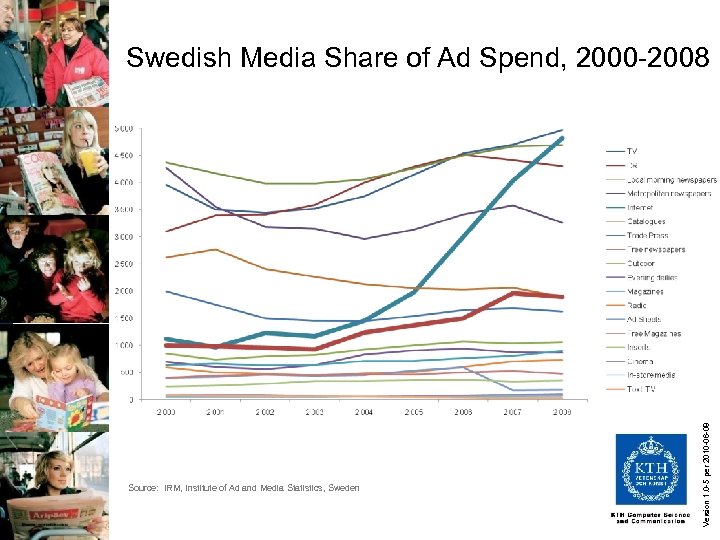
Source: IRM, Institute of Ad and Media Statistics, Sweden Version 1. 0 -5 per 2010 -06 -08 Swedish Media Share of Ad Spend, 2000 -2008
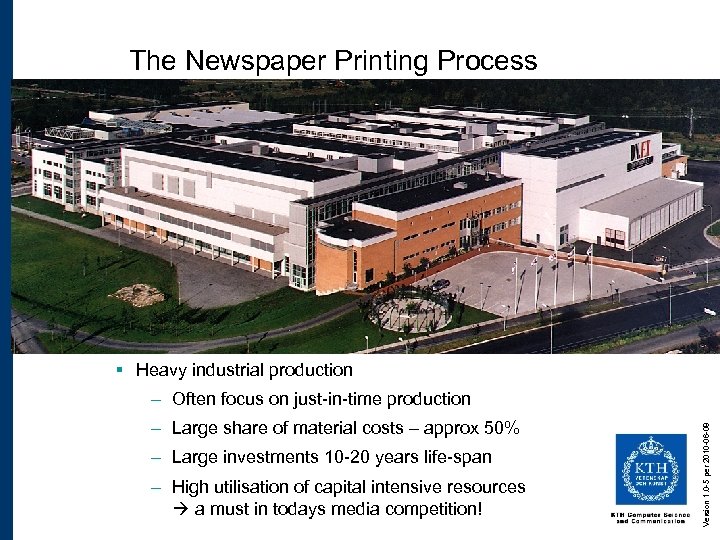
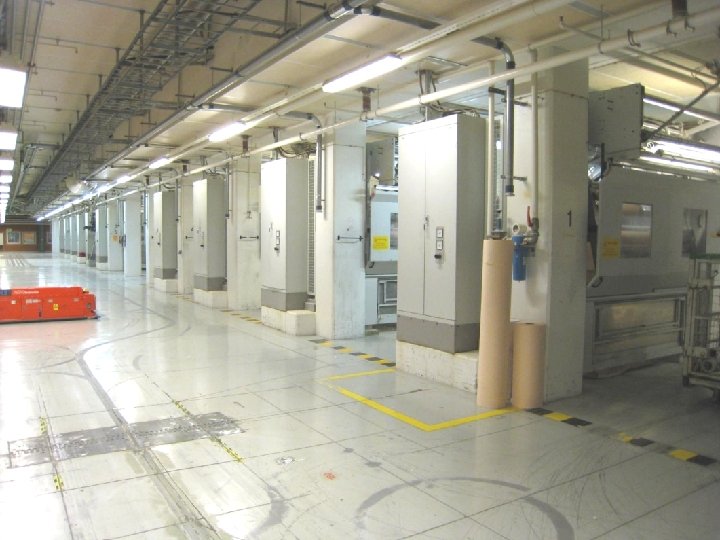
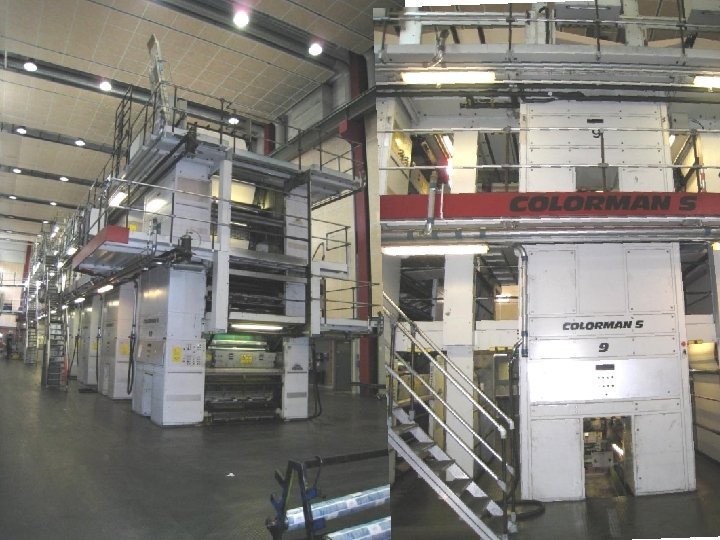
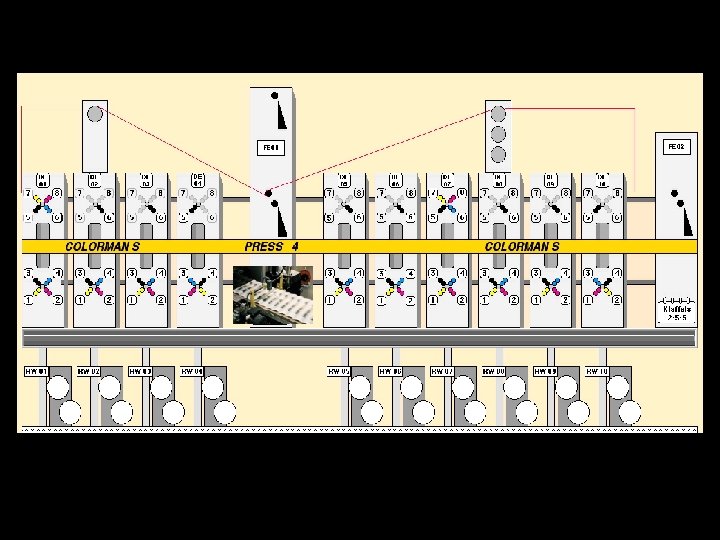
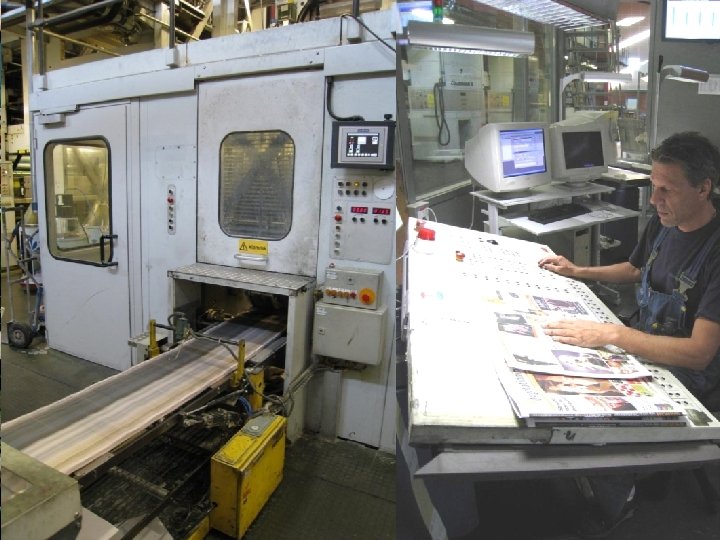
The Newspaper Printing Process § Heavy industrial production – Large share of material costs – approx 50% – Large investments 10 -20 years life-span – High utilisation of capital intensive resources a must in todays media competition! Version 1. 0 -5 per 2010 -06 -08 – Often focus on just-in-time production
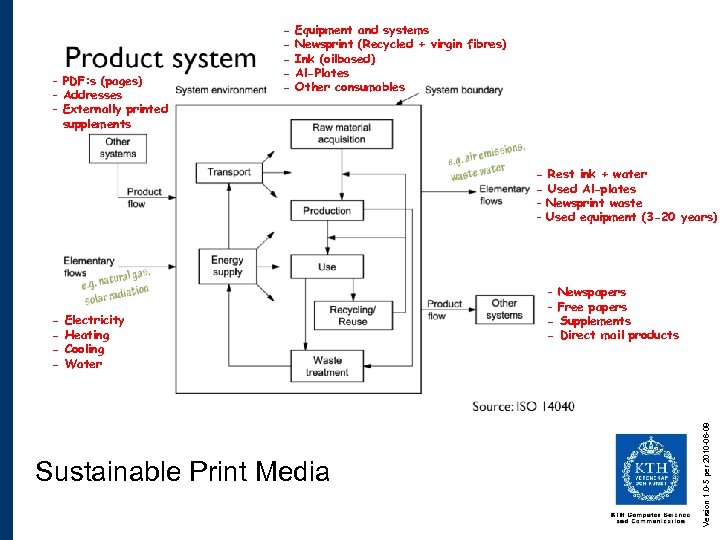
- PDF: s (pages) - Addresses - Externally printed supplements - Equipment and systems Newsprint (Recycled + virgin fibres) Ink (oilbased) Al-Plates Other consumables - Rest ink + water - Used Al-plates - Newsprint waste - Used equipment (3 -20 years) Electricity Heating Cooling Water Sustainable Print Media Version 1. 0 -5 per 2010 -06 -08 - - Newspapers - Free papers - Supplements - Direct mail products
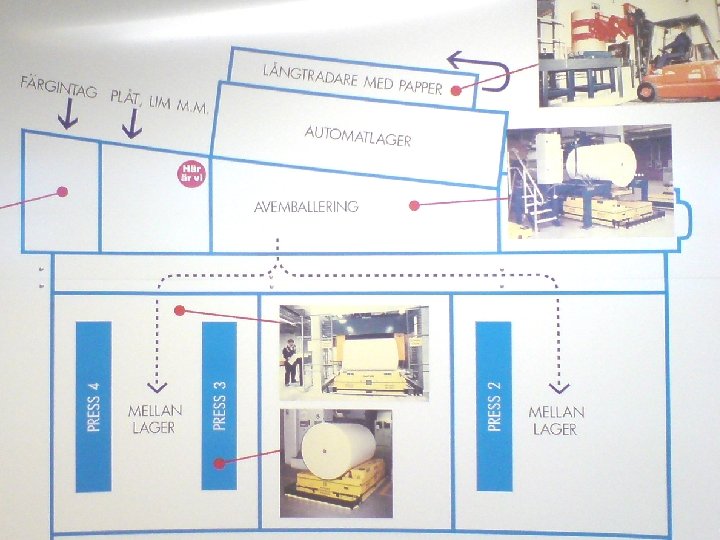
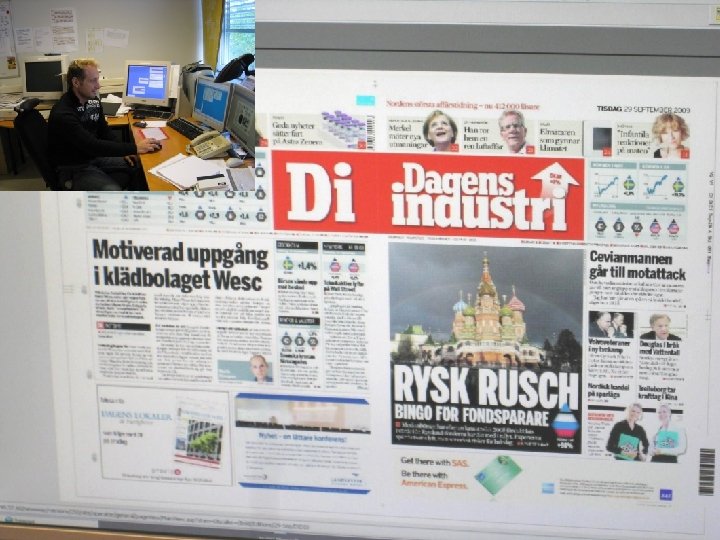
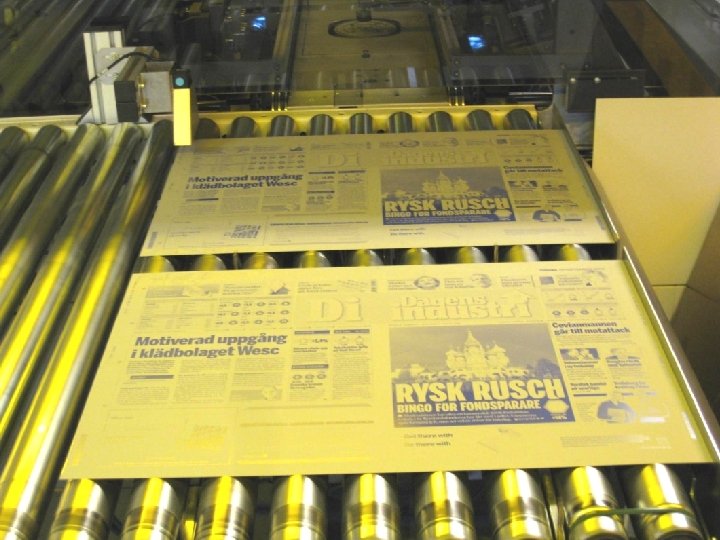
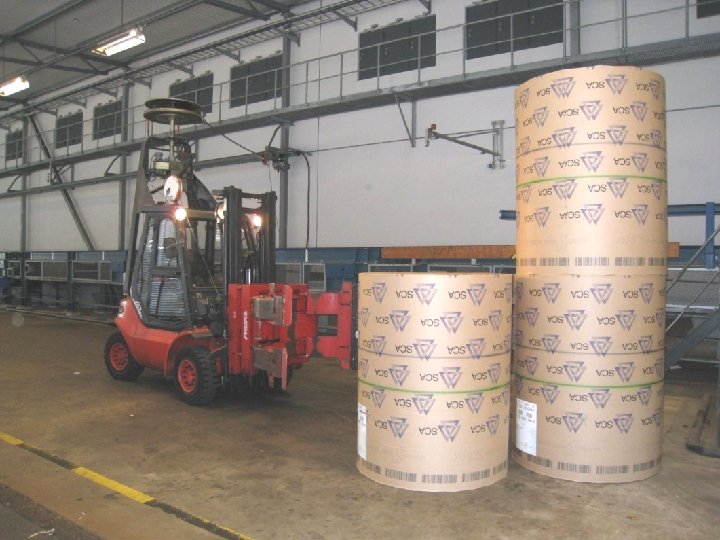
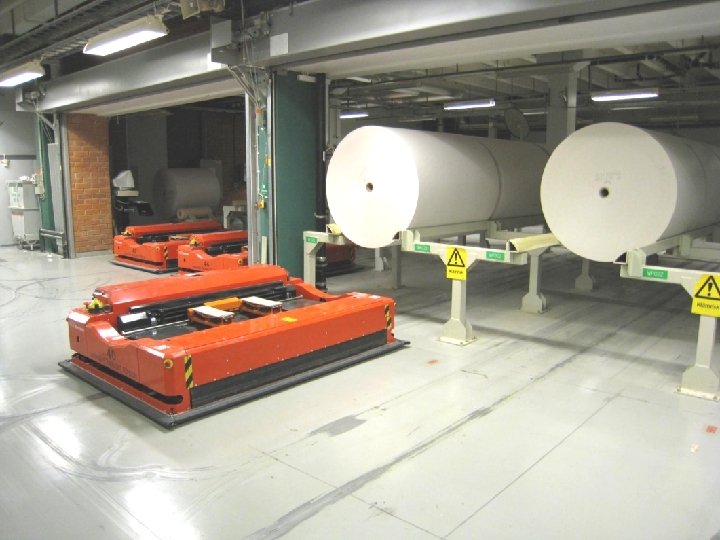
Version 1. 0 -5 per 2010 -06 -08 Materialhantering
Version 1. 0 -5 per 2010 -06 -08
Version 1. 0 -5 per 2010 -06 -08
Version 1. 0 -5 per 2010 -06 -08
Version 1. 0 -5 per 2010 -06 -08
Version 1. 0 -5 per 2010 -06 -08
Version 1. 0 -5 per 2010 -06 -08
Version 1. 0 -5 per 2010 -06 -08
Version 1. 0 -5 per 2010 -06 -08
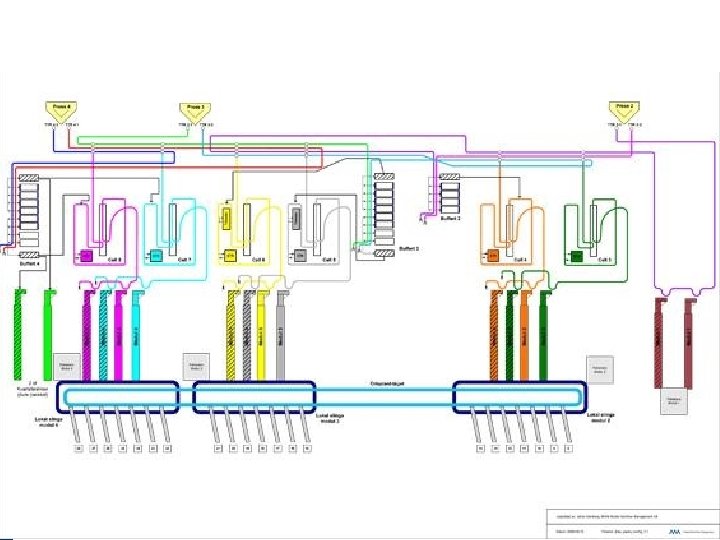
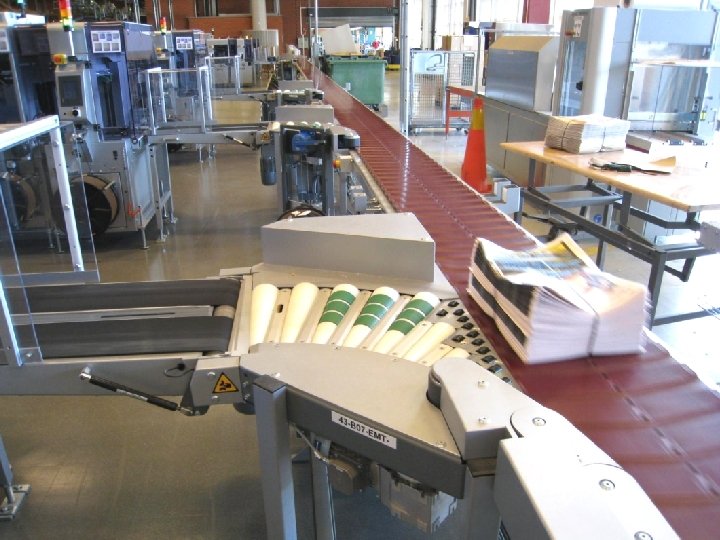
Version 1. 0 -5 per 2010 -06 -08 Mailroom: Ferag/IDAB Wamac
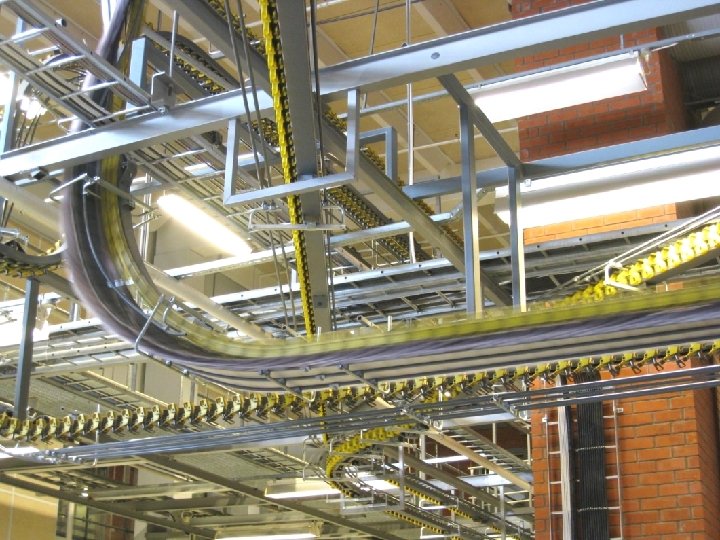
Version 1. 0 -5 per 2010 -06 -08
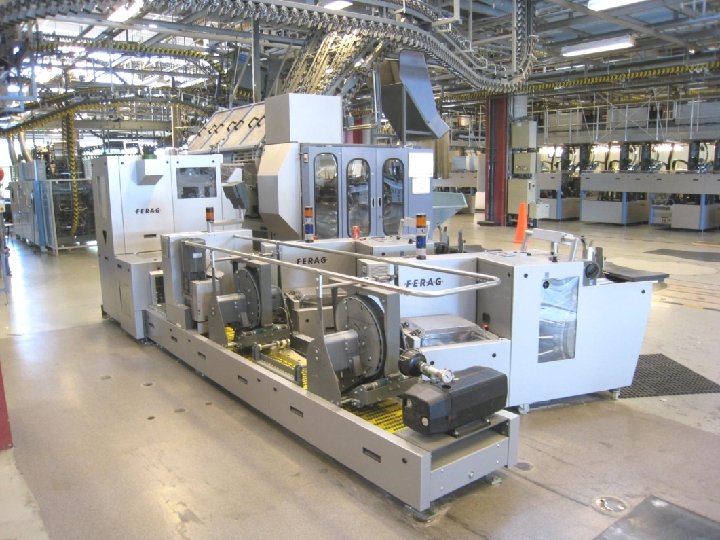
Version 1. 0 -5 per 2010 -06 -08
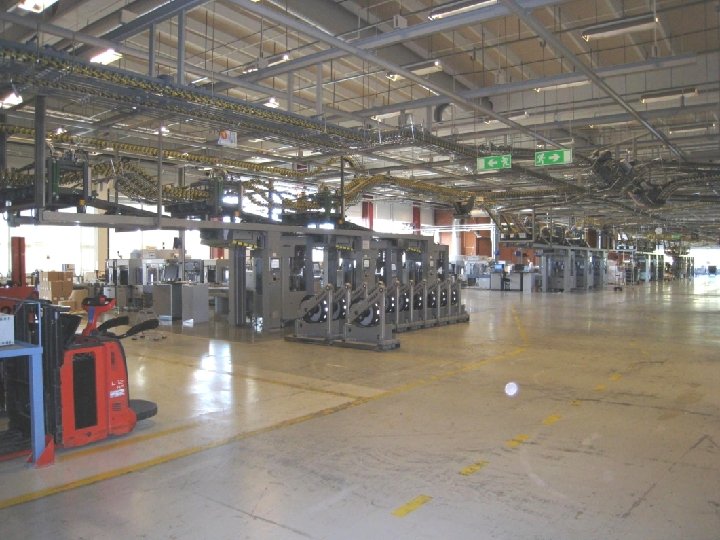
Version 1. 0 -5 per 2010 -06 -08
Version 1. 0 -5 per 2010 -06 -08
Case study Version 1. 0 -5 per 2010 -06 -08 What can a newspaper printing plant do to obtain a more sustainable print media production?
Factors to consider • Reduction of energy consumption? - The Building - Equipment used - Losses related to infrastructure eg compressed air, cooling, heating, … • Reduction of waste/material consumption? - Start-up waste - Running waste in the printing press - Mailroom waste and overprinting • Reduced transportations? - Locally produced newsprint and ink - Use of ink tanks - Reduced waste Version 1. 0 -5 per 2010 -06 -08 - Processes development in order to hit target volumes without to large margins (reliable copy counting)
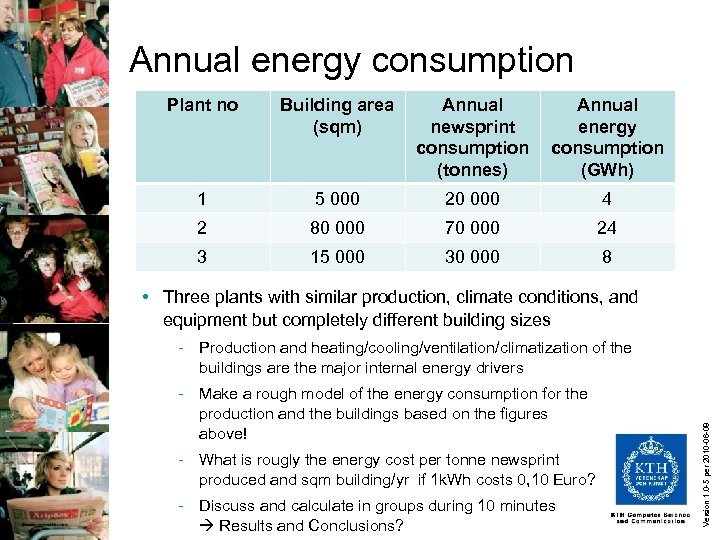
Annual energy consumption Plant no Building area (sqm) Annual newsprint consumption (tonnes) Annual energy consumption (GWh) 1 5 000 20 000 4 2 80 000 70 000 24 3 15 000 30 000 8 • Three plants with similar production, climate conditions, and equipment but completely different building sizes - Make a rough model of the energy consumption for the production and the buildings based on the figures above! - What is rougly the energy cost per tonne newsprint produced and sqm building/yr if 1 k. Wh costs 0, 10 Euro? - Discuss and calculate in groups during 10 minutes Results and Conclusions? Version 1. 0 -5 per 2010 -06 -08 - Production and heating/cooling/ventilation/climatization of the buildings are the major internal energy drivers
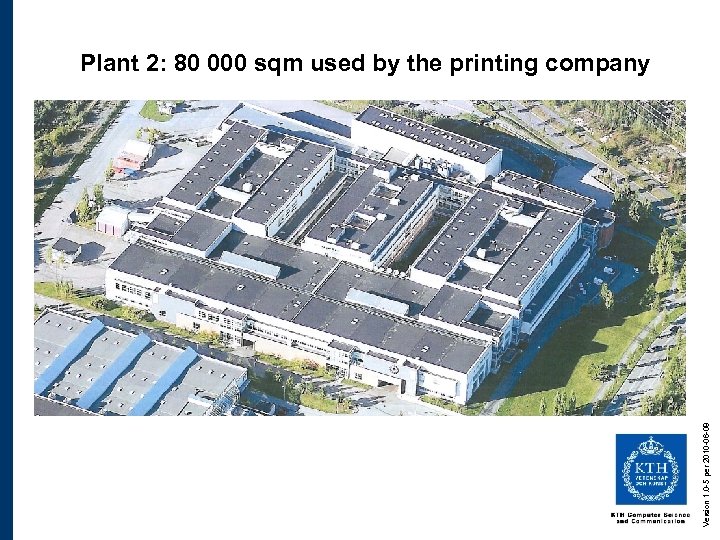
Version 1. 0 -5 per 2010 -06 -08 Plant 2: 80 000 sqm used by the printing company
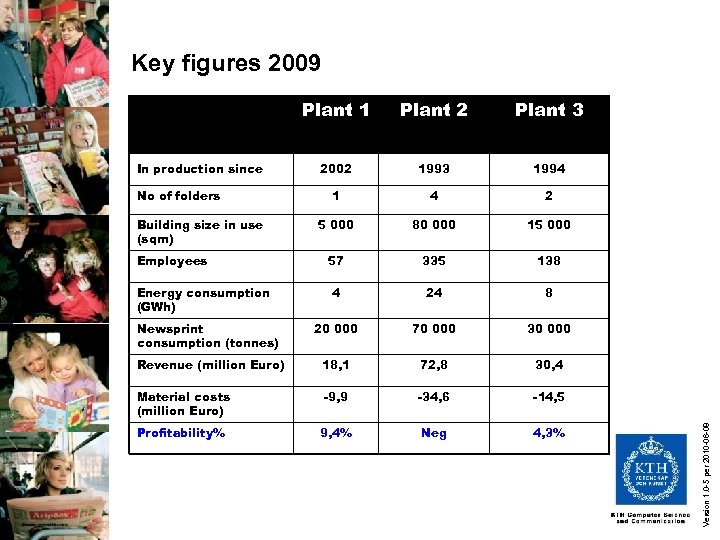
Key figures 2009 Plant 2 Plant 3 2002 1993 1994 1 4 2 5 000 80 000 15 000 57 335 138 4 24 8 Newsprint consumption (tonnes) 20 000 70 000 30 000 Revenue (million Euro) 18, 1 72, 8 30, 4 Material costs (million Euro) -9, 9 -34, 6 -14, 5 Profitability% 9, 4% Neg 4, 3% In production since No of folders Building size in use (sqm) Employees Energy consumption (GWh) Version 1. 0 -5 per 2010 -06 -08 Plant 1
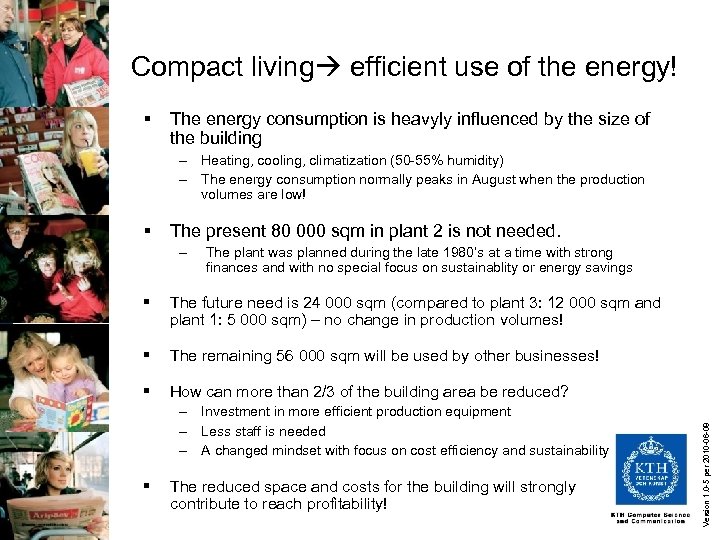
Compact living efficient use of the energy! § The energy consumption is heavyly influenced by the size of the building – Heating, cooling, climatization (50 -55% humidity) – The energy consumption normally peaks in August when the production volumes are low! § The present 80 000 sqm in plant 2 is not needed. – The plant was planned during the late 1980’s at a time with strong finances and with no special focus on sustainablity or energy savings The future need is 24 000 sqm (compared to plant 3: 12 000 sqm and plant 1: 5 000 sqm) – no change in production volumes! § The remaining 56 000 sqm will be used by other businesses! § How can more than 2/3 of the building area be reduced? – Investment in more efficient production equipment – Less staff is needed – A changed mindset with focus on cost efficiency and sustainability § The reduced space and costs for the building will strongly contribute to reach profitability! Version 1. 0 -5 per 2010 -06 -08 §
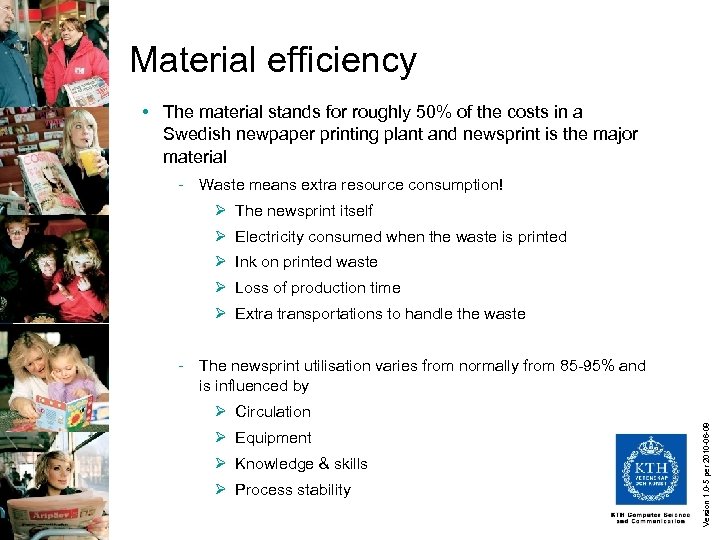
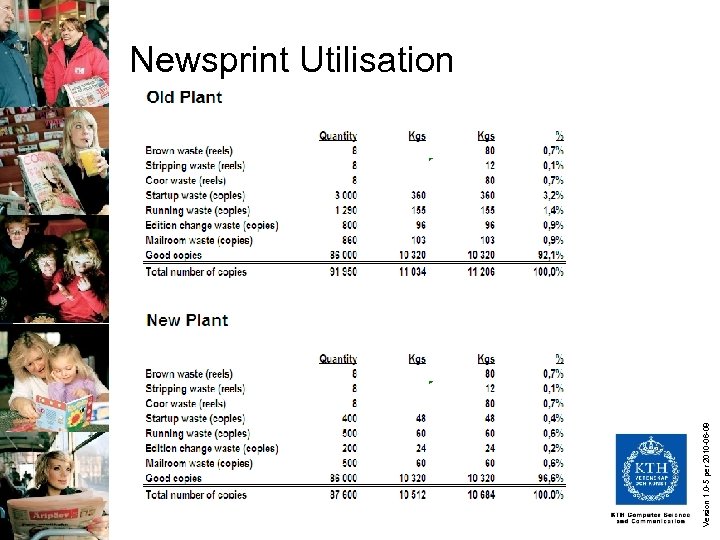
Material efficiency • The material stands for roughly 50% of the costs in a Swedish newpaper printing plant and newsprint is the major material - Waste means extra resource consumption! Ø The newsprint itself Ø Electricity consumed when the waste is printed Ø Ink on printed waste Ø Loss of production time Ø Extra transportations to handle the waste - The newsprint utilisation varies from normally from 85 -95% and is influenced by Ø Equipment Ø Knowledge & skills Ø Process stability Version 1. 0 -5 per 2010 -06 -08 Ø Circulation
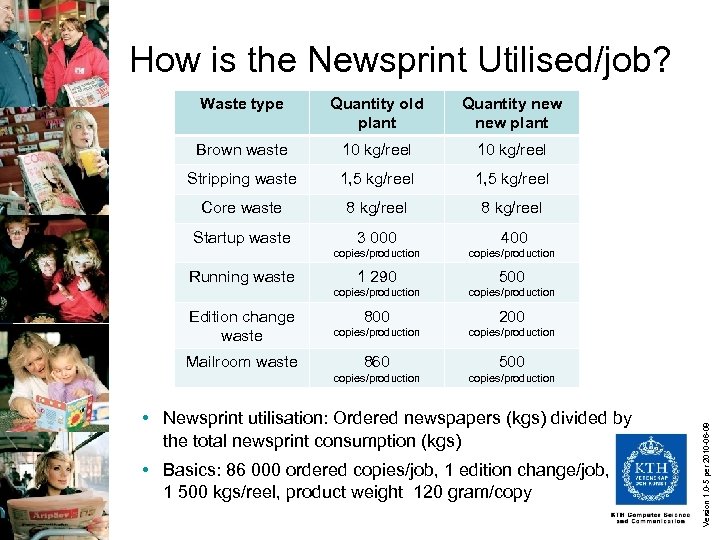
How is the Newsprint Utilised/job? Quantity old plant Quantity new plant Brown waste 10 kg/reel Stripping waste 1, 5 kg/reel Core waste 8 kg/reel Startup waste 3 000 400 copies/production 1 290 500 copies/production 800 200 copies/production 860 500 copies/production Running waste Edition change waste Mailroom waste • Newsprint utilisation: Ordered newspapers (kgs) divided by the total newsprint consumption (kgs) • Basics: 86 000 ordered copies/job, 1 edition change/job, 1 500 kgs/reel, product weight 120 gram/copy Version 1. 0 -5 per 2010 -06 -08 Waste type
Version 1. 0 -5 per 2010 -06 -08 Newsprint Utilisation
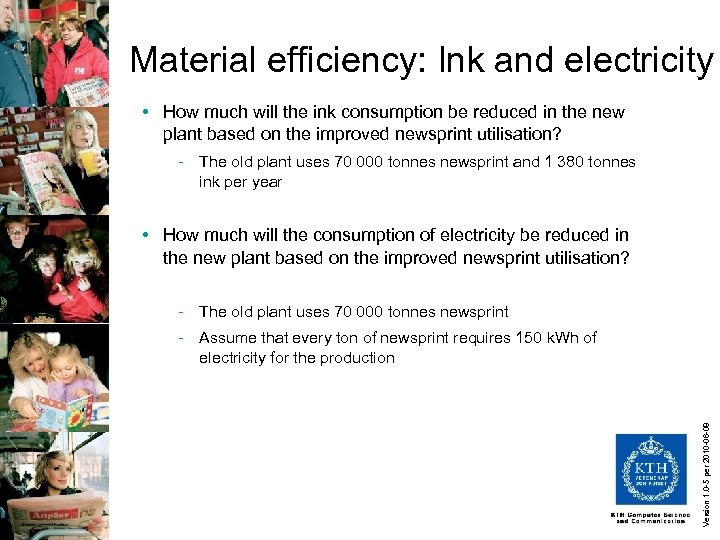
Material efficiency: Ink and electricity • How much will the ink consumption be reduced in the new plant based on the improved newsprint utilisation? - The old plant uses 70 000 tonnes newsprint and 1 380 tonnes ink per year • How much will the consumption of electricity be reduced in the new plant based on the improved newsprint utilisation? - The old plant uses 70 000 tonnes newsprint Version 1. 0 -5 per 2010 -06 -08 - Assume that every ton of newsprint requires 150 k. Wh of electricity for the production
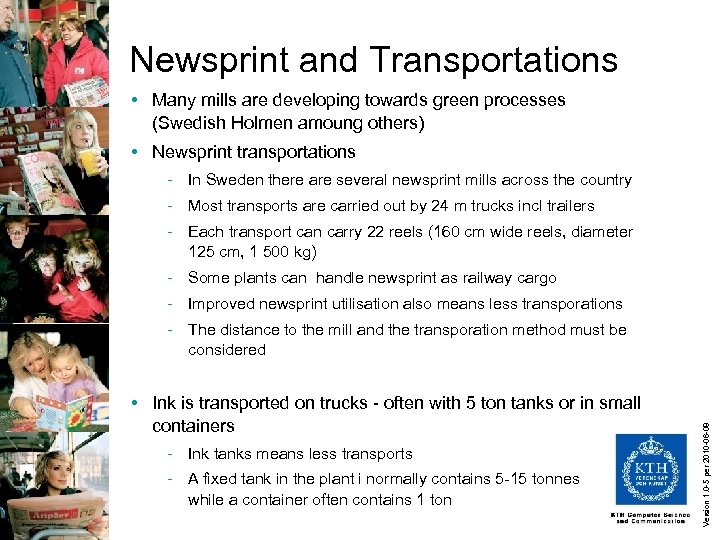
Newsprint and Transportations • Many mills are developing towards green processes (Swedish Holmen amoung others) • Newsprint transportations - In Sweden there are several newsprint mills across the country - Most transports are carried out by 24 m trucks incl trailers - Each transport can carry 22 reels (160 cm wide reels, diameter 125 cm, 1 500 kg) - Some plants can handle newsprint as railway cargo - Improved newsprint utilisation also means less transporations • Ink is transported on trucks - often with 5 ton tanks or in small containers - Ink tanks means less transports - A fixed tank in the plant i normally contains 5 -15 tonnes while a container often contains 1 ton Version 1. 0 -5 per 2010 -06 -08 - The distance to the mill and the transporation method must be considered
Summary • The printing plant building is a major energy consumer • Develop the building and its technology in order to reduce the need for electricity (climatization, ventilation and heating) • Consider how your energy can be re-used in several steps! • If the printing press is cooled, use that system to heat the plant etc • The paper is the major raw material used – use it as efficient as possible • Monitor your paper consumption and identify how the waste can be reduced • New highly automated printing technology means less waste • Choose a mill closer to your plant if you can afford it • Put pressure on your paper supplier to develop a sustainable process Version 1. 0 -5 per 2010 -06 -08 • How can the need for external transports be reduced
Скачать презентацию Sustainable Print Media IP — Erasmus Media Pro
e8181531c77bf912c54d4f5f58d0fc15.ppt