 Скачать презентацию sustainable food for a healthy future Dr Rosemary
4039ce87ca968a0007a34d909bb1db0b.ppt
- Количество слайдов: 50



sustainable food for a healthy future Dr Rosemary Stanton OAM nutritionist
food futures for children § § how healthy is our diet? the school’s contribution how sustainable is our diet? vision for sustainable food in the future © Rosemary Stanton 2015
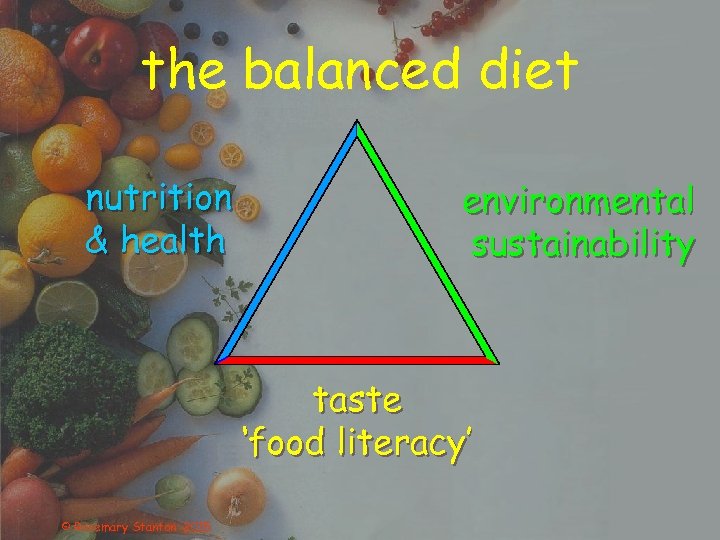
the balanced diet nutrition & health environmental sustainability taste ‘food literacy’ © Rosemary Stanton 2015
children’s nutrition and health § ~75% are in healthy weight range § ~25% of children above healthy weight range § poor food choices are common & contribute to health problems in childhood & later in life © Rosemary Stanton 2015
problems § low intake of calcium (mainly in girls) § low intake of dietary fibre § excess sugar & acidic drinks (dental decay) § too much salt § low intake of vegetables in 95% of children § protein ‘mania’ (among some teenage boys) § vitamin B 12 problem for vegans (OK if consume milk, yoghurt, cheese & eggs) © Rosemary Stanton 2015
where the diet is going wrong § frequent snacks § sweet drinks § too much junk food (>40% of kilojoules) § breakfast is too sweet (or absent) § low consumption of fruit & vegetables § big changes in evening family meal © Rosemary Stanton 2015
why so much junk? § convenient § some relatively cheap products § mundane, but not unpleasant flavours (dominated by sugar, salt, fat) § profitable for food companies and therefore promoted heavily © Rosemary Stanton 2015
Victorian survey 1680 primary school children § 93% of kids had junk foods in lunch box plus a sweet drink § average of 3 junk food items/child § does this make junk food ‘normal’ ? © Rosemary Stanton 2015
influences on children’s diets § family eating habits § advertising/marketing § taste (fussy eaters are common) § peer group pressure § access to a garden § school’s attention to healthy food © Rosemary Stanton 2015
what we are up against marketing § TV advertising § internet & i. Phone marketing § in-school marketing § sponsorship § product placement § sales promotions © Rosemary Stanton 2015
food & advertising § children are seen as fair game for marketers and advertisers § starts well before school age § aim for brand recognition © Rosemary Stanton 2015
marketing to children multiple messages/multiple channels § advertising (TV, sport, packaging) § use of characters, mascots on clothing, bags § internet marketing, email/texting § product placement § in-school marketing § sponsorship © Rosemary Stanton 2015
internet ‘advergaming’ § overtaking TV advertising § children’s online ‘clubs’ with advertisements, competitions, games (including ones that are supposedly promoting nutrition), prizes § immersive, interactive, incessant (20 minutes vs 30 seconds for TV ads) © Rosemary Stanton 2015
influence of marketing it works! § fast foods, snacks, sweet drinks expected everywhere (including all sporting venues) § take-away foods now ‘normal’ § packaged snacks now ‘normal’ § frequent treats now ‘normal’ § foods not advertised are ignored © Rosemary Stanton 2015
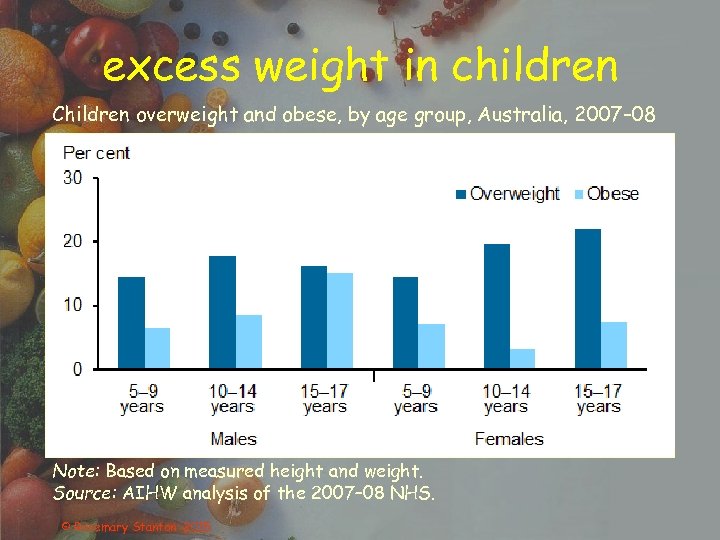
excess weight in children Children overweight and obese, by age group, Australia, 2007– 08 Note: Based on measured height and weight. Source: AIHW analysis of the 2007– 08 NHS. © Rosemary Stanton 2015
increasing weight - why? children are eating more – 13% increase in kilojoules children are moving less – more screens (computers, phones, TV) – driven everywhere – insufficient free play © Rosemary Stanton 2015
does excess body fat matter? § psycho-social problems § health problems during childhood (sleep apnoea, asthma, fatty liver, type 2 diabetes, high blood pressure) § problems with knees, joints, feet § health problems as adults © Rosemary Stanton 2015
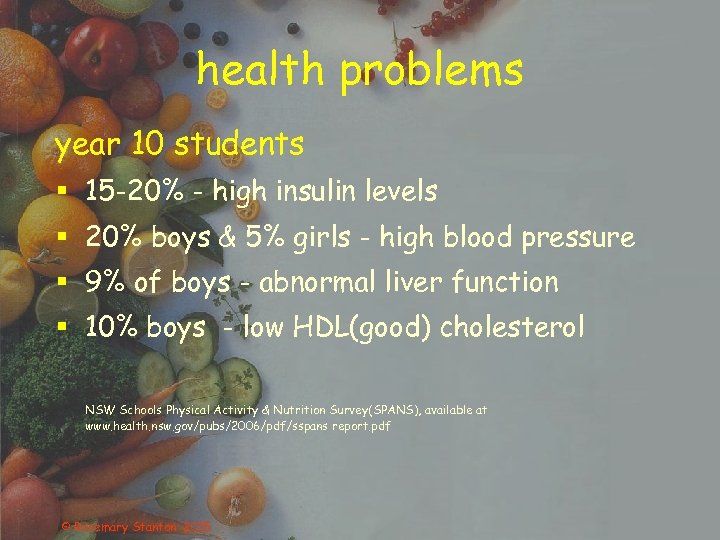
health problems year 10 students § 15 -20% - high insulin levels § 20% boys & 5% girls - high blood pressure § 9% of boys - abnormal liver function § 10% boys - low HDL(good) cholesterol NSW Schools Physical Activity & Nutrition Survey(SPANS), available at www. health. nsw. gov/pubs/2006/pdf/sspans report. pdf © Rosemary Stanton 2015
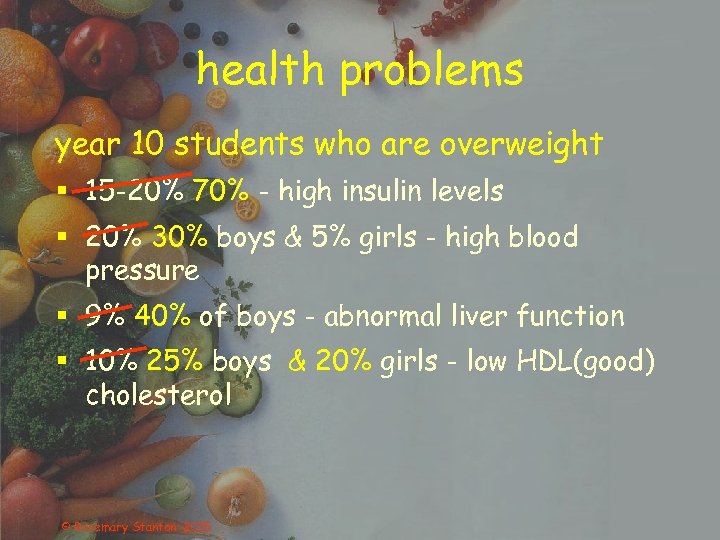
health problems year 10 students who are overweight § 15 -20% 70% - high insulin levels § 20% 30% boys & 5% girls - high blood pressure § 9% 40% of boys - abnormal liver function § 10% 25% boys & 20% girls - low HDL(good) cholesterol © Rosemary Stanton 2015
weight health problems with underweight § lack of stamina § diet may lack nutrients (may be problems with calcium, essential fats, vitamin B 12) § lack of self esteem (cause or effect? ) © Rosemary Stanton 2015
weight promote healthy balance § emphasise health rather than weight § healthy role models important § over- or undereating often associated with stress © Rosemary Stanton 2015
the family table disappearing § 15% of kids do not eat dinner* § 20% do not eat dinner with family* § 50% eat in front of TV * NSW Health © Rosemary Stanton 2015
the family table small children who eat with adults § better language skills § better socialisation © Rosemary Stanton 2015
the family table older children who eat with adults § fewer behavioural problems § less likely to use alcohol, tobacco or marijuana as teenagers § more motivated at school § less depression § lower incidence of eating disorders © Rosemary Stanton 2015
where changes are needed § healthier choices § suitable drinks are water or milk § the day should start with breakfast § fruit is the ideal snack § children should be able to cook/prepare food § dinner – a shared meal, at least some nights © Rosemary Stanton 2015
supportive strategies § children do not need special kids’ foods § provide variety, but no need to be excessive about it § follow dietary guidelines § ensure the school canteen supports classroom teaching © Rosemary Stanton 2015
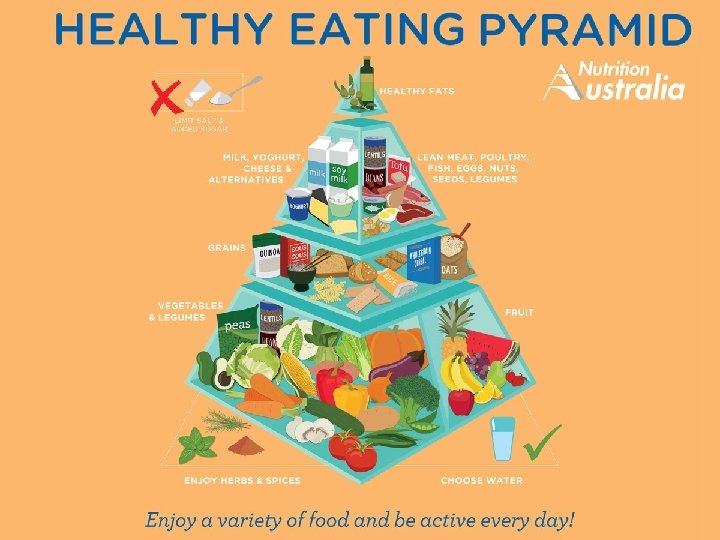
© Rosemary Stanton 2015
solving the problem food ‘literacy’ § ‘yummy’ foods not only junk foods § help children discover how, when & where food is grown, and how to prepare food § cooking, shopping, gardening skills (eg growing vegetables, fruit trees, school & community gardens) © Rosemary Stanton 2015
how canteens help? § don’t be part of the problem § emphasise vegetables & fruit § set children’s idea of what is ‘normal’ § help expand children’s tastes § encourage social eating § emphasise ‘green’ foods (including those that are environmentally green) © Rosemary Stanton 2015
school canteen providing a good example § § § healthy choices actively market those choices make fresh foods look attractive open for breakfast ? work with school or community garden ? an ‘eco’ canteen ? © Rosemary Stanton 2015
‘eco’ canteens publicise foods in season stress value of fresh & healthy foods expand plant food choices where possible, work in with gardens or growers (soil enhancement/compost) § reduce waste § § © Rosemary Stanton 2015
waste § globally, at least a third of all food is wasted between field and fork § food wasted in developed countries could feed an extra 3 billion people © Rosemary Stanton 2015
waste in Australia occurs at all stages of the food chain - households throw out ~ $8 billion food/year (enough to fill 450, 000 garbage trucks) - food makes up >40% household garbage - food waste makes up 1/3 municipal waste © Rosemary Stanton 2015
waste avoiding waste in canteens - plan so as to reduce food losses due to spoilage - improve ordering practices - set a good example by using/selling leftovers © Rosemary Stanton 2015
action on waste in WA § Waste Authority – WA Too Good to Waste § Waste Wise School program (reduce, reuse, recycle) § Perth City Council § Eastern Metropolitan Regional Council § Tamala Park Regional Council § City of Rockingham composting program § Edith Cowan University (research) © Rosemary Stanton 2015
waste wise school program § § § newsletter competitions recycling services workshops fact sheets (eg composting, edible school gardens) © Rosemary Stanton 2015
go ‘eco’ - waste less food waste § generates methane, the most powerful greenhouse gas § avoid methane if waste used for worm farms, compost, soil enhancement, gardens © Rosemary Stanton 2015
sustainability issues & food up to 25% of total greenhouse gas emissions come from production and distribution of what we eat and drink © Rosemary Stanton 2015
go down the food chain? World Health Organisation and others recommend we bias our diets towards plant foods and less processed foods for health & sustainability © Rosemary Stanton 2015
‘eco’ considerations packaging § ~ 65% packaging is for food/beverages § useful because it improves shelf life and reduces food waste § a problem because it uses energy resources to produce, and more when added to landfill © Rosemary Stanton 2015
packaging § packaging makes up 72% of litter in Australia (includes 25 million plastic bags discarded as litter/year) § throughout the world, 400 billion plastic water bottles added to landfill each year © Rosemary Stanton 2015
packaging - action § avoid packaged foods & drinks where possible § recycle packaging where possible § recycling bins in schools § sell ‘school branded’ re-usable water bottles § lobby governments to set mandatory rules for container deposits § lobby for recycling costs to be included in product price © Rosemary Stanton 2015
environmental issues overproduction waste reduce (also re-cycling at school) excess packaging reduce seasonal eating understand food ‘miles’ understand more plant foods (wholegrains, nuts, fruit, vegetables, legumes) offer more § organic foods? where affordable § § § © Rosemary Stanton 2015
the value of gardens encourage § § § connection with the seasons planning & patience experimenting (different varieties) sharing interest from all ages © Rosemary Stanton 2015
access to a garden § increases children’s willingness to eat vegetables § improves family dynamics (less friction, more varied menus, more sharing) § kitchen gardens increase cooking skills § improves overall diets § advantages for ‘loners’ © Rosemary Stanton 2015
gardens healthier, more enjoyable diet healthier environment simultaneously tackle climate change, better nutrition & food ‘literacy’ © Rosemary Stanton 2015
vision for a ‘future’ food system § § § § buy only what we need sustainable packaging fresh, local/home grown, where possible home cooked rather than take-away more vegetables, grains, nuts, fruit more sustainable farming (inc fish) small portions of sustainable animal foods tap water rather than sugary drinks © Rosemary Stanton 2015
vision for a ‘future’ food system § vegetable gardens (community, home, school) § street trees with edible fruit § collection & recycling systems for domestic, school & commercial waste, subsidies for composting § school canteens will be ‘green’ © Rosemary Stanton 2015
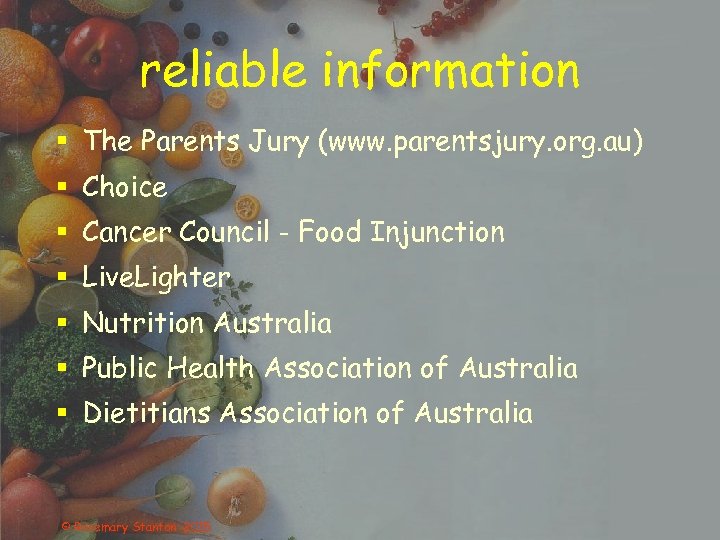
reliable information § The Parents Jury (www. parentsjury. org. au) § Choice § Cancer Council - Food Injunction § Live. Lighter § Nutrition Australia § Public Health Association of Australia § Dietitians Association of Australia © Rosemary Stanton 2015
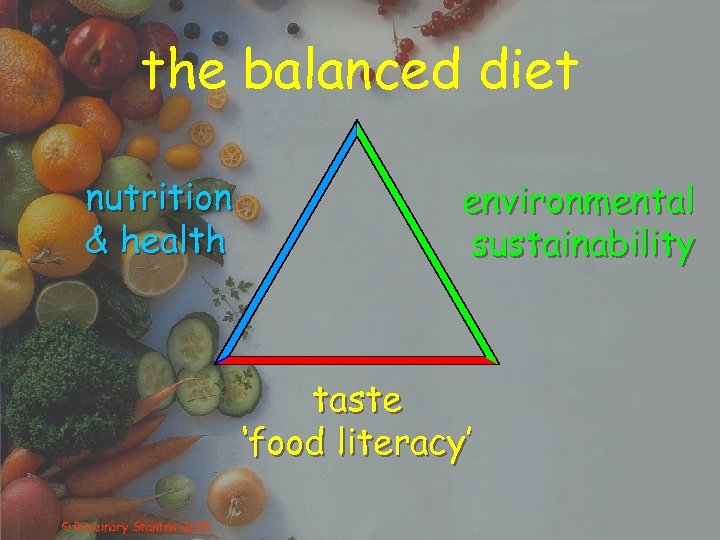
the balanced diet nutrition & health environmental sustainability taste ‘food literacy’ © Rosemary Stanton 2015
Скачать презентацию sustainable food for a healthy future Dr Rosemary
4039ce87ca968a0007a34d909bb1db0b.ppt