 Скачать презентацию Sustainable Development Initiatives at SRF Chemicals Business An
12ea62514b2f3e29e188c23e1aaae4e7.ppt
- Количество слайдов: 27



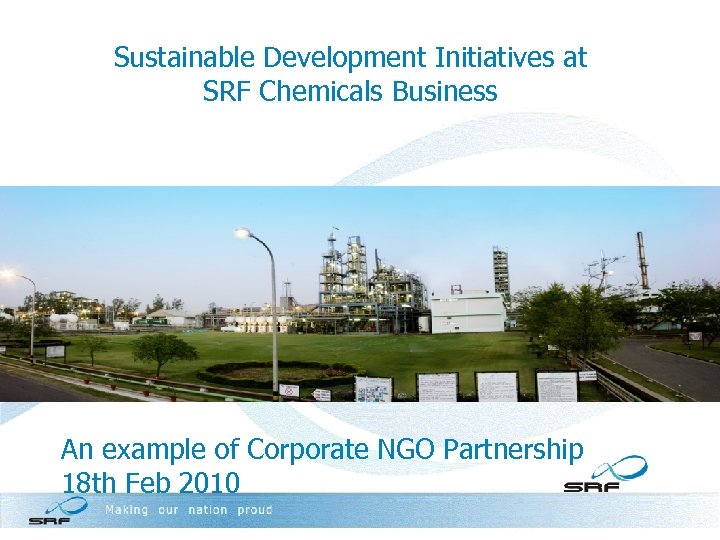
Sustainable Development Initiatives at SRF Chemicals Business An example of Corporate NGO Partnership 18 th Feb 2010
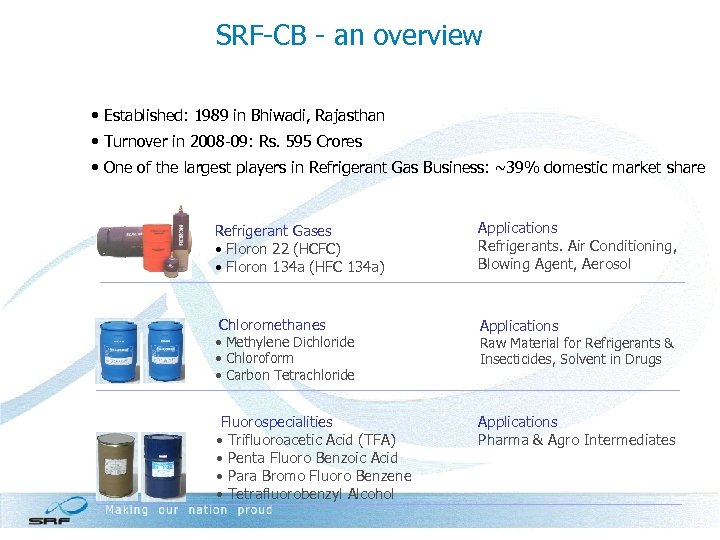
SRF-CB - an overview • Established: 1989 in Bhiwadi, Rajasthan • Turnover in 2008 -09: Rs. 595 Crores • One of the largest players in Refrigerant Gas Business: ~39% domestic market share Refrigerant Gases • Floron 22 (HCFC) • Floron 134 a (HFC 134 a) Applications Refrigerants. Air Conditioning, Blowing Agent, Aerosol Chloromethanes • Methylene Dichloride • Chloroform • Carbon Tetrachloride Applications Fluorospecialities • Trifluoroacetic Acid (TFA) • Penta Fluoro Benzoic Acid • Para Bromo Fluoro Benzene • Tetrafluorobenzyl Alcohol Applications Pharma & Agro Intermediates Raw Material for Refrigerants & Insecticides, Solvent in Drugs
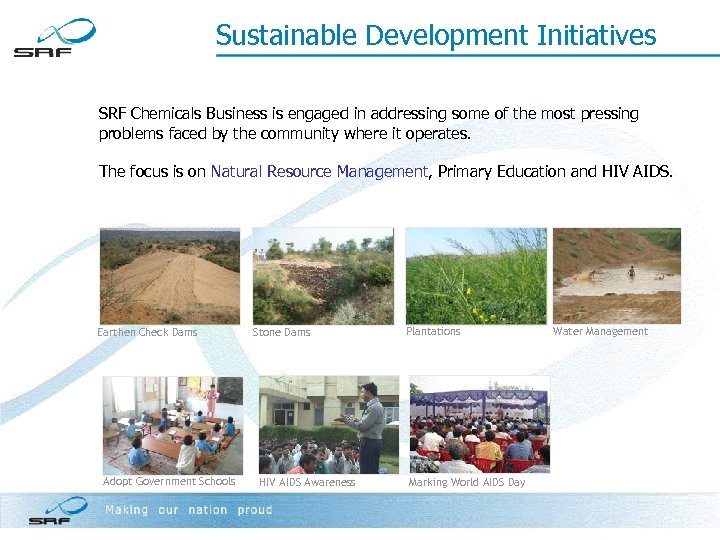
Sustainable Development Initiatives SRF Chemicals Business is engaged in addressing some of the most pressing problems faced by the community where it operates. The focus is on Natural Resource Management, Primary Education and HIV AIDS. Earthen Check Dams Adopt Government Schools Stone Dams HIV AIDS Awareness Plantations Marking World AIDS Day Water Management
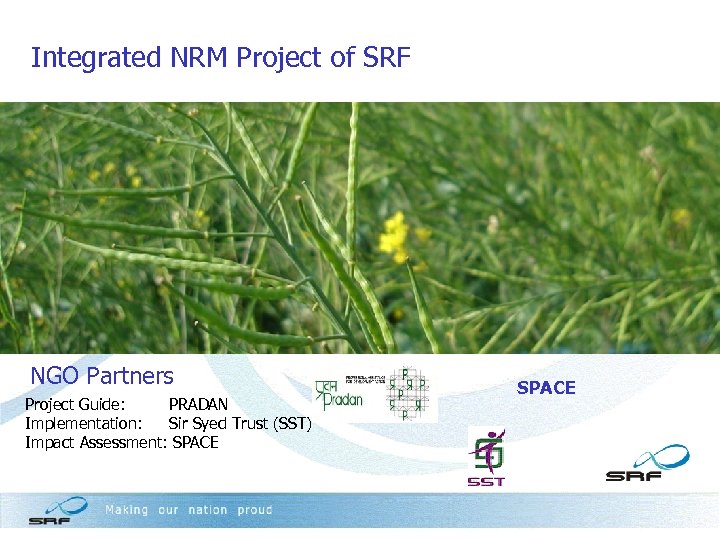
Integrated NRM Project of SRF NGO Partners Project Guide: PRADAN Implementation: Sir Syed Trust (SST) Impact Assessment: SPACE
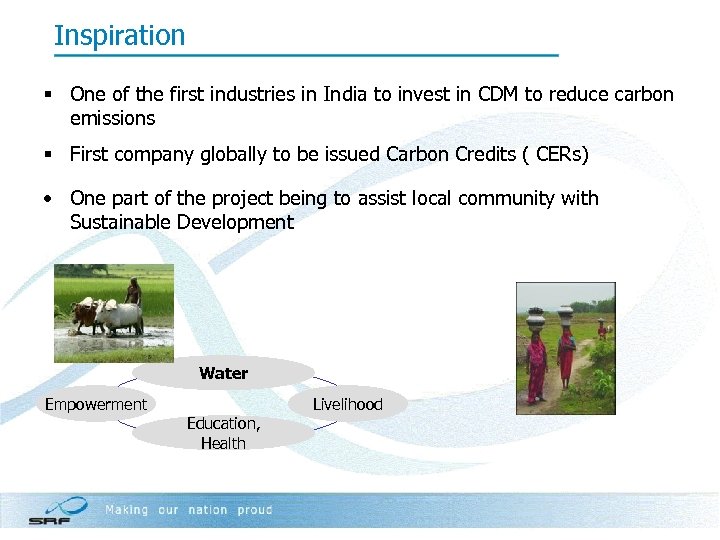
Inspiration § One of the first industries in India to invest in CDM to reduce carbon emissions § First company globally to be issued Carbon Credits ( CERs) • One part of the project being to assist local community with Sustainable Development Water Empowerment Livelihood Education, Health
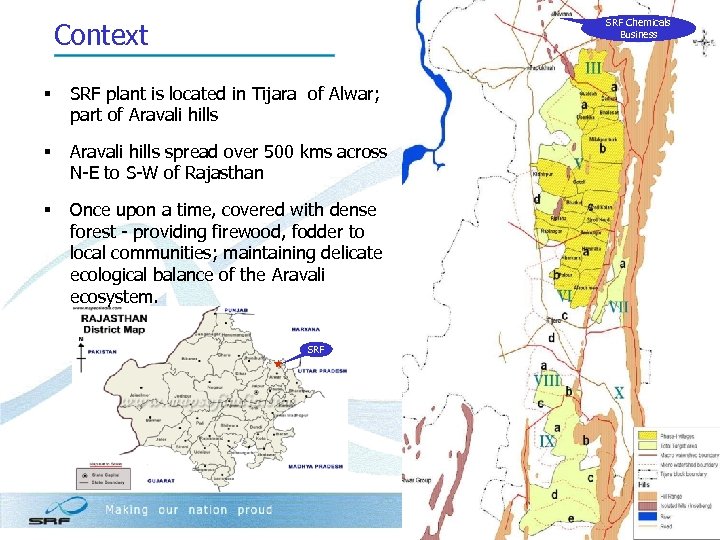
SRF Chemicals Business Context § SRF plant is located in Tijara of Alwar; part of Aravali hills § Aravali hills spread over 500 kms across N-E to S-W of Rajasthan § Once upon a time, covered with dense forest - providing firewood, fodder to local communities; maintaining delicate ecological balance of the Aravali ecosystem. SRF
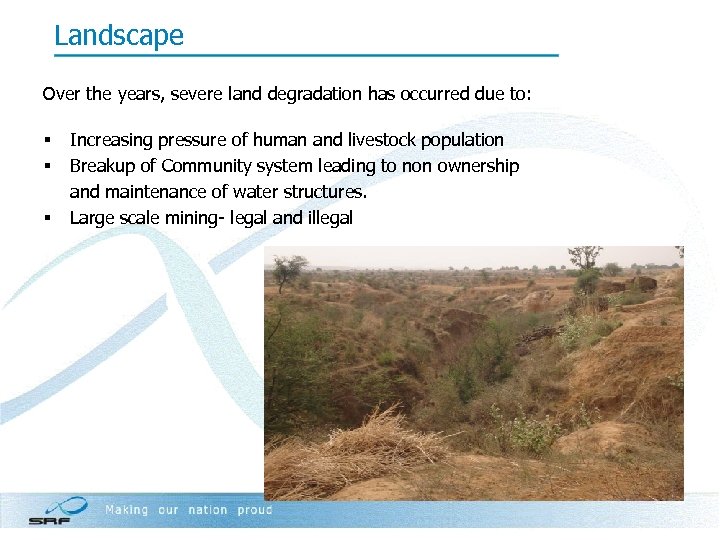
Landscape Over the years, severe land degradation has occurred due to: § § § Increasing pressure of human and livestock population Breakup of Community system leading to non ownership and maintenance of water structures. Large scale mining- legal and illegal
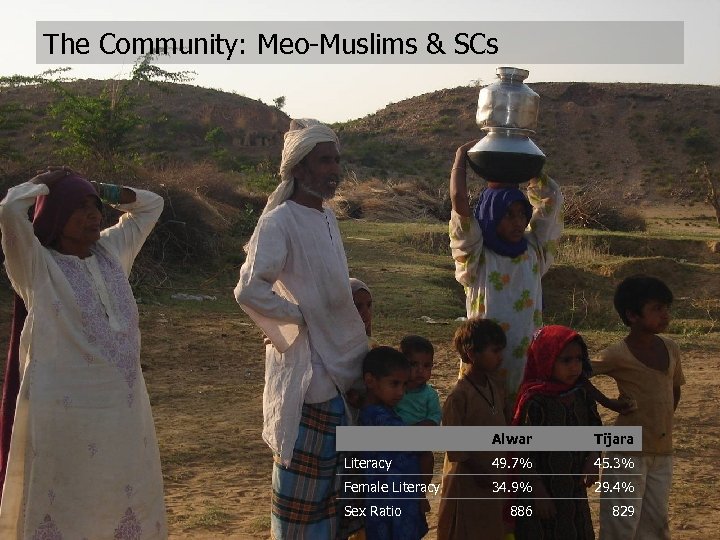
The Community: Meo-Muslims & SCs Alwar Tijara Literacy 49. 7% 45. 3% Female Literacy 34. 9% 29. 4% 886 829 Sex Ratio
Project Design How did we go about our NRM project! 1. Prepared the Project Charter 2. 3. Identification of NGO Partners Implementation Plan • • • 4. 5. Established the Deliverables Budget (in line with the Activities) Details of working relationships MOUs with Partners Monitoring & Review mechanism Documentation Impact Assessment SPACE
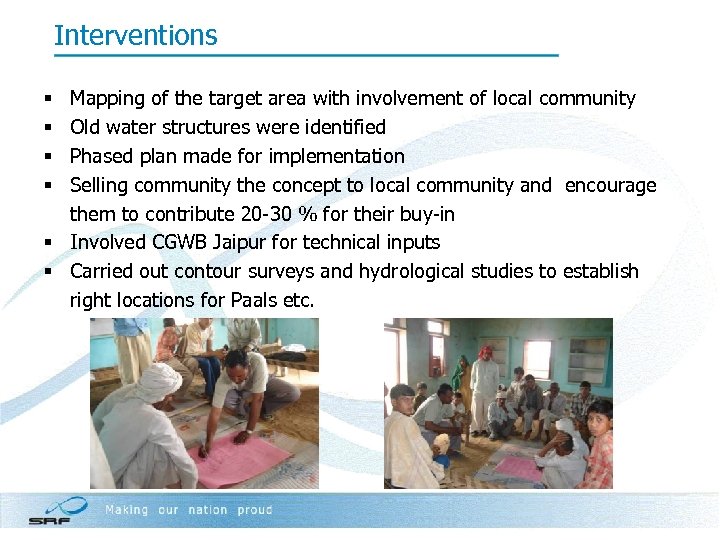
Interventions Mapping of the target area with involvement of local community Old water structures were identified Phased plan made for implementation Selling community the concept to local community and encourage them to contribute 20 -30 % for their buy-in § Involved CGWB Jaipur for technical inputs § Carried out contour surveys and hydrological studies to establish right locations for Paals etc. § §
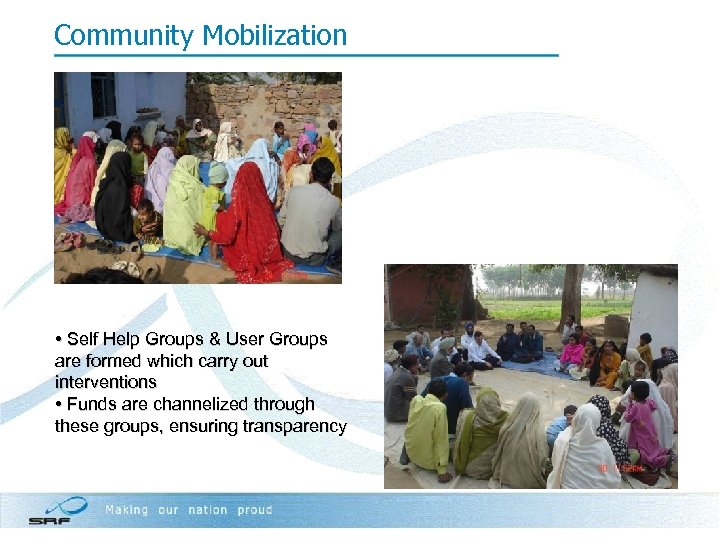
Community Mobilization • Self Help Groups & User Groups are formed which carry out interventions • Funds are channelized through these groups, ensuring transparency
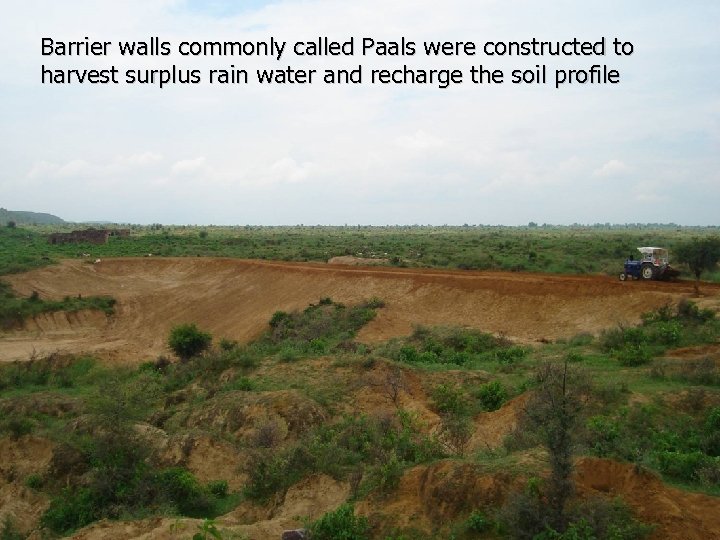
Barrier walls commonly called Paals were constructed to harvest surplus rain water and recharge the soil profile
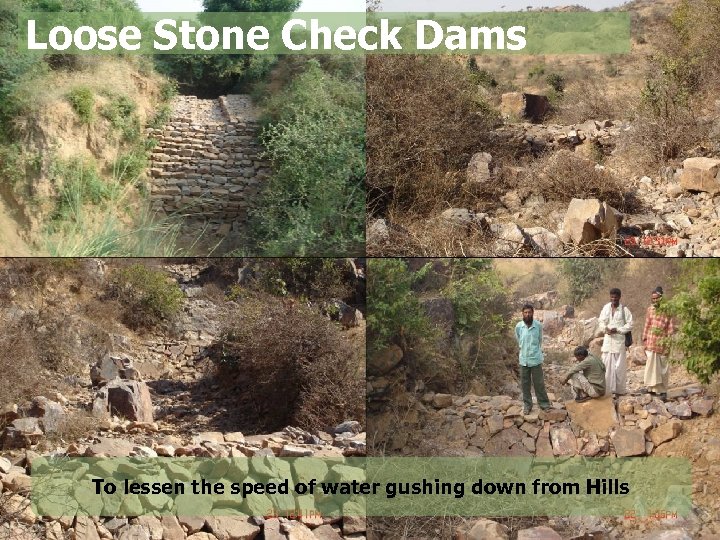
Loose Stone Check Dams To lessen. To check the velocity of rain Hills the speed of water gushing down from the hills
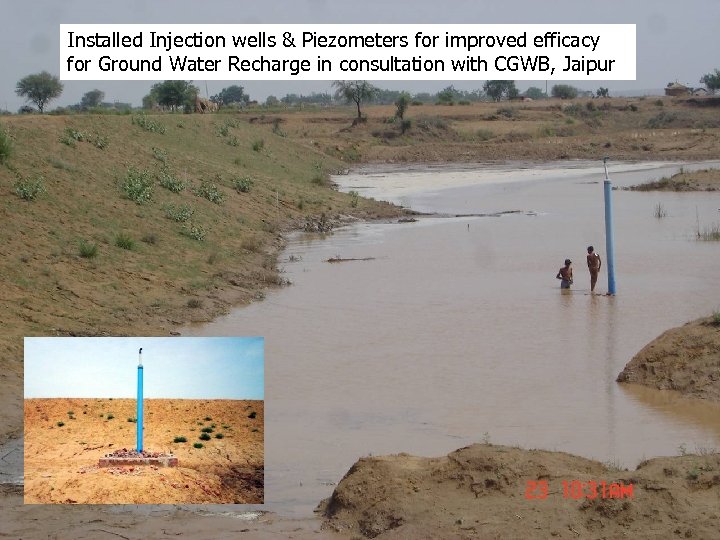
Installed Injection wells & Piezometers for improved efficacy for Ground Water Recharge in consultation with CGWB, Jaipur
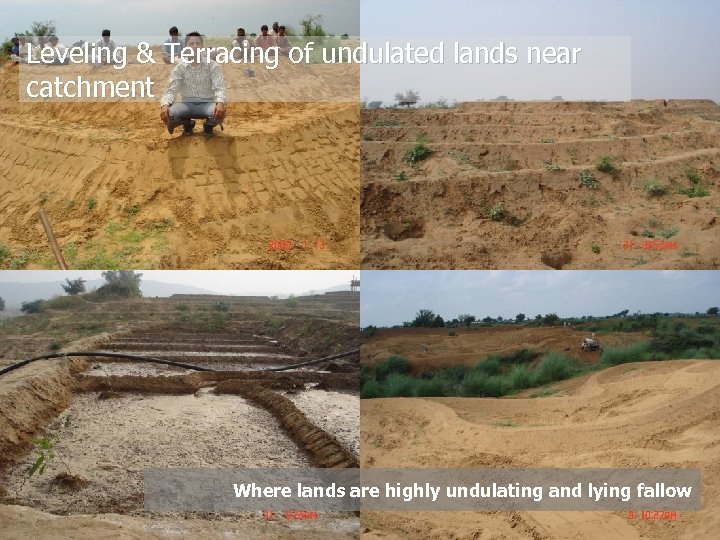
Leveling & Terracing of undulated lands near catchment Where lands are highly undulating and lying fallow
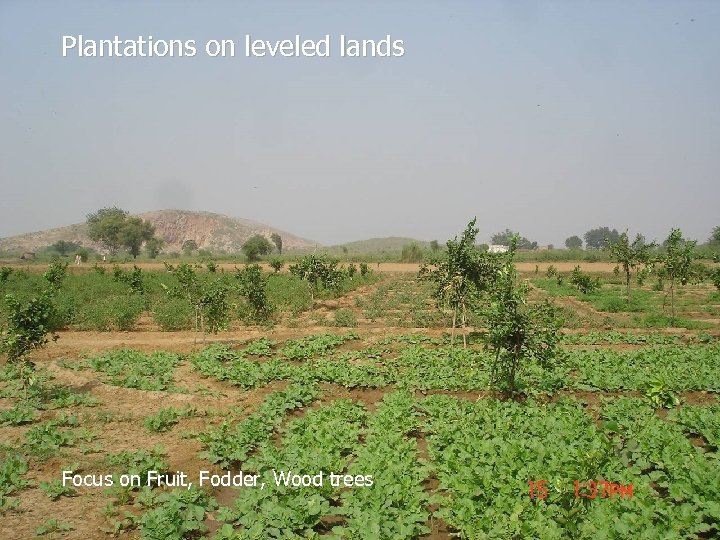
Plantations on leveled lands Focus on Fruit, Fodder, Wood trees
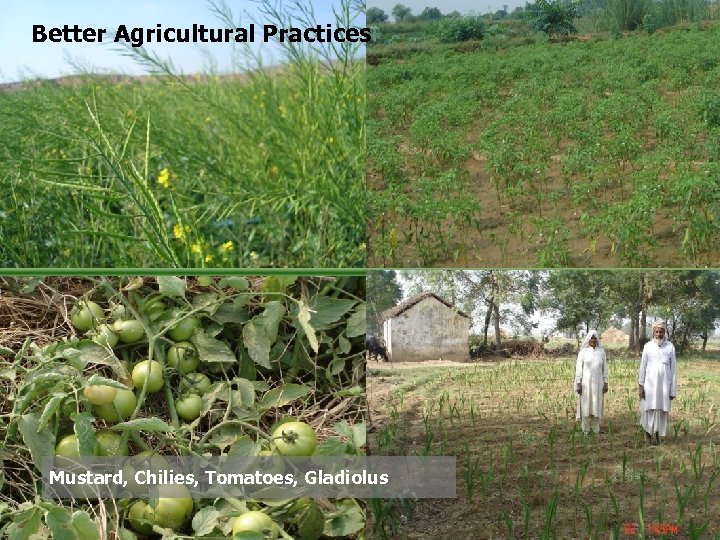
Better Agricultural Practices Mustard, Chilies, Tomatoes, Gladiolus
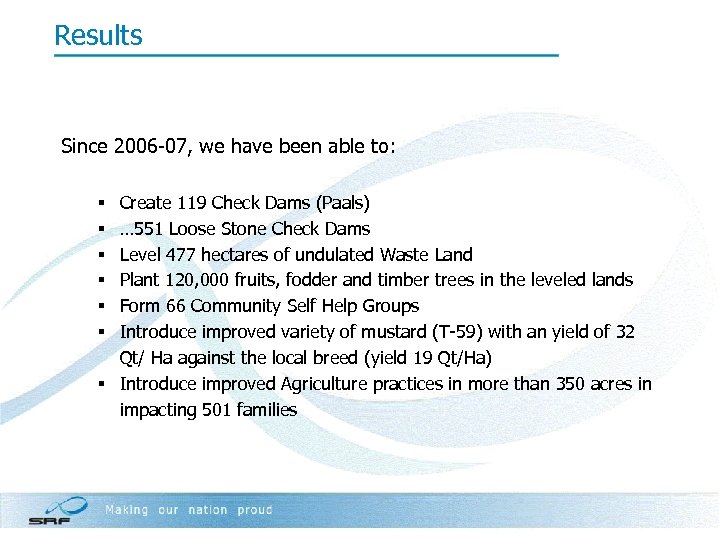
Results Since 2006 -07, we have been able to: Create 119 Check Dams (Paals) … 551 Loose Stone Check Dams Level 477 hectares of undulated Waste Land Plant 120, 000 fruits, fodder and timber trees in the leveled lands Form 66 Community Self Help Groups Introduce improved variety of mustard (T-59) with an yield of 32 Qt/ Ha against the local breed (yield 19 Qt/Ha) § Introduce improved Agriculture practices in more than 350 acres in impacting 501 families § § §
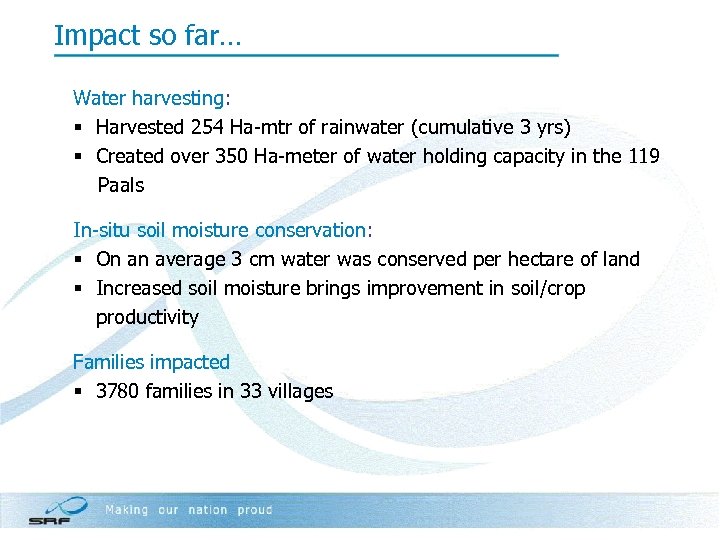
Impact so far… Water harvesting: § Harvested 254 Ha-mtr of rainwater (cumulative 3 yrs) § Created over 350 Ha-meter of water holding capacity in the 119 Paals In-situ soil moisture conservation: § On an average 3 cm water was conserved per hectare of land § Increased soil moisture brings improvement in soil/crop productivity Families impacted § 3780 families in 33 villages
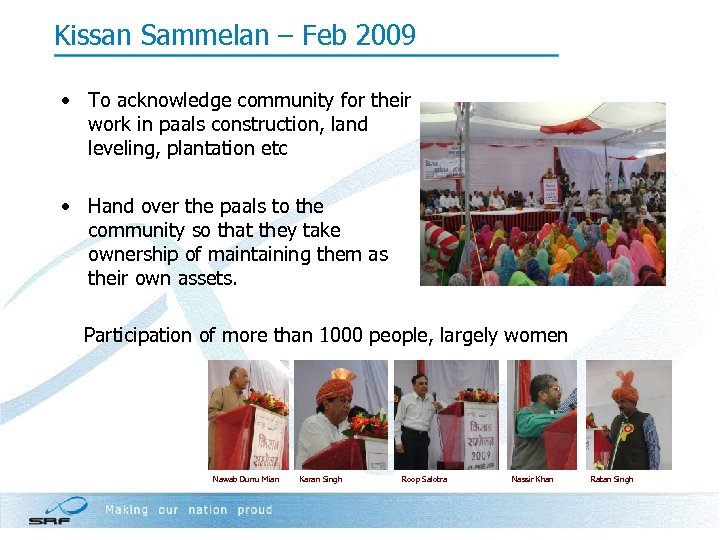
Kissan Sammelan – Feb 2009 • To acknowledge community for their work in paals construction, land leveling, plantation etc • Hand over the paals to the community so that they take ownership of maintaining them as their own assets. Participation of more than 1000 people, largely women Nawab Durru Mian Karan Singh Roop Salotra Nassir Khan Ratan Singh
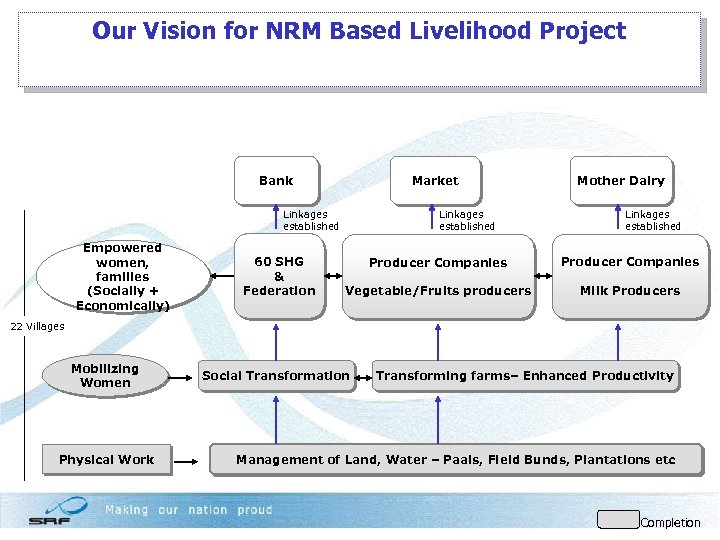
Our Vision for NRM Based Livelihood Project Market Bank Linkages established Empowered women, families (Socially + Economically) 60 SHG & Federation Linkages established Mother Dairy Linkages established Producer Companies Vegetable/Fruits producers Milk Producers 22 Villages Mobilizing Women Physical Work Social Transformation Transforming farms– Enhanced Productivity Management of Land, Water – Paals, Field Bunds, Plantations etc Completion
Way Forward § Expand our reach in the NRM Project § Go further downstream in the areas of education, skills improvement; look at health and sanitation interventions
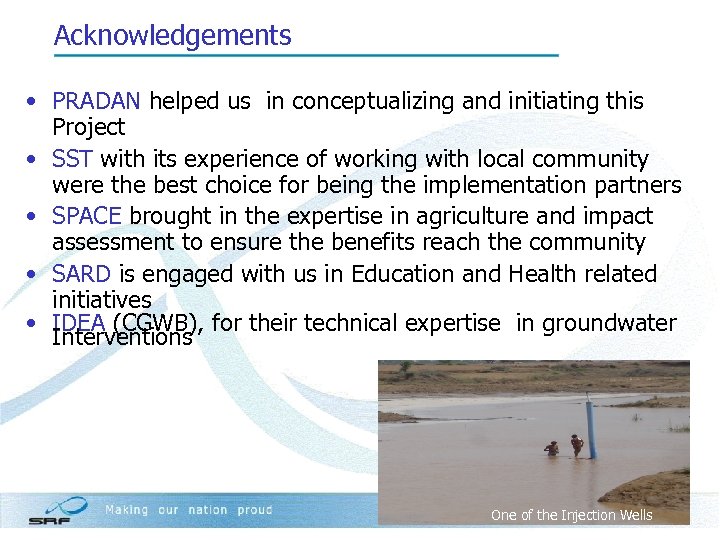
Acknowledgements • PRADAN helped us in conceptualizing and initiating this Project • SST with its experience of working with local community were the best choice for being the implementation partners • SPACE brought in the expertise in agriculture and impact assessment to ensure the benefits reach the community • SARD is engaged with us in Education and Health related initiatives • IDEA (CGWB), for their technical expertise in groundwater Interventions One of the Injection Wells
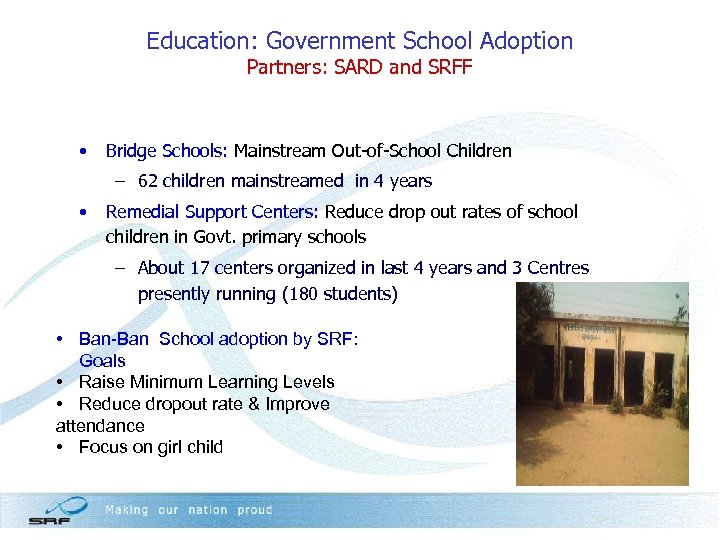
Education: Government School Adoption Partners: SARD and SRFF • Bridge Schools: Mainstream Out-of-School Children – 62 children mainstreamed in 4 years • Remedial Support Centers: Reduce drop out rates of school children in Govt. primary schools – About 17 centers organized in last 4 years and 3 Centres presently running (180 students) • Ban-Ban School adoption by SRF: Goals • Raise Minimum Learning Levels • Reduce dropout rate & Improve attendance • Focus on girl child
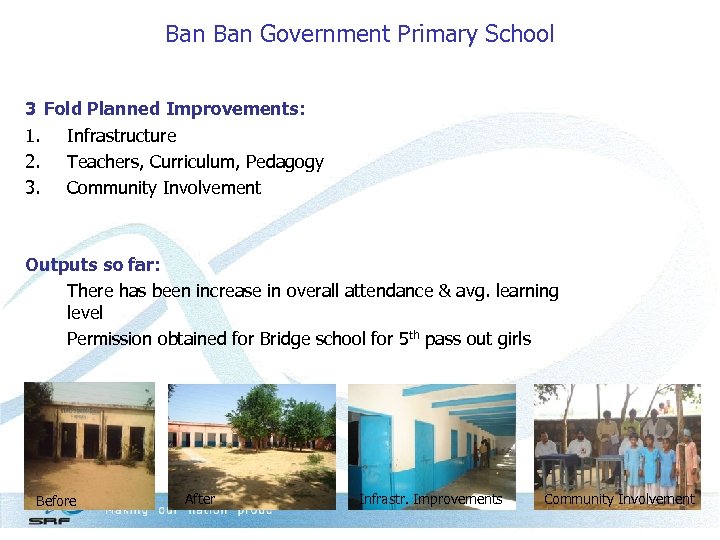
Ban Government Primary School 3 Fold Planned Improvements: 1. 2. 3. Infrastructure Teachers, Curriculum, Pedagogy Community Involvement Outputs so far: There has been increase in overall attendance & avg. learning level Permission obtained for Bridge school for 5 th pass out girls Before After Infrastr. Improvements Community Involvement
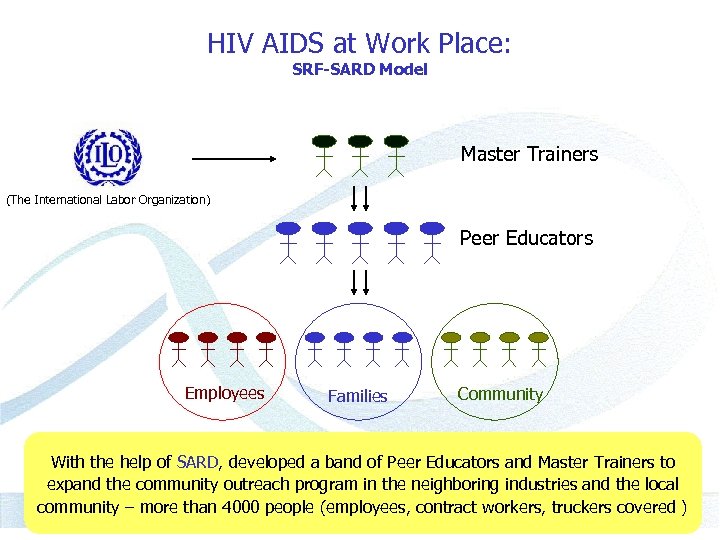
HIV AIDS at Work Place: SRF-SARD Model Master Trainers (The International Labor Organization) Peer Educators Employees Families Community With the help of SARD, developed a band of Peer Educators and Master Trainers to expand the community outreach program in the neighboring industries and the local community – more than 4000 people (employees, contract workers, truckers covered )
We are thankful to our NGO Partners for guiding us through the issues of Survival and Sustainability Thank you for your attention
Скачать презентацию Sustainable Development Initiatives at SRF Chemicals Business An
12ea62514b2f3e29e188c23e1aaae4e7.ppt