 Скачать презентацию Sustainable Development in cities in India Dr Shaleen
43633379c0a144f16cb8d56b7f47face.ppt
- Количество слайдов: 11



Sustainable Development in cities in India Dr. Shaleen Singhal Head, Department of Policy Studies Sustainable Cities and Interdisciplinary International Education: Workshop on Core Knowledge and Skills, NAE, 24 th April, 2013
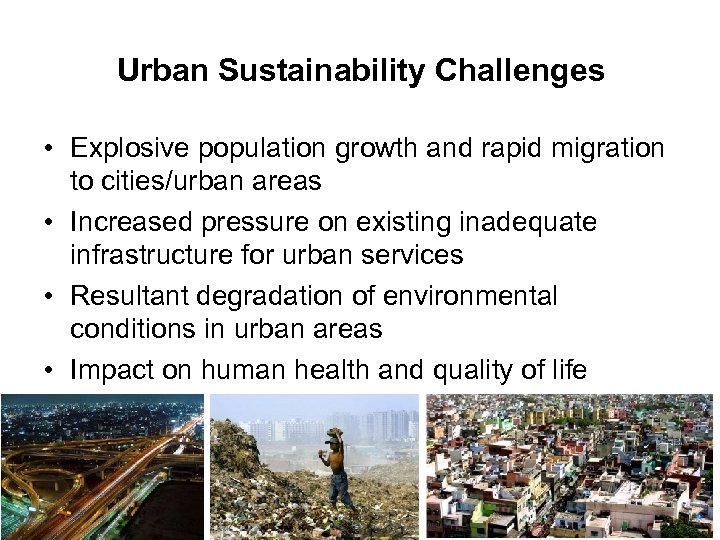
Urban Sustainability Challenges • Explosive population growth and rapid migration to cities/urban areas • Increased pressure on existing inadequate infrastructure for urban services • Resultant degradation of environmental conditions in urban areas • Impact on human health and quality of life
Urban Sustainability Opportunities • Urban areas contribution > 60% to Indian GDP • Built environment contributes 17. 5% to Indian GDP (US, Australia, Japan ~ 15 -18%) • Expected infrastructure investment - 1 trillion USD over 2012 -17 • Cities in India rank low on competitiveness in global ranking • Rapid and haphazard growth, poorly managed resources and service delivery
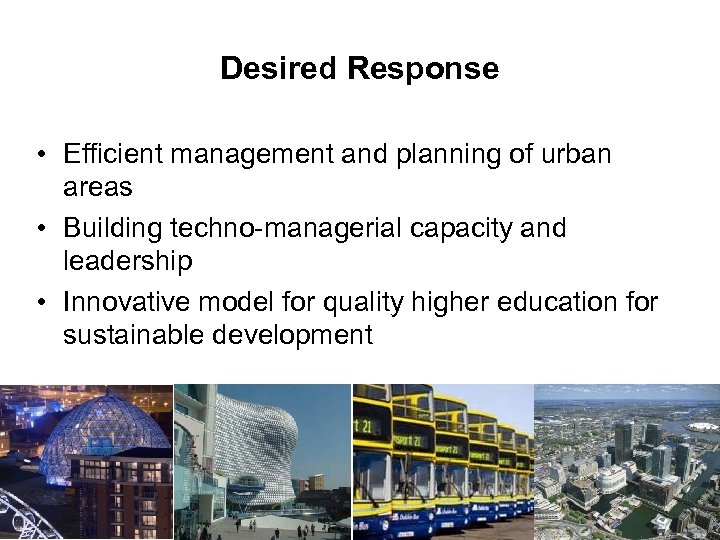
Desired Response • Efficient management and planning of urban areas • Building techno-managerial capacity and leadership • Innovative model for quality higher education for sustainable development
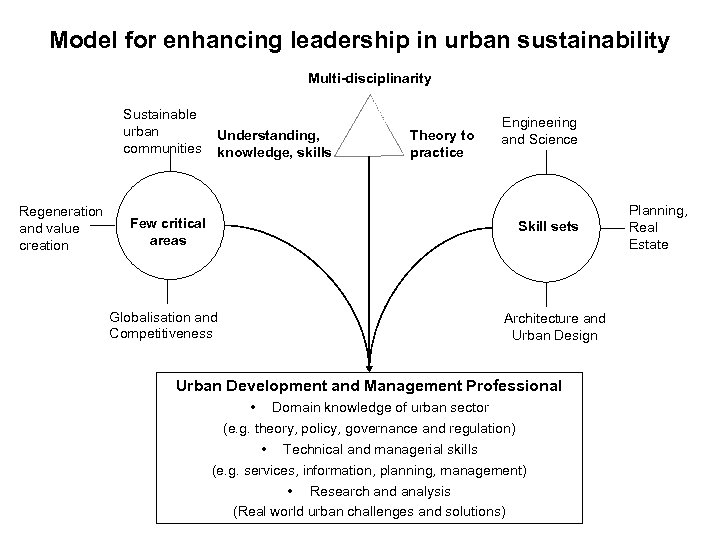
Model for enhancing leadership in urban sustainability Multi-disciplinarity Sustainable urban communities Regeneration and value creation Understanding, knowledge, skills Few critical areas Theory to practice Engineering and Science Skill sets Globalisation and Competitiveness Architecture and Urban Design Urban Development and Management Professional • Domain knowledge of urban sector (e. g. theory, policy, governance and regulation) • Technical and managerial skills (e. g. services, information, planning, management) • Research and analysis (Real world urban challenges and solutions) Planning, Real Estate
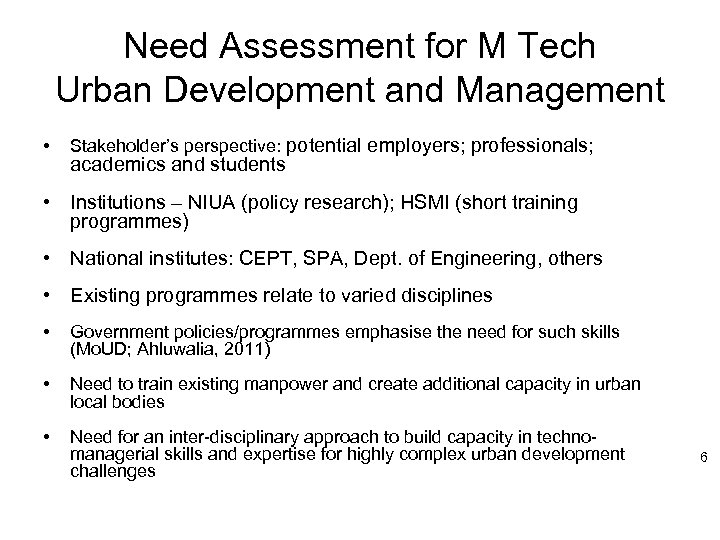
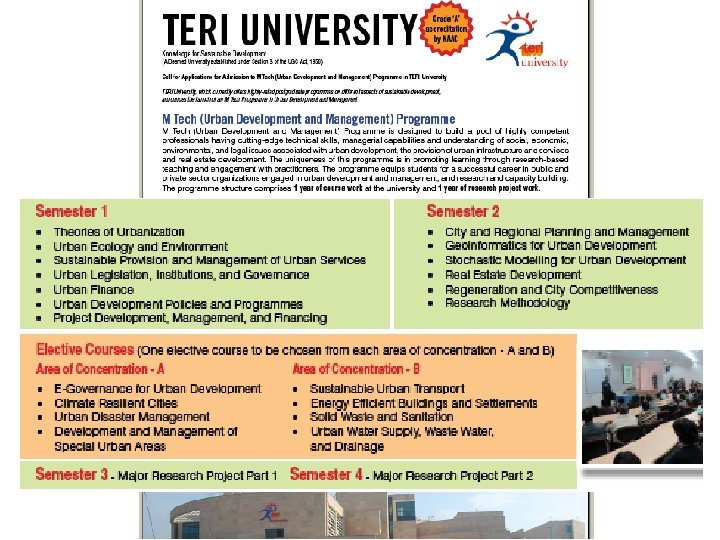
Need Assessment for M Tech Urban Development and Management • Stakeholder’s perspective: potential employers; professionals; academics and students • Institutions – NIUA (policy research); HSMI (short training programmes) • National institutes: CEPT, SPA, Dept. of Engineering, others • Existing programmes relate to varied disciplines • Government policies/programmes emphasise the need for such skills (Mo. UD; Ahluwalia, 2011) • Need to train existing manpower and create additional capacity in urban local bodies • Need for an inter-disciplinary approach to build capacity in technomanagerial skills and expertise for highly complex urban development challenges 6
Research and Teaching Vulnerability and Climate Risk • Vulnerability and adaptation studies • Environmental risks and health linkages - air, water and waste pollution – MSc Climate Science and Policy – MSc Environmental Studies and Resource Management Research and Teaching: Urban Infrastructure – MBA Infrastructure; M Tech Renewable Energy – Ecological approach for industrial estates and urban planning; low carbon growth (Singhal et al, 2010)
Research and Teaching People and Governance • Focus on Public Policy and Sustainable Development (MA) • Sustainable Development Practice (MA supported through John D. and Catherine T. Mac. Arthur Foundation) • Urban competitiveness and regeneration (Singhal et al, 2013; 2012) • Sustainable Urbanism (TERI, 2009; Doctoral research)
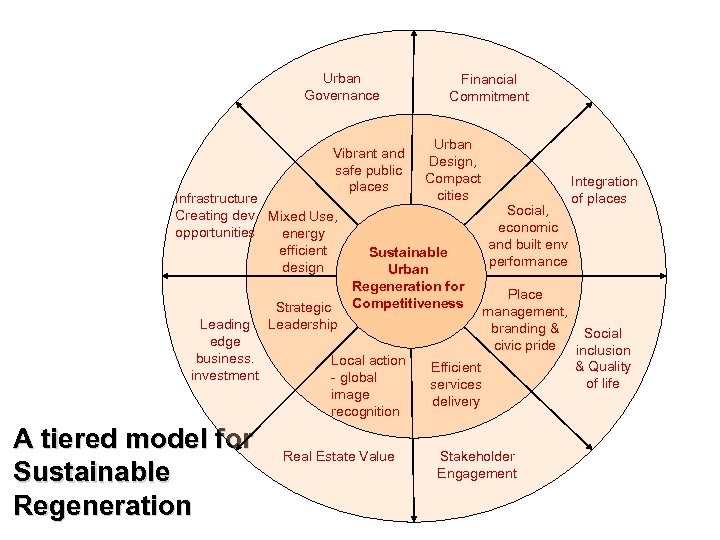
Urban Governance Vibrant and safe public places Infrastructure Creating dev. Mixed Use, opportunities energy efficient design Leading edge business. investment A tiered model for Sustainable Regeneration Strategic Leadership Financial Commitment Urban Design, Compact cities Sustainable Urban Regeneration for Competitiveness Local action - global image recognition Real Estate Value Social, economic and built env performance Integration of places Place management, branding & Social civic pride inclusion & Quality Efficient of life services delivery Stakeholder Engagement
Creating informed citizens to adapt core disciplines to promote sustainable development for cities to win! Thank you.
Скачать презентацию Sustainable Development in cities in India Dr Shaleen
43633379c0a144f16cb8d56b7f47face.ppt