 Скачать презентацию Sustainable Development and Local Government Ann Magee Chair
99875b9beffa4b2ca0652364fbfe2a0f.ppt
- Количество слайдов: 32



Sustainable Development and Local Government Ann Magee Chair LGNZ Sustainable Development Project Team 17 June 2005
Local Government Act • Enable democratic local decisionmaking. . S. 10 • Provides for local authorities to play a broad role in promoting the social, economic, environmental and cultural wellbeing of their communities, taking a sustainable development approach (S. 3)
Local Government Act • In taking a sustainable development approach, a local authority should take into account: – Social, economic and cultural wellbeing of people and communities – The need to maintain and enhance the quality of the environment – The reasonably foreseeable needs of the future generations
Sustainable Development Programme of Action • Focus “Sustainable development must be at the core of all government policy …” • 1 of 3 key documents – Growing an Innovative NZ – Key Government Goals for the Public Sector – Sustainable Development Programme of Action
Sustainable Development Programme of Action “It builds on recent strategies (and) the new local government legislation which gives local authorities a mandate to take the lead in achieving sustainable development locally”
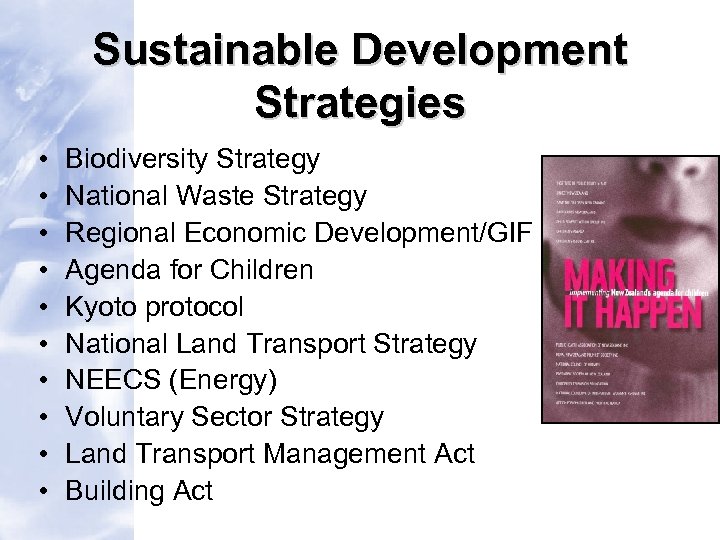
Sustainable Development Strategies • • • Biodiversity Strategy National Waste Strategy Regional Economic Development/GIF Agenda for Children Kyoto protocol National Land Transport Strategy NEECS (Energy) Voluntary Sector Strategy Land Transport Management Act Building Act
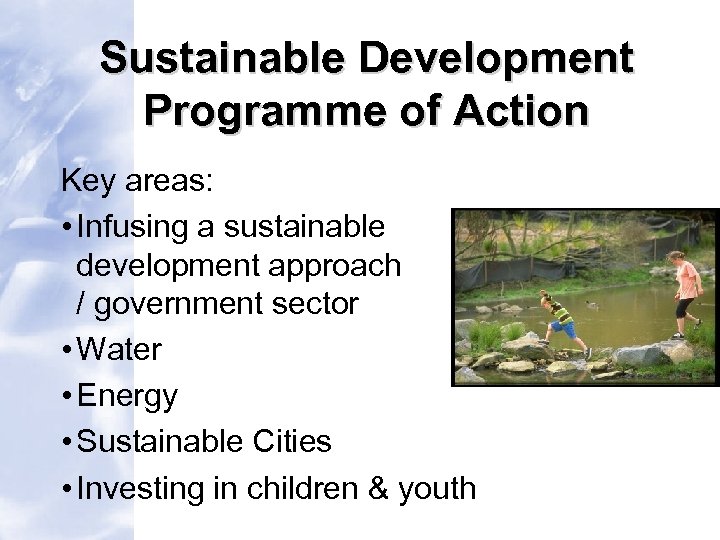
Sustainable Development Programme of Action Key areas: • Infusing a sustainable development approach / government sector • Water • Energy • Sustainable Cities • Investing in children & youth
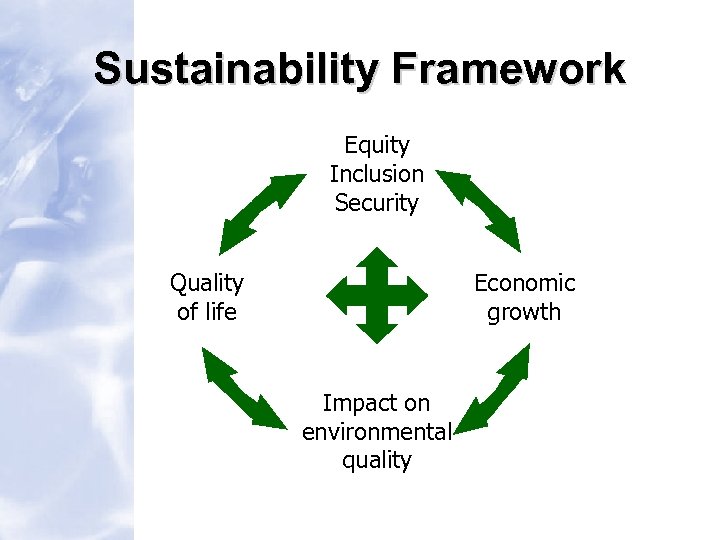
Sustainability Framework Equity Inclusion Security Quality of life Economic growth Impact on environmental quality
Key Drivers - Global • Finite Resources • Rising inequity • Carbon constraints • Water crisis/energy crisis • Rising risks • Alternatives exist (value-based strategies)
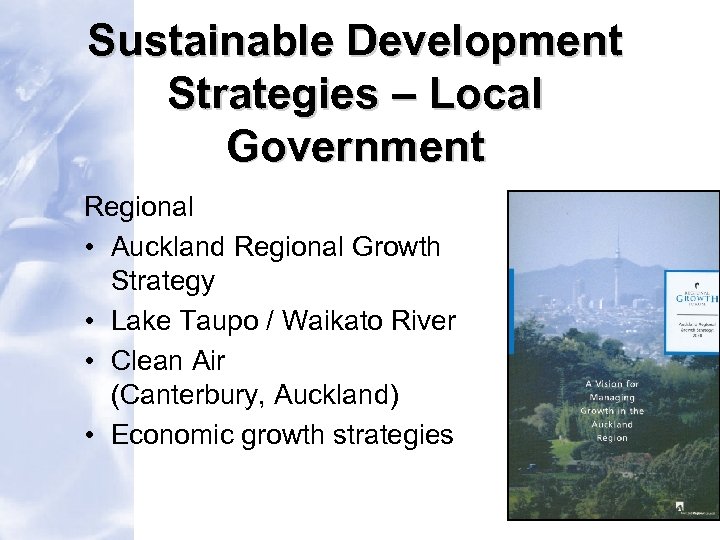
Sustainable Development Strategies – Local Government Regional • Auckland Regional Growth Strategy • Lake Taupo / Waikato River • Clean Air (Canterbury, Auckland) • Economic growth strategies
Sustainable Development – Local Government Sector base – capability, initiatives • Waitakere Eco City/collaboration • Christchurch Sustainability/energy • Kaikoura Green Globe • 30+ zero waste communities, TLAs • Tomorrow’s Manukau • Early LTCCPs
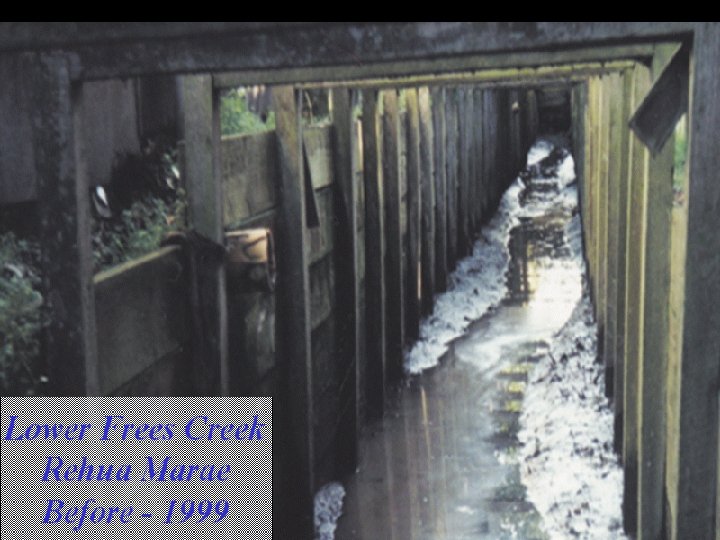
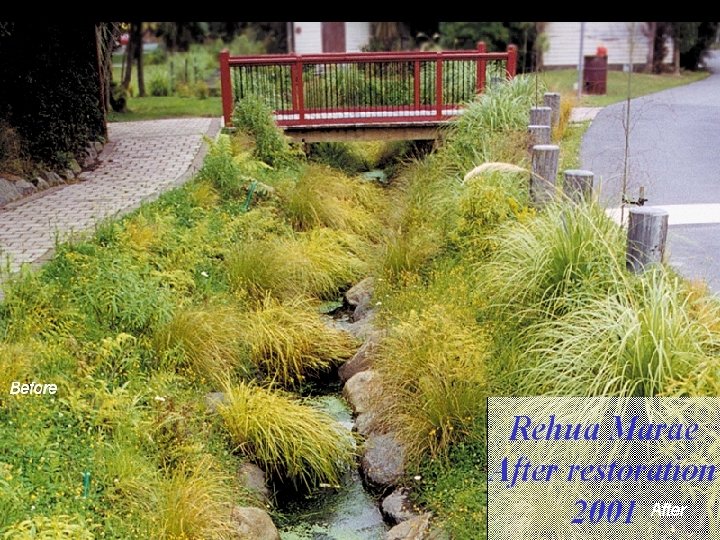
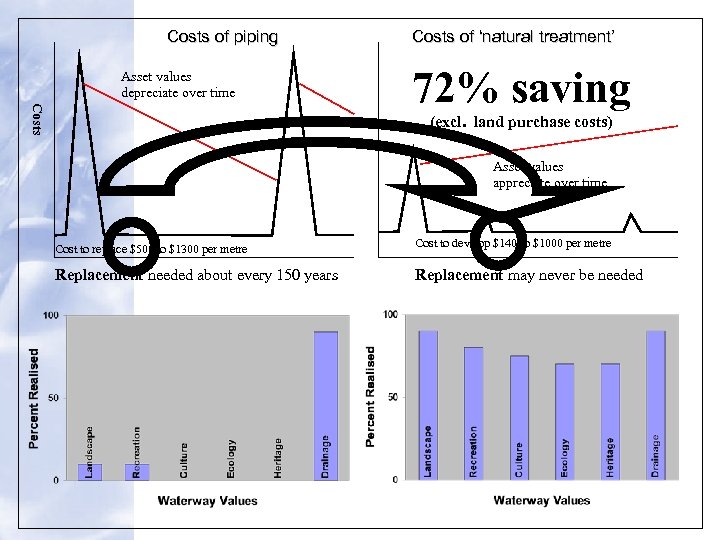
Costs of piping Asset values depreciate over time Costs of ‘natural treatment’ Costs 72% saving (excl. land purchase costs) Asset values appreciate over time Cost to replace $500 to $1300 per metre Cost to develop $140 to $1000 per metre Replacement needed about every 150 years Replacement may never be needed
Auckland Regional Response to SDPA – Sustainable Cities • Pilot for process / actions • Basis – Builds on strengths (Regional Growth Strategy) – Removes barriers (Transport) – Supports wellbeing – Economic goals integral
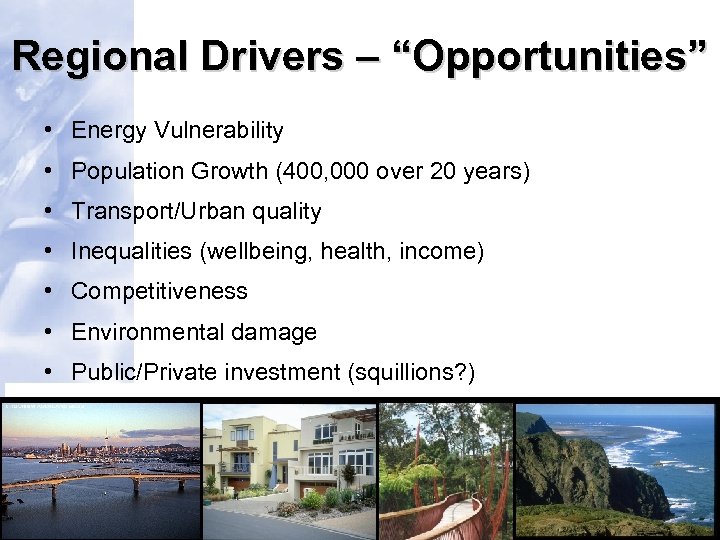
Regional Drivers – “Opportunities” • Energy Vulnerability • Population Growth (400, 000 over 20 years) • Transport/Urban quality • Inequalities (wellbeing, health, income) • Competitiveness • Environmental damage • Public/Private investment (squillions? )
Regional Context - Change • Government Sector emphasis on Sustainable Development • Regional, City, 10 Year Plans (2006 -16) • Land use/transport funding aligned (LG(A)AA by 2007? ) • Built Environment Programme
SDPOA – Auckland Pilot (Sustainable Cities) • Transport/urban form (Walking School Buses) • Sustainable communities (Twin Streams) • Investing in Children and Youth (Education/Citizens) • Urban Form Design and Development – change rules, examples – sustainable Auckland by 2010?
Workstrand: Transport & Urban Form • Why this workstrand was chosen ü Auckland’s sprawling urban form ü Poor linkage between transport and urban form ü Long trips, heavy reliance on private vehicles ü Problems of congestion & environmental impacts • Overall Objective: Build & foster Auckland region urban communities where sustainable transport choices are the norm
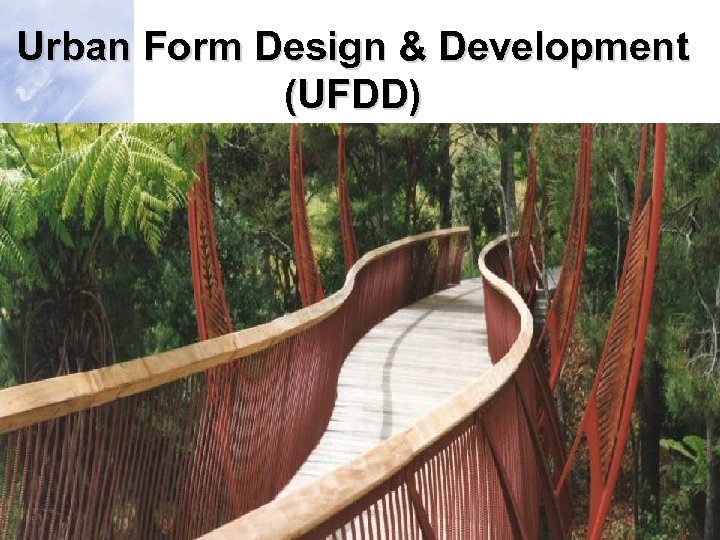
Urban Form Design & Development (UFDD)
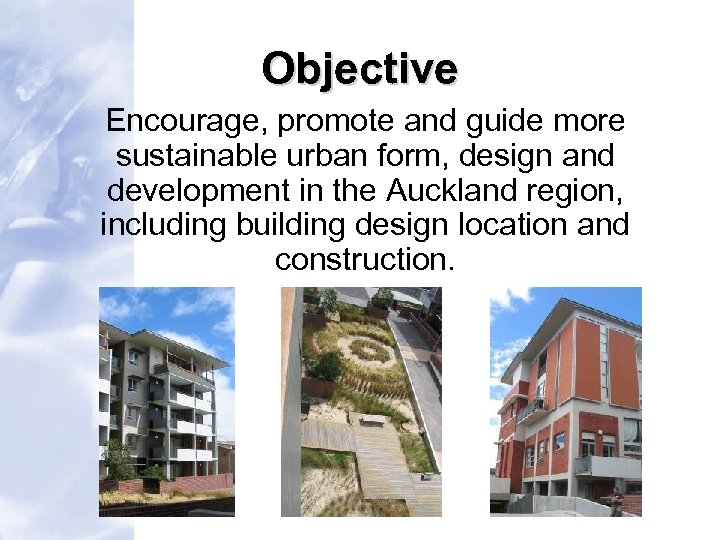
Objective Encourage, promote and guide more sustainable urban form, design and development in the Auckland region, including building design location and construction.
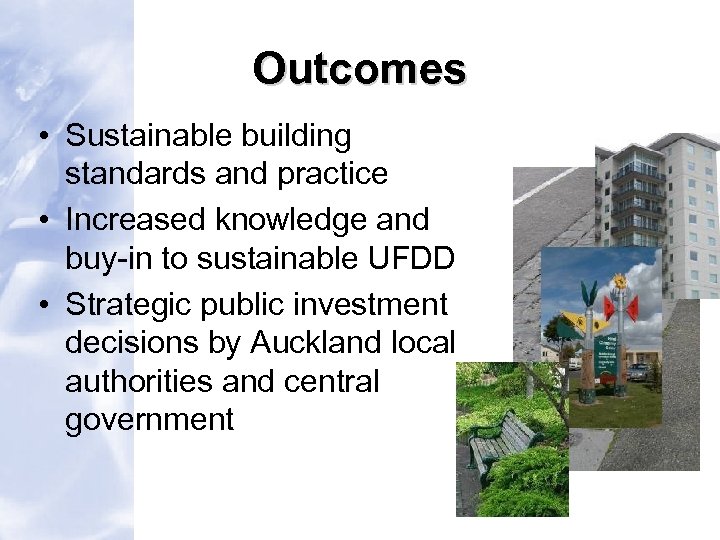
Outcomes • Sustainable building standards and practice • Increased knowledge and buy-in to sustainable UFDD • Strategic public investment decisions by Auckland local authorities and central government
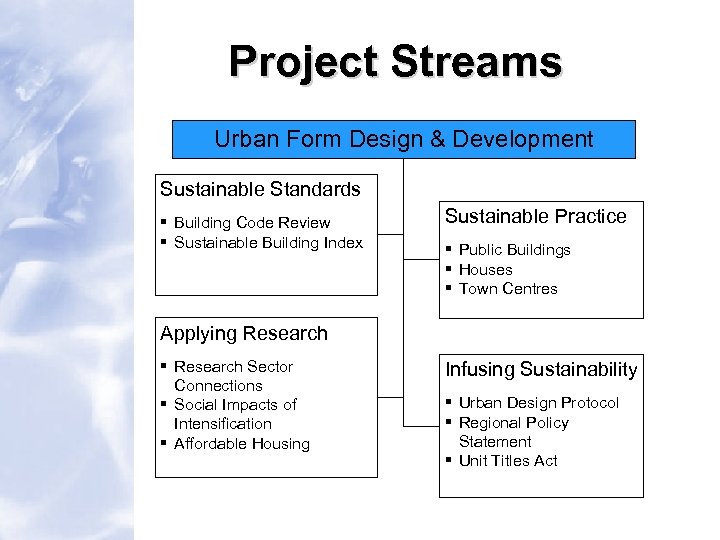
Project Streams Urban Form Design & Development Sustainable Standards § Building Code Review § Sustainable Building Index Sustainable Practice § Public Buildings § Houses § Town Centres Applying Research § Research Sector Connections § Social Impacts of Intensification § Affordable Housing Infusing Sustainability § Urban Design Protocol § Regional Policy Statement § Unit Titles Act
UFDD - Focus • Building Act (sustainability core) • Building Code (sustainability elements) • Better urban design / intensification quality • Standards for sustainable buildings, housing, neighbourhoods, town centres, catchments • Public buildings meet best practice standards • Demonstration projects (NB: meshes with Transport, Children & Youth, Community & Migrant programmes)
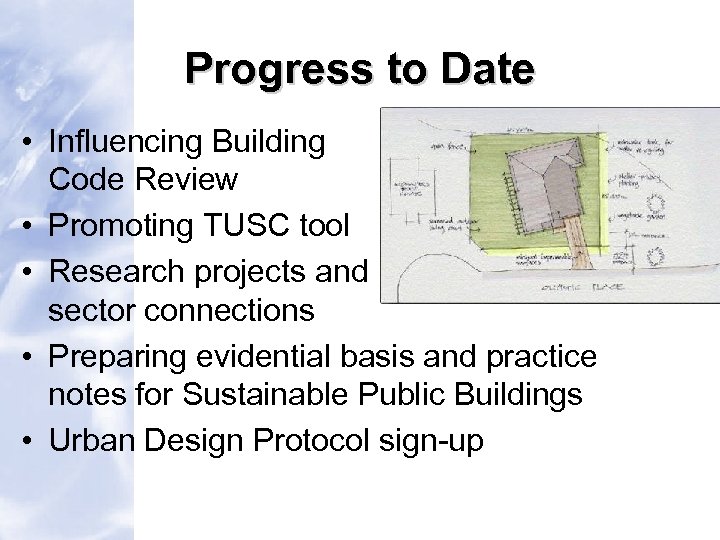
Progress to Date • Influencing Building Code Review • Promoting TUSC tool • Research projects and sector connections • Preparing evidential basis and practice notes for Sustainable Public Buildings • Urban Design Protocol sign-up
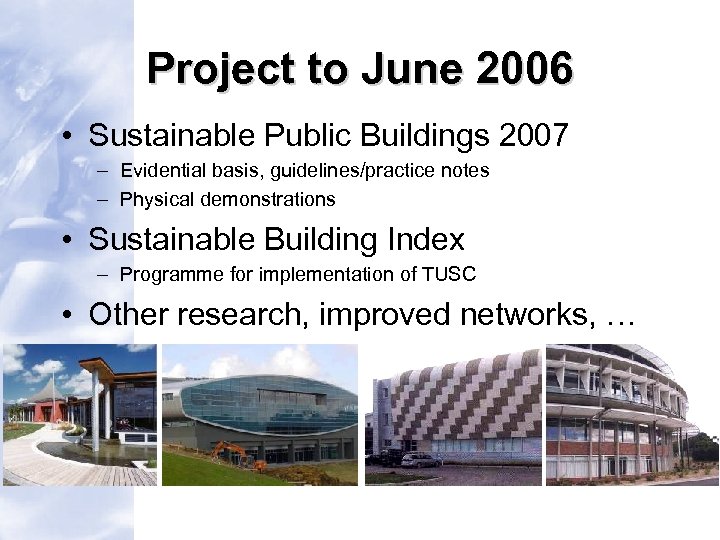
Project to June 2006 • Sustainable Public Buildings 2007 – Evidential basis, guidelines/practice notes – Physical demonstrations • Sustainable Building Index – Programme for implementation of TUSC • Other research, improved networks, …
Research Initiatives • $14 M FRST money plus other sources • Mostly 6 -year programmes with potential to partner with Councils • Beacon: retrofitting houses, new technologies, neighbourhood design • TUSC: flexible performance-based assessment tool for sites and catchments
What We Have Learned • • Collaboration benefits Dedicated resourcing required Clear agenda vision works Entrenched silos remain Lack urban specialists Agenda for cities set by “others” How well do we understand metropolitan cities / regions
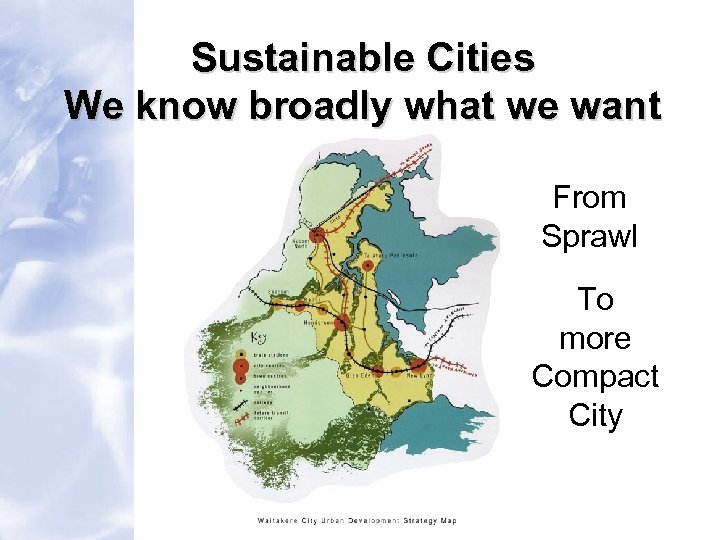
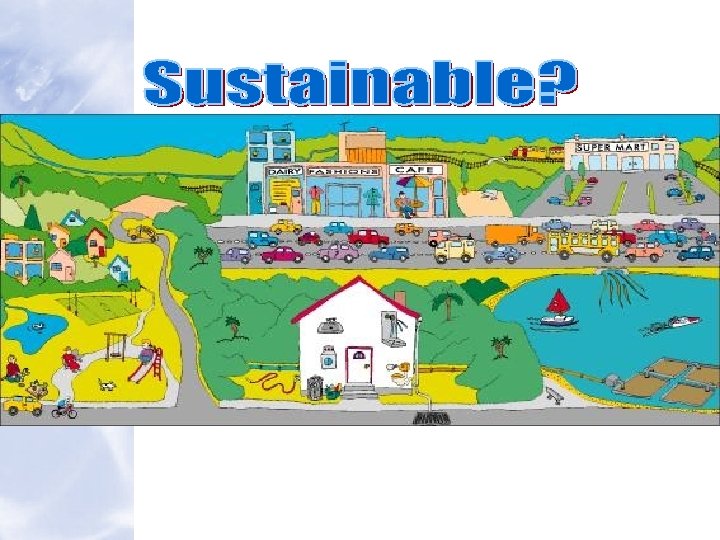
Sustainable Cities We know broadly what we want From Sprawl To more Compact City
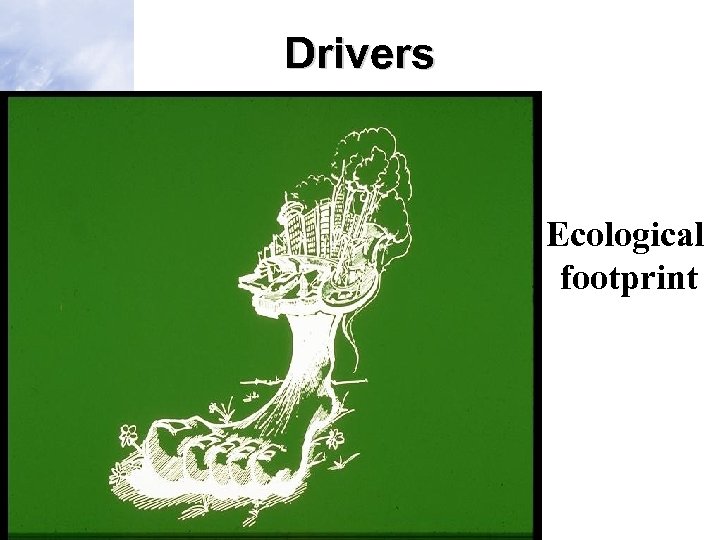
Drivers Ecological footprint
“The best way to predict the future is to invent it. ” Peter Drucker
Скачать презентацию Sustainable Development and Local Government Ann Magee Chair
99875b9beffa4b2ca0652364fbfe2a0f.ppt