 Скачать презентацию Sustainable Destination Management at the Seven Sister States
1fa3b72686f56d555c5b670c58a0ab5d.ppt
- Количество слайдов: 42



Sustainable Destination Management at the Seven Sister States: Recommendations for the Future Emily Mc. Intyre, Leah Jorgensen, Karina Scherloski, Merel van. Haastert, Paul Liao
Outline Plan • • • Introduction Background Environment Social/Culture Economy of S even Sister States Group-led Activity Discussion Questions Recommendations for the Future • Conclusion
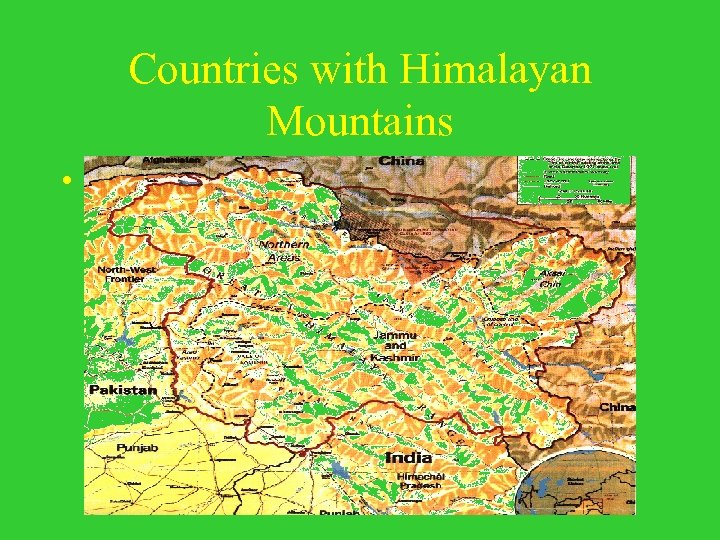
Countries with Himalayan Mountains •
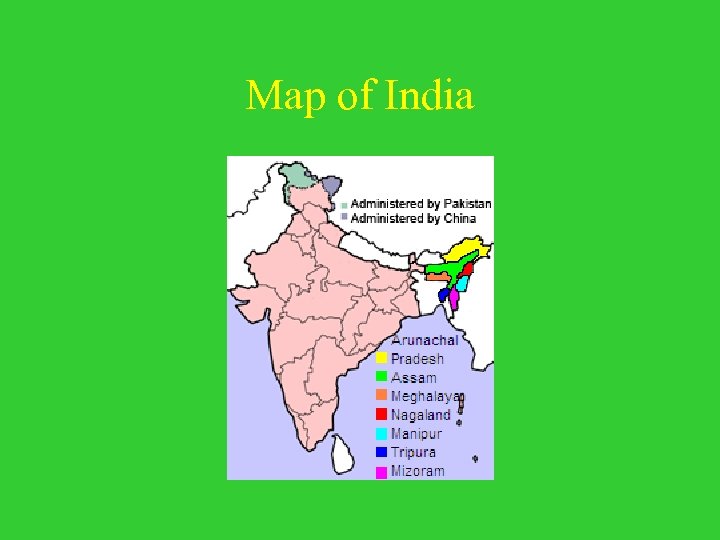
Map of India
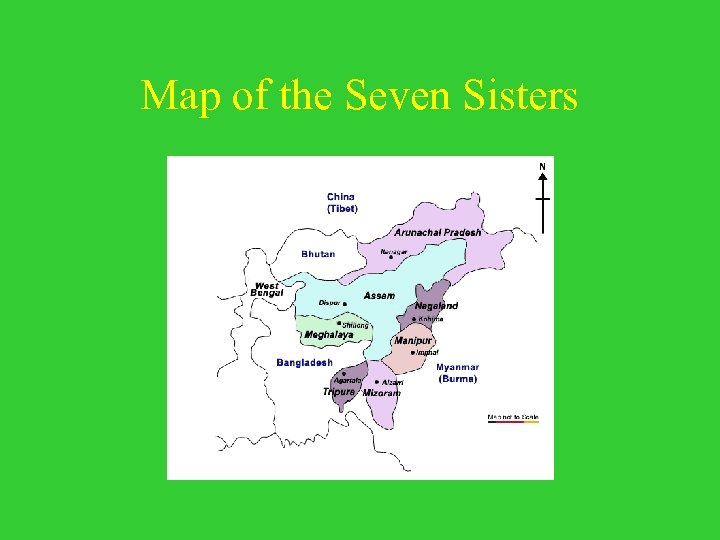
Map of the Seven Sisters
Introduction • By 2010, Mountain tourism will account for 20 per cent of total tourism expenditures (WTTC, 1999) • 1960’s –Current, many tourists trek the Himalayan mountain associated with a pilgrimage • Economic opportunities were underscored, but large scale change. . , . .
Seven Sister States Include… • Most states have: * Their own tribes * Own type of art * Culture * Dance * Music * Lifestyles * Own fairs and festivals
DMO’s Involved: • Wonderland Treks • Government of India • Government of Seven Sister States
The Seven Sister’s Main Resources • • • Tea-based products Bamboo Natural gas Silk Oil Handicrafts • Abundant forests • Exotic flora and fauna • Great land for growing plantation crops, fruits, vegetables, flowers, and herbs • Natural beauty
Environmental Impacts on Mountainous Regions • • Limited accessibility Fragile environment Currently encourage intense resource use Overexploitation of resources with little concern for environmental consequences (Jodha, 2000)
Environmental Impacts Cont’d • • • Environmental degradation Depletion of forests Soil erosion Drying up of water sources Destroyed arable agricultural land (Karan, 1994)
Waste Management Issues • • Self generated solid waste from visitors Large number of visitors Amount of solid waste is also increasing Overloaded areas with growing stockpiles of garbage • Could create water crisis (Kuniyal, 2005) • Pollution attributable to expedition, trekking and camping activities of trekkers • Garbage includes food, glass, clothes, tents, dead bodies (Regmi, n. d. )
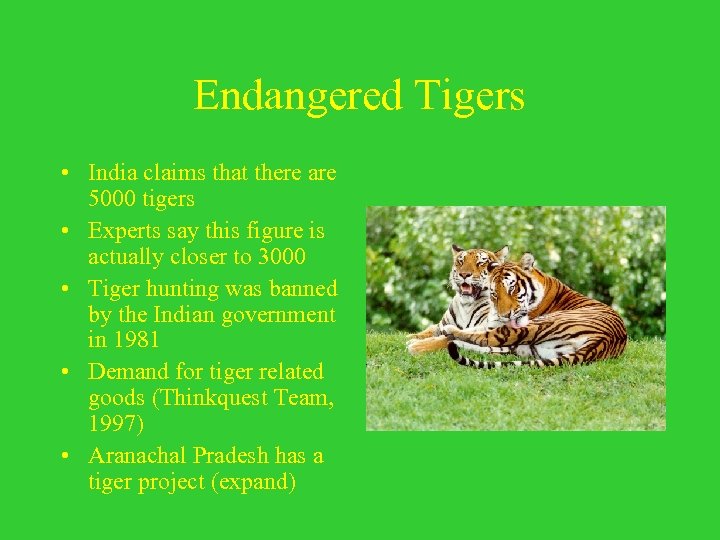
Endangered Tigers • India claims that there are 5000 tigers • Experts say this figure is actually closer to 3000 • Tiger hunting was banned by the Indian government in 1981 • Demand for tiger related goods (Thinkquest Team, 1997) • Aranachal Pradesh has a tiger project (expand)

Corbett National Park
Future Directions for Achieving Environmental Success • Address the needs of the local people in regards to conservation and development, including tourism • Locals should actively be involved as stakeholders in the protection of the environment • Tourism should not increase pressure on local resources (I. e. : use alternative energy sources) • Adequately dispose of human waste and other garbage (Wonderland India, 2007)
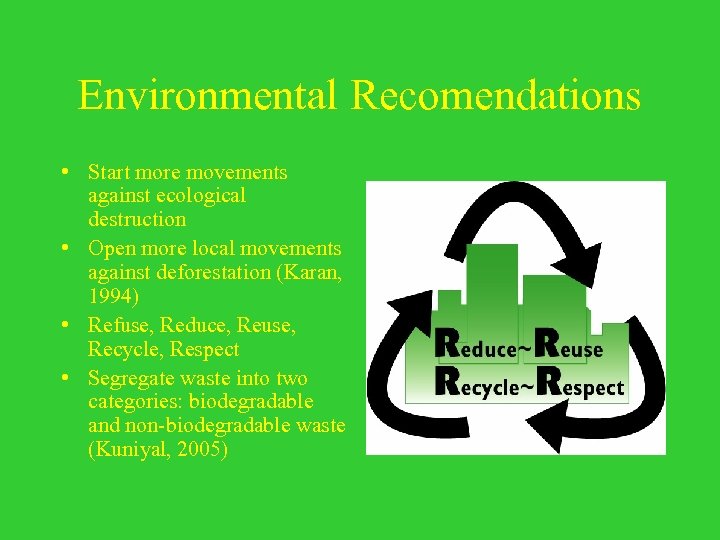
Environmental Recomendations • Start more movements against ecological destruction • Open more local movements against deforestation (Karan, 1994) • Refuse, Reduce, Reuse, Recycle, Respect • Segregate waste into two categories: biodegradable and non-biodegradable waste (Kuniyal, 2005)
Social Issues • Mountain regions obtain a global concern, which turns into a disregard to local perceptions and practices (Singh and Jodha, 2000). • The local culture should have a high level of commitment on formalised planning activities such as regional planning and environmental impact assessment (Bramwell and Lane, 2000). • Micro and Macro Environment need to work together
Stakeholder Involvement • Government of India and State governments • Research Institutions • Regional Universities • Indigenous groups • Ministry of Water Resources • Ministry of Natural Resources • People’s Republic of China • Natural Resource Organizations • Tourism Operators • Transportation Operators • Local Culture • Tourists
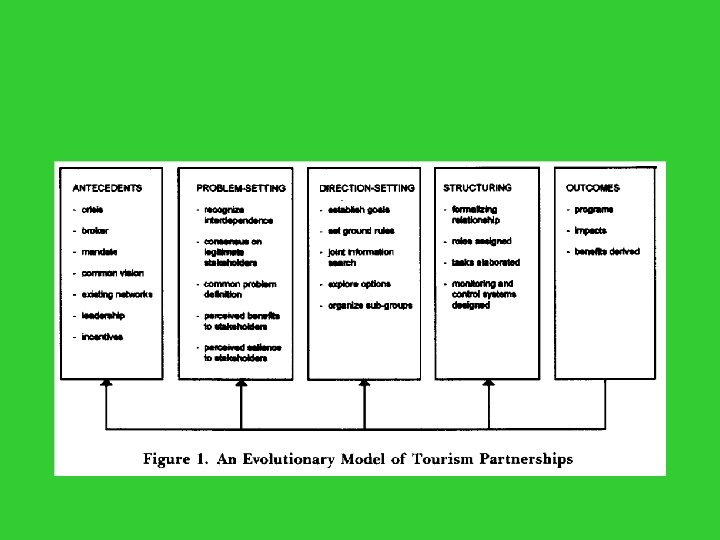
Partnerships • “A voluntary pooling of resources (labor, money, information etc. ) between two or more parties to accomplish collaborative goals” (Chavez and Selin, 1995). • Current Partnerships: North Eastern Council (NEC)
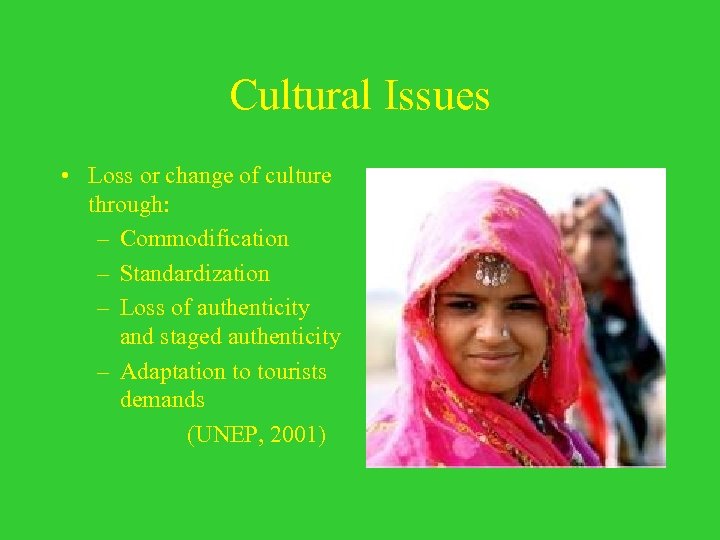
Cultural Issues • Loss or change of culture through: – Commodification – Standardization – Loss of authenticity and staged authenticity – Adaptation to tourists demands (UNEP, 2001)
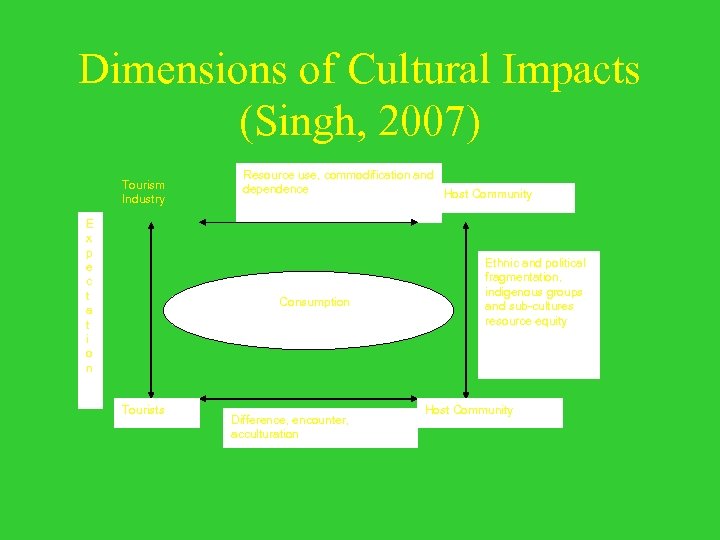
Dimensions of Cultural Impacts (Singh, 2007) Tourism Industry E x p e c t a t i o n Resource use, commodification and dependence Host Community Consumption Tourists Difference, encounter, acculturation Ethnic and political fragmentation, indigenous groups and sub-cultures resource equity Host Community
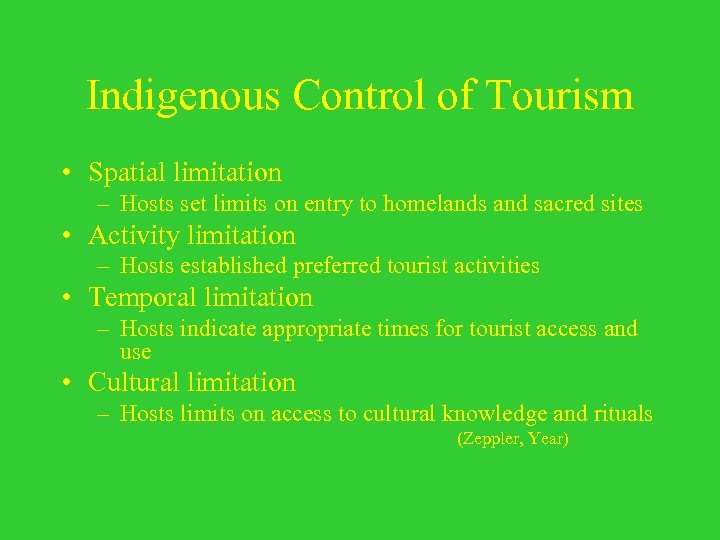
Indigenous Control of Tourism • Spatial limitation – Hosts set limits on entry to homelands and sacred sites • Activity limitation – Hosts established preferred tourist activities • Temporal limitation – Hosts indicate appropriate times for tourist access and use • Cultural limitation – Hosts limits on access to cultural knowledge and rituals (Zeppler, Year)

ECONOMIC SLIDES
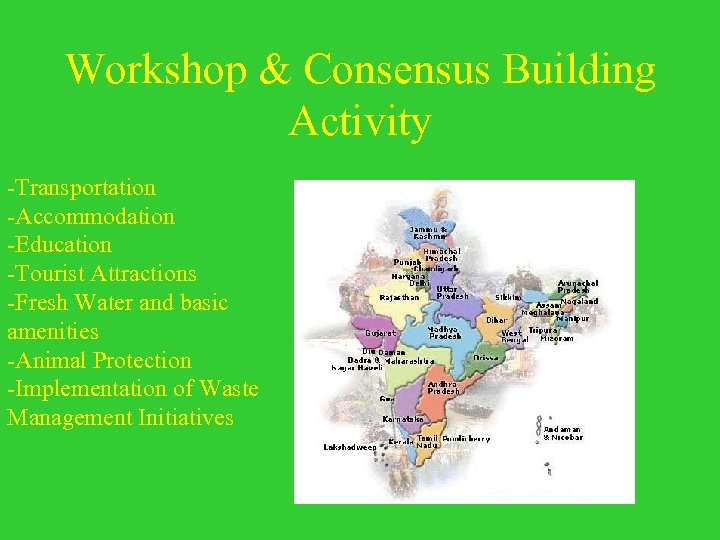
Workshop & Consensus Building Activity -Transportation -Accommodation -Education -Tourist Attractions -Fresh Water and basic amenities -Animal Protection -Implementation of Waste Management Initiatives
Answer: Although modern images of India often show poverty and lack of development, India was the richest country on earth until the time of British invasion in the early 17 th Century. Christopher Columbus was attracted by India's wealth
Discussion Questions 1) Do you have any further suggestions as to how stakeholders may share their resources? 2) How may North Eastern Council help to make a difference for tourism development? 3) Do you think working with neighbouring countries is beyond the scope of Northeast India? 4) Based on this presentation do you have any other future ideas for the Seven Sisters?
Innovative Initiatives and Recommendations for the future: • • Collaboration and Partnerships Workshops Consensus Collaboration under Joint marketing, promotions and research • Co-management • Adaptive management • Collaboration Under Sustainable Tourism Development
Best Practice • • Benchmark Audit Environmental Management System Continuous Monitoring and Improvement (Issaverdis, 2001)
Collaboration and Partnerships • “A process of joint decision making among autonomous, key stakeholders to resolve problems and or to manage issues related to the planning and development” (Text. Ch 13). • Collaboration can be a critical way to achieve common goals. • Best practice: Eagle Valley Partnership (Chavez and Selin, 1995).
Workshops • “Small group sessions (usually with a maximum of 35 participants) held for a period of intense study or training. The emphasis is on exchanging ideas and demonstrating skills and techniques” (Howell, Ellison & Wright, 2003). • Important for information sharing • A place where stakeholders can discuss important topics
Consensus • Cooperative alliances between government, public and private sector • Compromise, Negotiate and Collaborate are essential when reaching a Consensus • Way to find a common ground • Community building • Resolve stakeholder representation issues • Interest-based
Collaboration under Joint Marketing, Promotions and Research • • Improve appeal of the destination Improve networks and linkages Attract funding Tourism Destination Branding Competitive Advantage Marketing Initiatives Sustainable Development
Co-management • “Co-management is when the rights and responsibilities pertaining to a particular resource are shared between government and local users” (Yandle, 2003, p. 180). • Opportunities for • Negotiation and external support • Common shared vision • Leadership • The notion of relationships among people (Plummer and Fitzgibbon, 2004). • Cross-border Partnerships
Adaptive Management • Continuous modifications and adjustments based on learning experiences • Learning by doing, shared learning • Response to rapid change • Flexibility • Monitoring, evaluation and corrective action • Innovate ways to improve management
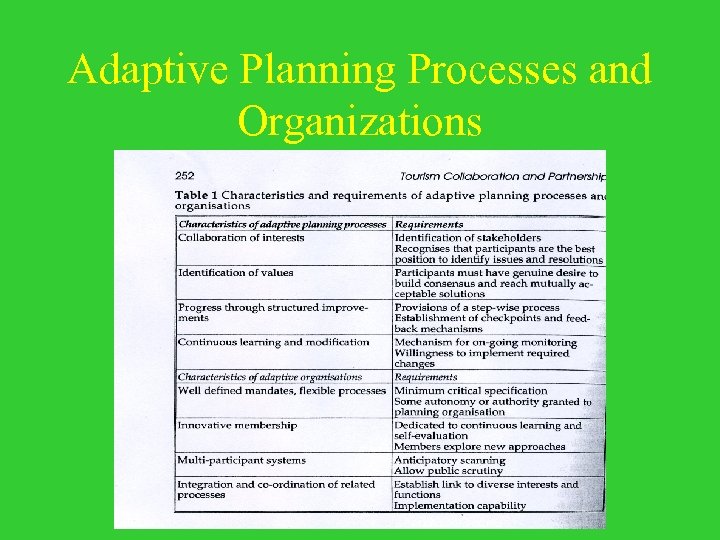
Adaptive Planning Processes and Organizations
Collaboration Under Sustainable Development • Help to solve issues of naturally depleting resources • Help to resolve cultural issues • Maintain Biodiversity and achieve local empowerment through stakeholder involvement, working together and collaboration • Eco-tourism as an opportunity
Knowledge Gaps • • • Lack of Awareness Lack of Education Lack of Basic Amenities and Sanitation Lack of Facilities Poor Transportation Poor planning and instruments of natural disasters
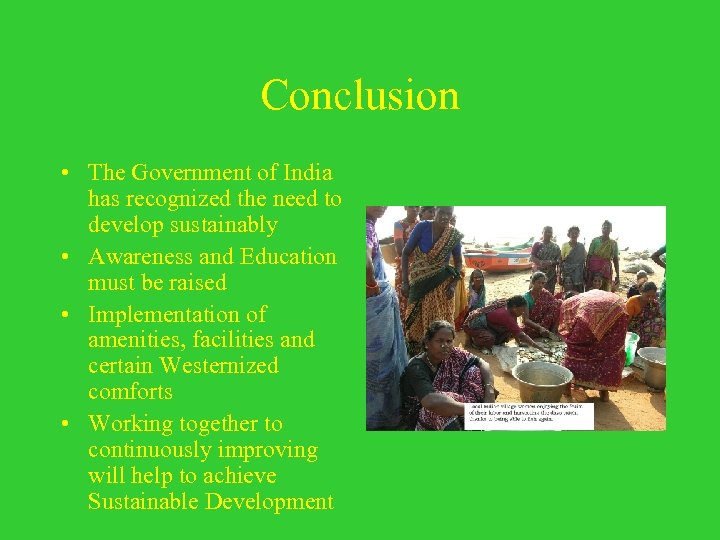
Conclusion • The Government of India has recognized the need to develop sustainably • Awareness and Education must be raised • Implementation of amenities, facilities and certain Westernized comforts • Working together to continuously improving will help to achieve Sustainable Development
References • • • Bramwell, B. & Lane, B. (2000). Tourism Collaboration and Partnerships: Politics, Practice and Sustainability. Great Britain: Biddles Ltd. Conservation International (2007, November 6 th). Biodiversity hotspots. Retrieved November 6 th, 2007, from http: //www. biodiversityhotspots. org/xp/Hotspots/resources Jodha, N. S. (2000). Globalization and fragile mountain environments: Policy challenges and choices. Mountain Research and Development, 20(4), 296 -299. Karan, P. P. (1994). Environmental movements in India. The Geographical Review, 84, 32 -42. Kuniyal, J. C. (2005). Solid waste management techniques for the waste generated and brought down from campsites in the hill spots, trails and expedition tops. Waste Management & Research, 23(3), 182 -198. Regmi, P. (n. d. ). Himalayas labelled “the highest junkyard in the world. ” Retrieved October 25, 2007, from http: //www. chhahari. com/Shangri_La/text/pollution. html Singh, S. & Jodha, N. (2000). Globalization and Fragile Mountain Environments: Policy Challenges and Choices. Mountain Research and Development, 20(4), 296 -299. Wikipedia (2007, May 17). Seven sister states. Retrieved October 31, 2007, from http: //en. wikipedia. org/wiki/Seven_Sister_States Wonderland Treks and Tours (2007). Retrieved November 11 th, 2007, from http: //www. wonderland-india. com/aboutus. html • Yandle, T. 2003. The challenge of building successful stakeholder organizations: New Zealand’s experience in developing a fisheries co-management regime. Marine Policy 27, 179– 192
References Cont’d • • • Dev, B. J. , & Lahiri, D. K. (1987). Manipur: Culture and Politics. India: Mittal Publications. Singh, T. (1972). Manipur A Study. Rajesh Printing Press. Agarwal, A. K. (1988). North-Eastern Economy: Problems and Prospects. India: Mittal Publications. India Tourism Statistics. (2003). Market research division ministry of tourism government of India (PDF). Retrieved November 13, 2007, tourism. gov. in/rtia/. . %5 Cstatistics%5 CFTAIS 2003. pdf Gopalakrishnan, R. (1991). The North-East India Land, Economy and People. Vikas Publishing House Pvt Ltd. Maps of India. (2004). Travel, hotels and profile of Meghalaya. Retrieved November 13, 2007, from http: //www. mapsofindia. com/stateprofiles/meghalaya/ Ministry of Statistics and Programme Implementation. (2007). Retrieved November 12, 2007, from http: //www. mospi. gov. in/ Government of Assam, Economic Survey of Assam. (2006). Retrieved November 13, 2007, from http: //en. wikipedia. org/wiki/Assam Infrastructure. (2003). Assam (PDF). Retrieved November 13, 2007, from http: //assamgovt. nic. in/ NER Databank. (2002). North Eastern Development Finance Corporation Ltd. Retrieved November 12, 2007, from http: //databank. nedfi. com/

Thank you! • Please inquire with us if you have any further questions, comments and concerns!
Скачать презентацию Sustainable Destination Management at the Seven Sister States
1fa3b72686f56d555c5b670c58a0ab5d.ppt