 Скачать презентацию Sustainability of Quality through Quality Management Prof Dr
ee61f8e029e7ef144273e69ad9bd74ca.ppt
- Количество слайдов: 52



Sustainability of Quality through Quality Management Prof. Dr. h. c. Hans-Günther Sonntag Medical School, University of Heidelberg
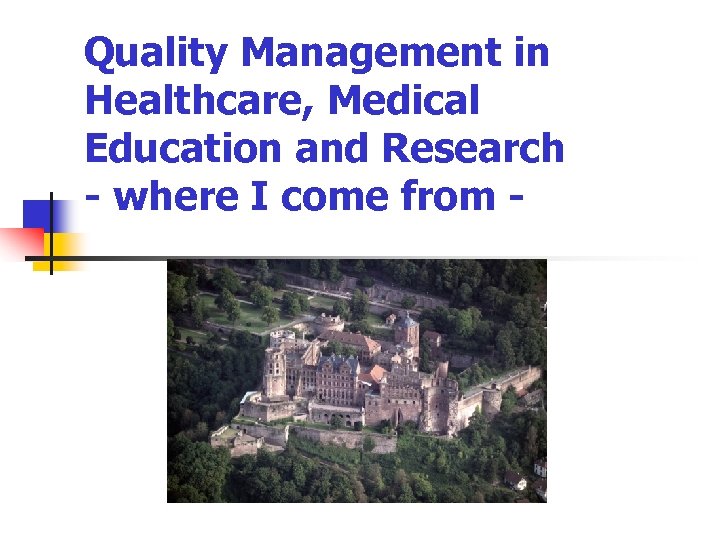
Quality Management in Healthcare, Medical Education and Research - where I come from -
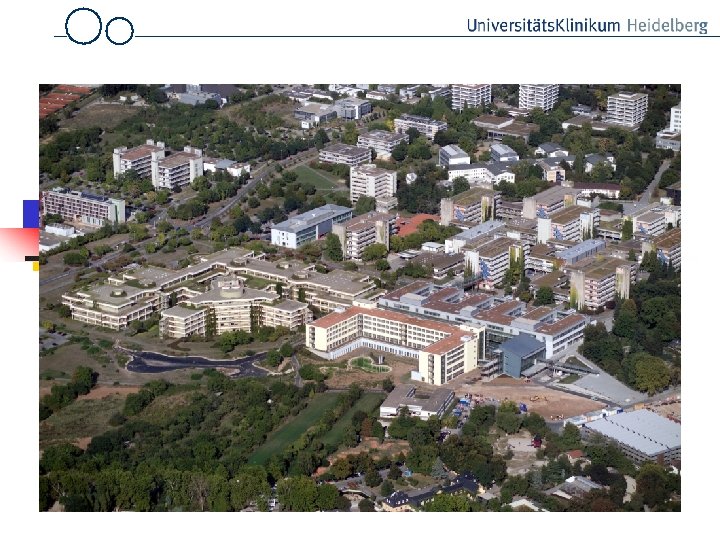
History of the University of Heidelberg n n Founded in 1386 , oldest University in Germany 4 Faculties – Faculty of Law, Theology, Philosophy/Arts, Medicine Today: 15 Faculties (without technical field), 13. 000 employees ( 3500 Professors) and 30. 000 students (> 20% foreign students from all over the world) Medical Faculty and University Clinic (1. 200 Professors, 2. 500 students, 8. 000 employees)
Basic Data Medical School University of Heidelberg n n n 13 Clinics (43 departments) 12 Institutes (23 departments) 6. 650 Full Time Employees (8. 000 real) 50. 000 Inpatients 35. 000 Daycare patients 350. 000 Outpatients
Research and Health Care Profile n n n Oncology Cardiovascular diseases Neurology and basic neuroscience (incl. Psychiatry) Transplantation Infections diseases Medical Genetics and Genomic
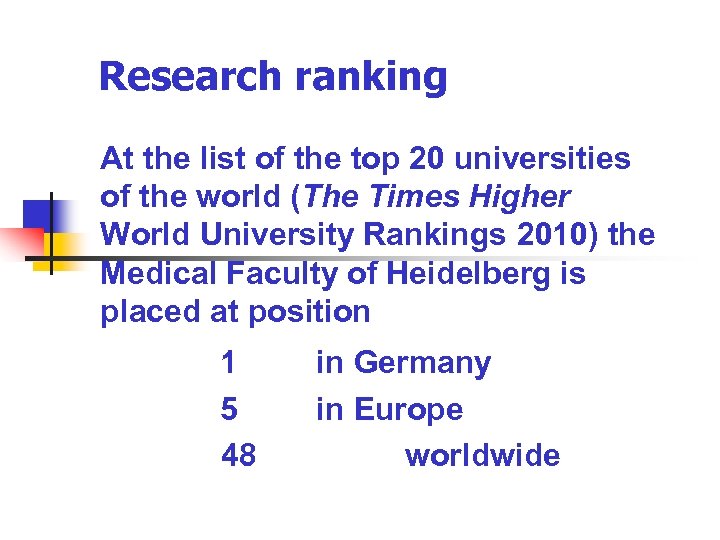
Research ranking At the list of the top 20 universities of the world (The Times Higher World University Rankings 2010) the Medical Faculty of Heidelberg is placed at position 1 5 48 in Germany in Europe worldwide
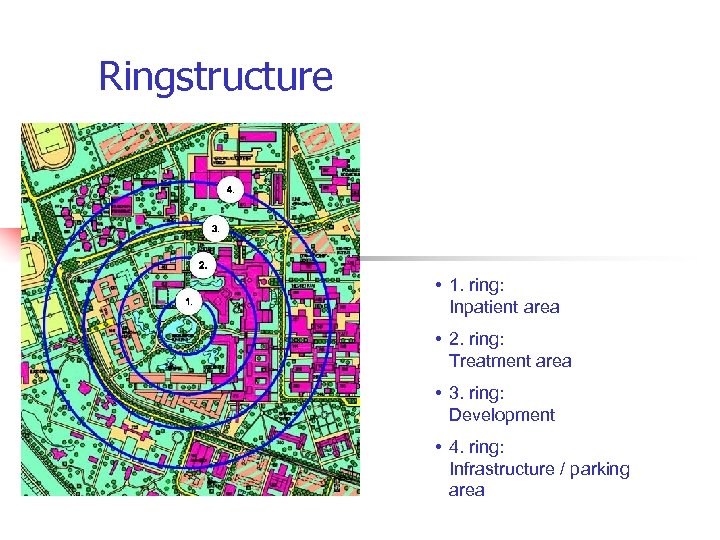
Ringstructure • 1. ring: Inpatient area • 2. ring: Treatment area • 3. ring: Development • 4. ring: Infrastructure / parking area
What is Quality - Definitions -
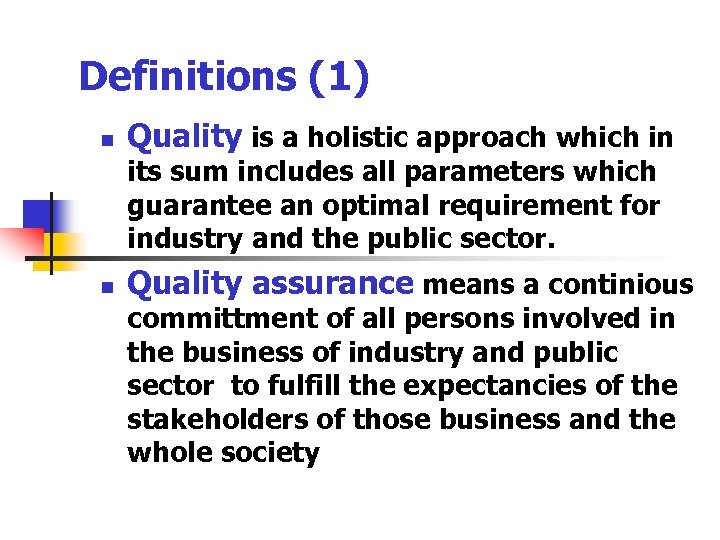
Definitions (1) n Quality is a holistic approach which in its sum includes all parameters which guarantee an optimal requirement for industry and the public sector. n Quality assurance means a continious committment of all persons involved in the business of industry and public sector to fulfill the expectancies of the stakeholders of those business and the whole society
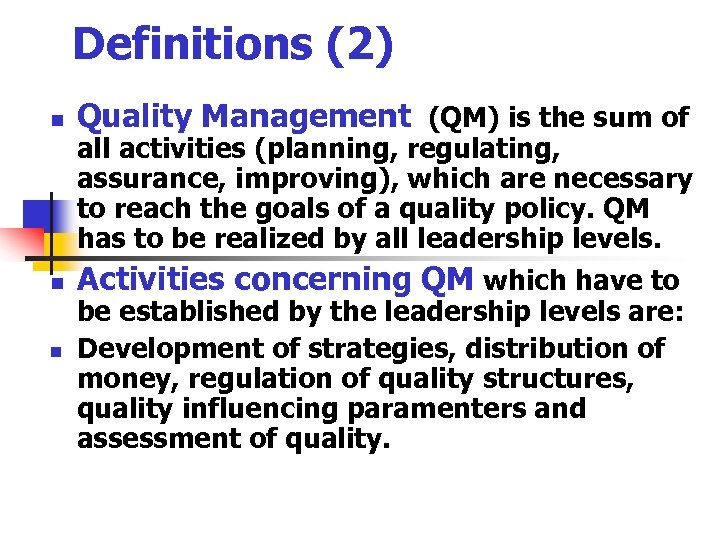
Definitions (2) n n n Quality Management (QM) is the sum of all activities (planning, regulating, assurance, improving), which are necessary to reach the goals of a quality policy. QM has to be realized by all leadership levels. Activities concerning QM which have to be established by the leadership levels are: Development of strategies, distribution of money, regulation of quality structures, quality influencing paramenters and assessment of quality.
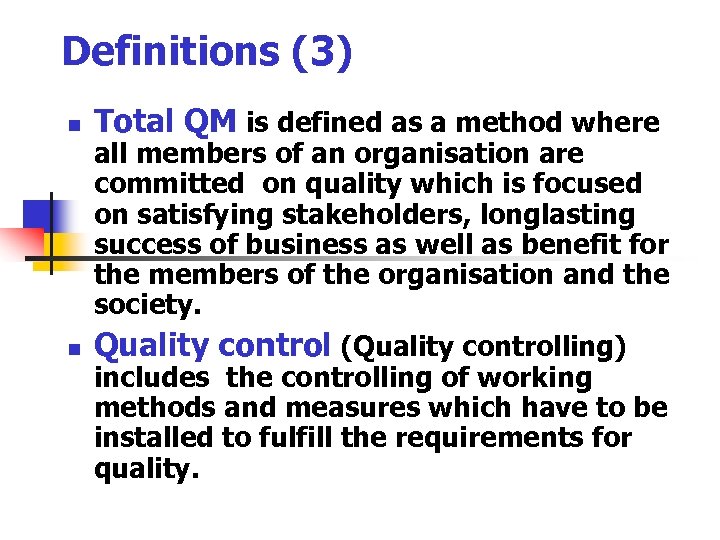
Definitions (3) n n Total QM is defined as a method where all members of an organisation are committed on quality which is focused on satisfying stakeholders, longlasting success of business as well as benefit for the members of the organisation and the society. Quality control (Quality controlling) includes the controlling of working methods and measures which have to be installed to fulfill the requirements for quality.
How to establish Quality Management ? n The different visions and methods for the introduction of quality management

NATIONAL STATUS +
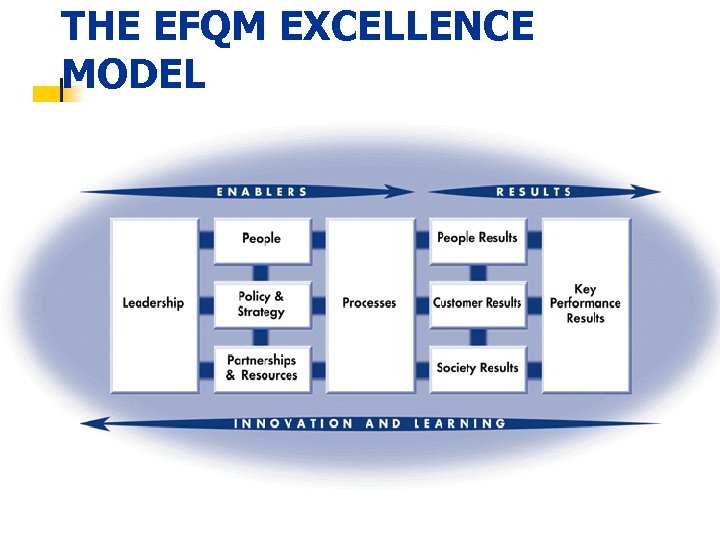
THE EFQM EXCELLENCE MODEL
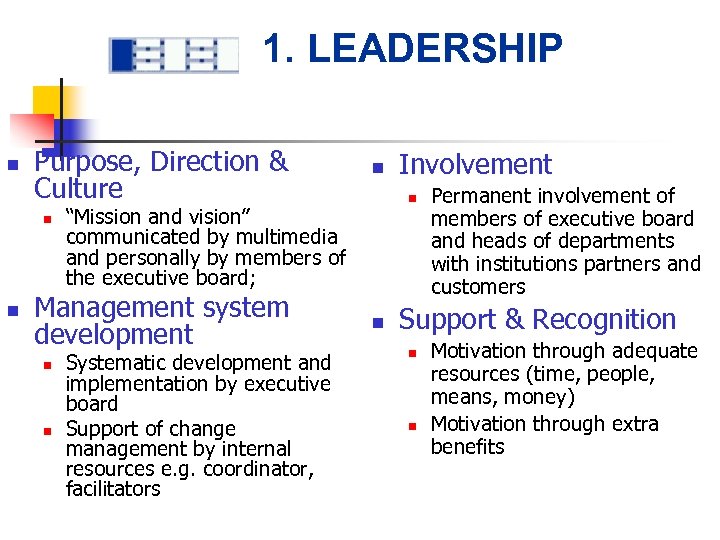
1. LEADERSHIP n Purpose, Direction & Culture n n n Systematic development and implementation by executive board Support of change management by internal resources e. g. coordinator, facilitators Involvement n “Mission and vision” communicated by multimedia and personally by members of the executive board; Management system development n n n Permanent involvement of members of executive board and heads of departments with institutions partners and customers Support & Recognition n n Motivation through adequate resources (time, people, means, money) Motivation through extra benefits
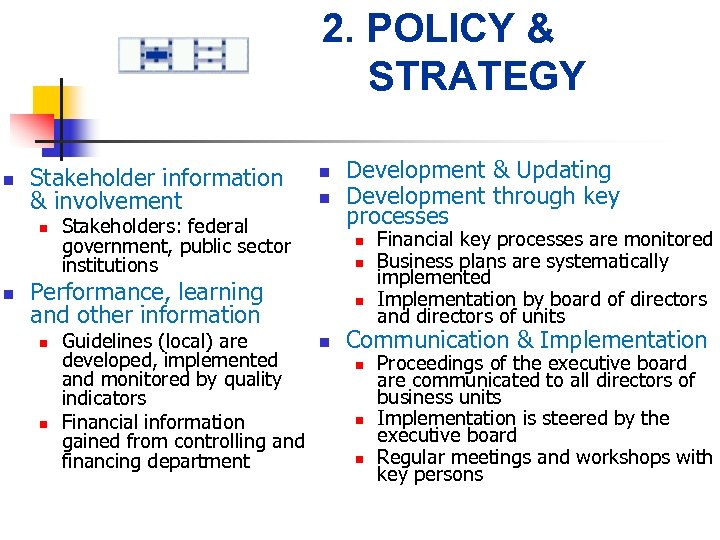
2. POLICY & STRATEGY n Stakeholder information & involvement n n Stakeholders: federal government, public sector institutions n n Performance, learning and other information n n Guidelines (local) are developed, implemented and monitored by quality indicators Financial information gained from controlling and financing department Development & Updating Development through key processes n n Financial key processes are monitored Business plans are systematically implemented Implementation by board of directors and directors of units Communication & Implementation n Proceedings of the executive board are communicated to all directors of business units Implementation is steered by the executive board Regular meetings and workshops with key persons
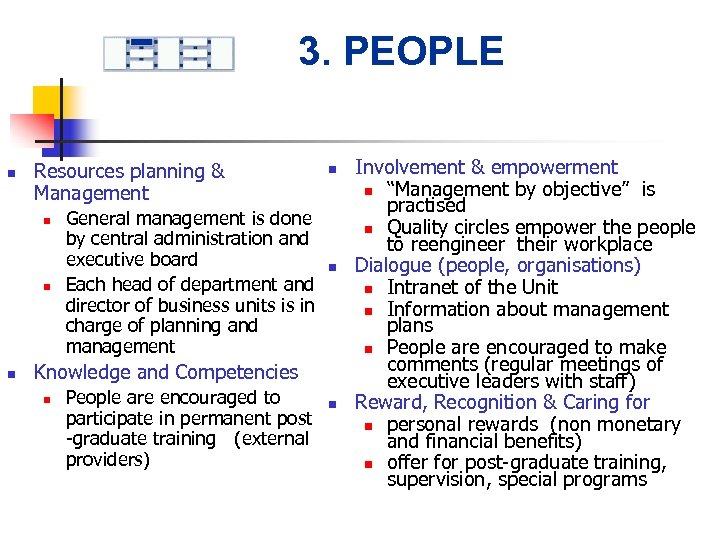
3. PEOPLE n Resources planning & Management n n n General management is done by central administration and executive board Each head of department and director of business units is in charge of planning and management n n Knowledge and Competencies n People are encouraged to participate in permanent post -graduate training (external providers) n Involvement & empowerment n “Management by objective” is practised n Quality circles empower the people to reengineer their workplace Dialogue (people, organisations) n Intranet of the Unit n Information about management plans n People are encouraged to make comments (regular meetings of executive leaders with staff) Reward, Recognition & Caring for n personal rewards (non monetary and financial benefits) n offer for post-graduate training, supervision, special programs
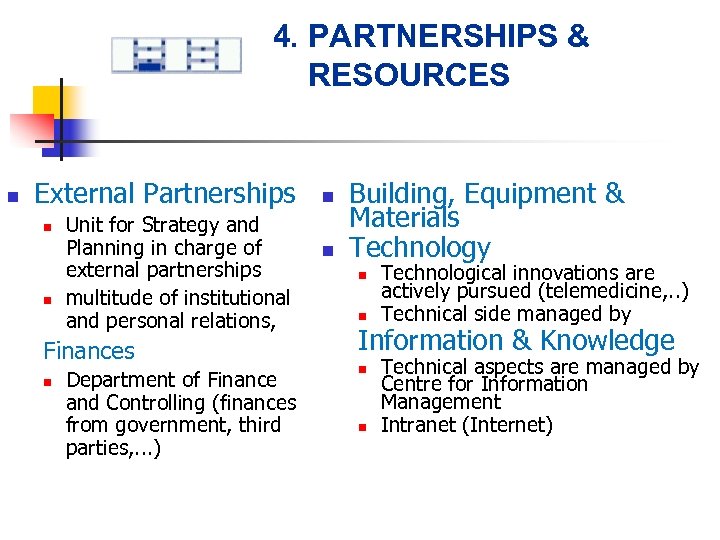
4. PARTNERSHIPS & RESOURCES n External Partnerships n n Unit for Strategy and Planning in charge of external partnerships multitude of institutional and personal relations, Finances n Department of Finance and Controlling (finances from government, third parties, . . . ) n n Building, Equipment & Materials Technology n n Technological innovations are actively pursued (telemedicine, . . ) Technical side managed by Information & Knowledge n n Technical aspects are managed by Centre for Information Management Intranet (Internet)
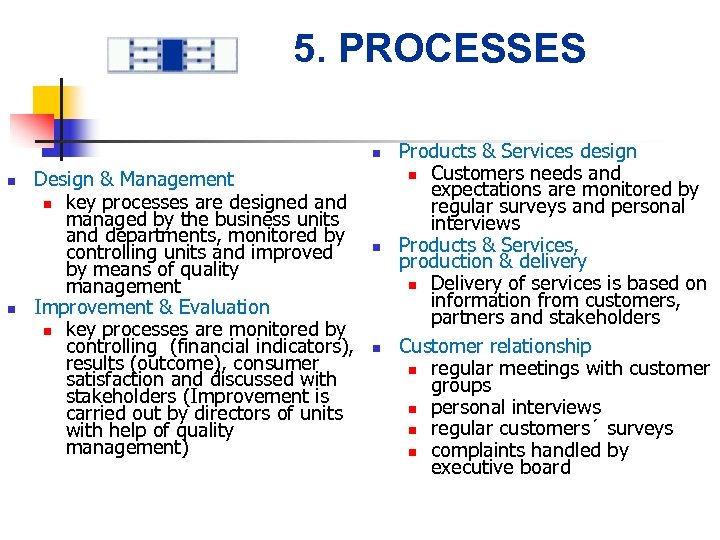
5. PROCESSES n n n Design & Management n key processes are designed and managed by the business units and departments, monitored by controlling units and improved by means of quality management Improvement & Evaluation n key processes are monitored by controlling (financial indicators), results (outcome), consumer satisfaction and discussed with stakeholders (Improvement is carried out by directors of units with help of quality management) n n Products & Services design n Customers needs and expectations are monitored by regular surveys and personal interviews Products & Services, production & delivery n Delivery of services is based on information from customers, partners and stakeholders Customer relationship n regular meetings with customer groups n personal interviews n regular customers´ surveys n complaints handled by executive board
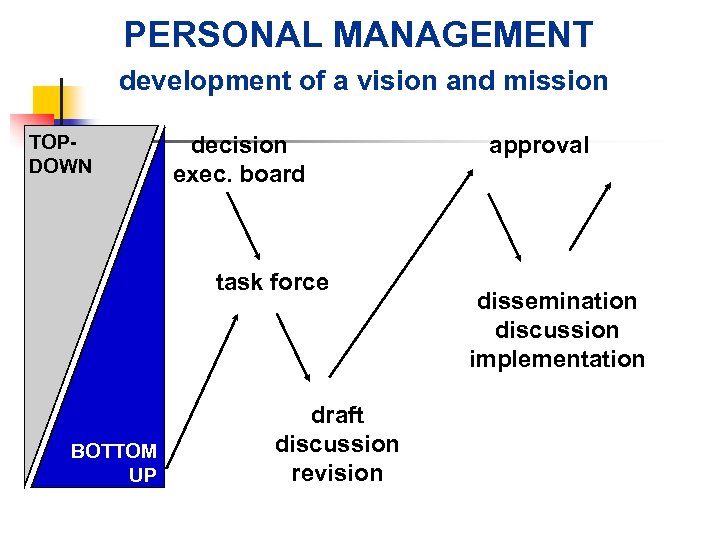
PERSONAL MANAGEMENT development of a vision and mission TOPDOWN decision exec. board task force BOTTOM UP draft discussion revision approval dissemination discussion implementation
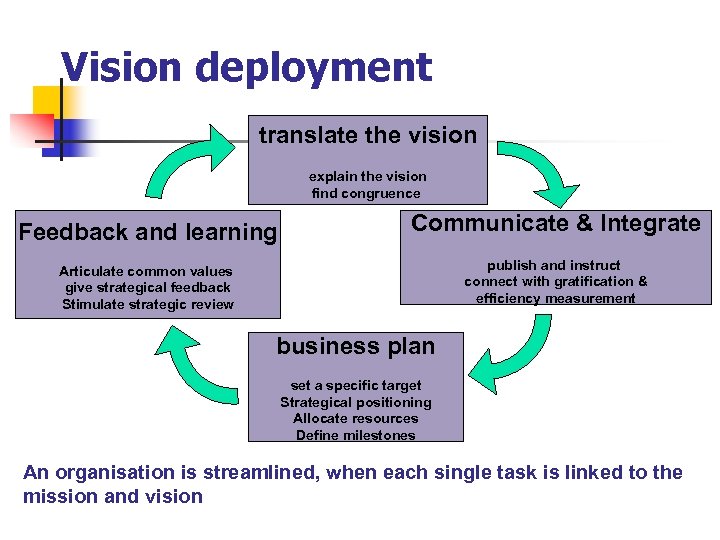
Vision deployment translate the vision explain the vision find congruence Feedback and learning Communicate & Integrate publish and instruct connect with gratification & efficiency measurement Articulate common values give strategical feedback Stimulate strategic review business plan set a specific target Strategical positioning Allocate resources Define milestones An organisation is streamlined, when each single task is linked to the mission and vision
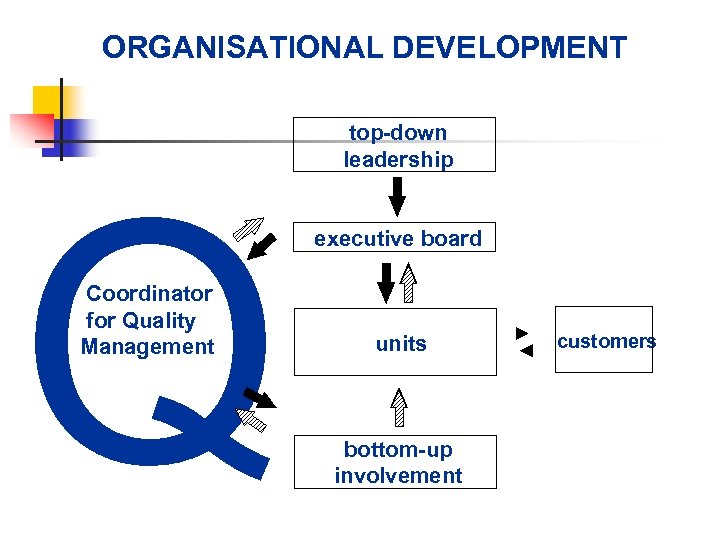
ORGANISATIONAL DEVELOPMENT Q Coordinator for Quality Management top-down leadership executive board units bottom-up involvement customers
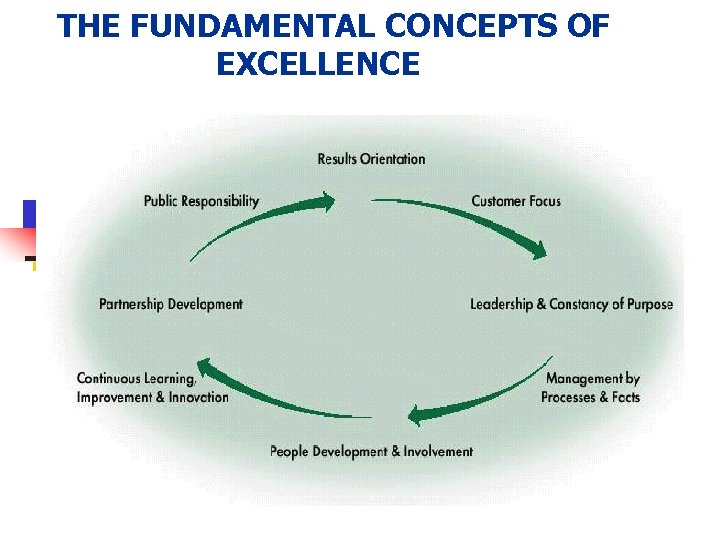
THE FUNDAMENTAL CONCEPTS OF EXCELLENCE
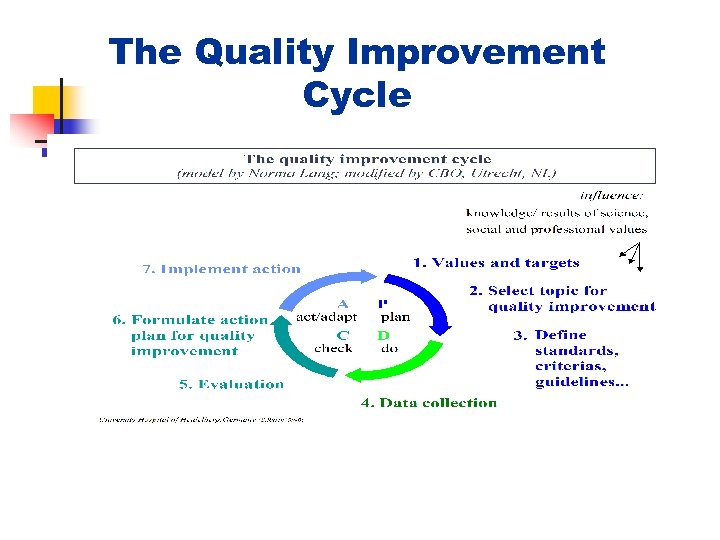
The Quality Improvement Cycle

SUSTAINABILITY IN QUALITY EXAMPLE EDUCATION
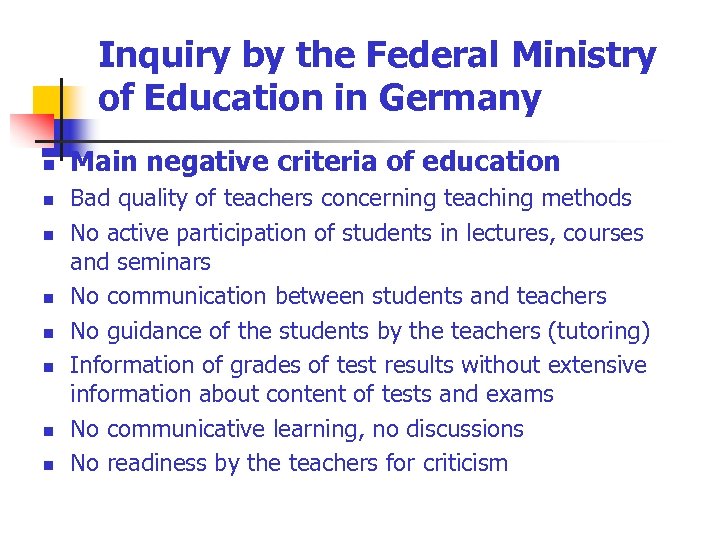
Inquiry by the Federal Ministry of Education in Germany n n n n Main negative criteria of education Bad quality of teachers concerning teaching methods No active participation of students in lectures, courses and seminars No communication between students and teachers No guidance of the students by the teachers (tutoring) Information of grades of test results without extensive information about content of tests and exams No communicative learning, no discussions No readiness by the teachers for criticism
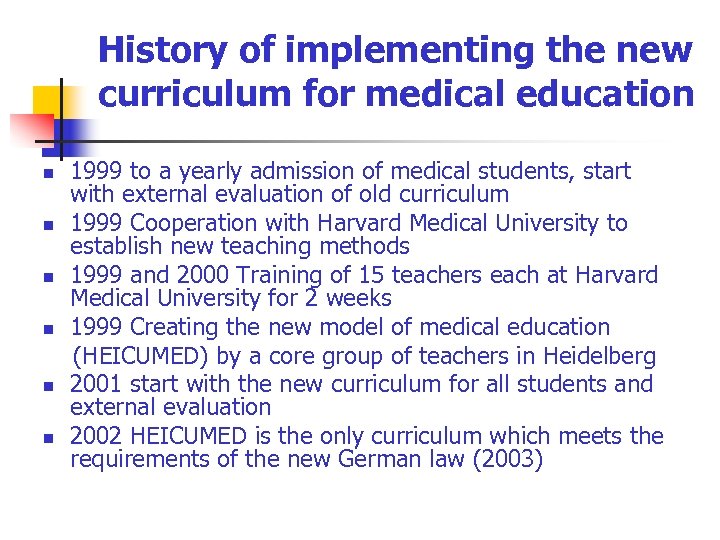
History of implementing the new curriculum for medical education n n n 1999 to a yearly admission of medical students, start with external evaluation of old curriculum 1999 Cooperation with Harvard Medical University to establish new teaching methods 1999 and 2000 Training of 15 teachers each at Harvard Medical University for 2 weeks 1999 Creating the new model of medical education (HEICUMED) by a core group of teachers in Heidelberg 2001 start with the new curriculum for all students and external evaluation 2002 HEICUMED is the only curriculum which meets the requirements of the new German law (2003)
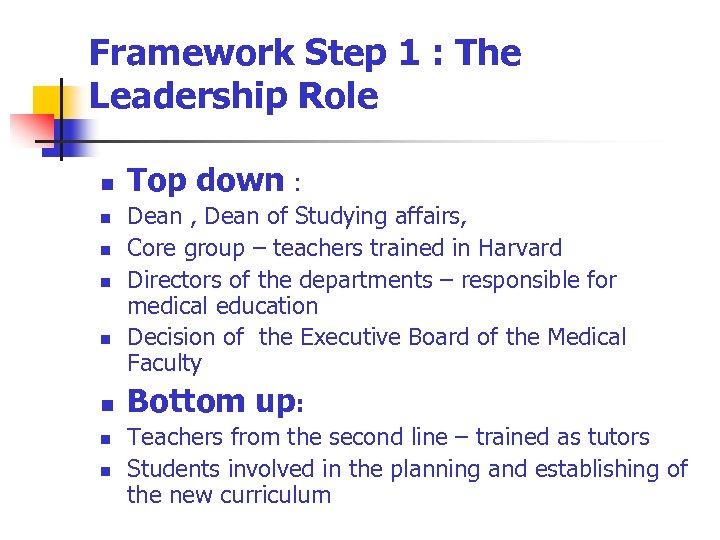
Framework Step 1 : The Leadership Role n n n n Top down : Dean , Dean of Studying affairs, Core group – teachers trained in Harvard Directors of the departments – responsible for medical education Decision of the Executive Board of the Medical Faculty Bottom up: Teachers from the second line – trained as tutors Students involved in the planning and establishing of the new curriculum
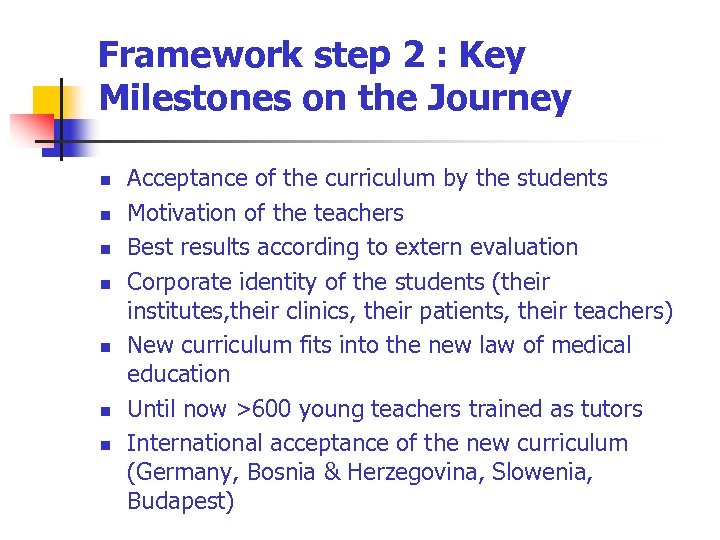
Framework step 2 : Key Milestones on the Journey n n n n Acceptance of the curriculum by the students Motivation of the teachers Best results according to extern evaluation Corporate identity of the students (their institutes, their clinics, their patients, their teachers) New curriculum fits into the new law of medical education Until now >600 young teachers trained as tutors International acceptance of the new curriculum (Germany, Bosnia & Herzegovina, Slowenia, Budapest)
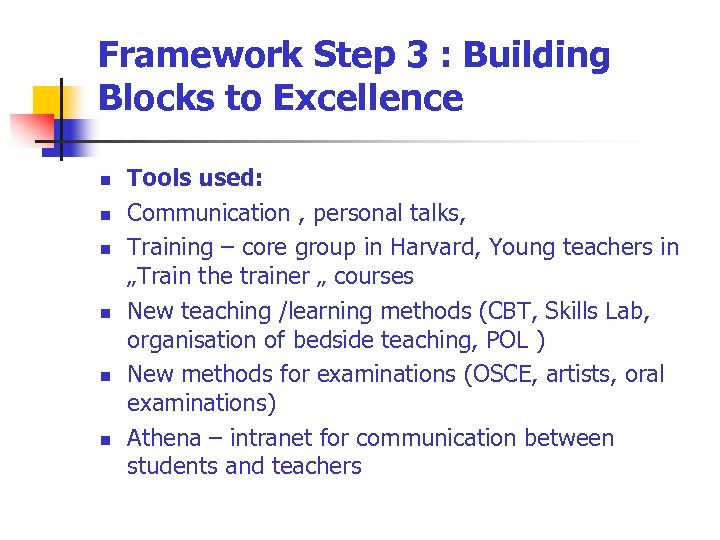
Framework Step 3 : Building Blocks to Excellence n n n Tools used: Communication , personal talks, Training – core group in Harvard, Young teachers in „Train the trainer „ courses New teaching /learning methods (CBT, Skills Lab, organisation of bedside teaching, POL ) New methods for examinations (OSCE, artists, oral examinations) Athena – intranet for communication between students and teachers
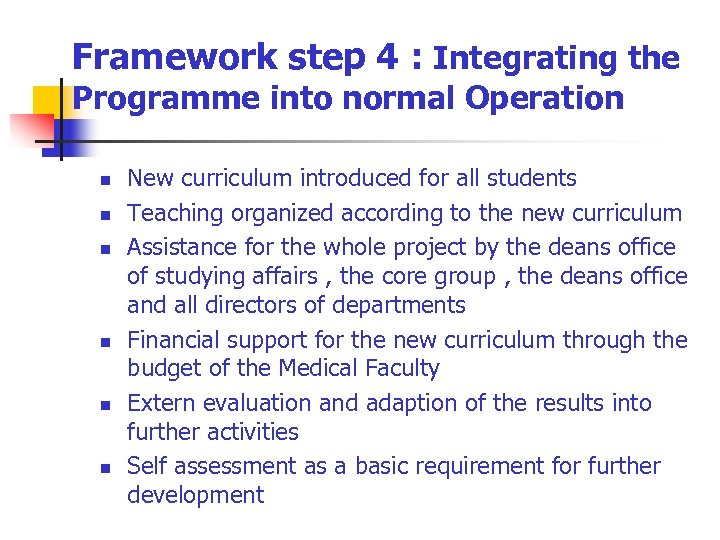
Framework step 4 : Integrating the Programme into normal Operation n n n New curriculum introduced for all students Teaching organized according to the new curriculum Assistance for the whole project by the deans office of studying affairs , the core group , the deans office and all directors of departments Financial support for the new curriculum through the budget of the Medical Faculty Extern evaluation and adaption of the results into further activities Self assessment as a basic requirement for further development
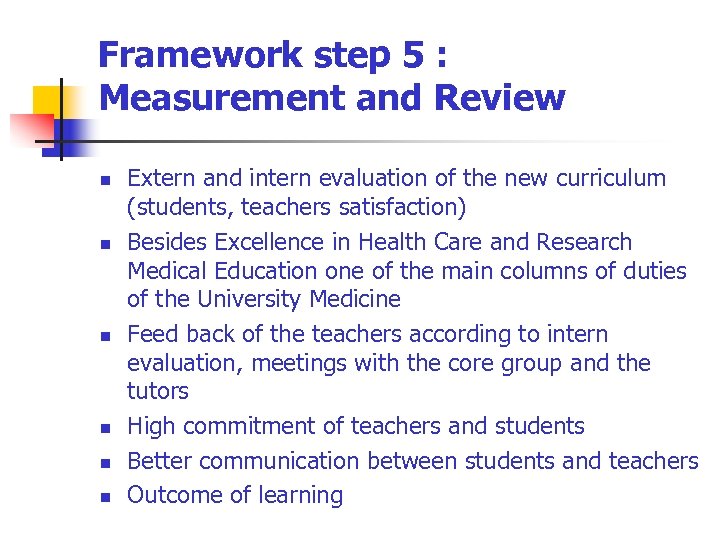
Framework step 5 : Measurement and Review n n n Extern and intern evaluation of the new curriculum (students, teachers satisfaction) Besides Excellence in Health Care and Research Medical Education one of the main columns of duties of the University Medicine Feed back of the teachers according to intern evaluation, meetings with the core group and the tutors High commitment of teachers and students Better communication between students and teachers Outcome of learning
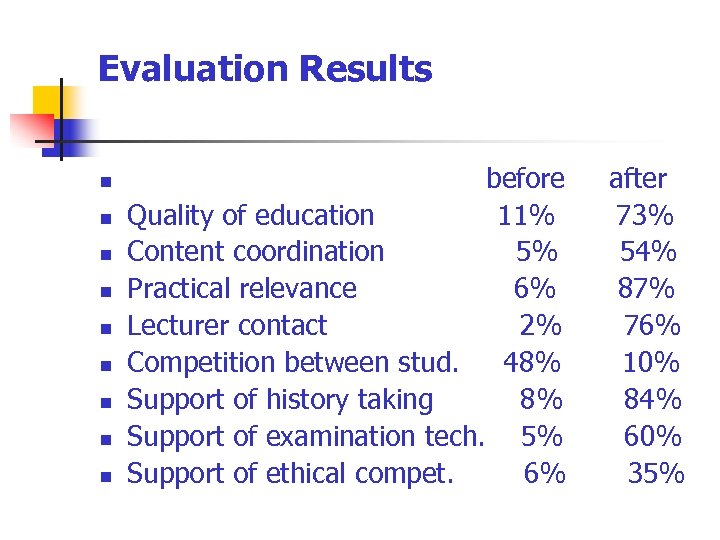
Evaluation Results n n n n n before Quality of education 11% Content coordination 5% Practical relevance 6% Lecturer contact 2% Competition between stud. 48% Support of history taking 8% Support of examination tech. 5% Support of ethical compet. 6% after 73% 54% 87% 76% 10% 84% 60% 35%
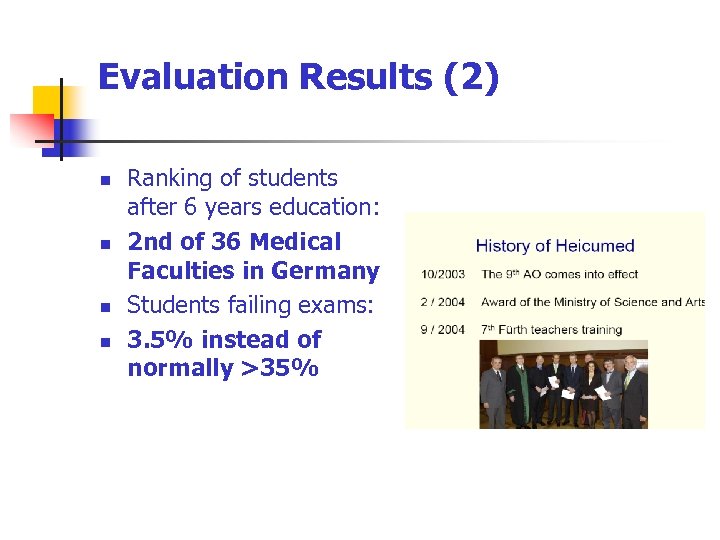
Evaluation Results (2) n n Ranking of students after 6 years education: 2 nd of 36 Medical Faculties in Germany Students failing exams: 3. 5% instead of normally >35%
EVALUATION THROUGH PATIENTS Example Sustainability of Quality in Patient Care
PATIENT (CUSTOMER) FOCUS - “traditional“: - interaction of one particular physician with one particular patient - “objective expert“ - “modern“: - interdependent action of a number of various professionals - customer / consumer satisfaction “subjective non-experts“ satisfaction of individual patient and patient groups
Evaluation through Patients n n 1. Step: Asking for expectations when patients are admitted to the hospital (items with high and with low priority) 2. Step: Asking for satisfaction when leaving the hospital
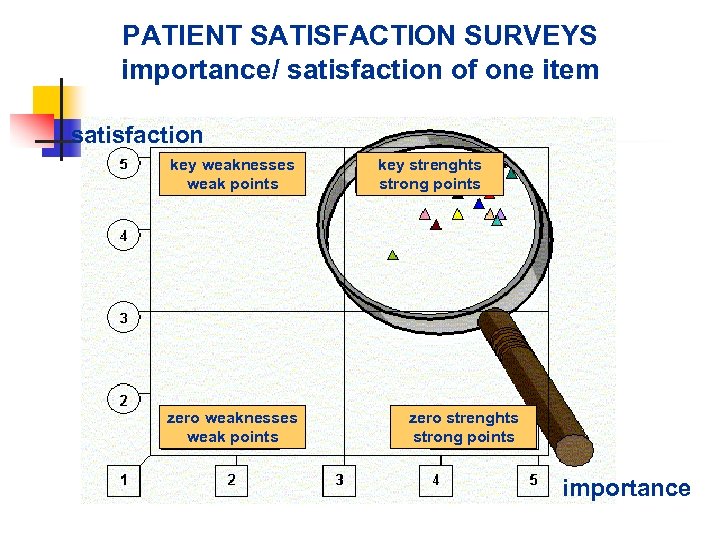
PATIENT SATISFACTION SURVEYS importance/ satisfaction of one item satisfaction key weaknesses weak points zero weaknesses weak points key strenghts strong points zero strenghts strong points importance
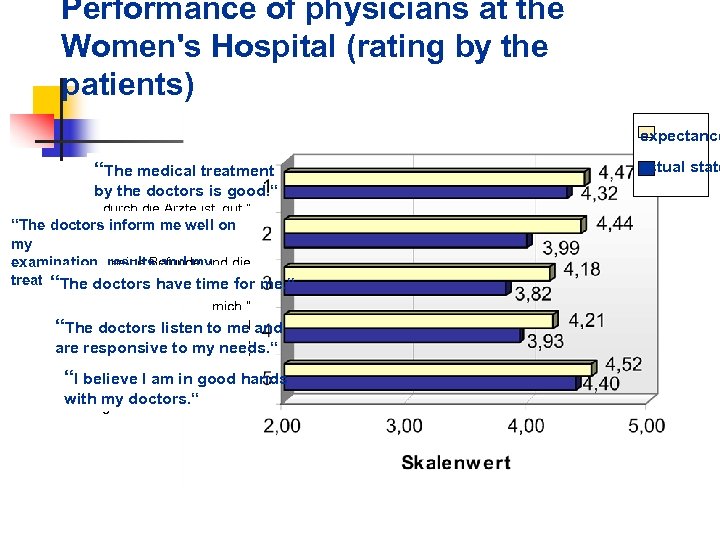
Performance of physicians at the Women's Hospital (rating by the patients) expectance “The medical treatment „Die medizinische by the doctors is good. “ Behandlung durch die Ärzte ist gut. “ “The doctors inform me well on „Die Ärzte informieren mich my ausreichend über examination, meine Befunde und die results and my Behandlung. “ treatment“ doctors have time for me. “ “„Die Ärzte nehmen sich Zeit für The mich. “ “„Die Ärzte gehen auf mich me and The doctors listen to und are responsive to mymeine needs. “ Bedürfnisse ein. “ „Ich habe das Gefühl, bei den “I believe I am in good hands Ärzten with my doctors. “zu sein. “ in guten Händen actual state
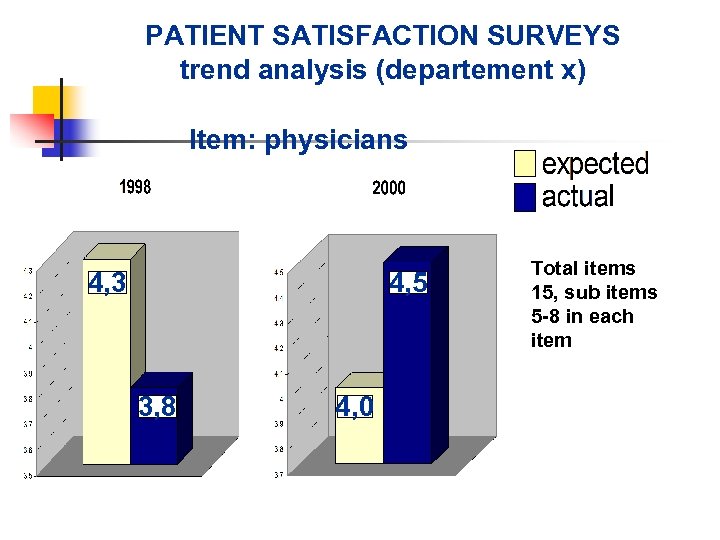
PATIENT SATISFACTION SURVEYS trend analysis (departement x) Item: physicians 4, 3 4, 5 3, 8 4, 0 Total items 15, sub items 5 -8 in each item
Sustainability through COMPLAINT MANAGEMENT
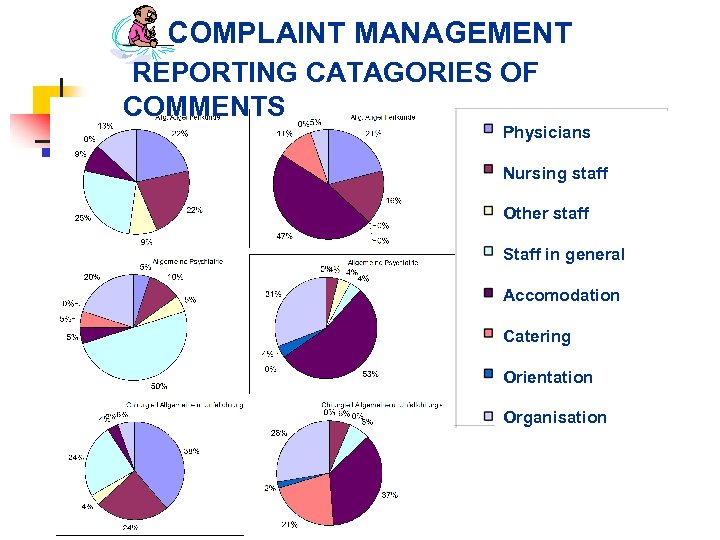
COMPLAINT MANAGEMENT REPORTING CATAGORIES OF COMMENTS Physicians Nursing staff Other staff Staff in general Accomodation Catering Orientation Organisation
Sustainability in Quality using BENCHMARKING INDICATORS
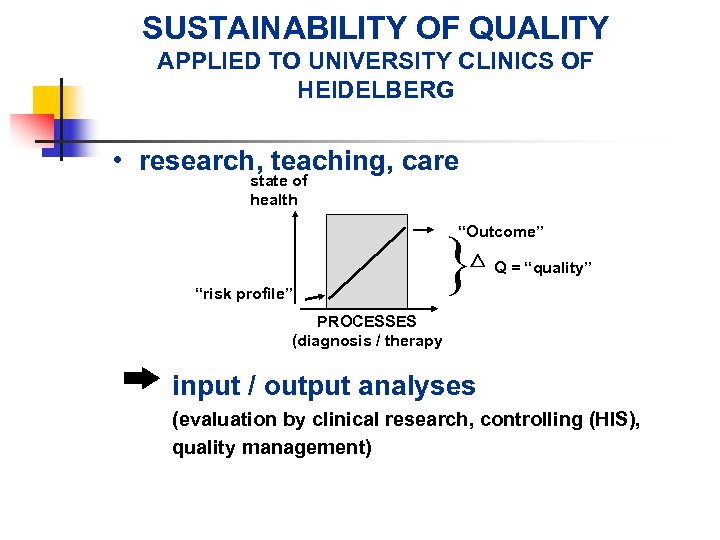
SUSTAINABILITY OF QUALITY APPLIED TO UNIVERSITY CLINICS OF HEIDELBERG • research, teaching, care state of health “Outcome” “risk profile” } Q = “quality” PROCESSES (diagnosis / therapy input / output analyses (evaluation by clinical research, controlling (HIS), quality management)
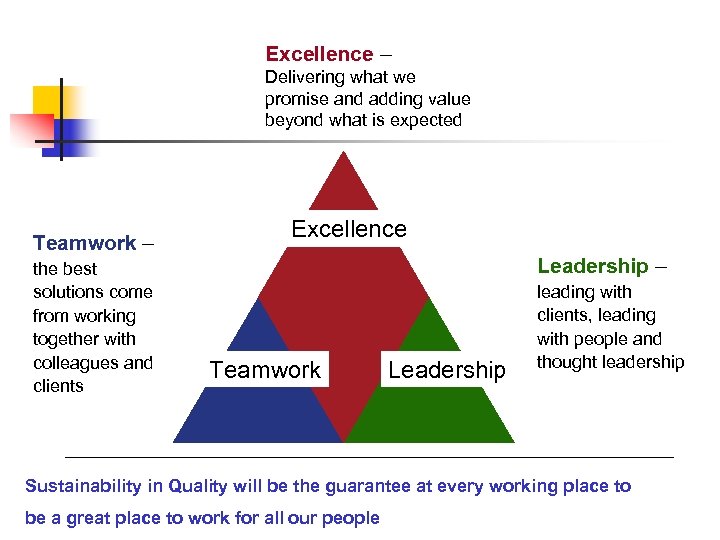
Excellence – Delivering what we promise and adding value beyond what is expected Teamwork – the best solutions come from working together with colleagues and clients Excellence Leadership – Teamwork Leadership leading with clients, leading with people and thought leadership Sustainability in Quality will be the guarantee at every working place to be a great place to work for all our people
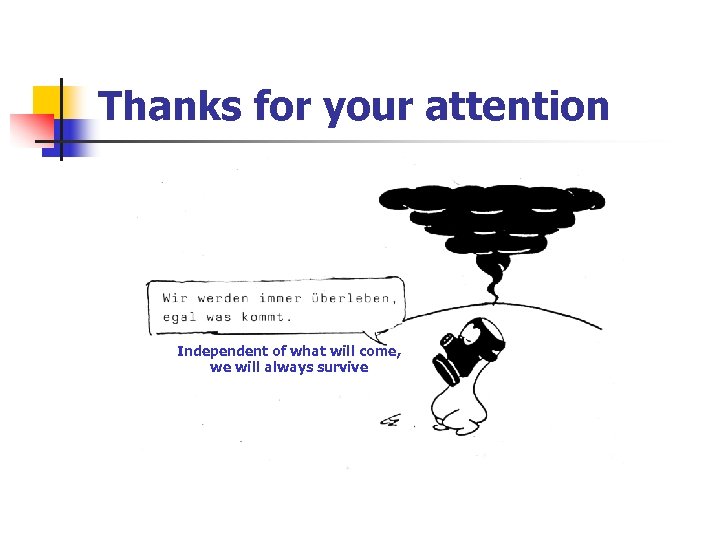
Thanks for your attention Independent of what will come, we will always survive
Sustainability in Quality through IMPLEMENTING AND ACCEPTING CHANGES
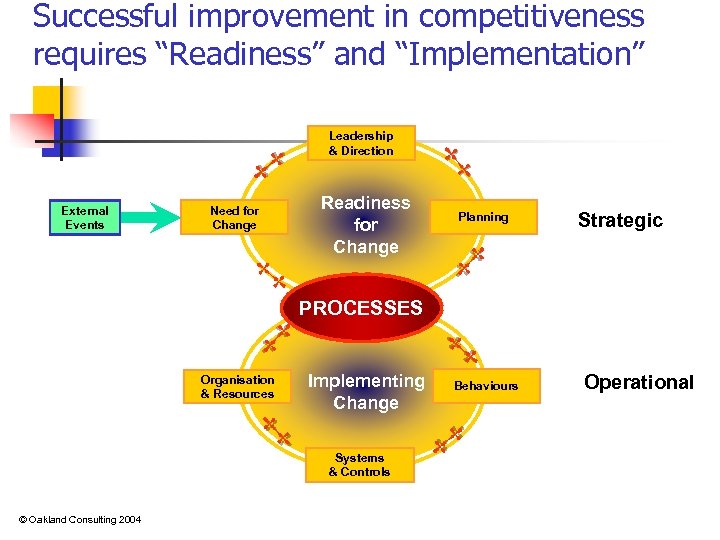
Successful improvement in competitiveness requires “Readiness” and “Implementation” Readiness for Change ‡ Need for Change ‡ ‡ Organisation & Resources Implementing Change Systems & Controls Behaviours ‡ ‡ © Oakland Consulting 2004 Strategic ‡ PROCESSES Planning ‡ ‡ External Events ‡ ‡ Leadership & Direction Operational
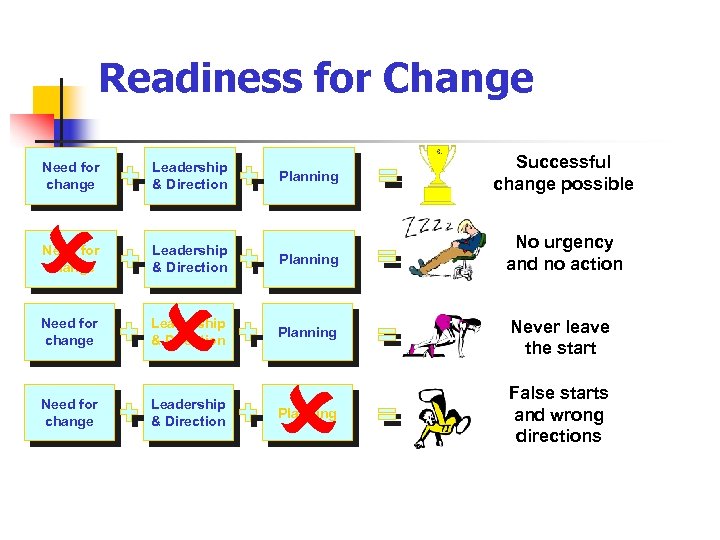
Readiness for Change Need for change Leadership & Direction Planning Successful change possible Need for change Leadership & Direction Planning No urgency and no action Need for change Leadership & Direction Planning Never leave the start Need for change Leadership & Direction Planning False starts and wrong directions
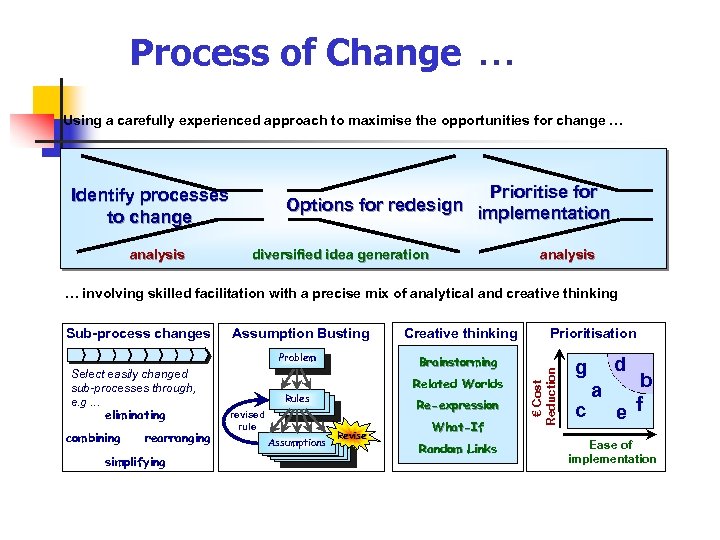
Process of Change … Using a carefully experienced approach to maximise the opportunities for change … Prioritise for Options for redesign implementation Identify processes to change analysis diversified idea generation analysis … involving skilled facilitation with a precise mix of analytical and creative thinking Assumption Busting Problem Select easily changed sub-processes through, e. g … eliminating combining rearranging simplifying revised rule Rules Revise Assumptions Assumptions Creative thinking Brainstorming Related Worlds Re-expression What-If Random Links Prioritisation € Cost Reduction Sub-process changes g c d a b e f Ease of implementation
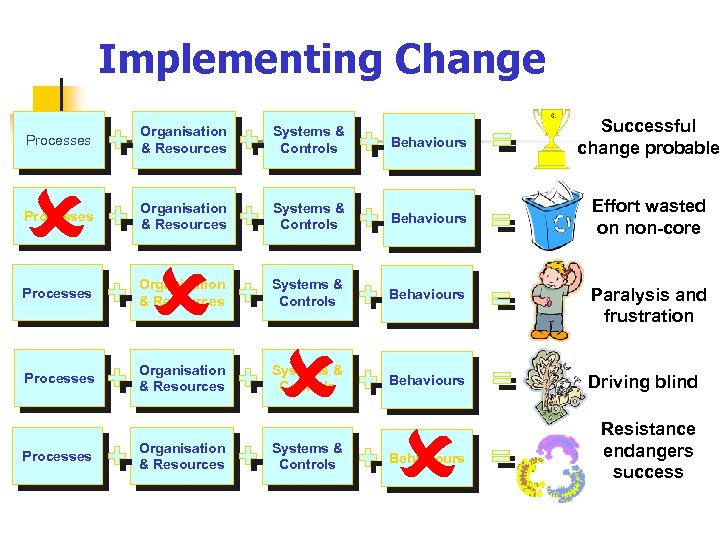
Implementing Change Processes Organisation & Resources Systems & Controls Behaviours Successful change probable Processes Organisation & Resources Systems & Controls Behaviours Effort wasted on non-core Processes Organisation & Resources Systems & Controls Behaviours Paralysis and frustration Processes Organisation & Resources Systems & Controls Behaviours Driving blind Systems & Controls Behaviours Processes Organisation & Resources Resistance endangers success
Скачать презентацию Sustainability of Quality through Quality Management Prof Dr
ee61f8e029e7ef144273e69ad9bd74ca.ppt