 Скачать презентацию Sustainability of Desalination Systems Darwish Al Gobaisi International
c8d482aad9c61f51eea00f6abe7a5481.ppt
- Количество слайдов: 37



Sustainability of Desalination Systems Darwish Al Gobaisi International Study Group for Water and Energy Systems (ISGWES) International Centre for Water and Energy Systems (ICWES)
Organization 1. Introduction 2. Water scarcity 3. Power, capacity and investment in water and electricity in the AGCC countries 4. Sustainability of desalination systems 5. Design approach 6. Concluding remarks
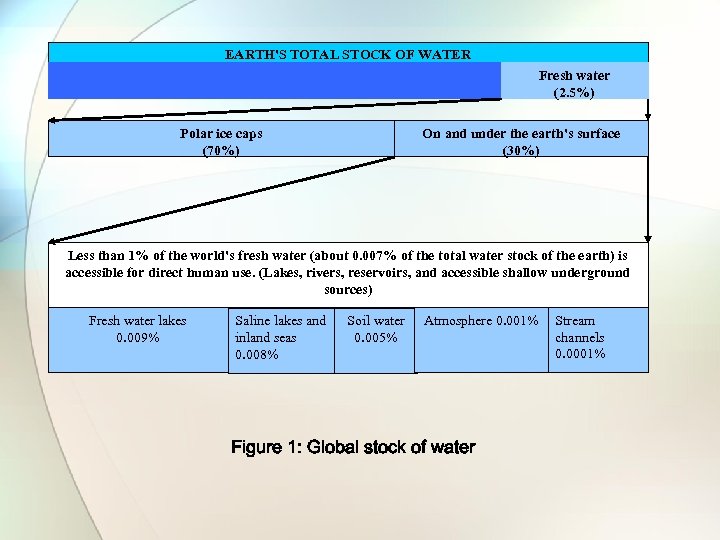
EARTH'S TOTAL STOCK OF WATER Fresh water (2. 5%) Polar ice caps (70%) On and under the earth's surface (30%) Less than 1% of the world's fresh water (about 0. 007% of the total water stock of the earth) is accessible for direct human use. (Lakes, rivers, reservoirs, and accessible shallow underground sources) Fresh water lakes 0. 009% Saline lakes and inland seas 0. 008% Soil water 0. 005% Atmosphere 0. 001% Figure 1: Global stock of water Stream channels 0. 0001%
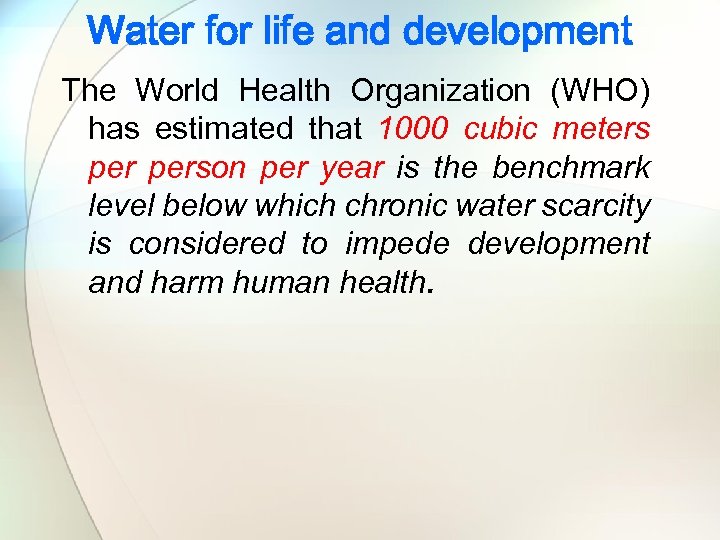
Water for life and development The World Health Organization (WHO) has estimated that 1000 cubic meters person per year is the benchmark level below which chronic water scarcity is considered to impede development and harm human health.
Water scarcity • Growing global population • Uneven distribution of water resources • Pollution of water sources
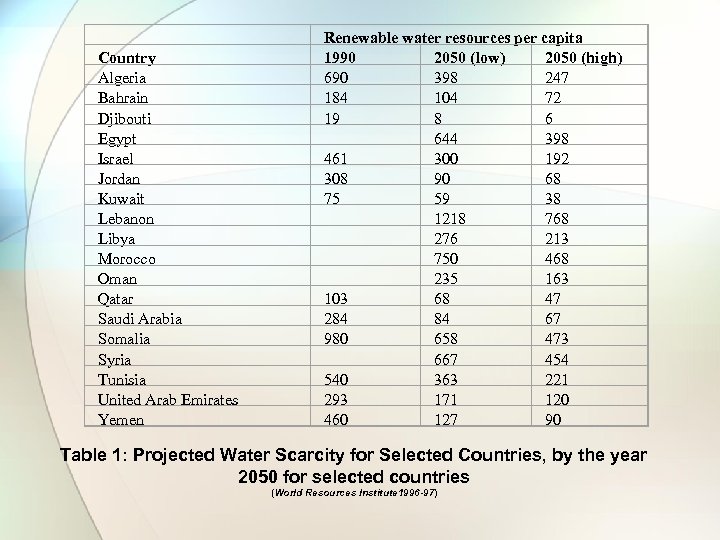
Country Algeria Bahrain Djibouti Egypt Israel Jordan Kuwait Lebanon Libya Morocco Oman Qatar Saudi Arabia Somalia Syria Tunisia United Arab Emirates Yemen Renewable water resources per capita 1990 2050 (low) 2050 (high) 690 398 247 184 104 72 19 8 6 644 398 461 300 192 308 90 68 75 59 38 1218 768 276 213 750 468 235 163 103 68 47 284 84 67 980 658 473 667 454 540 363 221 293 171 120 460 127 90 Table 1: Projected Water Scarcity for Selected Countries, by the year 2050 for selected countries (World Resources Institute 1996 -97)
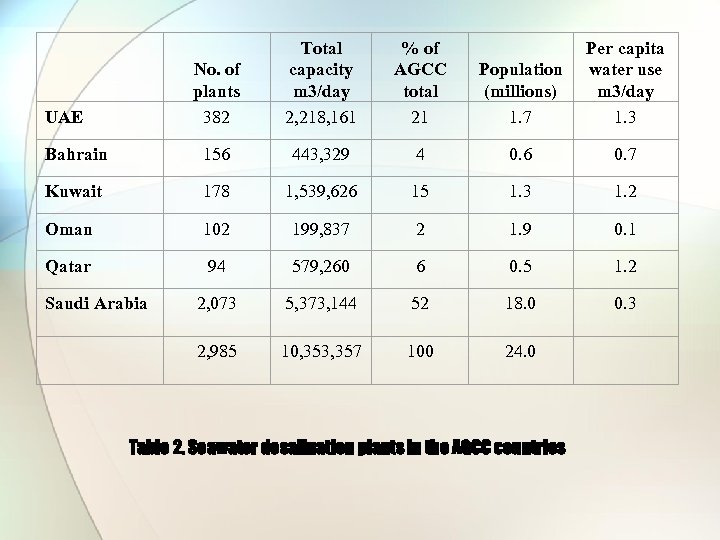
UAE No. of plants 382 Total % of capacity AGCC m 3/day total 2, 218, 161 21 Per capita Population water use (millions) m 3/day 1. 7 1. 3 Bahrain 156 443, 329 4 0. 6 0. 7 Kuwait 178 1, 539, 626 15 1. 3 1. 2 Oman 102 199, 837 2 1. 9 0. 1 Qatar 94 579, 260 6 0. 5 1. 2 2, 073 5, 373, 144 52 18. 0 0. 3 2, 985 10, 353, 357 100 24. 0 Saudi Arabia Table 2. Seawater desalination plants in the AGCC countries
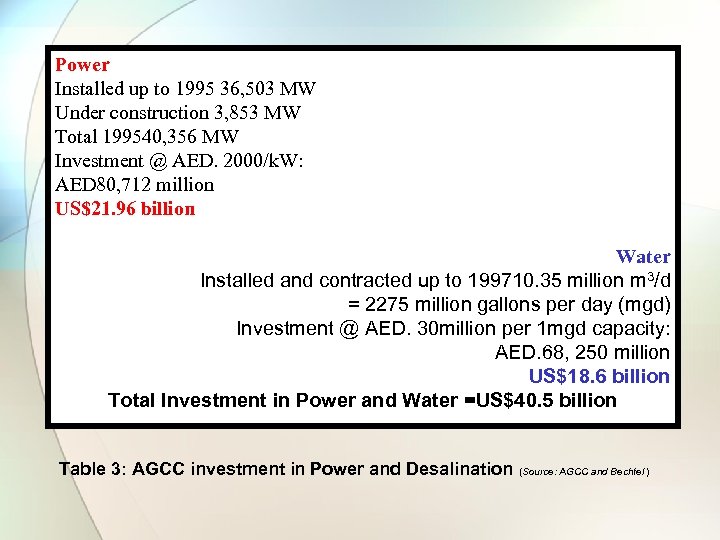
Power Installed up to 1995 36, 503 MW Under construction 3, 853 MW Total 199540, 356 MW Investment @ AED. 2000/k. W: AED 80, 712 million US$21. 96 billion Water Installed and contracted up to 199710. 35 million m 3/d = 2275 million gallons per day (mgd) Investment @ AED. 30 million per 1 mgd capacity: AED. 68, 250 million US$18. 6 billion Total Investment in Power and Water =US$40. 5 billion Table 3: AGCC investment in Power and Desalination (Source: AGCC and Bechtel )
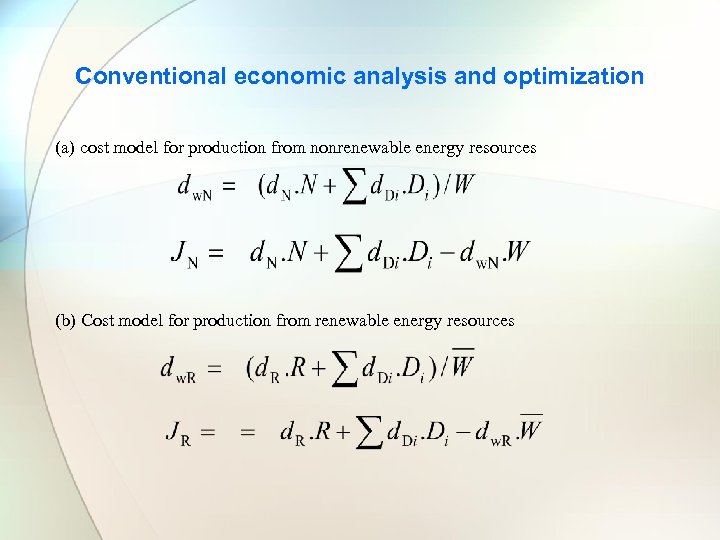
Conventional economic analysis and optimization (a) cost model for production from nonrenewable energy resources (b) Cost model for production from renewable energy resources
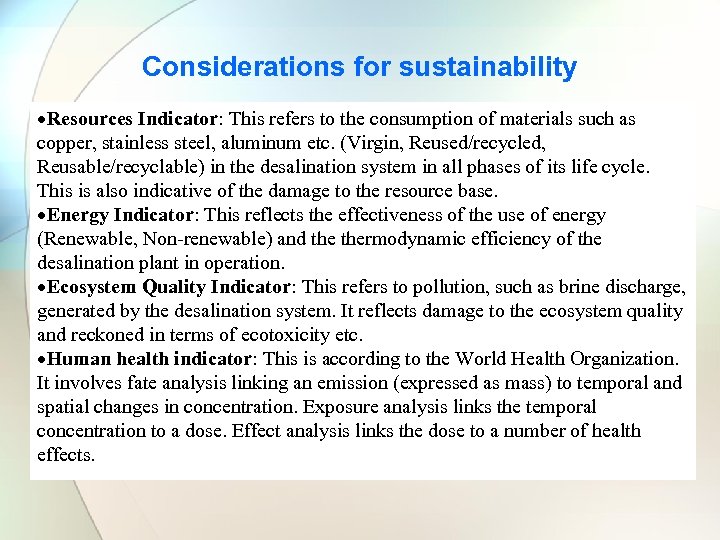
Considerations for sustainability ·Resources Indicator: This refers to the consumption of materials such as copper, stainless steel, aluminum etc. (Virgin, Reused/recycled, Reusable/recyclable) in the desalination system in all phases of its life cycle. This is also indicative of the damage to the resource base. ·Energy Indicator: This reflects the effectiveness of the use of energy (Renewable, Non-renewable) and thermodynamic efficiency of the desalination plant in operation. ·Ecosystem Quality Indicator: This refers to pollution, such as brine discharge, generated by the desalination system. It reflects damage to the ecosystem quality and reckoned in terms of ecotoxicity etc. ·Human health indicator: This is according to the World Health Organization. It involves fate analysis linking an emission (expressed as mass) to temporal and spatial changes in concentration. Exposure analysis links the temporal concentration to a dose. Effect analysis links the dose to a number of health effects.
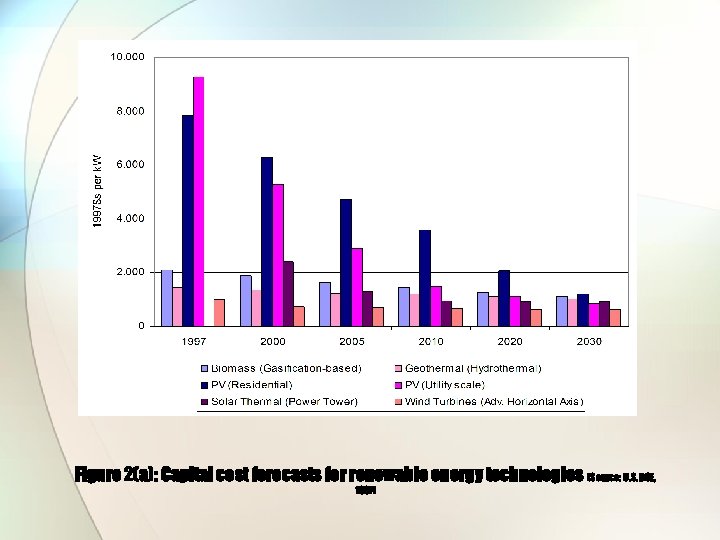
Figure 2(a): Capital cost forecasts for renewable energy technologies (Source: U. S. DOE, 1997)
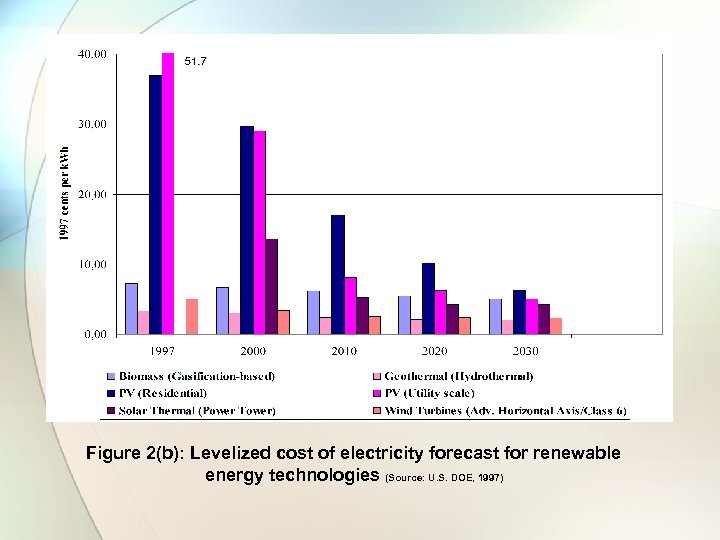
Figure 2(b): Levelized cost of electricity forecast for renewable energy technologies (Source: U. S. DOE, 1997)
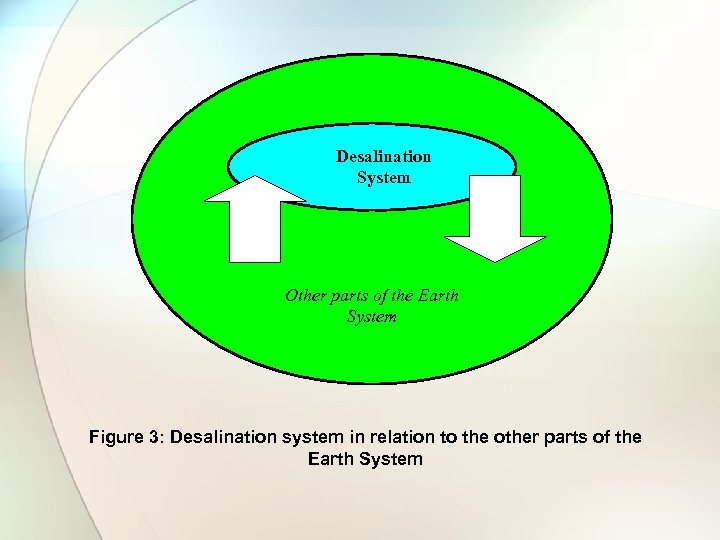
Desalination System Other parts of the Earth System Figure 3: Desalination system in relation to the other parts of the Earth System
Desirable paradigms for desalination • Industrial Ecology (IE) • Life Cycle Assessment (LCA) • Life Cycle Design (LCD)
Industrial ecology and industrial metabolism • Industrial ecology: the ecology of an industrialized society that seeks to understand the interactions between industrial systems, ecological systems, and societal needs. • Industrial metabolism is concerned with the use of materials and energy by industry and the way materials flow through industrial systems and are transformed and then dissipated into wastes.
Sustainable products Basic criteria: 1. A product must be made from natural resources utilized in such a way that allows those resources to continue to be available from generation to generation. 2. The waste from a product must stay within the manufacturing loop or assimilate into the natural ecosystem and not build up or cause pollution.
Pollution may be defined as the presence of one or more contaminants in the biosphere in such a concentration as may be injurious to human, plant or animal life, or unreasonably interfere with the comfortable enjoyment of life. The biosphere consists of the atmosphere, hydrosphere, and lithosphere. Therefore, air pollution, water pollution, and solid or liquid wastes are defined in accordance with the corresponding parts of the biosphere.
Air pollution as result of production of water by desalination • The total desalination capacity in the Arab World in the AGCC countries 10, 353, 357 m 3/day. • The annual consumption of energy to produce this amount water is 26. 7 million barrels of oil equivalent (boe) or 163. 25 x 106 GJ (@12 k. Wh/ m 3) • Considering fuel oil as the energy source, this would result in the following atmospheric emissions annually: 81, 625 Tons of SO 2, 24, 487 Tons of NOX as NO 2, and 12, 733, 500 Tons of CO 2.
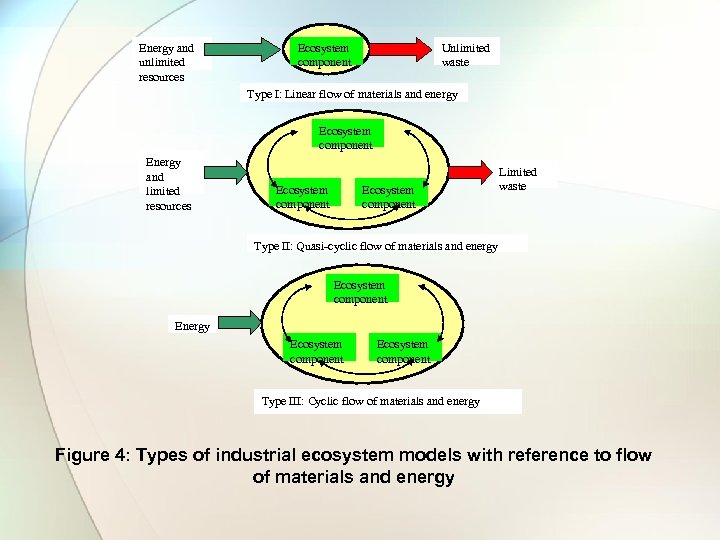
Energy and unlimited resources Ecosystem component Unlimited waste Type I: Linear flow of materials and energy Ecosystem component Energy and limited resources Ecosystem component Limited waste Type II: Quasi-cyclic flow of materials and energy Ecosystem component Energy Ecosystem component Type III: Cyclic flow of materials and energy Figure 4: Types of industrial ecosystem models with reference to flow of materials and energy
Pillars of ecological sustainable industry 1. Eco-support system for life on the planet (e. g. biodiversity): regional carrying capacity of nature with regard to populations and their lifestyle. 2. Toxicology; a direct danger to mankind, resulting increasingly from its own economic activities, with the phenomenon of accumulation over longer periods of time. 3. Flows of materials and energy. 4. Societal and economic structures, including skilful and meaningful occupations for all who want to work, and social integration of all.
Life cycle assessment (LCA) • An analytical tool for quantifying and characterizing the energy and material flows associated with all stages of a product from cradle to grave and the environmental burdens associated with a product life cycle
Components of LCA • Goal and Scope Definition, which defines the purpose of the life cycle study, the system boundaries, and the depth and breadth of the study; • Life cycle inventory which quantifies the use of resources and the release of pollutants at each stage of the life cycle; • Life cycle impact assessment which combines the inventoried resource consumption and pollutant releases to provide a measure of the environmental performance of a product/process; and, • Interpretation, which provides guidance on the interpretation of the results of the life cycle inventory and/or the life cycle impact assessment.
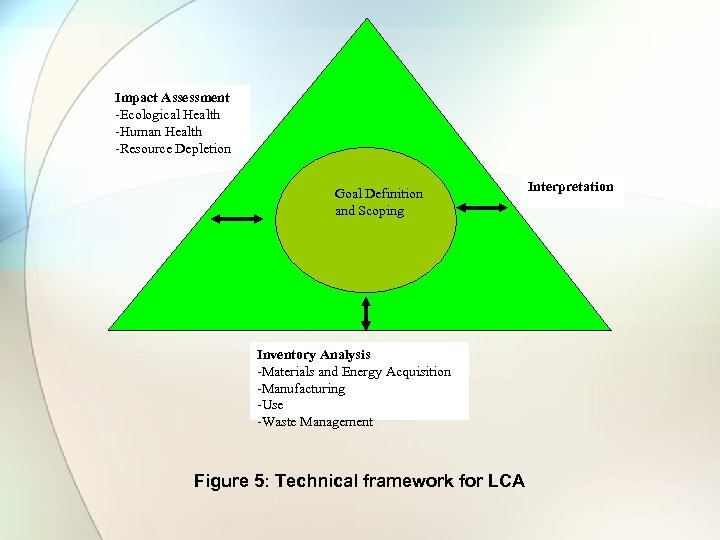
Impact Assessment -Ecological Health -Human Health -Resource Depletion Goal Definition and Scoping Inventory Analysis -Materials and Energy Acquisition -Manufacturing -Use -Waste Management Figure 5: Technical framework for LCA Interpretation
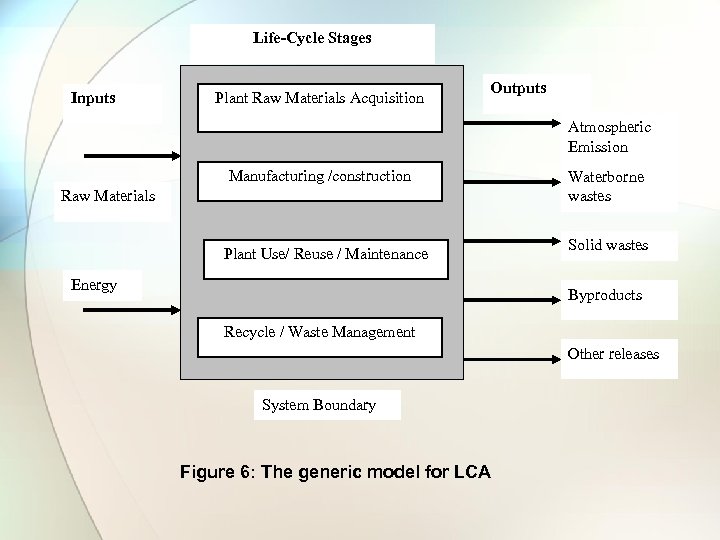
Life-Cycle Stages Inputs Plant Raw Materials Acquisition Outputs Atmospheric Emission Manufacturing /construction Raw Materials Plant Use/ Reuse / Maintenance Energy Waterborne wastes Solid wastes Byproducts Recycle / Waste Management Other releases System Boundary Figure 6: The generic model for LCA
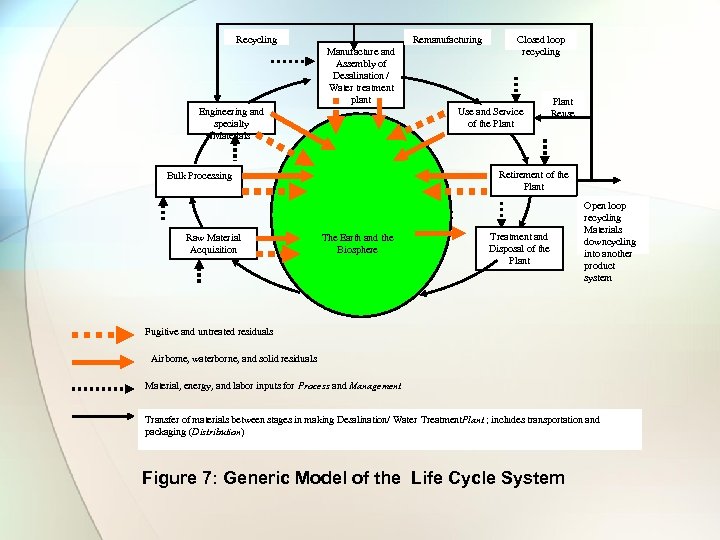
Recycling Remanufacturing Manufacture and Assembly of Desalination / Water treatment plant Engineering and specialty Materials Use and Service of the Plant Reuse Retirement of the Plant Bulk Processing Raw Material Acquisition Closed loop recycling The Earth and the Biosphere Treatment and Disposal of the Plant Open loop recycling Materials downcycling into another product system Fugitive and untreated residuals Airborne, waterborne, and solid residuals Material, energy, and labor inputs for Process and Management Transfer of materials between stages in making Desalination/ Water Treatment. Plant ; includes transportation and packaging (Distribution) Figure 7: Generic Model of the Life Cycle System
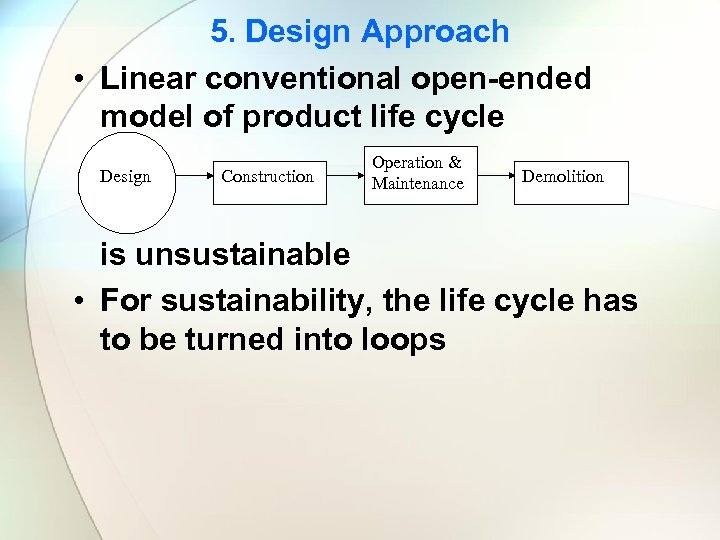
5. Design Approach • Linear conventional open-ended model of product life cycle Design Construction Operation & Maintenance Demolition is unsustainable • For sustainability, the life cycle has to be turned into loops
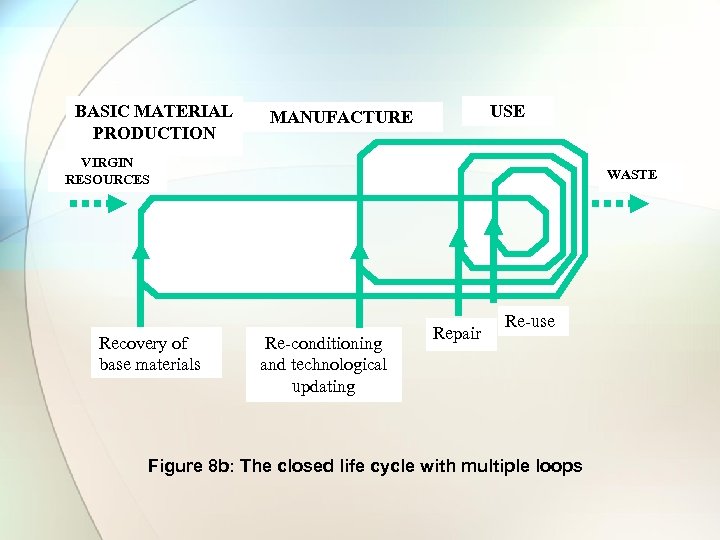
BASIC MATERIAL PRODUCTION USE MANUFACTURE VIRGIN RESOURCES Recovery of base materials WASTE Re-conditioning and technological updating Repair Re-use Figure 8 b: The closed life cycle with multiple loops
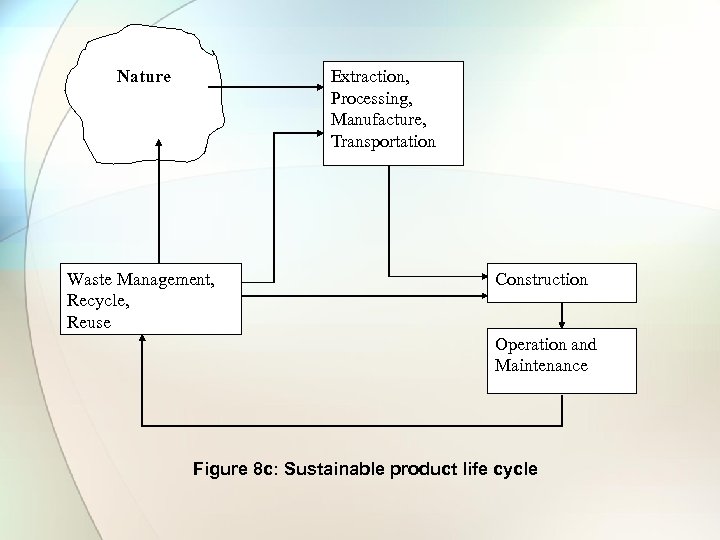
Extraction, Processing, Manufacture, Transportation Nature Waste Management, Recycle, Reuse Construction Operation and Maintenance Figure 8 c: Sustainable product life cycle
Life cycle design • A framework for integrating environmental considerations into the development of products. • Its objective is to minimize environmental burdens across the life cycle while also meeting performance, cost, and legal requirements that influence the product system.
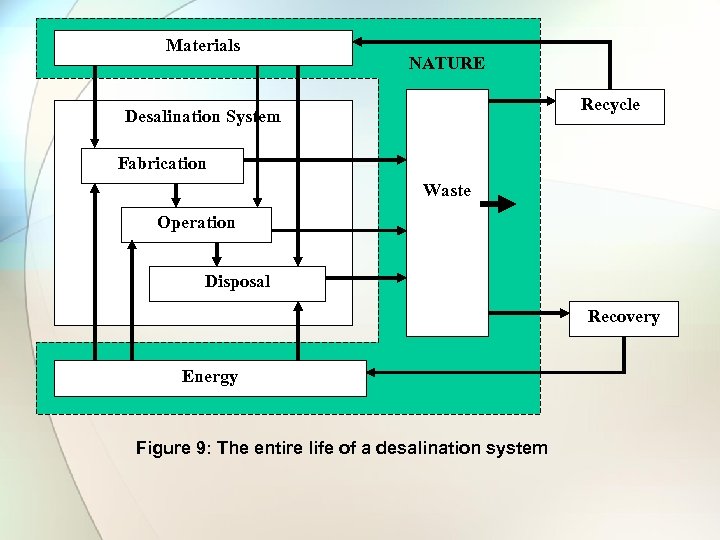
Materials NATURE Recycle Desalination System Fabrication Waste Operation Disposal Recovery Energy Figure 9: The entire life of a desalination system
Damage based indicator • The damage function presents the relation between the impact and the damage to human health or to the ecosystem and three types of environmental damages (endpoints) are considered: • Human Health • Ecosystem Quality • Resources
SD principles include, but are not limited to: 1. Use energy and resources efficiently. 2. Increase use of renewable energy resources. 3. Reduce or eliminate toxic and hazardous substances in facilities, processes, and their surrounding environment. 4. Select materials and products that would minimize hazards and cumulative environmental impacts. 5. Increase use of recycled content and other environmentally preferred products. 6. Salvage and recycle construction waste and building materials during construction and during demolition. 7. Prevent the generation of harmful materials and emissions during construction, operation, and decommissioning/demolition. 8. Implement maintenance and operational practices that reduce or eliminate harmful effects on people and the natural environment.
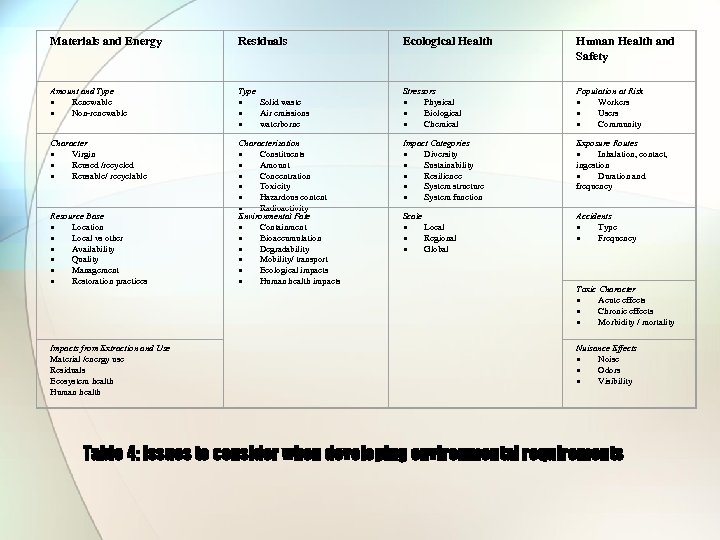
Materials and Energy Residuals Ecological Health Human Health and Safety Amount and Type · Renewable · Non-renewable Type · Solid waste · Air emissions · waterborne Stressors · Physical · Biological · Chemical Population at Risk · Workers · Users · Community Character · Virgin · Reused /recycled · Reusable/ recyclable Characterization · Constituents · Amount · Concentration · Toxicity · Hazardous content · Radioactivity Environmental Fate · Containment · Bioaccumulation · Degradability · Mobility/ transport · Ecological impacts · Human health impacts Impact Categories · Diversity · Sustainability · Resilience · System structure · System function Exposure Routes · Inhalation, contact, ingestion · Duration and frequency Scale · Local · Regional · Global Accidents · Type · Frequency Resource Base · Location · Local vs other · Availability · Quality · Management · Restoration practices Impacts from Extraction and Use Material /energy use Residuals Ecosystem health Human health Toxic Character · Acute effects · Chronic effects · Morbidity / mortality Nuisance Effects · Noise · Odors · Visibility Table 4: Issues to consider when developing environmental requirements
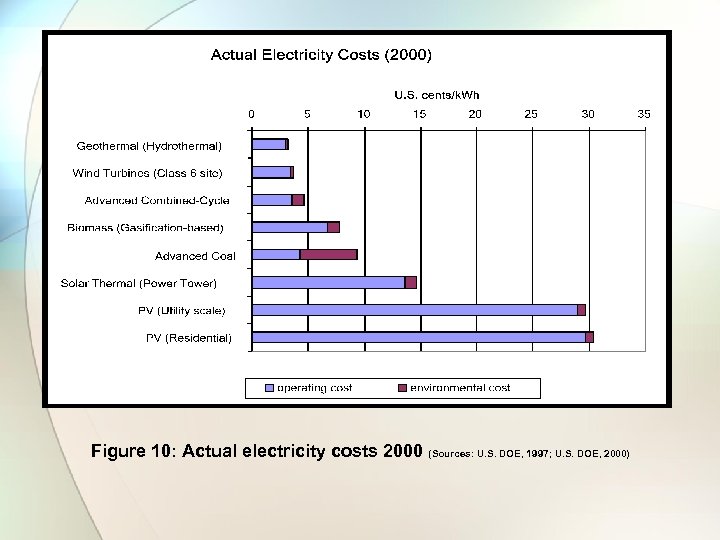
Figure 10: Actual electricity costs 2000 (Sources: U. S. DOE, 1997; U. S. DOE, 2000)
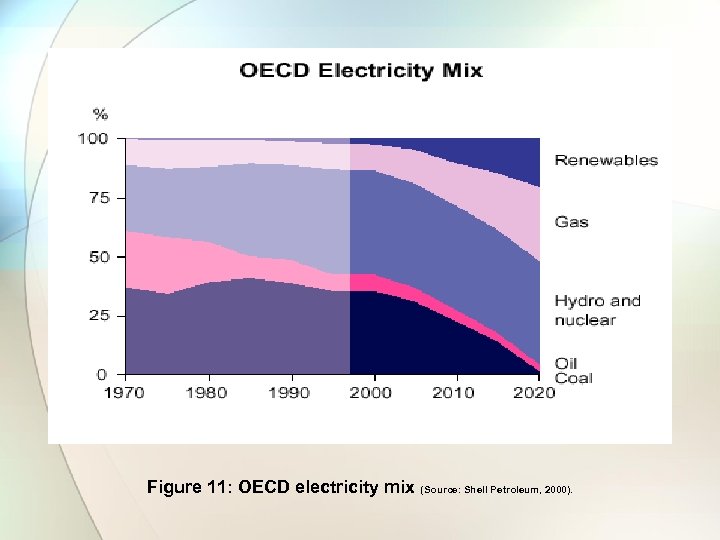
Figure 11: OECD electricity mix (Source: Shell Petroleum, 2000).
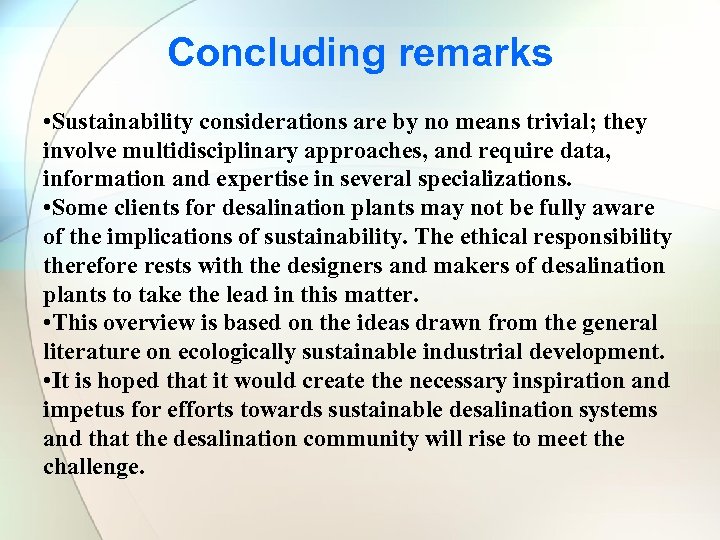
Concluding remarks • Sustainability considerations are by no means trivial; they involve multidisciplinary approaches, and require data, information and expertise in several specializations. • Some clients for desalination plants may not be fully aware of the implications of sustainability. The ethical responsibility therefore rests with the designers and makers of desalination plants to take the lead in this matter. • This overview is based on the ideas drawn from the general literature on ecologically sustainable industrial development. • It is hoped that it would create the necessary inspiration and impetus for efforts towards sustainable desalination systems and that the desalination community will rise to meet the challenge.

THANK YOU
Скачать презентацию Sustainability of Desalination Systems Darwish Al Gobaisi International
c8d482aad9c61f51eea00f6abe7a5481.ppt