 Скачать презентацию Sustainability for Water Quality Infrastructure South Bethany s Tidal
af9d8e0bb2b4ee1cd2c5740ad0bc47a6.ppt
- Количество слайдов: 24



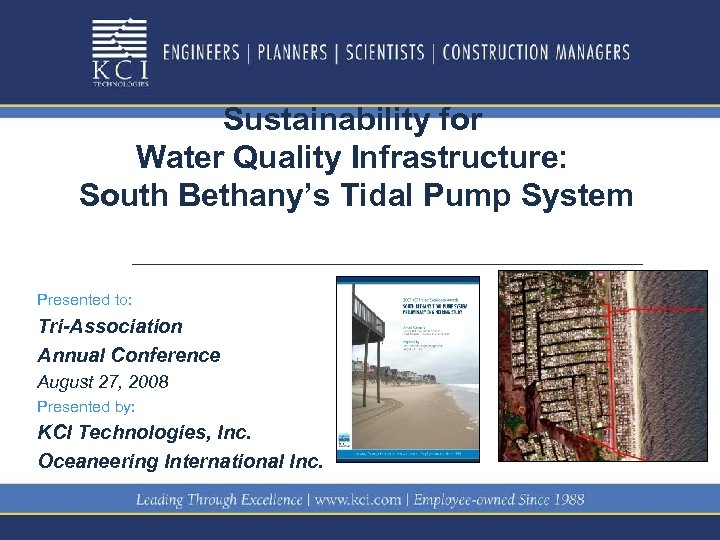
Sustainability for Water Quality Infrastructure: South Bethany’s Tidal Pump System Presented to: Tri-Association Annual Conference August 27, 2008 Presented by: KCI Technologies, Inc. Oceaneering International Inc.
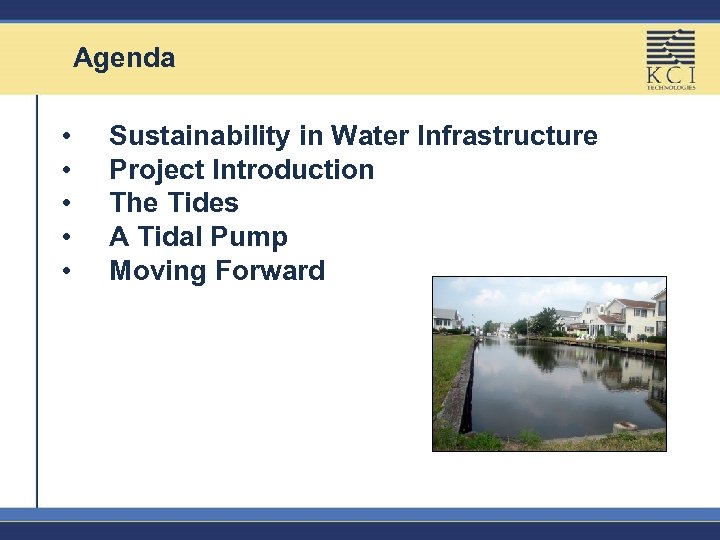
Agenda • • • Sustainability in Water Infrastructure Project Introduction The Tides A Tidal Pump Moving Forward
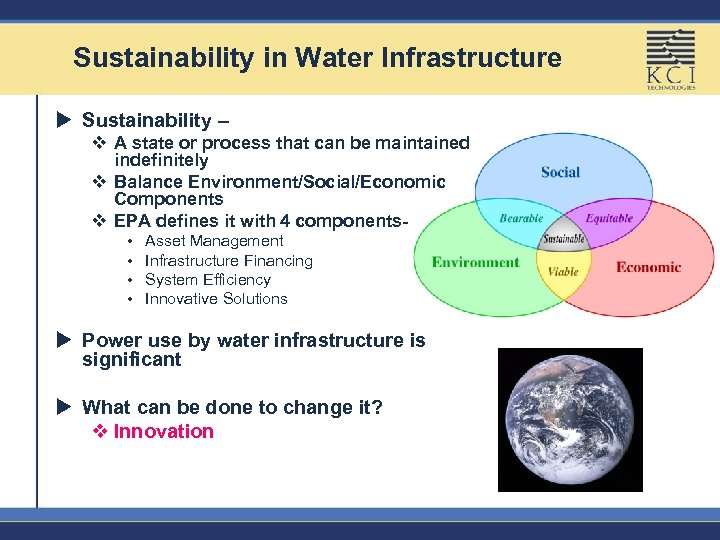
Sustainability in Water Infrastructure u Sustainability – v A state or process that can be maintained indefinitely v Balance Environment/Social/Economic Components v EPA defines it with 4 components • • Asset Management Infrastructure Financing System Efficiency Innovative Solutions u Power use by water infrastructure is significant u What can be done to change it? v Innovation
Sustainability in Water Infrastructure u South Bethany Tidal Pump Fits the definition on all EPA points but especially for: • System which is fiscally maintainable by projected capital resources • Energy Efficiency • Innovative Solutions
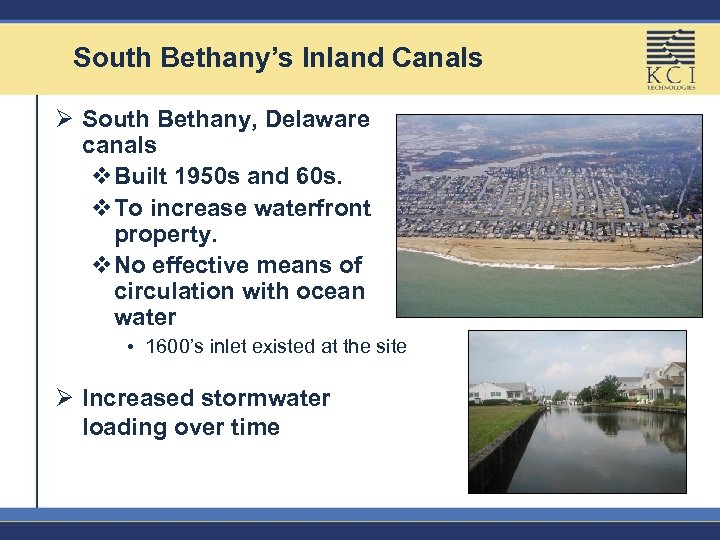
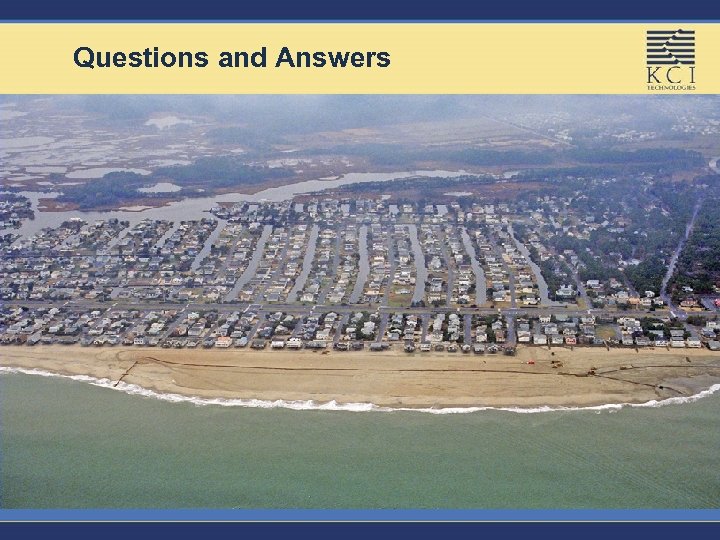
South Bethany’s Inland Canals Ø South Bethany, Delaware canals v. Built 1950 s and 60 s. v. To increase waterfront property. v. No effective means of circulation with ocean water • 1600’s inlet existed at the site Ø Increased stormwater loading over time
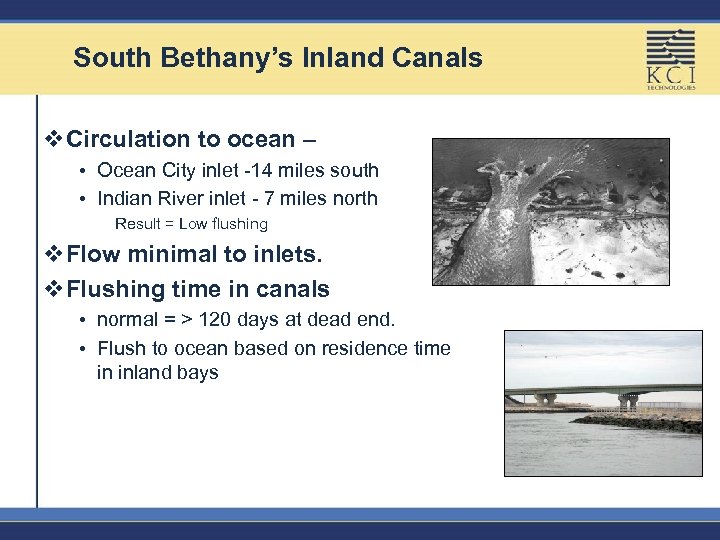
South Bethany’s Inland Canals v. Circulation to ocean – • Ocean City inlet -14 miles south • Indian River inlet - 7 miles north Result = Low flushing v. Flow minimal to inlets. v. Flushing time in canals • normal = > 120 days at dead end. • Flush to ocean based on residence time in inland bays
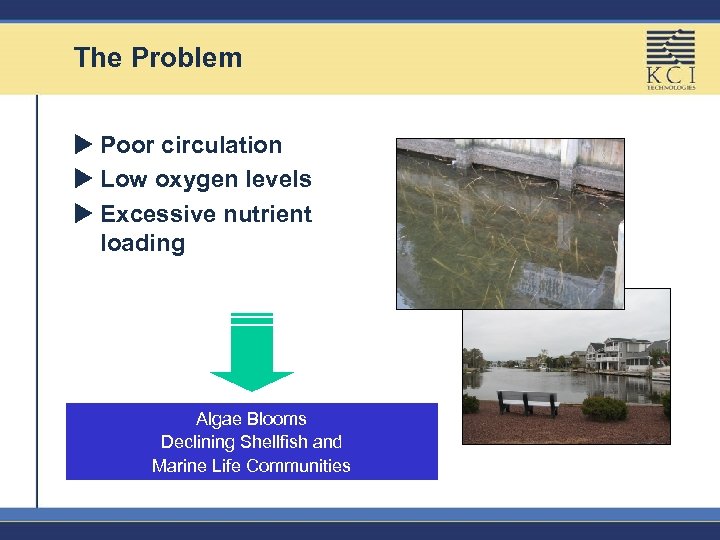
The Problem u Poor circulation u Low oxygen levels u Excessive nutrient loading Algae Blooms Declining Shellfish and Marine Life Communities
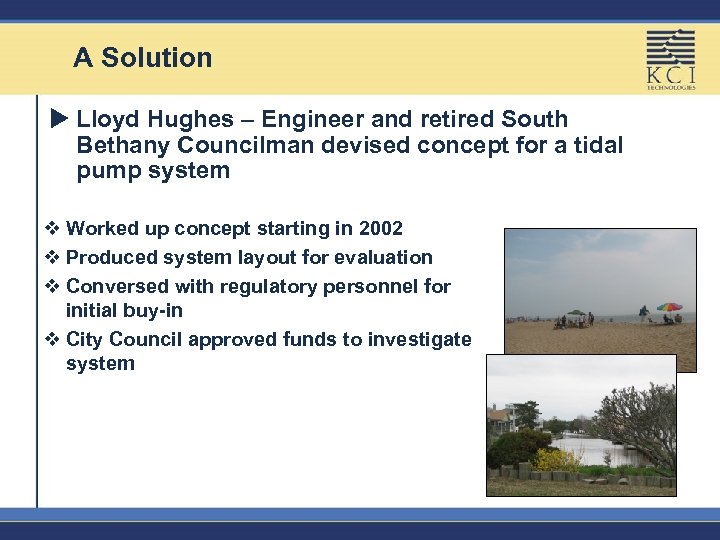
A Solution u Lloyd Hughes – Engineer and retired South Bethany Councilman devised concept for a tidal pump system v Worked up concept starting in 2002 v Produced system layout for evaluation v Conversed with regulatory personnel for initial buy-in v City Council approved funds to investigate system
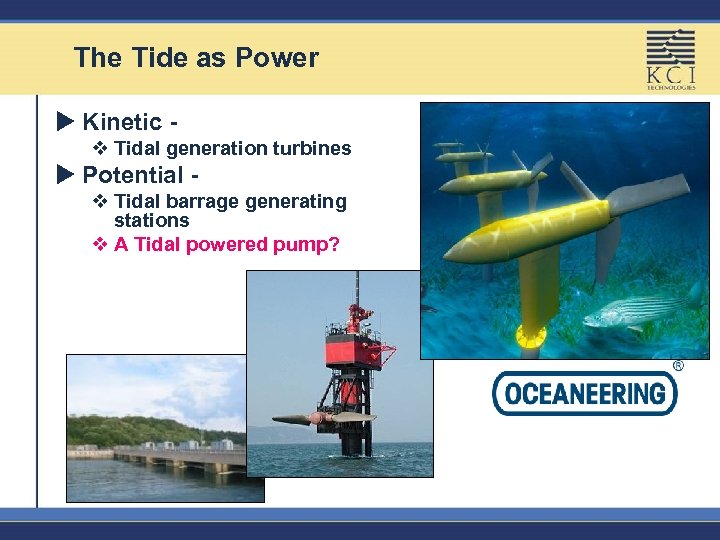
The Tide as Power u Kinetic v Tidal generation turbines u Potential v Tidal barrage generating stations v A Tidal powered pump?
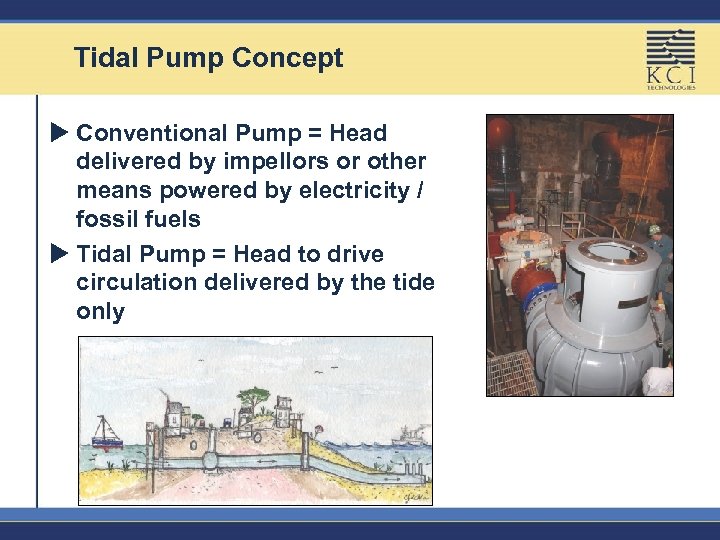
Tidal Pump Concept u Conventional Pump = Head delivered by impellors or other means powered by electricity / fossil fuels u Tidal Pump = Head to drive circulation delivered by the tide only
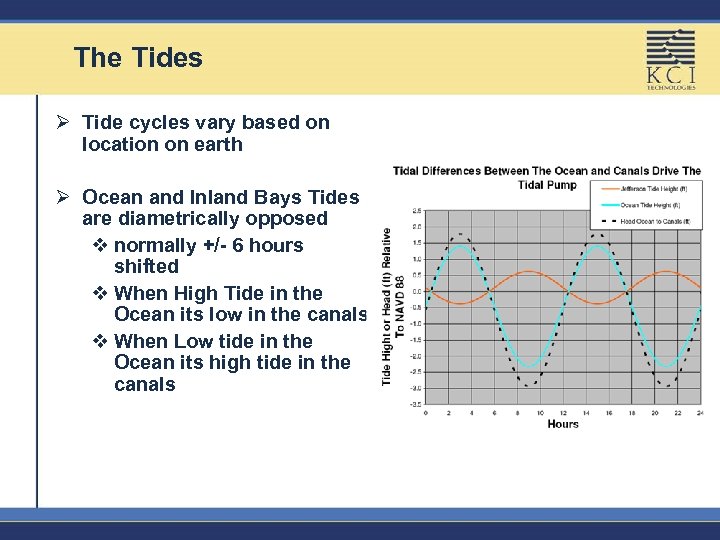
The Tides Ø Tide cycles vary based on location on earth Ø Ocean and Inland Bays Tides are diametrically opposed v normally +/- 6 hours shifted v When High Tide in the Ocean its low in the canals v When Low tide in the Ocean its high tide in the canals
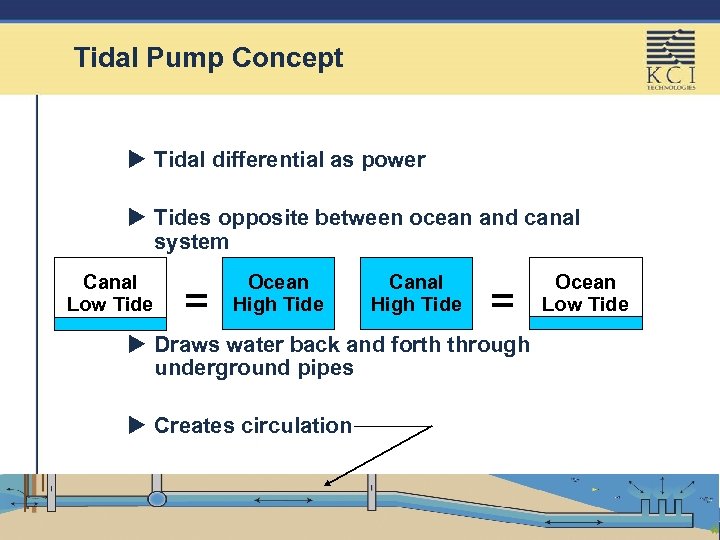
Tidal Pump Concept u Tidal differential as power u Tides opposite between ocean and canal system Canal Low Tide = Ocean High Tide Canal High Tide = u Draws water back and forth through underground pipes u Creates circulation Ocean Low Tide
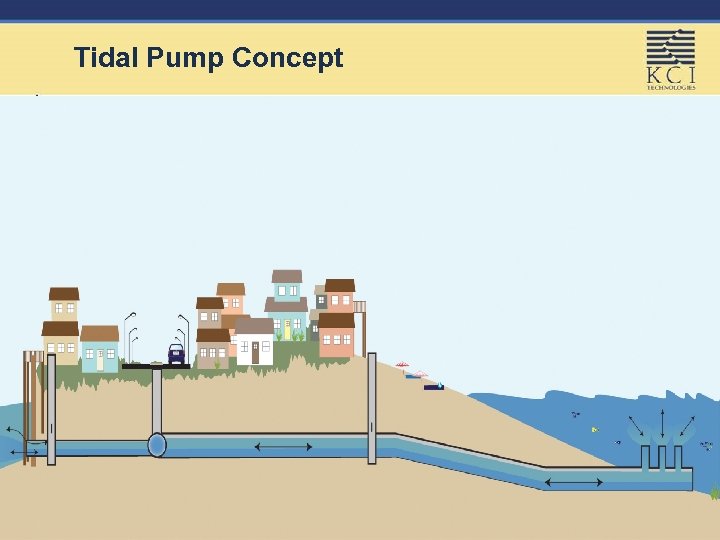
Tidal Pump Concept
First Steps u South Bethany evaluation v Enterix hired to assess viability by modeling preliminary system as well as the mixing predicted through • Limited study – one scenario only • Results positive – proved system could work v Town took next step for preliminary engineering study and cost estimate
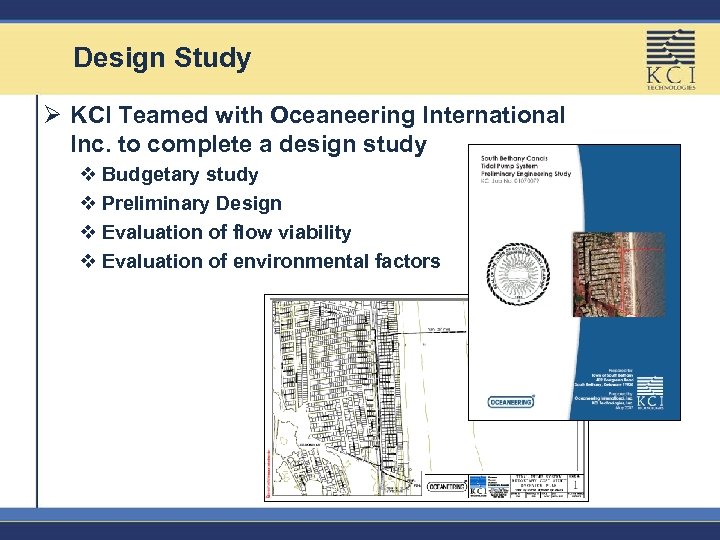
Design Study Ø KCI Teamed with Oceaneering International Inc. to complete a design study v Budgetary study v Preliminary Design v Evaluation of flow viability v Evaluation of environmental factors
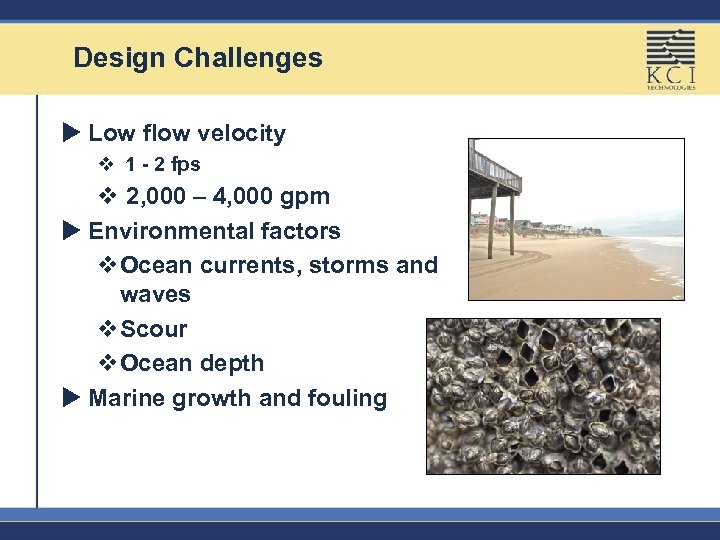
Design Challenges u Low flow velocity v 1 - 2 fps v 2, 000 – 4, 000 gpm u Environmental factors v. Ocean currents, storms and waves v. Scour v. Ocean depth u Marine growth and fouling
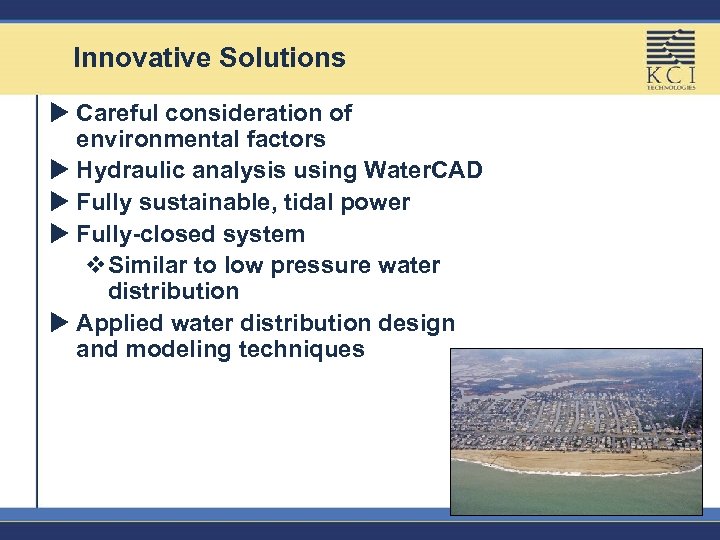
Innovative Solutions u Careful consideration of environmental factors u Hydraulic analysis using Water. CAD u Fully sustainable, tidal power u Fully-closed system v. Similar to low pressure water distribution u Applied water distribution design and modeling techniques
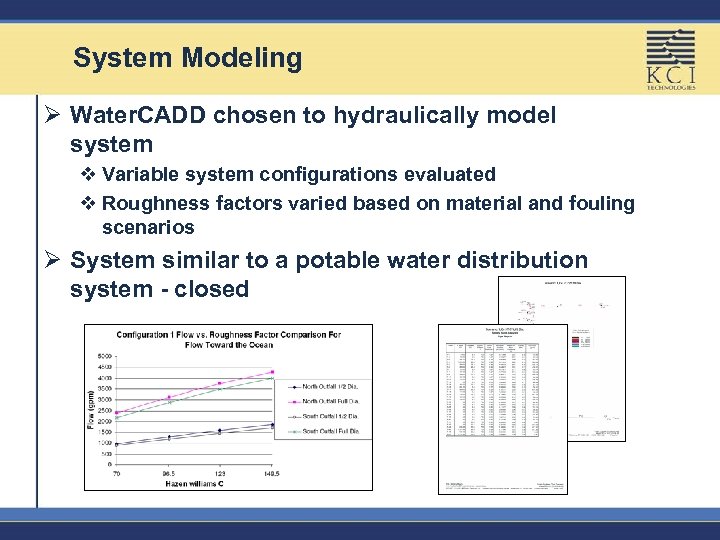
System Modeling Ø Water. CADD chosen to hydraulically model system v Variable system configurations evaluated v Roughness factors varied based on material and fouling scenarios Ø System similar to a potable water distribution system - closed
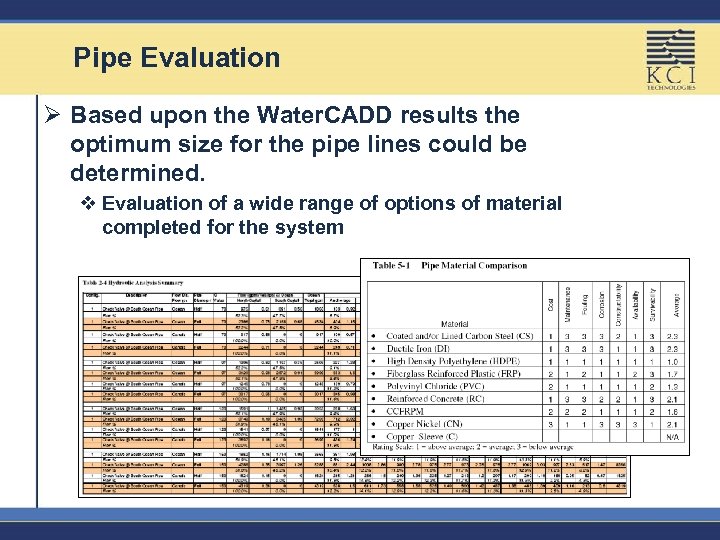
Pipe Evaluation Ø Based upon the Water. CADD results the optimum size for the pipe lines could be determined. v Evaluation of a wide range of options of material completed for the system
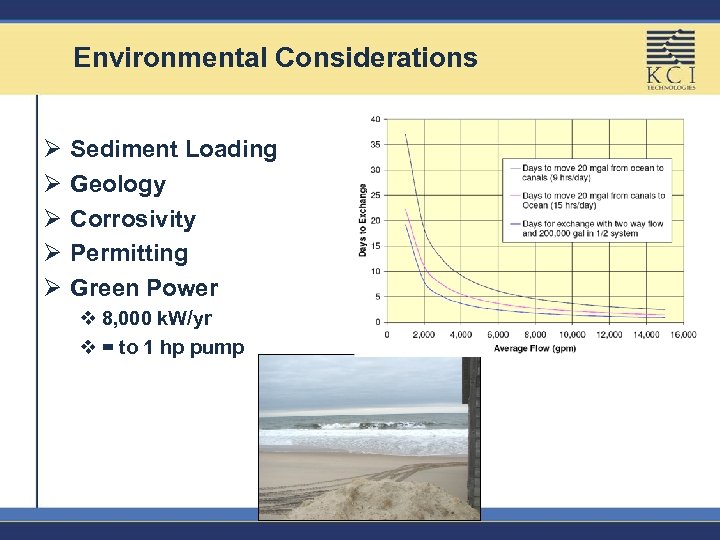
Environmental Considerations Ø Ø Ø Sediment Loading Geology Corrosivity Permitting Green Power v 8, 000 k. W/yr v = to 1 hp pump
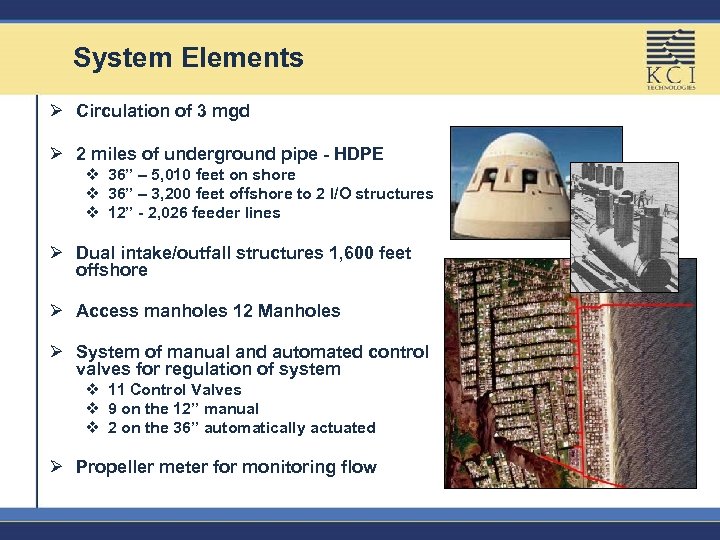
System Elements Ø Circulation of 3 mgd Ø 2 miles of underground pipe - HDPE v 36” – 5, 010 feet on shore v 36” – 3, 200 feet offshore to 2 I/O structures v 12” - 2, 026 feeder lines Ø Dual intake/outfall structures 1, 600 feet offshore Ø Access manholes 12 Manholes Ø System of manual and automated control valves for regulation of system v 11 Control Valves v 9 on the 12” manual v 2 on the 36” automatically actuated Ø Propeller meter for monitoring flow
Project Status Ø Design Study completed Summer 2007 Ø Town conversing with regulators v To address potential permitting issues Ø Project funding is still pending v Grant funding will partially depend on preliminary DNREC approval v $5 to $6 Million estimated construction cost
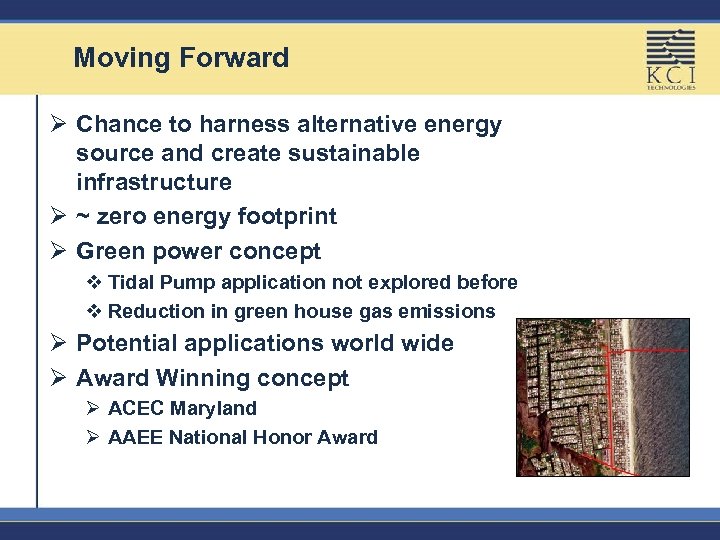
Moving Forward Ø Chance to harness alternative energy source and create sustainable infrastructure Ø ~ zero energy footprint Ø Green power concept v Tidal Pump application not explored before v Reduction in green house gas emissions Ø Potential applications world wide Ø Award Winning concept Ø ACEC Maryland Ø AAEE National Honor Award
Questions and Answers
Скачать презентацию Sustainability for Water Quality Infrastructure South Bethany s Tidal
af9d8e0bb2b4ee1cd2c5740ad0bc47a6.ppt