


 Скачать презентацию Survivors and Displaced Persons Sickness Many
261d4f500d6db32adbb54620c2525204.ppt
- Количество слайдов: 35
 Survivors and Displaced Persons
 Sickness • Many of the survivors were very sick and would spend time in medical camps recovering
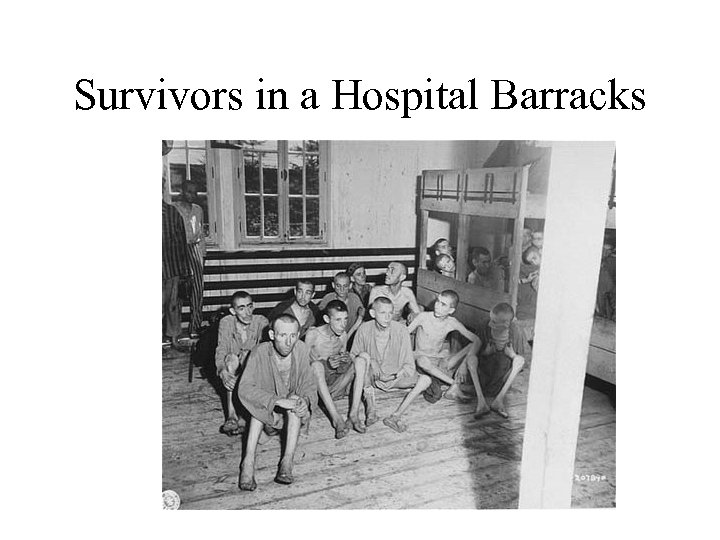 Survivors in a Hospital Barracks
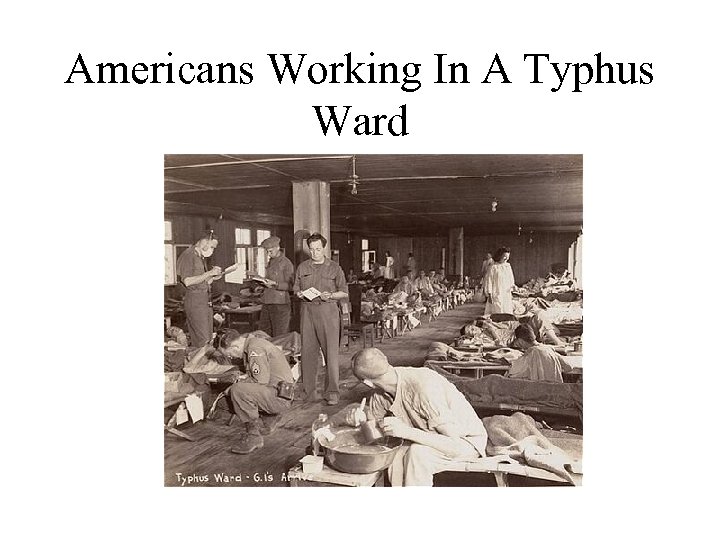 Americans Working In A Typhus Ward
 Sickness in the Camps • Corpses were scattered around the camps and the liberators buried them quickly to avoid disease and distress.
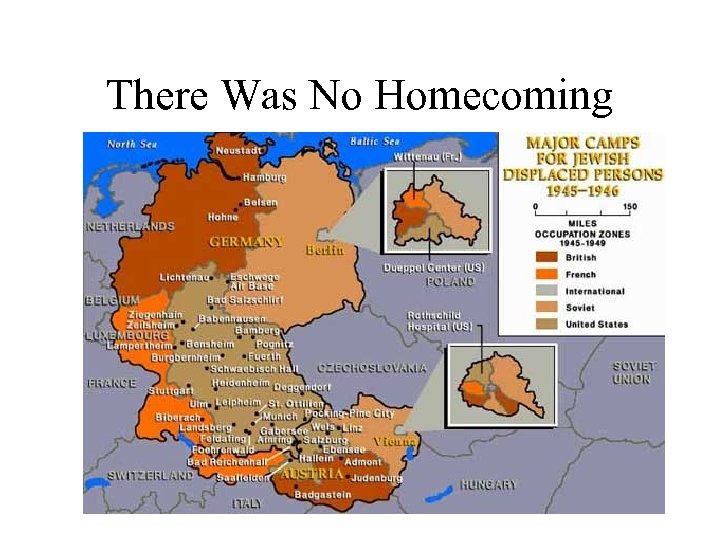
 There Was No Homecoming • Allies found seven to nine million displaced persons living in countries not their own. • They had no homes to return to • With nowhere to go, they were forced to live in camps set up on sites where they were imprisoned.
 There Was No Homecoming
 There Was No Homecoming • American army not equipped to deal with all of the problems they encountered – Immediate housing – Medical care – Food – Trying to reunite families – Resettling those who could not or would not go home
 There Was No Homecoming • Other problems displaced persons faced – Depression – Haunted by nightmares – Mistrusted authority- even Americans trying to help them – Camps were dirty and overcrowded
 Displaced Persons • Britain unwilling to permit Jewish emigration to Palestine • U. S. not ready to receive an influx of refugees
 Truman and the Jews • Truman sends Earl Harrison to report on the displaced-persons camp – “We appear to be treating the Jews as the Nazi’s treated them, except that we do not exterminate them” • Truman pressures Britain to let 100, 000 Jews immigrate to Palestine • He opens the U. S. to limited immigration
 Truman and the Jews • Dec. 22, 1945 - Truman grants preferential treatment to displaced persons wanting to emigrate to U. S. – Over next 18 months- 22, 950 DP’s admitted • 15, 478 of them Jews • Problem of what to do with displaced persons could not be solved with a minor adjustment of quotas
 Displaced Persons • Britain calls Anglo-American Commission of Inquiry – Strategy was to buy some time and to kill the political momentum by preparing a committee report – Committee recommended sending Jews to Palestine
 Displaced Persons • Slowly survivors renewed their lives. – Camps filled mainly with men • Relief organizations began to help
 Displaced Persons • By 1946, life inside camps improves – Survivors marry – New families form – Political life began anew
 Pogrom in Kielce • Was a town in Poland • Before the war, 24, 000 Jews lived here – Only 150 returned after the war looking for family and their homes • On July 4, 1946, a mob of Poles attacked them – 42 killed and 50 wounded
 Pogrom in Kielce • Appeals to church leaders and police fell on deaf ears • Jews throughout Poland understood it was not safe to return home
 Summer 1946 • American zone of occupied Germany flooded with Polish Jews released from Soviet Union • Also flooded by Jews fleeing Eastern Europe after the Kielce Pogrom • Congress had to intervene
 Summer 1946 • Political battle in U. S. rages – Congress passes bill in 1948 allowing 200, 000 Jews over 4 years – By then, most have already fled for Israel
 Immigration Law 1948 – During 3 years after the war only 48, 000 DP’s admitted to U. S. – With immigration law of 1948 - 365, 334 DP’s to U. S. • 50% Roman Catholic, only 16% Jews – During the seven years of DP camps, fewer than 100, 000 Jews make it to U. S.
 Jews in the U. S. • Many Jews in the U. S. describe their arrival to the U. S. with joy and gratitude. • Some were reunited with relatives • Once in the U. S. they were essentially on their own
 Exodus • Between 1944 and 1948, more than 200, 000 Jews fled Eastern and Central Europe to Palestine – They weren’t content to wait while politicians decided their fate – Set out for Palestine on their own
 Exodus • Many came to Palestine by boat – Pictures of the British forcibly removing them from ships and imprisoning them yet again were sent to newspapers throughout the world. • When ship called Exodus was captured, British sent survivors back to Bergen. Belsen – Caused international revulsion
 The Creation of Israel • 1922 - League of Nations grants Britain a mandate over Palestine • British decide they can no longer manage Palestine • Nov. 29, 1947 UN partitions Palestine into two states- one Jewish and Arab
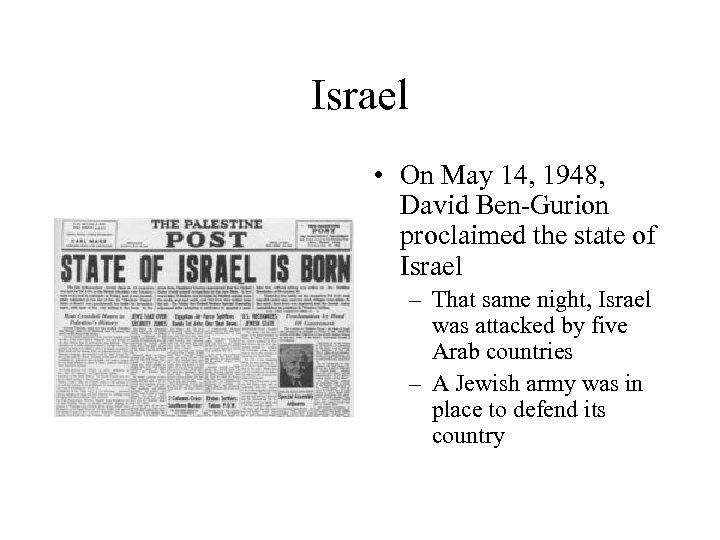 Israel • On May 14, 1948, David Ben-Gurion proclaimed the state of Israel – That same night, Israel was attacked by five Arab countries – A Jewish army was in place to defend its country
 Israel • 1950 - Law of Return granted Jews immediate citizenship upon their arrival • Once unwanted everywhere, Jews now had a country
 Israel • Task of state-building was challenging – Wars to be fought – Cities to be built – Crops to be planted • The birth of Israel was the most significant positive consequence of the Holocaust
 Healing the Wounds • Scars of their past remained • Survival was a gift and a curse – Why did they survive when so many perished? • Victor Frankl • The Sunflower
 Remembrance • At first many survivors remained silent • I promised I would tell- Sonia Weitz
 Counting the Costs • Many communities and institutions destroyed • 10 million people killed including 6 million Jews • Each person had a past, a present, and would have had a future
 Stolen Property and Compensation • Nazis took many valuable from the victims when they were seized • Survivors and organizations acting on their behalf have sought compensation from Germany and other governments and banks. • They are motivated by a desire for the suffering to be recognized and for the perpetrators to admit their guilt.
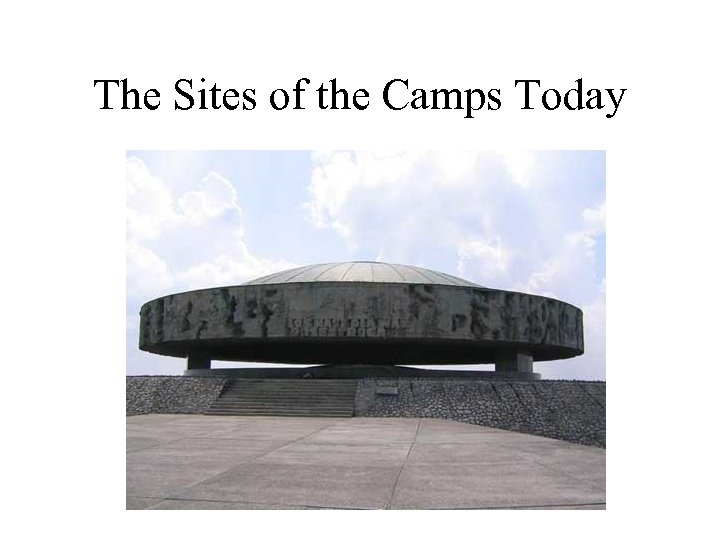 The Sites of the Camps Today
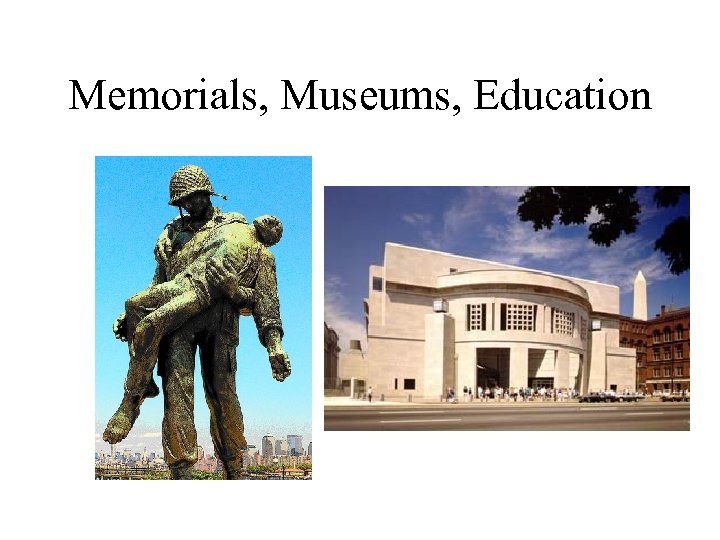 Memorials, Museums, Education
 Big Questions? ? • Can a person say “I was only following orders? • What about using medicines developed by Nazi doctors? • What about Holocaust deniers? • Should we forgive? • Can we forget?
 “I have tried to keep memory alive…I have tried to fight those who would forget. Because if we forget, we are guilty, we are accomplices. ” Elie Wisel, Nobel Prize Speech, 1986