


 Скачать презентацию Survival Systems Lance Taysom RN CFRN WEMT
2f512eacca26d27da8e1fd733efe8482.ppt
- Количество слайдов: 36
 Survival Systems Lance Taysom RN, CFRN, WEMT
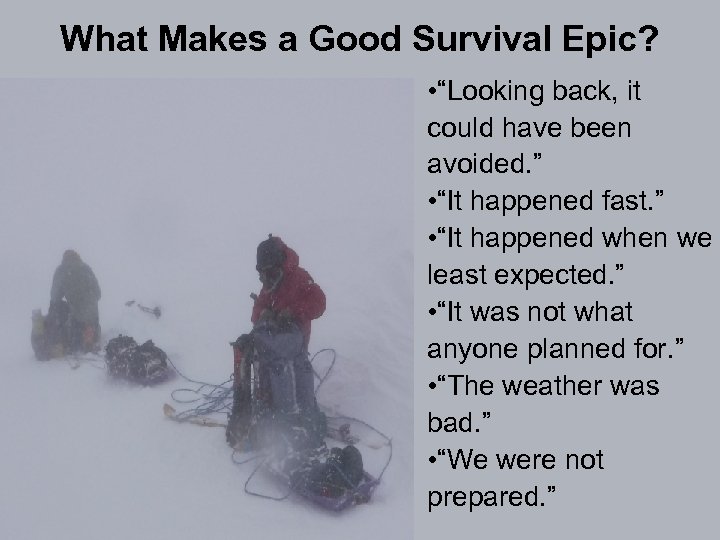 What Makes a Good Survival Epic? • “Looking back, it could have been avoided. ” • “It happened fast. ” • “It happened when we least expected. ” • “It was not what anyone planned for. ” • “The weather was bad. ” • “We were not prepared. ”
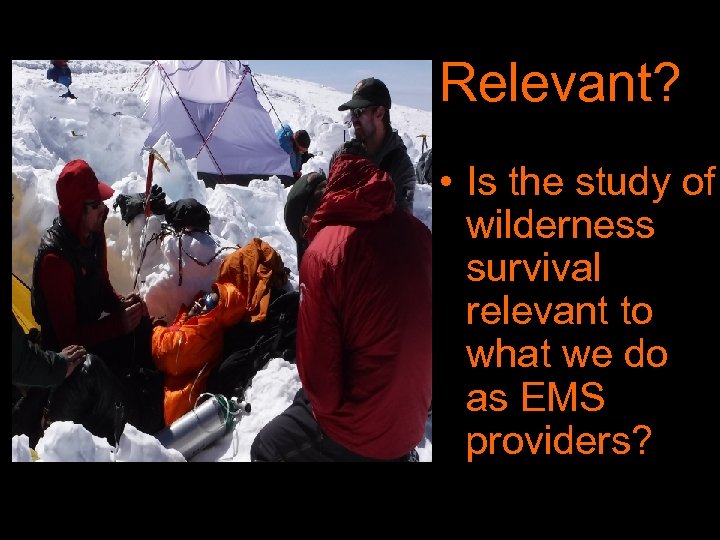 Relevant? • Is the study of wilderness survival relevant to what we do as EMS providers?
 National Park Service 2014 Search and Rescue • 2, 658 SAR missions (2, 348 in 2013) – 24% “error in judgment” – 20% “fatigue” – 22% listed as “saves” 2013 • 92% of lost persons were found within 24 hours • 374 (12. 3%) lost people stayed-put
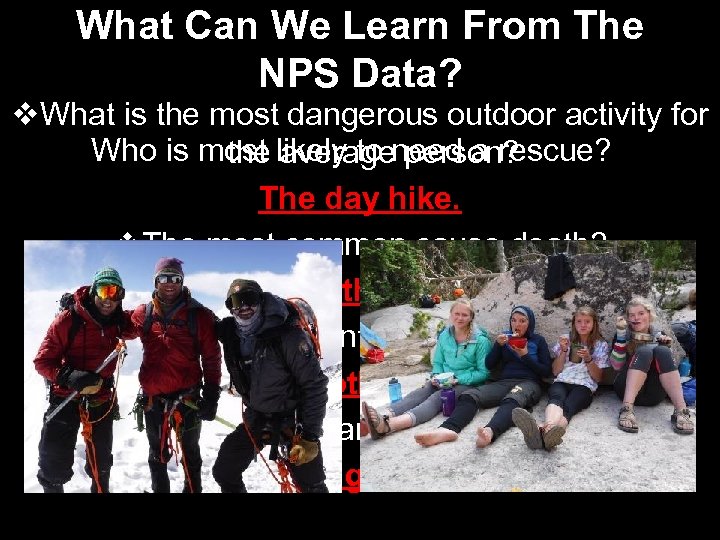 What Can We Learn From The NPS Data? v. What is the most dangerous outdoor activity for Who is most likely to need a rescue? the average person? The day hike. v. The most common cause death? Hypothermia v. The most important survival equipment? Clothing v. Most important survival skill? Judgment
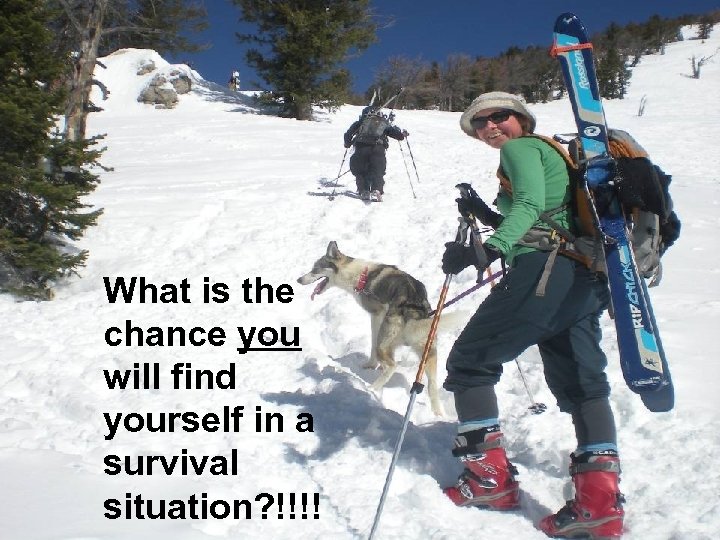 What is the chance you will find yourself in a survival situation? !!!!
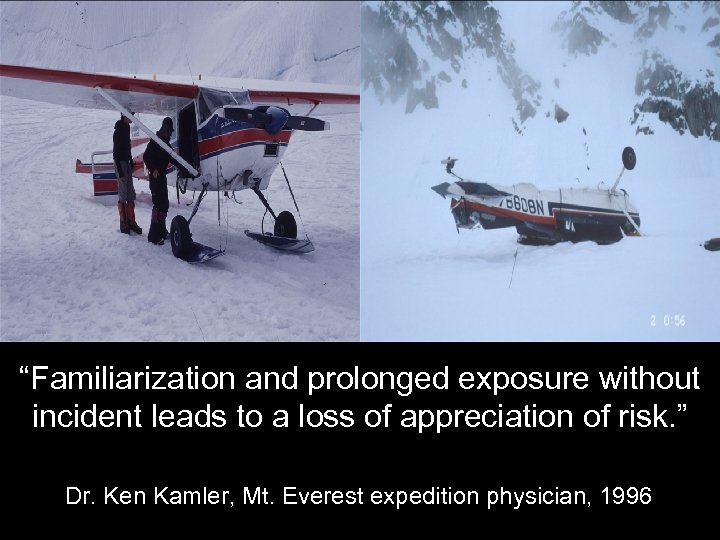 “Familiarization and prolonged exposure without incident leads to a loss of appreciation of risk. ” Dr. Ken Kamler, Mt. Everest expedition physician, 1996
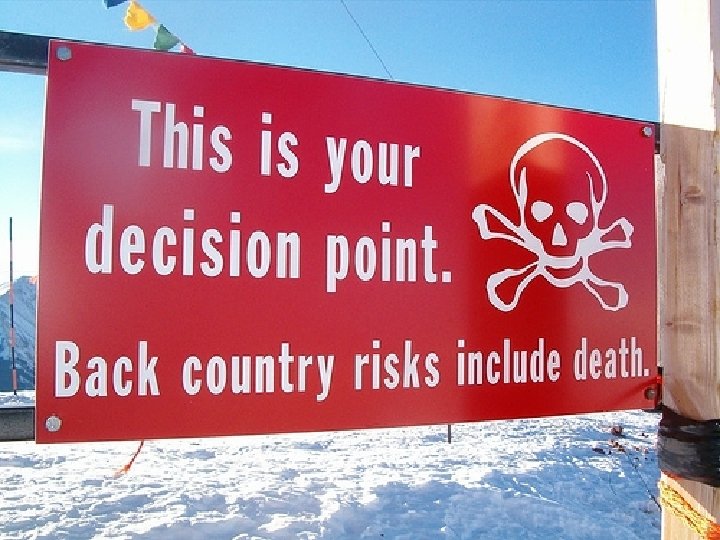
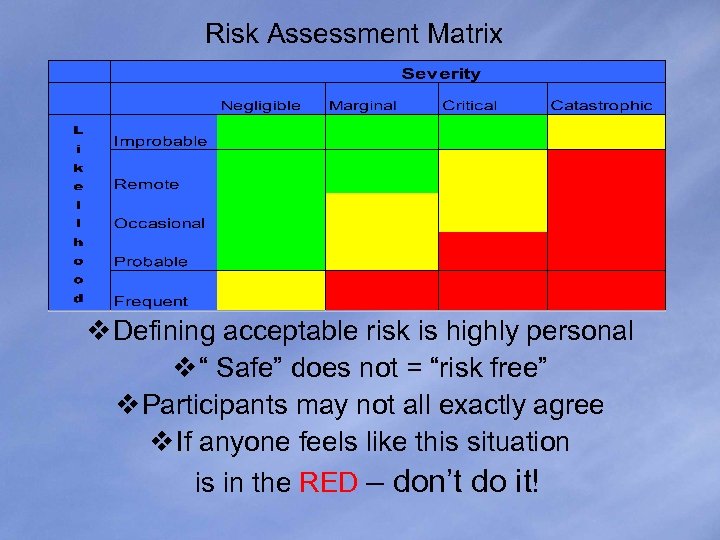 Risk Assessment Matrix v Defining acceptable risk is highly personal v “ Safe” does not = “risk free” v Participants may not all exactly agree v If anyone feels like this situation is in the RED – don’t do it!
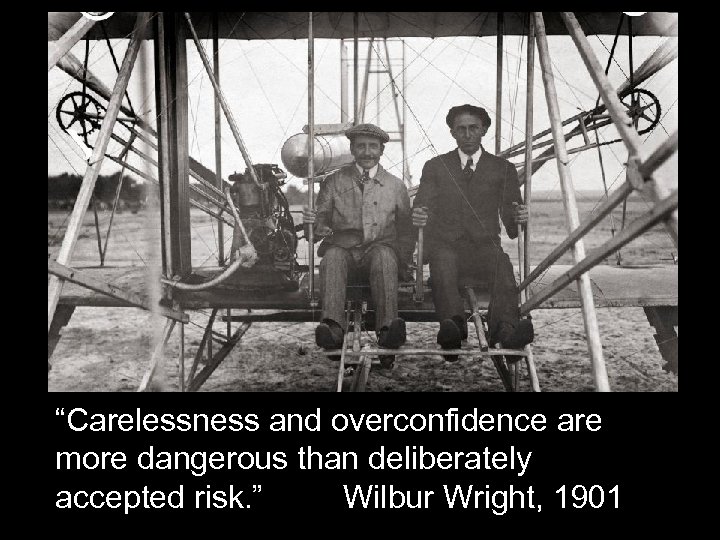 “Carelessness and overconfidence are more dangerous than deliberately accepted risk. ” Wilbur Wright, 1901
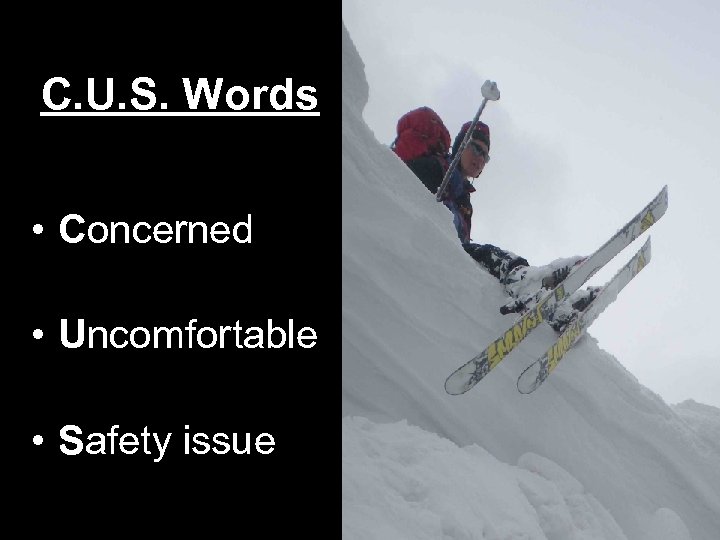 C. U. S. Words • Concerned • Uncomfortable • Safety issue
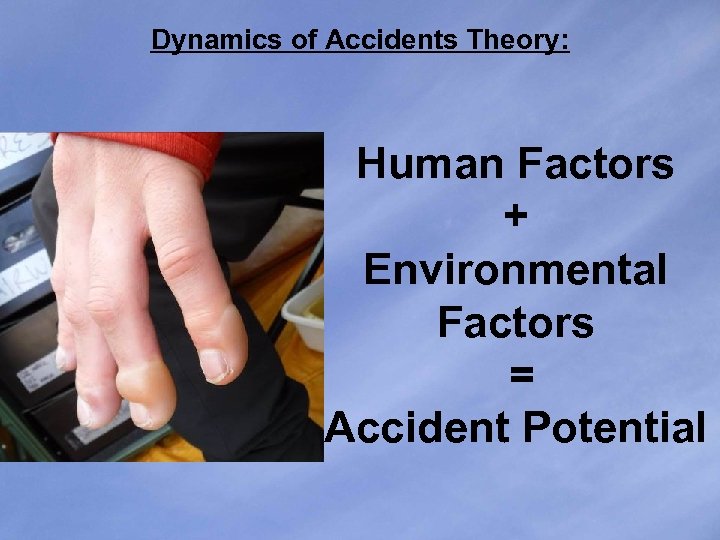 Dynamics of Accidents Theory: Human Factors + Environmental Factors = Accident Potential
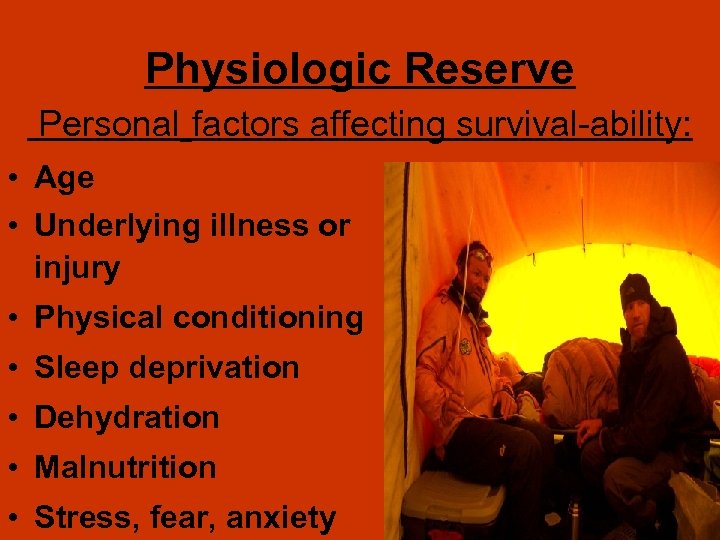 Physiologic Reserve Personal factors affecting survival-ability: • Age • Underlying illness or injury • Physical conditioning • Sleep deprivation • Dehydration • Malnutrition • Stress, fear, anxiety
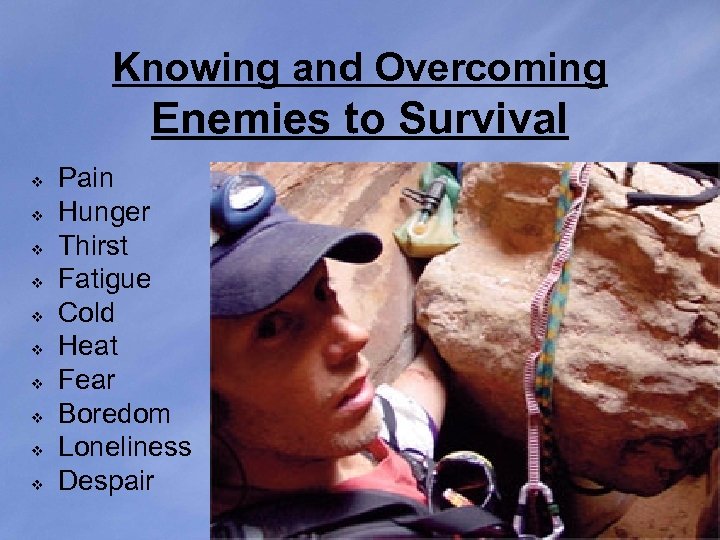 Knowing and Overcoming Enemies to Survival v v v v v Pain Hunger Thirst Fatigue Cold Heat Fear Boredom Loneliness Despair
 “Survival Attitude” v v v v Stay calm and confident. Establish priorities. Make decisions. Hope for the best, prepare for the worst, do it right the first time. Focus on the now - don’t buy in to blame, guilt, fear, pride. Be patient. NEVER GIVE UP!
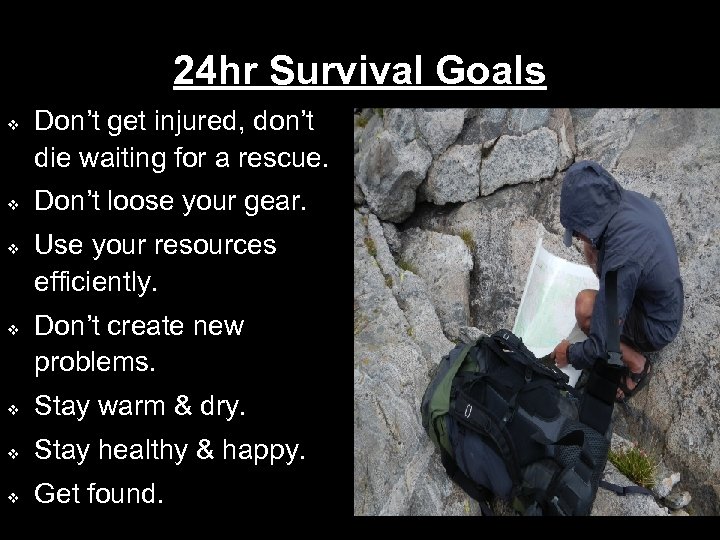 24 hr Survival Goals v v Don’t get injured, don’t die waiting for a rescue. Don’t loose your gear. Use your resources efficiently. Don’t create new problems. v Stay warm & dry. v Stay healthy & happy. v Get found.
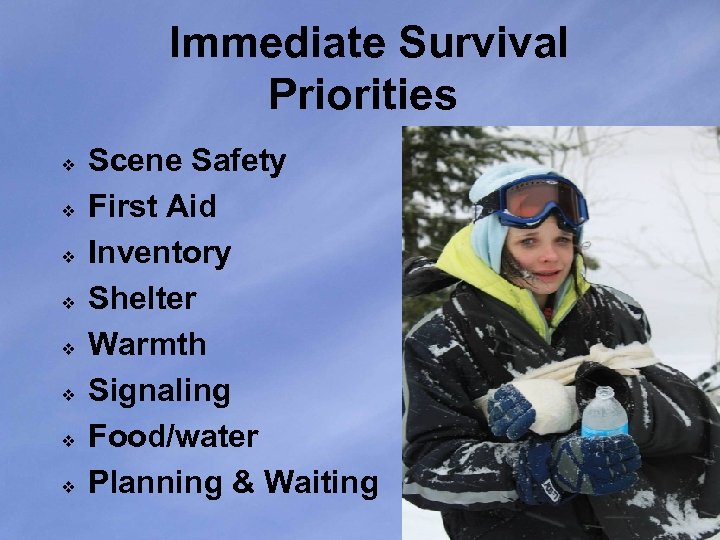 Immediate Survival Priorities v v v v Scene Safety First Aid Inventory Shelter Warmth Signaling Food/water Planning & Waiting
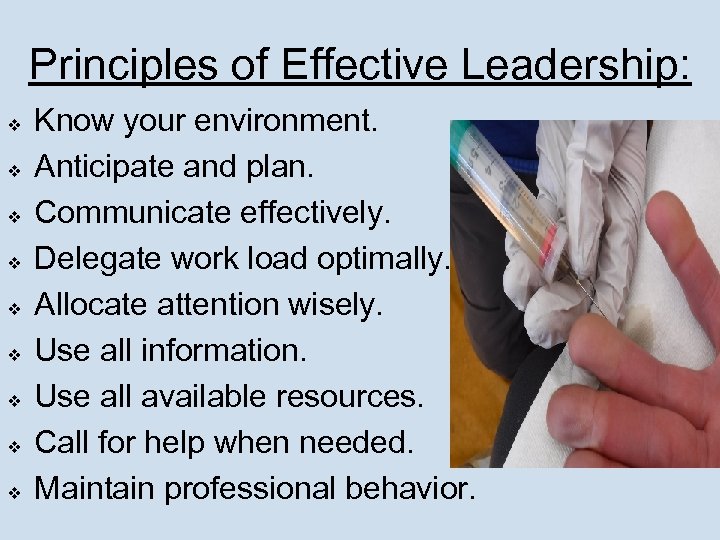 Principles of Effective Leadership: v v v v v Know your environment. Anticipate and plan. Communicate effectively. Delegate work load optimally. Allocate attention wisely. Use all information. Use all available resources. Call for help when needed. Maintain professional behavior.
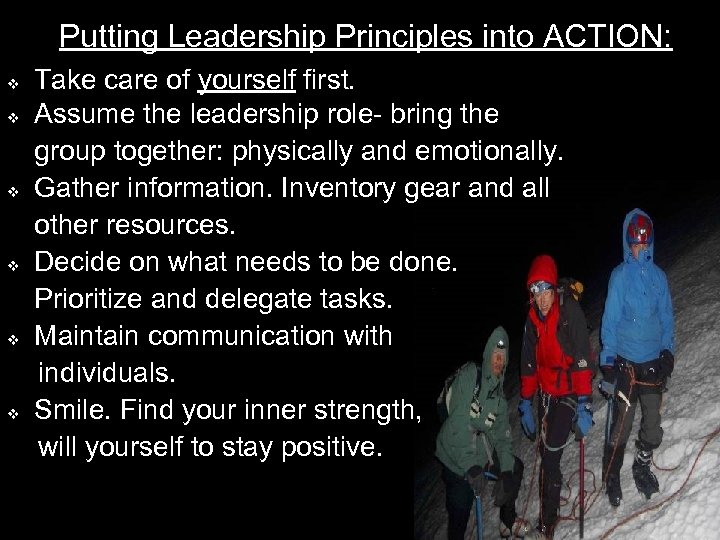 Putting Leadership Principles into ACTION: Take care of yourself first. v Assume the leadership role- bring the group together: physically and emotionally. v Gather information. Inventory gear and all other resources. v Decide on what needs to be done. Prioritize and delegate tasks. v Maintain communication with individuals. v Smile. Find your inner strength, will yourself to stay positive. v
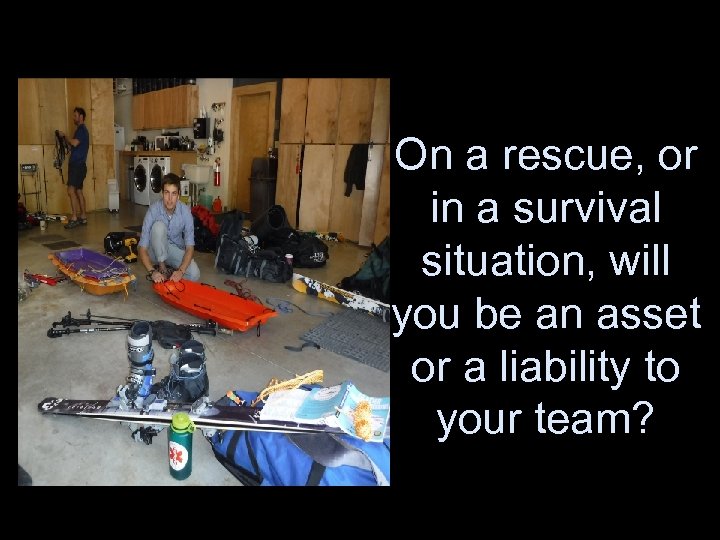 On a rescue, or in a survival situation, will you be an asset or a liability to your team?
 Personal Survival Systems: v. Clothing v. Navigation v. First Aid v. Tools v. Shelter v. Fire v. Signaling v. Communication v. Water & Food v. Personal
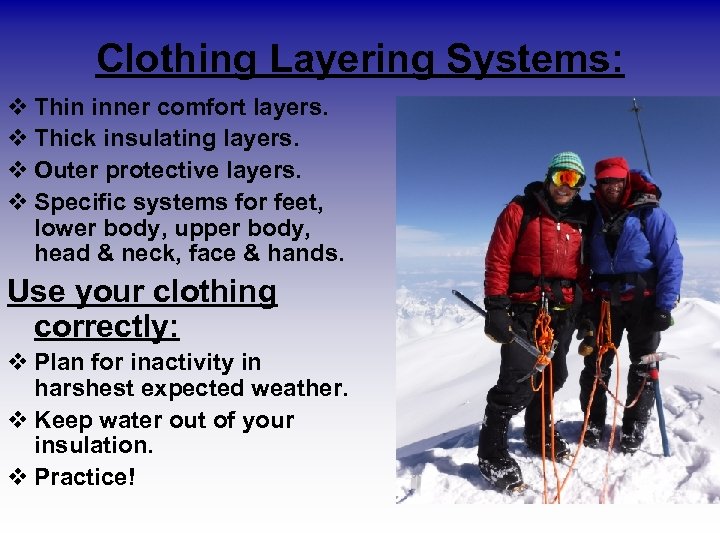 Clothing Layering Systems: v Thin inner comfort layers. v Thick insulating layers. v Outer protective layers. v Specific systems for feet, lower body, upper body, head & neck, face & hands. Use your clothing correctly: v Plan for inactivity in harshest expected weather. v Keep water out of your insulation. v Practice!
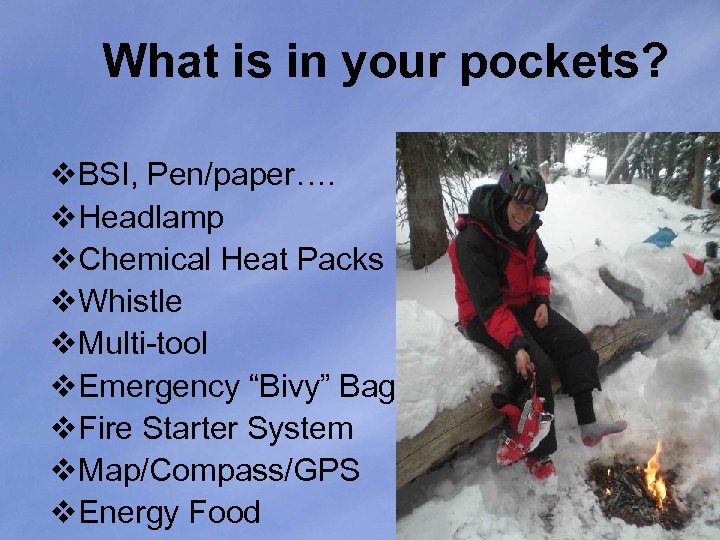 What is in your pockets? v. BSI, Pen/paper…. v. Headlamp v. Chemical Heat Packs v. Whistle v. Multi-tool v. Emergency “Bivy” Bag v. Fire Starter System v. Map/Compass/GPS v. Energy Food
 “We get to remote environments with the aid of technology. Technology enables us to live and work there. When technology fails, you must have skills to survive. If you don’t have skills, you will die”. Mel Otten MD, Mountain Rescue
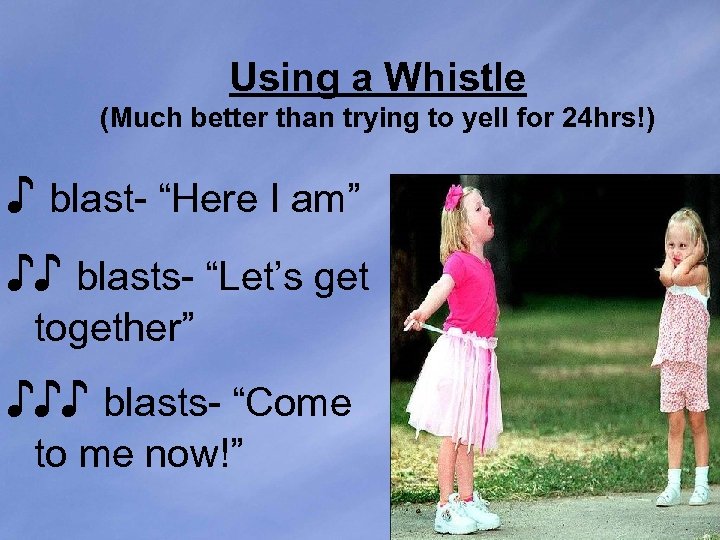 Using a Whistle (Much better than trying to yell for 24 hrs!) ♪ blast- “Here I am” ♪♪ blasts- “Let’s get together” ♪♪♪ blasts- “Come to me now!”
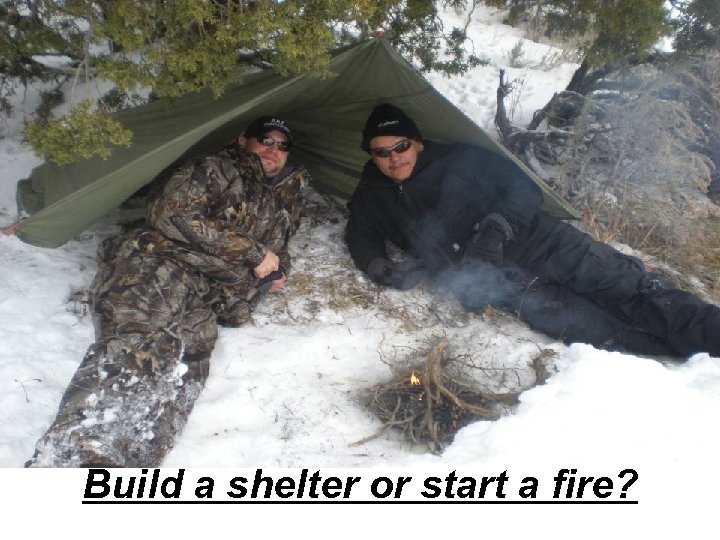 Build a shelter or start a fire?
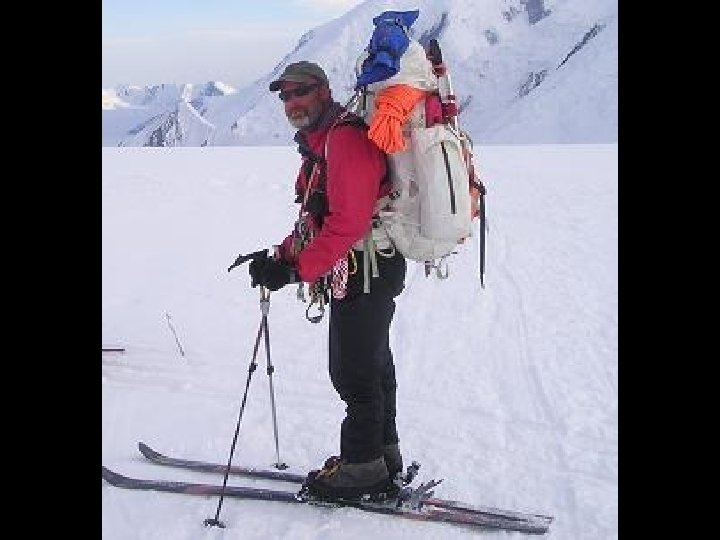
 If you have to spend the night… Bivouac (“The Big Screw-Up”) Lou Whittaker, Rainier Mountain Guide v Commit yourself while still daylight to spending the night where you are. v Make a safe, solid camp: shelter, warmth. v Gather more wood than you think you need. v Keep a fire going, be ready to make smoke. v Huddle close together. Insulate from the ground. v Listen, use your whistle. v Get a nap early in the evening.
 http: //www. thinkgeek. com/gadgets/tools/a 396/
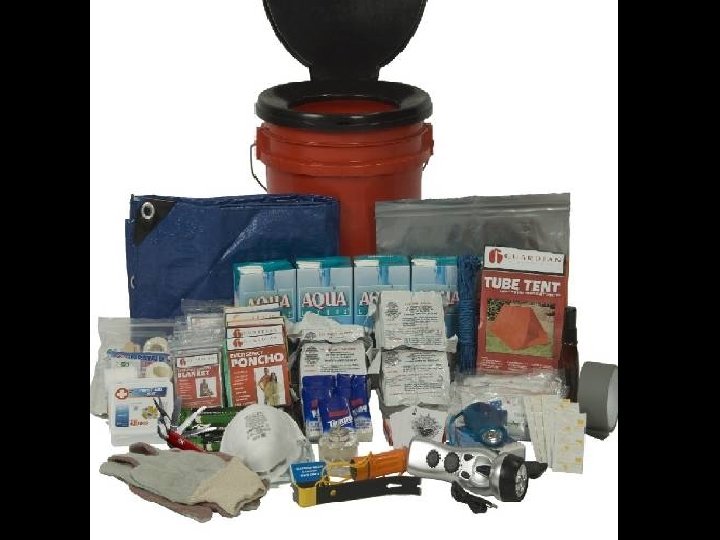
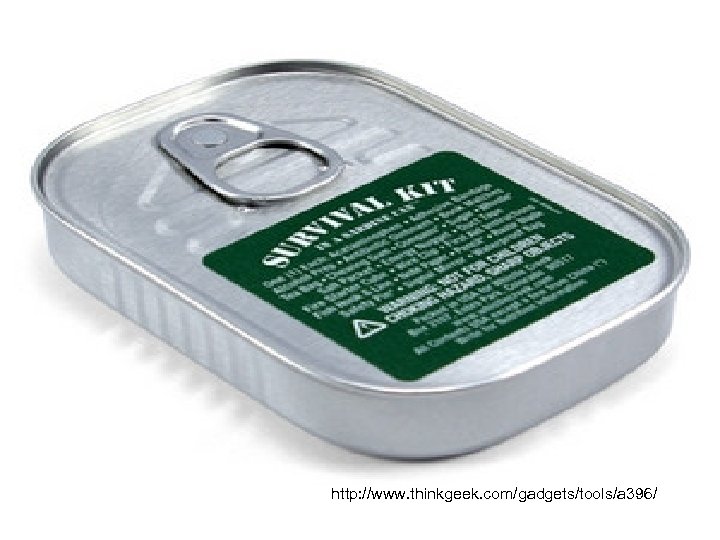
 General Guidelines for First Aid & Survival Kits: v. First Aid/Survival Kits are highly personal. v. No single kit will serve for all your outdoor activities. v. Check your kit before and after each trip. v. Select each piece carefully. v. Know your kit. v. Keep your kit with you. v. Check commercial kits for ideas. v. Keep it simple: The more you know, the less you need!
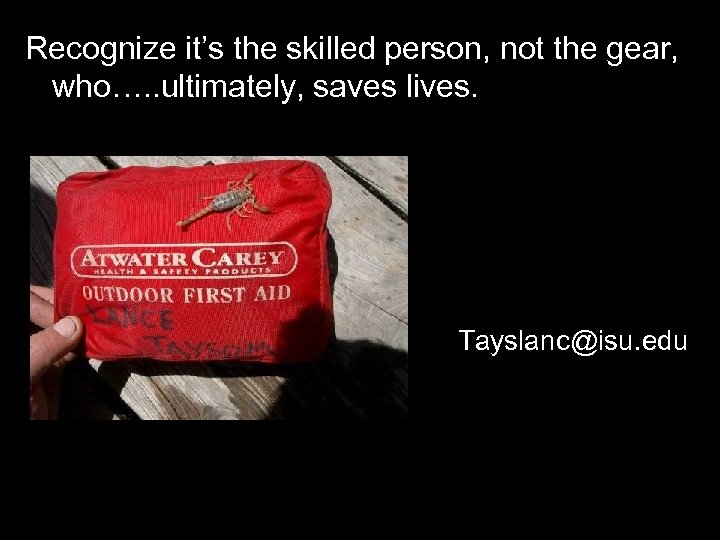 Recognize it’s the skilled person, not the gear, who…. . ultimately, saves lives. Tayslanc@isu. edu
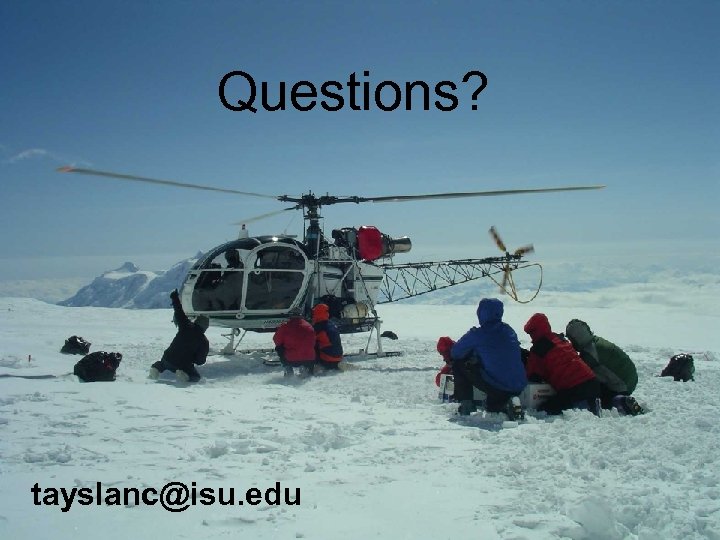 Questions? tayslanc@isu. edu
 Personal Survival Systems: v. Clothing v. Navigation v. First Aid v. Tools v. Shelter v. Fire v. Signaling v. Communication v. Water & Food v. Personal