 Скачать презентацию Surveillance and Response to Foodborne Disease Association of
0ed7ec0e4c9b607ff1a4eb4ea1f042b2.ppt
- Количество слайдов: 28



Surveillance and Response to Foodborne Disease Association of Local Public Health Associations Dr. Paul Sockett November 2004 1
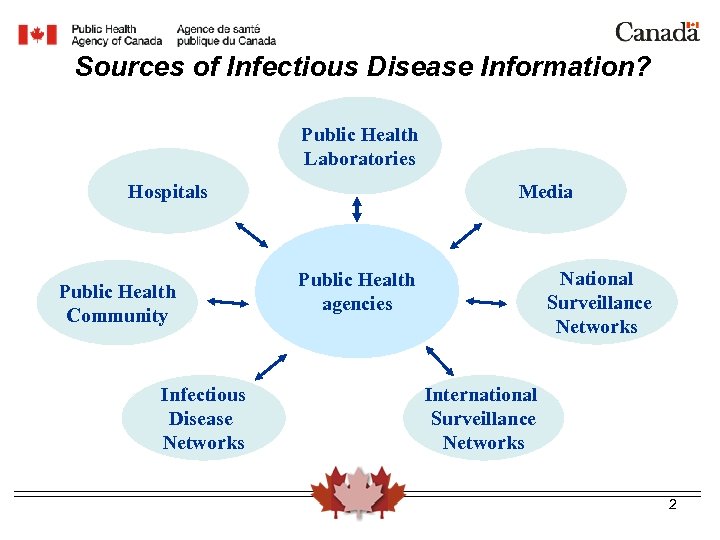
Sources of Infectious Disease Information? Public Health Laboratories Hospitals Public Health Community Infectious Disease Networks Media National Surveillance Networks Public Health agencies International Surveillance Networks 2
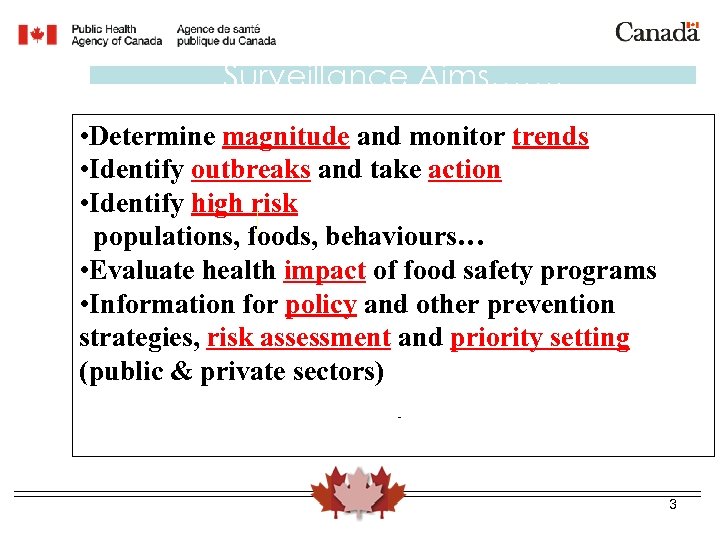
Surveillance Aims……. • Determine magnitude and monitor trends • Identify outbreaks and take action • Identify high risk populations, foods, behaviours… • Evaluate health impact of food safety programs • Information for policy and other prevention strategies, risk assessment and priority setting (public & private sectors) - 3
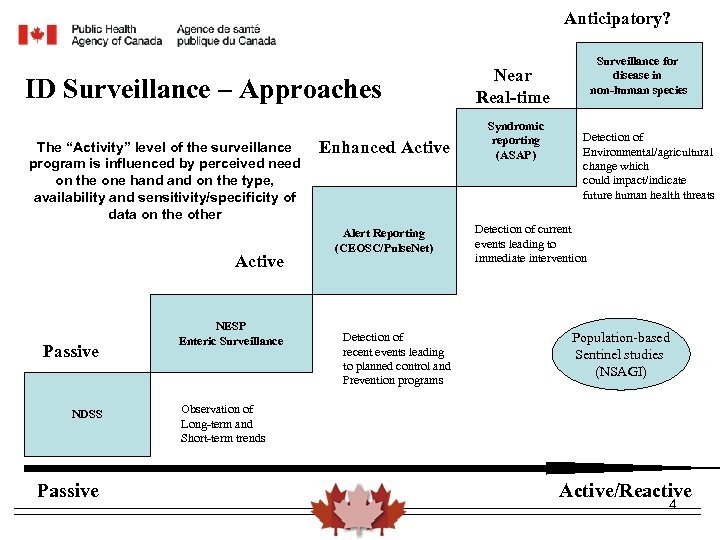
Anticipatory? ID Surveillance – Approaches The “Activity” level of the surveillance program is influenced by perceived need on the one hand on the type, availability and sensitivity/specificity of data on the other Active Passive NDSS Passive NESP Enteric Surveillance Enhanced Active Alert Reporting (CEOSC/Pulse. Net) Detection of recent events leading to planned control and Prevention programs Surveillance for disease in non-human species Near Real-time Syndromic reporting (ASAP) Detection of Environmental/agricultural change which could impact/indicate future human health threats Detection of current events leading to immediate intervention Population-based Sentinel studies (NSAGI) Observation of Long-term and Short-term trends Active/Reactive 4
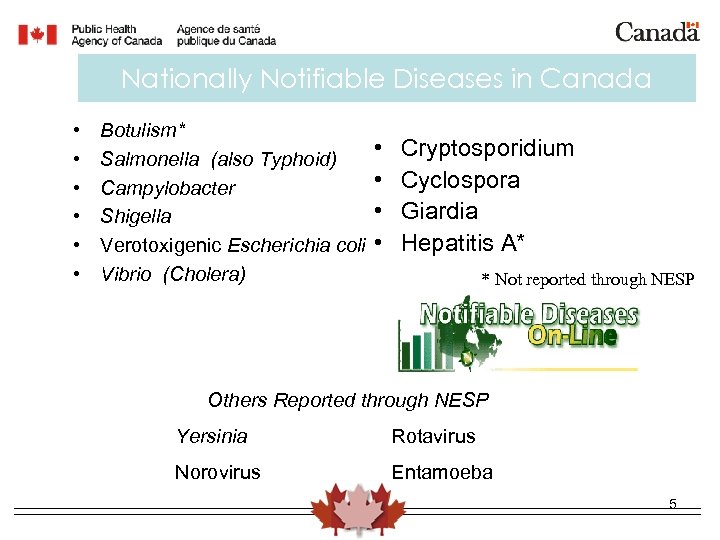
Nationally Notifiable Diseases in Canada • • • Botulism* Salmonella (also Typhoid) Campylobacter Shigella Verotoxigenic Escherichia coli Vibrio (Cholera) • • Cryptosporidium Cyclospora Giardia Hepatitis A* * Not reported through NESP Others Reported through NESP Yersinia Rotavirus Norovirus Entamoeba 5
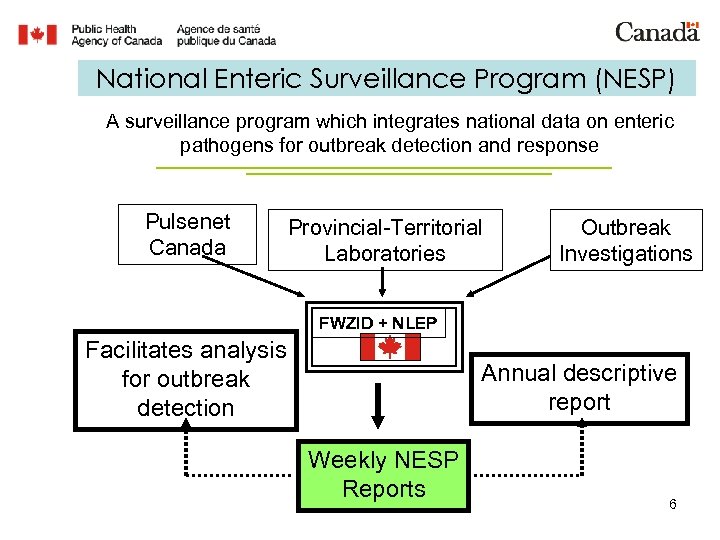
National Enteric Surveillance Program (NESP) A surveillance program which integrates national data on enteric pathogens for outbreak detection and response Pulsenet Canada Provincial-Territorial Laboratories Outbreak Investigations FWZID + NLEP Facilitates analysis for outbreak detection Annual descriptive report Weekly NESP Reports 6
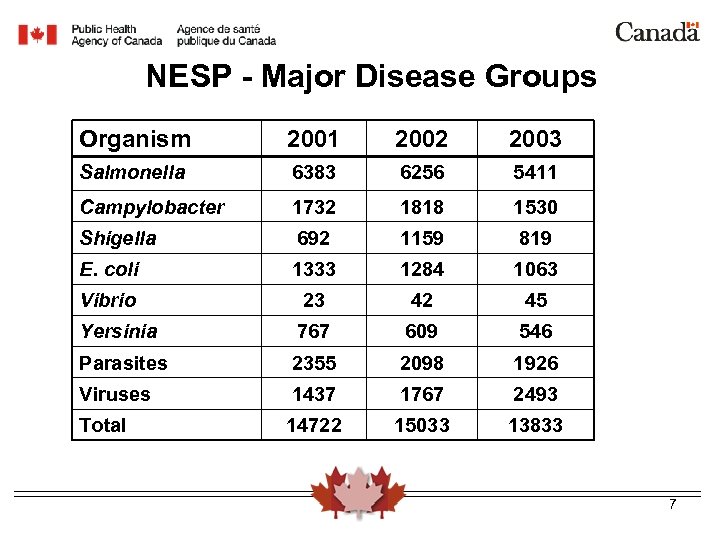
NESP - Major Disease Groups Organism 2001 2002 2003 Salmonella 6383 6256 5411 Campylobacter 1732 1818 1530 Shigella 692 1159 819 E. coli 1333 1284 1063 Vibrio 23 42 45 Yersinia 767 609 546 Parasites 2355 2098 1926 Viruses 1437 1767 2493 Total 14722 15033 13833 7
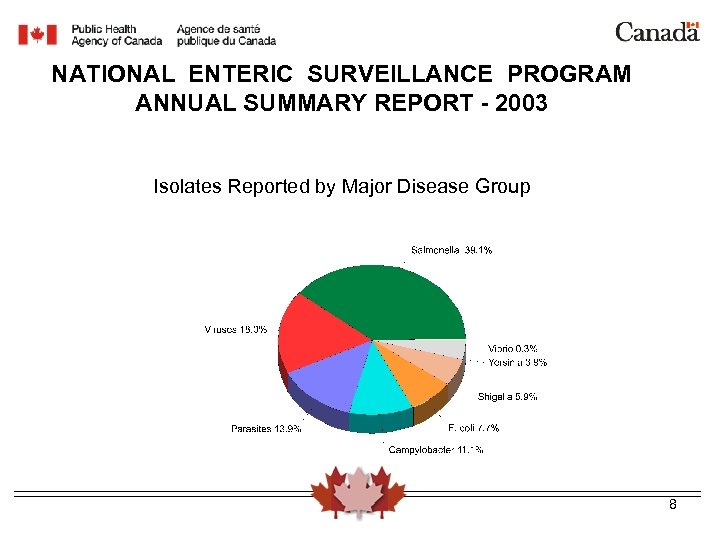
NATIONAL ENTERIC SURVEILLANCE PROGRAM ANNUAL SUMMARY REPORT - 2003 Isolates Reported by Major Disease Group 8
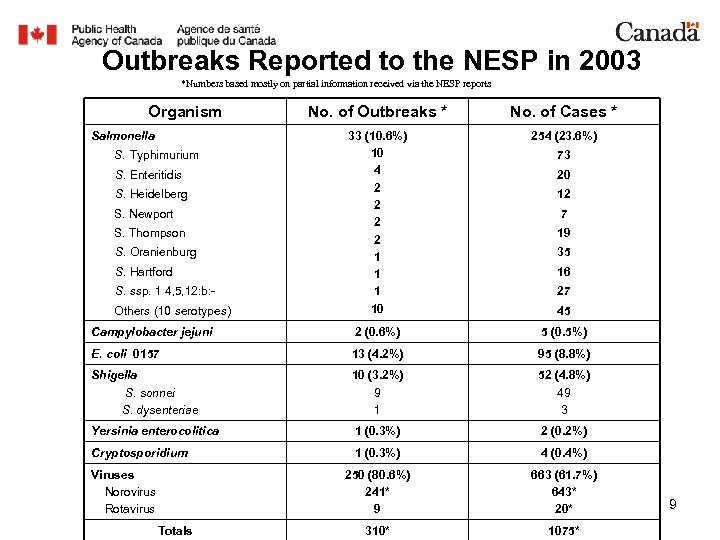
Outbreaks Reported to the NESP in 2003 *Numbers based mostly on partial information received via the NESP reports Organism No. of Outbreaks * No. of Cases * 33 (10. 6%) 10 4 2 2 1 10 254 (23. 6%) Campylobacter jejuni 2 (0. 6%) 5 (0. 5%) E. coli 0157 13 (4. 2%) 95 (8. 8%) Shigella S. sonnei S. dysenteriae 10 (3. 2%) 9 1 52 (4. 8%) 49 3 Yersinia enterocolitica 1 (0. 3%) 2 (0. 2%) Cryptosporidium 1 (0. 3%) 4 (0. 4%) 250 (80. 6%) 241* 9 663 (61. 7%) 643* 20* 310* 1075* Salmonella S. Typhimurium S. Enteritidis S. Heidelberg S. Newport S. Thompson S. Oranienburg S. Hartford S. ssp. 1 4, 5, 12: b: Others (10 serotypes) Viruses Norovirus Rotavirus Totals 73 20 12 7 19 35 16 27 45 9
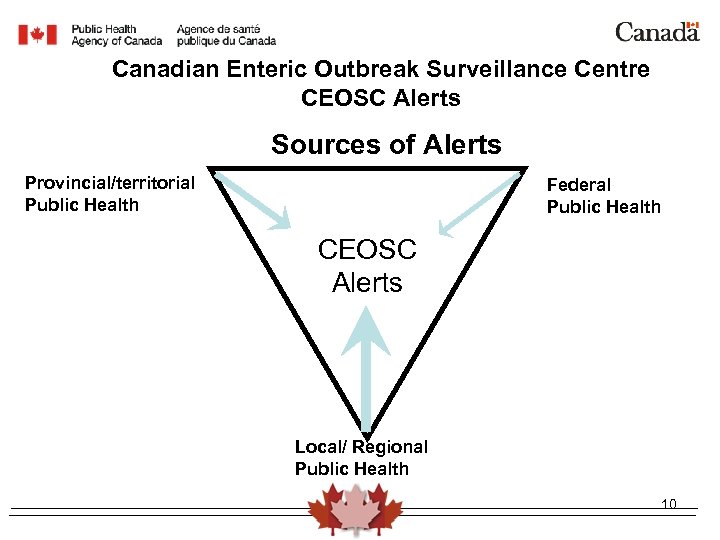
Canadian Enteric Outbreak Surveillance Centre CEOSC Alerts Sources of Alerts Provincial/territorial Public Health Federal Public Health CEOSC Alerts Local/ Regional Public Health 10
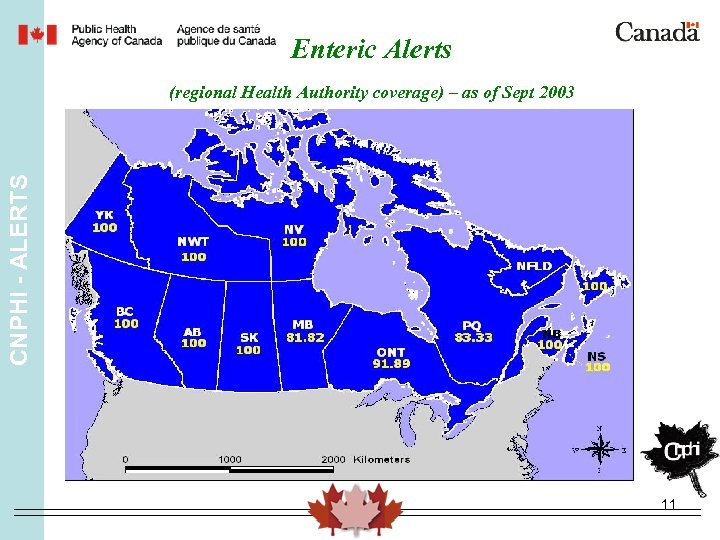
Enteric Alerts CNPHI - ALERTS (regional Health Authority coverage) – as of Sept 2003 Cnphi 11
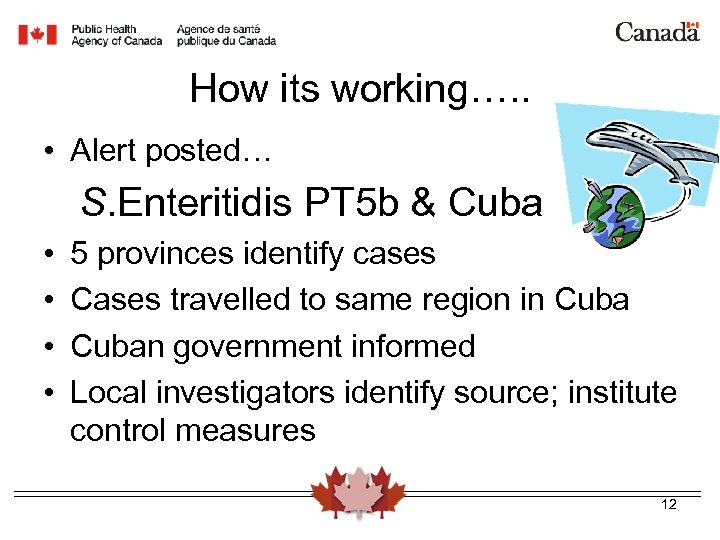
How its working…. . • Alert posted… S. Enteritidis PT 5 b & Cuba • • 5 provinces identify cases Cases travelled to same region in Cuban government informed Local investigators identify source; institute control measures 12
Pulse. Net Canada? • A co-ordinated network of laboratories for rapid exchange of molecular typing information. – 2000: Consultation meeting with partners – 2000 -1: Sharing and standardized methods – 2001: established listserv for exchanging information • Allow future real time surveillance • Employs single IT platform: Bionumerics 13
Pulse Net National and International Harmonization • Standardized database allow interchange with – Pulse. Net US : established in 1995 for E. coli – Pulse. Net Europe: 2003 – Pulse. Net Central Asia: 2003 – Pulse. Net South America: 2004 14
A. S. A. P. Alternative Surveillance Alert Project Community surveillance of gastroenteritis based on over-the-counter sales of anti-diarrheal and antinausea medications • To reduce impact of a severe and sudden introduction of an infectious agent in the community by facilitating rapid outbreak detection • Applications to other disease syndromes, including respiratory, dermatological, etc… 15
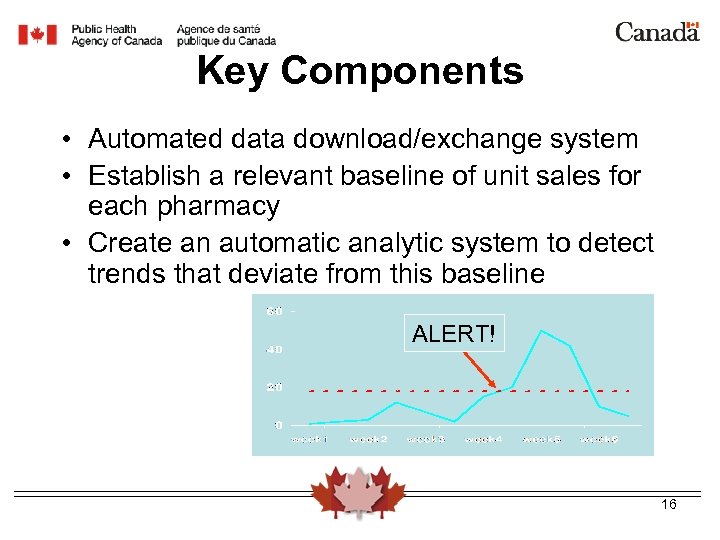
Key Components • Automated data download/exchange system • Establish a relevant baseline of unit sales for each pharmacy • Create an automatic analytic system to detect trends that deviate from this baseline ALERT! 16
Information Sources (Foodborne Diseases) International • Global Public Health Intelligence Network (GPHIN) • PROMED • Enter. Net (Europe plus) • WHO Outbreak Verification List • Pulse. Net 17
European Enteric Disease Network (Enter Net) • Established international network • EU and non EU European countries & linked to: – Canada and USA – Australia and New Zealand – Japan • Focused on Surveillance and Epidemiological research (Salmonella and VTEC) • Regular sharing of standardised data and alert mechanism 18
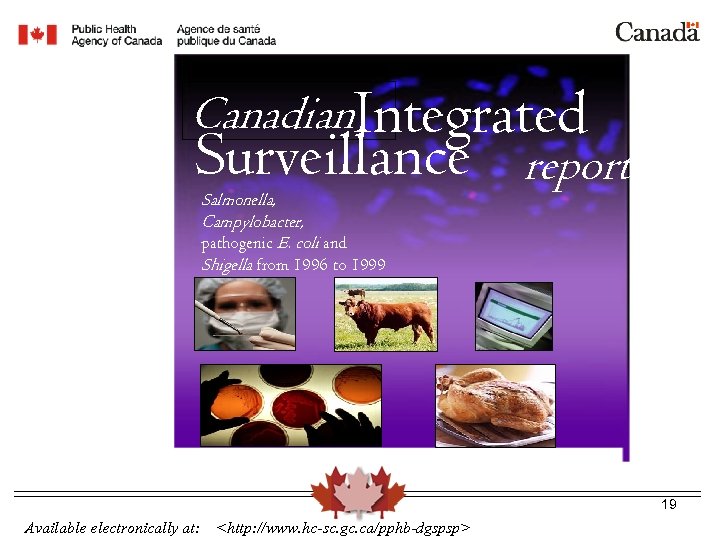
Canadian. Integrated Surveillance report Salmonella, Campylobacter, pathogenic E. coli and Shigella from 1996 to 1999 19 Available electronically at: <http: //www. hc-sc. gc. ca/pphb-dgspsp>
Health Canada Food Safety Program Integrated Surveillance Report • Salmonella, Campylobacter, pathogenic E. coli, Shigella: 1996 -1999 • Multiple data sources relating to human and animal disease • Focus: disease trends over time comparison of geographic distributions comparison of data from different sources comparison of disease trends in humans and animal species 20
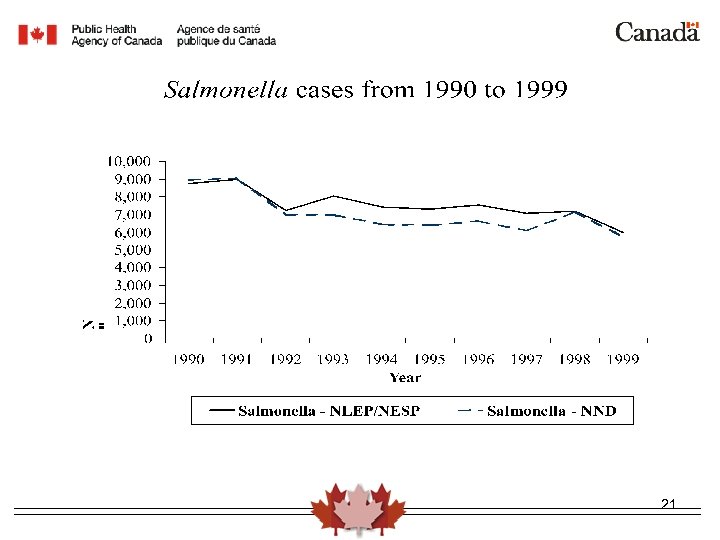
21
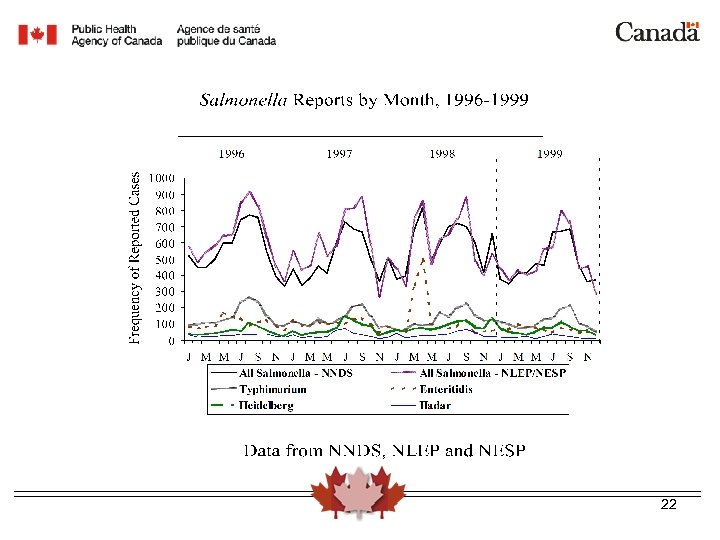
22
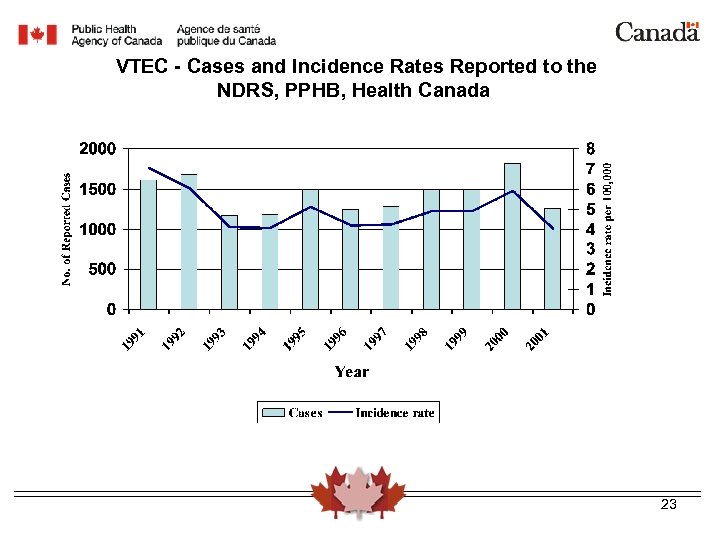
VTEC - Cases and Incidence Rates Reported to the NDRS, PPHB, Health Canada 23
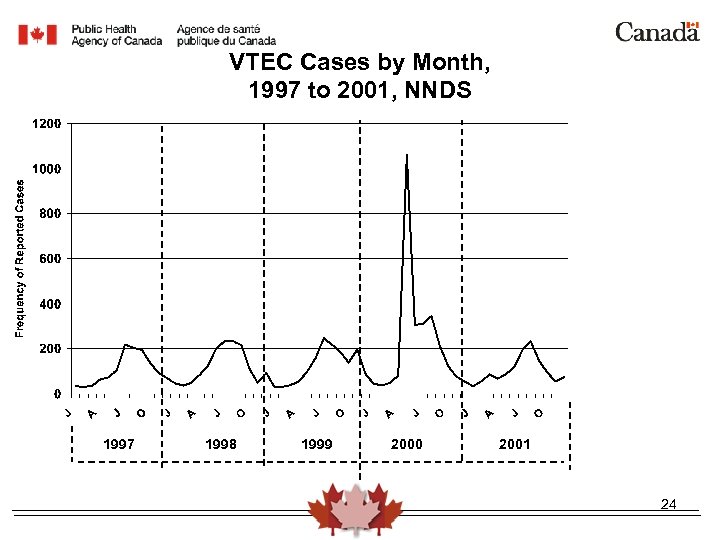
VTEC Cases by Month, 1997 to 2001, NNDS 1997 1998 1999 2000 2001 24
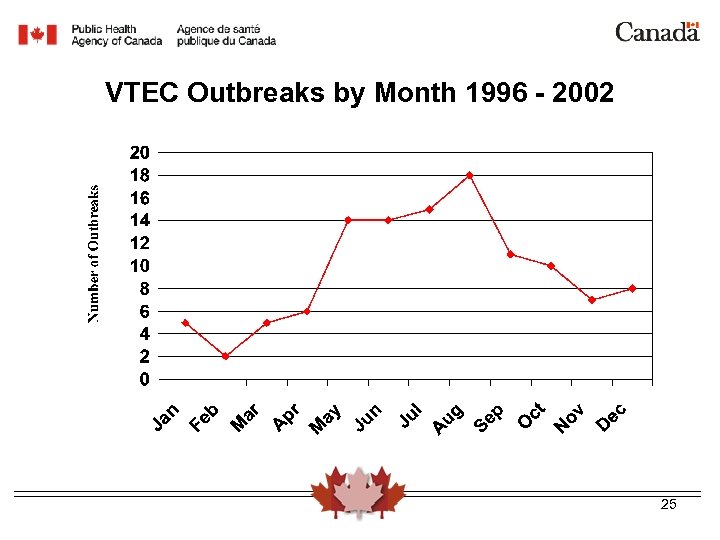
VTEC Outbreaks by Month 1996 - 2002 25
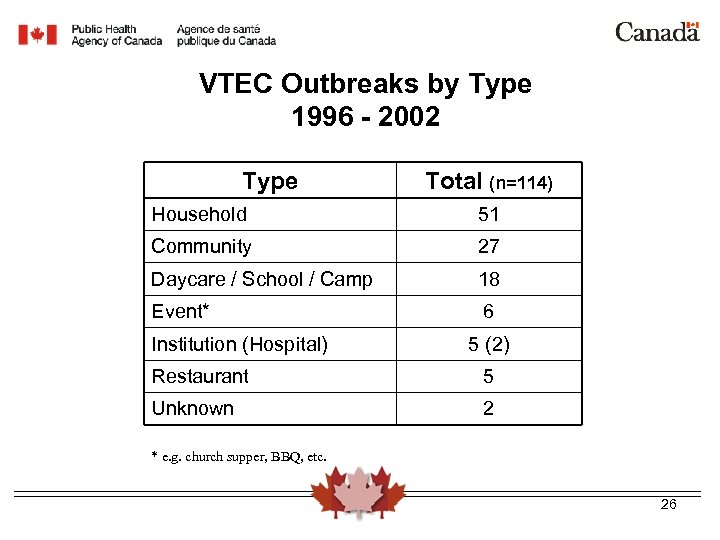
VTEC Outbreaks by Type 1996 - 2002 Type Total (n=114) Household 51 Community 27 Daycare / School / Camp 18 Event* 6 Institution (Hospital) 5 (2) Restaurant 5 Unknown 2 * e. g. church supper, BBQ, etc. 26
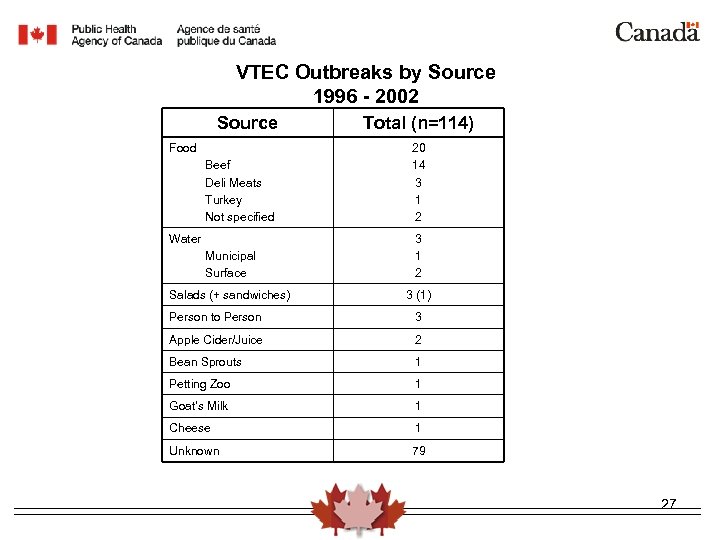
VTEC Outbreaks by Source 1996 - 2002 Source Food Total (n=114) Beef Deli Meats Turkey Not specified 20 14 3 1 2 Municipal Surface 3 1 2 Salads (+ sandwiches) 3 (1) Water Person to Person 3 Apple Cider/Juice 2 Bean Sprouts 1 Petting Zoo 1 Goat’s Milk 1 Cheese 1 Unknown 79 27
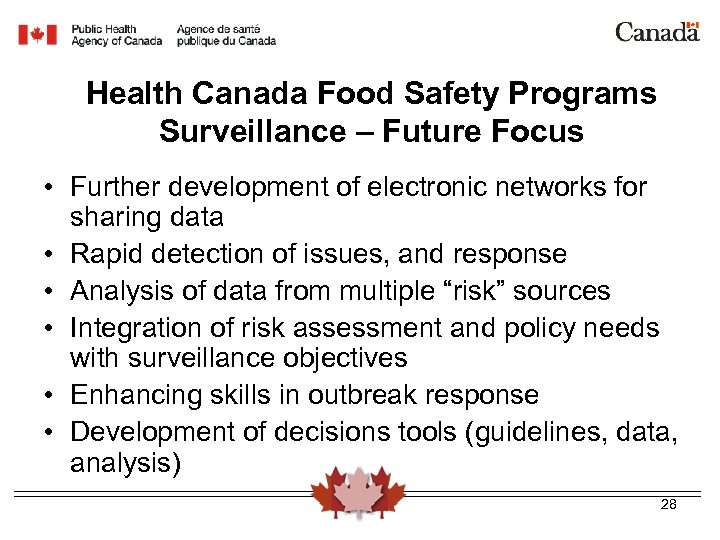
Health Canada Food Safety Programs Surveillance – Future Focus • Further development of electronic networks for sharing data • Rapid detection of issues, and response • Analysis of data from multiple “risk” sources • Integration of risk assessment and policy needs with surveillance objectives • Enhancing skills in outbreak response • Development of decisions tools (guidelines, data, analysis) 28
Скачать презентацию Surveillance and Response to Foodborne Disease Association of
0ed7ec0e4c9b607ff1a4eb4ea1f042b2.ppt