 Скачать презентацию Surgical Planning Laboratory Brigham and Women s Hospital Boston
d9247cc8596c82575953dbc8447660a2.ppt
- Количество слайдов: 37



Surgical Planning Laboratory Brigham and Women’s Hospital Boston, Massachusetts USA a teaching affiliate of Harvard Medical School Open Source Concepts in Image Guided Therapy • Ron Kikinis, M. D. , • Professor of Radiology, Harvard Medical School, Director, Surgical Planning Laboratory, Brigham and Women’s Hospital Founding Director, Surgical Planning Laboratory, Brigham and Women’s Hospital Principal Investigator, the National Alliance for Medical Image Computing, and the Neuroimage Analysis Center Research Director, National Center for Image Guided Therapy
Acknowledgments • F. Jolesz, C. Tempany, P. Black, S. Wells, CF. Westin, M. Halle, S. Pieper, N. Hata, T. Kapur, A. Tannenbaum, M. Shenton, E. Grimson, P. Golland, W. Schroeder, and many more…. © 2007 Surgical Planning Laboratory, ARR Slide 2
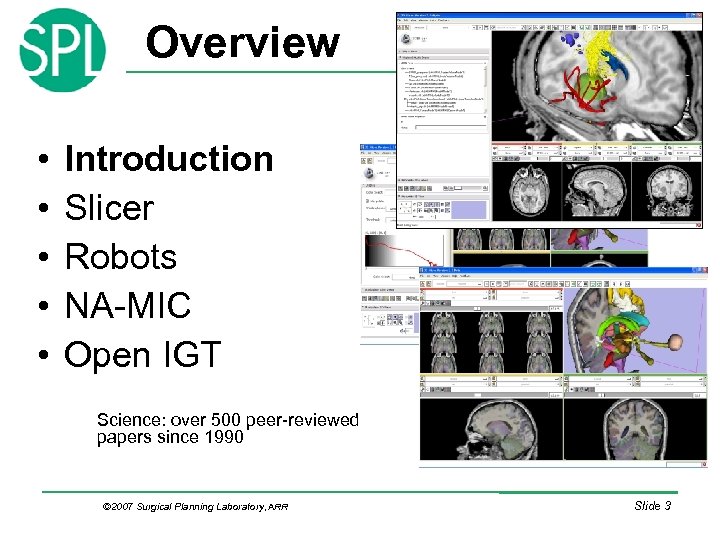
Overview • • • Introduction Slicer Robots NA-MIC Open IGT Science: over 500 peer-reviewed papers since 1990 © 2007 Surgical Planning Laboratory, ARR Slide 3
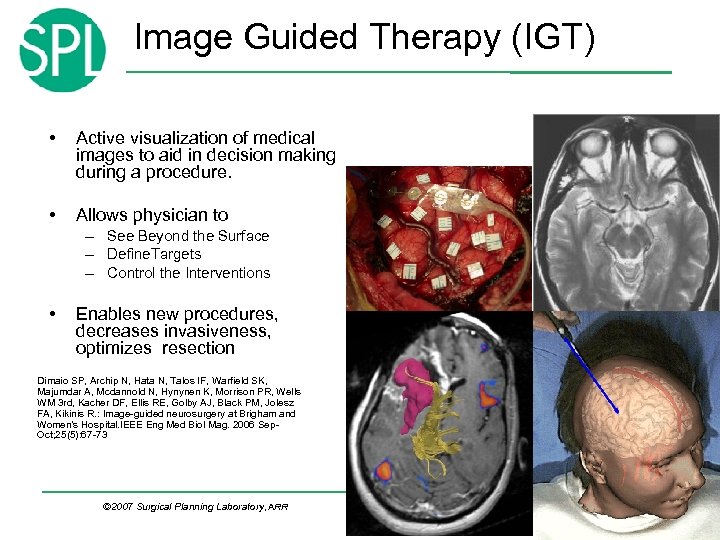
Image Guided Therapy (IGT) • Active visualization of medical images to aid in decision making during a procedure. • Allows physician to – See Beyond the Surface – Define. Targets – Control the Interventions • Enables new procedures, decreases invasiveness, optimizes resection Dimaio SP, Archip N, Hata N, Talos IF, Warfield SK, Majumdar A, Mcdannold N, Hynynen K, Morrison PR, Wells WM 3 rd, Kacher DF, Ellis RE, Golby AJ, Black PM, Jolesz FA, Kikinis R. : Image-guided neurosurgery at Brigham and Women's Hospital. IEEE Eng Med Biol Mag. 2006 Sep. Oct; 25(5): 67 -73 © 2007 Surgical Planning Laboratory, ARR Slide 4
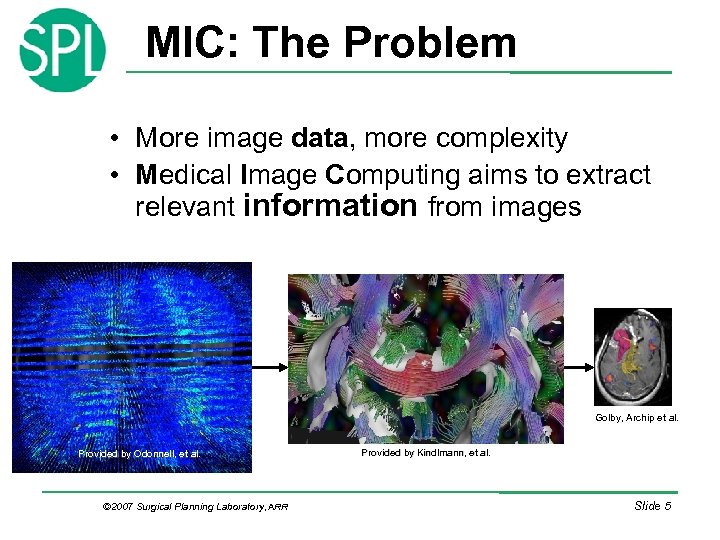
MIC: The Problem • More image data, more complexity • Medical Image Computing aims to extract relevant information from images Golby, Archip et al. Provided by Odonnell, et al. © 2007 Surgical Planning Laboratory, ARR Provided by Kindlmann, et al. Kindlmann, Slide 5
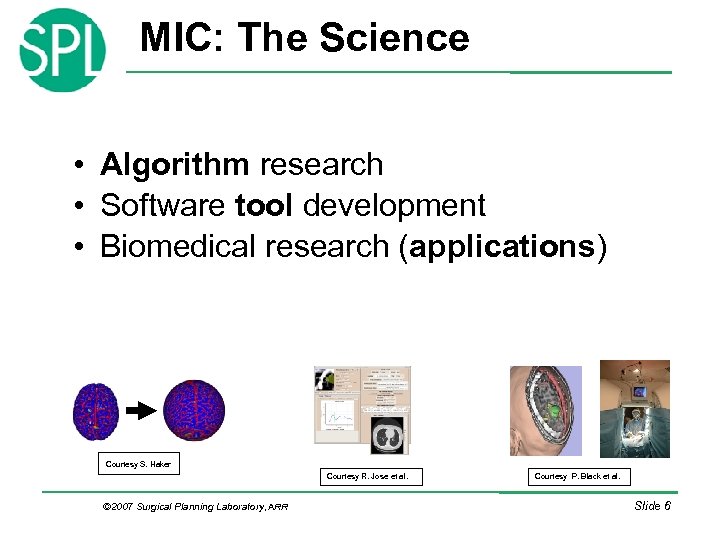
MIC: The Science • Algorithm research • Software tool development • Biomedical research (applications) Courtesy S. Haker Courtesy R. Jose et al. © 2007 Surgical Planning Laboratory, ARR Courtesy P. Black et al. Slide 6
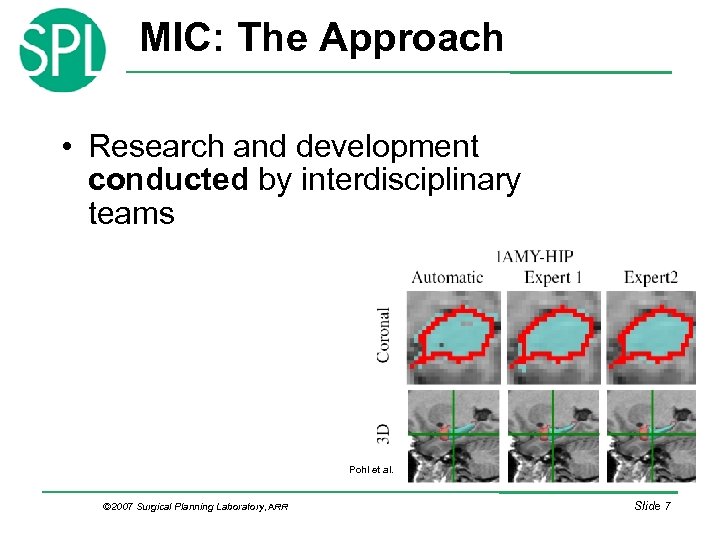
MIC: The Approach • Research and development conducted by interdisciplinary teams Pohl et al. © 2007 Surgical Planning Laboratory, ARR Slide 7
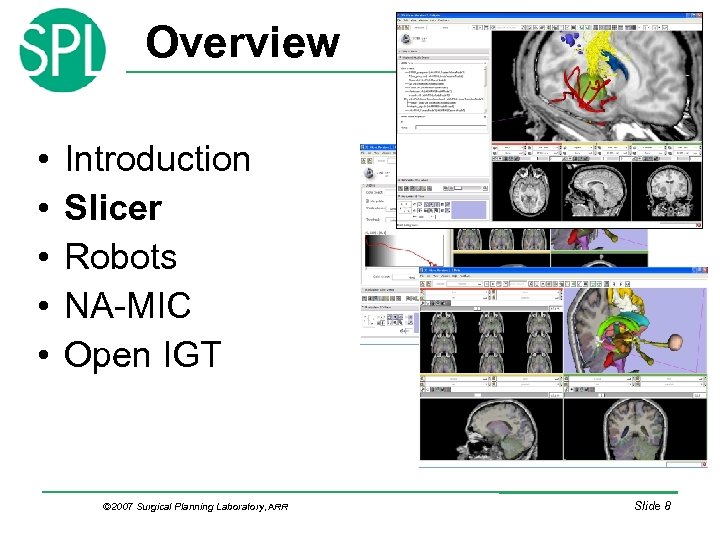
Overview • • • Introduction Slicer Robots NA-MIC Open IGT © 2007 Surgical Planning Laboratory, ARR Slide 8
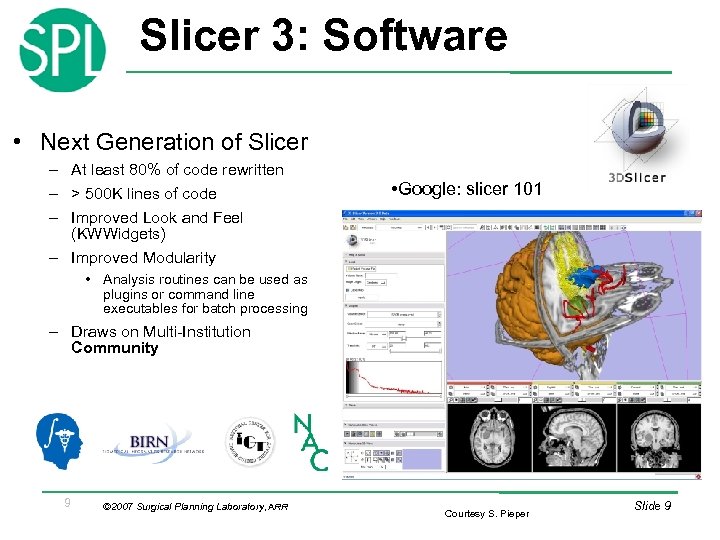
Slicer 3: Software • Next Generation of Slicer – At least 80% of code rewritten – > 500 K lines of code – Improved Look and Feel (KWWidgets) – Improved Modularity • Google: slicer 101 • Analysis routines can be used as plugins or command line executables for batch processing – Draws on Multi-Institution Community 9 © 2007 Surgical Planning Laboratory, ARR Courtesy S. Pieper Slide 9
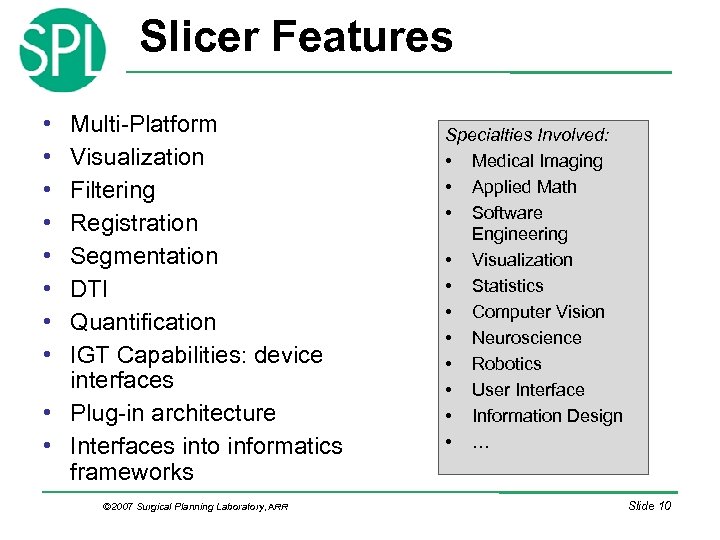
Slicer Features • • Multi-Platform Visualization Filtering Registration Segmentation DTI Quantification IGT Capabilities: device interfaces • Plug-in architecture • Interfaces into informatics frameworks © 2007 Surgical Planning Laboratory, ARR Specialties Involved: • Medical Imaging • Applied Math • Software Engineering • Visualization • Statistics • Computer Vision • Neuroscience • Robotics • User Interface • Information Design • … Slide 10
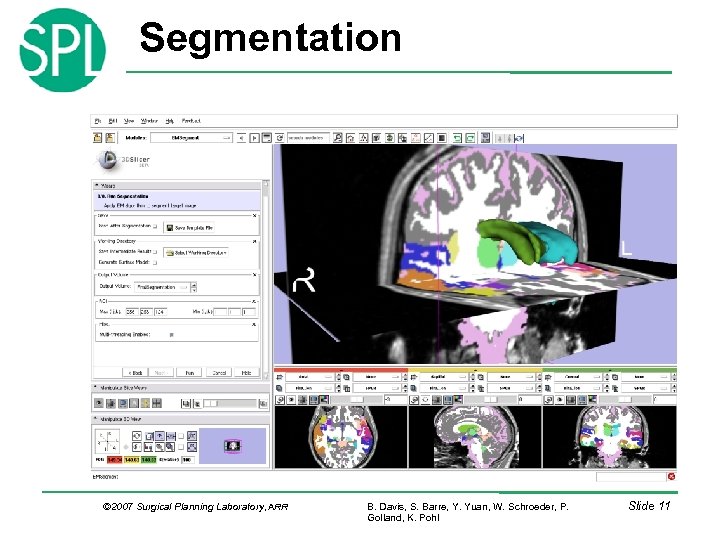
Segmentation © 2007 Surgical Planning Laboratory, ARR B. Davis, S. Barre, Y. Yuan, W. Schroeder, P. Golland, K. Pohl Slide 11
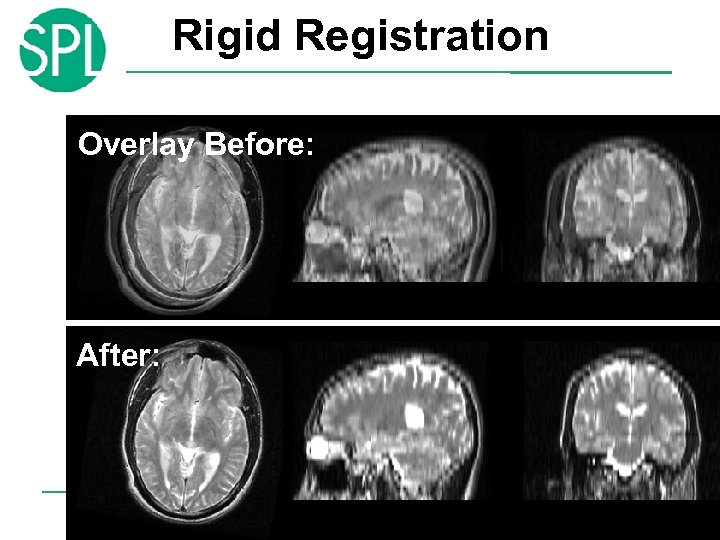
Rigid Registration Overlay Before: After: © 2007 Surgical Planning Laboratory, ARR Slide 12
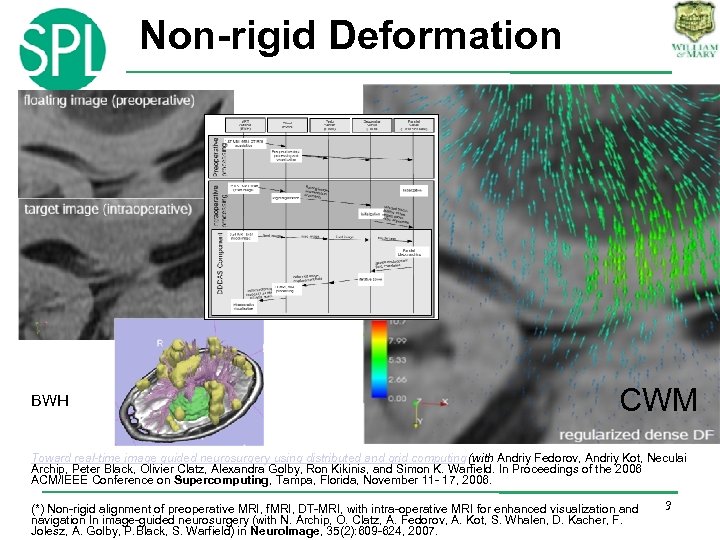
Non-rigid Deformation BWH CWM Toward real-time image guided neurosurgery using distributed and grid computing (with Andriy Fedorov, Andriy Kot, Neculai Archip, Peter Black, Olivier Clatz, Alexandra Golby, Ron Kikinis, and Simon K. Warfield. In Proceedings of the 2006 ACM/IEEE Conference on Supercomputing, Tampa, Florida, November 11 - 17, 2006. Slide 13 © 2007 Surgical Planning Laboratory, ARR (*) Non-rigid alignment of preoperative MRI, f. MRI, DT-MRI, with intra-operative MRI for enhanced visualization and navigation In image-guided neurosurgery (with N. Archip, O. Clatz, A. Fedorov, A. Kot, S. Whalen, D. Kacher, F. Jolesz, A. Golby, P. Black, S. Warfield) in Neuro. Image, 35(2): 609 -624, 2007.
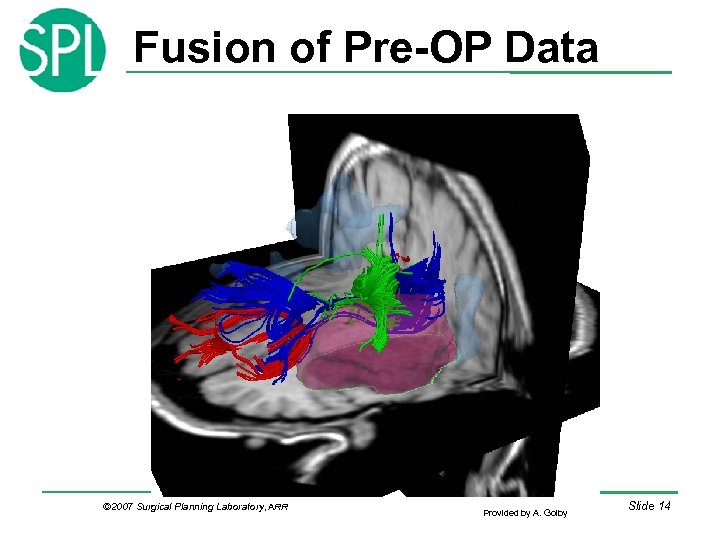
Fusion of Pre-OP Data © 2007 Surgical Planning Laboratory, ARR Provided by A. Golby Slide 14
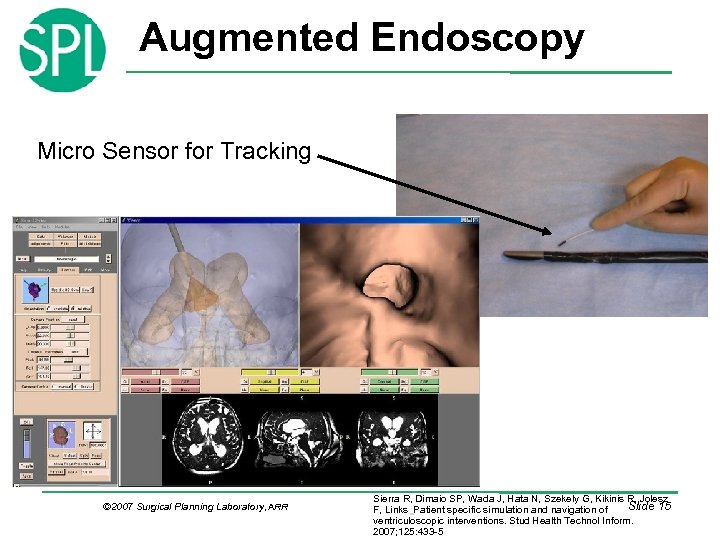
Augmented Endoscopy Micro Sensor for Tracking © 2007 Surgical Planning Laboratory, ARR Sierra R, Dimaio SP, Wada J, Hata N, Szekely G, Kikinis R, Jolesz Slide 15 F, Links Patient specific simulation and navigation of ventriculoscopic interventions. Stud Health Technol Inform. 2007; 125: 433 -5
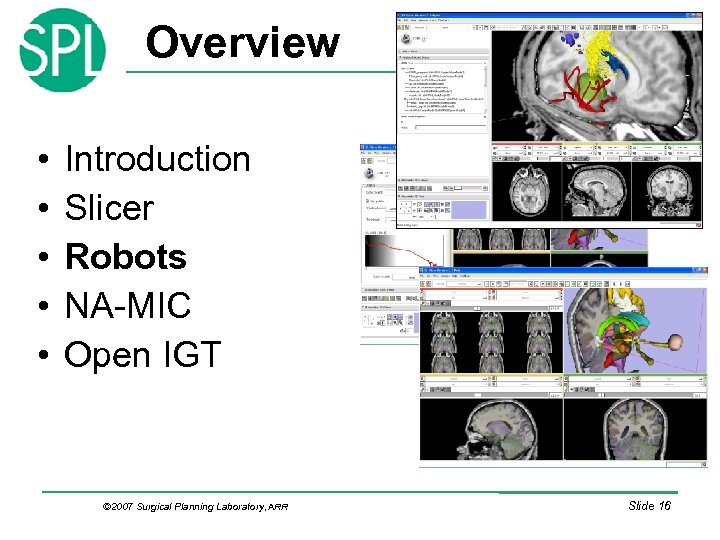
Overview • • • Introduction Slicer Robots NA-MIC Open IGT © 2007 Surgical Planning Laboratory, ARR Slide 16
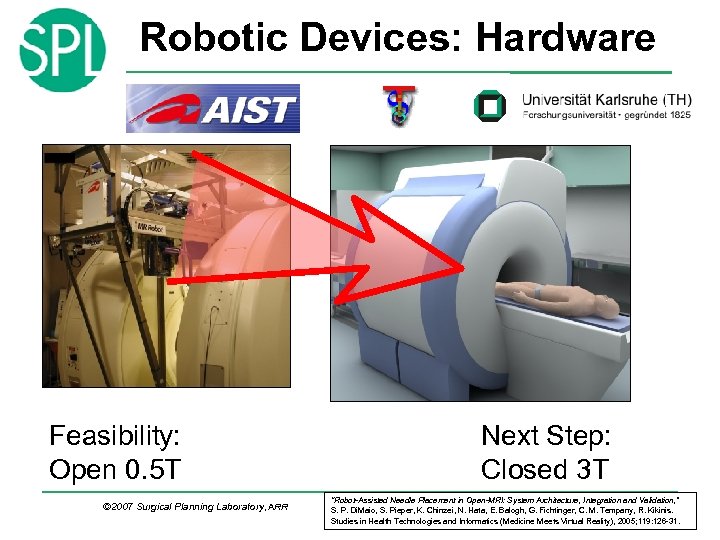
Robotic Devices: Hardware Feasibility: Open 0. 5 T © 2007 Surgical Planning Laboratory, ARR Next Step: Closed 3 T “Robot-Assisted Needle Placement in Open-MRI: System Architecture, Integration and Validation, ” Slide 17 S. P. Di. Maio, S. Pieper, K. Chinzei, N. Hata, E. Balogh, G. Fichtinger, C. M. Tempany, R. Kikinis. Studies in Health Technologies and Informatics (Medicine Meets Virtual Reality), 2005; 119: 126 -31.
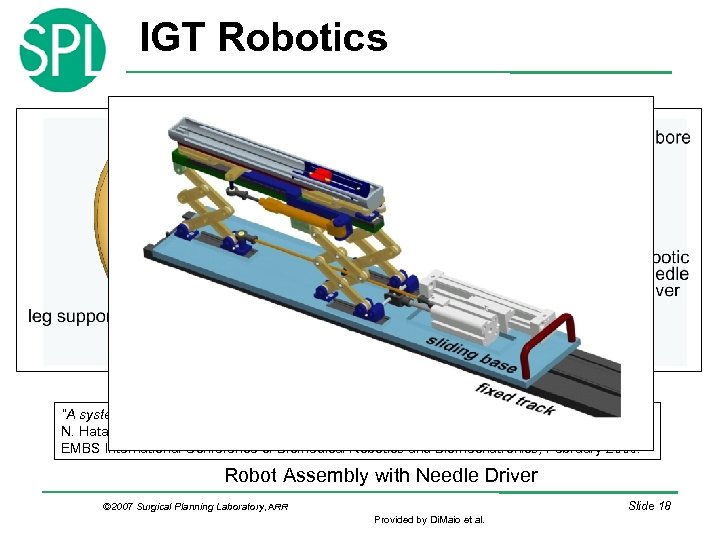
IGT Robotics “A system for MRI-guided Prostate Interventions, ” S. P. Di. Maio, G. S. Fischer, S. J. Haker, N. Hata, I. Iordachita, C. M. Tempany, R. Kikinis, G. Fichtinger. Proceedings of IEEE / RASEMBS International Conference of Biomedical Robotics and Biomechatronics, February 2006. Robot Assembly with Needle Driver Slide 18 © 2007 Surgical Planning Laboratory, ARR Provided by Di. Maio et al.
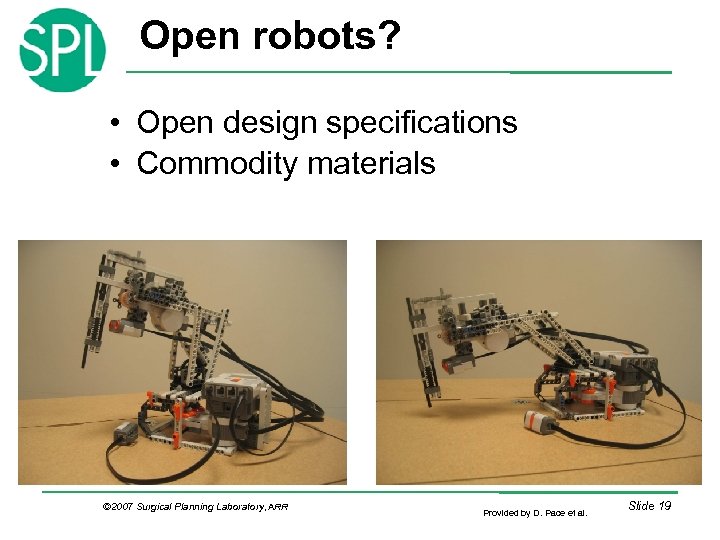
Open robots? • Open design specifications • Commodity materials © 2007 Surgical Planning Laboratory, ARR Provided by D. Pace et al. Slide 19
Overview • • • Introduction Slicer Robots NA-MIC Open IGT © 2007 Surgical Planning Laboratory, ARR Slide 20
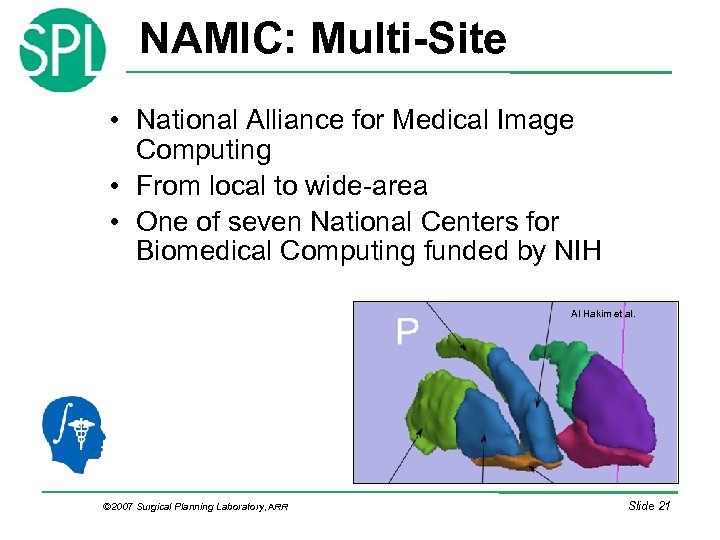
NAMIC: Multi-Site • National Alliance for Medical Image Computing • From local to wide-area • One of seven National Centers for Biomedical Computing funded by NIH Al Hakim et al. © 2007 Surgical Planning Laboratory, ARR Slide 21
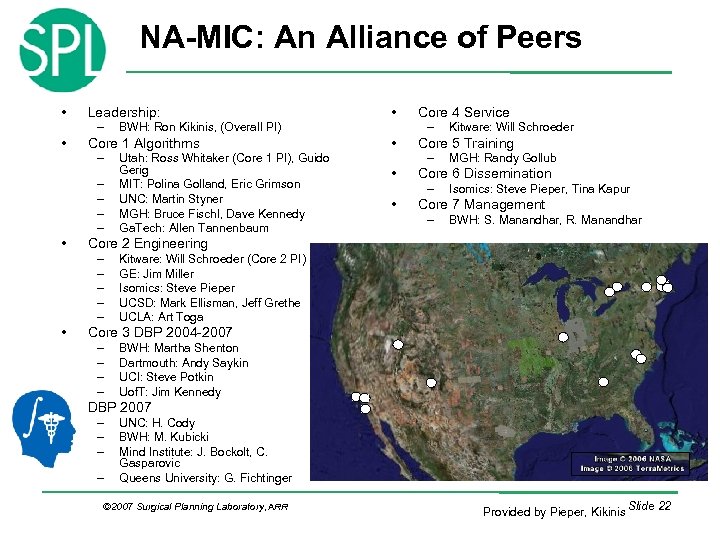
NA-MIC: An Alliance of Peers • Leadership: – • Core 1 Algorithms – – – • Core 5 Training – • MGH: Randy Gollub Core 6 Dissemination – • Kitware: Will Schroeder Isomics: Steve Pieper, Tina Kapur Core 7 Management – BWH: S. Manandhar, R. Manandhar Kitware: Will Schroeder (Core 2 PI) GE: Jim Miller Isomics: Steve Pieper UCSD: Mark Ellisman, Jeff Grethe UCLA: Art Toga Core 3 DBP 2004 -2007 – – • Utah: Ross Whitaker (Core 1 PI), Guido Gerig MIT: Polina Golland, Eric Grimson UNC: Martin Styner MGH: Bruce Fischl, Dave Kennedy Ga. Tech: Allen Tannenbaum Core 4 Service Core 2 Engineering – – – • • BWH: Ron Kikinis, (Overall PI) BWH: Martha Shenton Dartmouth: Andy Saykin UCI: Steve Potkin Uof. T: Jim Kennedy DBP 2007 – – UNC: H. Cody BWH: M. Kubicki Mind Institute: J. Bockolt, C. Gasparovic Queens University: G. Fichtinger © 2007 Surgical Planning Laboratory, ARR Provided by Pieper, Kikinis Slide 22
NA-MIC is “Big Science” • Plus – “Big Science” can be a force multiplier – Development and adoption of best practices – Faster and higher-quality dissemination of new techniques and of new science • Minus – Change in culture needed: • Replace: – “My research” with – “Our research” © 2007 Surgical Planning Laboratory, ARR Slide 23
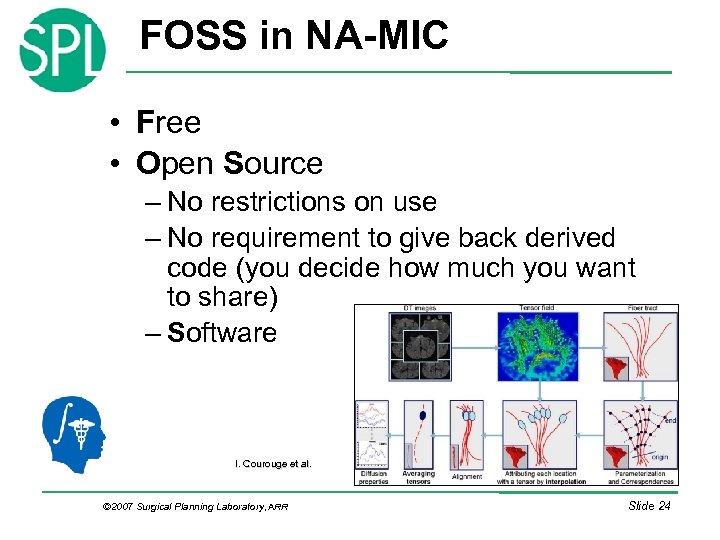
FOSS in NA-MIC • Free • Open Source – No restrictions on use – No requirement to give back derived code (you decide how much you want to share) – Software I. Courouge et al. © 2007 Surgical Planning Laboratory, ARR Slide 24
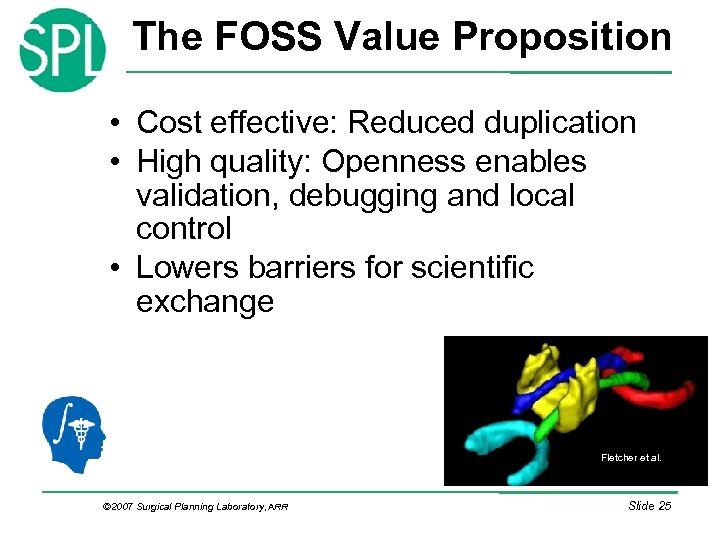
The FOSS Value Proposition • Cost effective: Reduced duplication • High quality: Openness enables validation, debugging and local control • Lowers barriers for scientific exchange Fletcher et al. © 2007 Surgical Planning Laboratory, ARR Slide 25
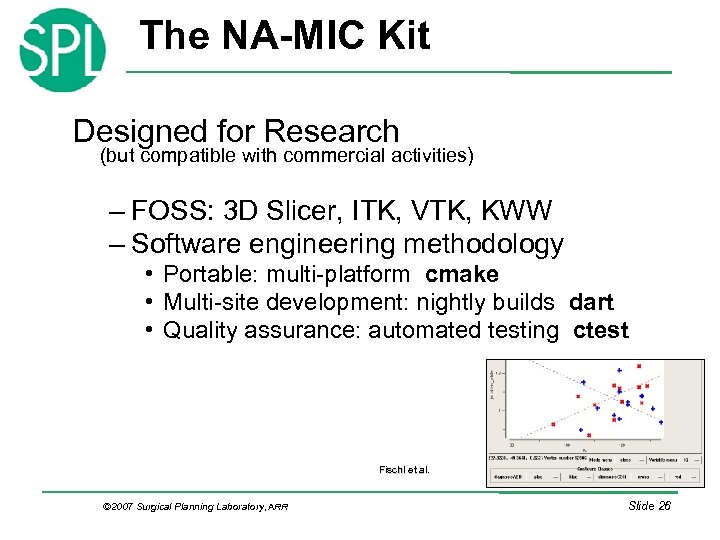
The NA-MIC Kit Designed for Research (but compatible with commercial activities) – FOSS: 3 D Slicer, ITK, VTK, KWW – Software engineering methodology • Portable: multi-platform cmake • Multi-site development: nightly builds dart • Quality assurance: automated testing ctest Fischl et al. © 2007 Surgical Planning Laboratory, ARR Slide 26
FOSS and Commercial Use • Value-added commercialization is the proper mechanism for clinical use of open research results • BSD style licenses are fully compatible with commercial use • Automated testing and multi-platform support lower the threshold for the translational work © 2007 Surgical Planning Laboratory, ARR Slide 27
Overview • • • Introduction Slicer Robots NA-MIC Open IGT © 2007 Surgical Planning Laboratory, ARR Slide 28
NCIGT • NIH funded National Center for Image Guided Therapy • Leverages NA-MIC software platform • Open Concepts in IGT: where appropriate © 2007 Surgical Planning Laboratory, ARR Slide 29
The Two Worlds of IGT • Clinical devices – Government regulated (for protection of patients) 1. “Freeze” the procedure and devices 2. Characterize/test behavior 3. Document • Research devices – Regulated through local research protocols Siemens 1. Frequent modifications 2. Characterization/testing is an afterthought 3. Documentation is always behind © 2007 Surgical Planning Laboratory, ARR Slide 30
Types of IGT Research 1. Testing of devices provided by commercial vendors • Performed in a clinical environment 2. Developing new devices • Requires dedicated research time and dedicated personnel © 2007 Surgical Planning Laboratory, ARR Slide 31
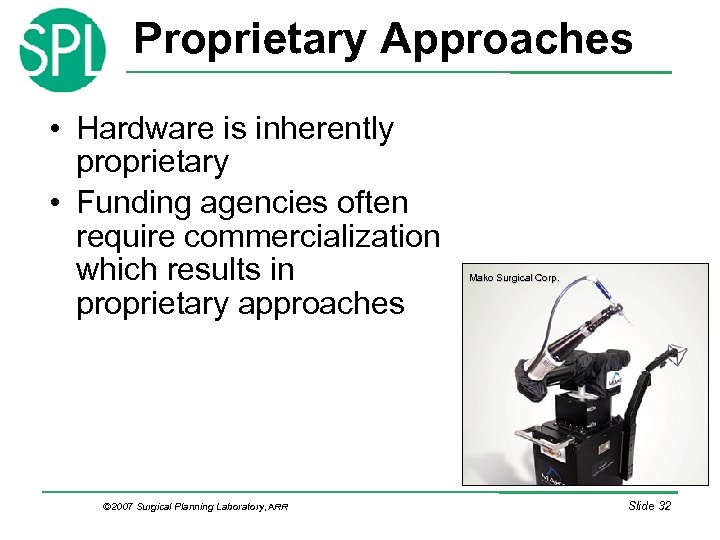
Proprietary Approaches • Hardware is inherently proprietary • Funding agencies often require commercialization which results in proprietary approaches © 2007 Surgical Planning Laboratory, ARR Mako Surgical Corp. Slide 32
Consequences • Proprietary software and hardware – Scientific exchange is more difficult – Leveraging the work of others becomes more difficult – Locks researchers to the vendor • Consequence: Graduate students are forced to duplicate work by others © 2007 Surgical Planning Laboratory, ARR Slide 33
Lessons learned • Open science concepts for devices – Open interfaces – Open designs – Increased reliance on commodity technology © 2007 Surgical Planning Laboratory, ARR Slide 34
Open Interfaces • USB keys are an excellent example for a successful hardware/software standard: – Devices available from different vendors – Same device works on different computers with a variety of operating systems • Opentracker and IGSTK are emerging BSD licensed packages that provide open interfaces to proprietary tracking systems © 2007 Surgical Planning Laboratory, ARR Slide 35
Open IGT for Research • Free Open Source Software – NA-MIC methodology allows multi-party development and quality assurance – Potential to bridge the gap between research and clinical devices • Open Standards for Hardware interfaces – Computer industry offers good templates: Standardization through ACM and IEEE • Open Designs for Research Hardware (remember the Lego robot? ) © 2007 Surgical Planning Laboratory, ARR Slide 36
Thank You! For more information: http: //www. spl. harvard. edu http: //www. ncigt. org http: //www. na-mic. org © 2007 Surgical Planning Laboratory, ARR Slide 37
Скачать презентацию Surgical Planning Laboratory Brigham and Women s Hospital Boston
d9247cc8596c82575953dbc8447660a2.ppt