 Скачать презентацию Supporting the Use of Web-based Materials by PGCE
26103361a936a094eaec0f9a01df46a8.ppt
- Количество слайдов: 19



Supporting the Use of Web-based Materials by PGCE Secondary Science Students John Twidle (Loughborough University) Ann Childs (The University of Oxford) Molly Dussart (Canterbury Christ Church University College) Janet Godwin (The Nottingham Trent University) Peter Sorensen (The University of Nottingham)
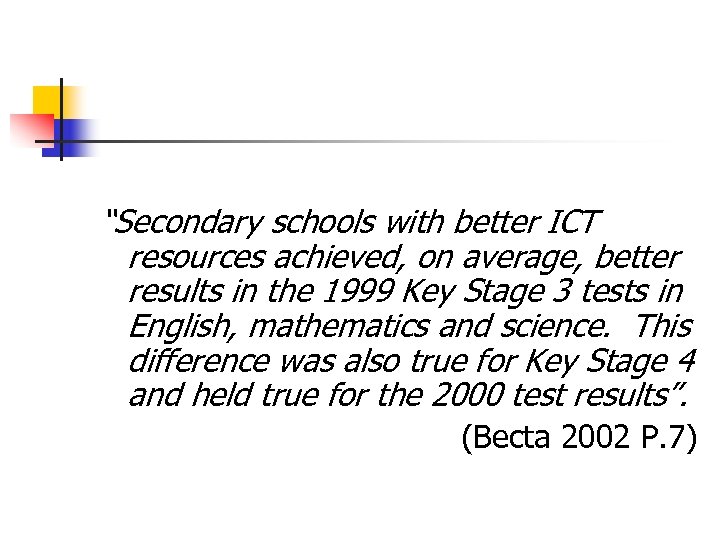
“Secondary schools with better ICT resources achieved, on average, better results in the 1999 Key Stage 3 tests in English, mathematics and science. This difference was also true for Key Stage 4 and held true for the 2000 test results”. (Becta 2002 P. 7)
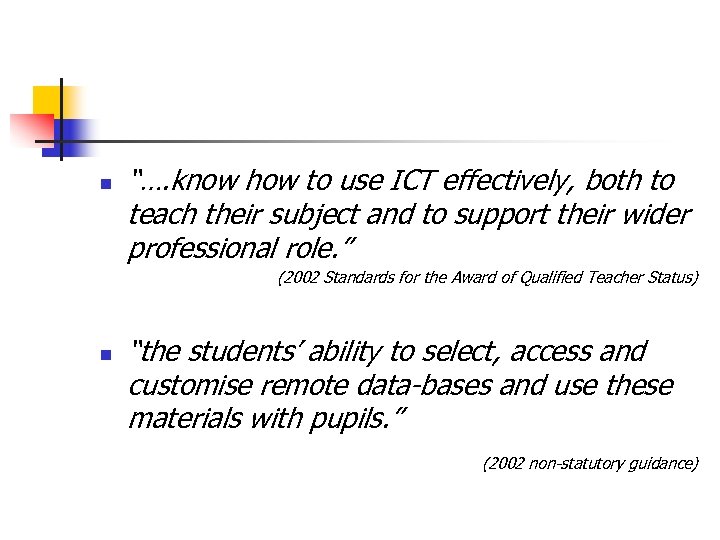
n “…. know how to use ICT effectively, both to teach their subject and to support their wider professional role. ” (2002 Standards for the Award of Qualified Teacher Status) n “the students’ ability to select, access and customise remote data-bases and use these materials with pupils. ” (2002 non-statutory guidance)
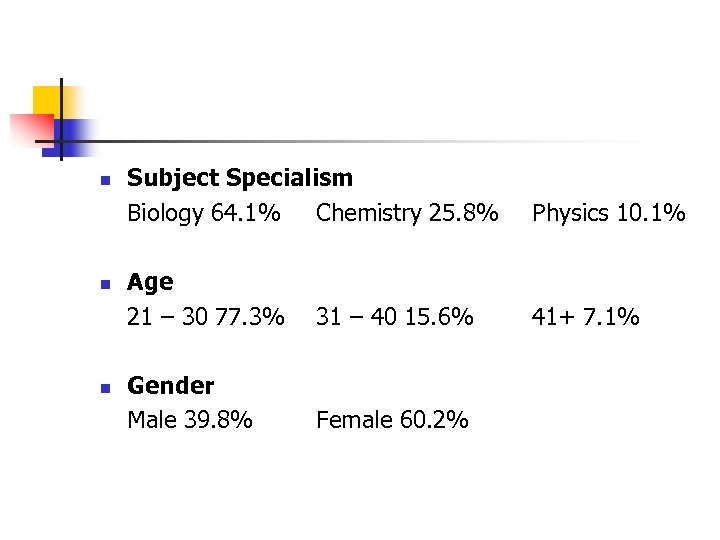
n n n Subject Specialism Biology 64. 1% Chemistry 25. 8% Physics 10. 1% Age 21 – 30 77. 3% 31 – 40 15. 6% 41+ 7. 1% Gender Male 39. 8% Female 60. 2%
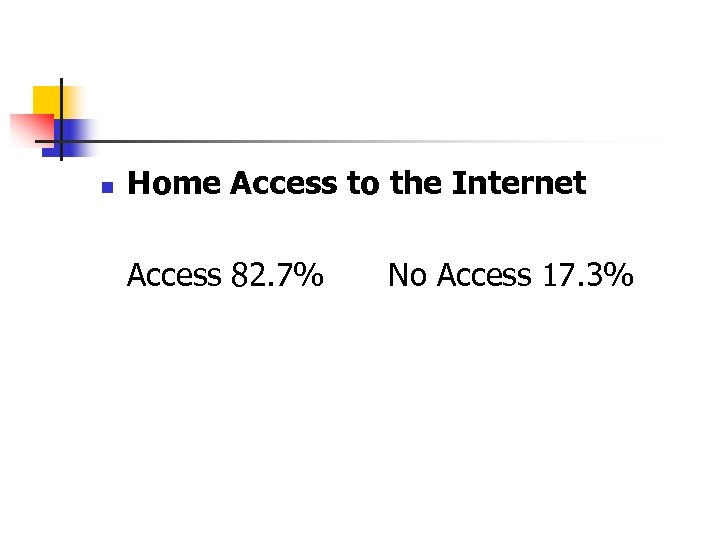
n Home Access to the Internet Access 82. 7% No Access 17. 3%
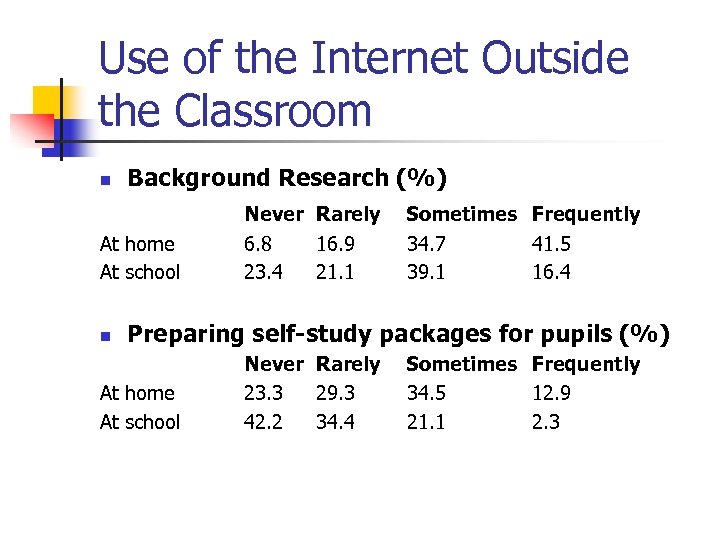
Use of the Internet Outside the Classroom n Background Research (%) At home At school n Never Rarely 6. 8 16. 9 23. 4 21. 1 Sometimes Frequently 34. 7 41. 5 39. 1 16. 4 Preparing self-study packages for pupils (%) At home At school Never Rarely 23. 3 29. 3 42. 2 34. 4 Sometimes Frequently 34. 5 12. 9 21. 1 2. 3
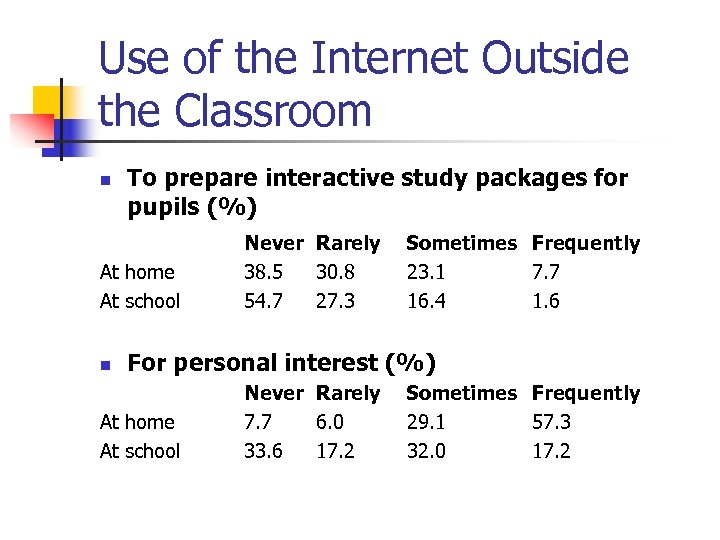
Use of the Internet Outside the Classroom n To prepare interactive study packages for pupils (%) At home At school n Never Rarely 38. 5 30. 8 54. 7 27. 3 Sometimes Frequently 23. 1 7. 7 16. 4 1. 6 For personal interest (%) At home At school Never Rarely 7. 7 6. 0 33. 6 17. 2 Sometimes Frequently 29. 1 57. 3 32. 0 17. 2
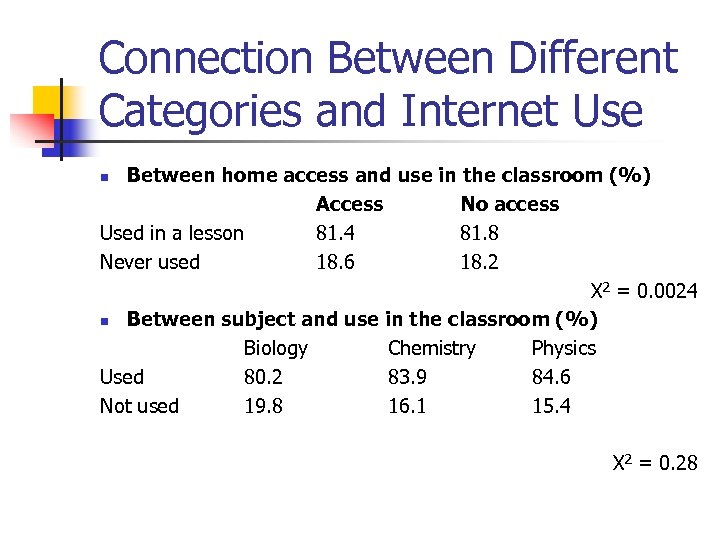
Connection Between Different Categories and Internet Use Between home access and use in the classroom (%) Access No access Used in a lesson 81. 4 81. 8 Never used 18. 6 18. 2 X 2 = 0. 0024 n Between subject and use in the classroom (%) Biology Chemistry Physics Used 80. 2 83. 9 84. 6 Not used 19. 8 16. 1 15. 4 n X 2 = 0. 28
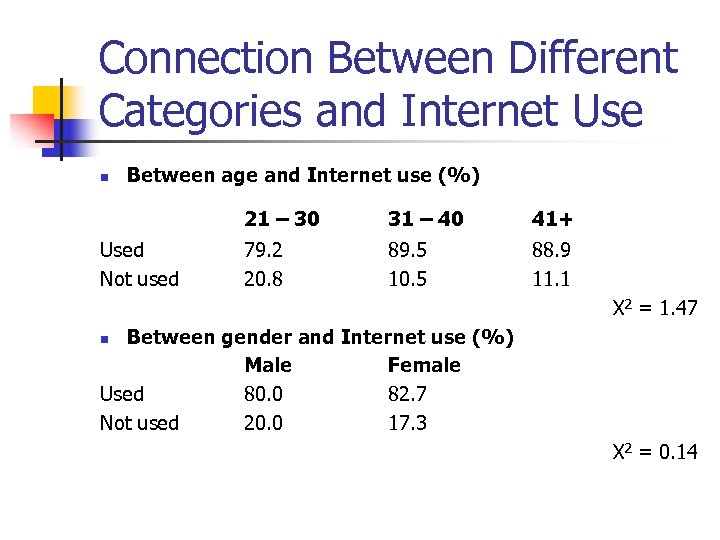
Connection Between Different Categories and Internet Use n Between age and Internet use (%) 21 – 30 Used Not used 31 – 40 41+ 79. 2 20. 8 89. 5 10. 5 88. 9 11. 1 X 2 = 1. 47 Between gender and Internet use (%) Male Female Used 80. 0 82. 7 Not used 20. 0 17. 3 n X 2 = 0. 14
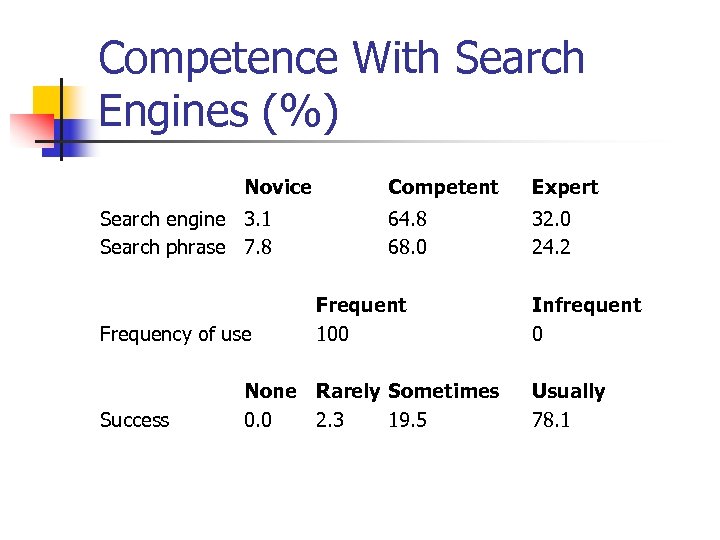
Competence With Search Engines (%) Novice Search engine 3. 1 Search phrase 7. 8 Frequency of use Success Competent Expert 64. 8 68. 0 32. 0 24. 2 Frequent 100 None Rarely Sometimes 0. 0 2. 3 19. 5 Infrequent 0 Usually 78. 1
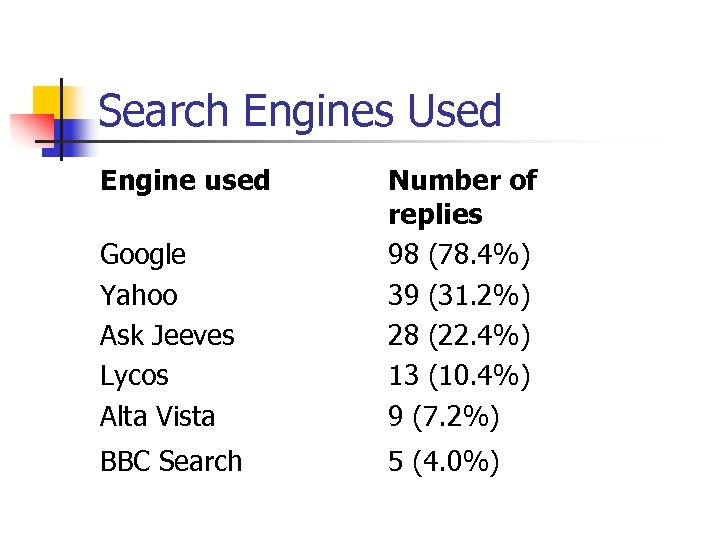
Search Engines Used Engine used Google Yahoo Ask Jeeves Lycos Alta Vista Number of replies 98 (78. 4%) 39 (31. 2%) 28 (22. 4%) 13 (10. 4%) 9 (7. 2%) BBC Search 5 (4. 0%)
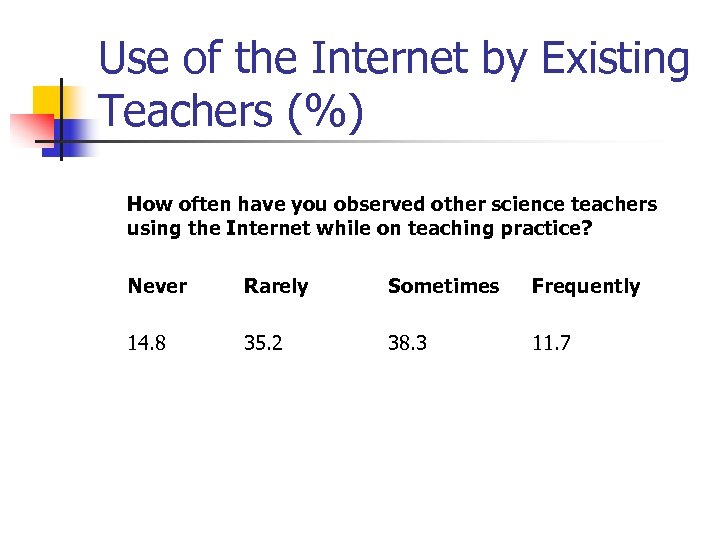
Use of the Internet by Existing Teachers (%) How often have you observed other science teachers using the Internet while on teaching practice? Never Rarely Sometimes Frequently 14. 8 35. 2 38. 3 11. 7
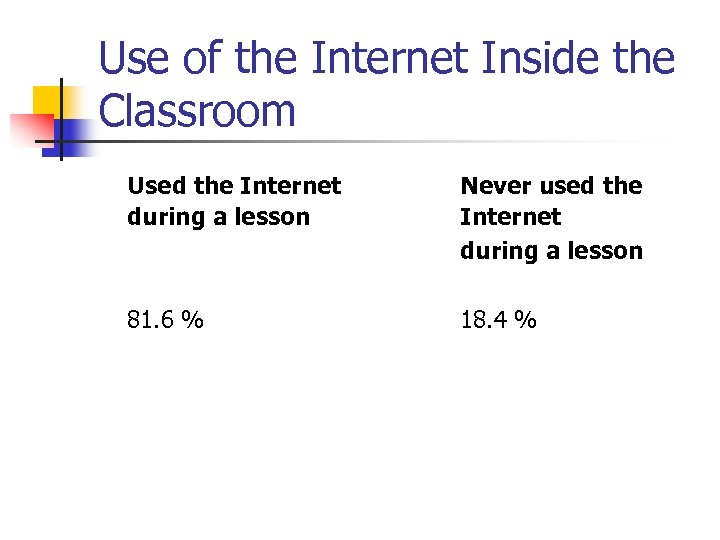
Use of the Internet Inside the Classroom Used the Internet during a lesson Never used the Internet during a lesson 81. 6 % 18. 4 %
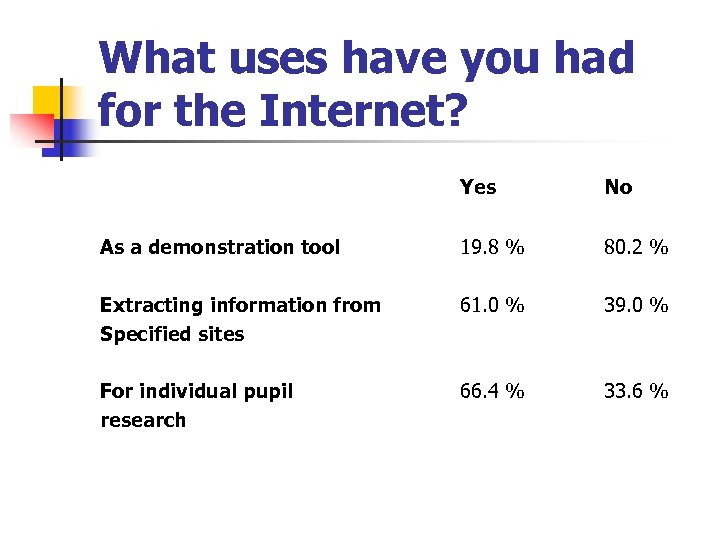
What uses have you had for the Internet? Yes No As a demonstration tool 19. 8 % 80. 2 % Extracting information from Specified sites 61. 0 % 39. 0 % For individual pupil research 66. 4 % 33. 6 %
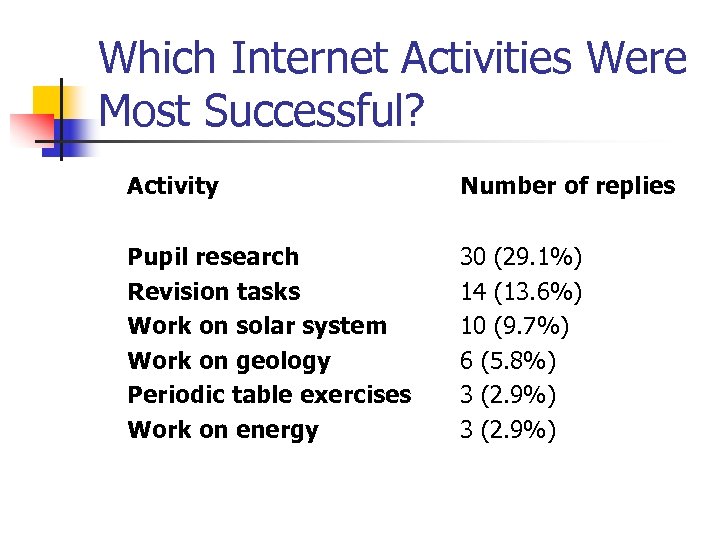
Which Internet Activities Were Most Successful? Activity Number of replies Pupil research Revision tasks Work on solar system Work on geology Periodic table exercises Work on energy 30 (29. 1%) 14 (13. 6%) 10 (9. 7%) 6 (5. 8%) 3 (2. 9%)
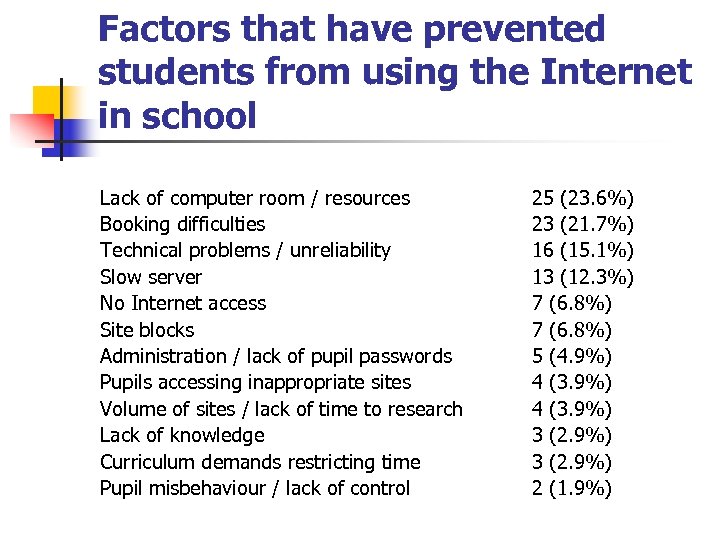
Factors that have prevented students from using the Internet in school Lack of computer room / resources Booking difficulties Technical problems / unreliability Slow server No Internet access Site blocks Administration / lack of pupil passwords Pupils accessing inappropriate sites Volume of sites / lack of time to research Lack of knowledge Curriculum demands restricting time Pupil misbehaviour / lack of control 25 (23. 6%) 23 (21. 7%) 16 (15. 1%) 13 (12. 3%) 7 (6. 8%) 5 (4. 9%) 4 (3. 9%) 3 (2. 9%) 2 (1. 9%)
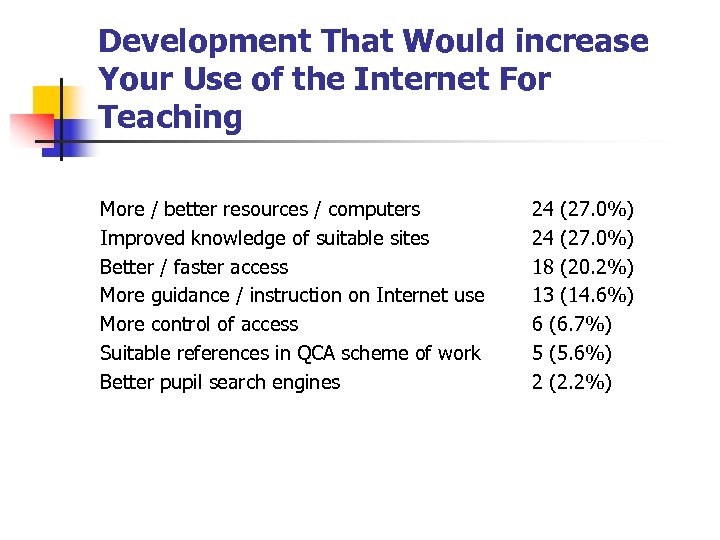
Development That Would increase Your Use of the Internet For Teaching More / better resources / computers Improved knowledge of suitable sites Better / faster access More guidance / instruction on Internet use More control of access Suitable references in QCA scheme of work Better pupil search engines 24 (27. 0%) 18 (20. 2%) 13 (14. 6%) 6 (6. 7%) 5 (5. 6%) 2 (2. 2%)
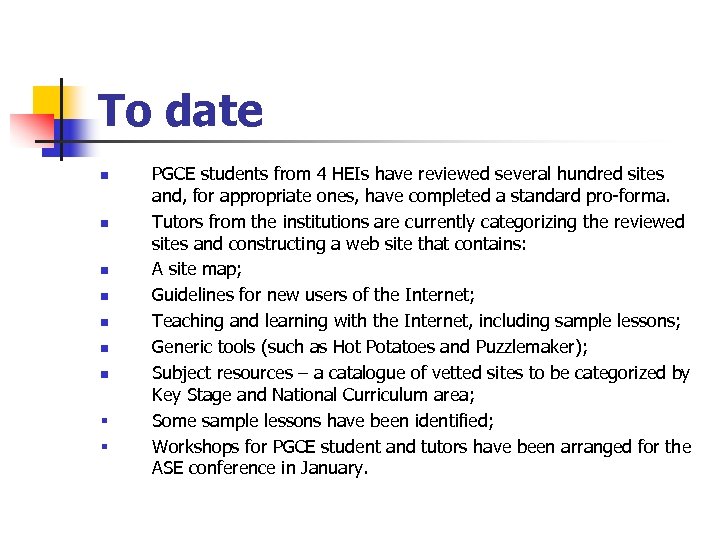
To date n n n n § § PGCE students from 4 HEIs have reviewed several hundred sites and, for appropriate ones, have completed a standard pro-forma. Tutors from the institutions are currently categorizing the reviewed sites and constructing a web site that contains: A site map; Guidelines for new users of the Internet; Teaching and learning with the Internet, including sample lessons; Generic tools (such as Hot Potatoes and Puzzlemaker); Subject resources – a catalogue of vetted sites to be categorized by Key Stage and National Curriculum area; Some sample lessons have been identified; Workshops for PGCE student and tutors have been arranged for the ASE conference in January.
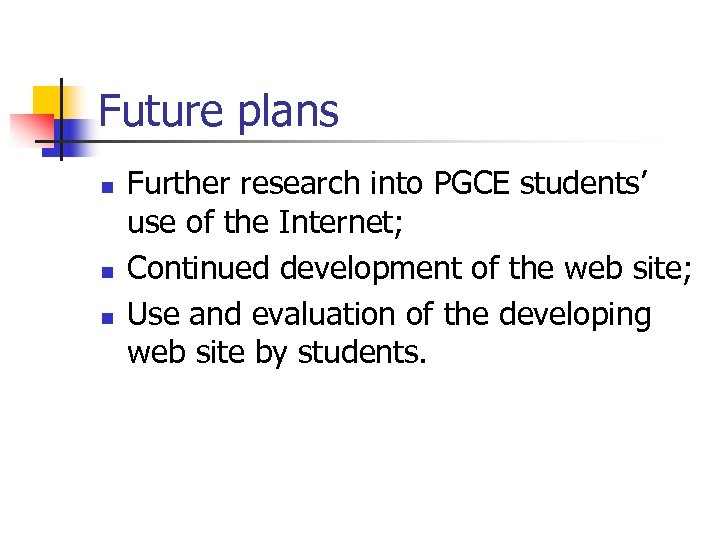
Future plans n n n Further research into PGCE students’ use of the Internet; Continued development of the web site; Use and evaluation of the developing web site by students.
Скачать презентацию Supporting the Use of Web-based Materials by PGCE
26103361a936a094eaec0f9a01df46a8.ppt