


 Скачать презентацию Supporting People Sustaining Communities Testing the Vision
6cb85e532ed9c778cc3c8a468ba8069c.ppt
- Количество слайдов: 13
 Supporting People & Sustaining Communities Testing the Vision with the Community & Building Engagement Sam Howlett Community Action Team Leader
 What will be covered Why inform, engage, and consult Who to inform, engage, and consult When to inform, engage, and consult How to inform, engage, and consult Top 10 Tips Workshop Session
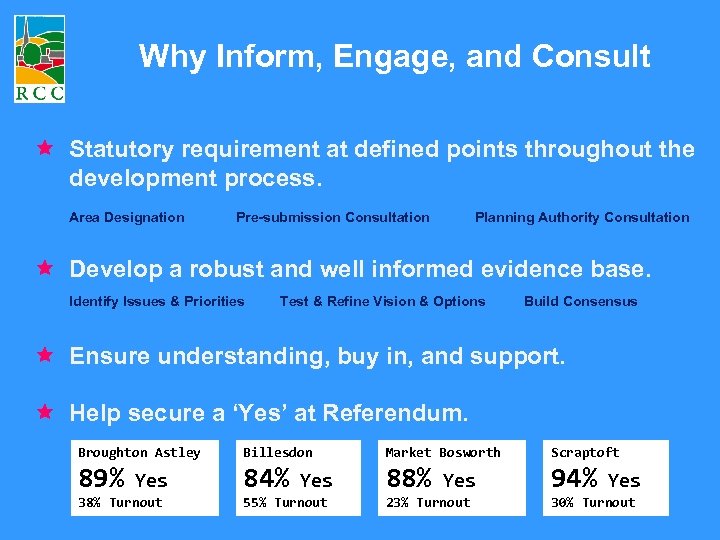 Why Inform, Engage, and Consult Statutory requirement at defined points throughout the development process. Area Designation Pre-submission Consultation Planning Authority Consultation Develop a robust and well informed evidence base. Identify Issues & Priorities Test & Refine Vision & Options Build Consensus Ensure understanding, buy in, and support. Help secure a ‘Yes’ at Referendum. Broughton Astley Billesdon Market Bosworth Scraptoft 89% 84% 88% 94% Yes 38% Turnout Yes 55% Turnout Yes 23% Turnout Yes 30% Turnout
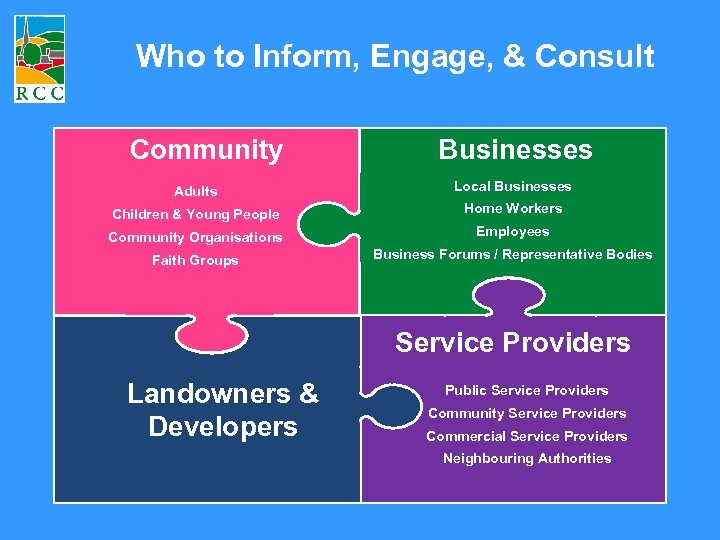 Who to Inform, Engage, & Consult Community Businesses Adults Local Businesses Children & Young People Home Workers Community Organisations Employees Faith Groups Business Forums / Representative Bodies Service Providers Landowners & Developers Public Service Providers Community Service Providers Commercial Service Providers Neighbouring Authorities
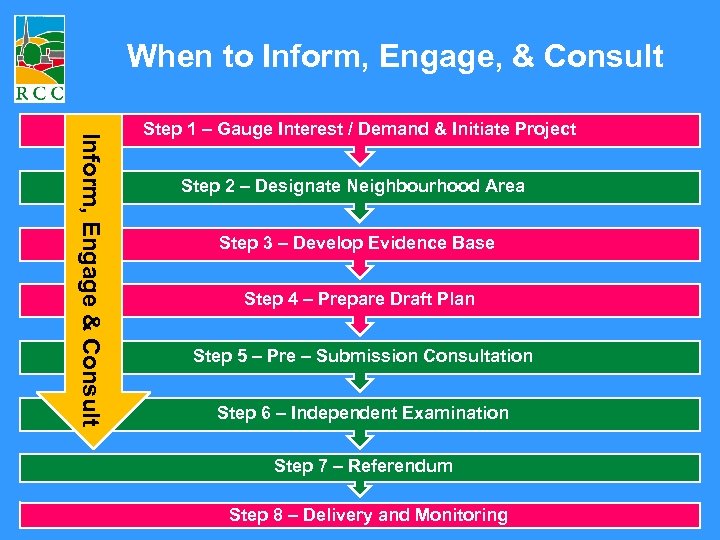 When to Inform, Engage, & Consult Inform, Engage & Consult Step 1 – Gauge Interest / Demand & Initiate Project Step 2 – Designate Neighbourhood Area Step 3 – Develop Evidence Base Step 4 – Prepare Draft Plan Step 5 – Pre – Submission Consultation Step 6 – Independent Examination Step 7 – Referendum Step 8 – Delivery and Monitoring
 When to Inform, Engage, & Consult Other points to consider: • Develop a realistic and achievable project plan and timescale. • Assess when key decisions and actions need to be taken throughout the process and plan related activity back from those points. • Check what else is happening - Try to avoid major events & holidays. • Spread activity across a range methods, dates, and times. • Build in sufficient time for processing and analysing results • Allow time for feedback and evaluation.
 How to Inform, Engage, & Consult Important factors to consider are: 1. What are you aiming to achieve? 2. Who are you aiming to reach and how are they most likely to engage? 3. What information do you need to get across? 4. How many people, households, or organisations need to be engaged? 5. How are you going to record, process, and utilise the results? 6. What budget and resources are available for the activity?
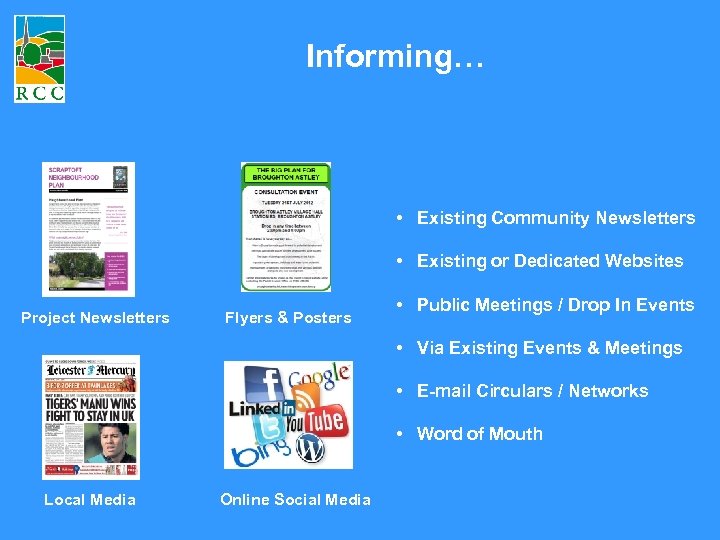 Informing… • Existing Community Newsletters • Existing or Dedicated Websites Project Newsletters Flyers & Posters • Public Meetings / Drop In Events • Via Existing Events & Meetings • E-mail Circulars / Networks • Word of Mouth Local Media Online Social Media
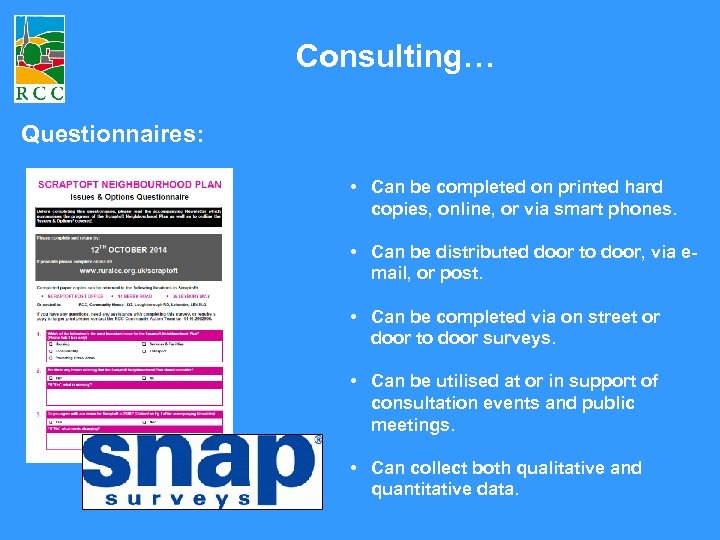 Consulting… Questionnaires: • Can be completed on printed hard copies, online, or via smart phones. • Can be distributed door to door, via email, or post. • Can be completed via on street or door to door surveys. • Can be utilised at or in support of consultation events and public meetings. • Can collect both qualitative and quantitative data.
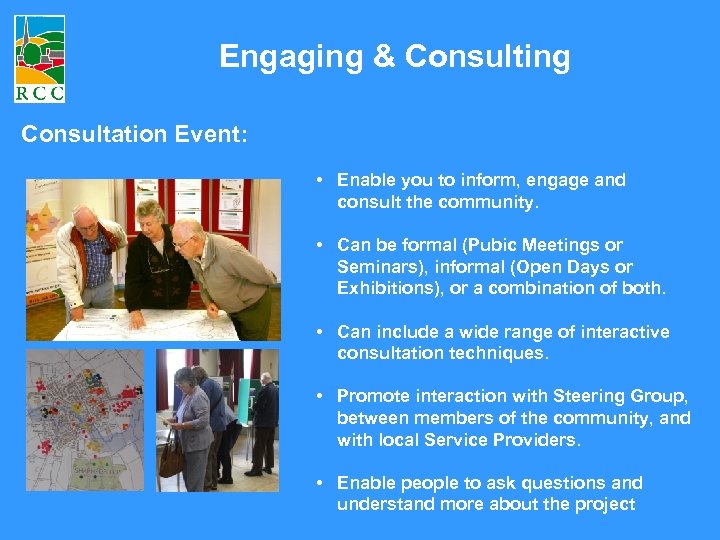 Engaging & Consulting Consultation Event: • Enable you to inform, engage and consult the community. • Can be formal (Pubic Meetings or Seminars), informal (Open Days or Exhibitions), or a combination of both. • Can include a wide range of interactive consultation techniques. • Promote interaction with Steering Group, between members of the community, and with local Service Providers. • Enable people to ask questions and understand more about the project
 Top 10 Tips 1. Make sure you meet the statutory requirements for consultation set within the Neighbourhood Planning Regulations. 2. Think about and research who you are engaging (demographics, access requirements etc. ) 3. Consider how the activity will dovetail with / complement other planned consultation and engagement work throughout the process and how results will feed into your evidence base. 4. Plan the activity to ensure you disseminate and collect all of the information required. 5. Make sure the material used is appropriate to the audience, logical, and easy to understand. 6. Set aside plenty of time for planning, completion, analysis, and feedback. 7. Ensure that you comply with the Data Protection Act, observe Copyright, and met any other relevant legal requirements. 8. Provide adequate and timely feedback to all those engaged. 9. Ensure you have an appropriate budget and resources to cover the process, including contingency for any unseen costs. 10. Evaluate the process to ascertain whether you have achieved what you set out to achieve and to help refine future activity.
 Professional Support Available Management of all required Consultation & Engagement Informing & Engaging the Community Public Meetings & Consultation Events Surveys & Questionnaires Community Profiles & Evidence Portfolios Pre-Submission Consultations Consultation Statements
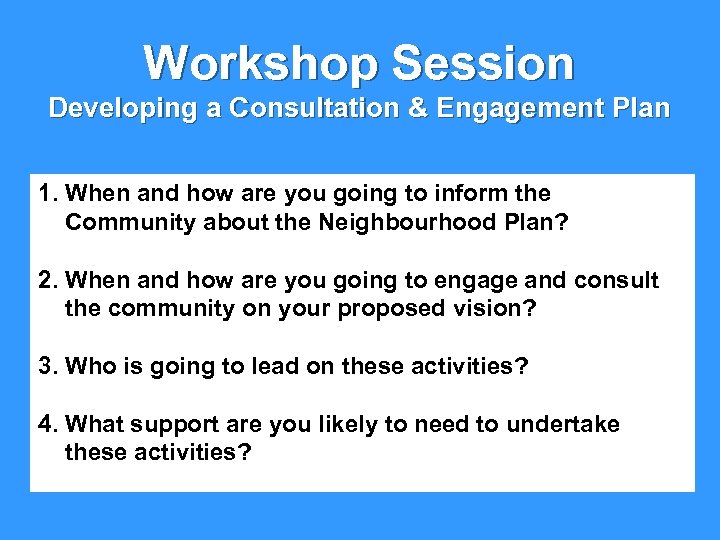 Workshop Session Developing a Consultation & Engagement Plan 1. When and how are you going to inform the Community about the Neighbourhood Plan? 2. When and how are you going to engage and consult the community on your proposed vision? 3. Who is going to lead on these activities? 4. What support are you likely to need to undertake these activities?