


 Скачать презентацию SUPPORTING HEALTH COORDINATION ASSESSMENTS PLANNING ACCESS TO HEALTH
2bf0cccf8d8964b1476108f0529597ad.ppt
- Количество слайдов: 44
 SUPPORTING HEALTH COORDINATION, ASSESSMENTS, PLANNING, ACCESS TO HEALTH CARE AND CAPACITY BUILDING IN MEMBER STATES UNDER PARTICULAR MIGRATORY PRESSURE — 717275/SH-CAPAC MODULE title: Module 2. Strengthening institutional capacity to organize the response Unit title: Unit 2. Assessment of health challenges Prepared by: Jeanine Suurmond, Iain Aitken, Mette Tørslev
 Outline of the session • Presentation: Introduction to needs assessment • Activity 1: Contextualizing the assessment • Presentation Phase A: Assessment coordination and planning • Presentation Phase B: Collecting data • Activity 2: Sociodemographic overview • Activity 3: Health needs and risks identification • Activity 4: Stepwise checking knowledge entitlements • Presentation Phase C: Reporting
 Why do we need a health needs assesment (1) • Individuals, families and vulnerable groups who have fled situations of persecution, violence and war often have specific health needs. • In many countries, recent influx has imposed a significant strain on the capacity of health systems to respond to those needs. • There is often a tension between limited, legal entitlements to health care of various groups of migrants and requirements of international agreements on the rights to health care to which governments have formally agreed.
 Why do we need a health assessment (2) • A health needs assessment and the subsequent development of work plans provides an opportunity to government, stakeholders and health and social services professionals, in particular, to identify the health needs of migrants and risk factors in their living circumstances, and assess the adequacy of services in meeting those needs as the basis for developing action plans to bring in improvements. • In order to assist this process SH-CAPAC has developed a guide for assessment of health needs and health protection resources.
 Aim of the guide for assessment of health needs and health protection resources Assists the government and stakeholders of migrant health to: • Identify the locations, numbers and general characteristics of these migrant populations • Identify the general and, particularly, the special health needs of migrants, and the health risk factors in their current living circumstances • Assess the extent to which the health services provided meet those needs and address those risk factors • Draw conclusions on the major unmet needs or the gaps in services, deficiencies in the quality or appropriateness of care, and any barriers to accessing and making full use of the services by migrants
 Contextualizing the assessment of health needs and health protection resources • Migrants have various health needs and problems and available health protection resources, entitlements to health care services may differ as they are determined by the status of the migrant as arriving or ‘in transit’, waiting to apply for asylum, asylum seeking or granted protected status. • Therefore the assessment must be contextualised by taking into account various intersecting factors, such as: - Migratory stage (first arrival/transit/settling) - Identification of particular vulnerable groups - Specific areas of health e. g. mental health
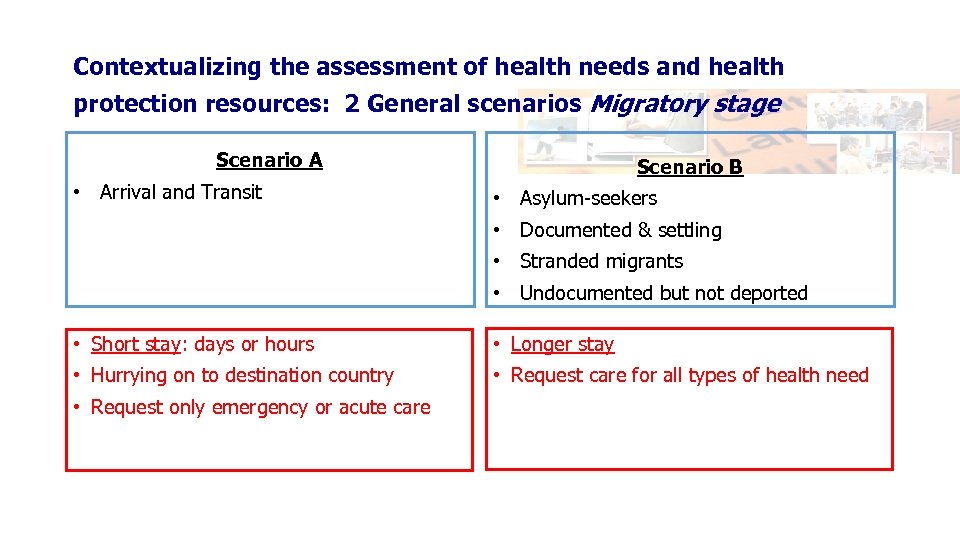 Contextualizing the assessment of health needs and health protection resources: 2 General scenarios Migratory stage Scenario A • Arrival and Transit Scenario B • Asylum-seekers • Documented & settling • Stranded migrants • Undocumented but not deported • Short stay: days or hours • Longer stay • Hurrying on to destination country • Request care for all types of health need • Request only emergency or acute care
 Contextualizing the assessment of health needs and health protection resources: Vulnerable groups Specific awareness is important to vulnerable groups, such as: • Unaccompanied minors • Children and adolescents • Single parents with minor children • Pregnant women • People with disabilities • Elderly • Victims of torture, rape or other serious violence • Undocumented migrants
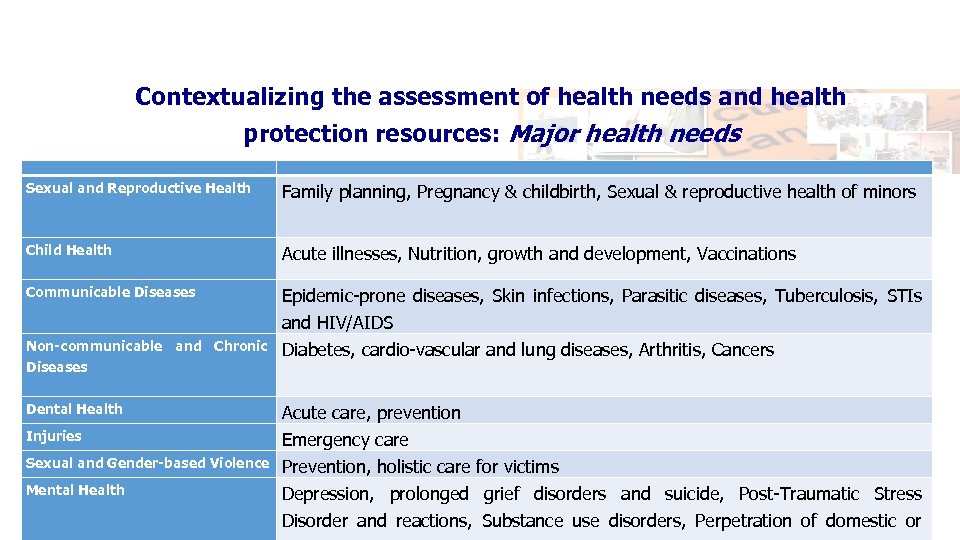 Contextualizing the assessment of health needs and health protection resources: Major health needs Sexual and Reproductive Health Family planning, Pregnancy & childbirth, Sexual & reproductive health of minors Child Health Communicable Diseases Acute illnesses, Nutrition, growth and development, Vaccinations Non-communicable and Chronic Diseases Diabetes, cardio-vascular and lung diseases, Arthritis, Cancers Dental Health Injuries Sexual and Gender-based Violence Mental Health Epidemic-prone diseases, Skin infections, Parasitic diseases, Tuberculosis, STIs and HIV/AIDS Acute care, prevention Emergency care Prevention, holistic care for victims Depression, prolonged grief disorders and suicide, Post-Traumatic Stress Disorder and reactions, Substance use disorders, Perpetration of domestic or
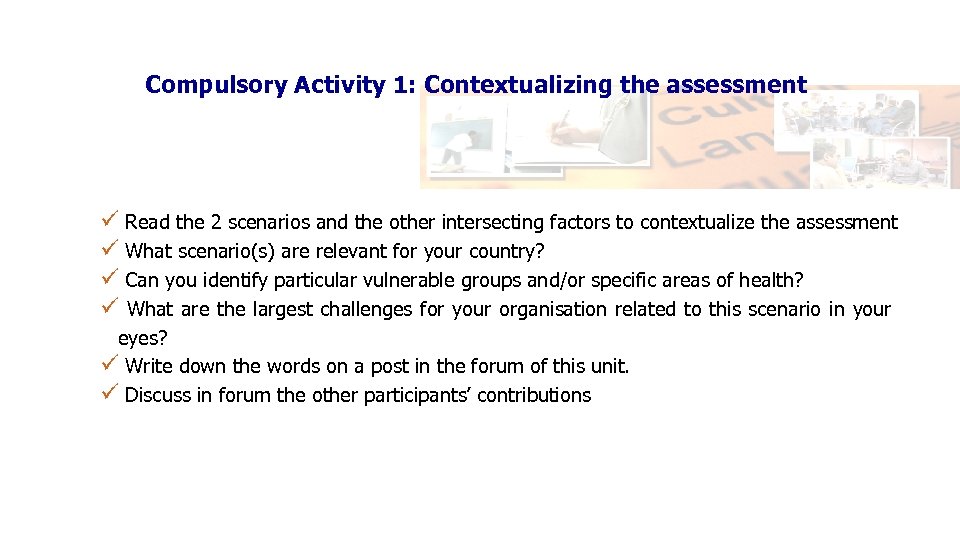 Compulsory Activity 1: Contextualizing the assessment ü Read the 2 scenarios and the other intersecting factors to contextualize the assessment ü What scenario(s) are relevant for your country? ü Can you identify particular vulnerable groups and/or specific areas of health? ü What are the largest challenges for your organisation related to this scenario in your eyes? ü Write down the words on a post in the forum of this unit. ü Discuss in forum the other participants’ contributions
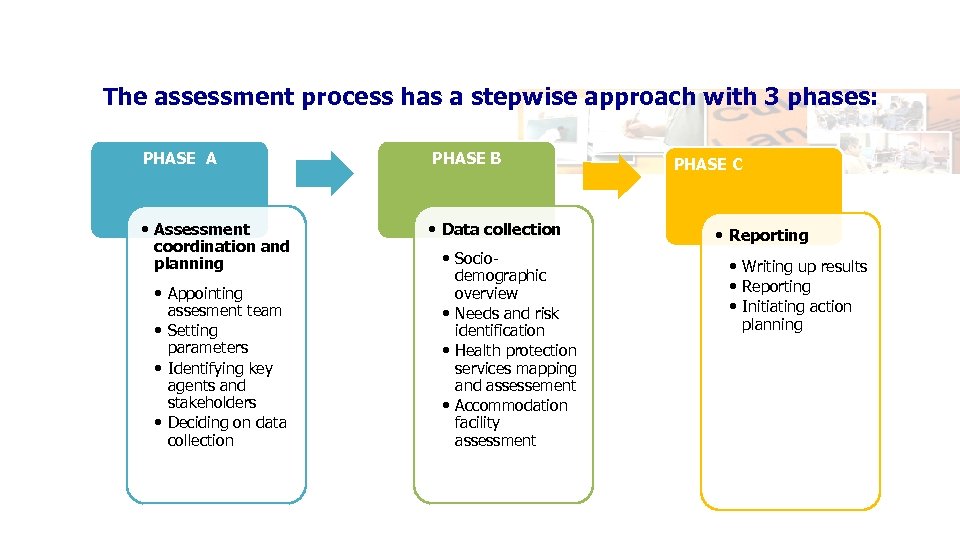 The assessment process has a stepwise approach with 3 phases: PHASE A PHASE B • Assessment coordination and planning • Data collection • Appointing assesment team • Setting parameters • Identifying key agents and stakeholders • Deciding on data collection • Sociodemographic overview • Needs and risk identification • Health protection services mapping and assessement • Accommodation facility assessment PHASE C • Reporting • Writing up results • Reporting • Initiating action planning
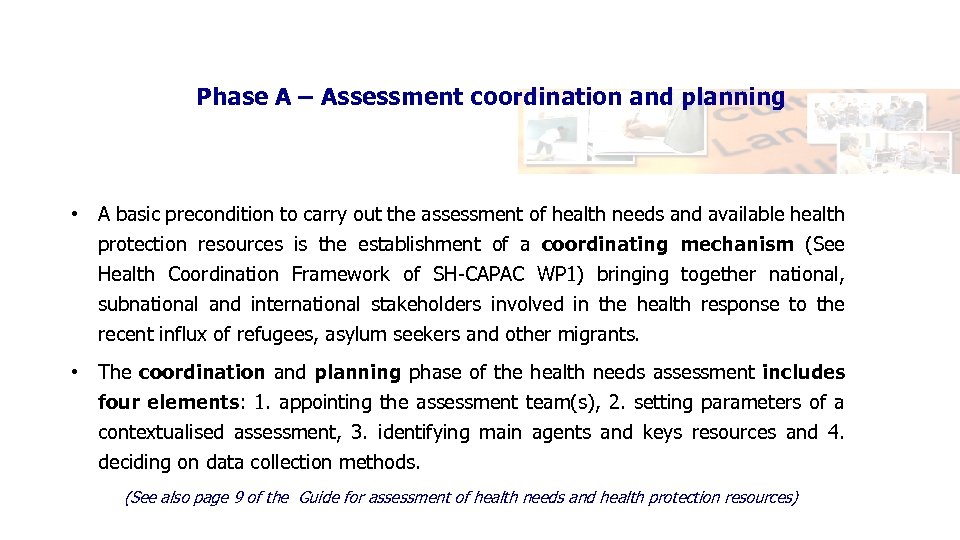 Phase A – Assessment coordination and planning • A basic precondition to carry out the assessment of health needs and available health protection resources is the establishment of a coordinating mechanism (See Health Coordination Framework of SH-CAPAC WP 1) bringing together national, subnational and international stakeholders involved in the health response to the recent influx of refugees, asylum seekers and other migrants. • The coordination and planning phase of the health needs assessment includes four elements: 1. appointing the assessment team(s), 2. setting parameters of a contextualised assessment, 3. identifying main agents and keys resources and 4. deciding on data collection methods. (See also page 9 of the Guide for assessment of health needs and health protection resources)
 Phase A. 1 Appointing assessment team • Team is appointed by the health coordination team (see Module 2, Unit 1) to carry out the assessment and to reports back to the health coordination team so that a process of planning and strategy development (see Module 2, Unit 3) can be initiated. • The assessment consists of different tools and elements and it can be effective to assign different tasks to different teams based on their specific skills and access to information. If more teams are appointed, the health coordination team ensures coordination of collaboration and shared information between these teams or one assessment team has a coordinating role.
 Phase A. 2 Setting parameters and contextualising the assessment • Review plans of the Health Coordination Team and any other previous plans of health needs assessment and strategy development. • During this review process the Assessment Team is encouraged to consider and identify what information is needed to take action; including reflections on: - At which level(s) to do the assessment (national/subnational/local) - Which scenarios and stages of migration to emphasize in the assessment - Which dimensions to include in the assessment (socio-demographic overview, needs and risk identification, resource mapping, accommodation facility assessment, others) - Focus on different health areas and ensure sensitivity to vulnerable groups (See also page 9 -11 of the Guide for assessment of health needs and health protection resources)
 Phase A. 3 Identifying key agents and stakeholders Key agents/stakeholders can be called on: • To identify sources of data (e. g. sociodemographic data on migrants and the health information system) • To provide analyses of the data • To introduce managers of migrant accommodation and health service facilities • To suggest appropriate people for interviews and focus group discussions (See also page 11 -12 of the Guide for assessment of health needs and health protection resources)
 Phase A. 4 Collecting data Data collection for the assessment of health needs and health protection resources may include gathering of both secondary data (existing knowledge) and collection of primary data (knowledge generated through interviews, surveys, field visits etc. ).
 Phase A. 4 Collecting primary data • Data collection methods: both quantitative and qualitative methods (individual interviews and Focus Group Discussions) • Selection of sources of information • Organising the data collection (writing workplan) (See also page 13 of the Guide for assessment of health needs and health protection resources)
 Phase A. 4 Collecting secondary data • A secondary data review is essential to ensure use of existing, updated information on the current crisis of meeting the extensive and diverse health needs of the massive influx of refugees and other migrants to European countries. • Data is collected and produced by various agents in the field: at international level in terms of a number of assessment reports, guidelines and recommended actions from international organisations such as WHO, IOM, ECDC, UNHCR, MSF; and, at national level, in terms of country assessment reports and national and sub-national documentations. (See also page 12 of the Guide for assessment of health needs and health protection resources)
 Phase B Data collection In order to carry out the data collection you may want to use the following tools: Tool I: Socio-demographic overview • Who are the migrants and where are they? Tool II: health needs and risks identification • What are the health needs and risk factors? Tool III: Health protection services mapping and assessment • Where are the gaps in health protection resources? • What are the barriers to accessing and quality of care? Tool IV: Health protection at accommodation facilities • Assess health and safety of accommodation facilities
 TOOL I - SOCIO-DEMOGRAPHIC OVERVIEW The quickest and most reliable way of obtaining sociodemographic data is from the authorities in charge of migrants such as the Ministry of the Interior or the government’s migration agency. In addition other information sources can be used such as the European Commission http: //ec. europa. eu, for example: • Managing the Refugee Crisis. State of play and future actions, January 2016 • Eurostat Statistics (See also Module 2, Unit 4)
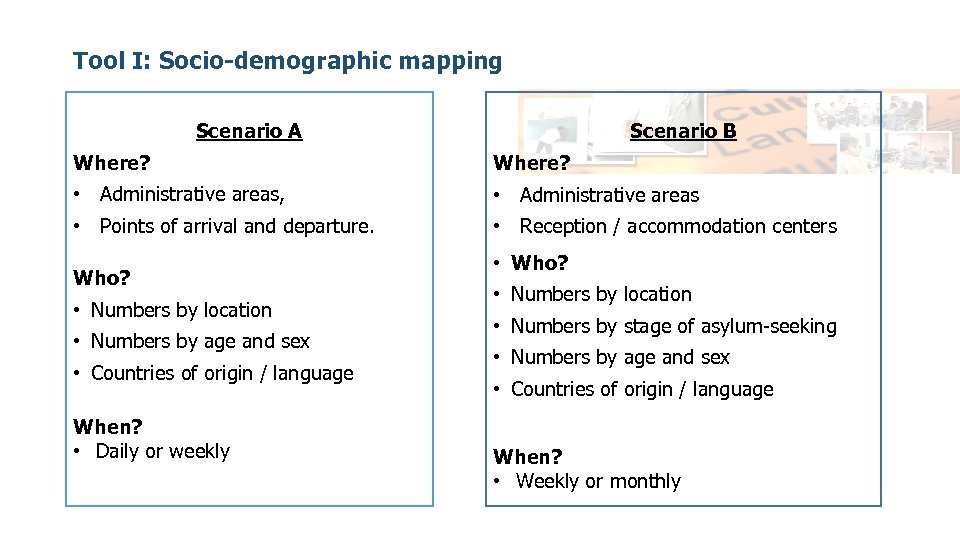 Tool I: Socio-demographic mapping Scenario A Scenario B Where? • Administrative areas, • Administrative areas • Points of arrival and departure. • Reception / accommodation centers Who? • Numbers by location • Numbers by age and sex • Countries of origin / language When? • Daily or weekly • Who? • Numbers by location • Numbers by stage of asylum-seeking • Numbers by age and sex • Countries of origin / language When? • Weekly or monthly
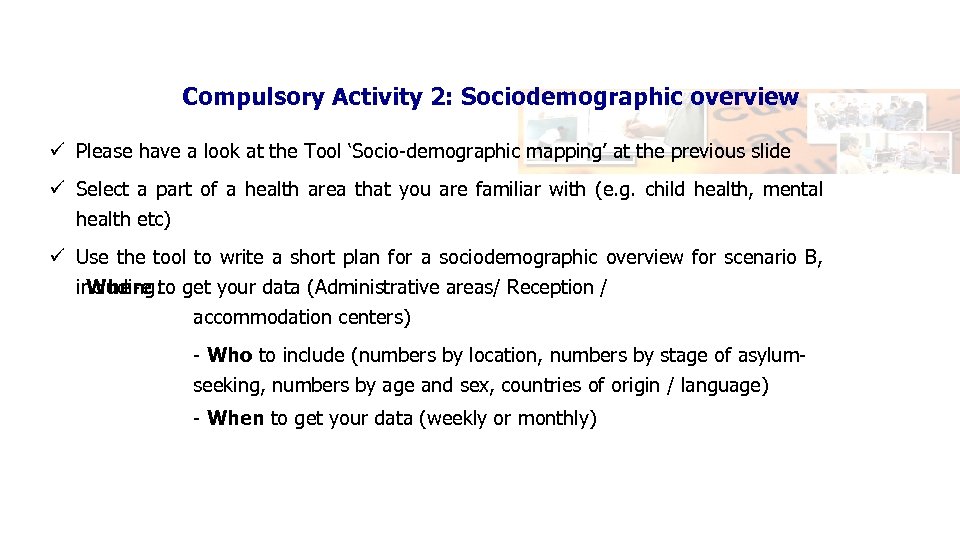 Compulsory Activity 2: Sociodemographic overview ü Please have a look at the Tool ‘Socio-demographic mapping’ at the previous slide ü Select a part of a health area that you are familiar with (e. g. child health, mental health etc) ü Use the tool to write a short plan for a sociodemographic overview for scenario B, including: to get your data (Administrative areas/ Reception / Where accommodation centers) - Who to include (numbers by location, numbers by stage of asylumseeking, numbers by age and sex, countries of origin / language) - When to get your data (weekly or monthly)
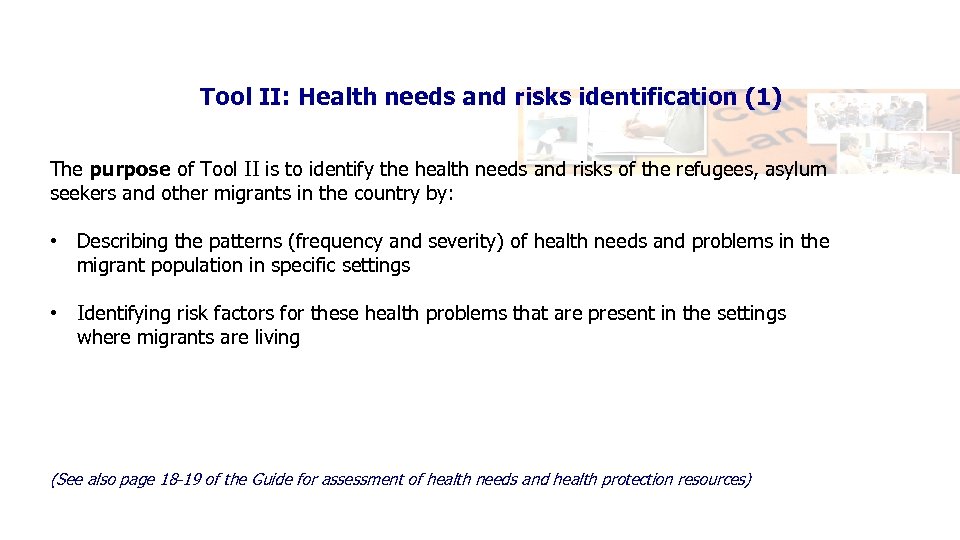 Tool II: Health needs and risks identification (1) The purpose of Tool II is to identify the health needs and risks of the refugees, asylum seekers and other migrants in the country by: • Describing the patterns (frequency and severity) of health needs and problems in the migrant population in specific settings • Identifying risk factors for these health problems that are present in the settings where migrants are living (See also page 18 -19 of the Guide for assessment of health needs and health protection resources)
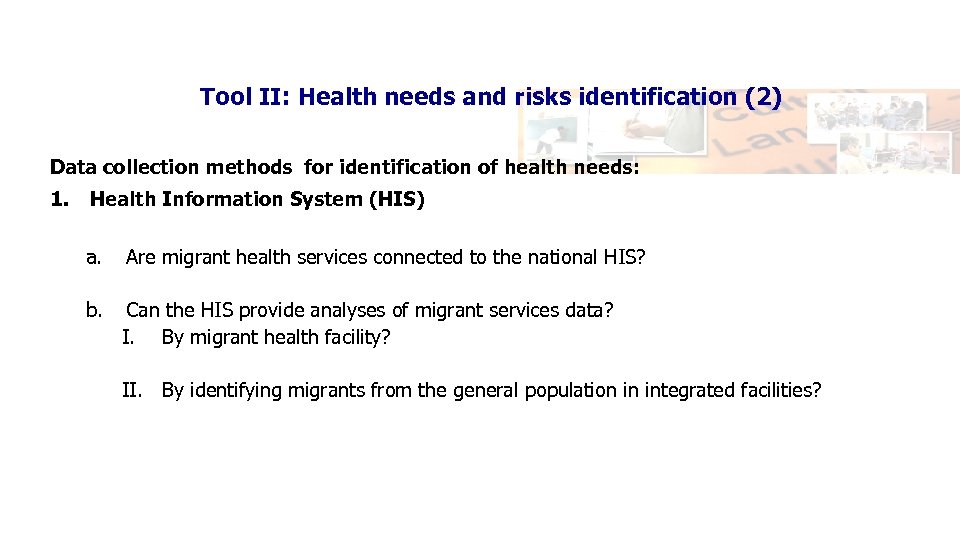 Tool II: Health needs and risks identification (2) Data collection methods for identification of health needs: 1. Health Information System (HIS) a. Are migrant health services connected to the national HIS? b. Can the HIS provide analyses of migrant services data? I. By migrant health facility? II. By identifying migrants from the general population in integrated facilities?
 Tool II: Health needs and risks identification (3) Data collection methods for identification of health needs: 2. Focus group discussions with health care providers By health services categories, for example: • Sexual and reproductive health • Child health • Communicable diseases • Non-communicable and chronic diseases • Dental health • Injuries • Sexual and gender-based violence • Mental health
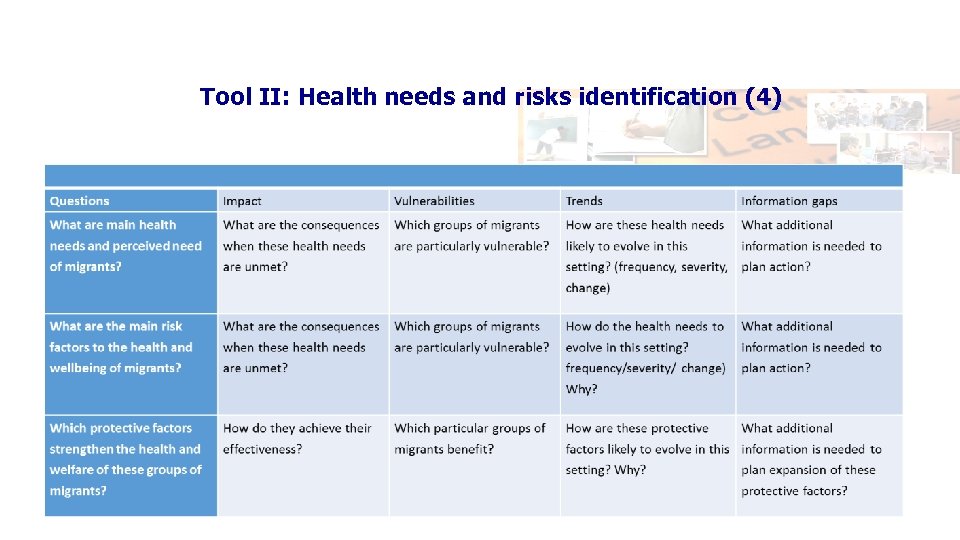 Tool II: Health needs and risks identification (4)
 Compulsory Activity 3: Health needs and risks identification ü Please have a look at the Tool ‘Health needs and risks identification’ at the previous slide ü Select a part of a health area that you are familiar with (e. g. child health, mental health etc. ü Use the tool to write a topic list for a gocus group discussion with care providers, including topics on: q What are main health needs and perceived need of migrants? q What are the main risk factors to the health and wellbeing of migrants? q Which protective factors strengthen the health and welfare of migrants? ü You may want to compare your answer with a short description of a potential outcome of a focus group on sexual and reproductive health on the next slide
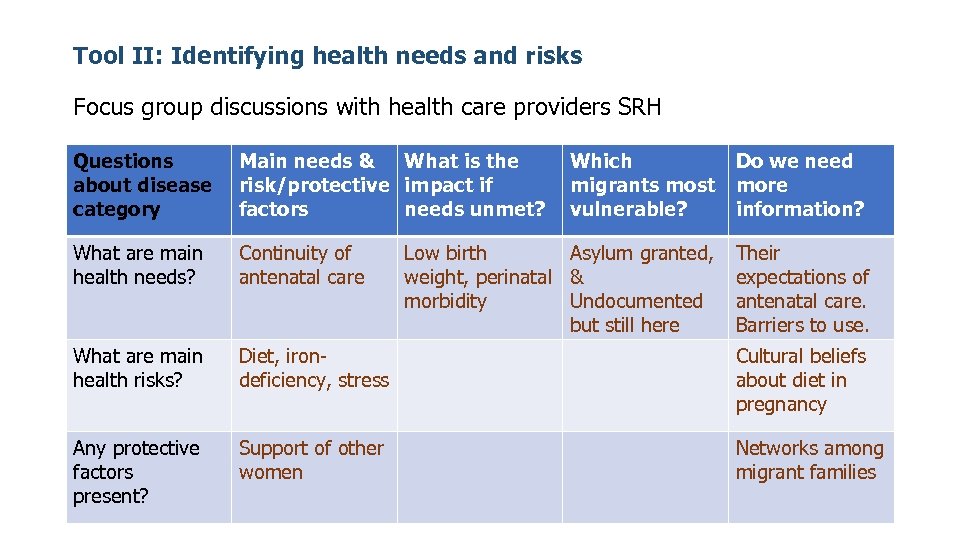 Tool II: Identifying health needs and risks Focus group discussions with health care providers SRH Questions about disease category Main needs & What is the risk/protective impact if factors needs unmet? Which Do we need migrants most more vulnerable? information? What are main health needs? Continuity of antenatal care What are main health risks? Diet, irondeficiency, stress Cultural beliefs about diet in pregnancy Any protective factors present? Support of other women Networks among migrant families Low birth Asylum granted, weight, perinatal & morbidity Undocumented but still here Their expectations of antenatal care. Barriers to use.
 Tool III: Health protection services mapping and assessment (1) The SH-CAPAC project provides several tools for ‘health services mapping and assessment’ helping you to identify: • What is understood by health care providers and managers regarding the health care entitlements of different groups of migrants to whom they provide care; • Gaps in the provision of services intended to meet the health care needs of migrants; • Problems in delivery of those services or in migrants’ ability to access them. (See also page 20 of the Guide for assessment of health needs and health protection resources)
 Tool III: Health protection services mapping and assessment (2) In order to carry out the health protection services mapping/assessment you may want to use (one or more of) the following tools: Tool III. 1 • To assess the knowledge and interpretations of migrant entitlements to care by health care providers and managers (page 21 of the Guide) Tool III. 2 • To map primary health care facilities and their capacity (page 22 of the Guide) Tool III. 3 • To assess availability of primary health care services (page 23 of the Guide) Tool III. 4 • To assess availability of secondary health care services (page 26 of the Guide) Tool III. 5 • To assess access to and the quality of those health care services for migrants (page 21 of the Guide)
 Tool III: Health protection services mapping and assessment (2) • In the next we will illustrate some of these tools • All the tools are extensively discussed in the guide for assessment of health needs and health protection resources, pages 20 -31)
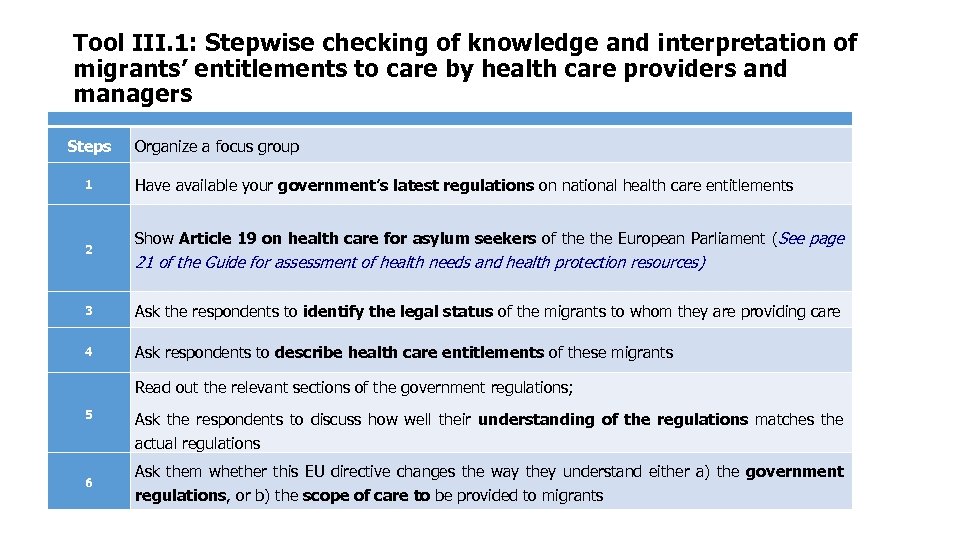 Tool III. 1: Stepwise checking of knowledge and interpretation of migrants’ entitlements to care by health care providers and managers Steps 1 2 Organize a focus group Have available your government’s latest regulations on national health care entitlements Show Article 19 on health care for asylum seekers of the European Parliament (See page 21 of the Guide for assessment of health needs and health protection resources) 3 Ask the respondents to identify the legal status of the migrants to whom they are providing care 4 Ask respondents to describe health care entitlements of these migrants Read out the relevant sections of the government regulations; 5 6 Ask the respondents to discuss how well their understanding of the regulations matches the actual regulations Ask them whether this EU directive changes the way they understand either a) the government regulations, or b) the scope of care to be provided to migrants
 Compulsory Activity 4: Stepwise checking knowledge entitlements ü Please have a look at Tool III. 1 at the previous slide ü Select a part of a health area that you are familiar with (e. g. child health, mental health etc) ü Use the tool to write down a short plan for obtaining this knowledge of care providers/ managers in your setting
 Tool III. 3: Availability of primary health services (1) • The purpose of this tool is to assess the availability of services at primary health care facilities or their capacities to provide them. • Specific gaps in services are identified where desired or intended services are absent or only partly available. • Information to assess availability of the primary health care facilities is best collected by a short straightforward survey beforehand further detailed by means of focus group discussions • In the next 2 slides you will find 2 examples. The availability of child health services and the availability of services for non-communicable diseases is accessed in a fictitious setting, using tool III. 3
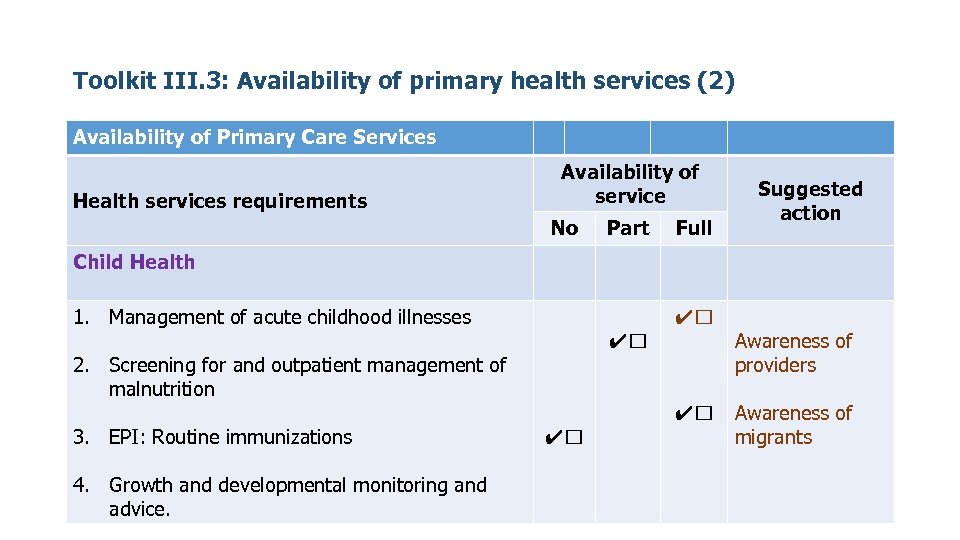 Toolkit III. 3: Availability of primary health services (2) Availability of Primary Care Services Health services requirements Availability of service No Part Full Suggested action Child Health 1. Management of acute childhood illnesses ✔ Awareness of providers ✔ 2. Screening for and outpatient management of malnutrition ✔ 3. EPI: Routine immunizations 4. Growth and developmental monitoring and advice. ✔ Awareness of migrants
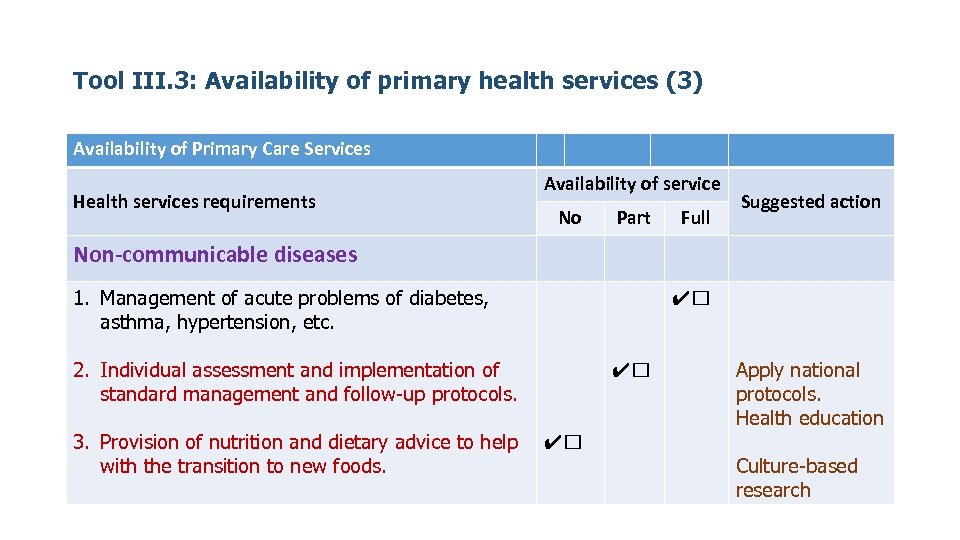 Tool III. 3: Availability of primary health services (3) Availability of Primary Care Services Health services requirements Availability of service No Part Full Suggested action Non-communicable diseases 1. Management of acute problems of diabetes, asthma, hypertension, etc. ✔ 2. Individual assessment and implementation of standard management and follow-up protocols. 3. Provision of nutrition and dietary advice to help with the transition to new foods. ✔ Apply national protocols. Health education ✔ Culture-based research
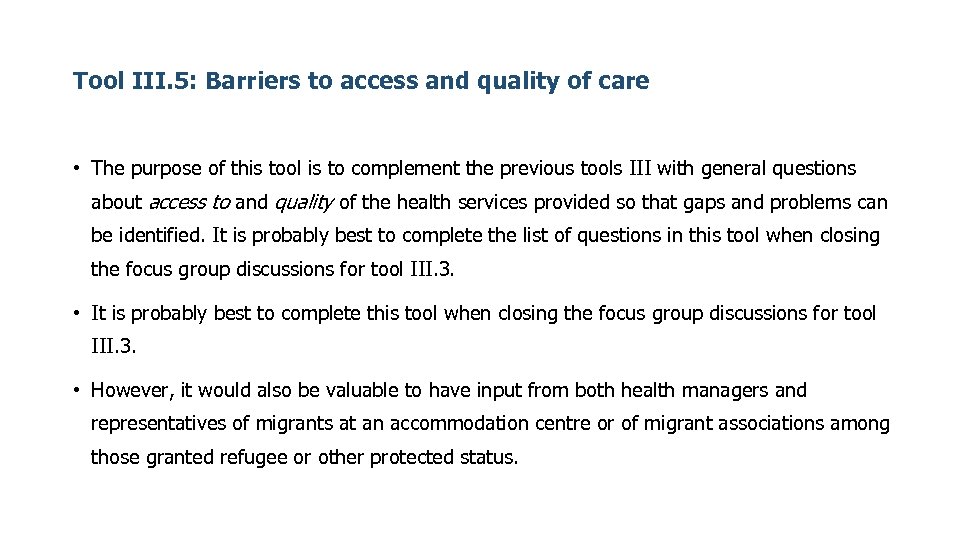 Tool III. 5: Barriers to access and quality of care • The purpose of this tool is to complement the previous tools III with general questions about access to and quality of the health services provided so that gaps and problems can be identified. It is probably best to complete the list of questions in this tool when closing the focus group discussions for tool III. 3. • It is probably best to complete this tool when closing the focus group discussions for tool III. 3. • However, it would also be valuable to have input from both health managers and representatives of migrants at an accommodation centre or of migrant associations among those granted refugee or other protected status.
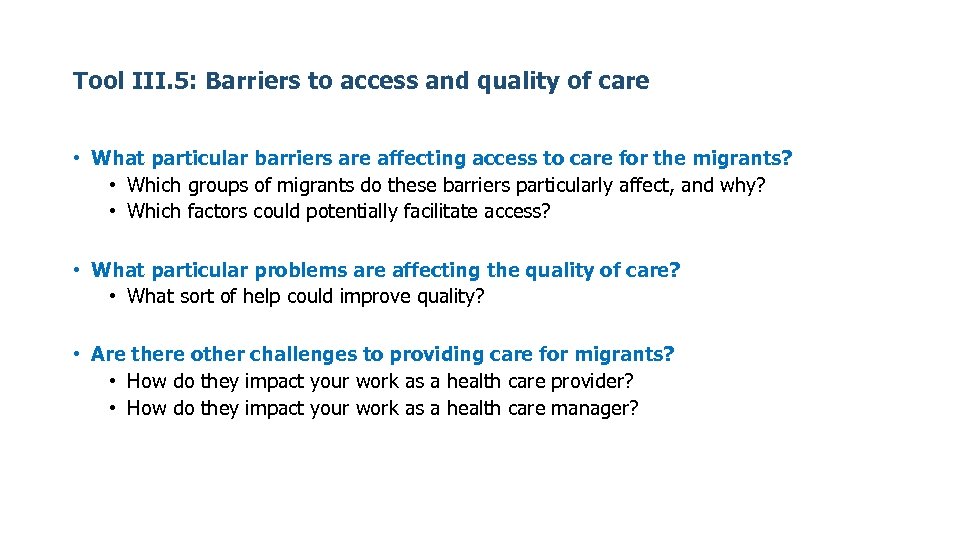 Tool III. 5: Barriers to access and quality of care • What particular barriers are affecting access to care for the migrants? • Which groups of migrants do these barriers particularly affect, and why? • Which factors could potentially facilitate access? • What particular problems are affecting the quality of care? • What sort of help could improve quality? • Are there other challenges to providing care for migrants? • How do they impact your work as a health care provider? • How do they impact your work as a health care manager?
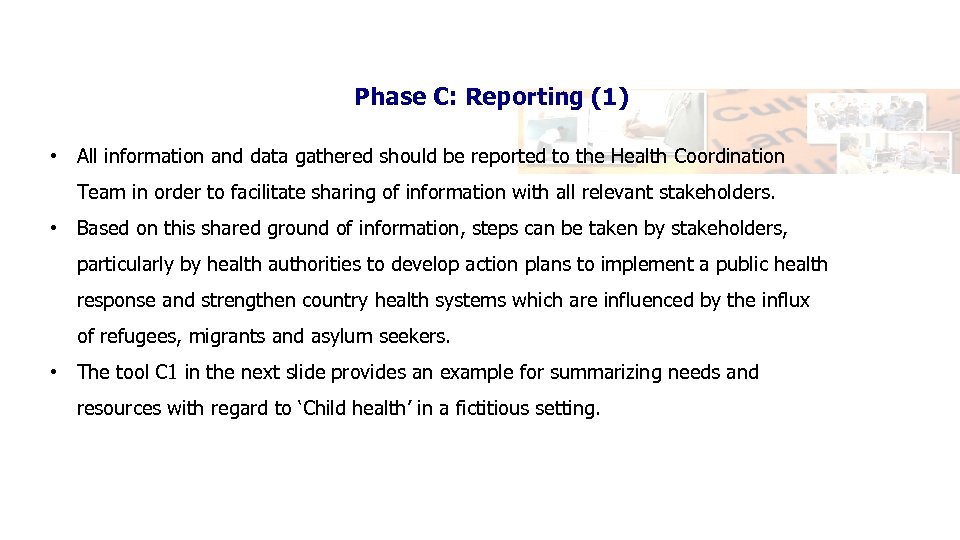 Phase C: Reporting (1) • All information and data gathered should be reported to the Health Coordination Team in order to facilitate sharing of information with all relevant stakeholders. • Based on this shared ground of information, steps can be taken by stakeholders, particularly by health authorities to develop action plans to implement a public health response and strengthen country health systems which are influenced by the influx of refugees, migrants and asylum seekers. • The tool C 1 in the next slide provides an example for summarizing needs and resources with regard to ‘Child health’ in a fictitious setting.
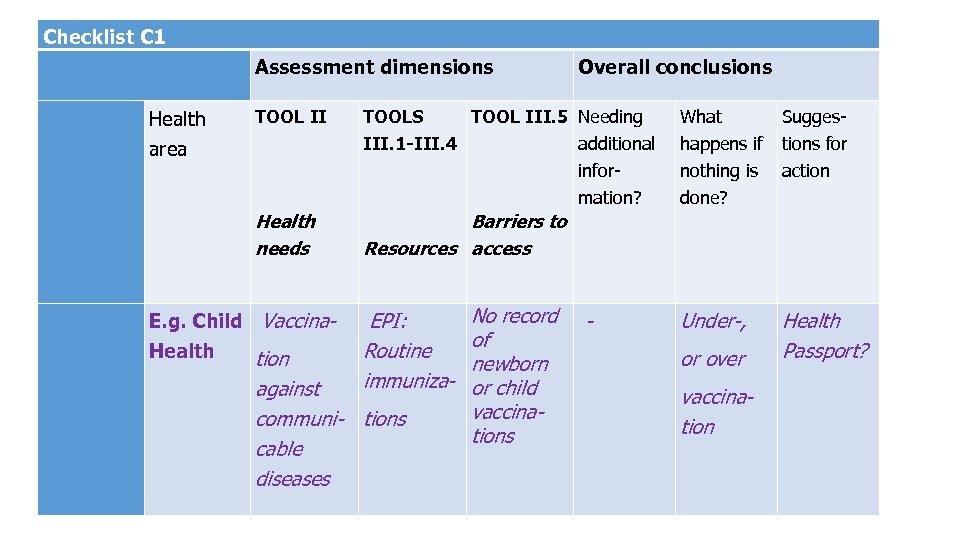 Checklist C 1 Assessment dimensions Overall conclusions Tool C. 1: Summary and main conclusions framework TOOL II TOOLS TOOL III. 5 Needing III. 1 -III. 4 additional information? Health needs Health area Barriers to Resources access E. g. Child Vaccina. Health tion EPI: Routine immuniza- against communi- tions cable diseases No record of newborn or child vaccinations What happens if nothing is done? Suggestions for action Under-, Health Passport? or over vaccination
 Phase C: Reporting (2) • The purpose of the assessments has been to identify specific gaps in or problems with health and related social services for migrants. • Tool C 1 can be of assistance in the task of summarising the main conclusions of the assessment of health needs, risks and available health protection resources. • In completing the summaries, it is important to identify whether the gaps and problems are features of the national migrant health program or of specific subnational or local health systems. • The important thing is not just to complete the matrix; it is to use it as a checklist to collect the results of interviews and Focus Group Discussions carried out in each of the assessment dimensions in order to define the specific gaps and problems identified
 Thank you! You can use the Unit forum for questions … Pictures: Andalusian Childhood Observatory (OIA, Observatorio de la Infancia de Andalucía) 2014; Josefa Marín Vega 2014; Red. Isir 2014; Morguefile 2014.
 References • Guide for assessment of health needs and health protection resources. SH-CAPAC Project, WP 2, 2016. • ACAPS Humanitarian Needs Assessment – The Good Enough Guide. Bourton on Dunsmore UK: Practical Action Publishing, 2014. http: //reliefweb. int/sites/reliefweb. int/files/resources/h-humanitarian-needs-assessment-the-good-enough-guide. pdf
 © – 2016 – Escuela Andaluza de Salud Pública. All rights reserved. Licensed to the Consumers, Health, Agriculture and Food Executive Agency (CHAFEA) under conditions. This presentation is part of the project ‘ 717275 / SH-CAPAC’ which has received funding from the European Union’s Health Programme (2014 -2020). The content of this presentation represents the views of the author only and is his/her sole responsibility; it can not be considered to reflect the views of the European Commission and/or the Consumers, Health, Agriculture and Food Executive Agency or any other body of the European Union. The European Commission and the Agency do not accept any responsibility for use that may be made of the information it contains.